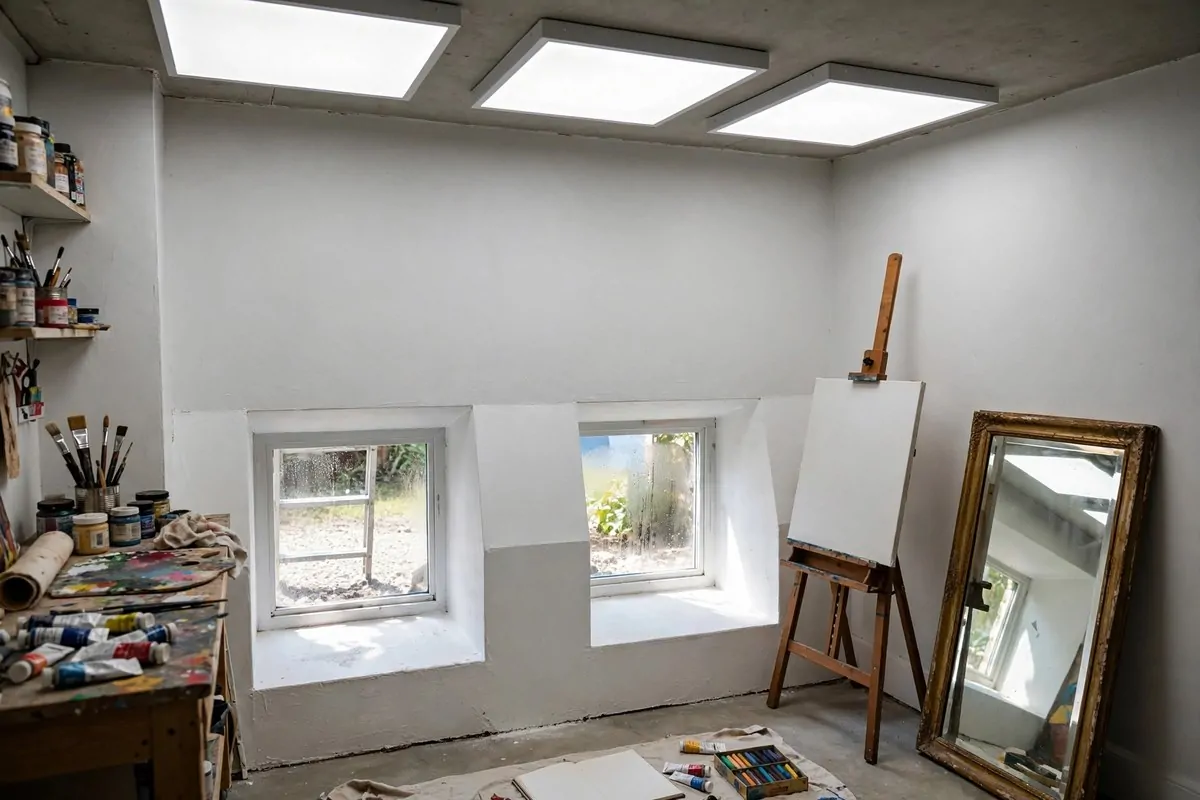
33 Small Space Living Room Ideas That Feel Open

My first small living room felt like a puzzle I could not solve. I had a big sofa, a big table, and no room to walk. I kept moving things and it still felt tight.
Then I learned a small trick. I stopped trying to fit big things in a small room. I started to pick things that fit the room I had.
You do not need a big room to feel calm at home. You need the right size of sofa, the right light, and a place for your stuff.
I made a lot of small changes in my own room. Some cost very little. Some took ten minutes. All of them made the room feel more open.
In this post I share what worked for me. I talk about light sofas, clear chairs, wall lamps, and smart storage. I keep it simple so you can try one idea today.
You can start with one small change. Move a lamp. Add a mirror. Clear one corner. Small steps add up fast in a small room.
All 33 ideas are in this one post for you. Read them all, pick your favourites, and make your small living room feel open and easy to live in.
1. A Light Sofa That Fits the Wall
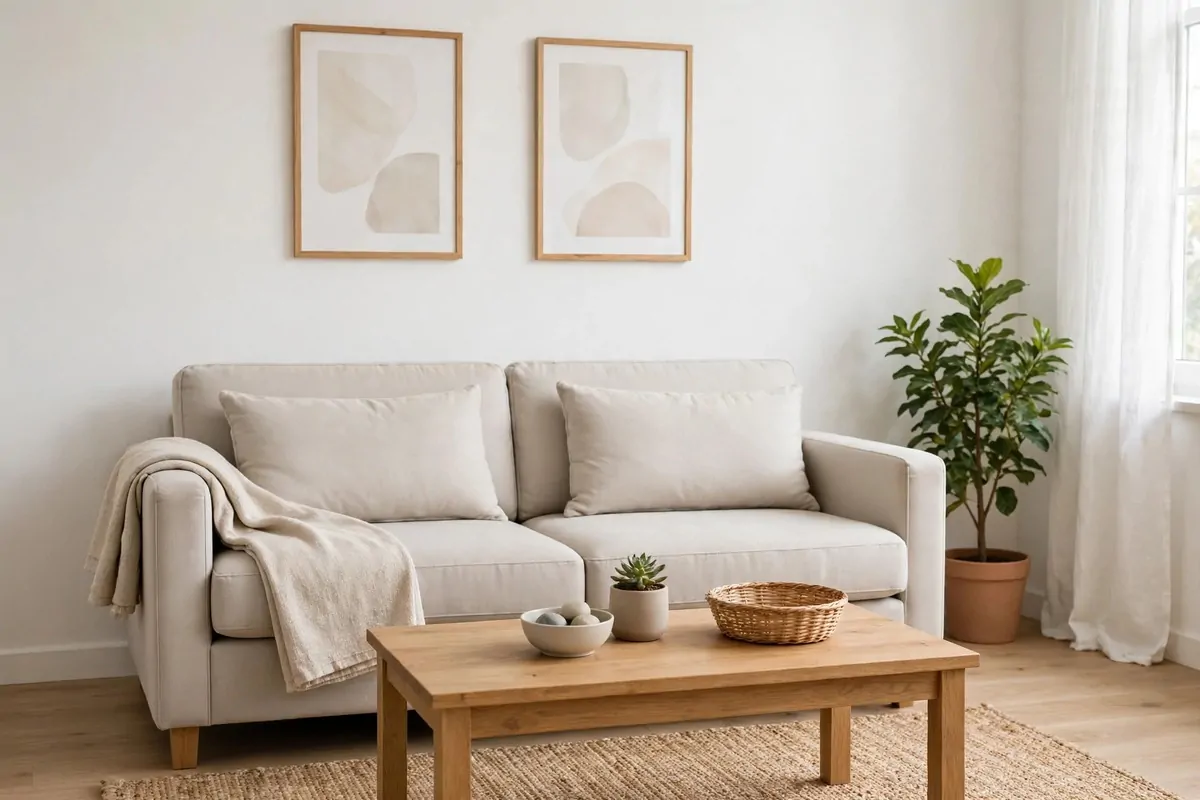
A light sofa can change a small room in one day. I picked one that fit my wall with a little space left on each side. It made the whole room feel wider.
Measure your wall first. I use a tape and write the number down. Then I look for a sofa that is a bit shorter than that number.
A sofa with thin arms helps a lot. Thick arms eat up sitting space. Thin arms give you more room to sit and more room to walk past.
Light colours help too. A pale grey or soft cream sofa does not feel heavy in the room. It blends in and lets your eyes rest.
Keep the back low if you can. A low back lets you see more of the wall behind it. That open view makes the room feel taller.
I keep only two cushions on my sofa. More cushions look messy fast in a small room. Two is enough for comfort and for a tidy look.
Typical cost is $300 to $900 for a small light sofa that fits a short wall.
Try the sofa before you keep it if you can. Sit down, lean back, and stretch your legs. It should feel soft but not sink too low.
A sofa that fits is the best start for a small room. Once it fits, the rest of the room is much easier to plan.
2. A Round Coffee Table With No Sharp Corners
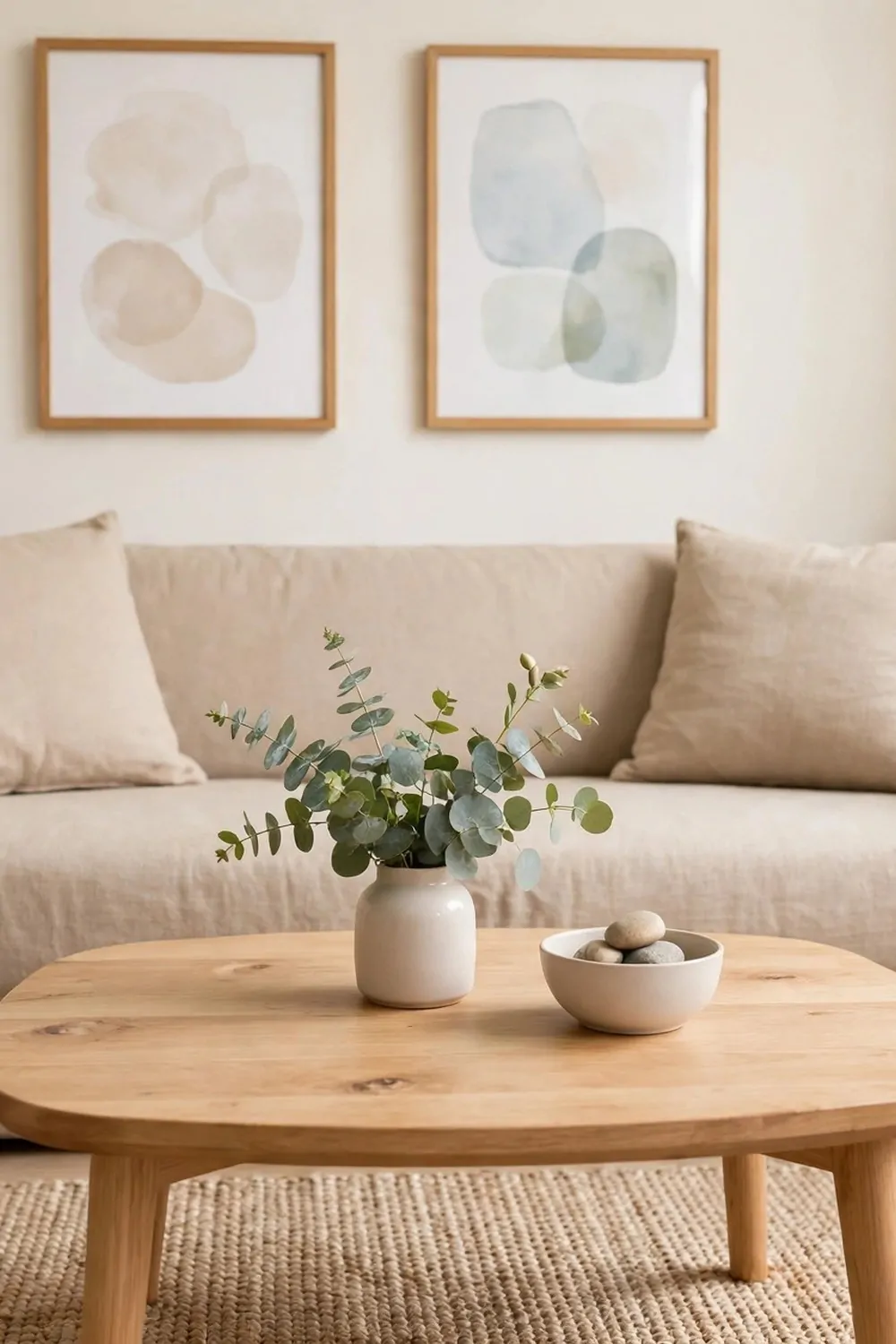
A round coffee table saved my shins and my space. I used to bump into the corners of my old square table every day. The round one has no corners to hit.
Round tables also help you walk around them. You can slip past on any side. That matters a lot when the room is tight.
Pick a size that leaves room to walk. I leave about a foot and a half between the table and the sofa. That gap feels just right.
A light wood top looks warm and soft. A glass top looks light and open. Both work well if the size is right for your room.
I keep only three things on my table. A small tray, a book, and a cup. When the top is clear, the room looks calm.
A lower table can make the room feel taller. It does not block your view across the room. Your eyes can travel over it with ease.
Typical cost is $60 to $250 for a small round coffee table.
If you have kids at home, a round table is a kind choice. No sharp edges means fewer bumps. It is safer and it still looks nice.
Try a round table for a week. You may find you walk through the room with more ease. I did, and I never went back to a square one.
3. Floating Shelves Above the Sofa
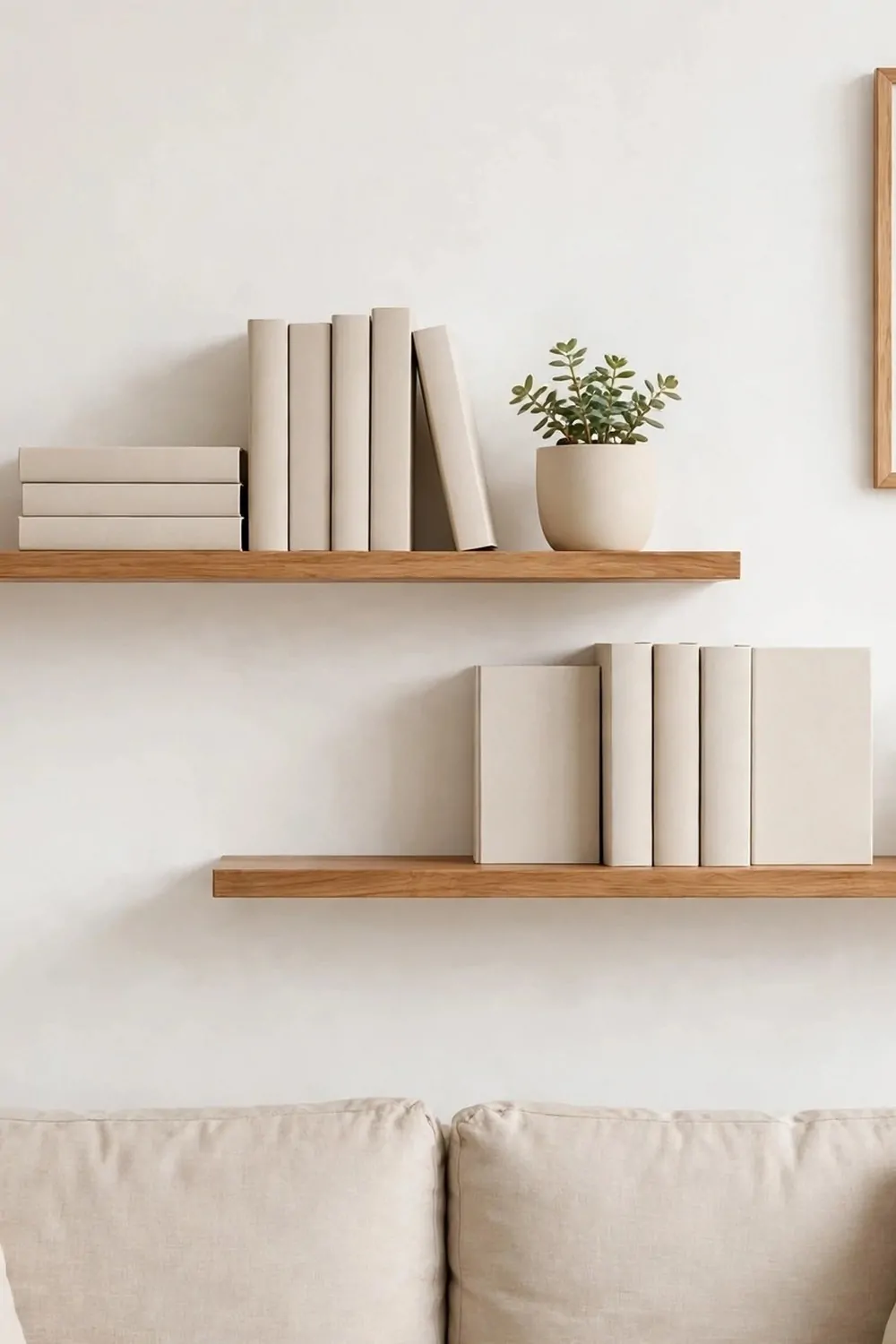
Floating shelves above the sofa use wall space that often sits empty. I put two shelves up and my books and small plants finally had a home.
Keep the shelves at a height you can reach with ease. I can reach mine when I stand on the floor. If they are too high, you will not use them.
Do not fill every inch of the shelf. Leave some empty space between things. Empty space makes the shelf look light, not crowded.
I mix books, a small plant, and one framed photo. That mix feels warm and lived in. Too many small things can look messy.
Wood shelves feel warm and soft. Metal shelves feel neat and strong. Glass shelves feel light and almost float on the wall.
Hang them straight and level. I use a small level tool and check twice. A shelf that tilts even a little looks wrong from across the room.
Typical cost is $20 to $45 for wood, $25 to $60 for metal, and $30 to $70 for glass.
Start with two shelves. You can add a third later if you need it. Two is often enough for a small room.
Floating shelves give you storage without taking floor space. That is the best kind of storage in a small living room.
| Shelf type | Look | Typical cost |
|---|---|---|
| Wood floating shelf | Warm and soft | $20 to $45 |
| Metal floating shelf | Neat and strong | $25 to $60 |
| Glass floating shelf | Light and airy | $30 to $70 |
4. A Slim Console Behind the Sofa
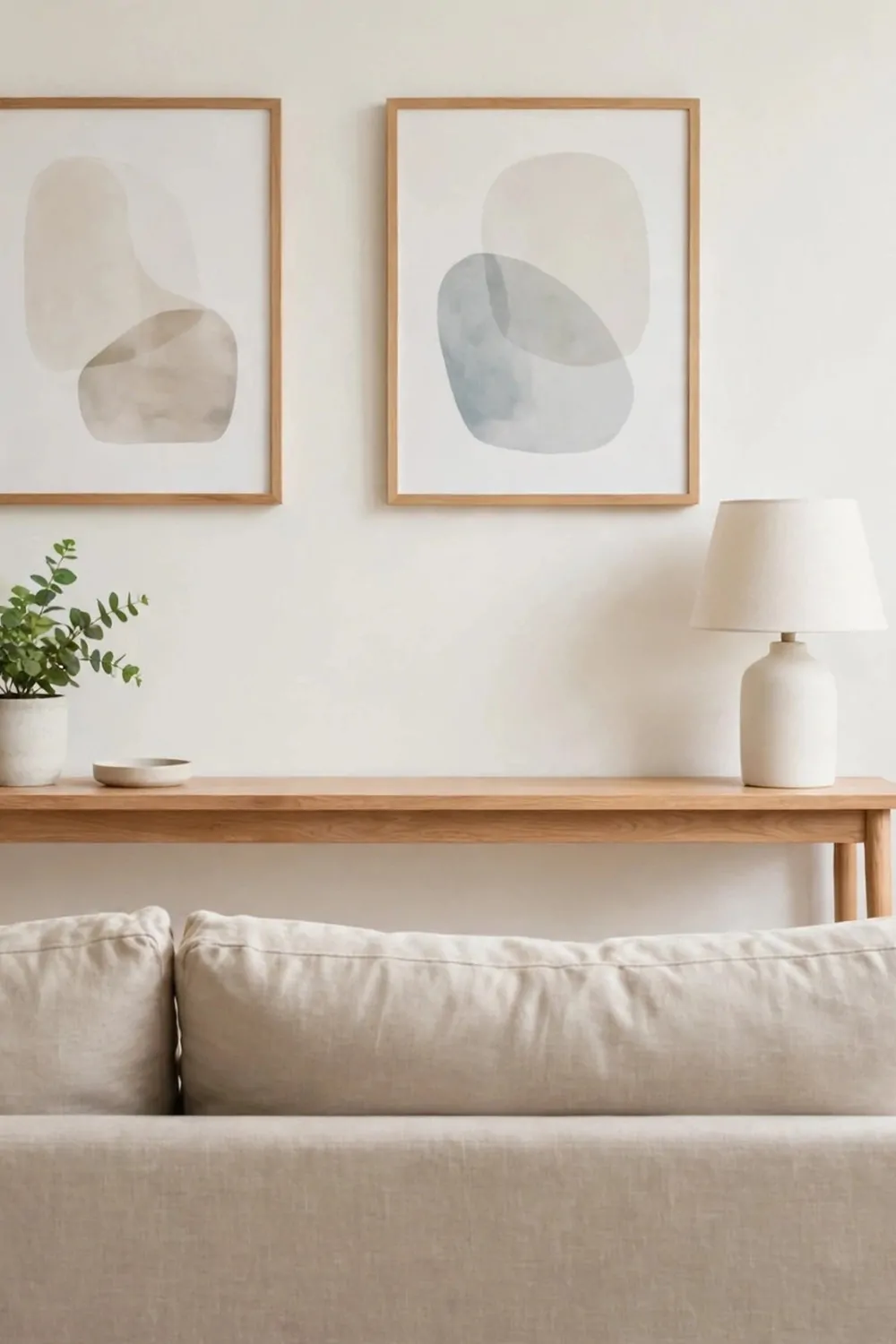
A slim console behind the sofa turns dead space into useful space. My sofa sits a little away from the wall, and the console fills that gap so well.
Pick one that is narrow. It should be just wide enough for a lamp and a book. If it sticks out too far, it will block the walkway.
I use mine for a small lamp and my phone charger. It keeps those things close but off the coffee table. The coffee table stays clear.
A console with a lower shelf gives you one more spot to store things. I keep a basket there for blankets. It is out of sight but easy to grab.
Match the height to your sofa back. If the console is a little lower than the sofa, it looks neat from the front. It will not stick up and look odd.
Keep the top simple. One lamp, one small plant, and one book is plenty. A clear top makes the whole room feel calm.
Typical cost is $70 to $220 for a slim console table.
This trick works best when your sofa floats in the room. It can also mark the edge of the sitting area. It tells your eyes where the sofa zone ends.
A slim console is a small change with a big payoff. It adds storage and style without taking much floor space at all.
5. Sheer Curtains That Let the Light In
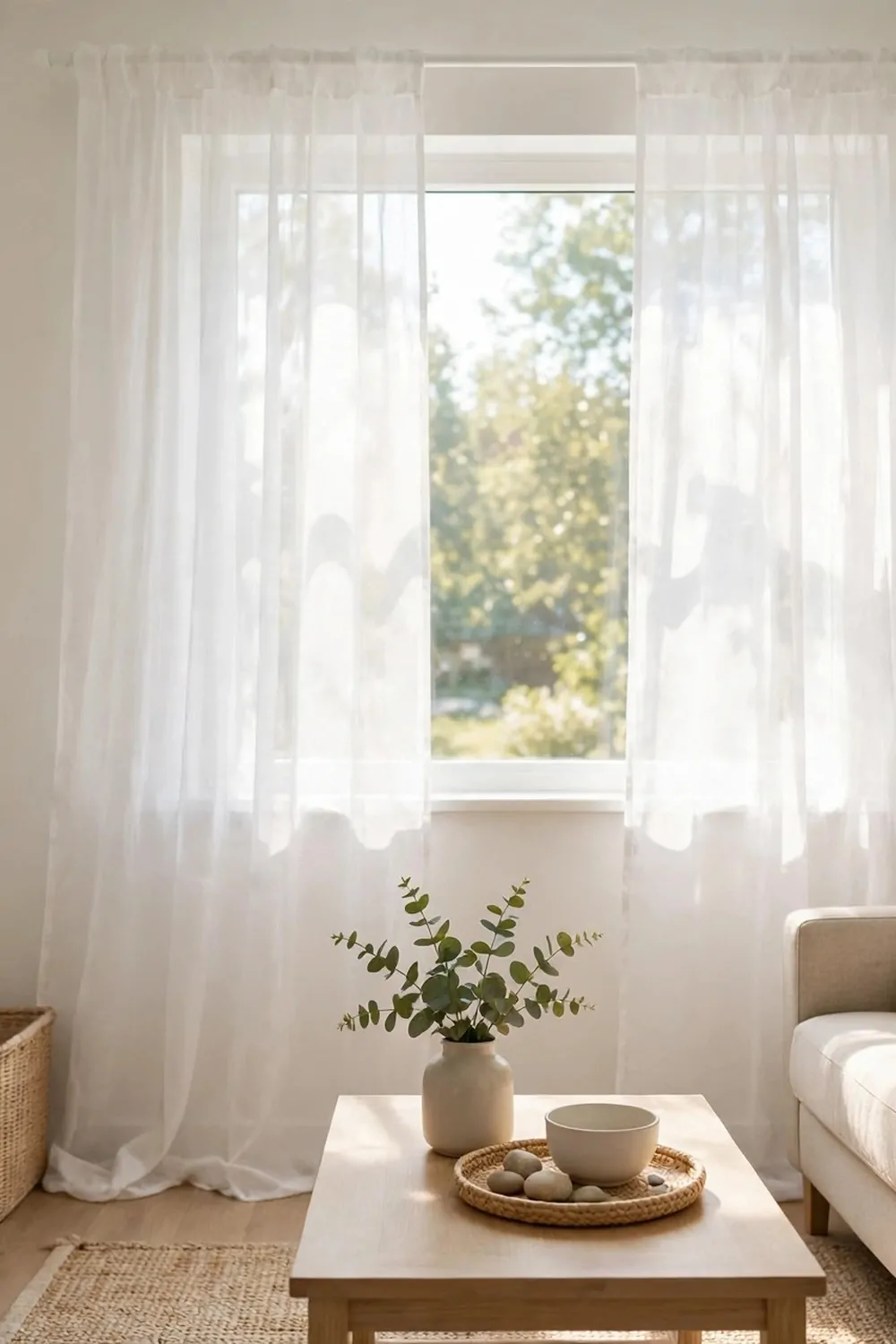
Sheer curtains changed the light in my room. Heavy curtains made the room feel dark and small. Sheer ones let the sun in and still give me privacy.
Hang them high and wide. I hang my rod close to the ceiling and a little past the window edge. That makes the window look bigger than it is.
White or soft cream sheer curtains work best. They glow a little when the sun hits them. They make the whole room feel bright and airy.
Keep them long enough to touch the floor just a bit. Short curtains can make a room look cut off. Long ones draw your eyes up and make the room feel taller.
I wash mine often because dust shows on white fabric. A quick wash keeps them fresh. Clean curtains let in more light.
You can layer sheer curtains with a light blind if you need more shade. The blind stays up most of the day. The sheer curtain stays down for soft light.
Typical cost is $25 to $80 for a pair of sheer curtains.
Open the curtains wide in the morning. Let the light fill the room. A bright room always feels bigger than a dark one.
Sheer curtains are a simple fix. They soften the window, brighten the room, and cost very little to try.
6. A Large Mirror Across From the Window
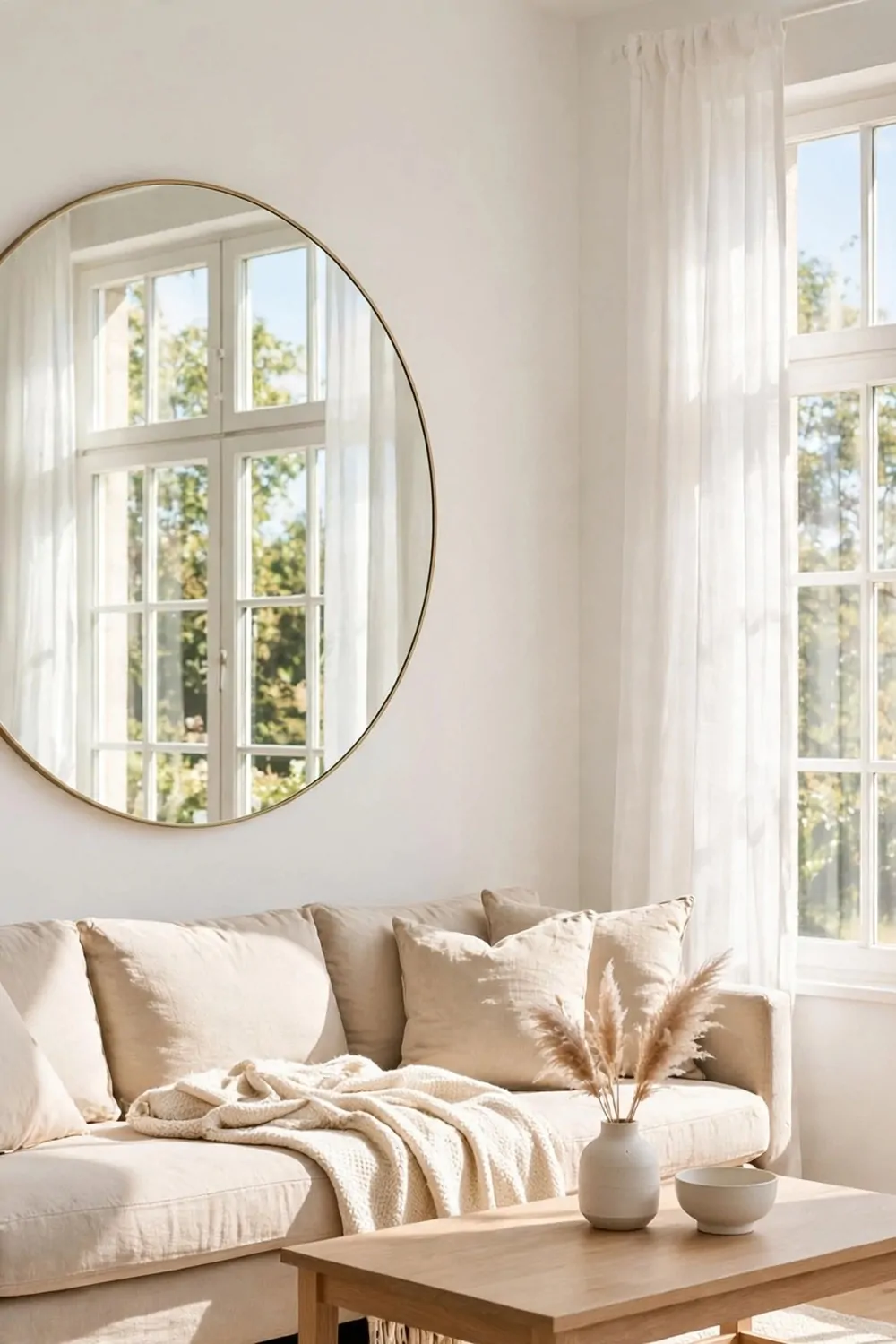
A large mirror across from the window doubles the light in my room. I hung one and the room felt brighter the same day. It was like adding a second window.
Pick a mirror that is big enough to catch the view. A small mirror will not bounce much light. A large one can reflect the sky and the trees outside.
Hang it at eye level when you sit down. I checked mine from the sofa. I could see the window and the light in it from my seat.
A simple frame works best. A thin wood or black frame looks neat. A fancy frame can fight with the rest of the room.
Keep the mirror clean. A dusty mirror looks dull and reflects less light. I wipe mine once a week with a soft cloth.
Do not hang a mirror where it reflects clutter. Point it at the window or at a tidy wall. What it reflects should be calm and bright.
Typical cost is $50 to $200 for a large wall mirror.
If you rent your home, use strong hooks that do not leave big holes. Check the weight first. A large mirror is heavy and needs a safe hook.
A mirror is one of the fastest ways to make a small room feel open. It adds light, depth, and a sense of space with very little work.
7. A Rug That Defines the Sitting Area
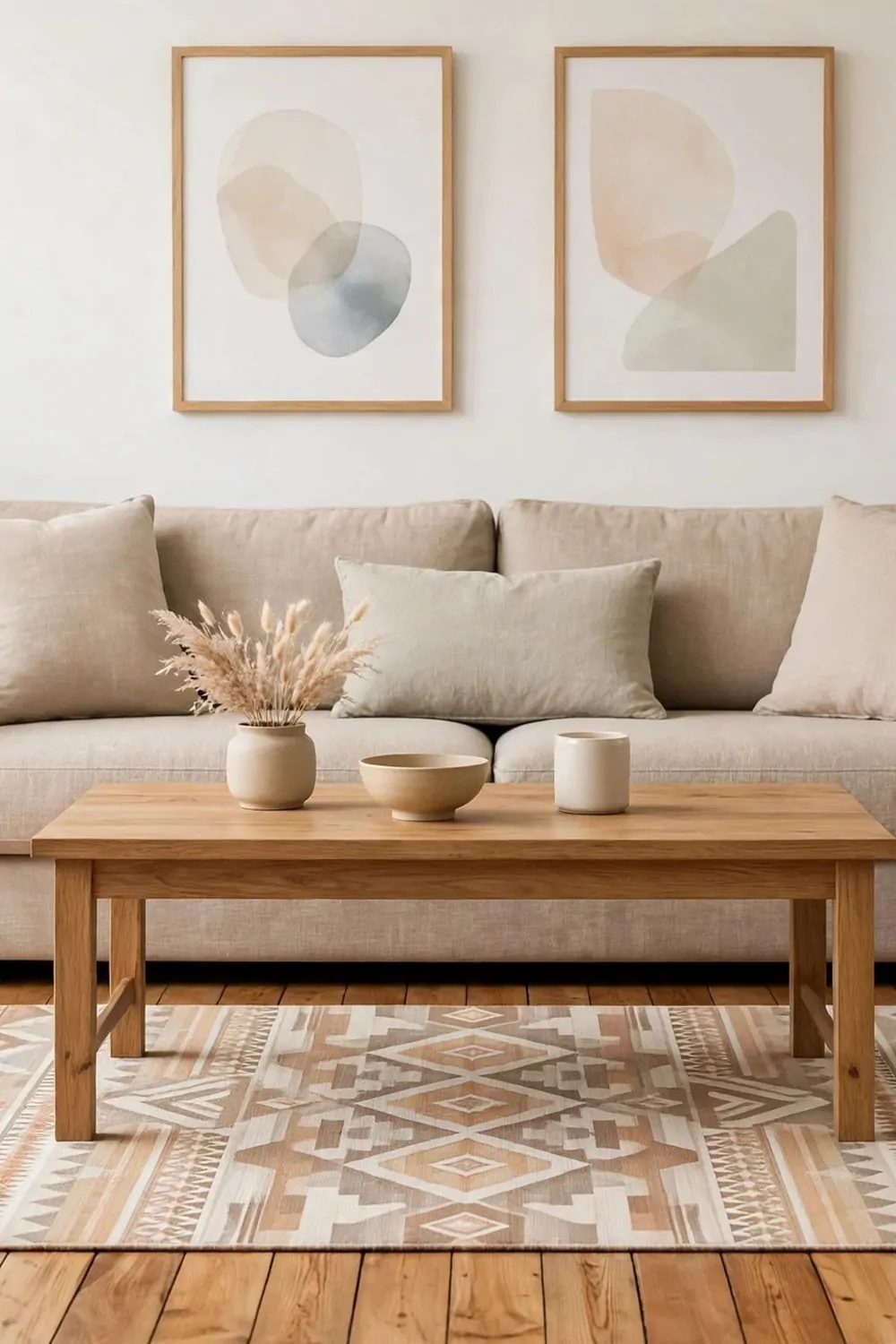
A rug can mark where your sitting area starts and ends. In my small room, the rug tells your eyes that this spot is for sitting and talking. It pulls the room together.
Pick a rug that fits under the front legs of your sofa and chairs. If the rug is too small, the furniture looks like it is floating. If it fits, the group feels like one unit.
A light rug with a soft pattern works well. It adds warmth without making the room feel dark. A very dark rug can make a small floor feel heavy.
Keep the rug flat and low. A thick rug can trip you up in a tight space. A low rug is easy to walk on and easy to clean.
I vacuum my rug twice a week. Crumbs and dust show fast on a light rug. A clean rug makes the whole room look fresh.
Leave a little floor showing around the rug. That border of bare floor makes the rug look planned. It also makes the room feel a bit wider.
Typical cost is $80 to $300 for a living room rug that fits a small sitting area.
If you have a small budget, try a plain rug first. You can add a smaller patterned rug on top later. Layering can add colour without a big cost.
A good rug is like a frame for your sofa and chairs. It holds the group together and makes the small room feel like a real living room.
8. Wall-Mounted Lamps Instead of Floor Lamps
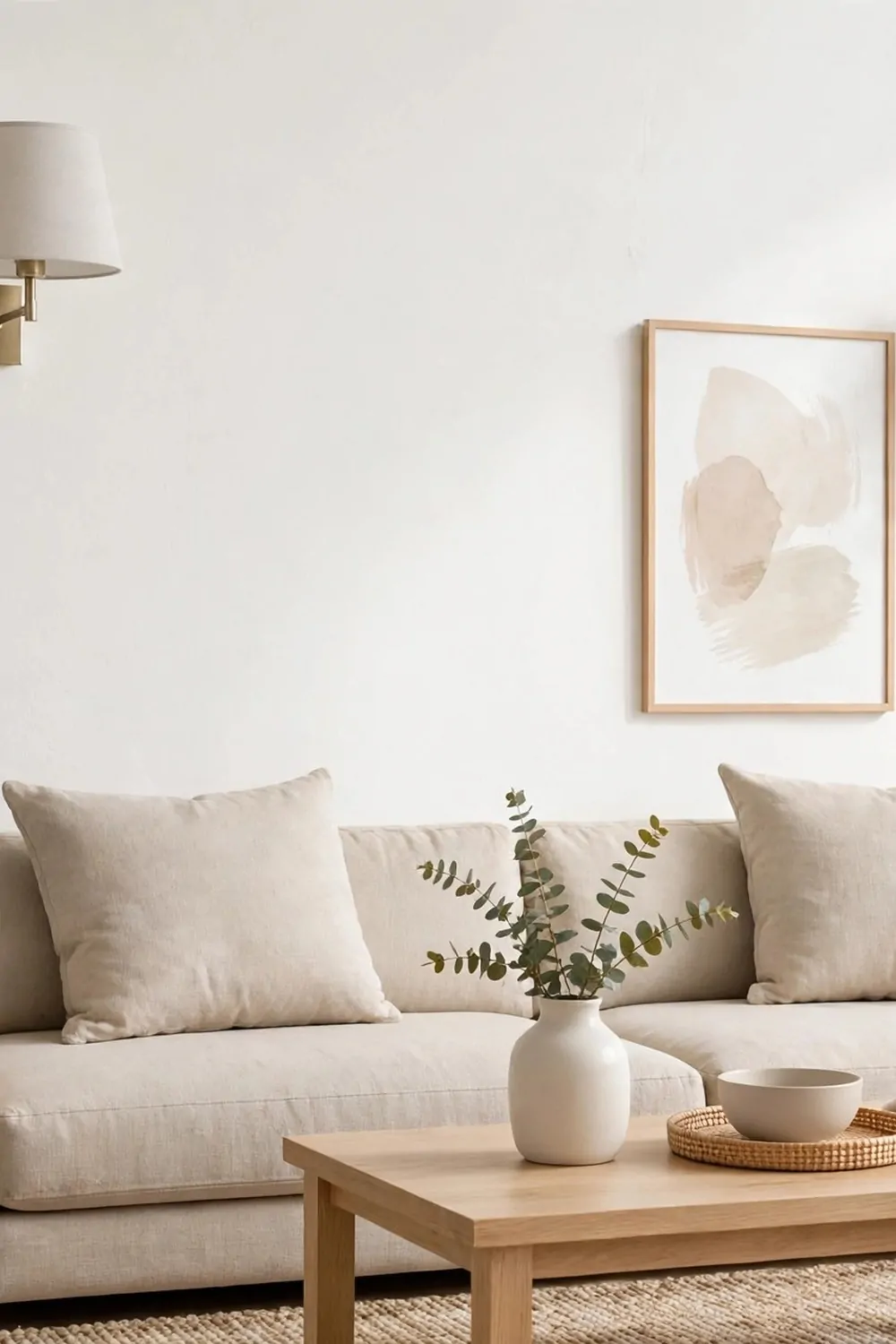
Wall lamps freed up floor space in my room. My old floor lamp took up a whole corner. The wall lamp gives the same light and leaves the floor clear.
Mount one on each side of the sofa if you can. That gives you even light for reading. It also makes the sofa area feel balanced and neat.
Pick a lamp with a shade that points down. Down light is soft and easy on your eyes. It is good for reading and for quiet evenings.
Use warm bulbs. Warm light feels cosy in a small room. Cool white light can feel too sharp and make the room feel like an office.
I like a lamp I can turn with a small switch on the wall. It is easy to reach from the sofa. I do not have to get up to change the light.
Keep the cords tidy. If the lamp plugs in, run the cord down the wall with a small clip. A loose cord looks messy and can trip you.
Typical cost is $40 to $150 for a pair of wall-mounted lamps.
Wall lamps also work well next to a reading chair. One lamp by the chair makes a small reading nook. It feels like your own quiet spot.
When you free the floor, the room feels bigger at once. Wall lamps are a smart swap for any small living room.
9. A Fold-Down Wall Desk in the Corner
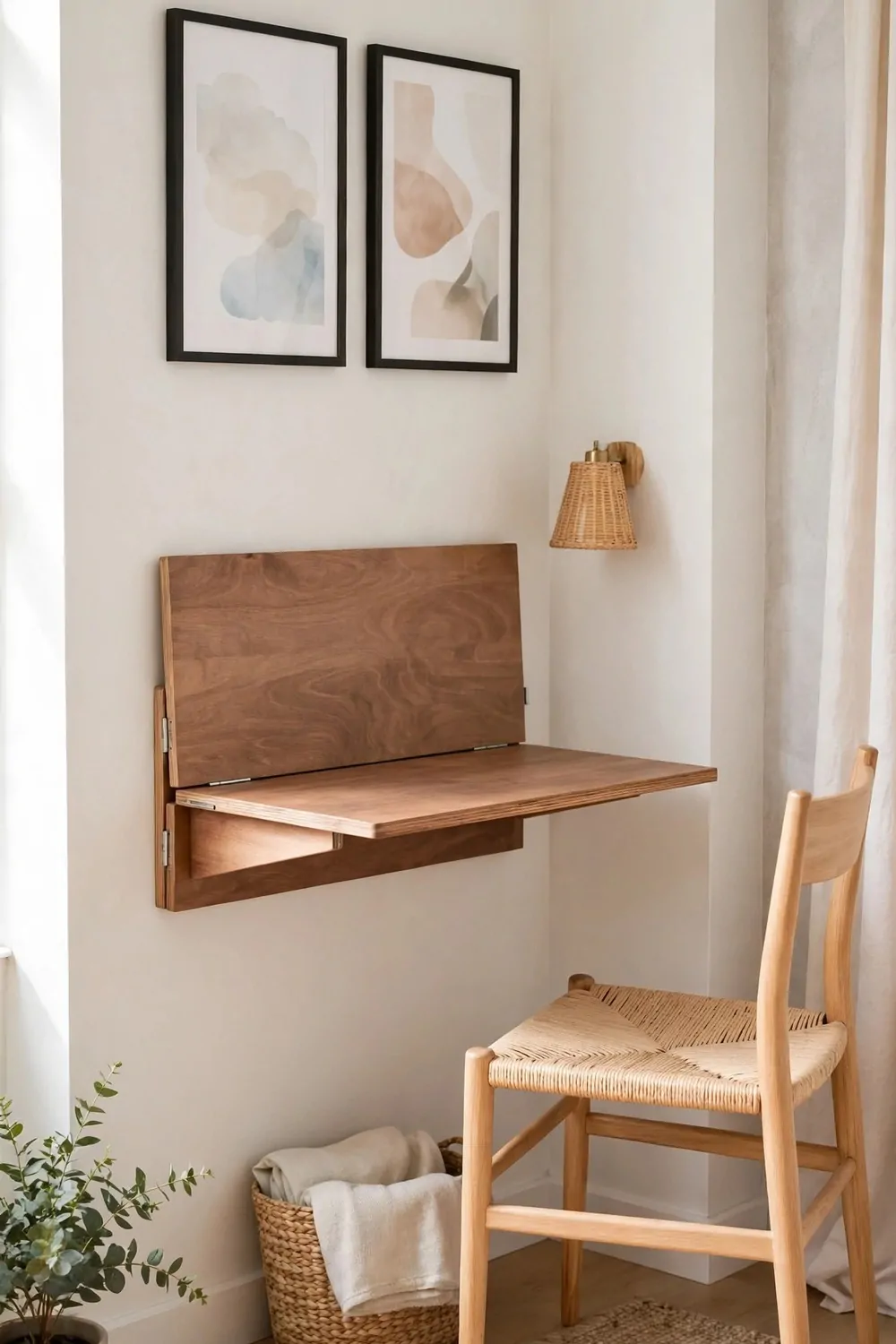
A fold-down desk in the corner gave me a work spot without a big desk. I fold it up when I work and fold it down when I am done. The room stays open.
Pick a corner that gets good light. I use the corner near the window. Natural light helps me focus and makes work feel less tiring.
Keep only what you need on the desk. A laptop, a notebook, and a pen is enough. When the desk is clear, it is easy to fold away.
Add a small shelf above the desk for papers. That keeps the desk top free. It also keeps your work close but out of the way.
Use a chair that slides under the desk or tucks away. A folding chair or a small stool works well. It does not block the room when you are not working.
Check that the desk locks flat against the wall. A good fold-down desk stays flat and safe. It should not swing open on its own.
Typical cost is $90 to $280 for a fold-down wall desk.
This desk is great for small homes where one room does many jobs. You can work, then fold it away and the room is a living room again.
A fold-down desk is a clever use of a dead corner. It gives you a work place and keeps your small room feeling open.
10. Storage Ottoman as a Coffee Table
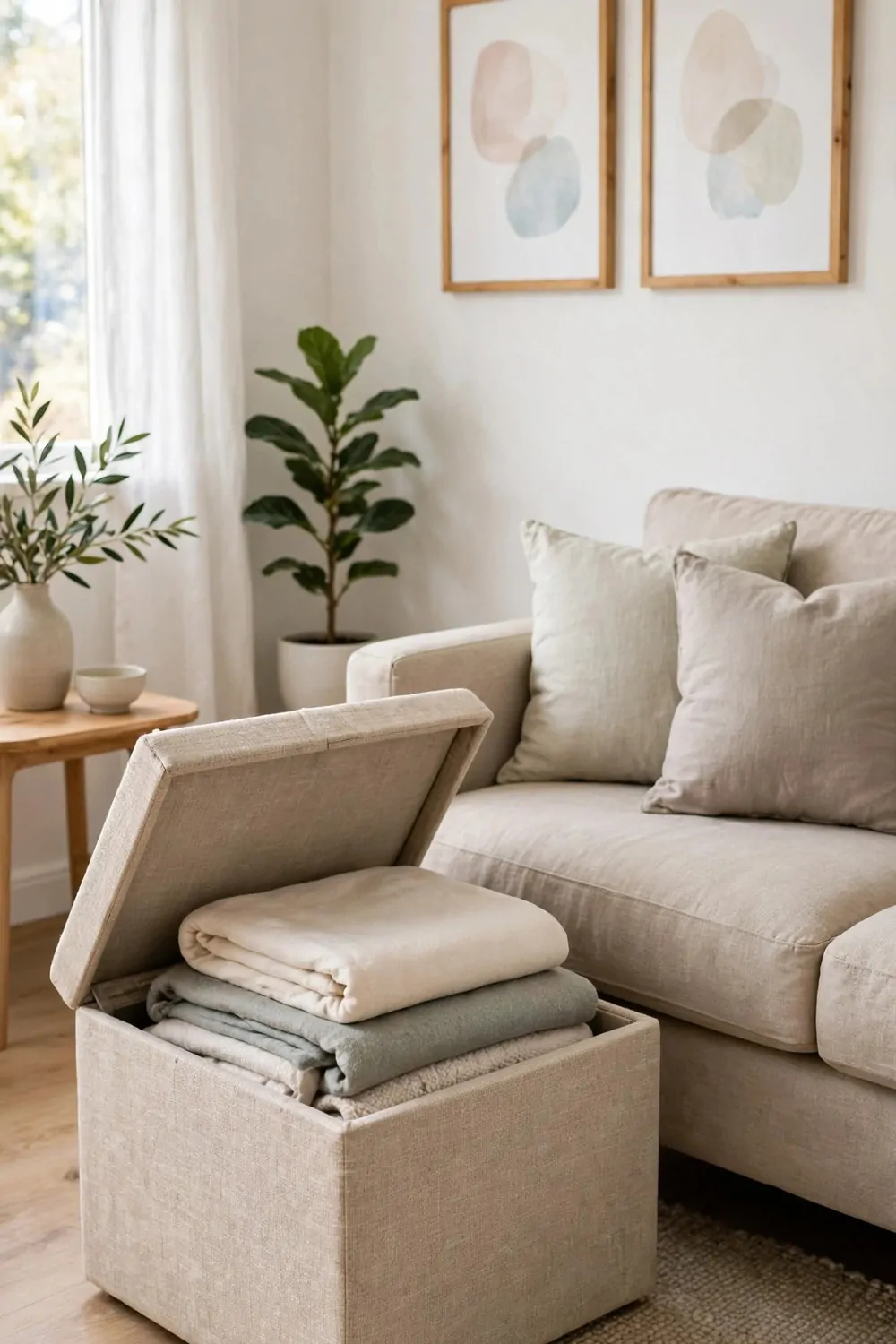
A storage ottoman works as a coffee table and a hidden box in one. I lift the top and store blankets, books, and games inside. The room stays tidy.
Pick one that is firm on top. A firm top can hold a tray with cups. A soft top will wobble and spill your drink.
Use a tray on top to make a flat surface. I use a wood tray with low sides. It holds my cup steady and looks neat.
A light fabric ottoman feels soft and warm. A leather look top is easy to wipe clean. Pick what fits how you live each day.
Keep the inside organised with small boxes. I have one box for blankets and one for games. When I open it, I can find what I need fast.
Put the ottoman where a coffee table would go. Leave room to walk around it. It should feel like a table, not a big block in the way.
Typical cost is $70 to $240 for a storage ottoman that works as a coffee table.
Kids love an ottoman because it is soft to sit on. It can be an extra seat when friends visit. That extra seat helps in a small room.
A storage ottoman hides clutter and gives you a table in one piece. It is one of my favourite swaps for a small living room.
11. A Narrow Bookshelf in the Dead Corner
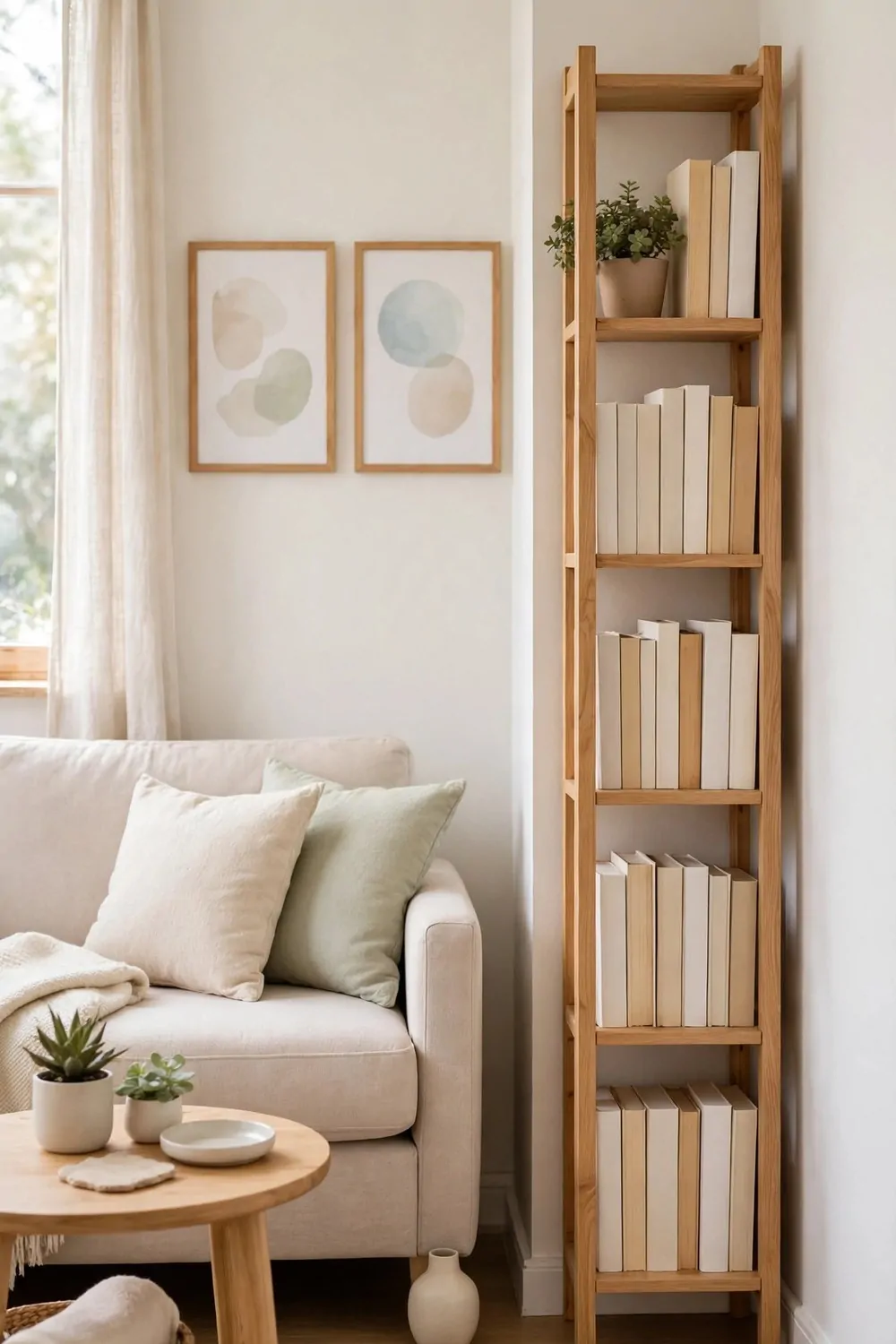
Every small room has a dead corner that sits empty. I put a narrow bookshelf there and it finally felt useful. It holds books without taking much space.
Measure the corner first. A shelf that is too wide will stick out and block the walkway. A narrow one fits snug and looks planned.
Pick a tall shelf to use the height. Tall shelves give you lots of storage on a small footprint. They draw your eyes up too.
Keep heavy books on the lower shelves. That keeps the shelf steady. Light things can go up high where they are easy to see.
Mix books with a few small objects. I put a small vase and a photo on one shelf. That keeps the shelf from looking like a plain book stack.
Leave one shelf a little empty. That breathing room makes the shelf look light. A packed shelf can make a corner feel heavy.
Typical cost is $60 to $200 for a narrow tall bookshelf.
Anchor the shelf to the wall if you can. A tall shelf can tip if it is bumped. A wall anchor keeps it safe and steady.
A narrow shelf turns a wasted corner into a useful spot. It adds storage and charm without crowding your small room.
12. Plants on High Shelves
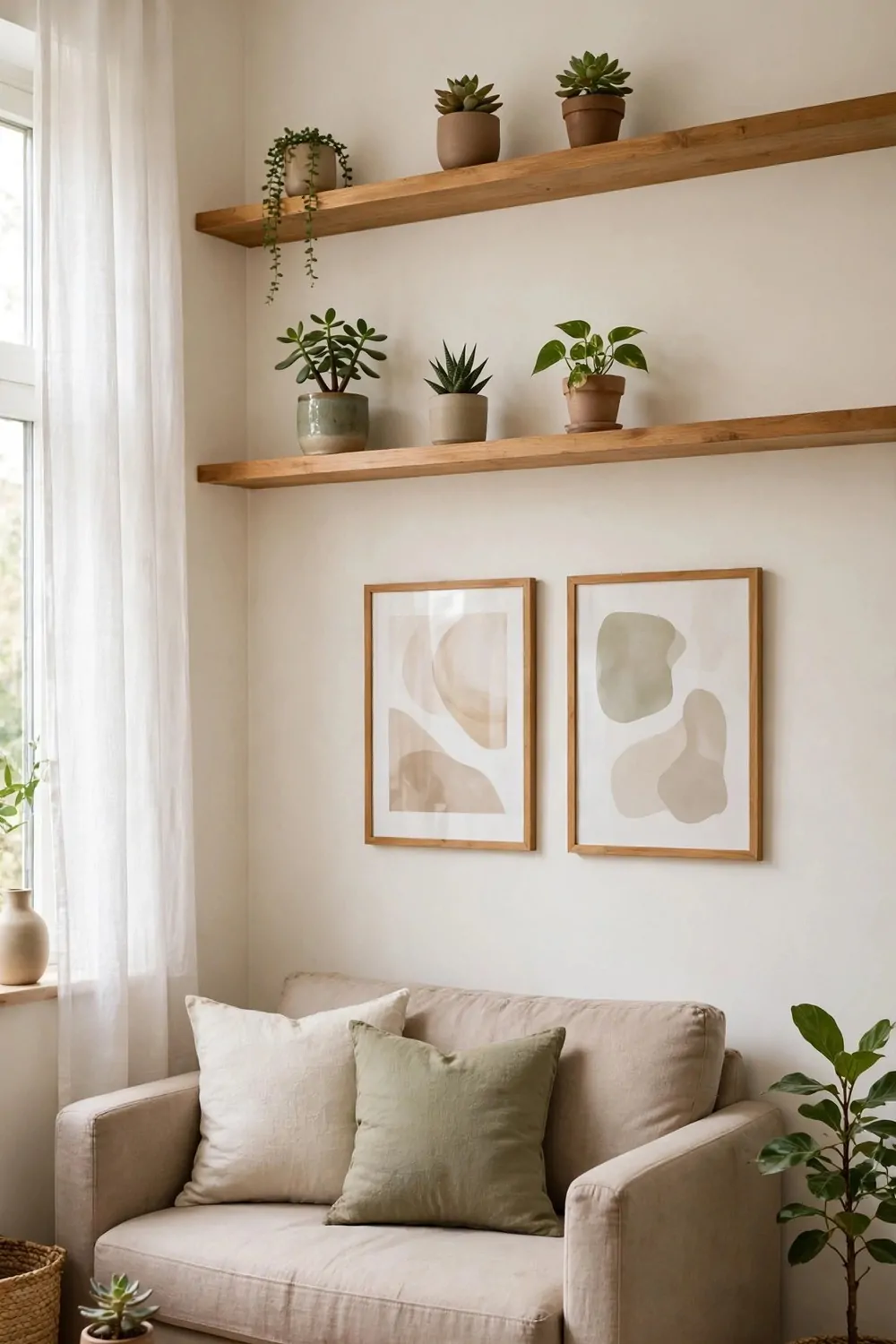
Plants on high shelves add life to a small room without taking floor space. I put a few small pots up high and the room felt fresh right away.
Pick plants that trail down a little. Their leaves hang over the shelf edge and soften the wall. That soft green line looks so pretty.
Use light pots that are easy to lift. I use small pots I can carry with one hand. Heavy pots are hard to water when they are up high.
Water them with care. I take each pot down to water it over the sink. That way water does not drip on the shelf or the wall.
Give them enough light. A shelf near a window works best. If the shelf is in a dark spot, pick plants that like low light.
Start with two or three plants. Too many pots can look messy up high. A few green plants is enough to make the room feel alive.
Typical cost is $15 to $60 for a few small plants and pots for high shelves.
Fake plants can work too if you forget to water. Pick ones that look real and soft. A good fake plant adds green without any care.
High plants bring nature into your room and keep your floor clear. It is a simple way to make a small space feel fresh and calm.
13. A Light Paint Colour on All Four Walls
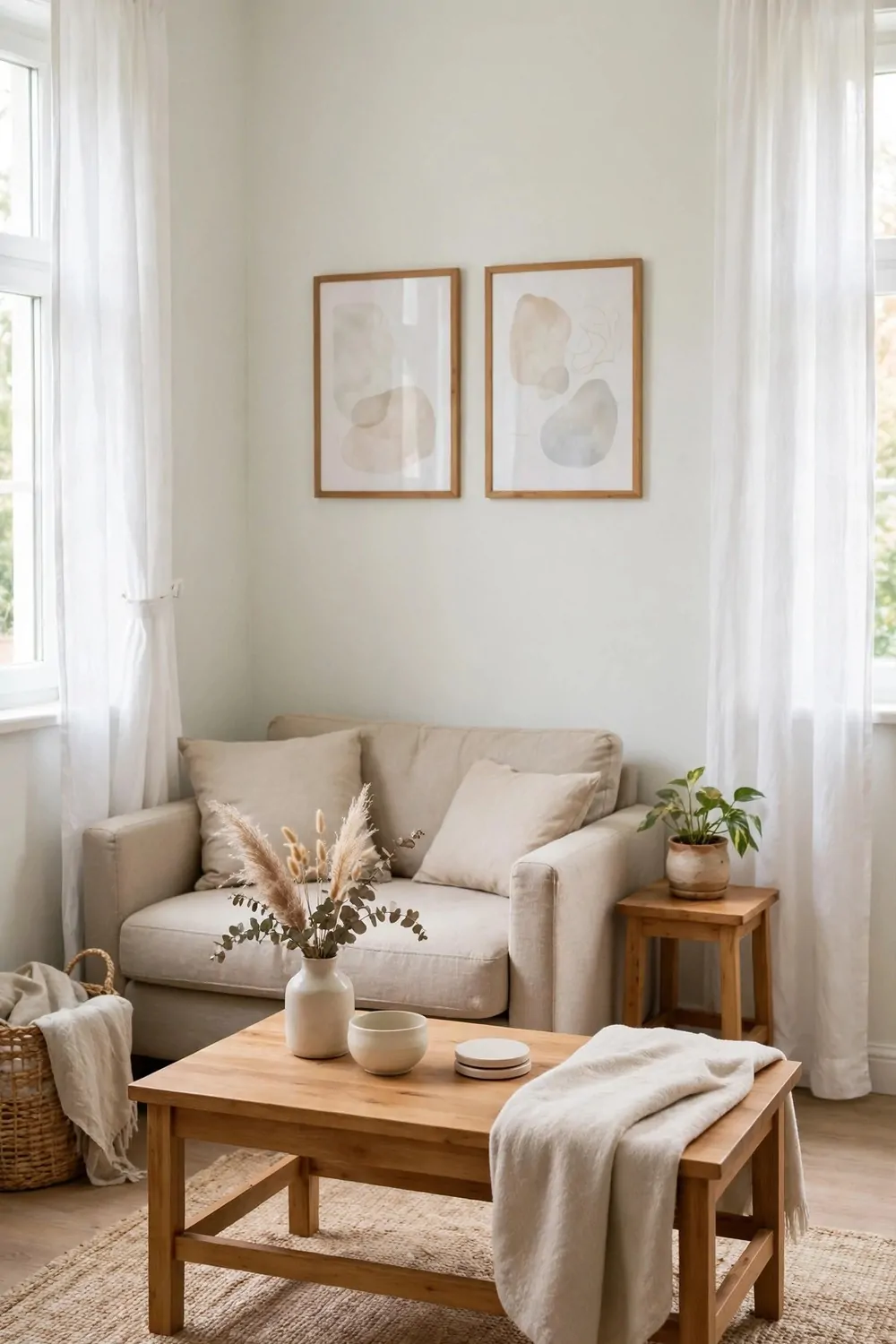
A light paint colour on all four walls made my room feel bigger in one weekend. I picked a soft warm white and the walls seemed to step back.
Paint the ceiling white too. A white ceiling lifts the room up. A dark ceiling can press down and make a small room feel low.
Use the same colour on all four walls. When the walls match, your eyes move around the room with ease. The room feels like one open space.
Test the colour first with a small patch. I painted a small square and watched it in morning light and evening light. The colour can look different at each time of day.
A soft cream, pale grey, or light warm beige all work well. Pick one that feels calm to you. It should feel like a fresh start, not too cold.
Keep the trim a little brighter than the walls. Bright trim frames the room and makes the walls look clean. It adds a crisp edge without a strong contrast.
Typical cost is $40 to $120 for paint and supplies for a small living room.
Paint with a roller for smooth walls. Take your time and do two thin coats. Thin coats dry even and look much better than one thick coat.
Light walls are a simple base for everything else in the room. They let your furniture and light shine, and they make a small room feel open.
14. Clear Furniture That Disappears
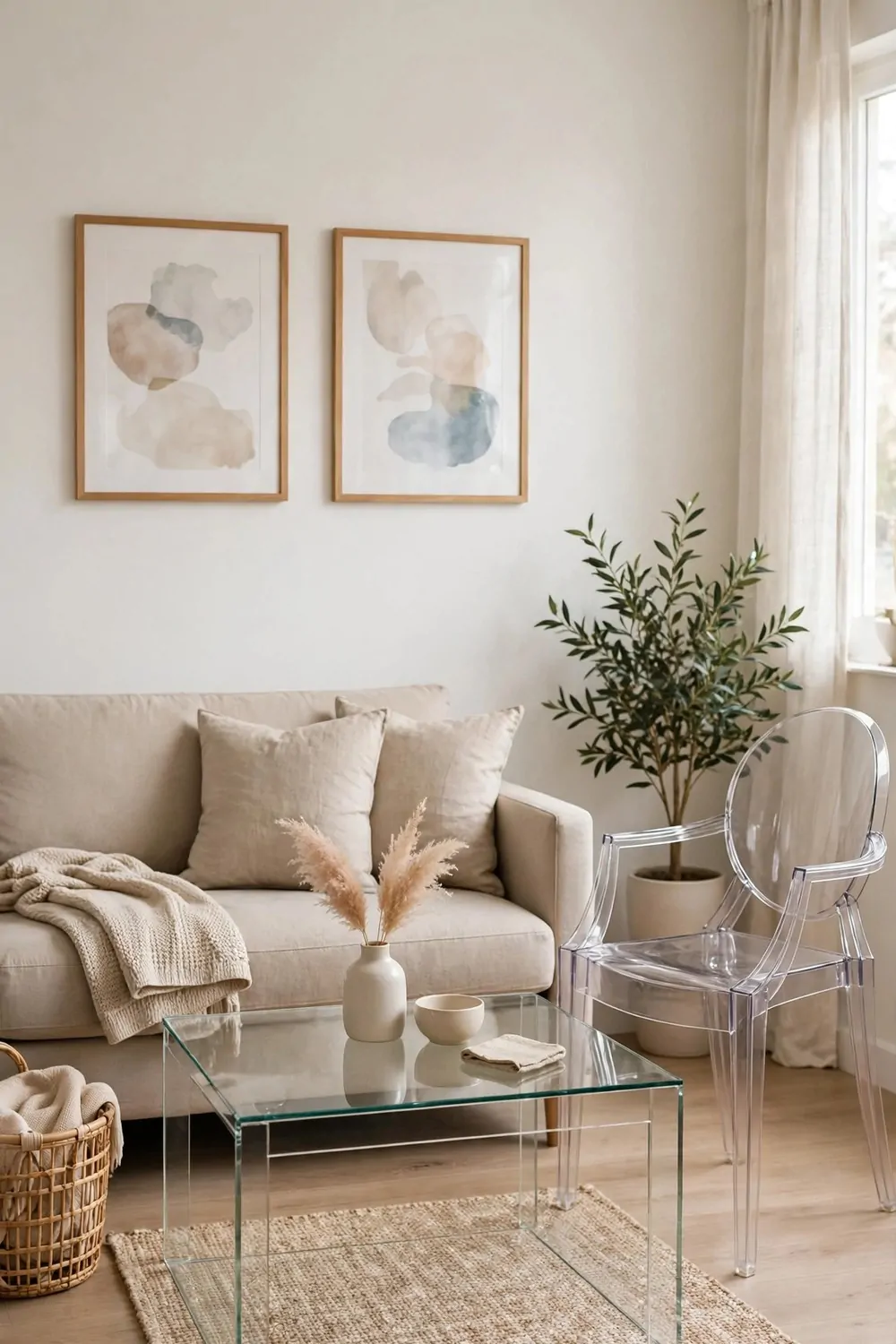
Clear furniture almost disappears in a small room. I added a clear chair and you can see the floor and wall through it. The room feels less full at once.
Pick one clear piece to start. A clear side chair or a small clear table is enough. Too many clear pieces can look cold and a bit strange.
Clear chairs are light to move. I can slide mine to the table or back to the corner with ease. That flex helps when friends visit.
Keep clear furniture clean. Finger marks show fast on a clear surface. I wipe mine with a soft cloth and a little warm water.
Pair clear pieces with soft fabric. A clear chair next to a soft sofa looks balanced. The soft fabric warms up the cool clear look.
Use a stiff card to smooth out any air bubbles if you add a clear film or cover. Press slow from the centre out. That keeps the surface flat and neat.
Typical cost is $50 to $180 for a clear chair or small clear table.
Clear furniture works best in a room with good light. The light passes through it and the room feels airy. In a dark room it can look a bit dull.
One clear piece can open up a tight corner. It gives you a seat or a surface without adding visual weight to the room.
15. A TV Mounted on the Wall
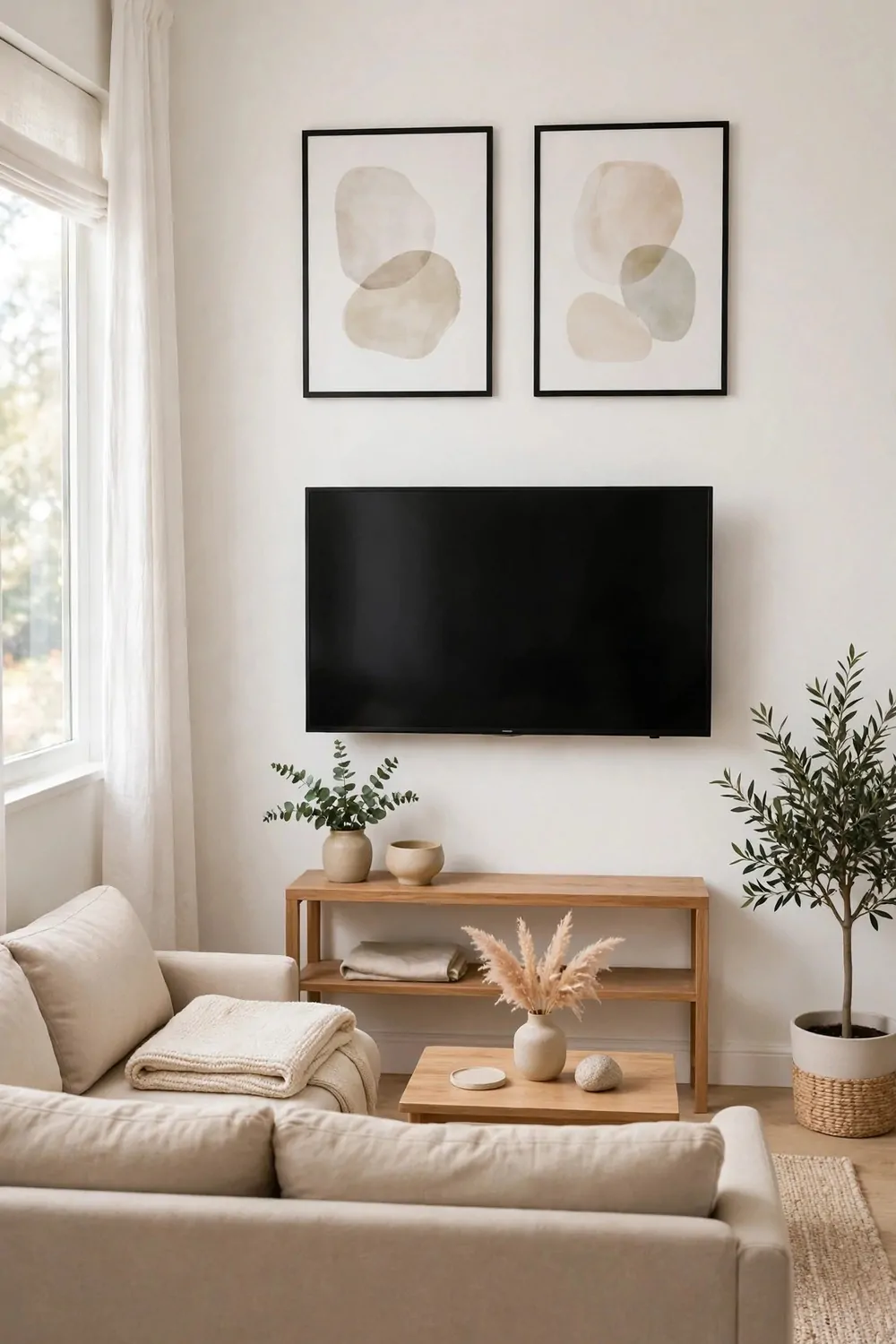
A TV mounted on the wall freed up a lot of space in my room. My old TV stand took up a big chunk of floor. Now the wall holds the TV and the floor is clear.
Mount it at eye level when you sit on the sofa. I sat down and marked the spot where my eyes rest. That height feels comfy for long shows.
Pick a mount that tilts a little. A tilt mount lets you adjust the angle. It helps if you watch from the sofa and from a chair on the side.
Hide the cords if you can. I run mine through a small cord cover on the wall. The cover paints the same colour as the wall and almost disappears.
Keep a small shelf below the TV for your boxes. One low shelf is enough for a small player and a remote. It keeps the area neat.
Check the wall type before you drill. A solid wall holds a mount well. If your wall is soft, use the right plugs for a safe hold.
A fixed mount is $20 to $40, a tilt mount is $30 to $60, and a full-motion mount is $60 to $120. Typical cost is $20 to $120 for a wall mount, not counting the TV itself.
A wall TV makes the room look tidy and modern. It also gives you space below for a plant or a small basket. That lower space can be useful.
Mounting the TV is a weekend job that pays off every day. The room feels more open and the TV feels like part of the wall.
| Mount type | Typical cost | Best for |
|---|---|---|
| Fixed mount | $20 to $40 | A flat neat look |
| Tilt mount | $30 to $60 | A small angle change |
| Full-motion mount | $60 to $120 | Watching from any seat |
16. Baskets Under the Coffee Table
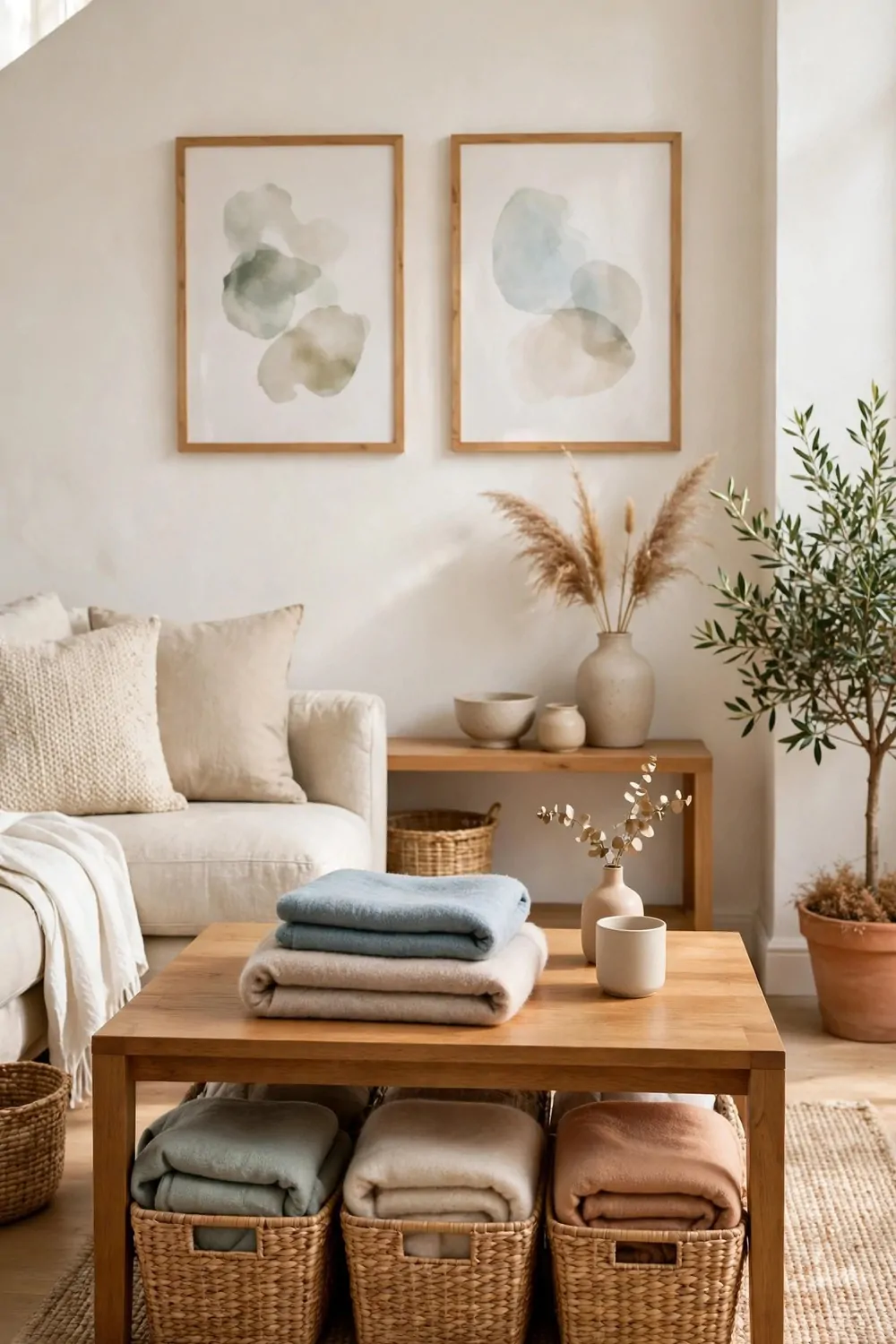
Baskets under the coffee table hide clutter in plain sight. I slide two baskets under mine and they hold toys, books, and cords. The top stays clear.
Pick baskets that fit the space under your table. Measure the height first. A basket that is too tall will not slide in and will look stuck.
Use one basket for each kind of thing. I have one for books and one for small bits. When each basket has a job, it is easy to tidy up fast.
Natural woven baskets look warm and soft. They add texture to the room. A plain fabric basket looks neat and calm too.
Keep the baskets low and flat. Tall baskets under a low table can bump the table top. Low baskets slide in and out with ease.
Label the baskets if you share the room. A small tag tells everyone where things go. It helps kids put things back in the right spot.
Typical cost is $20 to $70 for a pair of baskets that fit under a coffee table.
Empty the baskets once a month. Old bits creep in and fill them up. A quick sort keeps them useful and not just another junk spot.
Baskets are a cheap and easy storage fix. They use the space under your table and keep your small living room looking tidy.
17. A Small Round Side Table
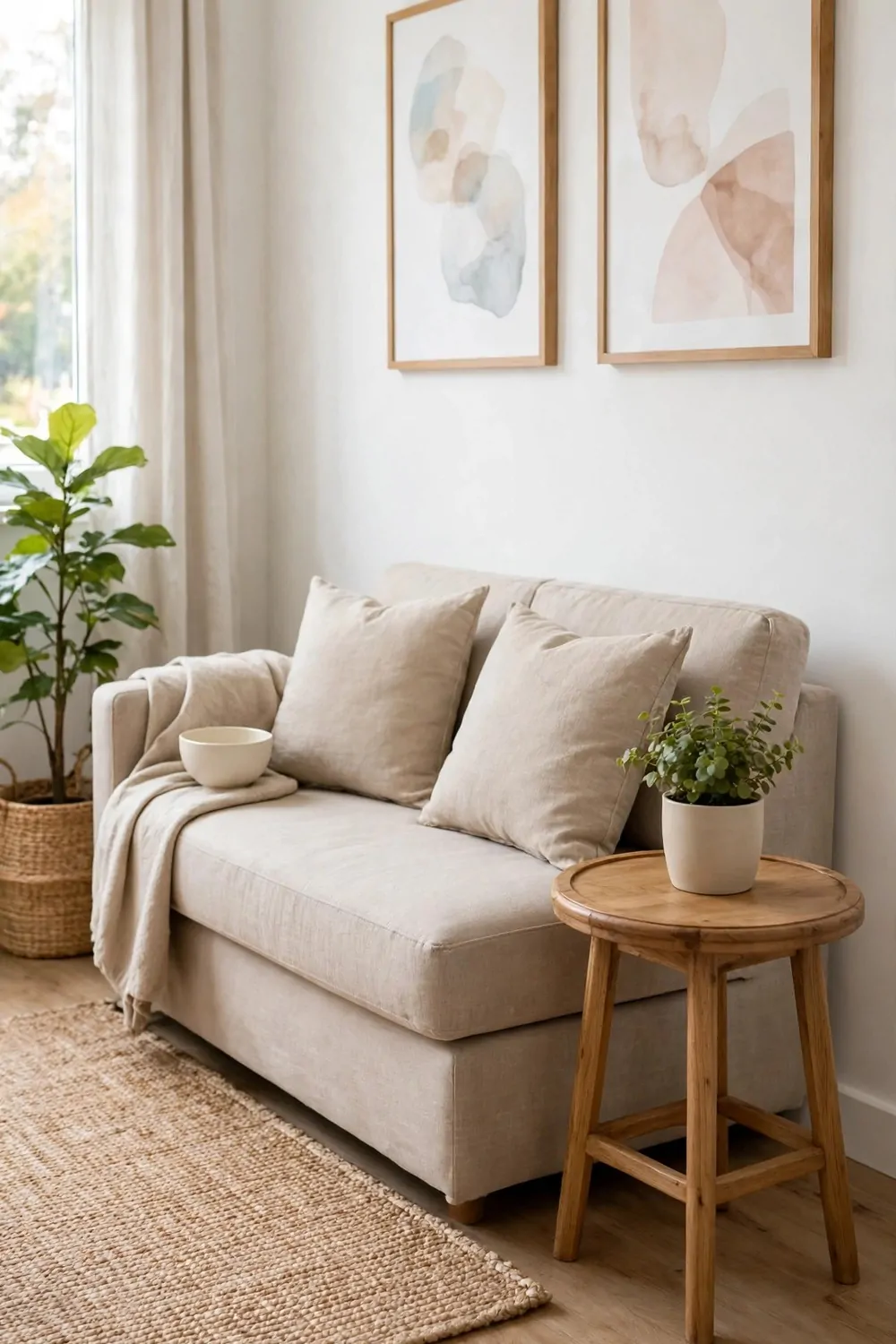
A small round side table is the quiet helper in my living room. It holds my cup, my book, and my phone right next to the sofa. I reach it without getting up.
Pick a table that is close to your sofa arm height. If it is too low, you have to bend down. If it is too high, it feels awkward to use.
Round is best in a tight space. There are no sharp corners to bump into when you walk past. It tucks in close to the sofa with ease.
Keep the top clear except for one or two things. A cup and a book is enough. A clear top makes the table feel useful, not cluttered.
A table with a lower shelf gives you one more spot. I keep a small basket there for my notebook. It is out of sight but close by.
Move the table where you need it. A light side table can move from the sofa to a chair in seconds. That flex is so handy in a small room.
Typical cost is $30 to $100 for a small round side table.
Match the table to your room style. A wood top feels warm. A metal base feels neat and strong. Both can look good if the size is right.
A small side table is a simple piece that makes daily life easier. It keeps your things close and your small room feeling calm and open.
18. Curtains Hung High and Wide
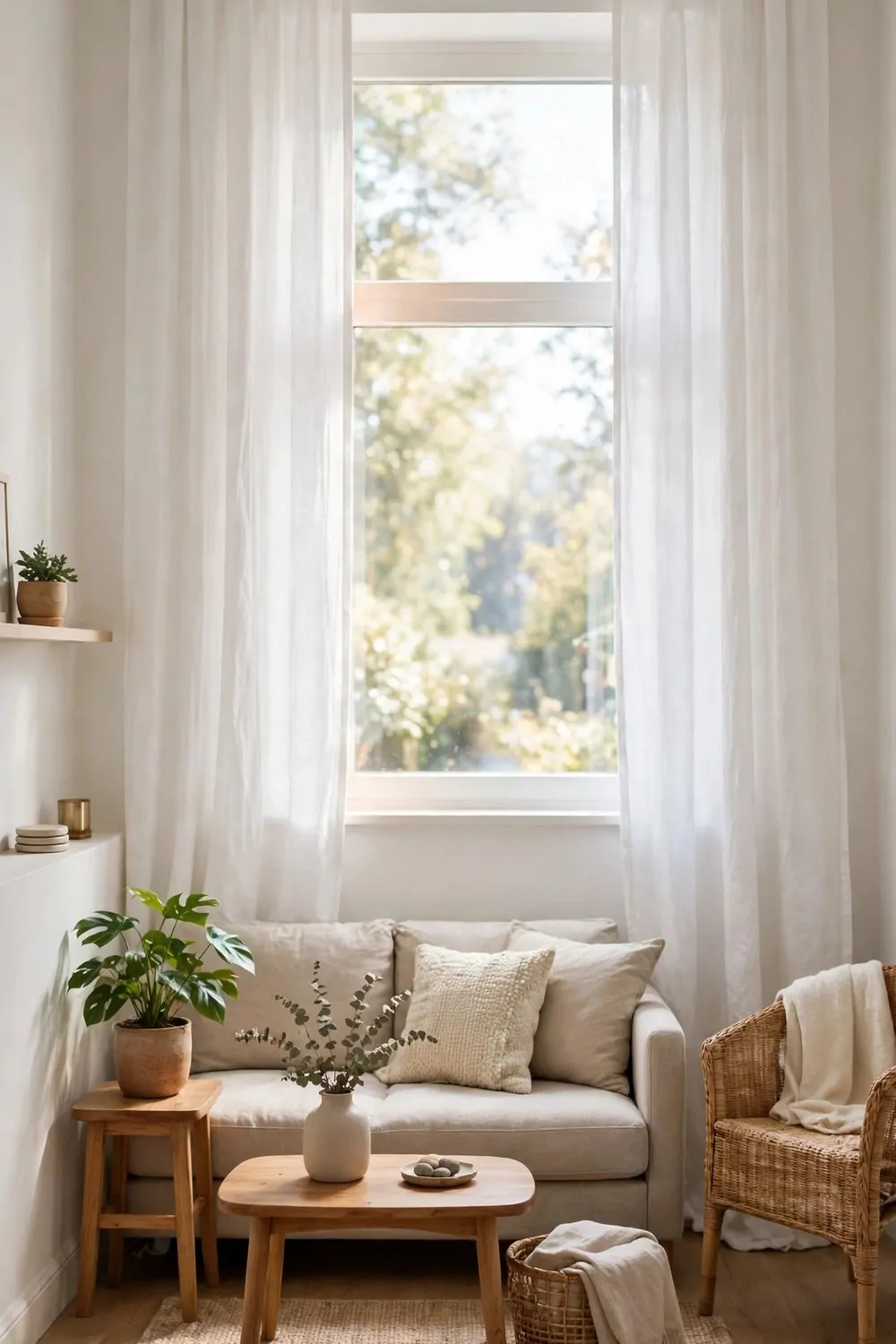
I hang my curtains high on the wall, close to the ceiling, and it makes my small room feel taller right away.
You can try the same trick in your own living room. The rod goes a few inches above the window frame.
I let the curtain fall all the way to the floor. Short curtains cut the wall in half. That makes the room feel smaller.
Wide rods help too. I stretch the rod past the window on both sides so the curtain covers the wall, not the glass.
Typical cost is $25 to $60 for a rod and a pair of plain curtains. You can start with one window and add more later.
Light cloth works best for me, as it lets soft light in and still gives me some privacy in the day.
I pick a plain colour that matches my walls. Busy prints can make a small room feel full and loud.
You do not need fancy tools to hang a rod. A small drill, a level, and a pencil are all I use. I mark the spots first, then I drill.
When the curtains are up, the whole wall looks taller. I smile every time I walk in and see it.
19. One Big Piece of Art Instead of Many Small Ones
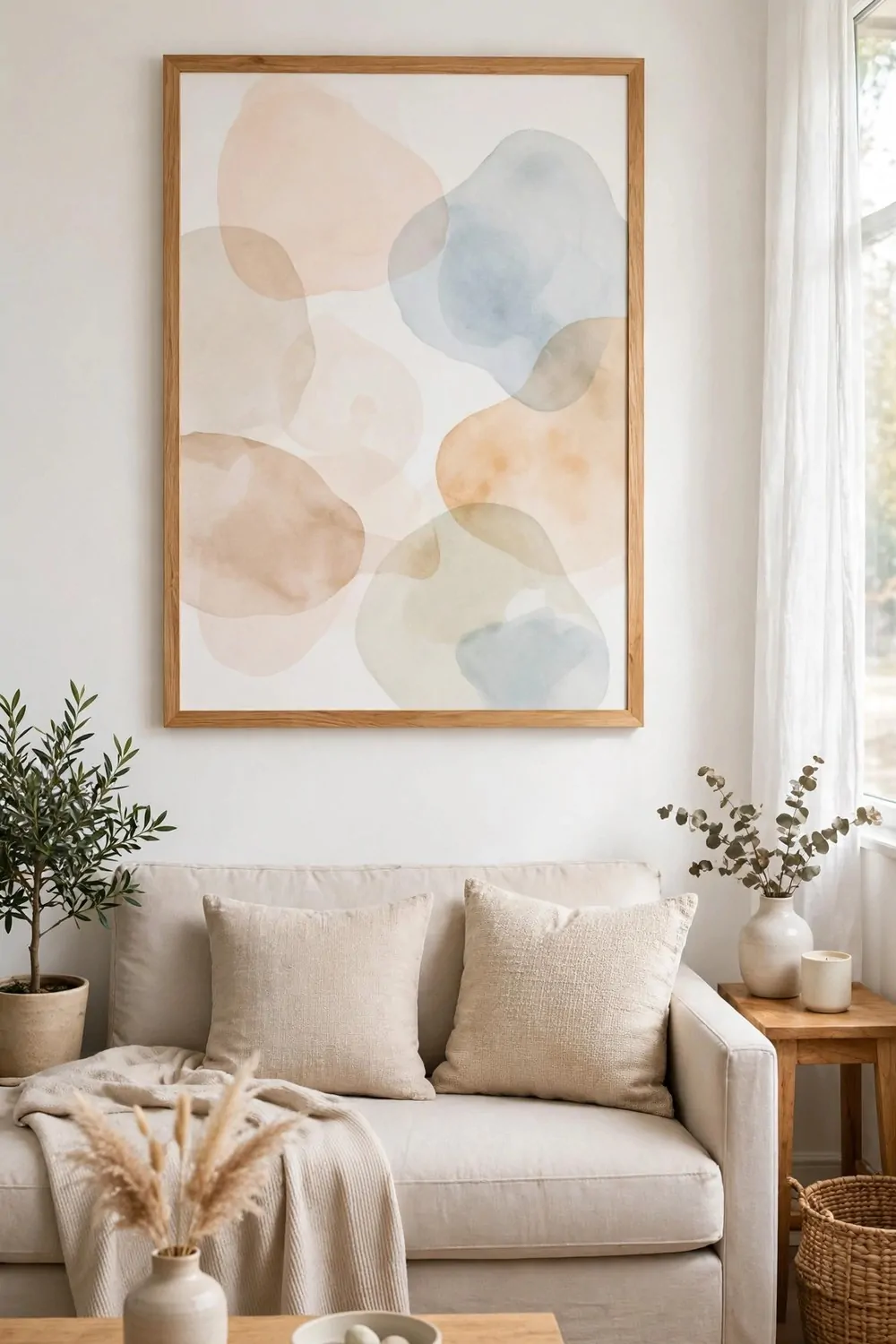
I used to hang lots of small frames on one wall, and it looked busy, so my eyes did not know where to rest.
One big piece of art changed the whole room for me. It gives the wall one clear focus point.
You can pick a calm scene you love. I like soft hills and quiet water. They make me feel calm.
Hang it at eye level so you see it well. I stand back and check it from the sofa before I fix it in place.
Typical cost is $30 to $80 for a large print and a simple frame. A canvas print can cost a bit more, but it still works.
I keep the wall around it clear, with no small frames to crowd it, so the big piece can breathe.
If you rent, you can use strong picture hooks that leave small holes. I check the wall rules first, just to be safe.
A big piece also hides a plain wall. You do not need paint or a full wall change to make the room feel new. I love that easy win.
I love how quiet the room feels now. One art piece does the job of ten small ones, and it looks neat.
20. A Bench Under the Window
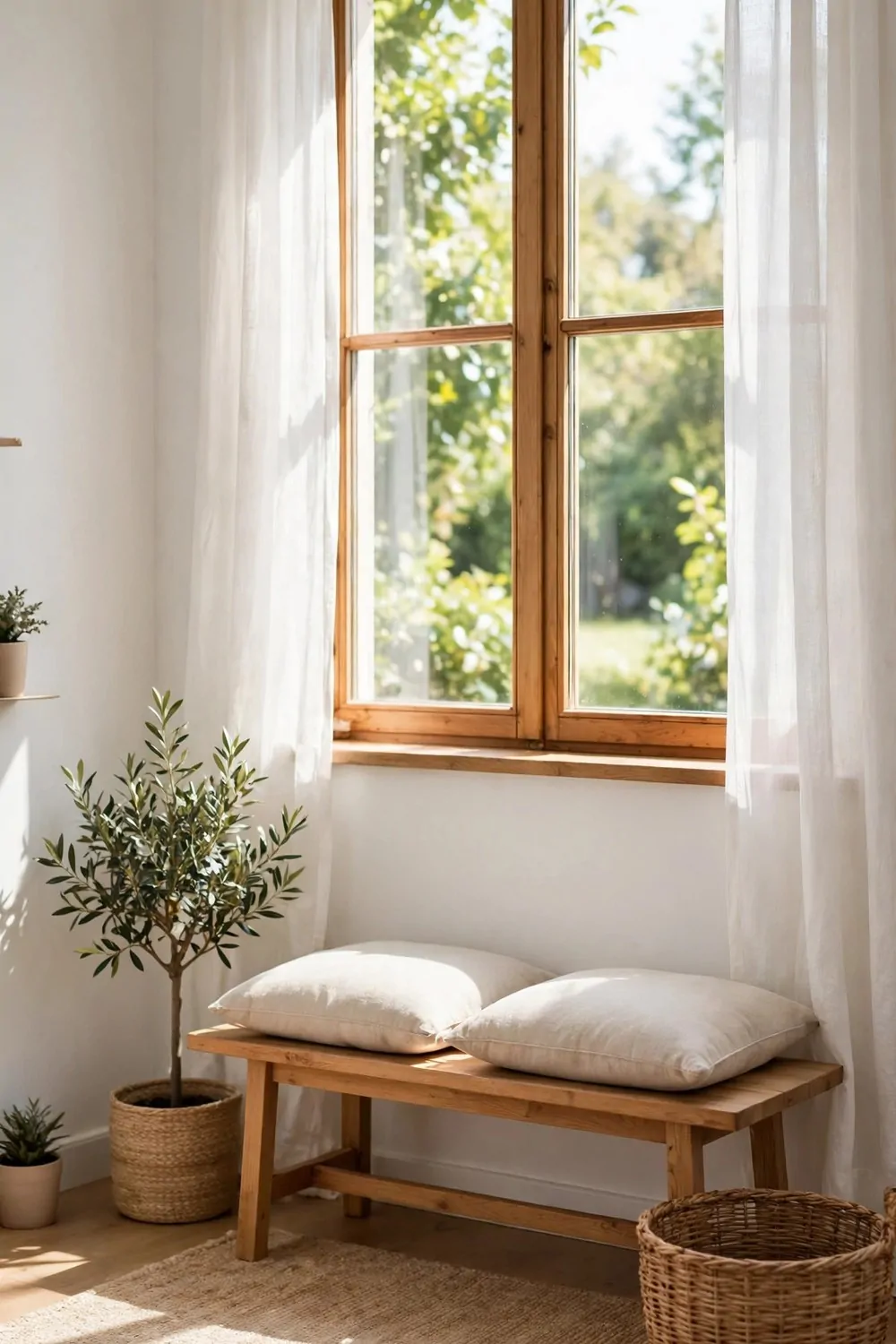
A bench under the window is one of my best small room tricks, as it gives me a seat and a storage spot in one place.
I sit there in the morning with a cup of tea. The light is soft, and I can see the street wake up.
You can tuck shoes or books under the bench. I use low boxes so the floor stays clear and tidy. It takes no work at all.
A soft pad on top makes it comfy. I use a plain pad in a light colour so it feels fresh.
Typical cost is $40 to $90 for a simple bench and a seat pad. A plain wood bench costs less than a fancy one.
I measure the window first before I buy, so the bench fits under the sill with a little space to spare.
You can also put a small plant on one end. I keep mine small so it does not block the light.
Kids love this spot too. My niece sits there to read, and she calls it her own little seat. I hear her giggle there most days.
A bench turns a dead spot into a useful spot. I use it every day, and my room feels bigger for it.
21. Rolling Storage Under the Sofa
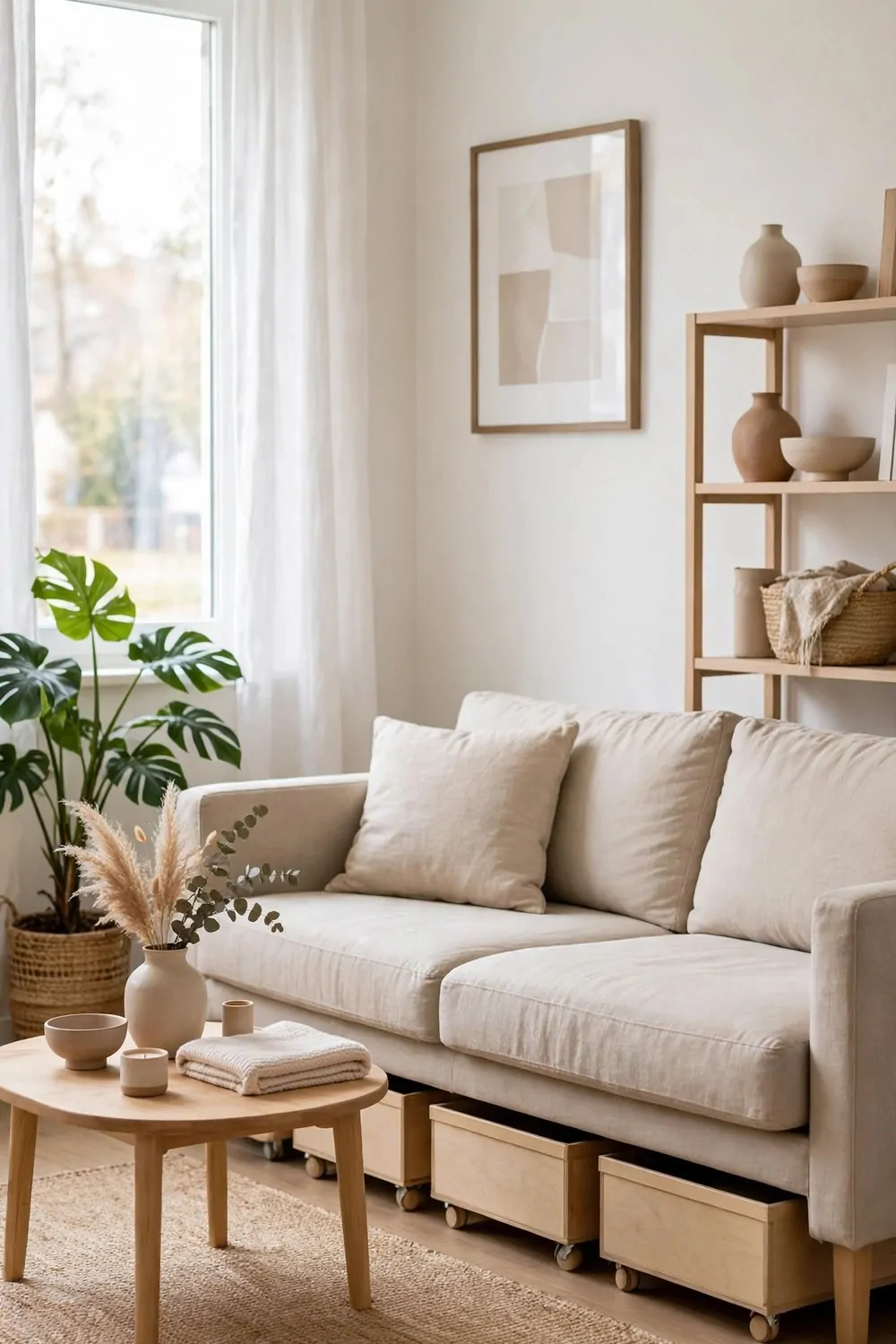
The space under my sofa used to hold dust and lost bits, but now it holds neat rolling boxes, and I love it.
I use low boxes with small wheels. They slide out fast when I need something, and they slide back just as fast.
You can store spare blankets in them. I keep one box for blankets and one for games and small bits. The floor stays clear.
Check the gap under your sofa before you buy the boxes. I learned that the hard way when my first box was too tall.
Typical cost is $15 to $35 for two low rolling boxes. Clear boxes help you see what is inside.
I label each box with a small tag, and it takes one minute, yet it saves me time later.
Keep the boxes light so they roll well. Heavy boxes stick, and that makes the job feel hard.
You can make the boxes match your room. I picked plain grey ones, and they blend in with the sofa. No one even sees them.
Rolling storage gives me room without new shelves. My floor stays clear, and my room feels open.
22. A Slim Bar Cart in the Corner
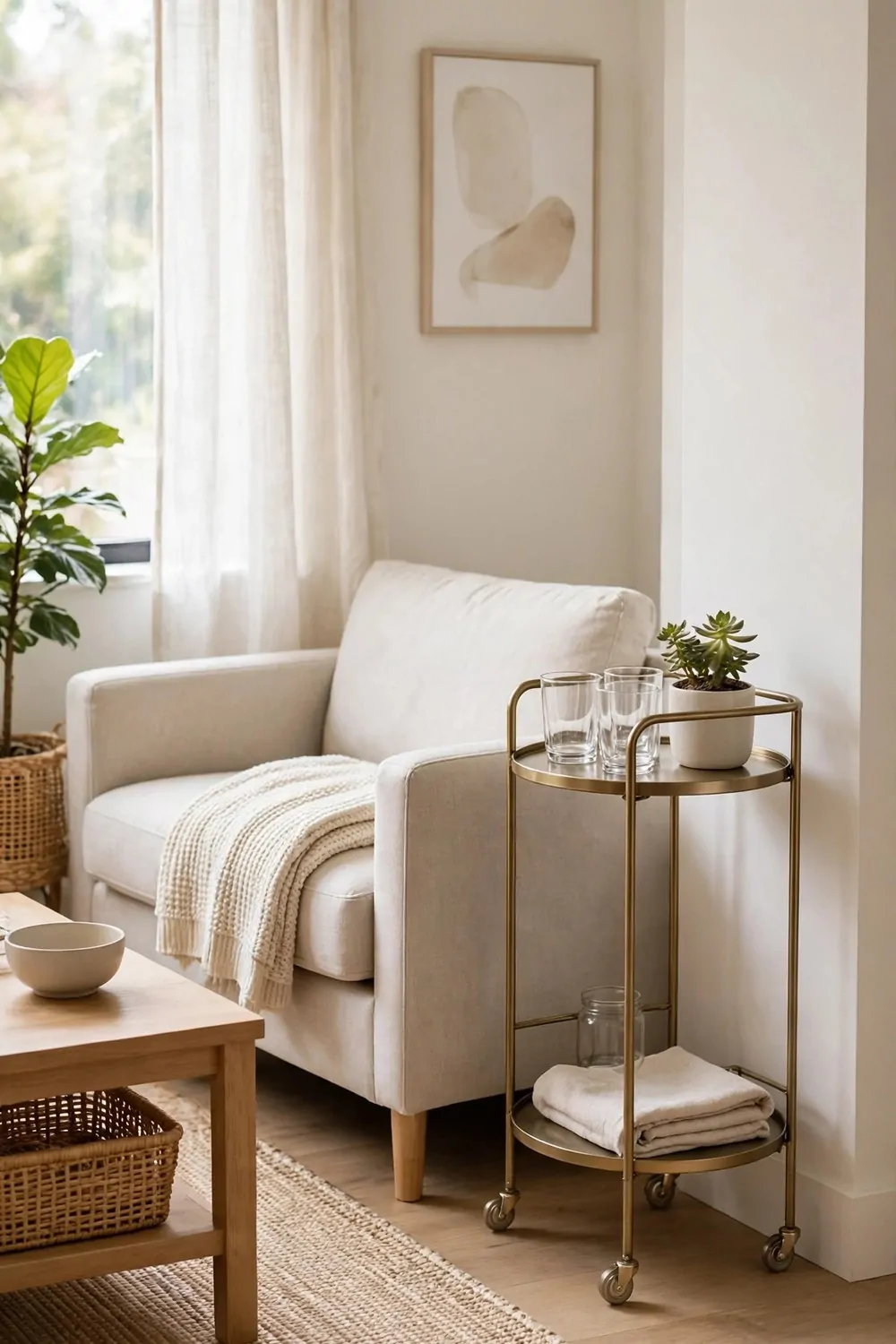
A slim cart fits in a corner that holds nothing else, and mine sits by the sofa to hold my tea things.
I keep cups, a small teapot, and a jug of water on it. It is my little drinks spot for guests.
You can roll it to the sofa when friends visit. I love how easy it makes serving tea and juice. It saves me trips to the kitchen.
The top shelf holds the cups I use most. The lower shelf holds extra glasses and a small tray.
Typical cost is $35 to $75 for a slim two shelf cart. A plain metal cart costs less than a wood one.
I keep it tidy with just a few things on it, as too many bits make it look full, and that spoils the point.
A cart with wheels is best for a small room. You can move it out of the way when you need floor space.
I put a small plant on the top shelf. It adds a fresh green touch, and it still leaves room for cups. It makes me smile.
This little cart saves trips to the kitchen. I use it most evenings, and my corner feels useful now.
23. Light Wood Tones Everywhere
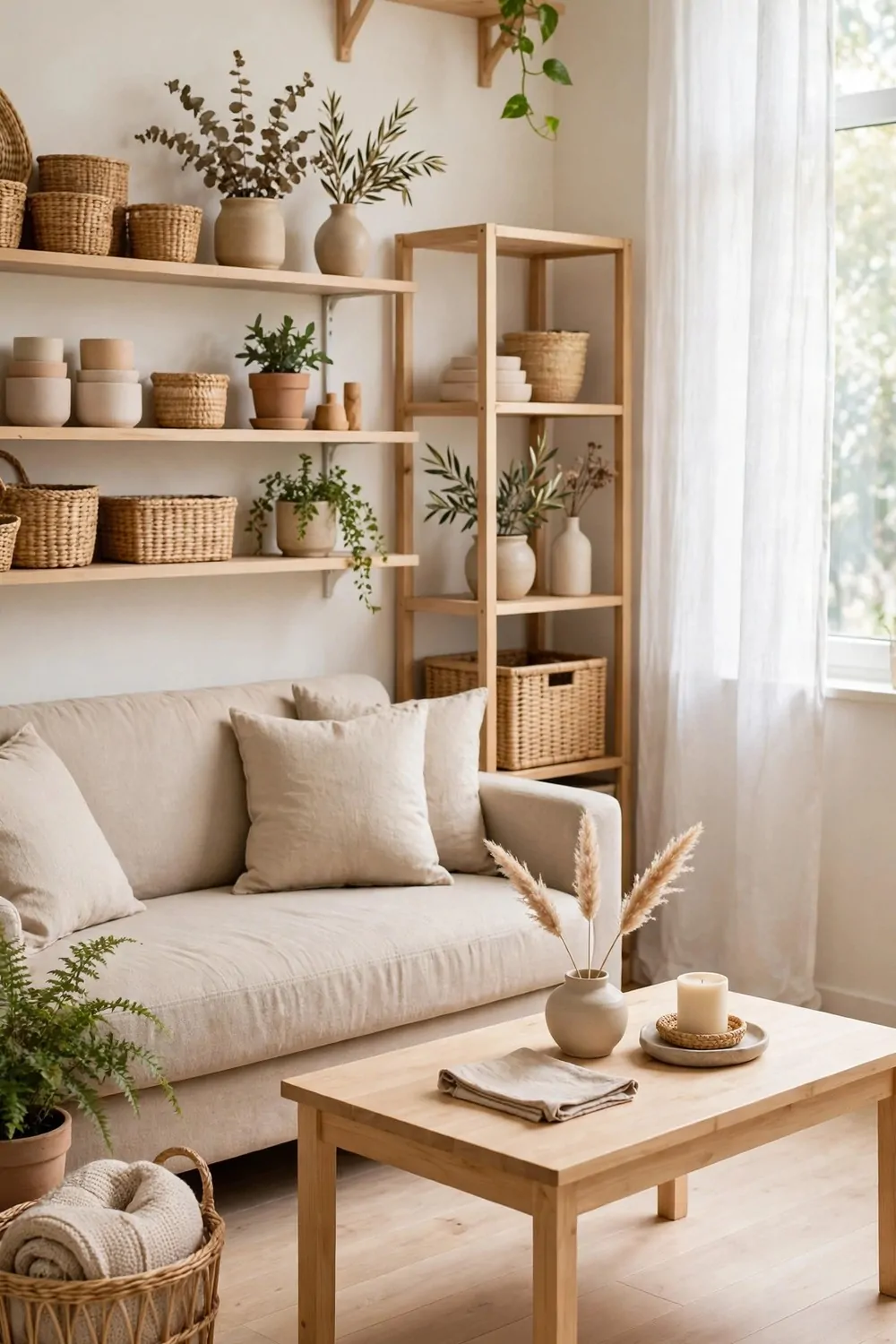
Light wood makes my small room feel bright and airy, while dark wood felt heavy and closed the room in.
I use pale wood for my shelves and side tables. The light colour bounces the daylight around the room.
You can mix light wood with white walls. I think that mix looks fresh. It never feels dull.
A light wood coffee table is a good start. It sits in the middle of the room, so it sets the tone.
Typical cost is $50 to $120 for a small light wood table or shelf. You can add one piece at a time.
I keep the wood tones close in shade, so if they match, the room looks calm and planned.
Small wood bits help too. I use a light wood tray and a small wood frame, and they tie the room together.
You do not need to change all your chairs at once. I swapped one dark table first, and the change was clear. That one swap did a lot.
Light wood feels warm without feeling heavy. My room looks bigger, and it still feels like home.
24. A Ceiling Light That Spreads Wide
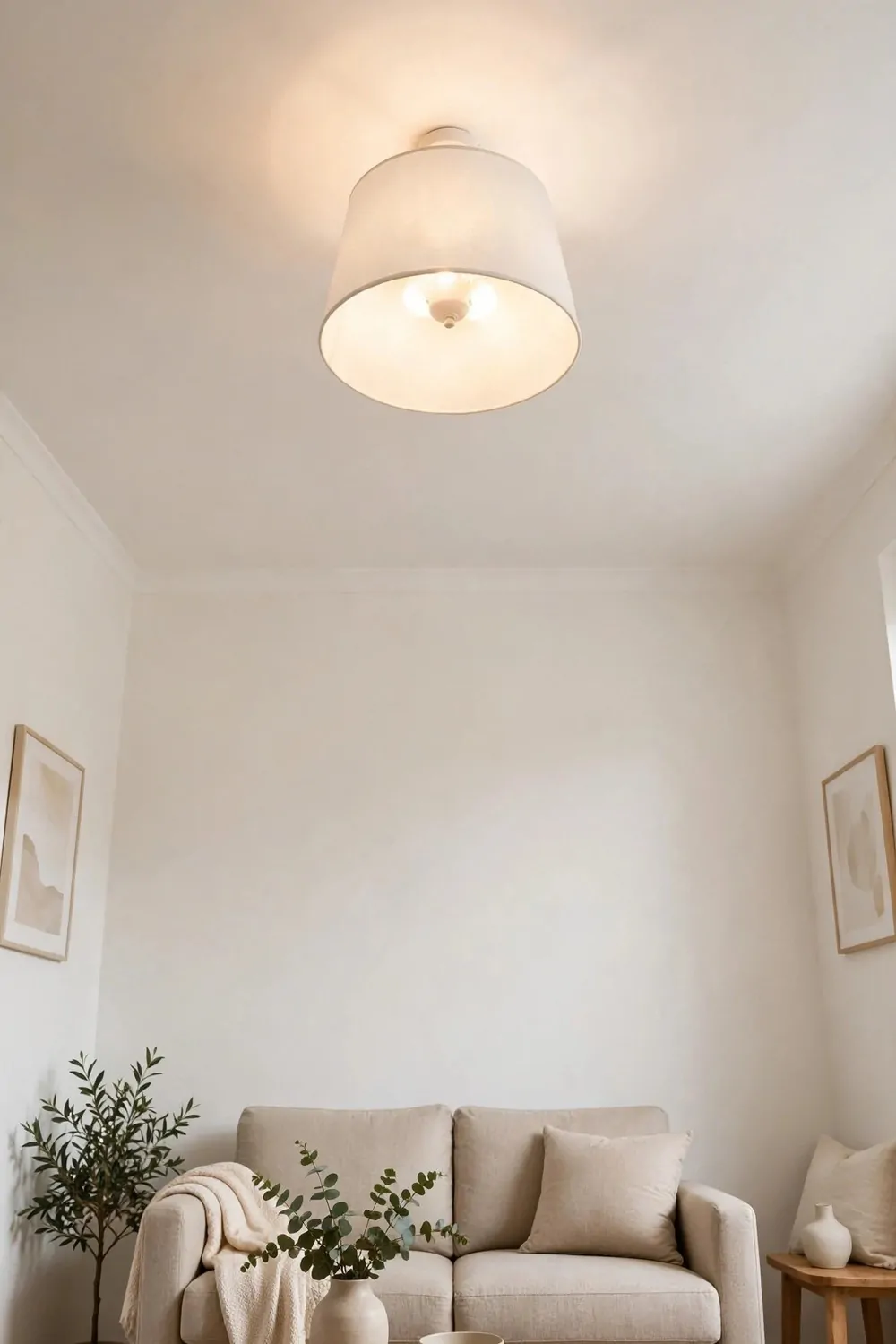
My old ceiling light made one bright spot in the middle, while the corners stayed dark and the room felt small.
A wide light spreads soft light to all the corners. I can see the whole room now, and it feels bigger.
You can pick a flat light that hugs the ceiling. I like one with a soft white cover. The light feels gentle.
Warm white light feels best to me. Cold white light feels like an office, and I do not want that at home.
Typical cost is $30 to $70 for a wide flat ceiling light. A simple one works just as well as a dear one.
I ask someone to help me fit it safely, as wires need care, so I never rush this job on my own.
A dimmer switch is a nice extra if you have one. I turn the light low in the evening, and the room feels calm.
You can add a small lamp in a dark corner too. I use one by the sofa, and it fills the last dark spot. It is my cosy corner now.
Good light opens a room like nothing else. I switch it on, and my small room feels wide and bright.
25. Foldable Chairs for Extra Guests
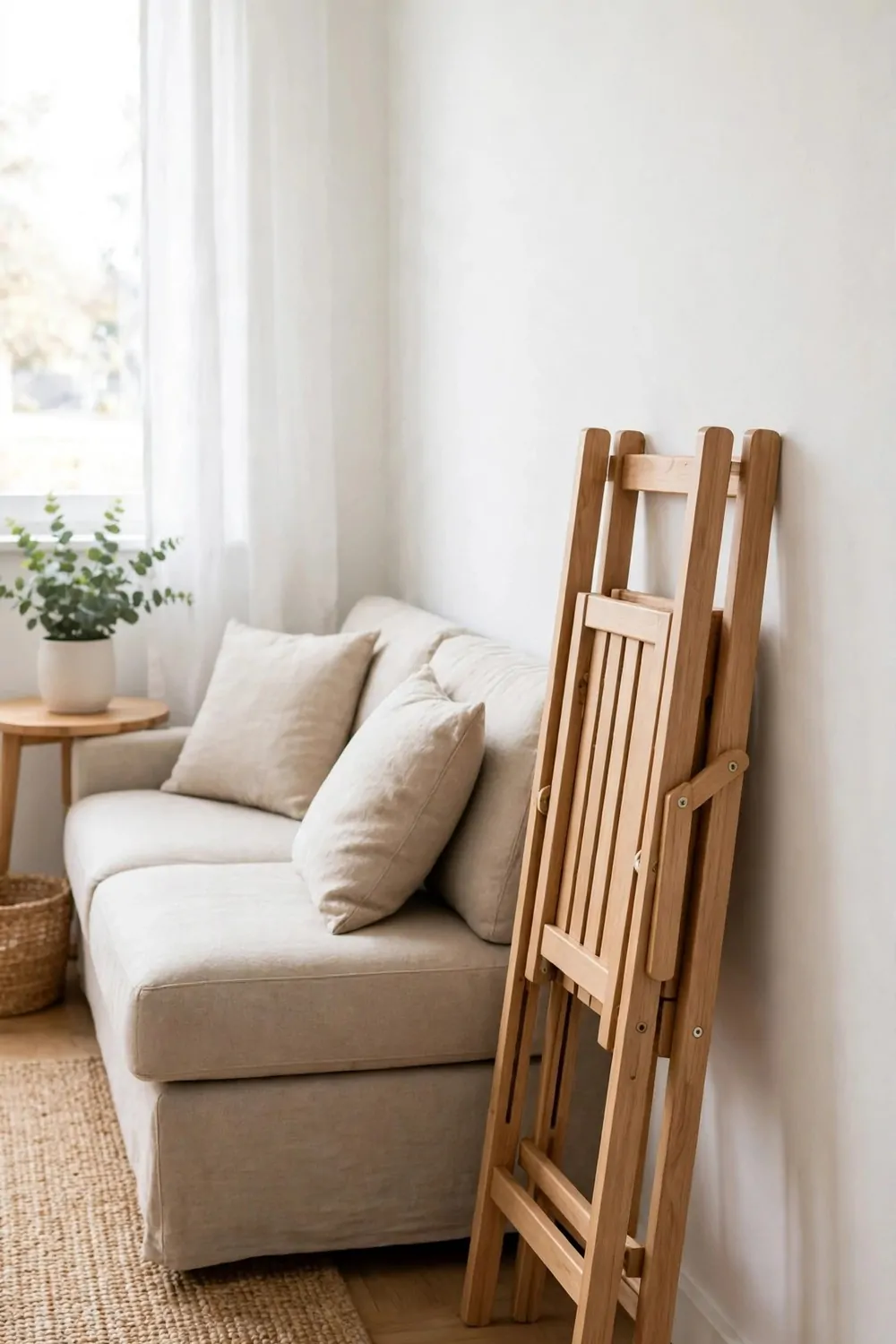
I do not have room for six chairs all the time, so foldable chairs solve that, and they hide away when guests leave.
I keep two folded chairs behind the sofa. No one sees them, and I can grab one in a few seconds.
You can match them to your room colour. Mine are plain wood and white. They blend in well.
A chair with a soft seat pad feels comfy. I add a thin pad, and guests sit happy for hours.
Typical cost is $20 to $50 for two simple foldable chairs. Light chairs are easier to carry and store.
I test each chair before guests use it, so it feels steady and opens and folds with no fuss.
You can hang them on wall hooks too. I use two strong hooks by the door, and the chairs stay off the floor.
Foldable chairs also help at the table. I pull one out for dinner, then fold it back when we are done. It is that simple.
Extra seats without extra clutter is a win. I feel ready for guests, and my room stays open all week.
26. A Pegboard for Small Bits
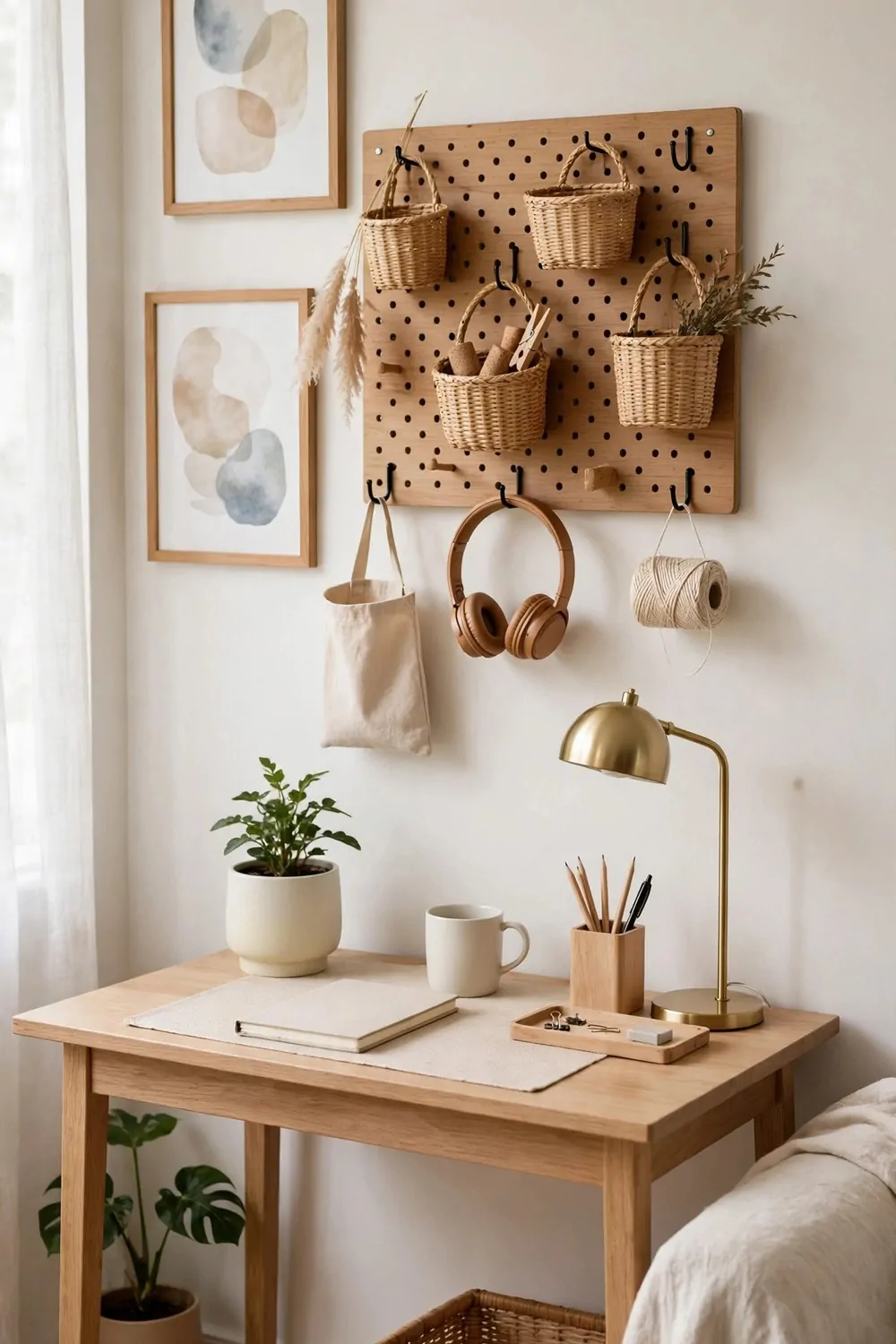
Small bits used to cover my side table, as keys, cords, and notes piled up, and the room looked messy fast.
A pegboard on the wall holds all those small bits. I hang hooks on it, and each thing gets its own spot.
You can put it near the door or by your desk. Mine sits by the sofa. It is close to where I sit and work.
I hang small baskets on the board for tiny things. Pens, cords, and clips all have a home now.
Typical cost is $15 to $35 for a small pegboard and a set of hooks. Paint it the same colour as your wall for a neat look.
I move the hooks around when I need a change, as that is the best part, and the board grows with my needs.
Keep it light and simple. I only hang what I use each week, and the rest goes in a box.
You can add a small shelf on the board too. I keep a tiny plant there, and it makes the wall feel alive. I water it each Sunday.
A pegboard clears my table in one go. My room looks tidy, and I can find my bits in seconds.
27. A Low Profile Sofa That Opens the View
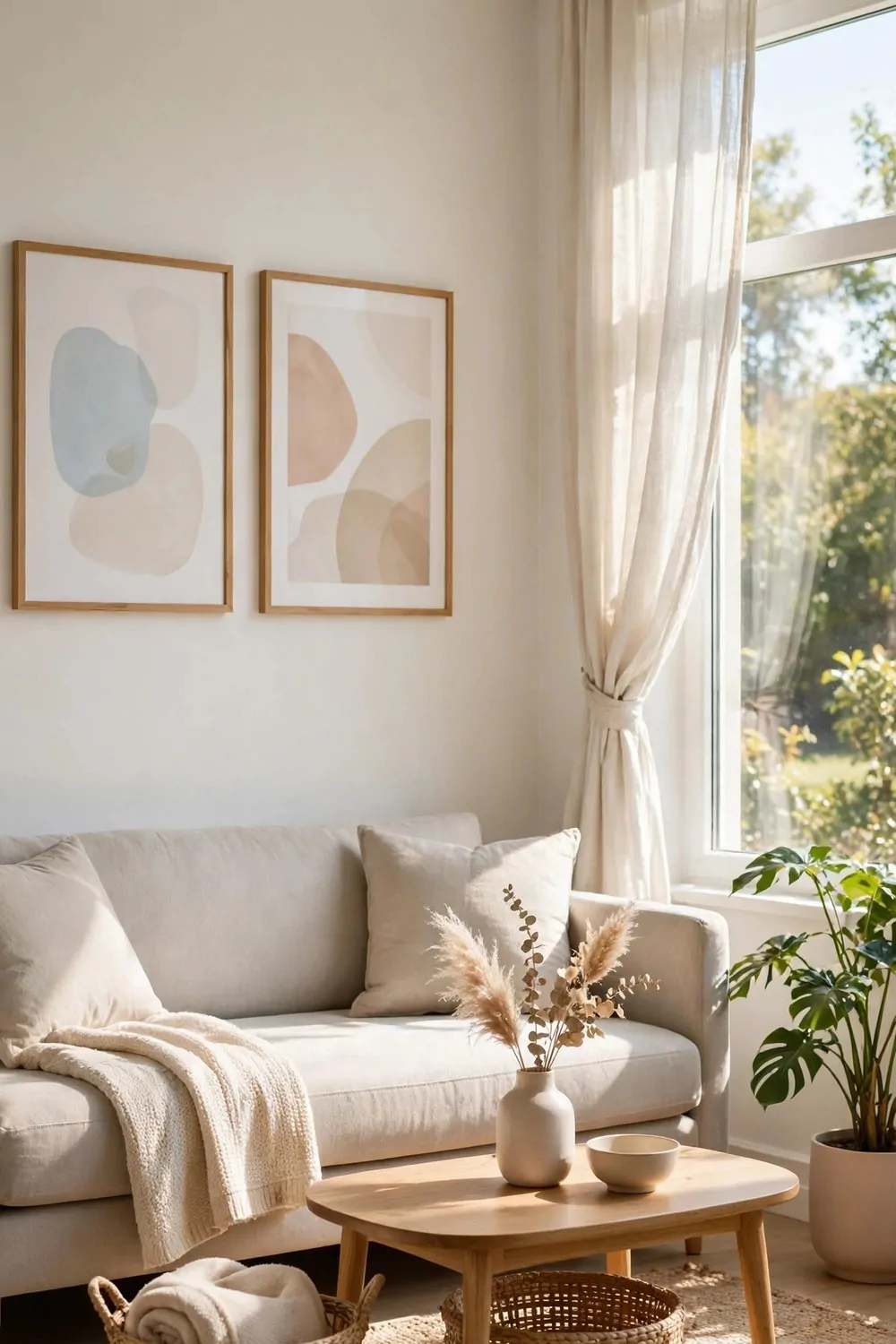
A low sofa changed how my room feels, as I can see over it to the window, and the room looks wide and open.
My old tall sofa blocked half the wall. It cut the room in two, and the back half felt lost.
You can test the height before you buy. I sit down and check that I can see the window over the back. That is my rule.
Low does not mean less comfy. My sofa has thick soft cushions, and I can nap on it with ease.
Typical cost is $200 to $450 for a simple low profile sofa. A plain style costs less than a fancy one.
I pick a light colour for the sofa, so it blends with the walls and does not shout for your eyes.
Keep the back clear of tall cushions. I use low flat cushions so the view stays open.
You can pair it with a low coffee table. I did that, and the whole room feels like one open space. It was a good call.
A low sofa opens the view in a small room. I see more of my room now, and it feels twice as big.
28. Matching Cushions in One Colour Family
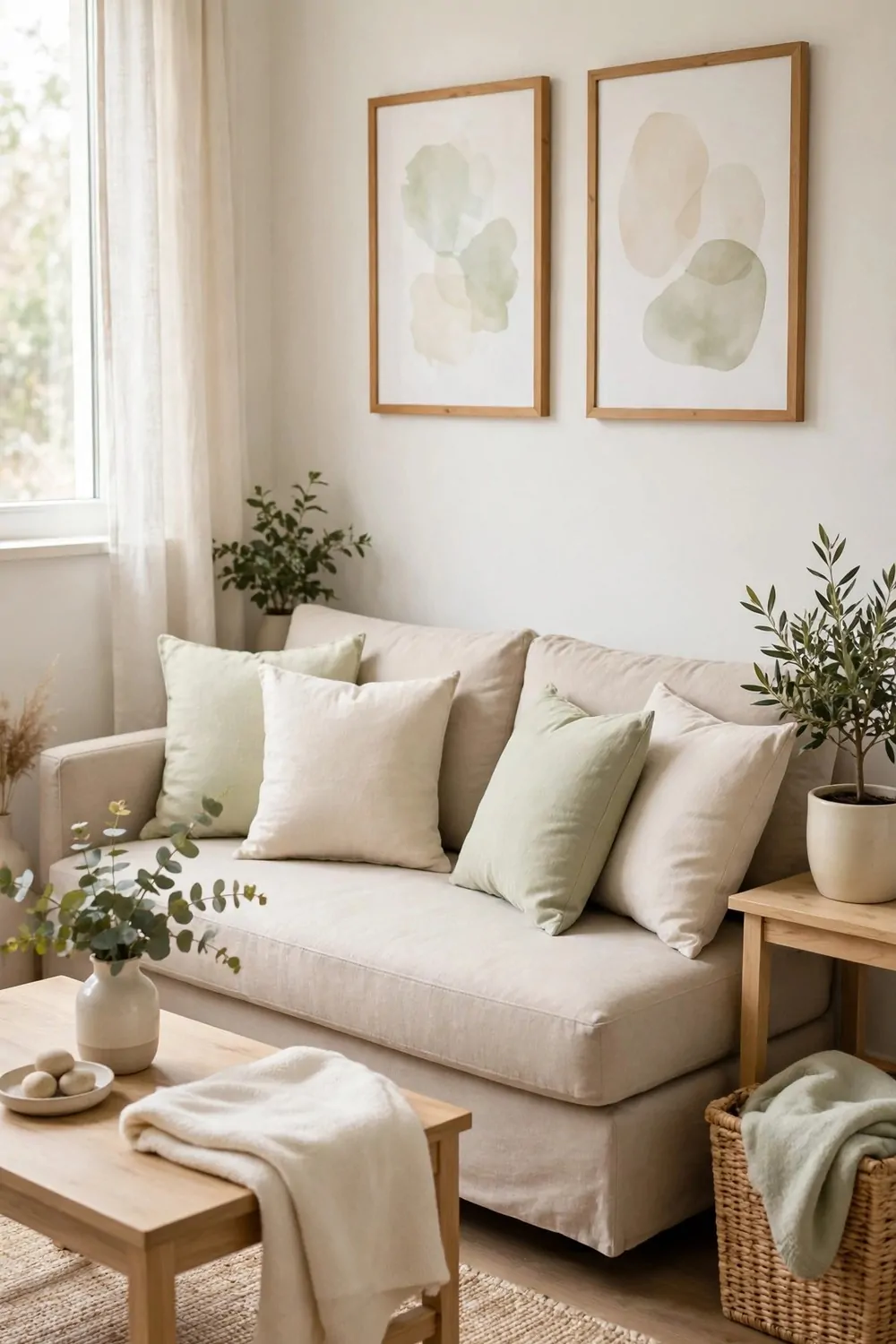
My cushions used to be all sorts of colours, so the sofa looked loud and the room felt busy.
Now I use cushions in one colour family. I pick soft blues, and they all sit well side by side.
You can mix light and dark shades of one colour. I use pale blue, mid blue, and one deep blue cushion. They look calm together.
Mix the textures too for a soft feel. I use one smooth cushion, one knit one, and one with a light weave.
Typical cost is $20 to $45 for a set of three plain cushion covers. You can swap the covers when you want a change.
I keep the count low, just three or four, as too many cushions fill the sofa and leave no room to sit.
A plain sofa helps the cushions shine. I keep my sofa in a light neutral shade, and the blues pop just right.
You can move one cushion to a chair to link the room. I do that, and the whole room feels tied together. It is a tiny trick.
One colour family makes the room feel calm. My sofa looks neat, and the small room feels soft and restful.
29. A Shoe Bench by the Living Room Door
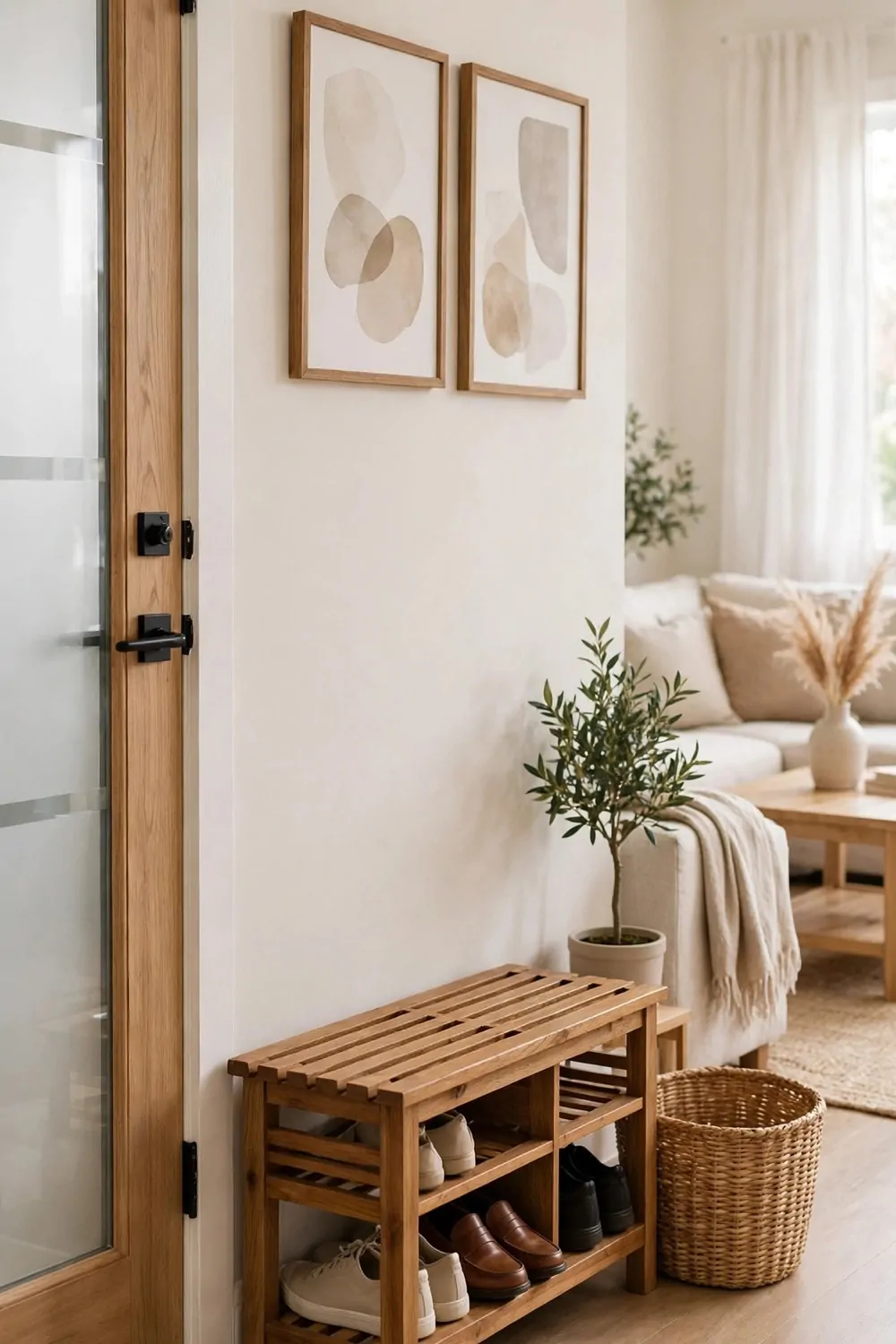
Shoes by the door used to pile up in a heap, and it was the first thing I saw, so it made the room feel messy.
A small shoe bench fixes that in one go. I sit on it to put my shoes on, and the shoes hide below.
You can pick a bench with two low shelves. I keep my daily shoes on top and the rest below. It is all in order.
A bench by the door keeps dirt out of the room too. I take my shoes off there, and the floor stays clean.
Typical cost is $30 to $70 for a small shoe bench with shelves. A plain wood bench is strong and simple.
I put a small tray on the top shelf for keys, so it holds my keys and bits, and I grab them on my way out.
Keep just the shoes you use each week on it. I store the rest in a box, so the bench never overflows.
You can add a soft pad on top for comfort. I use a plain pad, and it makes the bench a nice seat. I sit there each morning.
A shoe bench makes the door area feel tidy. I walk in now, and the first thing I see is a neat bench.
30. A Wall Grid for Keys and Bits
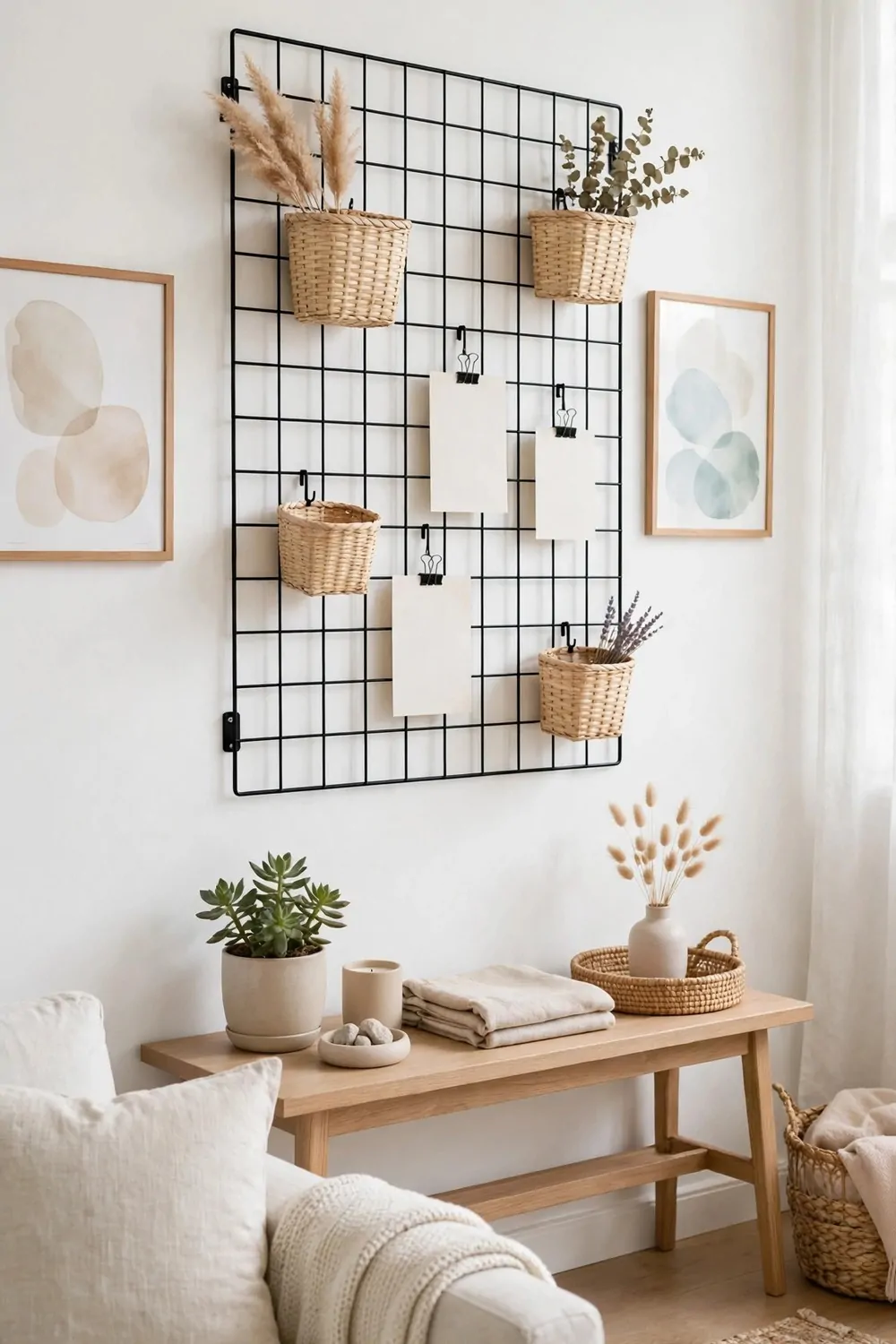
I used to lose my keys twice a week, as they hid in bags and coat pockets, and I wasted time each morning.
A wall grid by the door holds my keys in one spot. I hang them up when I walk in, and I find them fast.
You can add small clips for notes and bits. I clip my shopping list there. I see it before I leave.
A grid looks light on the wall. It does not block the wall like a big board, and the room stays airy.
Typical cost is $10 to $25 for a small wall grid with hooks and clips. A plain black grid suits most rooms.
I hang just a few things on it, with keys, one note, and a small bag as all I need there.
Fix it at a height you can reach with ease. I put mine at shoulder height, so I never stretch for my keys.
You can add a tiny basket to the grid too. I keep my mail in it, and the table stays clear. It is a small win.
A wall grid ends the lost keys hunt for me. I leave the house calm, and my door wall looks neat.
31. A Small Room Divider That Does Not Block Light
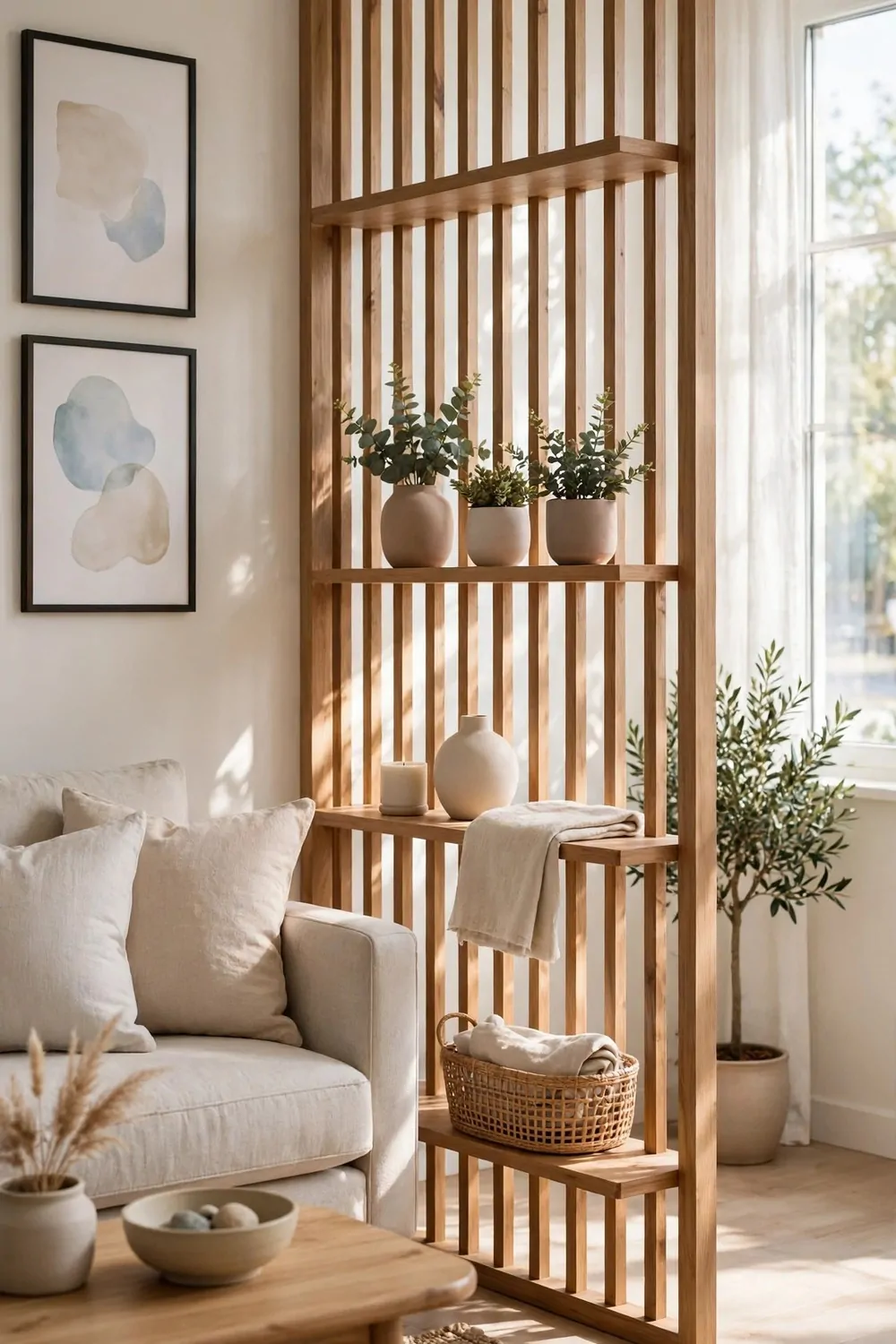
My living room also holds my work corner, so a small divider splits the two spots without building a wall.
I use an open shelf as my divider. Light passes through it, and the room still feels like one space.
You can pick a divider with gaps or slats. I like slats, as they give some privacy and still let light in. That is the best mix.
Keep it low, about waist high. I can see over mine, and that keeps the room feeling open.
Typical cost is $40 to $90 for a small open shelf divider. A light wood one keeps the room bright.
I put books and small boxes on the shelves, and they mark the edge of my work corner in a soft way.
A folding screen works well too. I fold mine flat when guests come, and the room opens right up.
You do not need a tall divider to make two zones. I learned that a low one does the job just as well. It surprised me.
A light divider gives me two rooms in one. I work on one side, rest on the other, and the light still flows.
32. A Tray on the Coffee Table to Tidy Clutter
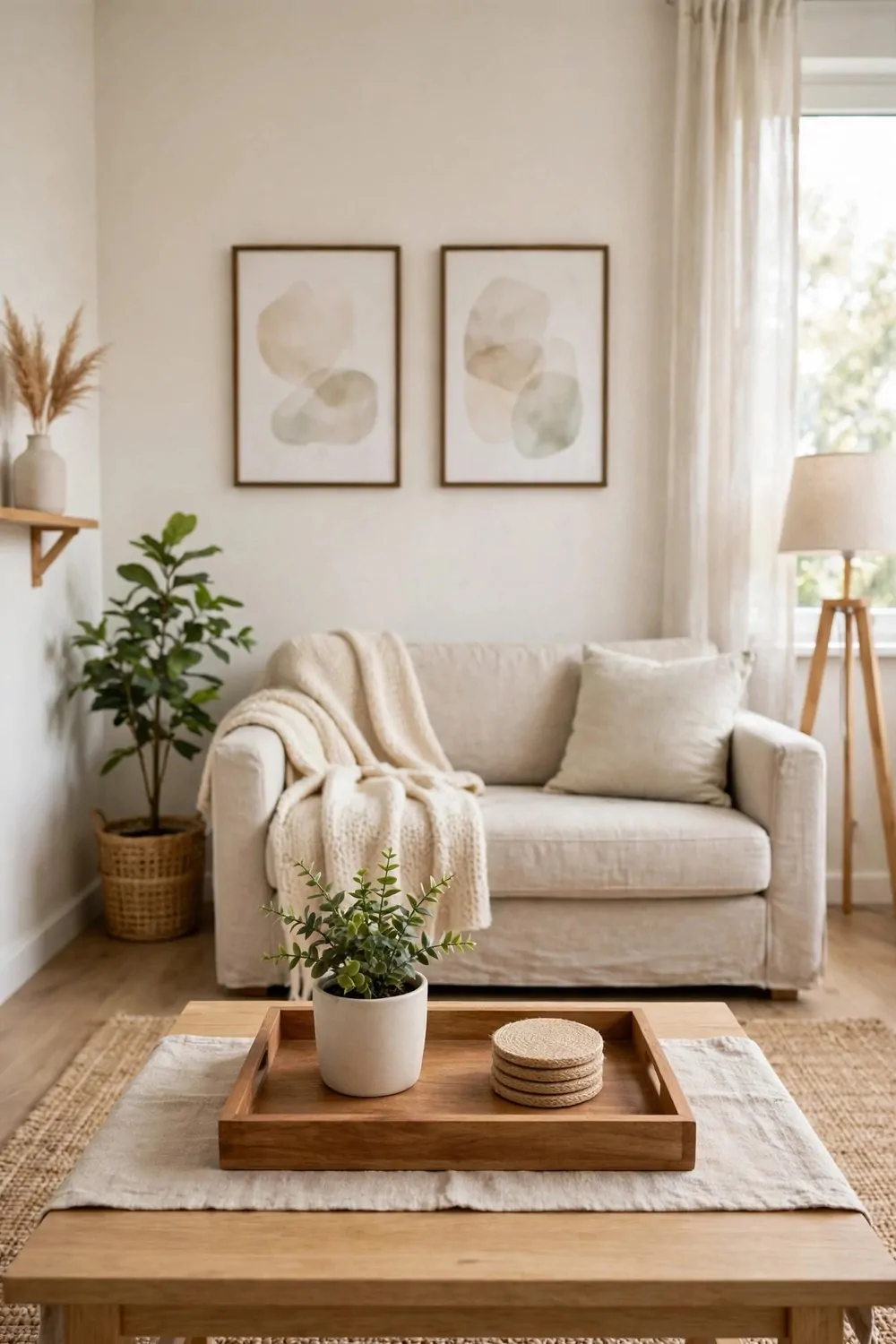
My coffee table used to hold a wild mix of bits, as cups, remotes, and notes spread out, and it looked messy.
A tray pulls all those bits into one neat spot. I set it in the middle, and the table looks calm at once.
You can pick a tray that fits your table size. Mine leaves space for a cup on each side of it. That matters to me.
I keep just three things in the tray. A small candle, the remote, and a tiny plant are all I need.
Typical cost is $10 to $25 for a simple wood or metal tray. A plain tray works best in a small room.
I clear the tray each night before bed, and it takes one minute, yet the morning starts with a tidy table.
A tray also guards the table top. I set hot cups in it, and the wood stays free of rings.
You can move the tray when you need space. I lift it off for games night, and the table is free in seconds. Easy.
A tray is a small fix with a big payoff. My table looks tidy now, and the whole room feels calmer.
33. A One-Evening Open Living Room Reset Plan
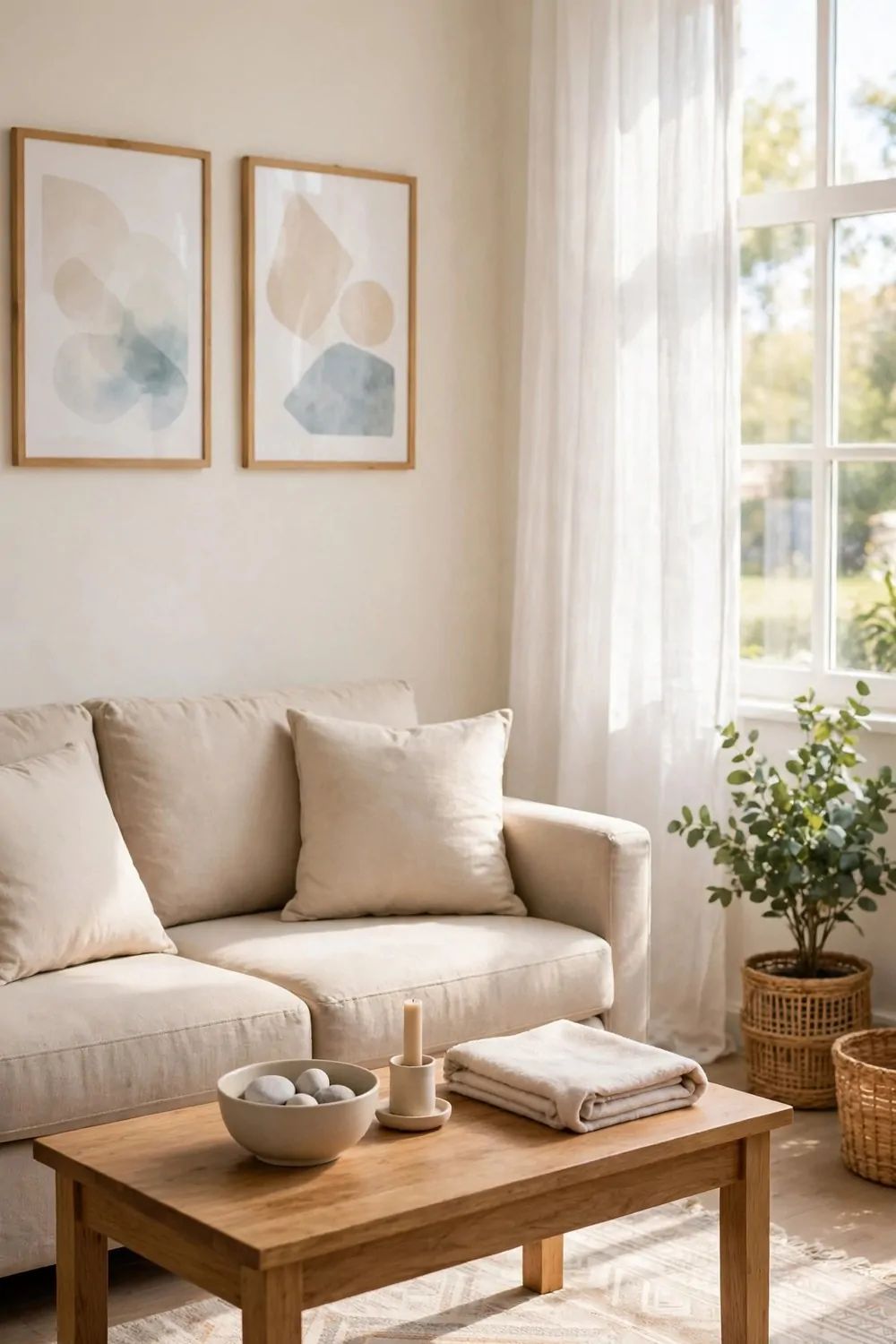
One evening is all I need to reset my small living room. I work round the room in small steps, and I do not rush.
I start with the living area in the middle of the room. I clear the floor, fluff the cushions, and put stray bits in a box. The cost for the living area is $20 to $35 for a storage box and fresh cushion covers.
Next I fix the seating corner by the sofa. I fold the blankets, line up the chairs, and wipe the side table clean. The cost for the seating corner is $15 to $25 for a small basket and a new throw.
Then I move to the TV wall. I dust the screen, hide the loose cords, and line up the books on the shelf. The cost for the TV wall is $10 to $20 for cord clips and a small shelf box.
After that I work on the window side. I shake out the curtains, wipe the sill, and set one small plant in place. The cost for the window side is $12 to $22 for a plant pot and a curtain tieback set.
Last I tidy the entry side by the door. I line up the shoes, hang the keys, and clear the small bench top. The cost for the entry side is $8 to $15 for wall hooks and a small tray.
The total for the whole evening is $65 to $117. I add up the five small costs, and that is the full price of the reset.
I work in this order so I do not walk back and forth, and each side takes about twenty minutes.
When I finish, the room feels fresh and open again. I sit down with a cup of tea, and I enjoy the calm space I made.
| Area | Cost |
|---|---|
| Living area | $20 to $35 |
| Seating corner | $15 to $25 |
| TV wall | $10 to $20 |
| Window side | $12 to $22 |
| Entry side | $8 to $15 |
| Total | $65 to $117 |
Keep Reading
If you liked these ideas, you will love these posts too.
- 27 Studio Apartment Storage Ideas That Actually Work
- 25 Apartment Decorating Ideas on a Budget
- 20 Dollar Store Home Decor Ideas That Look Expensive
- 34 Budget Home Makeover Ideas Room by Room
- 21 Rental Living Room Ideas That Feel Like Home
- 23 Rental Bathroom Ideas That Need No Drilling
Pick the one idea that makes your room feel bigger today and try it tonight. One small change can make your whole living room feel open by tomorrow.