19 Small Classroom Setup Tricks for Maximum Space

The first classroom I ever had to set up was so small I could touch both walls if I stretched my arms wide. I stood in the doorway with my boxes and I honestly wanted to cry a little. Where would thirty kids even sit?
But that tiny room taught me the best lesson of my whole teaching life. Small rooms are not a problem. They are a puzzle. And puzzles are fun once you know the tricks.
Here are the 19 tricks I use every single year. They saved my little classroom, and they will save yours too.
1. Go Up, Not Out
When the floor is full, the walls are still empty. That is the whole secret.
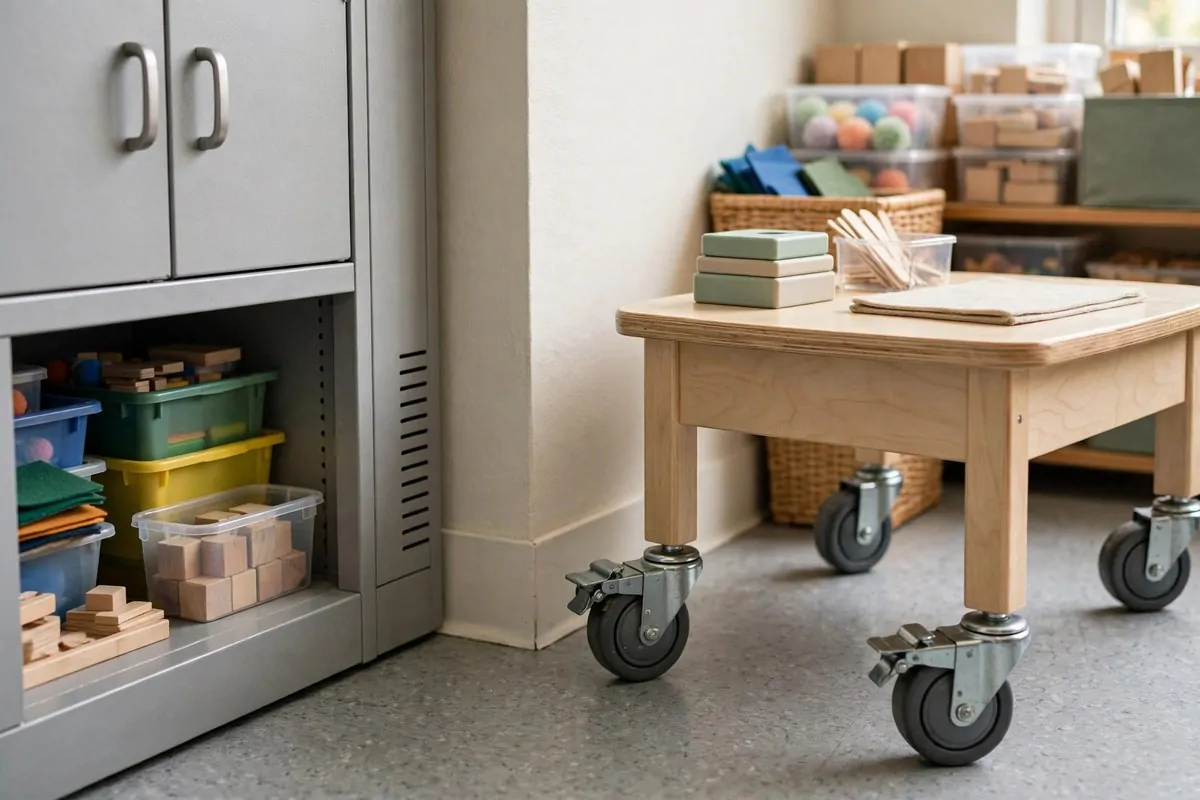
I bought one tall bookcase instead of two short ones. It holds the same books and takes half the floor space. And I anchor it to the wall so it can never tip.
Heavy things go on the bottom shelves. Always. Light things go up top. This keeps the shelf steady and safe, and little hands can reach what they need.
Hooks on the wall hold bags, headphones, and art aprons. One hook per child sounds like a lot. But hooks are flat. They take zero floor space.
Pegboards work the same way. I hung one near my desk for scissors, tape, and clipboards. Every tool has its own painted spot, so kids put things back right.
I also mount small whiteboards on the sides of my big cabinets. The sides of furniture are free real estate. Most teachers forget they exist.
The rule I tell myself is simple. If I look at a wall and see nothing, I ask what could hang there. A pocket chart. A shelf. A row of hooks.
Start with one wall this weekend. Just one. You will be shocked how much floor you get back.
And your room will look taller and calmer too. That is a nice bonus.
2. Put Everything on Locking Wheels
Heavy furniture is the enemy of a small room. You cannot move it. So it sits where it sits, forever, taking up space even when you do not need it there.
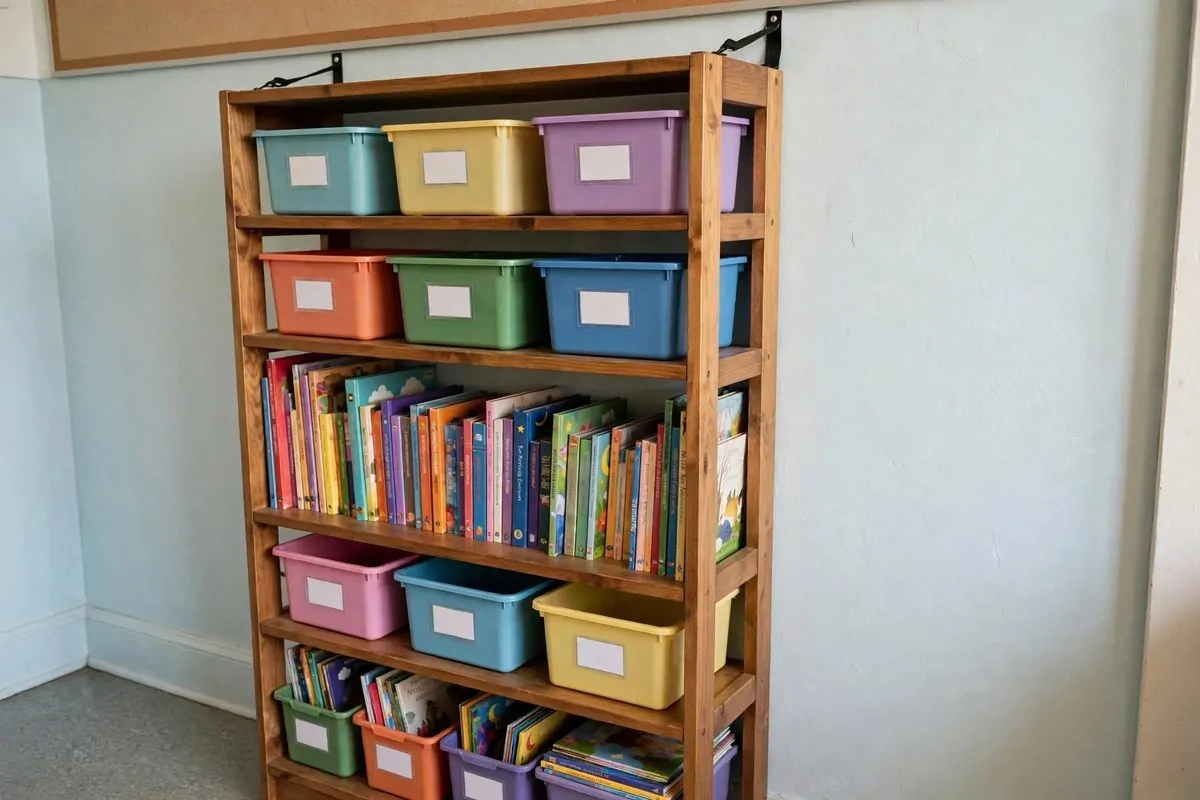
Casters changed my life. I put my storage cabinet on wheels. I put my activity table on wheels. Now I can push things where I need them and pull them back after.
The lock part matters a lot. Rolling furniture that rolls away on its own is not helpful. It is scary. So I only buy casters that lock, and I teach the kids to check the locks.
Desks with wheels are great for group work too. The kids can roll into little pods for a project. Then they roll back into rows for a test. It takes two minutes.
My rolling cart is my moving teacher desk. I do not have a big desk in my room at all. The cart holds my laptop, my papers, and my coffee, and it follows me around.
If your school will not buy new furniture, ask for a set of caster wheels for what you have. They screw on in minutes. It is the cheapest upgrade I know.
Just remember the locks. I say it twice because it matters twice.
Once everything rolls, your room gets bigger on demand. That is the trick.
3. Chairs That Stack
Chairs eat floor space even when nobody is sitting in them. Thirty chairs spread around a small room is a traffic jam waiting to happen.
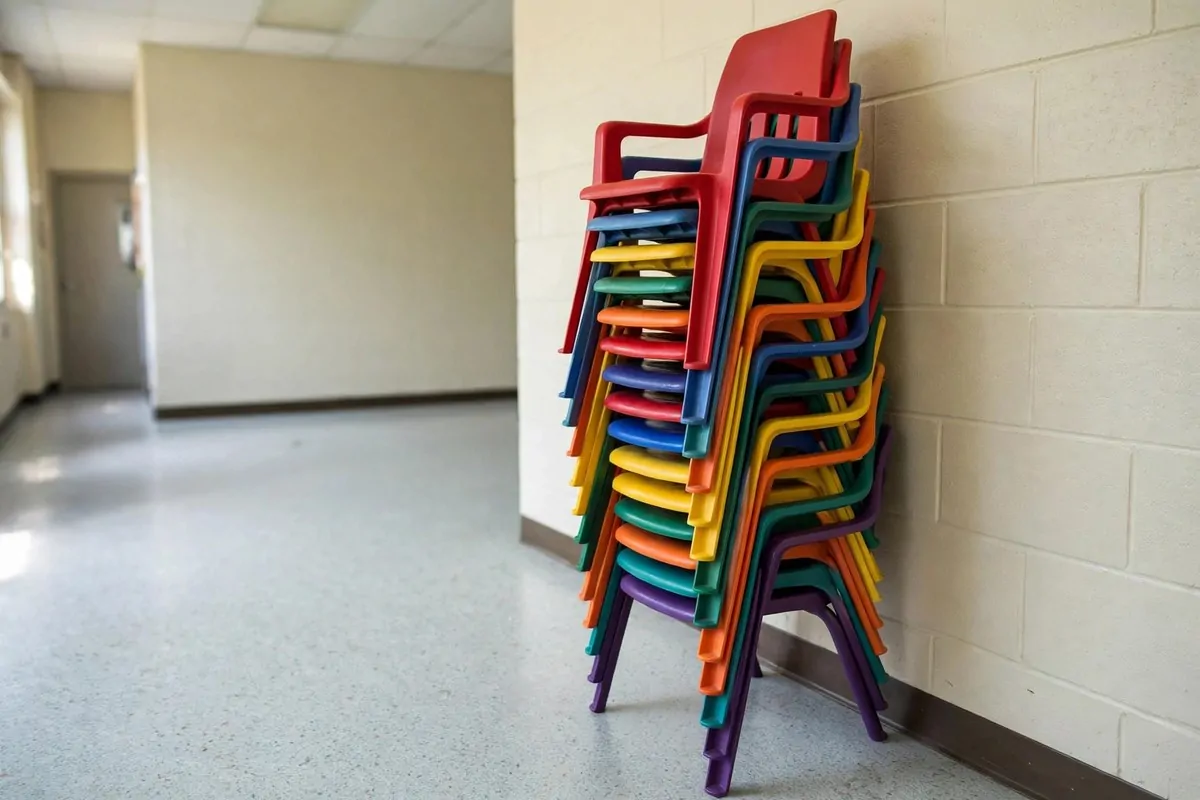
Stackable chairs fix this in seconds. When we do floor work, the kids stack their chairs in one corner. Suddenly the middle of the room is wide open.
I stack mine five high. That is the safe number for my chairs. Check yours, because every chair is a little different, and a falling stack is no fun.
We have a game for it now. The class can clear the floor in under a minute. They think it is a race. I think it is the best space trick in the room.
Stacked chairs also make Friday cleaning so much easier. I mop under everything in one go. No chair legs in the way.
If you are buying chairs, sit in the stackable ones first. Some are comfy. Some are not. The kids will sit in them all day, so comfort still counts.
And pick a color you like. You will be looking at that stack every single day.
One corner of stacked chairs gives you a whole open floor. That is worth a lot in a small classroom.
4. Tables That Fold Flat
Some days you need a big table. Some days you need the floor. A folding table gives you both.
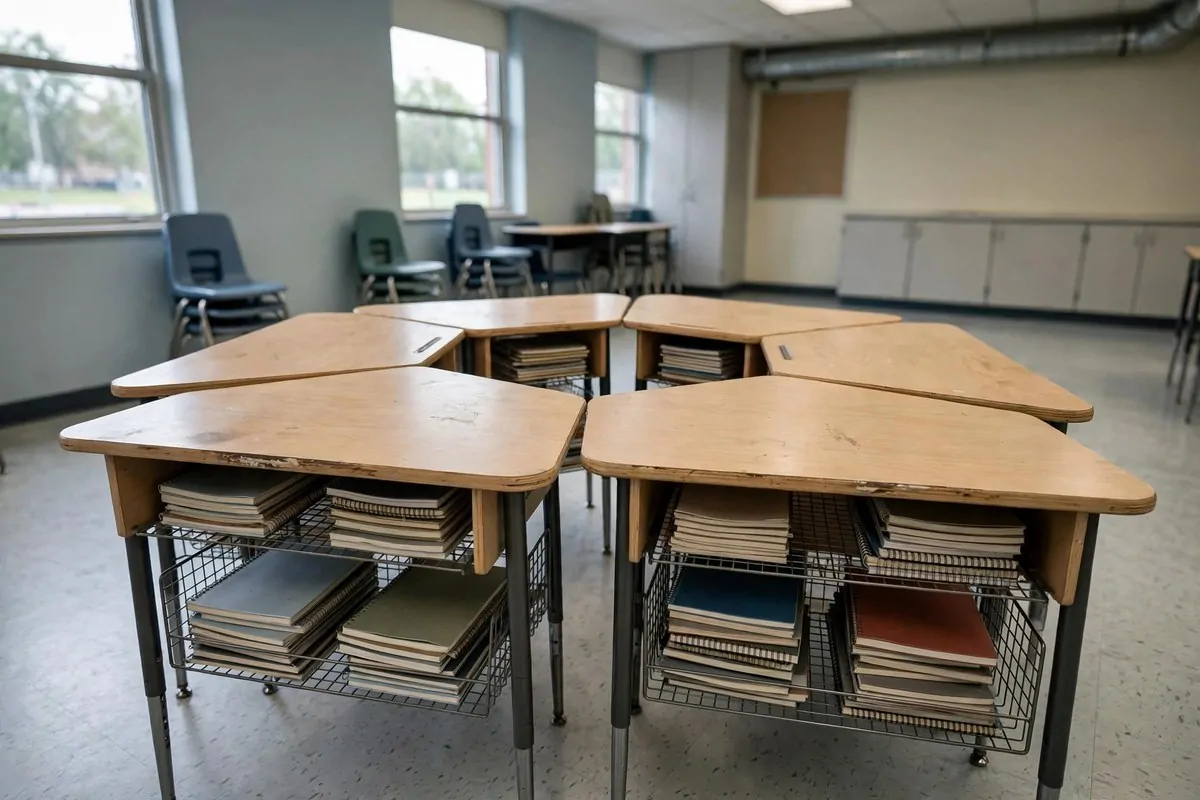
I keep two folding tables in my room. When art time comes, they open up in a minute. When we finish, they fold flat and lean against the wall.
Folded flat, a table is about as thick as a door. That is almost nothing. I slide mine behind my bookcase where nobody even sees them.
The trick is to buy tables that fold easy. If it fights you, you will stop using it. I test every table in the store before I buy.
I also label my tables with a little sticker. Table one and table two. The kids know which one to grab, and there is no arguing.
Folding tables are also great for parent night. I set them up in the hall with snacks. Then they vanish again.
If you only have room for one extra piece of furniture, make it this. It is a table when you want it and a ghost when you do not.
Two minutes of folding buys you back half your room. I will take that trade every time.
5. Desks That Push Together Like Puzzle Pieces
Some desks only work in rows. They are big rectangles, and they fight you when you try to group them.
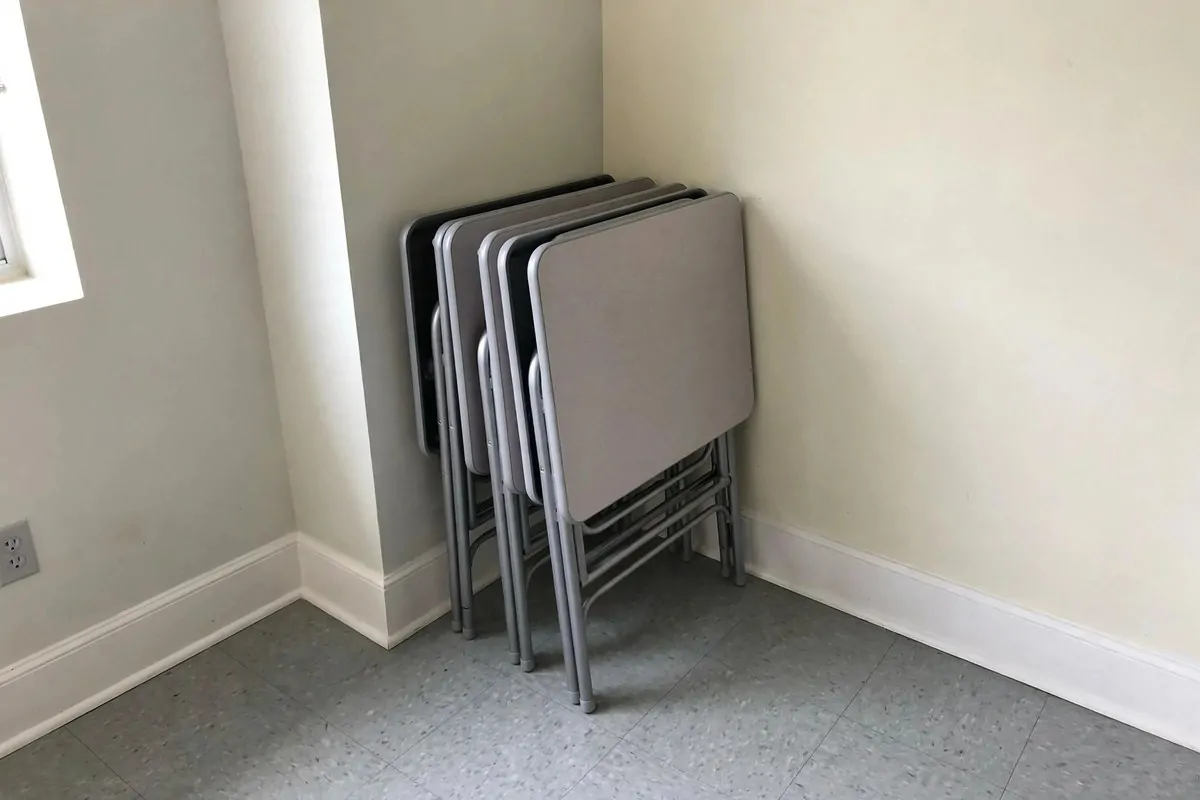
Modular desks are different. They come in shapes like trapezoids and half circles. Push two together and you get a pair. Push six together and you get a big group table.
I love that one set of desks can make five layouts. Rows for tests. Pods for projects. A big U for class talks. The kids move them themselves, and it takes minutes.
Look for desks with a book box built in. When each desk holds its own books, you do not need a whole wall of cubbies. That saves a ton of space.
My desks have a little rack under the top. Notebooks slide right in. No more piles on the floor next to the chairs.
If your school gives you old rectangle desks, you can still group them. Put two together to make a square. Four make a bigger square. It works fine.
The real trick is teaching the kids the layouts. I have little cards that show each setup. They pick a card, move the desks, and we start.
One set of desks, many rooms in one. That is how a small classroom feels big.
6. Claim the Corners
Corners are the most wasted space in any classroom. They collect dust and lost pencils. Nobody uses them.
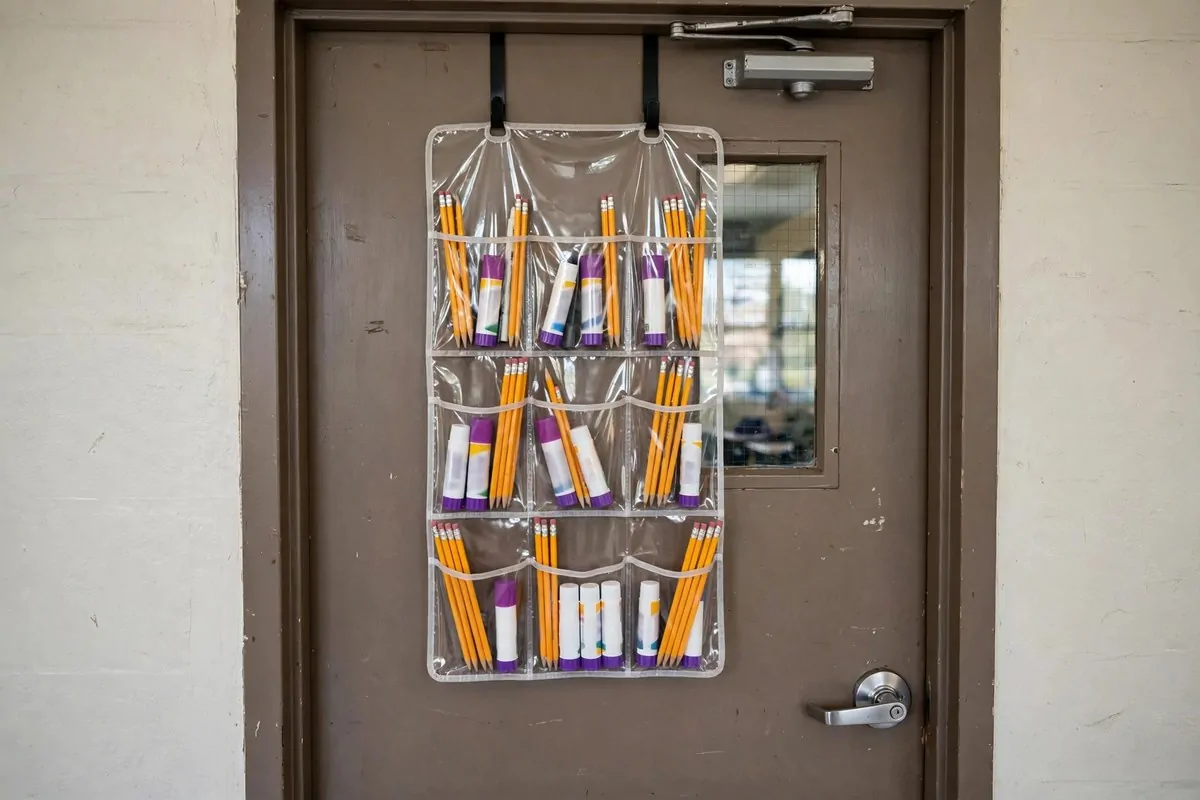
I put a corner bookcase in mine. It is shaped to fit right into the angle of the walls. It holds books, bins, and games, and it takes up almost no floor.
Another corner became my reading nook. A small rug, some floor cushions, and a low shelf of books. It is tiny. The kids fight over who gets to sit there.
The third corner holds my plant and a little lamp. It sounds silly. But a dark corner with a plant looks like a real place instead of dead space.
The fourth corner is my calm-down spot. A soft chair, a feelings chart, and a timer. Kids go there when they need a minute. It is small and quiet.
You can buy furniture made just for corners. Corner shelves, corner desks, corner storage. They fit like they were made for the spot, because they were.
Before you buy anything, just sit in your empty room and look at each corner. Ask what that corner wants to be. You will know.
Four corners, four little rooms. A small classroom suddenly has neighborhoods.
7. Over-the-Door Organizers
Doors are walls you forgot about. The back of every door in your room can hold things.
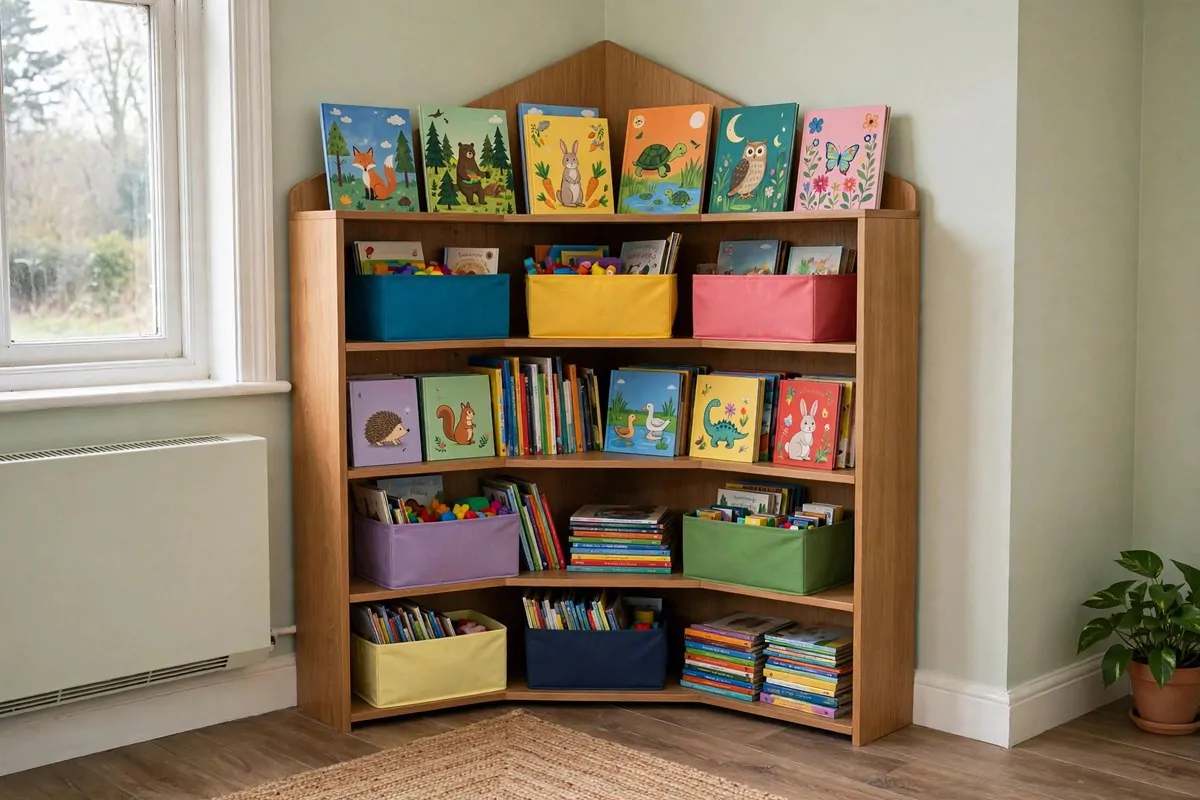
I hang a clear pocket organizer on my supply closet door. It holds glue sticks, scissors, and extra pencils. I can see everything through the clear pockets.
My bathroom pass hangs on the main door. So does my hall pass. They never get lost, because they live in the same pocket every day.
Over-the-door organizers also work on cabinet doors. I have one inside my tall cabinet for tape, staples, and sticky notes. It is like a secret drawer.
The clear kind is best. If you can see it, you will use it. The fabric kind with deep pockets hides things, and hidden things get forgotten.
These organizers cost very little. And they hang in seconds. No tools, no drilling, no asking the school for help.
Just check that the door still closes. A fat organizer can stop a door from latching. Ask me how I know. I learned that one the loud way.
Every door is a free shelf. Use them all.
8. A Pocket for Every Student
Student papers are the number one space thief. They pile on desks, on your desk, on the floor. They multiply when you are not looking.
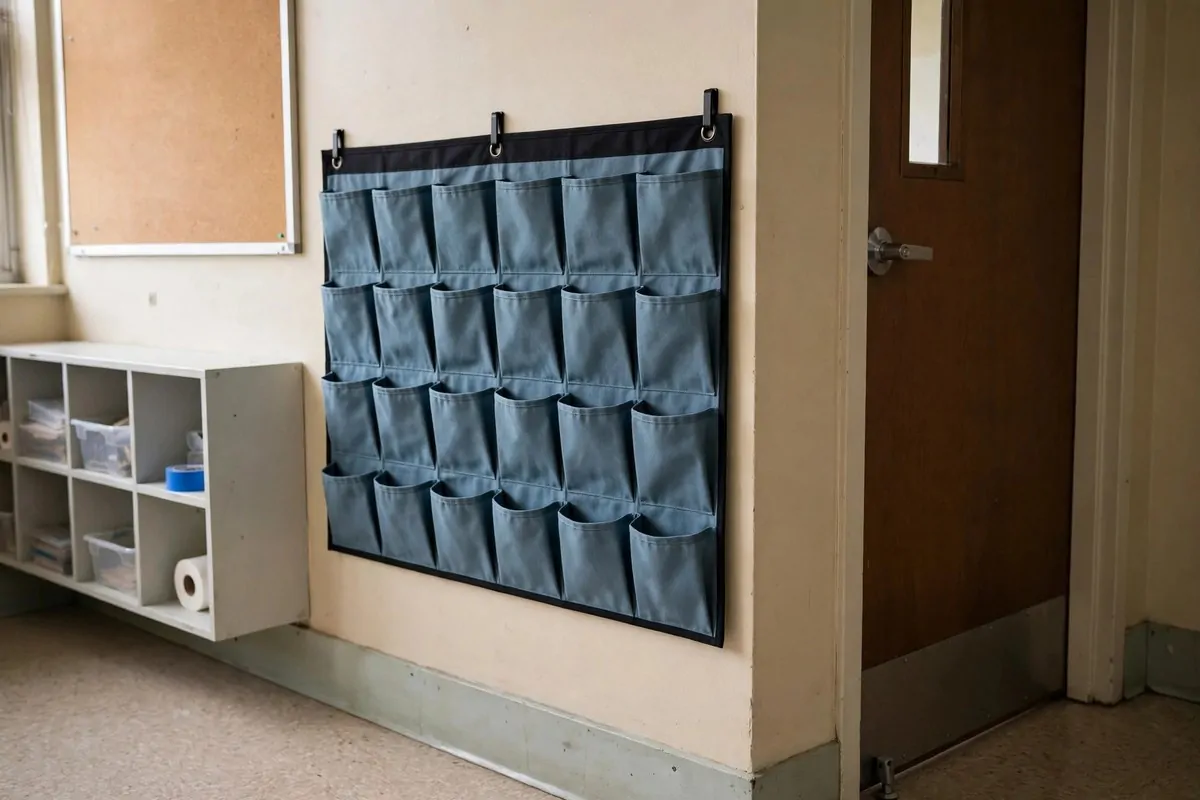
A wall pocket chart gives every child a home for their papers. One pocket per kid. Homework goes in. Notes go home from the same pocket.
I hang mine on the wall by the door. Kids drop things in as they walk in. They grab things out as they walk out. No piles anywhere.
You can also use a pocket chart for the week. Label the pockets Monday through Friday. Slide the copies in on Sunday night. Your whole week is planned on a wall.
The pockets are flat against the wall. They stick out maybe two inches. Compare that to a filing cabinet, which sticks out two feet.
I put a little photo on each pocket for the young ones. They find their spot fast, and there is no reading required.
At the end of the year, I just wipe the chart down and it is ready for a new class. It lasts for years.
Flat storage on the wall beats bulky storage on the floor. Every single time.
9. Pegboard for Daily Tools
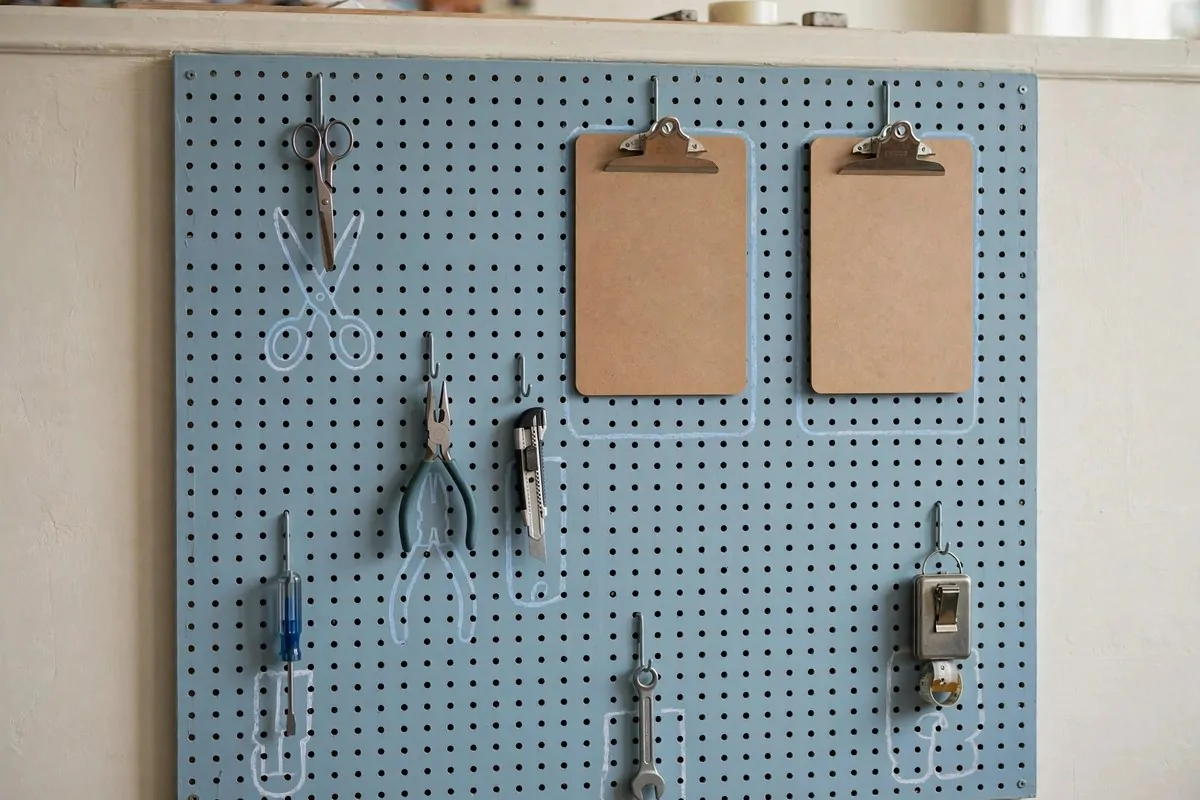
Scissors, staplers, hole punches, rulers. The tools every class needs daily. And they always vanish into desk black holes.
My pegboard keeps them all in one visible spot. I hung it right by the supply area. Every tool hangs on its own hook.
Here is my favorite part. I traced each tool with a marker on the board. So the scissors have a scissors-shaped outline. When the outline is empty, we know what is missing.
The kids love this. They treat it like a puzzle. They race to match every tool to its shadow. Cleanup takes half the time it used to.
You can paint your pegboard any color. Mine is a soft blue. It looks nice, and the dark tool outlines show up well against it.
Pegboards also hold clipboards, headphones, and lanyards. Anything with a hole or a hook can hang there.
It sticks out from the wall about one inch. One inch for twenty tools. That math works for me.
If a tool has no home, it has no hope. Give them all a peg.
10. A Rolling Cart Instead of a Teacher Desk
A big teacher desk can eat a whole corner of your room. And let us be honest. Most of it becomes a paper mountain anyway.
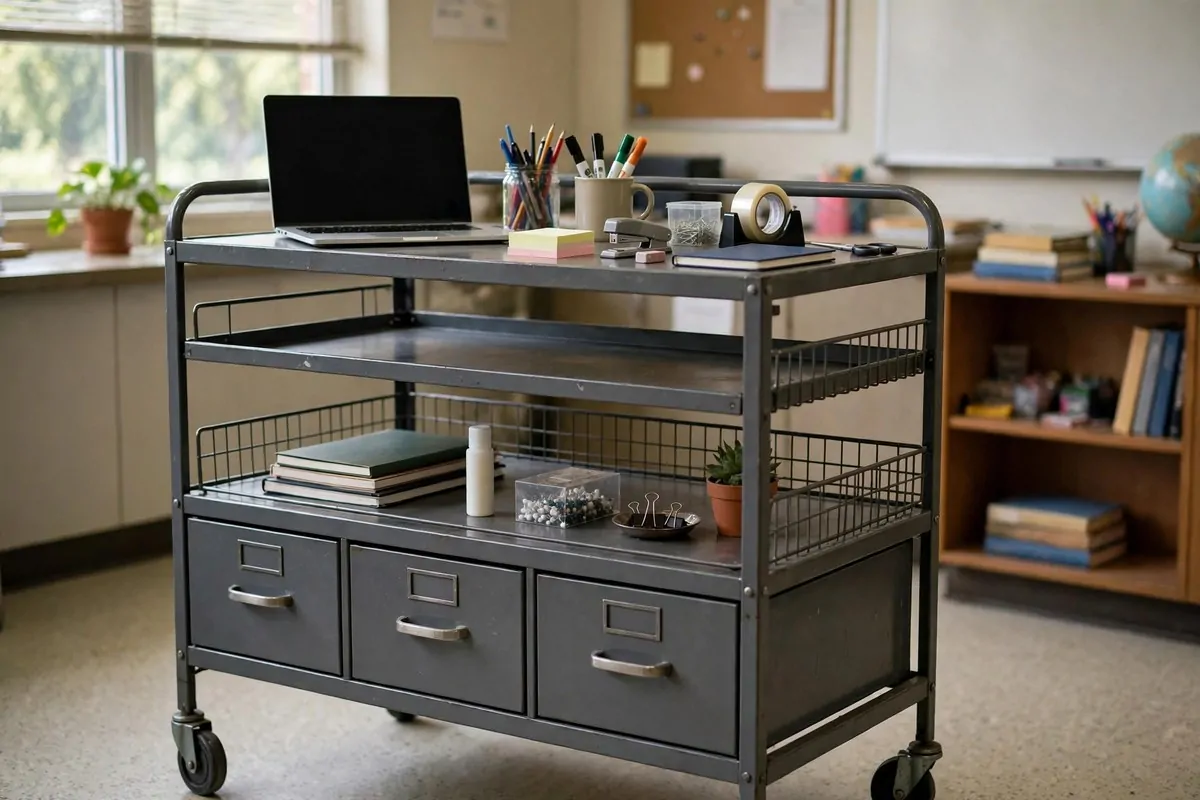
I got rid of mine three years ago. Now I use a three-tier rolling cart. It holds my laptop, my plan book, my pens, and my water bottle. That is all I really need.
The cart goes where I go. Small group table? The cart rolls over. Front of the room? The cart rolls with me. My stuff is always at my side.
Each tier has a job. Top tier is for today. Middle tier is for this week. Bottom tier is for supplies. The kids even know not to touch the top tier.
At the end of the day, I roll it into my corner and lock the wheels. My room looks clean. My desk, which is a cart, looks clean too.
This saved me about six square feet of floor. In a small room, six square feet is a reading nook. It is real space.
If you love your big desk, I get it. But try the cart for one week. You might not go back.
11. One Corner, Many Jobs
In a small room, every spot needs to work double shifts. My reading corner is the hardest worker in my classroom.
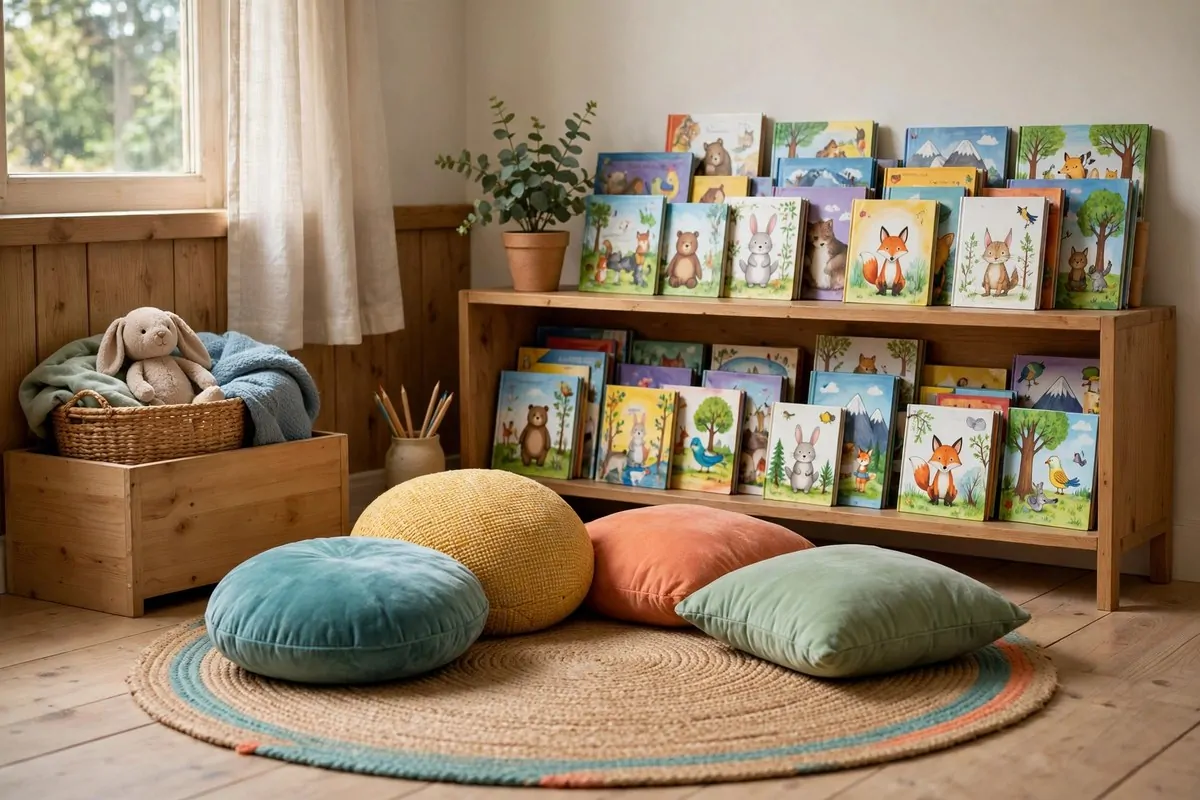
In the morning, it is a reading nook. Rug, cushions, book shelf. Kids curl up with books before the bell.
After lunch, it becomes our group meeting spot. We push the cushions into a circle. I read aloud from my chair, and everyone fits.
On Fridays, it turns into our showcase stage. Kids stand on the rug and share their work. The rug marks the stage. No props needed.
The furniture is all light. The kids move it themselves in under a minute. Nothing is heavy, nothing is bolted down.
I keep the shelf low so it does not block light. A tall shelf in a corner makes the corner dark. A low shelf keeps it bright and open.
One rug, some cushions, one low shelf. That is the whole recipe. It costs almost nothing and it gives you three rooms in one corner.
Look at your corners and ask what else they could be. The answer is usually more than one thing.
12. Hide Storage Under a Skirted Table
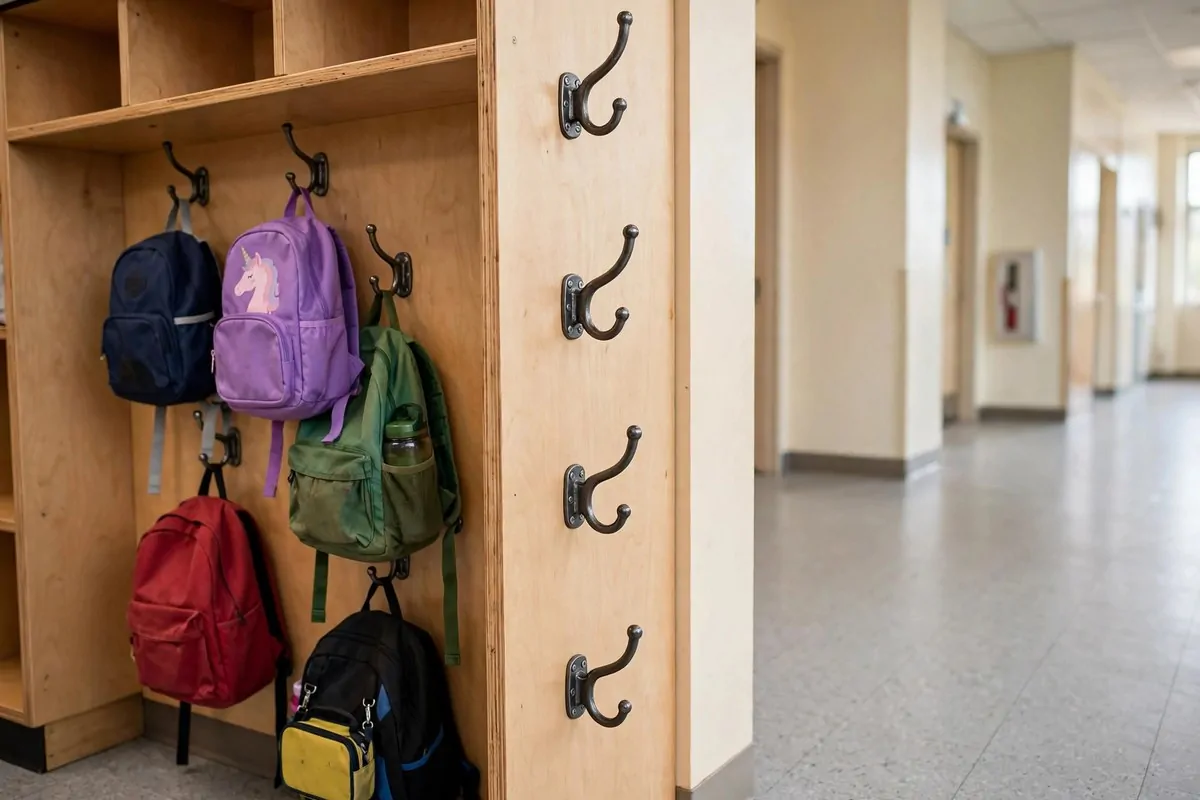
Under every table is a cave of wasted space. Dust lives there. Lost crayons live there. Nothing useful lives there.
A table skirt changes that. It is just a cloth that hangs from the table edge to the floor. Behind it, you can hide bins of supplies.
I keep my seasonal stuff under there. Winter art supplies. Spring science kits. Things I need, but not every day.
The bins are labeled, so I can find things fast. I lift the skirt, grab the bin, and drop the skirt back. Nobody sees the mess.
Kids think it is a magic trick. They had no idea the storage was there. And honestly, neither did I for my first year.
You can make a skirt from a cheap tablecloth. Cut it to fit, and use sticky hooks to hold it up. It takes twenty minutes.
This trick works at home too. My dining table hides board games. But that is a story for another article.
Free storage you already own. You just need a skirt to unlock it.
13. Slim Tiered Shelves
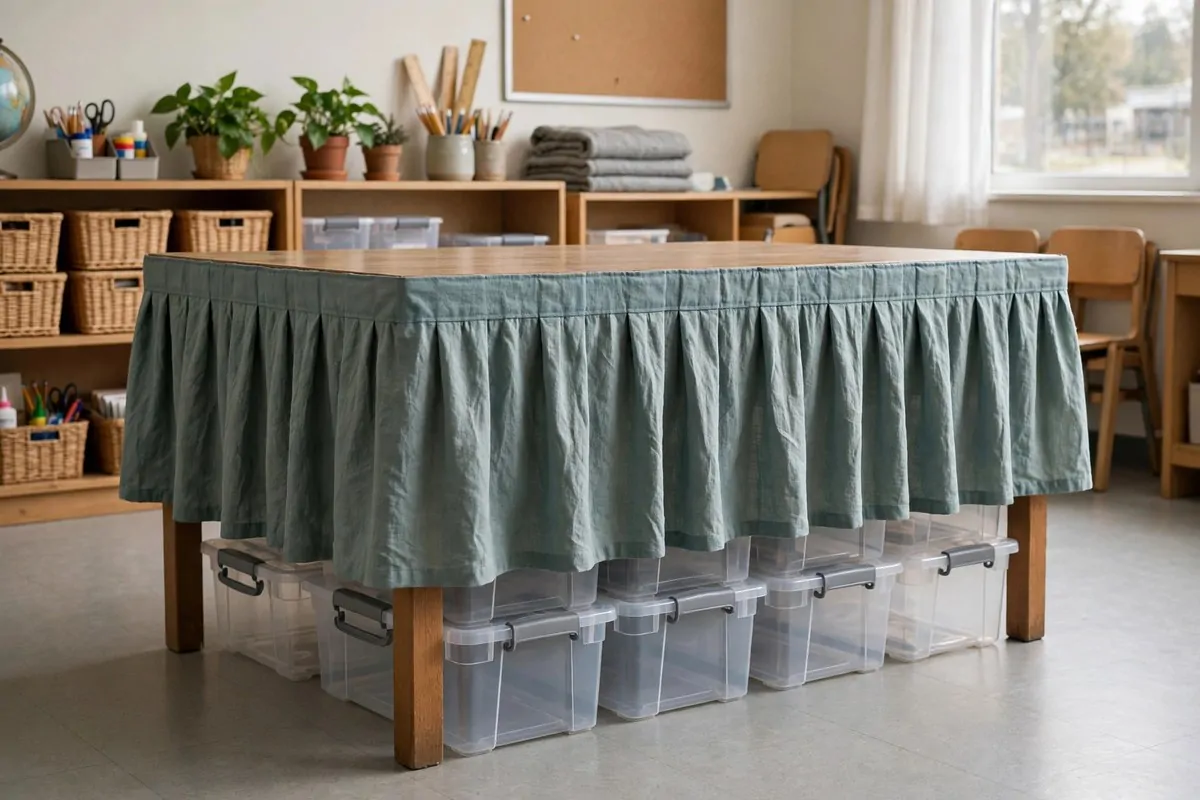
Big shelves are great until they block the whole room. Sometimes you need storage that is tall but skinny.
Tiered shelves are my answer. Each level is smaller than the one below, like stairs. They hold a lot but they feel light and open.
I use mine for art supplies. Paint on the bottom, paper in the middle, brushes on top. Everything visible. Nothing buried.
The rolling kind is best. I wheel it to the art table when we paint. Then I wheel it back to its little slot by the wall.
A tiered shelf fits in gaps that nothing else fits in. Between the door and the bookcase. Next to the window. In that weird space by the sink.
They are also cheap. Much cheaper than a big cabinet. And they look neat, which matters more than I want to admit.
If you have one dead gap in your room, measure it. Then find a tiered shelf that fits. It is like the gap was waiting for it.
Skinny storage for skinny spaces. It just makes sense.
14. Hooks on the Sides of Cabinets
Coat closets take up a wall. Cubby units take up a wall. In a small room, you may not have a wall to spare.
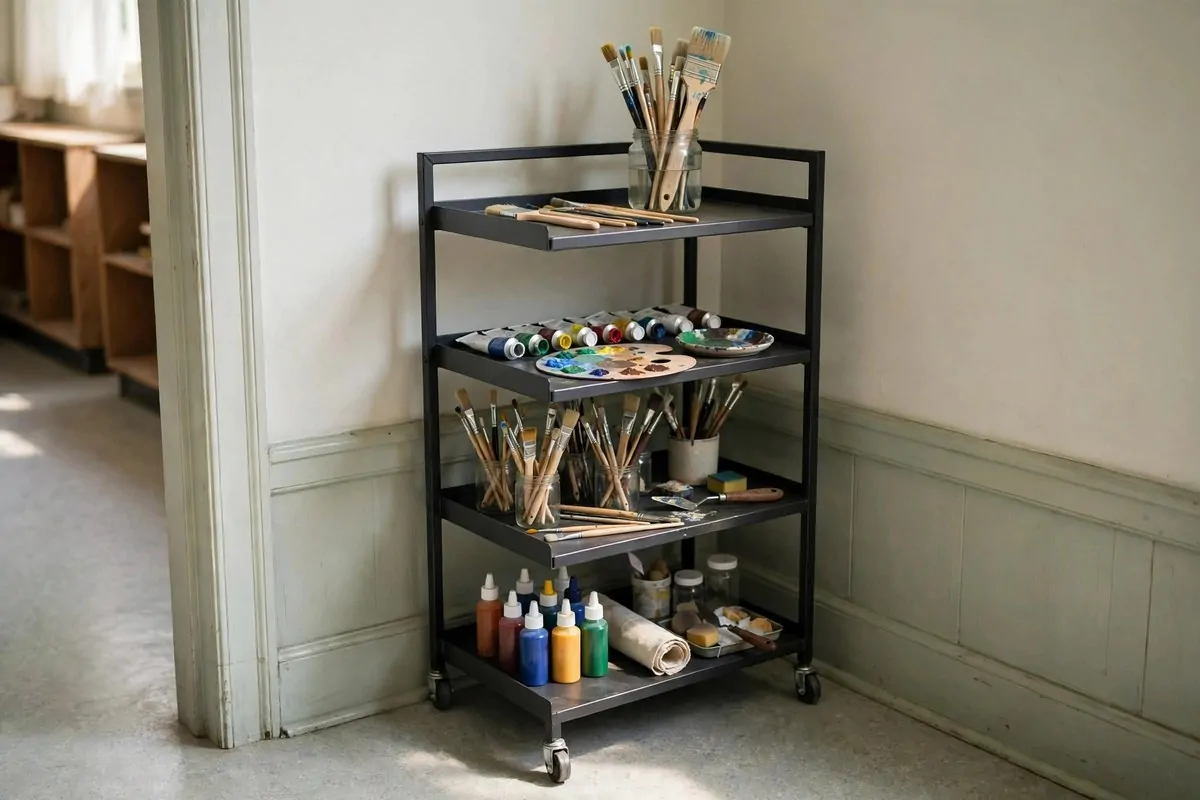
So I put hooks on the sides of my cabinets. The sides face the walkways, and nobody was using them for anything.
Each child gets one hook. Backpack, jacket, lunch box. It all hangs flat against the cabinet. The middle of the room stays clear.
I used strong sticky hooks first, to test the spots. When I found the right heights, I screwed in real hooks. Both work fine.
The trick is to keep the hooks low enough for the kids to reach. If they cannot reach, they will drop things on the floor. And then we are back to square one.
I also hung a little mirror on one cabinet side. The kids check their hair. It is silly, but it makes the cabinet feel like their space.
Cabinet sides are free walls. Hang things on them.
Your room just grew a coat closet without losing an inch of floor.
15. A Rolling Library Instead of a Book Wall
A full bookcase wall looks lovely. It also eats eight feet of your room. In a small classroom, that is a luxury you may not have.
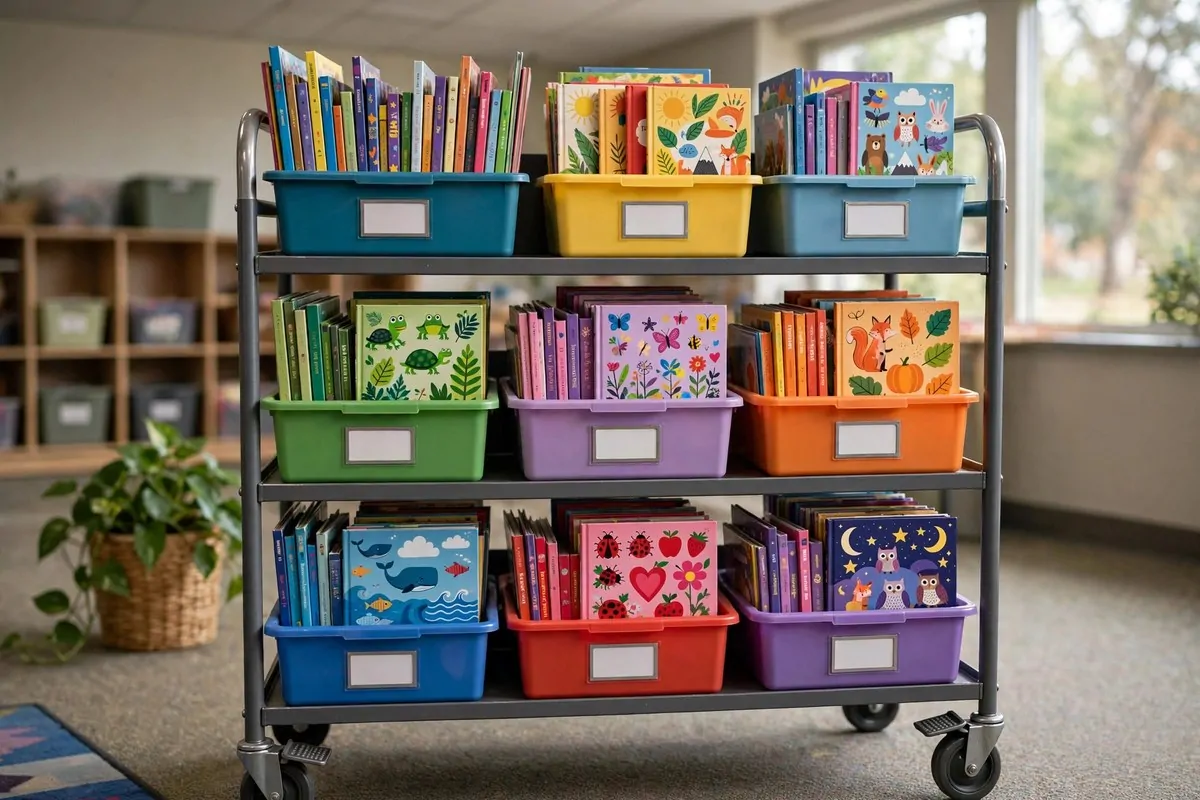
My library lives on a rolling cart. Three shelves of books, sorted by bins. Fiction on top, nonfiction in the middle, picture books at the bottom.
During reading time, I wheel it to the middle of the room. Kids browse like it is a little bookshop. Then it rolls back to its parking spot by the window.
I change the books every month. The cart makes it easy, because I just wheel it to my car and swap the bins. Fresh books keep the kids excited.
The labels on the cart say what each bin holds. Kids find books on their own. I do not get asked where the dinosaur books are fifty times a day.
A rolling library also means no dusty bookcase corners. The cart moves, so I can clean behind it. Small thing, but it matters.
If you love the look of a big library, keep one small shelf for display. Face out five beautiful books. The rest can live on the cart.
Books on wheels. It sounds funny. It works great.
16. Hang Things from the Ceiling
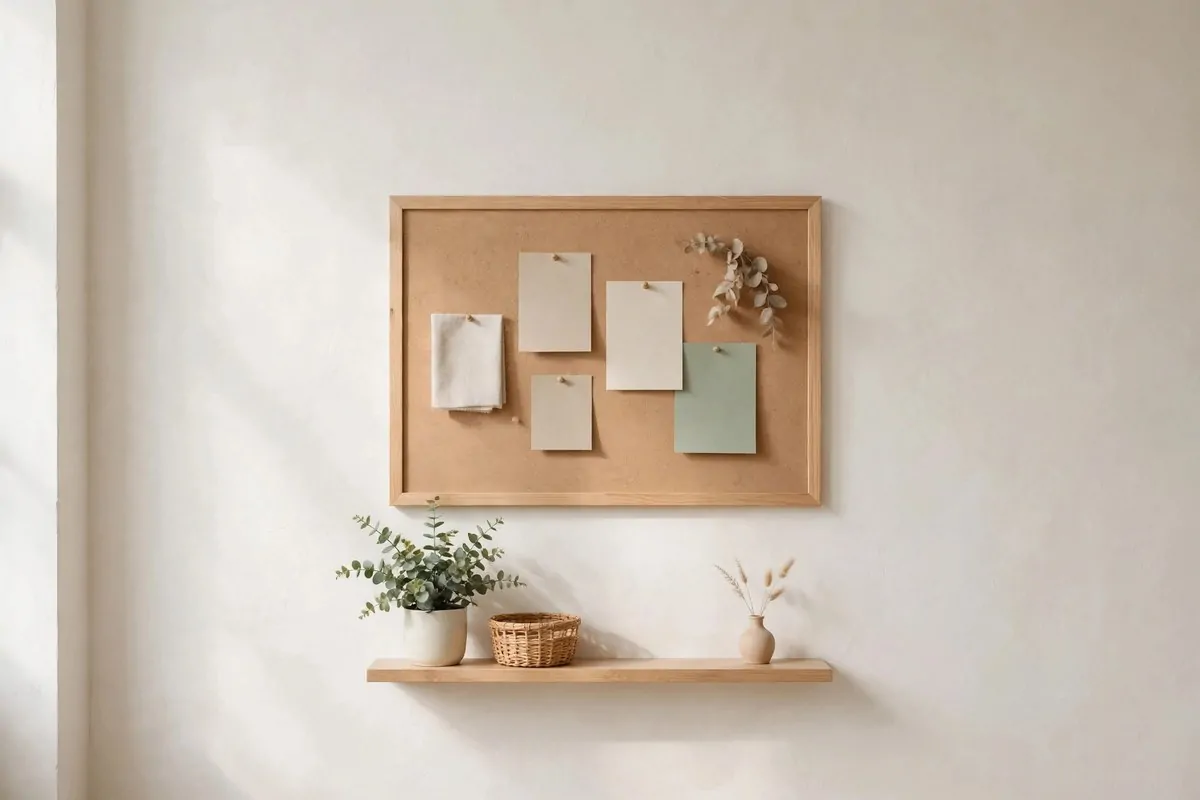
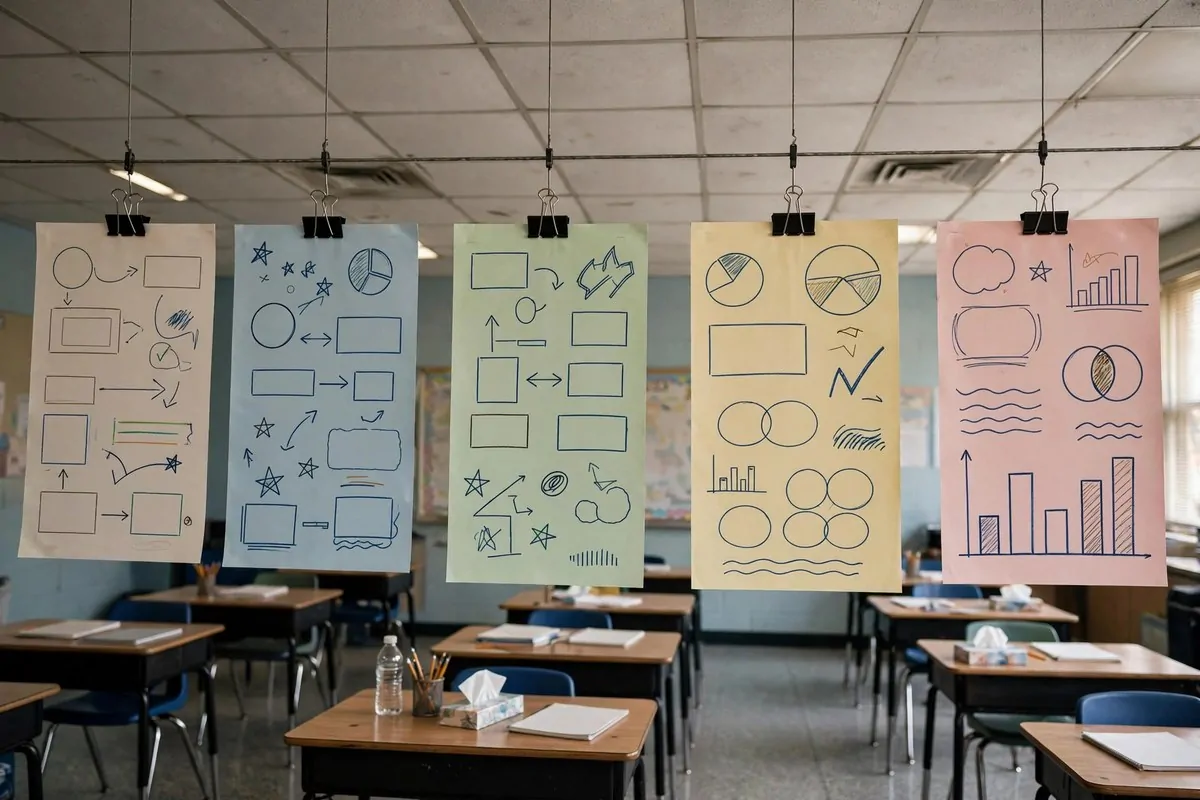
The ceiling is the last empty space in most classrooms. It is just sitting there, doing nothing, while your walls cry for help.
I hang anchor charts from my ceiling tiles. Little clips grip the tile edges, and the charts hang down where kids can read them.
It took me one afternoon to set up. Now my most-used charts float above the desks. They do not touch a single wall.
Hanging art projects work too. Paper snowflakes in winter. Paper leaves in fall. The kids look up and see their work flying. They love it.
Keep things high enough that tall adults do not bump them. I learned this at a staff meeting when our principal walked into a hanging chart. We all laughed. He did not.
Check your school rules first. Some schools do not allow ceiling hangs for fire safety. Mine allows charts but not fabric. Every school is different.
The ceiling is free display space. If your school says yes, use it.
Your walls will thank you. Your floor never even noticed.
17. Keep the Walls Calm
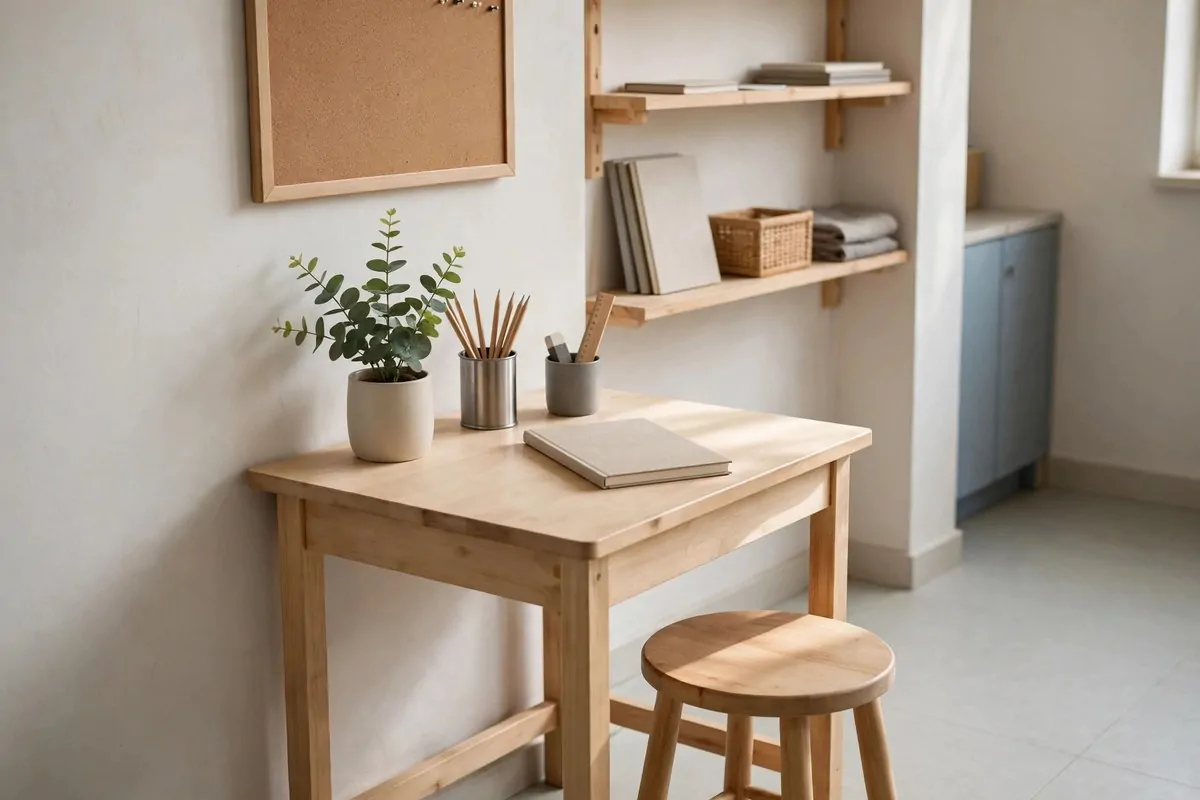
This trick costs nothing and it might be the most powerful one. Take stuff off your walls.
I used to cover every inch. Posters, charts, borders, student work, all shouting at once. My small room felt even smaller, like the walls were closing in.
Now I keep one main bulletin board. I rotate what goes on it every few weeks. Everything else lives in a folder until its turn.
The room feels twice as big. I am not joking. Bare walls give your eyes somewhere to rest, and the whole space breathes.
Kids focus better too. Fewer things to stare at during math. My wiggly ones especially do better with calm walls.
Pick your best five displays. Put the rest in a closet. If you miss something, swap it in next month. Nothing is gone forever.
This is the hardest trick for teachers who love decor. I know. I was one. But try it for two weeks and watch what happens.
Less on the walls means more room in the mind. And in a small classroom, that counts double.
18. Shrink the Teacher Zone
Here is a question nobody asks. How much of your room belongs to you? Be honest. Measure it.
My old teacher zone was huge. Big desk, two chairs, a filing cabinet, and a pile I called my system. It took up a full corner.
Now my teacher zone is a small desk and a stool. That is it. My files live in the rolling cart. My supplies live on the pegboard.
The kids gained a whole reading corner from my shrink. A corner I was using to store papers nobody ever read again.
I still have everything I need. It is just vertical now instead of sprawling. Cart, wall, hooks. My desk holds only what I am using today.
There is a nice side effect. When my zone is small, I keep it tidy. There is no room for piles. Piles need space, and I took theirs away.
Your classroom is for the kids. Every inch you give back to them is an inch well spent.
Shrink your zone. Grow their room.
19. Rugs That Draw Invisible Walls
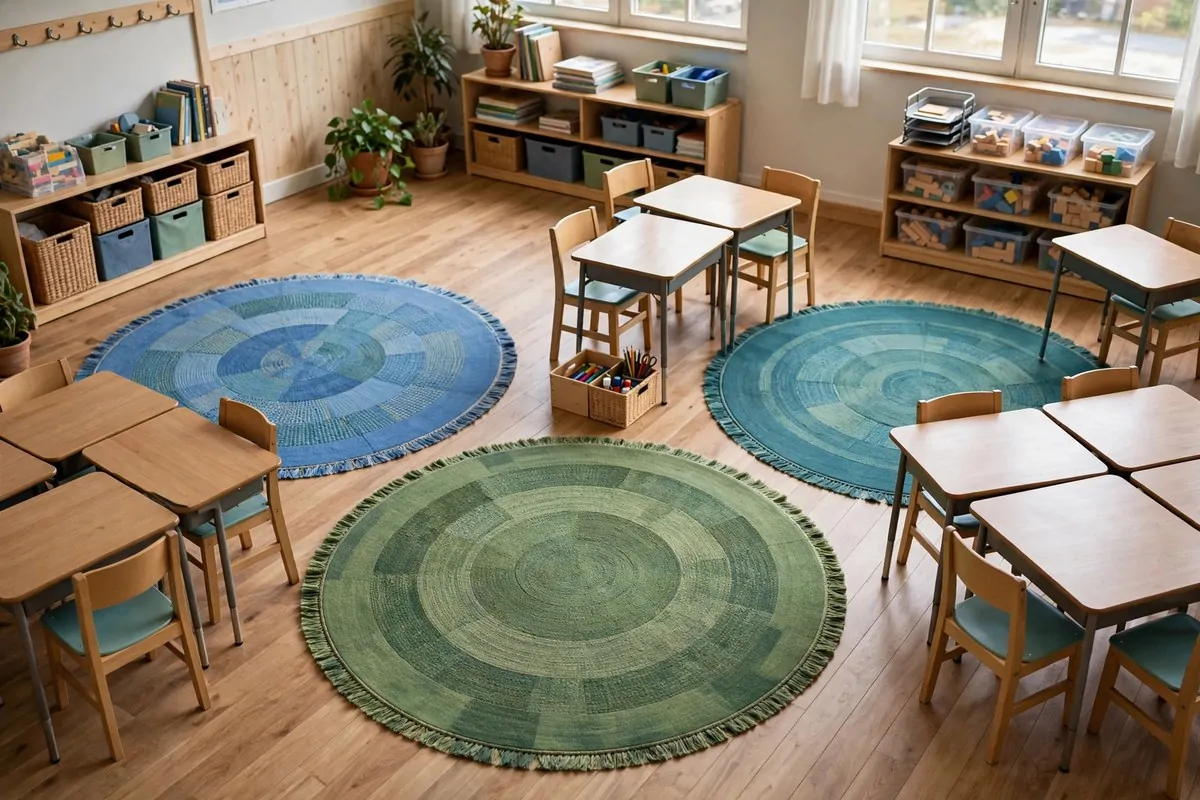
You do not need bookshelves to divide a room. A rug can do the same job, and it lies flat on the floor.
I have three rugs. The blue one means reading. The green one means building and blocks. The round one in the middle means come sit for a lesson.
Kids understand rugs fast. They walk in, see the blue rug, and their brains switch to reading mode. No signs needed.
Rugs also soften the noise. Thirty kids on a hard floor is loud. Thirty kids on rugs is a normal hum. My ears thank me daily.
Pick rugs with short fibers. Long shaggy rugs trap crumbs and smell like old snacks by October. Ask me how I know. Actually, do not ask.
I tape the rug edges down with carpet tape. No curling corners, no tripping. Safety first, always.
Walls divide rooms. Rugs divide them better, because you can still see and walk across.
Three rugs, three rooms, zero furniture. That is the last trick, and it might be my favorite.