20 Reading Nook Classroom Setups Kids Beg to Visit

Last August I walked into a classroom that did not feel like a classroom at all. The desks were pushed aside, the air smelled like fresh paper and new carpet, and in the far corner, under a big blue blanket strung across the ceiling, sat a pile of soft cushions with a basket of books right next to them. I knew right away that any kid who walked through that door would run straight for that corner. A reading nook classroom setup does exactly that. It turns one quiet corner into the most wanted seat in the whole room. And the good news is you do not need much money or much space to build one. Here are twenty setups that kids truly beg to visit, and most of them cost less than a pizza night.
1. The Campout Tent Corner
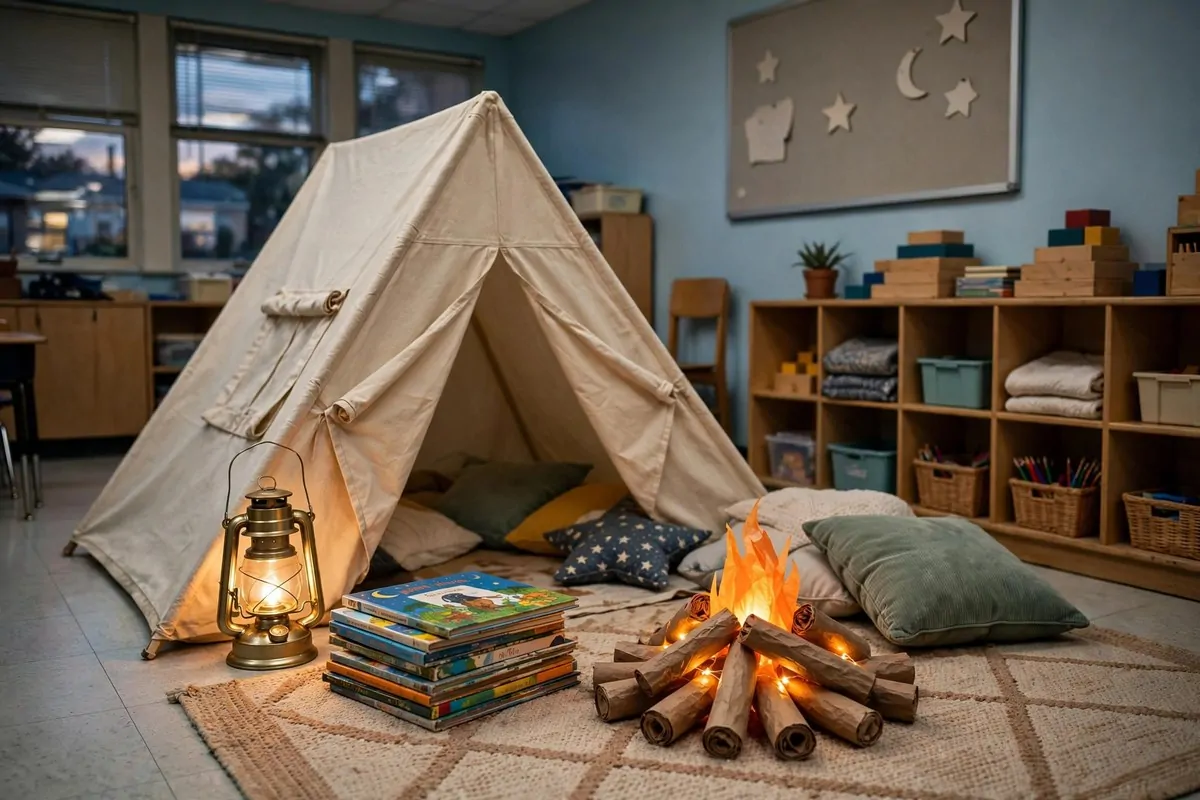
There is something about a tent that makes kids whisper instead of talk. I think it is the walls. When a tent goes up in a classroom corner, the whole room feels different.
You do not need a real camping tent. A small play tent from a toy store works great. And if you are on a tight budget, two chairs and a blanket make a fine tent too.
Set it in the corner with the opening facing the room. This way you can see the kids inside, but they still feel hidden. That balance matters a lot.
Put a soft rug or a few floor cushions inside the tent. Kids will sit longer when the floor is soft. Hard floors make them restless in about ten minutes.
Add a lantern that runs on batteries. It does not have to be bright. A soft glow is enough to make the tent feel like a real campsite.
Next to the tent, place a small basket of books. Pick adventure stories, animal books and anything with a map in it. Kids pick up on the theme fast.
A fake campfire made from paper logs is a fun touch. You can even add a red or orange paper flame in the middle. Kids love to sit around it and read.
Teach one simple rule on the first day. Inside the tent, voices stay low. That is it. Kids respect the rule because the tent feels special.
Swap the books every two weeks so the tent stays fresh. A stale book basket gets ignored fast. New books bring kids back again and again.
2. The Starry Night Fort
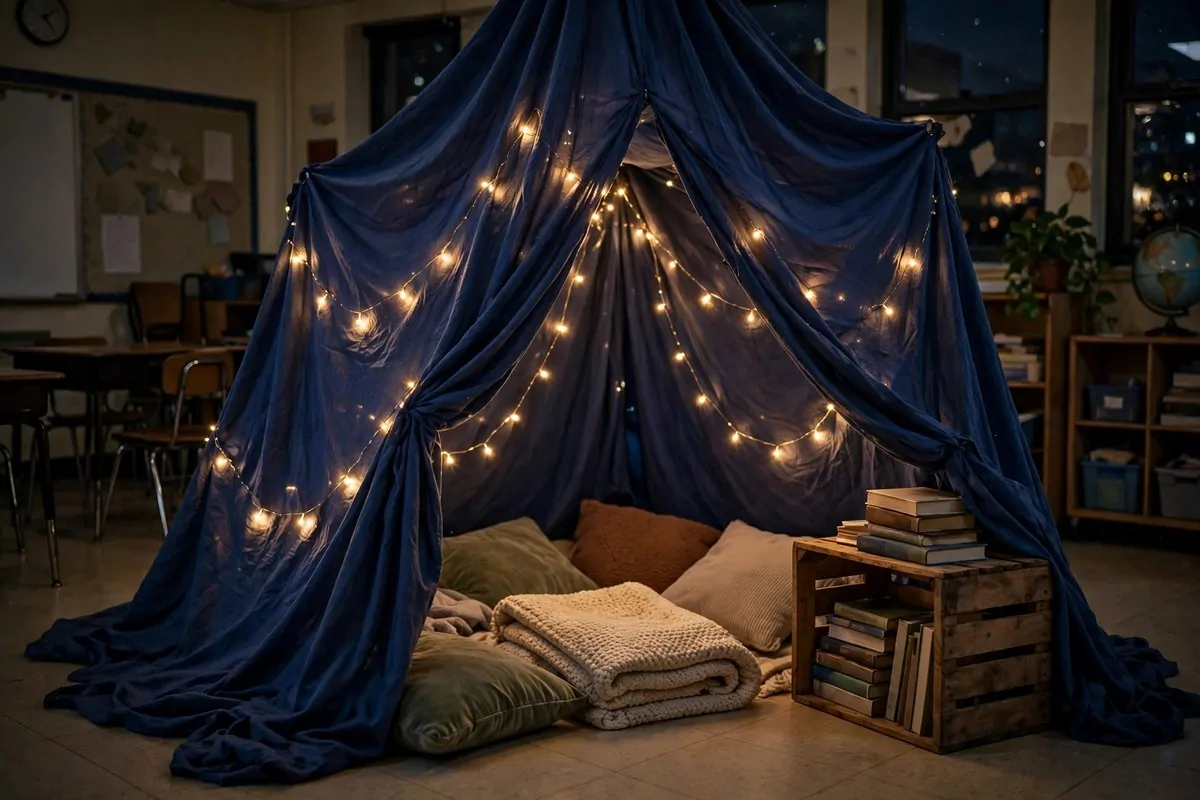
Some kids calm down the second they step into a darker, softer space. The starry night fort is built for those kids.
Drape a big piece of dark blue fabric from the ceiling over a corner. Let it fall loose on two sides. You want it to feel like a sky tent.
Hang a strand of small warm lights across the inside. They look like stars when the room lights are normal. It takes five minutes to hang them.
Lay down cushions and a folded blanket on the floor inside. The blanket is the secret. Kids pull it over their legs and settle in for a long read.
This fort works best in a corner away from the door. Kids walk past the door a lot. A quiet wall corner keeps the fort peaceful.
Stock the fort with quiet books. Poetry, bedtime-style stories and picture books about the night sky fit the mood. The fort tells kids what kind of reading happens here.
One warning. Keep the fabric high enough that you can see over it from your desk. You want to see little heads. Safety always comes first.
The kids will fight over who gets to sit in the fort. Make a simple sign-up sheet with time slots. It stops the arguing before it starts.
On rainy days this fort is gold. When the sky is grey outside, the little stars inside feel like magic. Kids remember that feeling all year.
3. The Window Seat Nook
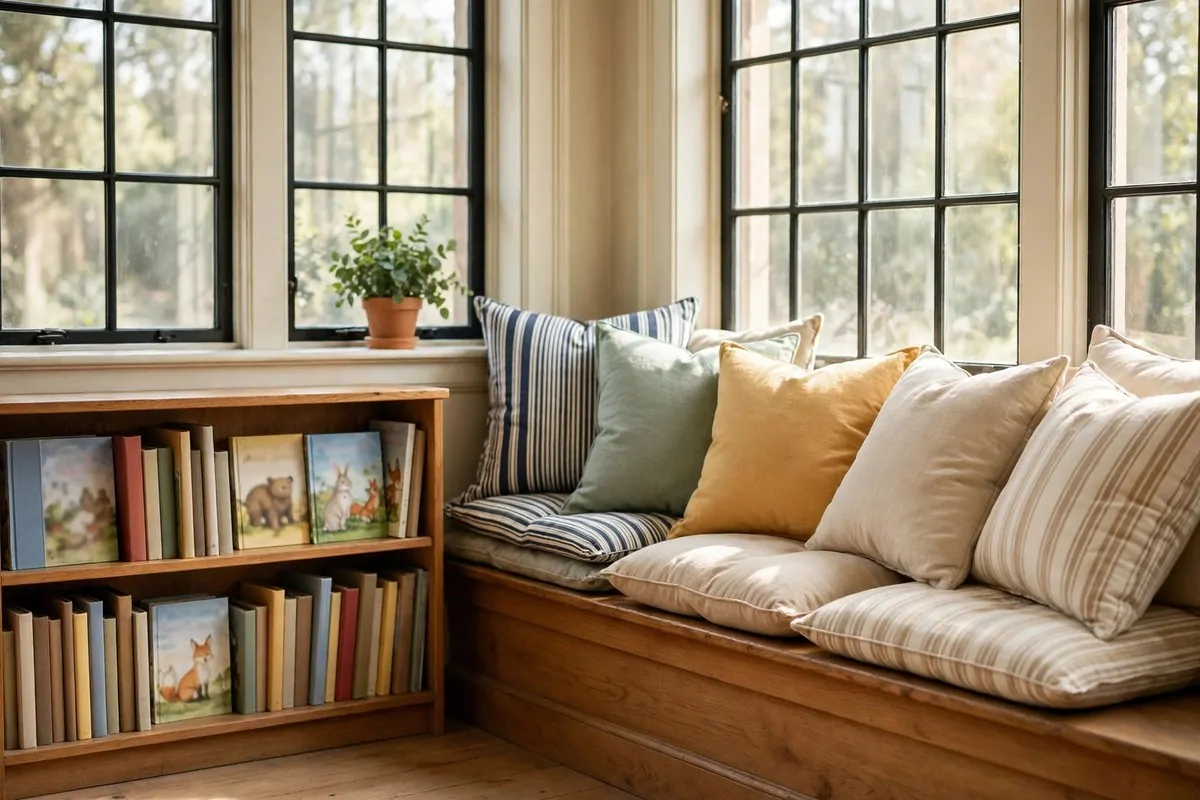
Natural light is free, and it makes everything better. A window seat nook uses the brightest spot in your classroom.
If you have a low bench under a window, you are lucky. Pile it with cushions in different sizes and colors. Three cushions is enough to start.
Put a low bookshelf right next to the seat. Kids should be able to grab a book without standing up. That small detail keeps them reading longer.
A plant on the windowsill softens the whole setup. Pick something hard to kill. A small green plant tells kids the space is cared for.
Morning is the best time for this nook. The light is soft and the room is quiet. Save the window seat for independent reading time.
In winter, this spot can get cold near the glass. Add one extra blanket for the cold months. Kids will fight less over the seat when it is warm.
Face-out books work great on the shelf beside the seat. When kids can see the covers, they pick books faster. It is like a tiny bookstore.
This is also a great spot for older kids who want to read alone. The window view gives their eyes a place to rest between chapters.
Keep the windowsill tidy. A cluttered sill makes the whole nook feel messy. One plant and nothing else is the sweet spot.
4. The Jungle Corner
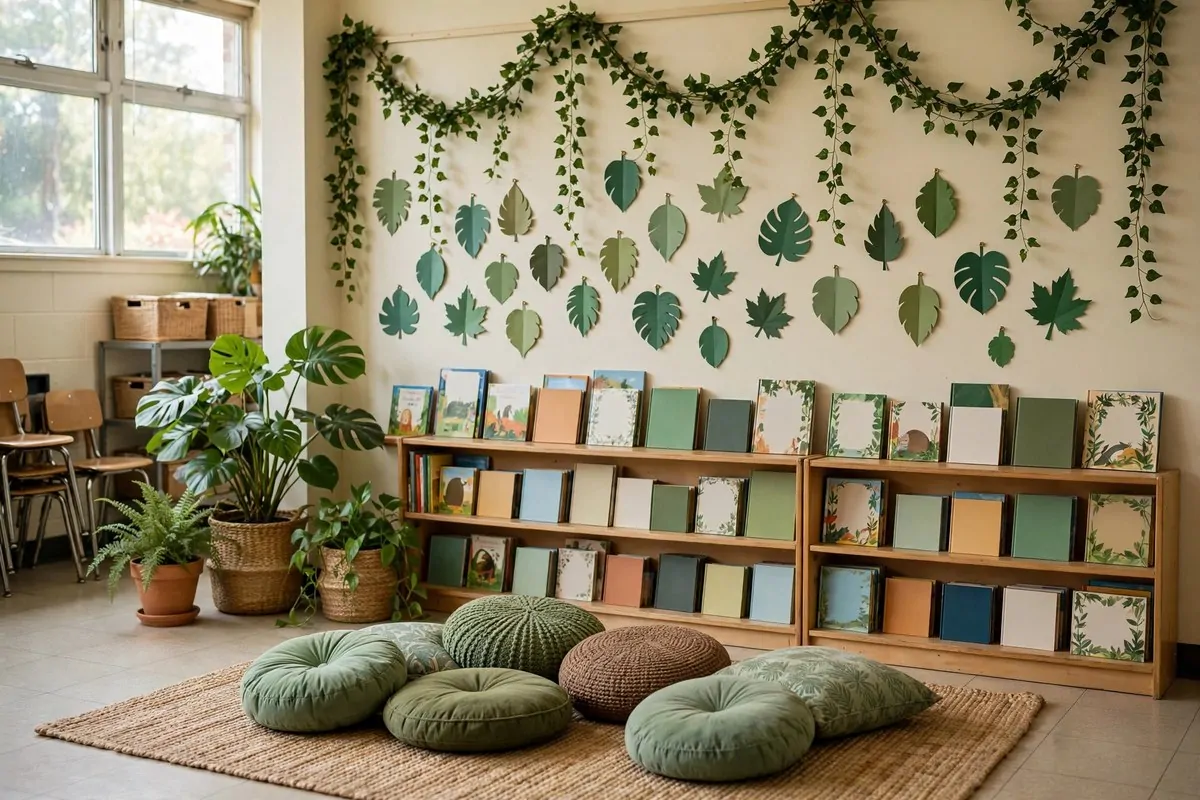
The jungle corner is loud in a good way. It is green, wild and full of life. Kids who love animals always drift here first.
Start with green vine garlands on the wall. You can buy them cheap or make them from green paper strips. Either way, they change the whole corner.
Add a few real or fake plants. Fake plants are safer if your room has no light in that corner. Nobody wants to watch a plant die all year.
Hang some paper leaves from the ceiling with string. Cut them in different sizes. When they move a little in the air flow, the corner feels alive.
Use a woven rug or a green mat on the floor. Floor cushions in green and brown keep the theme going. Kids sit in a circle and it feels like a clearing in the woods.
Stock it with animal books, nature stories and anything about the rainforest. The theme and the books should match. That is what makes it feel real.
A fun extra is a small sign that says this is the quiet jungle. Kids love rules that fit the theme. It is silly, but it works.
This corner can get messy with lots of green bits. Tidy the paper leaves once a month. A few fresh leaves keep it looking new.
Watch what happens during free reading time. The jungle corner fills up first with the younger kids. The green just pulls them in.
5. The Pirate Cove
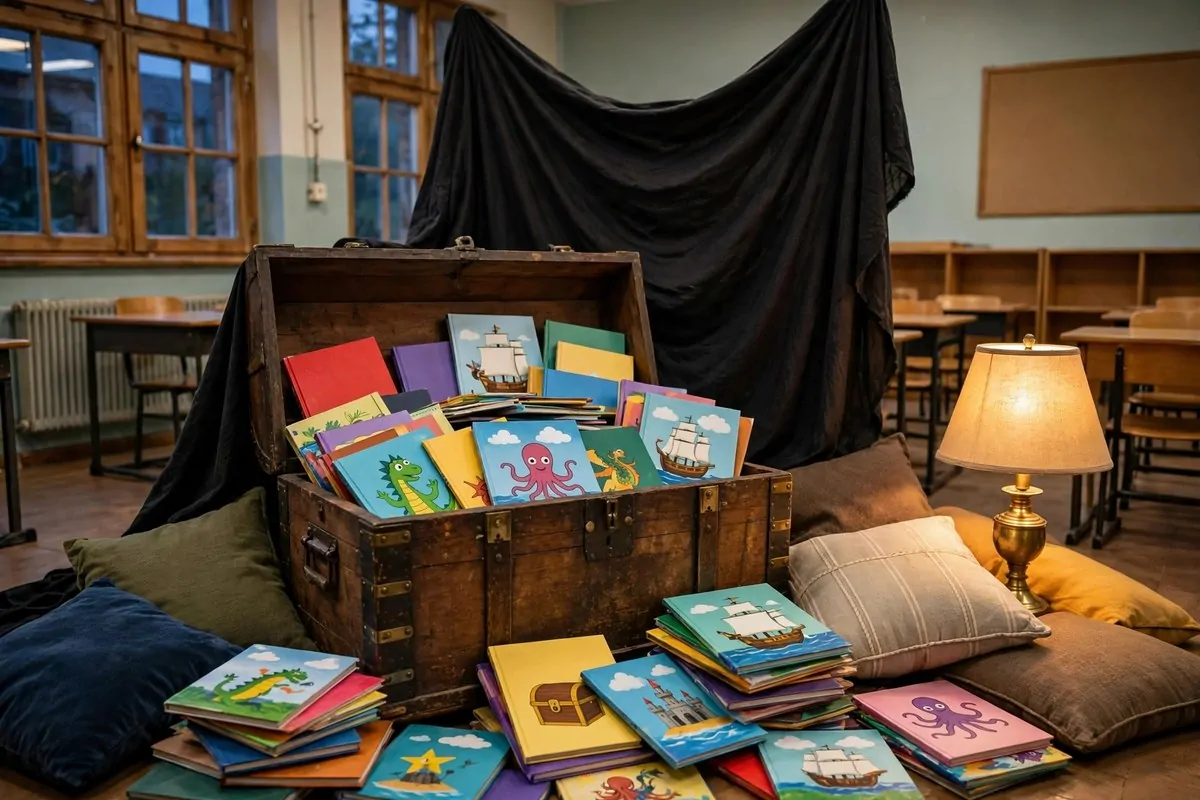
Every kid wants to find treasure. The pirate cove turns book hunting into a treasure hunt.
Get an old wooden chest or a box that looks like one. Fill it with books instead of gold. That is the whole trick, and it works every time.
Drape some dark fabric behind the chest like a pirate flag. You can cut a simple skull shape from white paper if you like. Keep it friendly, not scary.
Put cushions around the chest so kids can sit and dig through the books. The digging is the fun part. They flip through five books before they pick one.
Choose adventure books, ocean stories and tales about maps and journeys. The chest should feel like it holds real discoveries.
Add a small rug under the chest to mark the cove’s borders. Kids understand zones when the floor tells them. A rug is the simplest zone marker there is.
Label the chest with a fun name. The Treasure Chest of Stories is a good one. Kids will ask for it by name after the first week.
Rotate the treasure often. When the same books sit in the chest too long, the magic fades. Fresh books keep the hunt exciting.
This one is a hit with kids who say they hate reading. They do not feel like they are reading. They feel like they are hunting.
6. The Clawfoot Reading Tub
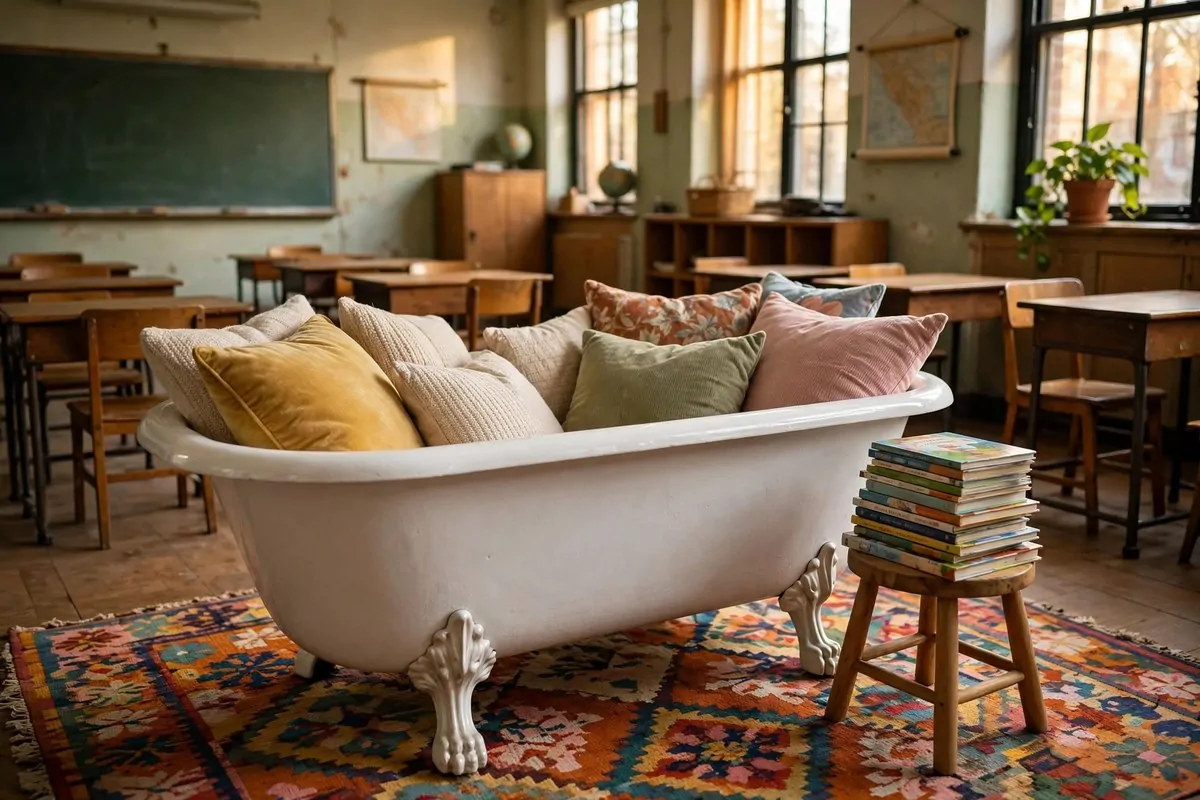
Yes, a bathtub in a classroom sounds wild. And yes, it works better than almost anything else on this list.
Old clawfoot tubs are cheap at salvage shops. You can often find one for the price of a dinner out. A quick coat of paint makes it look brand new.
Fill the tub with plump cushions and soft pillows. Kids climb in and sink down with a book. It feels like a hug. Nobody wants to leave.
Paint the outside of the tub a fun color. Bright blue, sunny yellow or even pink. A painted tub becomes the landmark of your classroom.
Put a small stool or a crate next to the tub as a book rest. Kids need a place to stack the books they are choosing between. Two or three is normal.
This setup fits two kids at once, maybe three small ones. Set a limit of two readers so everyone gets a turn. A little wait makes the tub even more wanted.
Clean the cushions once a month. Tubs collect dust like nothing else. Washable cushion covers save you a lot of trouble here.
Some teachers worry the tub takes up too much room. It is about the size of a small armchair footprint. You can fit it in any corner.
The first time kids see it, their eyes go wide. That reaction never really gets old. It is the reading nook classroom setup kids tell their parents about at dinner.
7. The Hidden Curtain Nook
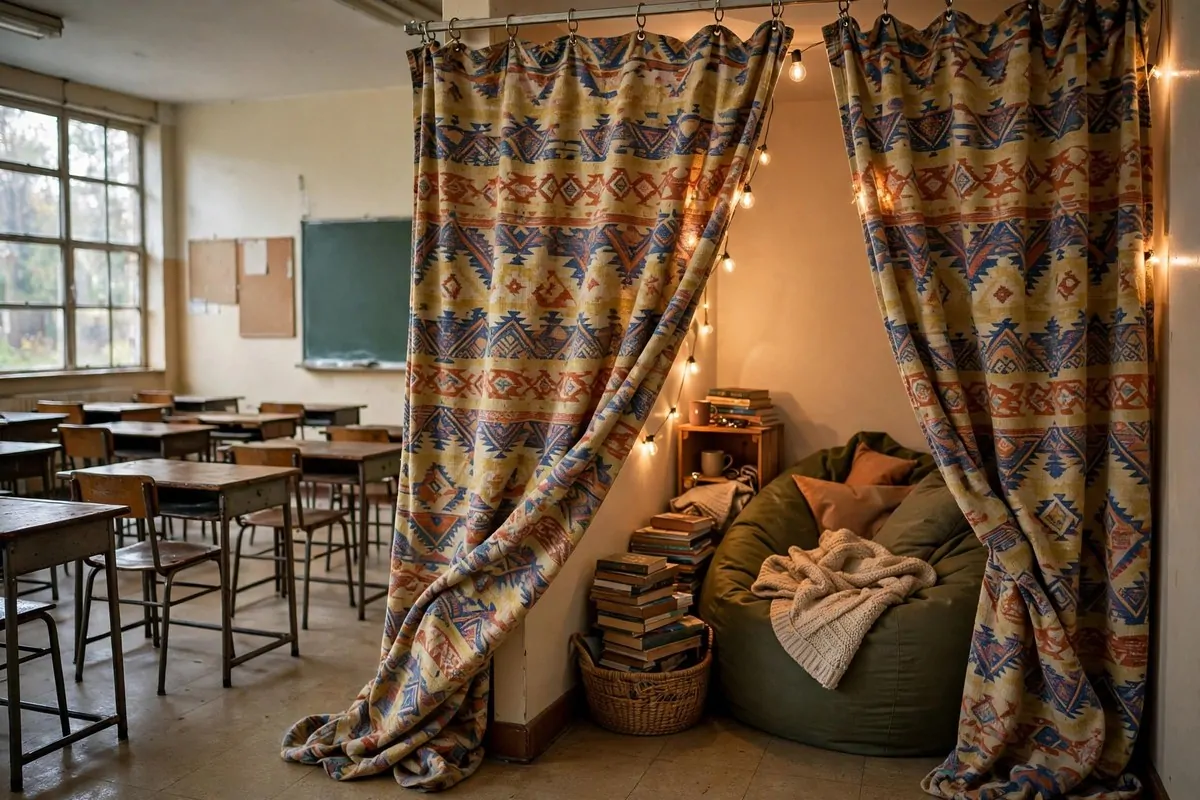
Kids love secrets. A nook hidden behind a curtain feels like a secret clubhouse, even though it is right in the classroom.
Hang a curtain rod across a corner of the room. Use a fun patterned fabric that matches your room. The curtain is the whole setup, really.
Behind the curtain, place a bean bag or a big floor cushion. Add a small basket of books. Add a little battery lamp. That is all you need.
The best part is how it changes behavior. Kids lower their voices behind a curtain on their own. The space teaches them without you saying a word.
Keep the curtain open during lessons. A closed nook during teaching time is a distraction. Open means available, closed means full.
Put up two or three book bins behind the curtain instead of one big shelf. Small bins feel more personal. Kids dig through bins like they are toy boxes.
This nook is perfect for shy kids. They get a private spot without leaving the room. It is their safe corner on hard days.
The fabric should be washable or cheap to replace. Curtains in classrooms get touched a lot. Pick something you will not cry over.
Change the fabric once a year for a fresh look. A new curtain makes the whole nook feel brand new. It is the cheapest refresh on this list.
8. The Treehouse Canopy
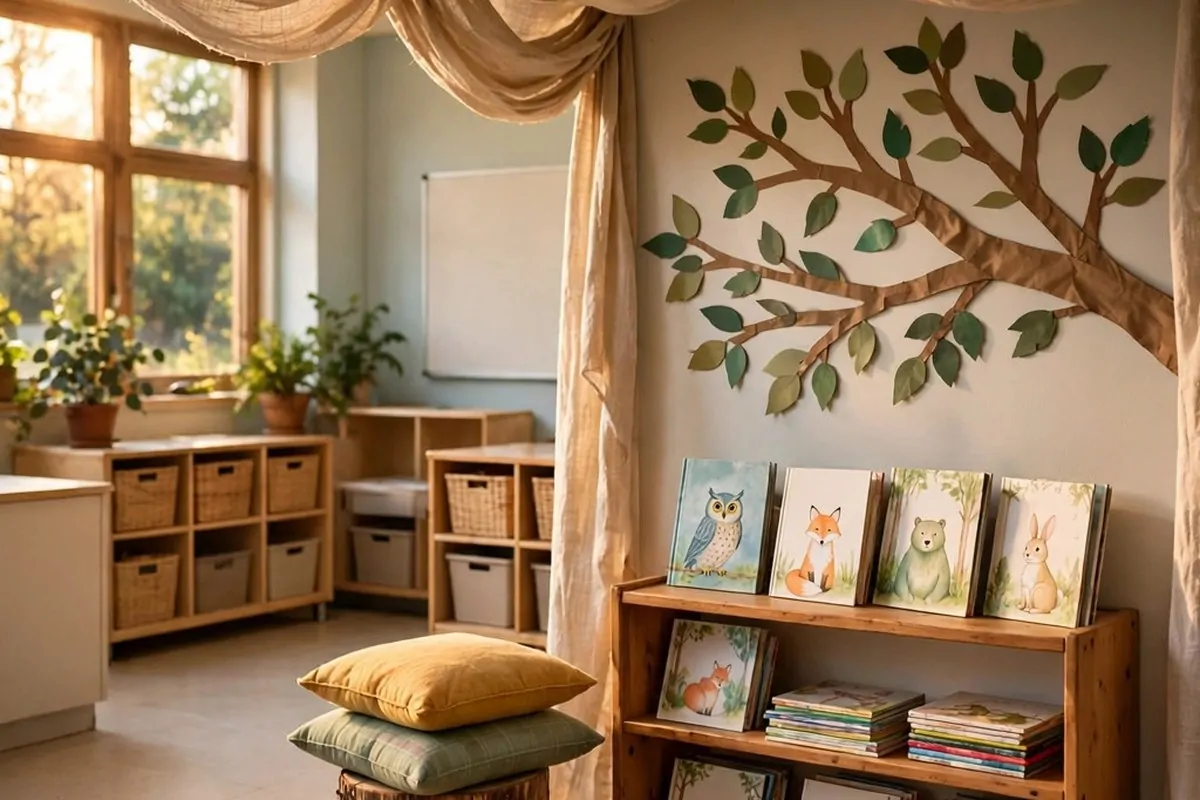
Every kid dreams of a treehouse. This setup brings that dream indoors with fabric and a little imagination.
Drape light fabric from the ceiling in a wide circle. Let it hang down to about adult shoulder height. It forms a soft canopy room.
Cut tree branch shapes from brown paper and tape them to the wall inside. Add green paper leaves. The wall becomes a little forest.
Use tree stump stools or round cushions for seats. Real stump stools are heavy and last forever. Round cushions work just as well and cost less.
Place the bookshelf low so kids can see every book from their seat. Face-out shelves are best here. Covers sell books to kids.
Hang one warm light in the center of the canopy. It glows through the fabric and makes everything golden. Reading under it feels special.
This nook fits nicely in a tall corner. If your ceiling is low, use a shorter drape. The effect still works.
Kids will want to build on it. Let them add one paper leaf or drawing to the wall each month. The canopy grows with the class.
By spring, the canopy looks completely different from fall. And that is the point. It is their treehouse. They built it together.
9. The Ocean Wave Corner
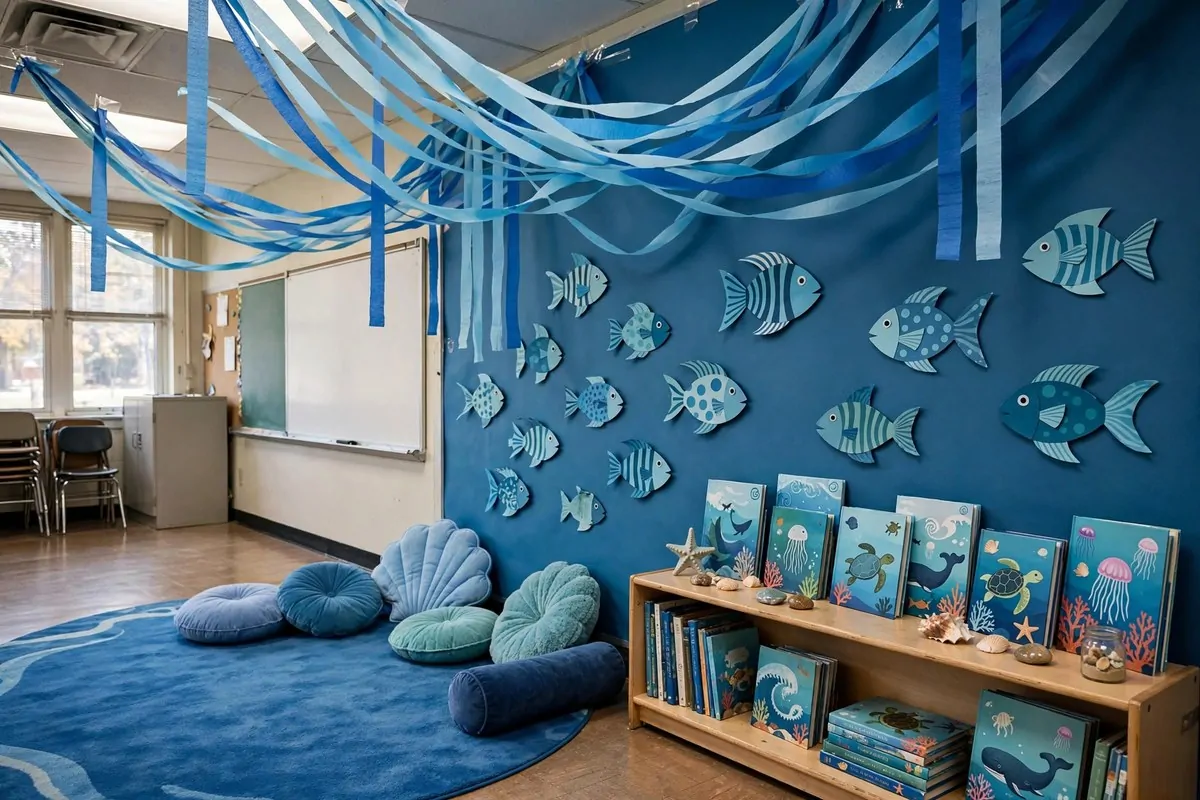
The ocean corner is calming in a way few setups match. All that blue slows kids down the moment they sit.
Hang long blue and teal streamers from the ceiling. Let them twist a little. They look like waves moving in slow water.
Cut paper fish in bright colors and tape them to the wall. Big fish, small fish, all kinds. Kids love pointing out their favorites.
Lay down a round blue rug. It becomes the water. Floor cushions in sea colors go on top. The whole corner should feel like sitting in the ocean.
Stock the shelf with ocean books, sea animal stories and books about ships. The theme pulls kids into the books naturally.
Add a string of cool white lights among the streamers. They sparkle like sunlight on water. It is a small touch with a big payoff.
This corner works great for cool-down time too. When a kid is upset, the blue and the soft light help them settle. Teachers use it as a calm spot all day.
Keep paper fish away from the streamers so nothing tangles. Check the ceiling once a month. Loose streamers fall on heads, and nobody wants that.
Change the fish colors with the seasons if you like. Warm colors in fall, icy blues in winter. It keeps the corner interesting all year.
10. The Fairy Light Chill Zone
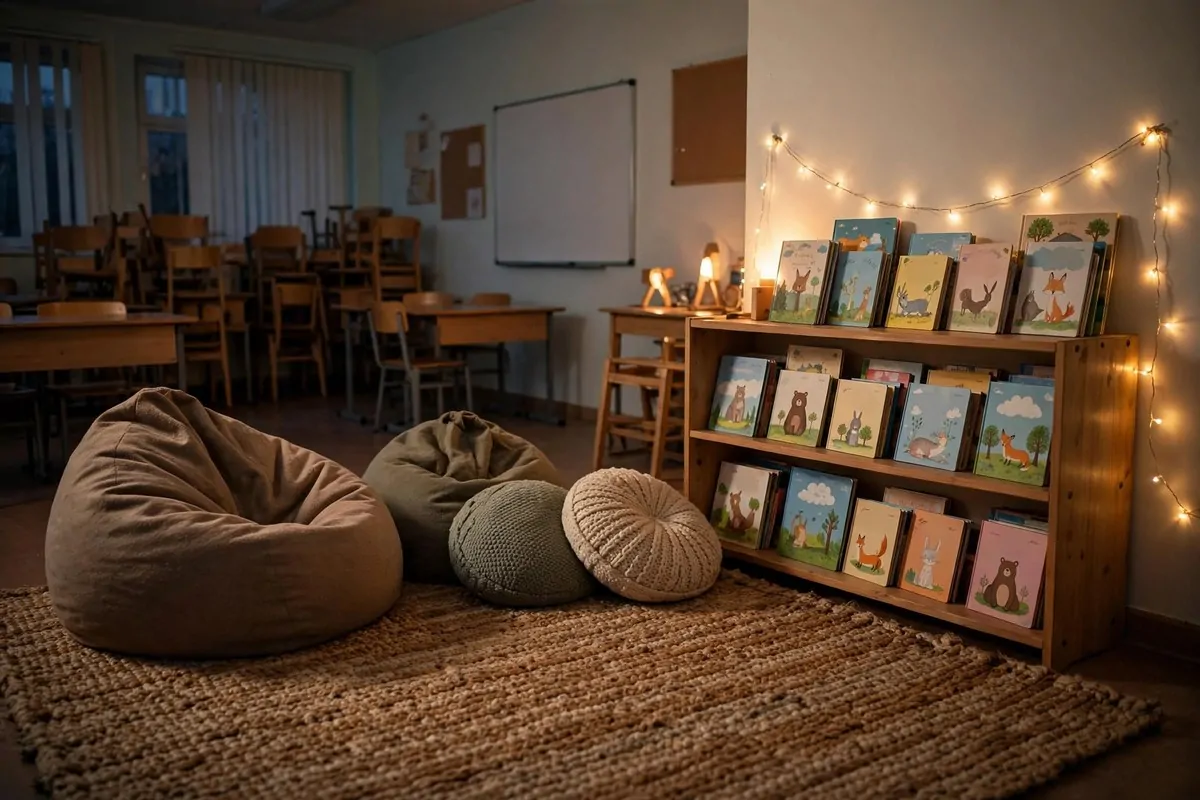
Sometimes simple wins. The chill zone is just bean bags, a rug and fairy lights. And kids love it more than the fanciest themed corner.
Scatter three or four bean bags on a thick rug. Leave space between them. Kids like their own spot, not a pile.
String fairy lights along the back wall in loose loops. Warm white looks best. It makes the wall glow like evening light.
Add a low bookshelf at one end of the rug. Keep the books mixed. Picture books, chapter books, joke books. A chill zone needs choices.
This setup is cheap and fast. You can build it in one afternoon with things from any big store. It is the best first nook for new teachers.
The lights do something magical to the mood. When they go on, kids know it is quiet reading time. It is a signal without words.
Older kids love this one the most. It does not look babyish. Middle schoolers will sit here without feeling silly.
Dim the main classroom lights a little during reading time. The fairy lights take over and the room feels different. Same room, new mood.
Wash the bean bag covers twice a year. They take a beating. Spare covers in a closet mean you can swap and wash without losing the zone.
11. The Book Garden Corner
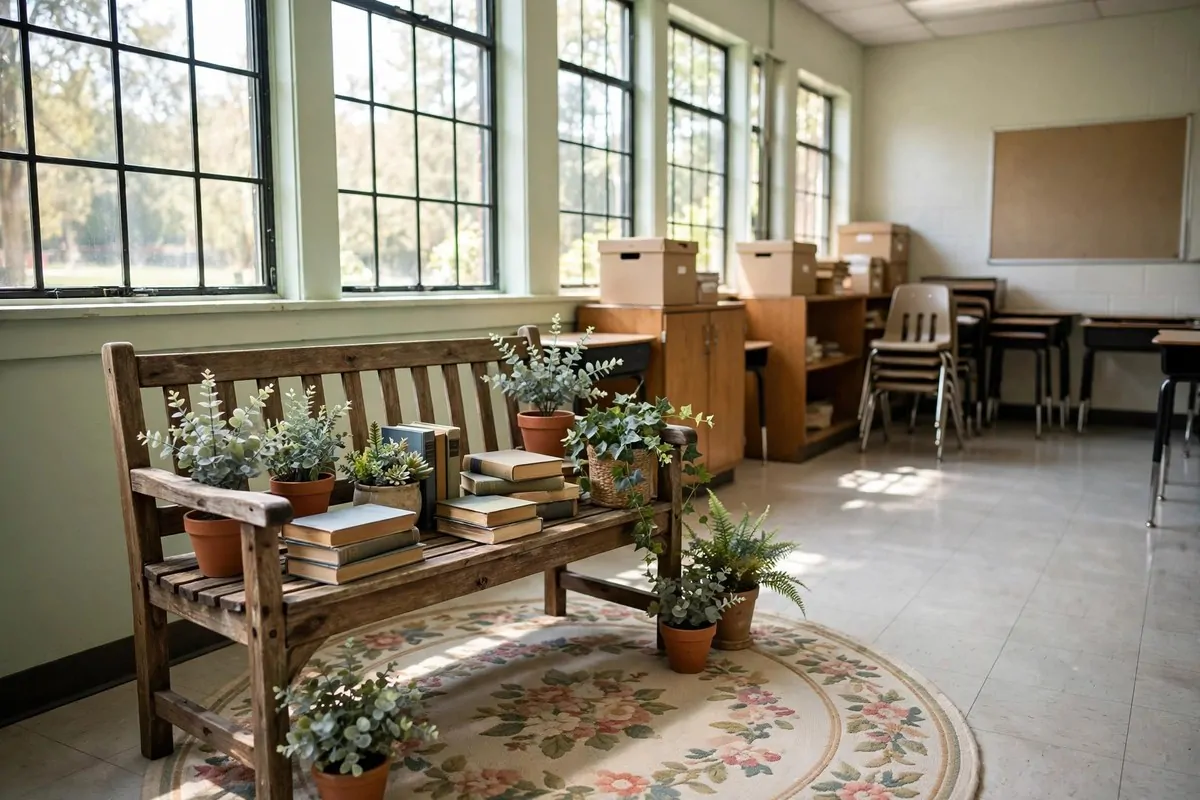
A garden grows, and so does a reader. The book garden corner makes that idea real with plants and flowers everywhere.
Start with a small wooden bench. This is the garden seat. Put it against the wall in a bright corner if you can.
Add flower pots with fake flowers or real easy plants. Mix colors. A garden should look a little wild and happy.
Place books on and around the bench. Garden books, flower books, bug books. The plants and the books tell one story together.
A round rug with a flower pattern ties it all together. It marks the garden’s edges on the floor. Kids know where the garden starts.
This corner smells good if you use one real plant with scented leaves. A little mint or lavender in a pot is enough. Kids will touch the leaves and smile.
Watering the plants can be a class job. One kid per week waters the garden corner. It teaches care and gives them ownership of the space.
In spring, add real seedlings in small cups. Kids watch them grow while they read. It is a slow kind of magic.
By the end of the year, the corner looks lush and full. Just like your readers. That is not an accident.
12. The Superhero Comic Corner
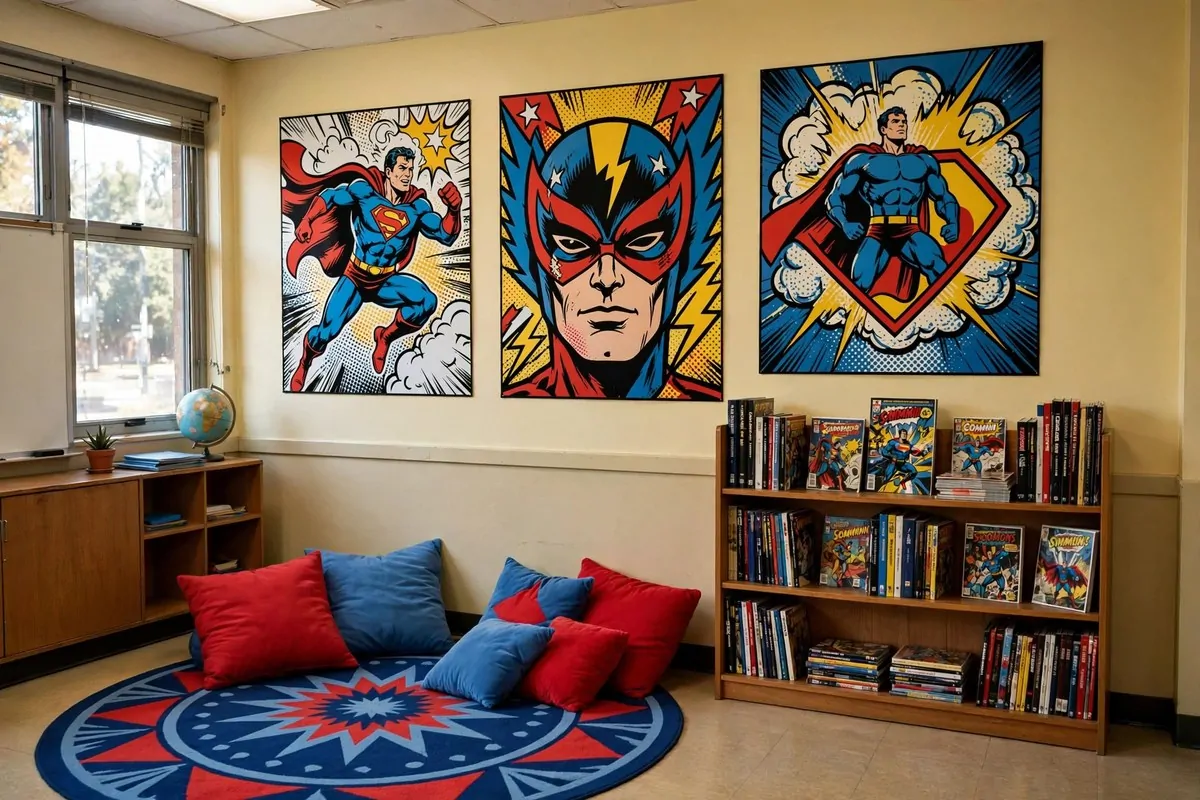
Some kids only want to read about heroes. This corner gives them exactly that, and nobody judges the comic books.
Put up bold, colorful posters with comic style art. Big action shapes, bright colors. The wall should look exciting from across the room.
Fill the shelf with graphic novels and comic books. These count as real reading. Kids who read comics read more, not less.
Use red and blue cushions to match the hero theme. Two colors keep it simple. The cushions can be cheap as long as they are soft.
Add a speech bubble cutout on the wall. Leave it blank so kids can write their own hero words on sticky notes. It changes every week.
This corner is a lifeline for reluctant readers. A kid who will not touch a chapter book will read a graphic novel in one sitting.
Keep the collection fresh with library loans. Comics are expensive to buy. Your school or public library can lend you boxes.
Set one rule. The heroes rest too. That means quiet voices. Kids laugh at the rule, but they follow it.
Watch the quietest kid in class find this corner. Comics have a way of reaching kids nothing else reaches.
13. The Rainbow Shelf Nook
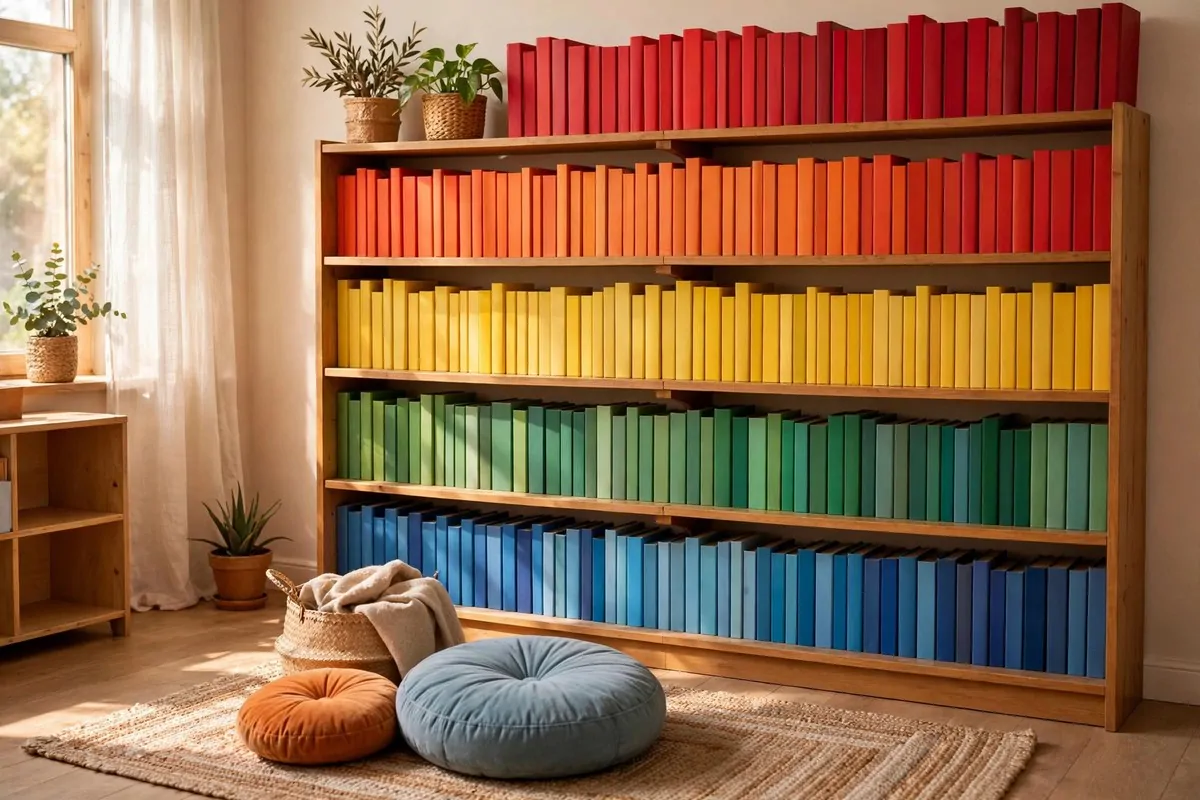
Organizing books by color sounds silly until you see it. Then it looks like art, and kids cannot stop touching the books.
Sort one bookshelf by spine color. Red, orange, yellow, green, blue, purple. It takes an hour the first time.
Put a soft cushion and a small rug in front of the shelf. Kids sit on the floor and browse. The rainbow pulls them in like a magnet.
This setup teaches sorting without a lesson. Kids notice patterns on their own. They start sorting other things by color too.
Younger kids use color to find books. I remember the red book about trucks. That is real pre-reading skill building.
Keep a few bins nearby for books that are being read. When a book leaves the rainbow, the shelf gets a gap. Kids notice gaps and want to fill them.
Photograph the rainbow when it is perfect. Tape the photo to the side of the shelf. Kids use it to put books back in the right spot.
This nook needs the most upkeep on the list. Books move around daily. Spend five minutes at the end of each day fixing the rainbow.
It is worth it. The shelf becomes the most photographed corner of your room. Parents ask about it at open house.
14. The Author Spotlight Wall
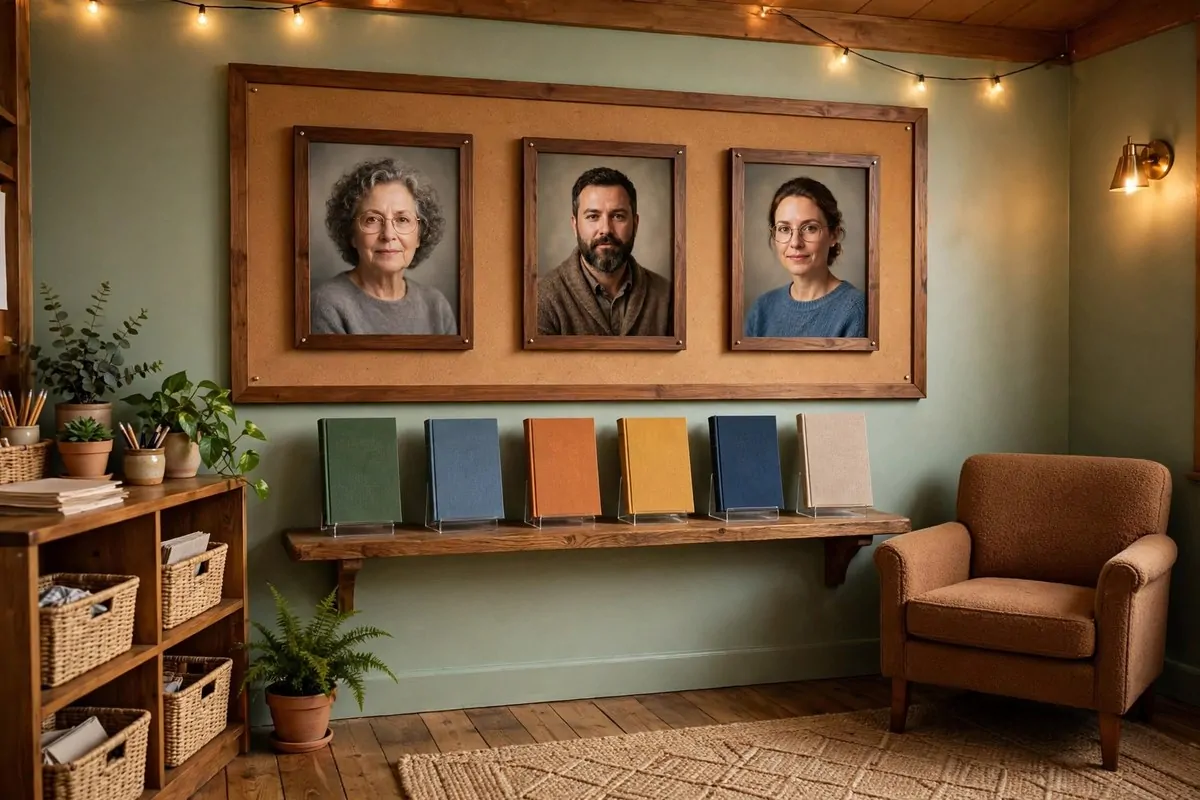
Kids read more when they know the person behind the book. The author spotlight wall makes authors feel like friends.
Pick one author each month. Print a big photo or draw a fun portrait. Add three facts about them that kids will remember.
Display five or six of their books on stands below the portrait. Face-out display is key. Covers catch eyes.
Add a small chair beside the display. It becomes the author’s chair. Kids sit there to read that author’s books.
Let kids vote on the next author. A simple show of hands works. Voting makes them feel in charge of the wall.
Include local authors when you can. A writer from your own town feels more real. Kids light up when they learn someone nearby writes books.
Add a quote from the author in big letters. Pick something about reading or trying hard. Kids read wall quotes more than you think.
Change the wall on the first of each month. Make it a little event. The class gathers and you reveal the new author.
By June, your class will have met nine authors. That is a whole year of reading friendships. And it cost almost nothing.
15. The Woodland Retreat
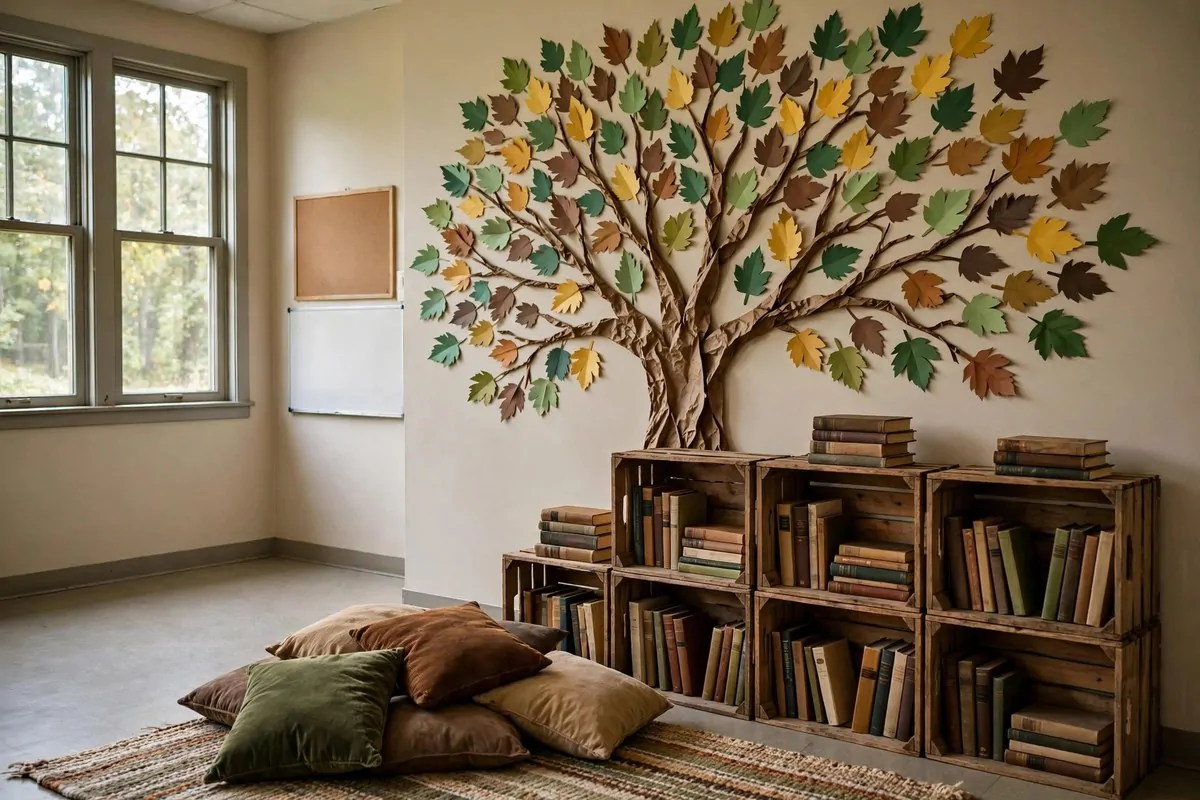
The woodland retreat is calm, earthy and quiet. It feels like reading under trees, even in a city school.
Stick a big tree decal on the wall. They are cheap online and come off cleanly. One tree changes the whole corner.
Add paper leaf cutouts in green, yellow and brown. Scatter them around the tree. In fall, add more brown and orange leaves.
Use wooden crates as bookshelves. Stack them sideways. They look rustic and hold a lot of books. Sand any rough edges first.
Choose floor cushions in earth tones. Brown, green, tan. Bright colors would break the forest spell.
Stock the crates with forest books, animal stories and books about trees. The setting and the stories match perfectly.
A small fake owl or fox on a shelf is a fun touch. Kids name it within a week. It becomes the corner’s mascot.
This corner is naturally quiet. Something about the trees makes kids whisper. Use it for your calmest reading times.
Refresh the leaves each season. Green in spring, full in summer, orange in fall, bare in winter. The corner teaches seasons without a lesson.
16. The Milk Crate Bench
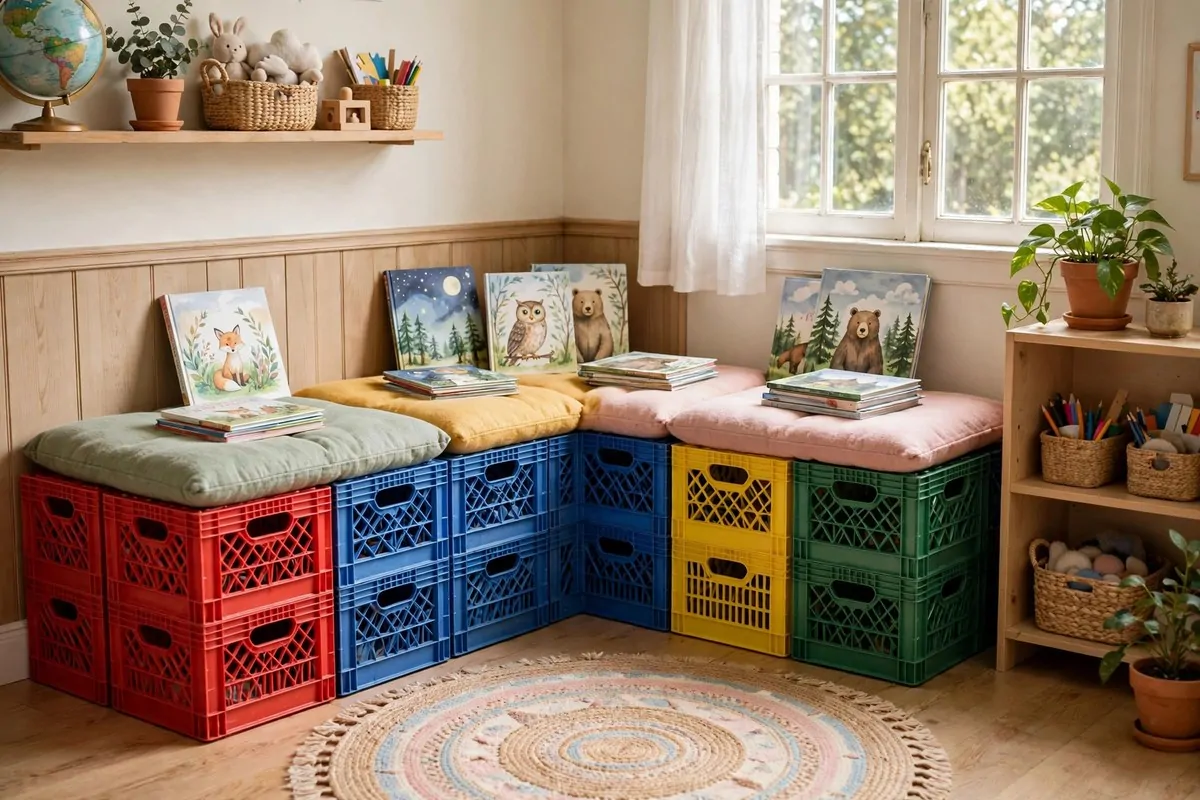
Milk crates are the unsung heroes of classrooms. They are strong, cheap and they stack into anything. A bench is the best anything.
Stack six to eight crates in two rows. Zip tie them together so they do not slide. Safety first, always.
Lay a long cushion or two square cushions across the top. Now it is a bench. Kids sit here to read, and the crates below hold the books.
The best part is the storage. Each crate holds books facing out. Kids browse the bench like a little shop.
Paint the crates if you want color. Spray paint works fast. Let them dry outside over a weekend.
This bench fits perfectly under a window or along a short wall. It uses dead space that desks cannot fill.
Kids can move the crates for group reading. They lift a crate, carry it over, sit down. It teaches them to build their own space.
The whole bench costs less than most classroom chairs. Ask a grocery store for spare crates. Many give them away.
It is not fancy. It does not need to be. The milk crate bench is proof that the best reading nook classroom ideas are simple.
17. The Bamboo Reading Hut
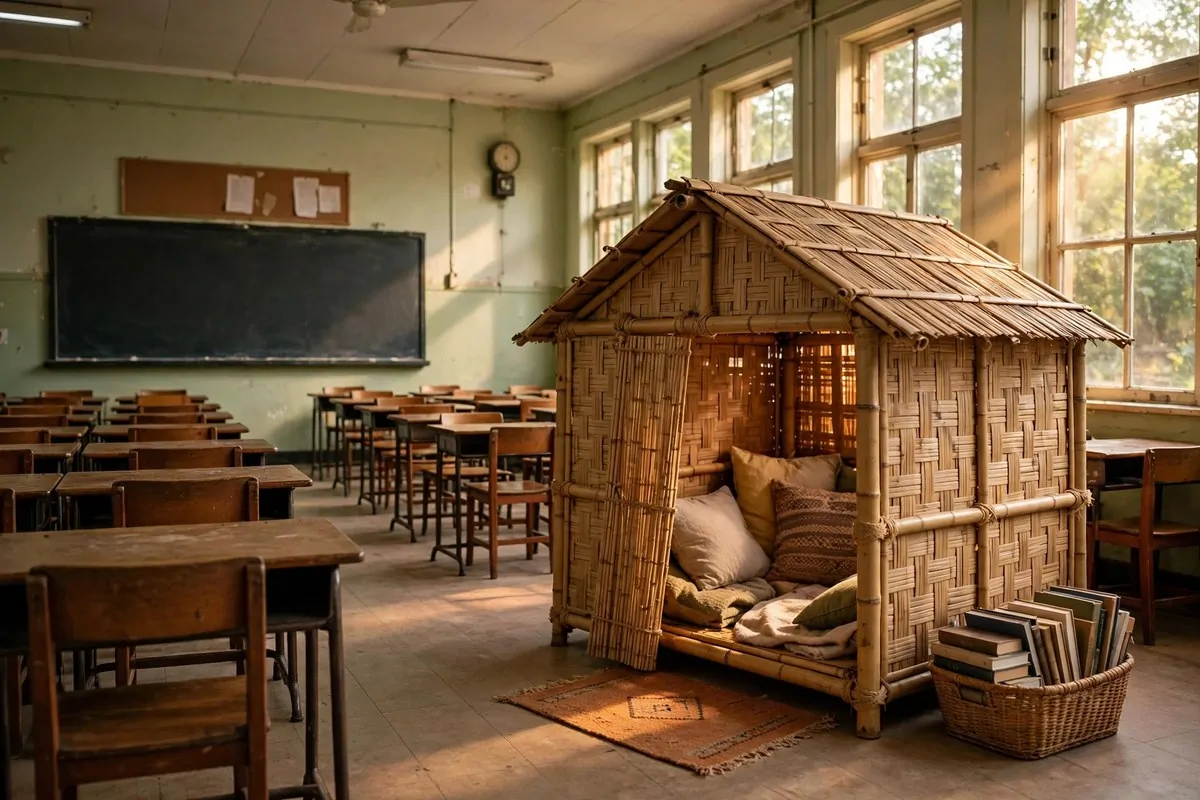
The bamboo hut looks like it belongs on a beach. In a classroom, it feels like an escape.
Build a simple frame from PVC pipe or thin wood. Four posts and a top square. It takes an afternoon to put together.
Wrap the sides with bamboo mats. You can find them cheap at home stores. Tie them to the frame with string.
Leave one side open as the door. Put a small rug at the entrance. The doorway makes it feel like a real hut.
Inside, place two cushions and a basket of books. A small lamp makes it cozy. Keep the lamp battery powered for safety.
The hut is big enough for two or three kids. It is their clubhouse. Reading happens, but so does quiet chatting about books.
Decorate the mats with paper flowers or leaves. Kids can help with this. Their art on the hut makes it theirs.
This one takes more work than most setups here. But it lasts for years. Build it once and it serves class after class.
When new kids walk in and see the hut, they always ask about it first. It is the classroom’s landmark.
18. The Neutral Basket Nook
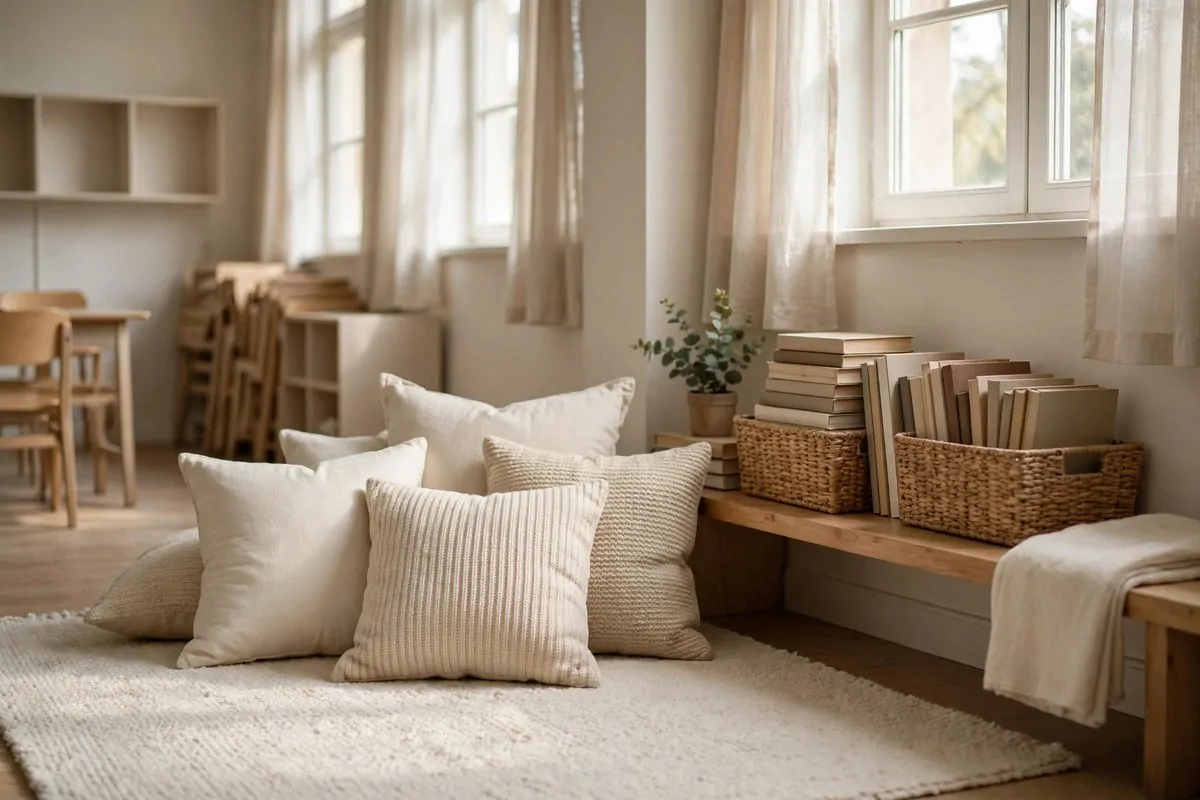
Not every nook needs a theme. The neutral basket nook is calm, clean and beautiful. Some kids need quiet more than they need pirates.
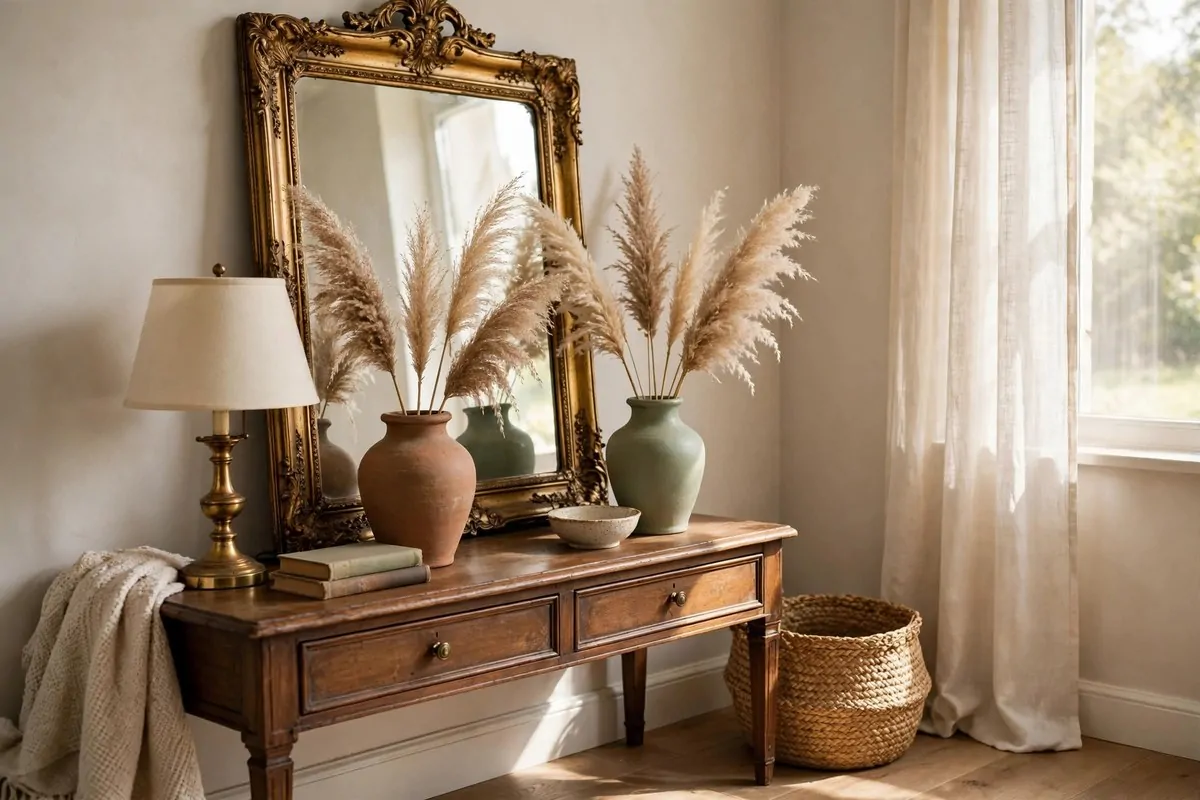
Use woven baskets to hold the books. Three or four baskets is enough. They look warm and natural.
Choose pillows in cream, beige and soft white. Keep the colors quiet. The whole nook should feel like a deep breath.
A light rug in ivory or sand ties it together. Nothing loud. Nothing that fights for attention.
Here is what makes this nook special:
- It calms busy kids in under five minutes
- It matches any classroom color scheme
- It costs very little to build
- It looks tidy even when books are messy
Place it near a window with sheer curtains. Soft daylight is the only decoration it needs. The light does all the work.
This is the nook for your anxious readers. Kids who get overwhelmed by bright themes relax here. It is their soft landing spot.
The baskets keep books upright and easy to flip through. Kids treat basket books gently. Something about the basket makes them careful.
Dust the baskets once a month. Woven baskets collect dust in their cracks. A quick wipe keeps them looking fresh.
Simple is not boring. The neutral nook proves that calm can be the most inviting thing in the room.
19. The Group Read Tiki Corner
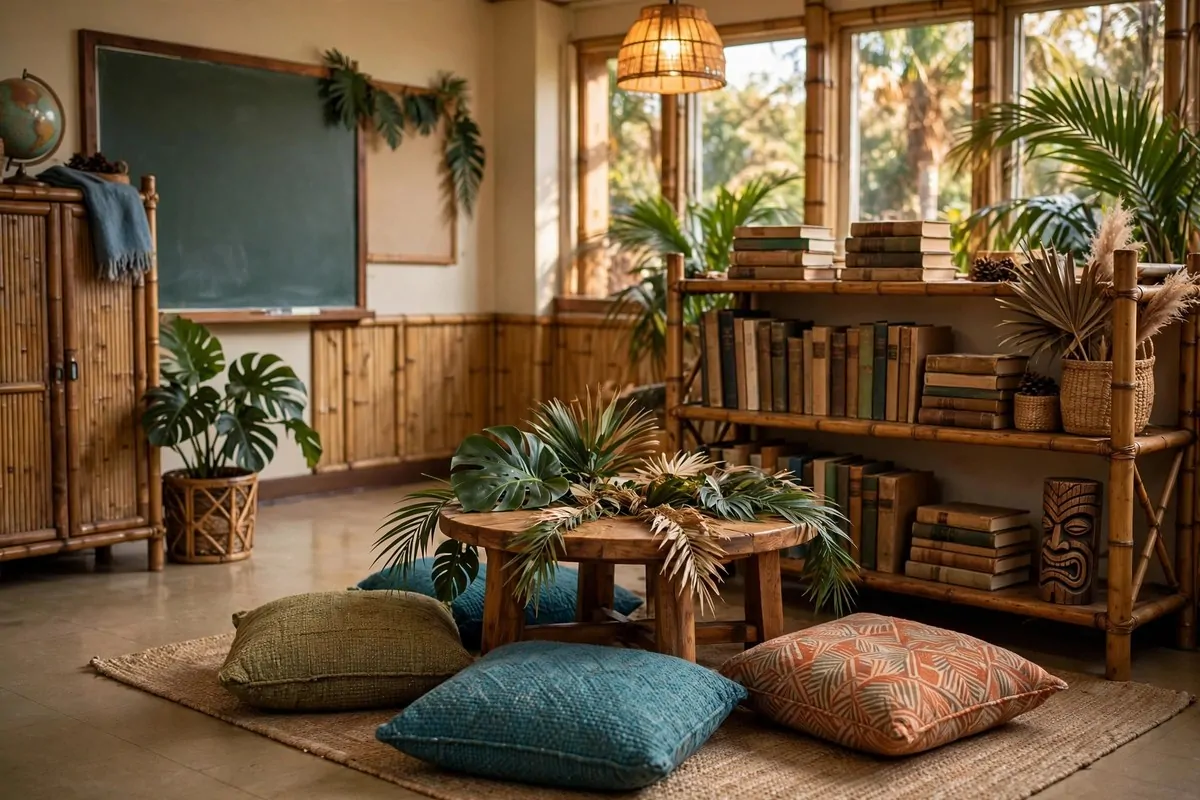
Most nooks are for solo reading. The tiki corner is for reading together. And group reading builds a different kind of love for books.
Set a small round table in the corner. Round is important. Everyone can see everyone else. No head of the table.
Surround it with floor cushions. Four to six cushions fit nicely. Kids pull up a cushion and join the group.
Add some tropical touches. Paper palm leaves on the wall, a bamboo frame, a few bright flowers. Keep it fun and light.
This is where book clubs meet. Three kids, one book, one table. They take turns reading out loud and talking about the story.
Keep a basket of group-friendly books nearby. Short chapters work best. Books with funny parts get the most laughs.
The teacher can join too. Sit on a cushion and read the first chapter aloud. Kids remember who read with them.
Set a group size limit of four. More than that gets loud. Four kids around a small table is the sweet spot.
Rotate the groups weekly so everyone reads with everyone. Friendships form over shared books. That is the real magic of the tiki corner.
20. The Mystery Book Corner
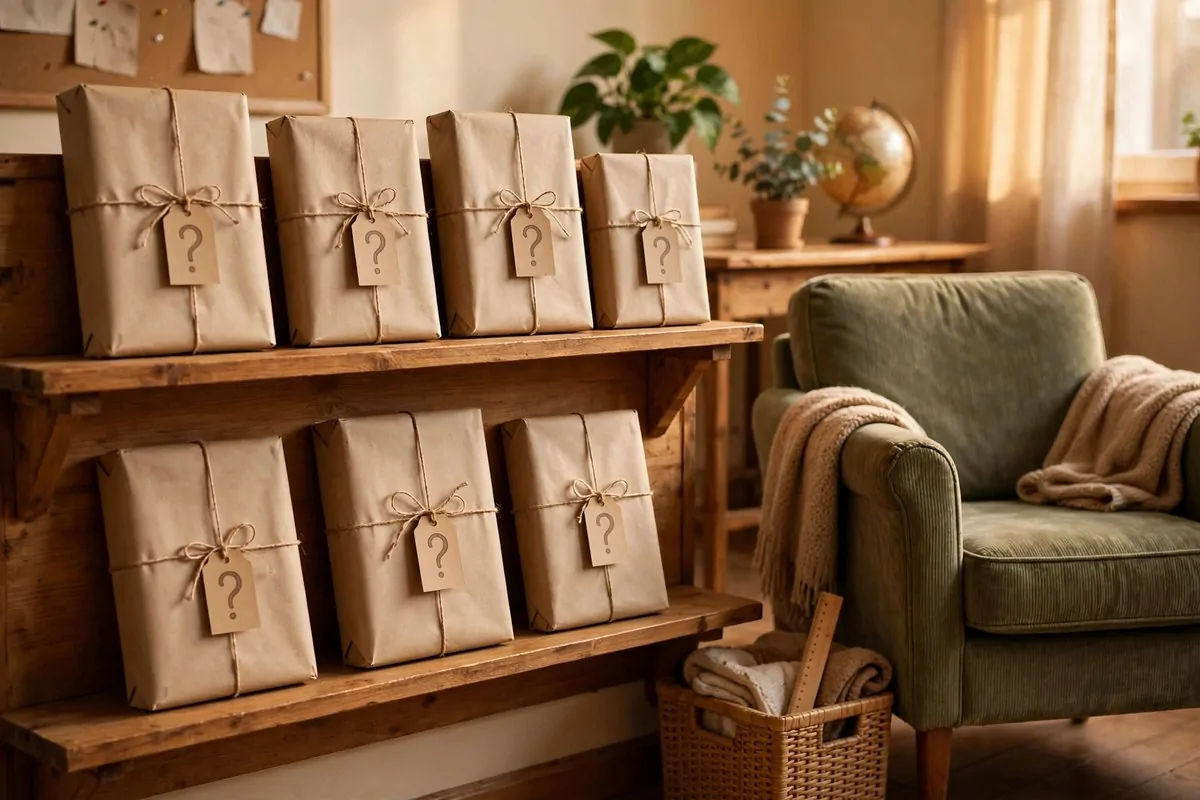
The mystery book corner plays on curiosity. And curiosity is the strongest pull a book can have.
Wrap five or six books in brown paper. Write one clue about each book on the wrapping. That is it. Kids go crazy for these.
Display them on a small shelf or a table. Add a few question marks cut from paper. The question marks do the marketing.
Kids pick a book based on the clue alone. They cannot judge the cover. They judge the mystery. It is a great lesson in trying new things.
Here is a simple weekly plan for the mystery corner:
| Day | What to do |
|---|---|
| Monday | Wrap new books and write fresh clues |
| Wednesday | Let kids unwrap and start reading |
| Friday | Kids share if the book matched the clue |
Let kids write the clues sometimes. Their clues are funnier than yours. And writing clues is writing practice in disguise.
Keep one comfy chair by the mystery shelf. The chair is for the big reveal. Kids unwrap their book sitting in the special seat.
This corner costs almost nothing. Paper, markers and books you already own. The idea does all the heavy lifting.
End the year with a mystery book party. Every kid unwraps one book to keep. It is the best last-day-of-school gift a reader can get.