23 Small Home Library Ideas for Book Lovers With Little Space

The first library I ever loved was smaller than a wardrobe. In second grade my teacher kept her books on two short shelves beside her desk. The good ones faced outward so you could see the covers, and when you finished one you whispered her name and she nodded, and that was the whole checkout system.
I remember standing there thinking she was the luckiest person alive. Not because she had many books. She had maybe forty. It was because every one of them was right there, an arm’s length away, whenever she wanted one.
That is what this list is about. A library is not a room. It is a collection of books that lives close to you, in the space you already have. These 23 Small Home Library Ideas are all built for small homes, apartments, and corners that are doing nothing. You do not need a ladder. You do not need a builder. You just need a few spots in your home that are going to waste.
1. Put a Shelf Over Every Door
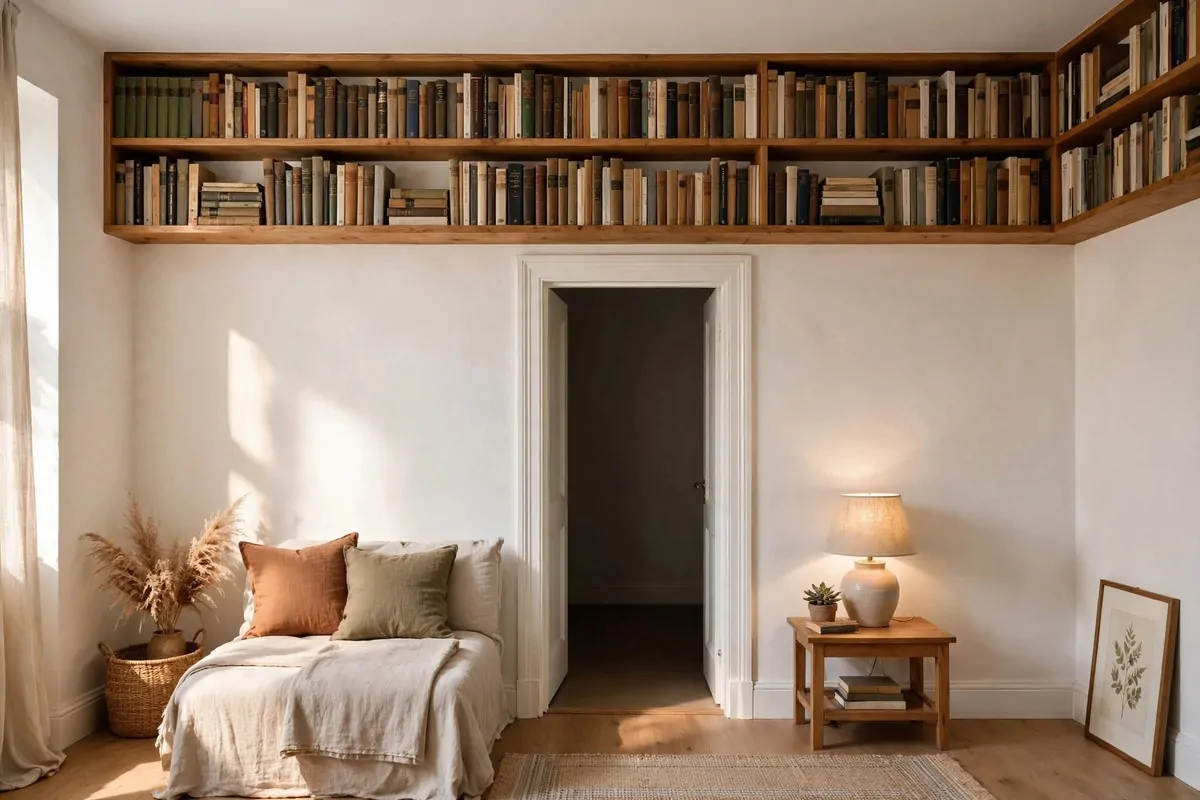
Above every door in your home there is a strip of wall that does nothing. It just sits there, collecting dust and holding up the ceiling. That strip is a perfect small library.
I put my first over-door shelf in the hallway three years ago. One long board, two brackets, about fifteen paperbacks. My husband walked under it and said nothing for a whole week. Then one day I found him reaching up for a book before work. He reads on the train now. All because of a shelf he walks under every day.
Measure the space above your door first. Most doors leave eight to twelve inches of wall before the ceiling. That is enough for paperbacks if you lay the shelf right. A shelf that is six inches deep works fine.
Use good wall anchors, not the little plastic ones that come free in the box. Books are heavy. One full shelf of paperbacks can weigh as much as a small dog. You want that board to stay put.
Renters can do this too. There are brackets that hook over the top of the door frame with no drilling at all. I have seen them hold twenty books without a wobble.
The bedroom door is my favorite spot for this. You reach up for a book right before sleep. And when you finish one, you slide it back in the morning.
Here is a quick guide for shelf depth by book type:
| Book type | Shelf depth you need | Fits over a door? |
|---|---|---|
| Paperbacks | 5 to 6 inches | Yes, perfect fit |
| Standard hardcovers | 7 to 8 inches | Yes, with care |
| Large art books | 10 to 12 inches | No, too deep |
Keep the heavy hardcovers on lower shelves if you can. Up high is the land of light paperbacks and the books you reread often. Your arms will thank you.
Dust the shelf once a month. A quick swipe with a dry cloth. Books up high gather dust faster than books at eye level, and nobody wants to read a dusty book.
One last tip. Leave a little space at one end of the shelf. New books need somewhere to go. A full shelf with no room feels finished. A shelf with a little gap feels alive.
2. Line the Staircase Wall With Floating Shelves
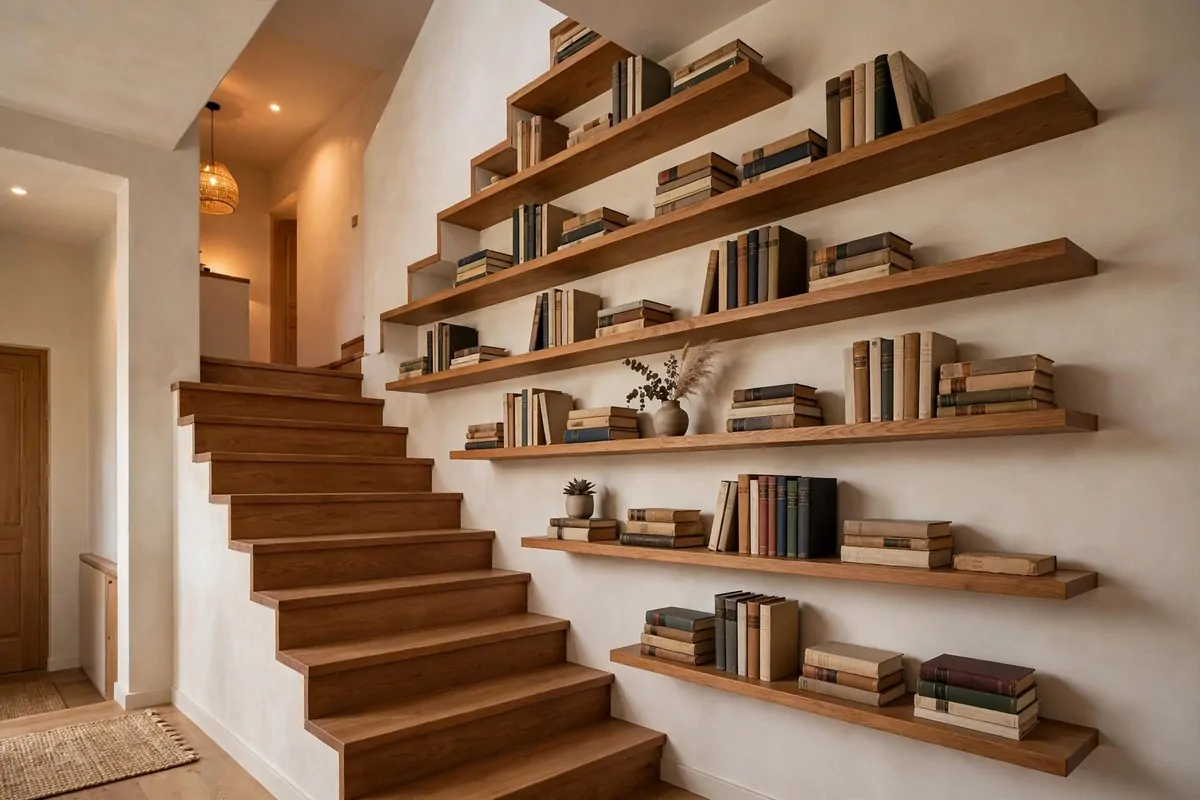
The wall beside your stairs is the longest wall in many homes. And it is almost always empty. Stairs are just for walking, people think. But that wall can hold a whole library.
The trick is to follow the slope of the stairs. You mount short floating shelves so they step upward with the steps. Each shelf sits about a foot above the step below it. From the bottom it looks like books are climbing the stairs with you.
I helped my sister do this in her little two floor flat. We used twelve small shelves. They hold about eighty books now. The best part is how it looks. Guests stop on the stairs to read the spines. Her staircase became the most talked about part of her home.
Start at the bottom and work your way up. Hold each shelf against the wall and check it from the floor below. You want the whole run to look like one smooth staircase of books, not a random scatter.
Stagger the books a little on each shelf. Some standing upright, a few stacked flat. It keeps the eye moving and it looks like a real library, not a shop display.
Think about weight again. Staircase walls are often thin. Find the studs and screw into them. A shelf full of books that only hangs on drywall will not stay there long.
Leave the bottom two steps shelf free if you have small kids. Little hands grab at low shelves on stairs, and a falling book on a staircase is no joke.
This idea also works on a straight hallway wall that runs beside stairs. Even if the stairs turn a corner, you just turn the shelves with them. The books follow you around the bend.
3. Hang High Shelves From the Hallway Ceiling
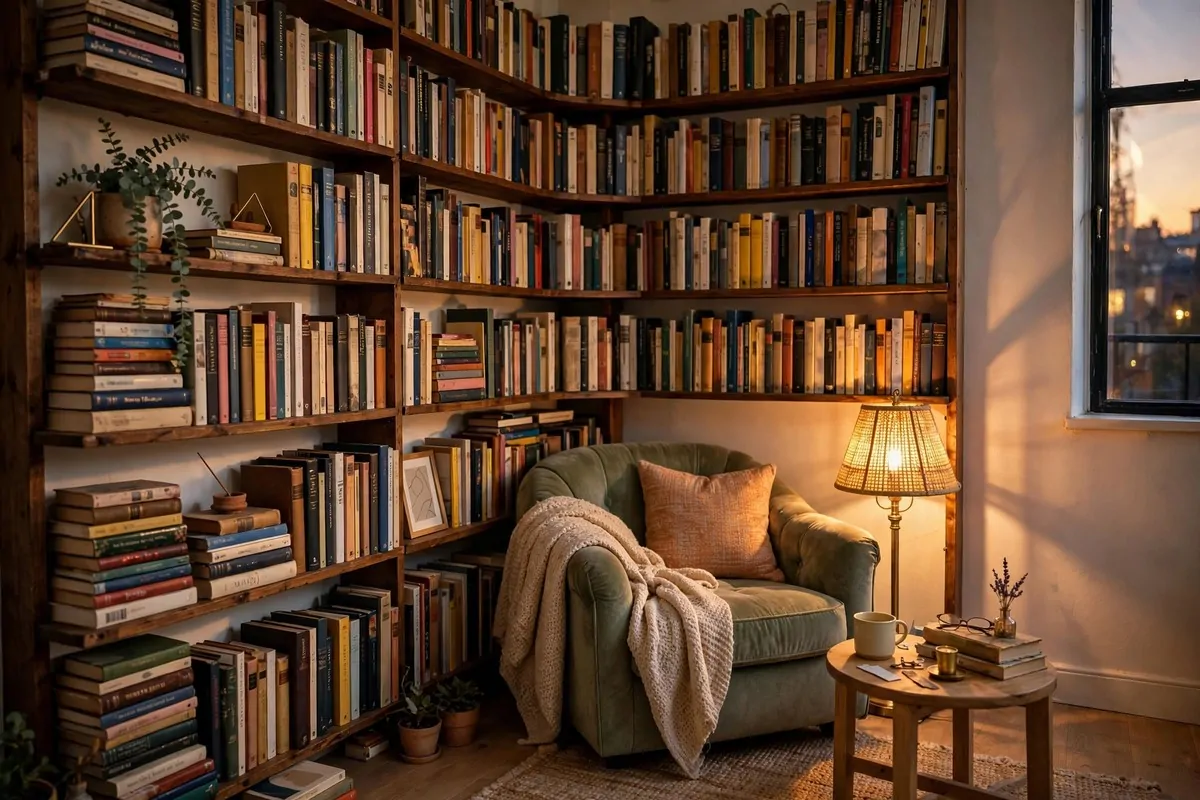
Look up in your hallway. There is a whole layer of empty air up there, between the top of the door frames and the ceiling. Most people never use it. You can hang your library there.
Ceiling hung shelves drop down on thin cables or rods from the ceiling. They float above head height. You walk under your books every time you go to the kitchen. It feels a bit like walking through a bookshop tunnel, honestly.
The key number is headroom. You need the bottom of the shelves at least six and a half feet off the floor. Measure yourself, then add a few inches. Nobody wants to duck in their own hallway.
Paperbacks are the best books for hanging shelves. They are light. Heavy hardcovers make the cables sway when you walk past, and a swaying shelf is not a calm thing to live with.
You can buy ready made hanging shelf kits at most home stores. They come with the cables, the boards, and the ceiling mounts. Two boards hung in a hallway can hold sixty or more paperbacks.
Keep the shelves close to one wall, not in the middle of the hallway. You want to walk past your books, not under the middle of them. It feels safer and it looks better too.
This works great in long hallways in flats. One long hallway can become a proper little library corridor. Paint the boards the same color as the wall and they almost disappear. Only the books show.
My tip is to put your comfort rereads up there. The books you grab when you are bored on a Sunday. They are light, you know them by heart, and they make the hallway feel friendly.
4. Frame a Doorless Doorway With Books
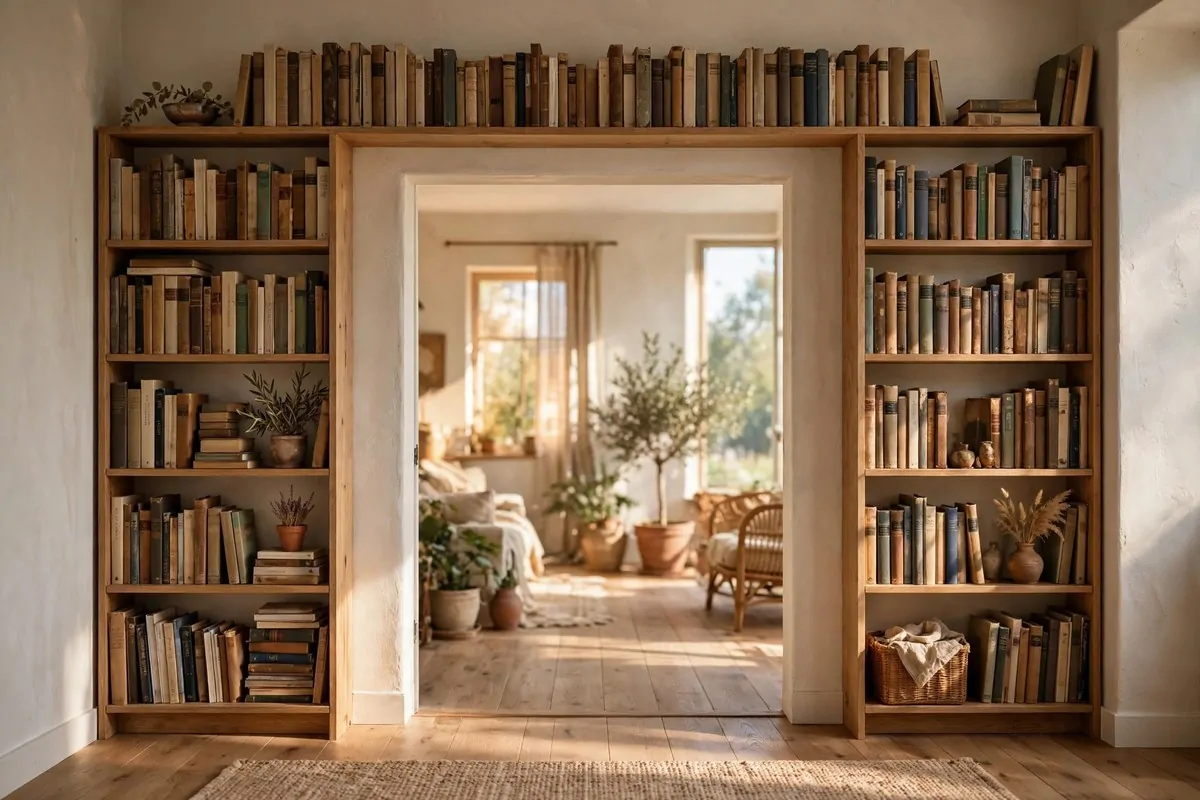
A doorway without a door is just an opening between rooms. Most of us walk through it a hundred times a day and never look at it. Frame it with bookshelves and it turns into an arch of books.
Put one slim bookcase on each side of the opening. Then run one long shelf straight across the top. Now every time you walk from the living room to the kitchen, you pass under your own little library. It feels grand. Much grander than it should for the price of two bookcases and a board.
Slim bookcases are the secret here. You want ones that are ten or twelve inches deep. Anything deeper eats into the doorway and makes the opening feel narrow. Measure your doorway width and leave the full walking space clear.
The top shelf is my favorite part. It is the perfect home for the books you love but rarely open. Old favorites. Gift books. The ones with pretty spines. They sit up there and look beautiful.
This works best between rooms you use a lot. Living room to dining room. Bedroom to hallway. The more you walk through, the more you enjoy it.
Make sure the two side bookcases match. Same height, same color, same style. Matching sides make it look planned and built in. Mismatched sides make it look like furniture waiting to be moved.
If your doorway is wide, add a second shelf across the top for a double stack. Just keep it high enough that tall guests do not bump their heads. Ask the tallest person you know to walk under it before you load the books.
If you want it to look truly built in, paint the bookcases the same color as the wall. The shelves blend in and the books become the whole picture. It is a small trick that makes the doorway feel like it was always meant to hold a library.
5. Stack Old Suitcases Into a Book Tower
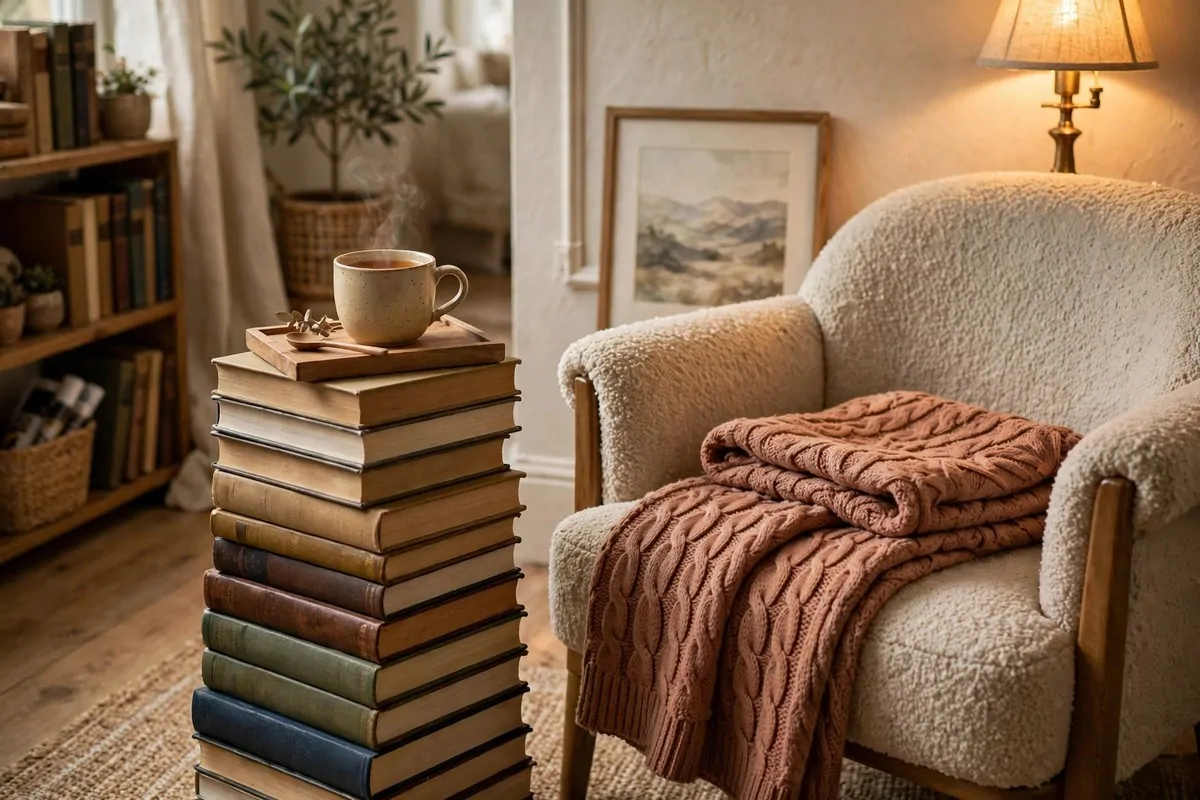
Old suitcases are cheap at flea markets and charity shops. They stack into a tower that holds books on every level, and it looks like something from a storybook. I love this one.
You need three to five suitcases. Different sizes work best, biggest on the bottom. Stack them in a corner where a normal bookcase would never fit. A corner behind a door is perfect.
Clean them first. Wipe the insides with a damp cloth and let them dry in the sun. Old suitcases can smell musty, and you do not want that smell near your books.
The books go on top of each closed suitcase, leaning against the wall. Each level holds a row. You can also open the top suitcase and stand books inside it like a box. It looks charming.
Put a small lamp on the very top. Now your book tower is also a reading light. One corner, one tower, books and light together. That is a whole library in two square feet.
The best part is how cheap it is. Five old suitcases might cost less than one new bookcase. And no two towers ever look the same, because no two sets of suitcases match.
Keep the stack stable. If the corner is uneven, put a folded cloth under one side. You do not want a tower of suitcases wobbling when you pull a book out.
This is also a good idea for kids rooms. Children love pulling books out of a suitcase. It feels like a treasure hunt every single time.
6. Stack Books Into a Side Table
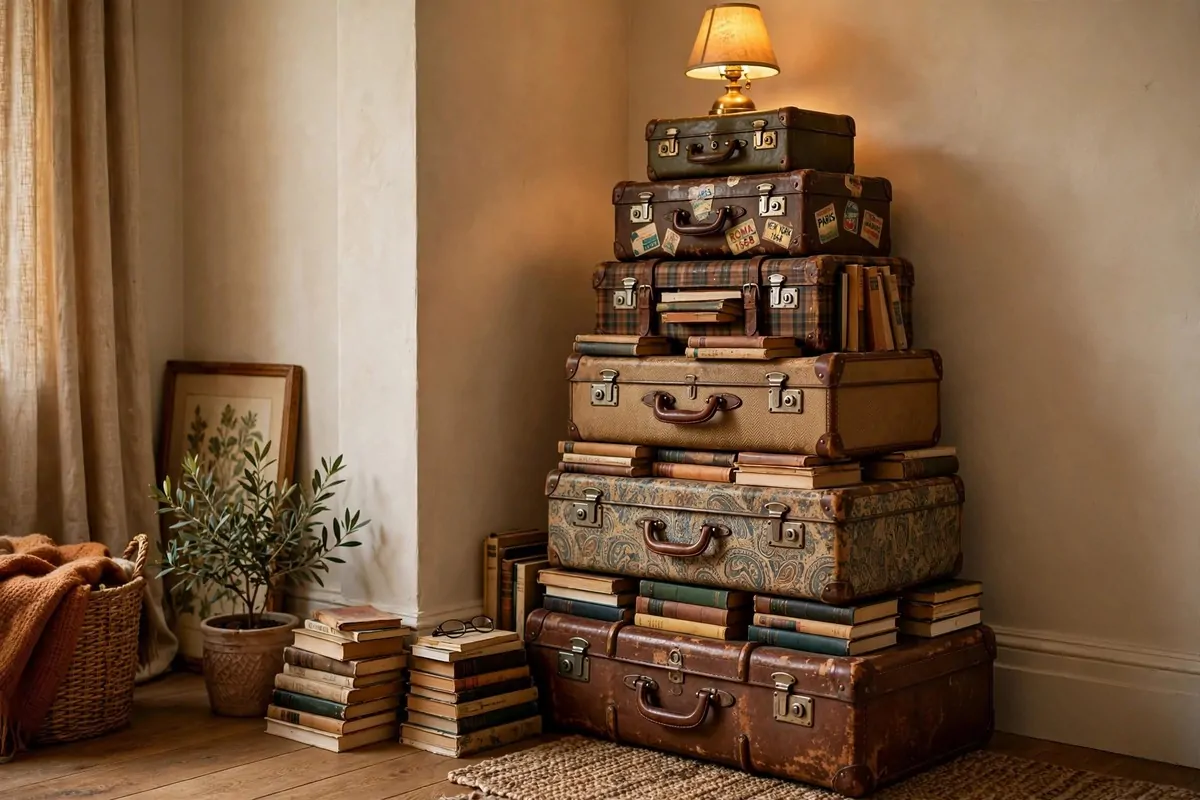
If you have a chair, you need a table beside it. That is the rule. But nobody said the table has to be made of wood. A stack of your biggest books works just as well.
Pick your largest, heaviest hardcovers for the bottom of the stack. Big art books. Old textbooks. The ones too heavy to hold in bed. Stack them biggest to smallest, like a little pyramid.
Ten to twelve books makes a good table height next to most chairs. Sit in the chair and check. You want the top of the stack to land near your elbow. That is the right height for a tea cup.
Put a flat tray or a square of wood on top. This gives you a steady surface for your cup. A wobbly cup on a book stack is a disaster waiting to happen. Trust me on this one.
Now the best part. The table IS the library. When you finish the book on top, the next book is right underneath it. Your to be read pile and your table are the same thing.
Rotate the stack every month or two. Take the books you read and shelve them. Add new ones to the bottom. The table stays fresh and your shelves stay in rotation.
This works beside the bed too. A book stack nightstand holds your lamp on the tray and your current reads underneath. It takes up less room than a real nightstand.
One warning. Do not stack books you love on the very bottom. The weight can bend the covers over time. Put the heavy, sturdy ones down there and keep your favorites near the top.
7. Slide a Rolling Library Under the Bed
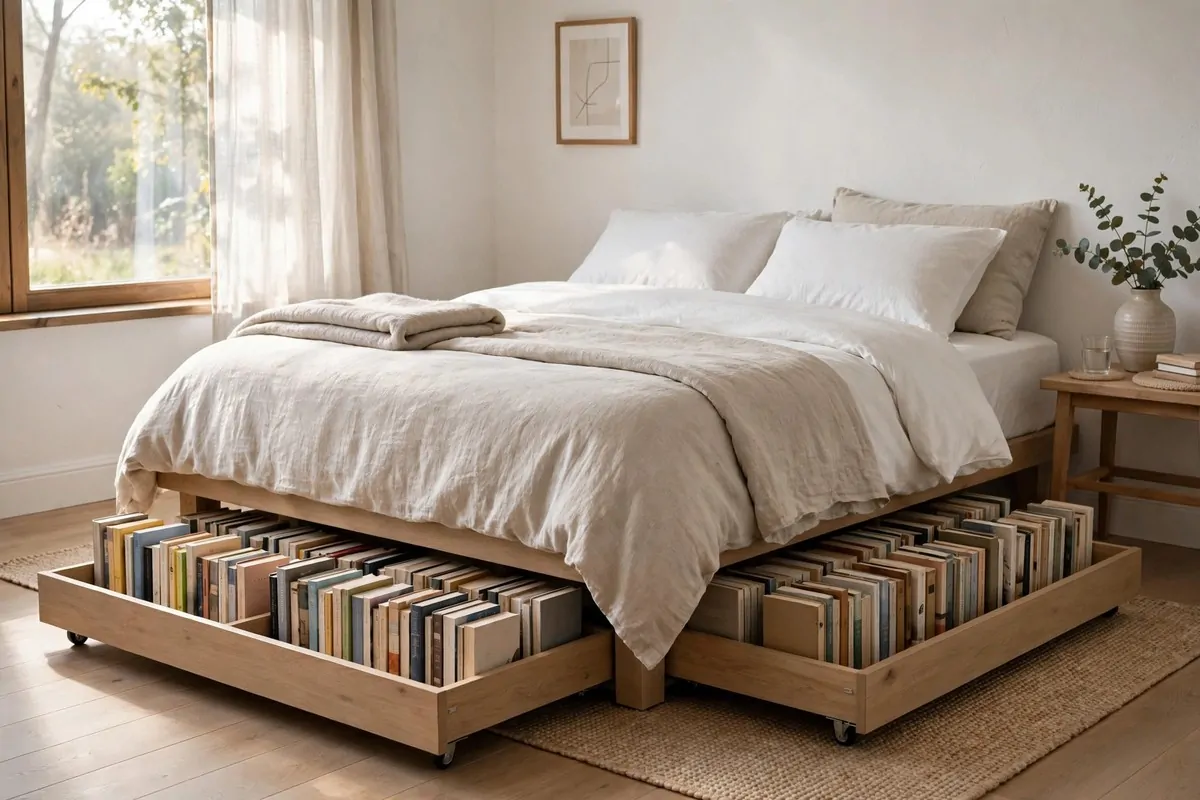
Under your bed is a big empty space that does nothing all night. It can hold a surprising number of books. Rolling drawers make it easy to reach them.
Low rolling bins slide right under most beds. Get the ones with wheels and a lid. The lid keeps the dust off your books, which matters a lot under a bed. Dust loves dark corners.
I keep my old paperbacks under the bed. The ones I will never throw away but do not need on the shelf. They are safe down there. Cool, dark, and flat.
Cedar bins are the best if you can find them. Cedar keeps the smell fresh and keeps little bugs away. Your books will smell nice when you pull them out, not musty.
Label the front of each bin. Write what is inside with a marker on a piece of tape. “Mysteries.” “Old favorites.” “Kids books.” It saves you from pulling out every bin when you want one book.
This is also perfect for books you lend to friends. Keep the lending library under the bed. When someone visits, you roll out the bin and let them pick. Much easier than digging through your main shelves.
Keep the bins low. Measure the space under your bed before you buy. Most beds have six to eight inches of clearance. You want the bin to slide in and out without lifting the mattress.
Do not store books you are reading right now under the bed. That is a recipe for forgetting them. Under bed books are for storage and for lending, not for your current read.
8. Hang Your Favorite Covers Like Art
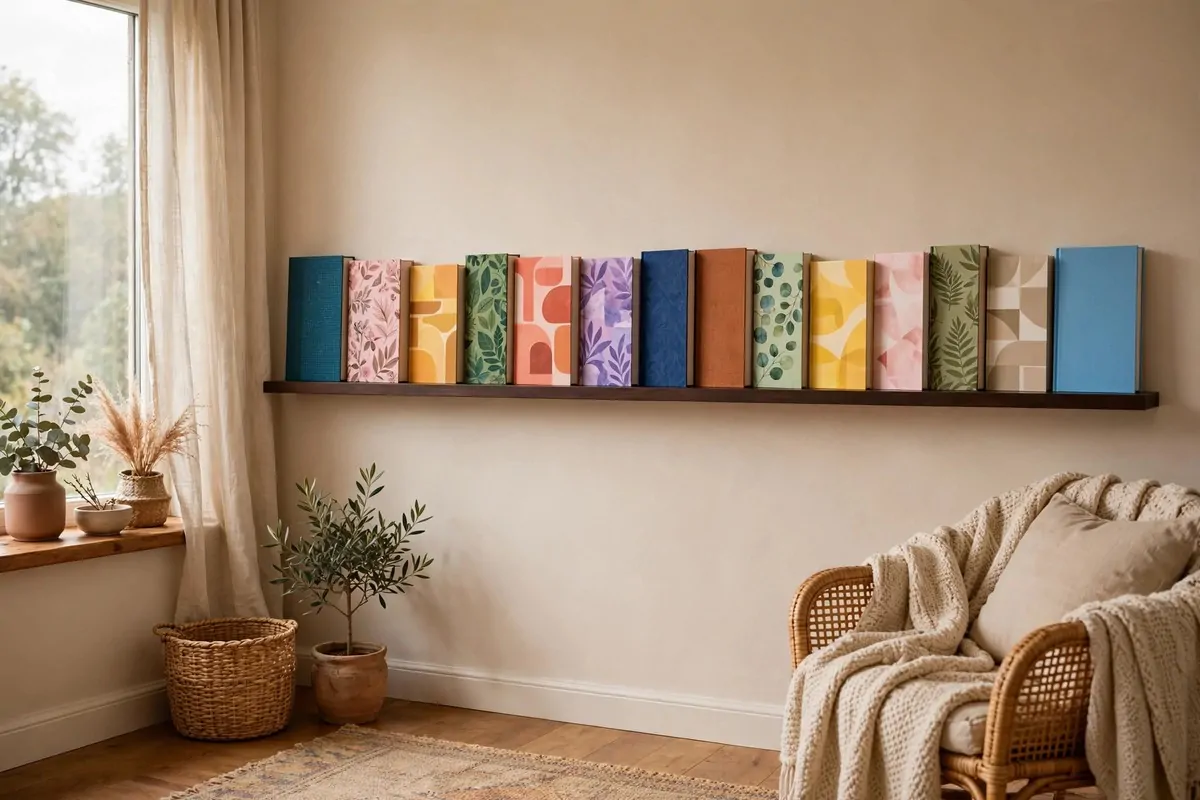
Book covers are art. Really. Designers spend weeks making them beautiful. So why do we hide them with only the spine showing? Hang your favorites facing out like pictures.
A picture ledge is a narrow shelf with a small lip at the front. You lean the books on it, covers facing the room. One long ledge above your desk or your reading chair becomes a little gallery of your taste.
I change mine with the seasons. Dark moody covers in winter. Bright fun covers in summer. It takes five minutes and the whole room feels different after.
Pick covers you truly love, not just books you think look smart. Your cover wall should make you smile. If a cover makes you happy every time you see it, it belongs on the ledge.
This is a great idea for small rooms because it takes almost no depth. A picture ledge sticks out three inches from the wall. You get a whole display with almost zero floor space.
Kids rooms love this too. Little ones pick books by the cover. A low ledge with the covers facing out means they choose their own bedtime story. My friend’s four year old now insists on choosing every night.
Mix in a few framed prints if you like. A small picture between the books breaks up the row. Just do not crowd it. The covers need room to breathe.
The books on the ledge are still readable, of course. Grab one, read it, put it back. The ledge is a library that just happens to look like art.
9. Keep a Going-Out Shelf by the Front Door
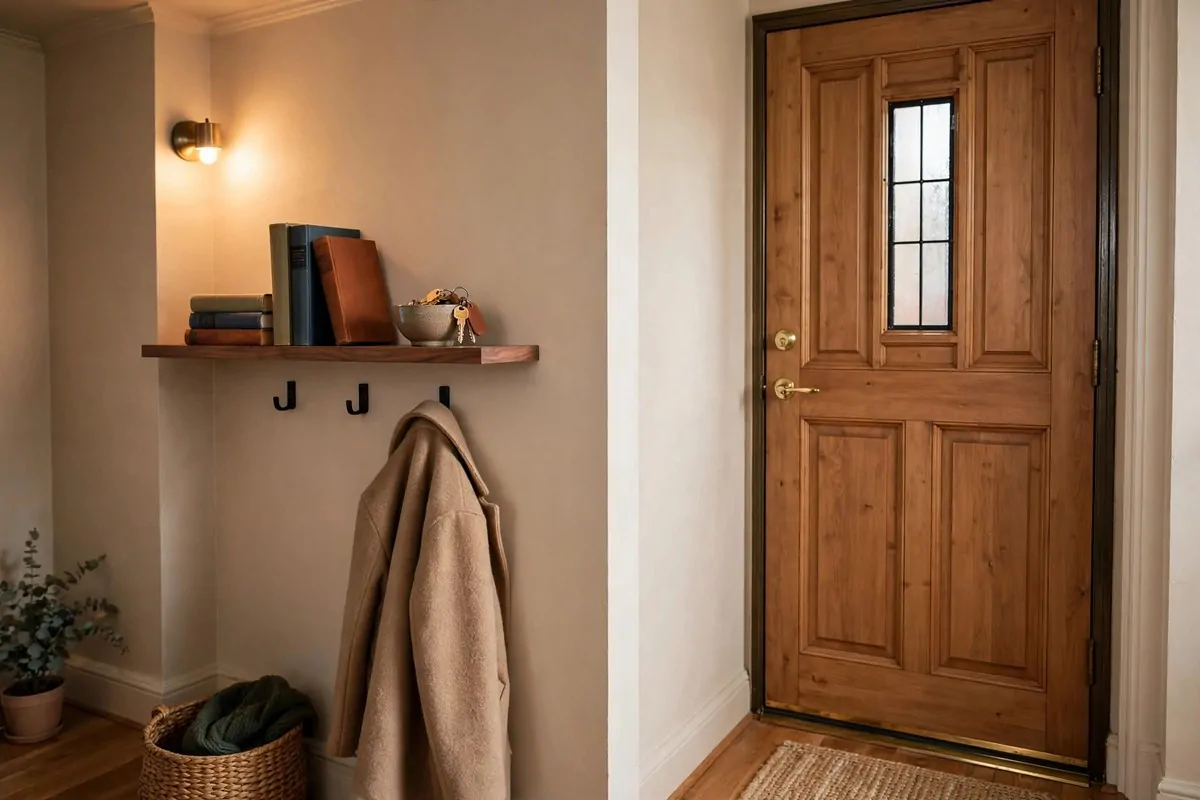
You need a book when you leave the house. For the bus. For the waiting room. For the long line at the clinic. Keep a small shelf right by the front door and you will never forget one.
One narrow shelf is all it takes. It holds your keys, your wallet, and two or three books. The books are the grab and go pile. You take one on your way out and bring one back when you finish it.
I keep three kinds of books on my door shelf. A light funny one for bad days. A short story collection for short waits. And one I am trying to finish. That covers every mood.
Swap the books once a week. Sunday evening works for me. I look at what I grabbed and what I ignored. The ignored ones go back to the main shelves. New ones take their place.
Put a little basket or bowl on the shelf for your keys and small things. Now the shelf has two jobs. It holds your books and it catches your daily clutter. Small shelves should work hard.
This shelf also saves your good books. Before I had it, I would grab whatever was nearest on my way out. Usually a book I was in the middle of. Then it lived in my bag for a month. Now the door books take the beating, and my favorites stay safe at home.
If your entryway is tiny, use a floating shelf. No legs, no bulk. Just a board on the wall at hand height. Even a six inch deep shelf holds three books and a key bowl.
Teach everyone in the house the rule. If you take a door book, you bring a door book back. It keeps the shelf full without anyone having to manage it.
10. Fill the Dining Room Sideboard With Books
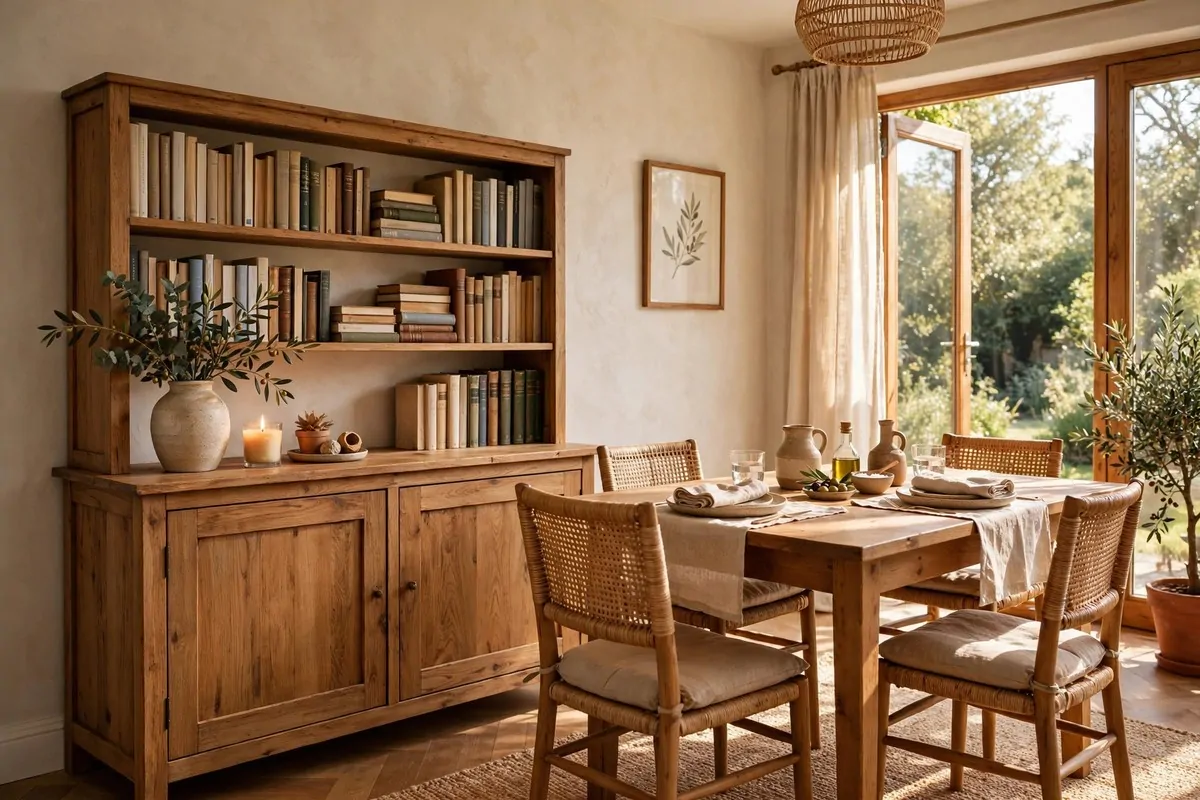
The dining room sideboard usually holds fancy plates nobody uses. Be honest. When was the last time you touched the good china? Give that space to your books instead.
A sideboard with open shelves is a natural bookcase. It is low, wide, and already in the room. Pull out the dusty plates and line up your books. The room changes completely.
Cookbooks and food writing belong here, of course. They are right where you eat. But do not stop there. Travel books are perfect for a dining room. You read about Italy while you eat pasta. It just feels right.
Mix books with a few serving pieces. A stack of books beside a nice bowl looks styled, not messy. The trick is to keep it tidy. Straight rows, a few gaps, nothing falling over.
This idea makes the dining room useful between meals. It stops being a room you only use on Sundays. Now it is a reading spot too. Sit at the table with a book and a cup of tea in the afternoon.
If your sideboard has doors, take one door off or leave the doors open. Books behind closed doors get forgotten. Books you can see get read. That is the whole rule of a home library.
Big coffee table books work well on a sideboard. They are too big for most shelves anyway. Lay them flat in a stack at one end. Guests will pick them up while they wait for dinner.
Dust the shelves when you dust the table. Once a week is enough. Low shelves gather crumbs and dust faster than high ones, but a quick wipe keeps everything fresh.
11. Give the Breakfast Nook a Book Drawer
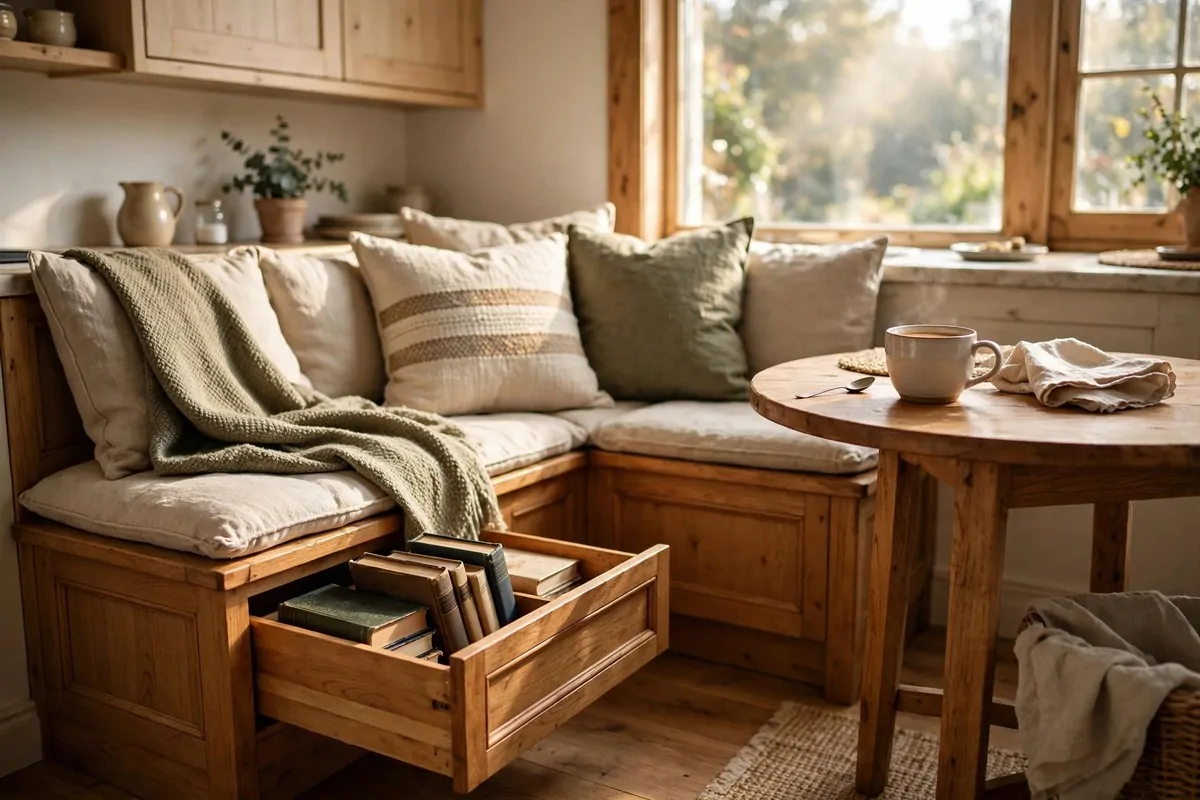
Breakfast nooks have benches. Benches have space inside. That space is begging to hold books. Add drawers or lift up seats and your morning corner becomes a mini library.
The bench by the window is where people sit and wait. They wait for the toast. They wait for the kettle. Waiting time is reading time, if the books are right there.
Pull out drawers work best for this. You slide the drawer open and pick a book without standing up. Lift up seats work too, but you have to move the cushion. Drawers are lazier. Lazy wins in the morning.
Keep morning books in there. Short reads. Magazines. The newspaper if you still get one. Nothing heavy or sad before coffee. That is my only rule.
If you have kids, give them the bottom drawer. Fill it with their books. Breakfast becomes calmer when little ones have something to flip through. I wish someone had told me this years ago.
Label the drawers if your bench has more than one. A small tag that says “books” stops family members from stuffing old menus in there. Believe me, they will try.
This also works in a dining banquette or a window bench. Any seat with hidden space can hold books. The seat does double duty and the room stays tidy.
Wipe the drawers out twice a year. Crumbs find their way in, no matter what you do. A quick vacuum keeps the books clean and the drawers smelling fine.
12. Keep Cookbooks on an Open Kitchen Shelf
Your cookbooks should live where you cook. It sounds obvious. But most of us keep them in another room, then never open them. One open shelf in the kitchen fixes that.
Pick the shelf closest to your cooking spot. Above the counter is ideal. You reach up, grab the book, and cook. No walking to another room with floury hands.
Only keep the cookbooks you actually use. Be honest here. The ones with sticky pages and food stains are the keepers. The pretty ones you never opened can live somewhere else.
A few things to remember in the kitchen:
- Keep books away from the stove. Heat and steam are not kind to pages.
- Wipe the shelf every month. Kitchen grease floats and lands everywhere.
- Stand books upright with a bookend. Falling cookbooks are heavy and annoying.
- Keep one small notebook on the shelf for your own recipes. It becomes a treasure over the years.
I love how a shelf of cookbooks makes a kitchen feel. It says someone actually cooks here. Not a showroom kitchen. A real one, with sauce splatters on page forty seven.
Small kitchens can use the inside of a cabinet door. Stick a narrow rack on it and line up your thinnest cookbooks. It is hidden when the door closes and handy when it opens.
If you rent, a leaning shelf against the wall works. No drilling needed. Just make sure it is stable. A leaning shelf full of heavy cookbooks needs a wall anchor at the top, even for renters. Safety first.
Rotate with the seasons. Baking books come out in winter. Salad and grilling books come out in summer. Your shelf stays useful all year and it feels fresh every few months.
13. Fill the Kitchen Gap With a Pull-Out Shelf
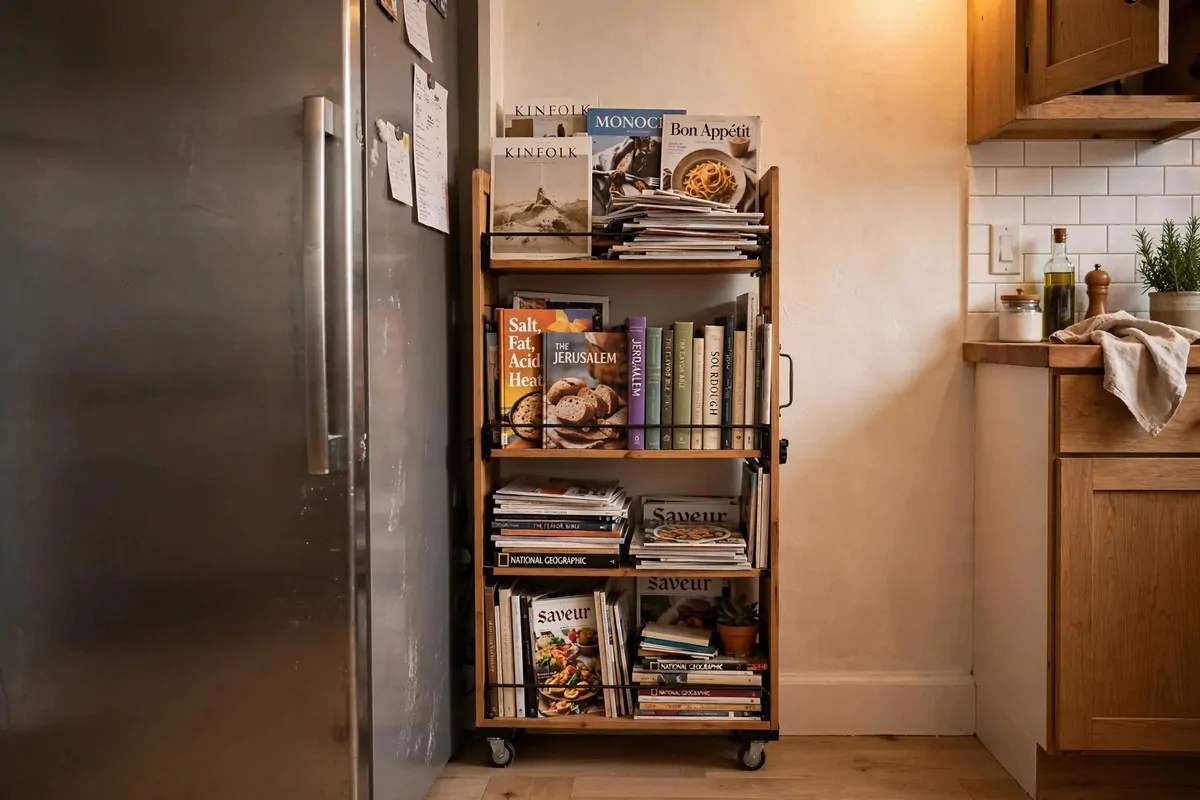
Look at the gap between your fridge and the wall. Or between the counter and the stove. There is always a gap. Usually it holds dust and one lost spoon. It can hold books instead.
Slim rolling carts are made for these gaps. They are only a few inches wide, but they are tall. You pull the whole cart out like a drawer. Books stand in rows on the shelves.
Measure the gap before you buy anything. Gaps are sneaky. They look six inches wide and turn out to be five. Write the number down and take it to the store with you.
Here is what fits in common gap sizes:
| Gap width | What fits | Best for |
|---|---|---|
| 4 inches | Magazines, thin paperbacks | Kids books |
| 6 inches | Paperbacks standing up | Novels, recipe cards |
| 8 inches or more | Hardcovers, small cookbooks | Anything you like |
The wheels matter. Get carts with smooth wheels that lock. You pull it out to browse, then lock the wheels so it stays put. A rolling cart that rolls on its own is not fun.
This is not just for kitchens. The gap beside a wardrobe works. The gap between a desk and the wall works. Any narrow dead space in your home can become a pull out library.
Keep the books you reach for often in the gap cart. It is so easy to pull out that you will actually use it. Burying books you never read defeats the purpose.
Dust the top of the cart once in a while. Gaps collect dust, and the top shelf sits right in it. A quick wipe when you pull it out is enough.
14. Line the Top of the Kitchen Cabinets With Books
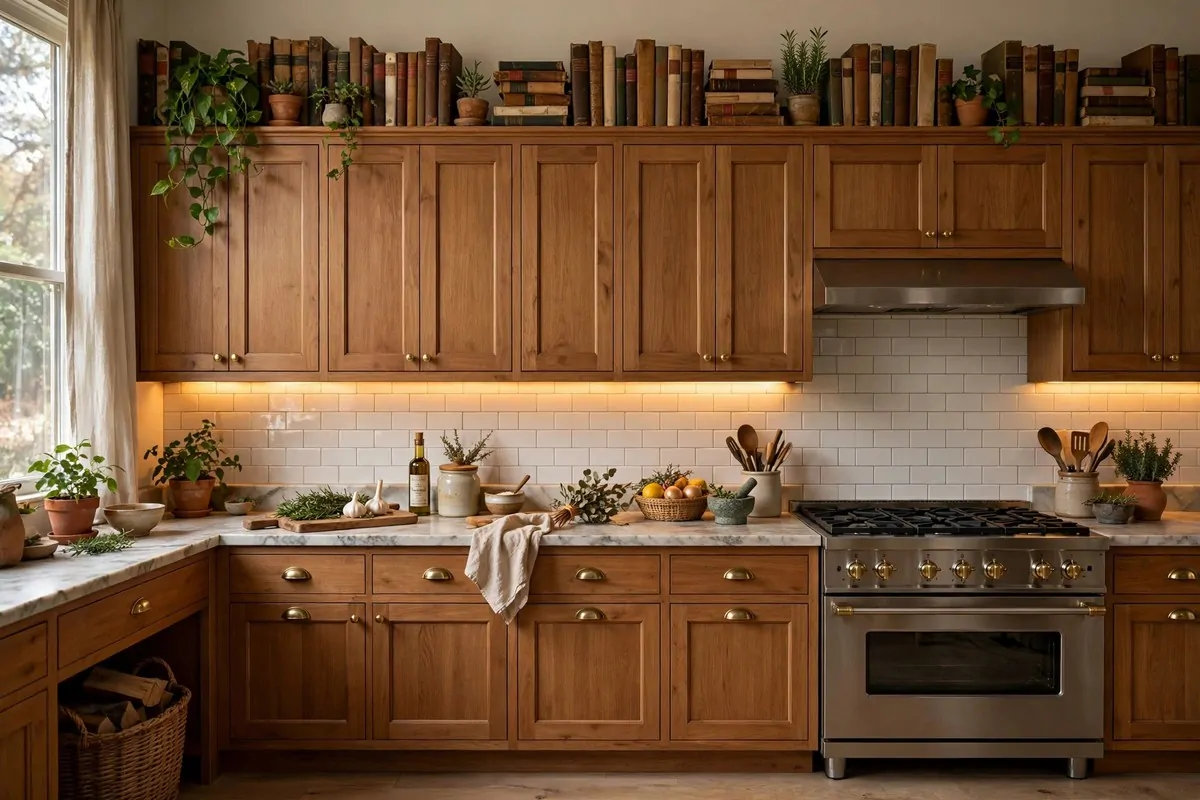
The tops of your kitchen cabinets are a whole shelf you forgot you had. They run the full length of the kitchen. And right now they hold nothing but dust. Let us fix that.
First, clean them. Really clean them. Kitchen cabinet tops get greasy. Wipe them down with warm soapy water and let them dry. Your books deserve a clean home.
Line up books in neat rows along the top. This works best if your ceilings are high. With low ceilings the books look cramped. With high ceilings they look like a proper library wall.
Put the books you rarely need up here. Old sets. Reference books. The ones you keep for love, not for reading. You will need a step stool to reach them, so do not store your daily reads up high.
Face some covers outward for looks. A row of spines is fine, but a few covers facing the room makes it look styled. It turns storage into decoration.
This trick also makes low ceilings look higher. The eye travels up the cabinets to the books and keeps going. It draws the whole room upward. Designers use this trick all the time.
Keep them in order so you can find things. Alphabetical works. By subject works too. A row of random books up high just looks like clutter from below.
Check on them twice a year. Kitchen air is not the kindest to books. If a cover feels sticky, wipe it down. If the pages smell like cooking oil, move those books somewhere else.
15. Turn the Windowsill Into a Deep Book Ledge
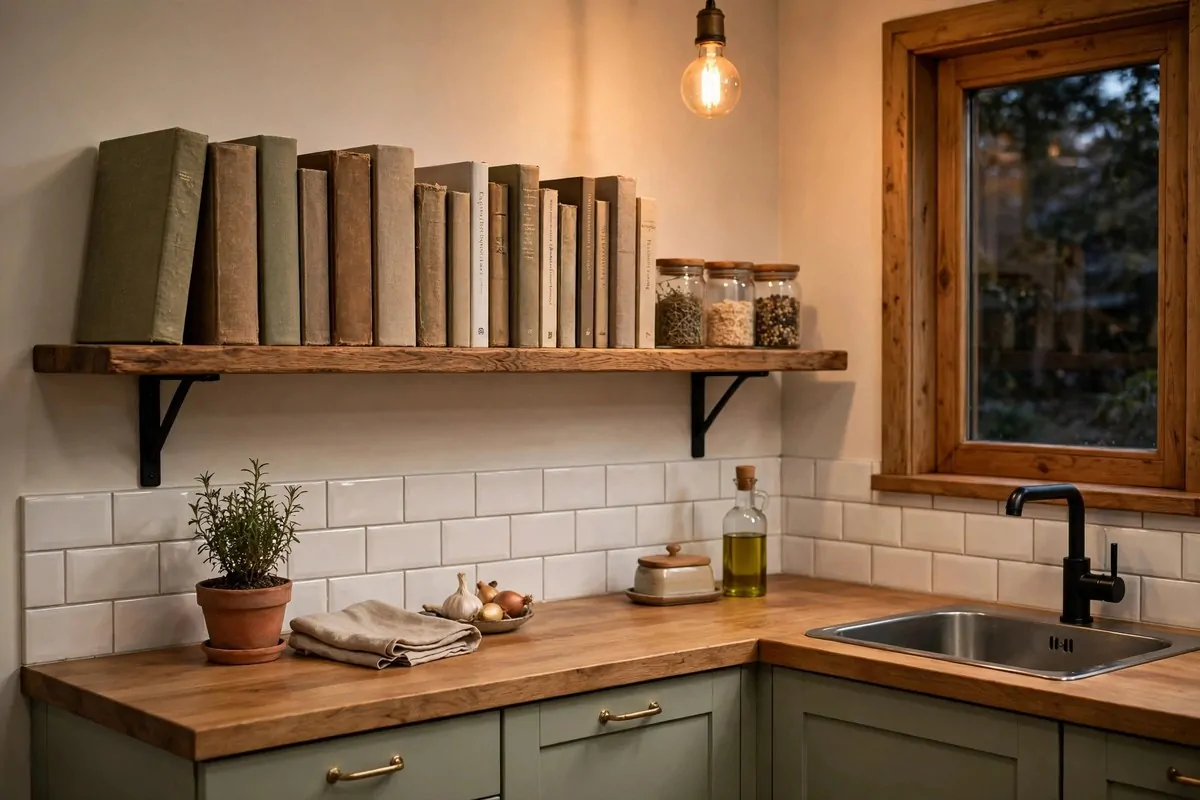
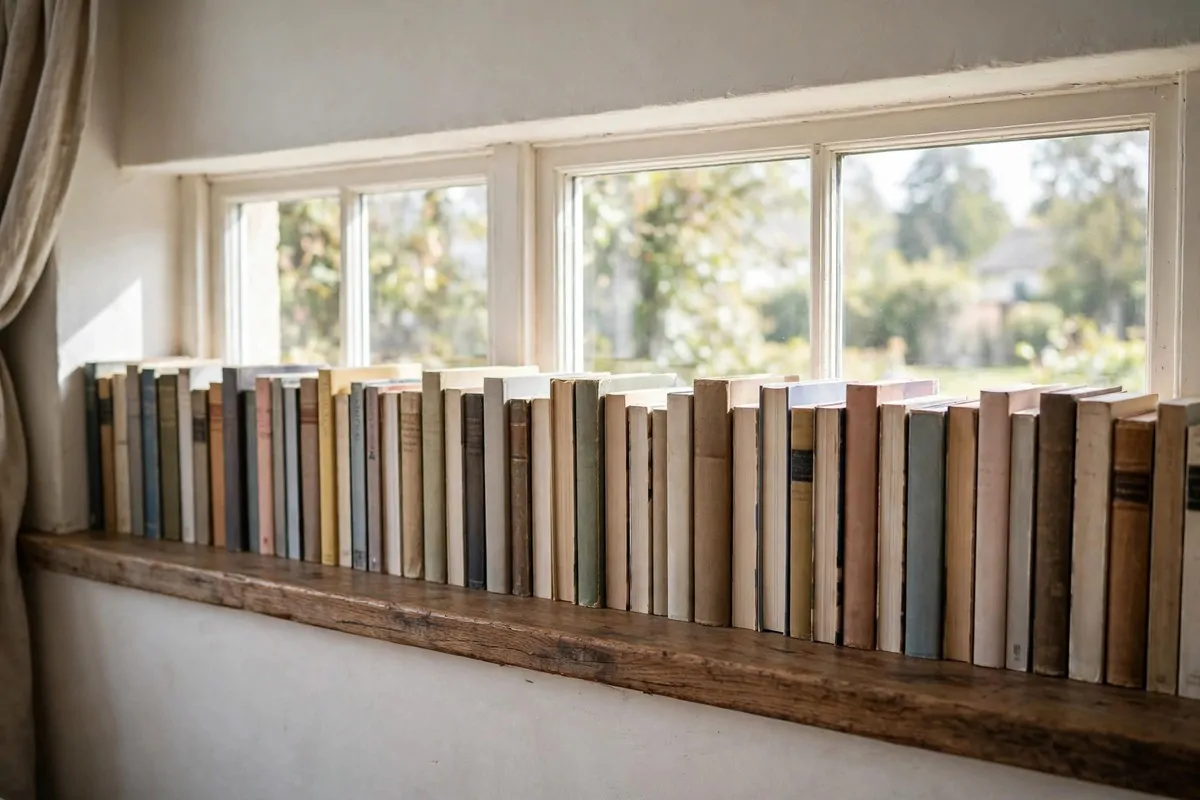
Some windows have deep sills. Four inches, six inches, sometimes more. That is enough for a row of paperbacks. Your window becomes a bookshelf with a view.
Stand the books upright along the sill. Paperbacks fit best. They are light and the right size. Hardcovers work too, but they block more light. And light is the whole point of a window.
Keep your rare or precious books off the windowsill. Sunlight fades covers and yellows pages. The sill is for reading copies, paperbacks you love, books that already have some wear.
I keep a small cushion on the floor under my window sill. The books live on the sill and I sit below them to read. It is the cheapest reading nook in my whole house.
Rotate the books with the weather. In summer the sun is strong, so I move the sill books to a shadier spot. In winter they come back. It takes ten minutes and it protects the covers.
This is a lovely idea for kids rooms. A low windowsill with picture books on it invites little readers. They sit in the sun and flip through the pages. It is simple and it works.
Dust the sill when you water your plants or wipe the glass. Books on a sill gather dust fast. A quick swipe keeps them clean and the window looking nice.
If your sill is narrow, add a small board to make it deeper. A piece of wood the length of the window, resting on the sill, doubles the depth. Now even bigger books fit.
16. Run Shelves Above the Sofa
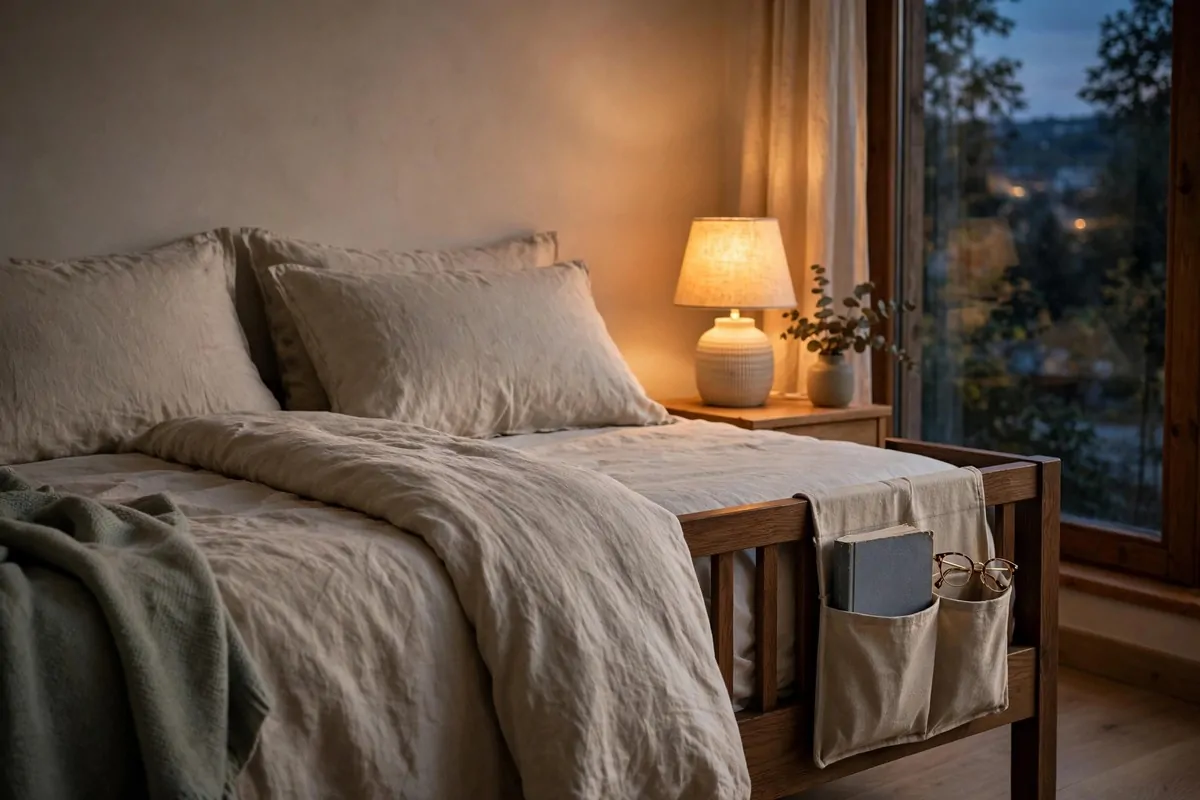
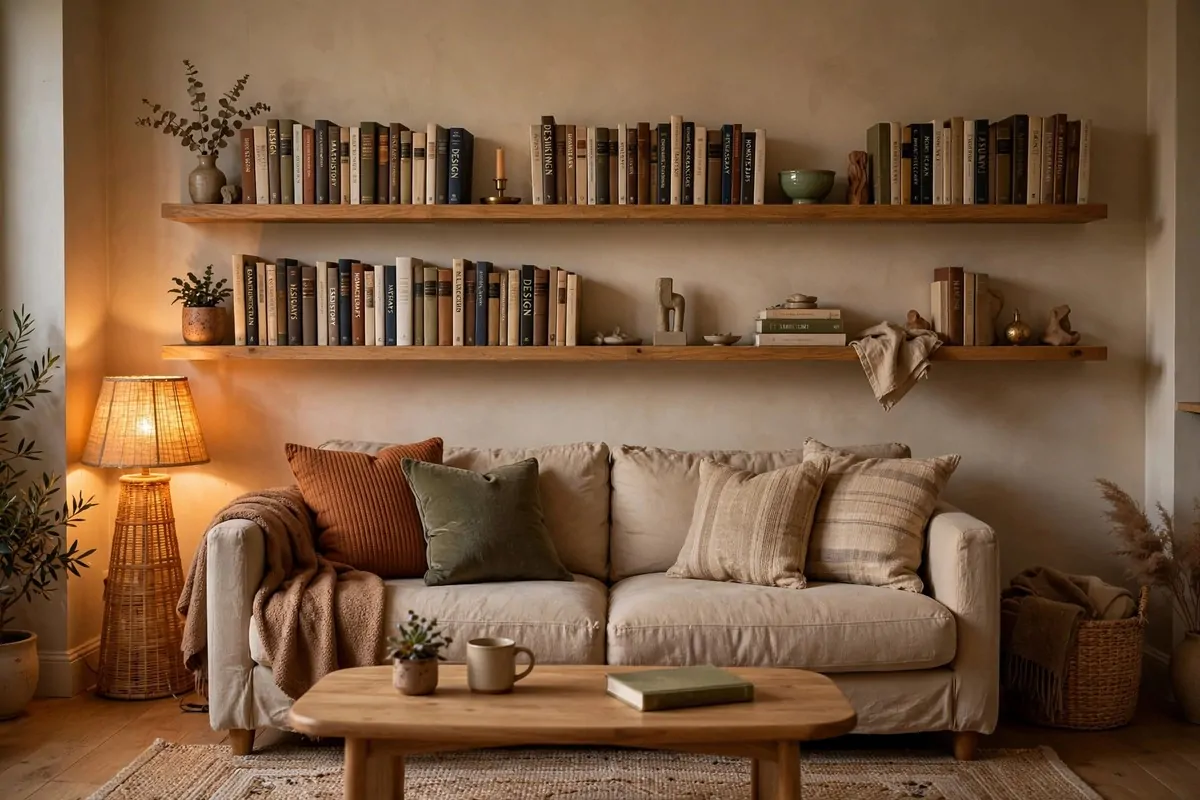
The wall above your sofa is prime library space. It is wide, it is empty, and it is right where you sit to read. Two floating shelves up there hold a lot of books.
Height matters here. Hang the lowest shelf high enough that nobody bumps their head. Sit on the sofa and reach up. The shelf should be above your fingertips when you stretch. That is the safe zone.
Use strong brackets. Sofa shelves get bumped. People lean back, pillows fly, kids climb. The shelves need to hold the books and survive real life. Screw into studs every time.
I put my current reads on my sofa shelves. The book I am reading now. The one I will read next. A few old favorites for comfort. Everything is within reach without standing up.
Mix in a few small decorations. A tiny plant. A framed photo. A candle you never light. Books plus a few pretty things look styled. Books alone can look like a shop.
Keep the arrangement light. Do not pack the shelves edge to edge. Leave some air between the rows. A crowded shelf above a sofa feels heavy. A shelf with breathing room feels calm.
This also works above a bed or a desk. Anywhere you sit with your back to a wall can have shelves above it. The wall behind you is working space, not just background.
Wipe the shelves when you change the books. Dust falls down from above, so sofa shelves get dusty on top of the books. A monthly wipe keeps everything fresh.
17. Spin a Rotating Tower Into the Corner
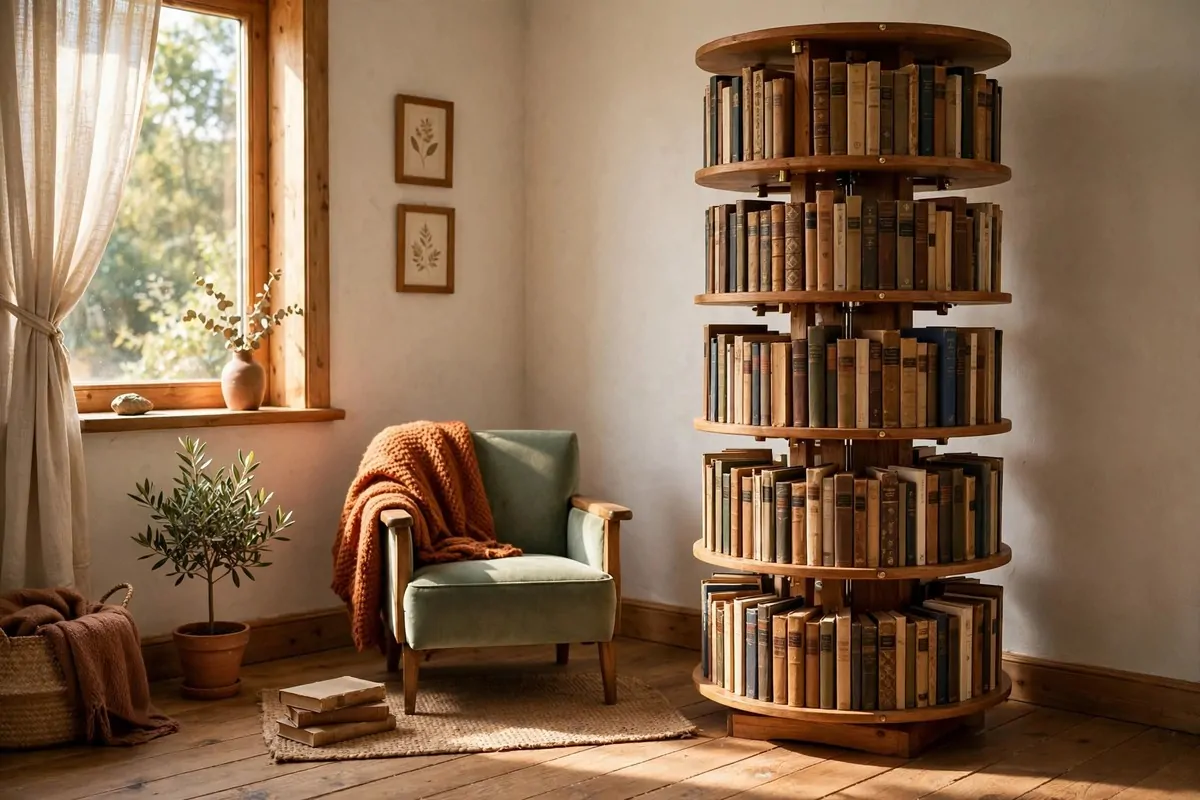
Corners are the hardest spots to use. Furniture never fits right. A rotating book tower fits perfectly. It spins, so every side is reachable, and it takes up barely any floor.
The tower is a tall column with shelves on all four sides. You give it a gentle push and it turns. It is deeply satisfying. Kids will spin it just for fun, and honestly, so will you.
One tower holds a shocking number of books. Here is a rough guide:
| Tower height | Number of tiers | Books it holds |
|---|---|---|
| 3 feet | 4 tiers | About 60 paperbacks |
| 4 feet | 4 tiers | About 100 paperbacks |
| 5 feet | 5 tiers | About 150 paperbacks |
Put the tower where the corner is truly dead. Beside a door that opens against the wall. Next to a wardrobe. In that weird corner of the bedroom that holds nothing but a plant you keep forgetting.
Balance the books on all four sides. If one side is heavy and the rest are empty, the tower spins funny. Spread the books around. It looks better and it turns smoother.
The top tier is perfect for your current book and a small plant. It is at eye level when you stand. You will find yourself spinning the tower every time you walk past, just to see what is on the other side.
These towers come flat packed and build in about half an hour. No special tools needed. If you can build a small shelf, you can build one of these.
They also work great for kids books. Little ones can spin the tower themselves and pick their own stories. It turns choosing a book into a game.
18. Use the Back of Your Doors
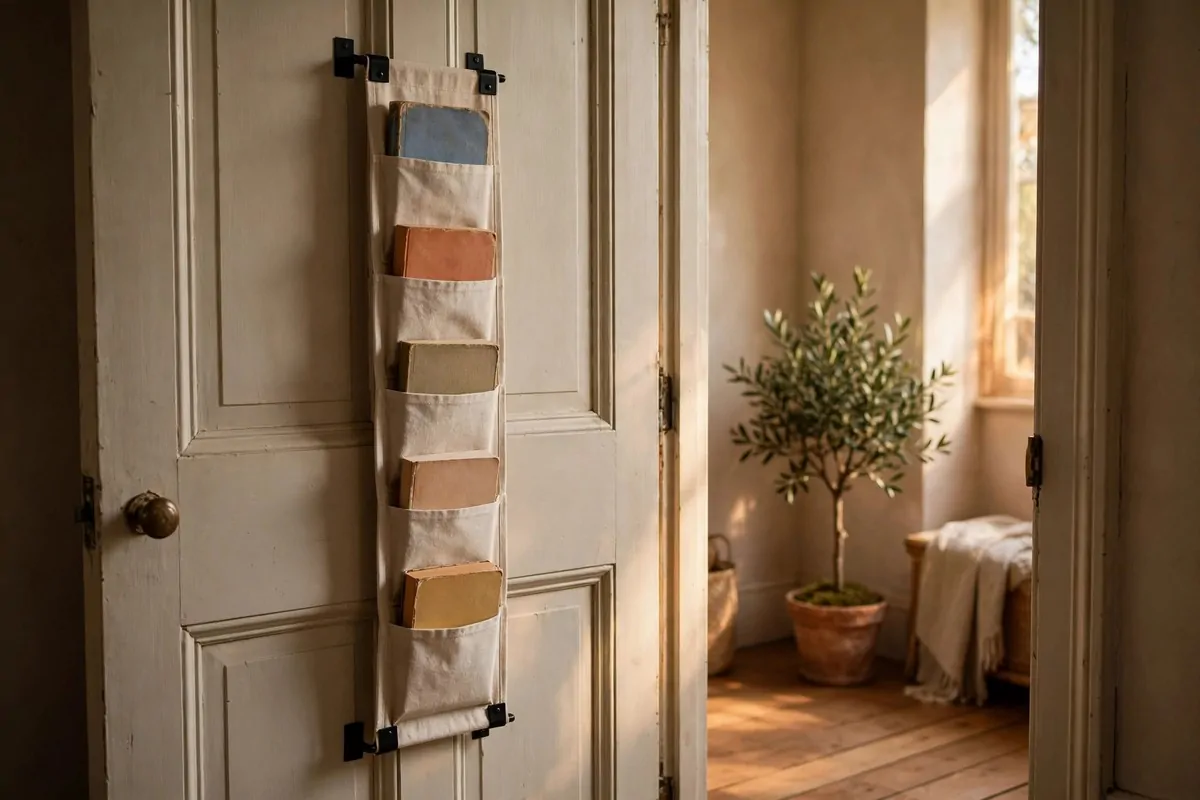
Every door in your home has a back. And every back is a blank wall that swings. Hang a slim rack on it and you have a hidden little library that disappears when the door opens.
Over door racks hook over the top of the door. No screws, no damage. Perfect for renters. They hold paperbacks in rows of pockets or on small shelves.
The bedroom door is the classic spot. You wake up, you open the door, and your books swing with it. Keep your current read there. It is the first thing you see in the morning.
A few things that work well on door backs:
- Slim pocket organizers for paperbacks and magazines.
- Narrow wire racks for a row of books at eye level.
- Small hanging baskets for the book you are reading now.
- Hooks at the bottom for your reading glasses case.
Keep it light. A door with too much weight on it swings badly and strains the hinges. Paperbacks and magazines are fine. Hardcover sets are not. Use your judgment.
Closet doors work too. The inside of a closet door is secret storage. Open the closet, grab a book, close the closet. Nobody even knows your library is there.
Check the clearance before you hang anything. The rack needs to clear the wall when the door opens. Measure how far the door swings and keep the rack thinner than that gap.
This is one of the cheapest ideas on this list. A basic over door rack costs less than a new book. And it gives you a whole new shelf where there was only flat wood before.
19. Hang a Bedside Caddy for Tonight’s Book
Not everyone has room for a nightstand. Some beds sit right against the wall. Some rooms are just too small. A hanging bedside caddy solves it. It holds tonight’s book right where you sleep.
A caddy is a strip of fabric with pockets. It hangs over the side of the bed, tucked under the mattress. Your book slides into the big pocket. Your glasses go in the small one. A pen fits in the skinny slot.
I bought mine for a trip and never stopped using it. It is so simple. No furniture. No floor space. Just your book, hanging beside your pillow, waiting for you.
This is perfect for bunk beds and small bedrooms. Kids in bunk beds have nowhere to put a book. A caddy on the rail gives them their own little library. They feel very grown up about it.
Keep only tonight’s book in the caddy. Not five books. Not the whole series. One book. The caddy is for the book you are reading right now, not for storage. That is what keeps it tidy.
Choose a caddy with a sturdy hook or a wide flap. Cheap thin ones slide off the mattress in the night. You do not want to wake up and find your book on the floor.
Wash it now and then. Fabric caddies collect dust like anything else near a bed. Most of them go right in the washing machine. Hang it to dry and it is fresh again.
If you are handy, you can sew one in an afternoon. A rectangle of strong fabric, a few stitched pockets, and a flap that goes under the mattress. It is one of the easiest sewing projects there is.
Pair it with a clip on reading light. The caddy holds the book, the light clips to the headboard or the caddy itself. Now you can read without waking anyone. Small room, big comfort.
20. Turn the Stair Landing Into a Reading Stop
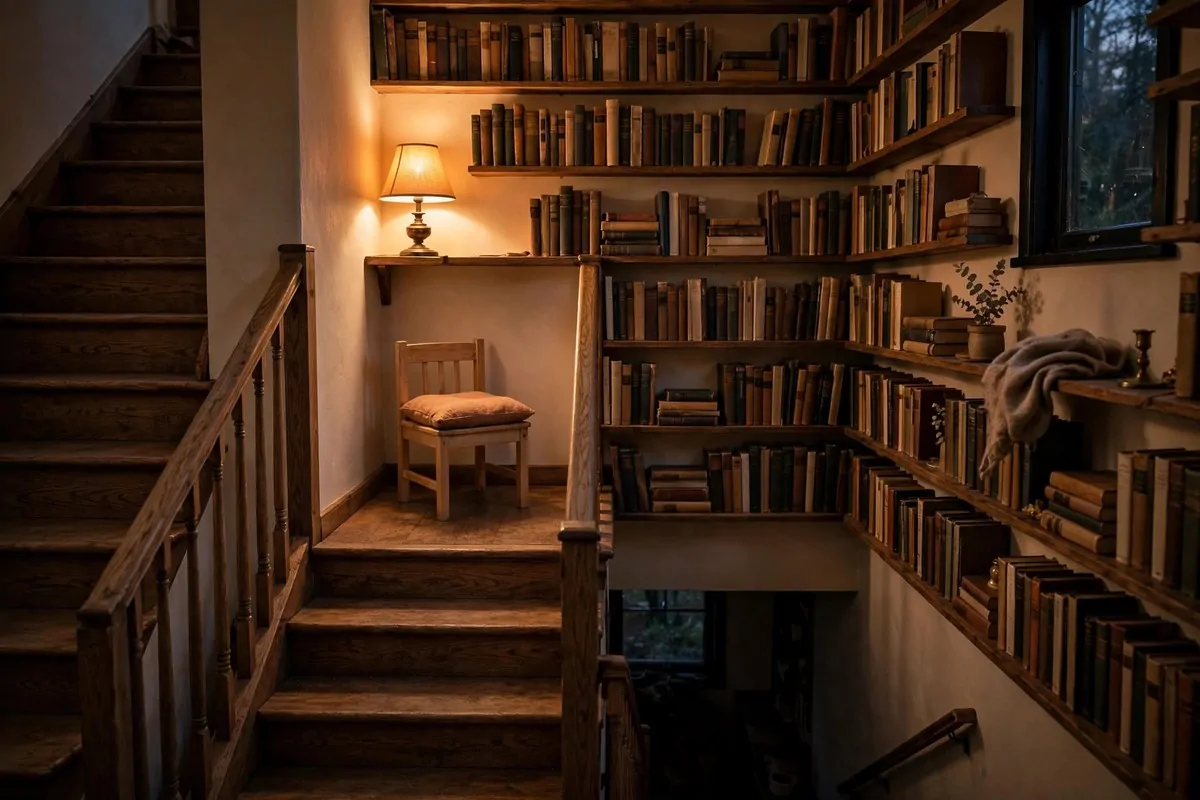
Stair landings are the most wasted space in a two floor home. You pass through them a dozen times a day. You never stay. Put a chair and a shelf there and the landing becomes a destination.
All you need is a small chair that fits the landing. Not a big armchair. A simple wooden chair with a cushion works. Somewhere to sit for ten minutes with a book.
Add one narrow shelf on the landing wall. Stock it with short books. Poetry. Essays. Short stories. Landing reads should be books you can enjoy in small bites.
A small lamp makes all the difference. Landings are often dim. A warm lamp on the shelf or on a tiny table turns the corner from a pass through into a proper spot.
I started using my landing last winter. I would stop there with my tea on the way upstairs. Ten minutes of reading in the middle of a busy day. It felt like a tiny holiday.
Keep the walkway clear. The chair must sit against the wall, out of the path. A landing is still a walkway first. Safety matters more than coziness here.
This is also a lovely spot for kids. A small cushion on the landing floor and a low shelf of picture books. They will claim it as their own secret spot within a week.
Change the books on the landing shelf often. It is a small shelf, so it gets stale fast. A fresh book every week keeps the stop feeling new. Borrow from your main shelves and rotate.
If your landing has a window, you are very lucky. A chair by a landing window with books beside it is one of the nicest reading spots in any home. Morning light and a good book. Nothing beats it.
21. Turn Each Stair Into a Drawer
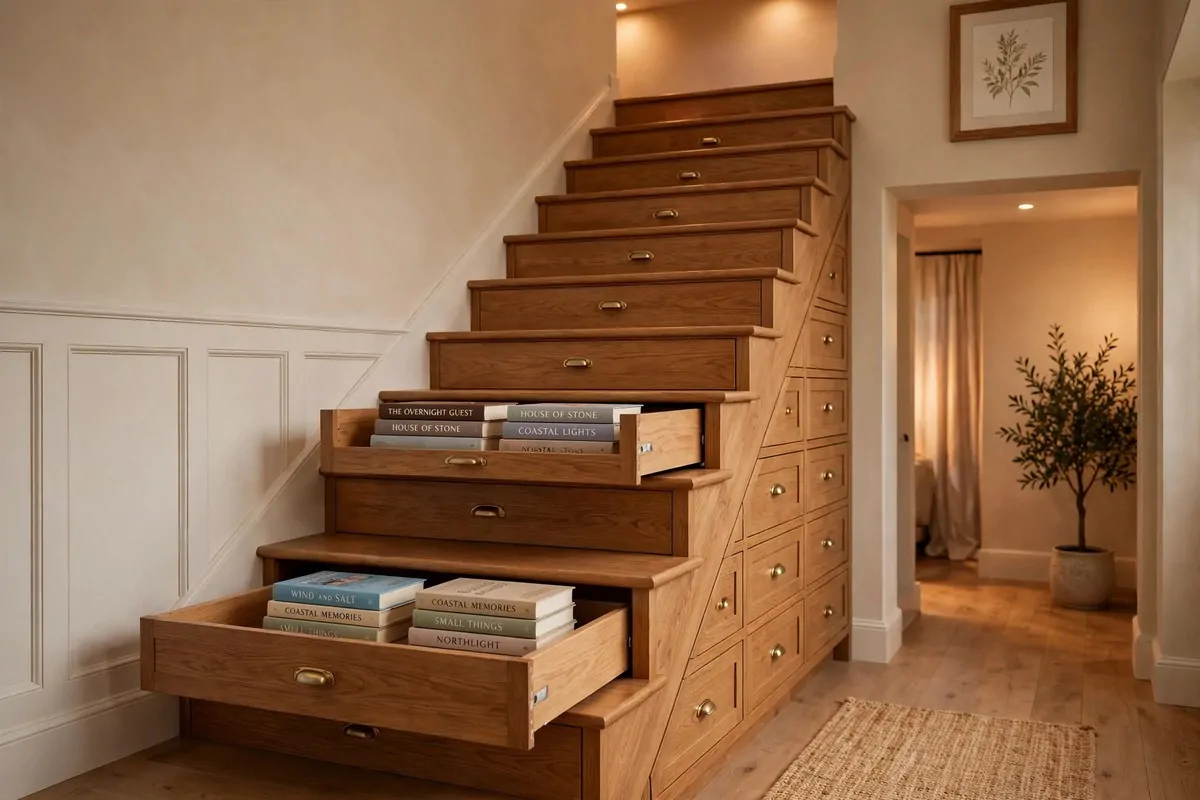
This one sounds like magic. Each stair in your staircase has empty space under the tread. Turn that space into a drawer and every single step becomes book storage.
The drawers pull out from the side or the front of each step. Inside is a deep box. Kids books fit perfectly. Paperbacks too. One staircase can hold hundreds of books this way.
This is a bigger project than most ideas on this list. You need a carpenter, or good DIY skills. The drawers must be built strong. Stairs carry your weight every day. The storage cannot weaken them.
Start with just three or four drawers if you are unsure. The bottom steps are easiest to reach and easiest to build. See how you like them before you do the whole staircase.
Kids adore stair drawers. They pull open a step and find their books inside. It never gets old for them. If you have little readers, this idea is worth the effort.
Keep the drawer fronts looking like normal stairs. That is the charm. Closed, your staircase looks like any other staircase. Open, it reveals a secret library. Guests will not believe it.
Label the inside of each drawer, not the outside. You want the secret look from the front. Inside, a little tag that says “picture books” or “chapter books” keeps things organized.
Safety check every year. Make sure the drawers still slide smoothly and close fully. A drawer that sticks out is a tripping hazard on stairs. Keep them in good shape and they are perfectly safe.
This works best on straight staircases with solid construction. Floating or open riser stairs are not good candidates. When in doubt, ask a carpenter before you start.
22. Put Up Book-Spines Wallpaper
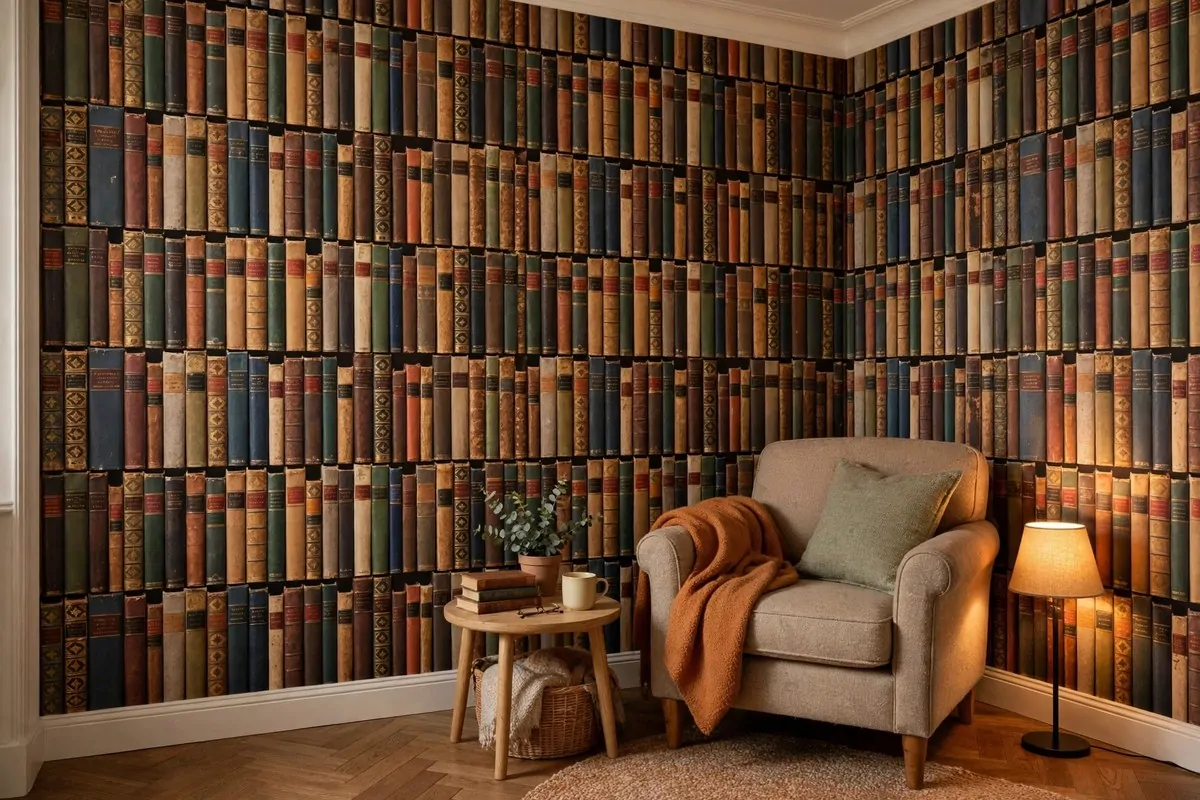
What if your wall looked like a library, even where there are no real books? Book spine wallpaper does exactly that. It is printed to look like rows and rows of old book spines.
This is the fastest library on this list. One afternoon, one wall, and you have the look of a grand old library. No shelves. No heavy lifting. Just paper on a wall.
Peel and stick versions exist for renters. They go up without paste and come down without damage. I used them in my old flat. The landlord never knew, and the wall looked amazing.
Pick one wall for this. An accent wall behind your reading chair works beautifully. Covering every wall looks busy and a bit strange. One wall looks intentional and classy.
The wallpaper looks best in warm light. A floor lamp or a wall light beside it brings out the colors of the printed spines. In flat white light it can look a little dull.
Pair it with real books. Put a small real shelf or a book stack in front of the wallpapered wall. The mix of real and printed books fools the eye. People will do a double take.
This is also great for a home office background. Your video calls get a library backdrop. Nobody needs to know it is wallpaper. Your secret is safe with me.
Choose a design with varied spine colors. Some wallpapers repeat the same few spines and the pattern shows. Look for designs with lots of variety. Read the reviews and check customer photos before you buy.
23. Put a Small Shelf Over the Toilet Tank
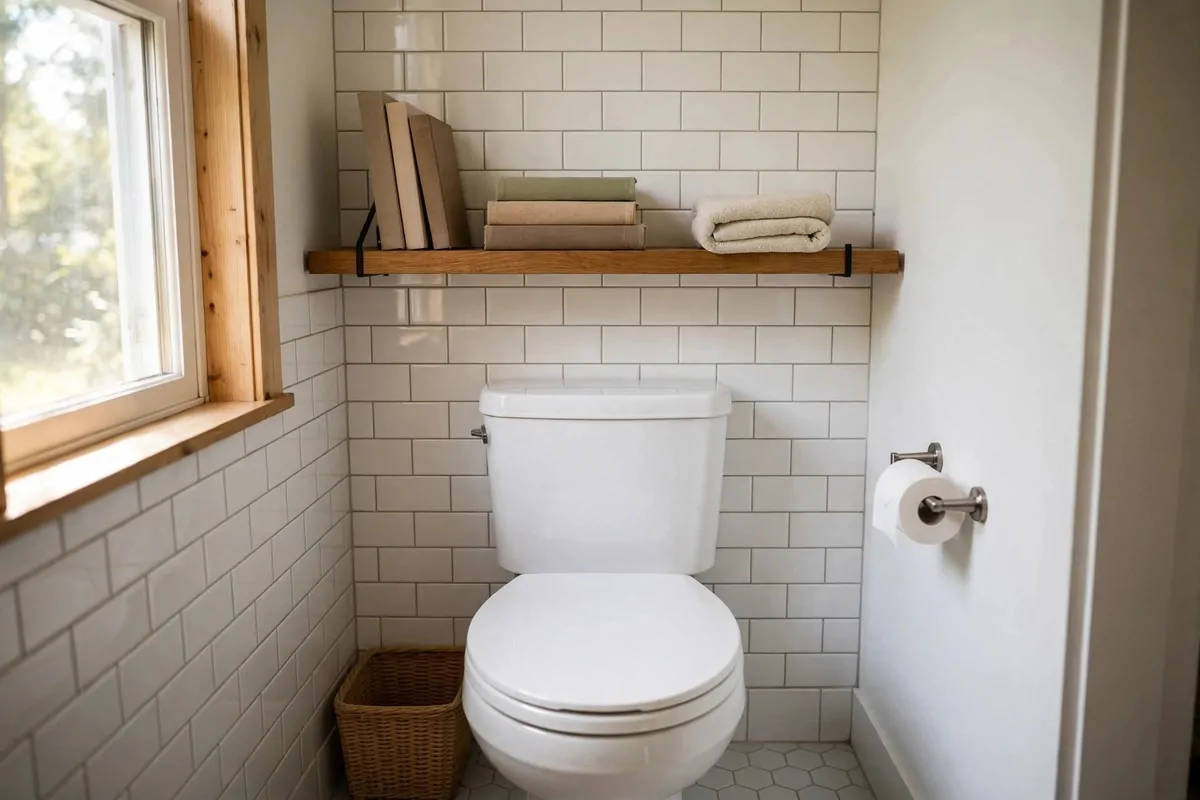
Everyone reads in the bathroom. Let us just say it out loud. So why not give those reading minutes a proper little shelf? One small board above the toilet tank is all it takes.
Keep bathroom books separate from your good books. Bathrooms are steamy. Steam is not kind to pages. This shelf is for magazines, cheap paperbacks, and books you do not mind getting a little worn.
A small basket on the shelf works even better than a bare board. The basket holds the magazines upright and hides the clutter. It looks tidy and it is easy to grab from.
A few bathroom shelf rules:
- Keep the shelf high enough that nothing falls into the tank. Safety first.
- Choose books you can replace. No rare editions in the bathroom.
- Wipe the shelf monthly. Steam leaves a film on everything.
- Add a small plant if you like. It survives the humidity and looks nice.
I keep a little stack of puzzle books in my bathroom. Crosswords and word searches. Five quiet minutes with a puzzle is the best part of some mornings. Do not judge me.
This shelf also works above a laundry machine or a bathroom cabinet. Any small wall in a small room can hold a few books. The bathroom is just the funniest example.
If you share the bathroom, keep the shelf neutral. Puzzle books, magazines, a plant. Save your personal diary for the bedroom. Some things do not belong on a shared shelf.
It is a small idea, I know. But small ideas are the whole point of this list. A library is not a room. It is books living close to you, everywhere in your home, even here.
Keep Reading
If you loved these small space ideas, you will enjoy these too. 30 Library Ideas That Make Every Book Lover Swoon has the grand classic looks for bigger rooms. 21 Small Library Room Ideas That Make Every Inch Count is perfect when you have one tiny room to fill. 28 Cozy Home Library Ideas You’ll Never Want to Leave adds all the warm touches. And 16 Office Reading Room Ideas Cozy Enough to Linger In blends books with your workspace.