23 Classroom Set up Ideas for a Fresh School Year

I once spent a whole Saturday moving desks around an empty classroom. I pushed them into rows, then back into pairs, then into one big circle. My back hurt and the room still looked dull. Then a teacher friend showed me her trick. She does not start with desks at all. She starts with zones. A reading spot here, a work zone there, a calm corner by the window. It took her one afternoon and the room looked brand new. That is what these classroom set up ideas are about. Not a full redo. Just smart moves that make the school year start fresh.
1. Move the Desks Into Clusters
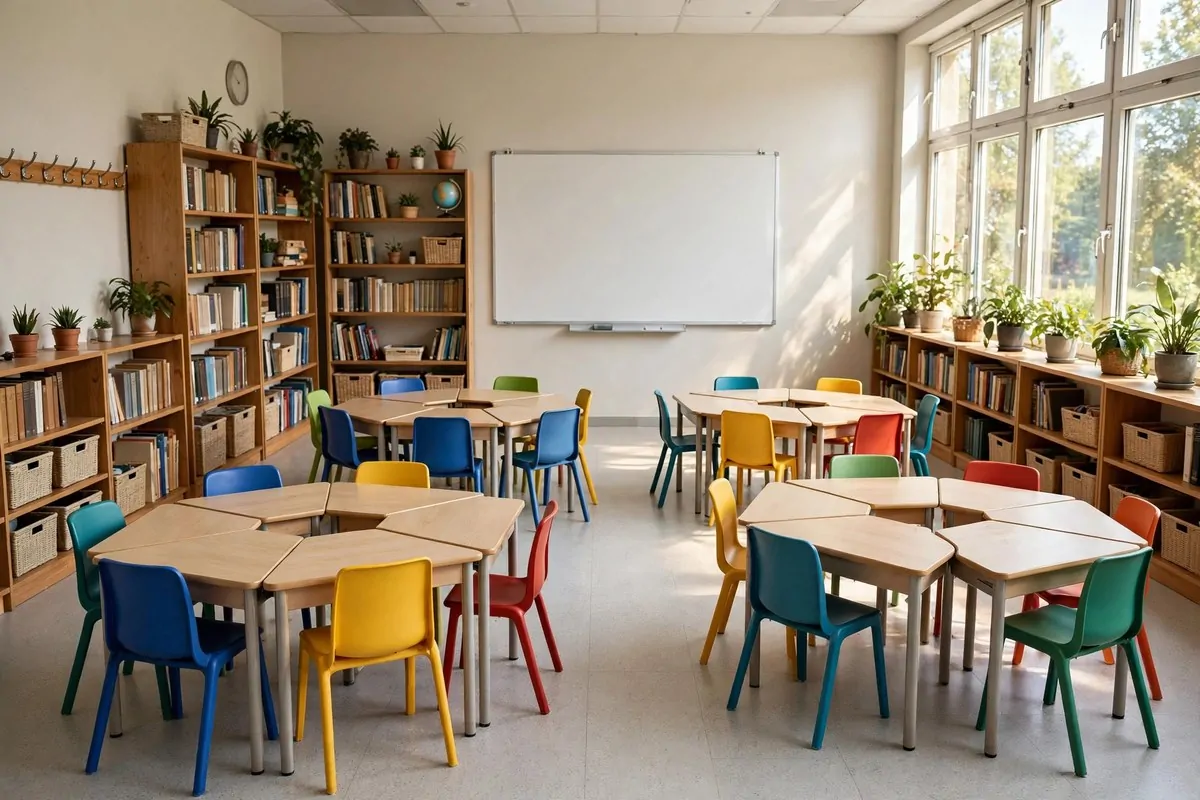
Rows are fine for tests. But clusters are better for almost everything else. Groups of four to six desks change how kids work together.
Push desks into little islands. Leave a walkway between each island. You should be able to walk to every group without squeezing past chairs.
Face the islands toward the front at a slight angle. Every kid should see the board without twisting around. Neck pain kills focus fast.
Clusters make group work natural. You do not have to move desks for every activity. The room is already ready.
They also help shy kids. Talking to three neighbors is easier than talking to thirty classmates. Quiet kids open up in small groups.
One downside is noise. Four groups talking at once gets loud. Set a voice level chart and stick to it. Level one for partner talk, level two for group talk.
Change the groups every month. New neighbors mean new friends. It also stops one loud group from forming a permanent club.
Label each cluster with a fun name. The Blue Table, the Star Table. Names make groups feel like teams.
This one change takes twenty minutes on setup day. And it pays off every single day after. It is the highest value move on this list.
2. Try the U-Shape Layout
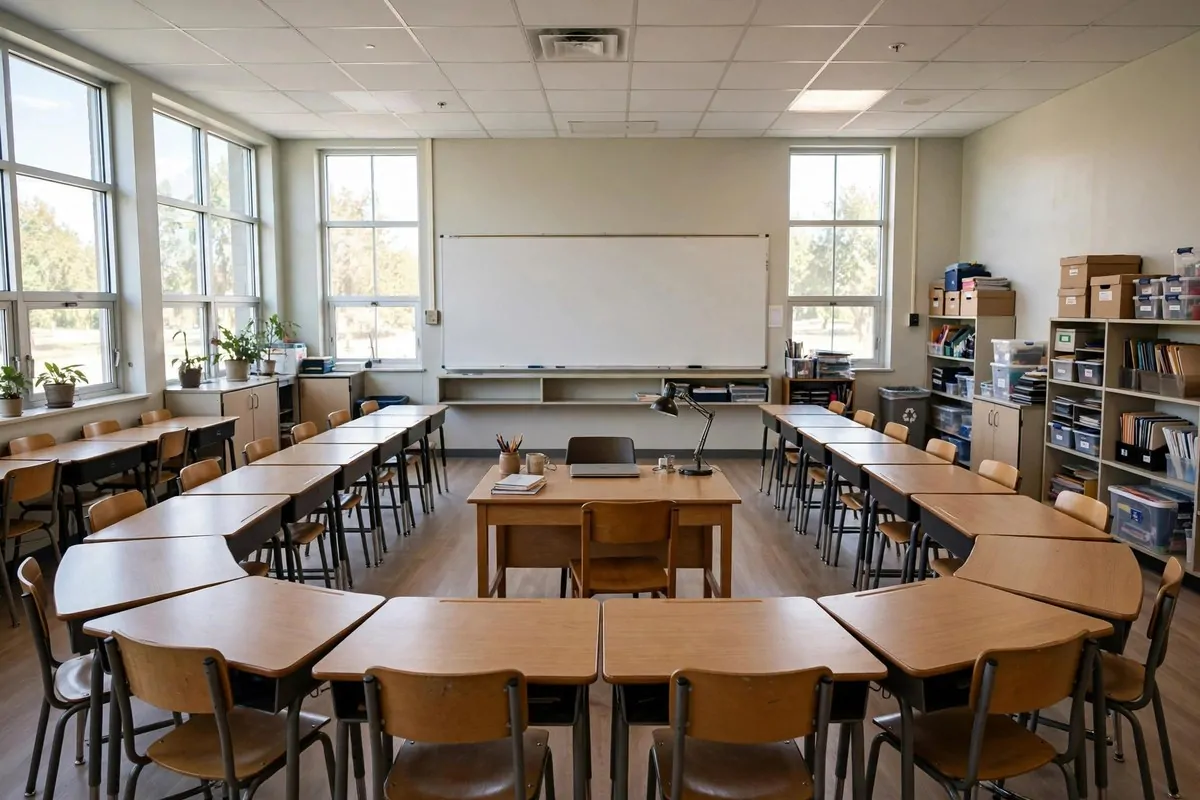
The U-shape is the best layout for class talks. Everyone sees everyone. Discussions feel like real conversations.
Arrange the desks in a big U or horseshoe. Leave the middle open. That open space is gold for demos and read-alouds.
This layout shines during morning meetings. Kids talk to each other, not just to you. You become part of the circle, not the boss of it.
It works best in smaller classes. Under twenty kids, the U is perfect. Bigger classes make the U too wide to manage.
Put your most distracted kids near the front corners. They are close to you and close to the board. The middle of the U is for your independent workers.
The open center is great for acting out stories. Kids step into the middle and perform. The U becomes a little theater.
One warning. Kids in the U can see each other, which means they can distract each other. Set clear talk rules on day one.
Pair the U with a rug in the center for little ones. They sit on the rug for lessons and move to desks for work. Two layouts in one.
Try the U for September and switch to clusters in October. Changing layouts mid-year keeps the room feeling fresh. Kids love the surprise.
3. Start With a Calm Color Palette
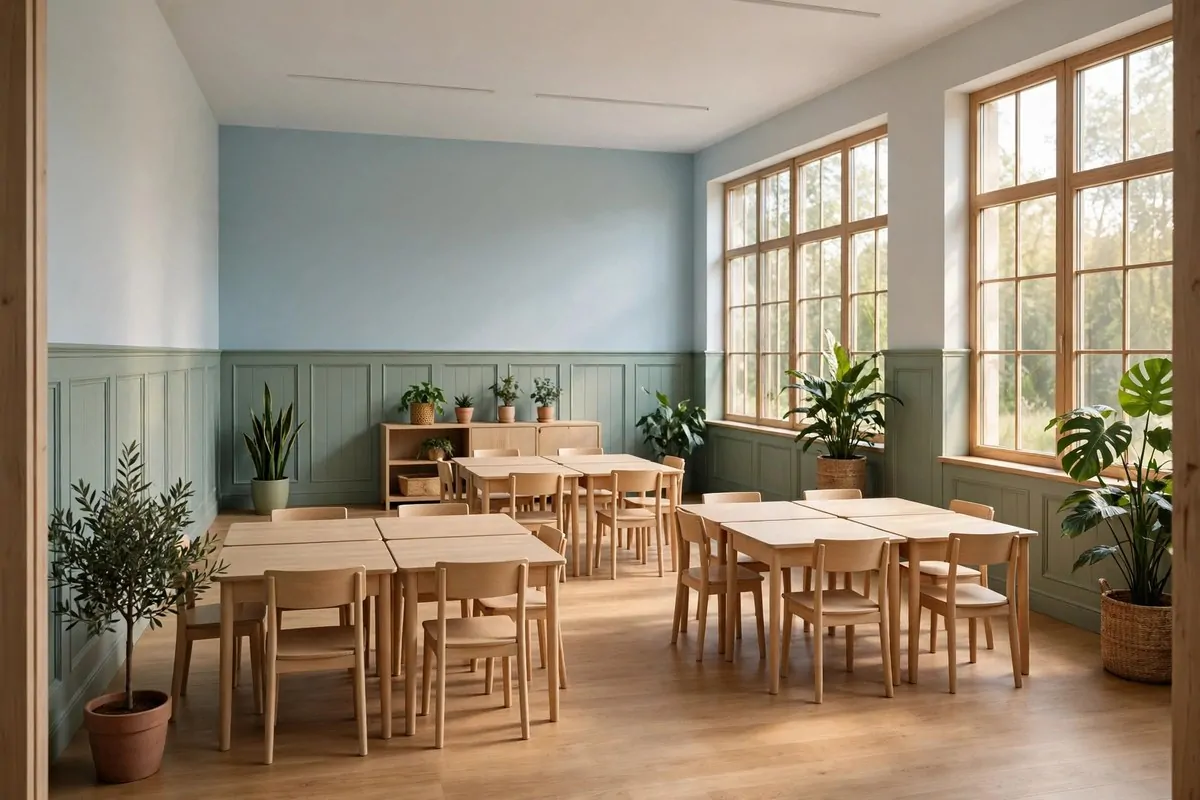
Bright walls look fun in photos. But kids learn better in calm rooms. Soft colors lower the noise in their heads.
Pick two calm base colors. Soft blue, sage green, warm grey. These are your walls and big furniture. Everything else stays quiet too.
Then add one bright accent color. Just one. A sunny yellow or a warm coral on one display wall. One pop of color is enough.
Avoid covering every wall with posters. White space is not wasted space. It lets kids’ eyes rest.
If you cannot paint, use fabric. A big piece of light fabric on a wall works like paint. It is cheap and comes down in June.
Keep your storage bins in the calm colors too. Matching bins look tidy even when they are full of stuff. Mismatched bins look chaotic.
The calm palette helps your anxious kids the most. Loud rooms make them shut down. Soft rooms invite them in.
Test it with a photo. Take a picture of your room and look at it on your phone. If your eyes jump everywhere, tone something down.
You do not need to redo everything. Swap the loudest three things for calm versions. Small swaps, big difference.
4. Build a Welcome Bulletin Board
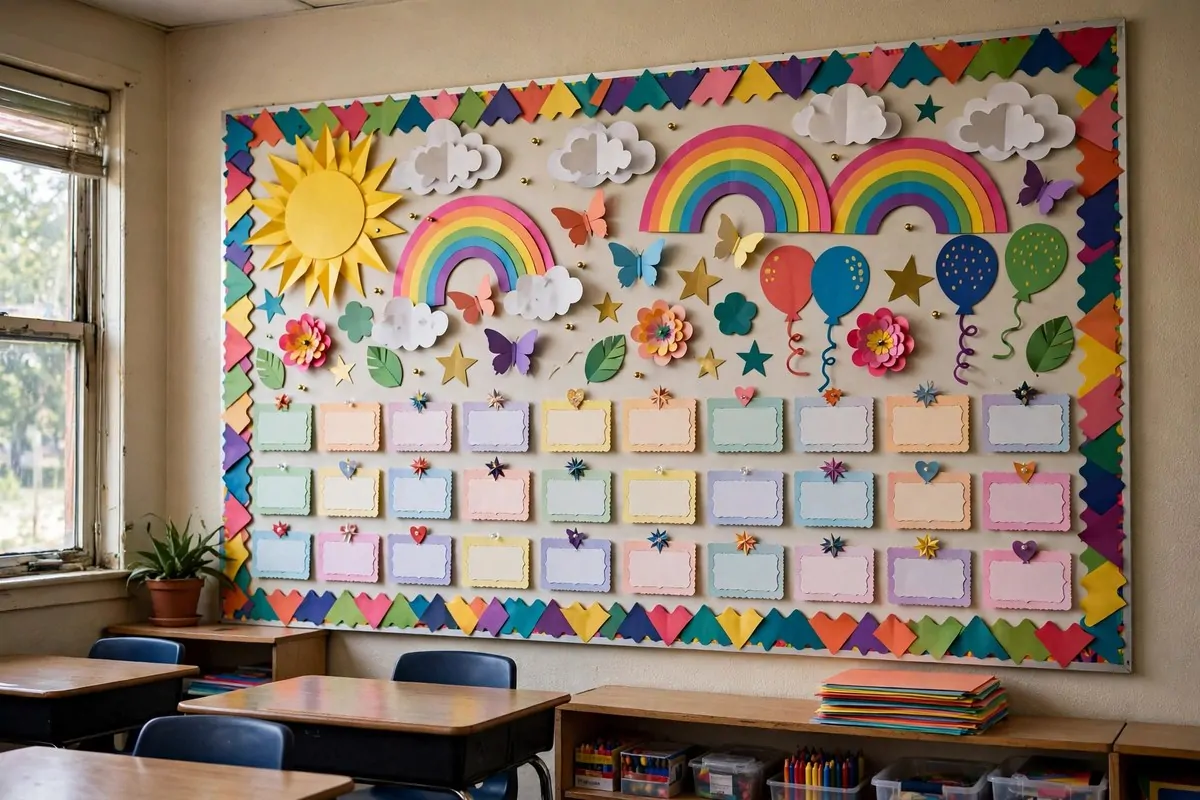
The bulletin board is the first thing kids see. Make it say welcome before you say a word.
Pick a warm message. Our Class Family. You Belong Here. Keep it short and big. Kids should read it from the door.
Put every student’s name on the board. Handwritten names feel personal. Kids search for their name on day one like it is a treasure hunt.
Use a simple background. One solid color with a nice border. Busy backgrounds fight with the names.
Leave space to add things later. The board should grow through September. First week names, second week photos, third week goals.
Change the board for each season, not each week. Four boards a year is plenty. More than that and you burn out.
Let kids help build the winter board. Cutting snowflakes or leaves is a great calm activity. Their work on the wall makes them proud.
Keep one board just for student work all year. The welcome board becomes the work board in October. It is a natural handoff.
A good bulletin board is like a good handshake. Warm, firm and it makes people glad they came.
5. Set Up a Labeled Supply Station
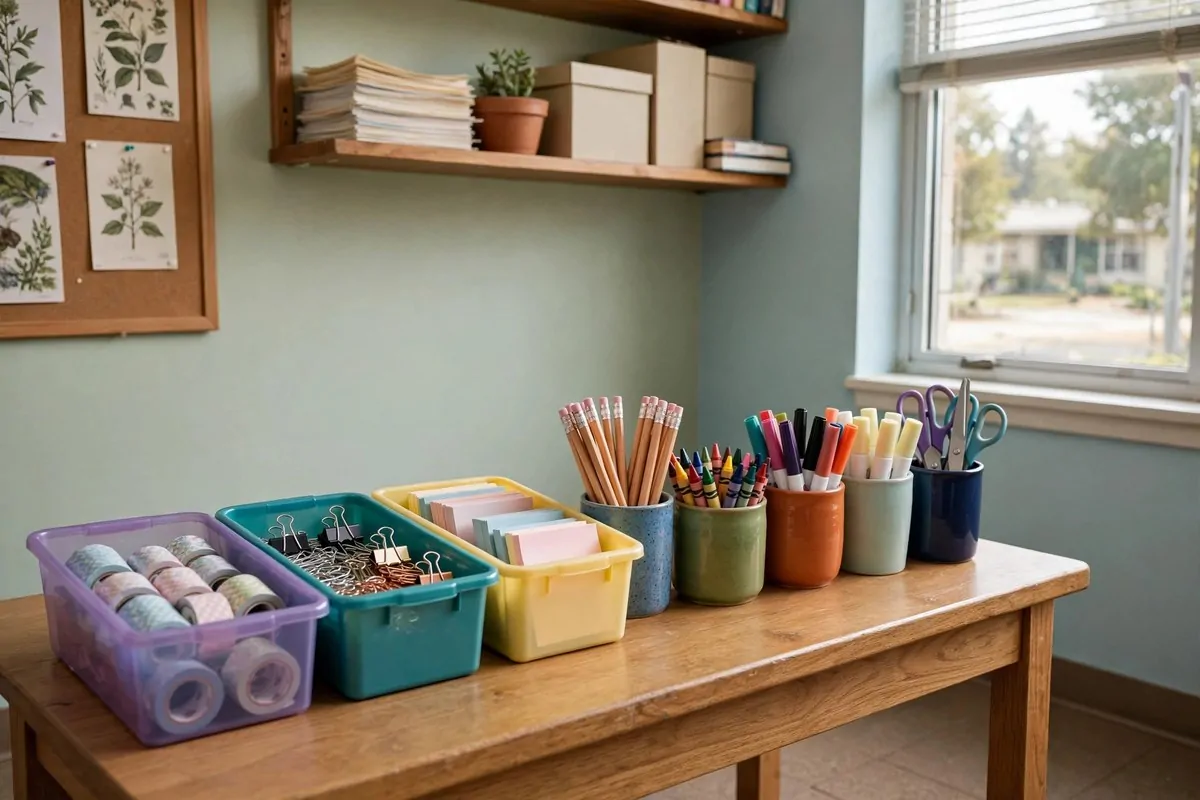
Nothing eats teaching time like supply hunts. One labeled station ends the I cannot find a pencil problem forever.
Pick one table or shelf near the door. This is the station. Everything kids need lives here, and only here.
Use clear bins or open cups. Kids should see what is inside without opening ten lids. Open tops are faster than lids.
Label every bin with words and pictures. Pencil. Crayons. Glue. Scissors. The pictures help your youngest kids and your new readers.
Here is a good starter set for the station:
- Sharpened pencils in a tall cup
- Crayons and markers sorted by type
- Glue sticks in a shallow tray
- Scissors standing points-down in a jar
- Scrap paper for drafts and doodles
Teach the station routine in week one. Take what you need, return what you took. Practice it like a fire drill. It matters that much.
Assign one student as the station helper each week. They sharpen pencils and tidy bins. Kids take the job very seriously.
Restock every Friday afternoon. Five minutes keeps the station perfect all year. An empty station is worse than no station.
When kids know where things live, they stop asking you. That quiet is worth more than gold.
6. Give Reading Its Own Corner
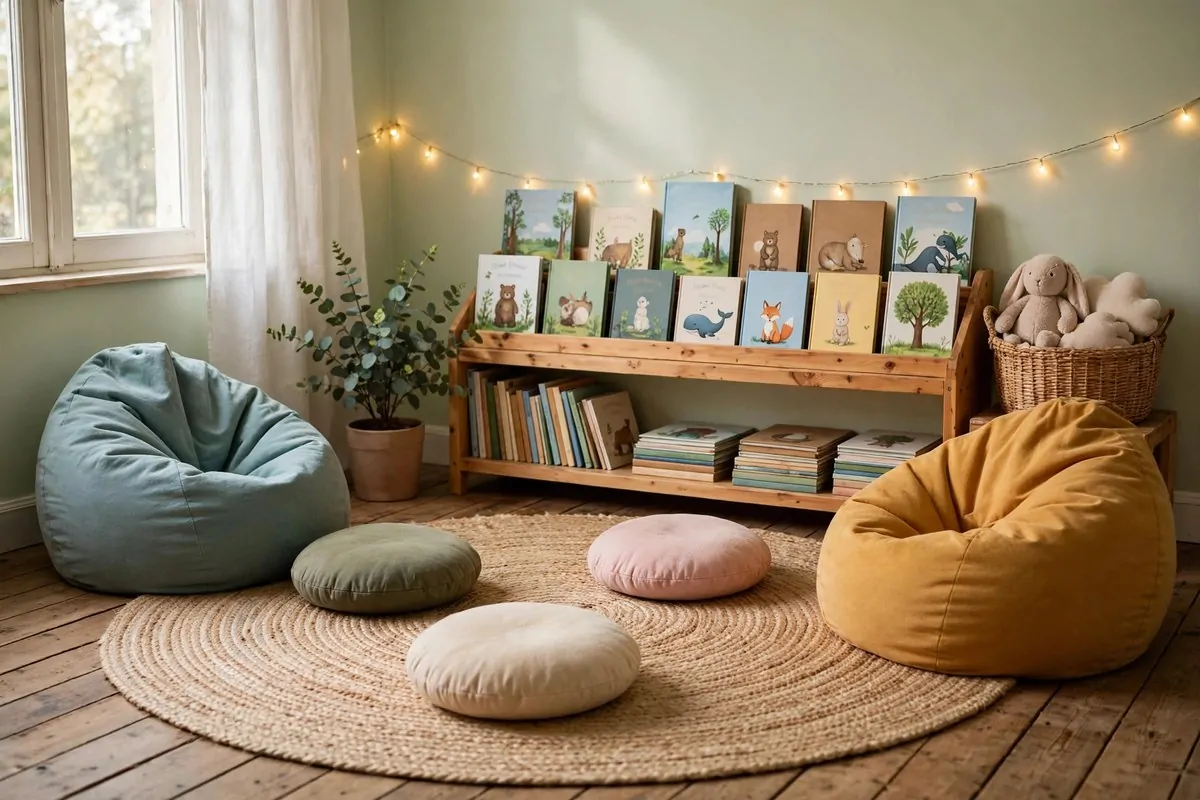
Every classroom needs a reading corner. Not a shelf. A corner. A real place kids go to read.
Pick the quietest corner of your room. Away from the door, away from the supply station. Reading needs calm.
Put down a rug first. The rug marks the corner’s borders. Kids understand floor zones better than any sign.
Add soft seating. Bean bags, floor cushions, a small armchair. Mix them so kids have choices. Choice keeps the corner popular.
A low bookshelf goes at the back of the corner. Face some books out. Covers are the best salespeople for books.
String some warm lights along the wall. When the lights go on, kids know it is reading time. It is a ritual.
Keep this corner separate from the work tables. Soft zone here, work zone there. Kids learn that different spaces mean different moods.
Rotate the books monthly. A fresh basket of books each month keeps the corner alive. Stale corners get ignored.
This is the corner kids will remember in June. The rug, the lights, the cushions. Build it with care.
7. Put Open Shelving at Kid Height
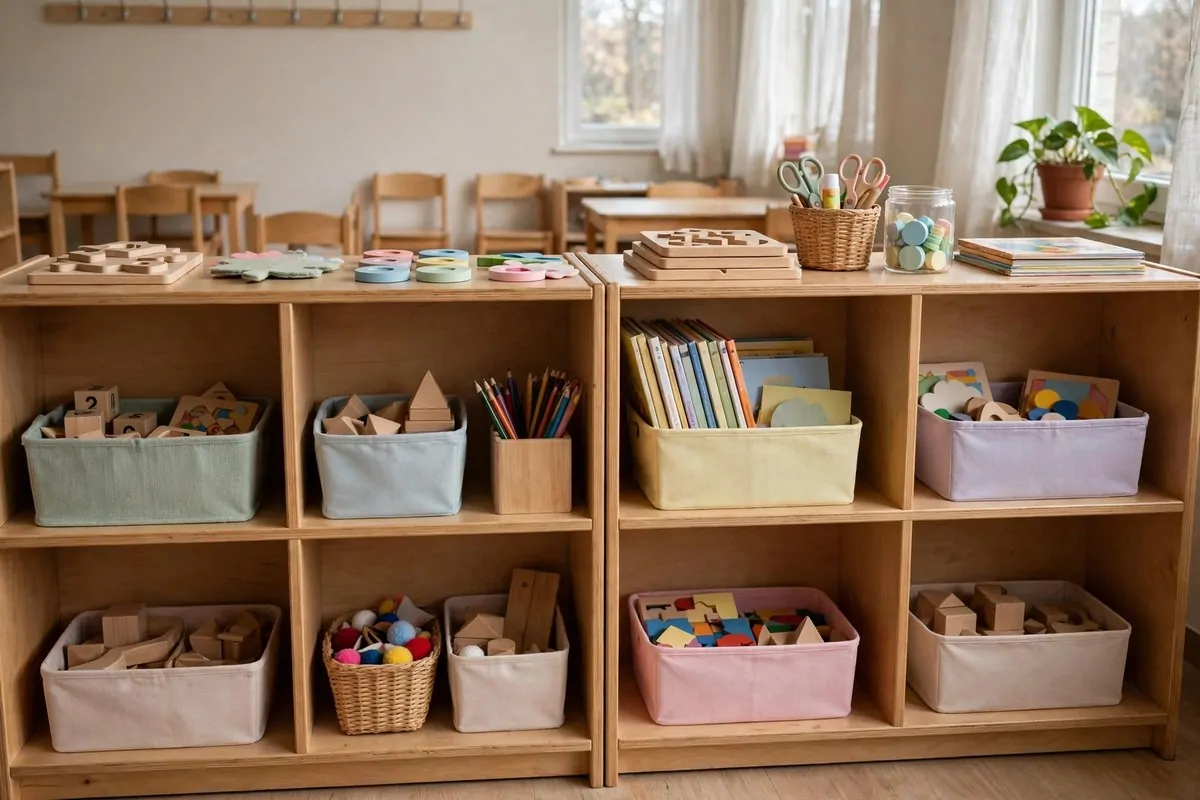
Tall shelves look impressive. But kids cannot reach the top. Open shelving at kid height is better in every way.
Use low, wide shelves along one wall. Everything should be reachable by your smallest student. If they cannot reach it, they will not use it.
Fill the shelves with labeled bins. One bin per subject or activity. Math tools, art supplies, science bits. Labels with pictures help everyone.
Open shelves teach independence. Kids fetch what they need and put it back. You stop being the keeper of the stuff.
Keep the shelves tidy with a simple rule. Every bin has a home spot. If a bin is not in its spot, something is wrong.
Do a two minute tidy at the end of each day. Kids love racing the clock. The shelves stay perfect with almost no effort from you.
Put the most used bins in the middle. Less used things go low or high. The middle shelf is prime real estate.
This setup saves you hours across the year. No more handing out supplies one by one. Kids serve themselves.
One more tip. Take a photo of the perfect shelf. Tape it to the side. Kids match the photo when they clean up. It works like magic.
8. Add a Calm Corner
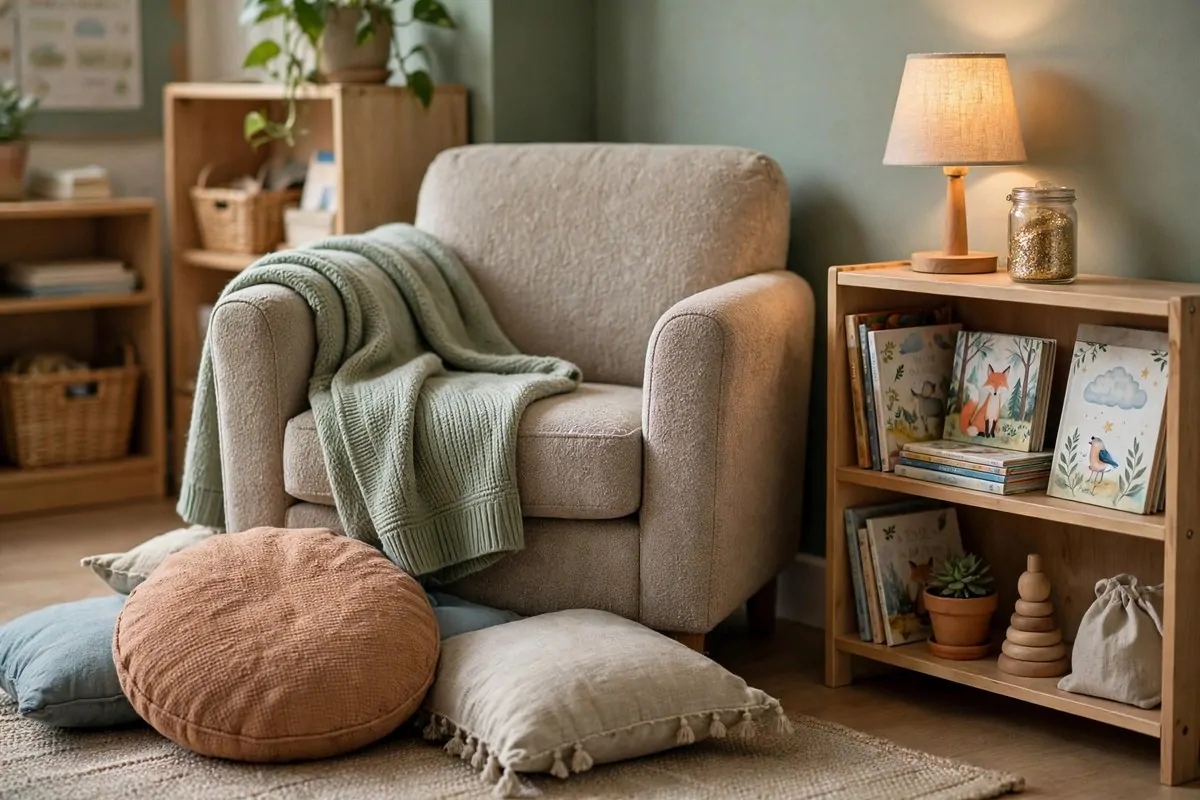
Every class has kids who get overwhelmed. The calm corner is their safe place to reset.
Pick a small, quiet spot. A corner behind a shelf works great. It should feel tucked away but still visible to you.
Put one comfy chair or a big cushion there. Add a soft blanket. The corner should feel like a hug.
Add a few calm tools. A glitter jar, a soft ball to squeeze, a feelings chart. These are not toys. They are tools.
Teach the class how the corner works in week one. When you feel upset, you may go to the calm corner. When you feel calm, you come back.
Set a simple timer. Five minutes is enough for most resets. The timer makes it feel fair and structured.
Never use the calm corner as punishment. It is a choice, not a sentence. Kids must feel safe choosing it.
Some teachers add noise canceling headphones. They help kids who get overwhelmed by sound. It is a small cost for a big help.
The calm corner reduces meltdowns more than any behavior chart. A kid who can reset is a kid who can learn.
9. Build a Classroom Library Wall
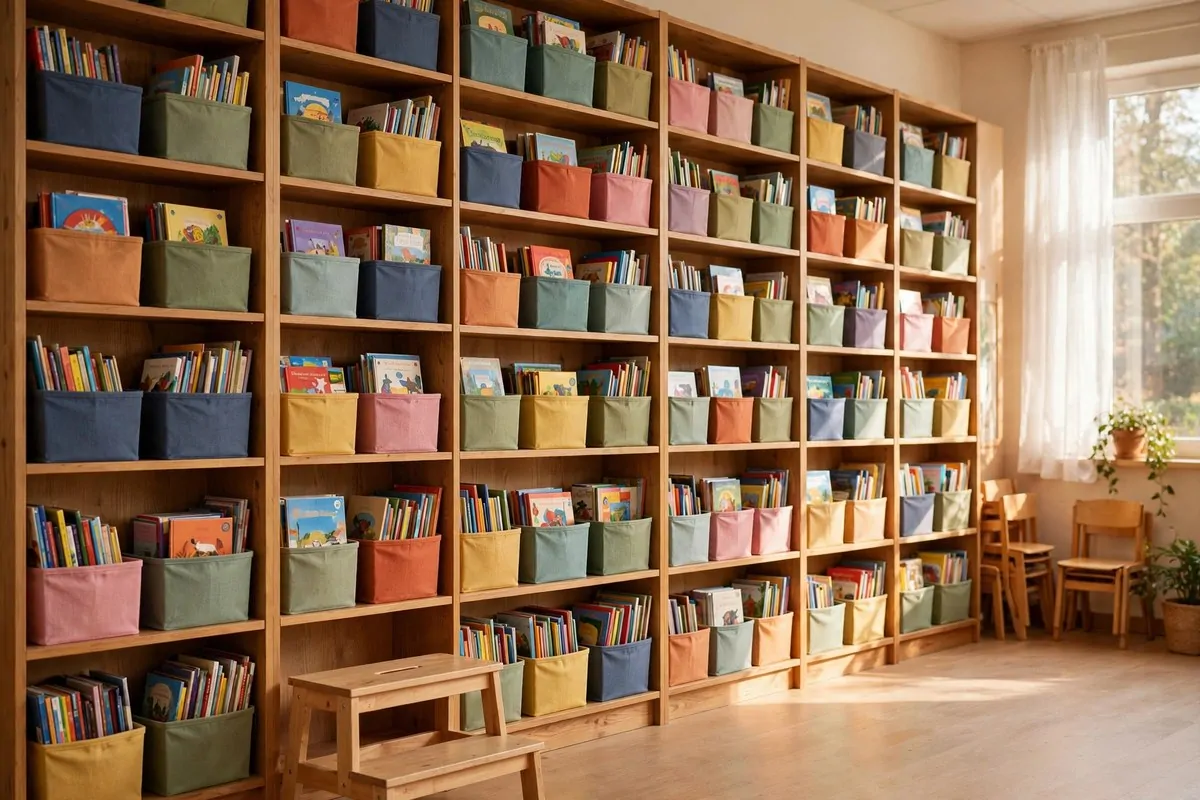
A classroom library wall tells kids that books matter here. It is the backbone of your room.
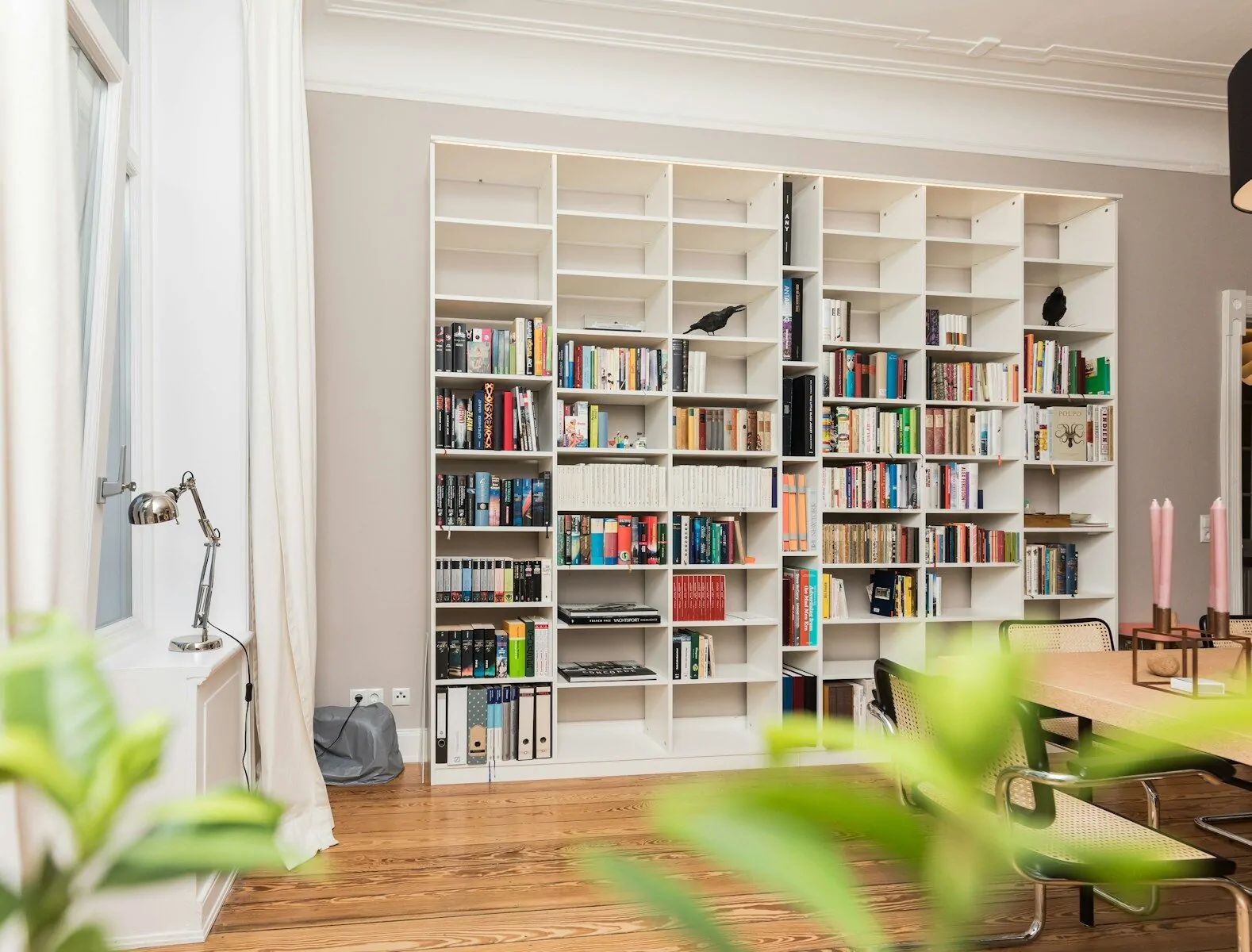
Dedicate one full wall or one big shelf unit to books. This is the library. It deserves a prime spot.
Organize by bins, not by the Dewey system. Bins labeled Funny Books, Animal Books, Adventure Books. Kids browse bins like a bookstore.
Keep the bins at kid height. The top shelf can hold your teacher books. Everything else belongs to the kids.
Add a small sign that names the library. The Room 12 Library. A named library feels official. Kids treat it with respect.
Include books at many levels. Easy books for new readers, long books for fast readers. Everyone should find something they can read.
Ask families for donations in September. Used books are perfect. A library grows fast when the whole class helps build it.
Do a weekly library tidy with student librarians. Two kids, ten minutes, every Friday. They love the job and the shelves stay neat.
Count the books in June and celebrate the number. Watch how proud they are. That wall of books is their wall.
10. Lay Down a Morning Meeting Rug
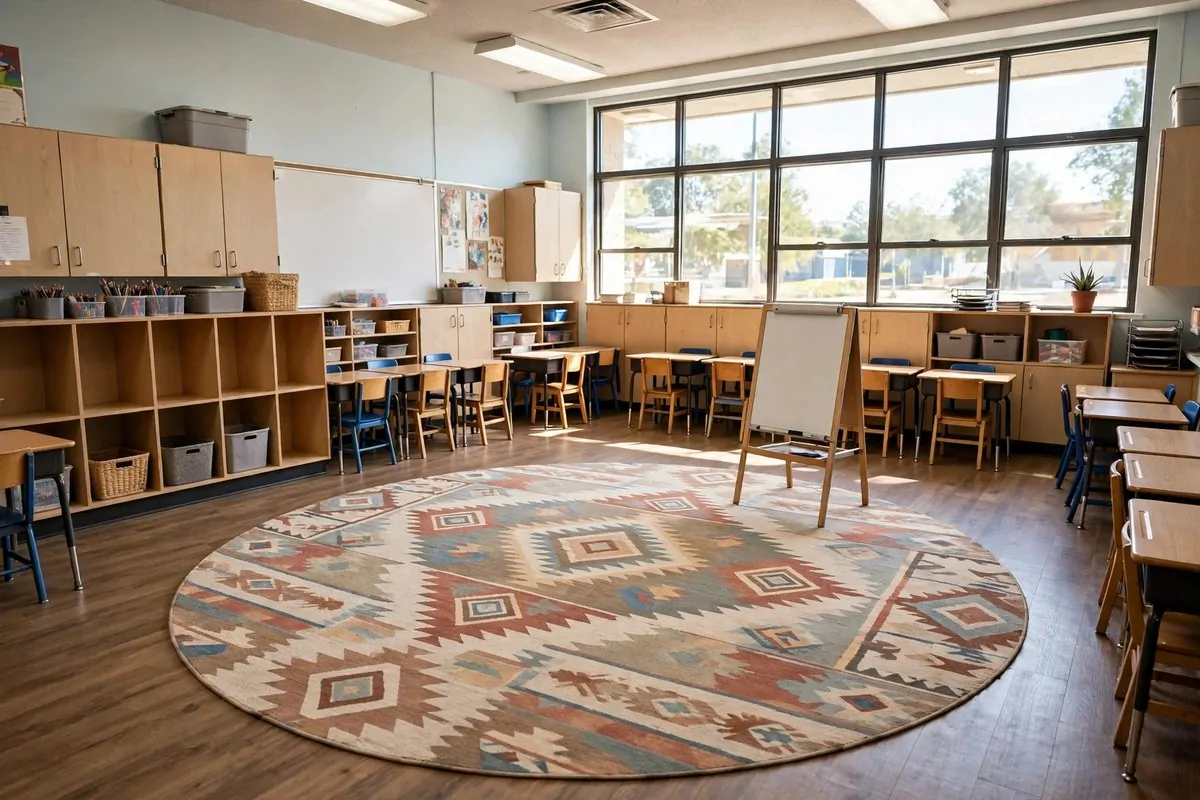
The morning meeting sets the tone for the whole day. A dedicated rug makes it feel like an event.
Get the biggest round rug you can fit. The whole class should sit on it in a circle. Circles mean everyone belongs.
Place it in an open area of the room. Near the front works well. Kids gather there first thing and scatter to desks after.
The rug becomes a ritual space. Same spot, same time, every day. Rituals make kids feel safe.
Use the meeting for greetings, news and the day’s plan. Ten minutes is enough. Keep it snappy.
Add a small easel or chart stand beside the rug. The morning message goes here. Kids read it as they sit down.
Choose a rug with a pattern that hides stains. Classrooms are messy places. Dark patterns forgive a lot.
Teach rug spots in week one. Everyone has a dot or a space. Assigned spots end the daily fight over seats.
In June, take a photo of the class on the rug. It will be the photo you keep. The rug saw the whole year happen.
11. Give the Teacher Desk a Fresh Start
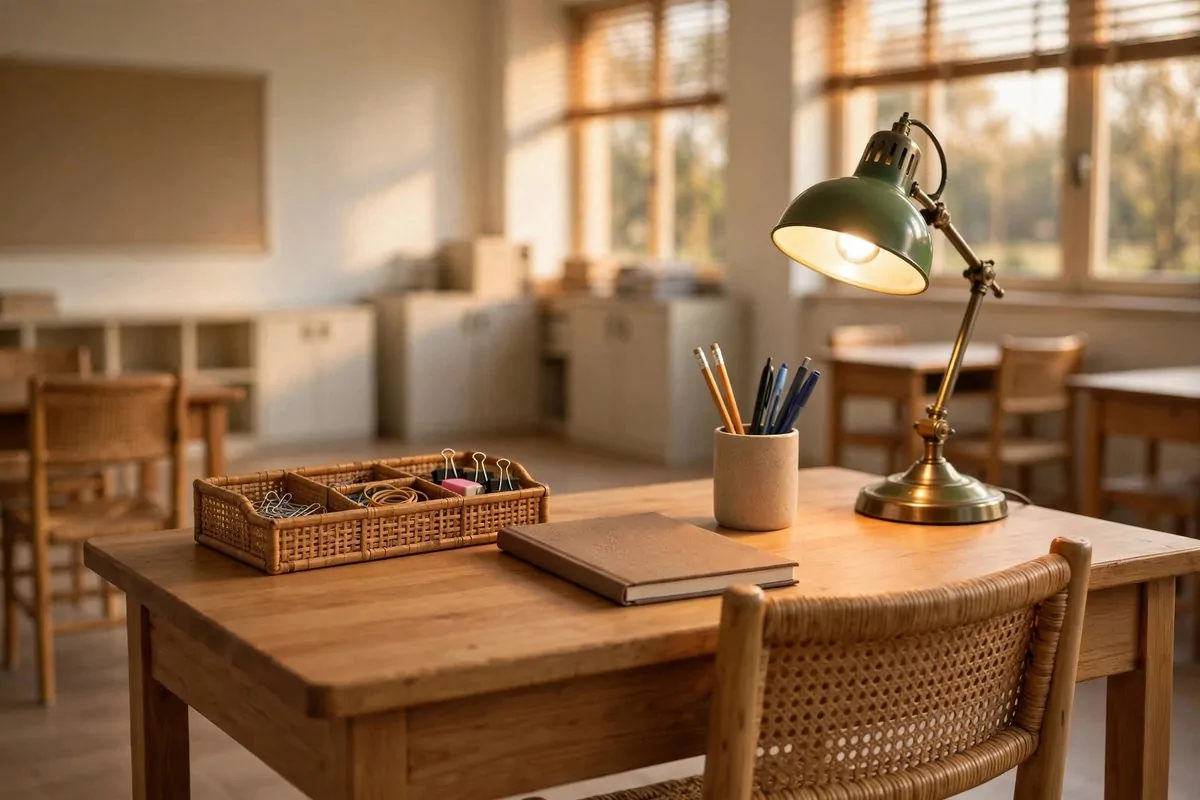
Your desk is your command center. If it is a mess, your whole day feels messy.
Clear everything off and start fresh. Only put back what you use daily. The rest goes in drawers or on shelves.
Get one good tray for papers. In, out, done. Three sections are enough. More trays just hold more clutter.
Keep a small plant on the desk. It makes the desk feel alive. A plant also reminds you to take a breath.
Put your desk where you can see the whole room. The back corner facing forward is classic. You want eyes on every zone.
But do not let the desk become a wall. Keep one side open so kids can come talk to you. A desk should invite, not block.
Tidy it every day at three o clock. Two minutes. Future you will be so grateful on Monday morning.
Hide the cables. A messy cable pile under the desk bugs you more than you think. One cable tie fixes it.
Your desk sets the tone. A calm desk tells kids this room runs smoothly. They believe what they see.
12. Add Flexible Seating Choices
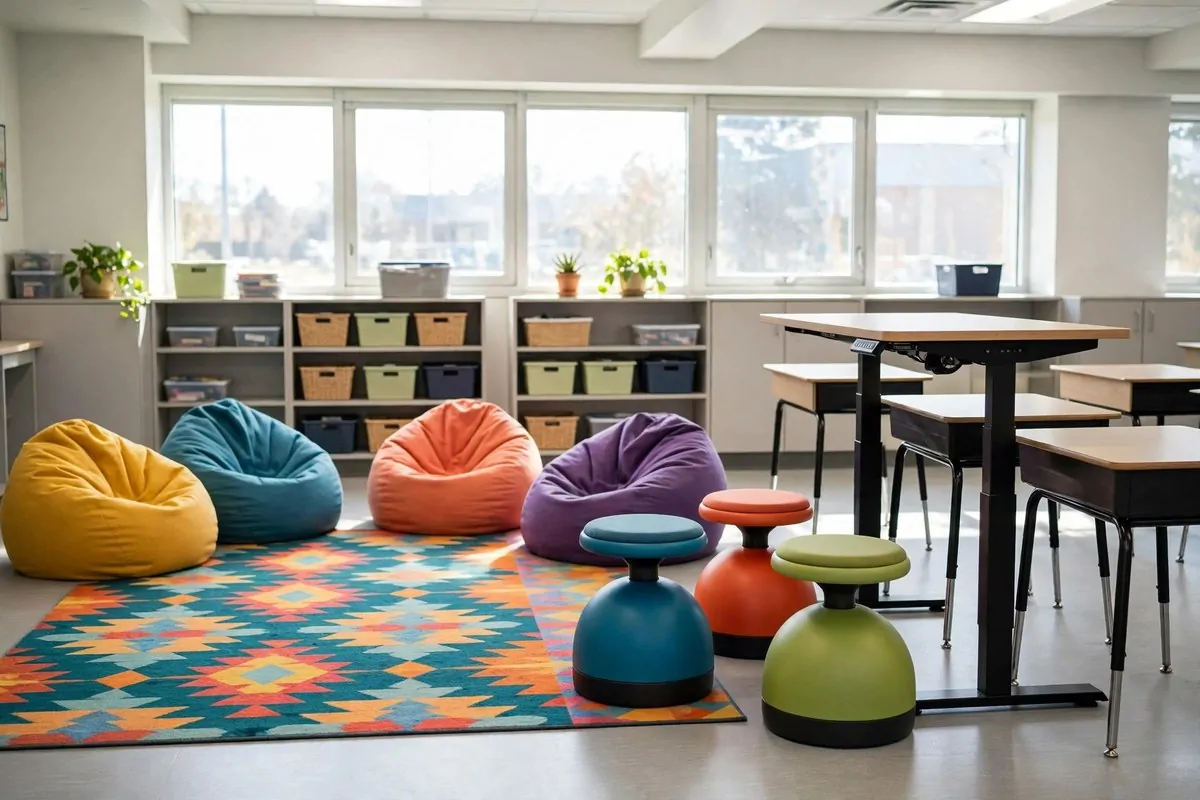
Not every kid learns best in a chair. Flexible seating gives them choices, and choice builds focus.
Start small. Add three or four options, not thirty. Bean bags, wobble stools, floor cushions. See what your class likes.
A standing desk is great for wiggly kids. They stand, they sway, they work. The wiggles go into the work instead of into their neighbor.
Wobble stools are the crowd favorite. Kids rock gently while they write. It looks like playing, but the work gets done.
Set clear rules from day one. Feet on the floor. Seats stay in their zones. If a seat is misused, it rests for a day.
Rotate the special seats weekly. Everyone gets a turn on the bean bag. Fairness stops all the arguing.
Keep most desks as normal desks. Flexible seating works best as a mix. Ten special seats in a class of twenty five is plenty.
Watch which seats help which kids. Your fidgety kid might love the wobble stool. Your dreamy kid might love the floor cushion.
The goal is not fun furniture. The goal is kids who can choose what helps them learn. That skill lasts way beyond your classroom.
13. Hang a Student Work Display Wall
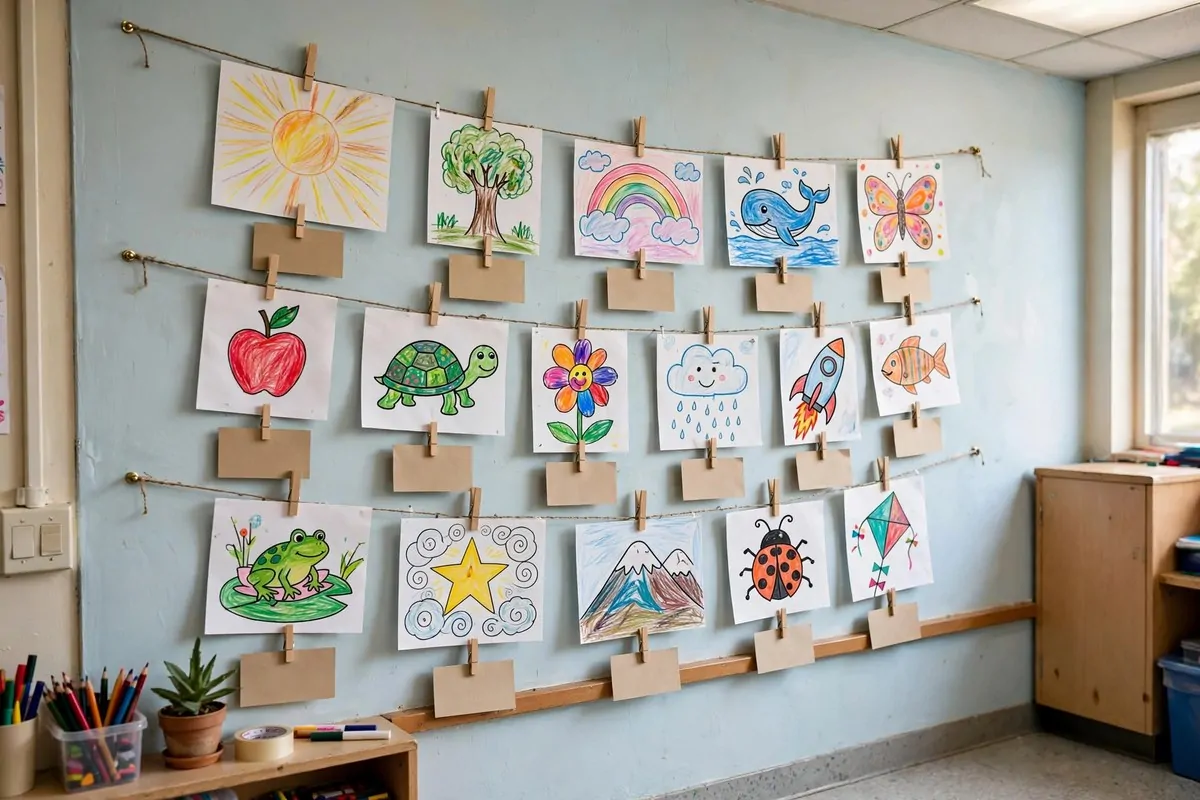
Kids work harder when they know their work will be seen. The display wall makes their effort public and proud.
Pick one wall for student work only. Not your posters, not the rules. Their work owns this wall.
Use clips or clothespins on strings. They make swapping work easy. Tape ruins the wall and your patience.
Display every kid’s work, not just the best. Every child deserves a spot on the wall. It is about effort, not perfection.
Change the work monthly. Old work becomes wallpaper. Fresh work gets looked at.
Let kids choose what goes up. Their choice, their pride. You will be surprised what they pick.
Add little name cards under each piece. Names make it official. Kids point out their card to visitors.
Keep the wall at kid eye level. Work hung too high might as well not be there. Crouch down and check the height.
In June, let every kid take home their displayed pieces. The wall empties, and they leave with a folder of pride.
14. Color-Code the Subject Bins
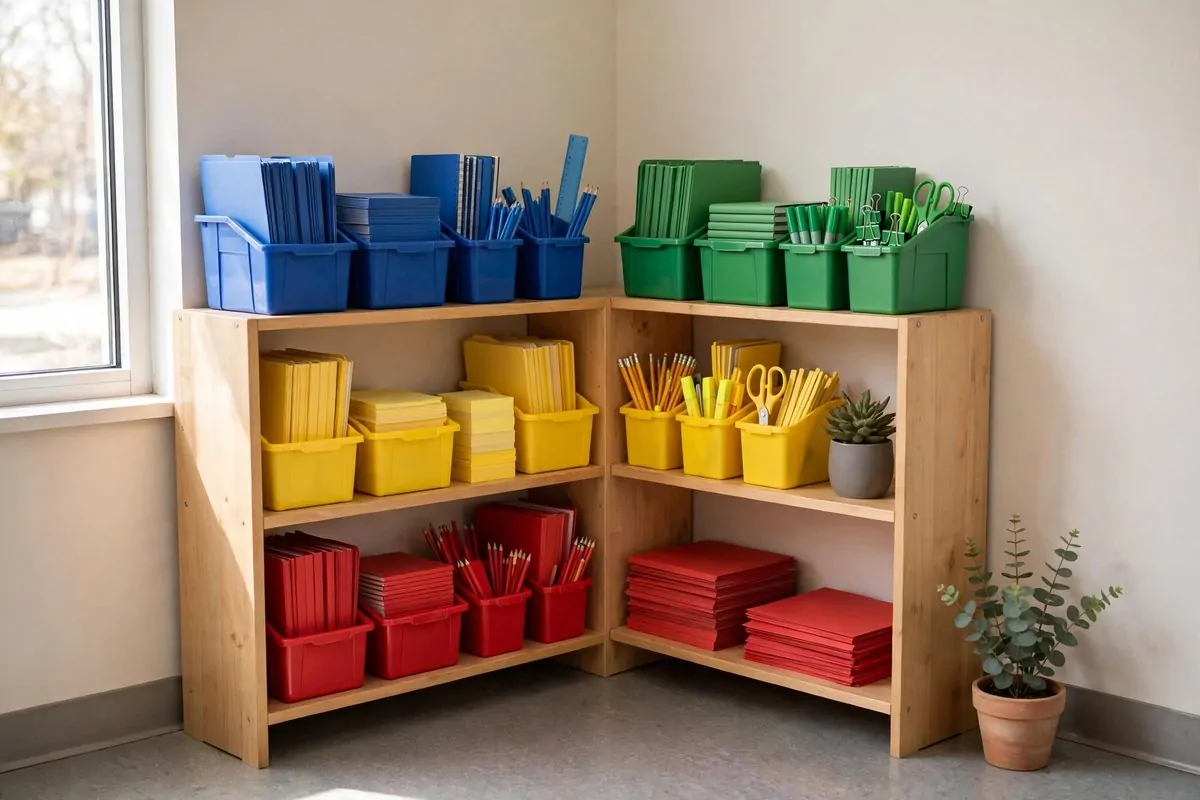
Color coding is simple and it works like magic. One color per subject, everywhere in the room.
Pick your colors and stick to them all year. Blue for reading, green for math, yellow for science, red for writing. Write them down and post the key.
Buy bins, folders and notebooks in those colors. When everything matches, kids find things without thinking.
Transitions get faster. Get your blue folder means reading time. No questions, no confusion. The color does the talking.
This system helps your youngest kids the most. They cannot read labels yet, but they know colors. Blue means books.
It also helps substitute teachers. The color key on the wall explains your whole system in one glance.
Keep the colors consistent across the room. The math bin, the math folder and the math shelf all green. Consistency is the whole trick.
Do not use more than five colors. Too many colors stop meaning anything. Four or five is the sweet spot.
By October, your kids will sort things by color on their own. The system runs itself. That is when you know it worked.
15. Fill the Window Ledge With Plants
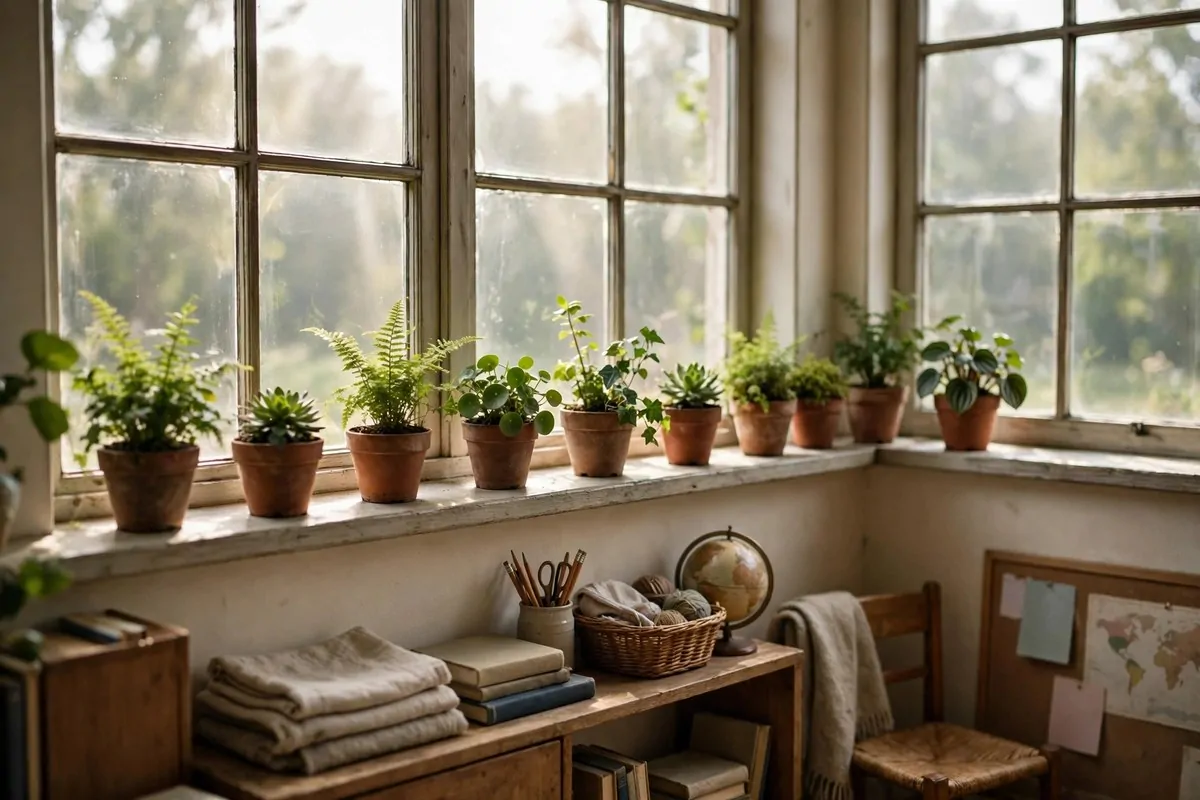
Plants make a classroom feel alive. A row of green on the window ledge changes the whole mood of the room.
Start with easy plants. The kind that survive neglect. Kids forget to water things. Pick plants that forgive.
Give each plant a name tag. Kids name them within days. A named plant gets watered. An unnamed plant gets forgotten.
Make watering a class job. Two plant helpers per week. They take it very seriously, which is adorable.
Plants teach science without a lesson. Kids watch leaves grow, notice new shoots, ask questions. Curiosity does the teaching.
Keep the ledge tidy. One row of plants, nothing else. A cluttered ledge blocks the light, and light is the point.
If your windows get no sun, use fake plants. Nobody will judge you. Green is green.
In spring, plant seeds in small cups on the ledge. Beans grow fast. Kids check them every morning like tiny scientists.
By the end of the year, those plants are part of the class. Kids will ask to take one home in June. Say yes.
16. Make the Whiteboard Wall Work Harder
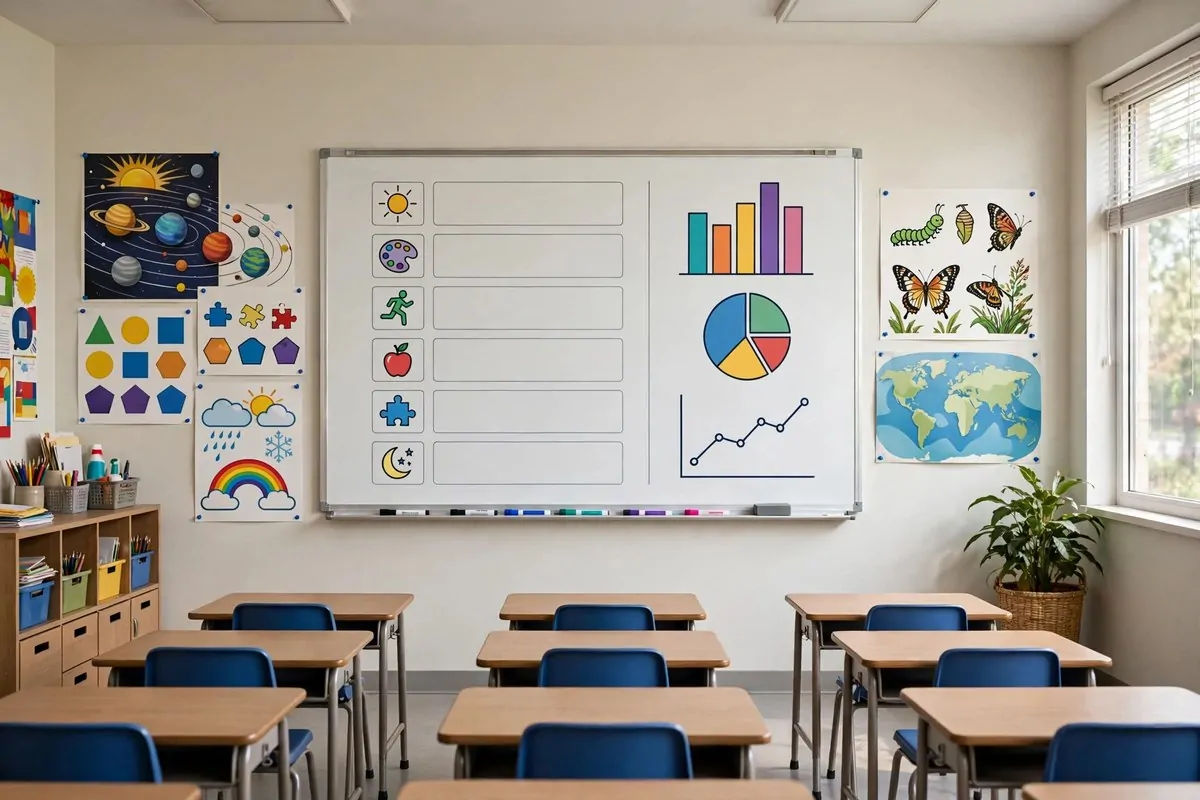
The whiteboard is the most looked at wall in your room. Make it earn that attention.
Keep one section for the daily schedule. Same spot, every day. Kids check it without being told. It cuts the what’s next questions in half.
Use another section for the learning goal. One sentence. Today we are learning to… Kids who know the goal work toward it.
Save a corner for shout outs. A student did something kind? It goes on the board. Public praise shapes the class culture fast.
Do not fill the whole board with permanent stuff. You need writing space. Half the board should stay clear for lessons.
Magnetic strips turn the board into a display too. Hang anchor charts with magnets. Swap them as units change.
Clean the board properly once a week. Old marker ghosts make everything hard to read. A good eraser and some spray fix it.
Put the board where every seat can see it. Walk to the back corner and check. If you cannot read it from there, move the desks.
The whiteboard wall is your teaching partner. Treat it like one. Keep it clear, keep it current, keep it kind.
17. Put Up a Word Wall
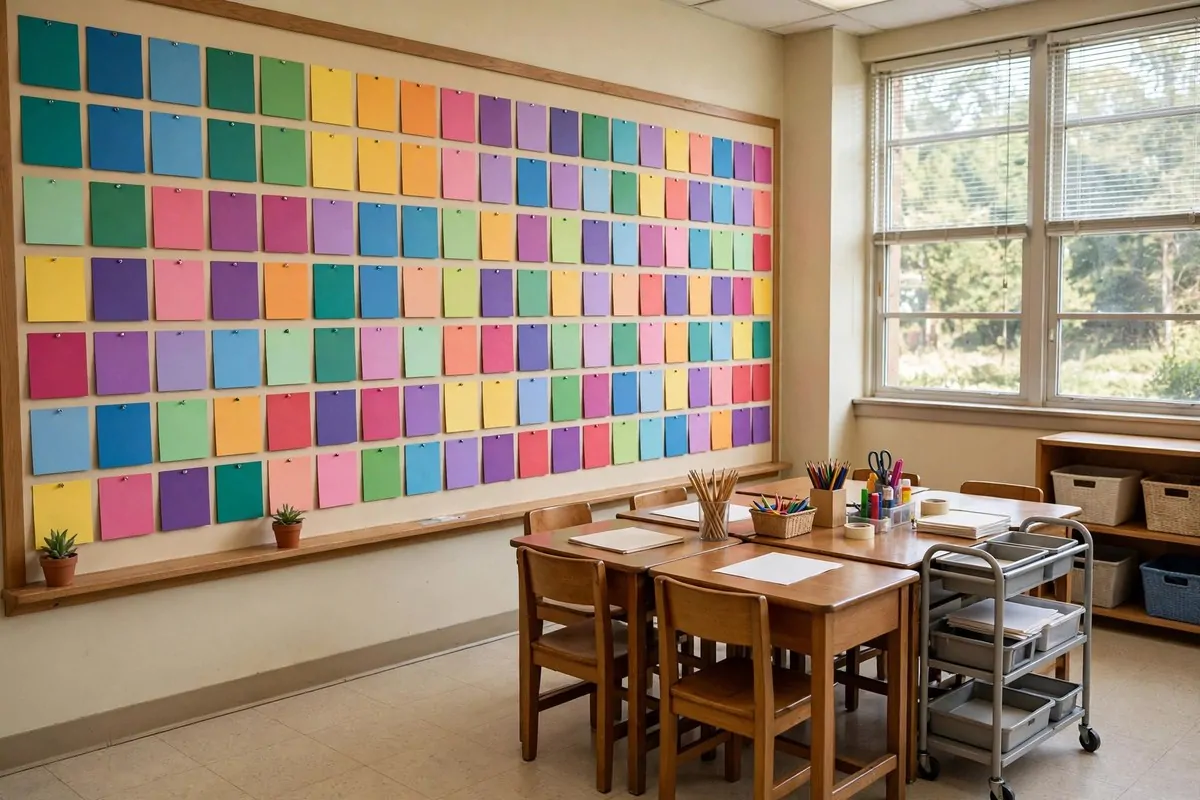
A word wall is a silent teacher. It helps kids spell and write without raising a hand.
Pick a wall near the writing area. The word wall should be where writing happens. Close enough to glance at mid-sentence.
Organize words by letter or by topic. Alphabetical is classic. Topic groups like science words work great during units.
Use big, clear cards. Kids read them from their desks. Small cards might as well not exist.
Add new words as you teach them. The wall grows with the class. A growing wall shows learning happening.
Let kids add words too. When a kid learns a tricky word, they pin it up. Ownership makes them remember it.
Keep old words up all year. Kids forget. The wall remembers for them. That is the whole point.
Use different colors for different word types. Nouns one color, verbs another. The colors teach grammar quietly.
In June, take the wall down together. Kids keep their favorite word cards. It is a sweet little goodbye ritual.
18. Set Out Turn-In Trays
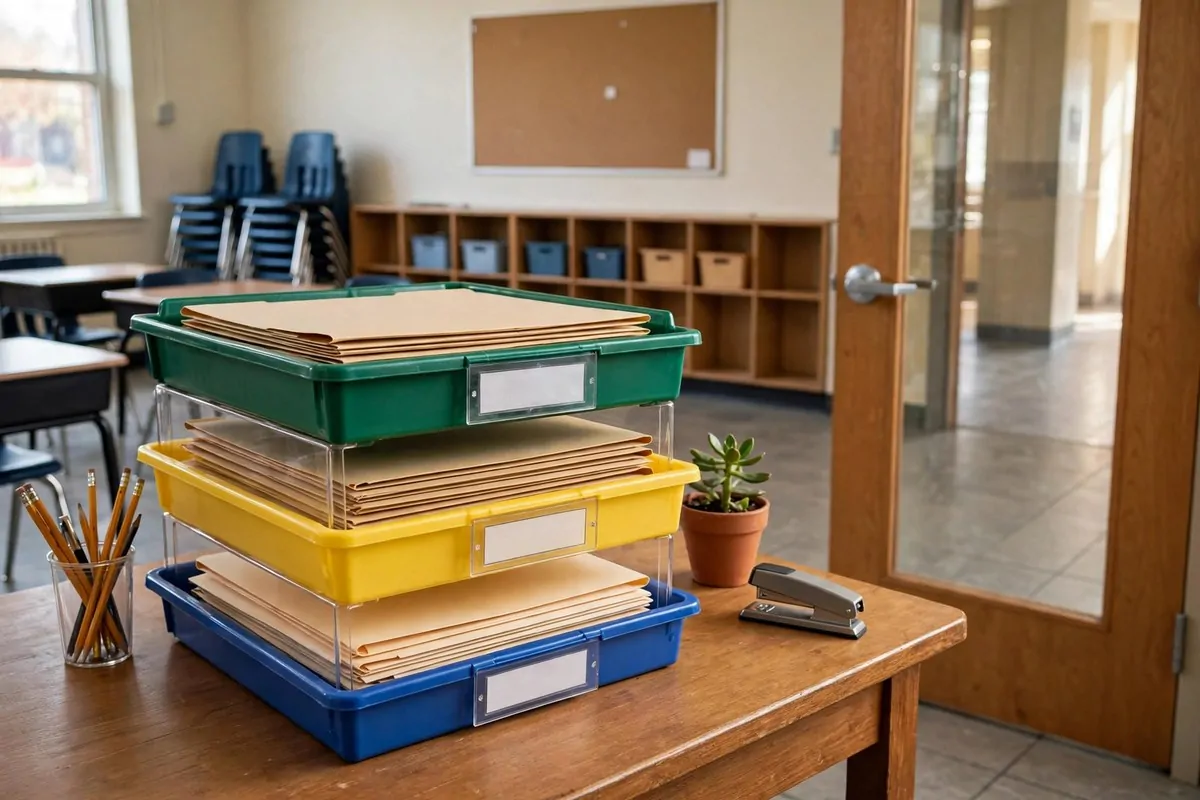
Papers on your desk are chaos. Turn-in trays turn chaos into order with almost no effort.
Get one tray per class or per subject. Label them clearly. Math. Writing. Homework. The labels do the sorting for you.
Place the trays near the door. Kids drop papers in as they walk past. No pile on your desk, no papers lost in backpacks.
Teach the routine in week one. Finished work goes in the tray. Every time. Practice it until it is automatic.
Empty the trays daily. A full tray overflows and the system breaks. Two minutes at lunch keeps it working.
Use the trays for notes from home too. One tray labeled From Home catches permission slips and notes. Nothing gets lost.
Color code the trays to match your subject colors. Blue tray for reading work. Green for math. The system ties together.
This tiny setup saves you from the paper avalanche. Every teacher who tries it wonders why they waited so long.
At the end of the year, the trays go in the closet. Next September, they come right back out. They last for years.
19. Station a Pocket Chart by the Door
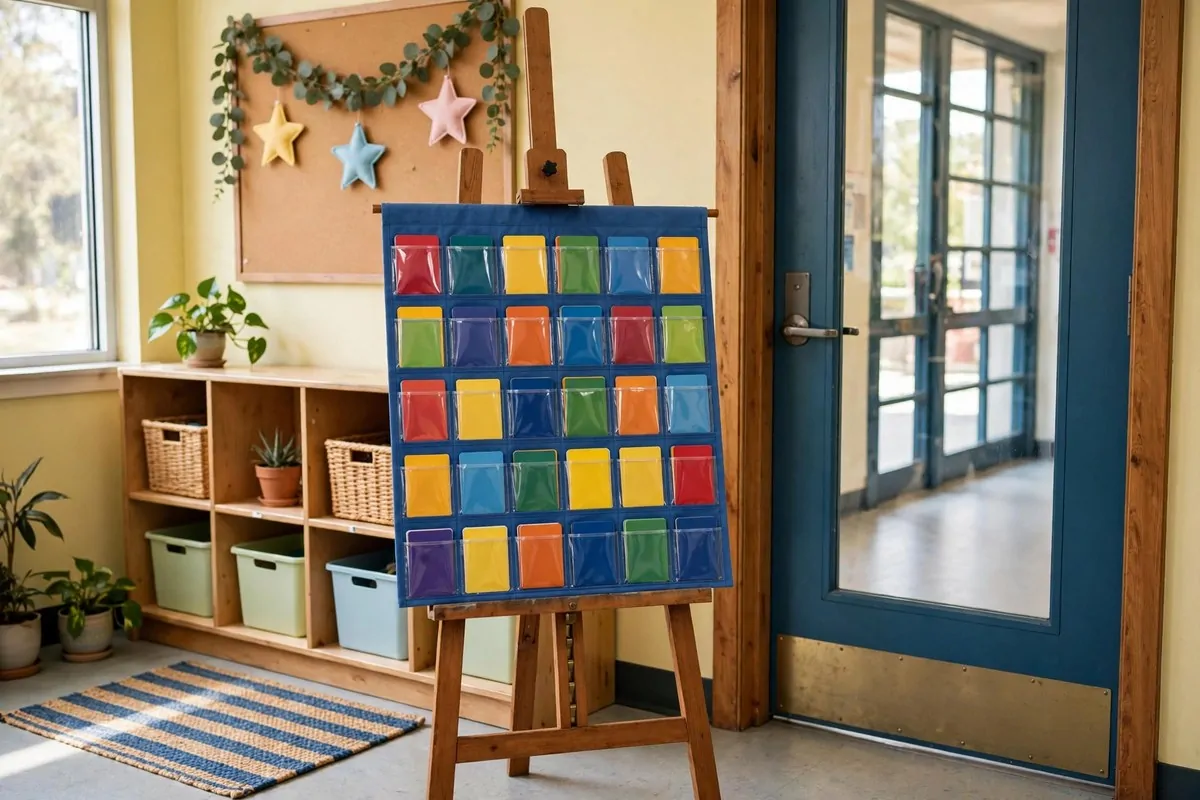
The pocket chart is the hardest working tool in early classrooms. Poems, schedules, job charts. It does it all.
Hang it or stand it near the door. Kids see it coming in and going out. High traffic means high use.
Start with a morning poem or message. Kids read it while they settle. It is calm, focused reading before the day begins.
Use it for the class job chart. Name cards in pockets, jobs listed beside them. Monday morning, rotate the cards. Done.
The schedule strip goes here too. Picture cards for each part of the day. Kids who worry about what’s next feel calmer.
Change the poem weekly. Old poems go in a binder for rereading. Kids love flipping through old favorites.
Keep the pockets at kid height. If only you can reach them, only you will use them. Kid height means kid owned.
This is a must have for little ones. Big kids can use a whiteboard version. Same idea, less pockets.
One chart, endless uses. It is the Swiss army knife of classroom tools.
20. Decorate the Classroom Door
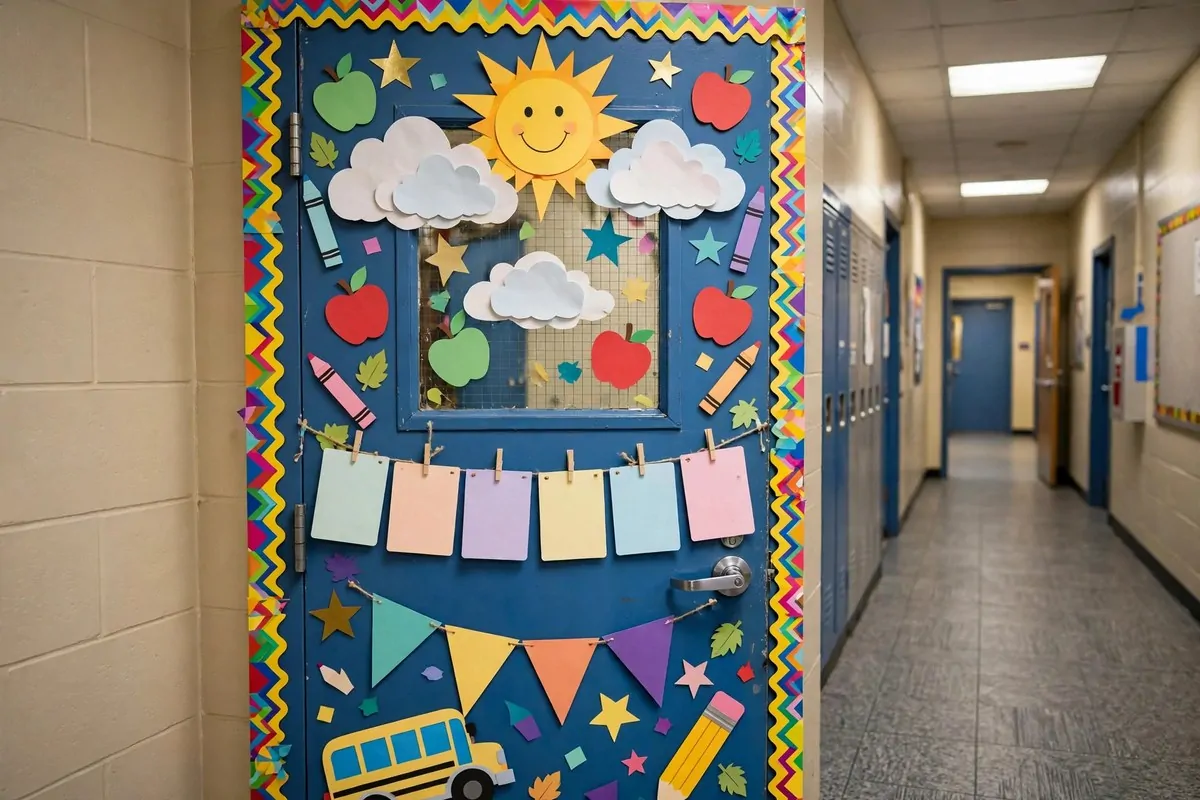
The door is your classroom’s handshake. It is the first thing kids and parents see. Make it count.
Pick a theme that matches your room. Under the sea, up in the sky, into the wild. The door sets the tone for everything inside.
Put every student’s name on the door. Paper cutouts with names, one per kid. Day one, they find their name and feel claimed.
Keep the design flat and simple. 3D doors look great online and fall apart by October. Flat paper lasts.
Change it three times a year. Fall, winter, spring. Fresh doors keep the hallway interesting.
Let the class vote on the spring theme. Voting builds excitement. They will work harder on a door they chose.
Do not block the door window. Safety rules need that window clear. Design around it, not over it.
Take a photo of each door design. By June you have a little gallery of the year. Kids love looking back.
A great door makes kids run to class in the morning. That is worth an afternoon of cutting paper.
21. Keep the Walkways Clear
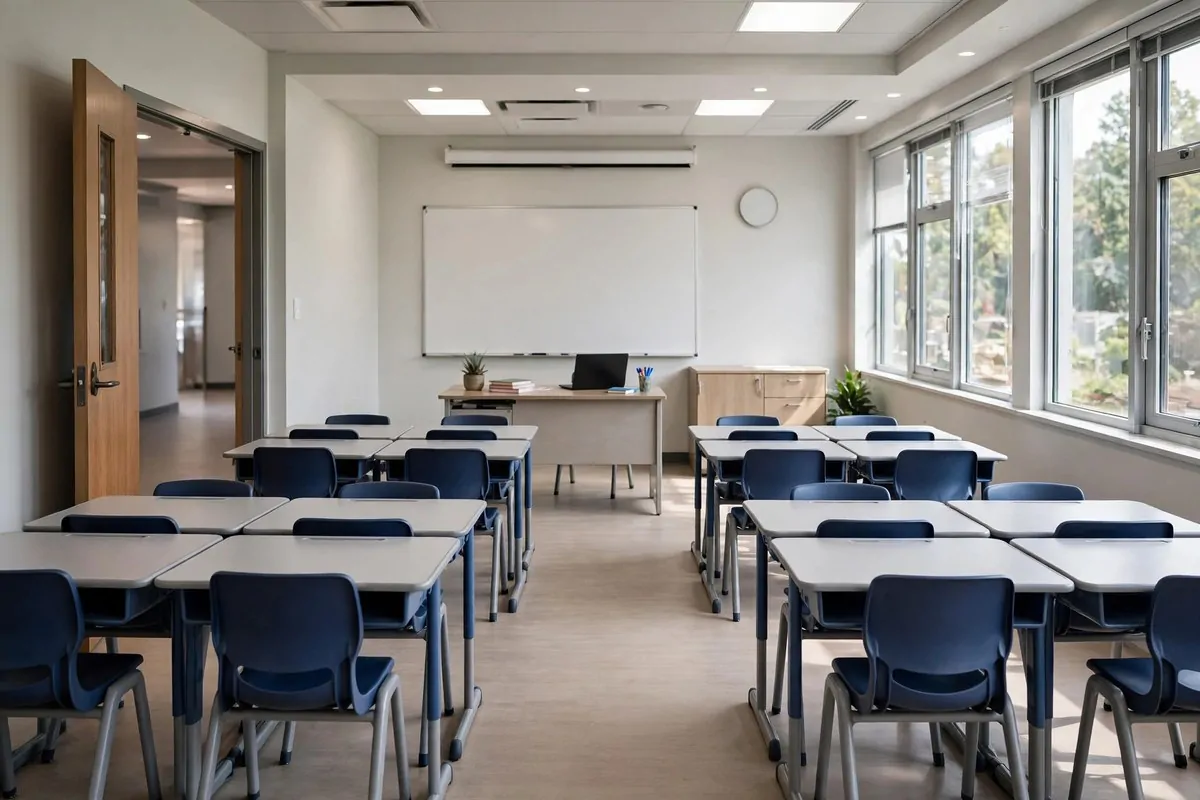
Walkways are the veins of your classroom. When they clog, the whole room slows down.
Leave at least an arm’s width between desk groups. You should walk every path without turning sideways. Test it on setup day with a chair pulled out.
Keep the main path from the door to the front clear. This is the busiest road in the room. Nothing lives on this path.
Backpacks are the biggest walkway killers. Give every kid a hook or a cubby. A backpack on the floor is a tripping hazard.
Teach kids to push in chairs. Every time. It sounds small, but pushed in chairs keep the paths open all day.
Move the trash can off the main path. It sounds obvious, but cans drift. Check its spot weekly.
Clear walkways also calm the room. Crowded rooms make kids edgy. Open paths make them breathe easier.
In an emergency, clear paths matter most. Fire drills go smoothly when the ways are open. Safety is the real reason.
Walk your room once a month with fresh eyes. Move one thing that blocks flow. Small fixes keep the veins open.
22. Make a Paperwork Landing Pad
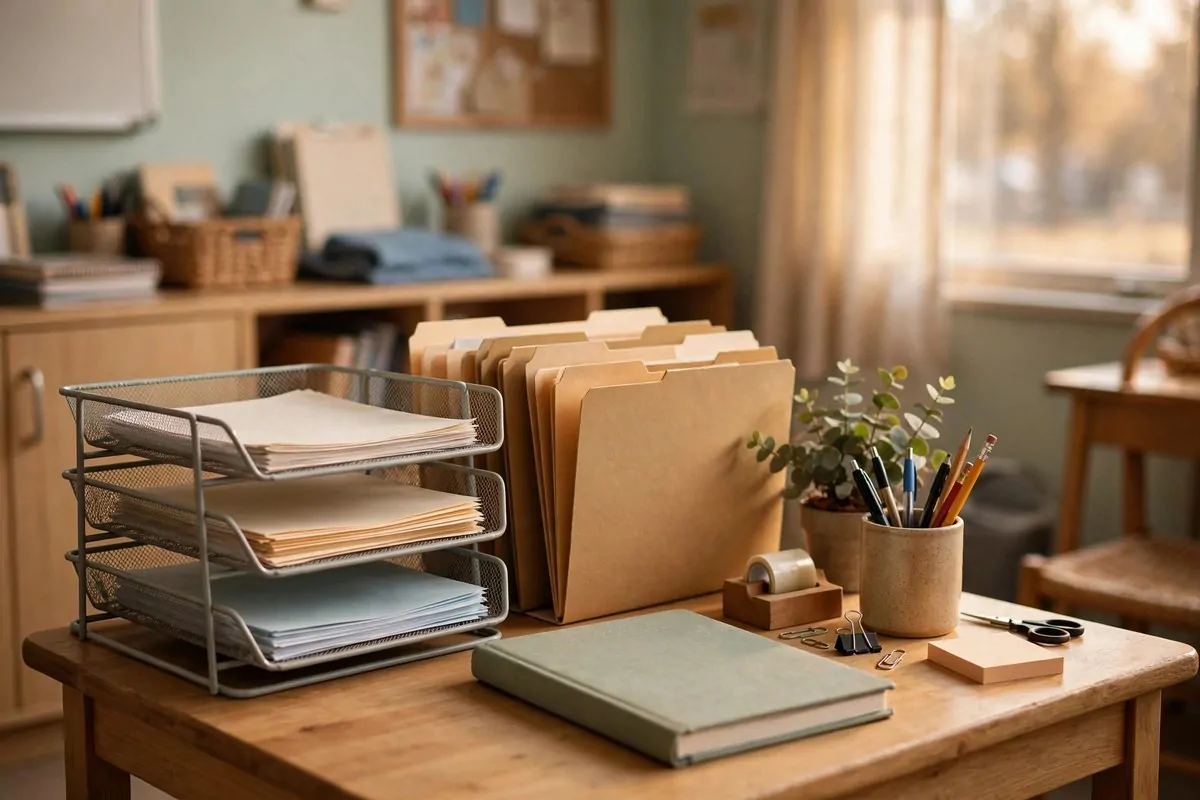
Teacher paperwork multiplies when you blink. A landing pad gives it one place to live.
Pick a small table or a shelf section near your desk. This is the pad. All papers land here first.
Use three trays. To do, to file, to copy. Every paper goes in one tray the moment it arrives. No piles on the desk.
Keep a folder for each month. September, October, and so on. Old papers go in the month folder. Finding things becomes easy.
Process the pad twice a week. Tuesday and Friday, fifteen minutes. File, toss, act. The pad should never overflow.
Go paper light where you can. Digital copies for things you only need to read once. Less paper in, less paper to manage.
Keep student records separate from the pad. Records need a locked spot. The pad is for daily flow, not files.
Label everything on the pad. Even the trays. When a helper tidies for you, labels save the system.
A clean pad means a clear head. You will feel the difference by the second week. It is like a fresh start, twice a week.
23. Plan One Seasonal Refresh Each Term
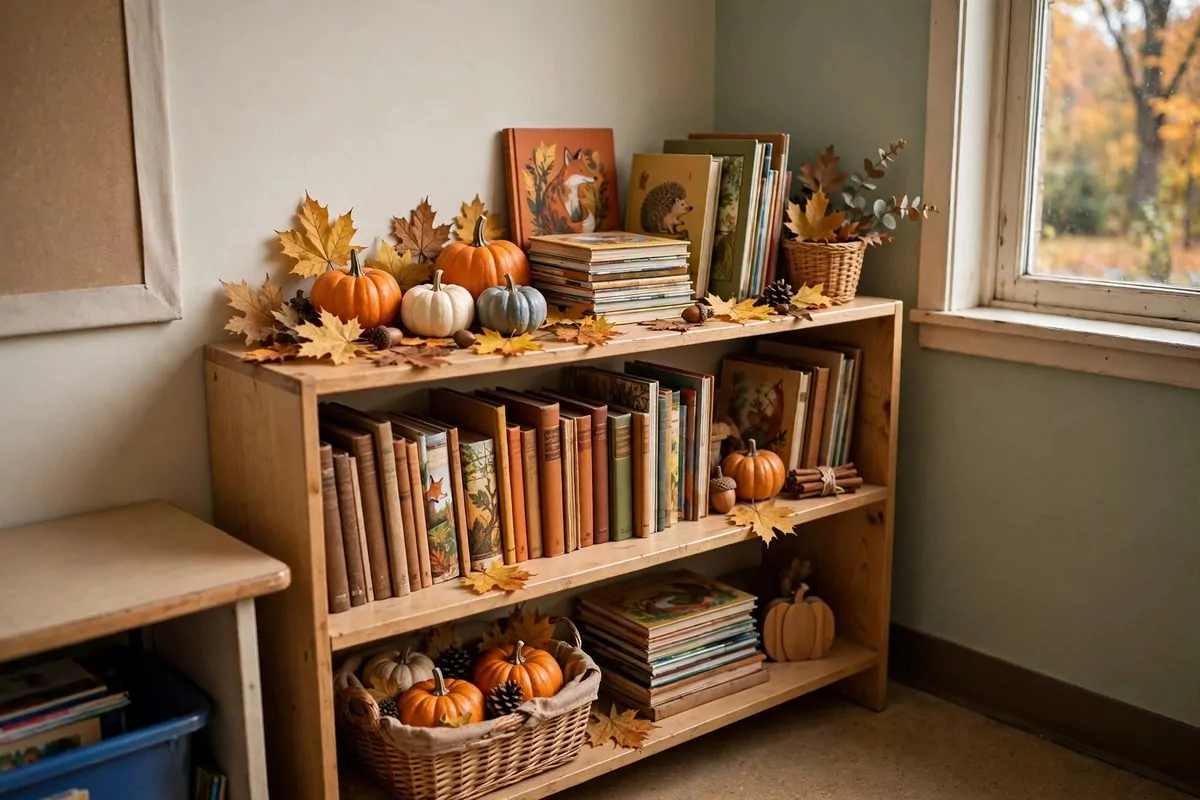
A classroom that never changes gets stale. One refresh per term keeps it feeling alive all year.
You do not need a full redo. Swap the small things. Pillow covers, book displays, door art. Little changes feel big to kids.
Here is a simple refresh plan for the year:
| Term | Refresh focus |
|---|---|
| Fall | Warm colors, harvest books, cozy reading corner |
| Winter | Cool blues, winter tales, extra blankets |
| Spring | Fresh greens, plant projects, bright displays |
Rotate the book displays with the seasons. Fall stories in fall. It is simple, and kids notice.
Involve the class in each refresh. They pick the new pillow colors. They hang the new art. Their room, their refresh.
Store off season decor in labeled bins. Fall bin, winter bin, spring bin. Next year, the bins are ready to go.
Photograph the room after each refresh. The photos show you how far the room has come. They are also great for your portfolio.
The seasonal refresh teaches kids that change is good. Rooms grow, just like readers do. End the year with a room that tells the whole story.