16 Mudroom Ideas for Busy Families With No Space to Spare

The first thing I did every morning was trip over a shoe. Not the same shoe, a different one each day, and it always waited right where my foot landed.
Our door was not a door any more. It was a pile of shoes and coats and bags. We had to push past it just to get in.
I found 16 small ideas that fit in a tiny space. You can try one at a time, and your mornings can feel a lot calmer.
One Hook Per Person, At Their Height
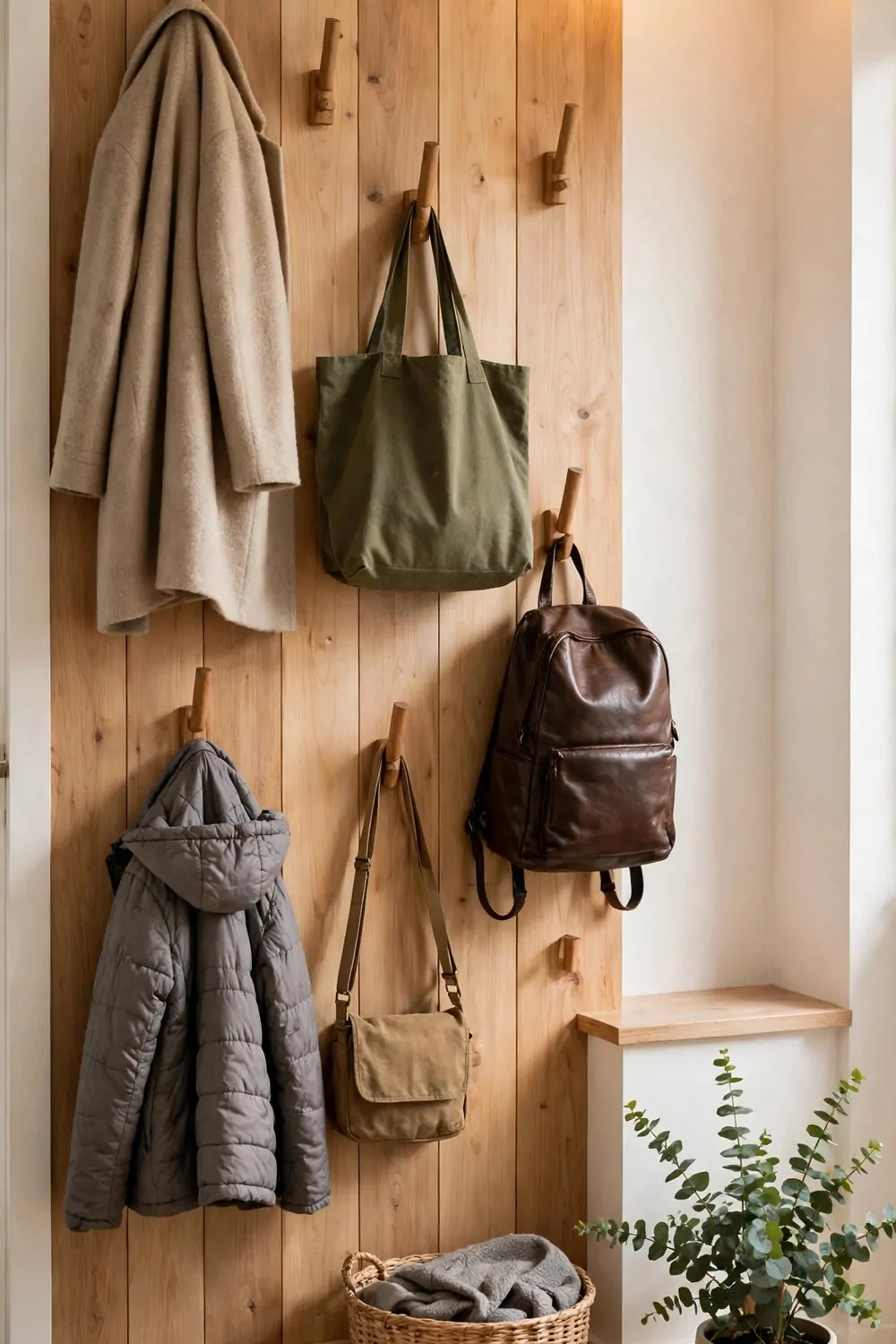
I gave each person one hook.
Kids could not reach the high hooks we had before. Their coats fell down, and then the coats got walked on.
So I put the hooks at their height. My youngest can hang her own coat now. She does it most days, and she is proud of it.
One hook means one coat. If a second coat goes on it, the first one slides off, and we are back to a pile.
- One hook for each person in the house.
- Hang it low enough for the shortest person who uses it.
- Keep one spare hook by the door for a guest.
- Check the hooks each Sunday and take off what no one wears.
I wrote our names on small tags. You can use tape and a pen if you do not have tags.
My son hangs his jacket and his cap on his hook.
When a coat is wet, I let it dry on the hook. It drips a bit, so I put a small tray under it.
This one change made our door feel wider. You walk in and you see hooks, not a heap. It feels like we have more room, even though we do not.
A Bench That Holds Shoes Underneath
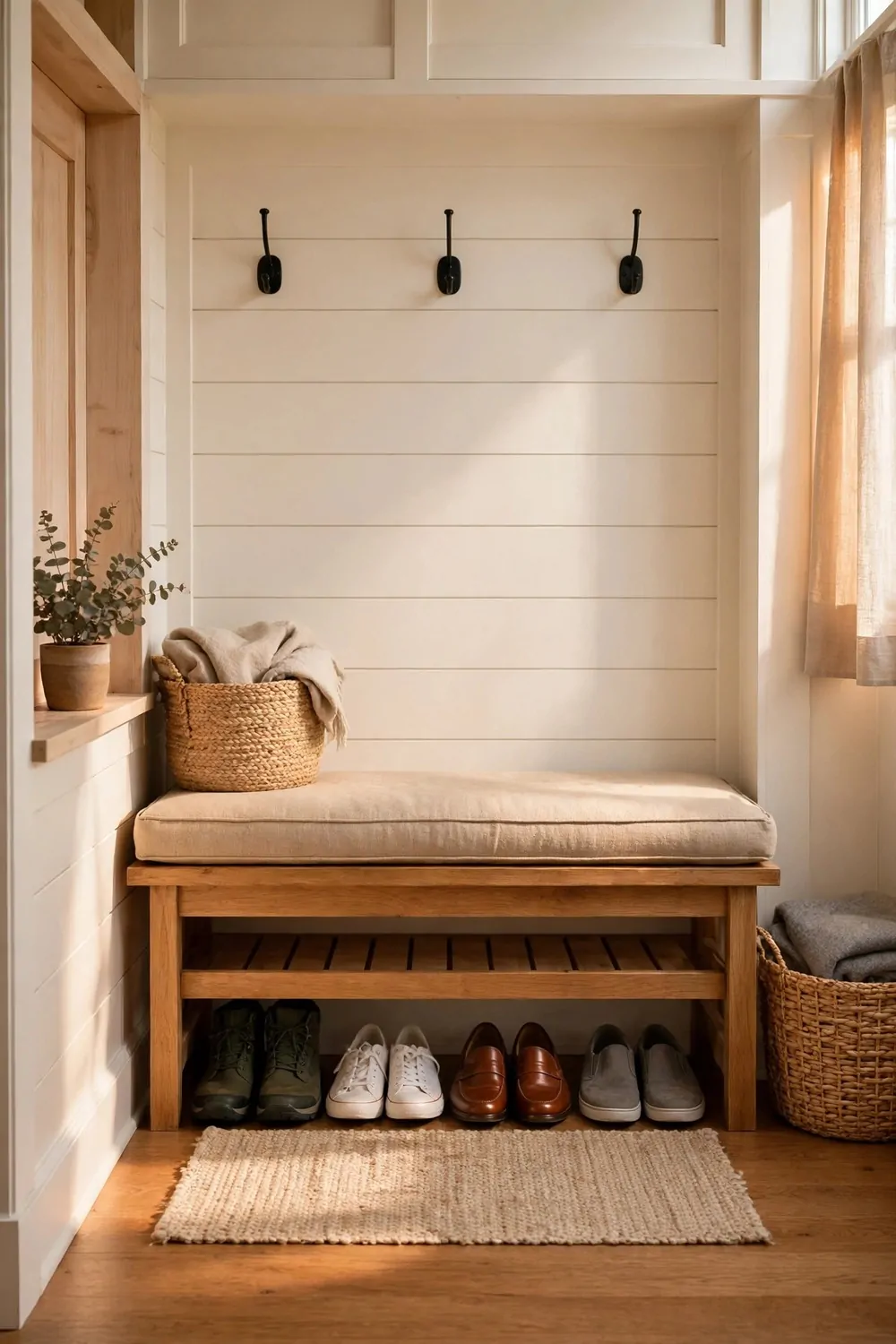
A bench sounds big, but ours is small.
The best part is under the bench. That space holds shoes, and it keeps them out of the walkway.
Each person gets a spot under the bench. I put shoes in pairs, toes in first, so they do not stick out.
My kids sit down to take their shoes off now. Before, they kicked them off and ran. The shoes landed everywhere, under chairs and behind the door.
I keep a small cloth in a basket on the bench. You can wipe mud off the bench in a few seconds.
If your space is very tight, pick a bench with no back.
We keep only the shoes we wear most days under it. The rest live in a cupboard, out of the way.
A bench gives you a place to pause. You sit, you put your shoes on, and you leave without a rush. It is a calm start to the day.
Baskets With a Name on Each One
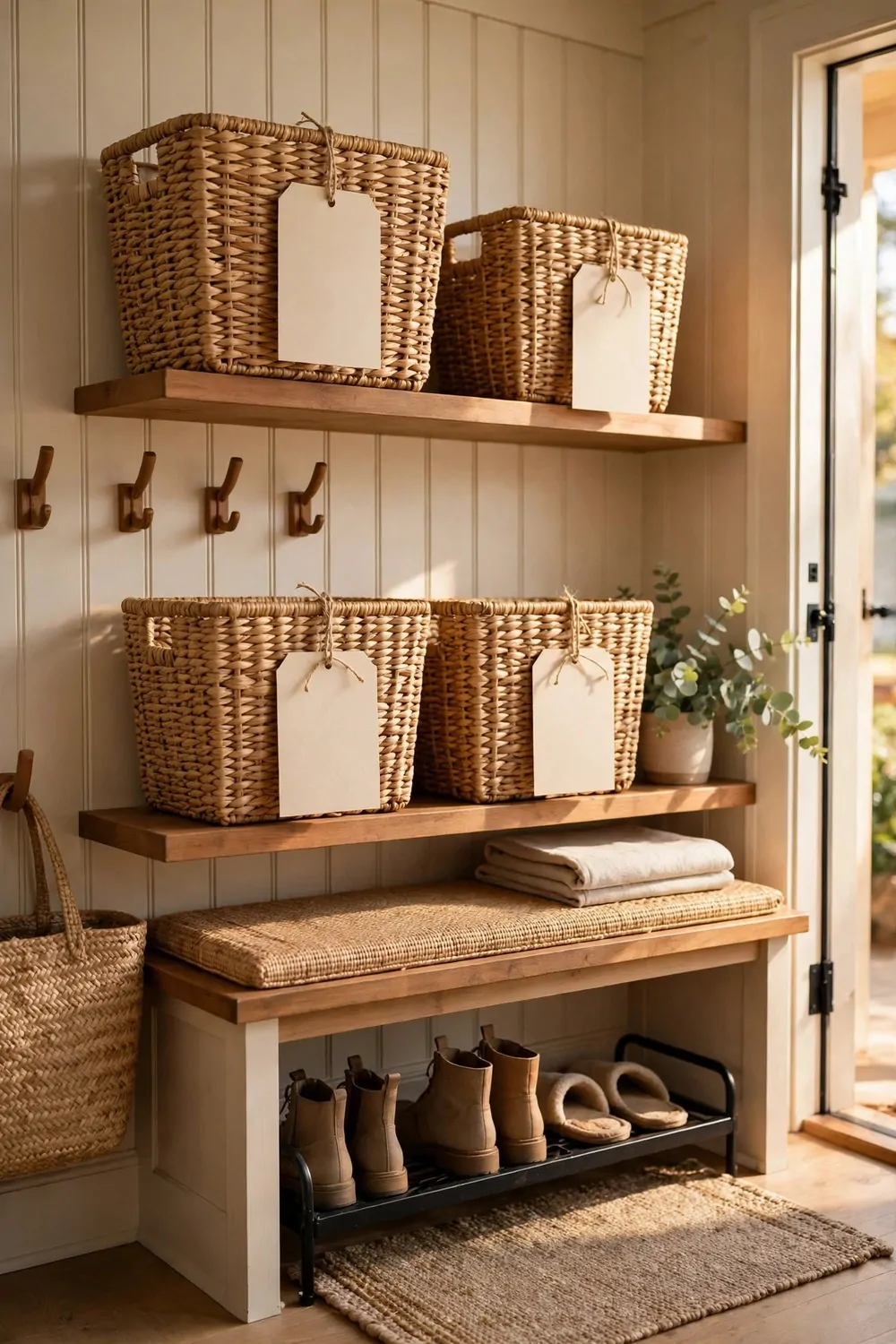
Baskets saved us from the small stuff.
I gave each person a basket with their name on it. You open your basket, and you know what is yours.
The baskets sit on a shelf by the door. They are light. My kids can pull theirs down and put it back.
I keep the baskets small on purpose. A big basket just fills up with things no one needs.
| Basket | Who it belongs to | What lives inside |
|---|---|---|
| Top basket | Mum | Gloves, a scarf, and a spare hair tie |
| Middle basket | Eldest child | Hat, gloves, and a bus pass |
| Bottom basket | Youngest child | Mittens, a sun hat, and a spare pair of socks |
When a basket gets full, I tip it out. We keep what we use and move the rest to another room.
My youngest likes her name on her basket. She checks it each morning, and she feels proud when it is tidy.
You do not need matching baskets.
A named basket stops the morning hunt. You grab your things. You are out the door, and no one is late because of a lost glove.
A Tray That Catches Mud and Rain
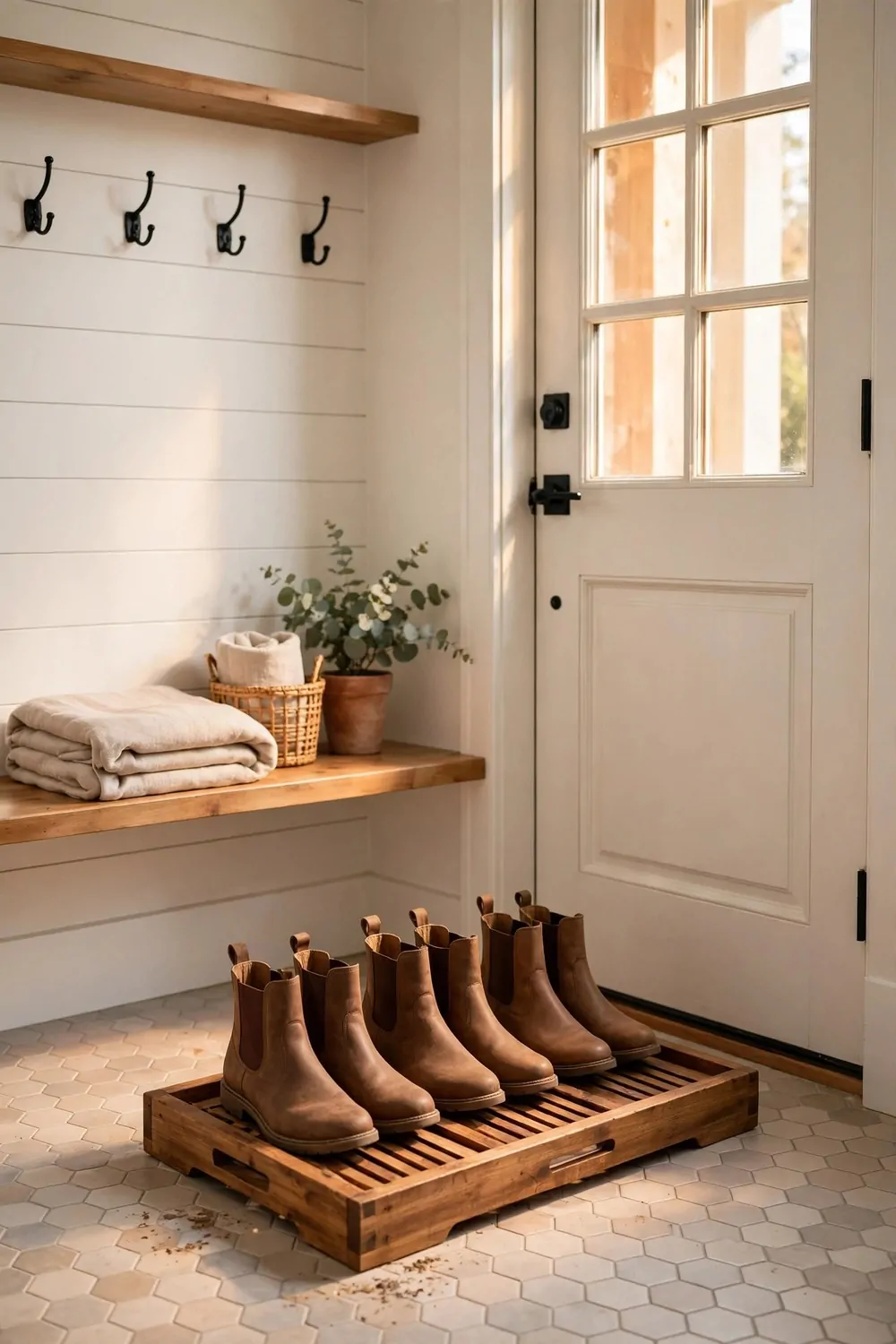
Rain and mud came in with our shoes.
A tray fixed most of it. You step on the tray, you take your shoes off, and the mess stays in one place.
I picked a tray with low sides. Shoes fit in it, and water does not run off the edge onto the floor.
We keep the tray right by the door. It is the first thing your feet touch when you come in. You cannot miss it.
I shake it out over the bin each evening. It takes less than a minute, and the floor stays much cleaner.
My kids know the rule now.
If the tray is wet, I leave it to dry for a bit. A wet tray can make shoes smell, so I wipe it now and then.
This is a small thing, but it helps a lot. You stop cleaning the same spot again and again. The floor stays clean for days, not hours.
A Slim Shelf for Keys and Bits
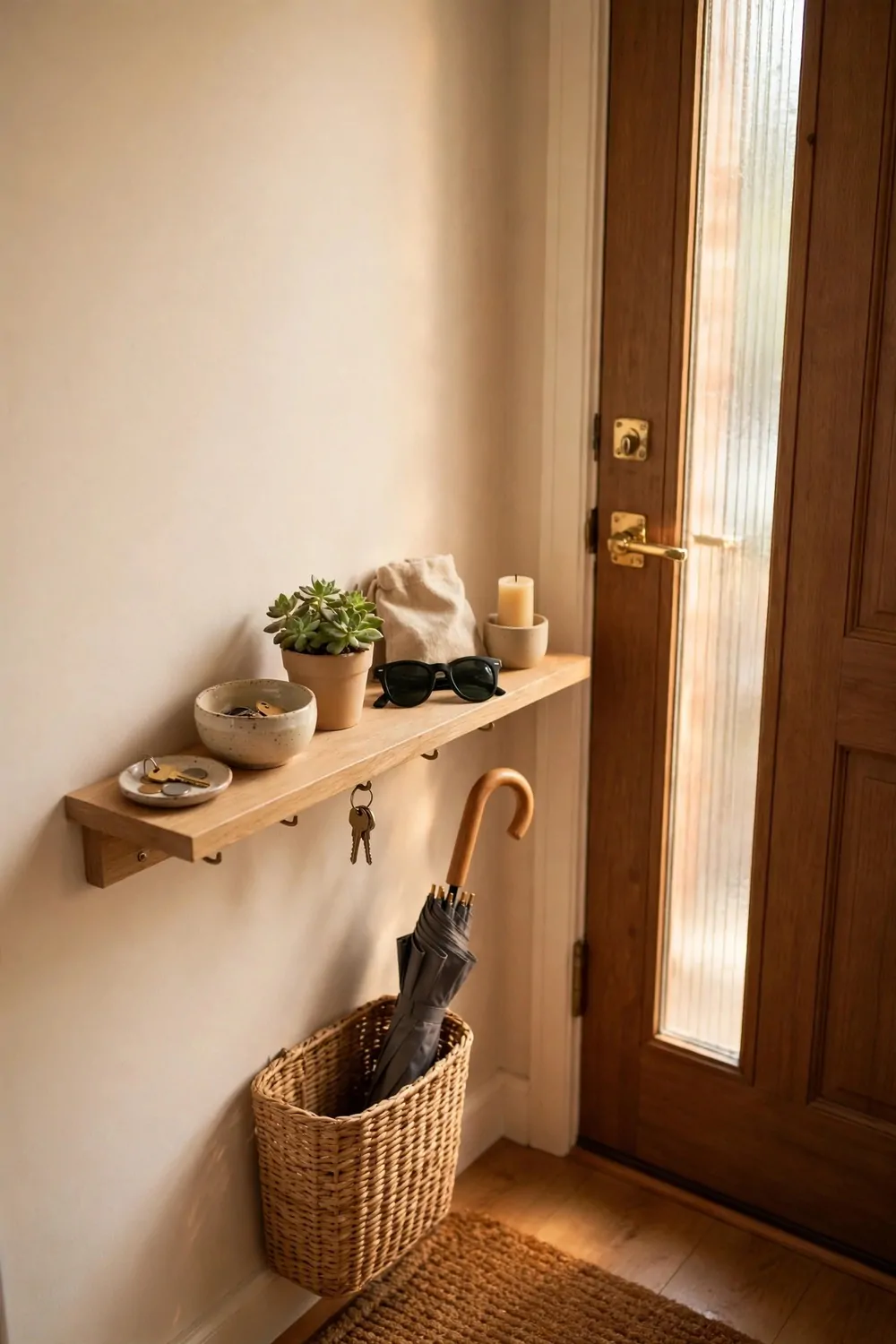
Keys went missing in our house all the time. They were in a coat pocket. They were on a chair, or nowhere at all.
A slim shelf by the door changed that.
I put small hooks under the shelf for keys. Each set has its own hook, and you can see them at a glance.
The top of the shelf holds the bits we grab on the way out. Sunglasses, a phone charger, and a small notebook sit there.
I keep only a few things on it.
My husband puts his wallet there when he comes in. He knows where it is in the morning, and he does not search for it.
You can use a shelf with a little lip on the edge. It stops small things from sliding off. It helps when the door bangs.
A slim shelf is not fancy. It just gives keys and bits one small home, right where you need them.
A Peg Rail for Bags and Leads
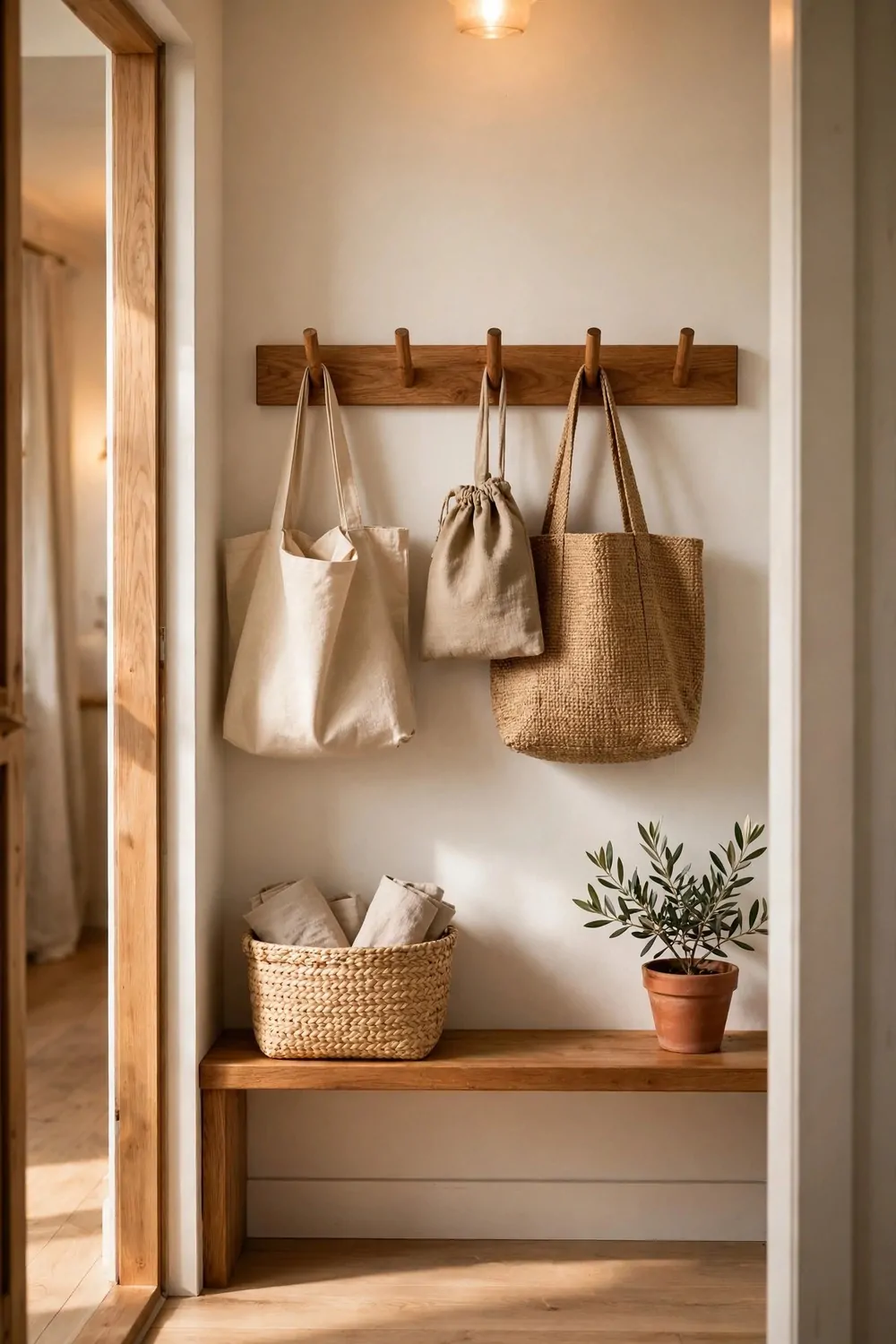
Bags had no place in our hall.
A peg rail on the wall gave them a home. It is a long strip with pegs, and it takes up no floor space at all.
I put it at a height my kids can reach. They hang their own bags. They can get them down by themselves.
Each peg holds one bag. If a peg holds two bags, they fall, and we are back where we started.
- School bags, one on each peg.
- Dog leads, hung on the end peg by the door.
- Shopping bags, folded and hung for the next trip out.
- A small tote for library books and papers to return.
The rail also holds hats on quiet days. You hook a hat over a peg, and it is there when you need it.
I keep the end peg free for the dog lead.
My kids like to hang their bags in the same spot each day. It is a small habit, and it makes mornings easier.
A peg rail looks simple, and it is simple. That is why it works in a small space. You do not need anything fancy for it to help.
A Basket for Each Child’s School Kit
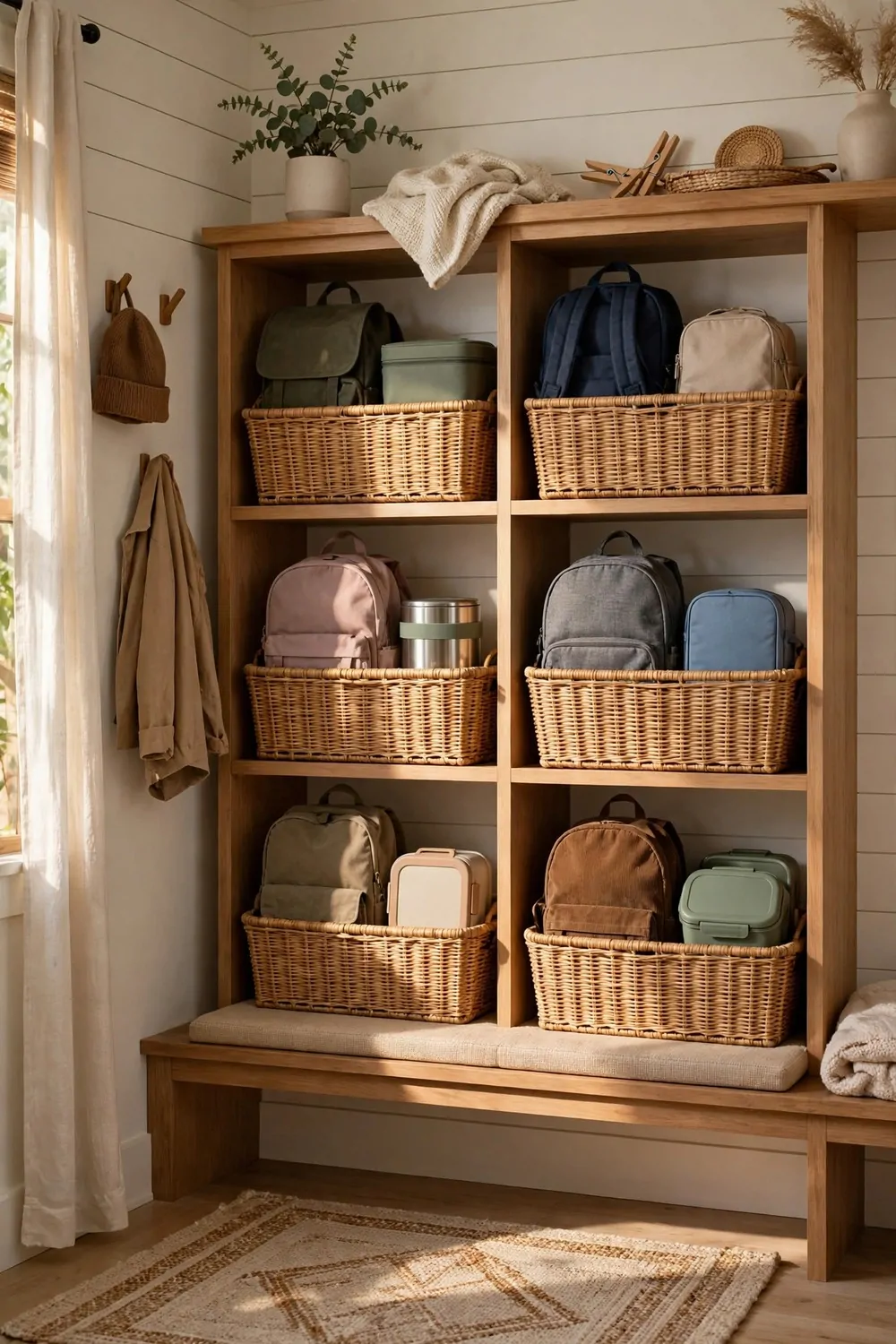
School mornings were a rush in our house. Books, lunch boxes, and water bottles were in three different rooms. We ran around, and we still forgot things.
I gave each child a basket for their school kit.
The baskets sit under the bench by the door. You lift the lid, or you just look in, and you can see what is there.
Each night, my kids pack their basket for the next day. It is part of our bedtime routine now.
| Kit | What goes in it | When to check it |
|---|---|---|
| Eldest child’s kit | Books, lunch box, and water bottle | Each night before bed |
| Youngest child’s kit | Reading book, lunch box, and a spare jumper | Each evening after dinner |
| Spare kit | Spare socks, a snack, and a small rain coat | Each Sunday |
If something is missing, we find it the night before. That is much better than finding out at the door in the morning.
I keep a small note in each basket at the start of the week.
My youngest packs her own basket now. She forgets things some days, and we fix it together, and she learns.
A school kit basket means no more last minute runs. You pick it up. You go.
A List by the Door That Everyone Reads
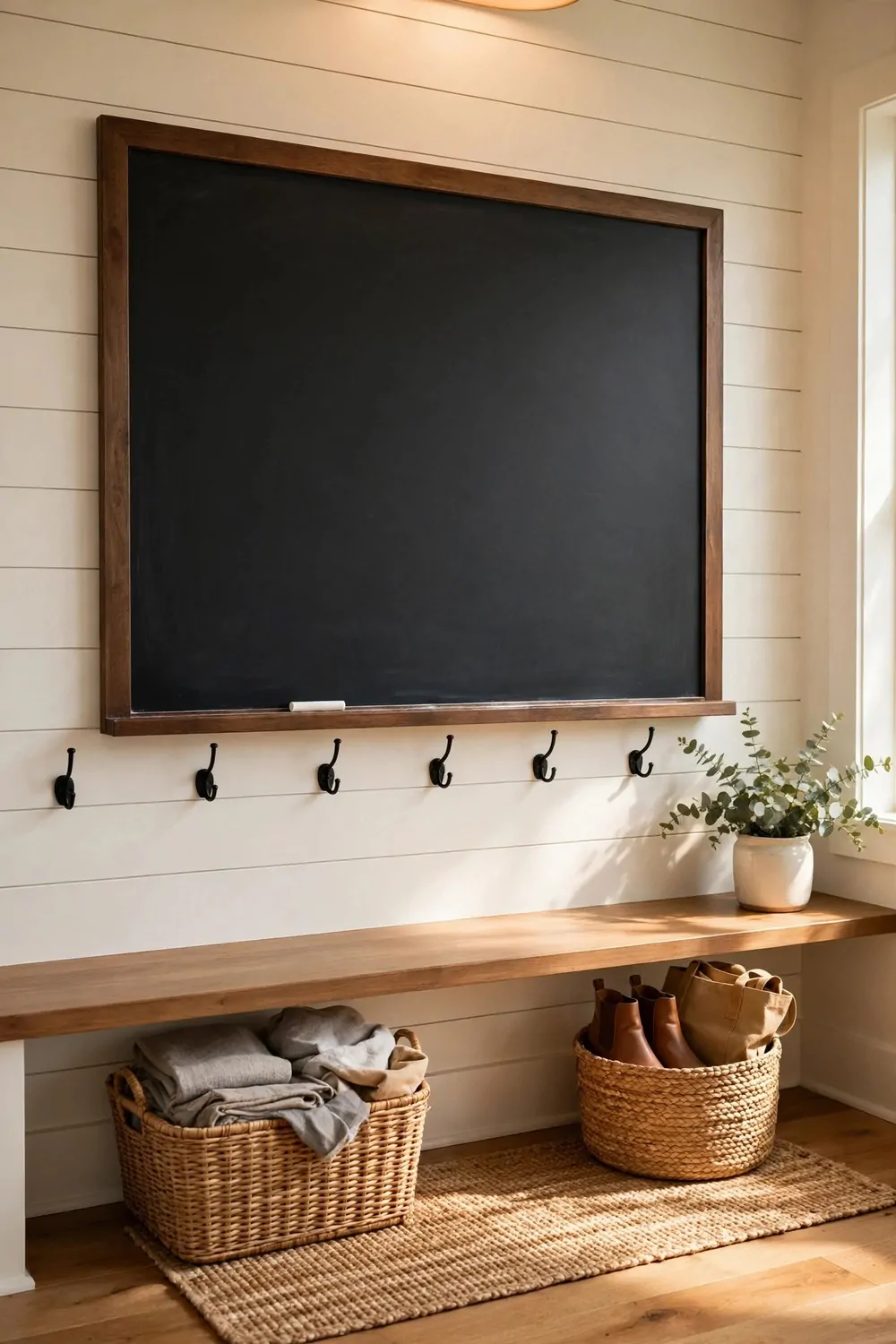
We forgot things even when they were right in front of us.
A list by the door works better. You see it as you leave, and you cannot miss it.
Our list is short. It has five things on it. I change it when the week changes.
I write it in big letters. My youngest can read most of it, and she likes to tick things off.
Each morning, we read the list out loud. It takes a few seconds, and it stops a lot of trips back inside.
If a new thing comes up, I add it to the list that night.
You can use a small board or a piece of paper in a frame. Ours is just paper, and it works fine.
A list by the door is the last check before you go. You read it. You grab what you need, and you leave calm.
A Mirror That Makes a Tiny Space Feel Bigger
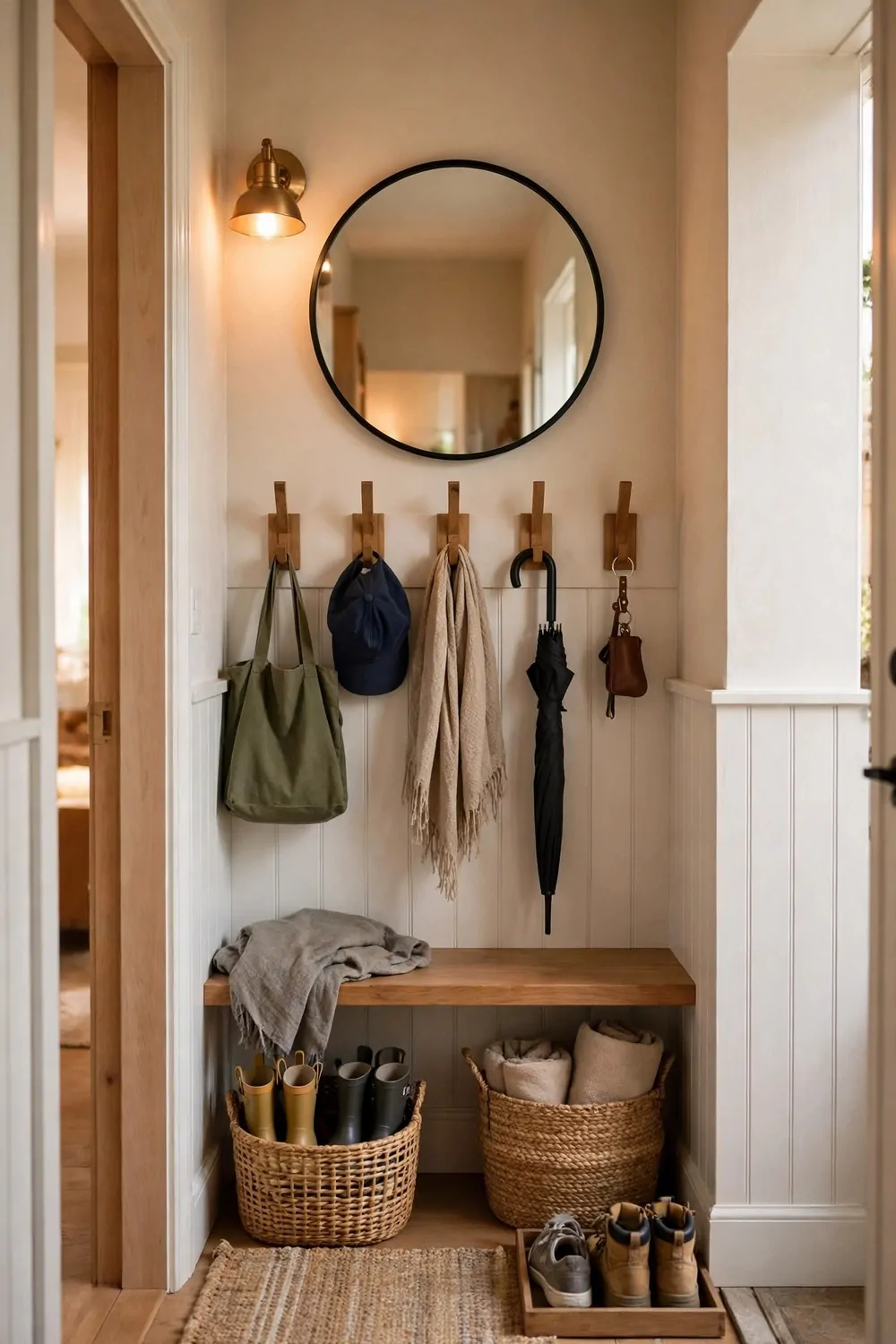
I hung a mirror by our front door last year and the whole entry felt different the same day. It did not add a single inch of floor space, but it looked like it did.
A mirror bounces light back into a small mudroom. That light makes the walls feel farther apart than they really are. You notice it most on a grey morning when the hall feels dark and tight.
Pick a mirror that fits your wall, not one that fights it. A slim tall mirror works well on a narrow wall. A round one softens a square corner where coats and bags already crowd in.
Hang it where you can see yourself before you leave. I check my hair and my coat in it every single morning. My kids do the same thing now, and it saves me from shouting “come back here” when a collar is folded wrong.
Do not hang it right across from a messy pile. A mirror doubles whatever it faces, and a pile of shoes doubled looks twice as bad. Aim it at a clear wall or a window if you can.
If you rent, a lean-to mirror works just as well. It stands on the floor against the wall, and you can move it when you want. Just make sure it sits flat and will not tip when little hands run past it.
A mirror does not have to cost much to do the job. A plain one from a discount shop works just as well as a fancy one, as long as the glass is clear and the frame feels solid. I found ours on sale, and nobody who walks in would ever guess.
Clean it once a week with a soft cloth. Fingerprints show up fast at kid height, and a smudged mirror does not help anyone. A quick wipe keeps the light bouncing and the space feeling open.
A Row of Cubbies in a Narrow Hall
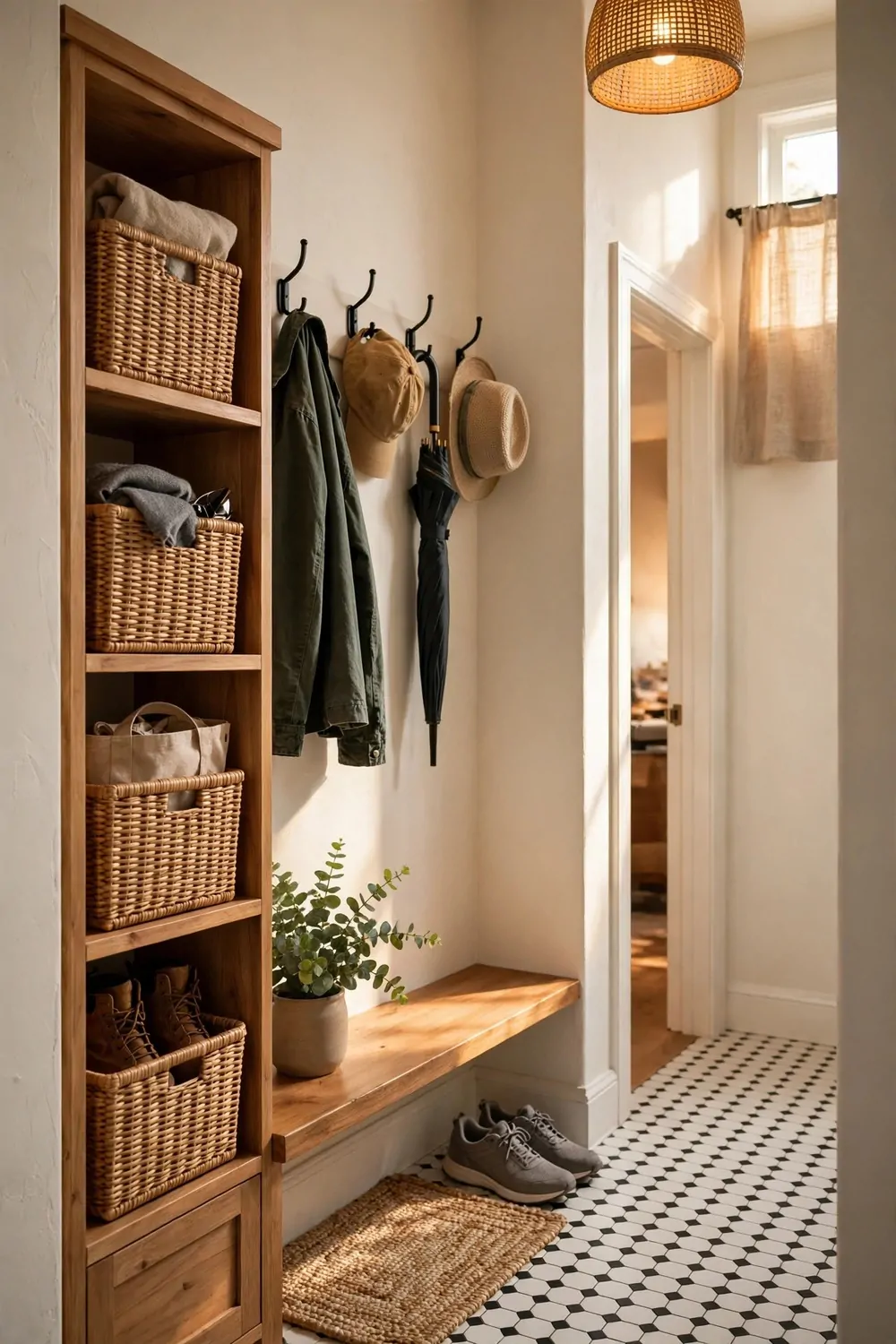
A narrow hall can still hold a row of cubbies if you keep them shallow. Ours are only about a foot deep, and they changed how our mornings work, with every person having one box to call their own.
Give each family member their own cubby. Label it with a name or a picture so even a small child knows which one is theirs. My youngest learned hers before she could read her name, just from the little star sticker on the front.
Keep the cubbies open, not closed behind doors. Open cubbies let you see what is inside at a glance. You can grab your scarf and go without opening anything first.
Put the cubbies at a height your kids can reach. If the shelves sit too high, you will end up fetching things for them forever. Low shelves mean they put their own stuff away, and that is half the battle.
Use one cubby per person for the daily stuff only. Shoes, a hat, a bag, and a coat is plenty. Extra things belong somewhere else, or the cubby fills up in a week and stops working.
A row of cubbies also stops the “where is my stuff” shout from the front door. When everything has one home, nobody has to hunt. My mornings got quieter the week we put ours up, and I still notice it.
You can build cubbies from simple boxes or crates if you do not want to buy furniture. Line them up on a bench or stack them against the wall. Paint them one colour so they look like they belong together.
Check them once a month and pull out anything that does not belong. Old gloves, a broken umbrella, a toy that wandered in from the living room. A quick tidy keeps the row useful instead of turning it into a junk shelf.
A Folding Stool That Tucks Away
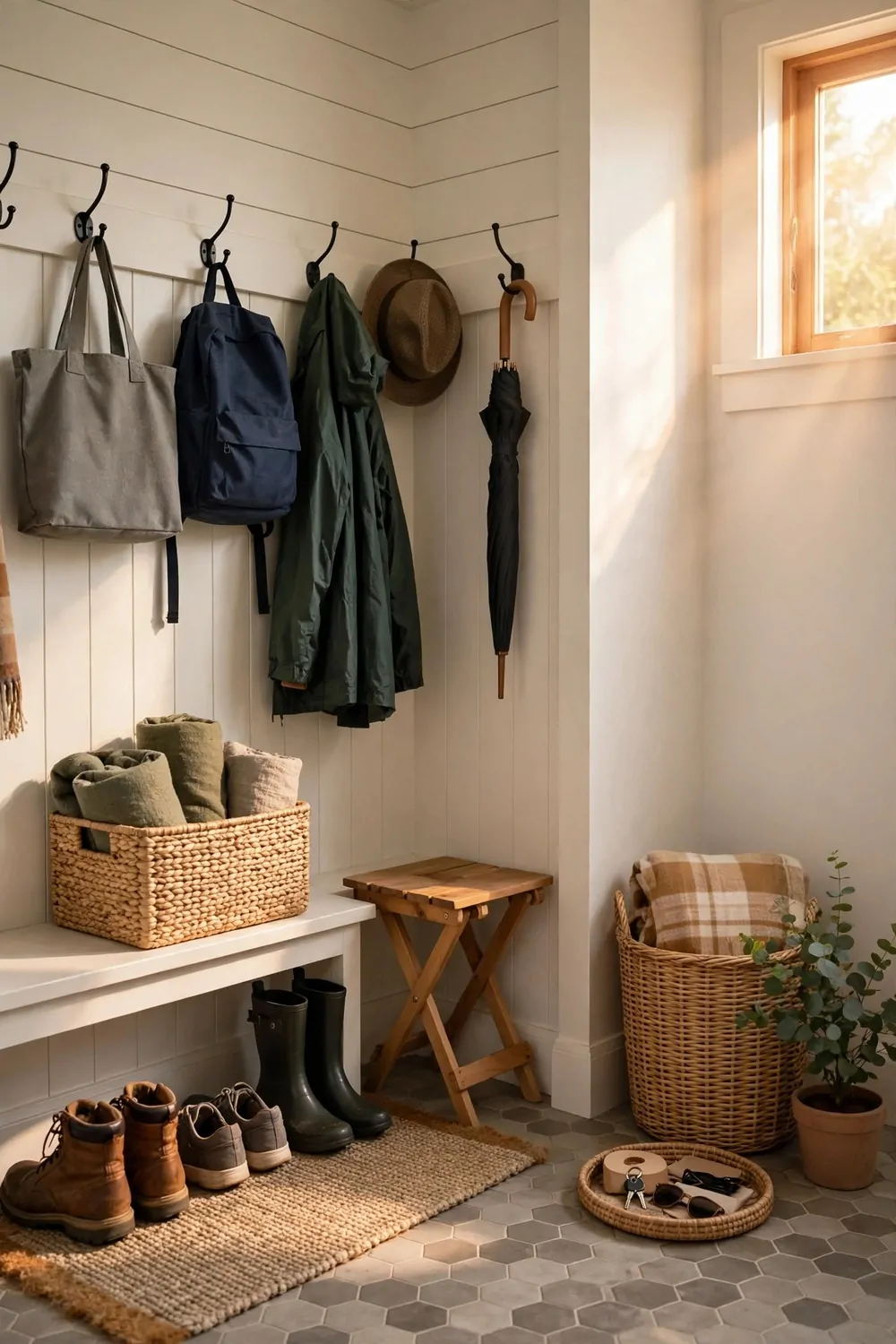
A folding stool is the best seat for a mudroom with no room for a bench. You pull it out when you need it, and you fold it flat when you do not. It takes up almost no space at all.
Kids need a seat to put their shoes on. Without one, they sit on the floor and the floor gets dirty fast, but a little stool fixes that in one move, and they actually like using it.
Pick a stool that folds flat and stands on its own when folded. I lean ours against the wall behind the door. It stays out of the way there, and I can grab it with one hand while holding a bag in the other.
Make sure the stool feels steady when you sit on it. A wobbly stool is worse than no stool at all. Test it before you buy it, and sit on it the way your kids would, with your full weight.
One stool is enough for most small mudrooms. Two people rarely sit down at the exact same second. If you have a big family, a second stool can hang on a hook by the door when it is not in use.
A stool also helps grown-ups. I use ours to lace up my boots in winter, and my mum uses it when she visits. It is a small thing, but it makes the entry feel like it was made for real people.
Keep the stool near the shoes, not across the room. If it sits too far away, nobody will walk over to get it. Close by means it gets used every single day, which is the whole point.
Wipe it down when you wipe the floor. Mud and wet footprints land on it just like they land everywhere else in an entry. A damp cloth once a week keeps it clean and ready for the next pair of shoes.
A Basket for Gloves, Hats and Scarves
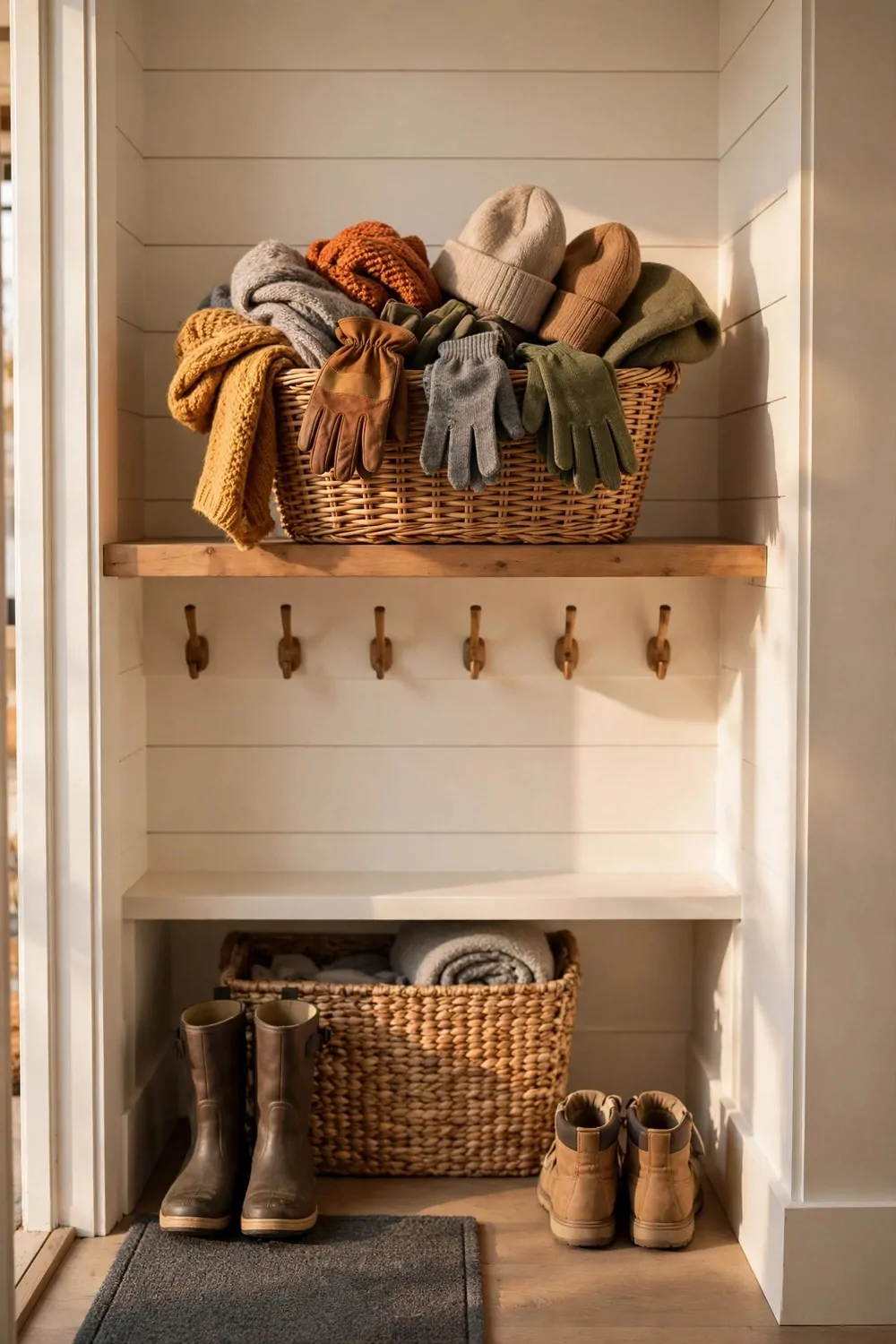
One basket by the door can hold every glove, hat and scarf your family owns. It sounds too simple, and that is why it works. Small things get lost when they have no home, and a basket gives them one.
Pick a basket that fits your space and has sides you can see through or over. If you cannot see inside, you will forget what is in there. A low open basket works best, so little hands can reach in and find what they need.
Put the basket where everyone walks past it on the way out. Ours sits on the bench by the door, right next to the coats. Nobody has to go looking for it, and that means it actually gets used.
Here is what goes in our basket:
- One pair of gloves per person, the ones we wear most
- A warm hat for each of us, folded flat so it does not take up room
- A scarf or two for cold days, rolled up tight
- A spare pair of mittens for the youngest, because one always goes missing
Teach everyone to drop their gloves in the basket the second they come inside. It takes three seconds, and it stops the morning hunt. My kids took about a week to learn it, and now they do it without thinking.
Empty the basket at the end of each season. Pull out the thin spring gloves when winter comes, and put the heavy wool ones away when it warms up. A basket full of the wrong season’s stuff is no help to anyone.
Wash the gloves and hats in the basket every few weeks. They pick up smells fast, especially after wet days. A quick wash keeps the whole entry smelling fresh instead of damp and musty.
If one basket is not enough, add a second small one for the grown-ups. Keep the kids’ basket low and the grown-ups’ basket higher up. Two baskets still take up less room than a pile of gloves spread across the bench.
A Charging Spot for Phones and Tablets
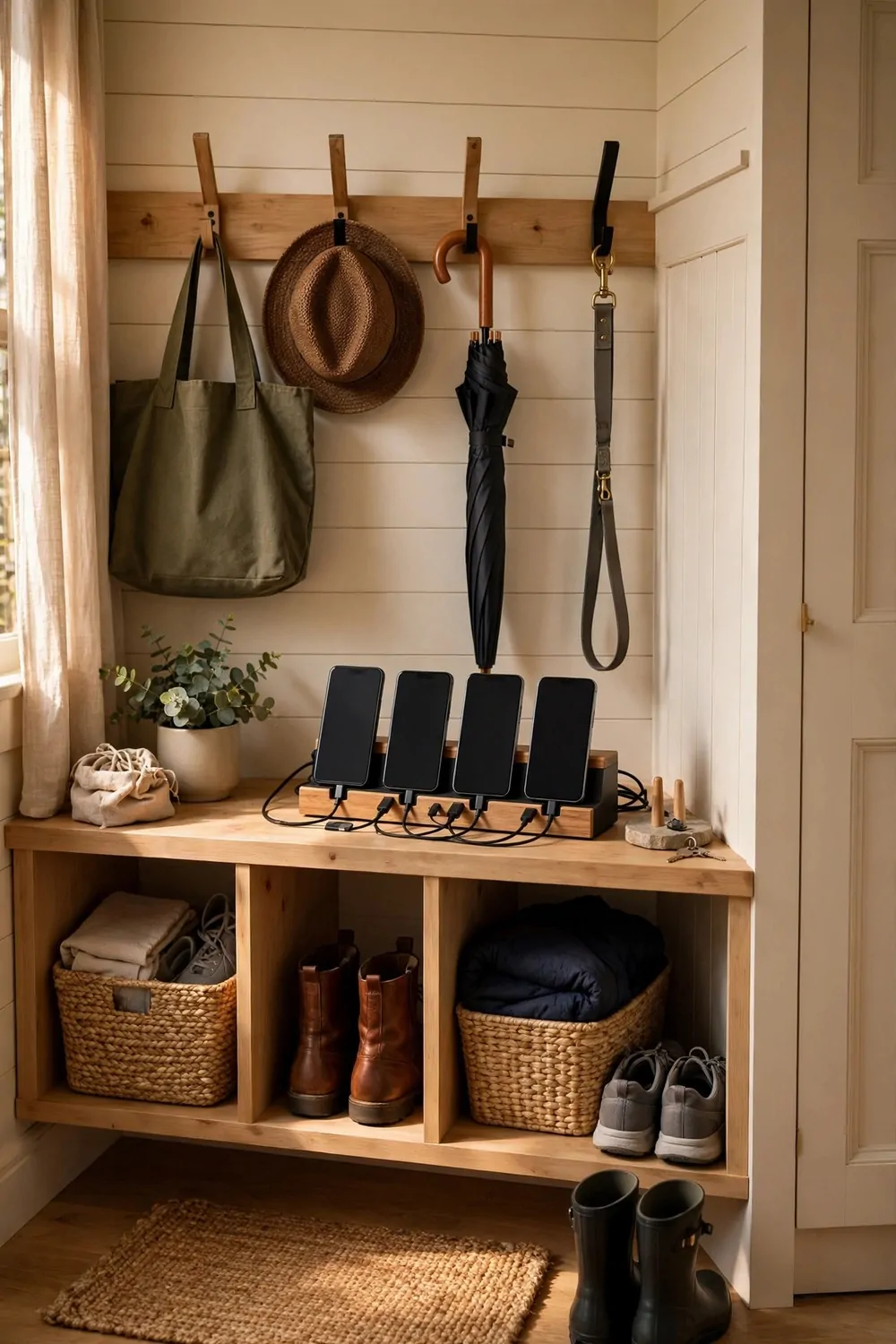
Phones and tablets end up in a mudroom more than you would think. Kids drop them on the bench when they come in, and grown-ups leave them by the keys. A small charging spot keeps them in one place and keeps them charged.
Pick one corner of your entry for charging, and keep it the same every day. A tiny shelf or a small tray works fine. The point is that everyone knows where the chargers live, so nobody has to ask.
Use a short power strip with two or three plugs, and tuck it out of sight. Long cords across the floor are a trip hazard in a small space where people step close together, so short cords stay neat and stay safe.
Label the chargers if your family shares them. A bit of coloured tape on each cable tells you which one is yours at a glance. It stops the daily argument about who took whose charger, and that alone is worth doing.
Charge devices overnight or while you eat dinner, not right by the door during the morning rush. A phone sitting on the bench while everyone pushes past is going to get knocked off. A quiet time is a safer time.
Keep the charging spot away from wet coats and muddy shoes. Water and plugs do not mix, and a damp jacket dripping onto a charger is a real problem. A shelf a little higher up keeps everything dry.
Teach your kids to plug in their own tablet when they come home from school. It is a small habit, and it means the tablet is full when they need it later. Mine took a few reminders, and now it is just part of coming inside.
Wipe the shelf now and then, because dust gathers fast near a door. A clean charging spot looks tidy, and a tidy spot gets used. A dusty tangle of cables gets ignored, and then the phones end up on the floor again.
A Small Mat That Wipes Muddy Feet
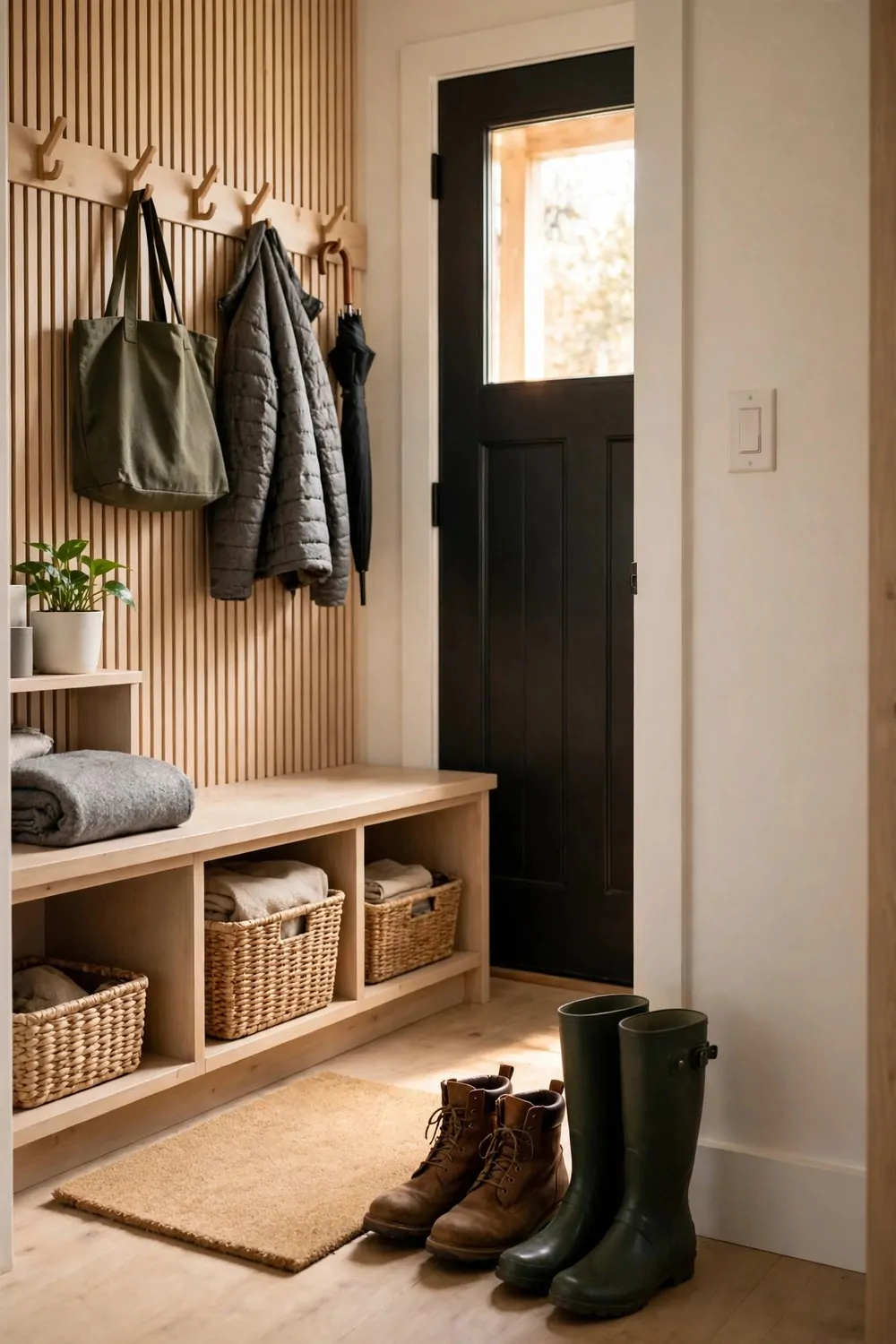
A small mat by the door does more work than almost anything else in a mudroom. It catches mud, rain and dirt before they reach your clean floor. One mat can save you from mopping the whole hall every day.
Pick a mat with a rough surface that can scrape boots clean, because a smooth mat looks nice but does not do the job. You want something with ridges or bristles that pull the dirt off as you wipe your feet.
Size matters more than you think. The mat should be wide enough for two feet to stand on it at once. If it is too small, people step right past it, and the mud comes in with them.
Put the mat just inside the door, not a step away from it. The first thing feet should touch is the mat. If there is bare floor between the door and the mat, that bare floor gets dirty first.
Teach everyone to wipe twice, once with each foot, before they step inside. It takes two seconds. My kids do a little stomp on the mat now, and it has become part of coming home, like hanging up their coat.
Shake the mat outside once or twice a week. Dirt builds up under it fast, and a full mat stops catching anything new. A good shake and a quick brush bring it back to life in a minute.
Keep a spare mat if you can, so you can wash one while the other is down. A muddy mat in the wash leaves your floor bare, and that is when the dirt comes in. Two mats mean you are never caught out.
Replace the mat when it goes flat and smooth. A worn-out mat is just a rug, and it will not scrape anything clean. A fresh mat costs little, and it earns its place by the door every single rainy day.
A Weekly Five-Minute Mudroom Reset
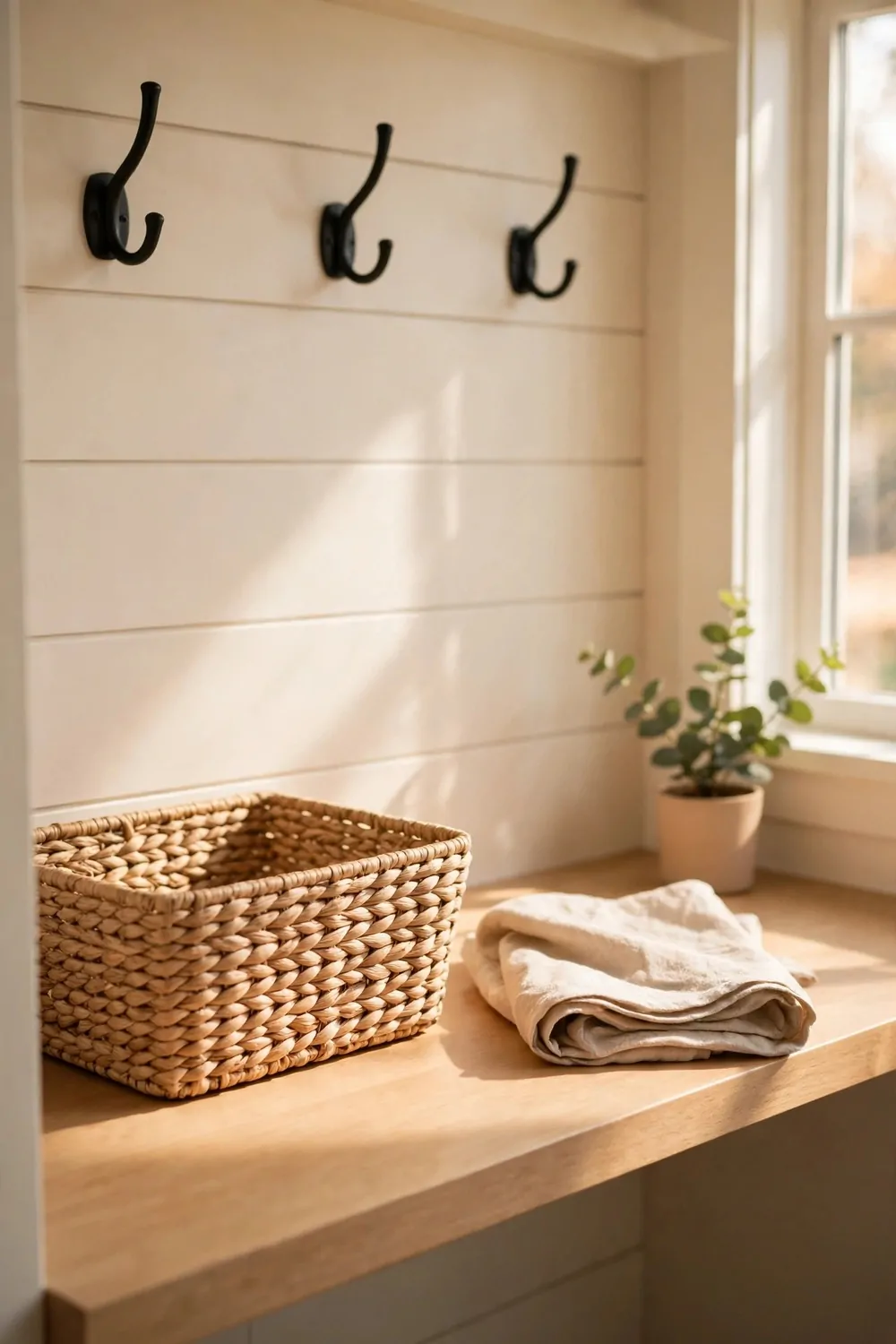
A mudroom only stays tidy if someone resets it on a regular day. I do ours once a week, and it takes five minutes. That is all it takes to keep the small space from turning into a dumping ground again.
Pick the same day and time every week so it becomes a habit. I do ours on Sunday evening, right before the new week starts. You might like Saturday morning better, and that is fine too, as long as it stays the same.
Set a timer for five minutes and stop when it rings. A short reset works because it feels easy, and easy things get done. If you try to deep clean the whole entry, you will put it off, and the mess will grow.
Start at the top and work your way down, hooks first, then the bench, then the floor. Dust and crumbs fall down as you go, so you only sweep once at the end. It sounds small, but it saves you a second pass.
Get the kids to help for two of those five minutes. Give each child one job, like hanging up coats or lining up shoes. It goes faster with help, and they learn that the entry is their job too, not just yours.
Write the three steps on a small card and stick it inside a cupboard door. When the steps are written down, nobody has to remember them, and anyone in the family can run the reset. My card has been on that door for months now, and it still gets used every week.
| Step | What to do | How long |
|---|---|---|
| Clear the hooks | Hang up coats and bags, take down anything that belongs elsewhere | 1 minute |
| Line up the shoes | Pair up shoes, put spares away, wipe off dried mud | 2 minutes |
| Sweep and wipe | Sweep the floor, wipe the bench and shake out the mat | 2 minutes |
Do not try to fix everything in those five minutes. A broken hook or a stained wall can wait for another day. The reset is just about putting things back where they belong and clearing the floor.
End the reset by stepping back and looking at the space. A clear entry feels calm, and that calm carries into the rest of your evening. Five minutes a week is a small price for a front door that welcomes you instead of stressing you out.
A Mudroom That Smells Fresh, Not Damp
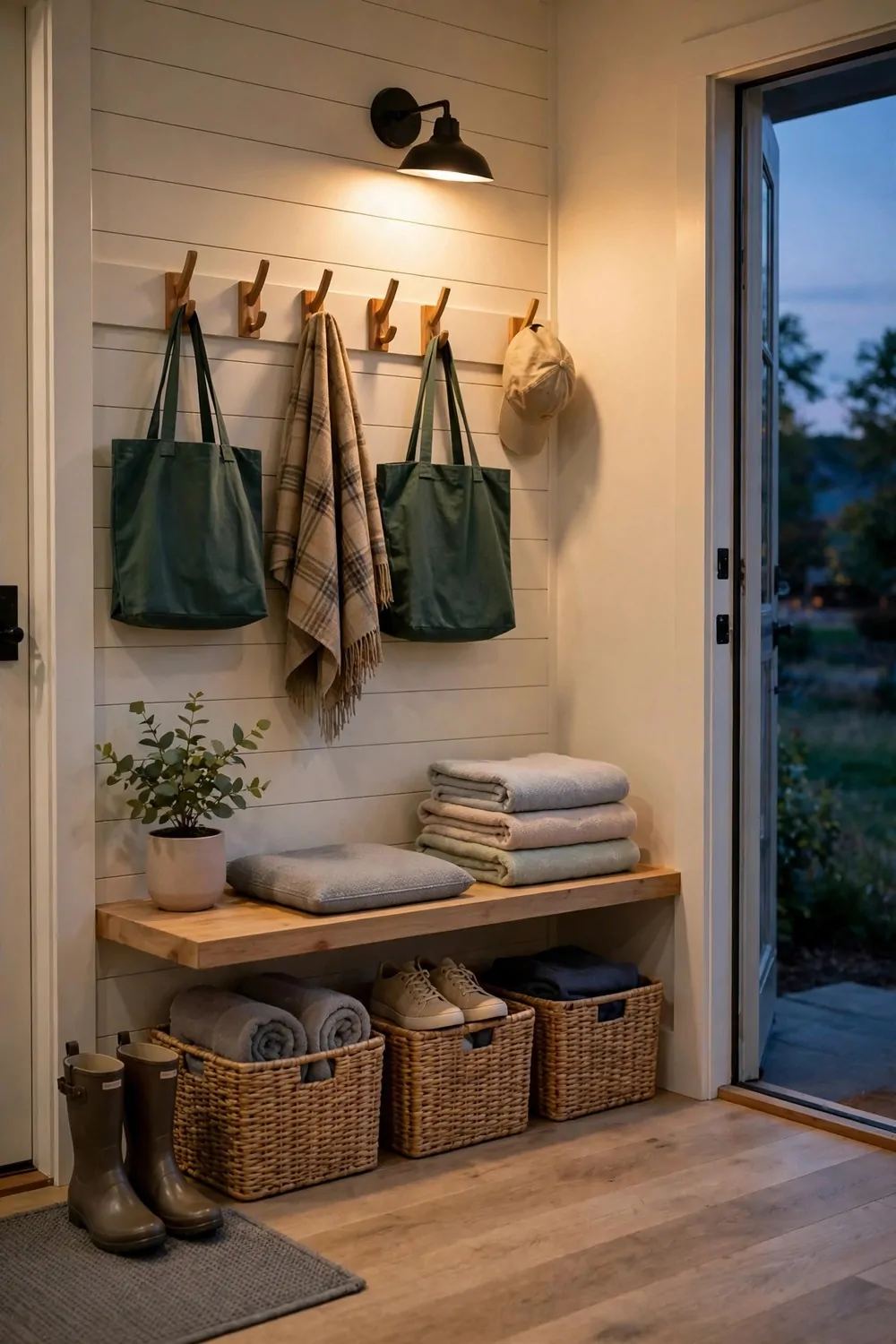
A mudroom can start to smell damp, even when it looks clean. Wet coats, muddy shoes and rain all bring moisture in, and a small closed space holds onto it, so the smell creeps up on you slowly.
Air is the first fix, and it costs nothing. Open the front door for a few minutes when the weather allows it. Fresh air pushes the stale air out, and the whole entry feels lighter straight away.
Dry wet things fast, and do not let them sit in a pile. A wet coat left in a heap will smell by morning. Hang it up so air can reach it, and put wet shoes on a rack where the air moves around them.
A small bowl of baking soda on a shelf soaks up smells without any fuss. I keep one tucked behind the basket, out of reach of little hands. Replace it once a month, and it keeps working quietly in the background.
Wash the things that touch the floor often. Shoe insoles, mats and the basket all hold onto damp smells. A regular wash stops the smell before it settles in, and it is much easier than fighting it later.
Keep a little cloth or towel by the door for wiping wet shoes. A quick wipe when you come in stops puddles from forming on the floor. Less water on the floor means less damp in the air, and that means less smell.
Check for hidden damp spots once in a while. Look behind the bench and under the mat, where water can sit unnoticed. A damp patch under a mat can smell for weeks before you find it, so a quick peek now and then is worth it.
A fresh-smelling mudroom makes the whole house feel cleaner. You notice it the second you walk in, and so do your guests. It takes small habits, not big effort, and your entry will thank you every time you come home.
Keep Reading
If one of these ideas caught your eye, you do not have to stop here. There are more rooms in your home that can work just as hard as your mudroom, and the same small-change thinking applies to them too.
Pick one to read next, the room that bugs you most right now, and see what you can borrow from it for your own home.
- 22 Laundry Room Organization Ideas That Actually Stick
- 17 Dining Room Table Decor Ideas for Everyday Meals
- 20 Kids Bedroom Ideas That Grow With Your Child
Small rooms ask for smart choices, and a mudroom is the smallest room with the biggest job in a busy home. Start with the idea that fits your space today, and let the rest wait until you are ready for them.