29 Pantry Challenge Ideas That Use What You Have

I opened my kitchen cupboard on a Tuesday and stood there for a long minute. The jars and packets looked back at me, and I had no plan for any of them.
I had rice and pasta and beans, and still I kept thinking I had nothing to cook. That thought felt silly once I said it out loud.
So I gave myself a small test. I would cook from my cupboard for a while and buy almost nothing new.
This list holds 29 pantry challenge ideas that cook from the food you already have at home, and the first one starts with a single shelf. You do not need a big shop or a new skill to join in.
Each idea is small on its own. Together they turn a full cupboard into real meals.
I keep the steps plain and the food plain too. If a jar is on your shelf, it can be dinner.
Pick one idea and start today. Your cupboard is more full than you think.
1. Start With One Pantry Shelf
One shelf is all you need to start. Pick the shelf you can reach without a stool.
Clear it right down to the wood so you can see what is really there.
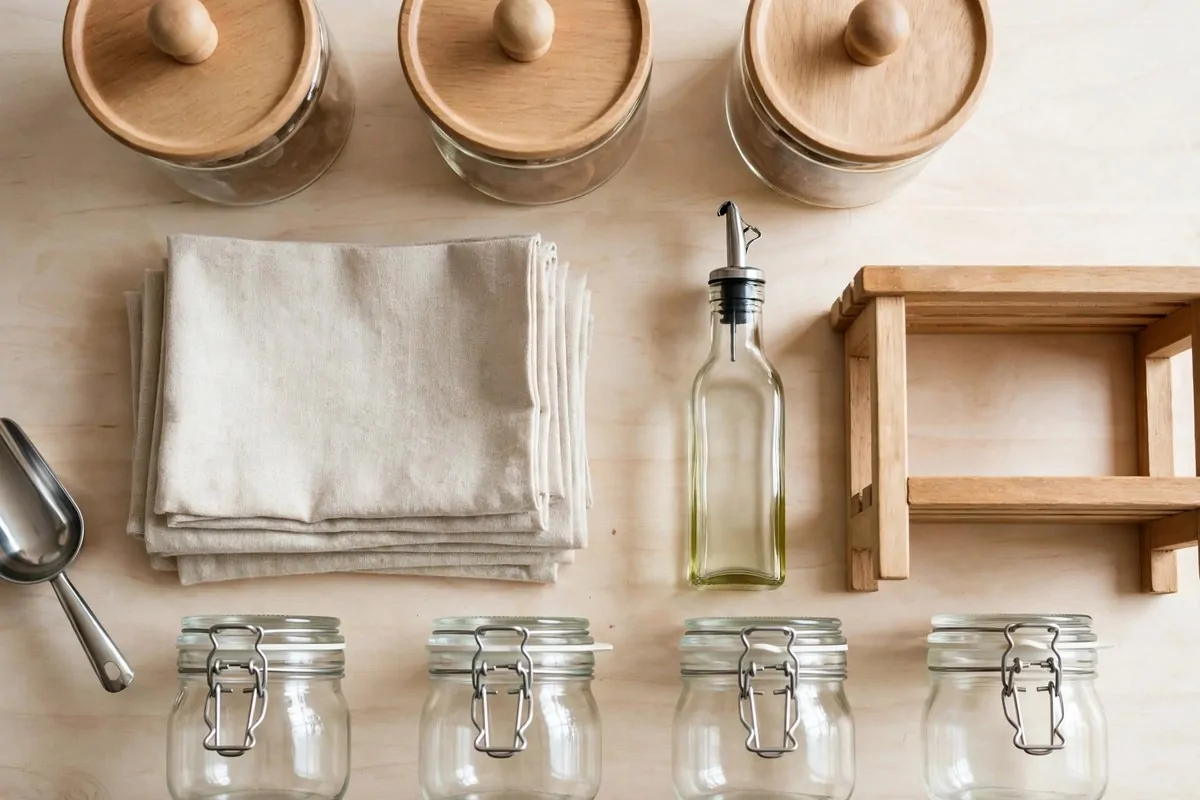
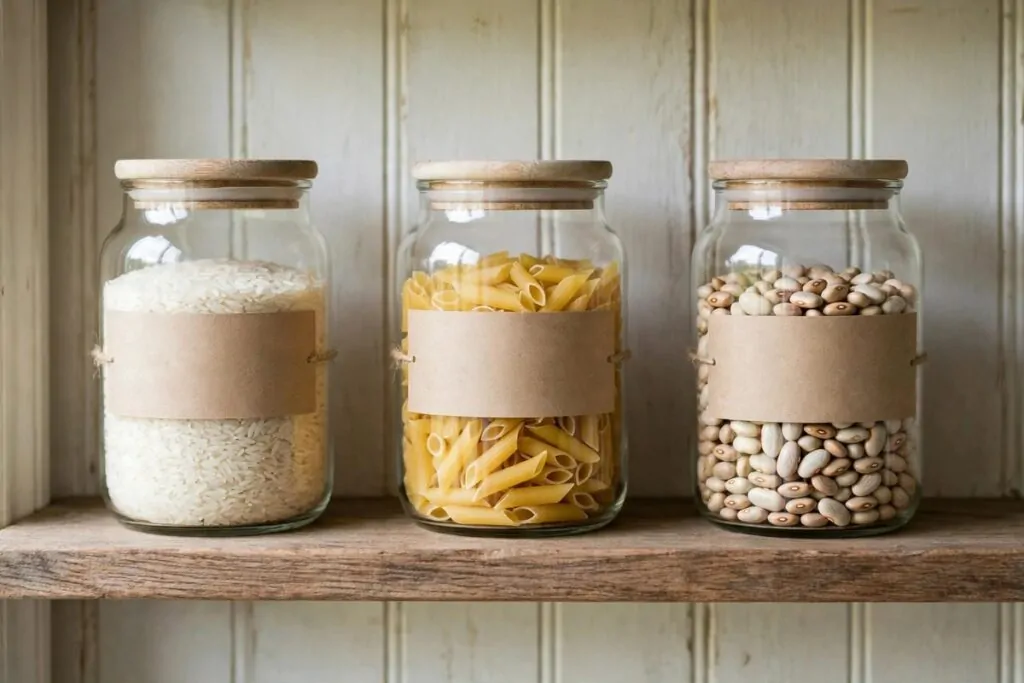
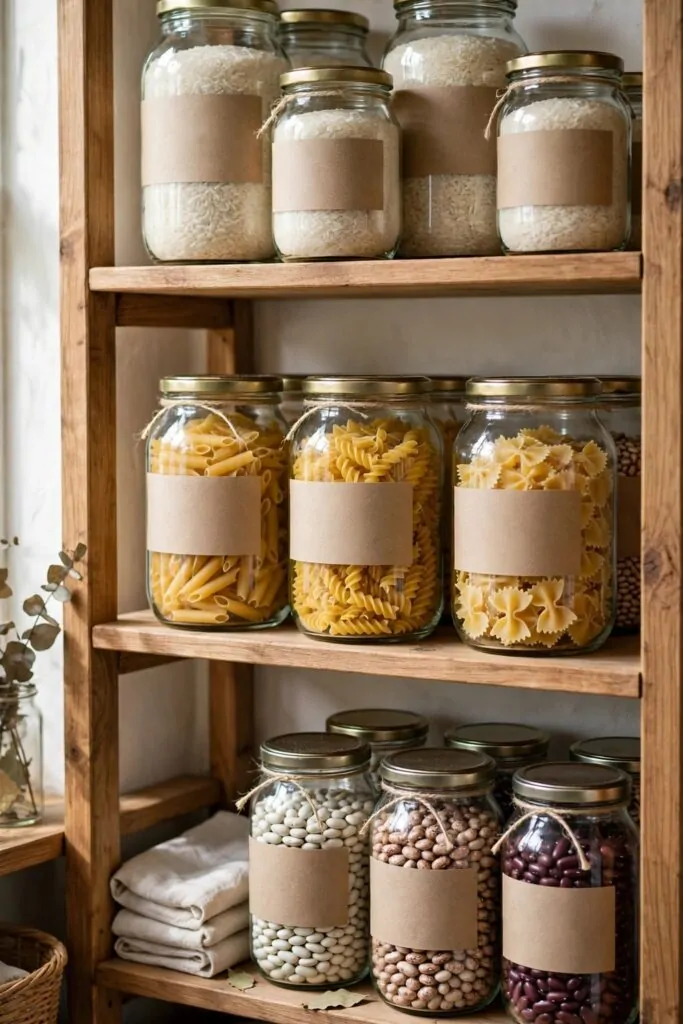
My shelf can hold rice and pasta and dried beans in plain glass jars. The labels on the jars are blank for now. I will write on them once I know what goes where.
My plain pantry shelf set cost $2 to $4.
Put the tall jars at the back and the short ones at the front. Then you can see every jar at a glance.
A tidy shelf makes cooking feel easy before you even start.
I keep my rice jar where my hand lands first. It is the jar I reach for most days.
Do not buy new jars yet. Use the ones you already own. A plain shelf with plain jars works just fine.
One shelf done is a good win for day one.
2. Take Stock of What You Have
Open your cupboard wide and look at all of it at once.
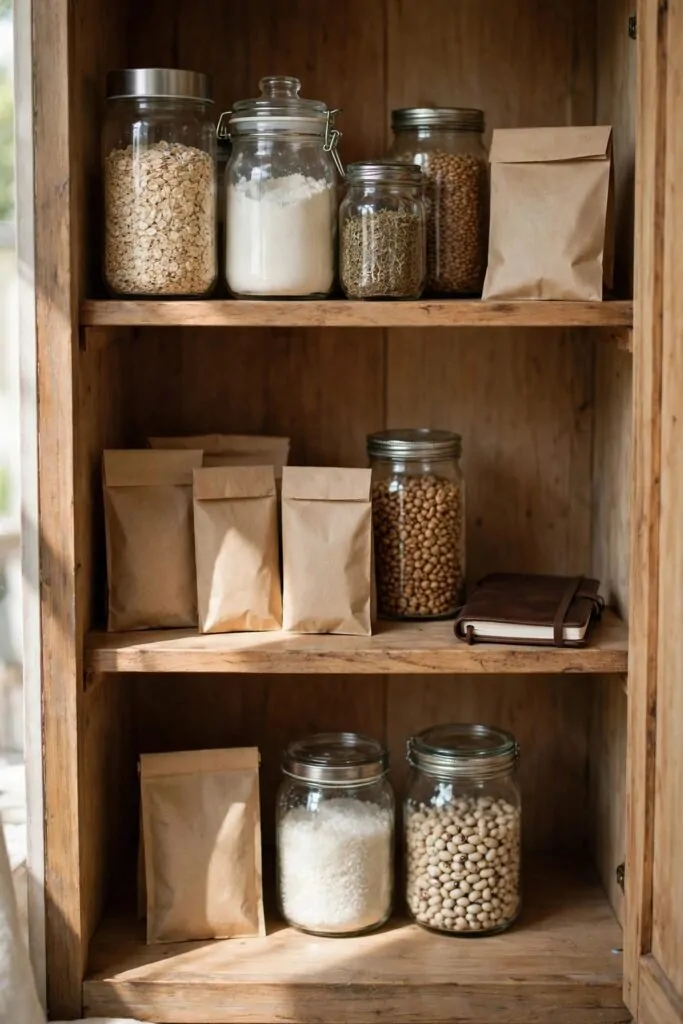
Jars and packets crowd my shelves, and I forget half of what I own. A quick stock take fixes that in one evening.
My plain pantry stock list cost $2 to $3.
I write each food on a line in my small notebook. Rice gets a line. Pasta and beans get lines too.
The notebook sits in the cupboard beside the jars, so it is always close. I add a line each time I put a new packet away.
No fancy form is needed, just plain lines on plain paper.
Count the jars you can see on the shelf. Note the packets with blank labels as well. Your list grows fast once you start.
A full list stops me buying food I already have.
Keep the list where you can see it. It turns a messy cupboard into a plan.
3. Write a Plain Pantry List
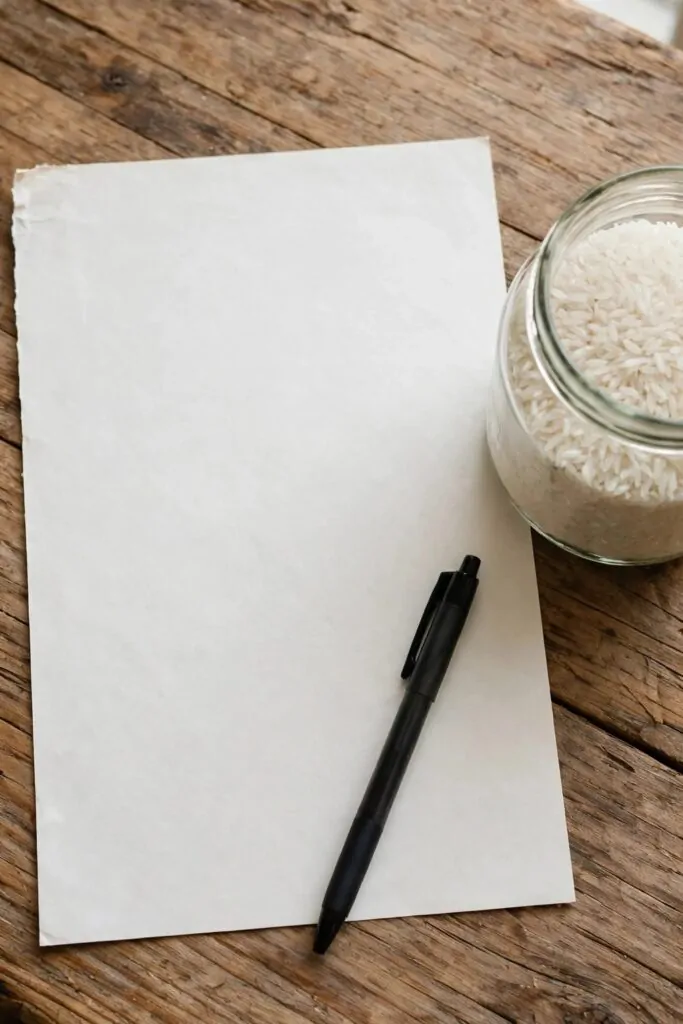
A plain list on paper is the heart of this challenge. I sit at my table with a black pen and a blank sheet. My list starts empty, and that is fine.
I write the name of each food I want to use up first.
My plain pantry list pad cost $2 to $3. The pad sits on my table beside a glass jar of rice.
Rice goes at the top of my list because I have so much of it.
I write one line for pasta and one line for beans. I write one line for oats too. Then I read the list back to myself.
A short list beats a long one here. Five or six lines is plenty for one week.
I cross a line off each time I cook that food.
My list lives on the table while I plan meals. It keeps my head clear and my cupboard honest.
A blank page can hold a whole week of dinners.
4. Group Food by Type
Food is easier to use when it sits with its own kind.
I put all the rice jars on one part of the shelf. I put the pasta jars on another part. The bean jars get their own spot too.
My plain pantry group jars cost $3 to $5. Grouping them this way means I see what I have in one look.
No more digging at the back to find the rice.
The labels on these jars are blank, and that suits me fine. I know each group by where it sits on the shelf.
Each group has its own spot on the shelf. Rice stays with rice. Pasta stays with pasta, and beans stay with beans.
A grouped shelf cooks faster than a mixed one.
I found two jars of beans I had lost behind the pasta.
Put your groups back in the same place each time. Your shelf will stay tidy without much work.
5. Use the Oldest Food First
Old food hides at the back of the shelf. Bring it to the front and it gets used.
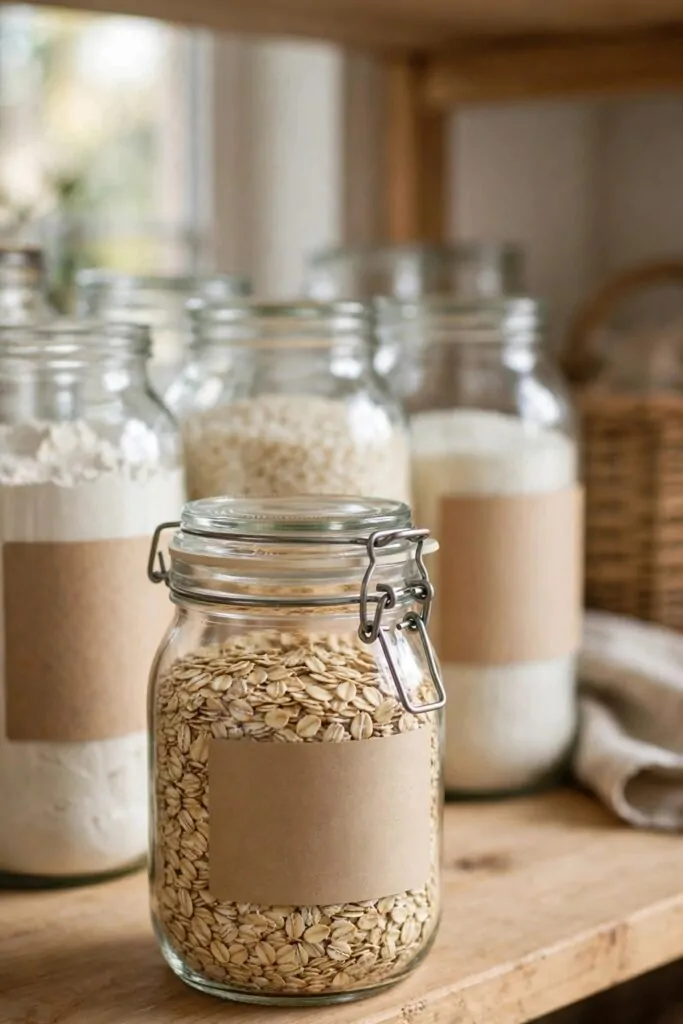
My glass jar of oats sits at the front of my shelf now. The other plain jars sit behind it. I reach for the oat jar first each morning.
My plain pantry oat jar cost $2 to $4.
Oats cook fast and fill you up well. They make a plain breakfast on a busy morning.
Use the oldest jar first and the shelf stays fresh.
I pour oats into a bowl and add hot water. I stir it once and let it sit. Then I eat it warm with a spoon.
A front jar never gets forgotten. It is the first thing my hand finds.
Old food used is money saved.
Move one jar forward today and cook from it tomorrow.
6. Plan Meals From Your Pantry
A meal plan starts with one blank page.
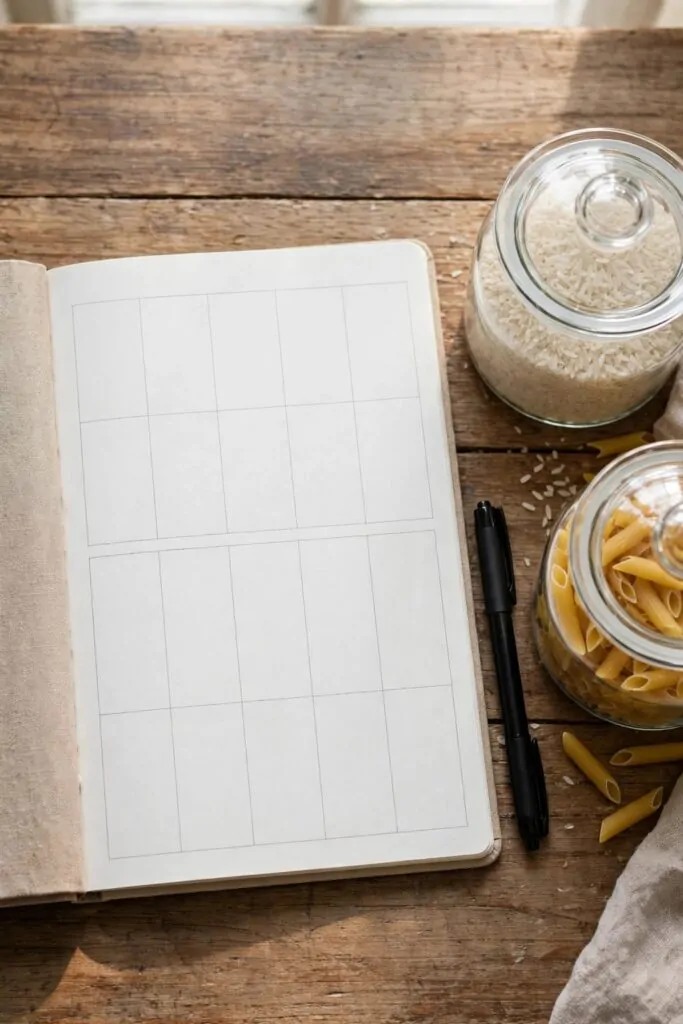
My notebook opens to a blank weekly grid, and a black pen waits beside it. Jars of rice and pasta sit close by on the table.
I write one meal on each line of the grid. Rice gets two nights this week. Pasta gets two nights too.
My plain pantry meal notebook cost $2 to $4.
The grid stays blank until I fill it, and that is the fun part.
I plan around what I already own. No new shop is needed for these meals.
Monday is rice night in my house. Wednesday is pasta night. Friday is a mix of what is left.
A plan on paper stops the evening panic. I just look at the grid and start to cook.
Plan the week once and the evenings feel calm.
7. Cook One Pot Meals From the Pantry
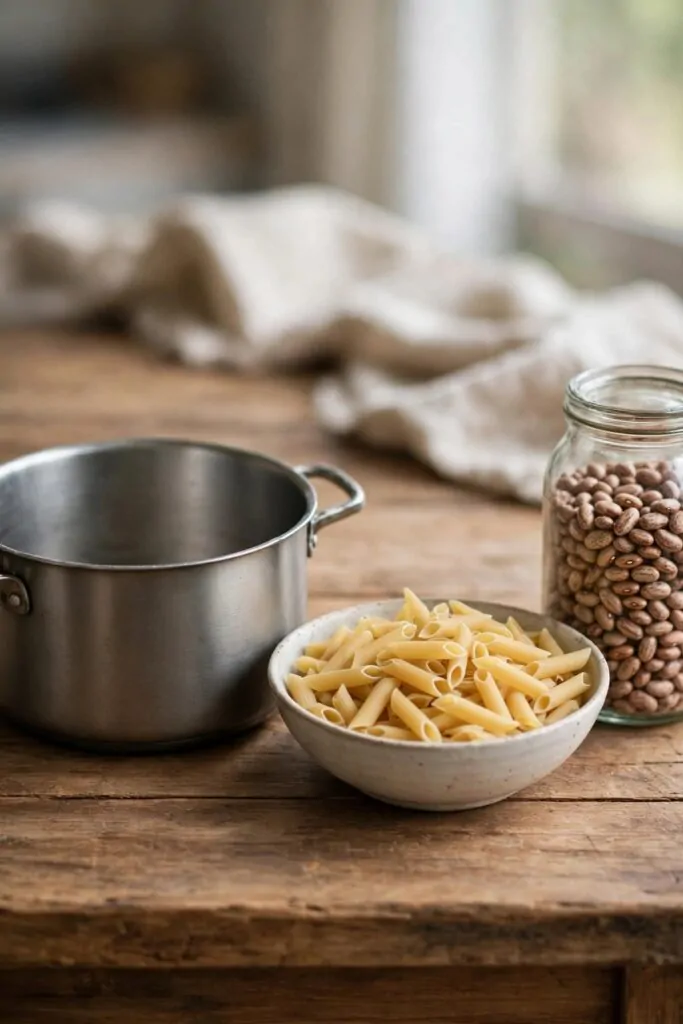
One pot means less wash up and a warm meal fast. I set my plain pot on the wooden table. A bowl of dry pasta and a jar of dried beans sit beside it.
My plain one pot meal set cost $3 to $5. The pot is plain, and that is all it needs to be.
Pasta and beans cook well side by side in one pot.
I tip the pasta into the pot first. Then I add the beans and some water. I let it cook slow till it is soft.
One pot, one meal, and a table that stays clean.
Dry pasta keeps for months on my shelf. Dried beans keep just as long.
Cook once and eat well twice.
I serve the meal straight from the pot into a bowl. I eat it warm at the table. The rest keeps for lunch the next day.
A pot meal is my favourite way to use the pantry. It asks for little and gives a lot.
8. Make Soup From Pantry Staples
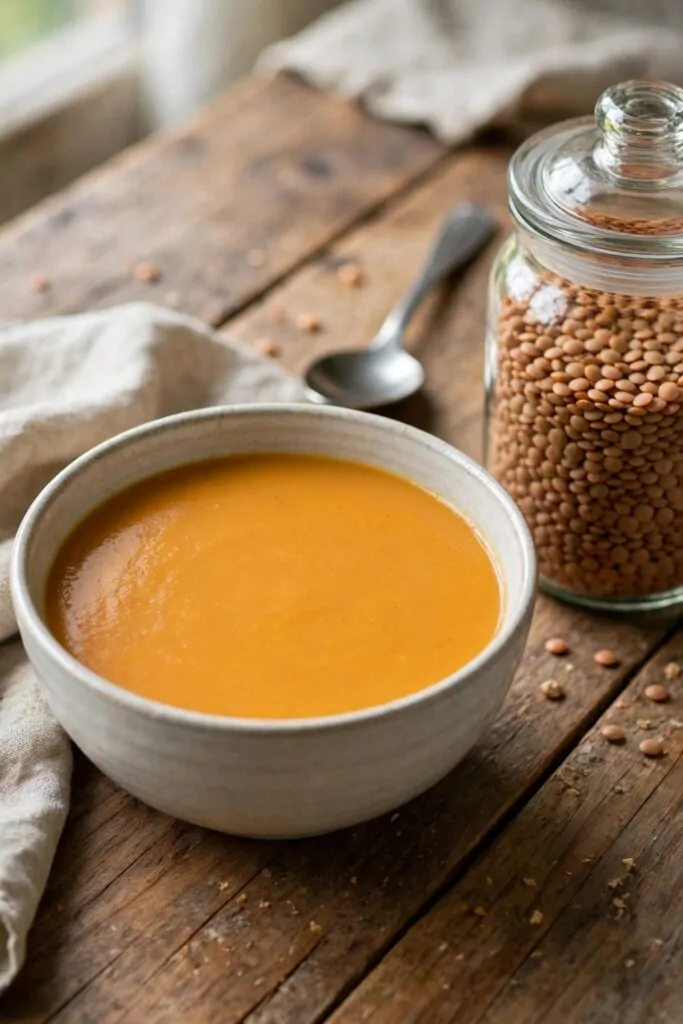
Soup is the kindest way to use pantry staples. It asks for little and tastes like care.
My plain pantry soup set cost $3 to $5.
A jar of dried lentils sits beside my soup bowl. Lentils cook soft and turn a plain soup into a full meal.
My soup is smooth and plain and orange in the bowl. A spoon rests beside it on the table. It looks simple, and it tastes just as simple.
I make soup when my cupboard feels full but my head feels empty.
Lentils need no soak and no fuss.
I cook the lentils till they are soft. I stir them into the soup. Then I blend it smooth and eat it warm.
One bowl fills me up for the evening. The rest waits in a pot for lunch.
Soup turns small staples into a real dinner.
9. Use Up the Rice First
Rice hides in the back of my cupboard for months.
This week it moves to the front and gets used first.
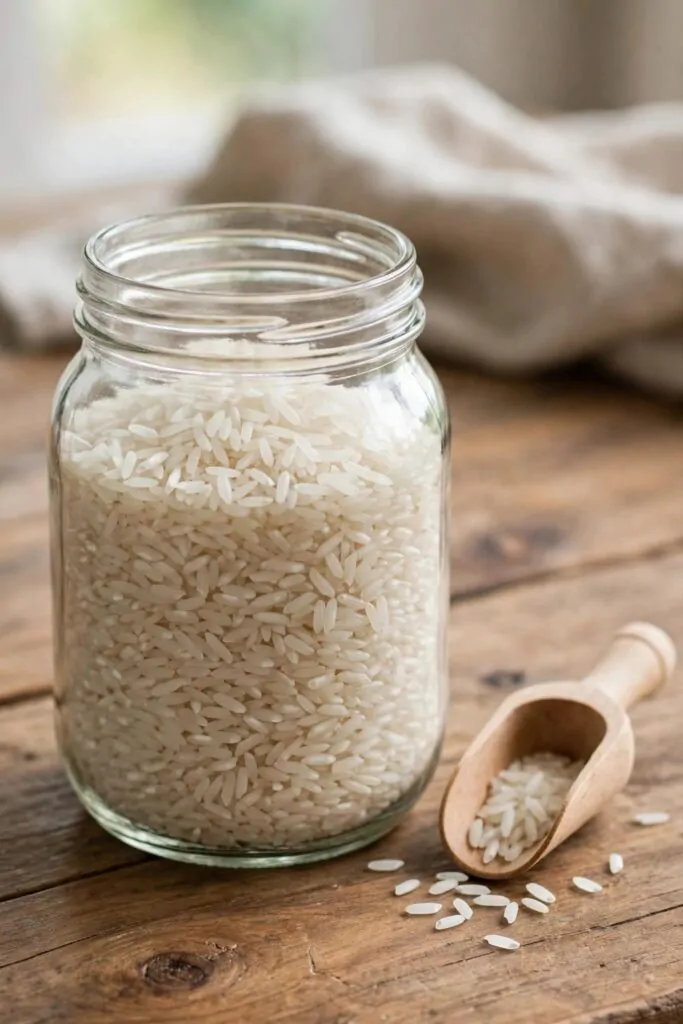
My glass jar of white rice sits on the table with a small scoop beside it. The rice looks clean and plain inside the jar. I scoop out what I need for each meal.
My plain rice jar cost $2 to $3. Rice cooks plain and goes with almost any meal I make.
Use the rice first and the jar empties fast.
I cook a pot of rice on Sunday. It feeds me for two more meals that week.
A full rice jar is a quiet promise of dinner.
I rinse the rice in a bowl before I cook it. I add water and let it cook slow. Then I fluff it with a fork and serve it warm.
Start with the rice you already own. Your shop list gets shorter each week.
10. Use the Pasta You Already Have
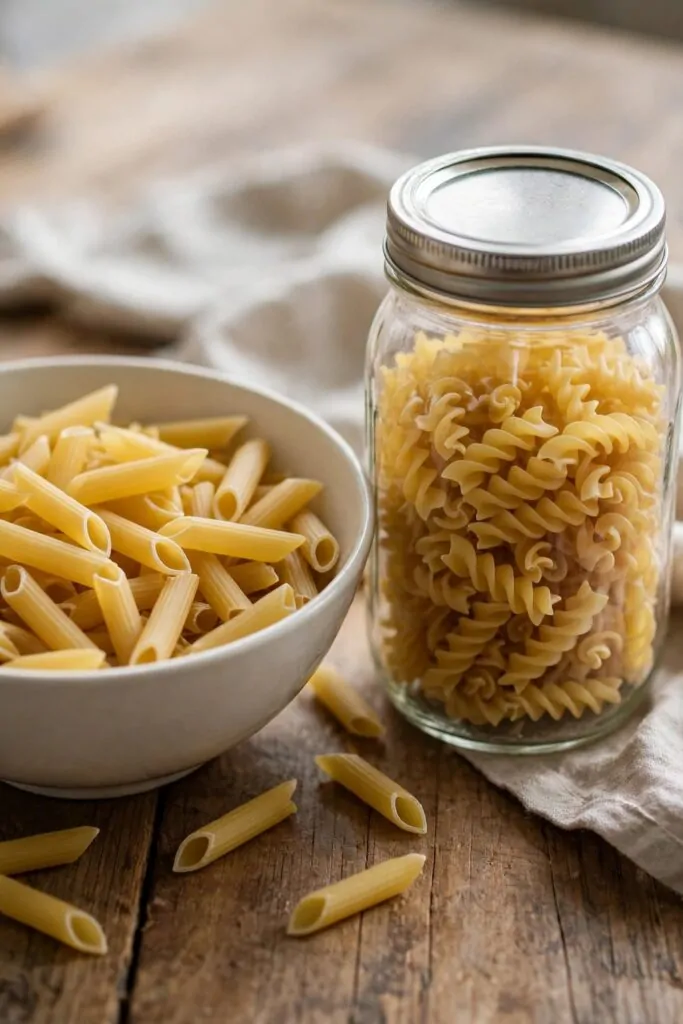
Pasta is the friend my cupboard never runs out of. Dry pasta sits in a plain bowl on my table. A jar of dry pasta sits beside the bowl, plain and ready.
My plain pasta bowl set cost $2 to $4.
I cook pasta when I want dinner fast and warm.
Boil water, add the pasta, and wait till it is soft. Drain it and add a plain sauce or a little oil.
Pasta goes with beans and with plain veg too. It fills a bowl and fills you up. It asks for almost nothing from the shop.
Use the pasta you have before you buy more.
I cook the pasta from my bowl for one good meal. The jar keeps the rest for the week.
A pasta night is never a bad night.
Cook the pasta you already own tonight. Your cupboard will thank you in the morning.
| Idea | Main change | Typical cost |
|---|---|---|
| Start With One Pantry Shelf | one pantry shelf started | $2 to $4 |
| Take Stock of What You Have | pantry stock taken | $2 to $3 |
| Write a Plain Pantry List | pantry list written | $2 to $3 |
| Group Food by Type | food grouped by type | $3 to $5 |
| Use the Oldest Food First | oldest food used first | $2 to $4 |
| Plan Meals From Your Pantry | meals planned from the pantry | $2 to $4 |
| Cook One Pot Meals From the Pantry | one pot meals cooked from the pantry | $3 to $5 |
| Make Soup From Pantry Staples | soup made from pantry staples | $3 to $5 |
| Use Up the Rice First | rice used up first | $2 to $3 |
| Use the Pasta You Already Have | pasta used from the pantry | $2 to $4 |
| Total | $23 to $40 |
11. Bake With Pantry Flour
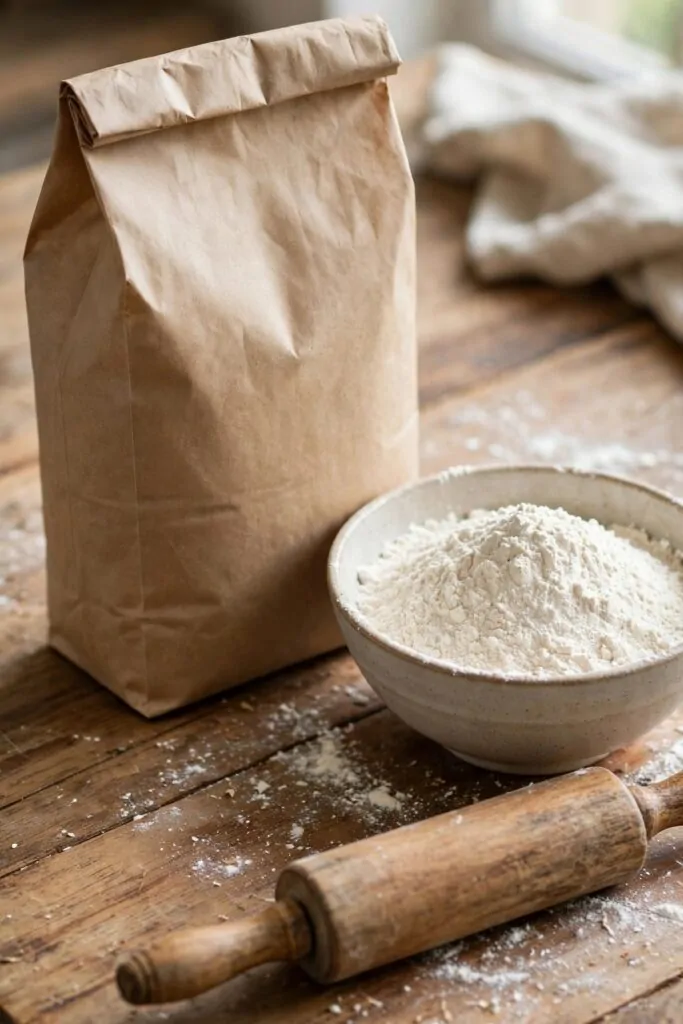
I look in my cupboard and I see my flour bag first.
You can bake a lot with plain flour. I start with a small batch so I learn what works.
My plain flour bag set cost $3 to $5.
I put the flour in a bowl. I add a pinch of salt and a spoon of sugar. I stir it slow with a wooden spoon.
I roll the dough flat with my wooden rolling pin. It feels soft under my hands and it smells plain and warm.
I write the name on the front of the bag with a pen.
You do not need a fancy mix for this. Plain flour and a little time do the job.
I cut the dough into small rounds. I place them on a tray with a little space between each one. I bake them till the tops look pale gold.
I let them cool a bit and then I taste one with you in mind.
12. Use Canned Beans for Lunch
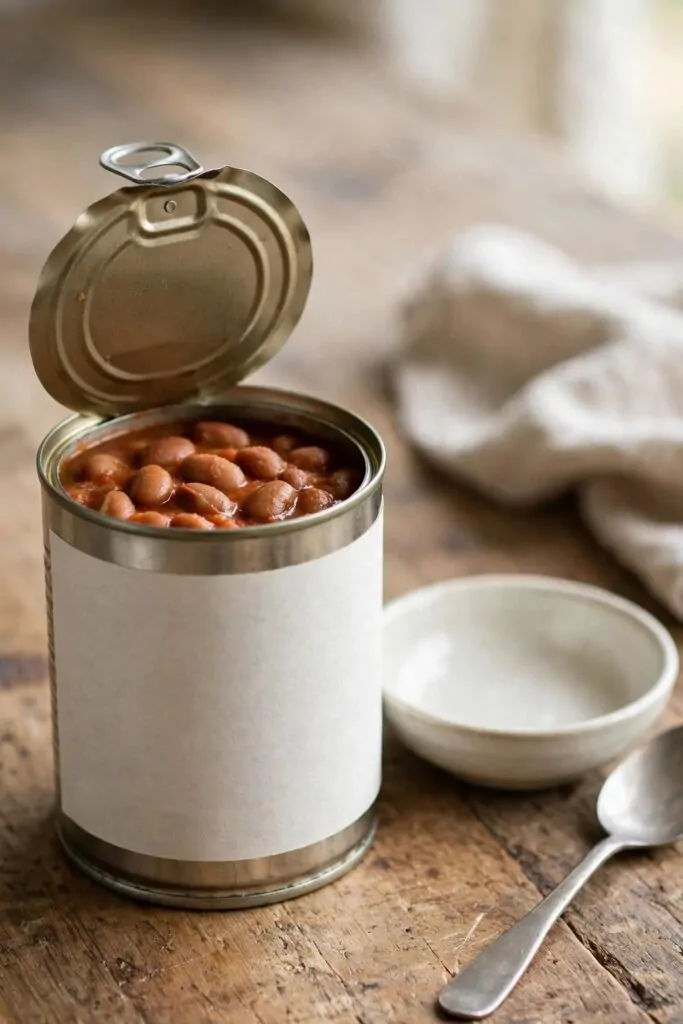
I open a tin of beans for lunch today. It is quick and it fills me up.
I spoon the beans into a bowl.
I rinse them a little in the bowl. I add a pinch of salt. I warm them in a small pan on low heat.
My plain bean tin set cost $2 to $3.
You can eat the beans plain with bread. I like them warm with a spoon of rice on the side.
I keep the spoon near the bowl while I eat. I save the rest in a small box for tomorrow. I write the date on the front of the tin with a pen.
A tin of beans makes lunch feel easy.
One more tin waits on my shelf for next week. That makes me smile because lunch is already sorted.
I eat slow and I enjoy each spoonful.
13. Cook Fried Rice From the Pantry
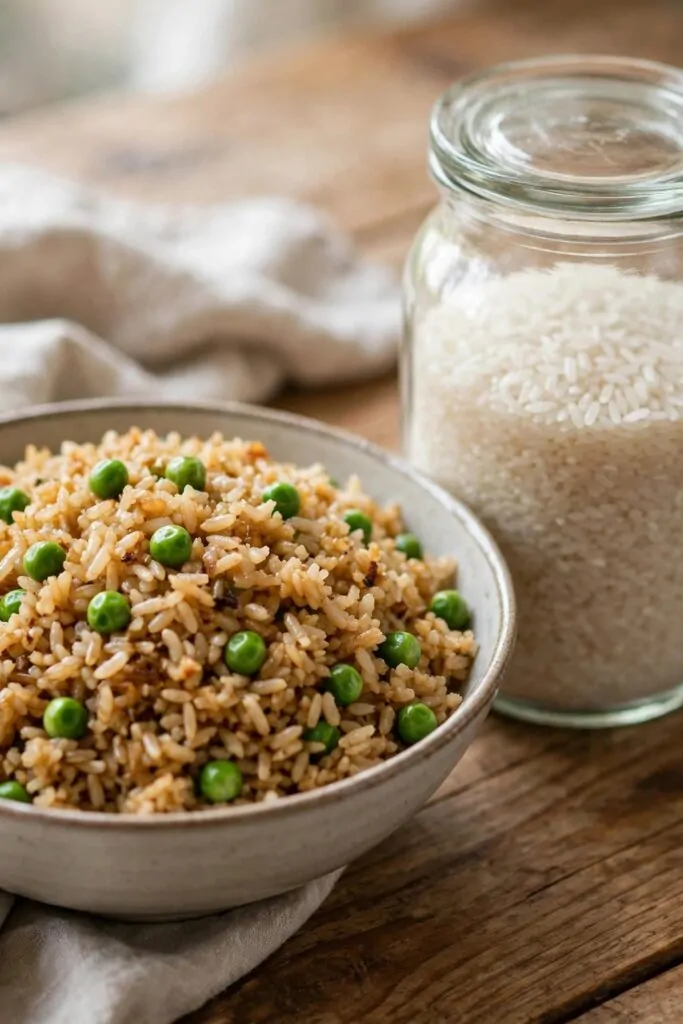
I cook fried rice from the rice I already have. I use the white rice from the jar beside my bowl. I add green peas because they are bright and soft.
My plain fried rice set cost $3 to $4.
I warm a little oil in a pan. I tip the rice in and I stir it round.
The peas turn soft and warm in the pan.
I add a pinch of salt. I stir the rice again so it does not stick. I let it sit for a minute off the heat.
You can make this in one pan. It is a good way to use up rice from yesterday.
I spoon the fried rice into a bowl.
It smells warm and plain.
I eat it while it is still warm. I save a small bowl for lunch tomorrow.
14. Use Up the Oats
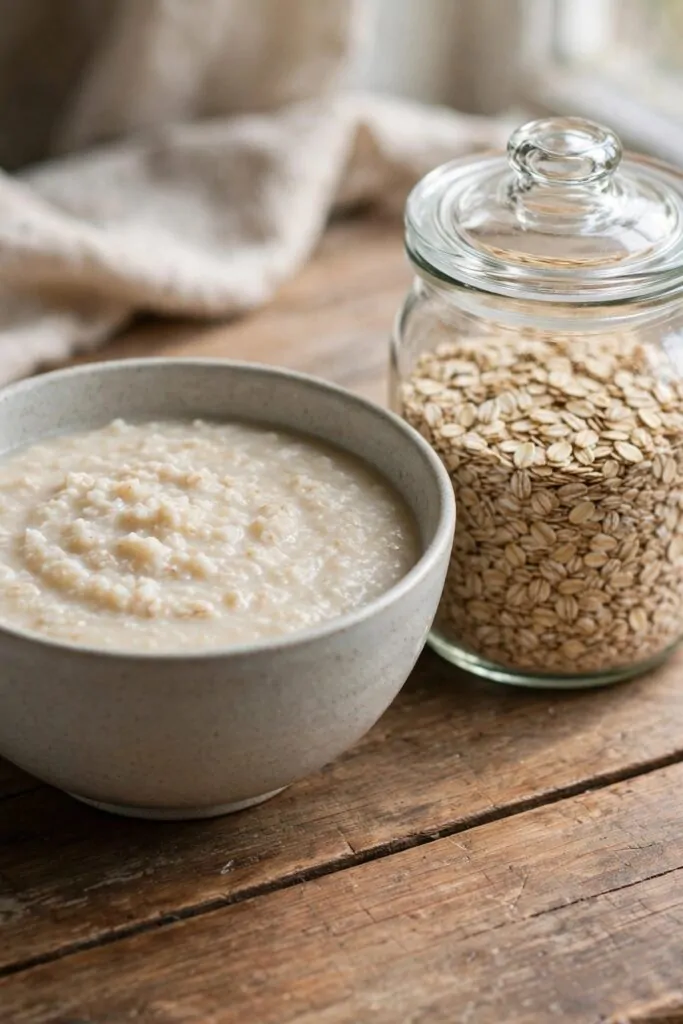
I use up the oats in my jar this morning.
I pour the oats into a pot. I add water and a little milk. I stir it slow till it turns soft.
The oats from the jar make a warm bowl of porridge. I like it plain with a spoon of sugar.
You can eat porridge for breakfast or for a light supper. It is soft and it fills you up.
My plain oat bowl set cost $2 to $3.
I put the porridge in a bowl. I sit down with my spoon. I eat it slow while it is warm.
I wash the pot right after so the oats do not dry on it.
I keep the jar near the front of my shelf. That way I see it first and I use it first.
A small bowl of oats goes a long way. I feel full for hours. I am glad I used them up before they sat too long.
15. Cook With Dried Lentils
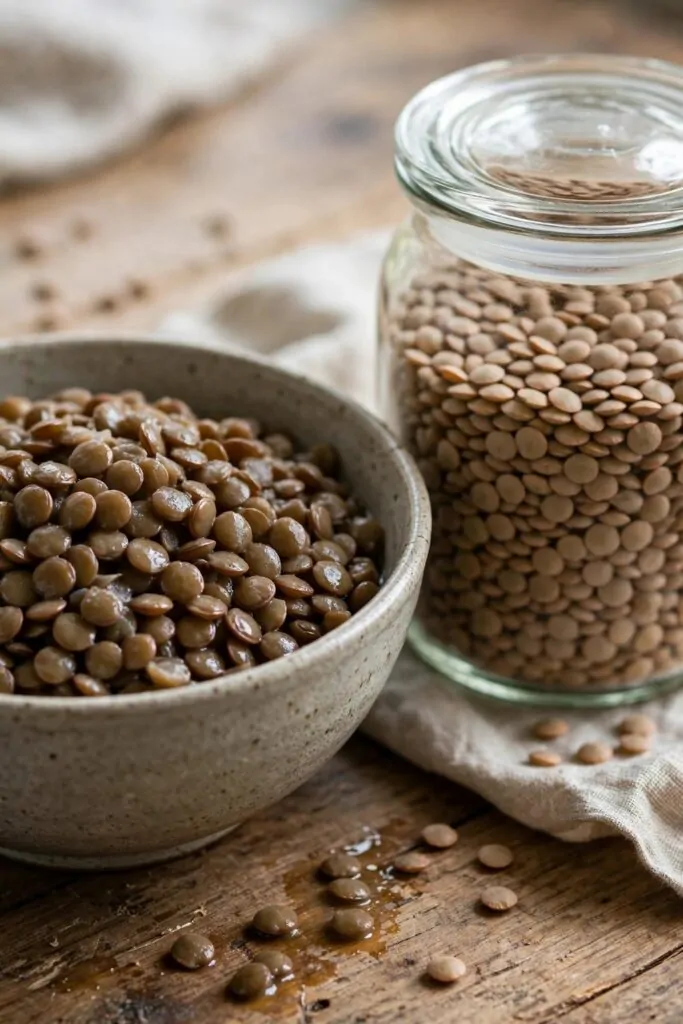
I cook with dried lentils from my jar today. They are small and plain and they cook soft.
I rinse the lentils in a bowl of water. I pick out any bits that look odd.
My plain lentil bowl set cost $2 to $4.
I put the lentils in a pot with water. I add a pinch of salt. I keep the heat low while they cook.
They turn soft and warm in the pot.
I spoon the cooked lentils into a bowl.
You can eat them plain with rice. I like them with a piece of bread too.
I save the rest in a small box. I put the box in the fridge. I eat it for lunch tomorrow.
Lentils are cheap and they fill you up. I am glad I used the jar I already had.
16. Use the Last of the Oil
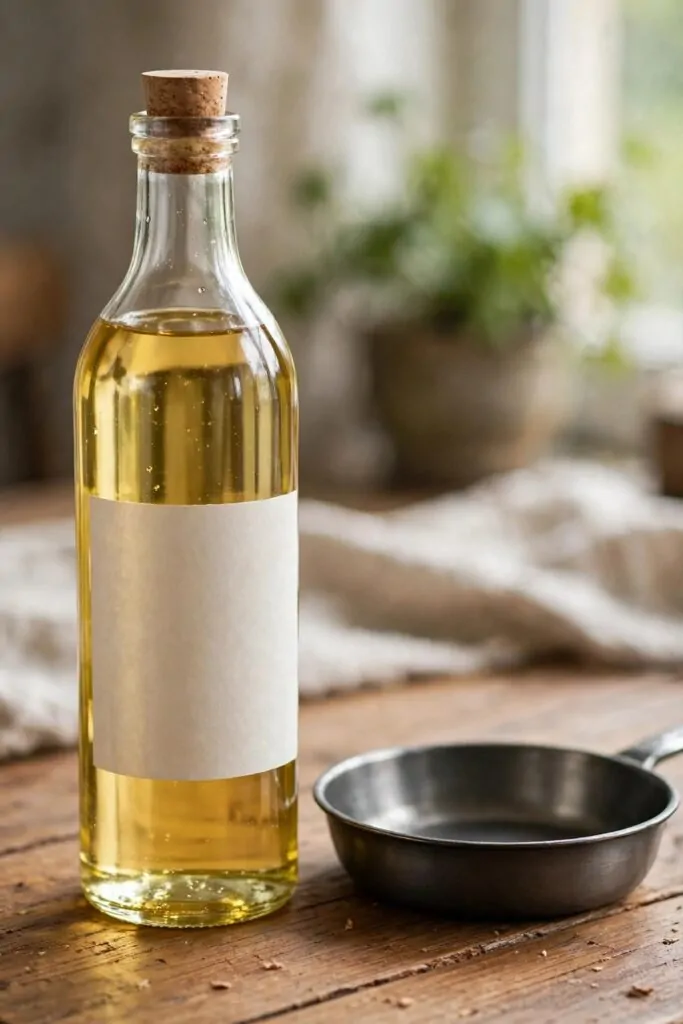
I use the last of the oil in my bottle today. I tip a little into a small pan. I warm it on low heat.
A little oil goes a long way in a pan. I use just what I need and no more.
My plain oil bottle cost $2 to $3.
I cook my rice in the warm oil first.
The pan is small and plain and it heats fast. I keep the heat low so the oil does not burn.
I write the name on the front of the bottle with a pen.
I put the bottle back near the front of my shelf. I want to see it when it runs low. I add oil to my list for the next shop.
You do not need a lot of oil for a good meal. A small spoon can be enough.
I finish the last drops and I feel good about using it all up.
17. Make Snacks From What Is Left
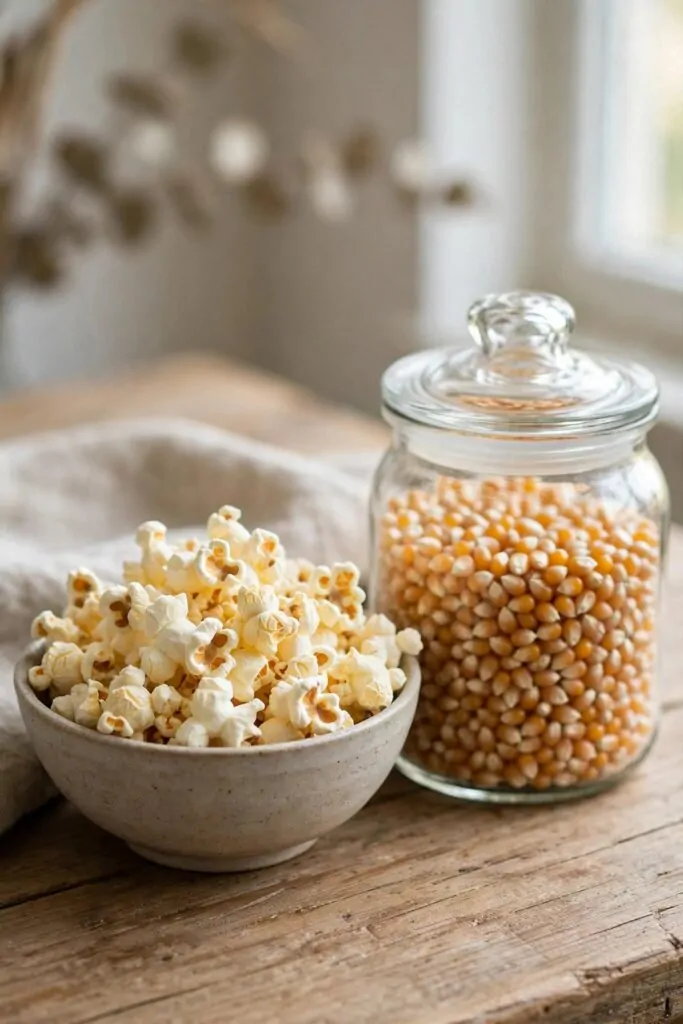
I make snacks from what is left in my cupboard.
My plain snack bowl set cost $2 to $3.
I pop the kernels from the jar in a pot with a lid. They pop fast and they smell warm.
I put the popcorn in a small bowl. I add a pinch of salt. I shake the bowl a little so the salt spreads.
You can eat popcorn while you read or rest. It is light and it is fun to share.
I save the kernels left in the jar for next time. I put the jar back on the shelf. I keep the bowl near me while I eat.
Popcorn makes a plain snack feel special.
I eat it slow and I enjoy the crunch.
I am glad I used what I had. A snack from the pantry can be just right.
18. Use Up Spices Before They Fade
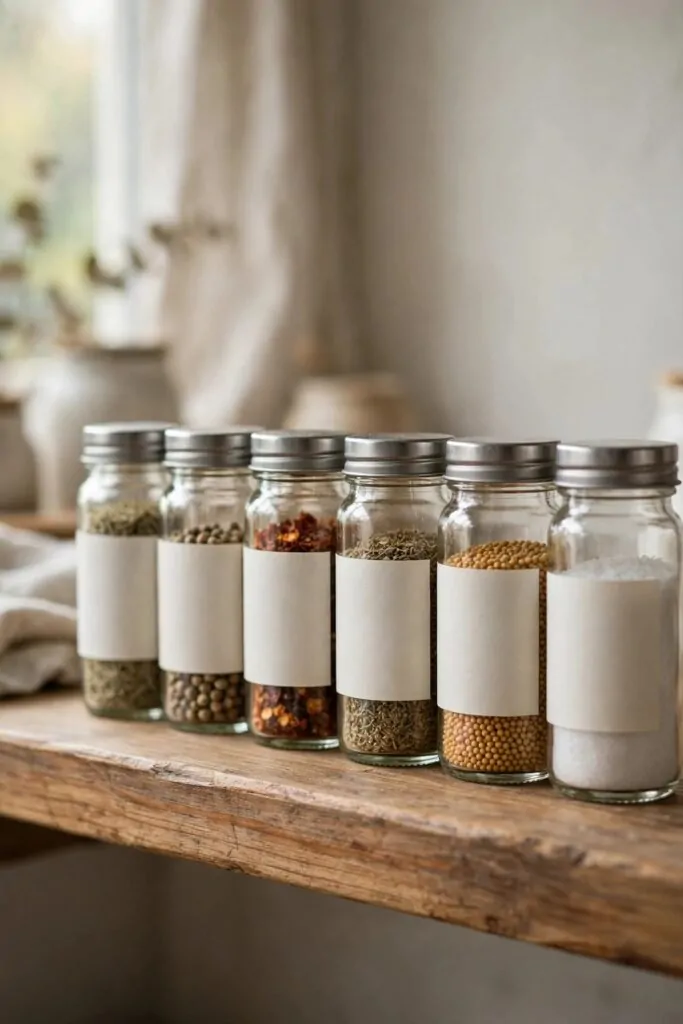
I use up my spices before they fade. Old spices lose their smell and their taste.
I line the small glass jars up in a row on my shelf. I look at each blank label. I write the name on the front of each jar with a pen.
My plain spice jar set cost $3 to $5.
I open one jar and I smell it first. If it smells weak, I use a little more in my food.
A pinch of spice can wake up plain rice. It turns a plain meal into a warm one.
I add spice to my lentils and my beans. I add a little to my rice too. I taste as I go so it stays mild.
You do not need a lot of spice for good taste. A small pinch is often enough.
I put the jars back in a neat row.
I feel glad I used them while they were still fresh.
19. Cook a No Shop Week
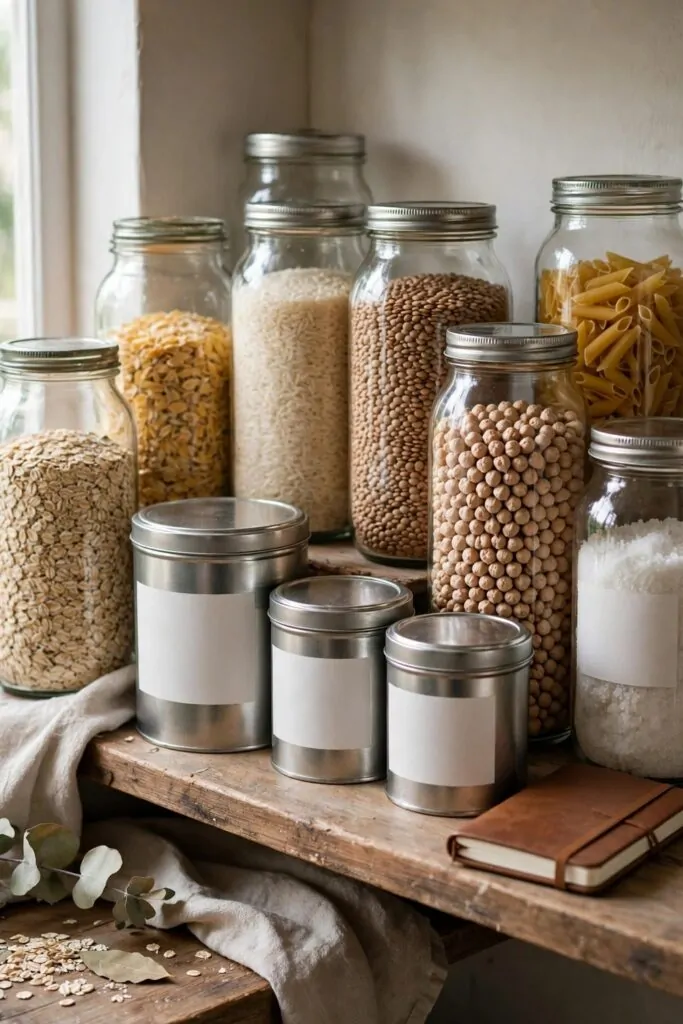
I cook a no shop week from my pantry shelf.
I look at the full shelf with its glass jars and plain tins. I make a list in my small notebook of what I have.
Each day I plan three plain meals from that list. I cook breakfast first each morning. I use what runs out first.
My plain no shop week set cost $2 to $4.
I cross each meal off in my notebook when I cook it.
You can do a no shop week too. Start with one week and see how it feels.
I eat rice one day and lentils the next. I use beans for lunch when I need something quick. I save the last tin for the last day.
I feel proud when the shelf gets a little empty.
A no shop week saves money and it clears space. I am glad I tried it with what I already had.
20. Swap One Shop Meal for a Pantry Meal
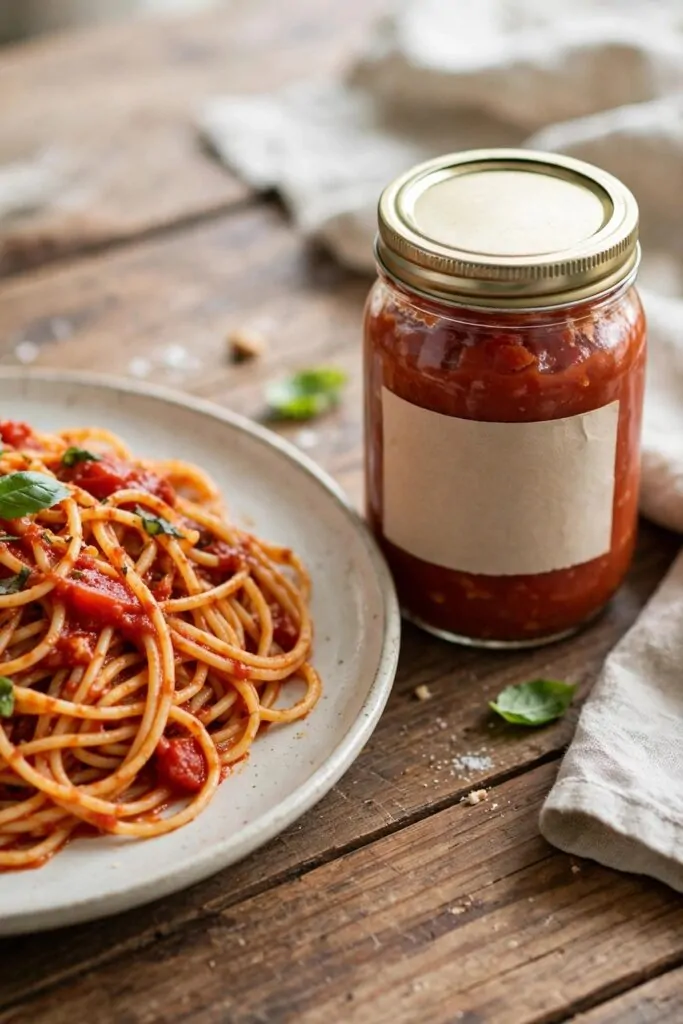
I swap one shop meal for a pantry meal today. I cook plain pasta with tomato sauce from my shelf. I use the jar of pasta sauce beside my plate.
My plain pantry pasta set cost $3 to $5.
I boil the pasta till it is soft.
I warm the tomato sauce in a small pan. I pour it over the pasta when it is hot.
The tomato sauce smells warm and rich. I stir the pasta so every piece gets sauce. I put it on a plate and I sit down to eat.
I write the name on the front of the sauce jar with a pen.
You can swap one meal a week like this. It is an easy way to use what you already have.
I eat the pasta slow while it is warm. I save a small plate for lunch tomorrow.
One swap a week makes a real change over time.
| Idea | Main change | Typical cost |
|---|---|---|
| Bake With Pantry Flour | baking done with pantry flour | $3 to $5 |
| Use Canned Beans for Lunch | canned beans used for lunch | $2 to $3 |
| Cook Fried Rice From the Pantry | fried rice cooked from the pantry | $3 to $4 |
| Use Up the Oats | oats used up | $2 to $3 |
| Cook With Dried Lentils | dried lentils cooked | $2 to $4 |
| Use the Last of the Oil | last oil used up | $2 to $3 |
| Make Snacks From What Is Left | snacks made from what is left | $2 to $3 |
| Use Up Spices Before They Fade | spices used before they fade | $3 to $5 |
| Cook a No Shop Week | no shop week cooked | $2 to $4 |
| Swap One Shop Meal for a Pantry Meal | one shop meal swapped for a pantry meal | $3 to $5 |
| Total | $24 to $39 |
21. Use Up Food From the Freezer
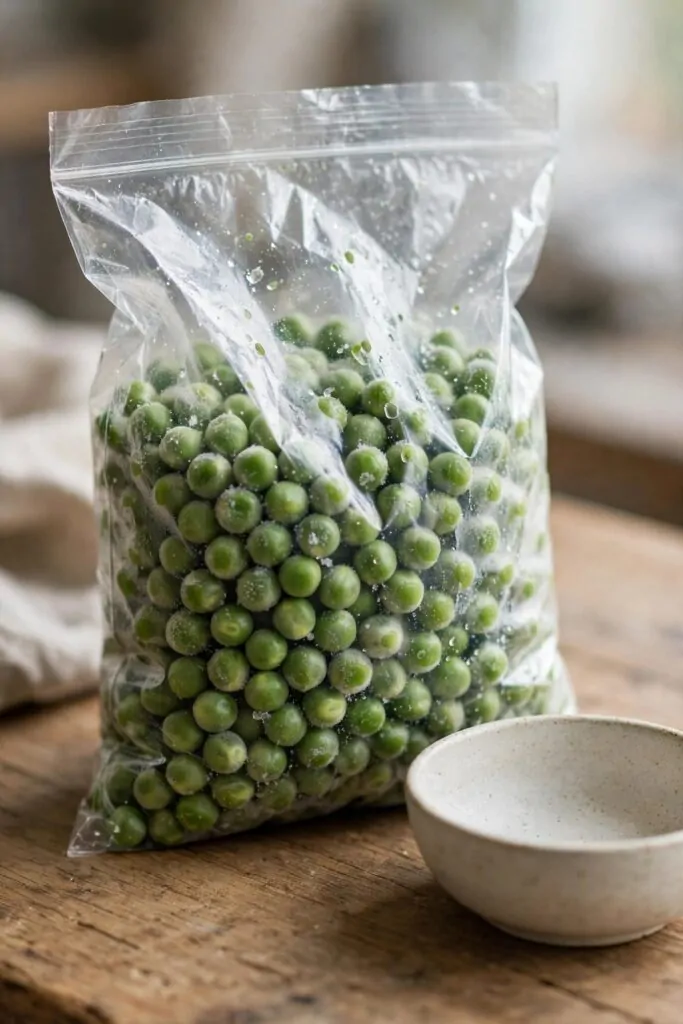
I open the freezer first when I plan a meal. A clear bag of frozen green peas waits on the wooden table.
I use the peas before I buy more food.
Frozen peas cook fast in a pan. I add them to rice on busy days. I add them to soup when the pot is nearly done.
My plain freezer bag set cost $2 to $3.
I keep the bag flat so it stacks well in the freezer. A small bowl sits beside the bag on the table.
I take out only what I need. One meal at a time is enough.
The peas stay bright and soft when I cook them fast. I stir them in at the end so they stay fresh.
I write the date on the bag with a pen. I use the oldest bag first each week. I feel calm when the freezer holds food I can use.
A full freezer means less waste and more simple meals.
22. Make Breakfast From the Pantry
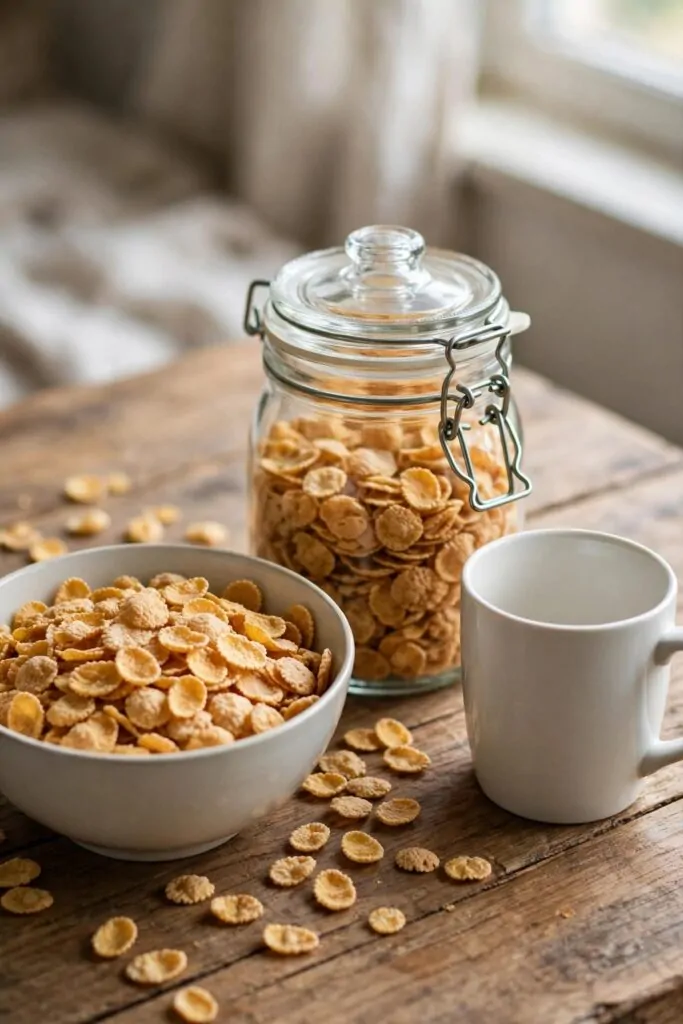
I start the day with a bowl of plain cereal from the pantry.
A glass jar of cereal sits beside the bowl on the table. A plain mug sits beside it too.
My plain breakfast bowl set cost $2 to $4.
I pour the cereal in the morning and eat it slow. I add milk from the fridge when I want it soft. I keep the jar where I can reach it with one hand.
Breakfast from the pantry saves time on busy mornings. I pick one bowl and I feel full till lunch.
I wash the bowl right after I eat. The clean bowl waits for the next morning.
I keep the cereal jar on the same shelf each week. I fill the bowl the night before when mornings feel rushed. I like a calm start with food I already have.
A plain breakfast can still feel warm and kind.
I try a new mix when the jar runs low. I use what is left first and waste nothing.
23. Use Up the Last Crumbs
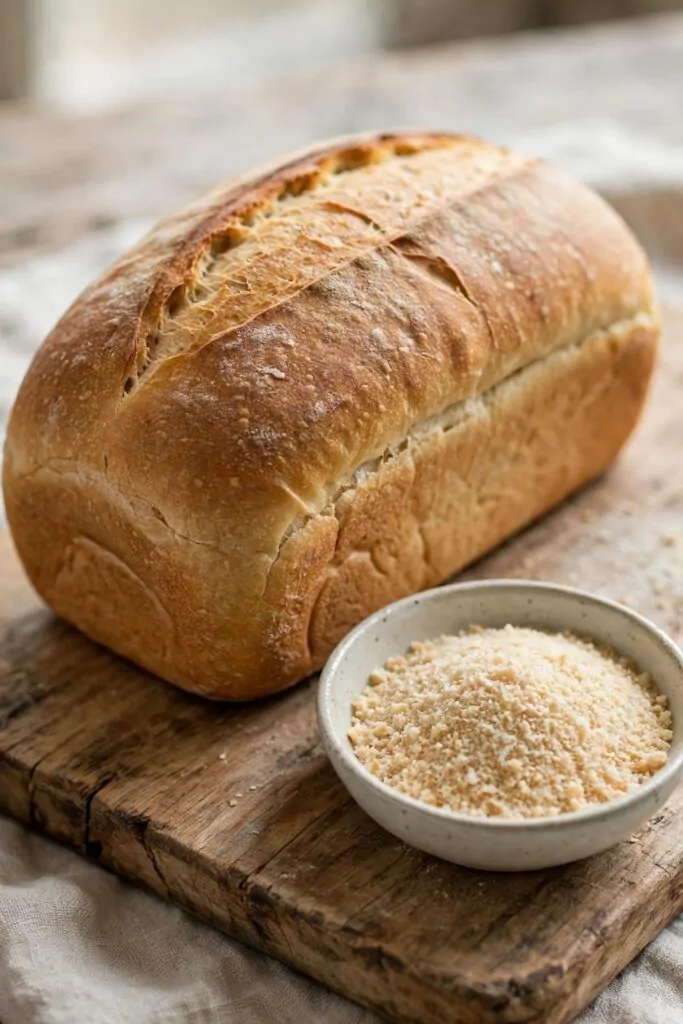
A plain loaf of bread sits on a wooden board in my kitchen. A small bowl of plain breadcrumbs sits beside it. I use both before I buy a new loaf.
I save the last crumbs in the small bowl.
I sprinkle breadcrumbs on top of a warm dish. I stir them into a soft mix for a plain bake.
My plain crumb bowl set cost $2 to $3.
Bread that feels dry still works in crumbs. I dry the heels in the oven till they feel hard. I crush them with my hands when they cool.
I keep the bowl near the board so I see it each day. I use a spoon to move the crumbs from the board to the bowl.
No crumb needs to go in the bin. Every bit can still feed a meal.
I plan one meal each week that uses crumbs well. I feel proud when the loaf is gone and nothing is left.
Small bits can still make a good meal.
24. Share Extra Food With Family
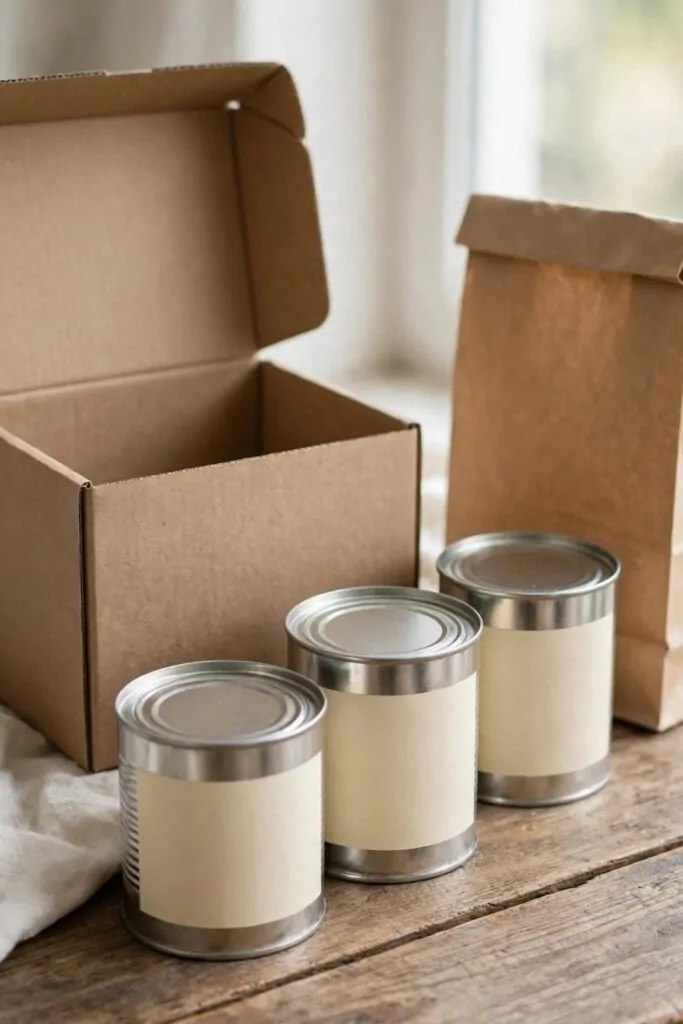
I share the extra food I do not need with my family.
A plain cardboard box sits on the wooden table. Plain tins with blank labels sit in front of the box. A paper bag sits beside the box on the table.
I pack the tins with care so they stay safe on the trip. I add the paper bag for the light things that need a gentle hold.
My plain share box cost $2 to $4.
I call my family first and ask what they need. I pack only what they can use this week.
Sharing food feels warm and kind. I like to see the box leave my home full. I feel glad when my family cooks with it.
I keep a list of what I shared. The list helps me plan the next share.
My shelf feels light after a good share.
I plan the next share when the pantry fills up again. I give with a glad heart and I waste less food.
25. Track What You Use Each Day
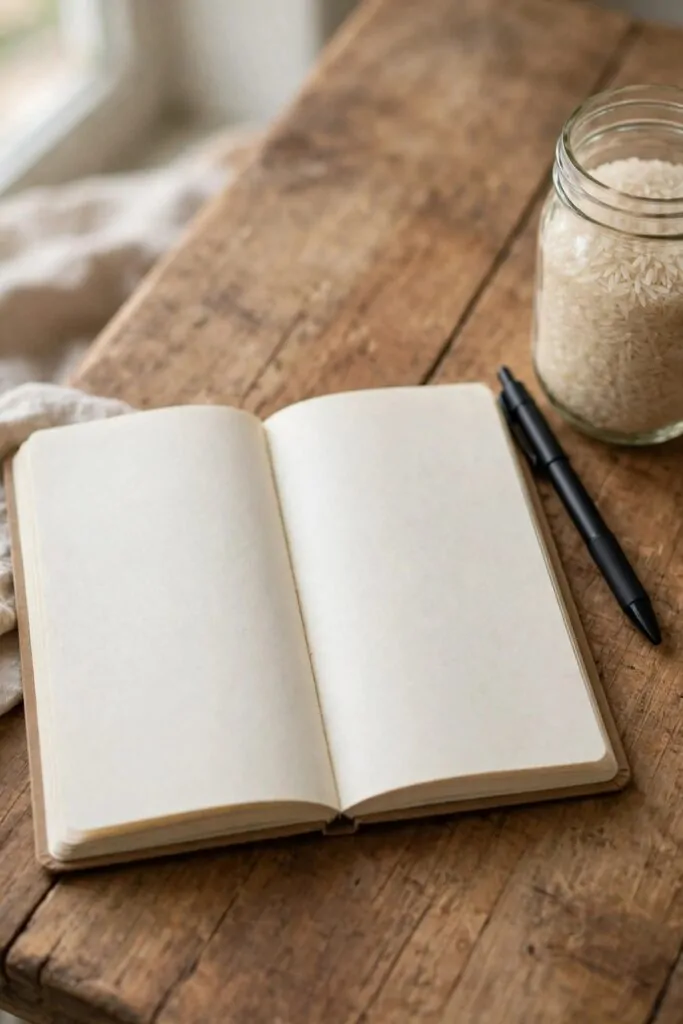
I track what I use so the pantry stays clear in my mind. A notebook with blank pages lies open on the table.
A black pen sits beside the notebook. A glass jar of rice sits beside the pen. I write down each thing I take from the shelf.
My plain pantry tracker notebook cost $2 to $4.
I write one short line each day. I note the food and the day I used it.
The list helps me see what runs out fast.
I read the list at the end of the week. I see which foods I use most. I plan the next shop from what the list shows.
I keep the notebook in the same spot each day. I reach for the pen when I take food from a jar.
A short note each day keeps the pantry in order.
It feels good to know what I have. My pantry feels calm when the list is clear.
26. Keep a Pantry Meal Chart
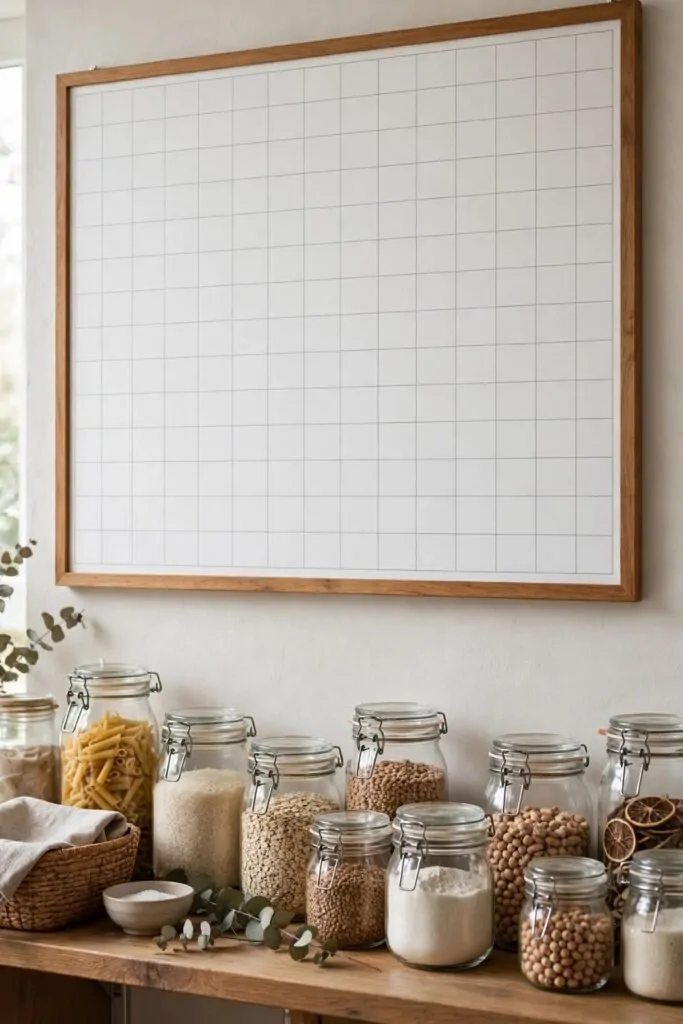
A blank wall chart grid hangs on the wall above the pantry shelf. Glass jars sit on the shelf below it. I use the chart to plan meals for the week.
I look at the chart each morning. I pick one meal for the day from the food I have.
My plain pantry meal chart cost $3 to $5.
I write the meal name in the box for that day.
The chart keeps my week calm and clear. I do not stand and stare at the shelf when I feel tired.
I fill the chart on the first day of the week. I use food from the shelf first. I change one meal when I run out of a food.
A plain chart makes each day feel simple.
I keep the chart where the whole family can see it. I ask them to pick one meal they like each week.
I wipe the chart clean at the end of the week. I start fresh with new meals from the shelf. I feel glad when the week ends with food we all liked.
27. Shop Only for Fresh Food
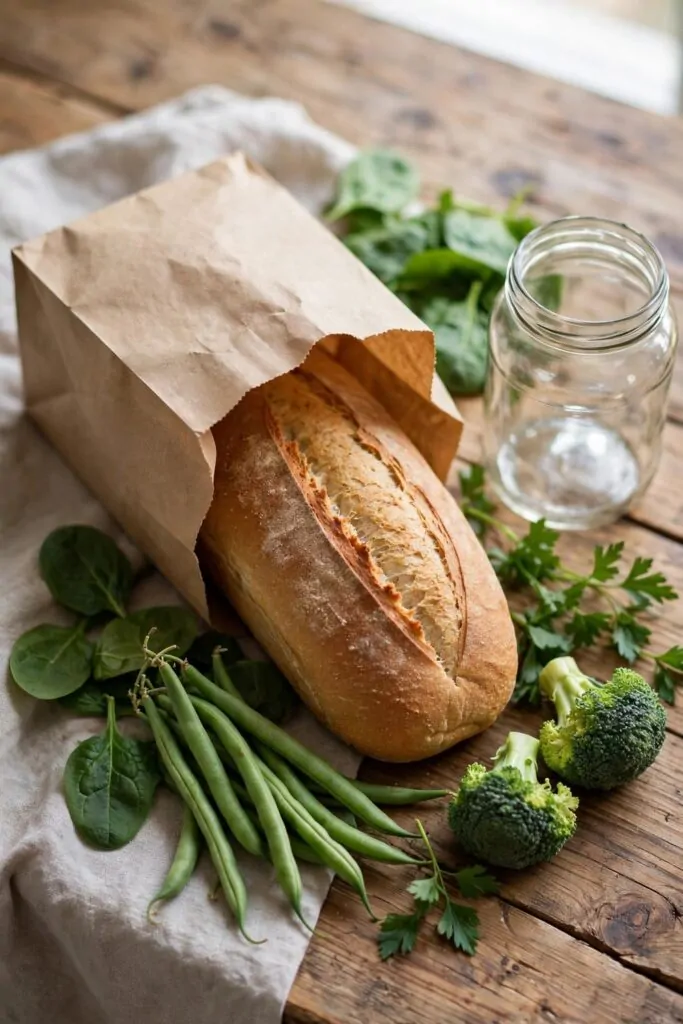
I shop only for fresh food and I use the pantry for the rest.
A plain paper bag sits on the wooden table. A loaf of plain bread and fresh green vegetables sit beside the bag on the table.
I buy bread that feels soft and fresh. I pick green vegetables that look bright and firm. I bring them home and use them first.
A glass jar sits beside the bag on the table. I keep the fresh food where I can see it each day.
My plain fresh food bag cost $3 to $5.
I do not buy a food I already have in the pantry.
Fresh food goes bad fast, so I plan meals for two days. I cook the green vegetables on the first day. I use the bread for lunch and for a warm soup.
I walk past the long-life food in the shop. I smile when my bag stays light and my list stays short.
Fresh food first, pantry food next, and less waste at the end.
28. End the Week With a Clean Shelf
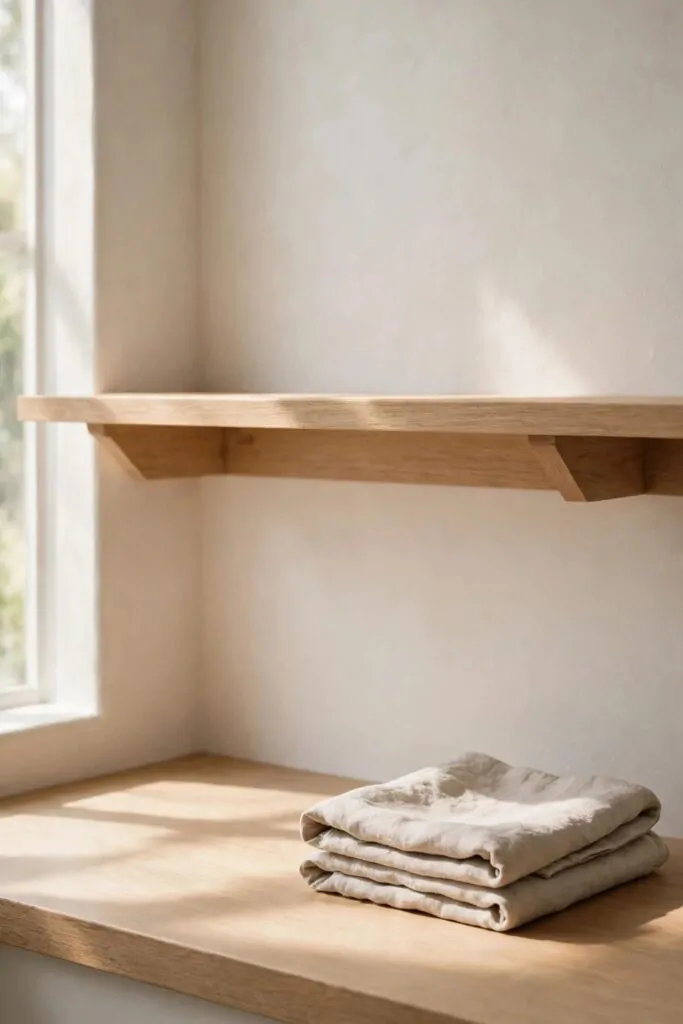
I end the week with a clean shelf and a clear mind. An empty clean pantry shelf waits with a folded cloth below it.
I wipe the shelf with the cloth till it feels clean.
My plain clean shelf cloth cost $2 to $3.
I take each jar off the shelf and wipe the wood. I fold the cloth and set it below the shelf. I put the jars back in neat rows.
A clean shelf helps me see what I have. I find the food I need with no fuss.
I toss the old bits that I cannot use. I keep the shelf dry and neat for the new week.
A tidy shelf makes the kitchen feel calm.
I do this at the end of each week. I go at my own pace and I enjoy the calm work. I feel glad when the shelf shines and the cloth lies folded below it.
A clean shelf is a kind end to a good week.
29. Keep a Simple Pantry Challenge Kit at Home
I keep a simple pantry challenge kit at home so each week feels easy.
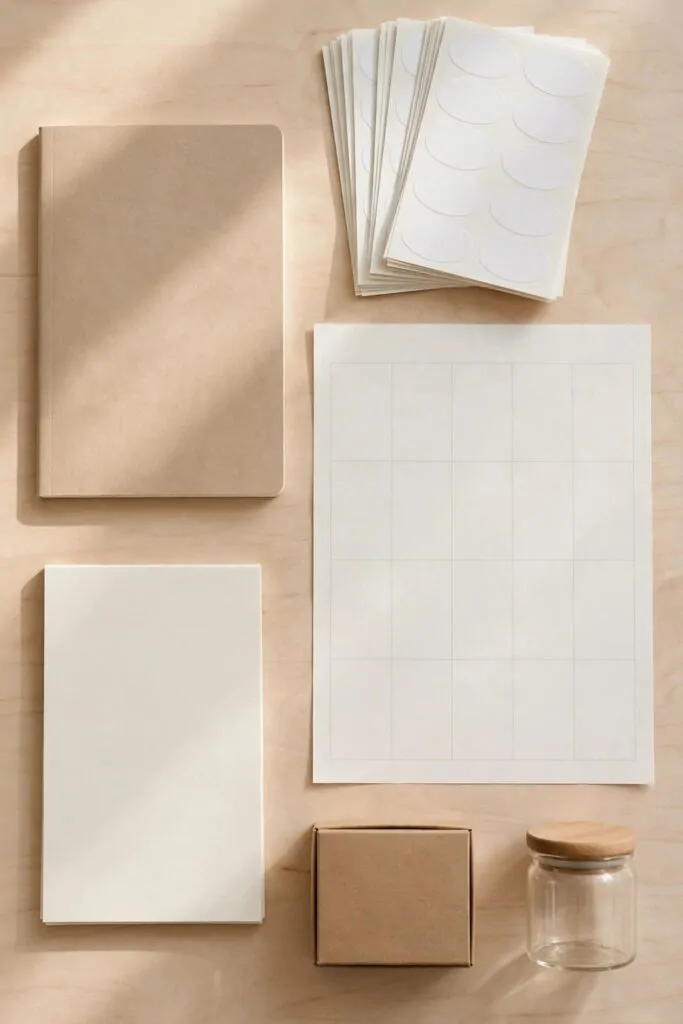
The kit sits on a light wooden table where I can see it each day.
I use a plain notebook for my plans and my lists. I keep the small things for my kit in a small plain storage box.
I add a plain pantry label set to mark each jar in words I can read fast. I use a blank meal chart to plan the week. I keep a plain list pad near the kit for the foods I need.
My kit costs $3 to $5 for the notebook, $2 to $3 for the labels, $3 to $5 for the chart, $3 to $6 for the box, $2 to $4 for the list pad, and $2 to $4 for the jar, for a total of $15 to $27.
A small glass jar sits on the table with the kit. I use the jar to keep one food close at hand.
I set the kit up on the first day of the week. I look at the chart each morning and pick one meal. I write the meal on the list pad when I plan the shop.
I keep the kit in the same spot so I do not hunt for it. I feel calm when all six bits sit in one place.
I use the kit each week and it makes the pantry feel simple. Next week I will open my pantry with a calm mind and cook a simple meal from what is already there.
| Idea | Main change | Typical cost |
|---|---|---|
| Use Up Food From the Freezer | freezer food used up | $2 to $3 |
| Make Breakfast From the Pantry | breakfast made from the pantry | $2 to $4 |
| Use Up the Last Crumbs | last crumbs used up | $2 to $3 |
| Share Extra Food With Family | extra food shared with family | $2 to $4 |
| Track What You Use Each Day | pantry use tracked each day | $2 to $4 |
| Keep a Pantry Meal Chart | pantry meal chart kept | $3 to $5 |
| Shop Only for Fresh Food | only fresh food shopped for | $3 to $5 |
| End the Week With a Clean Shelf | week ended with a clean shelf | $2 to $3 |
| Keep a Simple Pantry Challenge Kit at Home | kit total for the whole plan | $15 to $27 |
| Total | $33 to $58 |
| Idea | Main change | Typical cost |
|---|---|---|
| a plain pantry challenge notebook | a notebook for pantry challenge meals | $3 to $5 |
| a set of plain pantry labels | labels for pantry challenge jars | $2 to $3 |
| a plain pantry meal chart | a chart for pantry challenge meals | $3 to $5 |
| a small plain pantry storage box | a box for pantry challenge tools | $3 to $6 |
| a plain pantry shopping list pad | a pad for pantry challenge shopping lists | $2 to $4 |
| a small plain pantry jar | a jar for pantry challenge staples | $2 to $4 |
| Total | $15 to $27 |
Keep Reading
If you liked these ideas, you will love these posts too
Each post has more simple ideas you can try at home this weekend.