25 Emergency Fund Challenge Ideas That Build Savings Fast

My car broke down on a rainy night and I had no money set aside. I sat in the car and I felt small and scared. I wished I had a little cash at home for a night like that.
That night taught me a plain truth. A small pile of cash at home can turn a hard day into a day I can handle. I did not need a big pile to start.
I started with one plain envelope and a small amount of cash. I put the envelope in a safe spot in my home. Each week I added a little more to it.
My fund grew slow at first, and that was fine. I felt proud each time I added a coin or a note. My hands stopped shaking when a bill came in the mail.
Here are 25 emergency fund challenge ideas that build savings fast at home, and the first one starts with one plain envelope.
You can start the same way, right where you live. Fancy tools and a big plan are not needed. All it takes is one plain spot to keep your cash and a kind goal to work toward.
In this list I share the small steps that worked for me. Each one is easy to try at home. Pick the first one and start today, even if your start is tiny.
1. Start With One Small Goal
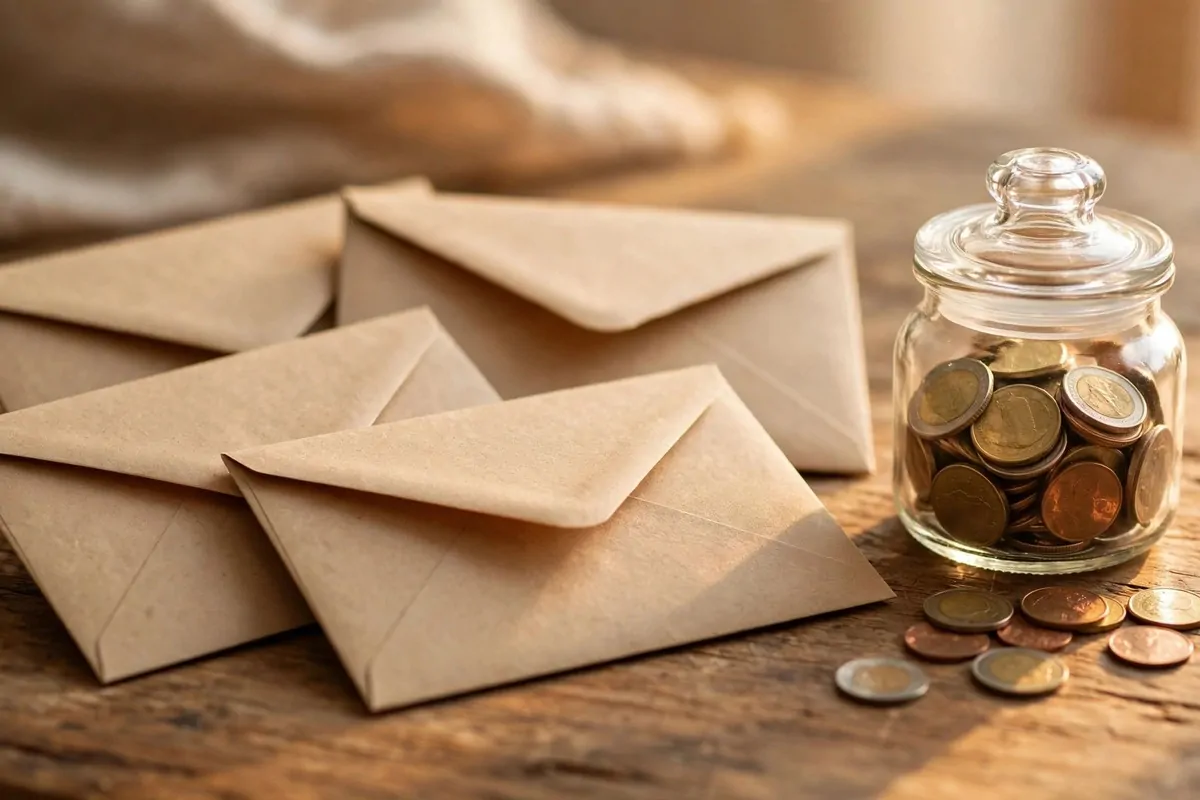
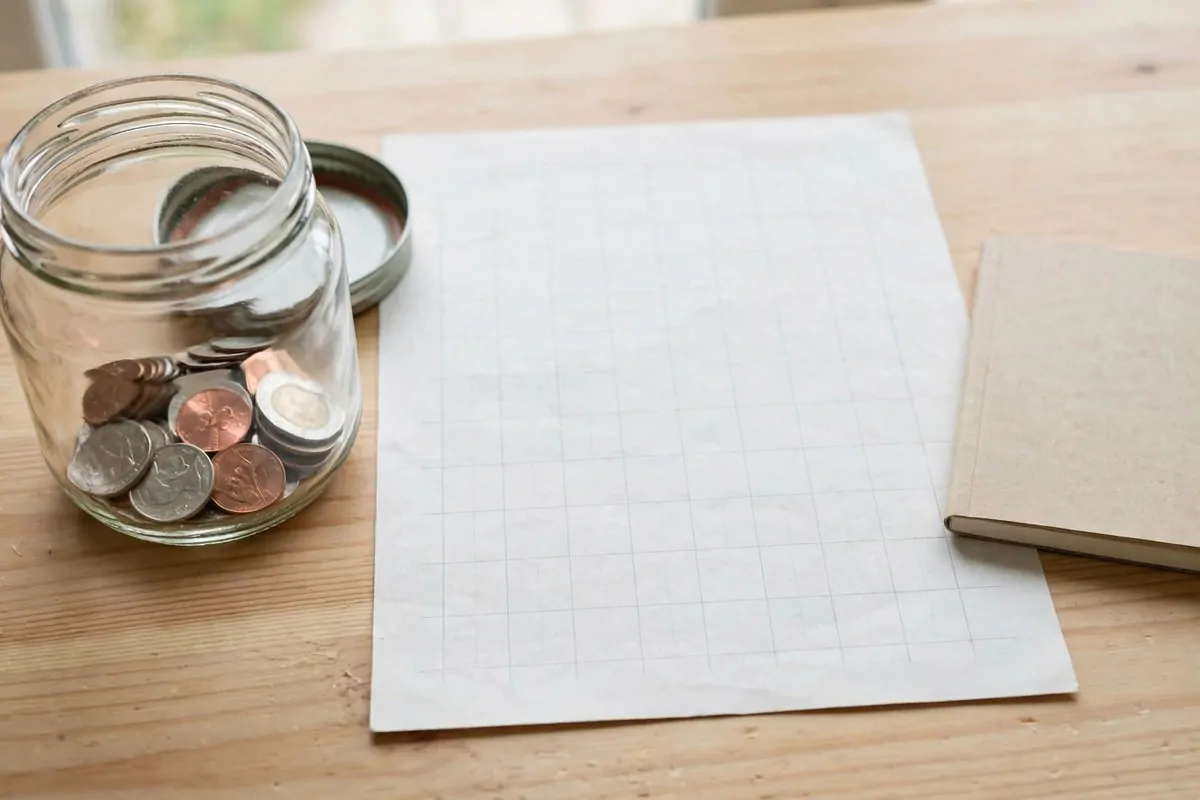
I sit at my wooden table with plain kraft envelopes and a small glass jar of coins. The envelopes have blank fronts, and the jar sits close by.
A small goal feels kind to my heart.
I pick one plain envelope from the pile on the table. I take a pen and I write a small goal on the front of the envelope. My goal is short, and I can see it each time I pass the table.
I paid $2 to $4 for my plain envelope set.
I put a small amount of cash in the envelope. I leave the jar of coins on the table for the days when I have coins to add.
One small goal keeps my plan calm and clear.
I tell myself the goal out loud in the morning. I smile when I see the envelope on the wooden table. A tiny start still counts as a real start.
When I reach my goal, I feel light and glad. I can then pick a new small goal for the next envelope.
Start small, and let your fund grow one envelope at a time.
2. Pick a Number You Can Reach
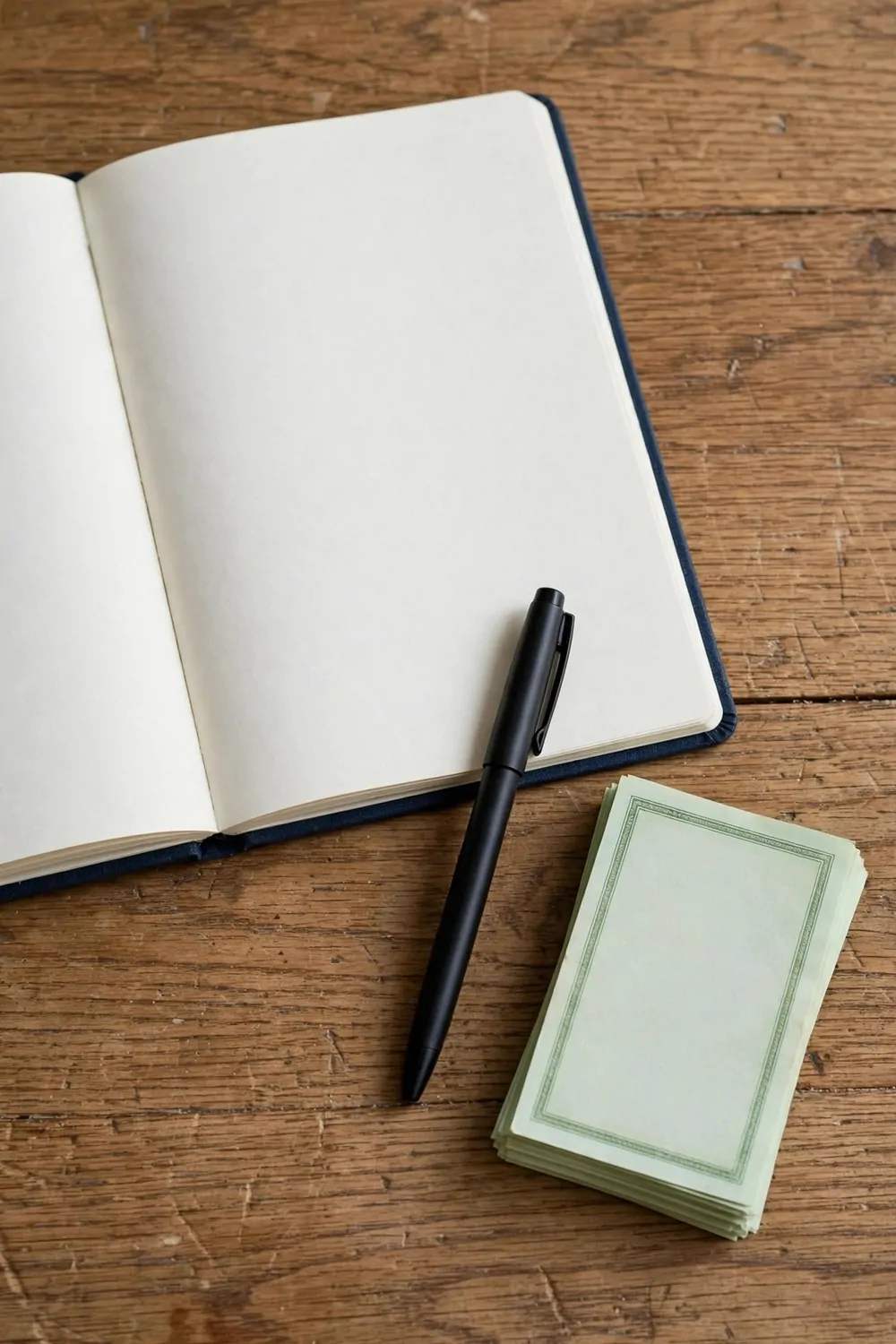
I open my notebook to a blank page on my wooden table.
My black pen rests next to the notebook, and a small stack of paper money waits close by. I look at the blank page and I think of a number I can reach.
My plain notebook set cost $2 to $3.
I take the pen in my hand. I write my number on the blank page in big plain figures. The number is small, and that makes it feel safe to try.
I put the paper money beside the notebook when I save it. Each note I add brings me one step near my number.
A number I can reach keeps me going.
If the number feels too big, I pick a smaller one. A smaller number still moves my fund ahead.
I read my number each morning before I start my day. I smile at the plain page and the neat stack on the table. My fund grows when my number stays kind and clear.
Pick a number you can reach, and let it guide you.
3. Open a Plain Envelope for Emergencies
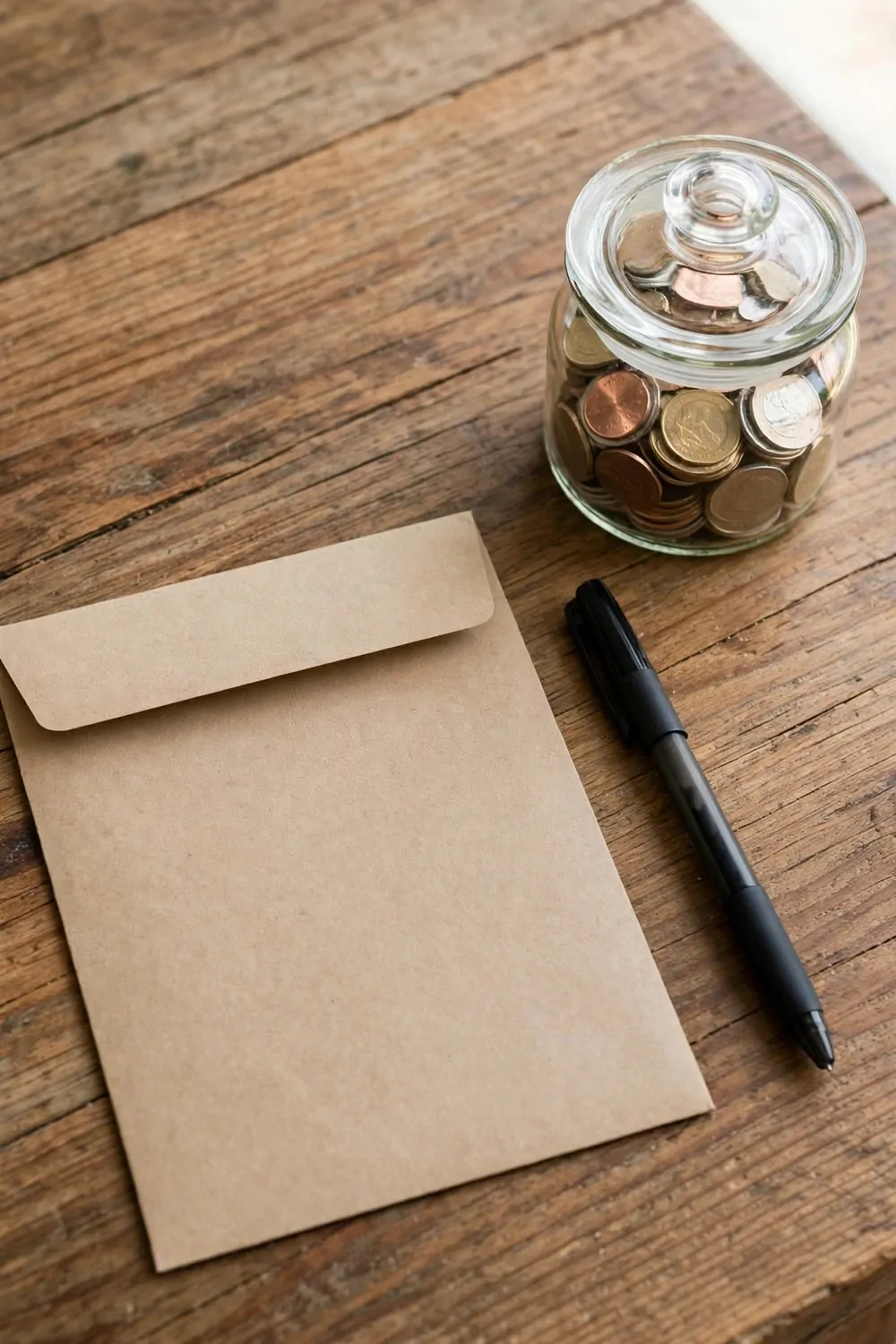
I lay a plain kraft envelope on my wooden table. The front of the envelope is blank and clean. A black pen and a small glass jar of coins sit beside it.
This envelope is only for sudden costs at home.
I take the pen and I write the word Emergencies on the front of the envelope. My hand moves slow, and the letters look plain and neat.
My plain envelope and pen set cost $2 to $4.
I put a small amount of cash in the envelope.
The jar of coins stays on the table beside the envelope. I drop a coin in the jar when I have one to spare. The coins add up, one by one, while the envelope waits in its spot.
I keep the envelope in a safe spot I can reach in a rush. I know where it is, and that thought calms me.
One plain envelope can save a hard day.
Open your envelope today and give it a name. Your fund starts the moment you write on the front.
4. Set Aside Your First Five
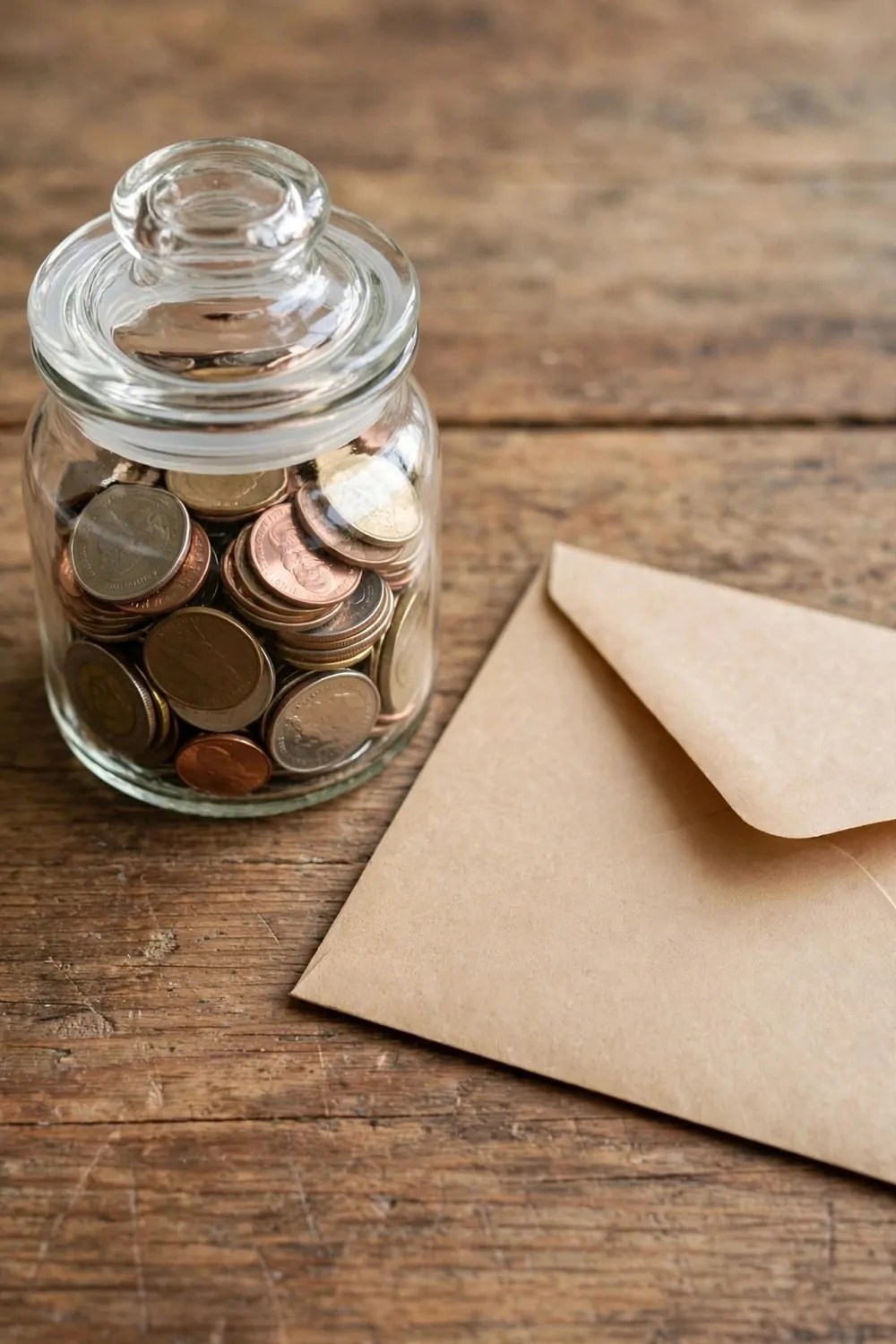
I count five dollars for my first save.
A small glass jar with coins sits on the table beside a plain envelope. I look at the jar and the envelope and I feel ready. Five dollars is a kind first step for me.
I put my first five in the plain envelope. I put the envelope in a safe spot in my home.
My plain jar and envelope set cost $2 to $3.
The jar of coins stays on the table for the coins I find in my pockets. I add a coin to the jar when I can. Each coin joins the fund, and my first five stays safe in the envelope.
Five dollars is small, and it still matters a lot.
I smile when I think of my first five. It proves I can save, even when money feels tight.
Tomorrow I can add a little more if I want. Today my first five is done, and I feel proud.
Set aside your first five and let it be your start.
5. Save a Little Each Payday
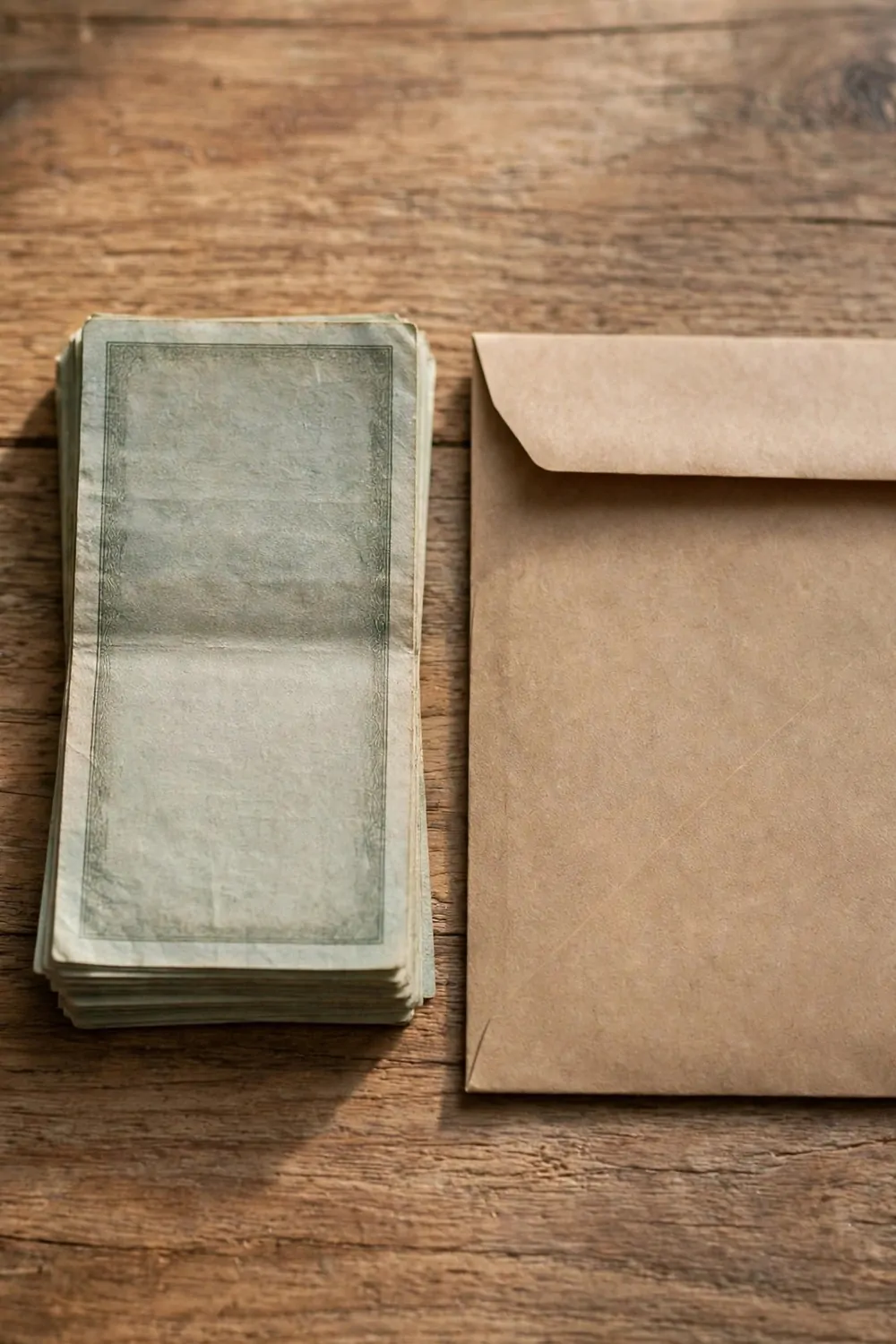
I sit at my wooden table with a small stack of paper money beside a plain envelope. Payday is a good day to save a little first.
I take a small amount from the stack. I put it in the plain envelope right away. I do it before I spend on other things.
My plain envelope and cash set cost $2 to $4.
The envelope has a blank front. I take a pen and I write my new total on the front of the envelope.
A little each payday adds up fast.
I keep the envelope in the same safe spot each time. I do not move it from place to place. When payday comes, I know just where to go.
Saving first makes the rest of the week feel calm.
In some weeks I put more aside, and in other weeks I put less aside. Both weeks still help my fund grow.
Save a little each payday, and watch your fund grow.
6. Keep a Coin Jar for Emergencies
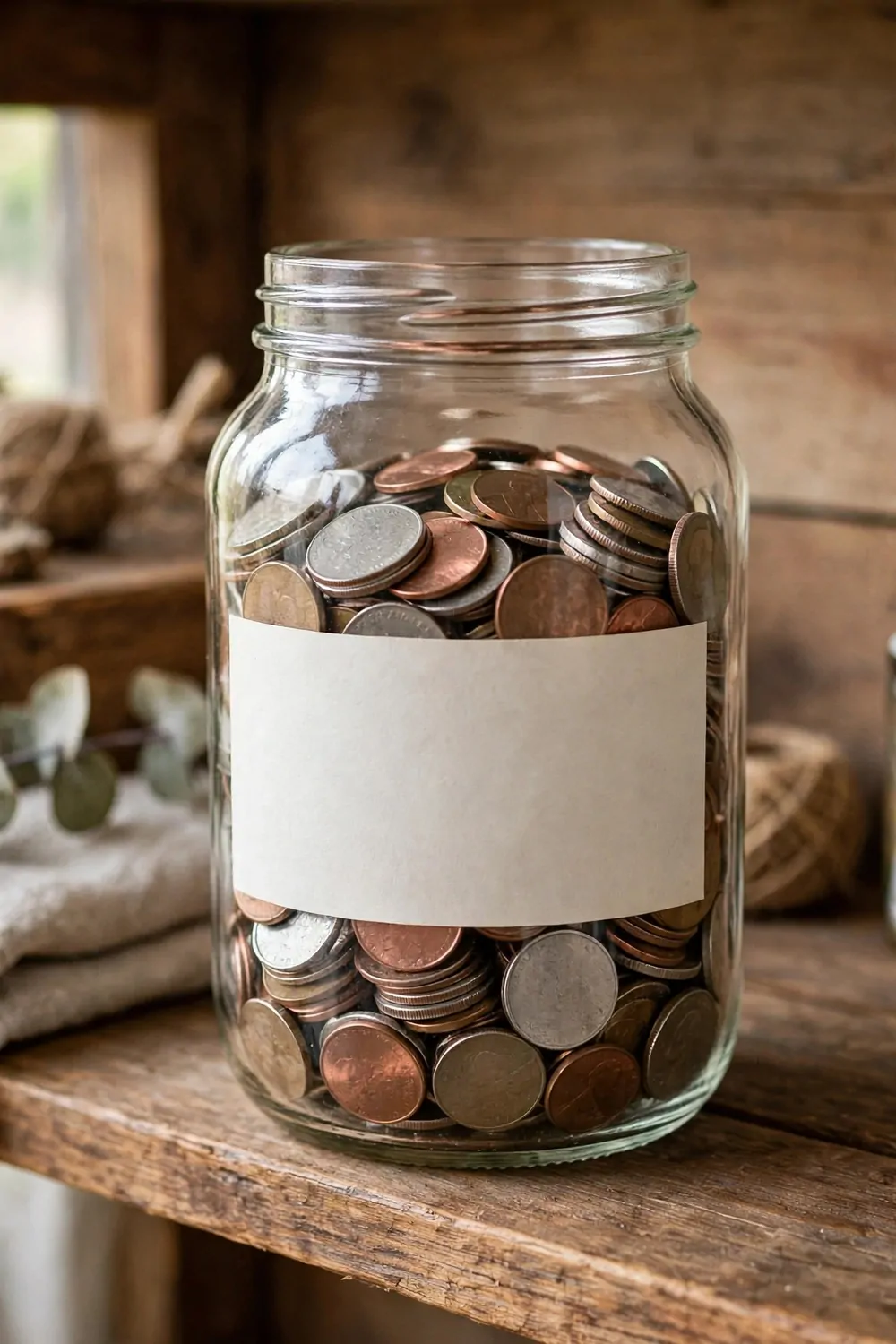
I keep an open glass jar of coins on a wooden shelf.
The jar has a blank label, and I can see the coins through the clear glass. I smile each time I look at the shelf.
I drop a coin in the jar when I come home with coins in my pocket. The jar is open, so the coin slips in with ease. I smile at the small pile of coins in the jar.
My plain coin jar set cost $2 to $3.
I put the jar on the shelf where I can see it each day. A jar I can see reminds me to save.
At the end of the week I count the coins in the jar. I move the coins to my plain envelope with care. My envelope fund grows, and the jar starts fresh again.
A coin jar turns small change into real help.
Keep your jar on a shelf you pass each day.
Drop in a coin when you can, and let the jar do its quiet work. Your fund will thank you on a hard day.
7. Cut One Small Spend Each Week
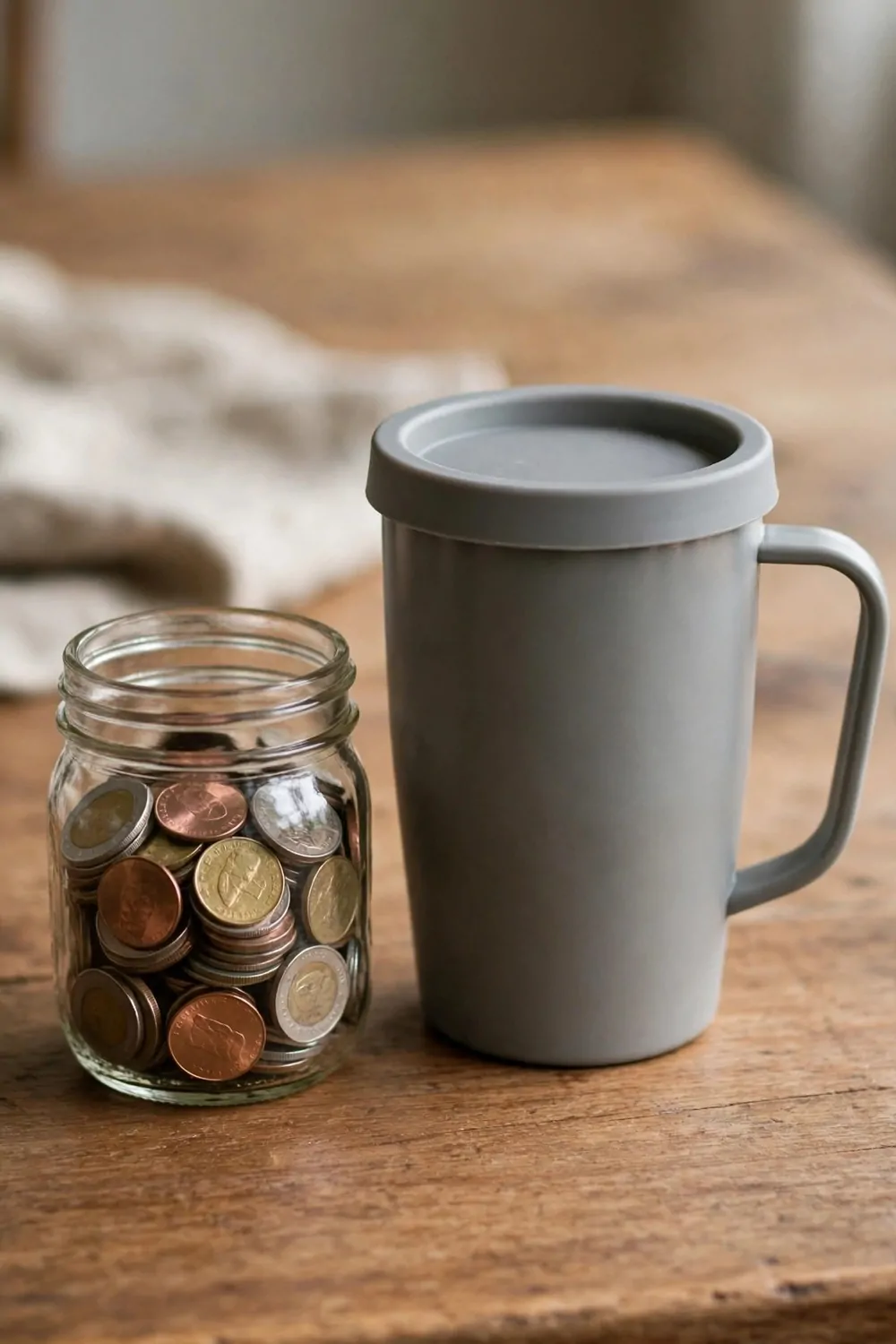
I look at my week and I pick one small spend to skip. I put my plain reusable mug on my wooden table. A small jar of coins sits beside the mug.
I use my mug at home and I skip one small buy that week. The cash I save goes to my jar of coins.
My plain mug and jar set cost $3 to $5.
One small cut each week is easy to keep.
I drop the saved cash in the jar on the table. I watch the coins grow a little more each week.
My mug is plain, and I like it that way.
I pick a new small spend to skip each week. I tell myself the plan in the morning. My fund grows from the small choices I make.
Skipping one small buy never feels hard. It feels like a kind gift to my future self.
Cut one small spend each week, and your fund will grow.
8. Use a Plain Notebook to Track It
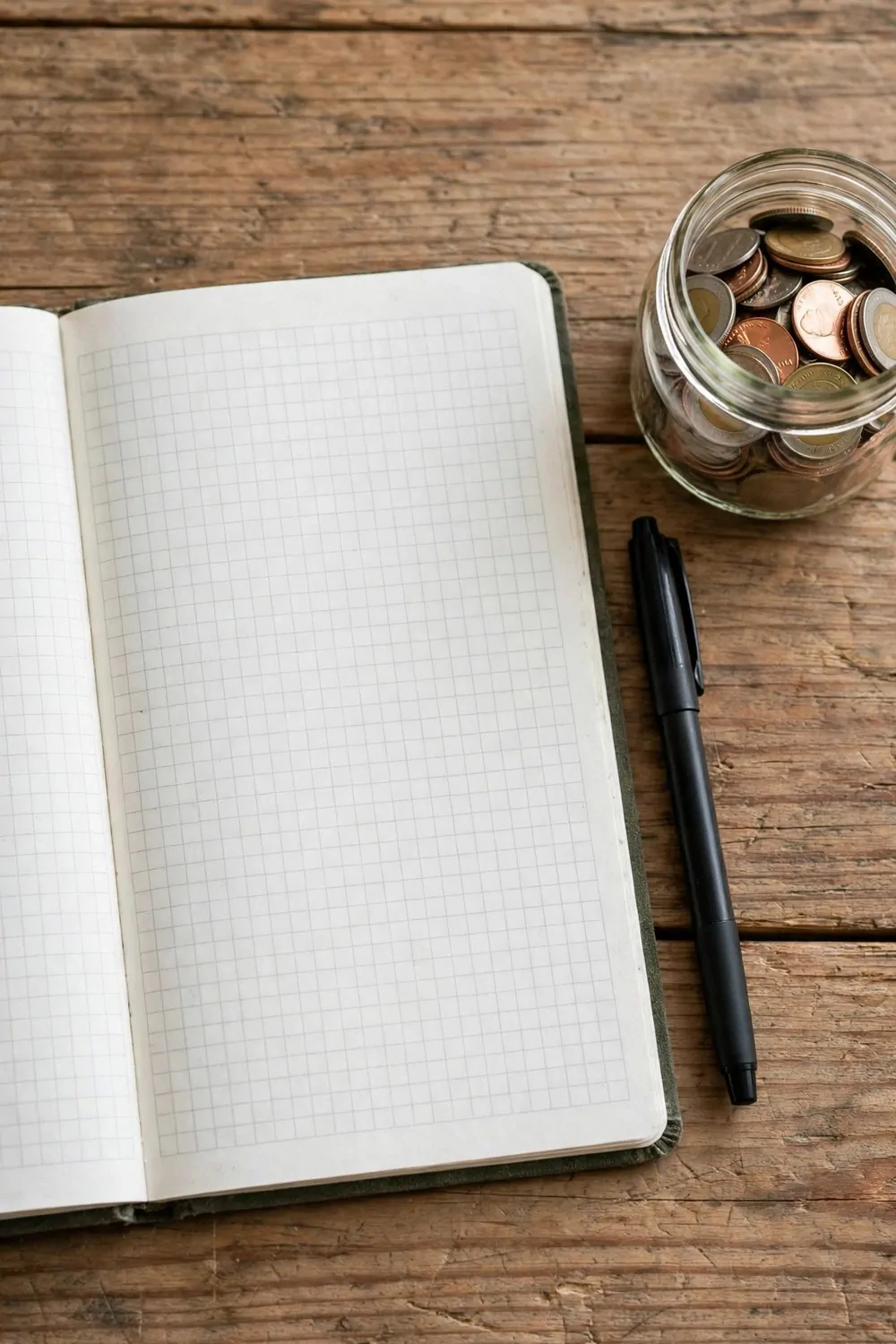
I open my notebook to a blank grid page on my wooden table. A black pen lies beside the notebook, and a small glass jar of coins waits close by.
My plain notebook set cost $2 to $4.
I track each save in the notebook so I can see my growth.
I take a pen and I write the date on the grid page. I write the amount I saved beside the date. The grid lines keep my rows neat and plain.
I add a new line each time I save. My page fills with small wins, one line at a time.
A notebook keeps my fund honest and clear.
I read my page at the end of the week.
I see how much I saved, and I feel proud of the total. The jar of coins on the table reminds me of the next save. My notebook and my jar work well as a team.
Keep your notebook on the table beside your jar. Write each save down, and let your fund grow line by line.
9. Give Each Week a Small Target
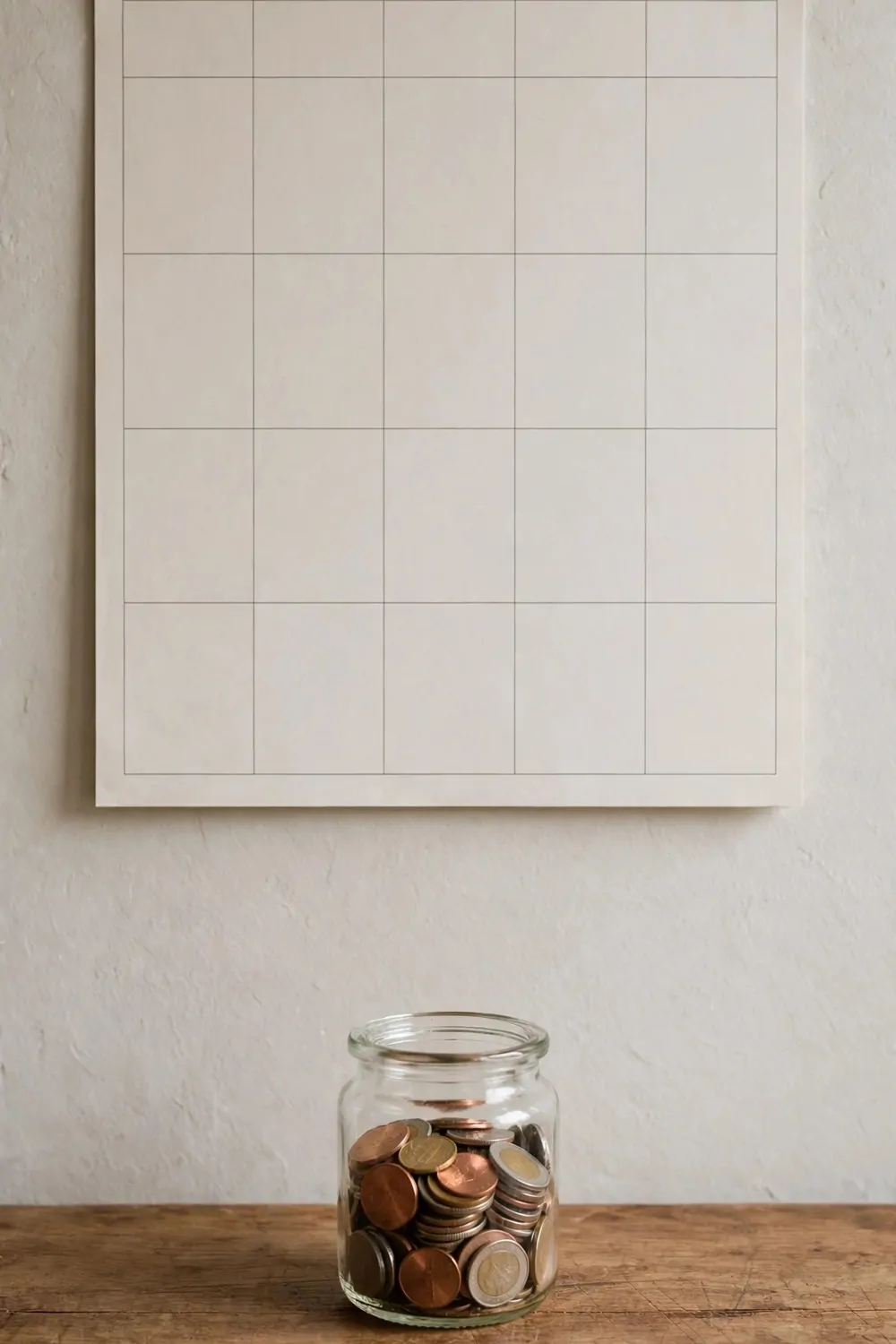
I look at my plain wall calendar each Monday morning. I pick one small target for the week and I keep it simple.
A small target feels easy to reach. I can hit it without stress.
I put my small glass jar of coins on the wooden table where I see it each day. The calendar grid above it stays blank and plain. I like the clear space because it keeps my plan calm in my mind.
One target a week is enough for me.
I drop my coins in the jar when the week ends. I smile when I hear the soft sound of the coins landing.
My plain calendar and jar cost $2 to $3.
I do not rush the target or push it bigger than I planned. I let the week move at a slow and steady pace. I add to the jar only when my target is done.
You can try this too with a plain calendar on your wall. Pick a target that feels light and easy for your week.
A small win each week builds a strong habit over time.
10. Save Your Spare Change First
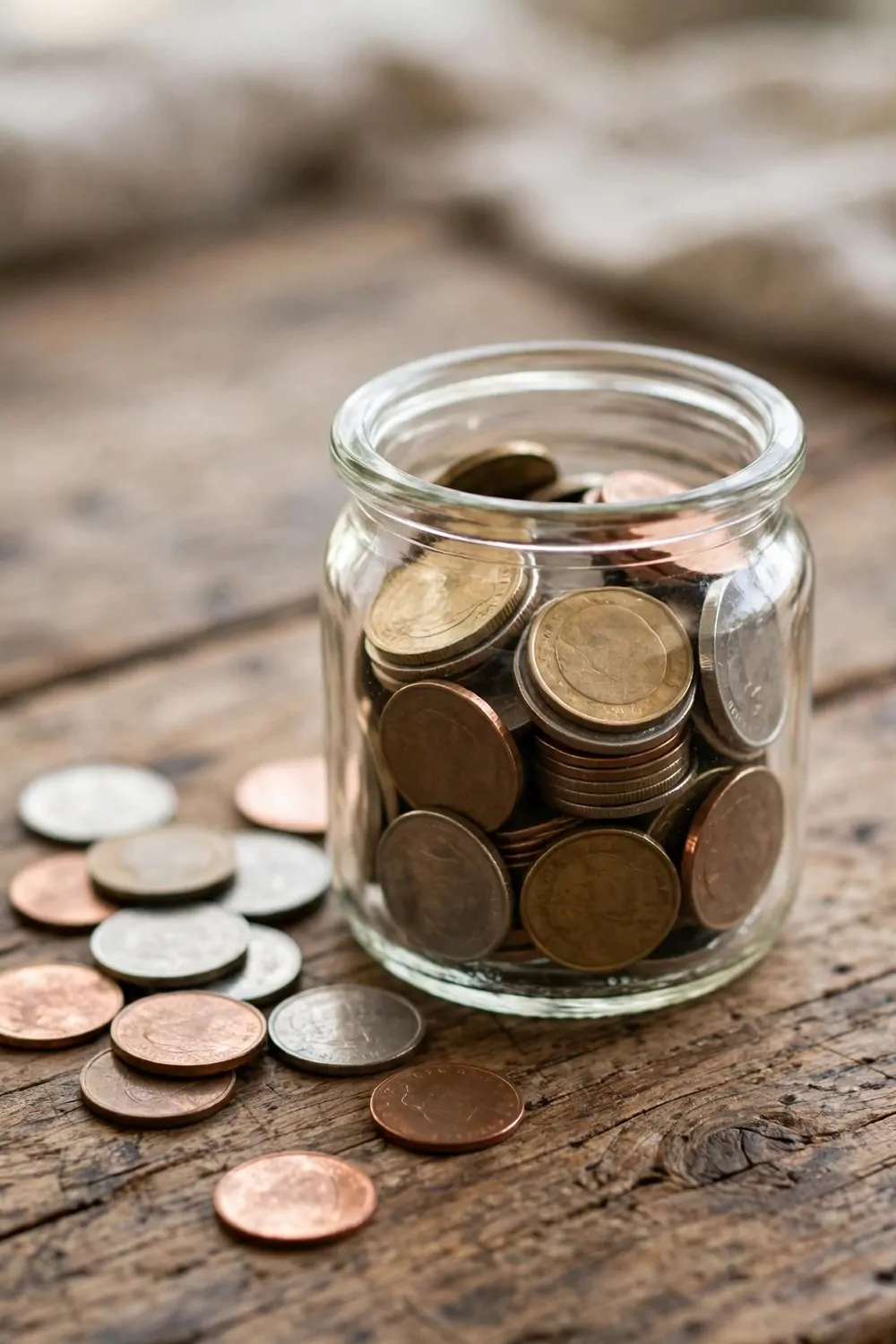
I start with the spare coins from my pocket each night.
I put the spare coins in my small glass jar on the wooden table. I leave the rest of the coins beside the jar until the morning. I like to see the coins there because they remind me of my plan.
I do not spend the spare coins on small treats during the day. I save them first and I feel proud of that small choice.
My jar grows slowly and that is fine with me.
My plain jar and coins cost $2 to $3.
You can keep a jar on your own table too. Drop the spare coins in it before you go to bed.
I empty my pockets near the jar so nothing gets lost in a drawer. I sort the coins with my hands and I put each one in the jar. I enjoy the quiet moment at the end of the day.
Saving first makes the rest of my day feel lighter.
I tell my friends about my jar when they ask me how I save. They like the simple idea and they start a jar of their own.
| Idea | Main change | Typical cost |
|---|---|---|
| Start With One Small Goal | Pick one small goal and write it on the front | $2 to $4 |
| Pick a Number You Can Reach | Write a number you can reach in your notebook | $2 to $3 |
| Open a Plain Envelope for Emergencies | Write Emergencies on the front of one envelope | $2 to $4 |
| Set Aside Your First Five | Put five dollars in a plain envelope | $2 to $3 |
| Save a Little Each Payday | Put a little cash in your envelope each payday | $2 to $4 |
| Keep a Coin Jar for Emergencies | Drop coins in an open jar on a shelf | $2 to $3 |
| Cut One Small Spend Each Week | Skip one small spend and save the cash | $3 to $5 |
| Use a Plain Notebook to Track It | Write each save on a grid page in your notebook | $2 to $4 |
| Give Each Week a Small Target | Small weekly target with a plain calendar and jar | $2 to $3 |
| Save Your Spare Change First | Spare coins saved first in a glass jar | $2 to $3 |
| Total | $21 to $36 |
11. Skip One Takeaway Each Week
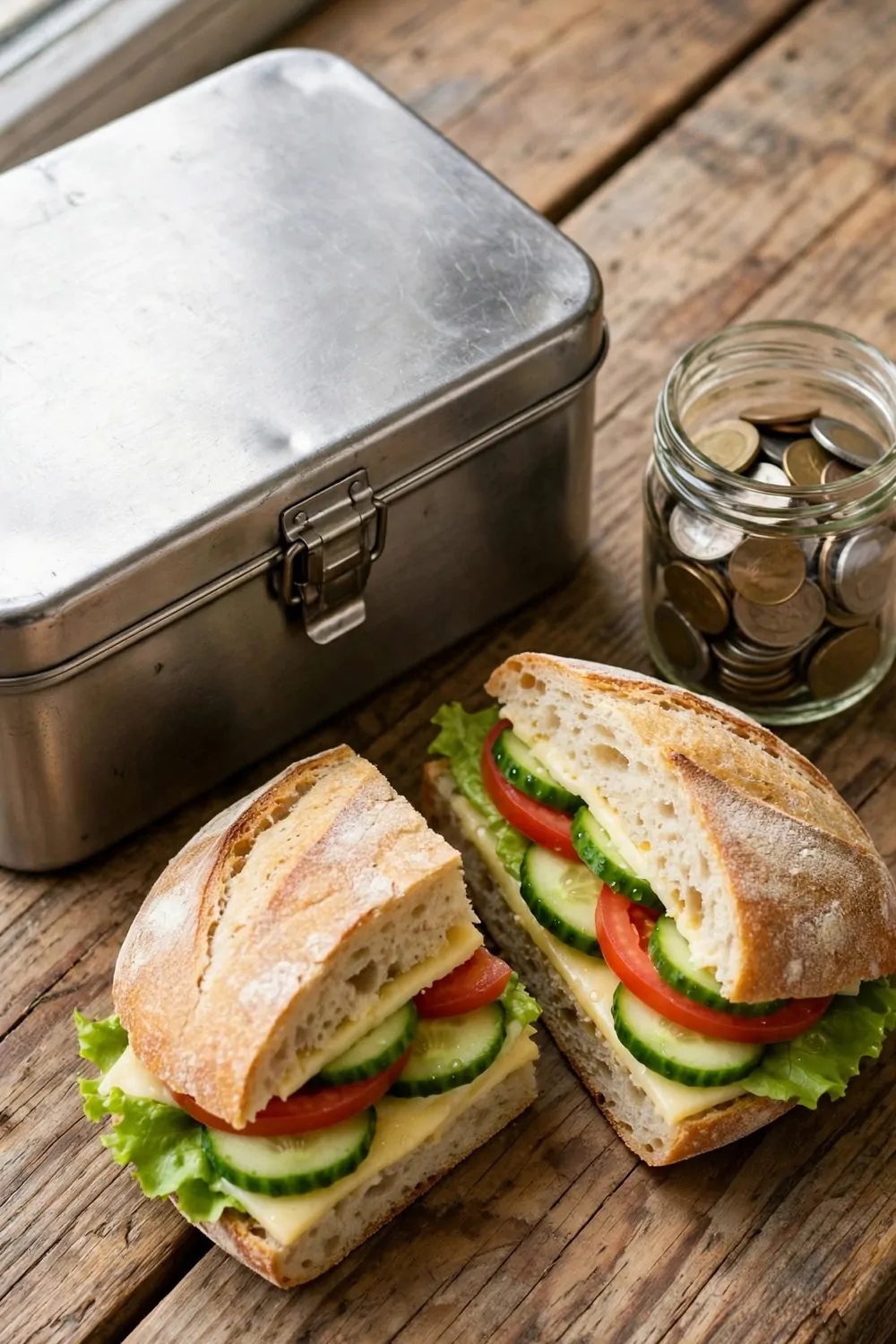
I skip one takeaway each week and I pack my lunch at home instead. I use my plain lunchbox from the kitchen shelf. I put a fresh sandwich in it in the morning before I leave.
My fresh sandwich sits beside my plain lunchbox.
I set the lunchbox on the wooden table beside my small glass jar of coins. I drop the money I saved in the jar right away.
I like the sandwich I make at home. It tastes fresh and it fills me up for the afternoon.
My plain lunchbox and jar cost $3 to $5.
I pick one day each week to skip the takeaway shop. I mark that day in my mind and I stick to it. I feel calm when I know my lunch is ready to go.
Each takeaway I skip in a week adds up fast.
You can try this with a lunch you love to eat. Pack it the night before so your morning stays easy.
I love to see my jar grow from a lunch I made myself.
12. Put Birthday Money in the Fund
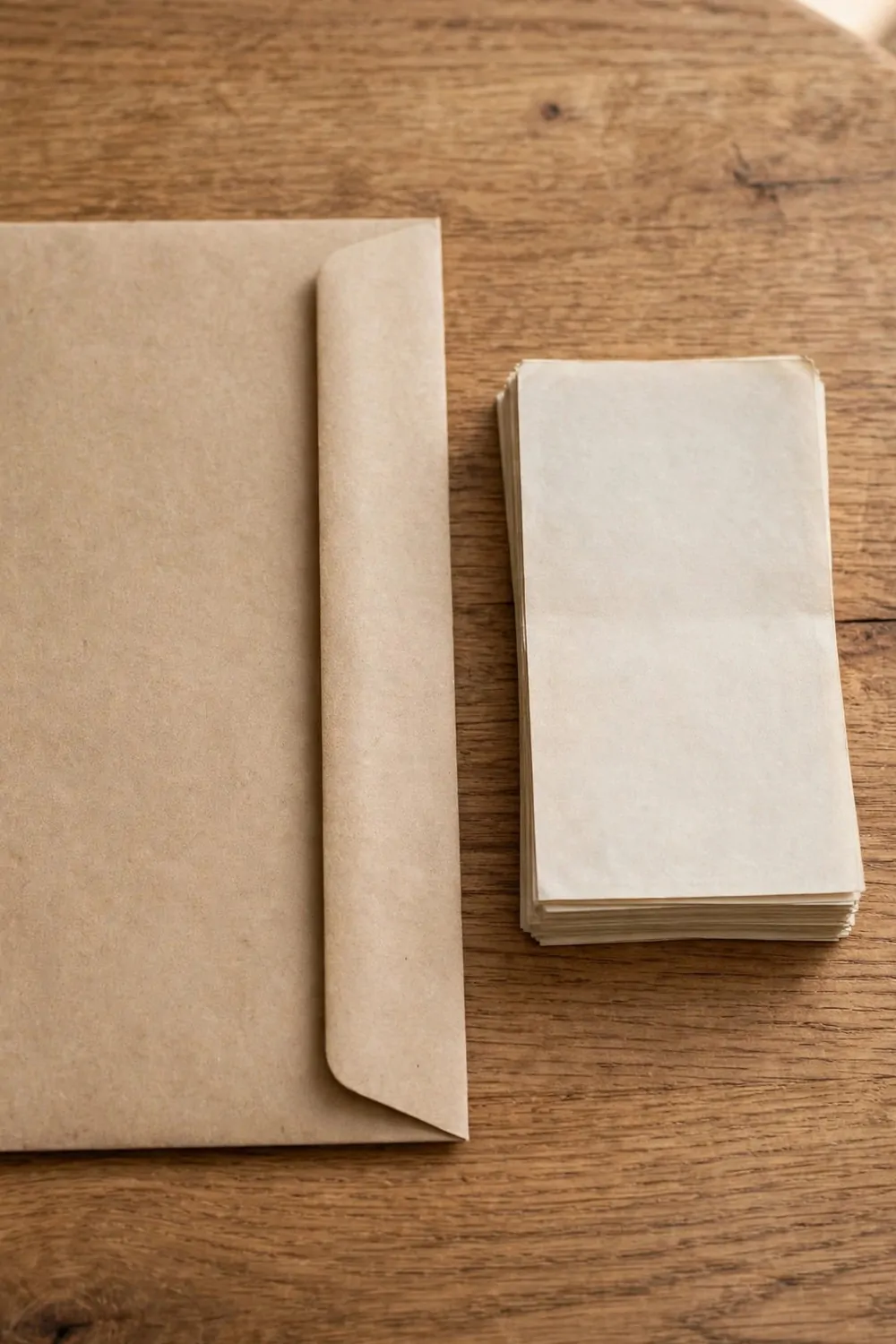
I put birthday money in my fund the same day I get it.
I set my plain kraft envelope on the wooden table. I place a small stack of paper notes beside it.
I write the word birthday on the front of the envelope with my pen. I keep the paper notes beside the envelope until I am ready. I put the notes in the envelope next as part of my routine.
Birthday money feels special when I save it this way.
I do not spend it on a quick treat that I forget by night. I let it join my fund and grow with the rest.
My plain envelope and notes cost $2 to $3. I use the same plain envelope each year for birthday money.
You can do this with money from any happy day.
I thank the person who gave me the money with a warm smile. I tell them I saved it for a rainy day. I feel glad that their gift has a safe place to rest.
A birthday gift can turn into a strong start for my fund.
13. Sell One Thing You Do Not Use
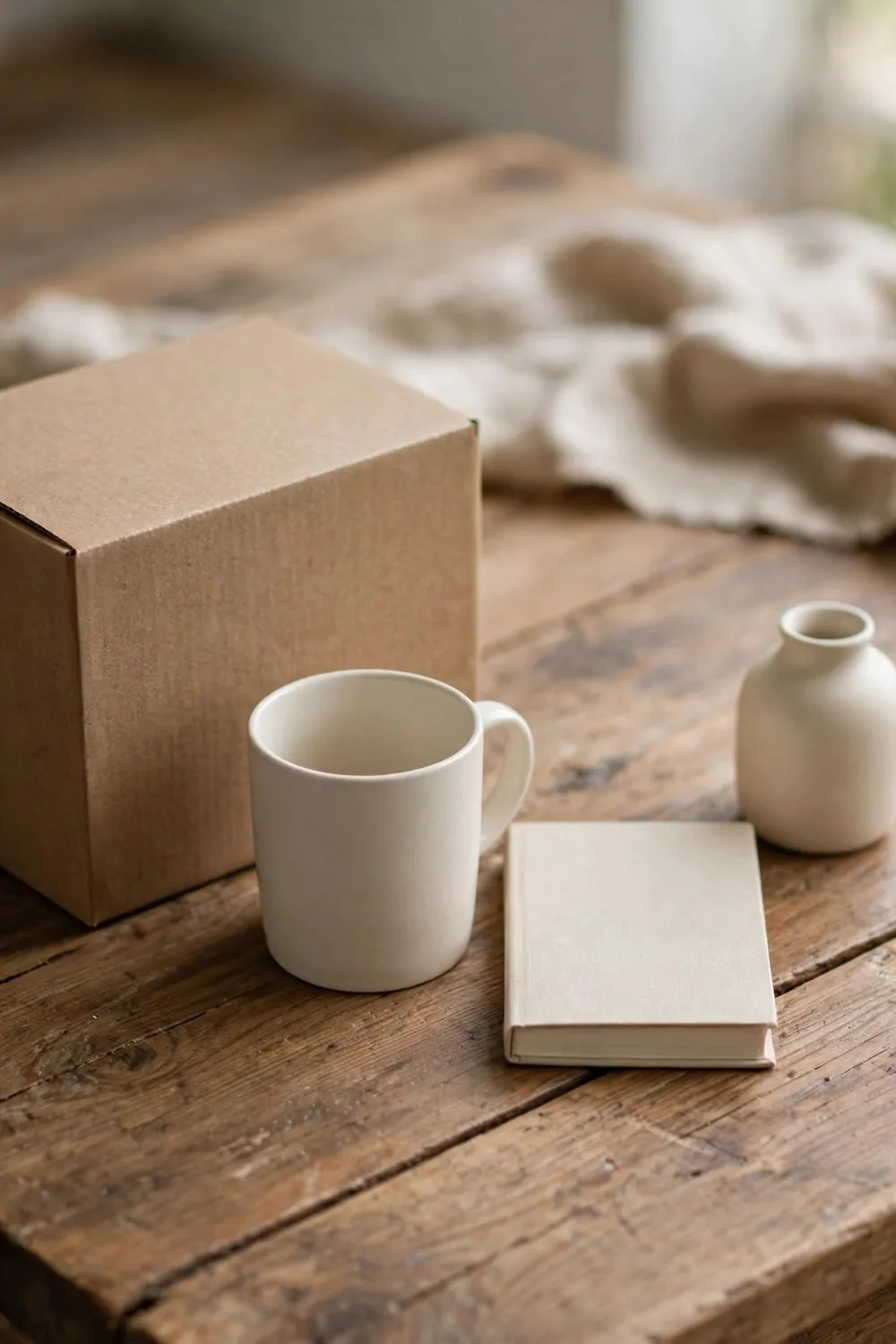
I pick one thing I do not use and I sell it to add to my fund. I look around my room for a plain item that still looks good.
I set my plain cardboard box on the wooden table. A plain ceramic mug sits beside the box. A small plain book with a blank cover and a small plain vase sit beside the box too.
I pack the mug in the box when the buyer comes.
The vase goes in the box next when the buyer comes.
I wipe each item clean before I show it to the buyer. I want the buyer to see that I kept each item with care.
My plain box, mug, book and vase cost $2 to $4.
I put the money from the sale straight in my fund. I feel light when an unused item finds a new home.
You can try this with one item from your own shelf. Pick a thing you have not touched in a long time. Sell it and let the money help your fund grow.
One sold item can give my fund a nice lift.
14. Save the Money You Did Not Spend
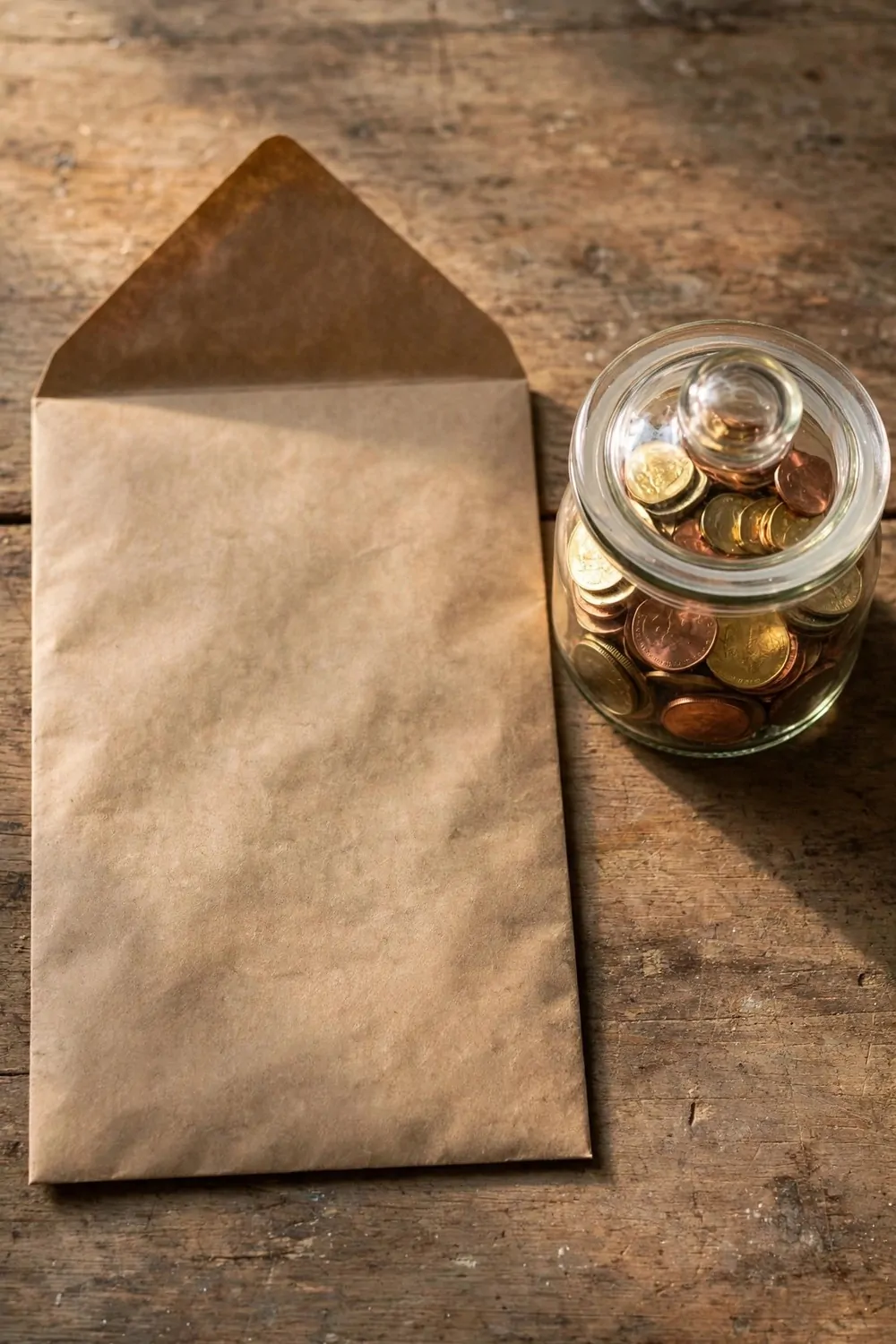
I save the money I did not spend at the end of each day.
I look in my pocket for coins I did not use.
I put my plain envelope on the table next to my small glass jar of coins. I write the word saved on the front of the envelope with my pen.
I drop the coins I did not spend in the jar. I keep the envelope beside the jar for days when I have paper notes to save. I like to see both of them on the table each night.
My plain envelope and jar cost $2 to $3.
I do not feel sad about the money I did not spend. I feel glad because it stays with me for my fund. I let the small amounts add up over the weeks.
You can try this tonight with the coins in your pocket. Put them in a jar before you go to bed.
Unspent money is still money I can save.
I tell myself that each coin I save is a step ahead. I feel proud when I see my jar grow week by week.
15. Keep the Fund in One Place
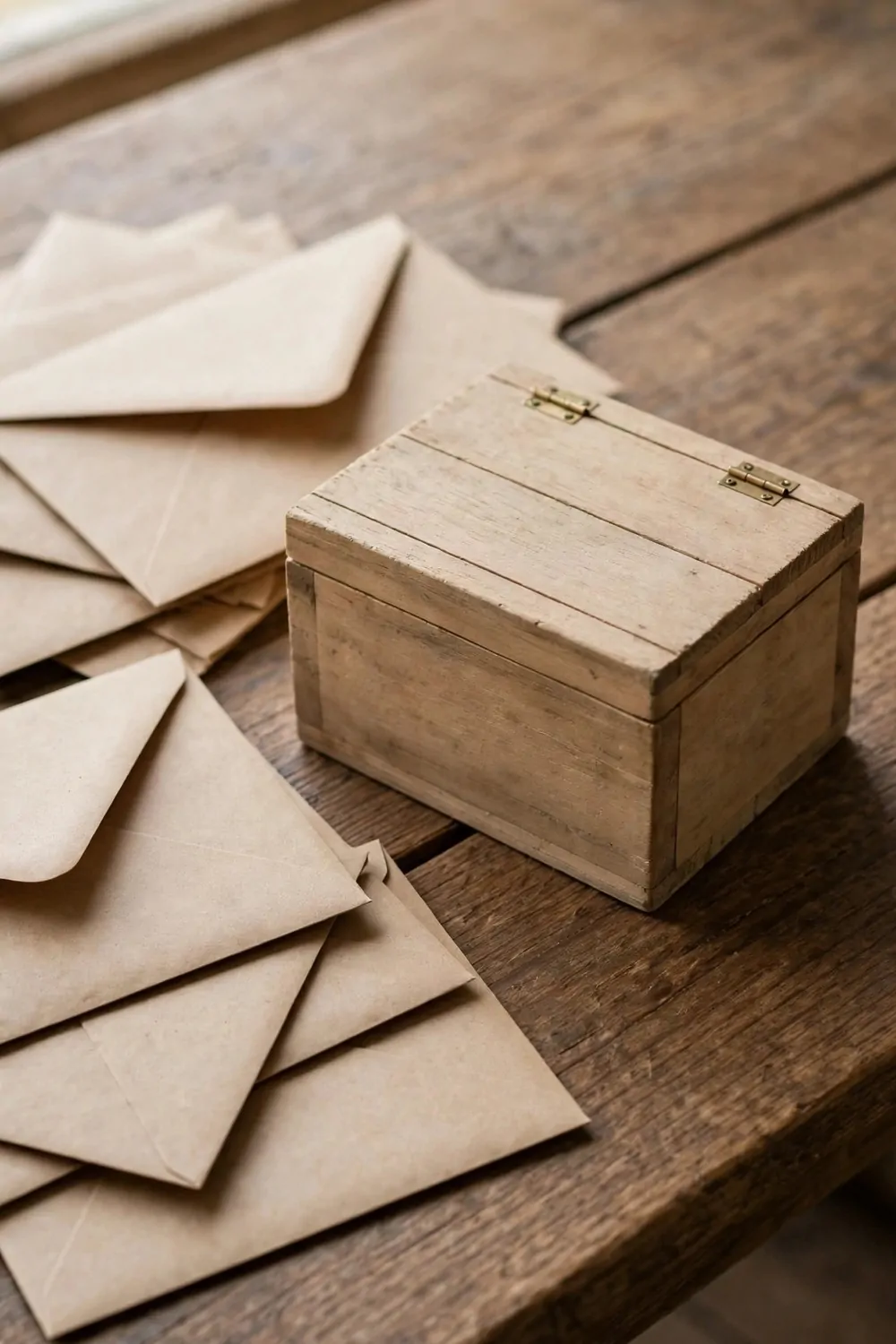
I keep my fund in one place so I always know where it is. My small plain wooden box sits on the wooden table. My plain envelopes sit beside the box on the table.
The box has a lid that sits on top. I lift the lid when I want to add coins to my fund.
One place means I never lose track of my fund.
I write a word on the front of each envelope with my pen. I use the envelopes for paper notes I want to sort by week.
My plain box and envelopes cost $2 to $4.
You can keep your fund in one plain box too.
I do not move the box around the house. I leave it on the same table each day. I like to know just where to find it when I need it.
I add to the box when I have spare coins in my pocket. I put paper notes in the envelopes beside the box for later.
One place keeps my saving simple and calm.
16. Count Your Fund Every Sunday
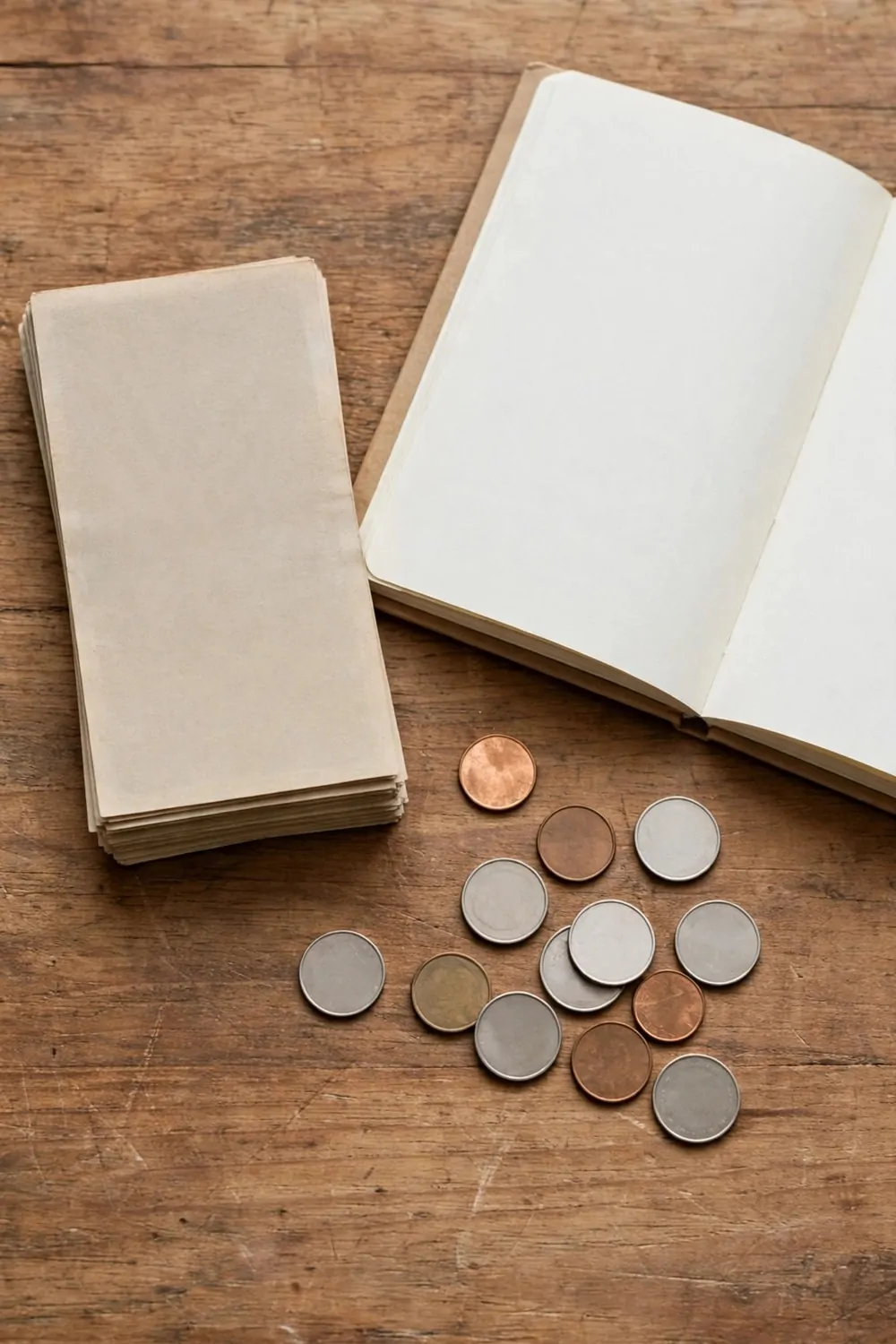
I count my fund every Sunday and I write the total in my plain notebook. I like Sunday because the house feels quiet and slow.
I set a small stack of paper notes and coins on the wooden table.
My plain notebook with blank pages rests beside the stack on the table.
I count the coins first and I stack them in neat rows. I count the paper notes next and I lay them in a small pile. I write the total on a blank page with my pen.
I smile when the total grows from last Sunday. I feel proud of the small steps I took all week.
I do not rush the count or skip a coin. I take my time and I count each one with care. I set the notebook back on the table when I finish.
My plain notebook and notes cost $2 to $3.
You can count your fund on the same day each week.
A weekly count shows me how far I have come. I love to see the numbers grow a bit at a time.
17. Add a Little When You Can
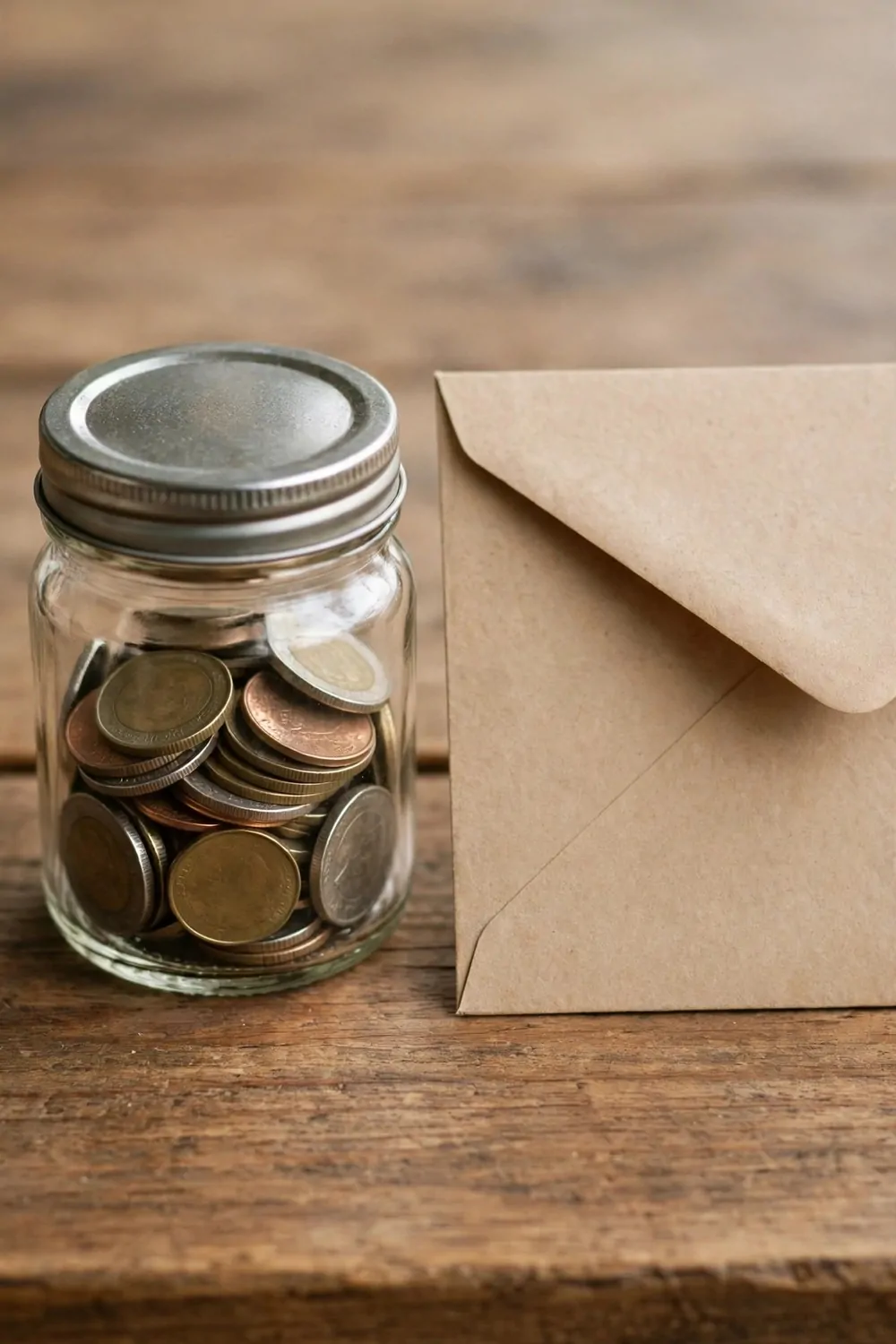
I add a little to my fund when I can.
My small glass jar with coins sits on the wooden table. My plain envelope sits beside the jar on the table. I like to see them both there when I walk past.
I drop coins in the jar when I have some to spare.
I write the word fund on the front of the envelope with my pen. I put paper notes in the envelope when I have them to save.
I do not wait for a big amount to start. I add a coin here and a note there when I can. I let the small adds build into a strong fund over time.
My plain jar and envelope cost $3 to $5.
You can do the same with your own jar at home. Add a little when you can and do not stress about the amount.
Every little add counts toward my goal.
I feel happy each time I add to the jar. I know my fund grows because I keep showing up for it.
18. Use a Plain Jar You Can See
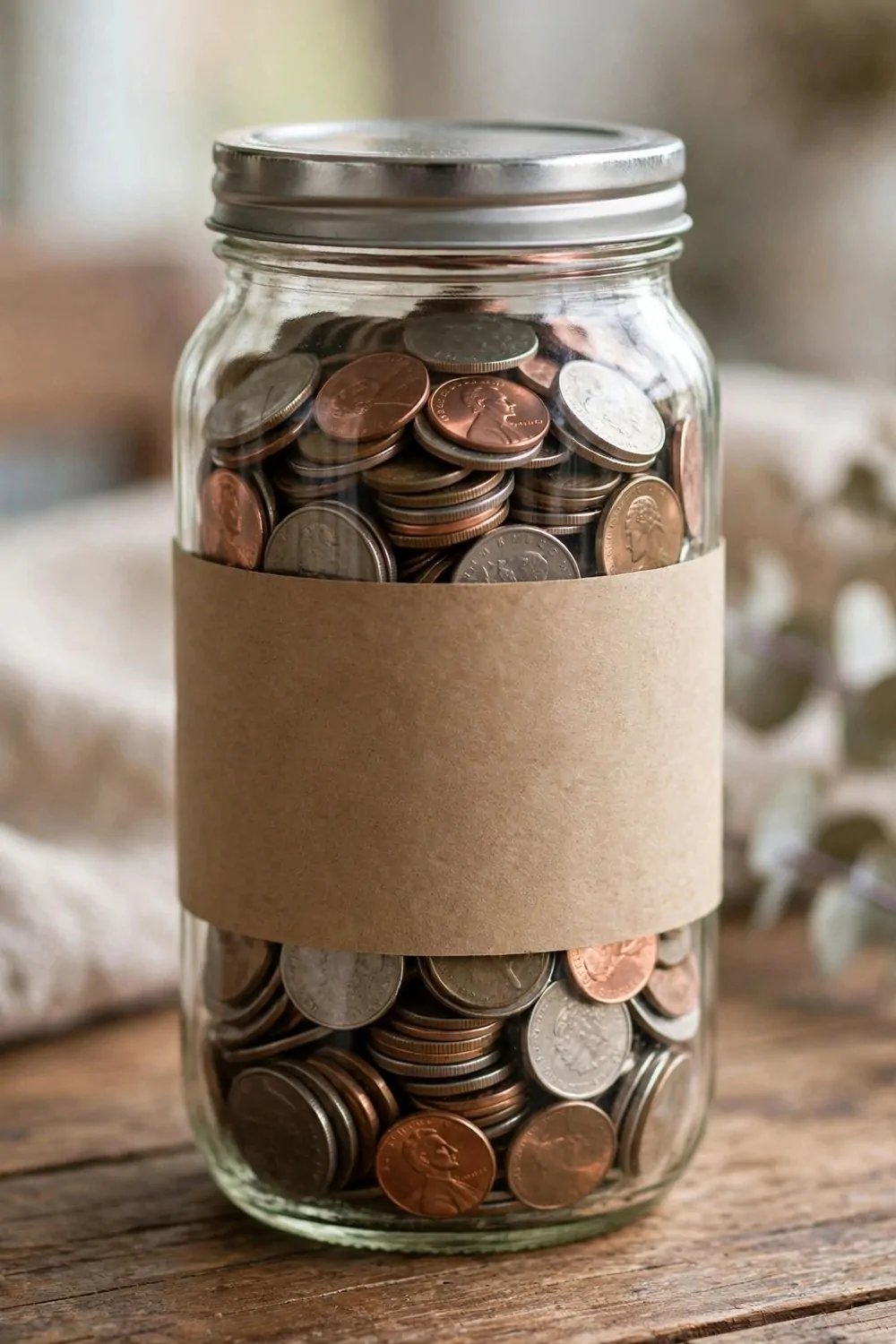
I put a clear glass jar on my wooden table. I can see the coins inside it from my chair.
A blank label sits on the front of the jar.
I drop my spare coins in the jar each night. I hear the soft clink as they land. I smile because the pile grows a bit more.
My jar sits where I walk past it each day. I add coins when I have them in my pocket.
Seeing the coins keeps me going.
I do not hide the jar in a drawer. I want it in plain sight so I think of my goal. I paid $2 to $4 for my plain jar.
I leave the jar alone between adds.
I tell my kids the jar is for hard days. I show them the coins so they learn to save too.
I feel proud each time the jar looks fuller than last week.
19. Write the Date on Each Envelope
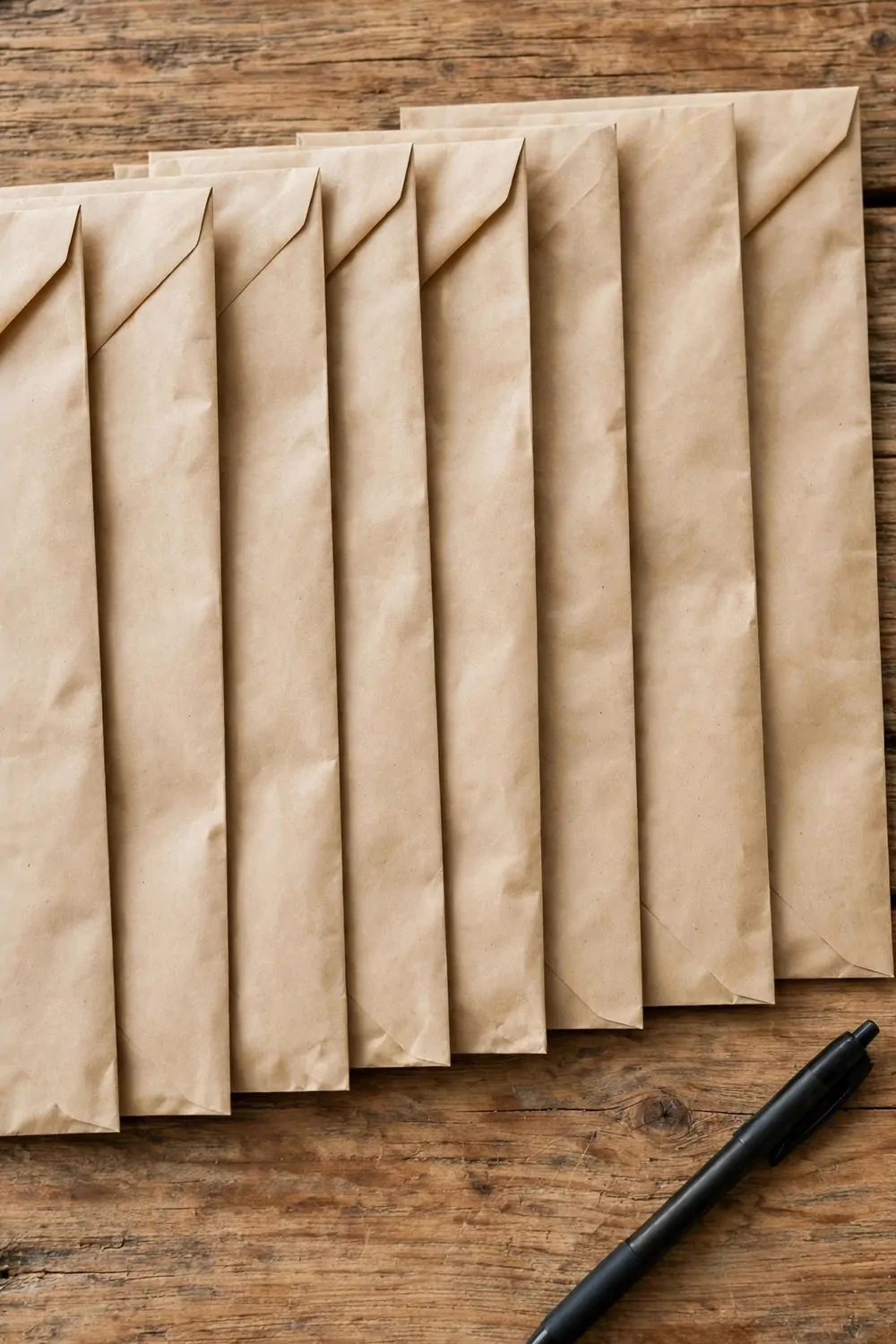
I line up plain envelopes in a row on my wooden table.
Each envelope has a blank front. I keep a black pen right beside them.
I take a pen and I write the date on the front of each envelope. I write in big plain letters. I want to read it fast later.
The date tells me when I started that envelope.
I put coins and paper money in the envelope after I write the date. I seal the flap with a quick fold.
My plain envelopes cost $2 to $3.
I stack the dated envelopes in order on the table. I pick the oldest one first when I need to add more.
I like the neat row of dates. It shows me how long I have been saving. It makes the plan feel real to me.
I write the next date on a fresh envelope tomorrow.
20. Save for Car Trouble First
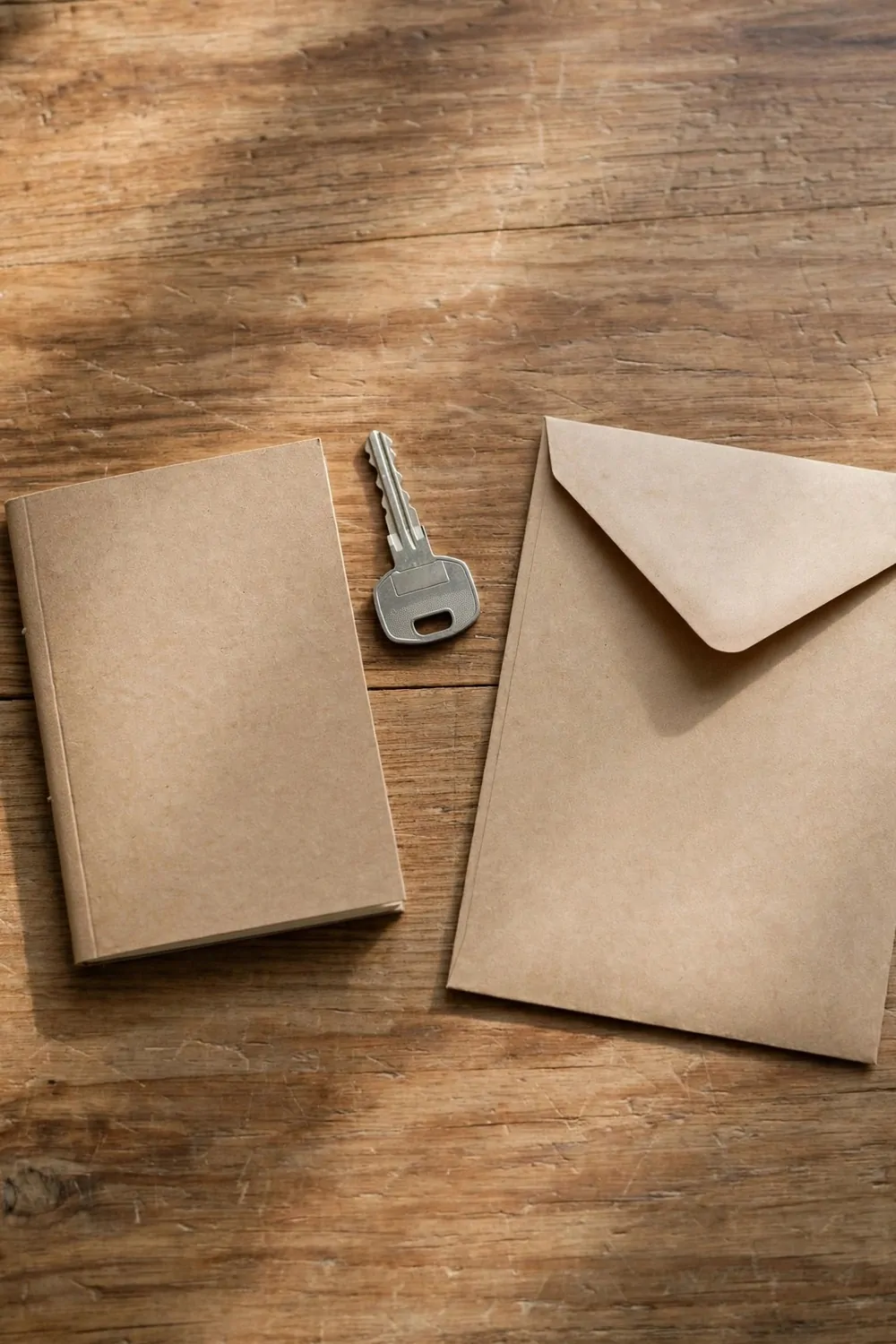
A plain car key sits on my wooden table. It sits beside a small plain notebook and a plain envelope. It reminds me why I save first for car trouble.
I open the notebook and I write car trouble at the top of a fresh page.
I put my first coins in the plain envelope for the car.
I add a bit more each week when I can. I keep the key beside the envelope so I do not forget the goal.
Car trouble can come on a cold morning. It can come on a long drive. I want cash ready at home when it does.
I paid $3 to $5 for my plain notebook.
I write the date in the notebook each time I add coins. I write the new total under it in plain numbers.
I feel calm when the car envelope grows.
I keep this envelope ahead of my other fun plans. I fix the car need first and I smile after.
| Idea | Main change | Typical cost |
|---|---|---|
| Skip One Takeaway Each Week | One skipped takeaway saved in the jar | $3 to $5 |
| Put Birthday Money in the Fund | Birthday money put in a plain envelope | $2 to $3 |
| Sell One Thing You Do Not Use | One unused item sold for the fund | $2 to $4 |
| Save the Money You Did Not Spend | Unspent coins and notes saved each day | $2 to $3 |
| Keep the Fund in One Place | Fund kept in one box with envelopes beside it | $2 to $4 |
| Count Your Fund Every Sunday | Fund counted each Sunday in a plain notebook | $2 to $3 |
| Add a Little When You Can | Small adds to the jar and envelope when I can | $3 to $5 |
| Use a Plain Jar You Can See | clear jar on the table | $2 to $4 |
| Write the Date on Each Envelope | dates on the fronts | $2 to $3 |
| Save for Car Trouble First | key beside the notebook | $3 to $5 |
| Total | $23 to $39 |
21. Build a One Month Cushion
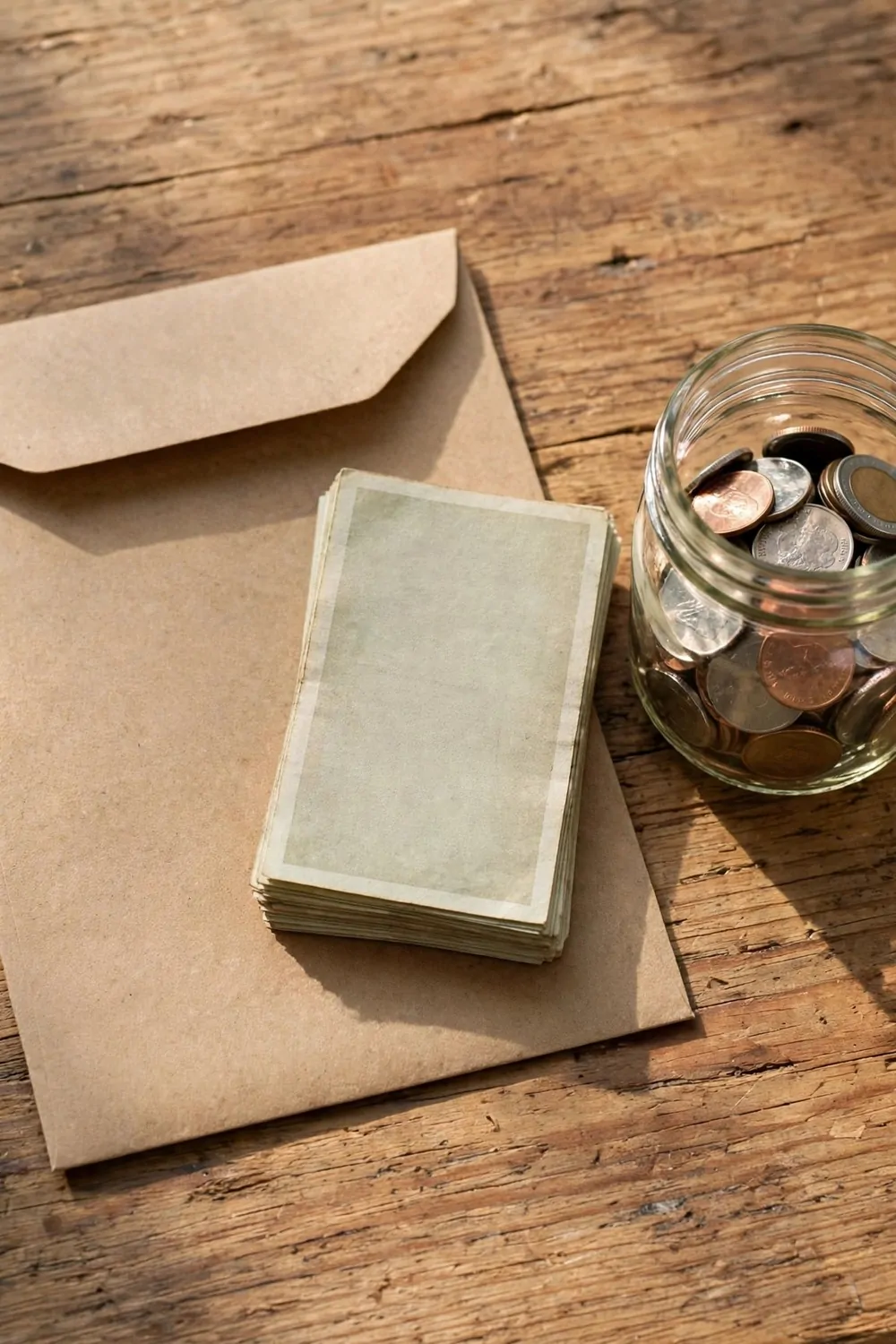
I set a small stack of paper money on my wooden table.
A plain envelope sits beside the paper money. A small glass jar of coins sits beside the envelope too. I call this set my one month cushion.
I add a bit to the cushion each week.
I write the week in my notebook after I add money. I keep the notebook near the jar on the table.
My plain cushion set cost $2 to $4.
I do not touch the cushion for small wants. I keep it for a hard month only.
One month of calm feels big to me. It means I can breathe when a bill lands. It means I can sleep well at night.
I watch the stack grow slow and steady.
I tell my family the cushion is our safety net at home. I ask them to help me keep it safe.
22. Keep Your Fund Out of Sight
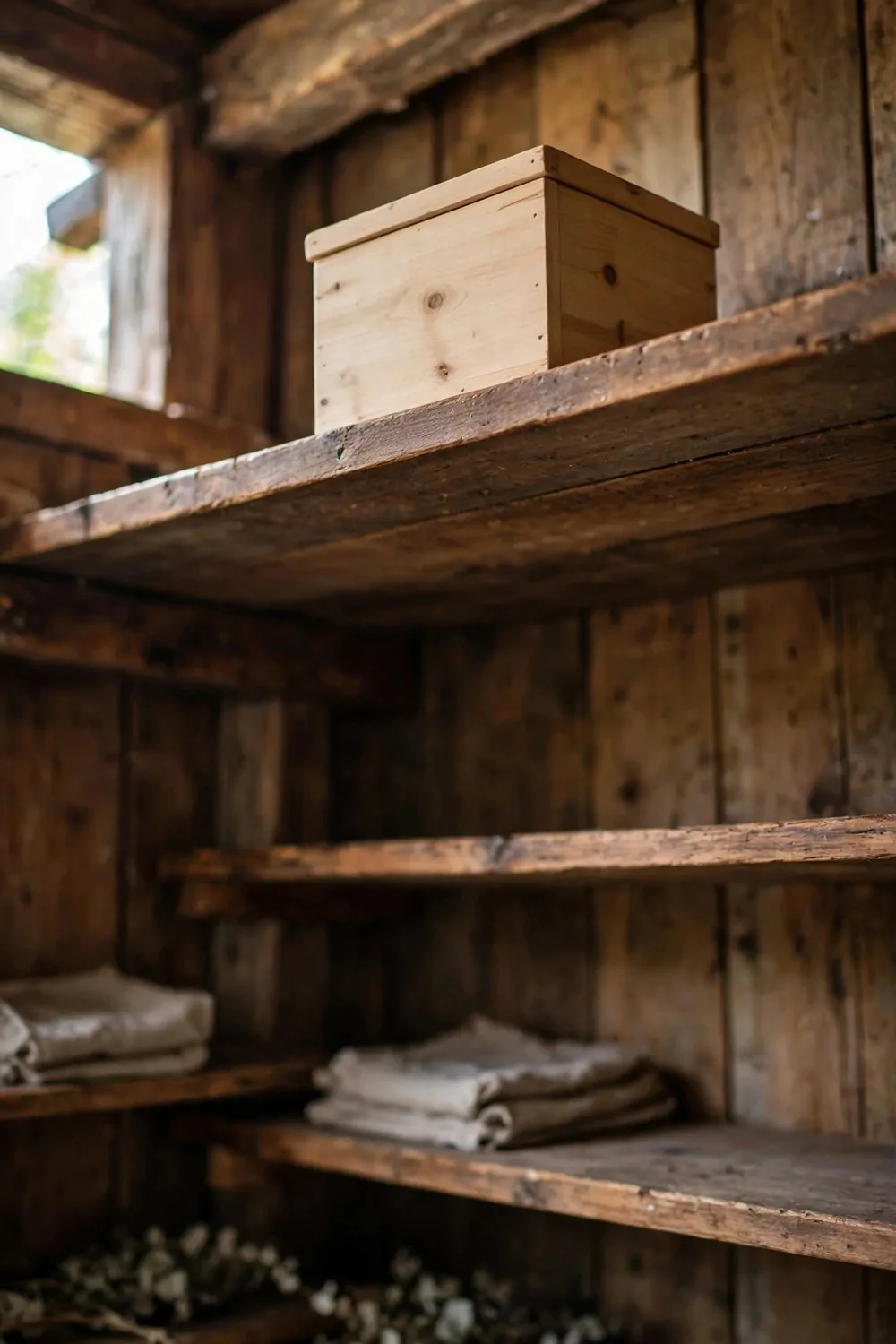
I put my cash in a small plain wooden box with a lid. I lift the box up to a high wooden shelf.
The box sits high on the shelf in my room.
I cannot see it from my chair each day. I think of it less when it is out of my sight.
I add money to the box on one set day each week. I take it down, I add my coins, and I put it back up high. I put the lid back on top each time I finish.
My plain box cost $2 to $3.
Out of sight helps me leave the cash alone.
I write the add date in my notebook after I put the box back. I keep the notebook on my table down below.
I feel strong when I walk past the shelf and I do not grab the box. I let the fund grow in quiet. I save it for a real hard day.
I like knowing my fund waits high and safe for me.
23. Share the Plan With Your Family
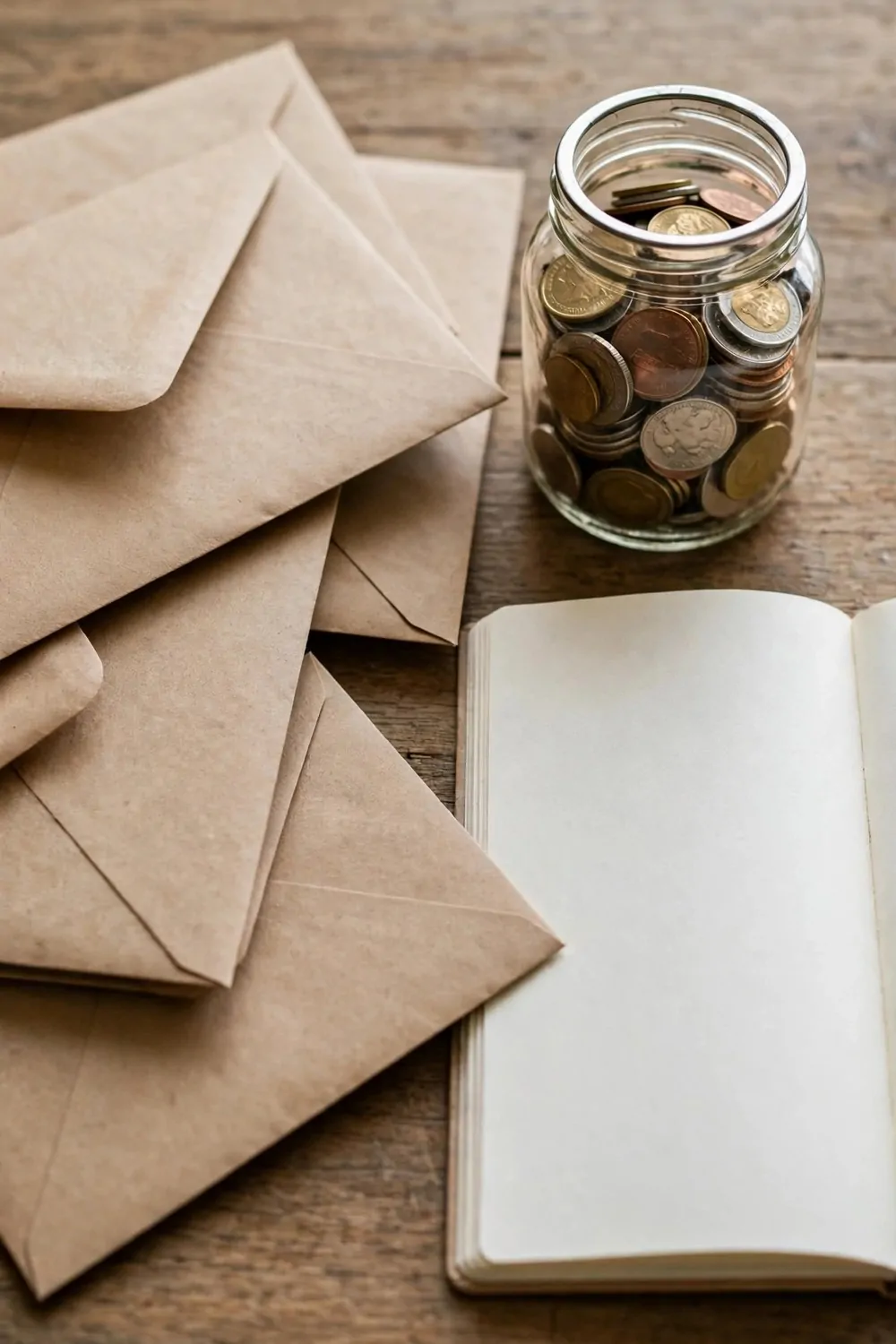
Plain envelopes and a small glass jar of coins wait on my wooden table. A plain notebook with blank pages lies next to them. I call my family over to see the plan.
I show them the envelopes and the jar. I tell them each envelope has one job.
I ask each person to add a coin when they can.
I write our shared goal on the first blank page.
I read the goal out loud so we all hear it. I ask my kids what hard day we should plan for first. I listen to each idea with a smile.
My plain family set cost $2 to $4. I keep the cost low so the plan feels easy for us.
We add coins to the jar together each week.
I write the date on the front of each new envelope. I let one child write the next date in big plain letters.
Sharing the plan makes saving feel warm and fun.
24. Celebrate Each Hundred You Save
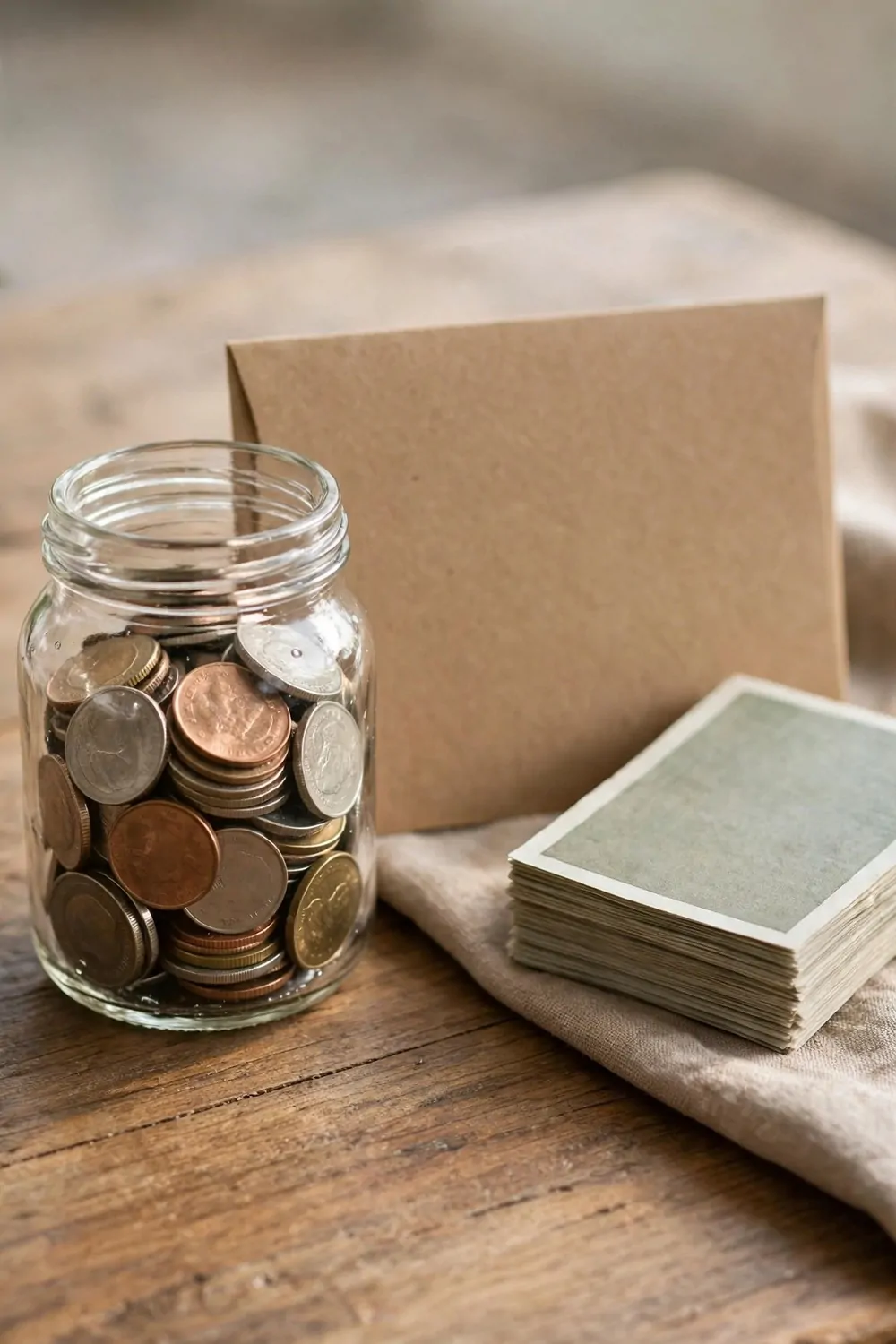
I set a small glass jar of coins beside a plain envelope on my wooden table.
A small stack of paper money sits beside the envelope too.
I add up my coins and paper money in my notebook. I smile when the total hits one hundred.
One hundred is a big win for me. I did it coin by coin at home. I feel proud of each step I took.
I mark the day with a star in my notebook. I write one hundred in big plain letters under it.
My plain jar and envelopes cost $2 to $3.
I share the good news with my family at dinner.
We cheer with soft words and big smiles. We eat a sweet treat at home after. We talk about the next hundred we will save.
I keep the jar on the table for the next round. I start the next hundred with a happy heart.
25. Keep a Simple Emergency Fund Kit at Home
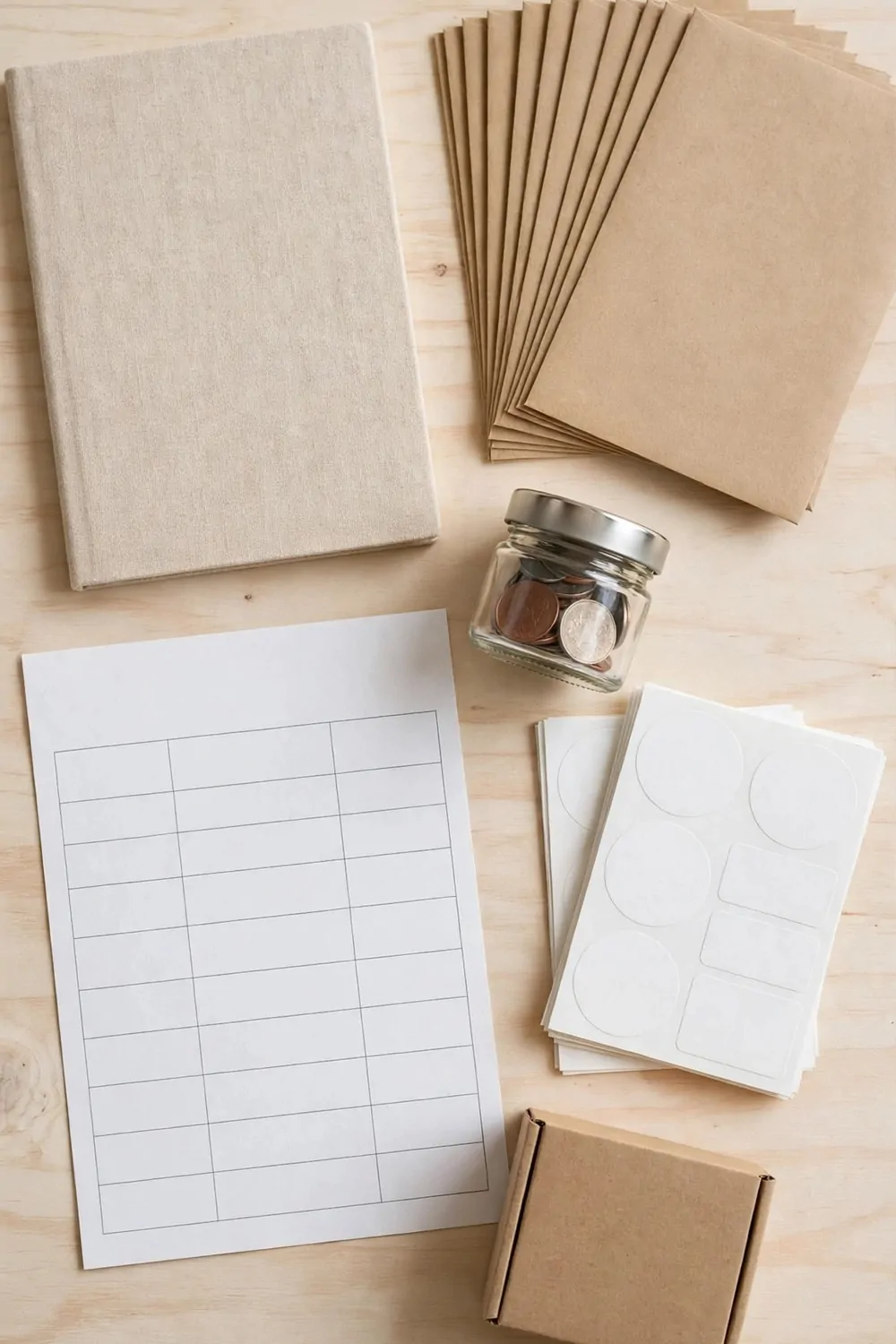
I set my kit on a light wooden table. I lay out a plain emergency fund notebook, a set of plain emergency fund envelopes, and a plain emergency fund tracker in a neat row.
I set a small plain emergency fund jar beside the tracker. The plain emergency fund label set goes next to the jar. I place a small plain emergency fund box at the end of the row.
I add a plain emergency fund label set to mark each envelope in words I can read fast.
I write the date on the front of each envelope. I write my goal on the first page of the notebook.
I put my first coins in the jar and I smile.
My kit costs $3 to $5 for the notebook, $2 to $4 for the envelopes, $3 to $5 for the tracker, $2 to $4 for the jar, $2 to $3 for the labels, and $3 to $6 for the box, for a total of $15 to $27. I keep the kit on the table where I can see it. I add to it each week when I can.
I use the tracker to write each add in plain numbers. I keep the box beside the tracker on the table.
I feel ready now that my kit sits in one place.
I will start my fund tonight with one coin in the jar, and I will sleep calm knowing I took the first step.
| Idea | Main change | Typical cost |
|---|---|---|
| Build a One Month Cushion | paper money beside the jar | $2 to $4 |
| Keep Your Fund Out of Sight | box high on the shelf | $2 to $3 |
| Share the Plan With Your Family | envelopes and jar on the table | $2 to $4 |
| Celebrate Each Hundred You Save | jar beside the envelope | $2 to $3 |
| Keep a Simple Emergency Fund Kit at Home | kit total for the whole plan | $15 to $27 |
| Total | $23 to $41 |
| Idea | Main change | Typical cost |
|---|---|---|
| a plain emergency fund notebook | a notebook for emergency fund savings | $3 to $5 |
| a set of plain emergency fund envelopes | envelopes for emergency fund savings | $2 to $4 |
| a plain emergency fund tracker | a tracker for emergency fund savings | $3 to $5 |
| a small plain emergency fund jar | a jar for emergency fund coins | $2 to $4 |
| a plain emergency fund label set | labels for emergency fund envelopes | $2 to $3 |
| a small plain emergency fund box | a box for emergency fund tools | $3 to $6 |
| Total | $15 to $27 |
Keep Reading
If you liked these ideas, you will love these posts too
Each post has more simple ideas you can try at home this weekend.