22 Cash Stuffing Ideas for Beginners

I held a thin stack of cash on payday and I wanted every note to have a job. I sat at my table and I split the cash into small piles for the week ahead.
Cash stuffing is a plain way to plan your week with real cash in hand. You take your pay and you give each part a clear job before the week starts.
Here are 22 cash stuffing ideas for beginners at home, and the first one starts with one cash envelope.
I like this way of planning because I can see what I have left at a glance. When the cash for one job runs low, I know to slow down and wait for the next payday.
You do not need a big pay rise to start. You start with the cash you already have and you plan it in small steps.
Each idea here is small and easy to try at home. You can pick one idea this week and add more when you feel ready.
I hope these ideas help you feel calm about your week. A little plan can make payday feel kind and steady.
1. Start With One Cash Envelope
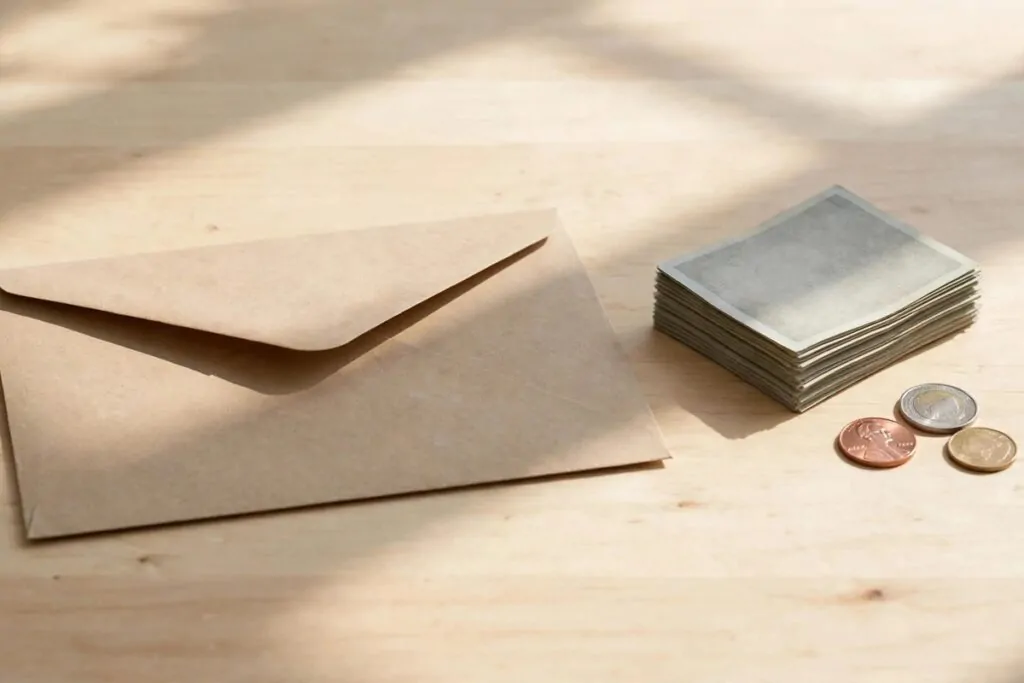
One cash envelope is a calm place to start when cash stuffing feels new. You pick one job for your week and you give that job its own envelope.
I picked food for my first envelope because I shop for food every week.
I wrote the job name on the front in plain words. I put my food cash inside at the start of the week. I took the envelope with me when I went to shop.
My plain cash envelope set cost $3 to $5.
A single envelope keeps the plan simple and light. You can see at once how much cash is left for that job.
I felt less worry when I knew my food cash had its own place.
Give it one week and see how it feels for you.
If the cash runs out early, you learn where the week got tight. You can plan a little more for that job next time.
One small start can grow into a full plan over time.
2. Pick a Binder That Fits Your Life
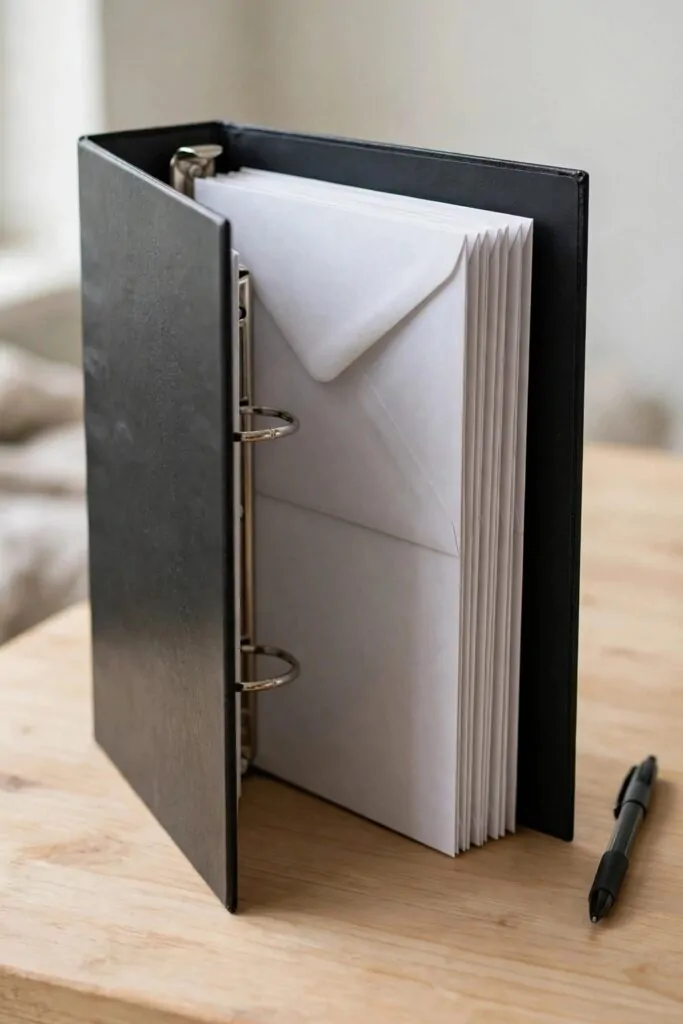
A binder gives all your envelopes one home to live in.
I looked for one that felt easy to carry and easy to open. I wanted room for the envelopes I planned to use.
My plain binder for cash stuffing cost $4 to $6.
Think about how you live your week before you pick one. You may want one that slips into a bag for errands. You may want one with space for a full plan at home.
The right size is the one you will reach for each week.
I keep my binder where I plan my week. I take it out on payday and I fill each envelope in turn.
A binder that fits your life makes the plan feel easy.
You do not need the dearest one to make it work.
Start with a plain binder and see how it fits your days. You can change it later when your plan grows.
3. Label Each Envelope in Plain Words
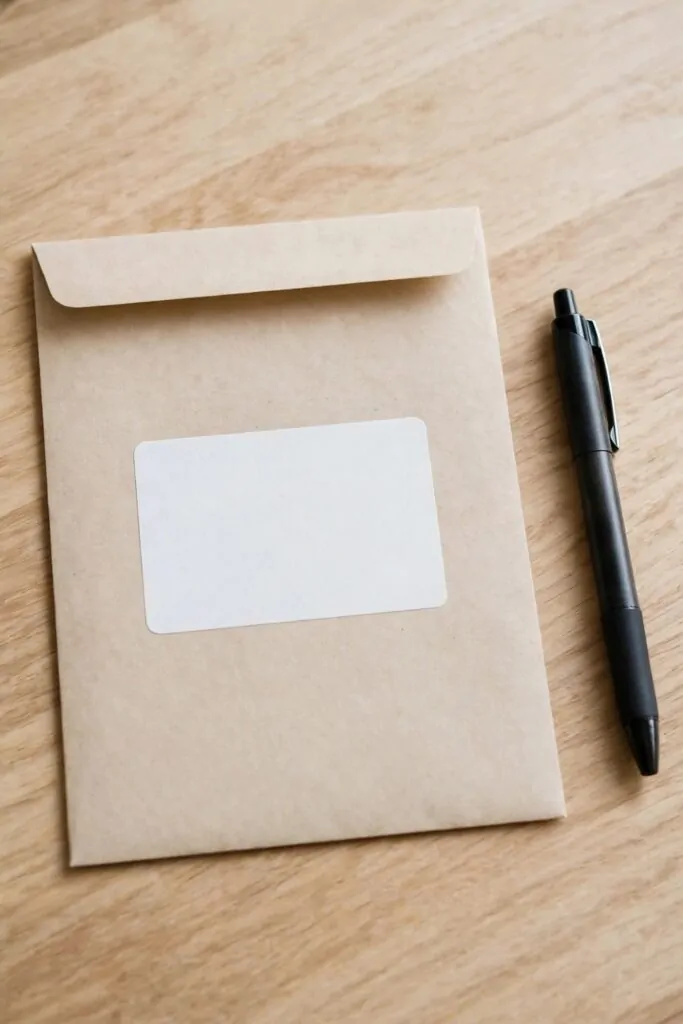
I take a pen and I write the name on the label. I use short words that I can read in a rush. I keep the words plain so I never have to guess.
My plain labels for the envelopes cost $2 to $3.
Food, fun, and bills are clear names for a first plan. You can add more names as your plan grows.
Plain words save time when you reach for an envelope.
I write slow and I leave space between the words.
You can use the same words each week so the plan stays steady. The same names help you learn your habits fast.
A clear label keeps each job apart from the rest.
I read each label out loud on payday. I smile when the names match my week. I feel ready to fill each one in turn.
Plain labels turn a pile of cash into a clear plan.
4. Set a Weekly Cash Amount You Can Keep
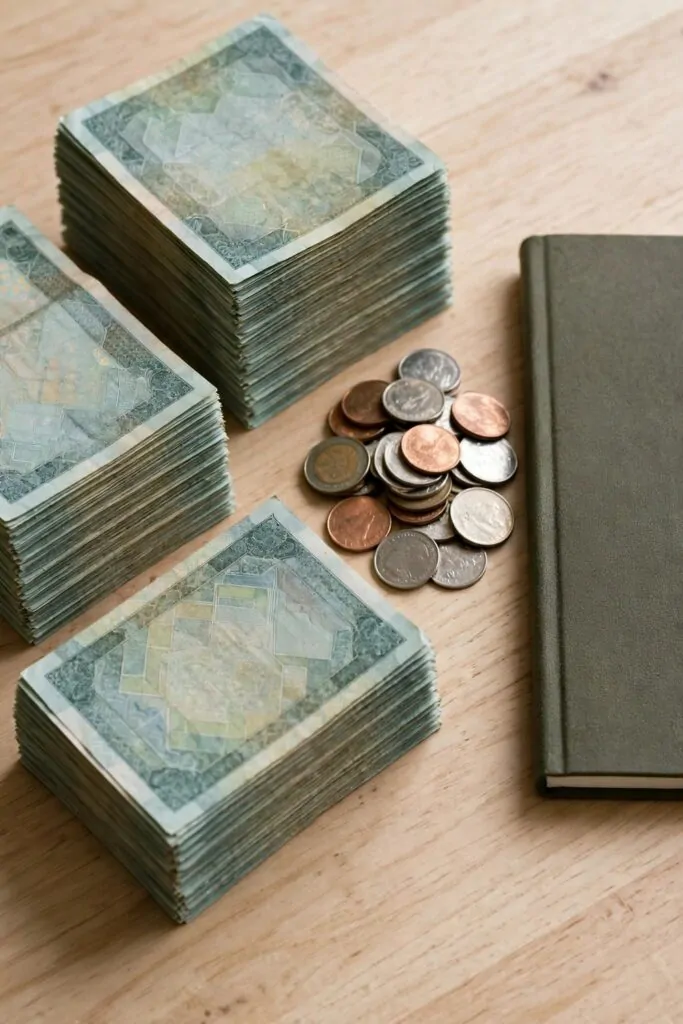
A weekly amount works best when you can keep it week after week.
I look at my pay and I list the jobs that need cash. I give each job a small amount to start. I leave a little cash aside for the days I did not plan.
My plain cash plan set cost $2 to $4.
A small sum you can keep wins over a big sum that fails. You build trust with your plan when you keep it.
I start low and I add a little more when my pay allows.
You can change the amount next week if life shifts.
I write my weekly amounts down before payday comes. I read them again when the cash is in my hand.
A steady amount makes each week feel calm and fair.
You learn your true week cost one week at a time. You stop guessing and you start knowing. You keep the plan that fits your real life.
5. Fill Your Envelopes on Payday
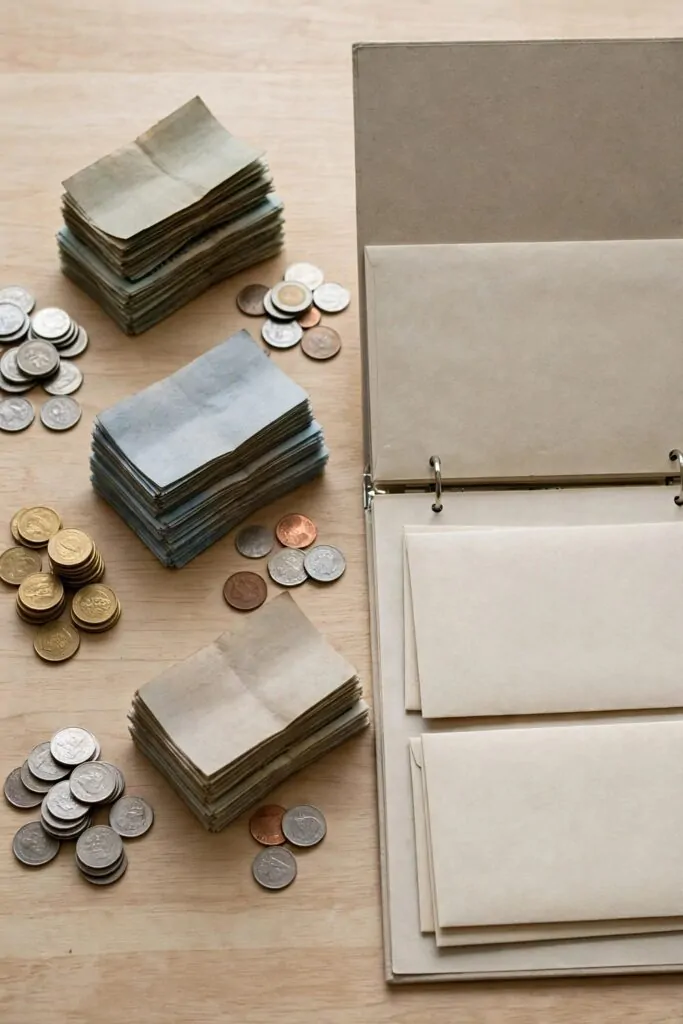
Payday is the best day to fill your envelopes. I sit down with my pay and I sort it into each job before the week starts.
I start with the jobs that must be paid first. I fill the food envelope next so the week feels safe. I fill the fun envelope last with what is left.
My plain payday cash set cost $3 to $5.
Filling on payday keeps the plan fresh in my mind.
You can take your time and sort the cash in peace. A slow start to the week helps the plan last.
I love the calm that comes after each envelope is filled.
I count the cash for each job as I sort it. I write the amount on a small slip for my own notes. I tuck the slip away with my plan for the week.
A payday routine turns cash stuffing into a habit.
You will look forward to payday when the plan is clear. Each filled envelope is a small win for your week.
6. Keep a Food Envelope for the Week
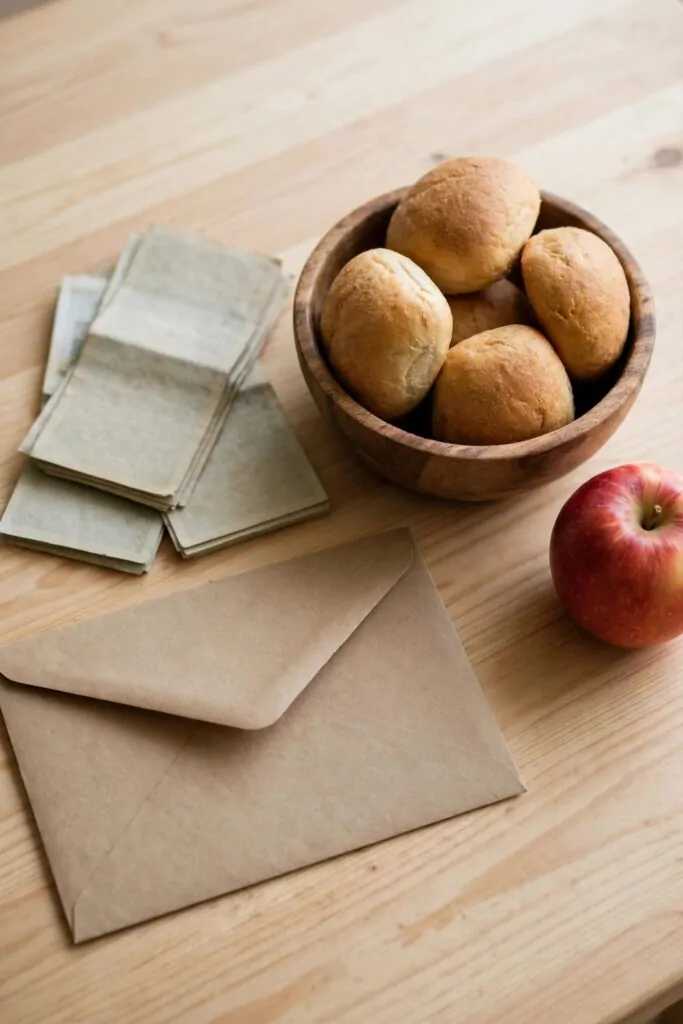
My food envelope is for the week’s food shop.
I fill it on payday and I take it with me to shop.
I plan a few plain meals before the week starts. I list what I need so I buy less extra food.
I look at the cash left before I add more to my basket. I skip the extras that I do not need this week. I save what is left for the next food shop.
My plain food envelope set cost $3 to $6.
A food envelope helps me cook at home more often. I waste less food when I plan the week first.
You can stretch the cash by planning meals around what you have.
I feel proud when cash is left at the end of the week. I roll it into next week and the plan feels kind.
One food envelope can change how your whole week eats.
7. Give Fun Money Its Own Envelope
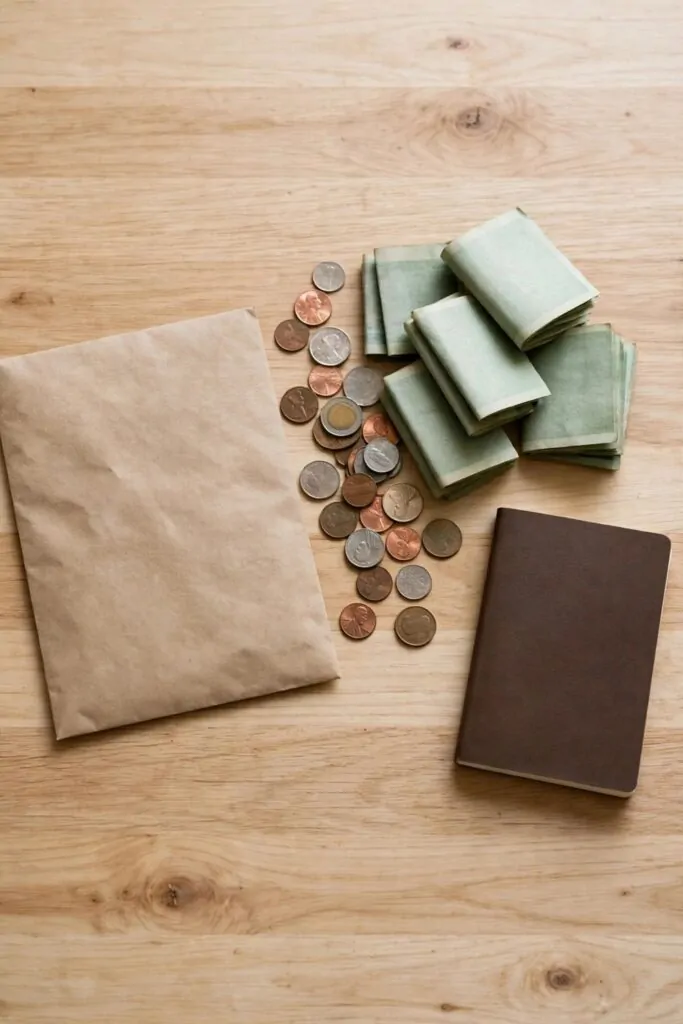
Fun money needs its own envelope so it never eats the food cash. I give fun a small amount each week. I spend it with joy and I stop when it runs out.
A treat now and then keeps the plan kind. You can enjoy a small joy without guilt when the cash is set apart.
My plain fun money envelope set cost $2 to $4.
I keep fun money apart so the rest of the plan stays safe.
You pick what fun means for your week.
Some weeks I save my fun cash for a bigger treat later. Some weeks I spend it on a small joy the same day.
I keep the food envelope for food and fun stays in its own place. I wait for next week if the fun cash runs out. I learn to enjoy small joys that cost very little.
Fun money makes the whole plan feel human and kind.
You will stick with cash stuffing when fun has a place. A plan with joy in it lasts far longer than a strict one.
8. Use a Bills Envelope for Fixed Costs
My bills envelope is for the fixed costs that come each month. I fill it first so the must-pay jobs are safe.
My plain bills envelope set cost $2 to $3.
Fixed costs are the ones that stay the same from month to month.
I list each bill and I write its amount beside it. I add the amounts up and I know what to set aside. I fill the envelope a little at a time when pay comes in.
You can split a big bill across paydays so it feels light. A little each payday adds up to the full amount in time.
I feel calm when I know the bills are covered.
You never have to fear a bill when the cash waits in its place. A bills envelope turns worry into a quiet plan.
I look at my bill list once a month and I fix what changed. I add a new bill when one starts. I drop a bill when one ends for good.
A bills envelope keeps your home steady all month long.
9. Track Every Note You Take Out
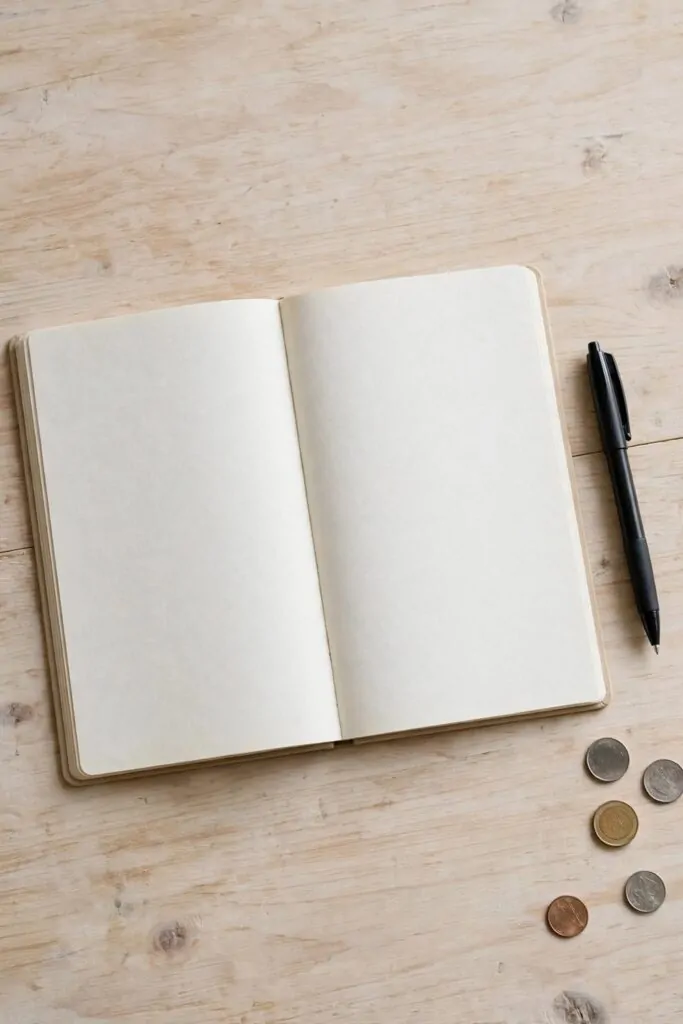
I write down each note I take out of my binder. You can do the same with a small notebook and a pen.
I write the date first so I know when the cash left.
Then I write the amount next to the date. I also write what the cash is for. That little line helps me a lot later.
I keep my notes short so I do not get tired of the task.
At night I look at my list one more time. I smile when the list matches what I spent.
My plain tracker notebook cost $2 to $4.
You can start with one envelope if a full binder feels too big.
I add a new line each time I take cash out. The list grows slow and steady through the week.
This small habit keeps my cash plan clear. It stays clear in my head all week.
10. Count What Is Left Each Sunday
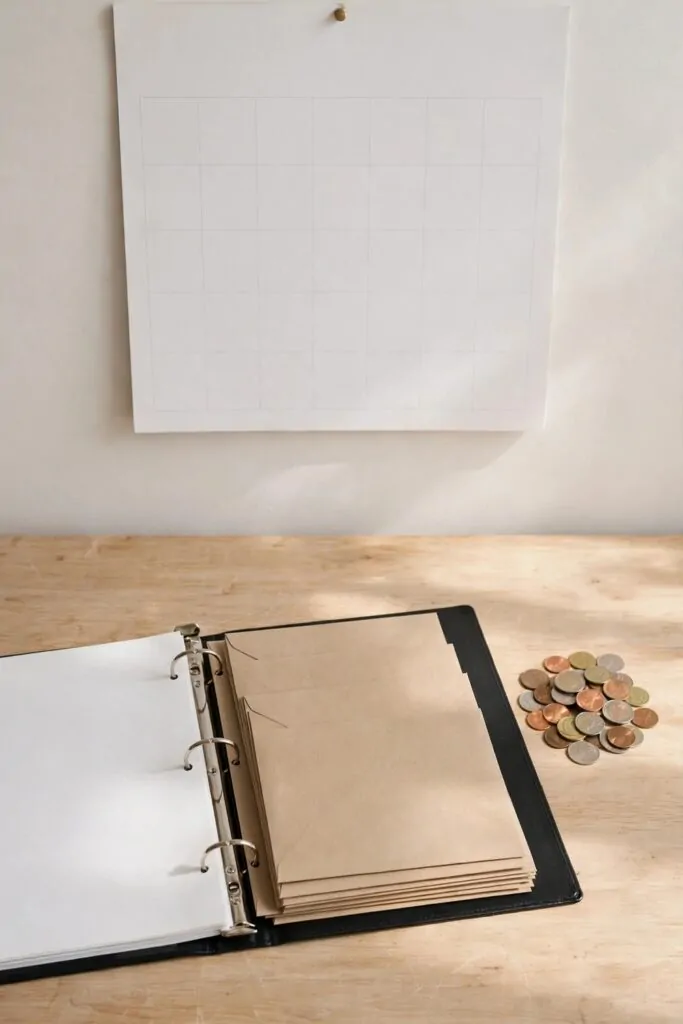
Sunday is my quiet time to look at what is left.
I open my binder and I take out each envelope one by one. I count the notes in a slow and calm way. I write the total down in my notebook.
You do not need to rush this part at all.
I like to sit at my table with a warm drink near me. The calm time helps me think clear.
I write the new total under the old total each week.
My plain Sunday count notebook cost $3 to $5.
If an envelope is low, I plan less for that spot next week. If an envelope still has cash, I feel proud of my plan.
I put the envelopes back in the same order I took them out. I put my pen away in my drawer. Then I start my week with a clear head.
This weekly count keeps me honest with my own plan.
| Idea | Main change | Typical cost |
|---|---|---|
| Start With One Cash Envelope | one cash envelope started | $3 to $5 |
| Pick a Binder That Fits Your Life | one binder picked | $4 to $6 |
| Label Each Envelope in Plain Words | each envelope labeled | $2 to $3 |
| Set a Weekly Cash Amount You Can Keep | weekly cash amount set | $2 to $4 |
| Fill Your Envelopes on Payday | envelopes filled on payday | $3 to $5 |
| Keep a Food Envelope for the Week | food envelope kept for the week | $3 to $6 |
| Give Fun Money Its Own Envelope | fun money envelope given | $2 to $4 |
| Use a Bills Envelope for Fixed Costs | bills envelope used for fixed costs | $2 to $3 |
| Track Every Note You Take Out | every note tracked | $2 to $4 |
| Count What Is Left Each Sunday | what is left counted | $3 to $5 |
| Total | $26 to $45 |
11. Move Spare Cash to a Savings Envelope
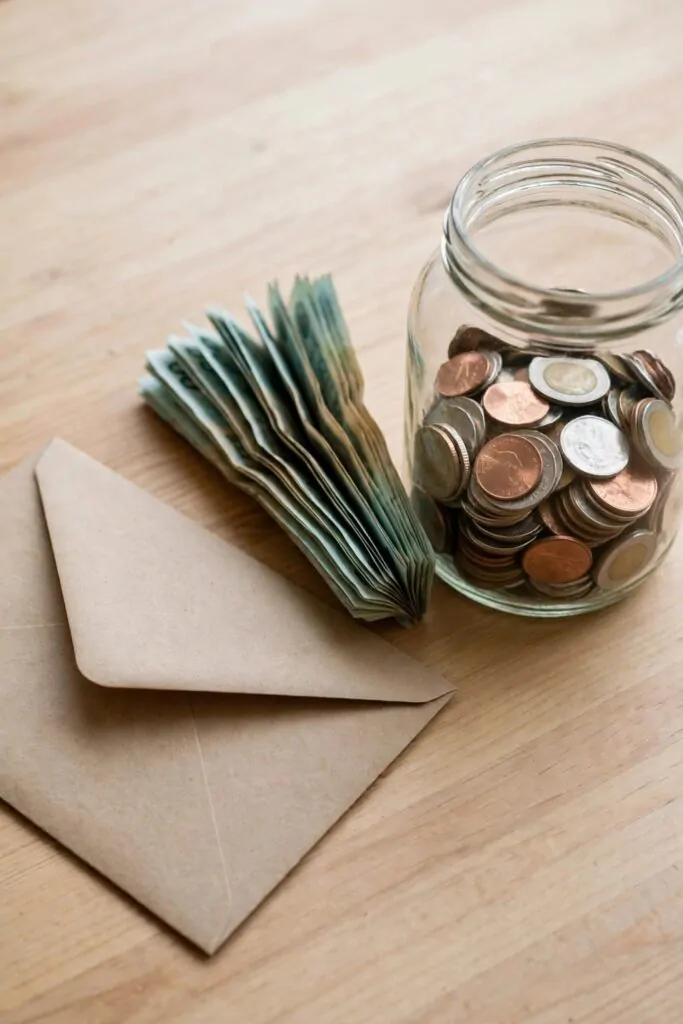
Spare cash can slip away fast if I leave it loose in my bag. I move it to my savings envelope as soon as I can. That move keeps it safe from small spends.
My savings envelope is for spare cash I do not need this week. I like to see my goal grow a little at a time.
You can move even a small note and it still counts.
I write the new amount on my list with my pen.
Some weeks I move a note after I pay for food. Some weeks I move a note I find in an old coat pocket.
My plain savings envelope set cost $2 to $4.
I do not take cash back out of this envelope for small wants. I wait and I let the amount build up slow. When I reach my goal, I feel so proud of myself.
You can pick a small goal first so the win comes soon.
This one move turns loose cash into real savings.
12. Plan a No Spend Day Each Week
One day each week I spend no cash at all.
I pick the same day each week so I remember it with ease. You can pick a quiet day that fits your own week.
I cook with food I already have at home. I drink water from my own tap. I read a book I already own in the evening.
I tell my family about the plan so they can join in too.
My plain no spend day planner cost $1 to $3.
At first the day felt long and a bit strange. Now I look forward to the calm it brings.
I write the date of my no spend day on my list.
If a friend asks me out, I say yes to a walk in the park. A walk costs me no cash and it still feels fun.
This one free day saves me more than I first thought.
13. Stuff Small Amounts When Cash Is Tight
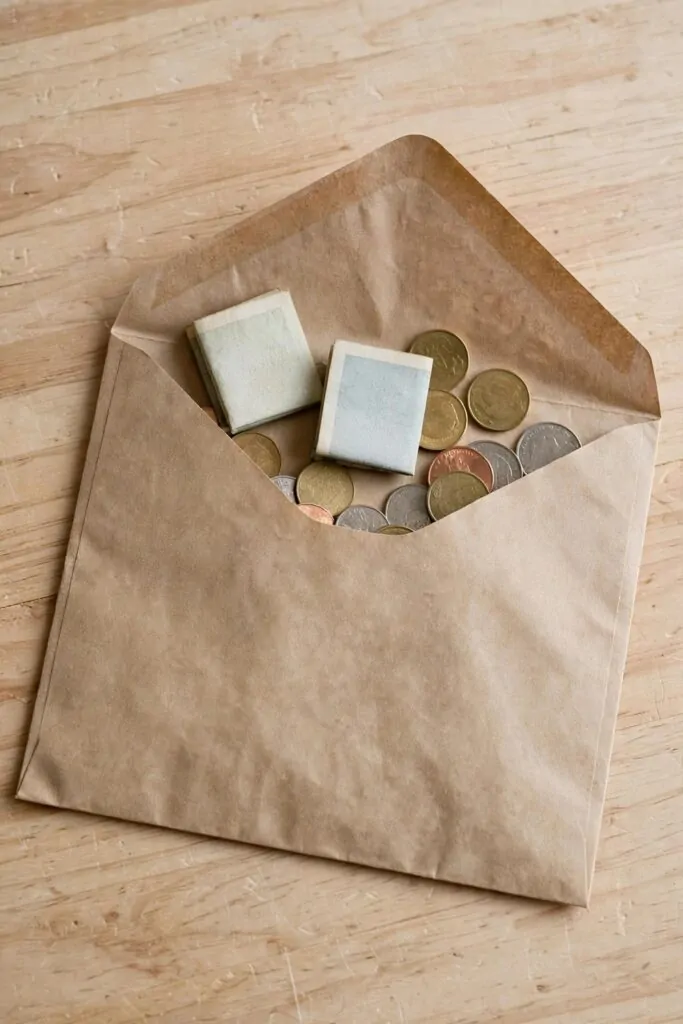
Some weeks my pay feels tight and my envelopes look thin. I still stuff a small amount and I feel good about it.
I take a small note from my purse and I put it in the right envelope. I write the amount down in my notebook. Then I move on with my day.
A small amount still moves my plan forward.
You do not need big notes to make this work. Small notes add up week after week.
My plain small amount tracker cost $2 to $3.
I skip one small treat and I use that cash for my envelope. I feel proud when I see the total grow. I remind myself that slow progress is still progress.
I keep my goals small on tight weeks so I do not give up.
You can try this too and you will see the change in a month.
Cash stuffing is not about being rich at once. It is about small steps that add up over time.
14. Keep Coins in a Small Jar Beside Your Binder
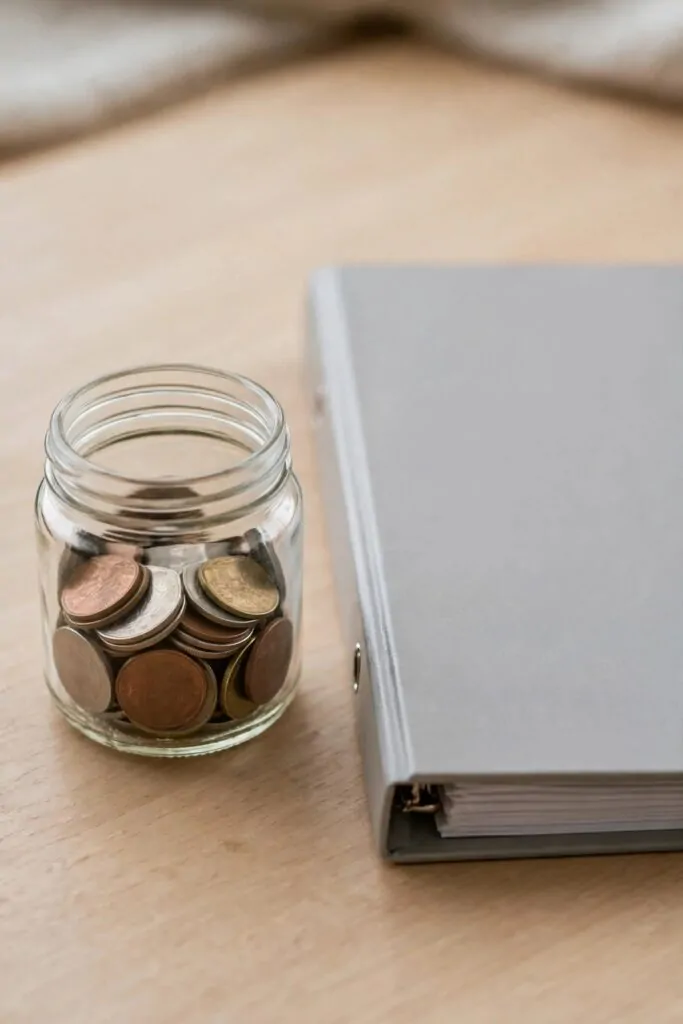
Coins can pile up in my bag and in my coat pockets.
I drop them in my small jar when I come home.
My small jar is for coins I want to save for later. I like to watch my savings grow in a simple way.
I empty my pockets each night before I change my clothes. I put the coins in the jar and I write the date in my notebook. That little routine takes me less than a minute.
You can do this too with a jar you already have at home. I use the same routine each day and it feels easy now.
My small glass jar for spare coins cost $2 to $4.
I do not spend the coins on small treats during the week.
When I have saved a lot of coins, I count them at my table. I write the total in my notebook. Then I move the coins to my savings envelope for my next goal.
This small habit turns loose change into real savings. You will be glad you kept each coin safe.
15. Use Cash for Groceries Only
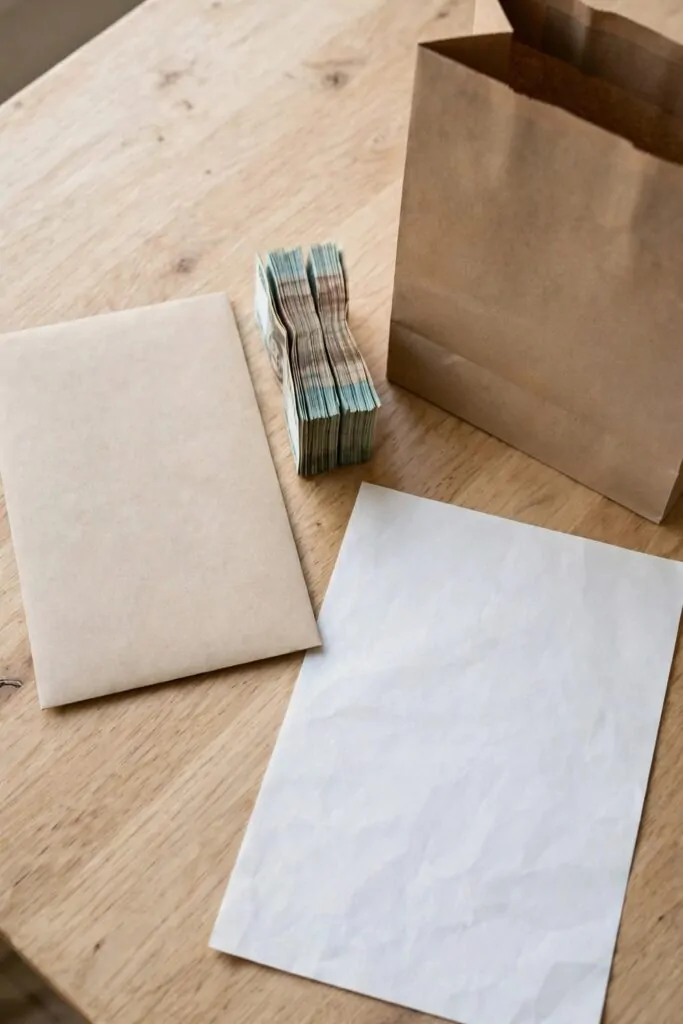
I take cash out for food and I leave my cards at home. I put the cash in my food envelope before I go to the shop. That one step keeps my food spend low.
Test it for one week first and see how it feels.
I jot my food list down at my table before I leave.
At the shop I look at my list and I buy only what is on it. If I see a treat I want, I ask myself if I really need it.
My plain food envelope cost $3 to $5.
When the cash runs out, I stop buying food for that week. I cook with what I have left at home.
This rule helps me waste less food each week.
I plan my meals on Sunday with my family. I note the meals down for the week. Then I shop once and I stick to my list.
Cash for food only is a simple rule that works for me.
16. Save for One Goal at a Time
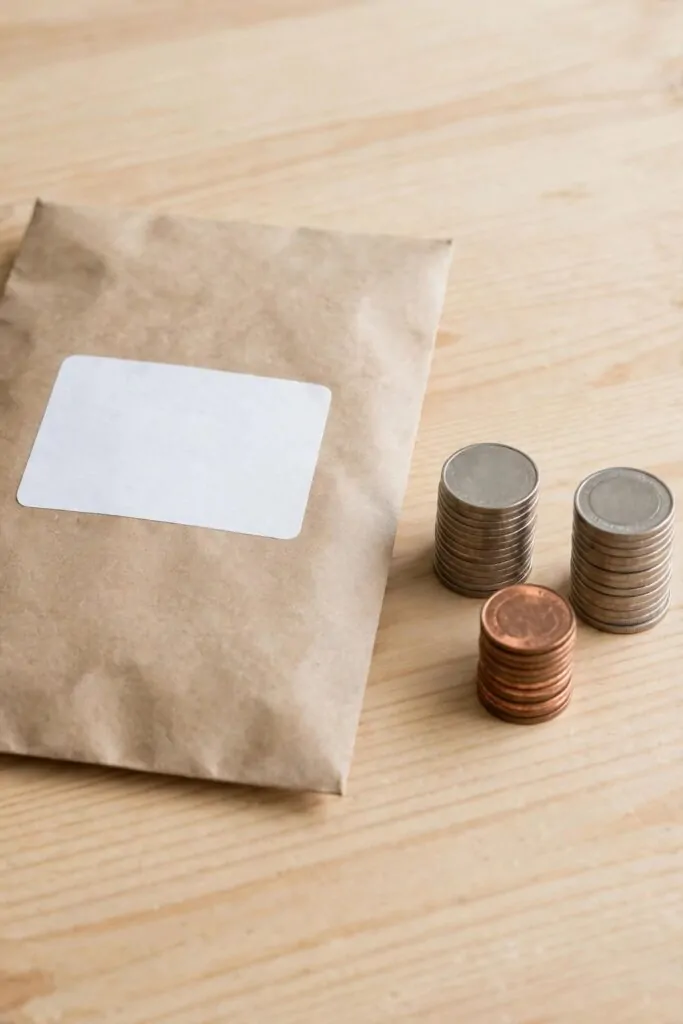
I used to save for five things at once. My cash felt thin. My plans felt slow.
One goal at a time works better for me.
I pick the goal that matters most this month. I put my cash in that envelope first. I leave the rest of my plans for later.
My mind feels calm when I do it this way.
You can try it with a small goal first. A short goal shows you how fast cash can grow.
I like to watch my savings grow.
It keeps me going each week.
When that goal is done, I pick the next one. I start fresh with a clear plan in my head.
My plain envelope for one goal cost $2 to $4.
17. Write Your Goal on the Front
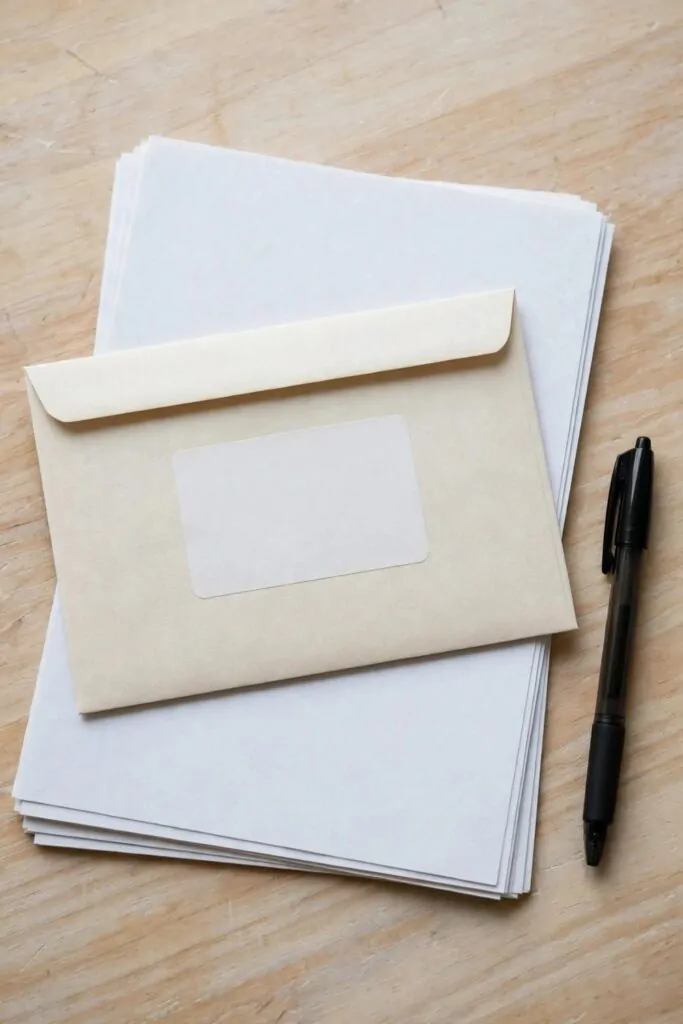
I take a pen and I write my goal on the front.
The words remind me why I save. I read them each time I add cash.
A clear goal keeps me from spending it on other things.
I write the goal in short words. I add the amount I want to reach. I keep the words big so I can read them fast.
You can do the same with your own goal. Pick one goal and write it down today.
I use simple words that mean a lot to me. My goal feels real when I see it written down.
It takes me only a few seconds to write it.
I smile when I see my goal grow.
I change the words when my goal changes. My plain front goal envelope cost $2 to $3.
18. Check Your Binder Before You Shop
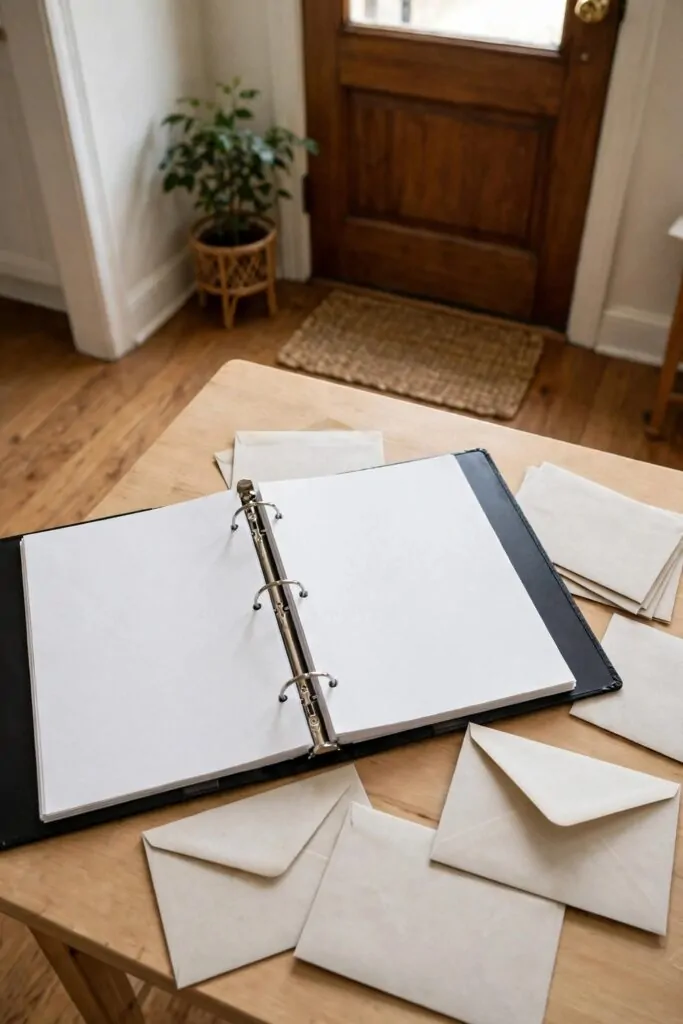
I open my binder before I go out to shop. I look at each envelope and I think about what I plan to buy. I take only the cash I plan to spend.
This small step stops me from overspending.
You can do it at home before you leave. It takes a few minutes and it saves a lot of worry.
I feel calm when I know my plan.
A quick look helps me shop with care.
I leave the rest of my cash at home. I carry only what my list needs.
My list tells me what to buy first. I stick to the list when I walk past things I like. I come home with cash left for next time.
That leftover cash goes back to my plan.
My plain shop binder cost $3 to $5.
19. Share the Plan With Your Family
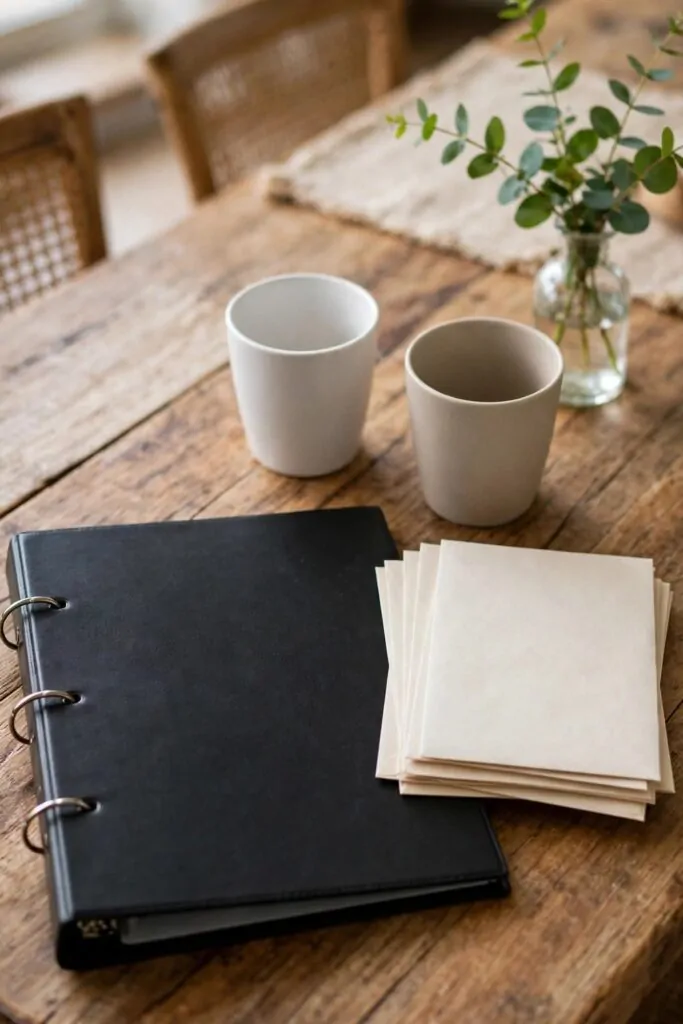
I tell my family about my cash plan.
I show them how I sort my cash each week. I tell them what each envelope is for. I ask them to help me stick to the plan.
We all save better as a team. We work on the plan side by side.
My kids like to watch me sort the cash. They learn how saving works by seeing it done.
You can share your plan in simple words.
A short talk each week keeps us on track.
We talk about what we want to save for next. We pick one fun goal we can reach together.
It feels good to save as a family.
We cheer when we reach a goal we saved for. We start a new goal with a smile. My plain family plan envelope cost $2 to $4.
20. Fix a Torn Envelope Instead of Buying New
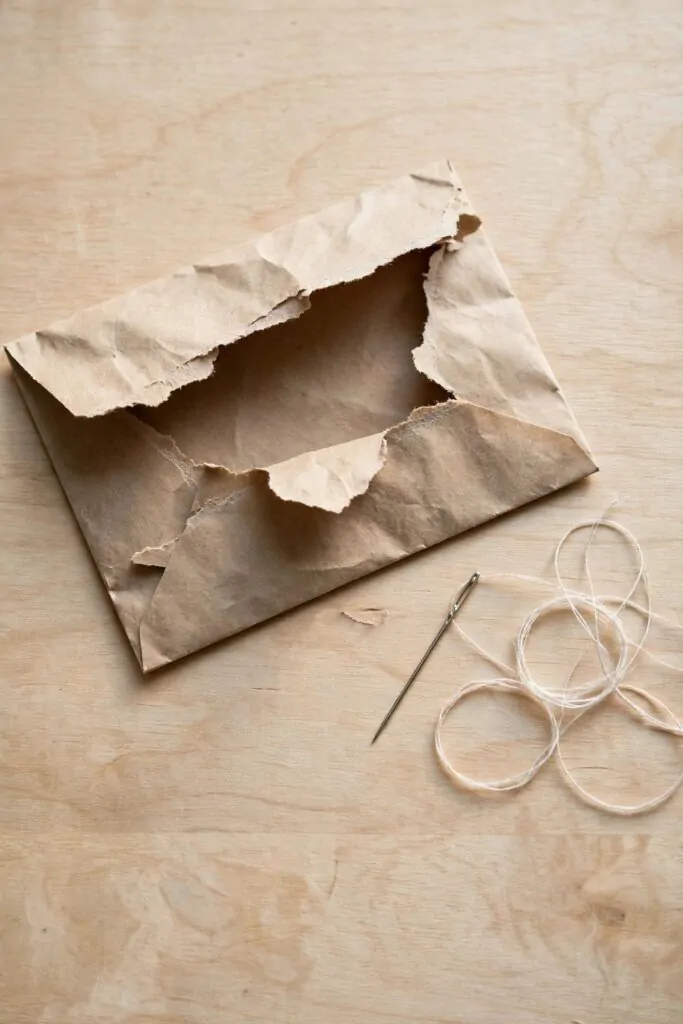
A small tear does not mean I need a new envelope. I can fix it in a few minutes at home.
I fold the torn edge in with my fingers. I press it flat and I keep the envelope in use. I like that I waste less this way.
A fixed envelope works just as well for me.
I save cash by fixing what I have. It costs me nothing but a little time.
You can try this with any torn envelope. A quick fix keeps your plan going without a trip to the shop.
I feel proud when I reuse what I own.
I look at the tear first and I think about the best fix. If the tear is small, I fix it right away. If the tear is big, I move my cash to a spare envelope I keep nearby.
My plan stays on track either way.
I fix more than I buy these days. My plain fix envelope cost $1 to $3.
| Idea | Main change | Typical cost |
|---|---|---|
| Move Spare Cash to a Savings Envelope | spare cash moved to savings | $2 to $4 |
| Plan a No Spend Day Each Week | no spend day planned | $1 to $3 |
| Stuff Small Amounts When Cash Is Tight | small amounts stuffed | $2 to $3 |
| Keep Coins in a Small Jar Beside Your Binder | coins kept in a small jar | $2 to $4 |
| Use Cash for Groceries Only | cash used for groceries only | $3 to $5 |
| Save for One Goal at a Time | one goal saved for at a time | $2 to $4 |
| Write Your Goal on the Front | goal written on the front | $2 to $3 |
| Check Your Binder Before You Shop | binder checked before shopping | $3 to $5 |
| Share the Plan With Your Family | plan shared with family | $2 to $4 |
| Fix a Torn Envelope Instead of Buying New | torn envelope fixed not replaced | $1 to $3 |
| Total | $20 to $38 |
21. Review Your Envelopes at Month End
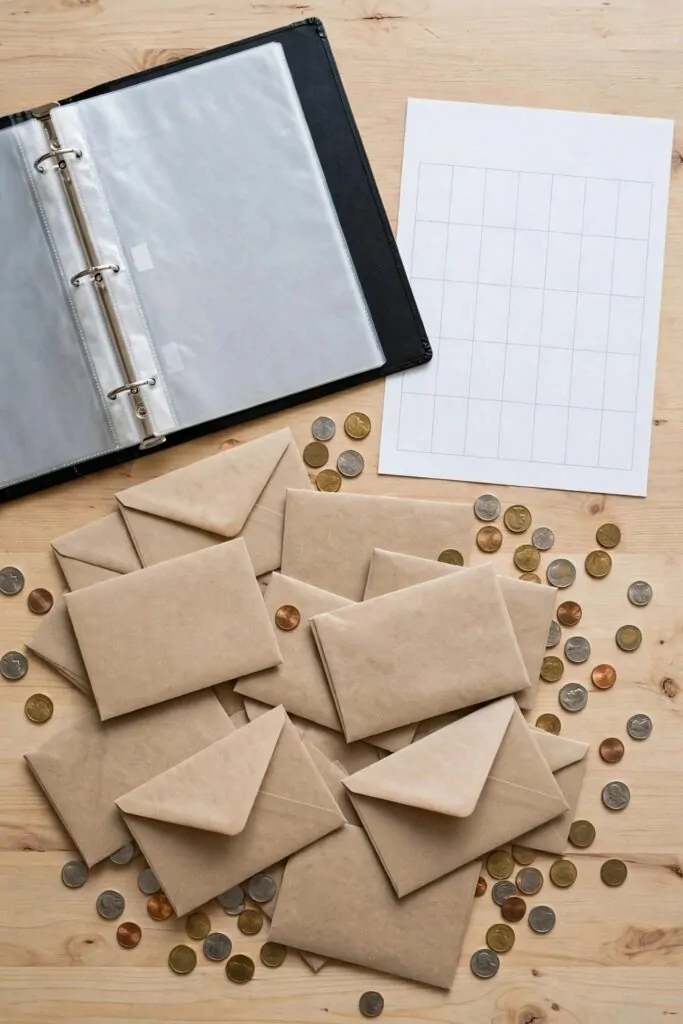
I sit down with my binder at the end of the month.
I go through each envelope one by one.
I add up what I saved in my head. I write the new totals in my tracker.
I think about what went well this month. I think about what I want to change next month. I make a fresh plan for the weeks ahead.
A short review keeps my saving on track.
You can do your review on the last day of the month. A quiet half hour is all it takes.
I feel glad about each small step I took.
I move leftover cash to my next goal. I start the new month with clear goals in mind. I smile because my plan is simple and it works for me.
My plain month end binder cost $3 to $5.
22. Keep a Simple Cash Stuffing Kit at Home
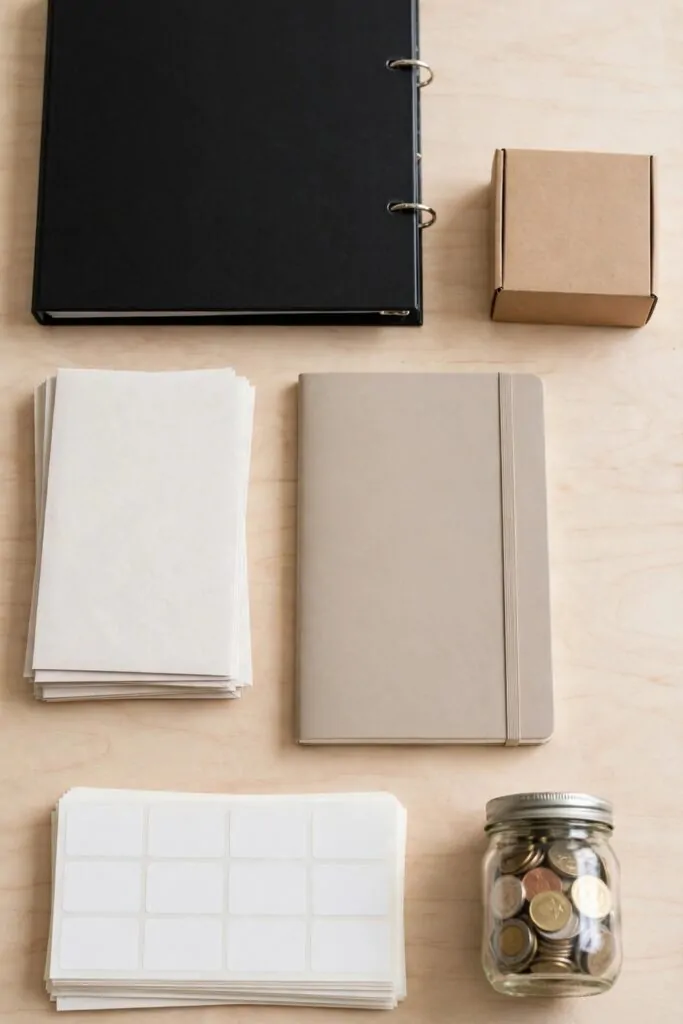
I keep a simple kit for my cash stuffing at home. It helps me start each week with a clear plan.
I start with a plain cash stuffing binder.
I add a set of plain cash stuffing envelopes.
I add a plain cash stuffing tracker to write my goals and my totals. I add a small plain cash stuffing box for the bits I use each week. I add a plain cash stuffing label set to mark each plan in words I can read fast.
My kit costs $4 to $6 for the binder, $2 to $4 for the envelopes, $3 to $5 for the tracker, $3 to $6 for the box, $2 to $3 for the labels, and $2 to $4 for the jar, for a total of $16 to $28. I add a small plain cash stuffing jar to the kit too.
Each bit in my kit has a job to do.
I lay the kit out and I look at each piece before I start. I pick my goals for the week and I get going.
A simple kit makes saving feel easy for me.
Next week I will open my kit with a calm mind and I will keep saving a little at a time.
| Idea | Main change | Typical cost |
|---|---|---|
| Review Your Envelopes at Month End | envelopes reviewed at month end | $3 to $5 |
| Keep a Simple Cash Stuffing Kit at Home | kit total for the whole plan | $16 to $28 |
| Total | $19 to $33 |
| Idea | Main change | Typical cost |
|---|---|---|
| a plain cash stuffing binder | a binder for cash stuffing envelopes | $4 to $6 |
| a set of plain cash stuffing envelopes | envelopes for cash stuffing each week | $2 to $4 |
| a plain cash stuffing tracker | a tracker for cash stuffing each week | $3 to $5 |
| a small plain cash stuffing box | a box for cash stuffing tools | $3 to $6 |
| a plain cash stuffing label set | labels for cash stuffing envelopes | $2 to $3 |
| a small plain cash stuffing jar | a jar for loose coins each week | $2 to $4 |
| Total | $16 to $28 |
Keep Reading
If you liked these ideas, you will love these posts too
Each post has more simple ideas you can try at home this weekend.