29 Counting Games for Kids That Make Math Fun

My son counted the stairs on the way up and got so proud when he reached ten.
Here are 29 counting games for kids that turn plain numbers into play you can do together at home.
Counting feels hard when it sits on a page with no play in it. A game makes the numbers real, and real numbers stick in a child’s head.
Start with one to five, then add six to ten when your child feels sure. There is no rush, and a slow start makes a strong start.
Keep each game short, about five minutes, and stop while it still feels fun. Praise each right count out loud, and praise the good tries too.
You do not need fancy toys for these games. Spoons, socks, books, and blocks from round the house work just as well.
Pick one game from the list, play it after lunch, and see how your child lights up. Tomorrow you can pick a new one.
1. Count the Steps on the Stairs
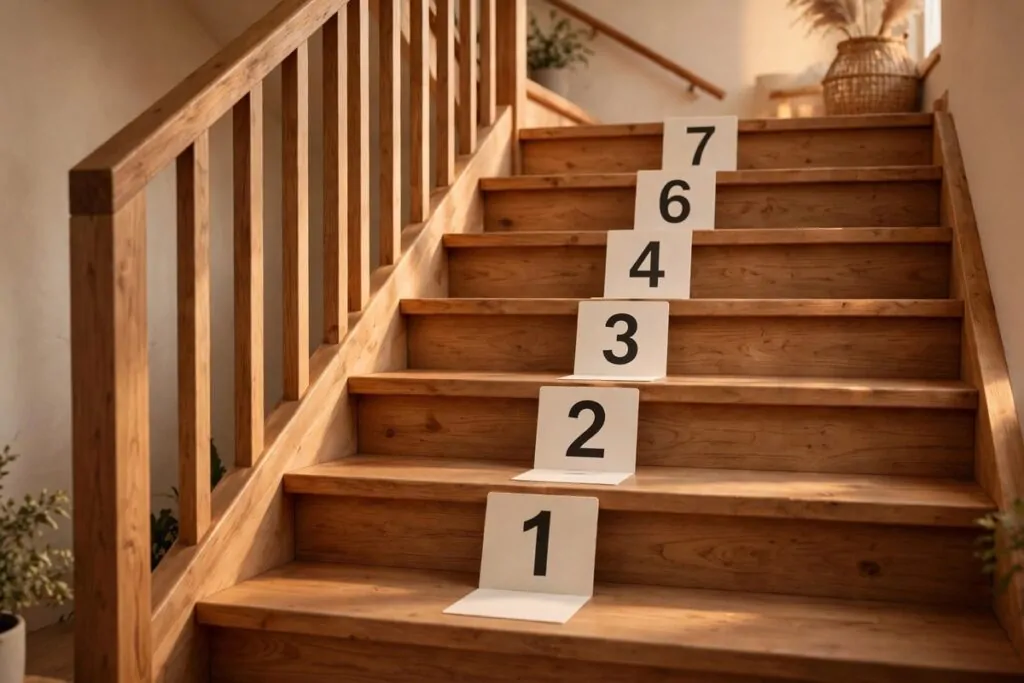
We count the steps each time we walk up the stairs in our home. My child says one, two, three, and I say the next number with them.
The stairs make a fine first counting game.
We start at the bottom step and touch each step with one foot. My child says the number out loud for each step we take. At the top we clap once and say the last number again.
Some days we count up, and some days we count back down.
My child likes to count the steps on the way to bed. It turns a plain walk into a small game each night.
We never rush the count, even when we are late.
If my child skips a number, we go back to the start with a smile. A fresh try is always better than a fast try.
You can count the steps at a friend’s house too. Each stair set has its own count, and that makes the game new each time. My child loves to learn a new count on new stairs.
Typical cost $0 to $1.
2. Count Spoons at Breakfast
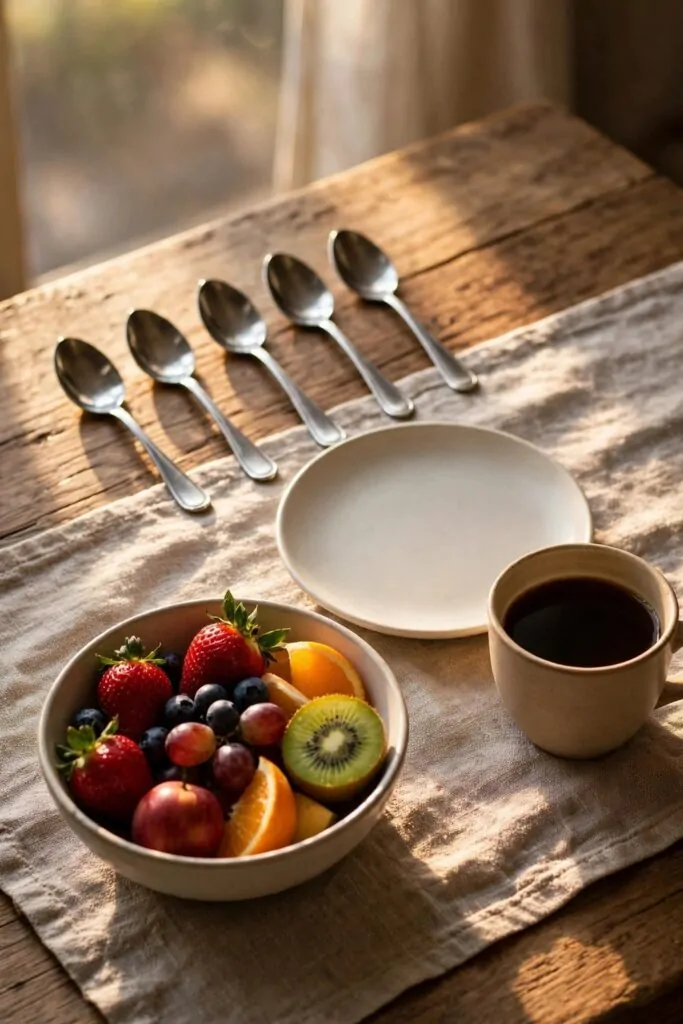
We count the spoons before we set the table for breakfast.
My child takes one spoon from the drawer for each person at the table. We say the number out loud as each spoon lands on the cloth.
The spoons land in a neat row on the cloth, ready for breakfast.
If a spoon is missing, we count again from the start. My child checks each place and counts the spoons one more time. Then we all sit down to eat with a smile.
Some days we count the bowls too. My child likes to match one spoon to one bowl.
A small count each morning builds a big skill.
You can count the cups next, or the plates, or the chairs round the table. Each new count makes breakfast feel like a game. My child now counts the spoons without being asked.
We keep the spoons in one drawer so the count stays easy. My child knows just where to look each morning.
Typical cost $0 to $1.
3. Play Count and Clap
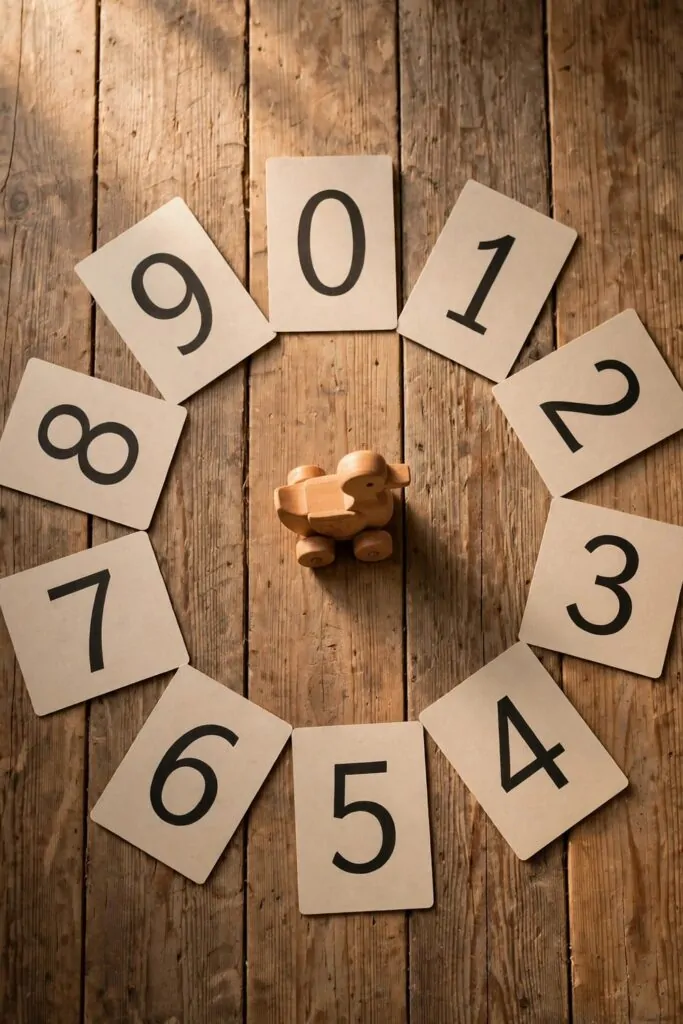
I clap once and my child says one. I clap twice and my child says two. We keep going till we reach five.
This game needs no toys at all.
My child claps next, and I say the numbers out loud. We take turns so each of us gets to clap and count.
- Clap one time and say one
- Clap two times and say two
- Clap three times and say three
We stop at five, then start again from one.
My child loves to clap fast, but we keep it slow at first.
When five feels easy, we try six, seven, and eight. My child grins when the claps and the counts line up.
You can play this game in the car, in the kitchen, or on a walk. It fits in a small wait, and it turns dull time into play time. My child asks for one more round each time we play.
Typical cost $0 to $1.
4. Count the Books on the Shelf
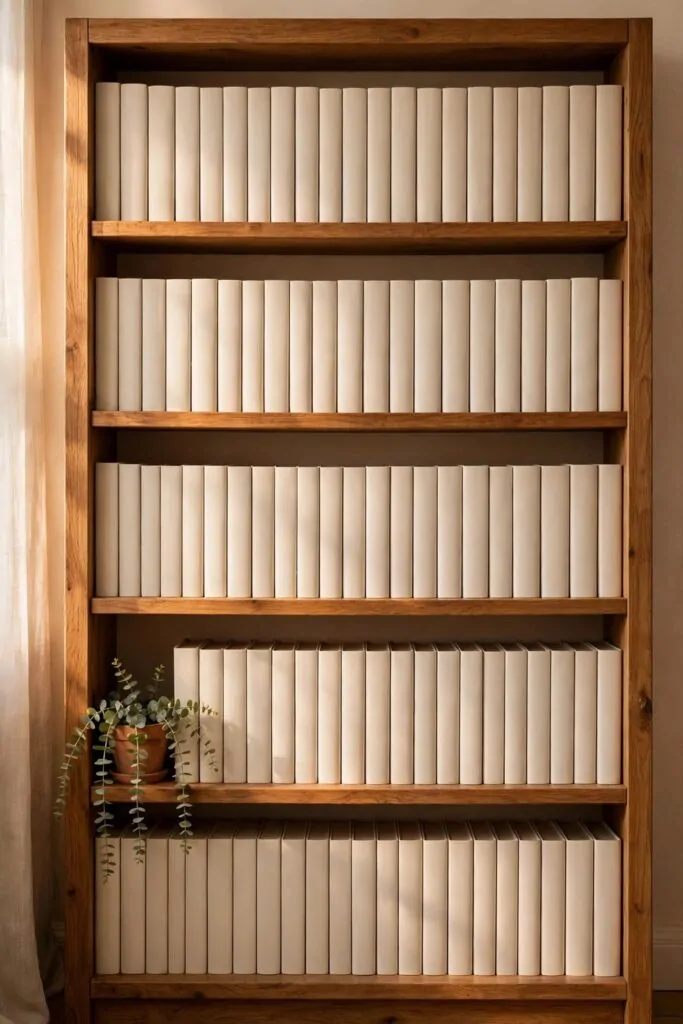
We count the books on the low shelf in the living room.
My child points to each book and says its number out loud. We start at the left end and move slow to the right. At the end we say the last number and clap once.
Some days we count the big books first. Other days we count the small books first.
Each book has its own place on the shelf.
My child likes to pull one book out and count the rest again. The count drops by one, and that teaches take away in a soft way.
We put the book back and count up again to the full shelf. My child smiles when the last number comes back. A full shelf means the count is whole again.
You can count the books in any room of the house.
We count the books on the bedside table at night. It makes a calm count before sleep.
Typical cost $0 to $1.
5. Roll a Die and Count the Dots
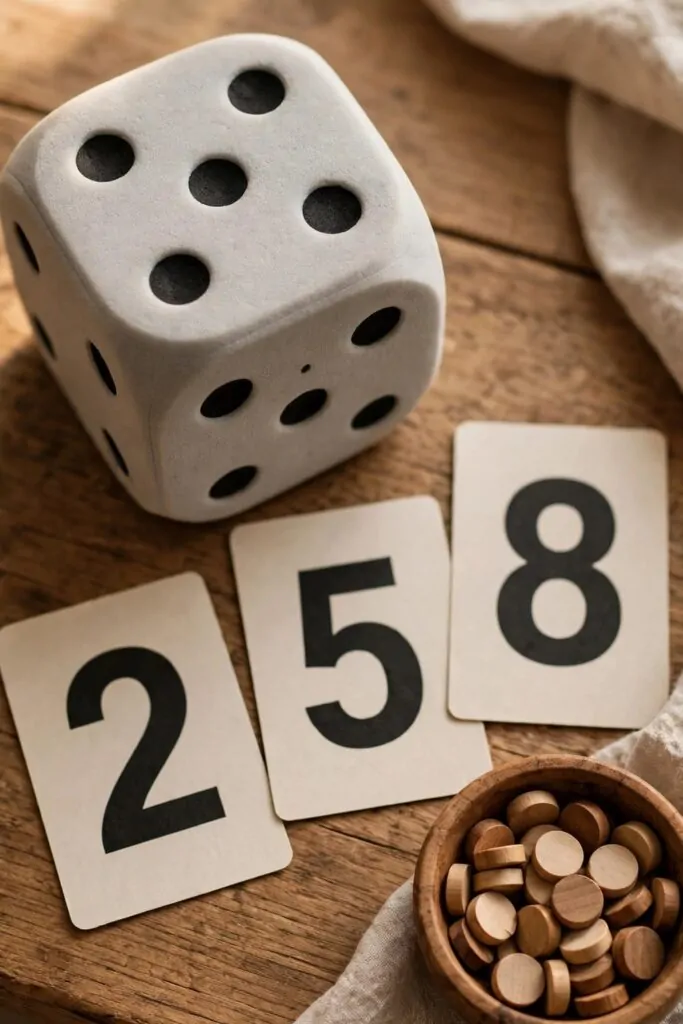
We roll one big die on the table and count the dots on top. My child says the number out loud and moves one counter for each dot.
A die with big dots is best for small eyes. We use a soft foam die so it lands quiet on the table.
Each roll brings a new number to count.
My child rolls the die and I count the dots with them. Then we swap, and my child counts the dots alone. We cheer when the count is right.
We keep the counters in a small bowl beside the die.
A wrong count just means we roll again.
Some days we roll two dice and count all the dots together. My child adds the dots from both dice with help from me.
You can play this game on the floor or at the table. It works on a rainy day, and it works on a bright day too. My child asks to roll just one more time, each time we play.
Typical cost $2 to $4.
6. Count Fingers and Toes
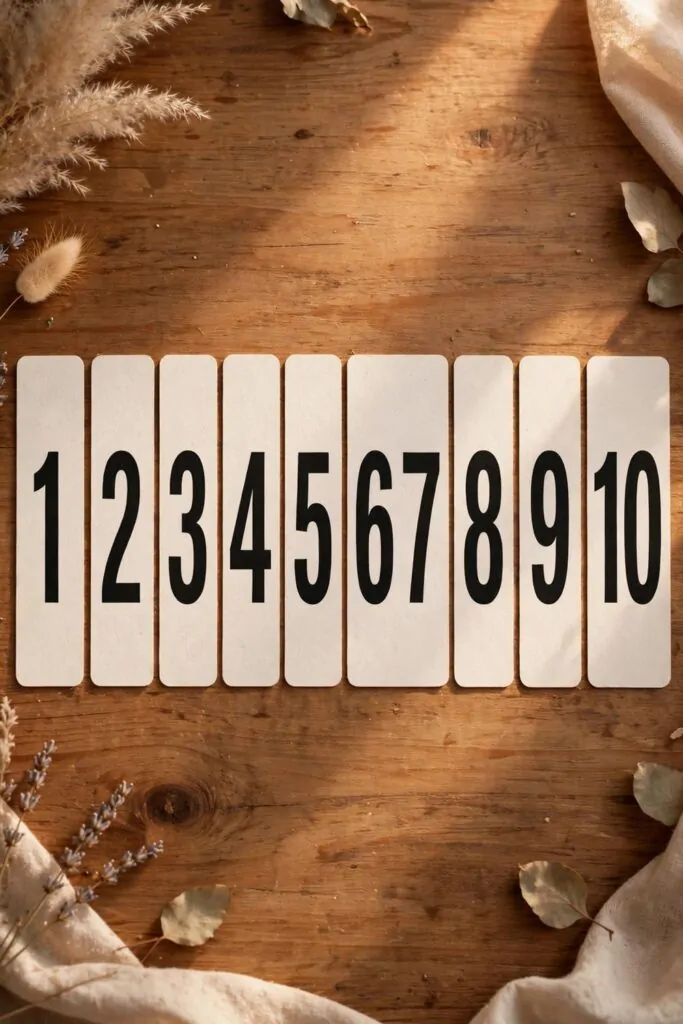
We count fingers and toes when we sit together on the floor.
My child holds up one hand and counts each finger in turn.
One, two, three, four, five, we say the numbers slow and clear. Then we count the other hand the same way. Ten fingers in all, and my child feels so proud.
Toes are fun to count after a bath. My child wiggles each toe as we say its number.
Fingers and toes are always with us, so this game works anywhere.
Some days we count fingers on both hands at once. My child holds up ten fingers and shouts ten with a big grin.
You can count fingers in the car or on a walk. It needs no toys and no set up at all. My child counts fingers while we wait for lunch.
We count toes in pairs, two at a time. Left foot, right foot, the count grows fast.
Typical cost $0 to $1.
7. Count the Cars on the Road
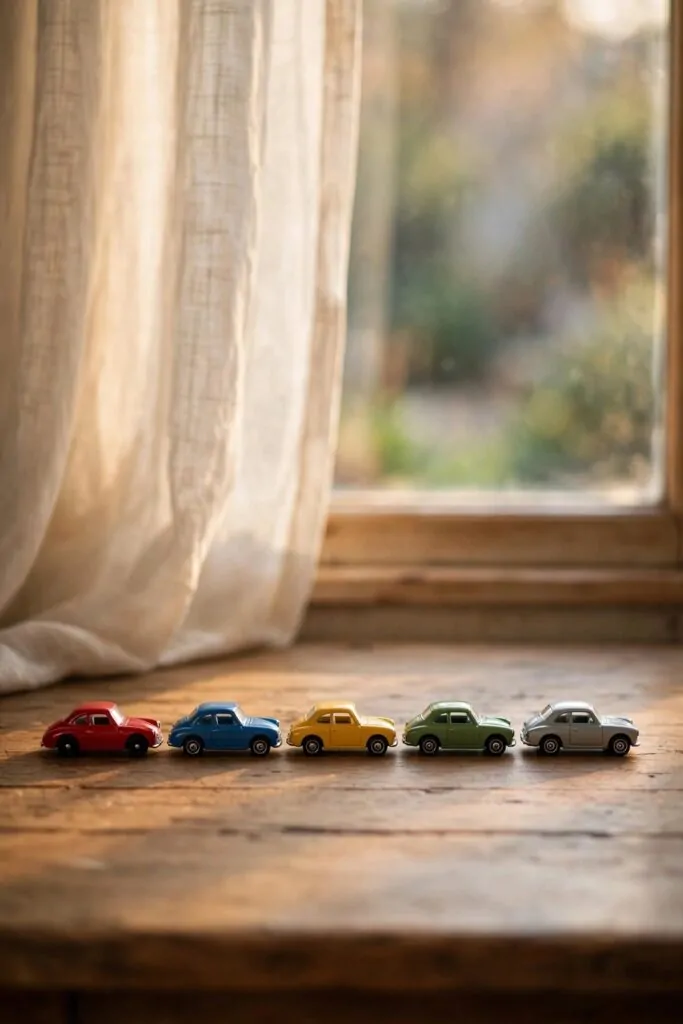
We sit by the window and count the cars as they pass our street. My child says one for the first car and two for the next. We keep the count going till we reach ten.
Red cars are my child’s pick to count first. We count only the red cars and let the rest drive past.
A slow street makes the count easy and fun.
We stop the count when a big lorry rolls past.
Some days we count the buses too. My child loves the big buses best of all.
We write the count on a plain card when we reach ten.
You can count cars on a walk to the park. Each new street brings new cars to count. My child now counts cars without being asked to.
We count cars in the rain from the warm living room. The window keeps us dry while the count keeps us busy.
Typical cost $0 to $1.
8. Play a Counting Hopscotch Game
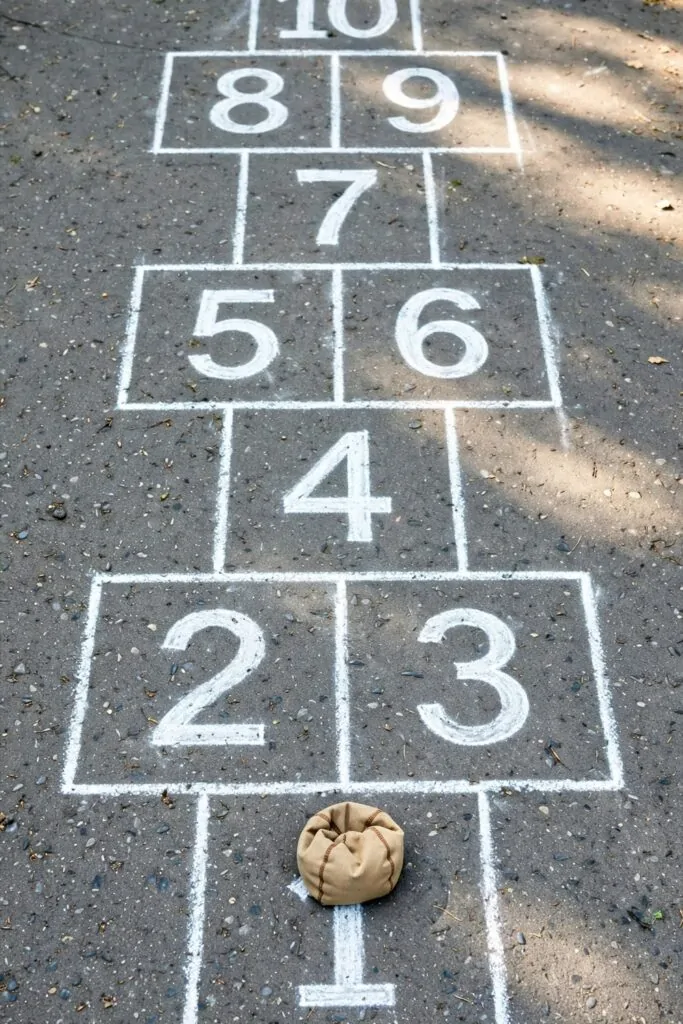
We draw a hopscotch grid on the ground with chalk. My child hops from one square to the next and says each number out loud.
One hop for one, two hops for two, the count grows with each hop.
The grid has ten squares, and each square holds one number.
My child tosses a small bean bag onto square one. Then they hop to the square and say its number with pride. We take turns so each of us gets to hop and count.
If the bean bag lands on the line, we toss again. My child laughs and tries a softer toss next time.
We draw the grid big so small feet fit in each square. The chalk washes off in the rain, so we can draw a fresh grid next week. My child loves to help draw the numbers in each square.
You can play hopscotch in the garden or on a quiet path.
We count the hops out loud as we go. The count and the hops match, and that makes the game click.
Typical cost $1 to $3.
9. Count the Apples in the Bowl
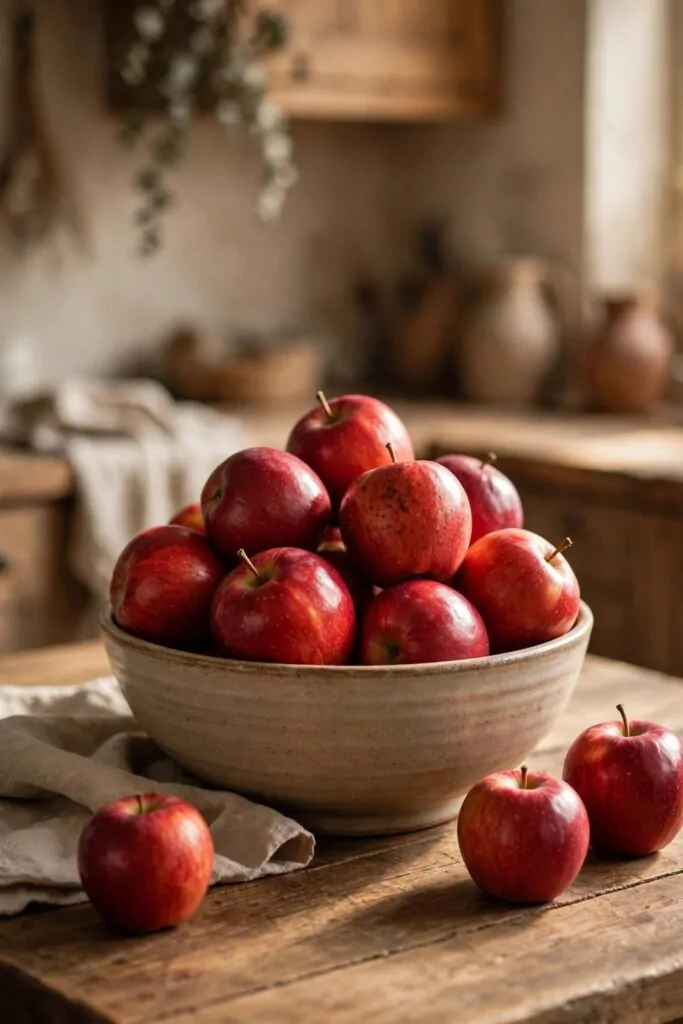
We count the apples in the fruit bowl on the kitchen table.
My child takes one apple out at a time and sets it on the table. We say the number out loud for each apple we take out.
One apple for mum, one for dad, and one for my child. We count the rest and put them back in the bowl. Then we count the full bowl one more time.
A full bowl holds a good few apples on most days.
My child likes to count the apples before lunch.
Some days we count the oranges too. My child stacks the oranges in a small pile and counts them twice.
We count the apples at the shop before we buy them. My child picks the apples and counts each one into the bag.
You can count any fruit in the bowl at home. Each fruit has its own count, and that keeps the game fresh. My child now counts the apples without a prompt from me.
Typical cost $1 to $3.
10. Make a Counting Chain from Paper Rings
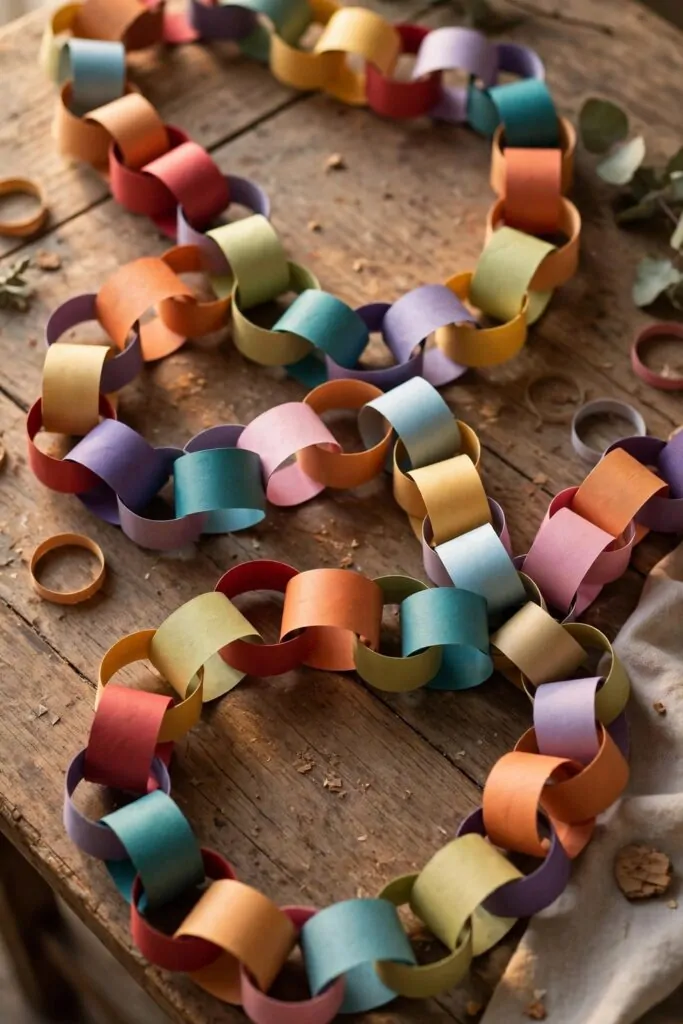
We cut strips of coloured paper and loop them into a long chain. My child counts each ring as we add it to the chain.
One ring for one, two rings for two, the chain grows with the count. We use one colour for each set of five rings. At five we switch to a new colour and keep going.
The chain hangs on the wall when it is done.
My child loves to count the rings back from the end. We start at the last ring and count down to one.
A paper chain costs next to nothing to make.
We make a new chain each week with fresh colours.
You can hang the chain in the play room or by the door. Each ring holds a count, and the whole chain holds the day’s work. My child shows the chain to every guest with pride.
We count the rings each morning before school. It takes one minute and it sets the day off well.
Typical cost $1 to $3.
| Idea | Main change | Typical cost |
|---|---|---|
| Count the Steps on the Stairs | count the steps on the stairs | $0 to $1 |
| Count Spoons at Breakfast | count spoons at breakfast | $0 to $1 |
| Play Count and Clap | play count and clap | $0 to $1 |
| Count the Books on the Shelf | count the books on the shelf | $0 to $1 |
| Roll a Die and Count the Dots | roll a die and count the dots | $2 to $4 |
| Count Fingers and Toes | count fingers and toes | $0 to $1 |
| Count the Cars on the Road | count the cars on the road | $0 to $1 |
| Play a Counting Hopscotch Game | play a counting hopscotch game | $1 to $3 |
| Count the Apples in the Bowl | count the apples in the bowl | $1 to $3 |
| Make a Counting Chain from Paper Rings | make a counting chain from paper rings | $1 to $3 |
| Total | $5 to $19 |
11. Count the Blocks in a Tall Tower
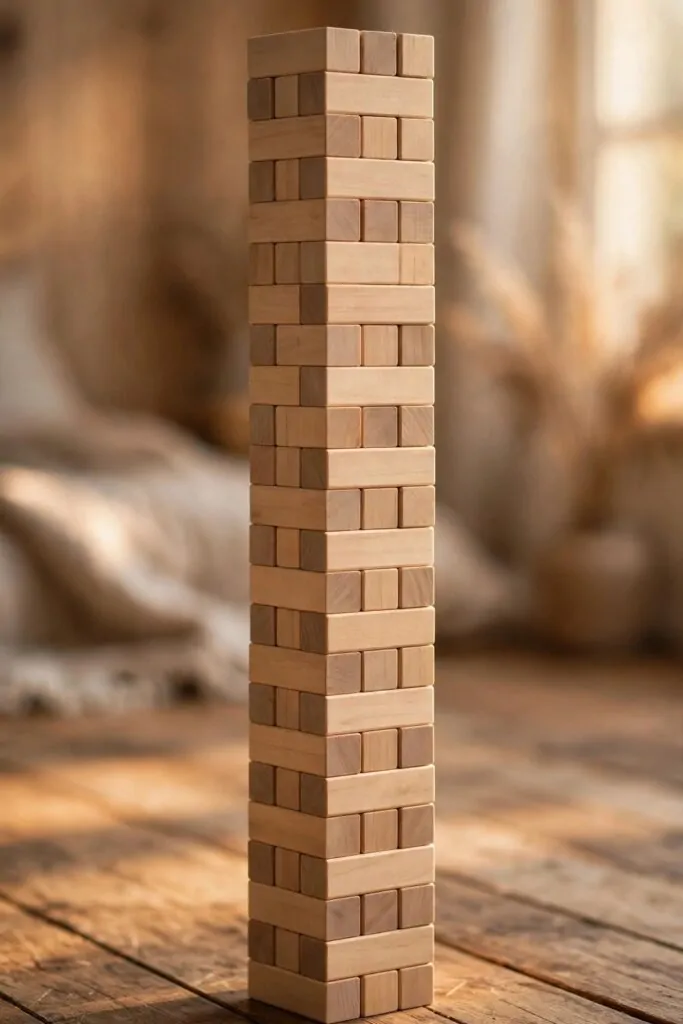
We build a tall tower from wooden blocks and count each block as it goes on.
My child stacks one block and says one.
Then we add the next block and say two. The tower grows one block at a time.
We count slow so the tower stays up. My child holds each block with care and sets it down soft. We stop when the tower stands tall, and we cheer for our work.
If the tower falls, we count the blocks on the floor. Then we build it up again from one.
A fall is just a new chance to count.
My child loves to knock the tower down at the end.
You can build the tower on the floor or on a low table. A fresh tower means a fresh count to learn. My child now builds tall towers with no help.
Typical cost $3 to $5.
12. Count the Pegs on a Wooden Board
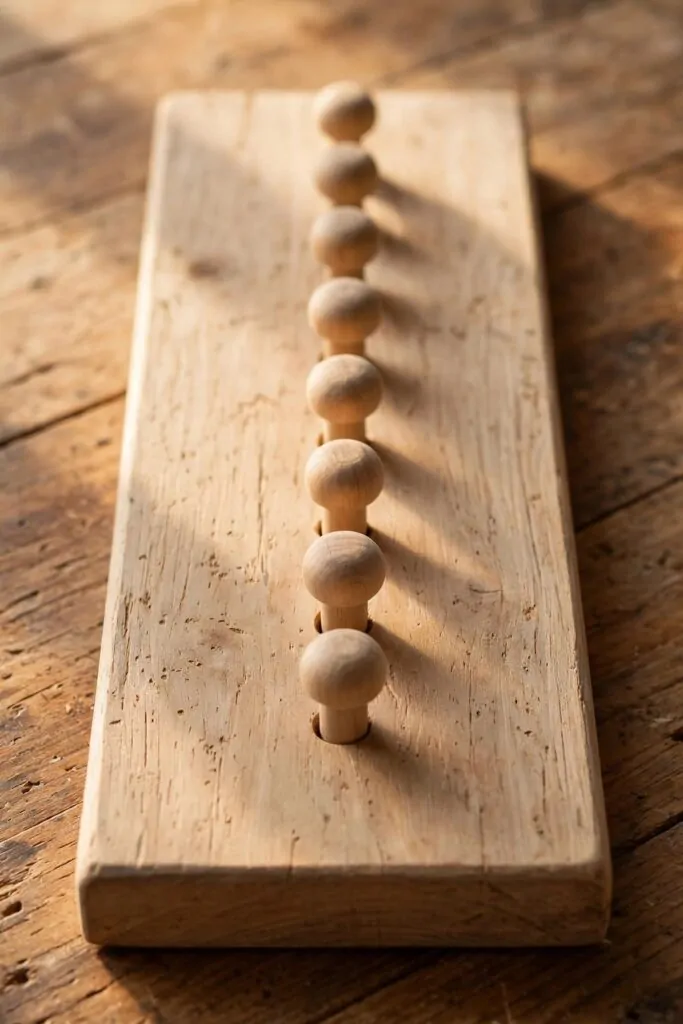
We use a wooden board with holes and a set of round pegs. My child pushes one peg into a hole and says one. Then we add pegs one by one and count as we go.
The board has eight holes in a neat row.
Each peg fits in one hole, no more and no less.
My child counts the pegs as they go in. One peg, two pegs, three pegs, the count grows with each push.
We take the pegs out and put them back in one by one. Each peg goes back in its hole with a soft push. My child loves to count them all over again.
A full board holds eight pegs in a row.
Some days we take the pegs out and count back down. Eight, seven, six, the count falls as fast as it rose.
You can play this game at the table or on the floor. The board stays in one box, so it is easy to find each day.
Typical cost $4 to $6.
13. Count the Birds in the Garden
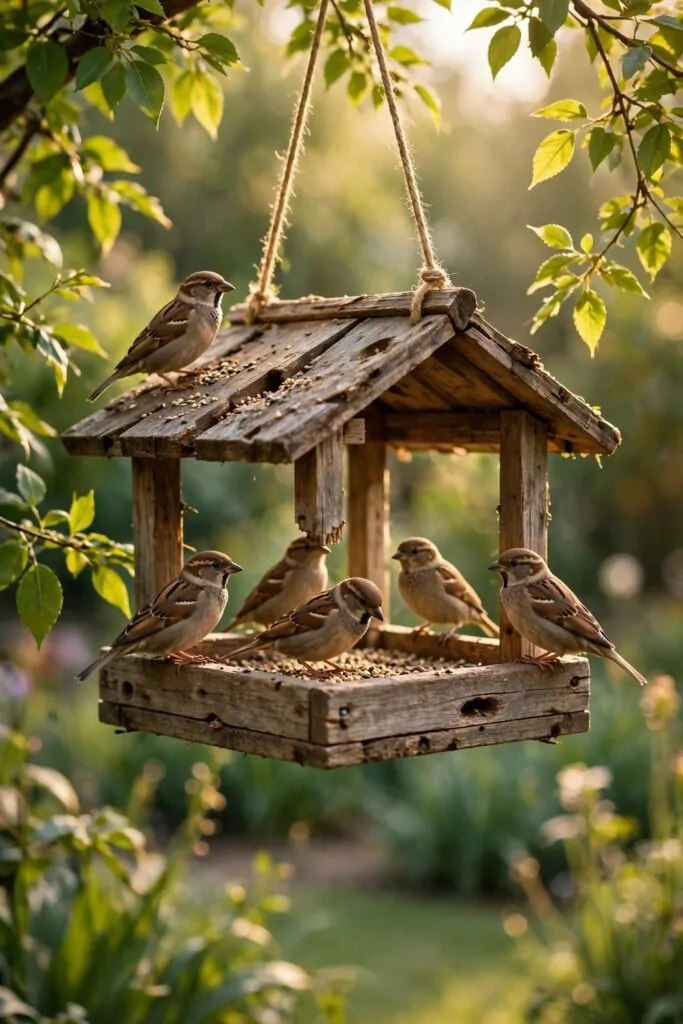
We sit by the garden window and count the birds that visit our feeder. My child says one for the first bird and two for the next.
Small brown birds come most days in the morning.
We keep a plain notebook by the window for the bird count. My child draws one mark for each bird we see. At the end of the day we count the marks together.
Some days we see three birds at once. Other days we see just one shy bird on its own.
We never rush the birds, and we never tap the glass.
My child loves to spot a new bird in the garden. We look at its colour and its size and give it a name of our own. Then we add it to the day’s count with pride.
You can count birds in any garden or park.
We count the birds at dawn when the garden wakes up. The early birds make the best count of the day.
Typical cost $0 to $1.
14. Count Coins in a Money Jar
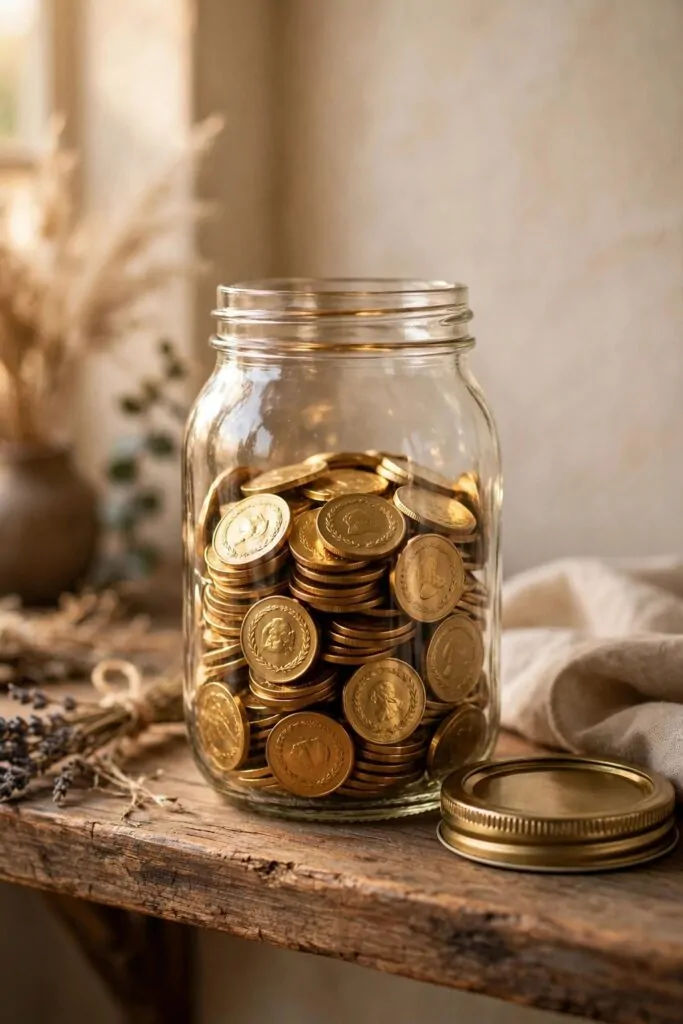
We drop coins into a clear glass jar and count them each week.
My child holds one coin and says one. Then we drop it in the jar and hear it clink. We keep going till the jar holds ten coins.
The jar sits on the shelf where we can see it grow.
- Drop one coin in and say one
- Drop two coins in and say two
- Drop three coins in and say three
Some days we add two coins at once. My child counts them as they drop, one and then two.
We count the jar on Friday, the same day each week.
My child loves to shake the jar and guess the count first. Then we tip the coins out and count them one by one.
You can use any jar from the kitchen for this game. A clear jar works best, so your child can see the coins grow. My child now saves coins just to count them on Friday.
Typical cost $2 to $4.
15. Jump and Count to Ten
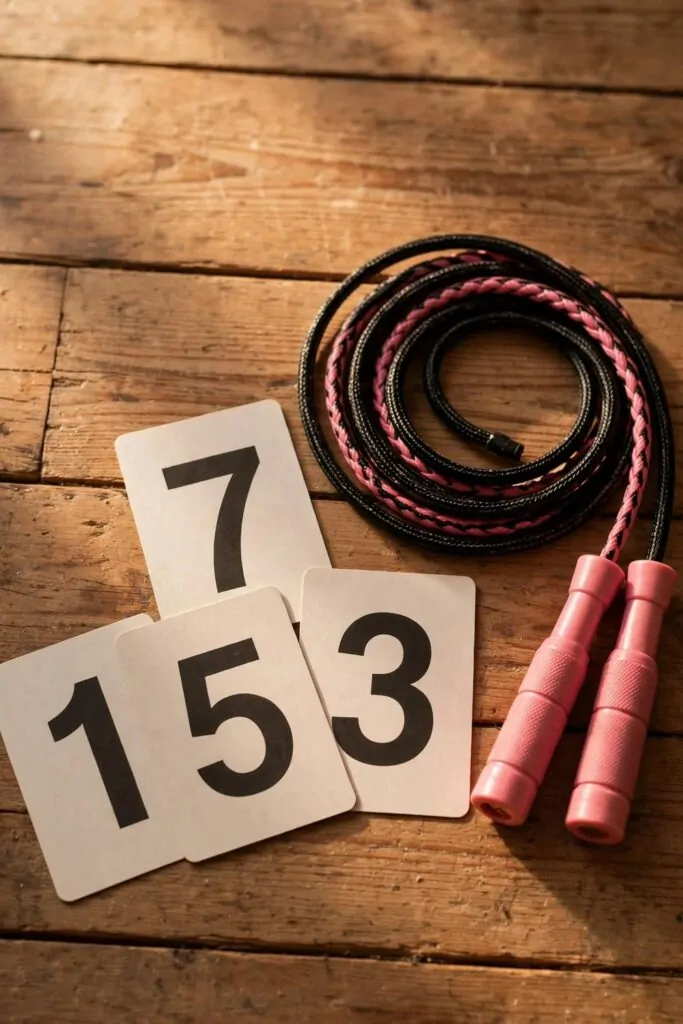
We jump on the spot and count each jump out loud. My child jumps once and says one, then jumps again and says two.
We jump on a clear spot on the floor so we have room to move. My child loves to jump high and count loud.
We count to ten, then rest for a short breath. Then we jump again and count to ten once more. Each round feels faster than the last.
Ten jumps make a fine short game.
Some days we jump on one foot for the first five. Then we swap feet and jump the last five.
A jump count wakes up sleepy legs in the morning.
My child asks for one more round each time.
You can jump and count in the garden or in the living room. It needs no toys and no set up, just a bit of floor. My child now counts to ten while jumping with no help at all.
Typical cost $0 to $1.
16. Count the Cups on the Table
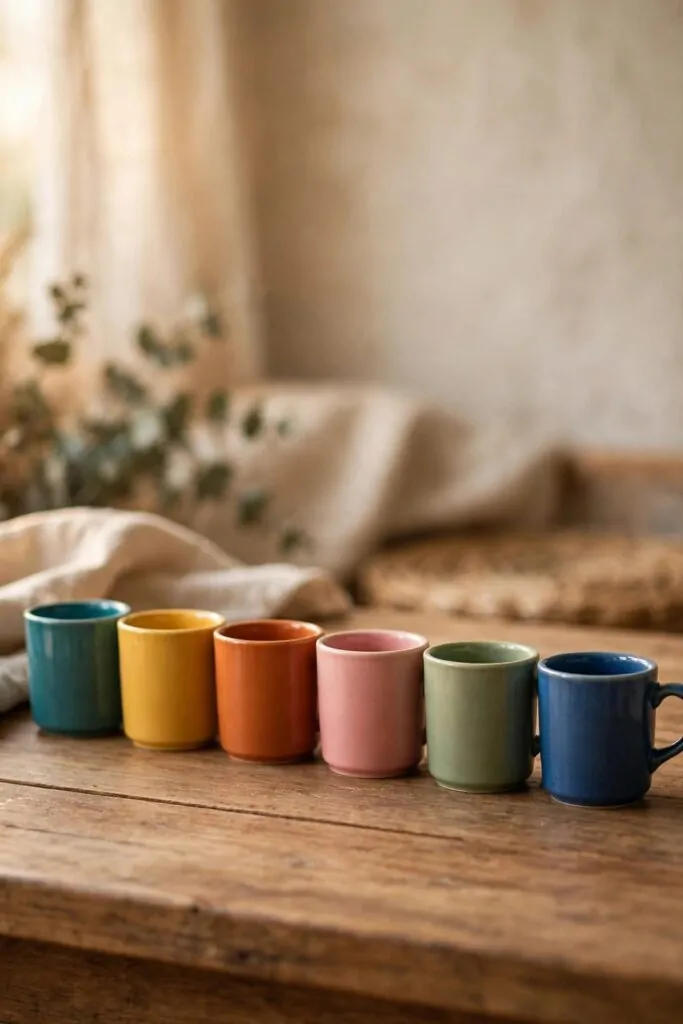
We count the cups before we pour drinks for the family.
My child sets one cup by each plate on the table. We say the number out loud as each cup finds its place.
One cup for each person, no more and no less.
The cups sit in a neat row on the table.
If a cup is missing, we count the plates again. My child checks each place and finds the gap. Then we fetch the missing cup with a smile.
Some days we count the cups by colour. My child groups the blue cups first, then the red ones.
A cup count makes tea time feel like a game.
You can count the cups at a party or at a picnic. A new table means a new count to play with. My child now counts the cups without being asked.
Typical cost $0 to $1.
17. Play a Counting Card Game
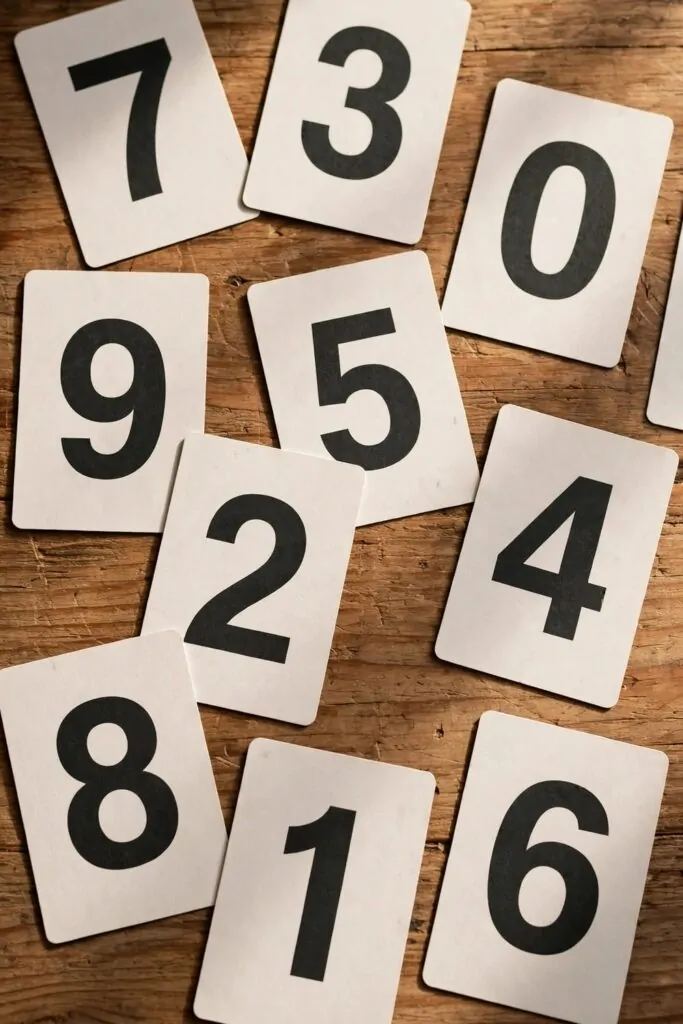
We play a card game with plain number cards at the table. My child turns one card over and says its number out loud. Then I turn one card over and say my number too.
The cards show big digits from zero to nine. My child can read each digit with no help from me.
We take turns and the higher number wins the round. My child cheers when their card shows a bigger number.
A win means one point, and we count the points too.
We play five rounds and then count who won the most.
Some days we match pairs of cards with the same number. My child turns two cards over and checks if they match. A match means one point, and the game goes on.
You can play this game with a friend or with mum. Each new player brings a new count to the table.
We keep the cards in a small box on the shelf. My child can find the box with no help from me.
Typical cost $2 to $4.
18. Count the Stars in the Night Sky
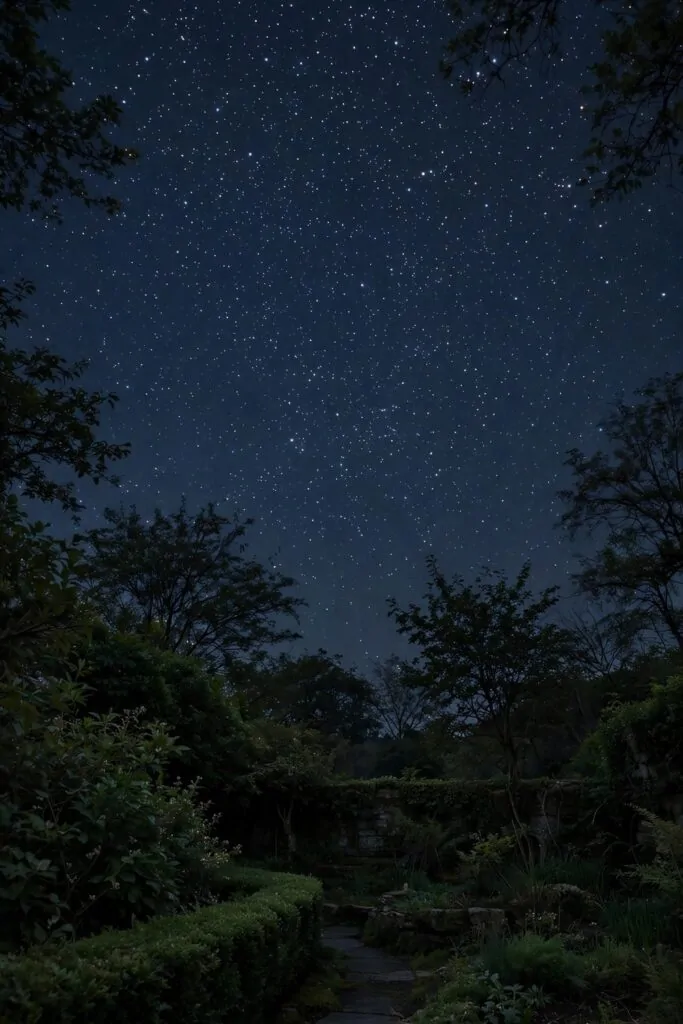
We look out of the window at night and count the stars in the sky. My child points to one bright star and says one.
The stars come out slow, one by one, as the sky turns dark.
We count five stars, then rest our eyes for a bit. Then we look again and find five more.
Some nights the sky is full of stars to count. Other nights the clouds hide them all away. My child loves a clear night best of all.
We count the stars before bed, when the house feels calm.
My child picks one star to wish on each night. Then we count the stars round it, one by one.
A star count makes bedtime feel soft and slow.
You can count stars from the garden or from a car window. Each clear night brings a new sky to count. My child now counts to twenty stars with no help.
Typical cost $0 to $1.
19. Make a Number Line with Chalk
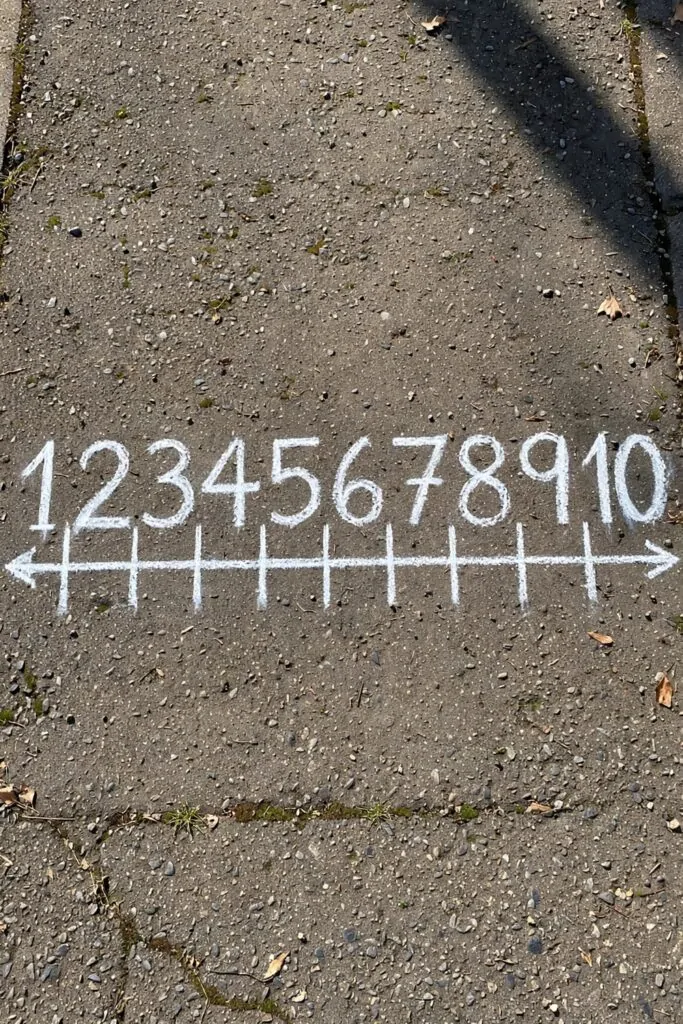
We draw a long number line on the ground with chalk.
My child writes one, two, three in a neat row.
The line runs from one to ten across the path.
We hop along the line and say each number as we land. My child jumps from one number to the next with glee.
Some days we draw the line up to twenty. My child writes each number with care and checks it twice. At the end we stand on ten and shout it out loud.
Chalk lines wash off in the rain, so we draw a fresh line each week.
You can draw the line in the garden or on a quiet path. Each new line brings a new count to hop.
We use the line to add one more each day. My child steps one square on and says the new number. Soon the whole line feels easy and fun.
Typical cost $1 to $2.
20. Count the Buttons in a Tin
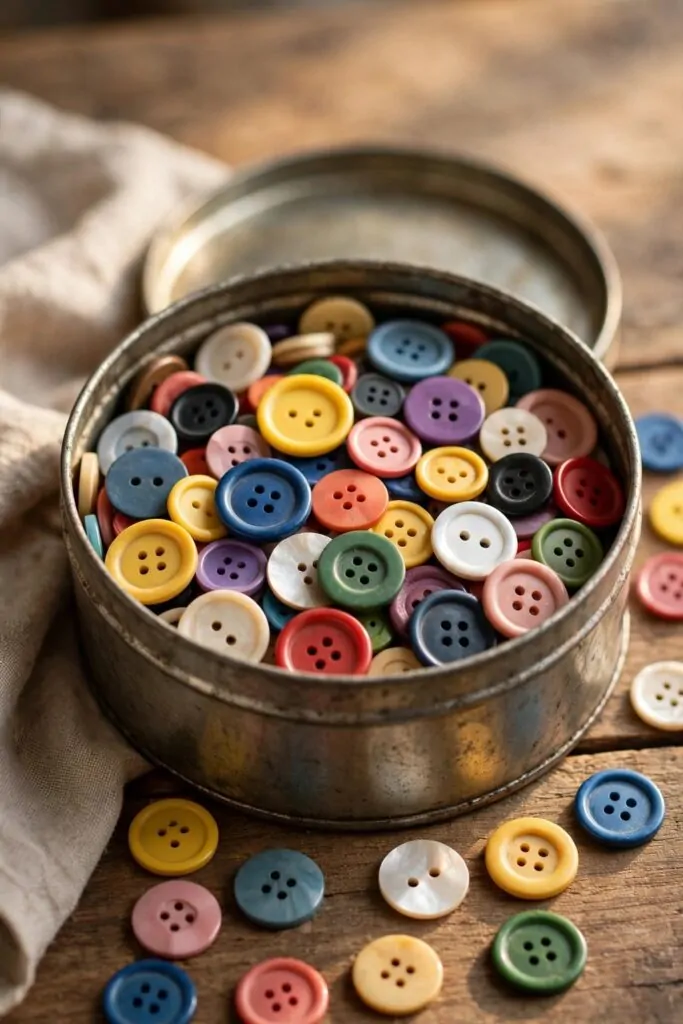
We tip a tin of buttons onto the table and count them one by one. My child picks up one button and says one.
The buttons come in many bright colours. We sort them by colour first, then count each colour on its own. Red buttons first, then blue, then green.
My child loves the big buttons best of all. We count the big buttons, then the small ones.
The tin is full of buttons on most days.
We put the buttons back in the tin when the count is done. My child counts them as they drop back in, one by one. Then we shut the lid and put the tin on the shelf.
A button count keeps small hands busy on a rainy day.
My child sorts the buttons by size on some days.
You can count buttons from any old tin at home. Each tin holds its own count, and that keeps the game fresh.
Typical cost $1 to $3.
| Idea | Main change | Typical cost |
|---|---|---|
| Count the Blocks in a Tall Tower | count the blocks in a tall tower | $3 to $5 |
| Count the Pegs on a Wooden Board | count the pegs on a wooden board | $4 to $6 |
| Count the Birds in the Garden | count the birds in the garden | $0 to $1 |
| Count Coins in a Money Jar | count coins in a money jar | $2 to $4 |
| Jump and Count to Ten | jump and count to ten | $0 to $1 |
| Count the Cups on the Table | count the cups on the table | $0 to $1 |
| Play a Counting Card Game | play a counting card game | $2 to $4 |
| Count the Stars in the Night Sky | count the stars in the night sky | $0 to $1 |
| Make a Number Line with Chalk | make a number line with chalk | $1 to $2 |
| Count the Buttons in a Tin | count the buttons in a tin | $1 to $3 |
| Total | $13 to $28 |
21. Play Shop with Toy Coins
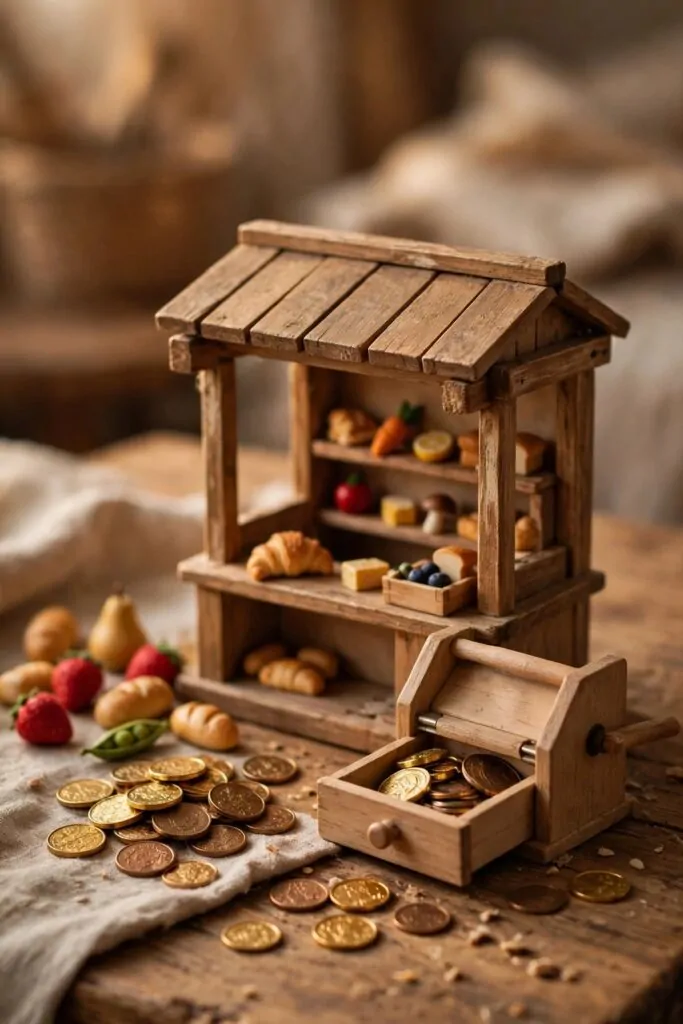
We set up a small shop on the table with toy coins and play food.
My child is the shopkeeper and I am the buyer. I hand over three toy coins and ask for one apple.
My child counts the coins as they take them. One coin, two coins, three coins, the count grows with each sale.
We price each toy at one or two coins. My child reads the price and counts out the coins. Then we swap roles so my child can buy too.
A toy shop makes counting feel like real life.
We keep the toy coins in a small pouch by the shop.
Some days we add a till made from a small box. My child drops the coins in and counts them at the end.
You can play shop with cups, blocks, or soft toys as the goods. Each new shop brings new prices to count. My child now counts toy coins without a prompt from me.
Typical cost $3 to $5.
22. Count the Days on a Wall Chart
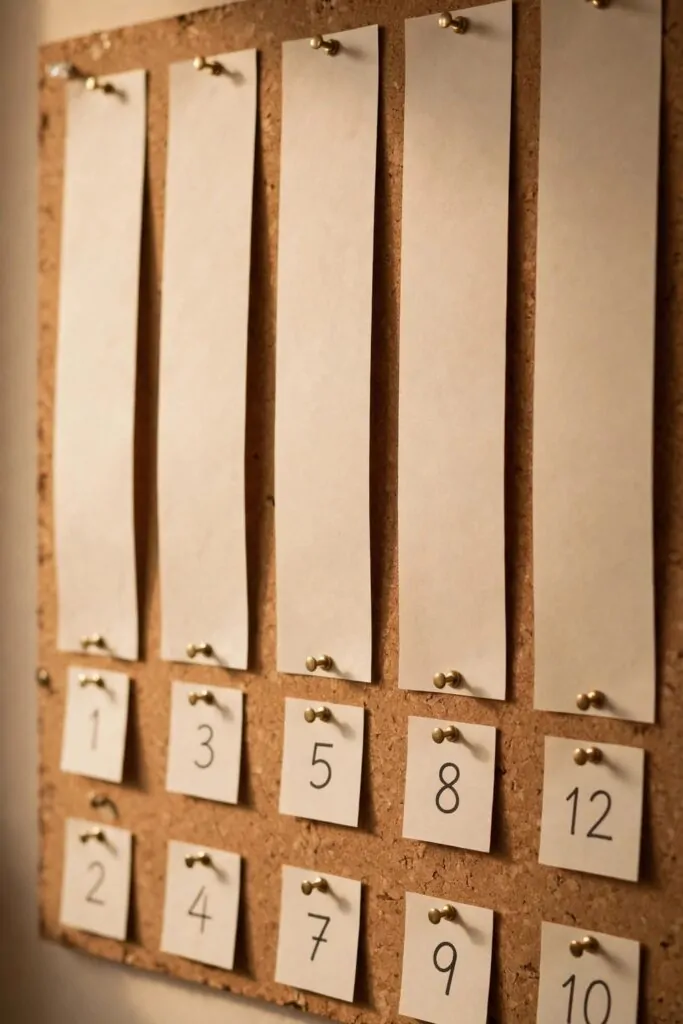
We hang a wall chart in the kitchen and count the days on it. My child moves one marker each morning and says the day’s number. At the end of the week we count all seven days together.
The chart shows one week at a time.
We mark each day with a plain strip of paper. My child sticks one strip on the chart each morning.
Some days we count the days till a birthday. My child moves the marker and counts the days left with glee.
A wall chart makes the week feel real and clear.
We count the school days and the rest days too. Five school days, then two rest days, the week adds up to seven. My child loves to count the rest days best of all.
You can hang the chart low so small hands can reach it.
We count the days on the chart each night before bed. It takes one minute and it ends the day well.
Typical cost $1 to $3.
23. Sort and Count Coloured Counters
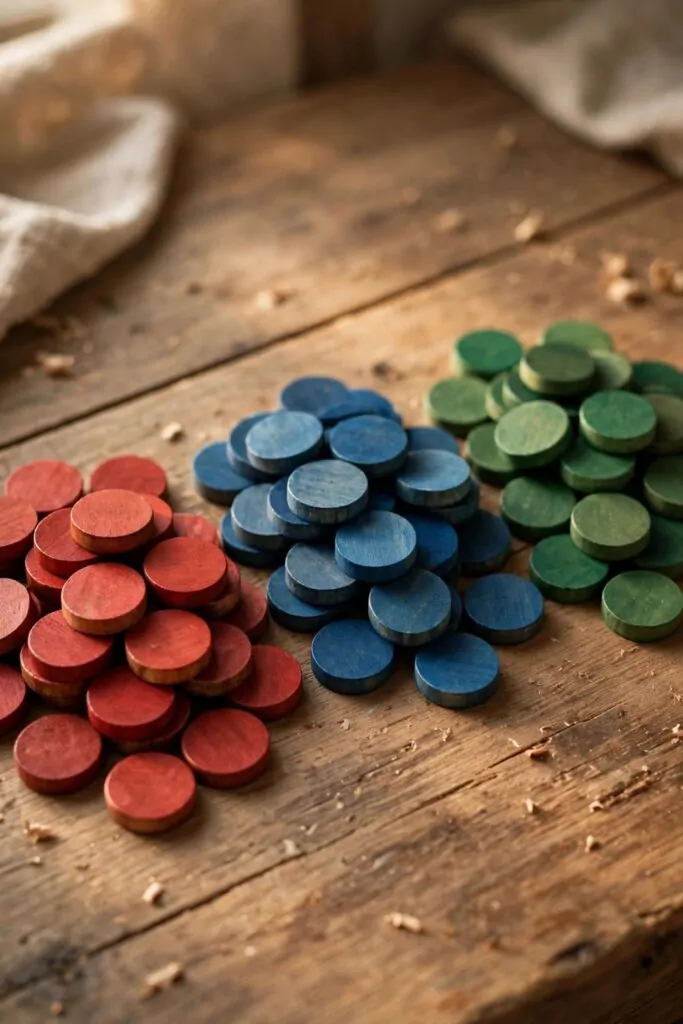
We tip a bag of coloured counters onto the table. My child sorts them into piles by colour, one colour at a time.
Red counters in one pile, blue in the next, green in the last.
Each pile holds its own count to learn.
- Count the red counters first
- Count the blue counters next
- Count the green counters last
My child counts each pile slow and clear. We say the number out loud as each counter joins its pile.
Some days we mix the counters up and sort them again. My child sorts faster each time we play. At the end we count all the counters together in one big pile.
We keep the counters in a small fabric bag. The bag lives on the shelf by the table.
A counter sort makes a dull wait feel like play.
Typical cost $3 to $5.
24. Count the Socks in Pairs
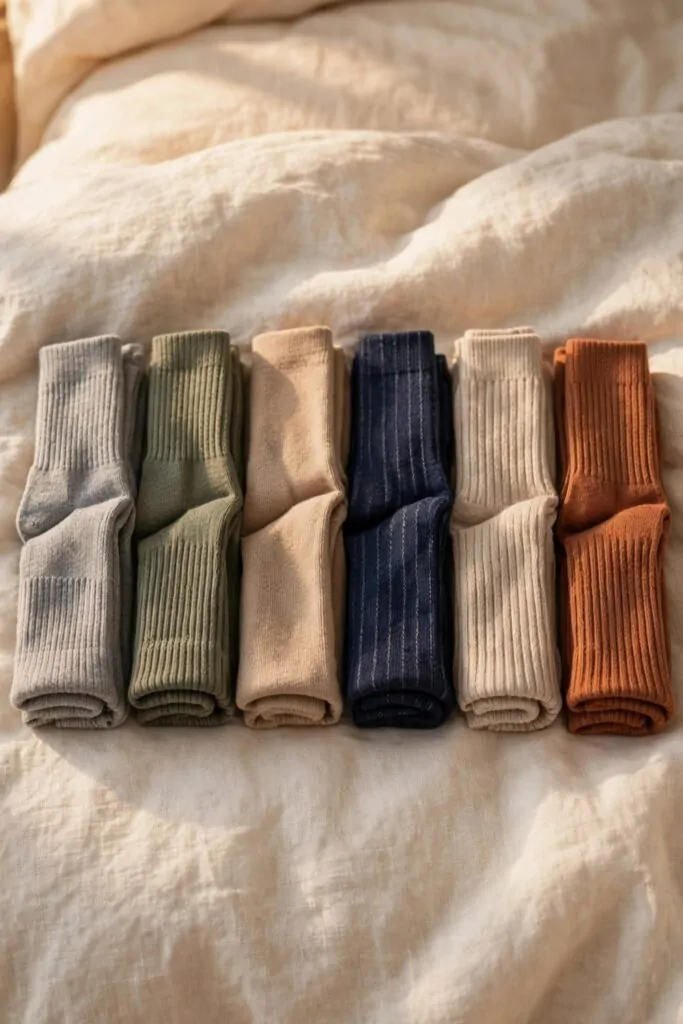
We count the socks in pairs when the wash comes in.
My child takes one sock and finds its pair. Two socks make one pair, and we say the pair number out loud. One pair, two pairs, three pairs, the count grows fast.
We lay the pairs in a neat row on the bed. My child counts the pairs from one end to the other.
Some days a sock has no pair at all. We set it aside and count the pairs we have.
A lost sock is just part of the game.
My child loves to match the striped socks first.
You can count socks from any wash at home. Each wash brings new pairs to match and count. My child now pairs the socks without being asked.
We count the pairs as we put them in the drawer. It takes two minutes and it ends the chore with a smile.
Typical cost $0 to $1.
25. Play a Counting Treasure Hunt
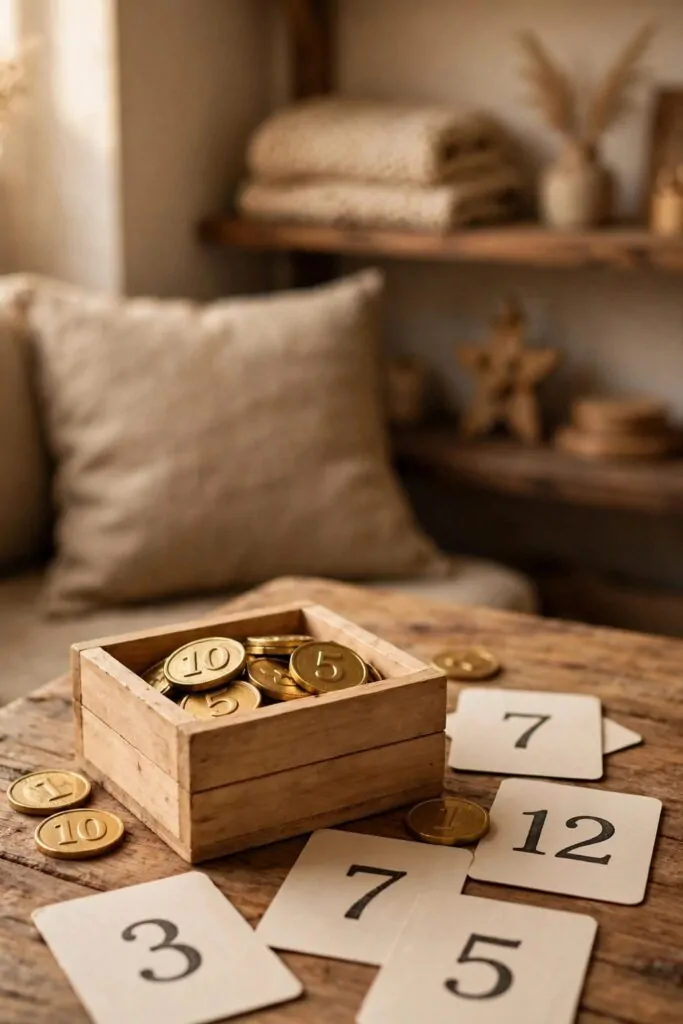
We hide ten small toys round the living room for a treasure hunt. My child searches each spot and counts each toy they find.
One toy hides under a cushion and one hides on a shelf. My child peeks in each spot with a big smile.
Each toy found adds one to the count.
We count the toys out loud as my child finds them.
My child holds up each toy and says its number. One, two, three, the count grows with each find. At ten we cheer, because the hunt is done.
Some days we hide number cards instead of toys. My child finds each card and reads its number out loud.
You can play the hunt in the garden on a dry day. Each new hiding spot makes the game fresh. My child asks to hide the toys next, so I can hunt too.
We put the toys back in a small box when the hunt ends. My child counts them as they go back in, one by one.
Typical cost $2 to $4.
26. Count the Flowers in a Bunch
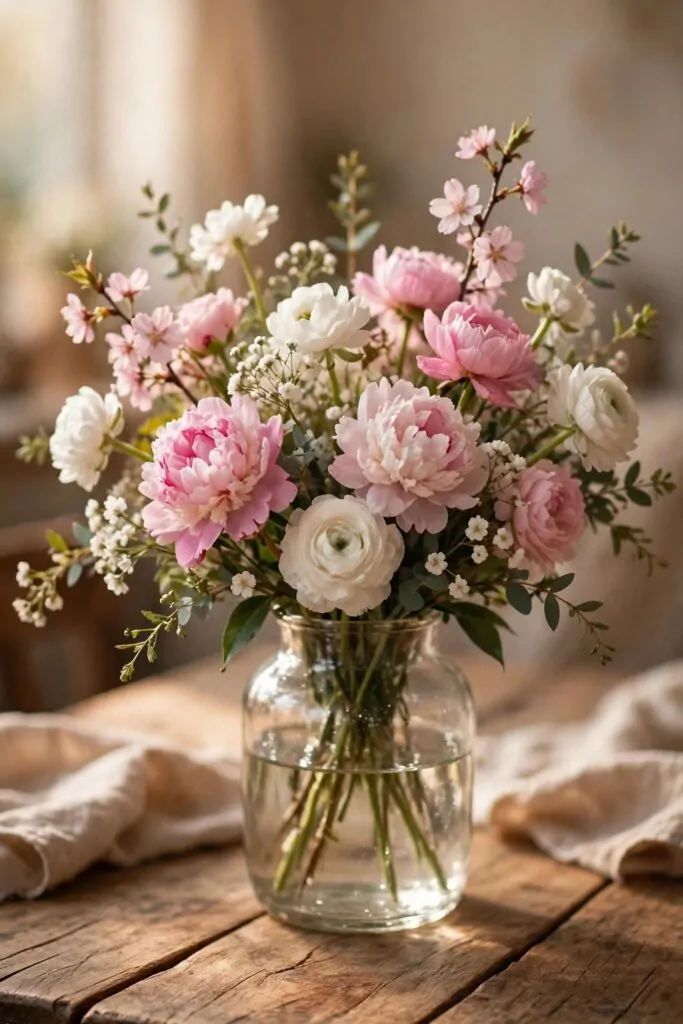
We pick a bunch of flowers from the garden and count them on the table.
My child lays the flowers in a row and counts each stem.
One flower, two flowers, three flowers, the count grows with each stem. We count the pink flowers first, then the white ones. At the end we count the whole bunch together.
A bunch holds plenty of flowers on most days.
My child loves to put the flowers in a vase. We count them again as each stem goes in the water.
Some days we count the petals on one flower. My child counts slow and points to each petal in turn.
A flower count makes a garden walk feel like a game.
You can count flowers in any garden or park. A new bunch means a new count to enjoy. My child now counts flowers without a prompt from me.
Typical cost $1 to $3.
27. Count Backwards from Ten
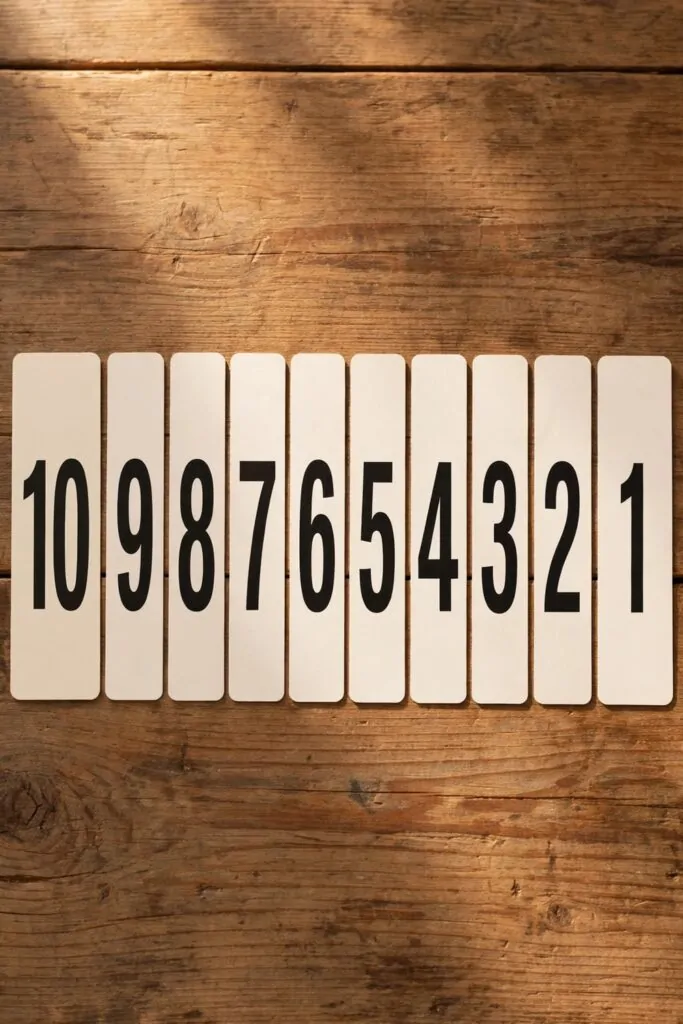
We count backwards from ten when we play a launch game. My child says ten, nine, eight, and I join in with them. At one we jump up and shout blast off.
Backwards feels hard at first, so we go slow. My child points to each number on a card as we say it.
Ten down to one, the count falls one step at a time.
We use number cards from ten to one in a row. My child turns one card over with each count. At the last card we clap and start again.
Some days we count back from five, which feels much easier. Then we try back from ten once more.
A backwards count builds a strong number sense.
My child loves to count back before a race starts.
You can count back in the car or on a walk. Each new start brings a new backwards count to try.
Typical cost $0 to $1.
28. Make a Counting Book with Pictures
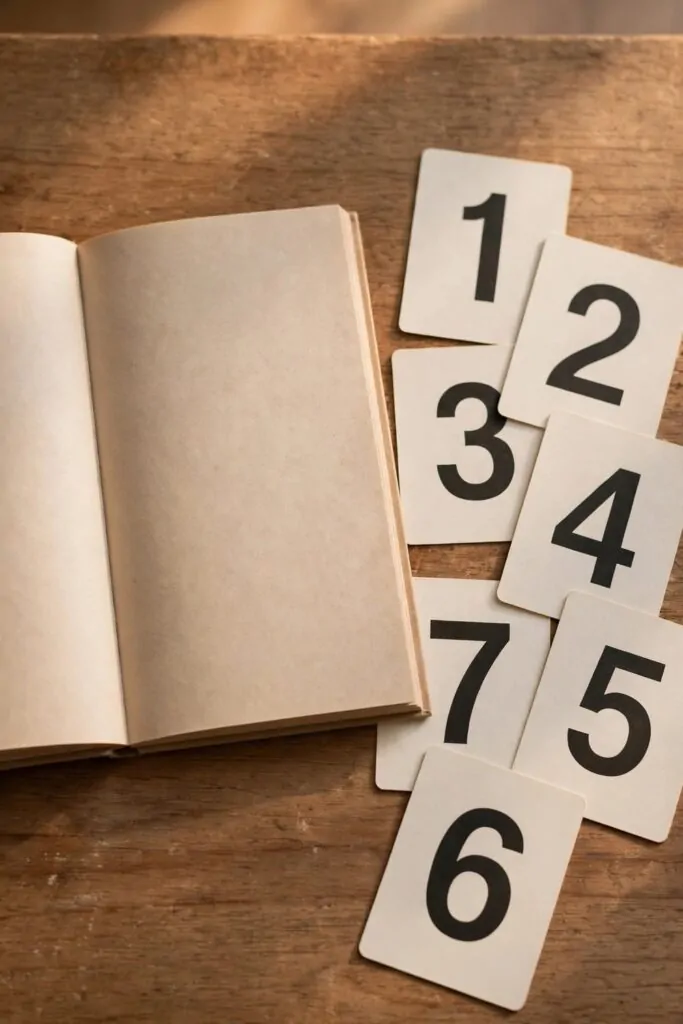
We make a small counting book from plain paper at home. My child draws one picture on page one and two on page two.
Each page holds its own count to learn.
On page one we draw one sun, on page two two stars, and on page three three flowers. My child draws each picture with care and counts it twice. At page ten the book feels full and proud.
A counting book costs next to nothing to make.
We staple the pages at the edge and add a plain cover. My child draws a big number one on the cover.
My child reads the book to me each night before bed.
You can make a book about animals, toys, or food. Each new book brings a new count to draw. My child now makes counting books without a prompt from me.
We keep the book on the low shelf by the bed. It sits there ready for the next night’s read.
Typical cost $2 to $4.
29. Lay Out Your Counting Games Kit the Night Before
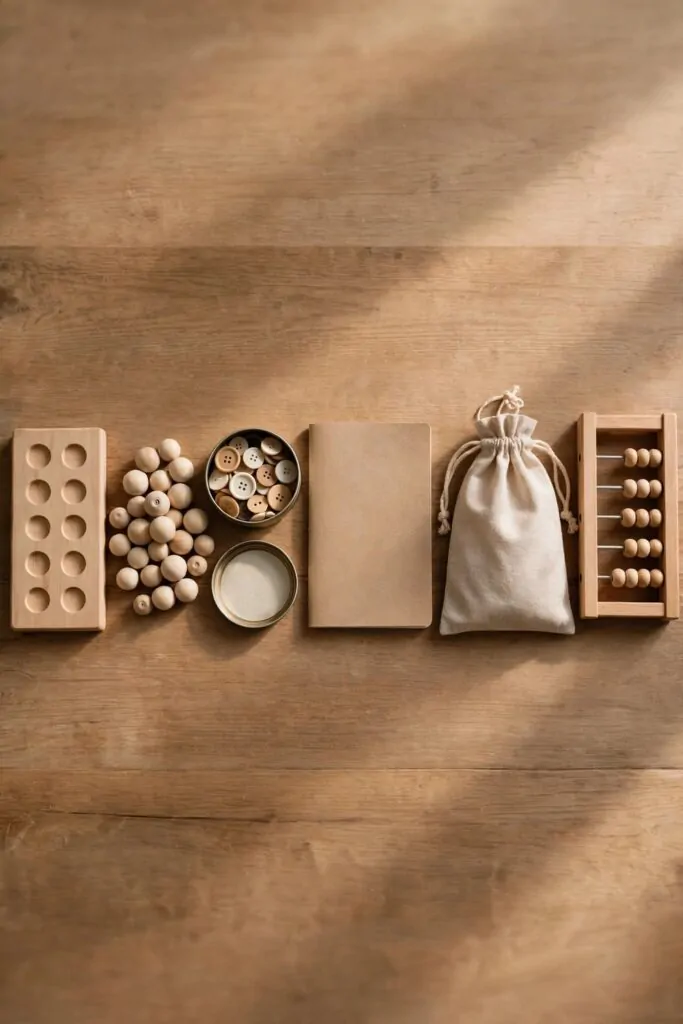
Tonight we lay out our counting games kit for tomorrow.
The kit holds a small wooden counting board, a set of plain wooden beads, a small tin of plain buttons, a plain paper counting notebook, a small fabric number bag, and a small wooden abacus.
My child slides the beads on the abacus and counts them out loud. The board waits on the table, ready for the morning count. We set the beads out by the board, so tomorrow starts with a smile.
The small tin of plain buttons sits beside the beads. My child pulls one button out and counts it with pride.
The plain fabric number bag keeps all our counting things safe in one soft place.
The small wooden abacus stands ready to count our morning sums.
The plain paper counting notebook waits on the table.
We put the counting board back on the shelf and my child lines the beads up in a row. Tomorrow we will count a little bit more, and that feels like a win already. Our kit sits ready on the shelf for a fresh day of counting games tomorrow.
The small wooden counting board costs $4 to $6, the set of plain wooden beads costs $3 to $5, the small tin of plain buttons costs $2 to $4, the plain paper counting notebook costs $2 to $4, the small fabric number bag costs $3 to $5, and the small wooden abacus costs $4 to $6, for a total of $18 to $30.
| Idea | Main change | Typical cost |
|---|---|---|
| Play Shop with Toy Coins | play shop with toy coins | $3 to $5 |
| Count the Days on a Wall Chart | count the days on a wall chart | $1 to $3 |
| Sort and Count Coloured Counters | sort and count coloured counters | $3 to $5 |
| Count the Socks in Pairs | count the socks in pairs | $0 to $1 |
| Play a Counting Treasure Hunt | play a counting treasure hunt | $2 to $4 |
| Count the Flowers in a Bunch | count the flowers in a bunch | $1 to $3 |
| Count Backwards from Ten | count backwards from ten | $0 to $1 |
| Make a Counting Book with Pictures | make a counting book with pictures | $2 to $4 |
| Lay Out Your Counting Games Kit the Night Before | lay out your counting games kit the night before | $18 to $30 |
| Total | $30 to $56 |
| Idea | Main change | Typical cost |
|---|---|---|
| small wooden counting board | count on a small wooden counting board | $4 to $6 |
| set of plain wooden beads | count with a set of plain wooden beads | $3 to $5 |
| small tin of plain buttons | sort and count a small tin of plain buttons | $2 to $4 |
| plain paper counting notebook | write our counts in a plain paper counting notebook | $2 to $4 |
| small fabric number bag | carry our number games in a small fabric number bag | $3 to $5 |
| small wooden abacus | slide the beads on a small wooden abacus | $4 to $6 |
| Total | $18 to $30 |
Keep Reading
If you liked these ideas, you will love these posts too
Each post has more simple ideas you can try at home this weekend.