27 Classroom Organization Ideas Teachers Swear By

I once lost the same red pen three times in one school week. The first time I blamed the kids. The second time I blamed my desk. The third time I sat down after school, looked at the mess around me, and blamed the only person left. Me.
That weekend I rebuilt how my classroom runs. Not with money. With systems. Little ones. The kind that take five minutes to set up and save you hours every month.
These are the 27 ideas I still use. Real teachers use them too. They are simple, cheap, and they actually work.
1. The Rolling Drawer Cart
If you buy one thing this year, make it a rolling drawer cart. The ten-drawer kind. Every teacher I know has one, and we all wonder how we lived without it.
Mine holds my copies for the week. Top drawers for Monday and Tuesday. Middle for Wednesday and Thursday. Bottom for Friday. I fill it on Sunday night and I do not touch the copier all week.
The cart rolls, so it goes where I work. Small group table in the corner? The cart comes along. No more walking back and forth across the room.
Label each drawer with what is inside. I use simple sticky labels. When a drawer is empty, I know that day is fully prepped. It is a great feeling.
At the end of the week, leftover copies go in a folder, not back in the drawer. Fresh start every Monday. That rule keeps the cart from becoming a paper attic.
Get the kind with drawers that pull all the way out. The cheap ones stick. Sticky drawers will drive you mad by October.
One cart, ten drawers, zero Monday morning panic. That is why teachers swear by it.
2. Label Everything You Own
Labels are the cheapest classroom upgrade in the world. A pack costs a few dollars. The time they save is worth hundreds.
I label bins, drawers, folders, shelves, and trays. If something has a home, its home gets a label. No label means no home, and things with no home become clutter.
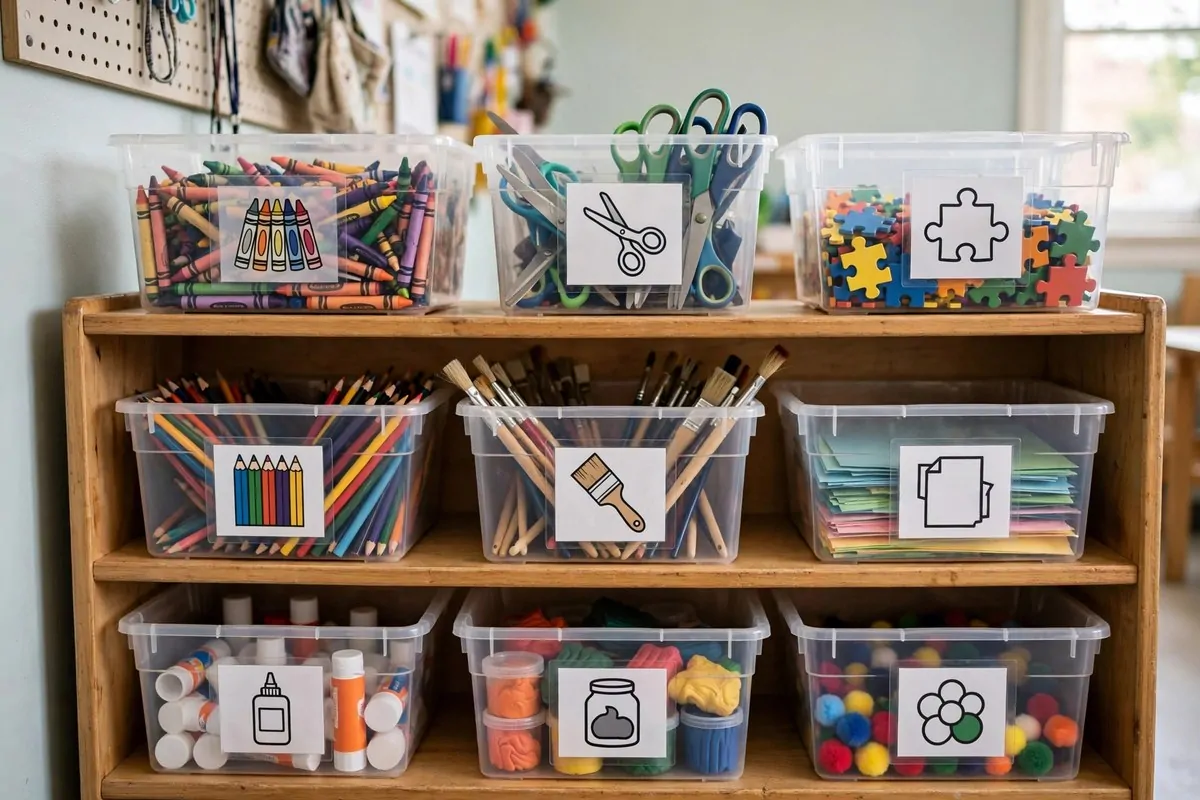
For little kids, I add pictures next to the words. A crayon picture on the crayon bin. A scissors picture on the scissors bin. They can clean up without reading a word.
Make your labels big and clear. Fancy tiny script looks cute on the internet. In a real classroom, big plain words win every time.
I redo my labels every August. Old ones peel and fade. Fresh labels make old bins look new again. It is like a mini makeover for free.
Let the kids help make labels. They take ownership of the spots they labeled. A kid who labeled the glue bin will guard that glue bin with her life.
When everything is labeled, cleanup becomes a matching game. Even your messiest student can match a thing to its label.
Label it, or lose it. That is my rule.
3. Color-Code by Subject
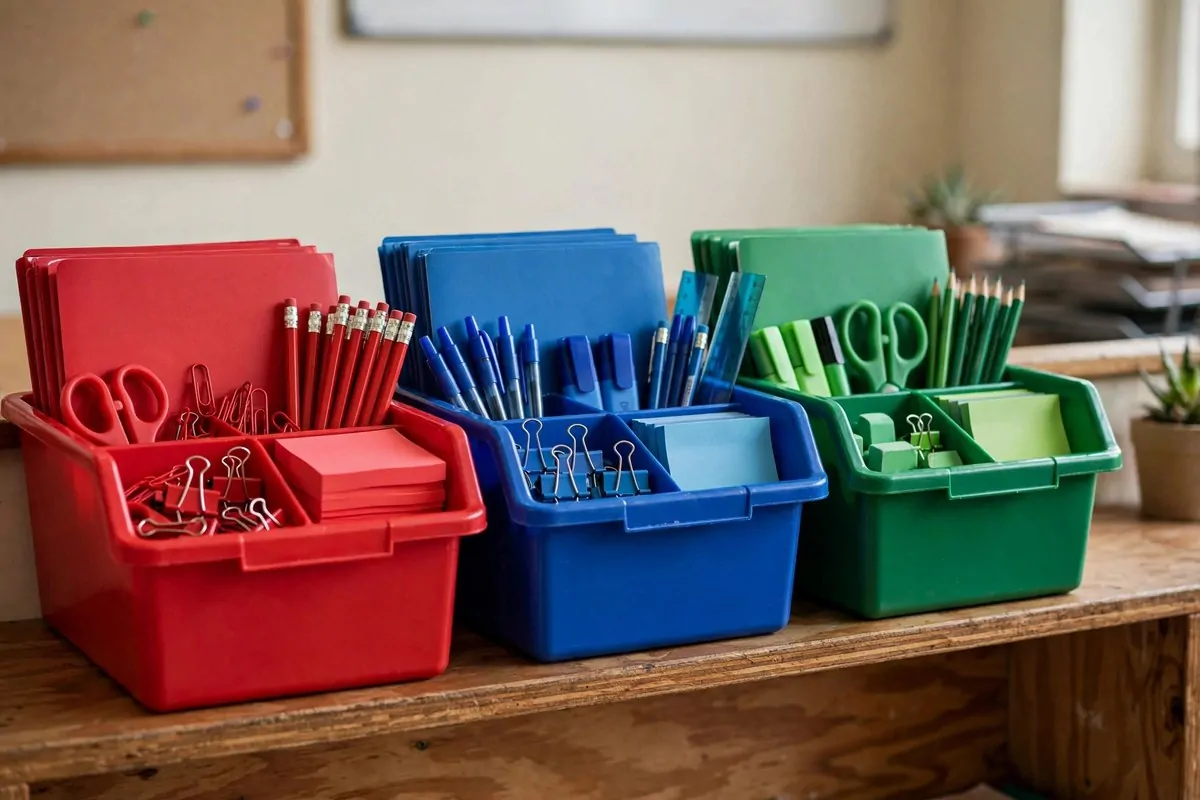
Give every subject its own color, and use that color everywhere. Math is blue in my room. Reading is red. Science is green.
Math folders are blue. Math bins are blue. The math center sign is blue. When I say grab your blue folder, thirty kids move at once. No confusion.
The colors become a language. I can say red bin from across the room during a lesson, and the right kid stands up. It saves so many words.
Let the kids vote on the colors at the start of the year. They remember their choices better. And they feel like the room is partly theirs.
Keep a little color key posted by the door. Blue equals math, red equals reading, and so on. New students learn the system in one day.
This also works for groups. My table groups are colors too. The blue table cleans up the blue bins. It all connects.
One warning. Do not pick twelve colors. Five or six is plenty. More than that and nobody remembers which is which.
Colors talk faster than words. Let them do the talking.
4. Monday-to-Friday Planning Drawers
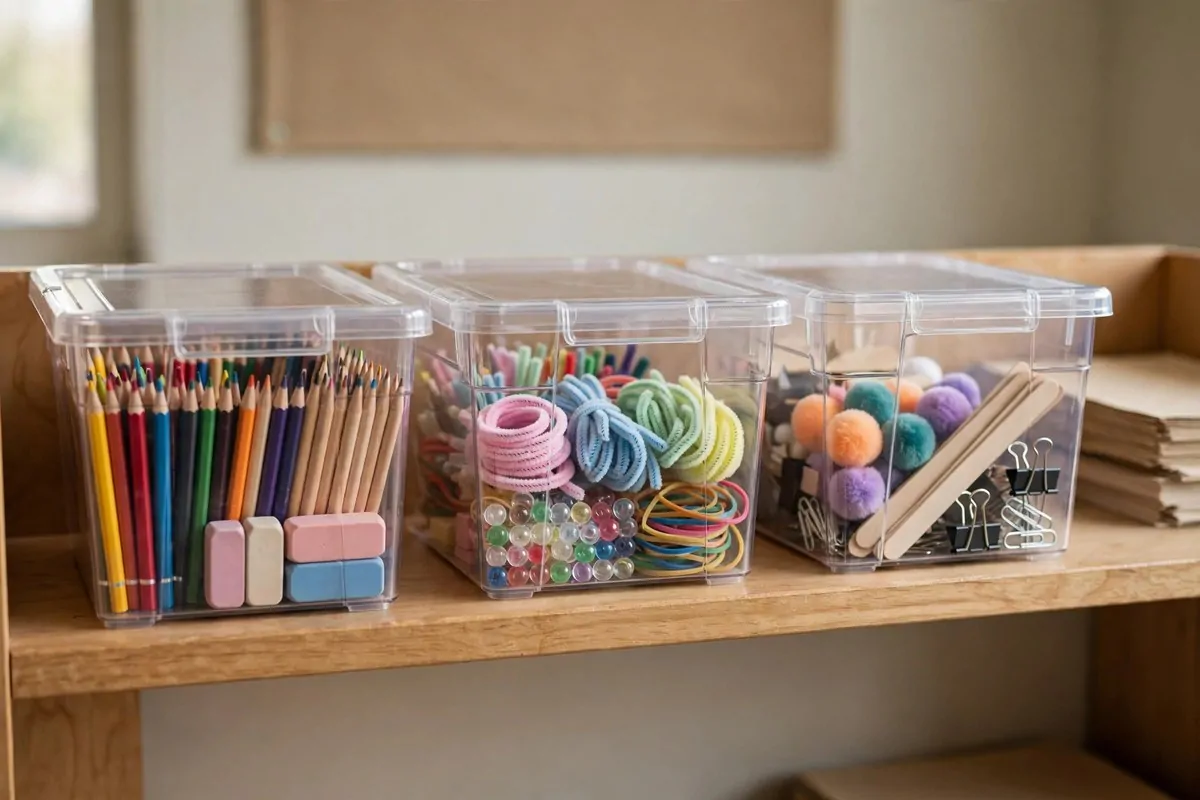
This is the system that saved my Sundays. Five drawers. Monday, Tuesday, Wednesday, Thursday, Friday. That is the whole trick.
As copies come off the printer during the week, they go straight into the right day’s drawer. I never stack them on my desk anymore. The desk stays clear.
On Friday afternoon, I fill next week’s drawers. It takes twenty minutes. Then my weekend is mine, and Monday morning is calm.
Each drawer also holds a little sticky note with the plan. Just the key points. If I am ever out sick, the sub can teach from the drawers alone.
I keep an extra drawer labeled extras. Worksheets for fast finishers. Emergency activities. The stuff you need but cannot plan for.
The drawers taught me to plan in batches. I used to plan day by day, always behind. Now I plan week by week, always ahead.
It sounds too simple to matter. Try it for three weeks. You will never go back.
Your future self will thank your present self every single Monday.
5. The Teacher Toolbox
Your desk drawer is lying to you. It says it is organized. It is not. It is a junk drawer with good lighting.
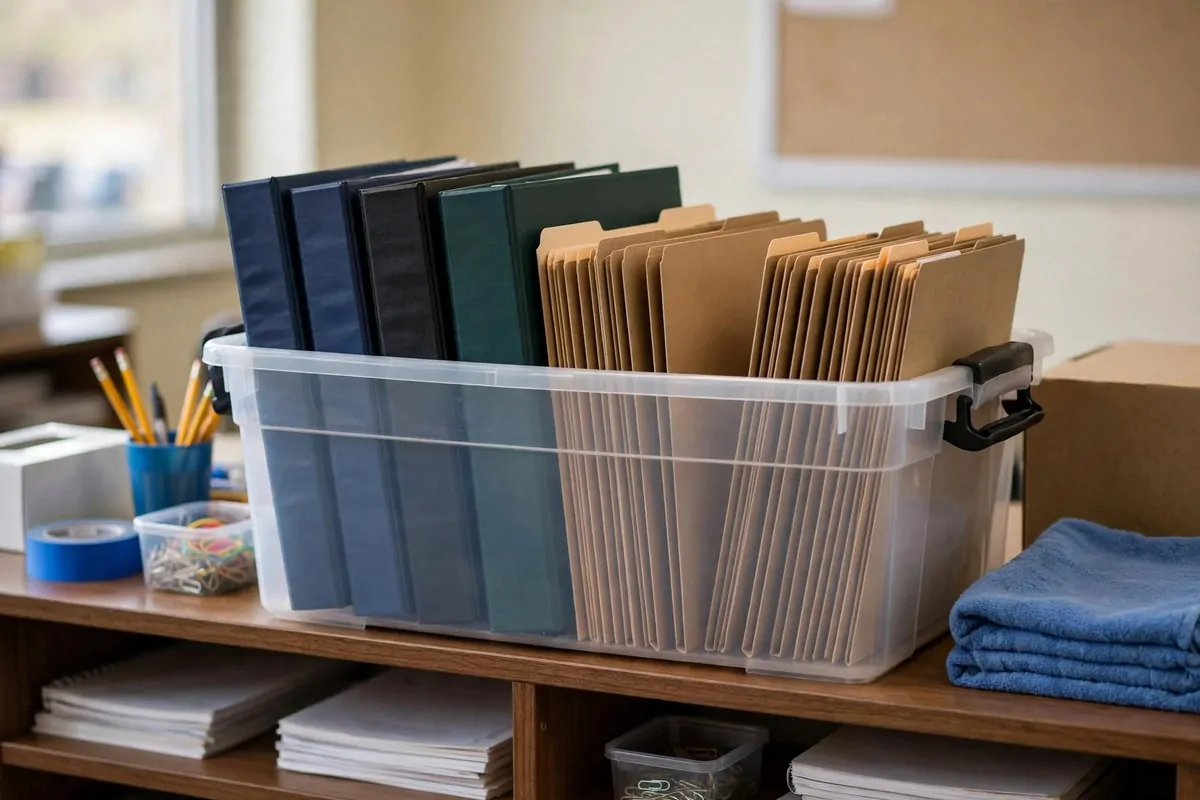
A little toolbox organizer fixed mine. The kind with lots of small compartments. Each one gets a label. Paper clips. Staples. Sticky notes. Band-aids. My good pens.
The labels are the magic. Without them, the compartments mix together in a week. With them, everything stays sorted all year.
I keep the toolbox on my desk, open during the day. Kids can see where things live. They even put things back now, which still surprises me.
Get one with a handle. I carry mine to the staff room, to meetings, to the copier. My supplies travel with me.
Once a month, I dump it out and reset. It takes five minutes. Things creep into wrong spots, and the reset keeps it honest.
A toolbox is not fancy. It is just a box with walls. But walls are what separate organized from chaos.
Small compartments, big peace of mind.
6. The Sub Tub
Getting sick is stressful enough. Worrying about your class while you have a fever is worse. The sub tub ends that worry.
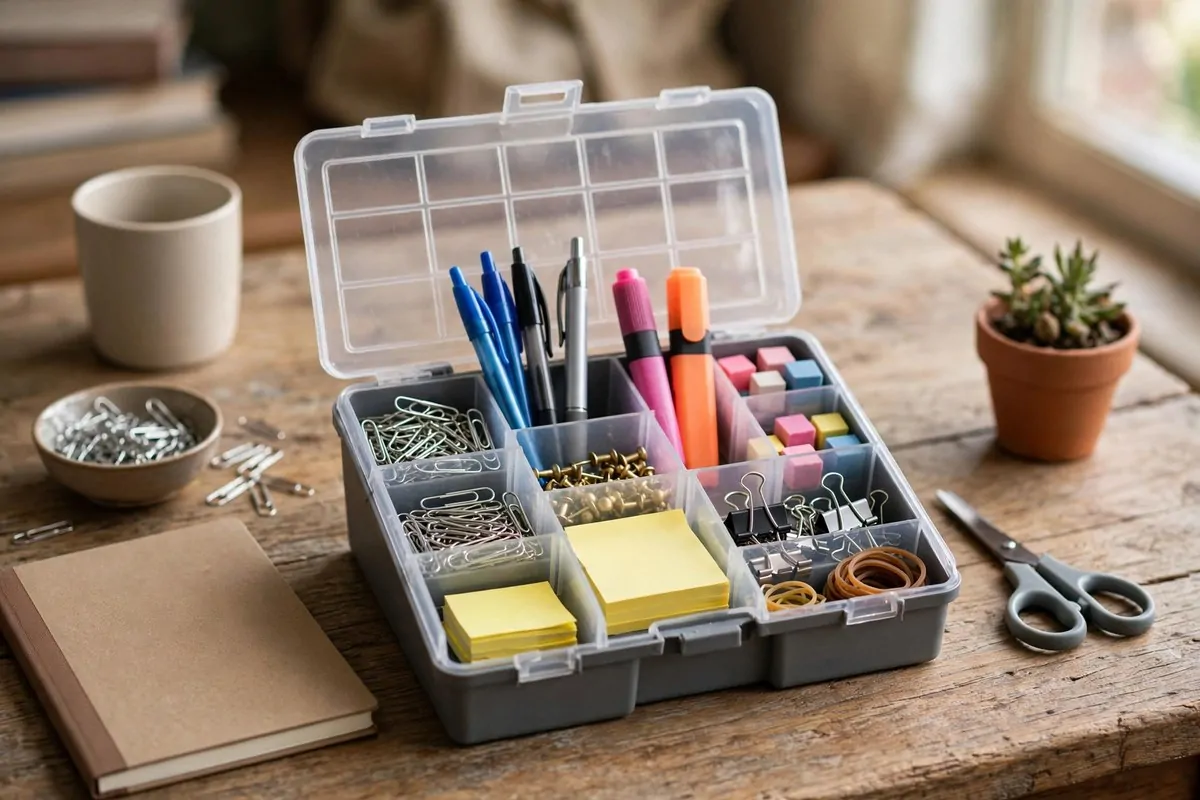
It is one big tub with everything a substitute needs. Lesson plans for three days. Emergency worksheets. The class list. The schedule. Where the bathroom passes live.
I update it every month. Old plans come out, fresh ones go in. It takes ten minutes, and it buys me total peace of mind.
The tub sits on a shelf where anyone can find it. I told my teaching partner exactly where it is. She can point a sub to it if I cannot even call in.
Inside the lid, I taped a note. It says the wifi password, the lunch count routine, and which kid to ask for help. The helpful kid. Every class has one.
Write the plans like the sub has never taught before. Because sometimes they have not. Simple steps, big letters, no guessing.
I have used my sub tub four times in three years. Each time, I rested instead of panicking. That alone is worth the tub.
Plan for the sick day on a healthy day. Future you says thanks.
7. Clear Bins, No Digging
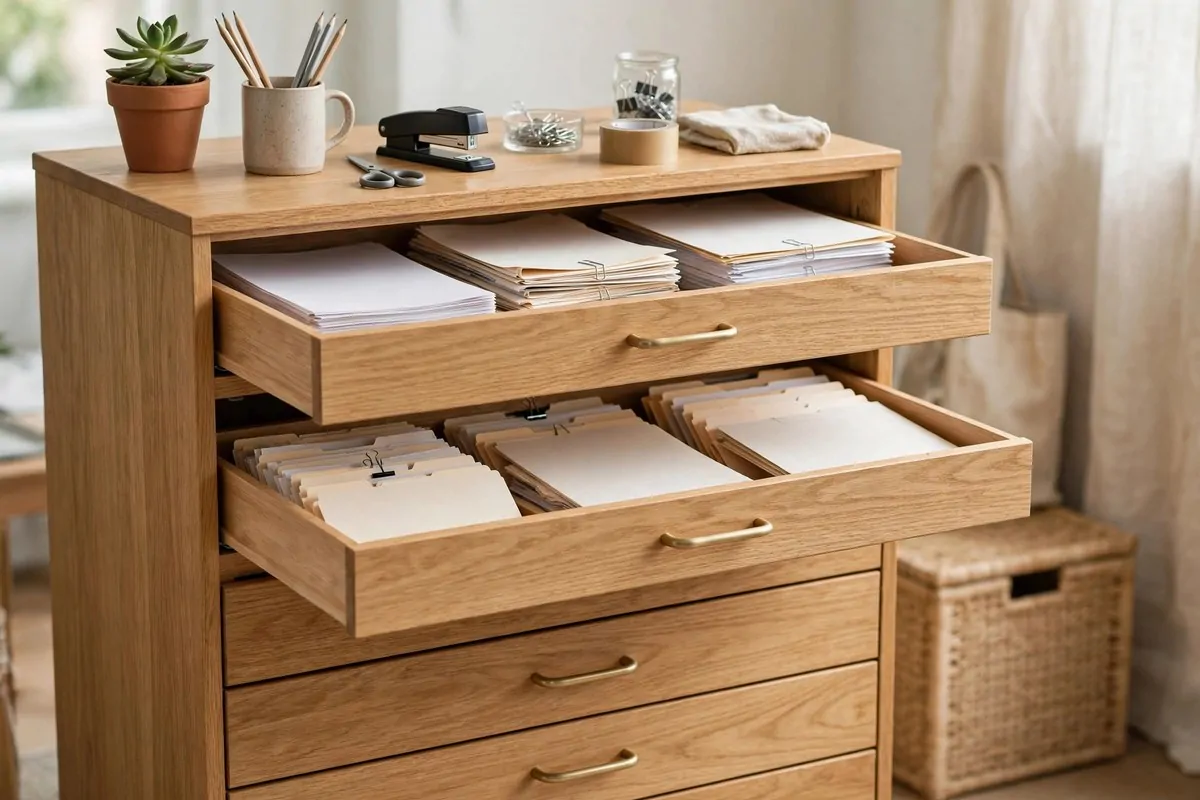
Here is a law of classrooms. If kids cannot see it, they will dump the whole bin out to find it. Every time.
Clear bins end the dumping. The kids can see the markers through the plastic. They grab what they need and leave the rest alone.
I switched all my supply bins to clear ones two years ago. Cleanup time dropped by half. I am not exaggerating. It was that big.
Clear bins also show me when supplies run low. I can see the glue sticks disappearing from across the room. No more surprise empty bins.
Pair them with labels anyway. Clear shows what is inside today. Labels show what belongs inside always. They work as a team.
The only bins I keep solid are for surprises. The treasure box. The mystery science materials. Some things should stay hidden for fun.
Buy the sturdy kind. Cheap thin bins crack by winter. Thick ones last for years and survive being dropped by small humans.
See it, grab it, put it back. That is the whole system.
8. Open-Front Bins on Shelves
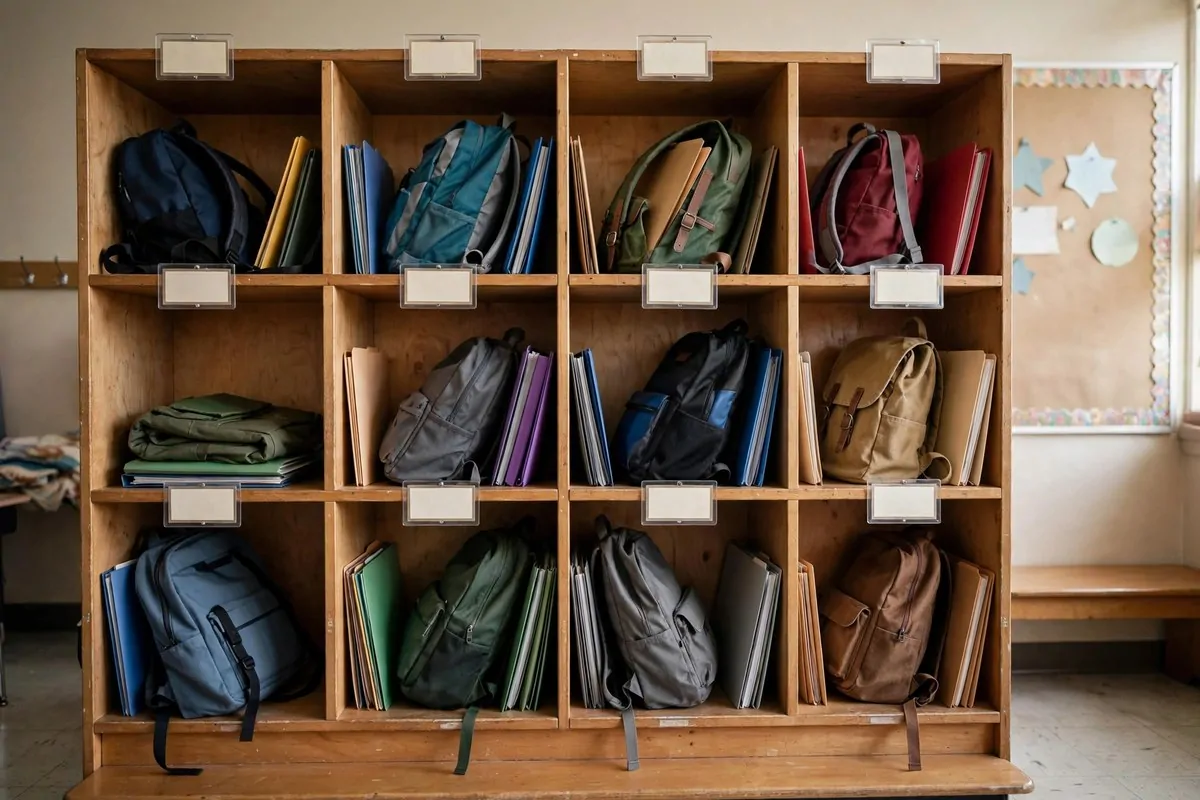
Clear bins are great. Open-front bins are even better. No lids to lose, no tops to lift. Just reach in and grab.
I use them for the stuff kids need ten times a day. Pencils. Erasers. Crayons. The high-traffic supplies that should never be behind a lid.
Line them up on a low shelf the kids can reach. If they have to ask you for a pencil, the system is broken. They should help themselves.
Each bin gets one kind of thing. Pencils only. Not pencils plus erasers plus a mystery rock. One bin, one job.
The open front means you can see inside from across the room. I do a quick scan during lessons. Empty bin means refill time.
These bins stack too. I have a tower of six by my art area. It takes up one square foot of floor and holds a whole art store.
Kids put things back because it is easy. That is the secret of every system on this list. Easy beats perfect.
No lids, no digging, no excuses.
9. The Supply Station
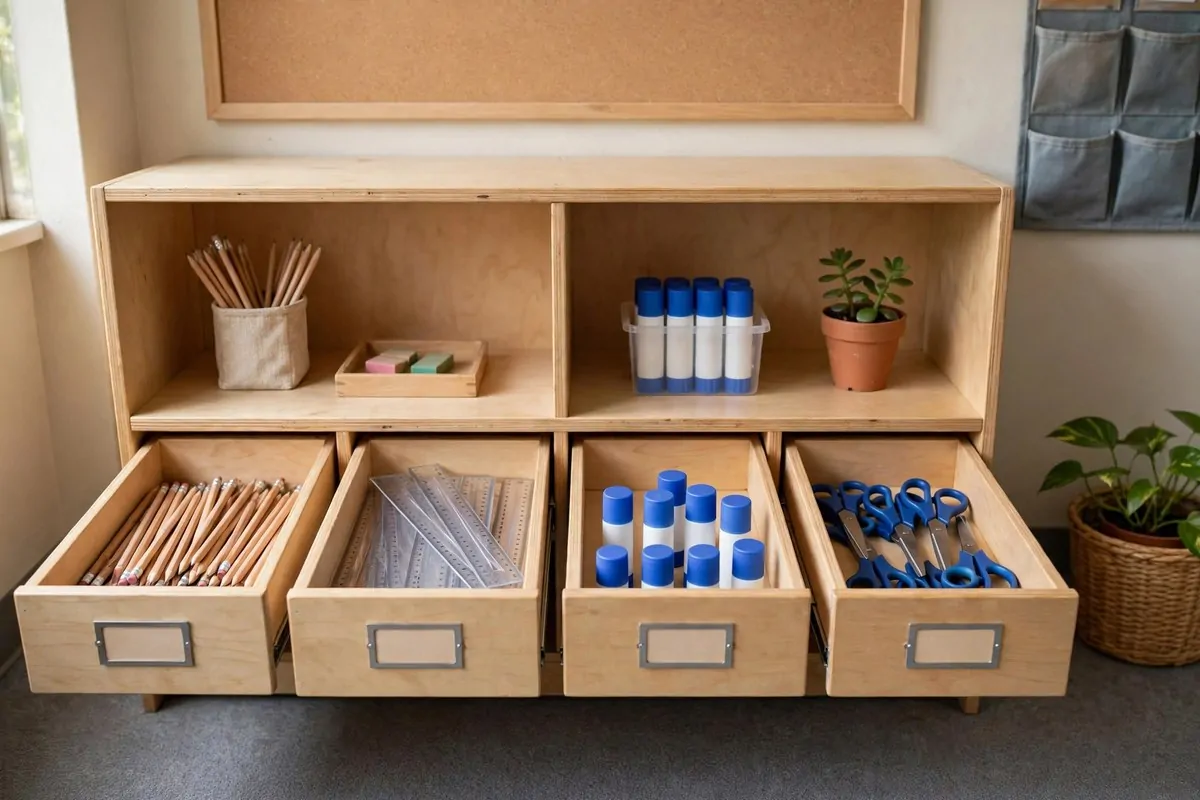
Stop keeping the good supplies behind your desk. The kids need them, you are busy, and the line at your desk wastes everyone’s time.
Build a supply station instead. One spot, low shelves, everything labeled. Pencils, rulers, glue, scissors, extra paper. The kids serve themselves.
I call mine the in station. Supplies go out from here. Finished work comes back to a different spot. In and out never mix.
Put it somewhere central. Mine is by the whiteboard, where everyone passes. If it hides in a corner, kids will still come to you instead.
Stock it every Monday morning. Five minutes. I keep backup supplies in my closet and refill the station like a little shopkeeper.
Teach the rule on day one. Take what you need, put back what you do not use. Model it. Practice it. It sticks by week two.
The first month, check it daily. After that, the kids run it themselves. They will even tell you when something runs low.
A supply station turns thirty interruptions a day into zero. That is not an exaggeration. Count them sometime.
10. The Finished Work Station
Every teacher knows the mystery paper. It appears on your desk with no name. Nobody claims it. It haunts you for weeks.
The finished work station ends the mystery. It is the out station, the partner to the supply station. Done work goes here, and only here.
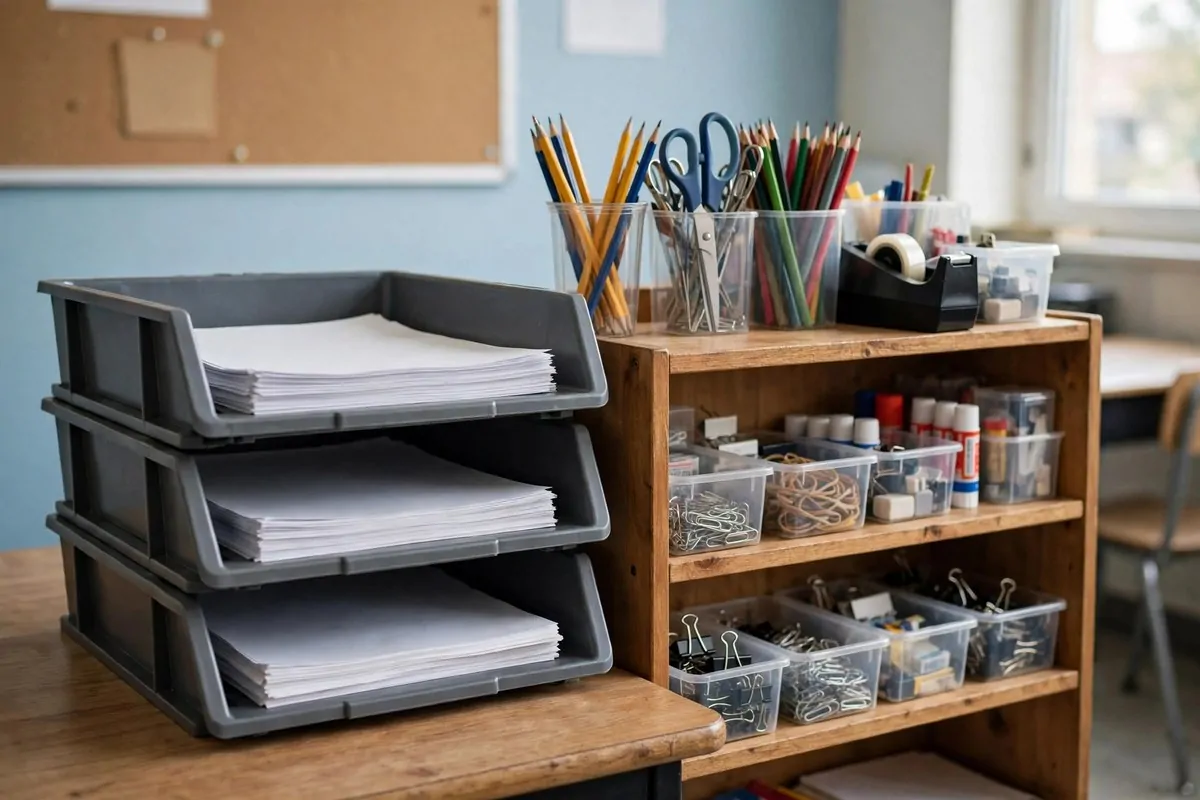
I use stacking trays, one per subject. Math tray, reading tray, science tray. Kids drop their papers in the right tray as they finish.
Teach them to write their name first. Before anything else. Name first, then work. It is a habit that saves hours of detective work.
I empty the trays once a day, after school. Papers get sorted into my to-grade clips. The trays start empty every morning.
Put the station right next to the supply station. In and out, side by side. The kids learn the loop fast. Get supplies, do work, turn it in.
No more papers on my desk. My desk is for my coffee and my plan book. The papers have their own home now.
A home for finished work means no more mystery papers. I almost miss the detective work. Almost.
11. Cubbies with Name Labels
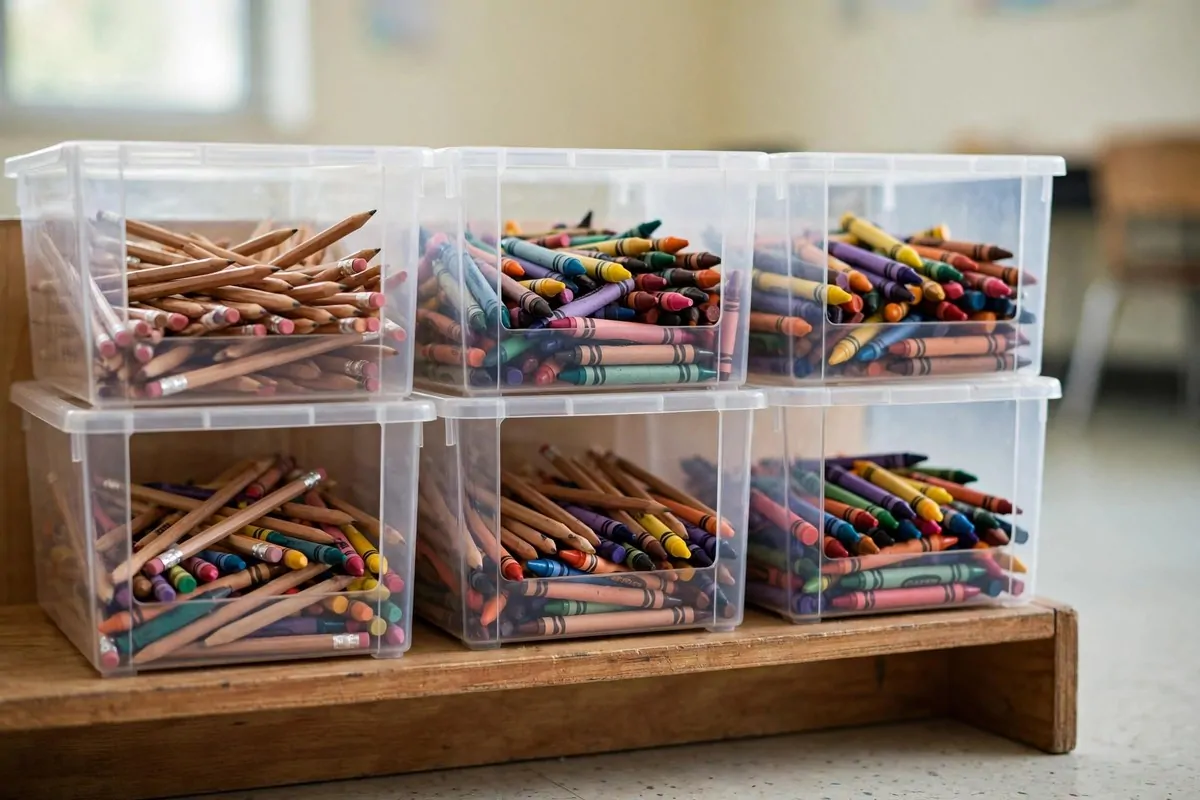
Backpacks on the floor are trip hazards. Jackets on chairs slide off. Lunch boxes migrate to strange places. Cubbies fix all of it.
Each child gets one cubby. Backpack, jacket, lunch box, folder. Everything they own lives in that one square space.
The name label is key. Big letters, maybe a photo for the little ones. When the cubby has a name, the child takes care of it.
I teach cubby rules on day one. Everything inside the lines. Nothing on the floor in front. It takes a week of reminders, then it runs itself.
Once a month, we do a cubby clean-out. Old papers go home or in the recycle bin. Lost mittens get claimed. It takes ten minutes with everyone helping.
If you do not have built-in cubbies, milk crates work. So do sturdy boxes on a shelf. The shape does not matter. The system matters.
A cubby is a tiny bedroom for school stuff. Every child deserves one.
No more floor backpacks. My ankles thank me.
12. Desk Caddies for Each Table
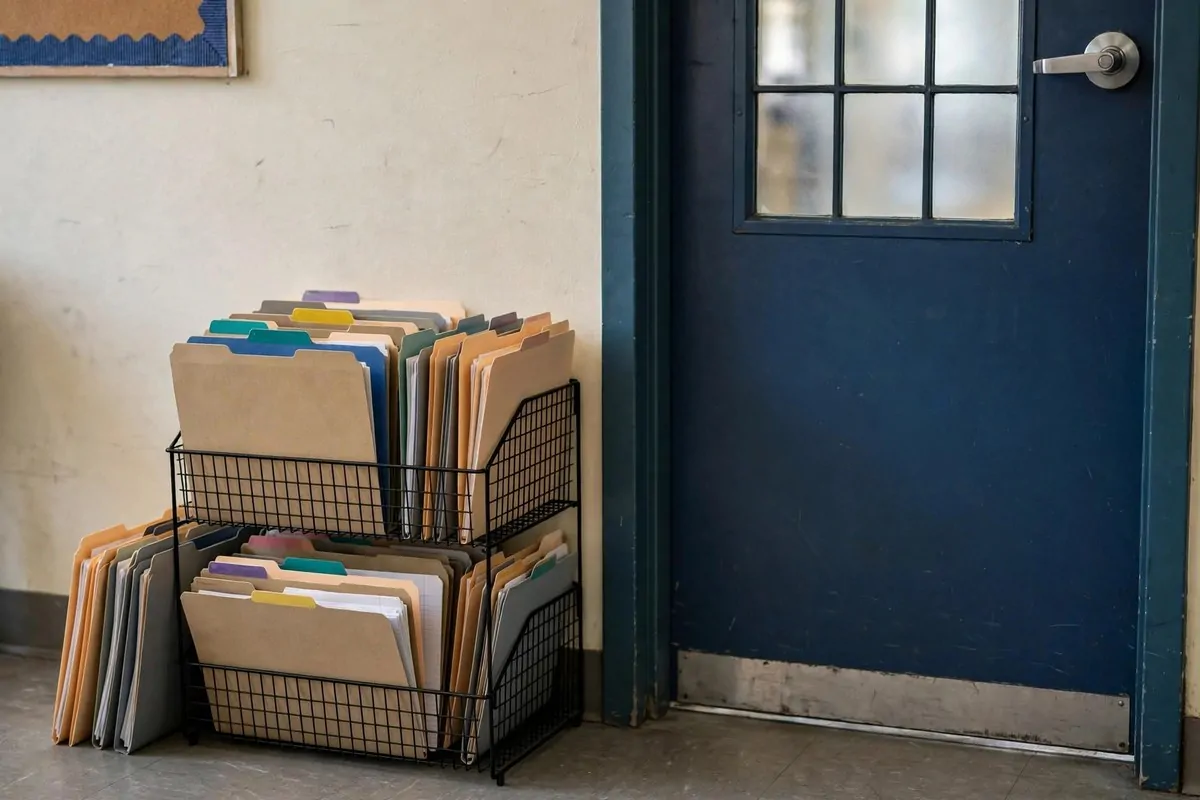
Passing out supplies eats ten minutes a day. That is almost an hour a week. A school year of hours, gone to handing out pencils.
Desk caddies give those hours back. One caddy per table, stocked with pencils, scissors, glue, and markers. The table shares.
I fill the caddies every Monday. The table captain checks theirs daily. If something runs low, they tell me before it runs out.
Color-code the caddies to match your table colors. The blue table gets the blue caddy. It sounds small, but it stops all arguing about whose is whose.
Put a number on each caddy too. Table one, table two. When I collect them for deep cleaning, I know exactly where each one goes back.
The caddies stay on the tables all day. Kids reach in without asking. Lessons flow without supply breaks.
At the end of the day, caddies go on a shelf. Tables get wiped. The room resets in minutes.
Shared supplies, zero passing-out time. The math works out beautifully.
13. The Absent Work System
A kid misses Tuesday. On Wednesday, they ask what they missed. You stop teaching to dig through piles. Everyone waits. It is painful.
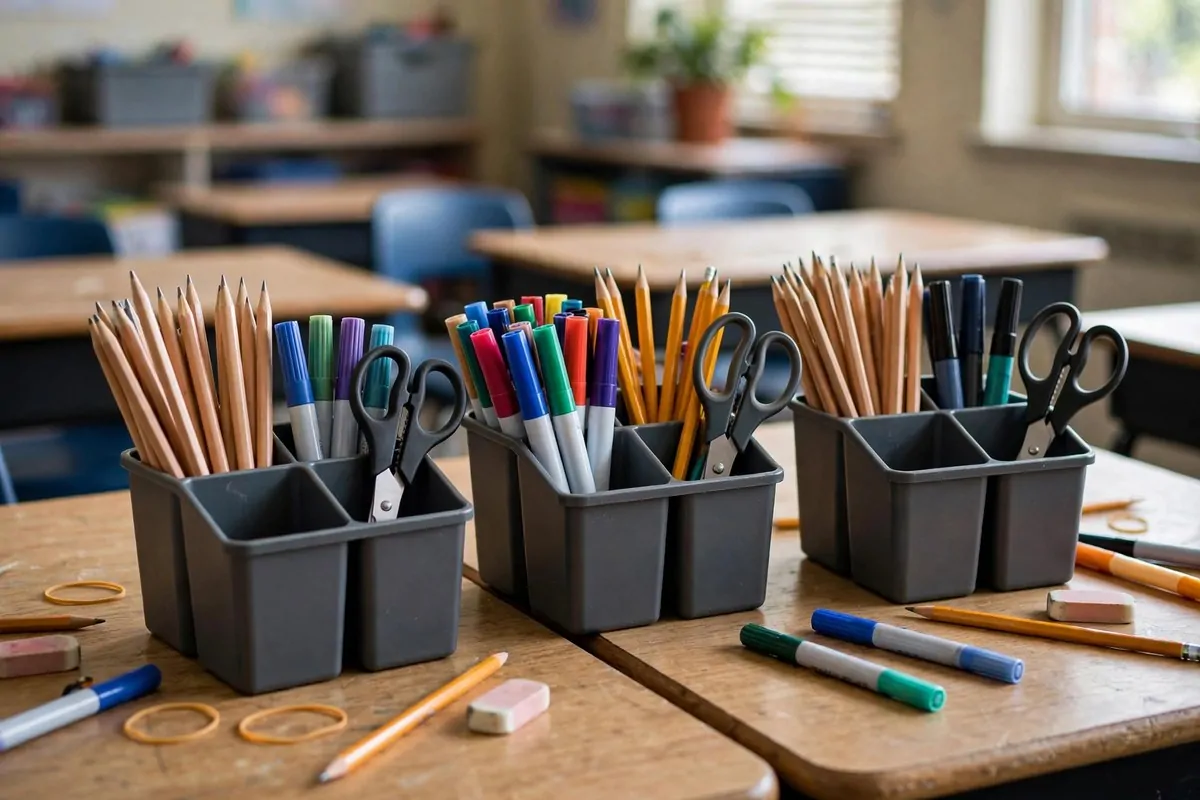
My absent work bin ends the pause. It has a folder for each day of the week. When I hand out work, an extra copy goes in that day’s folder.
The absent kid checks the bin when they return. They grab their day’s folder, take the work, and catch up during morning time. I keep teaching.
I also keep a simple log. Name, date, what was missed. It takes thirty seconds to fill in, and it saves me at conference time.
For longer absences, I use a bigger envelope per kid. Everything they missed goes in one place. Parents love this at pickup.
Teach the class the system early. When someone returns, a buddy shows them the bin. I barely touch it most weeks.
The bin sits by the door. Visible, labeled, obvious. Absent kids learn to check it before they even say good morning.
Nobody misses out just because they missed a day. The system catches them.
14. The Mailbox Sorter
Returning graded papers takes forever if you do it by hand. Walking to thirty desks, calling thirty names. There goes your morning.
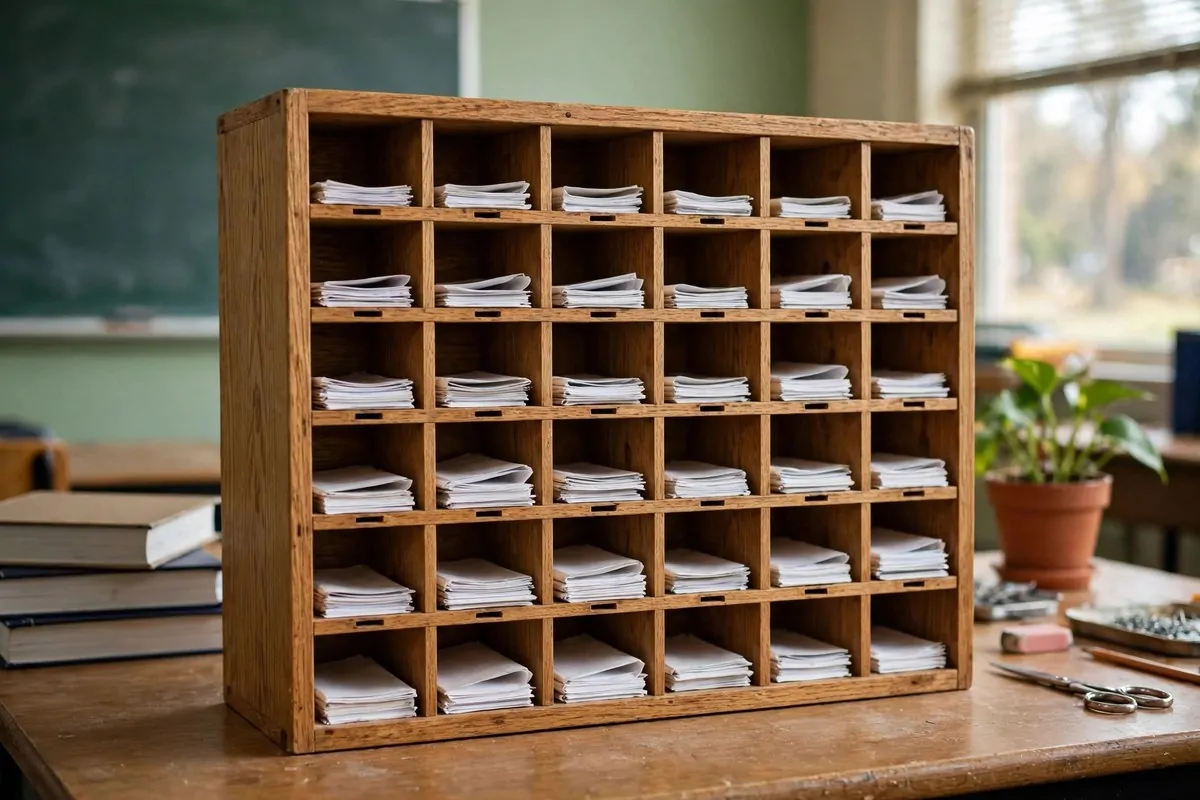
A mailbox sorter does it for you. Little slots, one per kid, labeled with names. Graded papers slide into slots. Kids empty their slot as they arrive.
I sort papers into the mailbox during my prep. It is actually relaxing. Like dealing cards. And the next morning, distribution takes zero class time.
Kids love checking their mailbox. It feels grown-up. Some of them check it three times a day, just in case.
Put the mailbox by the door at kid height. If they have to climb or stretch, they will skip it. Easy access means it actually gets used.
I also use the top of the mailbox for notes going home. Permission slips, newsletters, the stuff parents need to see. One spot for all of it.
Empty the leftover slots every Friday. Old papers go in backpacks or the recycle bin. Fresh start Monday.
Deal the papers, skip the chaos. The mailbox is my favorite quiet helper.
15. Binder Clips That Sort Your Papers
Papers on a desk form piles. Piles form mountains. Mountains cause that Sunday night dread. Binder clips stop the mountain from forming.
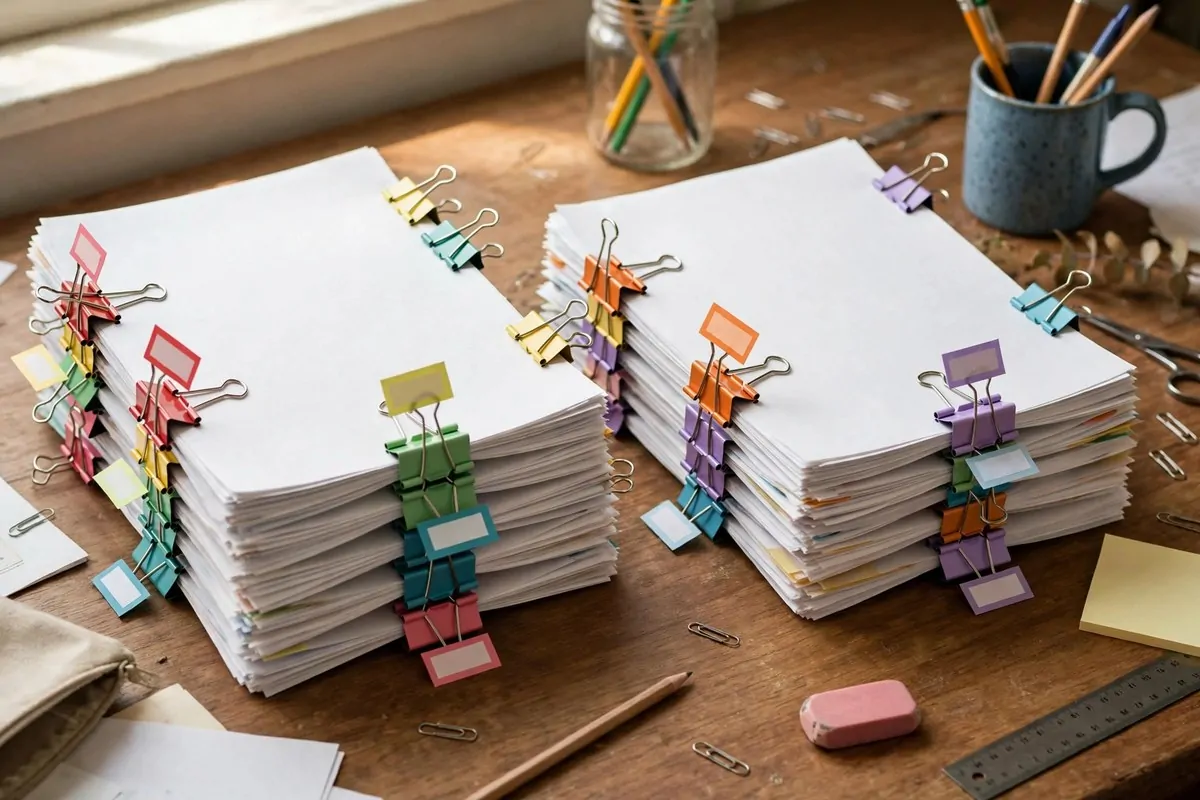
I use big labeled clips. To grade. To file. To copy. Three clips, three jobs. Every paper on my desk lives in one of the three.
The labels face out so I can see them. When the to-grade clip gets fat, I know it is grading night. No surprises.
It is a tiny system. Almost too simple to mention. But before the clips, my papers just sat in one sad stack. Now they sort themselves as they arrive.
Teach your student helpers the clips too. My paper monitor files the to-file papers every Friday. The clip tells her exactly what to do.
Get the clips in different colors. Red for grade, blue for file, green for copy. It matches my subject colors, which makes me unreasonably happy.
Three clips, three dollars, endless calm. Sometimes the smallest tools do the biggest jobs.
16. The Shoe Organizer Trick
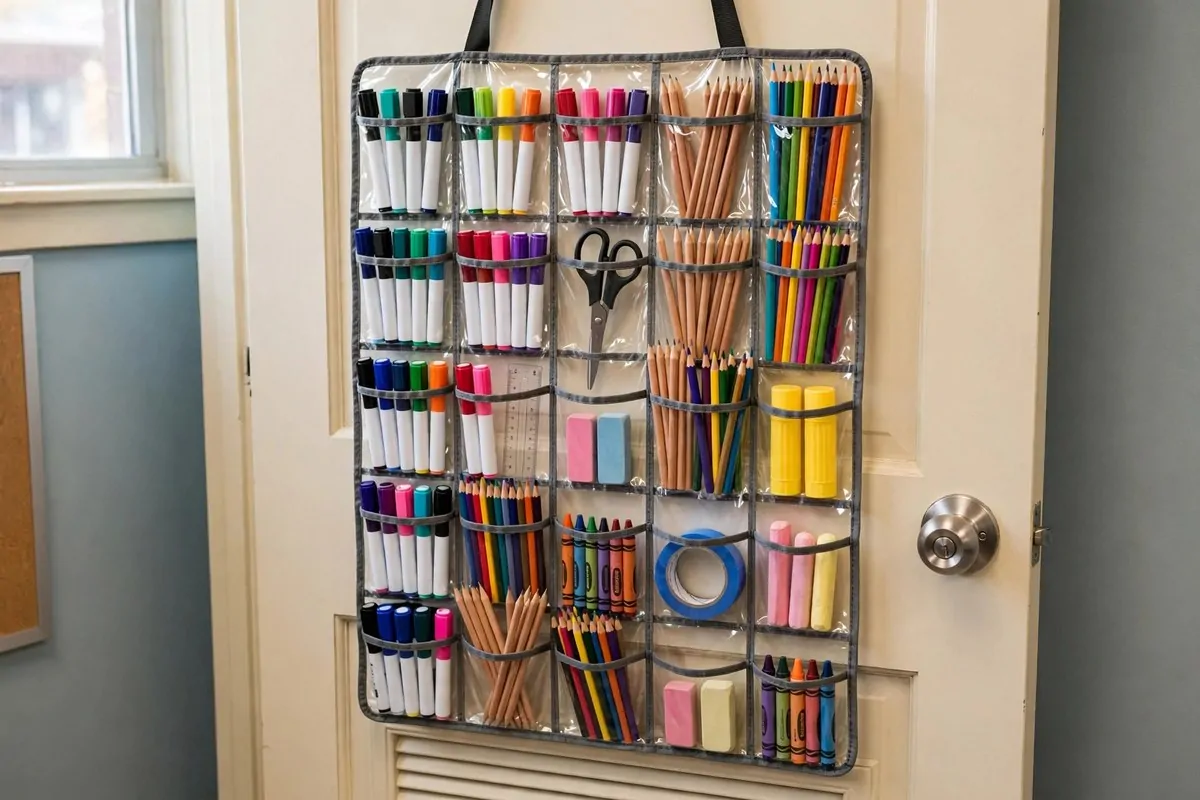
A clear over-the-door shoe organizer is the hardest working storage in my room. It was made for shoes. It was born for classroom supplies.
I hang one on my closet door. The pockets hold dry-erase markers, glue sticks, scissors, and tape. Twenty-four pockets of pure organization.
The clear pockets mean I see everything. When the marker pocket looks empty, I refill it. No digging through drawers.
Kids can grab what they need without asking. The organizer hangs at their height by the art area. It is like a little supply shop.
I have a second one inside my supply closet for the extras. Refill stock lives there. When the door organizer runs low, I restock from the closet one.
They cost very little and hang in seconds. No tools needed. The hooks just slip over the door.
Shoe organizers also work great at home. Mine holds my craft supplies. But you are here for classroom ideas, so I will stop.
Twenty-four pockets, zero floor space. It is almost unfair how well this works.
17. Ziplock Bags for Tiny Pieces
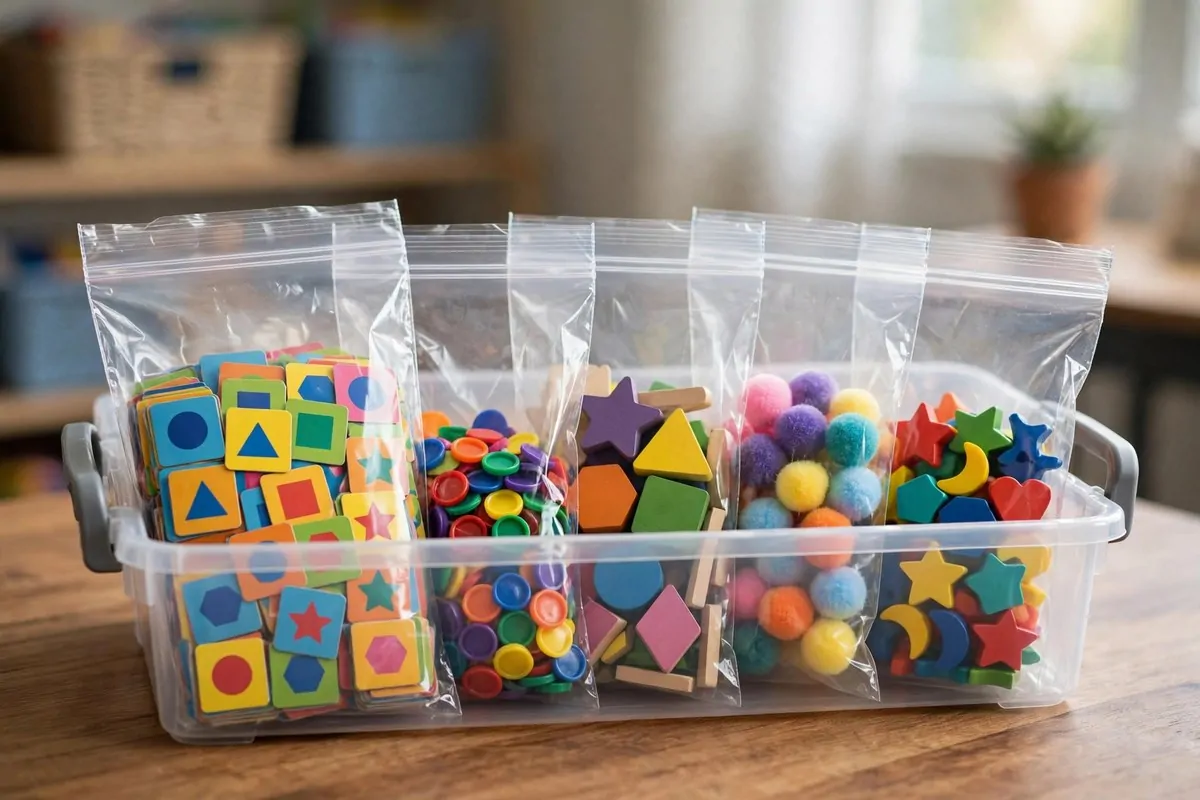
Math games come with forty tiny pieces. By November, thirty-nine are missing. The game is ruined. The kids are sad. I am sad.
Ziplock bags saved my centers. Every game gets its own bag. Pieces go in, bag gets zipped, bag goes back in the game box.
I write the game name on the bag with a marker. Big letters. When a bag is found on the floor, anyone can return it to the right game.
The bags also hold puzzle pieces, word cards, and science sorting sets. Anything small and losable gets bagged.
At cleanup time, I do a piece check. Shake the bag. If it sounds full, we are good. If it sounds light, we hunt before anyone leaves.
Buy the sturdy freezer kind. The thin cheap ones split at the seams. The good ones last all year.
This is the least glamorous idea on this list. It is also the one that saves the most games.
Bag the small stuff. Future you will be so grateful.
18. A Word Wall Kids Actually Use
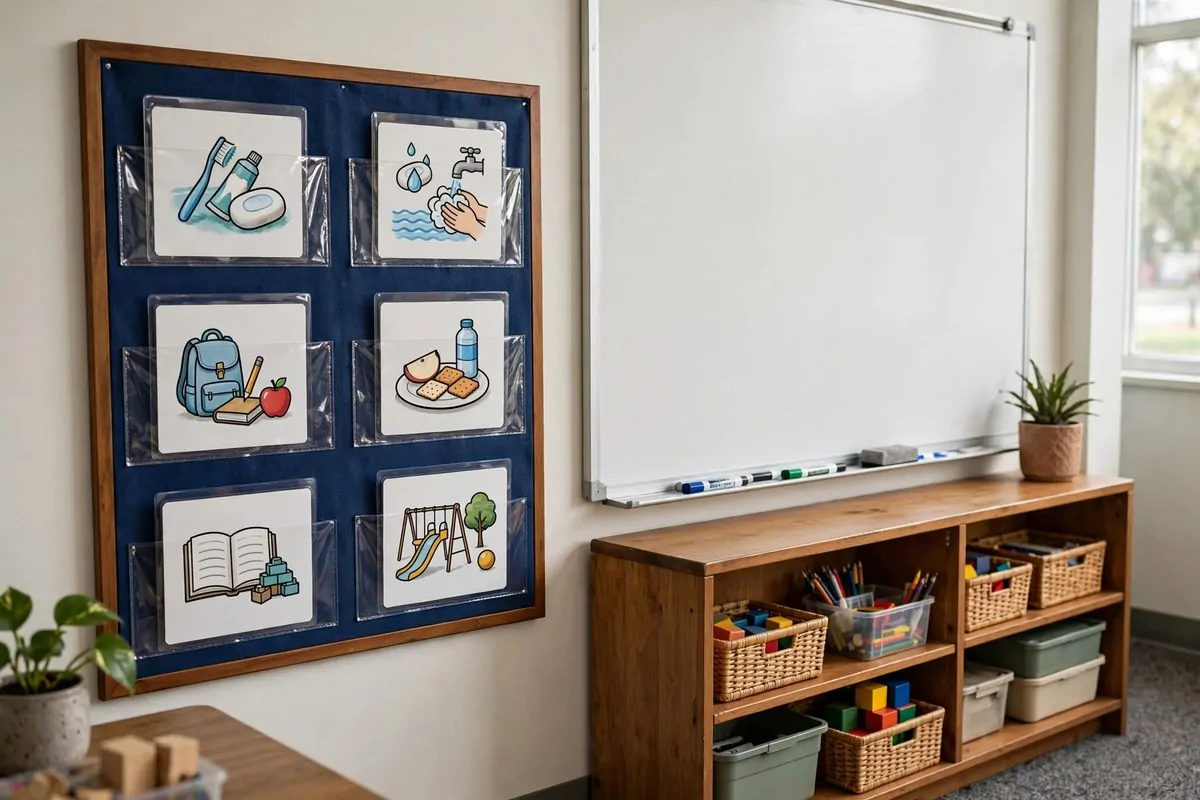
Most word walls are wallpaper. Pretty words, hung too high, never touched. The kids cannot read them and the teacher forgets they exist.
A working word wall is different. It hangs at kid eye level. The words are big. And you actually point to it during lessons.
I organize mine by category, not just ABC order. Weather words together. Feeling words together. The kids find what they need faster.
We add words together as we learn them. The wall grows with the class. It is our wall, not my decoration.
During writing time, I watch kids walk to the wall, find a word, and walk back. That is the dream. Independent spellers in action.
Keep it current. Take down old unit words when the unit ends. A wall with two hundred words helps nobody.
A word wall should be a tool, not a poster. If nobody touches it, move it lower and use it louder.
Tools get touched. Decorations get dusted. Aim for touched.
19. The Visual Schedule Board
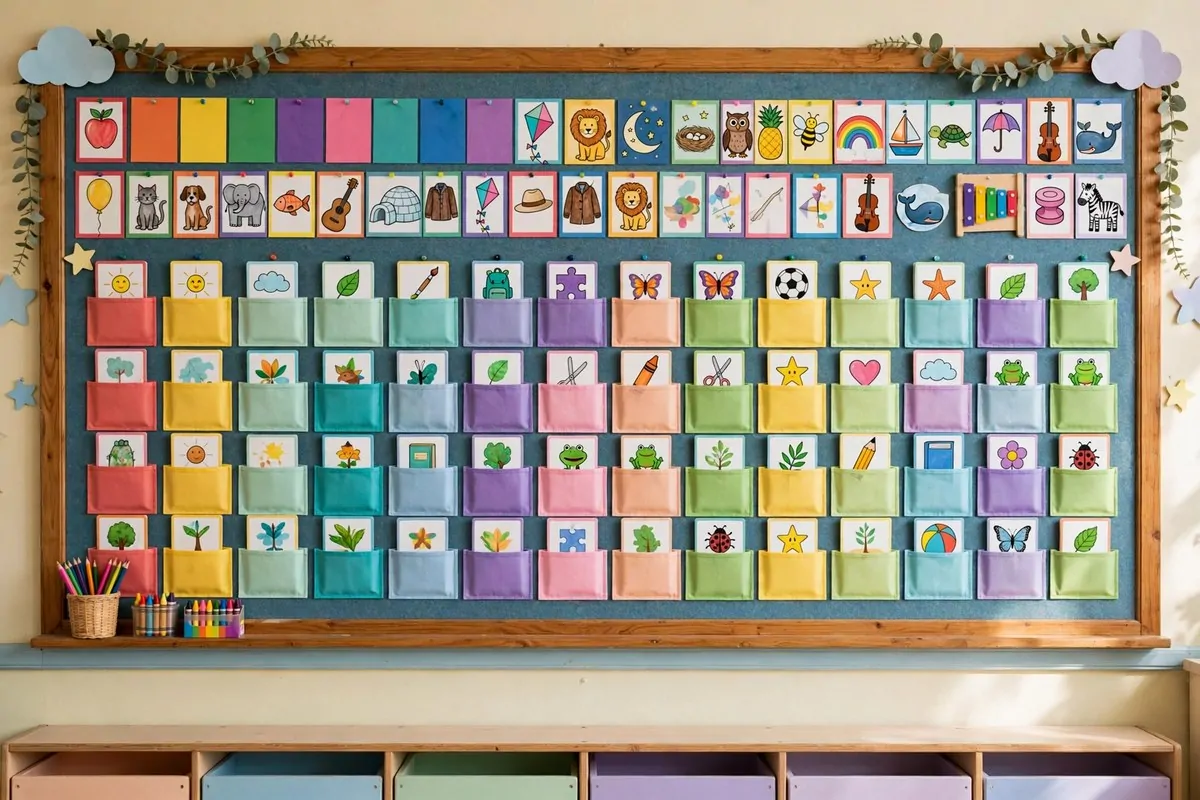
How many times a day do kids ask what is next? In my room, it used to be about fifty. Fifty interruptions, every single day.
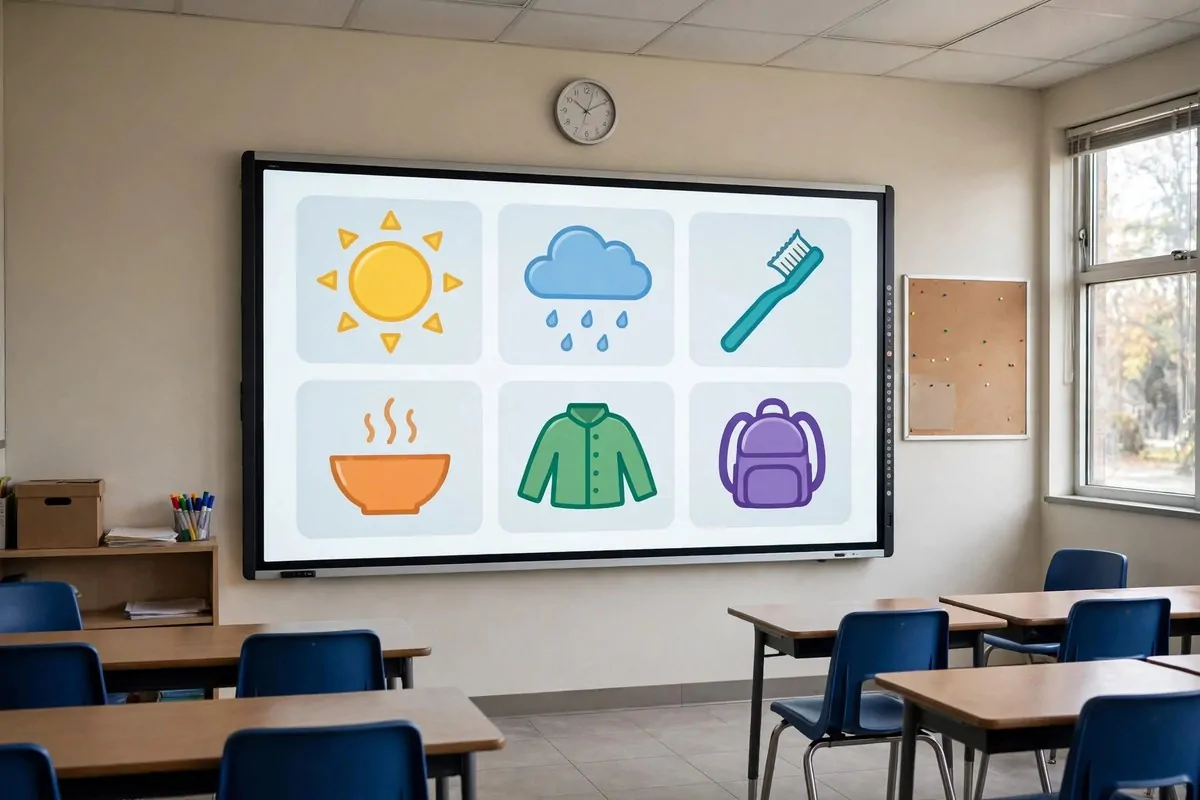
The visual schedule board cut that to almost zero. It shows the whole day, in order, with pictures. Math, then reading, then lunch, then art.
I move a little arrow down as the day goes. The kids check the board instead of asking me. It is like magic, but it is just a board.
For little ones, use photos of the actual activities. A photo of our rug for circle time. A photo of the lunchroom. Real pictures beat clip art.
Put the board where everyone can see it from their seats. Mine hangs next to the whiteboard. It is the first thing kids look at each morning.
When plans change, I move the cards and tell the class. They handle changes better when they can see the new plan.
This board also calms anxious kids. Knowing what comes next feels safe. I have watched worried faces relax just by looking at it.
Fifty questions a day, gone. The board answers them all.
20. Cleanup Job Chart
Cleanup time used to be chaos. I would say clean up, and thirty kids would stare at me. Nobody knew what to do.
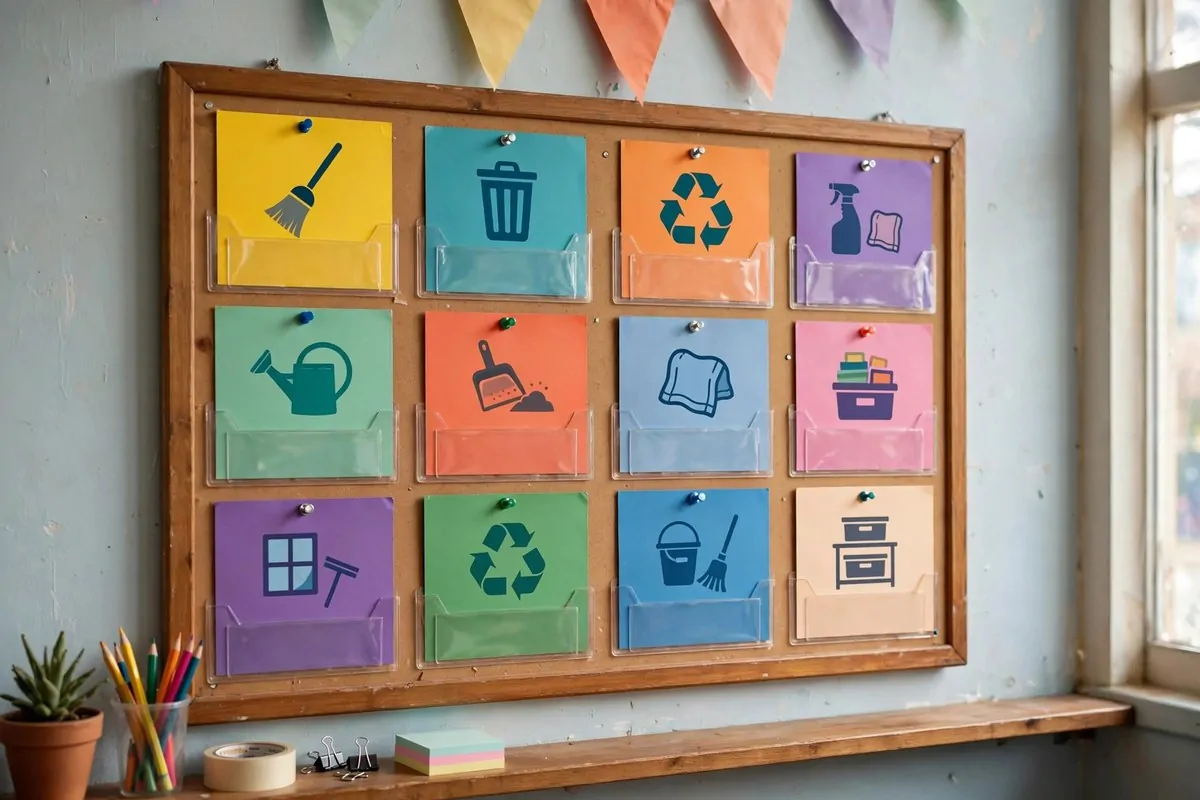
The job chart fixed it overnight. Every child has a role. Floor checker. Paper monitor. Supply restocker. Technology helper. The jobs rotate every week.
I posted the chart by the door where everyone sees it. The jobs are written big, with a picture for each one. No reading struggles.
We practice the jobs like a lesson. I model each one. The floor checker walks the room looking down. The paper monitor checks the trays. They learn by doing.
Cleanup now takes three minutes. Three. The kids take pride in their jobs. The technology helper plugs in the tablets like a tiny IT worker.
When someone is absent, a buddy covers their job. The chart has a backup column. Nothing falls through the cracks.
Rotate the jobs every Monday. Everyone gets a turn at every job. No favorites, no fights.
A room that cleans itself is not a dream. It is a chart.
21. The 5-Minute Reset
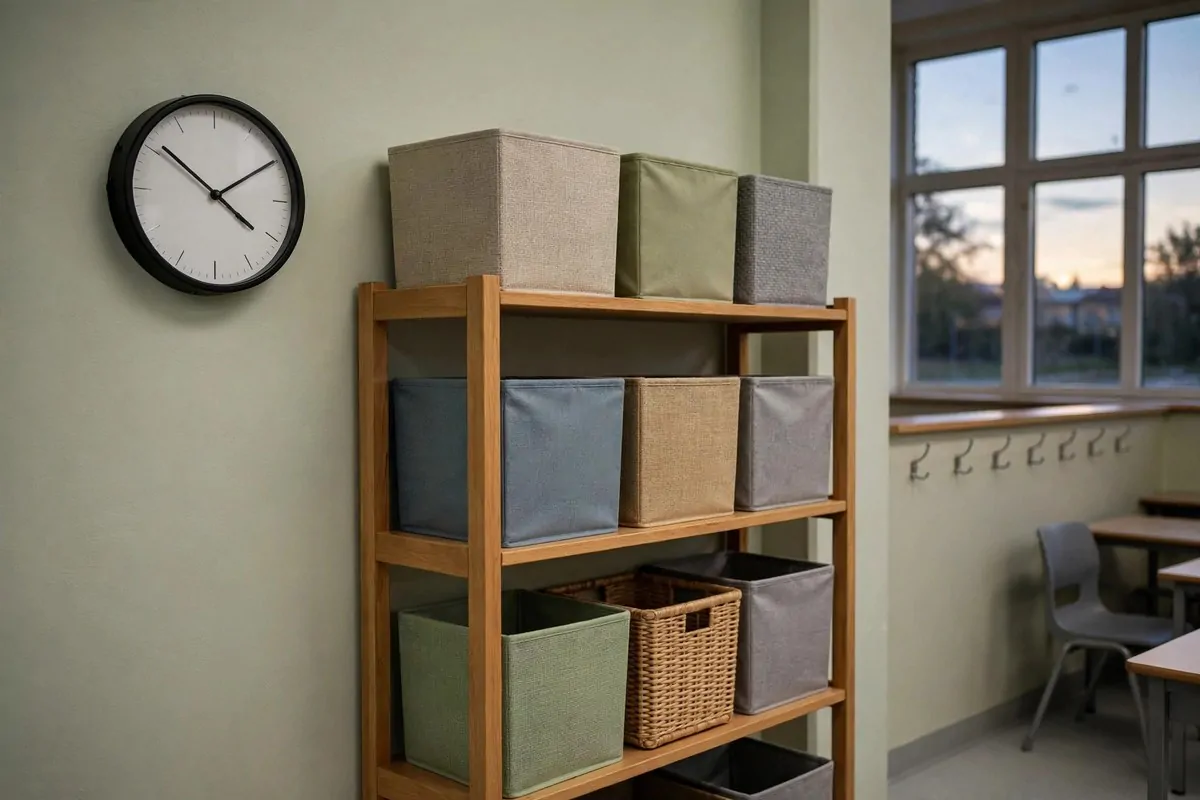
The last five minutes of the day decide how your tomorrow feels. Leave a mess, and tomorrow starts with stress. Reset the room, and tomorrow starts calm.
We do a five-minute reset every single day. Timer on, music on, everyone moves. Chairs get pushed in. Bins get refilled. Floors get checked.
I set a timer the kids can see. Five minutes feels like a game when the clock is ticking. They race the timer, and the timer usually loses.
The reset has a checklist on the board. Push in chairs. Return supplies. Pick up the floor. Stack papers. Check your job. Five steps, five minutes.
I do my own reset too. My desk gets cleared. My clips get sorted. My cart gets rolled to its corner. We all reset together.
When the timer dings, we freeze. I look around. If something is off, we fix it fast. Then we line up, and the day ends clean.
Walking into a clean room the next morning is the best feeling. It is a gift from yesterday you to tomorrow you.
Five minutes today saves thirty minutes tomorrow. That is good math.
22. Digital Files That Mirror Paper Files
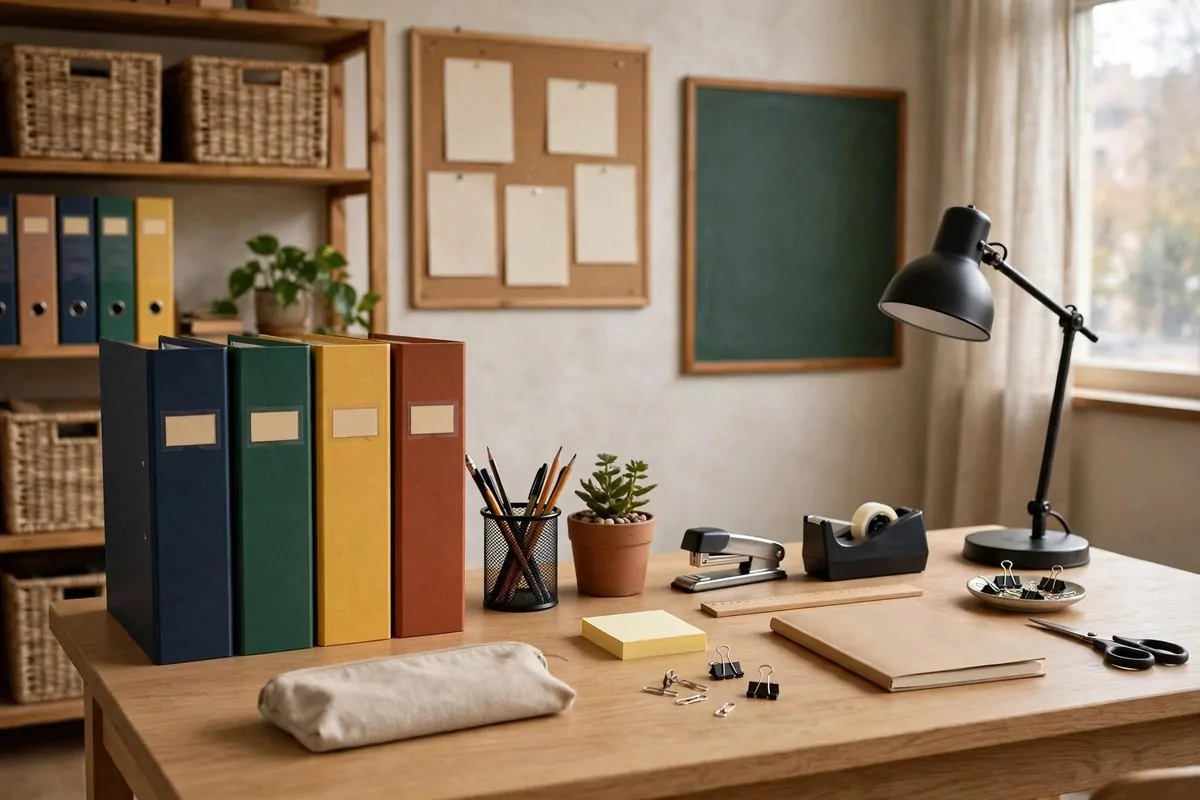
Your computer desktop is a classroom too. And most teacher desktops look like the floor of a messy room. Files everywhere, names like final_final2.
Mirror your paper system on your computer. If your paper files go by subject, your computer folders go by subject. Same names, same order.
I have a folder for each unit, inside a folder for each subject. Lesson plans, worksheets, and answer keys all live together. I find anything in seconds.
Name files with the date first. 10-21-math-fractions. They sort themselves in order. No more hunting through a pile of untitled docs.
Back up everything twice a year. I copy my whole teaching folder to a drive in December and June. If my laptop dies, my years of work survive.
Clean out the downloads folder monthly. It fills up with junk fast. Old PDFs, duplicate photos, things you saved and forgot.
A tidy computer saves real time. Hunting for a file for ten minutes, three times a week, is hours lost every month.
Organize the screen like you organize the shelves. Same brain, same rules.
23. The Digital Anchor Slides
Sticky notes multiply. Lesson plans get buried. But one slide deck on the smartboard can run your whole day.
I put my full daily agenda on slides. Morning meeting, lesson steps, timers, even photos of what finished work should look like. It is all there.
The kids read the board when they walk in. They know the plan before I say a word. Fewer questions, faster starts.
I embed timers right in the slides. When the timer runs out, we move on. The timer is the bad guy, not me. The kids accept it better.
One deck per week, saved in my unit folder. Next year, I reuse the good ones. My future self gets a head start every September.
Keep the slides simple. Big text, clear steps, one idea per slide. Busy slides confuse everyone, including me.
This is my autopilot. The day runs itself while I focus on the kids, not on remembering what comes next.
Slides on the board, calm in the room. That is the trade, and I take it daily.
24. Library Crates by Theme
A giant bookshelf of mixed books overwhelms kids. They stare, they grab randomly, they put books back in wrong spots. The library dies a little each day.
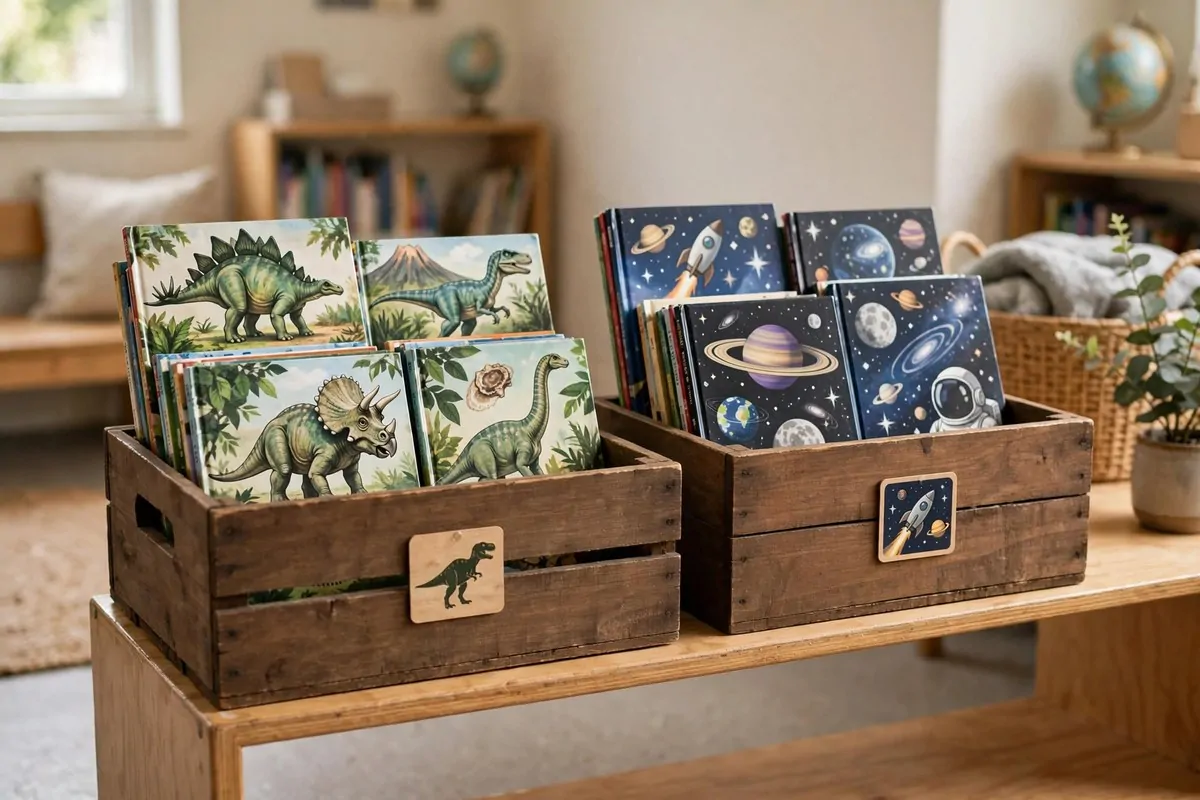
Theme crates saved mine. Each crate holds one theme. Dinosaurs. Space. Funny stories. Animals. The kids pick a crate, not a shelf.
I label each crate with the theme and a picture. The dinosaur crate has a dinosaur picture. Even non-readers can find their favorite topic.
The crates sit on a low shelf the kids can reach. They pull a whole crate to their table, browse, and slide it back. No reshelving chaos.
I rotate the crates monthly. Old themes go to storage, new ones come out. The library feels fresh all year without buying new books.
Let kids request themes. When I added a crate of joke books because they asked, those books never sat still. Ownership matters.
Keep five or six crates out at a time. More than that and choosing takes forever. Fewer and it feels thin.
Crates make the library browsable. Browsable libraries get read.
25. The Extra Supplies Basket
Kids forget things. Pencils break. Erasers vanish. Glue sticks dry out mid-project. It happens every single day.
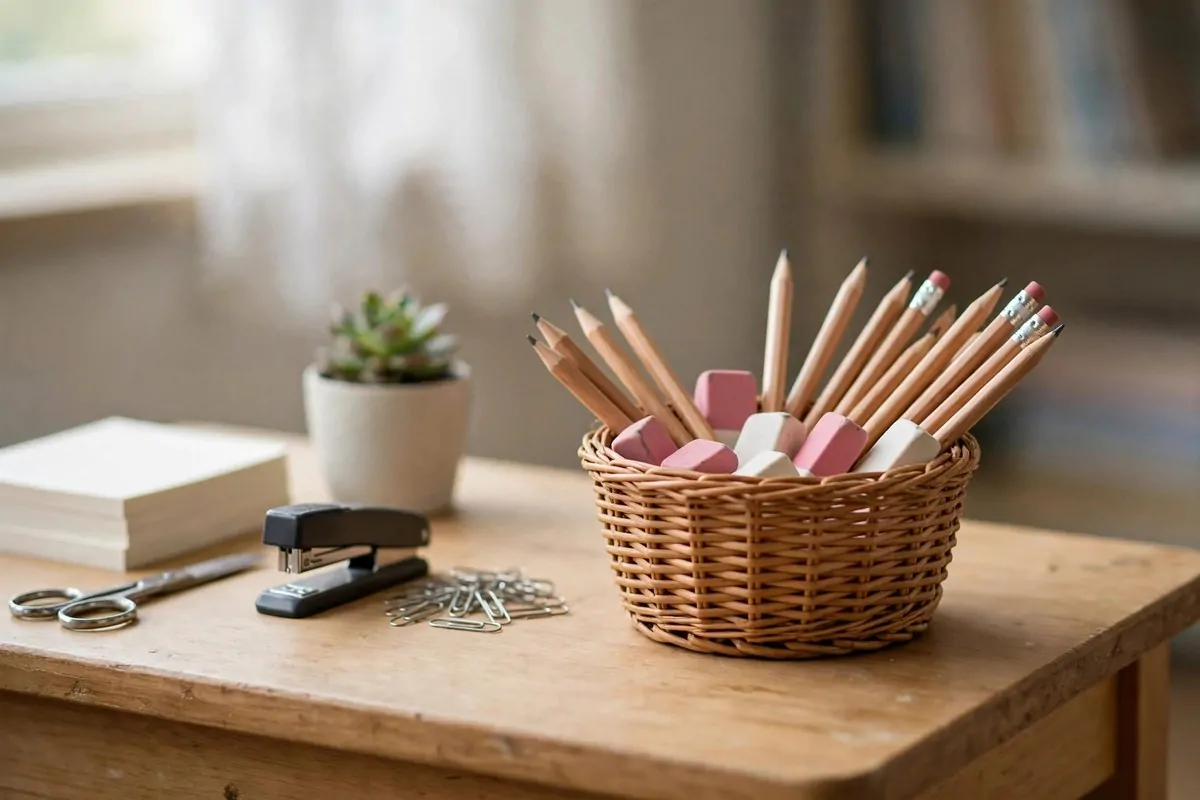
The extra supplies basket ends the emergency. It sits near my desk, full of spares. Broken pencil? Grab one from the basket. Keep working.
I stock it with the cheap stuff. Plain pencils, basic erasers, simple glue sticks. The good supplies stay at the supply station. The basket is for rescues.
The rule is simple. Borrow from the basket, return to the basket. Most things come back. The things that do not were cheap anyway.
I refill it every Friday. Two minutes. I keep a bag of spares in my closet, and the basket never runs dry.
Kids stop interrupting lessons for supplies. They just walk to the basket, grab what they need, and sit back down. The flow never breaks.
Put a little sign on it. Extra supplies, help yourself. The sign gives them permission, so they do not feel like they are bothering you.
A basket of spares buys you uninterrupted teaching time. That is worth more than gold.
26. The Where It Goes Chart
Even with labels everywhere, some kids freeze at cleanup time. They hold a thing and look lost. Where does this go? They genuinely do not know.
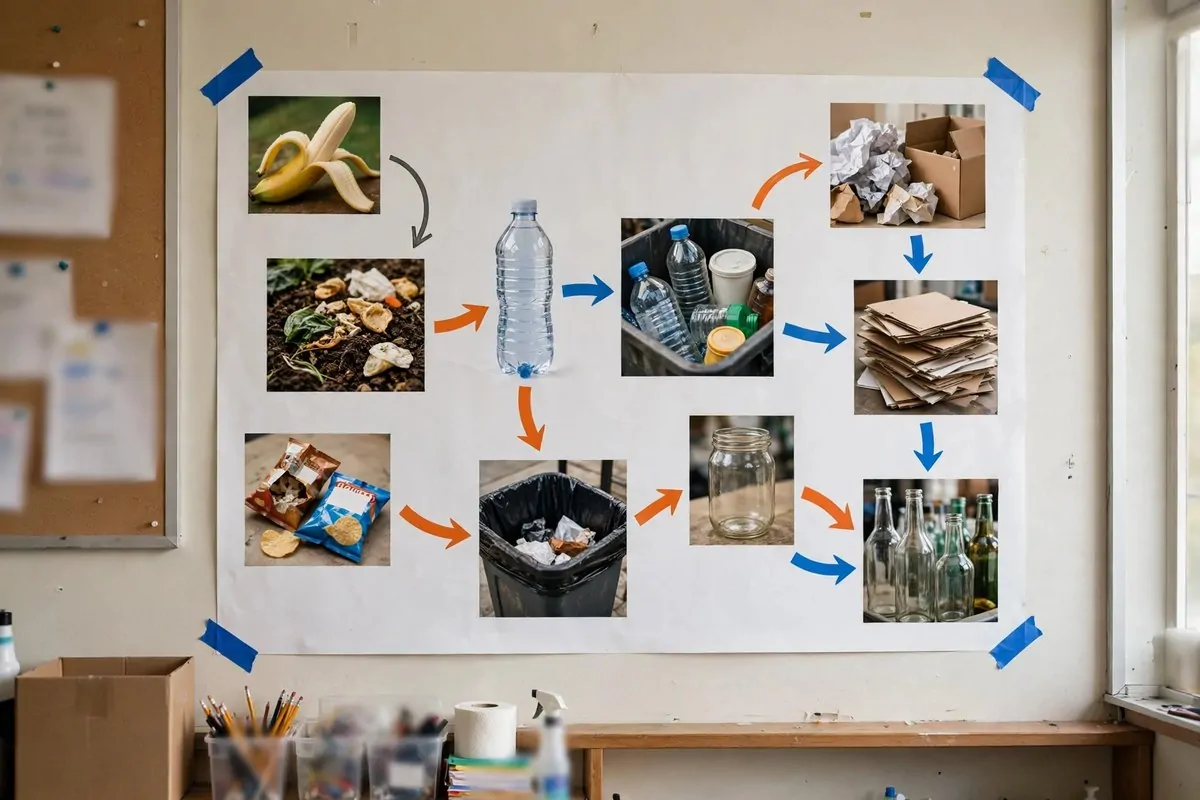
The where-it-goes chart answers them. It is a big poster with photos. Photo of scissors, arrow to the pegboard. Photo of books, arrow to the crates.
I made mine with real photos of my actual room. Not clip art. My pegboard, my crates, my bins. The kids recognize everything instantly.
Hang it where cleanup happens. Mine is by the rug, at kid height. During cleanup, I just point at the chart. No words needed.
Update it when you move things. A chart that lies is worse than no chart. When I moved the art bins, I retook that photo the same day.
New students learn the room from this chart alone. I watch them study it in week one. By week two, they clean up like veterans.
It also helps substitutes. A sub can run cleanup with zero knowledge of my systems. The chart teaches them too.
When in doubt, chart it out. The wall can answer questions so you do not have to.
27. Tidy Tubs for Scraps and Early Finishers
Two problems, one solution. Scrap paper piles up everywhere. And fast finishers finish fast, then get bored and loud.
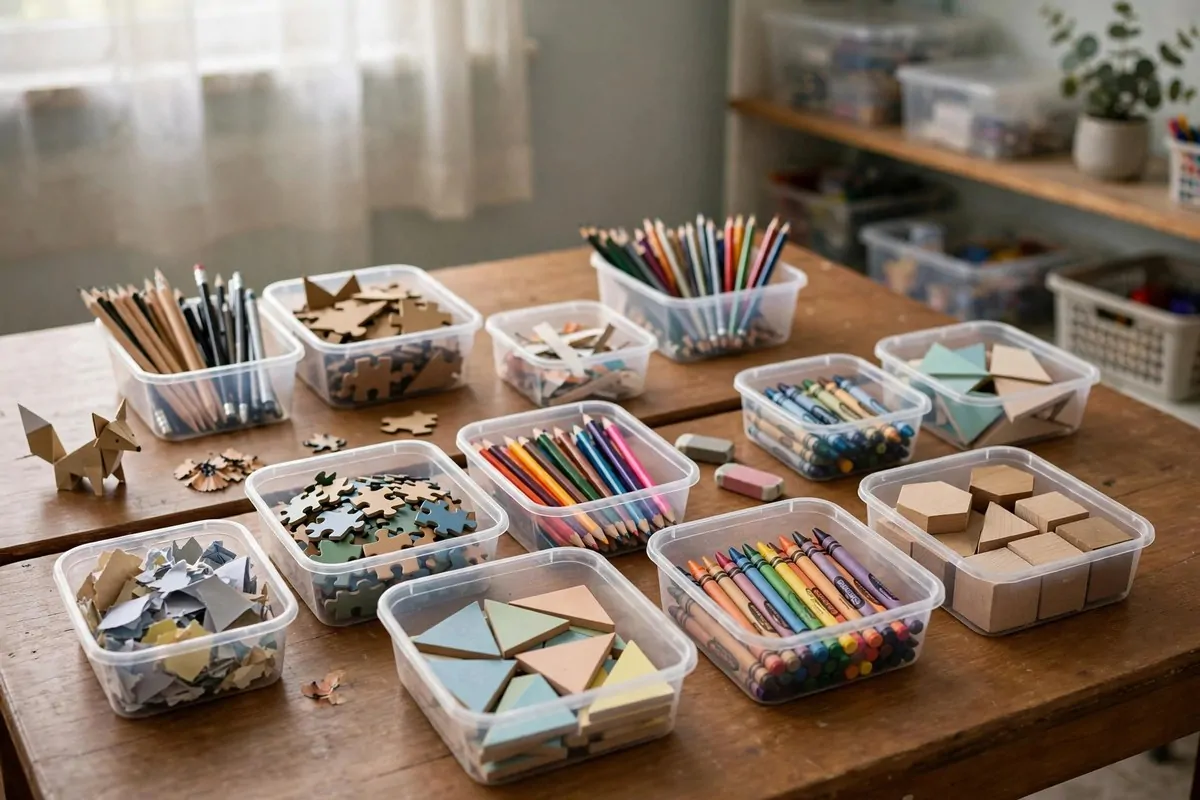
Tidy tubs solve both. Small tubs on each table collect scrap paper. And a special tub holds early finisher activities for kids who finish first.
The scrap tubs get emptied into the recycle bin daily. No more paper balls on the floor. No more scraps stuffed in desks.
The early finisher tub is the real star. Puzzles, drawing prompts, logic cards, extra reading. Fun stuff, not punishment work.
I change the finisher activities monthly. If the tub gets boring, the fast kids stop using it. Fresh challenges keep them hooked.
Teach the rule clearly. Finish your work, check it, then visit the tub quietly. No announcing to the room that you finished first.
The tub sits in one spot all year. The kids know it. They do not ask what to do when they finish. They just go.
Scraps contained, fast kids busy, teacher sane. Three wins from a few little tubs.