21 Japanese House Ideas for a Calm Simple Home

I took my shoes off at the door one evening and stood there in my socks on the cool wood floor.
That small moment stayed with me. It felt quiet in a good way. It made me want my whole home to feel like that, soft and calm and easy to be in.
These Japanese House Ideas are not about buying a lot of new stuff. They are about less noise, less clutter, and more room to breathe. You can try one idea at a time. You do not need a big budget or a big house to start.
I will walk you through all 21 ideas here. They are simple and they work in a small flat just as well as in a big house. Pick the one that feels easiest and start there today.
Start With Shoji Screens
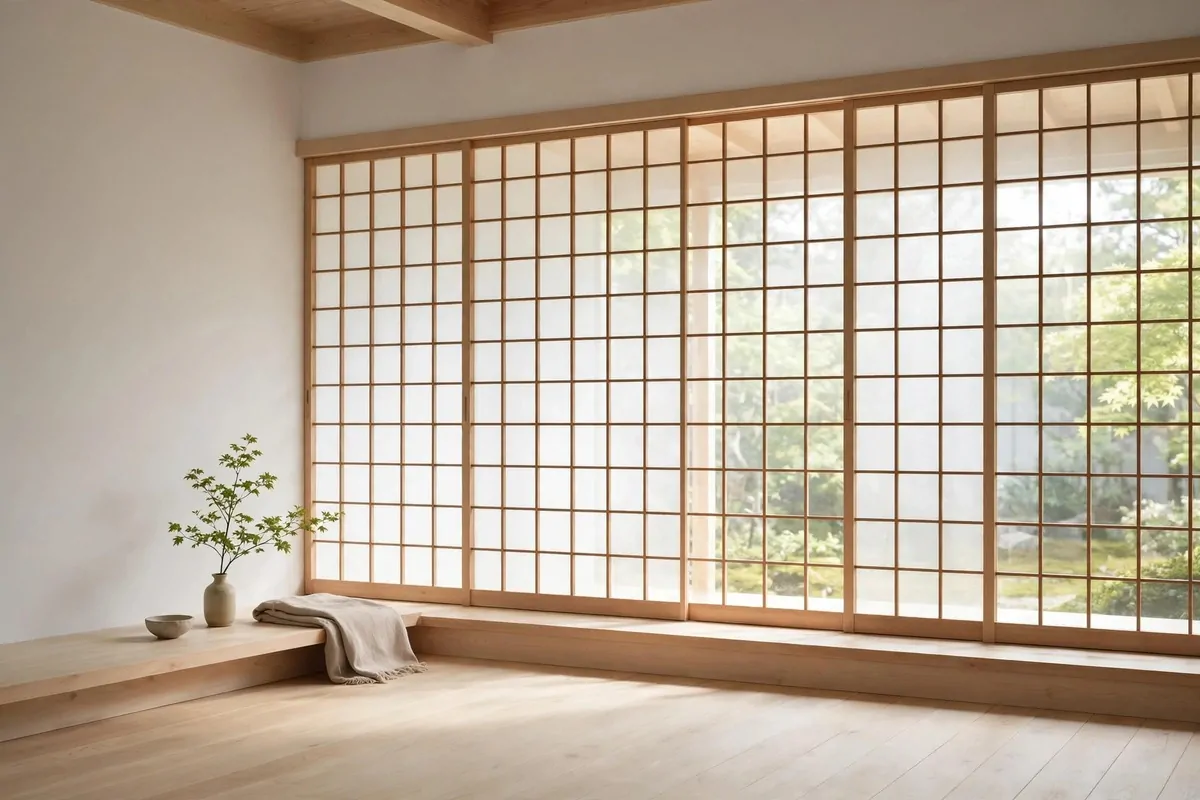
I love how a shoji screen makes light feel soft. It is a light wood frame with paper in it. The sun comes through but it does not glare in your eyes.
You can use one as a room divider. You can also use one in front of a window or a messy shelf. It hides the mess and it still lets the light in. That is a win for me.
Shoji screens are one of my favourite Japanese House Ideas because they change the mood fast. A hard room feels softer in one minute. You do not need to paint or move big furniture.
I tried one in my living room first. I put it between the sofa and the desk area. It made two small spaces out of one big room. It felt cosy, not closed in.
The paper is thin, so be gentle with it. Keep it away from wet hands and sharp corners. If you have small kids, put it a bit higher up or in a calm corner.
You can find shoji style screens in light wood. Pick a simple grid pattern. A busy pattern fights with the calm look you want.
Try it in a bedroom too. It works so well there. The morning light comes in soft and you wake up slow, not with a shock of bright light.
If you rent, this is a good pick. You do not need to drill or fix anything to the wall. You just stand it up and move it when you want a change.
A shoji screen does not need to match everything. Light wood goes with almost any sofa or bed. Let it be simple and let the light do the work.
Lay Down Tatami Mats
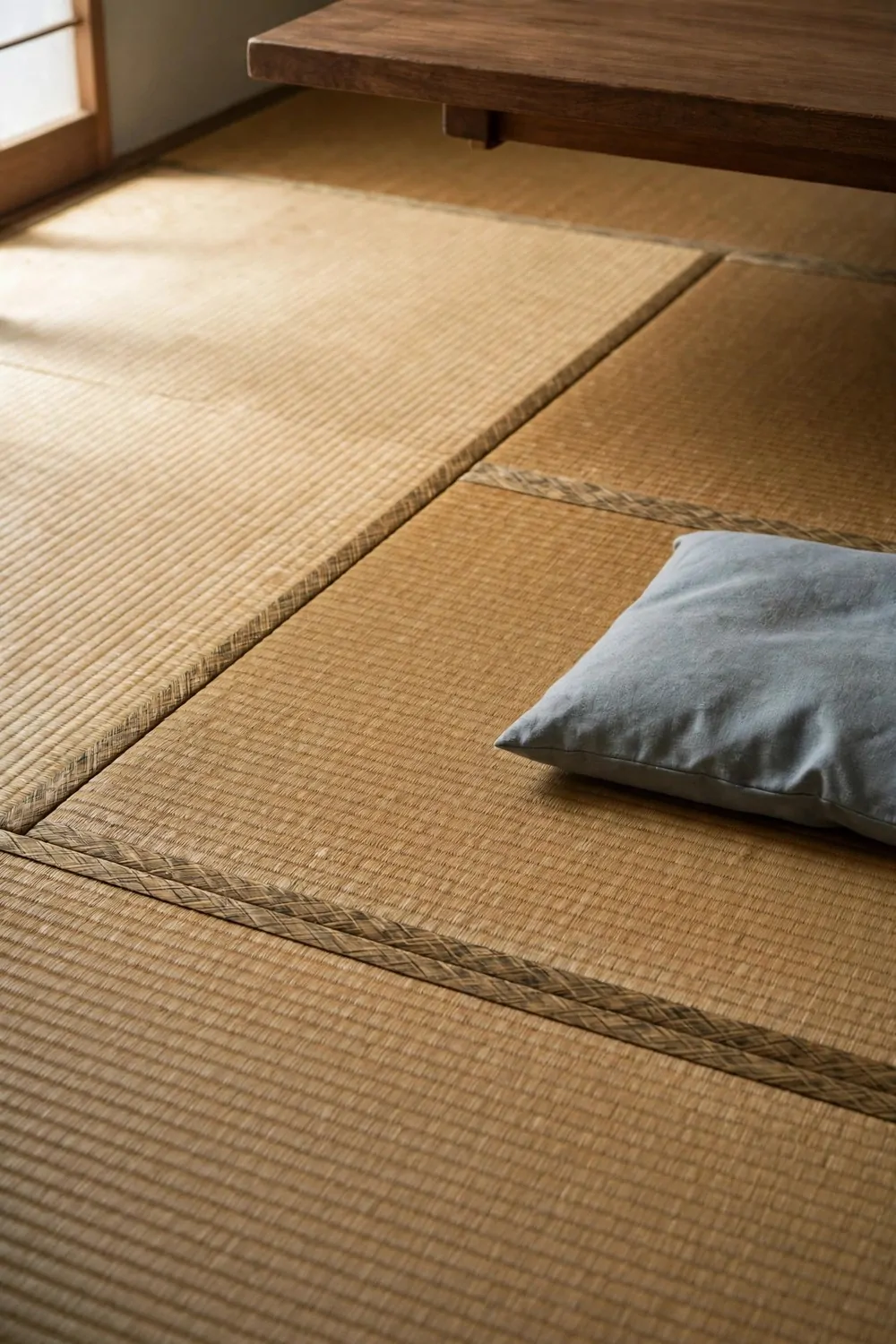
Tatami mats smell faintly of straw and grass. I noticed it the first time I walked on one. It is a soft, clean smell that makes a room feel fresh.
They are made from woven straw. They feel warm under bare feet in winter and cool in summer. I like to sit on them with a cup of tea and just rest for a bit.
You do not need to cover a whole room with tatami. One or two mats can make a reading corner. Put a low cushion on top and you have a quiet spot in minutes.
I keep my tatami area free of shoes. That keeps the mats clean for longer. It also makes the spot feel special, like a little calm zone in my home.
Tatami mats work best in a dry room. Keep them out of damp corners. I air mine out now and then and I vacuum them gently with a soft brush.
They are not soft like a thick rug. They are firm but kind to your feet. If you kneel or sit cross legged, you will feel the difference right away.
Try a tatami mat under a low table. It turns a normal meal into a slow, quiet one. You sit closer to the floor and you slow down without even trying.
Kids like them too. My friend’s little one loves to lie flat on a tatami mat and read. It is a firm, safe place to play and rest.
If you want a calm Japanese feel at home, start with the floor. A tatami mat changes how you move in a room. You step softer and you sit more.
Make a Genkan Entryway
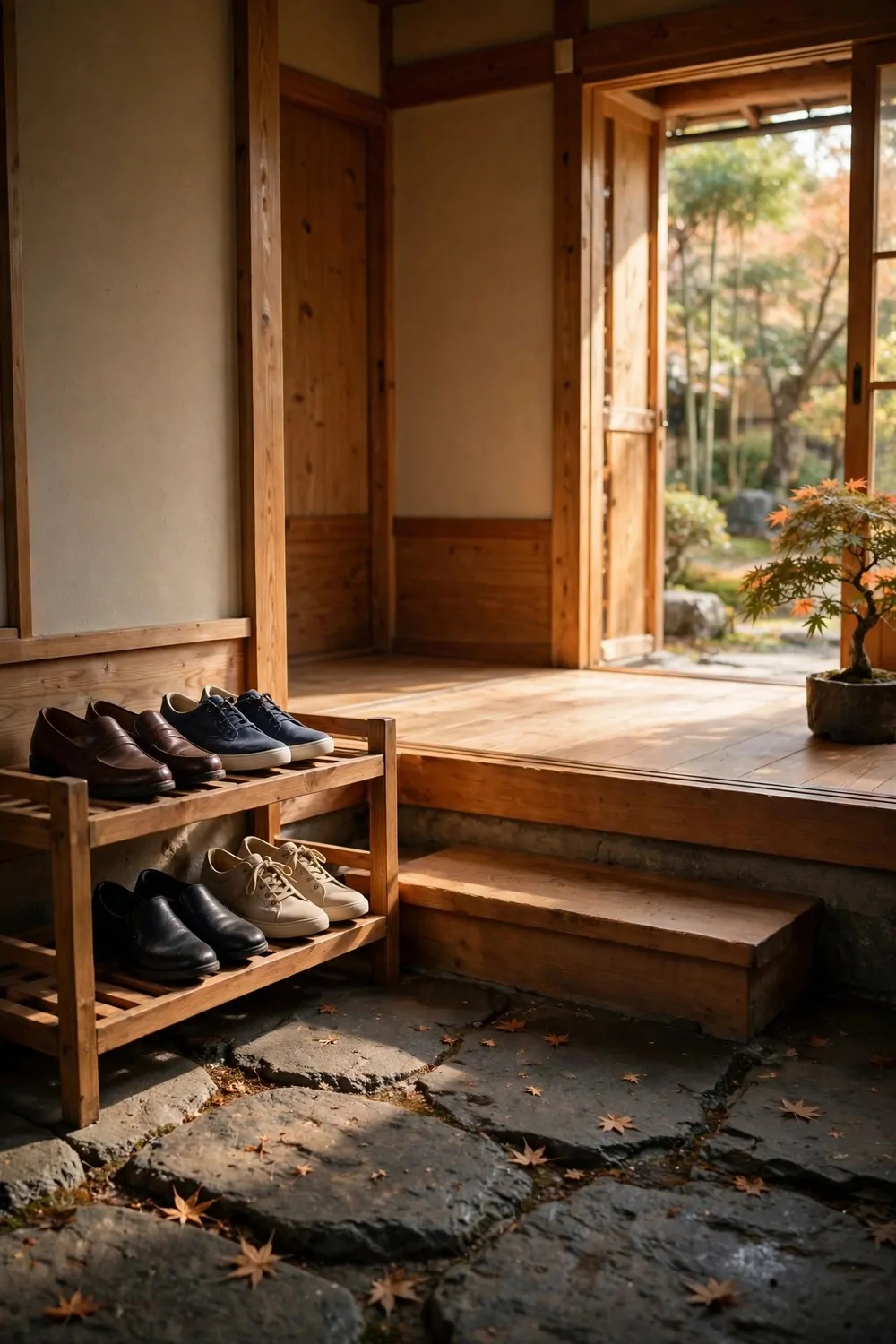
A genkan is the entryway in a Japanese home. It is a small sunken area by the front door. You step down into it, take your shoes off, and then step up into the house.
I love this idea because it makes a clear line. Outside stays outside. Inside stays clean and calm. Your shoes have a home and your floor stays nice.
You can make a small genkan even in a flat. You do not need to rebuild your floor. A low wooden step or a shallow tray can mark the same line.
I put a small bench by my door. I sit down, take my shoes off slow, and put them in a row. It takes ten seconds and my whole evening feels calmer after it.
Here is what I keep in my little genkan area to make it work well.
- A shoe tray or a low rack to catch dirt and keep shoes in one neat row
- A small bench or stool so you can sit and take your shoes off with ease
- A hook or two for a coat and a bag, so nothing lands on the floor
- A small mat or a soft rug for clean socks and bare feet
Keep the genkan tidy. If shoes pile up, the calm feeling goes away fast. I do a quick check each night and it only takes a minute.
Add a small plant or a simple vase if you like. One small thing is enough. You do not need a big display by the door.
The genkan also helps guests feel welcome. They see where to take their shoes off. They step up into your home and they feel at ease right away.
I think of the genkan as a pause. You leave the busy day at the door. You walk in with clean feet and a clear head.
Keep Furniture Low to the Floor
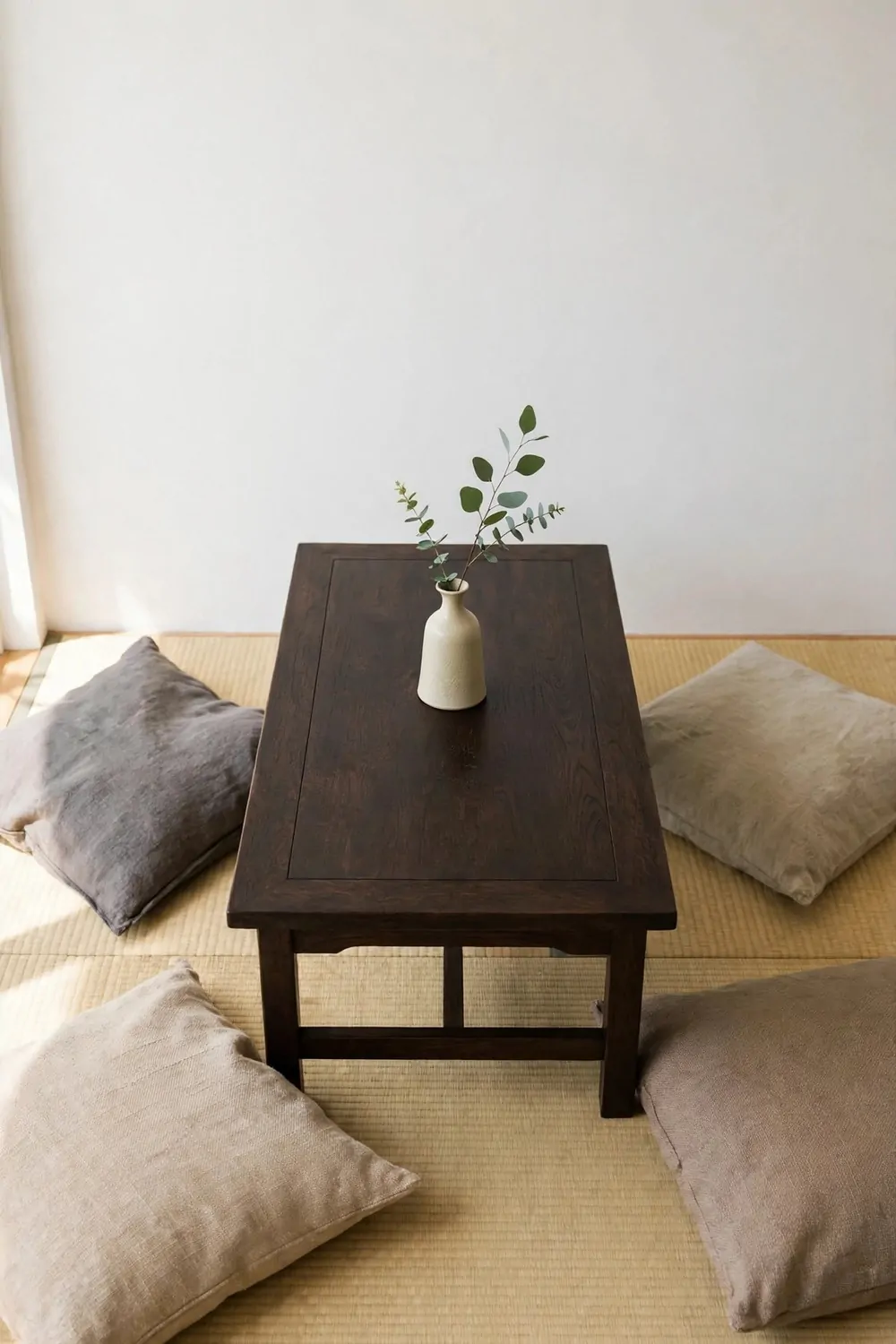
Low furniture makes a room feel bigger. I learned this when I swapped a tall chair for a low one. The ceiling felt higher and the room felt lighter.
Japanese homes often use low tables and low seats. You sit closer to the floor. It feels grounded and calm. It also makes you slow down a little.
Try a low coffee table first. Put a cushion or a floor chair beside it. You can still eat, read, and chat there. It just feels more relaxed.
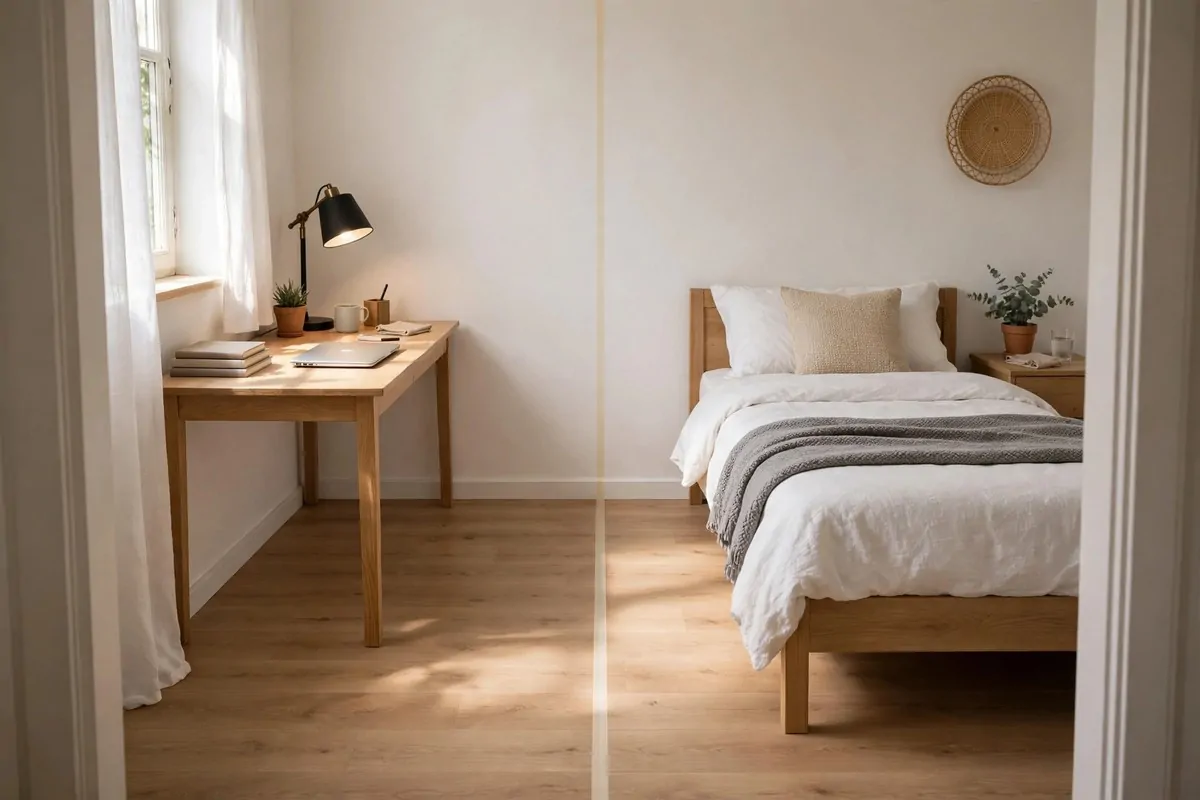
A low bed frame works the same way. It makes the bedroom feel wide and open. I made my bed lower and I slept better, maybe because the room felt less crowded.
Low furniture is good for small rooms. Tall pieces block your view and make a wall feel close. Low pieces let your eyes move across the room with ease.
You do not need to buy all new furniture at once. Start with one low piece. See how it feels for a week. Then decide if you want more.
I keep my low table clear most of the time. A clear table makes the room feel calm. I put one book or one cup on it and that is enough.
If you have sore knees, use a thick cushion or a low chair with a back. Comfort comes first. Low does not have to mean hard or sore.
This is one of those Japanese House Ideas that looks simple but changes a lot. Lower furniture, more air, more calm. Your room can breathe again.
Leave Empty Space on Purpose
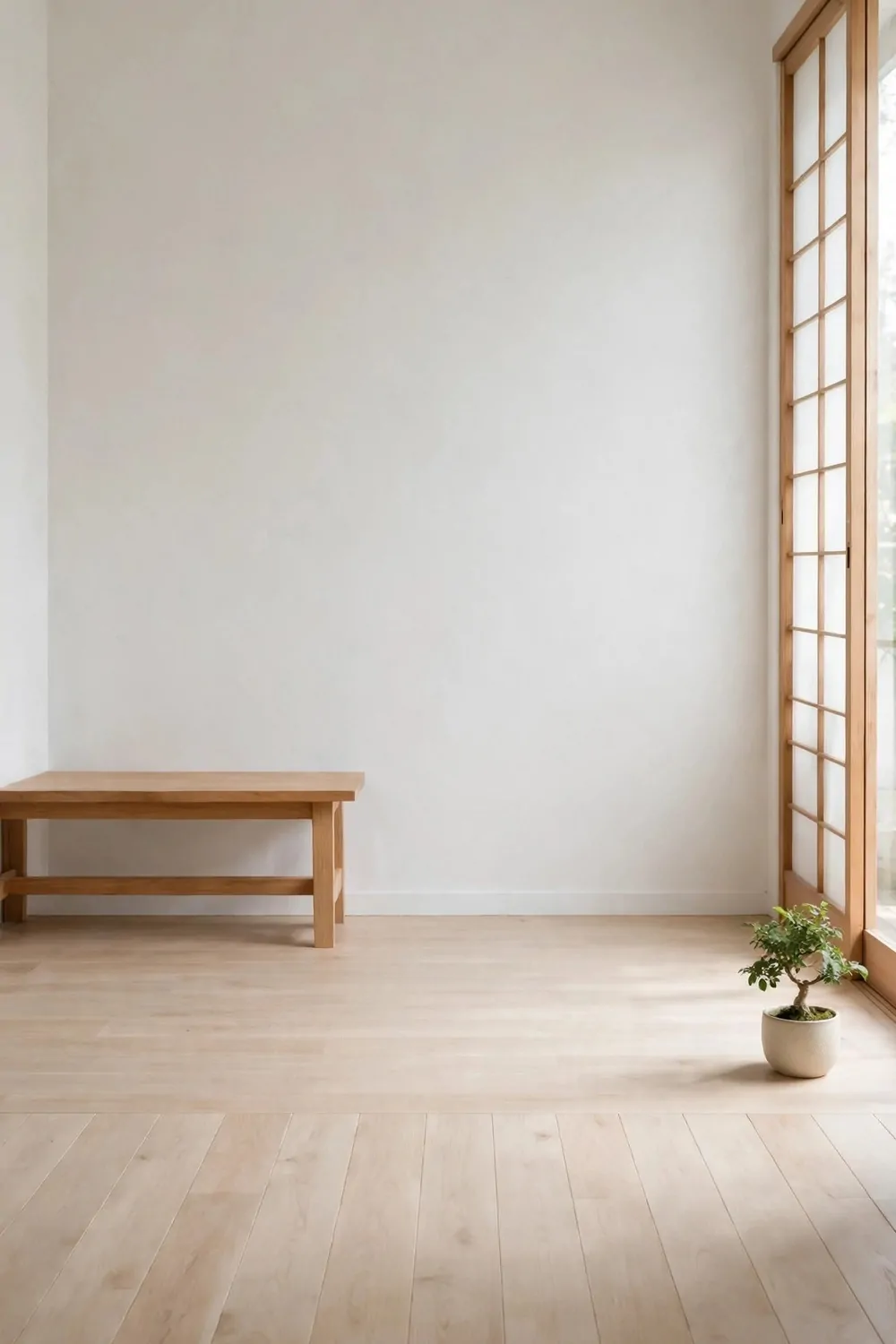
In Japan this empty space has a name. It is called Ma. It means the space between things. It is not wasted space. It is the part that lets a room breathe.
I used to fill every corner. A plant here, a basket there, a stack of books. My rooms looked full but they felt busy. My head felt busy too.
Now I leave one wall blank. I leave one shelf half empty. It feels strange at first. Then it feels like a deep breath. Your eyes get a place to rest.
Try it in one room. Clear one surface and leave it clear for three days. Do not put anything back on it. See how you feel when you walk past it.
Empty space makes the things you keep look better. One vase stands out when it is alone. Five vases together just look like clutter. Less can show more.
I leave space on my low table too. I used to cover it with stuff. Now I keep one spot free for my tea. It makes tea time feel like a small ritual.
Ma is not about having an empty house. It is about choice. You choose what stays and you choose what goes. The empty bits are part of the design.
If your room feels tight, do not buy storage first. Take one thing out first. You might find you already have the space you need.
I think empty space is kind. It gives you room to think and room to rest. A calm home needs a little nothing in it.
Choose Light Natural Wood
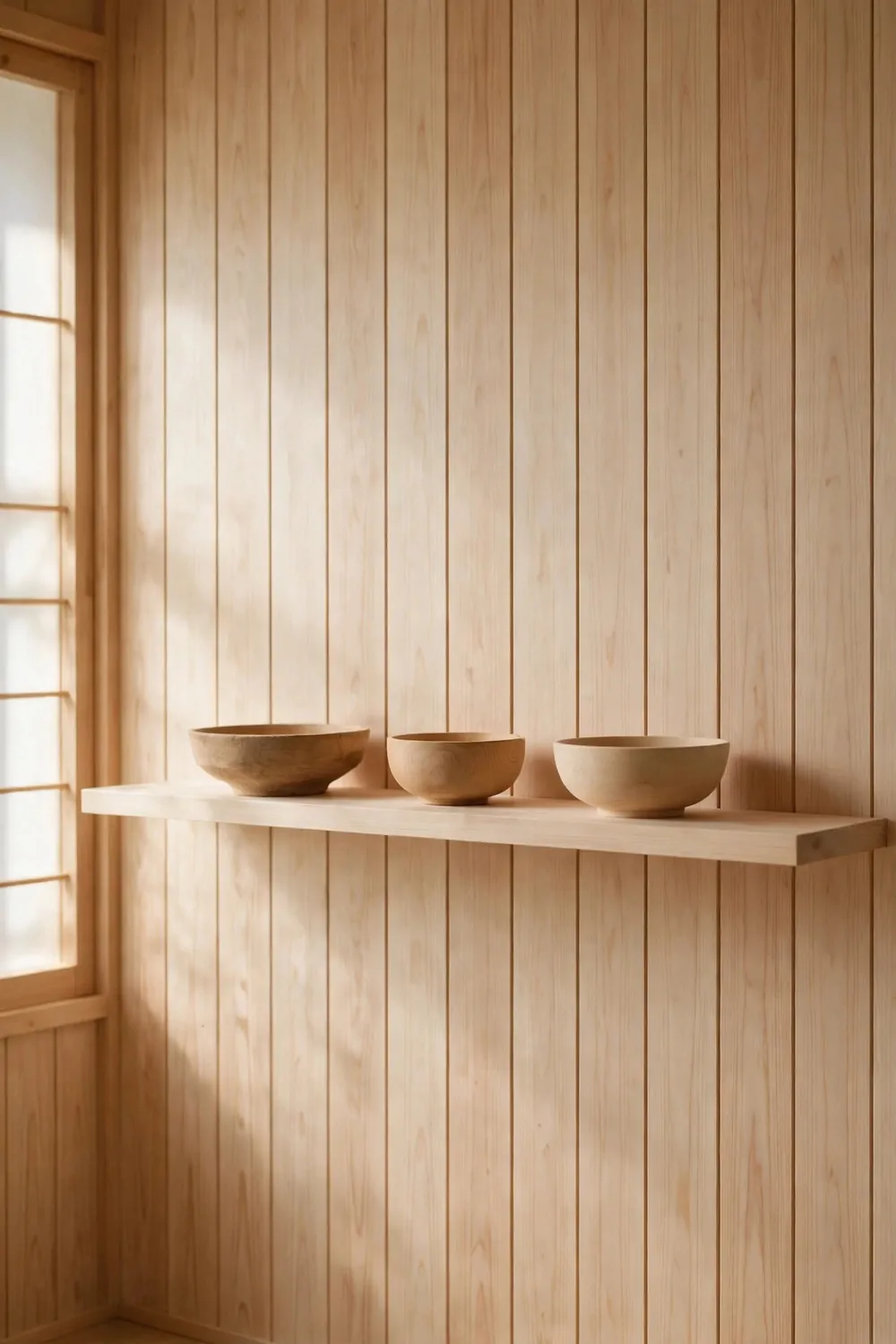
Light wood makes a room feel warm and fresh. I love hinoki, oak, and bamboo for this. They are pale and soft to look at. They do not shout for attention.
Dark wood can feel heavy in a small room. Light wood feels like daylight. It goes well with white walls and soft paper light. It makes a room feel bigger.
I started with a light wood shelf. It was a small change. But the whole corner felt lighter after it. That is the power of a pale wood tone.
Mixing woods is fine if you keep them light. Hinoki smells lovely and feels smooth. Oak is strong and simple. Bamboo is light and a bit playful. All three sit well together.
Here is a quick guide I use when I pick wood for a room. It helps me keep things calm and simple.
| Wood | Look and feel | Best use at home |
|---|---|---|
| Hinoki | Pale, smooth, soft scent | Shelves, bath items, small trays |
| Oak | Warm, plain grain, sturdy | Low tables, bed frames, floors |
| Bamboo | Light, fine lines, airy | Screens, baskets, small stools |
Keep the wood finish simple. A clear oil or a soft matte finish is enough. Shiny varnish can look too hard and it fights the calm feel.
I avoid painting light wood in bright colours. The grain is part of the beauty. Let it show. It adds warmth without any extra decor.
Try light wood in the kitchen too. A bamboo tray or a pale wood spoon holder can soften a cold counter. Small touches count a lot.
If you are on a budget, start with one piece. A light wood stool or a small tray is enough to shift the mood. You can add more wood later, piece by piece.
Light natural wood is one of the easiest Japanese House Ideas to live with. It is warm, it is quiet, and it fits almost any room you put it in.
Hang a Paper Lantern
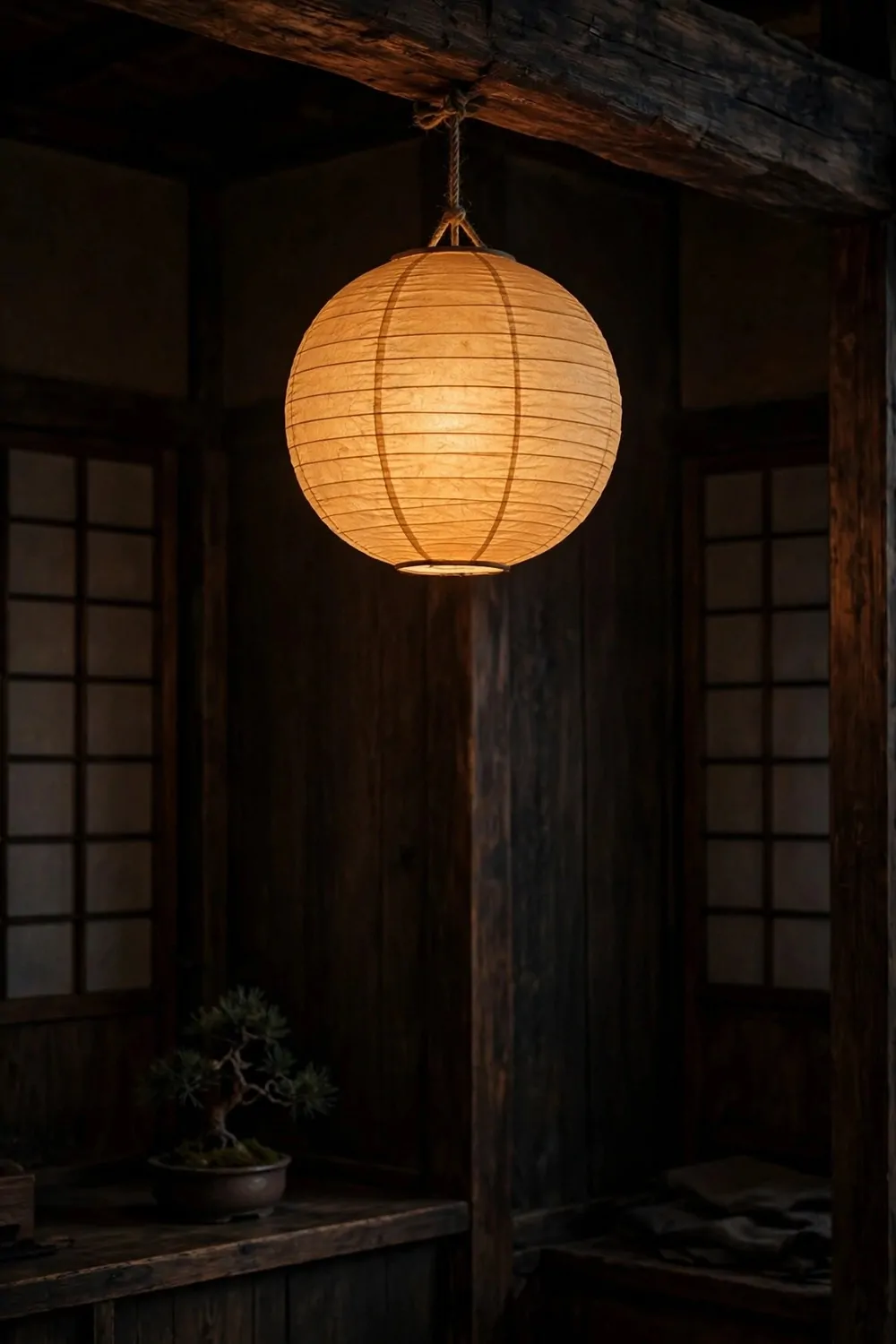
A paper lantern gives off a soft, warm glow. It is not bright like a ceiling light. It is gentle, like candle light but safer and easier.
I hung one in my living room. In the evening I turn off the big light and turn on the lantern. The whole room changes. It feels slow and cosy at once.
Paper lanterns are light and simple. You can hang one from the ceiling with a cord. You can also set a small one on a table. Both work well.
Pick a warm bulb, not a cold white one. Warm light makes the paper glow gold. Cold light makes it look flat and a bit harsh.
I like a round lantern best. It is plain and friendly. It does not try to be fancy. It just gives soft light and a calm shape in the room.
Keep the lantern away from heat and water. Paper and damp do not mix well. Dust it gently now and then so the light stays bright and clean.
Try one in a bedroom for quiet evenings. It is lovely for reading before bed. The soft light helps you wind down and feel sleepy in a good way.
You can also hang a lantern in a hallway. It makes a dark hall feel warm and safe at night. You do not need a bright light to find your way.
A paper lantern is a small thing with a big effect. It turns a plain room into a calm room. I think every quiet home needs one soft light like this.
Add a Tokonoma Alcove
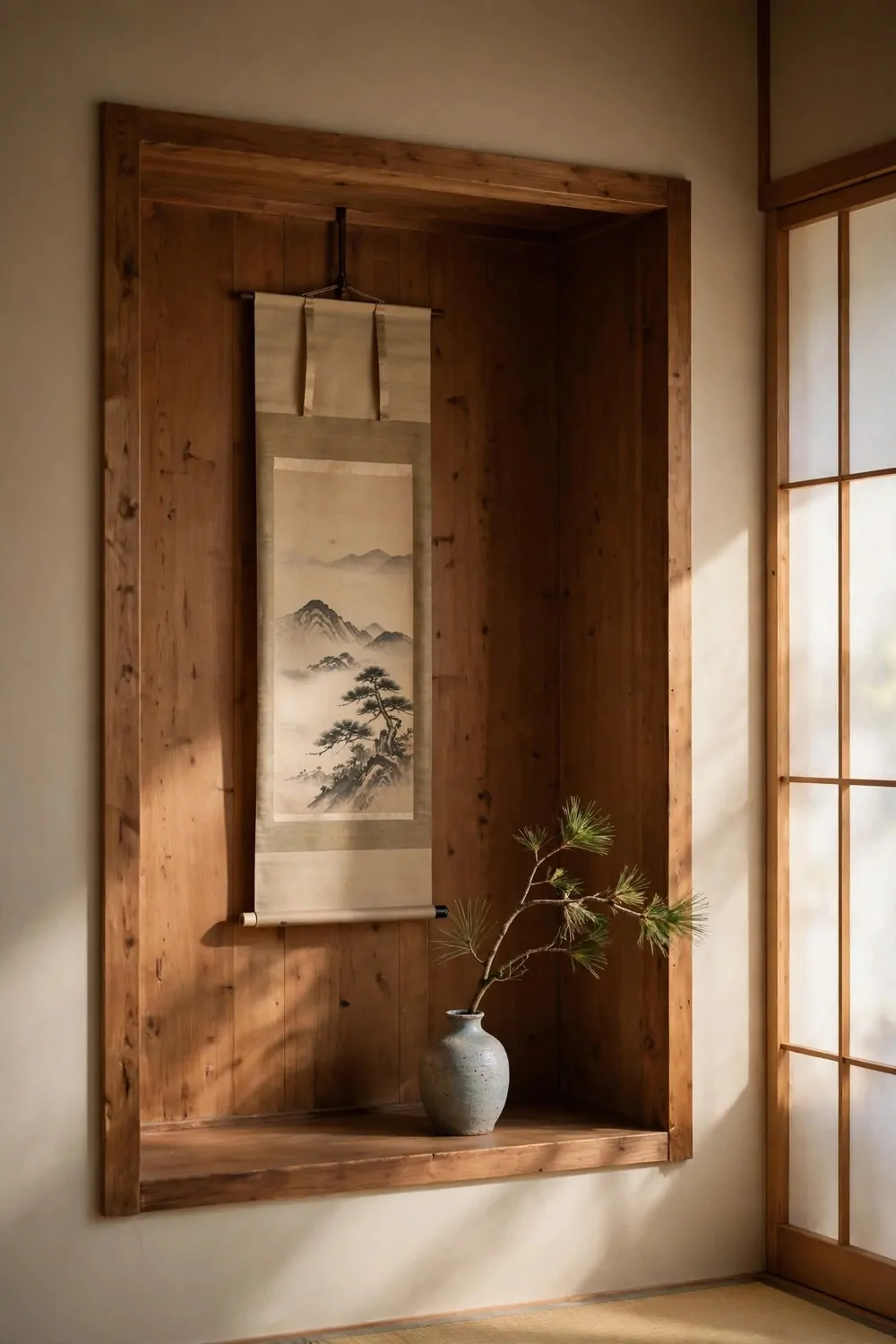
A tokonoma is a small alcove in a Japanese home. I love how quiet it looks. It holds just one scroll and one simple vase. That is all it needs.
I used to fill every shelf I had. I thought more things meant a nicer home. It did not. It just made my eyes tired.
Now I keep one corner almost empty. I hang one scroll on the wall inside the alcove. I put one vase below it with a single stem. The empty space around them is part of the beauty.
You do not need a real built in alcove to try this. I made mine with a small shelf and a plain wall behind it. I keep the wall clear and I do not hang anything else near it.
I change the scroll with the season. In spring I pick one with soft flowers. In winter I pick one with plain dark lines. It takes me two minutes and the whole room feels new.
The vase matters too. I use a plain one with no pattern. It does not fight with the scroll. It just sits there and lets the flower do the talking.
If you have kids, keep the vase low and safe. I learned that fast. A heavy vase on a low shelf is better than a light one up high.
This little corner taught me something big. One lovely thing can do more than ten small things. Try it in your home and see how calm it feels.
Sit on Floor Cushions Around a Low Table
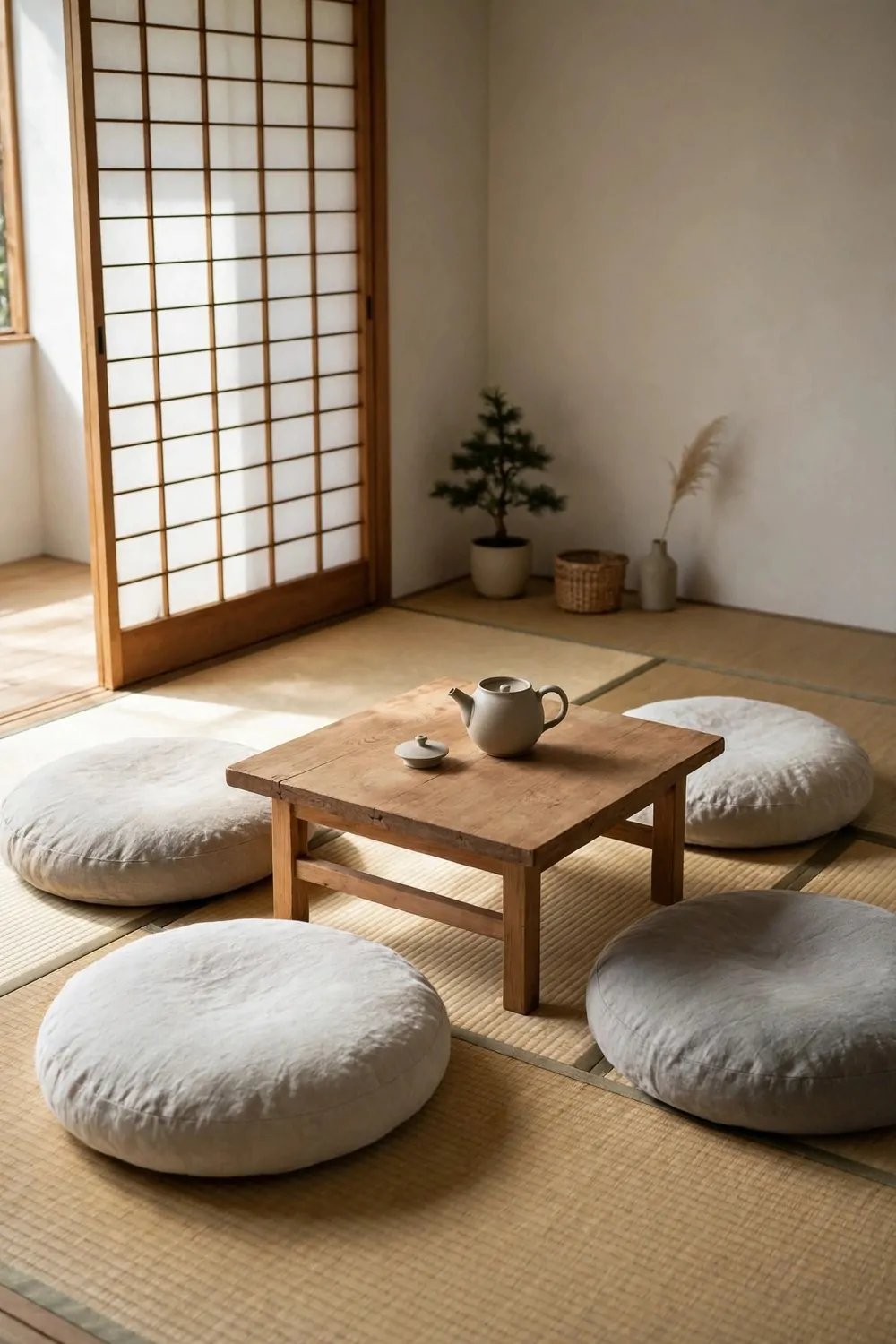
I sit on the floor a lot now. I put soft zabuton cushions around a low chabudai table. It feels warm and close in a way chairs never did.
The table is low and wide. You can eat at it. You can read at it. You can just sit and talk with your family. I like how everyone is at the same level.
I keep four cushions near my table. They are thick and soft. I fluff them up in the morning and they are ready for the day. When guests come, I just pull out one more.
You do not need to sit cross legged all day. I stretch my legs out sometimes. I lean on a cushion behind my back. It is your home, so sit how you feel good.
My kids love this spot most. They do homework here. They draw here. They eat snacks here and tell me about their day. The low table makes it feel like our own little camp.
I keep the floor clean under the cushions. A simple rug or a tatami mat works well. I shake the rug out once a week and the cushions stay fresh.
If your knees hurt, start slow. Sit for ten minutes at first. I did that and now I can sit for a whole meal. A thick cushion makes a big difference.
This is one of my favourite Japanese House Ideas because it changes how we spend time together. We sit close. We talk more. We look at each other instead of at a screen.
Bring In Bonsai and Bamboo
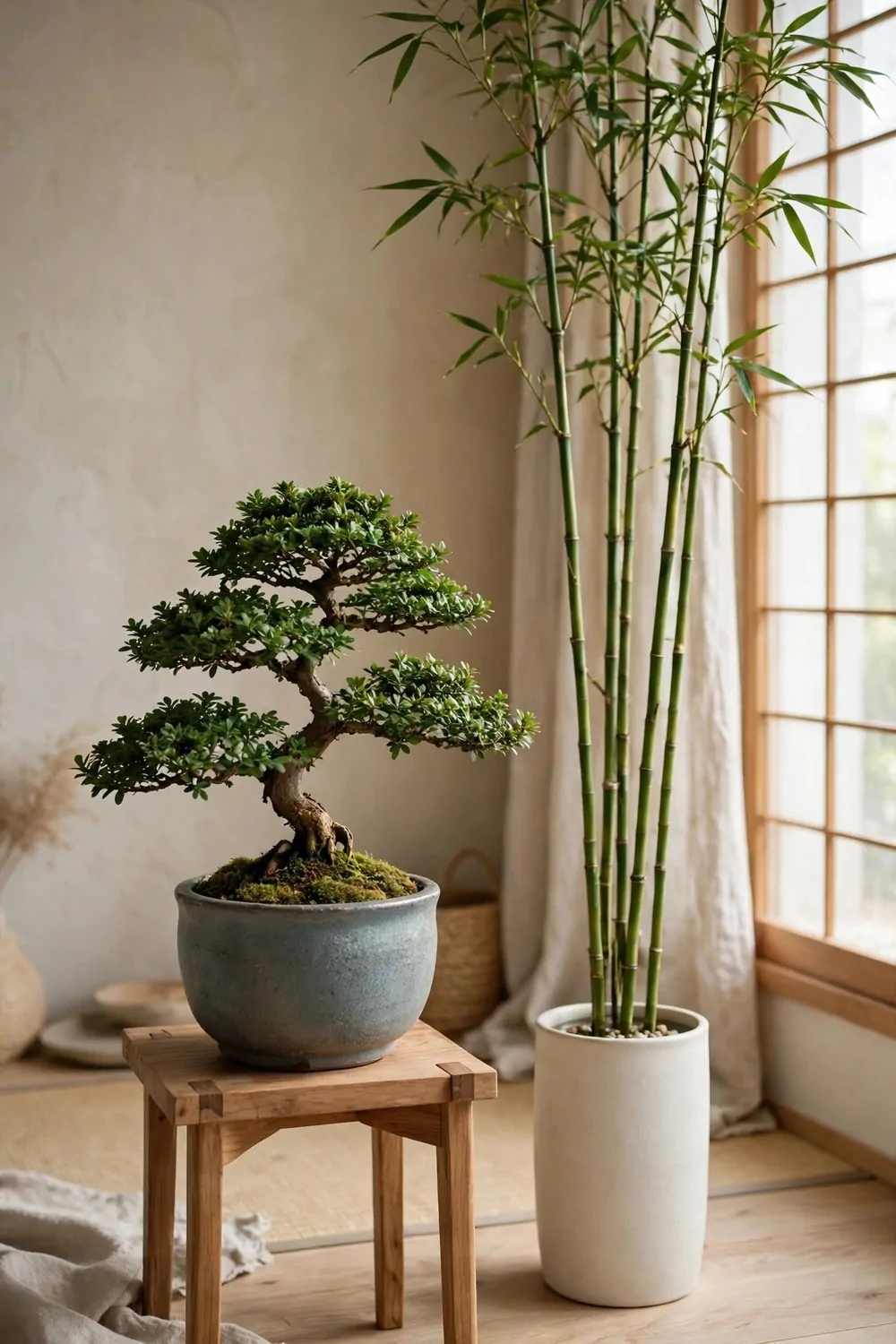
Plants make a Japanese home feel alive. I keep a small bonsai on my side table. I keep a bamboo plant near the window. They ask for very little and they give a lot back.
A bonsai is a tiny tree in a small pot. It grows slow. I water mine a little bit each week. I trim one small branch when it gets too long. It teaches me to be patient.
Bamboo is my easy plant. It grows tall and straight. I keep it in a plain pot with water or soil. It likes light but not hot sun all day. I move it back a bit in summer.
Ferns are good too. They like a shady spot. I keep one in my bathroom because it likes the damp air in there. It look so fresh next to the plain white tiles.
Here are the plants I keep in my home and why I love each one.
- Bonsai for a quiet focal point on a table or shelf
- Bamboo for height in an empty corner
- Ferns for soft green in a shady spot
- A small moss plant for a tray or tea corner
I do not buy ten plants at once. I start with one. I learn how much water it needs. Then I add one more when I feel ready. That way none of them get forgotten.
I keep my pots plain. White, grey or brown works best. A loud pot takes your eye away from the plant. The plant should be the star, not the pot.
If a leaf turns brown, I just cut it off. I do not worry about it. Plants have bad days too. A little care each week is enough to keep them happy.
Use a Neutral Colour Palette
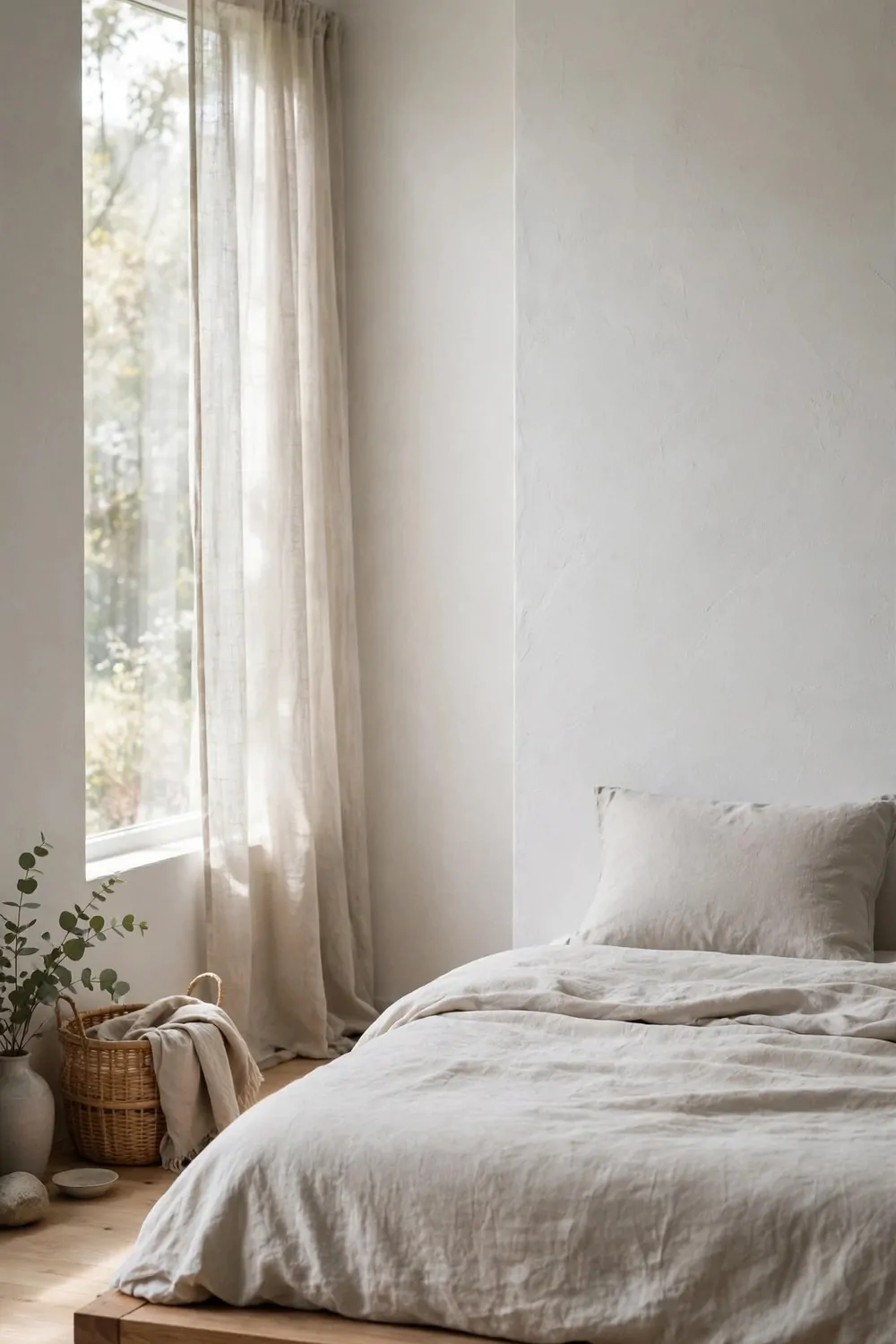
Colour can make a room feel calm or busy. I use white, beige, grey and soft brown in my home. These soft colours help my mind rest. They never shout at me.
My walls are white. My sofa is beige. My cushions are grey and soft brown. Nothing fights for attention. The room feels bigger than it really is.
I used to paint one wall bright blue. I thought it would look fun. It looked fun for one week. Then it made me feel tired every time I sat down. I painted it white again and I felt peace right away.
You can still add colour with small things. A green plant. A wooden bowl. A scroll with soft ink lines. These small touches stand out more when the room around them is calm.
| Colour | Where I Use It | How It Feels |
|---|---|---|
| White | Walls and bedding | Clean and bright |
| Beige | Sofa and curtains | Warm and soft |
| Grey | Cushions and rugs | Quiet and steady |
| Soft brown | Wood and baskets | Natural and cosy |
I pick wood in a soft brown tone. Light wood feels fresh. Dark wood feels heavy in a small room. I keep most of my wood light and plain.
If you rent your home, you can still use this palette. You do not need to paint. Use beige bedding. Use grey cushions. Use a white table cloth. Small swaps change the whole feel.
I test a colour before I buy a lot of it. I bring one cushion home first. I live with it for a week. If it still feels calm, I buy more in that colour.
A neutral home is not a boring home. It is a home that lets you breathe. Your eyes rest. Your mind rests. And your few lovely things shine more.
Hang a Noren Curtain in a Doorway
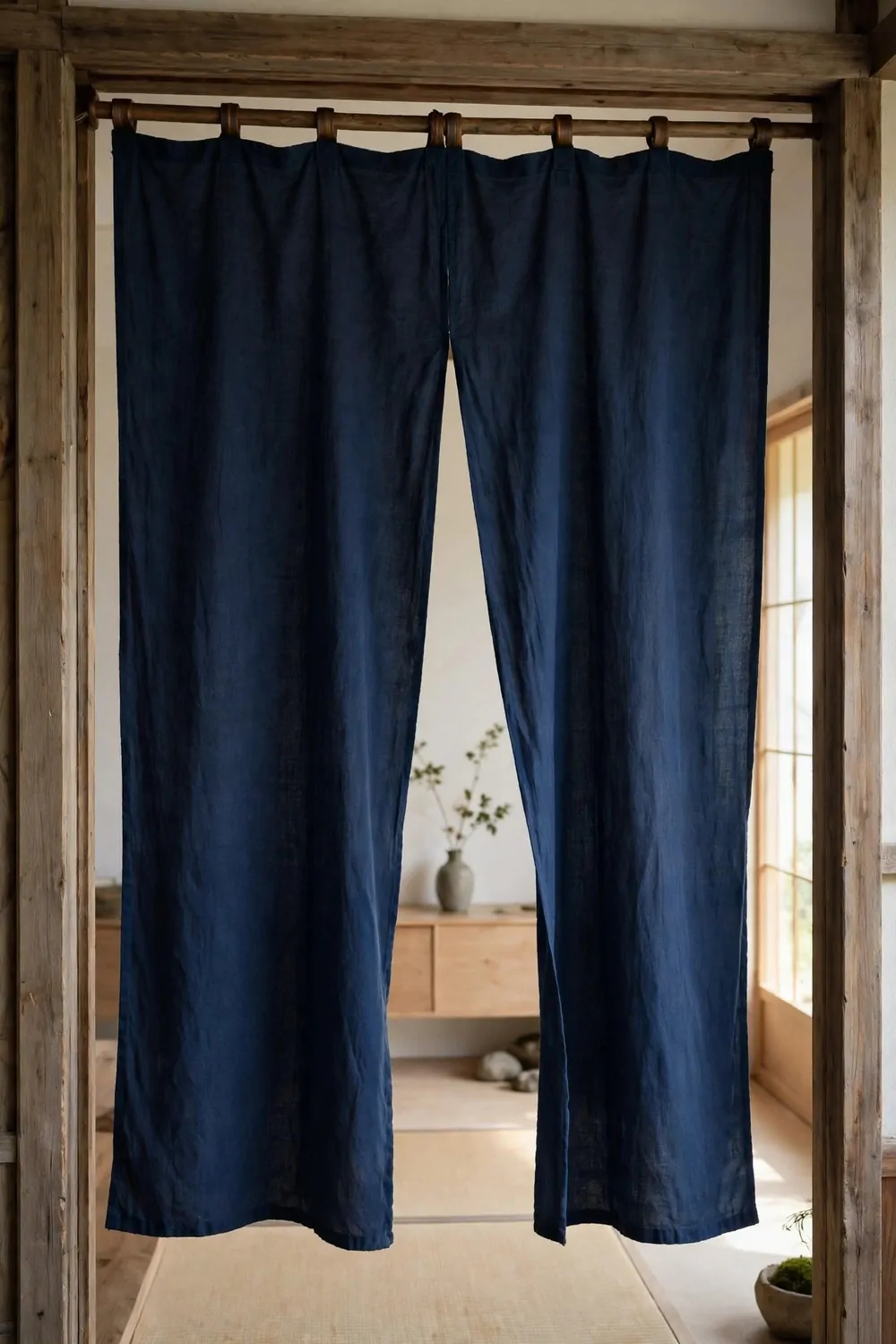
A noren is a fabric curtain that hangs in a doorway. It is split in the middle so you can walk through it. I have one between my kitchen and my living room and I love it.
It gives a little privacy without a door. You can still hear your family. You can still see light move through the fabric. But the rooms feel separate in a soft way.
I picked a plain linen noren in beige. It has no big pattern. It moves a little when I walk past it. That small move makes the house feel alive.
You can hang one with a simple rod. I put mine up in five minutes. No tools and no fuss. If you rent, a tension rod works well and leaves no marks.
I wash mine once a month. I take it down, wash it gentle, and hang it to dry. It comes out fresh and soft. It always smells clean when I put it back.
A noren also hides a messy room in a kind way. When my kitchen is full of dishes, I just let the curtain fall. The mess is still there, but my eyes get a break.
Pick a colour that fits your home. White, beige or soft grey all work. A dark blue one can work too if your room is very light. I keep mine light so the room stays bright.
This is a small change with a big feel. It costs little. It takes minutes to hang. And every time I walk through it, I feel like I am stepping into a calm Japanese home.
Make a Small Tea Corner
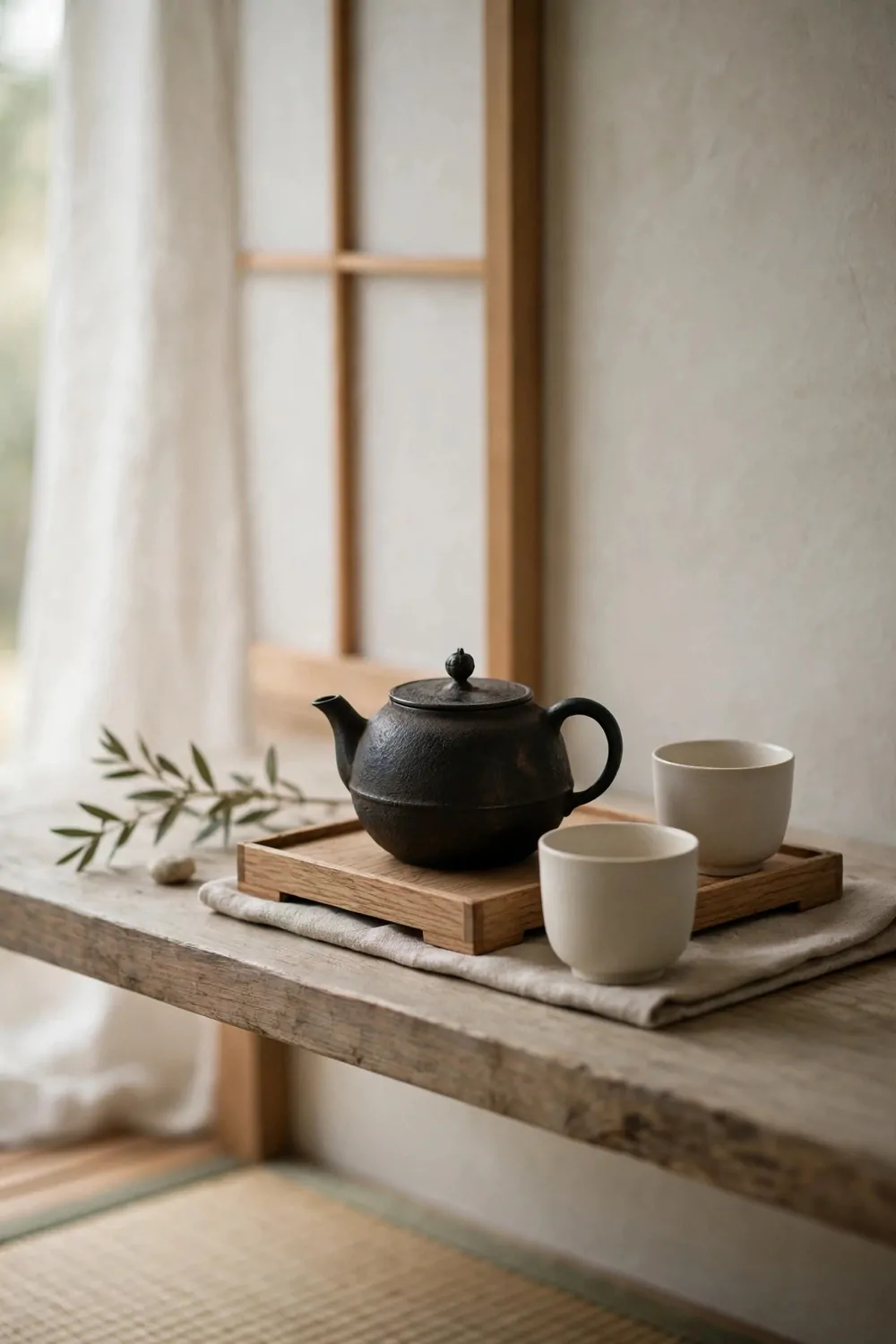
I made a small tea corner in my home. It is just a tray, a kettle and a few cups. But it is my favourite spot in the whole house.
I keep it on a low shelf near the window. I put a small tray down first. On the tray I keep my kettle, two cups and a tiny teapot. That is all. Nothing else needs to live there.
I make tea there every afternoon. I boil the water slow. I pour it into the cup and I watch the steam rise. It takes five minutes and it calms me down after a busy day.
You do not need fancy tea things. I use plain cups with no pattern. I use a simple kettle. The tea itself is the treat, not the tools. Start with what you have.
I keep a small plant next to my tea tray. A bit of moss or a small fern works well. It makes the corner feel alive. I water it when I make my tea so I never forget.
This corner is also good for guests. When a friend comes over, I make tea for us both. We sit low and talk slow. No rush. No phone in my hand. Just tea and talk.
I keep the tea corner tidy. After I finish, I wash the cups and put them back. A clean tray in the morning makes me smile. A messy tray makes me skip my tea, and I do not want that.
If you have no spare shelf, use a corner of your kitchen counter. Put a tray there and keep your tea things on it. It still feels special because it has its own place.
This is one of the simplest Japanese House Ideas I tried. It costs almost nothing. It takes a tiny bit of space. And it gives me a quiet pause every single day.
Sleep Low on a Futon or Platform Bed
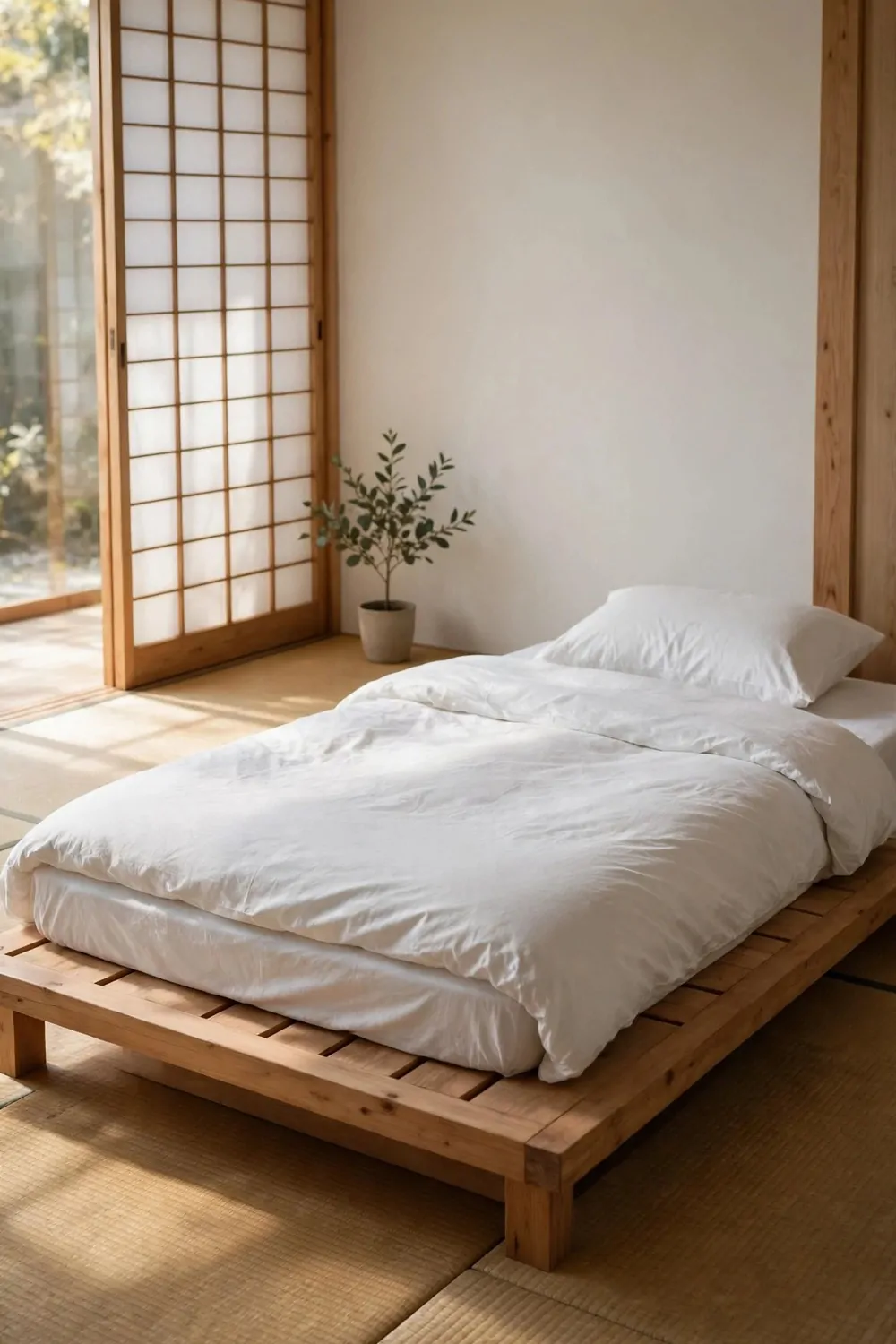
I sleep low now. I use a futon on a low platform bed. My bed is close to the floor and my room feels bigger and calmer because of it.
A futon is a thick mattress that folds up. I lay mine out at night. In the morning I fold it and air it by the window. My room gets its space back during the day.
If a futon feels too firm for you, try a low platform bed first. It is a simple wooden frame close to the floor. You can put a normal mattress on it. It gives the same low feel with more softness.
I keep my bedding plain. White sheets. A beige blanket. One pillow. I do not pile on ten cushions any more. I sleep better with less stuff around me.
My bedroom feels cooler near the floor. In summer that helps a lot. I open the window a little and the air moves across the room. I fall asleep fast on warm nights.
I keep nothing under my bed. No boxes. No old bags. The space stays clear and clean. I sweep under it once a week and it takes me one minute.
If you share a room, a low bed still works well. My husband and I both sleep low. We put two futons side by side. It feels close and cosy, like we are camping at home.
Try it for one week. Sleep low and see how you feel in the morning. I woke up with less stiffness and a clearer head. Your body may like being close to the ground too.
Open the Room to an Engawa Veranda
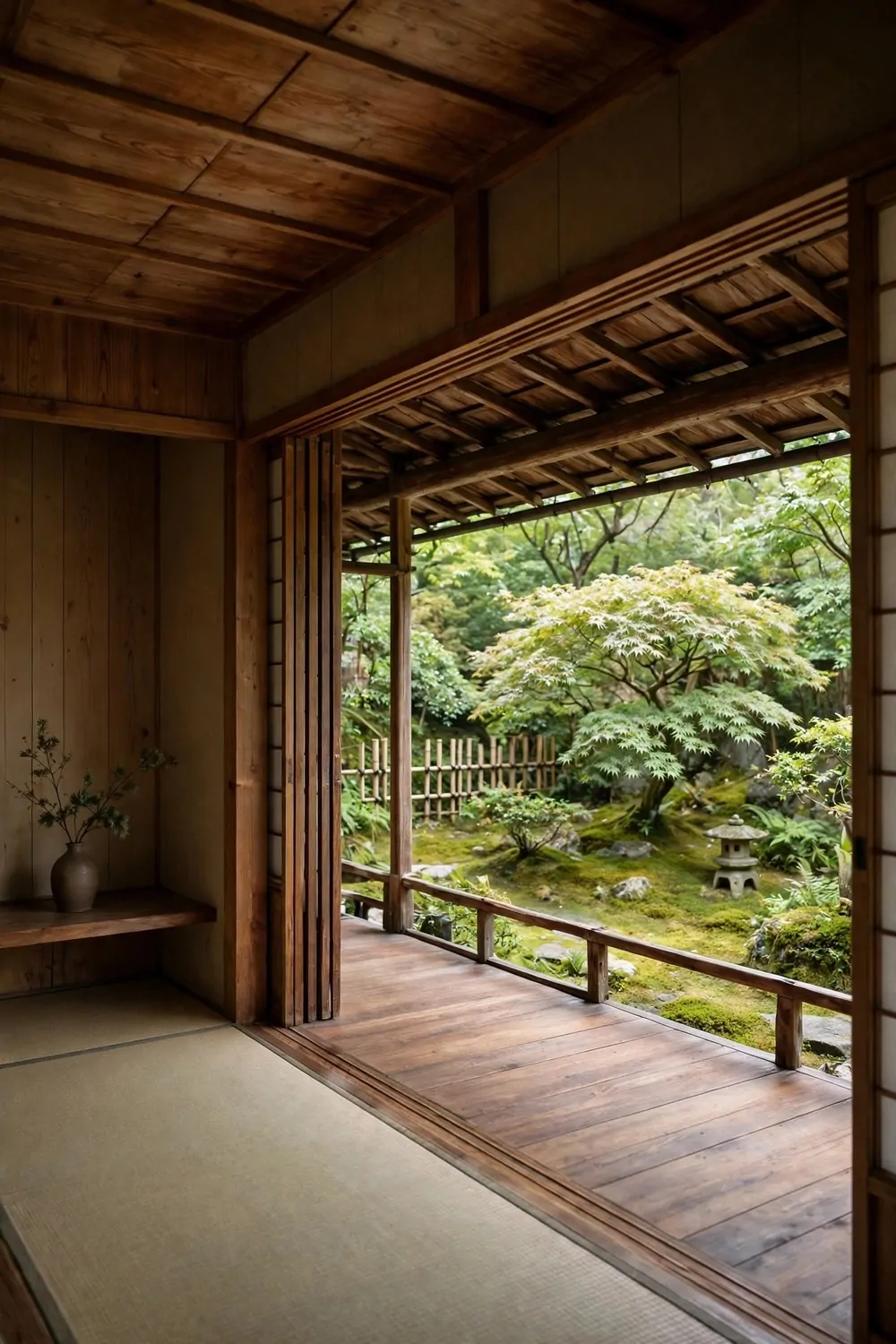
An engawa is a covered veranda in a Japanese home. It sits between the inside and the outside. I love how it blurs the line between the two.
You do not need a real Japanese house to steal this idea. A covered porch or a long balcony can work the same way. The point is to have a calm strip of space where you sit and look out. This is one of my favourite Japanese house ideas because it costs almost nothing to try.
I keep a low bench on mine. It is just a plain wooden plank on two short legs. Nothing fancy. But it is my favourite seat in the whole house.
In the morning I take my tea out there. I do not bring my phone. I just sit and watch the light change on the leaves. It sounds small. It changes the whole day.
You can slide the doors wide open when the weather is kind. Then the living room feels twice as big. The air moves through. The house breathes.
A few plants along the edge help a lot. I use small potted ones so I can move them around. They soften the hard line of the floor.
Keep the floor of your engawa simple. Wood or stone works best. Avoid rugs and clutter out here. This space should feel open.
Rain on the roof above an engawa is the best sound I know. You stay dry and the world feels close. Try it once and you will understand why Japanese homes kept this idea for so long.
Add Wabi-Sabi Ceramics
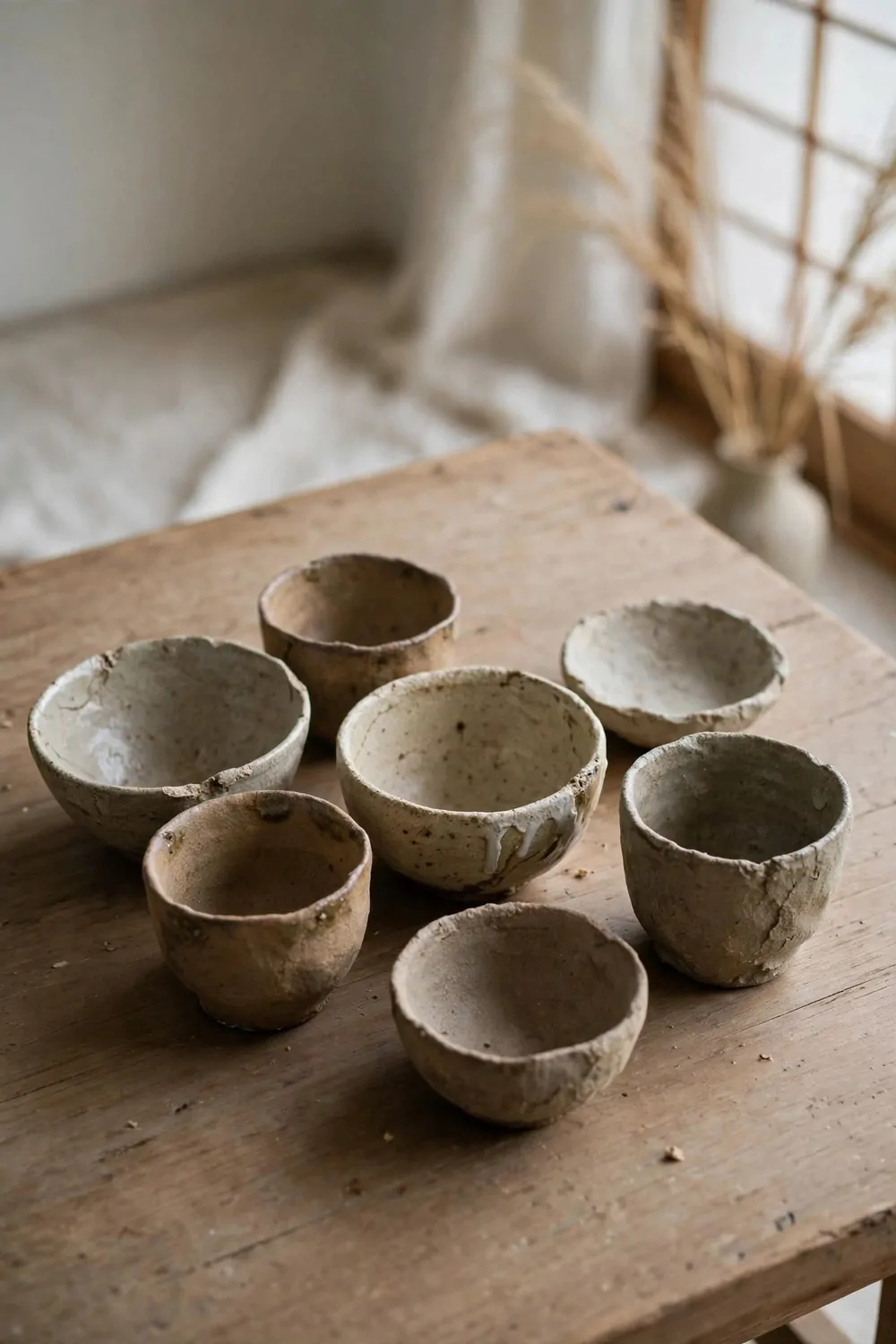
Wabi-sabi means finding beauty in things that are not perfect. Handmade ceramics show this best. Each cup and bowl has a small wobble or a rough edge.
I bought my first wabi-sabi mug at a small market. It was uneven and the glaze had a tiny crack. The seller smiled and said that was the point. I use it every single day now.
You do not need a full set. One or two handmade pieces are enough to change a shelf. A small bowl on a table can make the whole room feel warmer.
Look for pieces made by hand, not by a machine. You can tell by the tiny marks left by fingers. No two are the same. That is what makes them special.
Use them for real life, not just for show. I eat my soup from a bowl that leans a little to one side. It makes a normal dinner feel like a small ritual.
Keep the colours quiet. Cream, grey, soft brown, pale green. Loud colours fight against the calm feeling. Soft tones let the shape do the talking.
If a piece chips, do not throw it away. In Japan some broken pots are repaired with gold and kept for years. A small chip can be part of the story.
Start with one mug or one small vase. Put it where you see it each morning. It will remind you that imperfect things can still be beautiful.
Build a Tiny Indoor Zen Garden
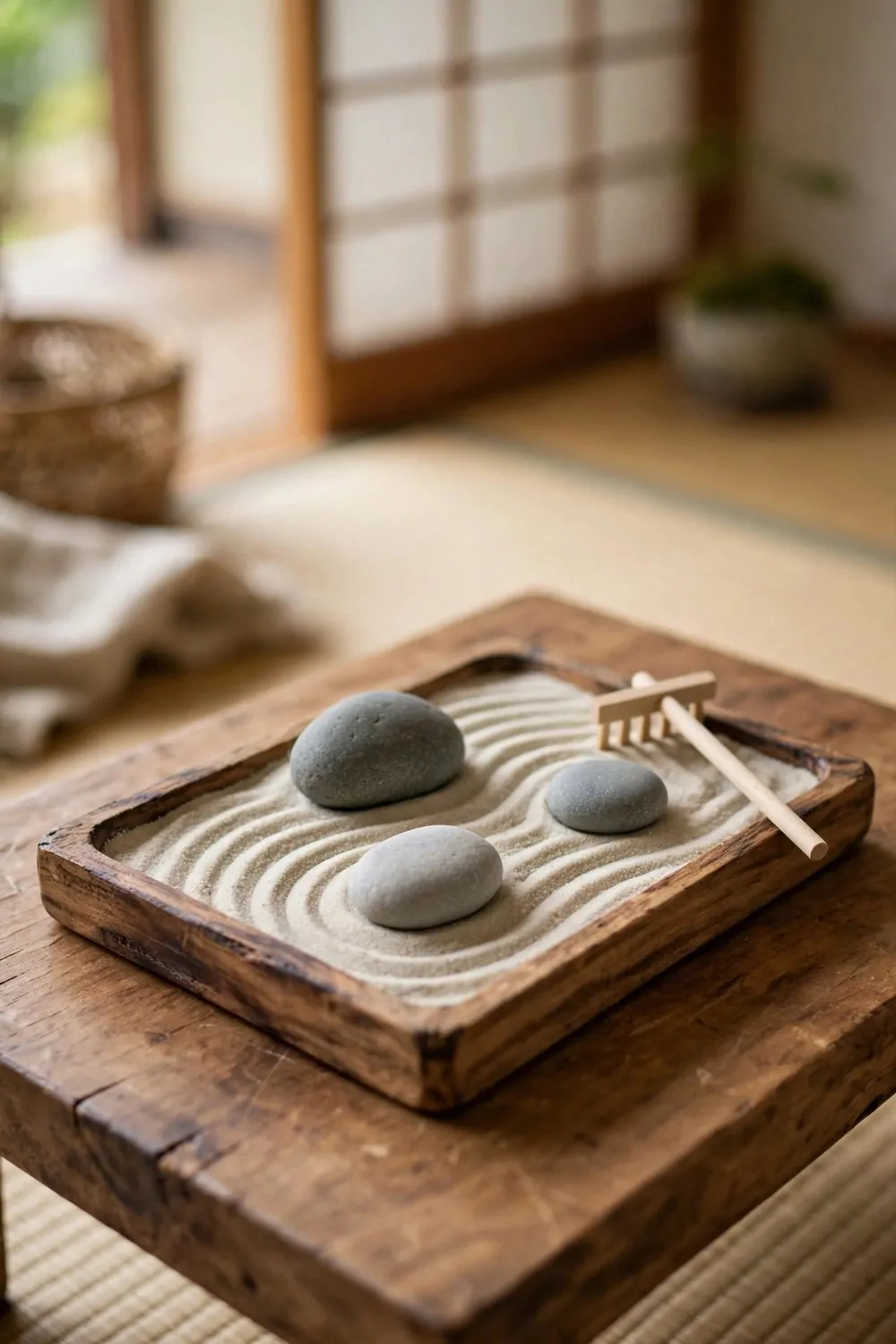
A zen garden is a small tray of sand with stones and raked lines. Monks have made them for hundreds of years. Yours can sit on a table and fit in one hand.
I keep mine next to my reading chair. It is just a shallow wooden tray, white sand, three smooth stones, and a tiny wooden rake. That is all it takes.
You rake the sand into slow curves around the stones. The lines look like water moving. I do it when my mind feels noisy. It takes two minutes and I feel calmer after.
Here is what you need to start:
- A shallow tray or box, wood or ceramic
- Fine white or light grey sand
- Three smooth stones in different sizes
- A small rake, or even a fork works
Place the stones first. Put the biggest one a little off centre. The smaller ones go near it, like islands in a sea of sand. Leave plenty of empty sand around them.
Rake slowly and breathe while you do it. Straight lines feel tidy and calm. Curved lines feel soft and flowing. Both are fine, so follow your mood.
Do not add too many things. A tiny plant or a small lantern is enough if you want more. Too much decoration turns it into clutter, and the whole point is empty space.
Change the pattern whenever you like. There is no right way to rake a zen garden. Each new pattern is a fresh start. I redo mine every few days and it never gets old.
Use Sliding Fusuma Panels
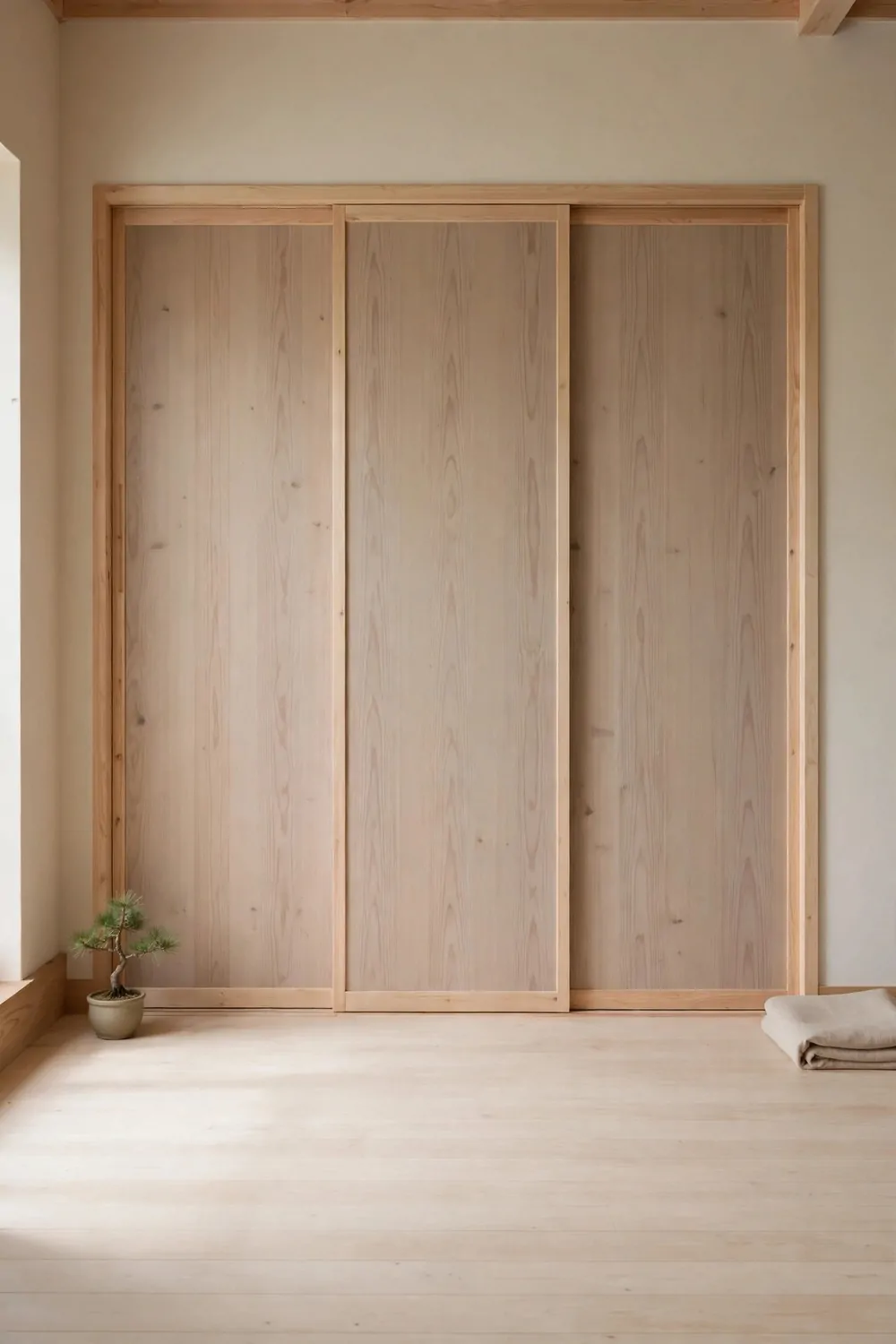
Fusuma are opaque sliding panels used as doors and walls in Japanese homes. They slide sideways instead of swinging open. I think they are one of the cleverest ideas in a small home.
You can use them to split one big room into two smaller ones. When you want the space back, you slide the panel away. No door swings into your furniture. No space is wasted.
I have a fusuma panel between my living room and my small work corner. In the morning I slide it open so the room feels big. In the evening I close it and the work corner disappears. It feels like magic.
The panels are light and easy to move. A child can slide one with one hand. That is important in a home where you want everything to feel easy.
Choose plain paper or fabric for the panels. Soft white or pale cream lets a little light glow through. Avoid busy patterns. The calm look comes from the plain surface.
You can also use a fusuma panel to hide a messy shelf. Slide it across and the mess is gone from sight. Your room looks tidy in two seconds.
If you cannot buy a real fusuma panel, a simple sliding door on a track gives the same feeling. The idea matters more than the exact material. Sliding beats swinging in a small home.
Keep the track clean so the panel moves smoothly. A little dust in the track makes it stick. I wipe mine once a week and it glides like new.
Make the Bathroom a Quiet Soaking Space
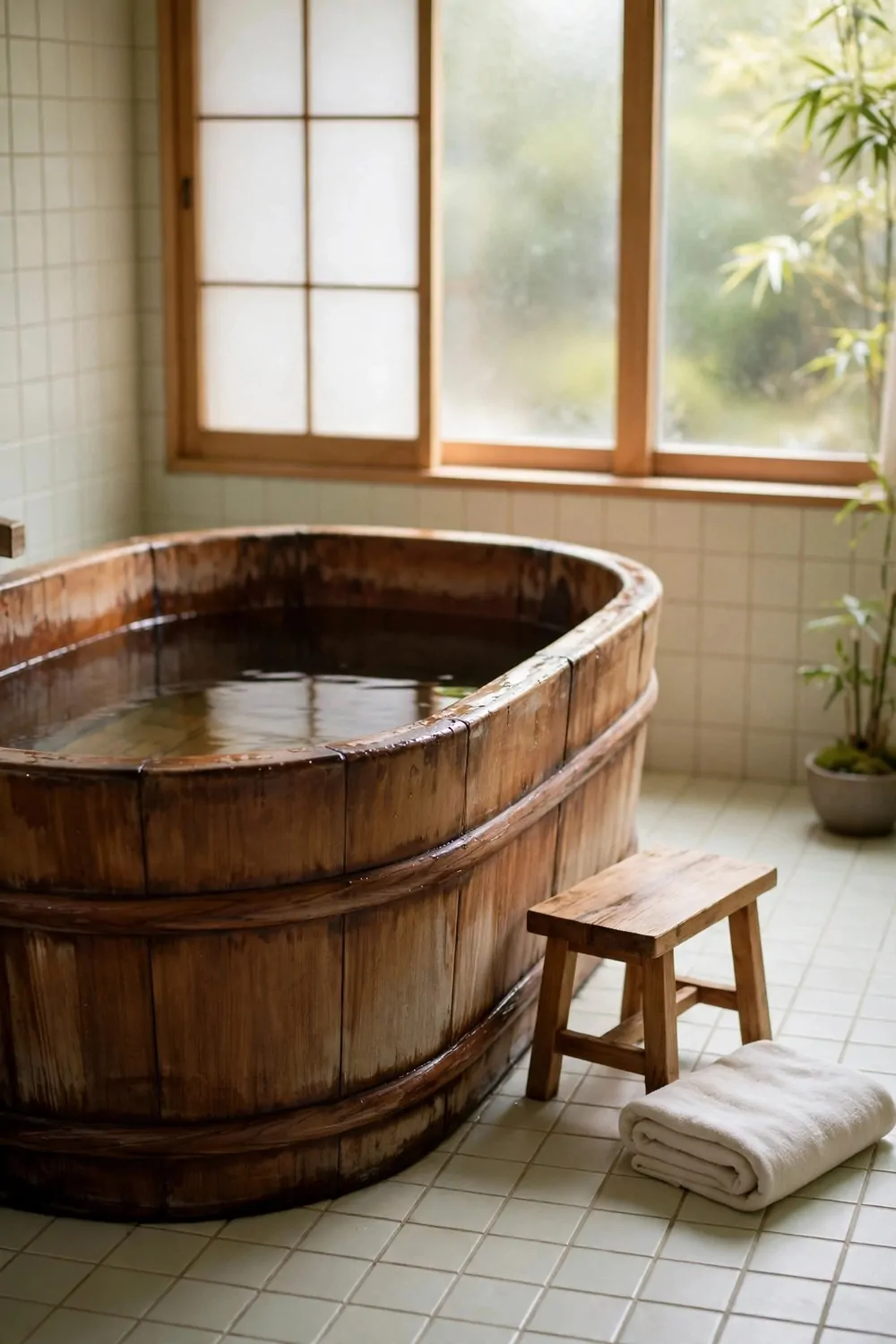
In Japan the bath is not a quick wash. It is a slow soak in a deep tub called an ofuro. You wash first, then you sink into hot water and rest. I tried this at home and my evenings changed.
You do not need a deep wooden tub to copy the idea. A normal tub works fine. The change is in how you use it. Slow down. Treat the bath as a quiet time, not a chore.
Keep the light low. One small warm lamp or a candle is enough. Bright ceiling lights ruin the calm feeling. I switched mine off and never went back.
Warm wood helps a lot in a bathroom. A wooden stool, a small wooden tray, a bath mat made of soft wood slats. The wood feels warm under your feet and looks soft next to tile.
Here is a simple way to set up your soaking space:
| Item | Why it helps |
|---|---|
| Low warm light | Soft light tells your body to relax |
| Wooden stool | A place to sit and wash before you soak |
| Folded towels | A neat stack keeps the room tidy and calm |
| Small plant | Green leaves bring life into a plain room |
Put your phone in another room. This is the one rule I never break. A bath with a phone is just another screen. A bath without one is real rest.
Use plain soap and a soft towel. You do not need ten bottles lined up on the edge. One good soap and one good towel are enough. The rest is clutter.
Soak for ten or fifteen minutes. Close your eyes. Let the warm water do its work. When you step out, the whole house feels quieter. That is the gift of a Japanese soaking bath.
Let Natural Light Lead the Room
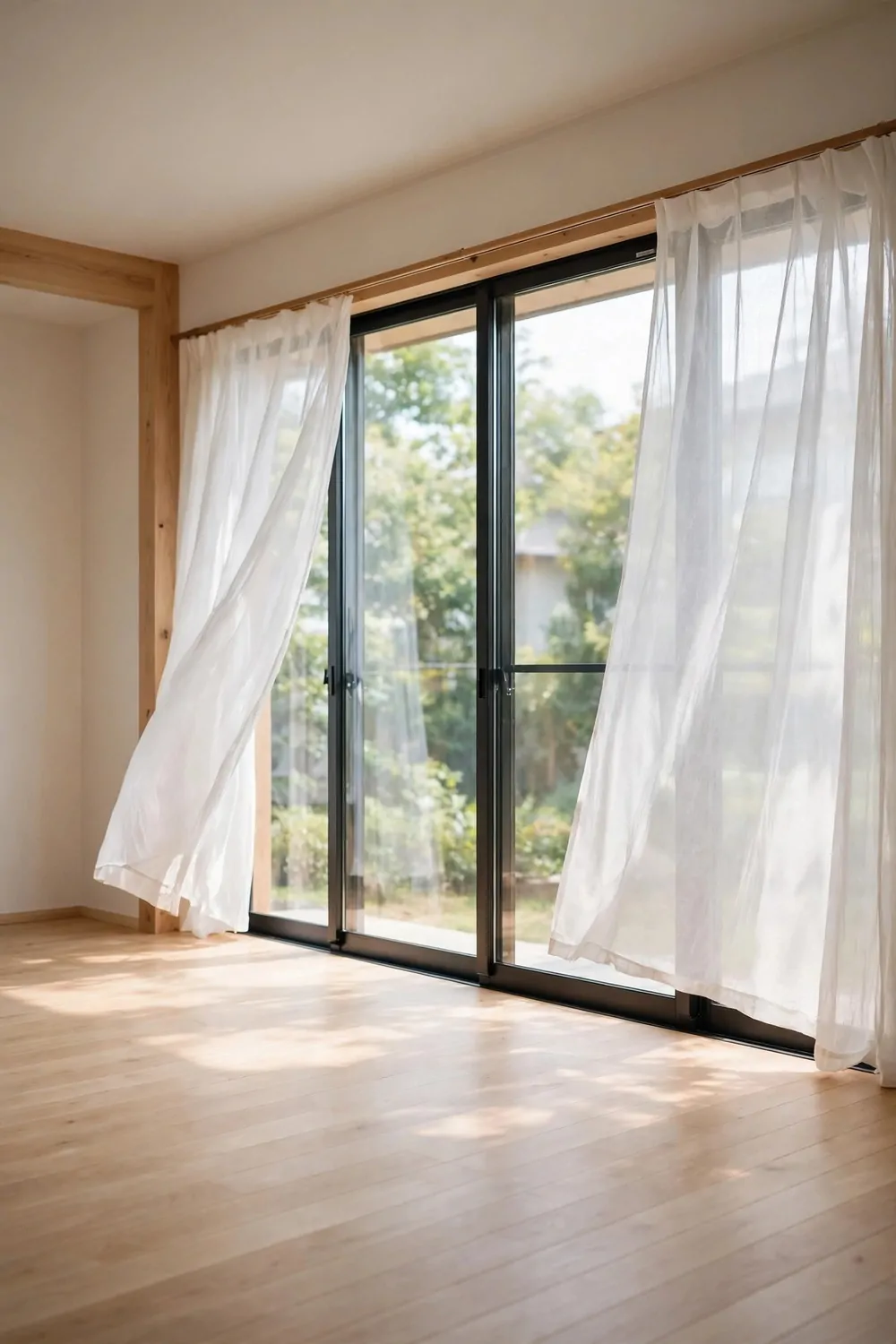
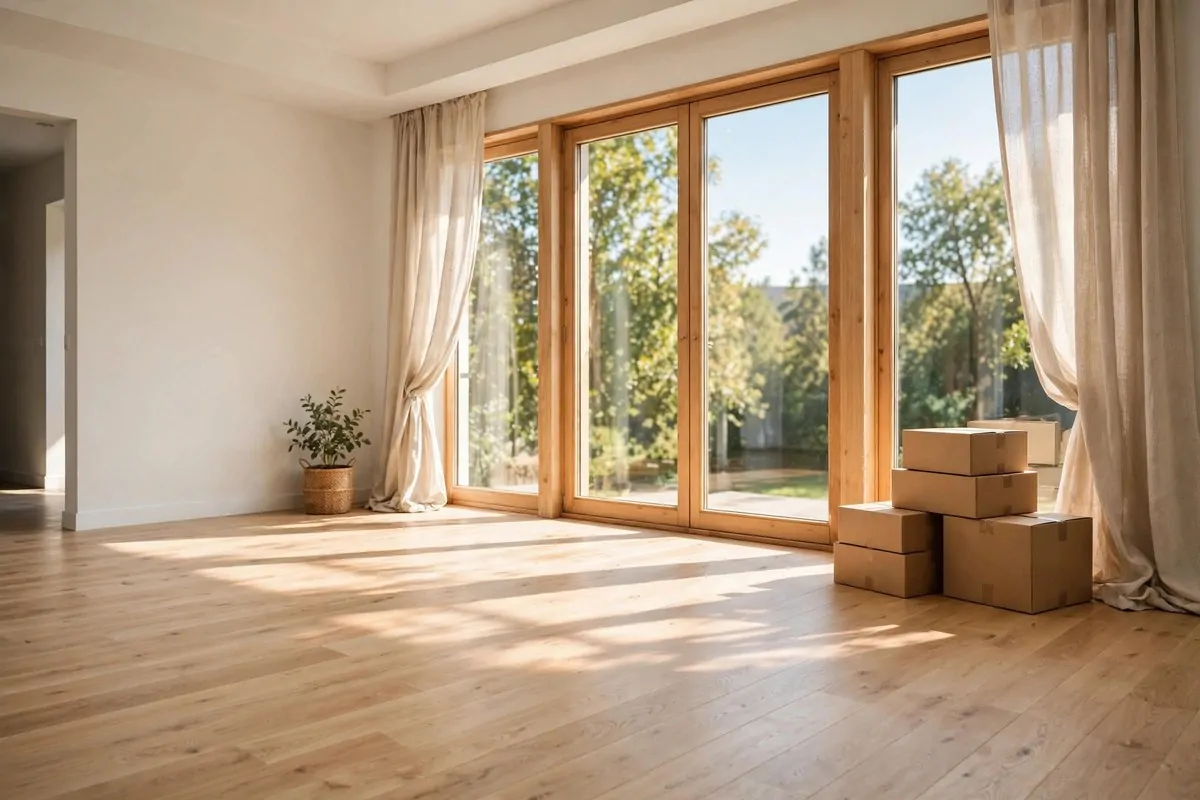
In a Japanese home, light is the main decoration. Not paintings. Not bright colours. Just soft daylight moving across the floor. I learned to design around light first and everything else second.
Start by clearing your windows. Take down heavy curtains. Take away tall furniture that blocks the glass. You want the light to walk right into the room.
Sheer white fabric is your best friend here. It softens the sun without shutting it out. The room stays bright but never harsh. I use plain white panels and they cost very little.
Watch how the light moves through your home during the day. The morning light in my kitchen is golden and warm. The evening light in my living room is soft and pink. Each room has its own best hour.
Place your favourite chair where the light lands. A reading chair by a bright window is a small joy. You will sit there more than you think.
Keep the walls pale so the light can bounce. White, cream, soft grey. Dark walls eat the light and make a room feel small. Pale walls give it back.
Mirrors help too, but use them gently. One mirror across from a window doubles the daylight. Two or three mirrors start to feel busy. One is enough.
At night, keep the lighting low and warm. Small lamps beat big ceiling lights. The room should glow like a lantern, not shine like an office. Light is the decoration, so let it lead.
Keep Only What You Love
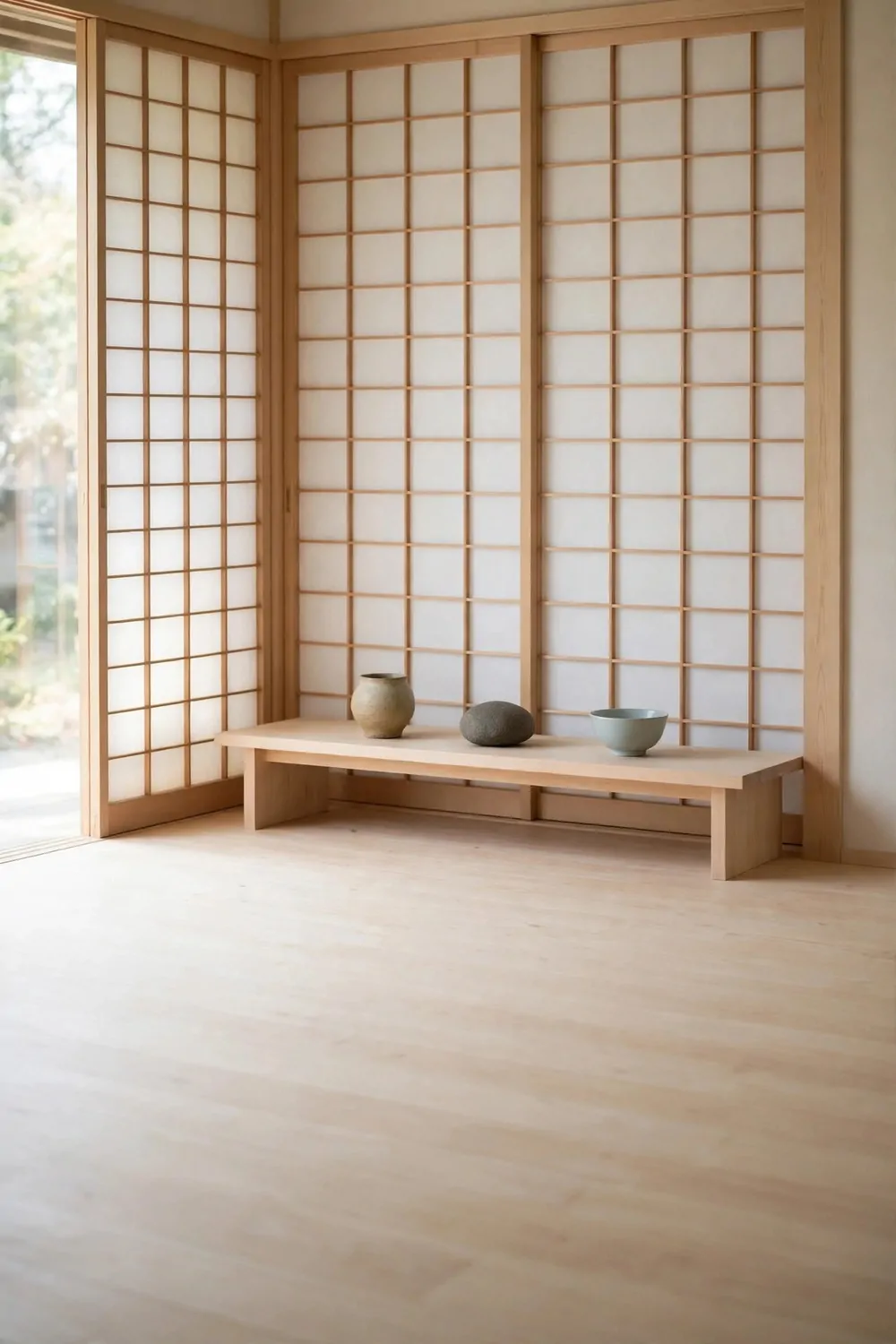
Japanese homes feel calm because they hold very little. The rule is simple. Keep what you use and what you love. Let the rest go.
I started with one drawer. I took everything out and asked myself about each thing. Do I use this? Does it make me happy? If the answer was no, it went into a box to leave the house.
You will feel lighter after the first box leaves. I did. My drawer closed easily for the first time in years. That small win made me want to do the next shelf.
Go slowly, one small space at a time. One shelf today. One cupboard tomorrow. Trying to empty the whole house in one day will tire you out. Small steps win.
Give every thing a home. A hook for your keys. A basket for your scarves. A tray for your coins. When everything has a place, you stop losing things and the house stays tidy by itself.
Be honest about gifts and old things you keep from guilt. A gift is not a duty. If you do not love it, you can pass it on to someone who will. The love was in the giving, not in the keeping.
Leave empty space on purpose. An empty shelf is not a wasted shelf. It is breathing room for your eyes. Japanese homes teach us that empty space is part of the design.
When you finish, your home will feel bigger even though nothing changed about the walls. Fewer things mean more calm. And the things you kept will shine because they are the ones you truly love.
Keep Reading
If you liked these calm Japanese ideas, you will love these next. They are full of the same quiet feeling, just in different rooms.
- 27 Small Home Ideas That Make Every Inch Count
- 20 Reading Nook Ideas for a Quiet Corner at Home
- 21 Entryway Ideas Guests Will Remember
- 26 Closet Organization Ideas That Make Mornings So Much Easier
Pick one idea and start small. One screen, one plant, one clear surface. Your home will feel calmer before you know it.