22 Nepali Language Would You Rather Questions From the Himalayas

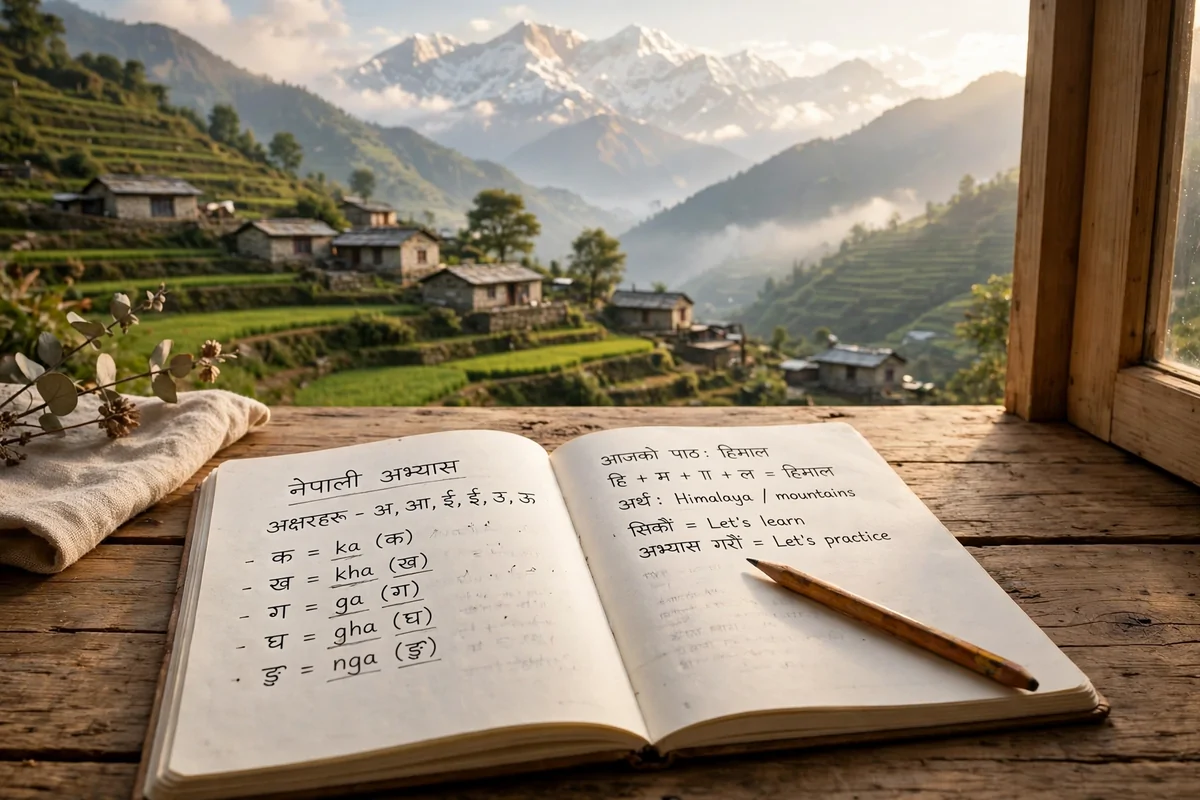
Nepali is the language of Nepal, a country full of tall mountains, green valleys, and warm people. From the busy streets of Kathmandu to small tea houses on high mountain paths, Nepali words open doors to friendly talks, good food, and new friends.
This language uses the Devanagari script, with letters that look round and beautiful. Every word you learn is a small step closer to the Himalayas. So which way would you learn it? Pick your side in each question below and see what kind of learner you are.
1. Would you rather learn to speak Nepali first or learn to read Devanagari first?
Would you rather...
Speaking first is fast and fun. You can say hello, ask for tea, and thank a shopkeeper on your very first day. People smile when they hear you try, even if your words are not perfect. Talking gets you into real life right away.
Reading first is slow but strong. Once you can read Devanagari letters, you can read signs, menus, and notes all by yourself. You never have to guess what a word says. It feels like a secret code that suddenly makes sense.
Both ways work, but they feel very different. One gives you quick talks. The other gives you quiet power.
2. Would you rather learn food words first or learn family words first?
Would you rather...
Food words are useful from the first minute. You can order rice, lentils, tea, and momos without pointing at a picture. In a tea house on a mountain trail, the right food word means a hot meal instead of a cold wait.
- Food words help you in every market and every small restaurant.
- Family words help you in every home and every long talk.
- Food words are easy to practise three times a day.
- Family words build warm friendships that last for years.
Family words open hearts. Words for mother, father, brother, and friend make people feel close to you. In Nepal, family is a big part of daily life, and these words show respect and care.
3. Would you rather learn 10 Nepali words a day for a month or learn 100 Nepali words in one big weekend?
Would you rather...
Small steps every day are calm and steady. Ten words a day is easy to remember, and after a month you know 300 words. Your brain keeps them because you meet them again and again.
One big weekend is exciting. You sit with your notebook, learn 100 words, and feel like a hero on Sunday night. The rush is fun, but many words may slip away by next week if you do not use them.
| Option | What You Gain | What You Give Up |
|---|---|---|
| 10 words a day for a month | Words that stay in your memory for a long time | The big rush of learning fast |
| 100 words in one weekend | A fast start and a big feeling of progress | Many words may fade if you do not review them |
4. Would you rather practise Nepali with a friend in Kathmandu or practise Nepali alone with a notebook?
Would you rather...
A friend in Kathmandu makes learning a joy. You talk, laugh, and fix mistakes together. Real talks teach you the words people really use, not just the words in a book. And a friend can take you to markets and tea shops where Nepali is everywhere.
A notebook is quiet and patient. It never laughs at a mistake and never gets tired. You can write the same word ten times, draw pictures next to new words, and review everything at your own speed. For shy learners, a notebook is a safe friend.
5. Would you rather learn mountain and trekking words first or learn market words first?
Would you rather...
Mountain words are made for adventure. Words for path, snow, river, bridge, and tea house help you on a trek through the Himalayas. When you walk for hours, the right word can find you a warm bed and a hot drink.
Market words are made for daily life. Words for price, fresh, small, big, and tasty help you buy fruit, vegetables, and warm clothes. In a busy market, these words save money and start friendly talks with shopkeepers.
Things to think about:
- Do you dream more of high trails or busy market streets?
- Which words would you use on your very first day in Nepal?
- Mountain words are exciting, but market words are useful every single day.
6. Would you rather learn to say hello and thank you perfectly or learn 50 everyday verbs first?
Would you rather...
Hello and thank you are small words with big power. Said with the right sound, they open smiles everywhere. People remember a learner who greets them well, even if that learner knows only a few words.
Fifty verbs are the engine of the language. With verbs like eat, go, come, buy, see, and sleep, you can build hundreds of simple sentences. Verbs turn you from a person who knows words into a person who can really talk.
One choice gives you warmth. The other gives you freedom. Which one feels more like you?
7. Would you rather write Nepali letters by hand or type them on a phone keyboard?
Would you rather...
Writing by hand is slow, but your hand remembers what your eyes see. Each Devanagari letter has curves and lines that feel special when you draw them. Many learners say handwriting makes the letters stay in the mind for a long time.
- Handwriting helps you remember the shape of each letter.
- Typing is faster and lets you send messages to Nepali friends.
- Handwriting needs only paper and a pen, no battery, no screen.
- Typing teaches you where each letter sits on a keyboard.
Typing is quick and modern. You can chat with people in Nepal, search for Nepali words, and read messages on your phone. It is the fast road to real talks.
8. Would you rather listen to Nepali conversations in a tea house or read a simple Nepali story book?
Would you rather...
A tea house is full of real life. People talk about the weather, the trail, the food, and the day ahead. You hear how Nepali really sounds, fast, warm, and full of feeling. And you can sip hot tea while you learn.
A story book is calm and clear. You can stop, look up a word, and read the same line twice. Stories teach you new words in a way that is easy to remember, because each word lives inside a small adventure.
9. Would you rather learn Nepali in Nepal for one month or learn Nepali at home for one year?
Would you rather...
One month in Nepal is full of Nepali from morning to night. You hear it in shops, on buses, on mountain paths, and at every meal. Your brain has no choice but to learn fast. One month there can feel like a year of study at home.
One year at home is slow and steady. You study a little each day, build strong habits, and learn the grammar step by step. You may not speak fast, but you understand the language deeply, and you never feel lost.
| Option | What You Gain | What You Give Up |
|---|---|---|
| One month in Nepal | Fast speaking skills and real daily practice | Deep grammar study and a slow, calm pace |
| One year at home | Strong basics and a clear understanding of the rules | Real-life talks and the rush of daily Nepali |
10. Would you rather learn Nepali numbers first or learn Nepali colours first?
Would you rather...
Numbers are useful from day one. You can count money, ask for two cups of tea, and understand prices in a market. Numbers also help you tell time, count days, and talk about age and height. They are small words with big jobs.
Colours are fun and easy to see everywhere. The red of a scarf, the green of a rice field, the blue of a mountain sky, each colour is a word you can practise just by looking around. Colours make your sentences bright and full of life.
Things to think about:
- Numbers help you buy things and stay safe with money.
- Colours help you describe the world around you.
- Numbers are short and clear, colours are vivid and easy to remember.
11. Would you rather learn to ask for directions in Nepali or learn to order food in Nepali?
Would you rather...
Directions keep you from getting lost. In Kathmandu or on a mountain trail, asking where the path goes can save hours of walking the wrong way. Words for left, right, near, far, and straight ahead are like a map in your pocket.
Ordering food keeps you happy and full. You can ask for your favourite dish, say you want it less spicy, or ask for more rice. Food talks happen three times a day, so these words get a lot of practice.
12. Would you rather learn formal polite Nepali or learn casual everyday Nepali?
Would you rather...
Formal Nepali shows respect. You use it with older people, in offices, and when you meet someone for the first time. In Nepal, polite words matter a lot, and people notice when a learner uses them well.
Casual Nepali is the language of friends. It is quick, warm, and full of short words and jokes. With casual Nepali, talks feel natural and easy, like talking with an old friend on a long walk.
| Option | What You Gain | What You Give Up |
|---|---|---|
| Formal polite Nepali | Respect from older people and a good first impression | The relaxed feeling of talking like a friend |
| Casual everyday Nepali | Fast, natural talks and close friendships | The extra respect that formal words bring |
13. Would you rather learn Nepali words for weather and seasons or learn Nepali words for animals?
Would you rather...
Weather words are useful on every mountain walk. Sun, rain, snow, wind, and cloud help you plan your day and talk with guides and porters. In the Himalayas, the weather can change fast, so these words keep you safe and ready.
Animal words are fun and full of surprises. Words for yak, goat, dog, monkey, and eagle make stories come alive. On a trail, you can point at an animal and name it, and local people love to teach you more.
Both sets are easy to learn because you can see them all around you. The sky shows you weather words. The trail shows you animal words.
14. Would you rather learn to count money in Nepali or learn to tell the time in Nepali?
Would you rather...
Counting money keeps you safe in markets. You can check your change, ask the price, and bargain with a smile. Money words are short and clear, and you use them every time you buy anything.
- Money words help you in every shop and every tea house.
- Time words help you catch buses, meet friends, and plan treks.
- Money words are numbers, so they are quick to learn.
- Time words teach you hours, days, morning, and evening.
Telling the time keeps your day on track. You can ask when the bus leaves, when the tea house opens, or how long the walk takes. Time words turn a loose plan into a real plan.
15. Would you rather learn Nepali through cooking words or learn Nepali through travel words?
Would you rather...
Cooking words are warm and tasty. Words for rice, lentils, spices, pot, and fire let you join a family in the kitchen. You learn by doing, by chopping, stirring, and tasting, and every meal becomes a lesson.
Travel words are made for the road. Words for ticket, bus, path, village, and guest house help you move through Nepal with ease. Every trip teaches you new words, and every new place gives you a reason to talk.
16. Would you rather speak Nepali with a strong accent or stay silent until your pronunciation is perfect?
Would you rather...
Speaking with a strong accent is brave. People understand you, they help you, and they smile at your effort. Every talk makes your accent a little better. Silence teaches you nothing, but speaking teaches you a lot.
Waiting for perfect pronunciation feels safe. You study the sounds, listen carefully, and speak only when you feel ready. But perfect may never come, and the waiting can last for months while real talks pass you by.
Most good learners choose to speak early and fix mistakes as they go. A strong accent is a sign of courage, not a problem.
17. Would you rather learn the names of 20 Nepali places or learn 20 Nepali greetings for different times of day?
Would you rather...
Place names are like a map of stories. Kathmandu, Pokhara, Chitwan, and small mountain villages each have their own feeling. Knowing place names helps you plan trips, read maps, and talk about where you have been and where you want to go.
Greetings for each time of day show care and good manners. A morning greeting is different from an evening greeting, and people notice when you use the right one. These small words make every meeting warm.
Things to think about:
- Place names help you travel and tell stories about your trips.
- Greetings help you in every single meeting, morning or evening.
- Place names are easy to remember because each one has a picture in your mind.
18. Would you rather study Nepali in the morning or study Nepali at night before sleep?
Would you rather...
Morning study starts the day fresh. Your mind is clear, your memory is strong, and the new words stay with you all day. You can use them at breakfast, in the market, and on a walk.
- Morning study gives you a fresh mind and strong focus.
- Night study lets your brain keep the words while you sleep.
- Morning study fits well with a cup of tea and a quiet hour.
- Night study is calm, and you can review the whole day in Nepali.
Night study has a secret power. When you learn before sleep, your brain keeps working on the words through the night. Many learners wake up and find the words are still there, ready to use.
19. Would you rather learn Nepali with picture flashcards or learn Nepali with a word list?
Would you rather...
Picture flashcards are fun and fast. A picture of a mountain, a cup of tea, or a yak sticks in your mind at once. You see the picture, you say the word, and the link stays strong. Flashcards are perfect for short study times.
A word list is simple and complete. You can carry 100 words on one page, check them off one by one, and see your progress grow. Lists are easy to make, easy to review, and easy to keep in a pocket.
20. Would you rather know 500 Nepali words but speak slowly or know 100 Nepali words but speak fast and clear?
Would you rather...
Five hundred words give you a big world. You can talk about food, travel, weather, family, and mountains. But if you speak slowly, people may wait, and talks can feel heavy.
One hundred words spoken fast and clear give you smooth talks. You may know fewer words, but people understand you at once, and you feel confident. Clear speech opens more doors than a big word list that comes out slowly.
| Option | What You Gain | What You Give Up |
|---|---|---|
| 500 words, speak slowly | A wide range of topics you can talk about | Smooth, quick talks and easy confidence |
| 100 words, speak fast and clear | Clear talks that people understand at once | The wide range of topics a big word list gives |
21. Would you rather learn to read a Nepali road sign or learn to read a Nepali menu?
Would you rather...
Road signs guide you through Nepal. Words for village, river, bridge, and distance tell you where you are and how far you still have to walk. On a long trek, a road sign you can read feels like a friendly guide.
A menu guides you to good food. Words for rice, soup, bread, tea, and vegetables help you pick a meal you will love. In a small tea house, reading the menu means you can order like a local, not like a lost guest.
Both skills are small but powerful. One helps your feet. The other helps your stomach.
22. Would you rather learn Nepali for a trek to Everest Base Camp or learn Nepali for a long stay in a mountain village?
Would you rather...
A trek to Everest Base Camp is a dream for many travellers. Nepali words for trail, snow, height, rest, and tea house make the long walk richer. You can talk with guides, share stories with other walkers, and enjoy every step of the famous path.
A long stay in a mountain village is a different kind of dream. You wake up to mountain views, help with daily work, share meals with a family, and learn the words of real village life. Slow days, warm talks, and deep friendships make the language part of your life.
So which way would you learn Nepali? The mountains are waiting, the tea is hot, and every new word brings you closer to Nepal. Pick your answers, share them with a friend, and start your Nepali journey today.
More Would You Rather Questions
- 18 Kannada Language Would You Rather Questions About Regional Speech
- 40 Malayalam Language Would You Rather Questions for Curious Learners
- 34 Telugu Language Would You Rather Questions for Language Fans
- 28 Tamil Language Would You Rather Questions From One of the World’s Oldest Traditions
- 23 Marathi Language Would You Rather Questions for Curious Learners
- 25 Gujarati Language Would You Rather Questions for Language Enthusiasts
- 35 Punjabi Language Would You Rather Questions About Words and Expressions
- 14 Bengali Language Would You Rather Questions for Curious Minds
- 13 Hindi Language Would You Rather Questions for Global Learners
- 15 Urdu Language Would You Rather Questions for Language Lovers