25 Gujarati Language Would You Rather Questions for Language Enthusiasts

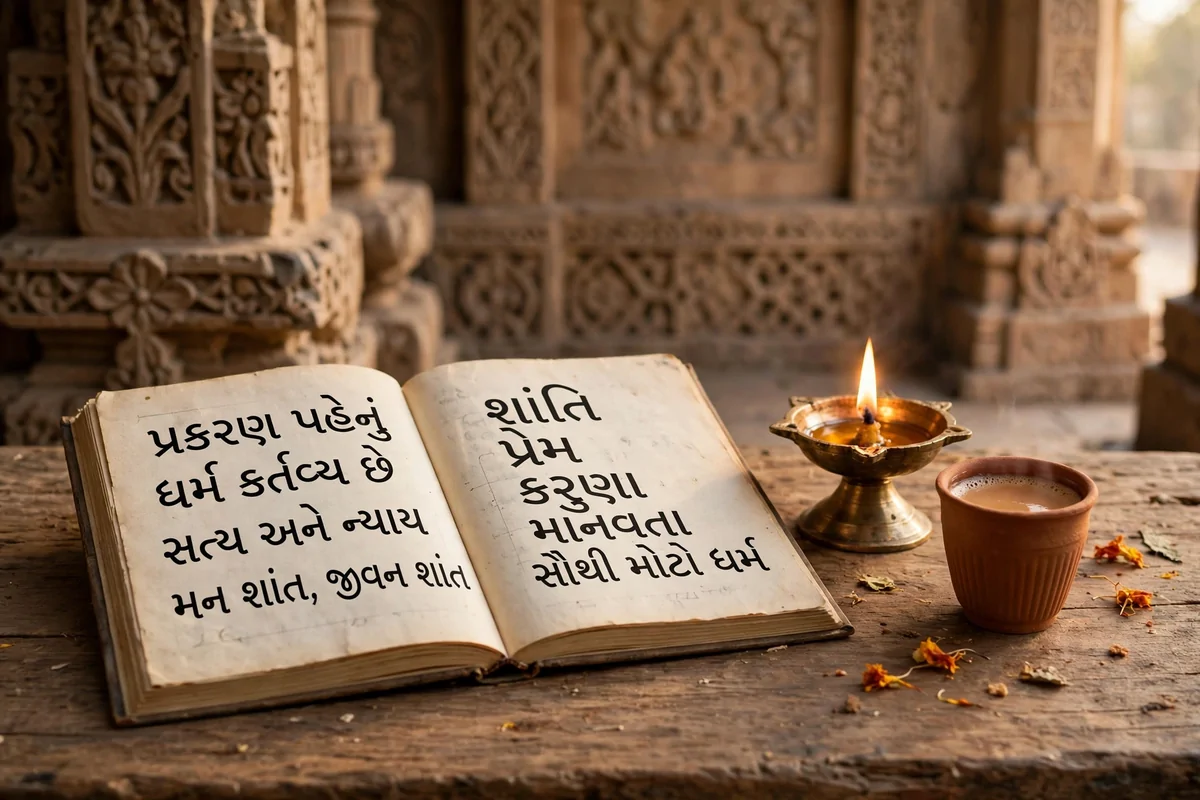
Gujarati is the language of Gujarat, a state in western India, and it is spoken by more than sixty million people around the world. It has its own clear script, warm words for family and food, and many sweet sounds that are easy to love.
Learning Gujarati is full of small choices. Do you start with speaking or reading? Do you learn alone or with friends? These twenty five questions help you think about the best way for you to learn Gujarati, one fun choice at a time.
1. Would you rather learn to speak Gujarati first or learn to read the Gujarati script first?
Would you rather...
Speaking first means you can say hello, thank you, and simple words from day one. You can greet people, ask for water, and order food, even if your words are not perfect. It feels fast and fun, and it gives you courage.
Reading first means you learn the Gujarati script, letter by letter. At first the letters look new and strange, but soon you can read shop signs, book titles, and simple words. It is slow at the start, but it opens a big door later.
Some people love to talk first and read later. Other people love to read first so they can see how the words really look. Which way fits you better?
2. Would you rather learn ten new Gujarati words every day or learn one long Gujarati sentence every day?
Would you rather...
Ten new words a day adds up fast. In one month you know three hundred words. You can name many things around you, from rice and water to sun and rain. But words alone do not make a full talk.
One long sentence a day is slow, but it teaches you how Gujarati really works. You learn the word order, the small joining words, and how a full thought sounds. After a month you can say thirty full sentences with ease.
Pro Tip: Try both for one week. Learn five words and one sentence each day, and see which one stays in your mind longer.
3. Would you rather practise Gujarati by talking with a friendly shopkeeper in Ahmedabad or by talking with a kind teacher on a video call?
Would you rather...
A shopkeeper in Ahmedabad talks fast and uses real everyday words. You learn how people really speak, how they greet buyers, and how they talk about price and food. It is real life, and it is full of surprises.
A teacher on a video call speaks slowly and explains each word. You can ask questions, repeat a sentence, and fix your mistakes in a calm way. It is safe, clear, and easy to follow.
| Option | What You Gain | What You Give Up |
|---|---|---|
| Talk with a shopkeeper in Ahmedabad | Real everyday Gujarati and true street talk | Slow and clear lessons with easy steps |
| Talk with a teacher on a video call | Slow, clear lessons and time to ask questions | Real street talk and the rush of a busy market |
Both ways teach you a lot. The shopkeeper gives you real life. The teacher gives you clear steps. Maybe the best plan is to learn with a teacher first, then test your words in a real shop.
4. Would you rather learn Gujarati through simple stories for children or through short daily talks about food and home?
Would you rather...
Simple stories for children use easy words and short sentences. A story about a clever fox or a kind farmer is easy to follow, and you can guess new words from the pictures in your mind. Stories also teach you Gujarat culture in a soft and gentle way.
Daily talks about food and home teach you words you can use right away. You learn how to ask for rice, water, tea, and help around the house. These words are useful from the first day, and you can practise them at every meal.
- Stories build your reading skill and your love for the language.
- Daily talks build your speaking skill and your daily use of Gujarati.
- You can read one short story in the morning and practise one home talk in the evening.
5. Would you rather write Gujarati letters by hand every morning or type Gujarati words on a phone keyboard every night?
Would you rather...
Writing by hand is slow and calm. You feel each curve of the Gujarati letters, and your hand learns the shapes. Many learners say handwriting helps them remember letters for a long time.
Typing on a phone is fast and handy. You can type a word, see it at once, and send it to a friend. It is the way most people write Gujarati today, in chats and short notes.
Things to think about:
- Handwriting builds a deep memory of each letter shape.
- Typing builds speed and helps you write Gujarati in daily chats.
- A short morning handwriting time and a short night typing time can work well together.
6. Would you rather visit a busy market in Gujarat and use only Gujarati or stay home and learn from short video lessons about Gujarati street life?
Would you rather...
A busy market in Gujarat is full of colour, smell, and sound. You hear sellers call out prices, buyers ask for fresh vegetables, and friends greet each other with warm words. If you use only Gujarati there, you learn fast, because you must speak to get what you need.
Short video lessons at home are calm and safe. You can pause, repeat, and watch a street scene again and again. You learn the words for market life without the noise and rush of a real crowd.
Important Note: A market visit is a big step. Learn the words for numbers, food, and polite thanks first, so you feel ready when you go.
7. Would you rather learn formal Gujarati used in books and news or learn the everyday Gujarati people use at home and in the street?
Formal Gujarati is the language of books, school, and news. It is clear, polite, and full of rich words. If you learn it, you can read Gujarati books and understand the news with ease.
Everyday Gujarati is the language of home, friends, and the street. It is short, warm, and full of small words that people use every day. If you learn it, you can talk with people in a natural and friendly way.
| Option | What You Gain | What You Give Up |
|---|---|---|
| Formal Gujarati from books and news | Skill to read books and understand the news | Easy street talk and the short words of daily life |
| Everyday Gujarati from home and street | Natural, friendly talk with people each day | Skill to read formal books and news with ease |
Most learners start with everyday Gujarati, then add formal words step by step. That way you can talk first and read well later.
8. Would you rather memorise Gujarati numbers first or learn Gujarati words for family and food first?
Would you rather...
Numbers are useful everywhere. With numbers you can tell the time, count money, give your phone number, and ask for a price. Gujarati numbers have their own shapes, and learning them early makes daily life easy.
Words for family and food are warm and close to the heart. With words like mother, father, brother, rice, and tea, you can talk about your home and your day. These words make people smile, because they show care and respect.
Ask yourself what you need first. Do you want to buy things and count money, or do you want to talk about your family and share a meal? Your answer shows your first step.
9. Would you rather learn Gujarati by cooking a Gujarati dish with a recipe in Gujarati or by asking for directions in Gujarati on a walk through a town?
Would you rather...
Cooking with a Gujarati recipe is a tasty way to learn. You read words for rice, lentils, spices, oil, and heat. You follow each step with your hands, and at the end you eat a meal you made yourself. The words stay in your mind because you used them to make real food.
Asking for directions on a walk is a brave way to learn. You ask where the river is, where the school is, and how far the market is. You learn words for left, right, near, and far, and you meet people along the way.
Things to think about:
- Cooking teaches food words and the verbs for each step.
- A walk teaches place words and the skill to ask for help.
- Both ways mix learning with real life, so the words feel alive.
10. Would you rather speak Gujarati with small mistakes every day or wait until your Gujarati is perfect before you speak a word?
Would you rather...
Speaking with small mistakes is brave. You say a word the wrong way, people smile and help you fix it, and you learn fast. Each small mistake is a small lesson, and each day your Gujarati gets a little better.
Waiting for perfect Gujarati feels safe, but it can take a very long time. You may study for months and still feel shy to speak. And the truth is, no learner speaks perfectly at the start, in any language.
Warning Box: Waiting too long can turn into fear. Speak a little each day, even if it is only one sentence, and your courage will grow with your words.
11. Would you rather learn Gujarati greetings and polite words first or learn Gujarati words for colours, animals, and nature first?
Would you rather...
Greetings and polite words open every door. With hello, please, thank you, and excuse me, you can start any talk in a kind way. People in Gujarat value polite words, and a good greeting makes a good first impression.
Words for colours, animals, and nature paint the world around you. You can talk about the green fields, the blue river, a white bird, or a red flower. These words make your Gujarati rich and full of pictures.
| Option | What You Gain | What You Give Up |
|---|---|---|
| Greetings and polite words first | Kind and polite talk from the first day | Rich words to describe the world around you |
| Words for colours, animals, and nature first | Rich words to describe colours, animals, and nature | Kind and polite talk from the first day |
Polite words help you meet people. Nature words help you describe the world. Learn the greetings in week one, then add five nature words each week after that.
12. Would you rather read a simple Gujarati poem slowly with a dictionary or listen to a slow Gujarati story and repeat each line?
Would you rather...
Reading a simple Gujarati poem with a dictionary is quiet and deep. You stop at each new word, look it up, and see how the poet chose it. Poems teach you the beauty of Gujarati words and the rhythm of the language.
Listening to a slow Gujarati story and repeating each line trains your ear and your mouth. You hear the true sounds, the rise and fall of the voice, and the way words join in a sentence. Then you say the line yourself, and your speaking grows strong.
- Reading builds your word power and your love for Gujarati writing.
- Listening builds your ear and your clear speaking voice.
- Try one poem in the morning and one story at night for a full week.
13. Would you rather learn Gujarati alone with books and flashcards or learn Gujarati together with a small study group of friends?
Would you rather...
Learning alone with books and flashcards is calm and free. You choose your own time, your own speed, and your own words. You can study early in the morning or late at night, with no one to wait for.
Learning with a small study group of friends is warm and full of energy. You ask each other questions, test each other with flashcards, and laugh at small mistakes together. When one person feels tired, the others give hope and keep the group going.
Things to think about:
- Alone study gives you freedom and quiet focus.
- Group study gives you friends, fun, and a reason to keep going.
- Many learners mix both: quiet study alone, then one group talk each week.
14. Would you rather learn to write your own name in Gujarati script first or learn to say a full introduction about yourself in Gujarati first?
Would you rather...
Writing your own name in Gujarati script is a proud moment. You see your name in beautiful curved letters, and you can write it on a book, a card, or a gift. It feels like the language is truly yours.
Saying a full introduction about yourself is a strong first step in speaking. You learn to say your name, where you live, what you like, and what you do. With one short introduction, you can meet new people and start a real talk.
Pro Tip: Do both on the same day. Write your name in Gujarati script in the morning, then say your full introduction out loud three times before bed.
15. Would you rather learn Gujarati words for vegetables and spices first or learn Gujarati words for clothes and colours first?
Would you rather...
Vegetables and spices are the heart of Gujarati food. With words like potato, tomato, chilli, turmeric, and cumin, you can read a recipe, buy food at a market, and talk about taste. These words are useful at every meal.
Clothes and colours are the words of daily life. With words like shirt, sari, kurta, red, green, and yellow, you can describe what people wear and what you see in a shop. These words help you talk about the world in a bright way.
Food words feed your learning. Clothes words dress it up. Pick the set you will use first, then learn the other set the next week.
16. Would you rather practise Gujarati by ordering food at a Gujarati restaurant or by buying vegetables at a market stall?
Would you rather...
Ordering food at a Gujarati restaurant is a warm test of your speaking. You read the menu, ask for a dish, say how spicy you want it, and thank the waiter. It is a short talk, but it uses many real words.
Buying vegetables at a market stall is a lively test of your speaking. You ask for the price, ask for half a kilo, and talk about what is fresh today. The seller may chat with you, and you learn new words on the spot.
Important Note: Learn the words for please, thank you, how much, and a little before you try either one. Polite words make every market talk easy.
17. Would you rather learn the Gujarati script letter by letter or learn whole Gujarati words by sight first?
Would you rather...
Letter by letter is the slow and steady road. You learn each Gujarati letter, its sound, and its shape. After a few weeks you can read any new word, because you know how to sound it out.
Whole words by sight is the fast road. You learn words like water, home, and mother as full shapes, and you can read them at once. It feels quick, but new words can still puzzle you until you learn the letters.
| Option | What You Gain | What You Give Up |
|---|---|---|
| Learn the Gujarati script letter by letter | Skill to read any new word by sounding it out | Fast reading of full words from the first day |
| Learn whole Gujarati words by sight first | Fast reading of full words from the first day | Skill to read any new word by sounding it out |
Most good readers use both. Learn the letters in the morning, then learn five whole words by sight in the evening, and your reading will grow fast.
18. Would you rather read one Gujarati newspaper headline every day or read one page of a Gujarati children’s book every night?
Would you rather...
One newspaper headline a day keeps you close to real Gujarati. Headlines use short, strong words about weather, prices, sport, and daily news. You learn the words that Gujarati speakers use to talk about the world today.
One page of a children’s book each night is a calm way to end the day. The words are simple, the story is easy to follow, and you can guess new words from the tale. Night after night, the pages add up to a whole book.
- Headlines teach you short, strong words about daily life.
- Children’s books teach you simple stories and easy sentences.
- Try a headline with your morning tea and a book page before bed.
19. Would you rather speak only Gujarati for one full day each week or mix Gujarati and English every day?
Would you rather...
One full day of only Gujarati is a brave test. You must find Gujarati words for everything, from morning tea to evening rest. It is hard at first, but by the end of the day you feel strong and proud.
Mixing Gujarati and English every day is gentle and steady. You use the Gujarati words you know and fill the gaps with English. You speak more, you feel less stress, and your Gujarati grows a little each day.
Things to think about:
- A full Gujarati day builds courage and deep practice.
- Daily mixing builds a steady habit and less stress.
- You can start with mixing every day, then try one full Gujarati day each month.
20. Would you rather learn Gujarati proverbs and wise sayings or learn Gujarati words for work and daily jobs?
Would you rather...
Gujarati proverbs are short sayings full of wisdom. One wise line can teach you about patience, honesty, and hard work, and it shows you how Gujarati people think. Proverbs make your speech rich and full of colour.
Words for work and daily jobs are useful in real life. With words for teacher, farmer, shopkeeper, doctor, and driver, you can talk about what people do and what you do. These words help you in every work talk.
Pro Tip: Learn one proverb each week and use it in a real talk. A wise saying used at the right time is easy to remember for life.
21. Would you rather practise listening with slow Gujarati talks or practise speaking with fast daily chats with a friend?
Would you rather...
Slow Gujarati talks train your ear. You hear each word clearly, you catch the small sounds, and you learn how sentences really flow. Good listening is the base of good speaking.
Fast daily chats with a friend train your mouth. You must think fast, pick words fast, and answer fast. It is fun, it is lively, and it builds real courage to speak in real time.
Listening first, then speaking, is the path most learners take. But if you love to talk, start with chats and let your ear catch up along the way.
22. Would you rather learn Gujarati words for the four seasons and weather or learn Gujarati words for body parts and health?
Would you rather...
Words for seasons and weather let you talk about the world outside. You can say it is hot, it is raining, winter is cold, or spring is green. These words are useful in every small talk about the day.
Words for body parts and health let you talk about yourself and care for others. You can say your head hurts, your hand is fine, or you need rest. These words are kind and useful when someone needs help.
| Option | What You Gain | What You Give Up |
|---|---|---|
| Words for the four seasons and weather | Easy small talk about the day and the world outside | Words to talk about your body and health |
| Words for body parts and health | Words to talk about your body and health | Easy small talk about the day and the world outside |
Weather words make daily talks easy. Health words make caring talks easy. Learn the weather words first, then add five health words each week.
23. Would you rather write a short diary in Gujarati every night or send short Gujarati messages to a friend every day?
Would you rather...
A short diary every night is a quiet habit. You write three or four lines about your day: what you ate, where you went, and how you felt. Your writing grows steady, and you can look back and see how far you have come.
Short messages to a friend every day are a lively habit. You send a greeting, a small joke, or a short plan in Gujarati, and your friend answers back. You learn fast, because a real person waits for your words.
- A diary builds steady writing and clear thinking.
- Messages build fast writing and real talks with a friend.
- Try a diary on quiet nights and messages on busy days.
24. Would you rather learn Gujarati by visiting Gujarat for one month or by studying at home for one full year?
Would you rather...
One month in Gujarat is a deep dive into the language. You hear Gujarati at the market, in the street, at home, and at every meal. You must speak to live your day, and that pressure makes you learn very fast.
One full year of study at home is slow and steady. You learn a little each day, you repeat old words, and you build a strong base. It takes more time, but the learning sinks in deep and stays with you.
Warning Box: A trip to Gujarat works best when you already know basic words. Learn greetings, numbers, and food words first, then travel with courage.
25. Would you rather teach a friend five Gujarati words each week or learn five new Gujarati words from a friend each week?
Would you rather...
Teaching a friend five Gujarati words each week makes your own words strong. When you teach a word, you must know it well, say it clearly, and use it in a sentence. Teaching is one of the best ways to learn.
Learning five new words from a friend each week keeps you curious. Your friend picks words you may not know, and each week brings a small surprise. It is fun, easy, and full of new words.
Things to think about:
- Teaching makes your own Gujarati strong and clear.
- Learning from a friend brings new words each week.
- Swap roles each week: teach one week, learn the next, and both of you grow.
More Would You Rather Questions
- 35 Punjabi Language Would You Rather Questions About Words and Expressions
- 14 Bengali Language Would You Rather Questions for Curious Minds
- 13 Hindi Language Would You Rather Questions for Global Learners
- 15 Urdu Language Would You Rather Questions for Language Lovers
- 20 Persian Language Would You Rather Questions From a Rich Linguistic Tradition
- 10 Hebrew Language Would You Rather Questions for Language Learners
- 39 Arabic Language Would You Rather Questions for Global Language Fans
- 33 Turkish Language Would You Rather Questions for Curious Learners
- 37 Greek Language Would You Rather Questions About Ancient and Modern Words
- 29 Russian Language Would You Rather Questions for Global Learners