10 Hebrew Language Would You Rather Questions for Language Learners

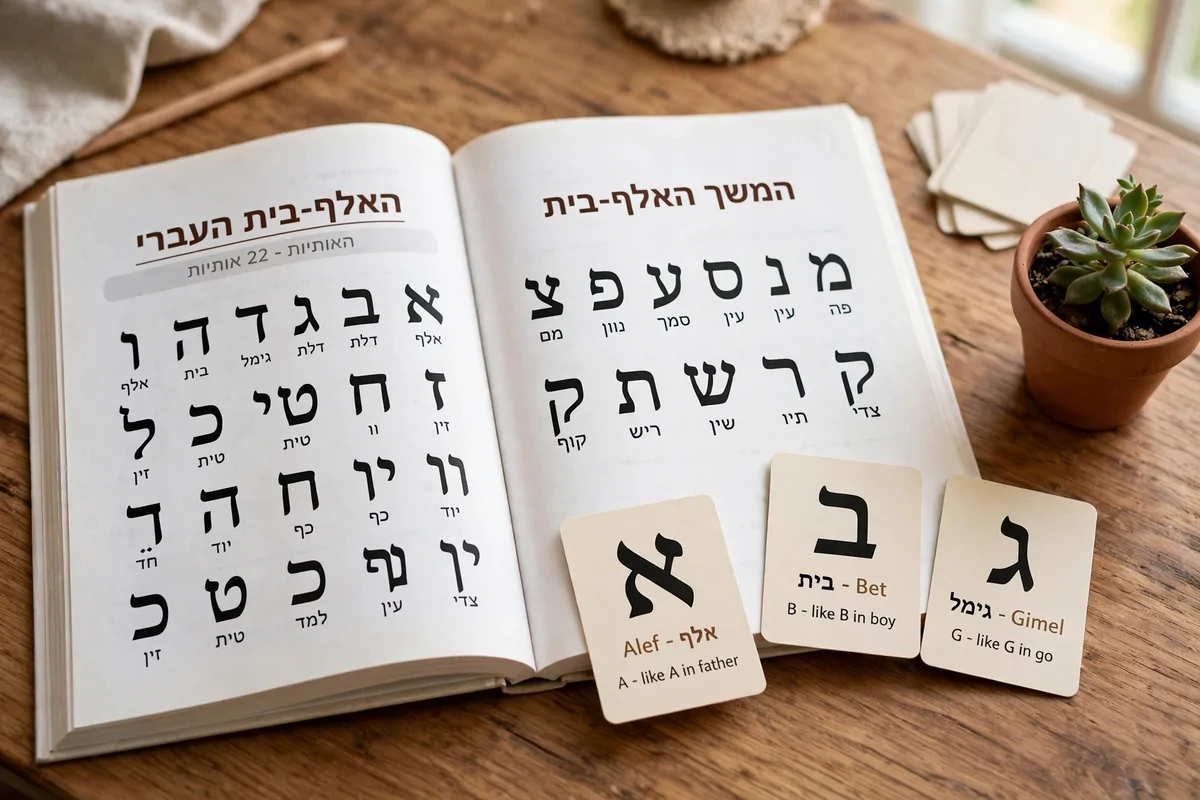
Hebrew is a language with a long history and a fresh, living sound. People learn it to read old texts, to talk with new friends, to travel, or simply to enjoy the fun of a new alphabet.
These questions are for anyone who is learning Hebrew or thinking about starting. Each one shows a different way to learn, and there is no wrong answer. Pick the side that fits your life, your time, and your way of learning.
1. Would you rather learn the Hebrew alphabet first or learn common spoken Hebrew words first?
Would you rather...
Some learners start with the letters. Hebrew letters look new and different, and once you know them, you can read any word slowly, one letter at a time. It feels like opening a door.
Other learners start with spoken words. They learn how to say hello, thank you, water, bread, and good morning. They can talk a little from the very first week.
| Option | What You Gain | What You Give Up |
|---|---|---|
| Learn the Hebrew alphabet first | You can read real Hebrew words on your own, even slowly | You wait longer before you can speak in full sentences |
| Learn common spoken Hebrew words first | You can talk with people fast and feel brave early | You cannot read Hebrew writing yet, so you depend on hearing words |
Both roads meet in the end. Letters help your reading, and spoken words help your courage. Which one would you pick first?
2. Would you rather speak Hebrew with a friend every day or write Hebrew words every day?
Would you rather...
Speaking every day keeps your mouth and ears busy. You hear real sounds, you answer fast, and small mistakes teach you quickly. A short chat over tea or on a walk can teach more than a long lesson.
Writing every day is quiet and steady. You copy words, you build sentences, and your hand learns the shapes of the letters. After a few weeks, your notebook becomes a small book of your own progress.
Things to think about:
- Do you learn best by talking, or by quiet time alone with a pen?
- Do you have a friend who can talk with you each day?
- Do you want fast speaking skill, or strong reading and writing skill?
3. Would you rather learn Hebrew through simple stories or learn Hebrew through daily conversations?
Would you rather...
Simple stories give you full scenes. A short story about a market, a garden, or a family meal shows you many words together in a natural way. You see how words connect, and you remember them because the story stays in your mind.
Daily conversations give you useful words for real life. You learn how to ask for help, how to order food, and how to say what you need. These words work the same day you learn them.
Pro Tip: Mix both ways if you can. Read one short story in the morning and use one new word from it in a real talk the same day.
4. Would you rather memorize five new Hebrew words every day or learn one long Hebrew sentence every day?
Would you rather...
Five new words a day add up fast. In one month, that is about 150 words. You can name many things around your home, your food, and your street. It feels like your word list grows every single day.
One long sentence a day teaches you grammar without pain. A sentence shows you word order, small connecting words, and how verbs change. You learn fewer words, but you learn how to use them well.
Ask yourself this: do you want a big pile of words, or a small set of sentences you can truly use? Some learners love the pile. Others love the sentence.
5. Would you rather study Hebrew in the morning or study Hebrew at night?
Would you rather...
Morning study starts the day with a clear mind. Even ten minutes before breakfast can set the tone. New words feel fresh, and you can repeat them in your head all day long.
Night study is calm and free. The day is done, the house is quiet, and you can sit with your book without rush. Some people remember best when they study right before sleep.
Your daily rhythm:
- Morning: fresh mind, short time, words stay with you all day
- Night: quiet house, longer time, good for slow reading and review
- Both: a few minutes in the morning plus a few minutes at night
6. Would you rather learn Hebrew letters by writing them by hand or learn Hebrew letters by reading books and signs?
Would you rather...
Writing letters by hand is slow in a good way. Your hand learns each curve and line. Many learners say a letter only feels real after they write it ten times on paper.
Reading books and signs is a faster way to meet letters in real life. Shop signs, book titles, and simple texts show you the same letters again and again. You learn to spot them quickly, like faces in a crowd.
Important Note: Hebrew reads from right to left, which is the opposite of English. Take your time at first, and point with your finger as you read. Your eyes will adjust in a few weeks.
7. Would you rather learn Hebrew food words and cooking words or learn Hebrew travel words and place names?
Would you rather...
Food words are tasty to learn. Bread, water, fruit, salt, soup, and market words come up at every meal. You can practice at home, at the table, and at the shop. Food words make daily life easier right away.
Travel words open the map. Street, road, train, hotel, city, and beach words help you find your way and ask for directions. They are the words you need when you visit a new place in Israel.
Which group would you learn first?
- Food words: useful every day, easy to practice at home
- Travel words: useful on trips, great for maps and signs
- Both groups share many simple words, so you win either way
8. Would you rather speak Hebrew slowly and clearly or speak Hebrew fast and learn from mistakes?
Would you rather...
Slow and clear speaking helps people understand you. You think before each word, you say it well, and you feel calm. Slow speech also helps you hear your own sounds and fix them.
Fast speaking builds courage. You talk a lot, you make mistakes, and you learn from each one. People correct you gently, and your speed grows with time. Mistakes are not failure, they are lessons.
| Option | What You Gain | What You Give Up |
|---|---|---|
| Speak Hebrew slowly and clearly | People understand you easily and you build good habits | You speak less in each talk, so you practice fewer words |
| Speak Hebrew fast and learn from mistakes | You practice many words fast and gain courage quickly | People may miss some words, and you may repeat small errors |
Most good speakers started slow and grew fast. The question is where you want to start.
9. Would you rather learn Hebrew with flashcards or learn Hebrew with short daily quizzes?
Would you rather...
Flashcards are simple and strong. One side shows the Hebrew word, the other side shows the meaning. You can carry them anywhere and test yourself in short gaps of time. They work well for new words and Hebrew letters.
Short daily quizzes test what you really remember. A quiz asks you to pick the right word, finish a sentence, or match a word to a picture. It feels like a small game, and it shows you which words need more work.
Warning: Do not test yourself only once and stop. New words fade fast. Review the same words after one day, after three days, and again after one week. That repeat is what makes words stay.
10. Would you rather learn modern everyday Hebrew or learn old Hebrew words from books?
Would you rather...
Modern everyday Hebrew is the language people speak in Israel today. It is the Hebrew of streets, shops, schools, and homes. If you want to talk with people, this is the fastest road.
Old Hebrew words from books carry deep meaning and long history. They appear in old texts and classic books. Learning them helps you read old writing and understand where the language began.
Many learners start with modern Hebrew and add old words later. Others love old words from day one. Which path calls to you?
- Modern Hebrew: talk today, use it on trips, meet people
- Old Hebrew words: read old texts, learn the roots of words, see history in language
More Would You Rather Questions
- 39 Arabic Language Would You Rather Questions for Global Language Fans
- 33 Turkish Language Would You Rather Questions for Curious Learners
- 37 Greek Language Would You Rather Questions About Ancient and Modern Words
- 29 Russian Language Would You Rather Questions for Global Learners
- 31 Ukrainian Language Would You Rather Questions for Language Enthusiasts
- 17 Czech Language Would You Rather Questions for Curious Learners
- 24 Polish Language Would You Rather Questions for European Language Fans
- 36 Icelandic Language Would You Rather Questions From the North
- 19 Finnish Language Would You Rather Questions for Language Adventurers
- 26 Danish Language Would You Rather Questions With Interesting Word Choices