39 Difficult Words Would You Rather Questions for Word Nerds

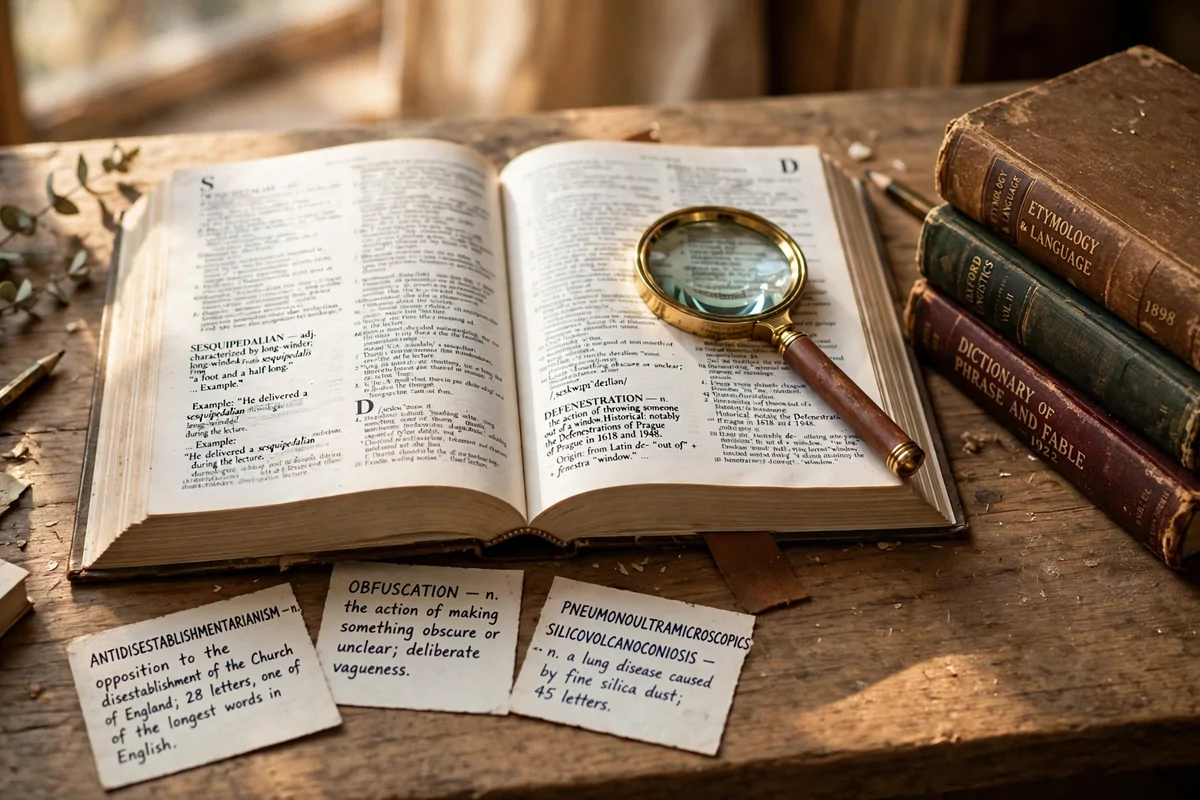
Some words are easy. You hear them once, and they stay in your head. But some words are hard. They are long, they twist your tongue, and their meanings hide behind strange letters.
This quiz is for word nerds who love a good challenge. Would you rather spell a hard word right every time, or say it right every time? Would you rather know the longest word in the dictionary, or the most confusing one? These 39 questions will test how you feel about difficult words, hard vocabulary, and tricky spelling.
1. Would you rather spell a hard word correctly every time or pronounce a hard word correctly every time?
Would you rather...
Spelling a hard word correctly every time means your writing is always clean. No red marks, no doubt, no need to check a dictionary. Your notes and letters look perfect.
Pronouncing a hard word correctly every time means your speech is always smooth. You can say any word out loud without fear. People listen to you and understand you with ease. Which skill would you pick, perfect spelling or perfect speech?
2. Would you rather know the meaning of every difficult word or know how to spell every difficult word?
Would you rather...
Knowing the meaning of every difficult word means no book can confuse you. You read any page and know what it says. Hard words become friends, not enemies.
Knowing how to spell every difficult word means your writing never has a mistake. You can write any word with confidence, from short ones to the longest ones in the book.
| Option | What You Gain | What You Give Up |
|---|---|---|
| Know the meaning of every difficult word | You understand every book and every hard text | You may still spell some of those words wrong |
| Know how to spell every difficult word | Your writing is always clean and correct | You may still miss what some words really mean |
3. Would you rather read a book full of hard words or solve a crossword full of hard words?
Would you rather...
A book full of hard words is a slow adventure. Each page gives you new words, new ideas, and new pictures in your mind. The story may be hard to follow, but your vocabulary grows with every chapter.
A crossword full of hard words is a puzzle and a game. You fill in boxes, guess letters, and feel a small win with every word you solve. It is fun, and your brain works hard without feeling like work.
Things to think about:
- A hard book teaches you words inside real sentences.
- A crossword teaches you words through clues and guessing.
- Both make your word power grow, but in very different ways.
4. Would you rather learn five hard words every day or learn one hard word every week perfectly?
Would you rather...
Five hard words every day adds up fast. In one month you know 150 new words. Your vocabulary grows like a garden in spring. But fast learning can fade fast too, if you never use the words again.
One hard word every week sounds slow, but you learn it perfectly. You know its meaning, its spelling, and how to use it in a sentence. By the end of the year you know 52 words, and every one of them is truly yours. Slow and steady, or fast and wide?
5. Would you rather use a hard word in a sentence correctly or explain a hard word to a friend in simple words?
Would you rather...
Using a hard word in a sentence correctly shows you truly know it. You pick the right place, the right time, and the right form. People hear you and think, this person knows words well.
Explaining a hard word to a friend in simple words is a different skill. You take a hard idea and make it easy. When you can explain a word to a child, you know it better than anyone.
Pro Tip: Try both skills this week. Use one hard word in a sentence each day, and explain one hard word to a friend each day. When you use a word and teach a word, it stays in your mind for a long time.
6. Would you rather win a hard-word spelling contest or win a hard-word meaning contest?
Would you rather...
Winning a spelling contest is a test of memory and nerve. You stand on a stage, hear a hard word, and spell it letter by letter. One small slip can end it all, so the win feels huge.
Winning a meaning contest is a test of your mind. You hear a hard word and explain what it means, or you pick the right meaning from a list. It shows you understand words, not just their letters.
7. Would you rather know every long word in the dictionary or know every short word with a tricky meaning?
Would you rather...
Long words look hard and sound grand. Knowing every one of them means no word is too big for you. You can read the hardest books and never feel small.
Short words with tricky meanings are a quiet trap. A small word can mean five different things, and you must know which one fits. Knowing them all means you never get fooled by a simple-looking word.
| Option | What You Gain | What You Give Up |
|---|---|---|
| Know every long word in the dictionary | No word is ever too big or too hard for you | Short tricky words may still catch you out |
| Know every short word with a tricky meaning | You never get fooled by a small word with many meanings | Very long words may still twist your tongue |
8. Would you rather have a dictionary in your head or have a word coach who explains any word in seconds?
Would you rather...
A dictionary in your head means you never need help. Any word, any time, the meaning is right there in your mind. You are your own teacher, day and night.
A word coach who explains any word in seconds means you always have a wise friend nearby. You ask, and the coach gives you the meaning, an example, and a trick to remember it. Learning feels like a friendly talk.
Things to think about:
- A dictionary in your head is fast, silent, and always with you.
- A word coach gives you examples and tricks, not just meanings.
- One makes you strong alone, the other makes learning feel easy.
9. Would you rather learn hard words from old books or learn hard words from new books?
Would you rather...
Old books hold words from long ago. They carry sayings, stories, and ideas that have lasted for many years. Reading them is like talking with people from the past.
New books hold words people use today. They are fresh, clear, and close to daily life. Knowing them keeps you close to how people speak and write right now.
10. Would you rather use hard words in your writing or use hard words when you speak?
Would you rather...
Using hard words in writing gives you time to think. You can check the spelling, pick the best word, and make your message strong and clear. Your letters and notes show your word power.
Using hard words when you speak is harder. You must pick the word in a second, say it right, and keep the talk going. It shows real confidence, because there is no time to look a word up.
Important Note: Writing is the safer place to try new hard words. Speak them out loud at home first, then use them in real talks. A word you can say with ease is a word you truly own.
11. Would you rather forget the spelling of hard words but remember their meanings or forget the meanings of hard words but remember their spelling?
Would you rather...
Forgetting the spelling but remembering the meaning means you understand everything you read, but your writing may have mistakes. You know what words mean, yet the letters slip away.
Forgetting the meaning but remembering the spelling means your writing looks perfect, but the words may be empty to you. You can spell a word right and still not know what it says. Which loss would hurt you more?
12. Would you rather learn the hardest word in English or learn the hardest word in another language?
Would you rather...
The hardest word in English is a badge of honour. You can say it, spell it, and explain it, and people will be amazed. It is a fun challenge for any word lover.
The hardest word in another language opens a new world. You learn how other people shape words and sounds. It is a small step into a whole new way of speaking.
| Option | What You Gain | What You Give Up |
|---|---|---|
| Learn the hardest word in English | You master the toughest word in your own language | It is only one word, and it may not help you every day |
| Learn the hardest word in another language | You open a door to a new language and a new culture | You may rarely use that word in daily life |
13. Would you rather read a page of hard words every morning or solve a hard word puzzle every night?
Would you rather...
A page of hard words every morning starts your day with learning. Your brain wakes up with new words, and you carry them through the whole day.
A hard word puzzle every night ends your day with play. You relax with a game, and your brain works while you have fun.
- Morning reading builds a steady daily habit.
- Night puzzles turn learning into a game you look forward to.
- The best time to learn is the time you will truly keep.
14. Would you rather know words that describe feelings or know words that describe things in nature?
Would you rather...
Words for feelings help you explain your heart. Calm, proud, worried, glad, each word names a feeling with care. People understand you better when you can name what you feel.
Words for nature help you describe the world. Leaves, rivers, clouds, hills, each thing has a name. With them, you can paint a picture with words, even for someone who has never seen the place.
Things to think about:
- Feeling words help people understand your heart.
- Nature words help people see the world through your eyes.
- Both kinds of words make your speech rich and full of colour.
15. Would you rather use a word with many meanings or use a word with only one clear meaning?
Would you rather...
A word with many meanings is full of fun and risk. The same word can mean a thing, a feeling, or a place, all based on how you use it. Talks stay lively, but mix-ups happen a lot.
A word with only one clear meaning is safe and plain. No guessing, no mix-ups, no jokes lost in double meanings. But some people may miss the fun of wordplay and the clever side of language.
Warning: Be careful with words that have many meanings. In a test or a letter, one wrong meaning can change the whole message. Use them for fun, but pick clear words when the message must be exact.
16. Would you rather learn a word from its roots or learn a word from its sound?
Would you rather...
Learning a word from its roots means you break it into small parts. Each part has a meaning, and together they show you the whole word. Once you know the roots, you can guess many new words on your own.
Learning a word from its sound means you listen closely. The way a word sounds can hint at what it means, or help you remember it. A strong sound stays in your ear long after you hear it.
17. Would you rather take a test with 100 hard words or take a test with 10 very hard words?
Would you rather...
A test with 100 hard words is a long race. You must stay focused for a long time, and every word counts. It tests your patience as much as your word power.
A test with 10 very hard words is a short climb up a steep hill. Each word is a real challenge, and one mistake costs a lot. It tests how deep your knowledge goes.
- A long test rewards patience and steady focus.
- A short hard test rewards deep knowledge of tricky words.
- Both tests teach you something about how you learn.
18. Would you rather know a word for every job in the world or know a word for every part of the body?
Would you rather...
A word for every job means you can talk about any kind of work. From a baker to a builder to a teacher of stars, you know the name of each job and what it means.
A word for every part of the body means you can explain health and pain with care. You can tell a doctor exactly where it hurts and what it feels like, and that is a useful skill for life.
| Option | What You Gain | What You Give Up |
|---|---|---|
| Know a word for every job in the world | You can talk about any kind of work with ease | Job words may not help you explain your health |
| Know a word for every part of the body | You can explain health and pain with clear words | Body words may not help you talk about work |
19. Would you rather study hard words alone with a book or study hard words with a group of friends?
Would you rather...
Studying alone with a book is quiet and focused. You set your own pace, you stop when you need to, and no one rushes you. Your learning is yours alone.
Studying with a group of friends is lively and full of talk. You quiz each other, share tricks, and laugh at funny mistakes. Learning with friends feels less like work and more like play.
Pro Tip: Mix both ways. Study alone to learn new words deeply, then meet friends to quiz each other. A word you teach to a friend is a word you will never forget.
20. Would you rather learn words that sound the same but mean different things or learn words that look the same but mean different things?
Words that sound the same but mean different things are a trap for the ear. You hear one word, but the meaning changes with the sentence. You must listen with care to catch the right one.
Words that look the same but mean different things are a trap for the eye. You read one word, but its meaning changes with the sentence. You must read with care to catch the right one.
Things to think about:
- Same-sound words test your ears and your focus.
- Same-look words test your eyes and your reading.
- Both kinds teach you that spelling and sound do not always match.
21. Would you rather use a big word and risk being wrong or use a small word and be safe?
Would you rather...
Using a big word and risking a mistake shows courage. If you get it right, people notice your word power. If you get it wrong, you learn from the mistake and grow stronger.
Using a small word and being safe shows wisdom. You say what you mean in a clear way, and no one misunderstands you. Safe words keep your message clean and easy to follow.
22. Would you rather know every hard word about science or know every hard word about history?
Would you rather...
Hard words about science help you understand how the world works. You can read about stars, plants, and machines, and know what each word means.
Hard words about history help you understand how people lived long ago. You can read old stories and know the words for kings, wars, and old ways of life.
| Option | What You Gain | What You Give Up |
|---|---|---|
| Know every hard word about science | You understand how the world works, from stars to small cells | History books may still hold words you do not know |
| Know every hard word about history | You understand how people lived and what shaped the past | Science books may still hold words you do not know |
23. Would you rather learn a hard word by reading it once or learn a hard word by using it ten times?
Would you rather...
Learning a word by reading it once sounds fast and easy. You see it, you know it, and you move on. But a word learned in one look can fade just as fast.
Learning a word by using it ten times takes more work, but the word stays. You write it, say it, and use it in talks, until it feels like your own.
- Reading once is quick, but the word may fade in a day.
- Using a word ten times makes it part of your daily speech.
- The words you use are the words you keep.
24. Would you rather have a word list that grows every day or have a word list that stays small but perfect?
Would you rather...
A word list that grows every day shows your progress. Each new word is a small win, and the list becomes a record of how far you have come.
A word list that stays small but perfect shows your care. Every word on the list is one you know well, can spell, and can use with ease. Small and strong beats big and shaky.
Things to think about:
- A growing list shows how much you learn.
- A small perfect list shows how well you learn.
- Many word lovers keep both: a big list to grow, and a small list to master.
25. Would you rather know words that describe the weather or know words that describe food and cooking?
Would you rather...
Words for the weather help you talk about the sky every day. Rain, wind, heat, cold, each day brings a new word to use. Weather words are part of daily talk all over the world.
Words for food and cooking help you in the kitchen and at the table. You can name tastes, tools, and dishes, and explain a recipe with care. Food words make daily life richer.
Important Note: Weather words and food words are both part of daily life. Learn the ones you use most first. A word you use every day is worth more than a rare word you never say.
26. Would you rather know the longest word in the dictionary or know the most confusing word in the dictionary?
Would you rather...
The longest word in the dictionary is a giant. It can take a full breath just to say it. Knowing it is a fun trick, and it shows how far words can stretch.
The most confusing word in the dictionary is a puzzle. It looks simple, but its meaning twists and turns. Knowing it means you see what most people miss.
| Option | What You Gain | What You Give Up |
|---|---|---|
| Know the longest word in the dictionary | You hold a fun word that amazes everyone who hears it | It is only one word, and you may rarely use it |
| Know the most confusing word in the dictionary | You understand a word that fools almost everyone | Its meaning is hard to explain to others |
27. Would you rather use hard words to write a letter or use hard words to tell a story?
Would you rather...
Writing a letter with hard words makes your message strong and polite. You have time to pick each word, and the reader can see your care in every line.
Telling a story with hard words makes the tale rich and full of colour. Your listeners hear new words inside an exciting story, and they learn without even trying.
28. Would you rather learn a word and its opposite or learn a word and its same-meaning friend?
Would you rather...
Learning a word and its opposite gives you both sides of an idea. Hot and cold, big and small, brave and shy. With opposites, you can explain any contrast with ease.
Learning a word and its same-meaning friend gives you choice. Glad, happy, cheerful, each word has its own small shade. With many choices, you can say exactly what you mean.
- Opposites help you show contrast and change.
- Same-meaning words help you pick the exact shade you need.
- Learning words in pairs makes them easier to remember.
29. Would you rather be the best at spelling hard words in your class or be the best at explaining hard words in your class?
Would you rather...
Being the best at spelling hard words makes your writing shine. Your work has no mistakes, and your teacher and friends notice your care.
Being the best at explaining hard words makes you a helper. When a friend does not understand a word, you make it easy for them. That is a gift to the whole class.
Things to think about:
- Great spelling shows your memory and your care.
- Great explaining shows your understanding and your kindness.
- The best word learners grow both skills, one step at a time.
30. Would you rather learn words from a word-of-the-day calendar or learn words from signs and labels around town?
Would you rather...
A word-of-the-day calendar gives you one new word every morning. It is steady, simple, and easy to keep. Day by day, your vocabulary grows without any big effort.
Signs and labels around town give you words from real life. Shop signs, food labels, road signs, each one teaches a word you can use right away. Learning feels like a treasure hunt in your own town.
Warning: Do not only collect words. A word you never use is a word you will soon forget. Use each new word in a sentence on the same day you learn it, or it will slip away.
31. Would you rather know words that describe the sky and stars or know words that describe the sea and rivers?
Would you rather...
Words for the sky and stars help you talk about night and light. You can name the moon, the stars, and the colours of the sky, and your words paint a picture of the heavens.
Words for the sea and rivers help you talk about water and travel. You can name waves, tides, and the paths of boats, and your words carry the smell of salt and rain.
| Option | What You Gain | What You Give Up |
|---|---|---|
| Know words that describe the sky and stars | You can paint the night sky with words | Sea and river words may still be new to you |
| Know words that describe the sea and rivers | You can describe water, waves, and travel with ease | Sky and star words may still be new to you |
32. Would you rather use a hard word once a day or use a hard word once a week?
Would you rather...
Using a hard word once a day keeps your vocabulary alive. Each day brings a small challenge, and the words stay fresh in your mind.
Using a hard word once a week is slow and calm. You have a full week to learn the word well, practise it, and use it at the perfect moment.
33. Would you rather learn a difficult word in the morning or learn a difficult word before bed?
Would you rather...
Learning a word in the morning starts your day with a win. Your mind is fresh, and the word stays with you through the whole day.
Learning a word before bed lets your mind rest on it through the night. Many people find that sleep helps the word settle in their memory.
- Morning learning uses a fresh and rested mind.
- Night learning lets sleep help your memory.
- The best time is the one that fits your daily life.
34. Would you rather know every word in a thick dictionary or know every word in a small book of hard words?
Would you rather...
Knowing every word in a thick dictionary means you hold the whole language. No word is a mystery, from the first page to the last.
Knowing every word in a small book of hard words means you master the words that matter most. The book holds only the tricky words, and you know each one by heart.
Things to think about:
- A thick dictionary gives you the whole language.
- A small book gives you the hardest words, all mastered.
- Most word lovers start small, then grow big over time.
35. Would you rather win a prize for knowing hard words or win a prize for teaching hard words to others?
Would you rather...
Winning a prize for knowing hard words is a reward for your own hard work. Your memory, your study, and your love of words all pay off in one proud moment.
Winning a prize for teaching hard words is a reward for helping others. You share your word power, and many people learn because of you. That prize belongs to the whole class, not just to you.
| Option | What You Gain | What You Give Up |
|---|---|---|
| Win a prize for knowing hard words | A proud reward for your own study and memory | The prize helps only you |
| Win a prize for teaching hard words to others | Your word power helps many people learn and grow | Teaching takes time away from your own study |
36. Would you rather learn words with silent letters or learn words with tricky double letters?
Would you rather...
Words with silent letters are a quiet puzzle. A letter sits in the word, but you never say it. You must remember it is there, even when your ears cannot hear it.
Words with tricky double letters are a test of your eyes. Two letters side by side, and one small slip can make the word wrong. You must look closely and remember the pattern.
37. Would you rather use hard words when you write a note to a teacher or use hard words when you talk to a friend?
Would you rather...
Writing a note to a teacher with hard words shows respect and care. Your words are polite, clear, and well chosen, and the teacher sees your effort.
Talking to a friend with hard words shows your love of language. Your friend hears new words in a relaxed talk, and learning feels like fun, not work.
Pro Tip: Use hard words with friends first. A friendly talk is the best place to try a new word, because a small mistake there is just a laugh, not a worry.
38. Would you rather learn a hard word from a riddle or learn a hard word from a story?
Would you rather...
A riddle hides a hard word inside a clever clue. You must think, guess, and solve, and when the word clicks, it feels like a small win.
A story hides a hard word inside a living scene. You meet the word with people, places, and feelings around it, and its meaning becomes clear from the tale.
- Riddles teach words through thinking and guessing.
- Stories teach words through feeling and pictures.
- Both make a hard word easy to remember.
39. Would you rather never misspell a hard word again or never misuse a hard word again?
Would you rather...
Never misspelling a hard word again means your writing is perfect for life. Every letter falls in the right place, and you never doubt a spelling again.
Never misusing a hard word again means your meaning is perfect for life. Every word you use fits the sentence, and no one ever misunderstands you. Which perfect gift would you choose?
More Would You Rather Questions
- 33 Word Meaning Would You Rather Questions That Can Confuse Anyone
- 37 Idiom Would You Rather Questions With Strange Meanings
- 29 Slang Would You Rather Questions From Different Cultures
- 31 Dialect Would You Rather Questions About Regional Speech
- 17 Accent Would You Rather Questions From Around the World
- 24 Pronunciation Would You Rather Questions That Test Your Speaking Skills
- 36 Grammar Would You Rather Questions for Language Learners
- 19 Vocabulary Would You Rather Questions That Test Your Word Power
- 26 Language Barrier Would You Rather Questions With Unexpected Challenges
- 11 Interpreter Would You Rather Questions From Around the World