31 Dialect Would You Rather Questions About Regional Speech

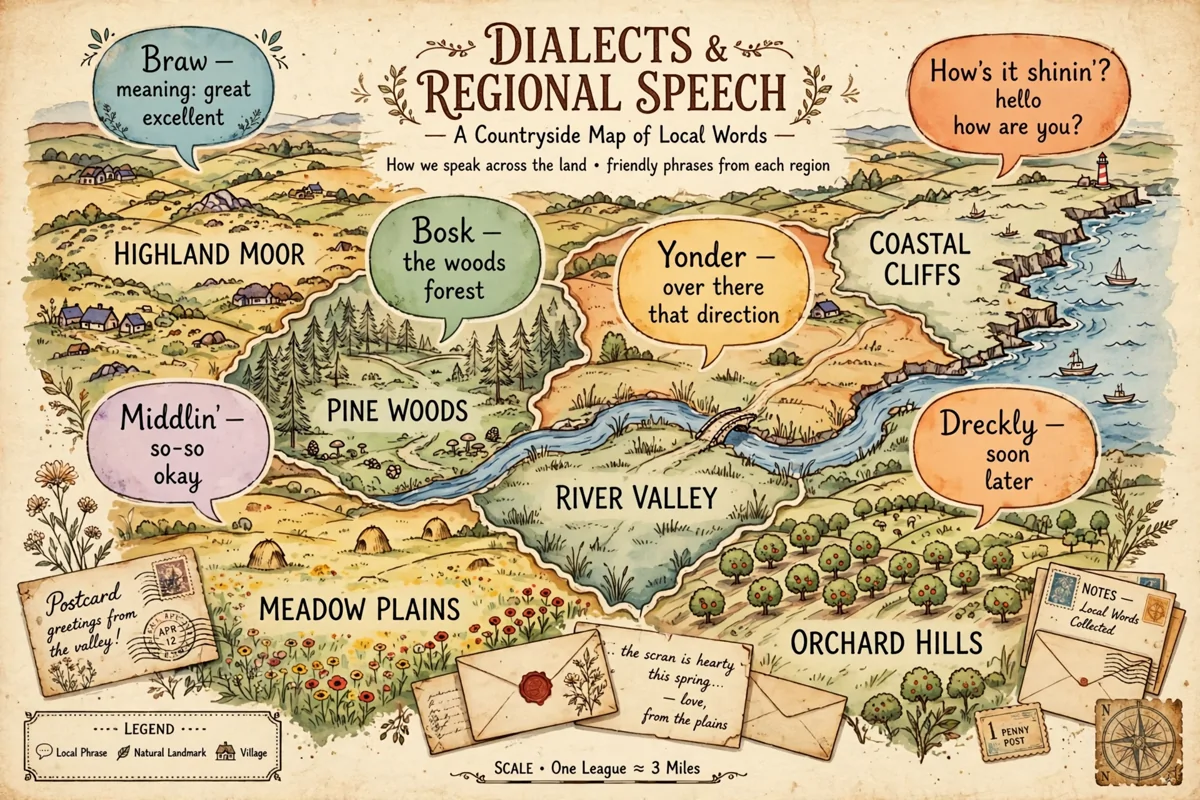
Every place has its own way of speaking. The same language can sound soft in one town and sharp in the next, and the same word can mean a different thing just a few miles away. Dialects are like colors on a map, and each one tells a story about the people who speak it.
Now it is your turn to choose. Would you rather keep the words of home, or learn the words of faraway places? Would you rather sound like your hometown, or blend in anywhere? These 31 questions will take you on a trip through accents, old words, and regional speech.
1. Would you rather speak with a strong local dialect wherever you go or speak in a clear standard way that everyone understands?
Would you rather...
A strong local dialect is like a flag. The moment you speak, people know where you come from. Your words carry the sounds of home, and that can feel warm and proud.
A clear standard way of speaking is like a bridge. Everyone understands you, no matter where they live. You never have to repeat yourself, and no one ever looks confused.
2. Would you rather keep every old word from your home region or learn the newest words from every other region?
Would you rather...
Old words from your home region are treasures. They hold the stories of your grandparents and the names of things that only people from your place know.
New words from other regions are fresh and fun. Every region has its own words for everyday things, and learning them feels like collecting small gems.
| Option | What You Gain | What You Give Up |
|---|---|---|
| keep every old word from your home region | You keep the words of your home and your family history | You may miss the new words people use in other places |
| learn the newest words from every other region | Fresh words from many regions and fun new ways to speak | The old words of home may slowly fade from your memory |
3. Would you rather sound like the people from your hometown or sound like the people from a big city far away?
Would you rather...
Sounding like your hometown means your voice feels like home. People from your town smile when they hear you, because you sound like one of them.
Sounding like a big city is a different kind of charm. City speech can sound fast, smooth, and modern. People may think you have seen a lot of the world.
Things to think about:
- A hometown voice brings comfort and a strong sense of belonging.
- A city voice can open doors in new places and new jobs.
- Many people mix both, and that mix becomes their own style.
4. Would you rather understand every dialect in your country or speak one dialect perfectly like a local person?
Would you rather...
Understanding every dialect in your country is a super skill for your ears. You can travel from town to town and never feel lost in a talk.
Speaking one dialect perfectly like a local person is a deep skill. People accept you as one of their own, and your words sound natural and true.
5. Would you rather use your hometown words at work or use formal standard words at work?
Would you rather...
Hometown words at work can make the office feel warm. Your coworkers laugh at your funny words, and the day feels more human.
Formal standard words at work sound clear and safe. Everyone understands you, and your ideas come across without any mix-ups.
Pro Tip: The best speakers often switch. Use hometown words with close friends and clear standard words when the message must be exact.
6. Would you rather talk with the soft slow accent of the countryside or talk with the fast sharp accent of the city?
Would you rather...
The soft slow accent of the countryside sounds calm and kind. Each word has time to breathe, and people listen with a warm feeling.
The fast sharp accent of the city sounds full of energy. Words come quick and clear, and the talk feels alive.
| Option | What You Gain | What You Give Up |
|---|---|---|
| talk with the soft slow accent of the countryside | A calm and warm voice that people love to hear | You may sound slow to people who like fast talk |
| talk with the fast sharp accent of the city | Quick and lively speech that sounds full of energy | You may sound too sharp to people who like a slow pace |
7. Would you rather learn the dialect of a small mountain village or learn the dialect of a busy port town?
Would you rather...
A small mountain village has words that no one else uses. Learning them feels like finding a secret door to a quiet world of hills and old stories.
A busy port town has words from many places at once. Sailors and traders brought words from far away, so the dialect is full of color and surprise.
8. Would you rather have your children speak your home dialect or have your children speak only the standard language?
Would you rather...
If your children speak your home dialect, the words of your family live on. They can talk with grandparents in the old way, and the family story stays strong.
If your children speak only the standard language, school and work may feel easier for them. Their words will match the books they read and the people they meet in big cities.
Things to think about:
- A home dialect keeps family roots alive.
- The standard language can make school life simpler.
- Some families teach both, and children switch with ease.
9. Would you rather write letters in your home dialect or write letters in perfect standard language?
Would you rather...
Letters in your home dialect feel warm and personal. The reader hears your voice in every line, and the letter feels like a visit.
Letters in perfect standard language are clear and neat. Anyone can read them, and the words will still make sense many years from now.
Important Note: Old letters in a home dialect are hard to read for outsiders, but they are precious for family. Keep a few, even if you write most letters in standard words.
10. Would you rather be known for your funny regional words or be known for your clear and simple speech?
Would you rather...
Being known for funny regional words makes people smile when they see you. Your words become your mark, and friends repeat them with joy.
Being known for clear and simple speech makes people trust your words. Everyone understands you fast, and your ideas never get lost.
11. Would you rather speak a dialect that only a few thousand people know or speak a dialect that millions of people know?
Would you rather...
A dialect that only a few thousand people know is rare and special. Speaking it keeps an old way of life alive, and you become one of its keepers.
A dialect that millions of people know is strong and useful. You can talk with people across a whole region, and your words travel far.
| Option | What You Gain | What You Give Up |
|---|---|---|
| speak a dialect that only a few thousand people know | You help save a rare way of speaking | Only a small group of people can talk with you |
| speak a dialect that millions of people know | You can speak with millions of people | Your words are common, not rare and special |
12. Would you rather hear a new dialect every day for a year or study one rare dialect deeply for a year?
Would you rather...
Hearing a new dialect every day for a year is a wild ride. Each morning brings new sounds, new words, and new people to understand.
Studying one rare dialect deeply for a year is a slow and steady joy. By the end, you know its words, its jokes, and its old sayings like a true local.
13. Would you rather use old dialect words that your grandparents used or use new dialect words that young people use today?
Would you rather...
Old dialect words from your grandparents carry the past with them. They hold the names of old tools, old foods, and old ways of living.
New dialect words from young people show how language grows. They are fresh, funny, and full of life.
Things to think about:
- Old words keep history alive.
- New words keep language fresh and fun.
- A good speaker can enjoy both old and new.
14. Would you rather switch your dialect to match each person you meet or keep one dialect no matter who you talk to?
Would you rather...
Switching your dialect to match each person you meet is a clever skill. People feel close to you fast, because you sound like them.
Keeping one dialect no matter who you talk to shows strong roots. Your voice stays the same everywhere, and people always know it is you.
Pro Tip: Good listeners often copy the sounds of the person they talk with. It is a natural way to show respect and build a warm bond.
15. Would you rather tell stories in your home dialect or tell stories in a dialect from a faraway land?
Would you rather...
Stories in your home dialect sound warm and true. The words fit the tale like an old shoe, and listeners feel at home.
Stories in a dialect from a faraway land sound fresh and strange. The new sounds make the old tale feel new again.
16. Would you rather understand every old saying in your dialect or understand every joke in a new dialect?
Would you rather...
Understanding every old saying in your dialect means you know the wisdom of your people. Each saying is a small lesson passed down through time.
Understanding every joke in a new dialect means you can laugh with new friends. Humor is the fastest way to feel close to people.
| Option | What You Gain | What You Give Up |
|---|---|---|
| understand every old saying in your dialect | You hold the wisdom of your people | Jokes in other dialects may still confuse you |
| understand every joke in a new dialect | You can laugh and bond with new friends fast | The old sayings of home may stay a mystery to you |
17. Would you rather speak with the dialect of the north or speak with the dialect of the south?
Would you rather...
The dialect of the north often sounds strong and clear, like cold wind and open fields. Its words can feel honest and direct.
The dialect of the south often sounds soft and warm, like long summers and slow rivers. Its words can feel gentle and kind.
18. Would you rather have a voice that shows where you come from at once or have a voice that hides where you come from?
Would you rather...
A voice that shows where you come from at once is honest and proud. People know your home the moment you say hello.
A voice that hides where you come from is like a blank page. People judge you only by your words, not by your home town.
Things to think about:
- A clear home voice brings pride and belonging.
- A neutral voice can help you blend in anywhere.
- Neither one is better, it depends on what you want.
19. Would you rather learn a dialect only by listening to local people or learn a dialect only by reading old books from that region?
Would you rather...
Learning a dialect only by listening to local people is the natural way. You pick up the true sounds, the rhythm, and the real way people talk.
Learning a dialect only by reading old books from that region is the quiet way. You learn the old words and the old stories, page by page.
Warning: Books can teach you old words, but they cannot teach you the true sound of a living voice. Listening is the only way to hear how people really speak.
20. Would you rather keep a diary in your home dialect or keep a diary in the standard language?
Would you rather...
A diary in your home dialect is a private treasure. Years later, reading it will bring back the sounds of home in a strong way.
A diary in the standard language is easy to read for anyone, even years later. Your thoughts stay clear, and others can enjoy your story too.
21. Would you rather greet people with your home region greeting or greet people with a greeting from another region?
Would you rather...
Greeting people with your home region greeting feels warm and true. It is a small hello that carries your whole home with it.
Greeting people with a greeting from another region shows respect and curiosity. People smile when you use their own words.
| Option | What You Gain | What You Give Up |
|---|---|---|
| greet people with your home region greeting | A warm hello that shows pride in your home | People from other regions may not know your greeting |
| greet people with a greeting from another region | A friendly hello that makes others feel respected | Your own home greeting gets used less often |
22. Would you rather collect old folk tales in your home dialect or collect old folk tales from many different regions?
Would you rather...
Old folk tales in your home dialect are close to your heart. You know the words, the rhythm, and the feeling of each story.
Old folk tales from many different regions open many worlds. Each region has its own heroes, its own jokes, and its own wise endings.
23. Would you rather move to a place where no one understands your dialect or stay where everyone speaks your dialect?
Would you rather...
Moving to a place where no one understands your dialect is a brave step. Every day is a challenge, but you learn fast and grow strong.
Staying where everyone speaks your dialect is a calm and happy life. Every talk feels easy, and you always belong.
Things to think about:
- A new place brings new words and new friends.
- Home brings comfort and easy talks every day.
- Some people move away and then come back with new words.
24. Would you rather teach your home dialect to the whole world or learn the dialect of every town you visit?
Would you rather...
Teaching your home dialect to the whole world is a big gift. Your words, your stories, and your way of speaking could live on in many hearts.
Learning the dialect of every town you visit is a gift you give yourself. Each town opens a new door, and you collect words like a traveler collects small stones.
Pro Tip: A teacher of dialect keeps the words alive. A learner of many dialects keeps the world open. Both paths make the world richer.
25. Would you rather use regional words for food and farming or use regional words for weather and seasons?
Would you rather...
Regional words for food and farming are full of flavor. They name the crops, the tools, and the meals that fed your people for years.
Regional words for weather and seasons are full of wisdom. They tell you when rain is coming, when to plant, and when to rest.
26. Would you rather speak a dialect with soft sounds or speak a dialect with strong sounds?
Would you rather...
A dialect with soft sounds feels gentle on the ears. Words flow like water, and talks feel calm and kind.
A dialect with strong sounds feels full of power. Words hit clear and firm, and talks feel bold and alive.
| Option | What You Gain | What You Give Up |
|---|---|---|
| speak a dialect with soft sounds | A gentle voice that calms every listener | Your words may sound too soft in a loud place |
| speak a dialect with strong sounds | A bold voice that carries far and clear | Your words may sound too strong to gentle ears |
27. Would you rather know the meaning of every local nickname in your town or know the meaning of every local place name in your region?
Would you rather...
Knowing the meaning of every local nickname in your town makes you feel like a true insider. Each nickname holds a small story about a person or a place.
Knowing the meaning of every local place name in your region is like reading a map of history. Rivers, hills, and fields all carry old names with old meanings.
28. Would you rather talk in your dialect at a big meeting or talk in the standard language at a big meeting?
Would you rather...
Talking in your dialect at a big meeting shows courage and pride. Your voice stands out, and people remember you.
Talking in the standard language at a big meeting is safe and clear. Everyone follows your words, and your ideas shine.
Things to think about:
- A dialect voice at a meeting shows strong roots.
- A standard voice at a meeting keeps things simple.
- The best choice may depend on who is in the room.
29. Would you rather remember every dialect word you ever heard or speak every dialect word with a perfect local sound?
Would you rather...
Remembering every dialect word you ever heard is a gift for your memory. Your mind becomes a library of words from many places.
Speaking every dialect word with a perfect local sound is a gift for your voice. People think you grew up in their town, even if you only just arrived.
Important Note: Memory gives you many words. A perfect sound gives you a true local voice. One helps you know, the other helps you belong.
30. Would you rather spend a month in a village with a strange dialect or spend a month in a city with a mix of many dialects?
Would you rather...
A month in a village with a strange dialect is a deep dive. At first you understand nothing, but each day brings new words and new friends.
A month in a city with a mix of many dialects is a feast for your ears. You hear many ways of speaking on every street, in every shop.
| Option | What You Gain | What You Give Up |
|---|---|---|
| spend a month in a village with a strange dialect | Deep learning of one strange and special way of speaking | The first days may feel lonely and confusing |
| spend a month in a city with a mix of many dialects | Many dialects to hear and learn every single day | You may not learn any one dialect very deeply |
31. Would you rather lose your home dialect but speak the standard language perfectly or keep your home dialect but never speak the standard language well?
Would you rather...
Losing your home dialect but speaking the standard language perfectly is a sad trade. You gain a clear voice for the whole world, but you lose the voice of home.
Keeping your home dialect but never speaking the standard language well is also a hard trade. Your home voice stays strong, but talks with outsiders may feel tough.
This last choice is the heart of the whole list. Your dialect is more than words. It is your home, your family, and your story. Which trade would you make, and what would you keep?
More Would You Rather Questions
- 17 Accent Would You Rather Questions From Around the World
- 24 Pronunciation Would You Rather Questions That Test Your Speaking Skills
- 36 Grammar Would You Rather Questions for Language Learners
- 19 Vocabulary Would You Rather Questions That Test Your Word Power
- 26 Language Barrier Would You Rather Questions With Unexpected Challenges
- 11 Interpreter Would You Rather Questions From Around the World
- 38 Translator Would You Rather Questions That Test Your Language Skills
- 21 Translation Would You Rather Questions With Impossible Choices
- 32 Polyglot Would You Rather Questions for Language Enthusiasts
- 16 Bilingual Would You Rather Questions About Speaking Two Languages