15 Urdu Language Would You Rather Questions for Language Lovers

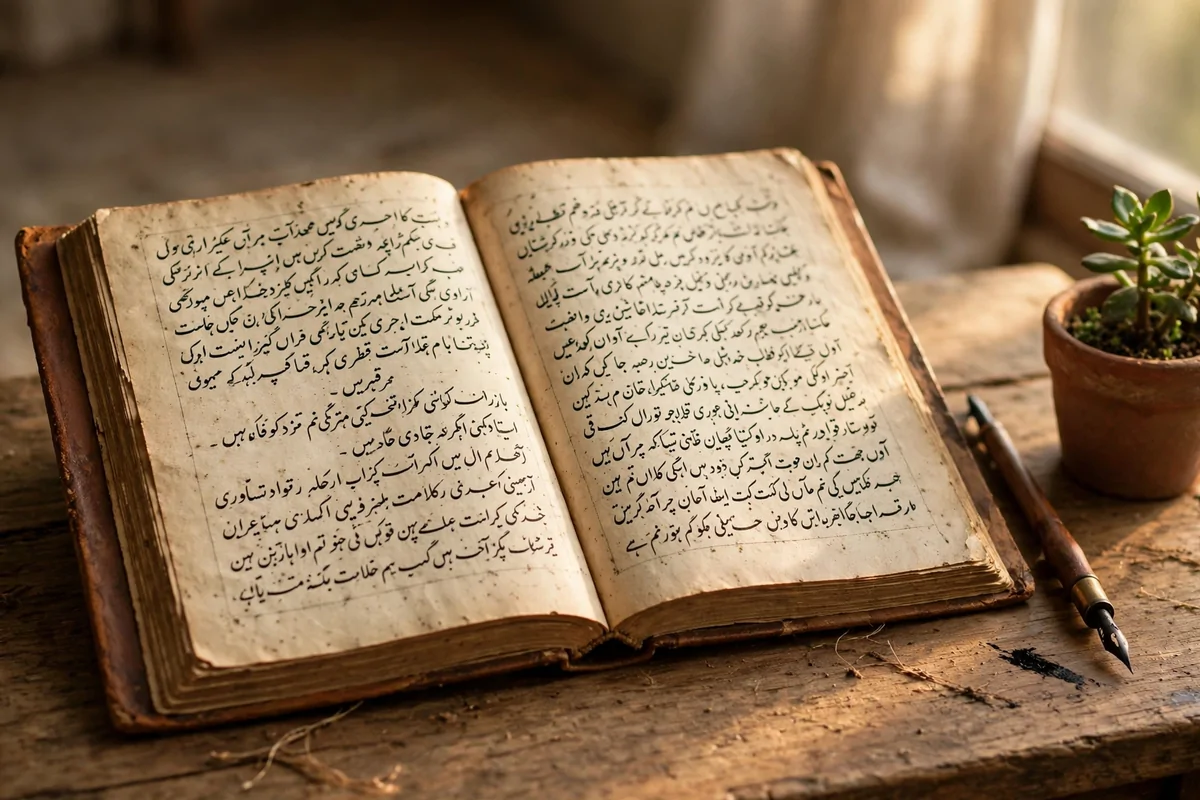
Urdu is a sweet and soft language. Many people want to learn it because it sounds so kind and warm. Every word feels like a small gift.
Learning a new language is full of fun choices. Do you want to speak first or read first? Do you want many words or perfect grammar? These 15 questions will make you think about how you would learn Urdu in your own way.
1. Would you rather learn to speak Urdu fluently but never learn to read the Urdu script, or learn to read and write the Urdu script but speak only simple words?
Would you rather...
Speaking fluently is a big joy. You can talk with shopkeepers, old friends, and new people. You can laugh and share stories in Urdu without fear. But the script stays a secret. Street signs, books, and letters stay closed to you.
Reading and writing the script is a different kind of joy. You can open a book and read real Urdu words. You can write a short note to a friend. But your tongue stays slow. You know the letters, yet simple talk feels hard.
Both paths are good. One gives you a voice. The other gives you eyes for the language. Which one matters more to you?
2. Would you rather learn one new Urdu word every day for a year, or learn 50 Urdu words in one week and then forget half of them?
Would you rather...
One word a day is slow and steady. After a year you know 365 words. You remember them well because you use each one again and again. Small steps build a strong base.
Fifty words in one week feels fast and exciting. You learn many words at once, and for a few days you feel very smart. But then half of them slip away. You keep 25 words, and the rest are gone.
| Option | What You Gain | What You Give Up |
|---|---|---|
| One new Urdu word every day for a year | 365 words that stay in your memory for a long time | The quick thrill of learning many words at once |
| 50 Urdu words in one week and then forget half of them | A fast start and many words in a short time | Half of those words, and the deep memory that slow learning builds |
Slow learning wins in the long run for most people. But a fast start can give you the push you need. Which style fits your life?
3. Would you rather speak Urdu with a perfect accent but make small grammar mistakes, or speak with correct grammar but a strong accent?
Would you rather...
A perfect accent opens doors. People smile when you sound like them. They feel close to you at once. Small grammar mistakes hardly matter in a friendly chat.
Correct grammar is a different strength. Your sentences are clean and clear. Teachers and old people respect your careful words. But a strong accent can make people ask you to repeat yourself.
Think about it this way. Accent is about warmth and feeling. Grammar is about order and clarity. A good speaker needs a little of both, but if you must pick one first, which one do you pick?
4. Would you rather learn Urdu only by talking with native speakers, or learn Urdu only from books and apps?
Would you rather...
Talking with native speakers is the fastest way to sound natural. You learn real words, real jokes, and real ways of greeting people. You also learn the culture that lives inside the language.
Books and apps give you order. You learn step by step, from easy words to hard sentences. You can study at midnight, on a bus, or in a quiet room. No one is waiting for you to answer.
- Talking with people builds courage and real fluency.
- Books and apps build a clean base and correct spelling.
- Talking can feel scary at first, but it gets easy fast.
- Books can feel safe, but they cannot laugh with you.
Most learners mix both. But if you had to pick only one, which one would it be?
5. Would you rather understand Urdu poetry but never write a poem yourself, or write simple Urdu poems but never understand the deep old poetry?
Would you rather...
Urdu poetry is famous all over the world. Its words are soft, deep, and full of feeling. If you can understand it, every poem opens like a door. You feel what the poet felt, even after hundreds of years.
Writing your own poems is a different joy. You take small words and build something new. Your poem may be simple, but it is yours. Friends smile when they hear your lines.
Pro Tip: Read one short Urdu poem out loud every day. Even if you do not know every word, your ear learns the rhythm of the language.
One choice lets you enjoy the great poets. The other lets you become a small poet yourself. Which dream is closer to your heart?
6. Would you rather learn the Urdu alphabet in one week, or learn 100 common Urdu phrases in one week?
Would you rather...
The Urdu alphabet has 39 letters. In one week you can learn them all, and then every Urdu word starts to make sense. You can read shop signs, book titles, and names. It is the key to the whole language.
One hundred common phrases are very useful right away. You can say hello, ask for help, order food, and thank people. On your very first day in a new city, phrases help you more than letters do.
Things to think about:
- The alphabet is a slow gift that keeps giving for years.
- Phrases give you fast confidence in real life.
- Letters help you read. Phrases help you speak.
- You can learn both, but one must come first.
Which first step would you take?
7. Would you rather speak Urdu at home every day, or speak Urdu only when you travel to Pakistan?
Would you rather...
Speaking Urdu at home every day keeps the language alive. You use it for breakfast, for jokes, and for small talks with family. The words become part of your daily life.
Speaking Urdu only in Pakistan makes it special. You save the language for real trips, real markets, and real streets. When you land, your Urdu wakes up and feels fresh and new.
Home practice builds a daily habit. Travel practice builds strong memories. One is steady, the other is full of adventure. Which life would you like?
8. Would you rather learn Urdu words for food and cooking, or learn Urdu words for nature and travel?
Would you rather...
Food words are tasty to learn. You can name every dish, every spice, and every sweet on the table. In a kitchen or a market, food words make you feel at home at once.
Nature and travel words open the outside world. You can name the mountains, the rivers, the rain, and the roads. When you walk in a new place, these words help you see it and describe it.
Both sets of words are useful. Food words feed your stomach and your friendships. Nature words feed your eyes and your stories. If you could only pick one set this month, which one would it be?
9. Would you rather read a short Urdu story every night, or listen to a short Urdu story every morning?
Would you rather...
Reading at night is calm and quiet. You sit with a book, you see the Urdu script, and your eyes learn the shape of each word. Night reading helps you sleep with new words in your mind.
Listening in the morning is fresh and bright. You hear the sounds, the rhythm, and the feeling of the story. Morning listening wakes up your ear for the whole day.
| Option | What You Gain | What You Give Up |
|---|---|---|
| Read a short Urdu story every night | Strong reading skill and a good look at the Urdu script | The sound and rhythm of spoken Urdu |
| Listen to a short Urdu story every morning | A sharp ear for real Urdu sounds and natural speech | Practice with reading and writing the script |
Your eyes and your ears both need practice. But time is short, so one must win. Are you a night reader or a morning listener?
10. Would you rather learn Urdu calligraphy, or learn to type fast in Urdu on a keyboard?
Would you rather...
Urdu calligraphy is a true art. The letters flow like water, and each word looks like a small picture. When you write with a pen, you feel the beauty of the language in your hand.
Typing fast in Urdu is a modern skill. You can write messages, emails, and notes in seconds. You can talk with friends online and share your thoughts with the world.
Important Note: Calligraphy takes time and patience, but even a few beautiful letters can make you proud. Typing takes practice too, but it pays off every single day.
One is slow art. The other is fast life. Which skill would you love to show the world?
11. Would you rather know 500 Urdu words but no grammar rules, or know all the grammar rules but only 100 words?
Would you rather...
Five hundred words give you power. You can point, name, and describe almost anything. People understand you even if your sentences are not perfect. Words are the bricks of talk.
Grammar rules give you order. With only 100 words, you can still build clean, correct sentences. You speak less, but everything you say is right.
Things to think about:
- Many words help you survive in a new city.
- Good grammar helps you sound polite and careful.
- Words without grammar can still tell a story.
- Grammar without words has little to build with.
Would you take the big bag of words or the small book of rules?
12. Would you rather learn Urdu with a teacher once a week for a year, or learn Urdu alone every day for three months?
Would you rather...
A teacher once a week gives you a guide. The teacher corrects your mistakes, answers your questions, and keeps you on the right road. Over a year, that slow help adds up to a lot.
Learning alone every day is fast and free. You study when you want, as much as you want. In three months of daily work, you can go very far. But no one is there to catch your small mistakes.
One path is slow, steady, and guided. The other is fast, free, and full of hard work. Which kind of learner are you?
13. Would you rather speak Urdu to strangers in a market, or speak Urdu to friends at a family gathering?
Would you rather...
Speaking to strangers in a market is brave. You ask prices, you bargain a little, and you learn real street Urdu. Every small talk is a little adventure, and each one makes you stronger.
Speaking to friends at a family gathering is warm and safe. People know you, they help you, and they laugh with you. You can try new words without fear, and everyone cheers you on.
Warning Box: Do not wait until you feel ready. You will never feel fully ready. Start with one short sentence, and the next one will feel easy.
Strangers teach you courage. Friends teach you comfort. Which classroom do you pick?
14. Would you rather learn old classic Urdu words, or learn modern everyday Urdu words?
Would you rather...
Old classic Urdu words are rich and deep. They come from great books and old poems. When you use them, people feel the history of the language. These words carry respect and beauty.
Modern everyday words are simple and useful. They are the words people use in shops, in offices, and on the street today. With them, you can talk with anyone, anywhere, right now.
Classic words are like old gold. Modern words are like fresh bread. One is precious, the other is daily food. Which one fills your bag first?
15. Would you rather forget your first language for one day and speak only Urdu, or keep your first language but speak Urdu only on weekends?
Would you rather...
One full day of only Urdu is a big test. You must think, ask, eat, and live in Urdu for 24 hours. It will be hard, but by the end of the day your Urdu will feel alive in a new way.
Weekend Urdu is gentle and easy. You keep your first language for work and daily life, and you enjoy Urdu on Saturdays and Sundays. It is slow, but it never feels hard.
Things to think about:
- One hard day can teach you more than many easy weeks.
- Weekend practice is easy to keep for years.
- A full day of Urdu builds deep courage.
- Weekend Urdu builds a calm, steady habit.
Would you take the brave one-day challenge or the calm weekend road?
More Would You Rather Questions
- 20 Persian Language Would You Rather Questions From a Rich Linguistic Tradition
- 10 Hebrew Language Would You Rather Questions for Language Learners
- 39 Arabic Language Would You Rather Questions for Global Language Fans
- 33 Turkish Language Would You Rather Questions for Curious Learners
- 37 Greek Language Would You Rather Questions About Ancient and Modern Words
- 29 Russian Language Would You Rather Questions for Global Learners
- 31 Ukrainian Language Would You Rather Questions for Language Enthusiasts
- 17 Czech Language Would You Rather Questions for Curious Learners
- 24 Polish Language Would You Rather Questions for European Language Fans
- 36 Icelandic Language Would You Rather Questions From the North