26 Monthly Planner Ideas for a Fresh Start

On the last evening of the month, I sit down with my planner and a pen, and I give the next month ten quiet minutes before it starts. The page in front of me is blank, and that blank page feels like a small gift.
A new month does not need a big plan to feel fresh. It needs one clear page and a few small choices that you can keep.
I used to start each month in a rush. I would forget birthdays, miss small jobs, and wonder where my days had gone. Then I learned that ten quiet minutes with my planner could change the whole month.
A monthly planner is just a simple book with room for your days. You do not need fancy tools or a perfect hand to use it well.
In this list I share the small habits that help me most. Each one takes only a few minutes. Each one makes the month feel calmer and lighter.
So I put together 26 monthly planner ideas that give you a fresh start, one small page at a time. Pick the ones that fit your life, and leave the rest for another month.
You can start tonight, or on the first morning of the month. Either way, your planner is ready when you are.
1. Start the Month with One Clear Page
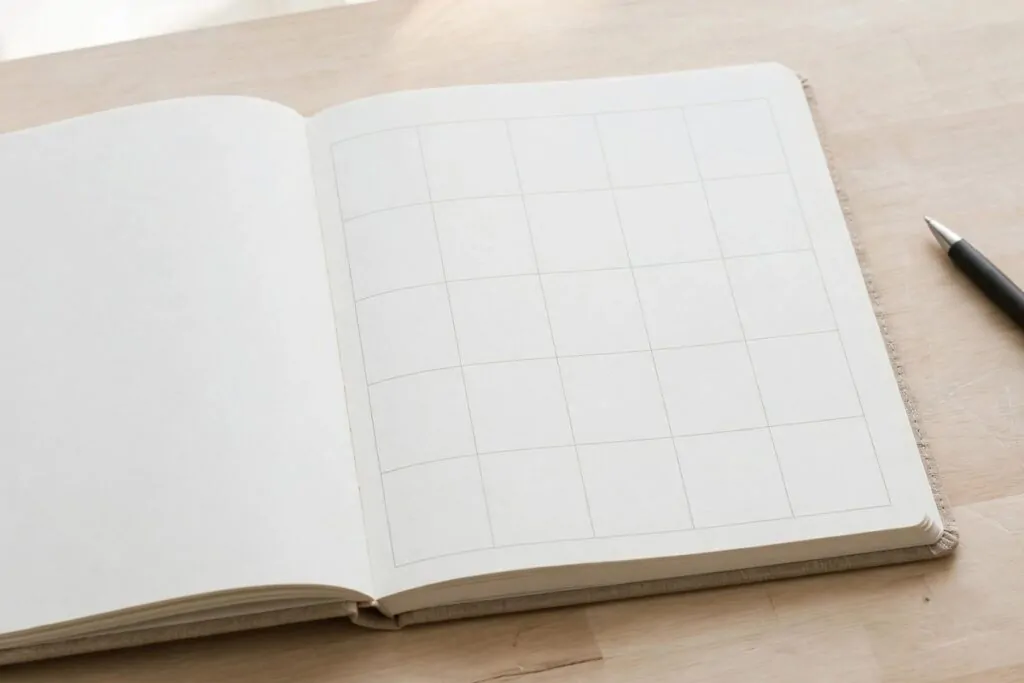
I open my planner to the blank monthly grid on the first day of the month. My pen rests beside it, and I take one slow breath before I begin.
One clear page is all I need to see the whole month at once.
I start by looking at the empty boxes on the grid. I think about the days that matter most to me. Then I add them one by one, in my own plain hand.
I keep the writing big and simple so I can read it at a glance.
A clear page stops the month from feeling like a pile of loose jobs. I can see what is coming, and I can plan around it.
I leave some boxes empty on purpose. Free days are part of a good month too.
When the page is done, I feel calm instead of rushed.
You can do this on the first evening of the month or the morning after. It takes only a few minutes. And it sets the tone for every week that follows.
A plain planner cost $3 to $5. It is a small price for a calmer month.
2. Write Three Goals for the Month
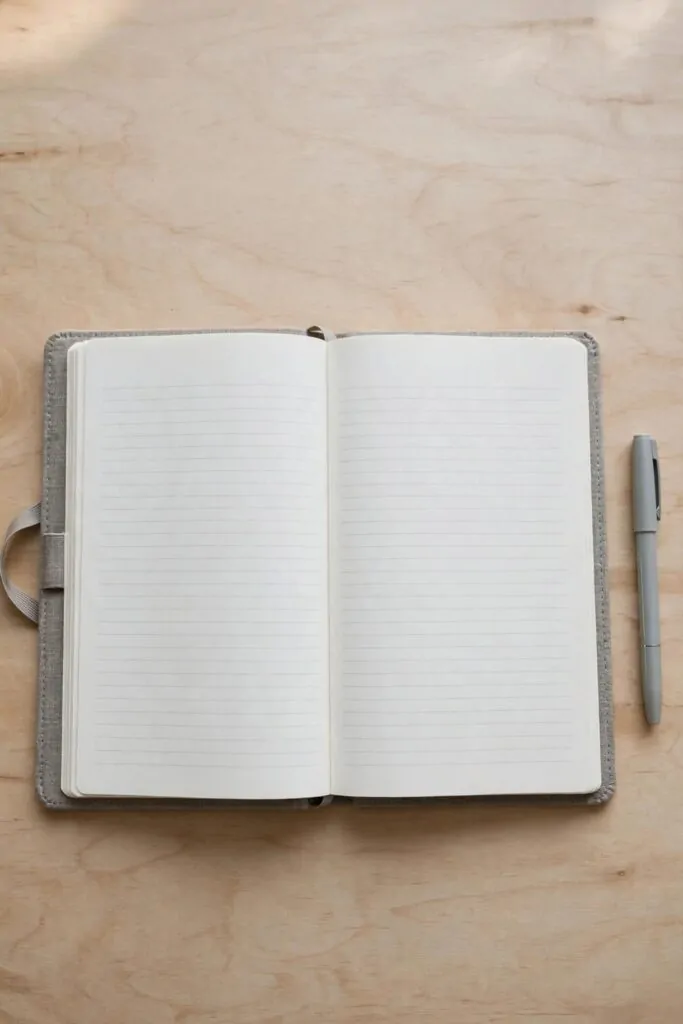
Three small goals are enough for one month.
I pick goals that I can really finish. A big wish sounds nice, but a small goal gets done.
I write each goal on a fresh lined page in my planner. I use plain words that I can read at a glance.
One goal might be about my home. One might be about my health or my time with my family. The third one can be just for fun.
I read my three goals every Sunday night.
Reading them again keeps them close to my heart. It also shows me which goal needs a little more time that week.
If a goal starts to feel too hard, I make it smaller. I do not drop it. I just take a smaller step, and that keeps me moving.
Three done goals feel better than ten half done ones.
A plain pen cost $2 to $3. It is the only tool this habit needs.
3. Mark the Big Days First
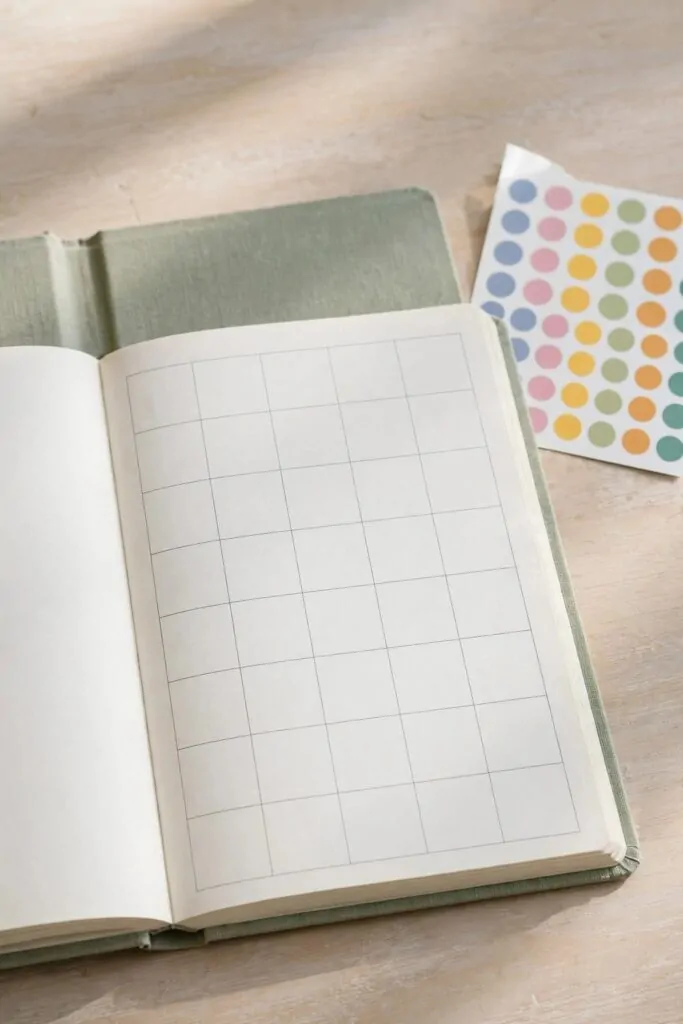
Big days come fast, and they are easy to forget. I mark them first, before the small jobs fill up my page. That way the days that matter most never slip past me.
I look at the blank grid and think about birthdays, trips, and family days.
I add a plain coloured dot beside each big day. The dots make those days easy to spot when I flip the page open.
I use one colour for family days and one colour for fun days. Two colours are enough, and the page still looks calm.
I never mark a big day after the small jobs.
When a big day has a dot, I plan the days around it. I keep the day before it free when I can. I also keep the day after it light, so I can rest.
You can add dots as new plans come up during the month. The grid stays open, and your dots grow with your plans.
A page with clear dots feels kind to look at.
A pack of plain dot stickers cost $3 to $4. They last for many months.
4. Plan One Small Treat Each Week
A good month needs small treats, not just jobs. I plan one small treat for each week of the month.
A treat can be a quiet cup of tea in the sun. It can be a long bath or a slow walk in the park. It can be anything that makes you smile.
I write my treat on the page at the start of each week.
A treat I plan ahead feels like a kind gift for myself.
I keep my treats simple and cheap. A treat does not need to cost a lot to feel special.
When the week gets busy, my treat waits for me on the page. I look forward to it on hard days. It gives me one bright spot to walk toward.
You deserve one kind moment every week.
I sit with my small cup beside my planner when I plan my treats. The cup reminds me to slow down and enjoy the month.
A small plain cup cost $4 to $6. It makes treat time feel special.
5. Keep a Page for Monthly Bills

Bills are easier to handle when they all live on one page.
I keep one page in my planner just for the bills of the month. I write down each bill and the day it is due. Then I can see them all in one look.
I keep a small plain envelope beside my planner for paper bills. Each paper bill goes into the envelope the day it comes.
One page and one envelope stop bills from hiding in piles.
I check my bills page every Monday morning. I mark each bill when I pay it. I also note the day I paid it, so I never pay the same bill twice.
A clear bills page takes away the worry of missing a date. I know what is due, and I know when it is due.
You can start this habit with just this month. Write down the bills you know, and add the rest as they come.
A calm bills page makes the whole month feel lighter.
A small plain envelope cost $3 to $5. It keeps paper bills safe and tidy.
6. List the Meals You Will Cook
I plan my meals for the month on one simple page. It saves me from the six o’clock worry about what to cook.
I list the meals my family loves most. I add one or two new meals to try when I feel brave.
I write the meals in plain words, one line each. I group them by week so the list stays easy to read. I leave a few blank lines for meals I think of later.
A short meal list makes food shopping much simpler too.
I check my list before I shop each week.
The list shows me what I need, so I buy less extra food. Less extra food means less waste at the end of the week.
I keep a small plain bowl beside my planner when I plan my meals. The empty bowl reminds me of the warm meals to come. It makes planning feel cosy instead of like a chore.
You do not need to plan every single meal. A few planned meals each week are enough to make evenings calmer.
A small plain bowl cost $2 to $3. It is a sweet reminder on planning day.
7. Set a Simple Budget for the Month
A simple budget is just a plan for your money. I write down what I have for the month. Then I split it into small parts for food, home, and fun.
I keep my budget on one page in my planner. I use round numbers that are easy to add up.
I check my budget page every Sunday night.
Each week I look at what I have left in each part. If one part is low, I spend less from it that week.
I keep my spare cash in a small plain lidded box beside my planner. The box holds the fun money for the month. When the box is empty, fun waits for next month.
A budget is not a punishment.
It is a kind way to make sure the money lasts all month. It also stops those end of month surprises that nobody likes.
You can start with just three parts for your budget. Food, home, and fun are enough for most months. You can add more parts later, when the habit feels easy.
A small plain lidded box cost $3 to $4. It keeps fun money in one safe place.
8. Plan a Quiet Day for Yourself
One quiet day each month can refill your whole heart.
I pick one day in the month and keep it just for me. I write it on my planner page at the start of the month.
A quiet day does not need big plans. I might read a book, sit in the garden, or take a long walk. The only rule is that the day stays slow and soft.
I tell my family about my quiet day in advance. They know it is my day to rest, and they help me keep it free.
I keep a small potted plant beside my planner when I plan my quiet day.
The plant reminds me that quiet things grow too. A plant does not rush, and it still grows tall. My quiet day works the same way for me.
You cannot pour from an empty cup, so rest first.
I mark my quiet day with a small star on the page. When I see the star during a busy week, I know rest is coming.
A small potted plant cost $4 to $6. It sits beside my planner all month long.
9. Track Your Water for the Month

Drinking enough water is a small habit with a big payoff. I track my water on my planner page each day of the month.
I draw a small row of plain boxes on my page for each day.
Each time I finish a glass of water, I fill in one box. By the end of the day I can see how much I drank.
I keep a plain glass of water beside my planner. The glass reminds me to sip while I plan my day. On busy days that small reminder helps a lot.
I do not chase a big number of glasses. I just aim for a little more water than the day before.
Small sips through the day are easier than big gulps at night.
If I forget my water in the morning, I do not feel bad. I just pick up my glass and start again. The next day is a fresh chance, and my page is ready for it.
A full row of boxes at night feels like a small win.
A plain glass cost $3 to $5. It is a simple tool for a healthy month.
10. Keep a Page for Night Notes
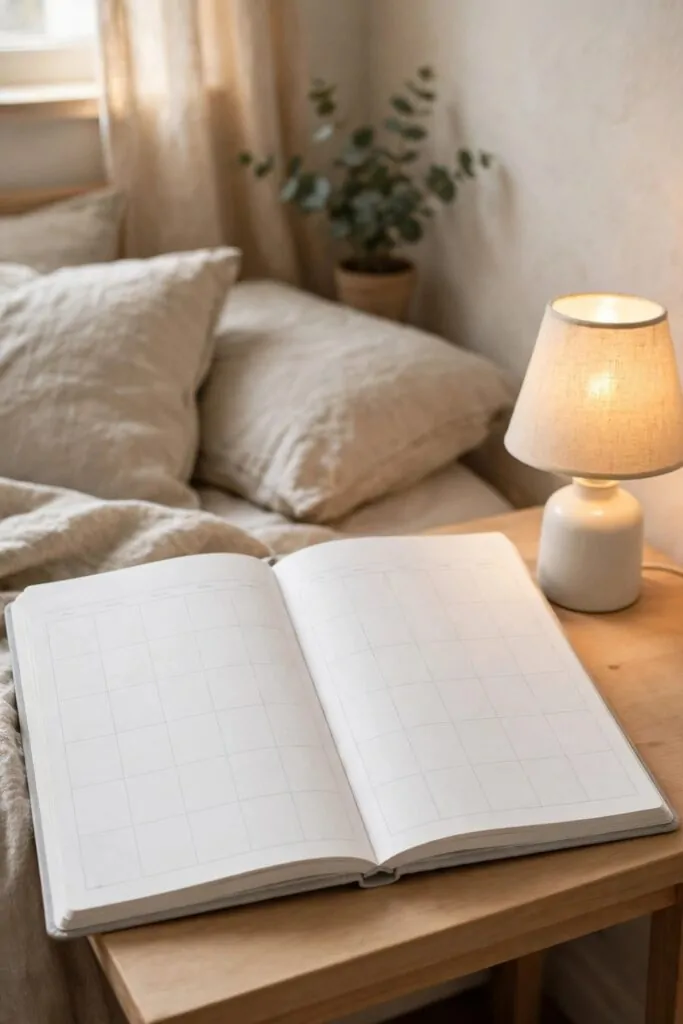
My mind feels busy at night and I forget my best thoughts by morning.
I keep a page just for night notes beside my bed. It gives those late thoughts a safe place to rest.
I write down a small worry before I sleep. I write down a good idea when it pops up. I write down one thing I want to do first in the morning.
The page stays open and my lamp gives me soft light to write by.
I do not try to fix things at night. I just put the thought on paper and let it wait till morning.
Some nights I write only one short line.
I keep the page simple so I can use it fast. I leave space at the top for the day. I leave the rest blank for what comes to mind.
In the morning I read the page with fresh eyes. Most notes turn into small jobs I can finish in a day.
A small notebook cost $3 to $5. It helps me end the day with a calm mind.
| Idea | Main change | Typical cost |
|---|---|---|
| Start the Month with One Clear Page | start the month with one clear page | $3 to $5 |
| Write Three Goals for the Month | write three goals for the month | $2 to $3 |
| Mark the Big Days First | mark the big days first | $3 to $4 |
| Plan One Small Treat Each Week | plan one small treat each week | $4 to $6 |
| Keep a Page for Monthly Bills | keep a page for monthly bills | $3 to $5 |
| List the Meals You Will Cook | list the meals you will cook | $2 to $3 |
| Set a Simple Budget for the Month | set a simple budget for the month | $3 to $4 |
| Plan a Quiet Day for Yourself | plan a quiet day for yourself | $4 to $6 |
| Track Your Water for the Month | track your water for the month | $3 to $5 |
| Keep a Page for Night Notes | keep a page for night notes | $3 to $5 |
| Total | $30 to $46 |
11. Keep a Page for Birthdays This Month
Birthdays slip past me when the month gets busy. I keep one page in my planner just for birthdays so I can see them all at once.
I write each name on the page at the start of the month.
I add a small note next to each name about what that person likes.
I check the page on the first day of the month. I mark the week I need to buy a card. I leave time to write a kind note inside it.
I keep a plain blank card beside my planner for this page. It helps me act fast when a birthday is near.
I do not wait till the last day to get ready. I pick a small gift early when I can. I write the note in my own plain words.
A short note means more than a late one.
I ask my kids to help me pick a card colour. I let them draw a small picture on the front. I write the name and the day on my page so I do not forget.
A plain card cost $2 to $3. It makes a birthday feel warm and planned.
12. Plan the Cleaning Week by Week
A whole house feels too big to clean in one day. I break the work into small weeks in my planner. I give each week one main job to finish.
I start with the rooms we use the most.
I write the job for each week on my page. I keep the jobs small so I can finish them without stress.
I fold a plain cloth and keep it with my planner as my cleaning helper.
One week I clean the kitchen shelves. One week I wash the windows in the front rooms. One week I sort the closet and put things back in place.
I tick off each job when it is done. I feel calm when the page shows a clean week behind me.
I leave one week free for rest or for jobs that ran late.
A slow plan keeps my home tidy all month.
A plain cloth cost $3 to $4. It is a small tool that helps a big plan work.
13. List the Books You Want to Read This Month
I love to read but I forget which books I want to try next.
I keep a list in my planner for books I want to read this month. I add a title when a friend tells me about a good book. I add a title when I see one I like at the shop.
I pick books that fit my mood and my free time.
I keep a small stack of plain books beside my planner. I look at the list and pick the next book when I finish one.
I read a little each night before I sleep.
I write a short line about each book after I finish it. I note if I liked it and if I want to read more like it.
I do not rush through the list. I read at my own pace. I let a good book stay with me for a few days after I close it.
A good list turns spare time into quiet joy.
A plain notebook cost $4 to $6. It holds my reading plans all month long.
14. Plan One Family Day Out

A family day out feels best when we plan it early. I keep one page in my planner for our day together.
I ask each person where they want to go. I write down the ideas on my page. I pick the one that fits us all best.
I keep a small plain globe beside my planner to spark ideas.
I plan the food and the water we need to take with us.
I write down what time we leave home. I write down what we need to pack for the day.
I let the kids help pick a game to play. I let them help pack the bag. I keep the plan simple so the day stays fun.
I check the weather in the morning before we go. I change the plan a little if the day turns wet.
A planned day leaves room for laughs and rest.
A small globe cost $3 to $5. It helps us dream up a happy day out.
15. Keep a Page for Thank-You Notes
A short thank-you note can make a person smile all day. I keep a page in my planner just for thank-you notes. I write down who I want to thank and why.
I keep a plain blank envelope and a plain pen beside my planner. They help me write the note the same day I think of it.
I write the note in my own plain words.
I thank a friend who helped me last week. I thank a teacher who gave me good advice. I thank a neighbour who shared food with my family.
I do not wait for a big reason to say thanks.
A small note is enough.
I put the note in the envelope and write the name on it. I give it by hand when I see the person next.
I check my page at the end of each week. I see who I still need to thank. I write those notes first so no one is missed.
A plain envelope cost $2 to $3. It carries a kind word to someone I care about.
16. Track One Habit All Month
I pick one small habit I want to keep all month.
I draw one short line with my pencil each day I keep the habit.
I keep my pencil beside my planner for this page. I mark the day in the morning so I do not forget by night.
My habit is simple and easy to do. I drink a glass of water when I wake up. I take a short walk after lunch.
I do not chase a perfect month. I just try to keep going day by day. I feel proud when I keep my word for many days in a row.
A missed day does not end the plan.
I start again the next day with a fresh line. I keep the habit small so I can stick with it.
Small steps each day add up to a big change.
A plain pencil cost $3 to $4. It helps me track one good habit all month.
17. Plan Your Work Days in Blocks
My work days feel messy when I jump from job to job. I plan my days in blocks in my planner so each job has its own space.
I keep a small round clock beside my planner. It reminds me to work in calm blocks and take a short rest between them.
I put my hardest job in the first block of the day. I put small jobs in the next block. I leave the last block for tidying up and planning tomorrow.
I do not fill every block with work.
I leave room to breathe and to eat in peace.
I write each block on my page before the day starts. I follow the plan as best I can. I move a job to the next block if it takes longer than I hoped.
A clear plan makes a busy day feel light.
I end the day by closing my planner and resting my mind. I start fresh the next day with a new set of blocks.
A small clock cost $4 to $6. It helps me shape a calm work day.
18. Write Down One New Skill to Try
I love to learn a new skill each month. I write it down in my planner so I do not forget it. I pick a skill that feels fun and useful.
This month I want to try simple sketching. I keep a plain pencil and a small plain eraser beside my planner for my notes. I write down the first small step I want to try.
I practice a little each day after my work is done. I do not try to be perfect at first.
I draw simple shapes and lines with my pencil.
I rub out a line with my eraser when it goes wrong. I try again with a fresh line and a calm mind.
A new skill grows slowly, one small try at a time.
I write down what I learned at the end of each week.
I share what I make with my family. I ask them what they like best. I keep going even when my first tries look rough.
A plain pencil cost $3 to $5. It helps me start a new skill with a smile.
19. Note One Win from Each Week
Each week has one win, even a hard week. I look back on Sunday night and pick the best one.
I keep a small sheet of plain gold star stickers beside my planner for this job.
A win can be small. It can be a job done on time, a kind word said, or a plan kept. I add a star when I note the win, and the star marks the week as done well.
Some weeks the win is just that I kept going.
I write the win in one short line. Then I add the star beside it, and I smile at the week I just lived.
This habit takes only a few minutes. It helps me see my good days more clear. It also shows me what I want to do more of next week.
By the end of the month I have a full set of wins to look back on.
You can do this too, even with a busy week. Pick one win, write it down, and mark it with a star.
A small pack of plain gold star stickers cost $3 to $5. It lasts all month.
20. Plan a No-Spend Week
A no-spend week is one week when I buy nothing new.
I pick the week at the start of the month. I mark it in my planner so I can see it coming.
I keep a small plain lidded tin box beside my planner for this week.
Each day I put the coins I did not spend into the tin. The coins add up fast, even small ones. At the end of the week I count them and smile.
I plan my meals from what I already have at home. I use the food in my cupboard first, and I waste less that week.
A no-spend week shows me what I truly need.
Some days feel hard, and that is fine. I remind myself the week will pass quick. I also find free ways to have fun, like a walk or a long talk with a friend.
You can try one no-spend week each month.
A small plain lidded tin box cost $2 to $3. It sits by my planner all week.
| Idea | Main change | Typical cost |
|---|---|---|
| Keep a Page for Birthdays This Month | keep a page for birthdays this month | $2 to $3 |
| Plan the Cleaning Week by Week | plan the cleaning week by week | $3 to $4 |
| List the Books You Want to Read This Month | list the books you want to read this month | $4 to $6 |
| Plan One Family Day Out | plan one family day out | $3 to $5 |
| Keep a Page for Thank-You Notes | keep a page for thank-you notes | $2 to $3 |
| Track One Habit All Month | track one habit all month | $3 to $4 |
| Plan Your Work Days in Blocks | plan your work days in blocks | $4 to $6 |
| Write Down One New Skill to Try | write down one new skill to try | $3 to $5 |
| Note One Win from Each Week | note one win from each week | $3 to $5 |
| Plan a No-Spend Week | plan a no-spend week | $2 to $3 |
| Total | $29 to $44 |
21. Write a Note to Your End-of-Month Self
At the start of the month I write a short note to my end-of-month self. I tell her how I feel right now. I also tell her what I hope the month will bring.
I keep a plain blank envelope beside my planner to hold the note.
The note is short, just a few lines. I write it in plain words, like I would talk to a good friend.
I seal the note in the envelope and tuck it at the back of my planner.
All month the note waits for me. I do not open it early, even when I feel low. I let it sit there till the last day of the month.
On the last day I open it and read it slow. It feels like a gift from my past self to my now self.
Some months the note makes me laugh, and some months it makes me proud.
You can write your own note tonight. Keep it short and kind. Tell your end-of-month self one thing you hope for, and one thing you are glad about right now.
A pack of plain blank envelopes cost $3 to $4. It keeps my note safe all month.
22. Keep a Page for Slow Evenings
Slow evenings are my favourite part of the day. I keep one page in my planner just for them.
On this page I plan calm things to do after dinner. I might read a book, sit with a warm drink, or just rest my feet. I pick one slow thing each night, and I write it down in the morning.
I keep a small plain vase with green leaves beside my planner to mark this calm page.
The green leaves remind me to slow down. I see them when I open my planner, and I breathe a little deeper.
A slow evening does not need a big plan.
Some nights I sit by the window with my book. Some nights I sit still for a while and let the quiet fill the room. Some nights I just sit with my family and talk about the day.
I plan two or three slow evenings each week. That is enough to feel rested without losing my busy days.
You can start with one slow evening this week.
A small plain vase cost $4 to $6. It holds green leaves by my planner.
23. Plan the Home Jobs for the Month
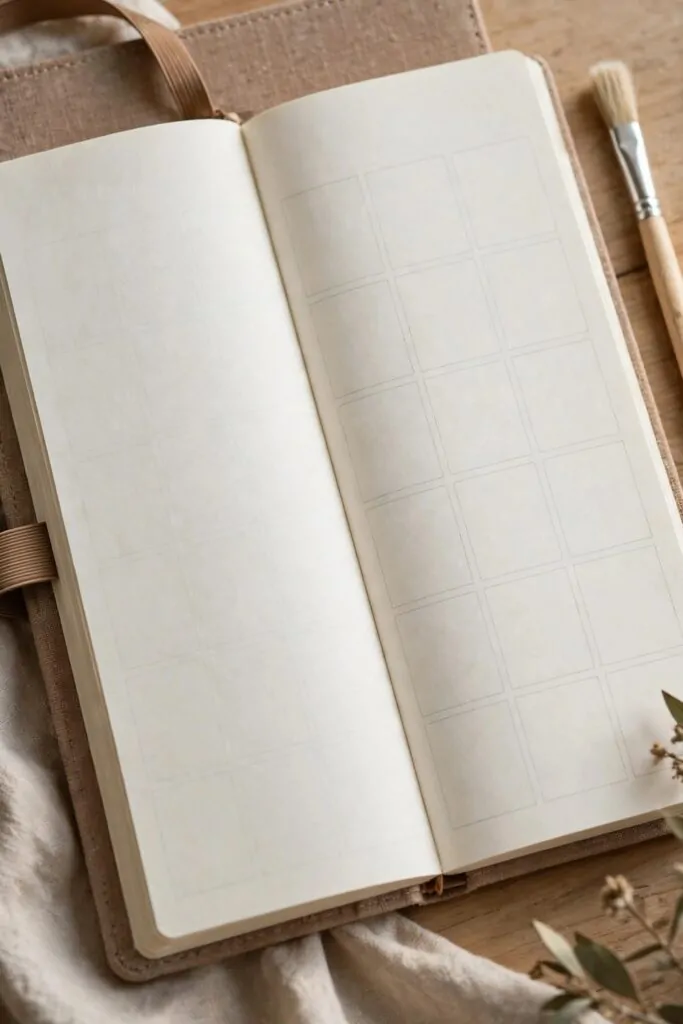
Each month my home needs a few small jobs done.
I list them all on one page at the start of the month. I pick the jobs that matter most first. Then I spread the rest over the weeks so no week feels too full.
I keep a small plain paint brush beside my planner for this page. The brush reminds me that small jobs can make a big change.
Some jobs take ten minutes, and some take a whole morning.
I paint one wall edge, fix one loose handle, or clean one shelf at a time. One job done feels good, and the home looks fresh again.
I do the hard jobs early in the month, while I still feel fresh.
Each week I pick two jobs from the list. I do them on the days I have time. I tick them off as I go, and I love to see the list get short.
You can start with just three jobs this month. Pick the easy ones first, and the rest will feel small too.
A small plain paint brush cost $2 to $3. It stays in my cup till I need it.
24. List the People You Want to Call
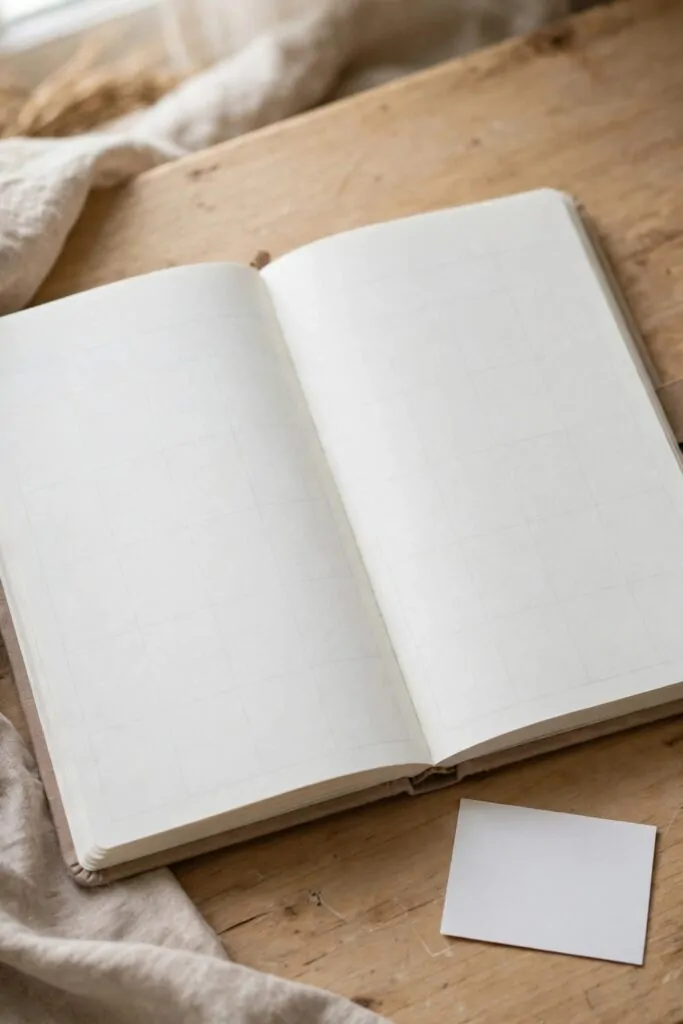
Each month I want to call the people I love. Life gets busy, and I forget to ring them. So I keep a list of them in my planner.
I keep a small plain blank card beside my planner for this list. I write each name on the card, with one line about what I want to ask them.
I pick one or two people to call each week.
A short call can make a whole day bright. I ask how they are, and I listen well. I also tell them one good thing from my week.
Some calls are long, and some are just five minutes.
I call my mum first, then my oldest friend. After each call I feel warm, and I know they feel loved too.
If a week slips by, I do not feel bad. I just move the name to the next week. The list waits for me, and no one is lost from it.
You can start with three names this month.
A pack of plain blank cards cost $3 to $4. I keep one card for each month.
25. Note the Best Part of Each Week
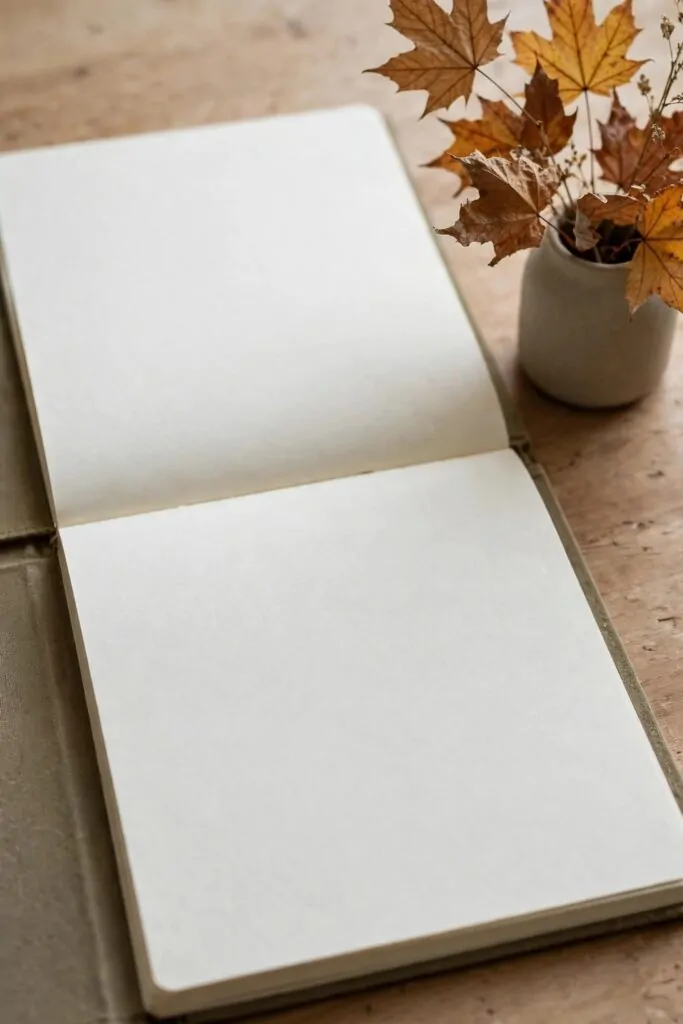
Each week has one best part, even a plain week. I note it down before the week slips away.
I keep a small plain vase with dried autumn leaves beside my planner for this page.
The best part can be a meal, a walk, or a good talk. I write it in one line, and I add the day it took place.
Some weeks the best part is quiet, like a calm morning with warm bread. Some weeks it is loud, like a full house and lots of laughs. Both kinds count, and both kinds make my month sweet.
I read my best parts back at the end of the month.
They remind me that good days hide in plain weeks. I feel glad all over again, and I want more weeks like that.
This page is the one I love most in my planner.
You can start this week, right now. Think of your best part so far. Write it down in one line, and let it sit there as a small gift to your month.
A small plain vase cost $3 to $5. It holds dried autumn leaves on my desk.
26. Build a Starter Kit for Your First Monthly Page
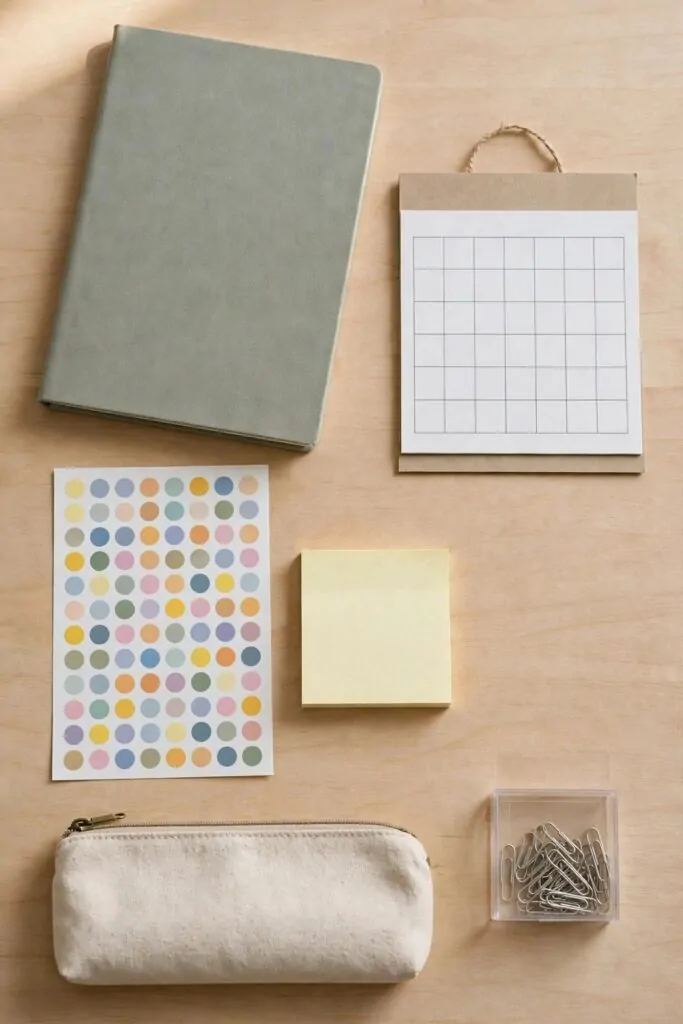
A first monthly page feels big, so start with a small kit. These six plain items are all you need to start tonight.
First, pick a strong book to hold all your months. A plain monthly planner notebook for writing each month in one strong book cost $5 to $7.
Next, take a wall calendar you can see each day. It shows the whole month at a glance, so no big day slips past you. A small plain wall calendar for seeing the whole month at a glance cost $4 to $6.
Then add dots to mark the big days. A sheet of plain coloured dot stickers for marking the big days with a dot cost $2 to $3.
After that, take sticky notes to flag the pages you use most. A pack of plain sticky notes for flagging the pages you use most cost $2 to $3.
A pen case keeps every pen in one neat place. You will not lose pens in your bag or under books. A plain pen case for keeping every pen in one case cost $3 to $4.
Last, take a small set of paperclips for the pages that matter most. A small plain paperclip set for clipping the pages that matter most cost $2 to $3.
All six items together come for a total of $18 to $26.
Start with one page tonight, and let your next month grow from that one small start.
| Idea | Main change | Typical cost |
|---|---|---|
| Write a Note to Your End-of-Month Self | write a note to your end-of-month self | $3 to $4 |
| Keep a Page for Slow Evenings | keep a page for slow evenings | $4 to $6 |
| Plan the Home Jobs for the Month | plan the home jobs for the month | $2 to $3 |
| List the People You Want to Call | list the people you want to call | $3 to $4 |
| Note the Best Part of Each Week | note the best part of each week | $3 to $5 |
| Build a Starter Kit for Your First Monthly Page | build a starter kit for your first monthly page | $18 to $26 |
| Total | $33 to $48 |
| Idea | Main change | Typical cost |
|---|---|---|
| a plain monthly planner notebook | Write each month in one strong book | $5 to $7 |
| a small plain wall calendar | See the whole month at a glance | $4 to $6 |
| a sheet of plain coloured dot stickers | Mark the big days with a dot | $2 to $3 |
| a pack of plain sticky notes | Flag the pages you use most | $2 to $3 |
| a plain pen case | Keep every pen in one case | $3 to $4 |
| a small plain paperclip set | Clip the pages that matter most | $2 to $3 |
| Total | $18 to $26 |
Keep Reading
If you liked these ideas, you will love these posts too
Each post has more simple ideas you can try at home this weekend.