17 Simple Home Gym Setups With Only the Essentials

My whole gym fits on one shelf in my hall closet. Two resistance bands. One jump rope. A pair of dumbbells. My yoga mat leans against the side, and the foam roller sits on top like it is watching over everything.
That is it. That is the whole gym.
I used to think a home gym meant a big room full of machines. A treadmill in one corner, a rack of weights in the other, and something with cables that I never really learned to use. Then I moved into a smaller flat and all of that had to go. And honestly? My workouts got better, not worse.
Here is what I learned. The best home gym is the one you actually use. A simple setup with just the essentials gets used every day. A big fancy one collects dust and laundry. So this list is not about machines. It is about small, honest setups with only the things you really need. Seventeen of them. Pick the one that fits your home and your life.
The Adjustable Dumbbell Pair Corner
One pair of dumbbells can do more than you think. I say this because I lived it.
Adjustable dumbbells are the one piece of gear I tell every friend to buy first. You turn a dial and the weight changes. That means one pair does the job of a whole rack of fixed weights.
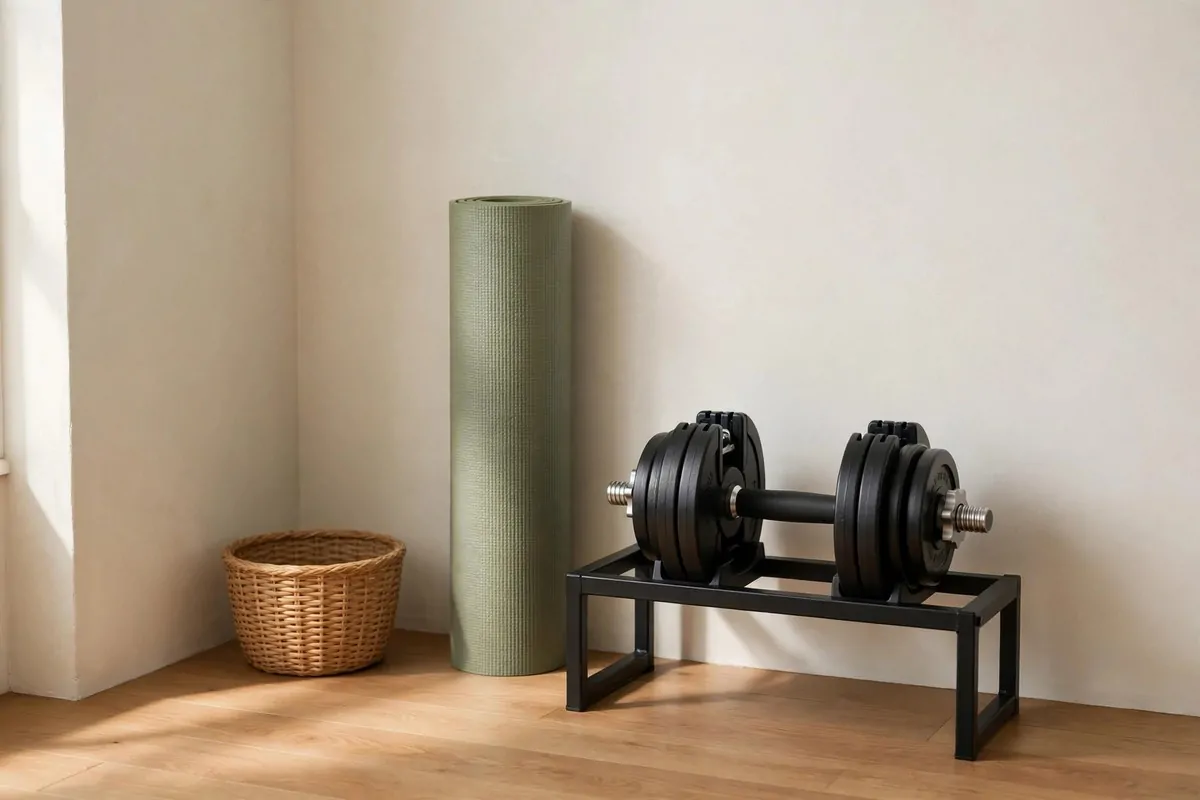
I keep mine in the corner of my spare room. They sit on a small low rack, out of the way but always in sight. When I see them, I use them. When gear hides in a cupboard, I forget it exists.
Start with squats, lunges, and presses. Those three moves work your whole body. You do not need anything else to begin.
My simple starter list looks like this:
- Goblet squats for legs
- Floor presses for chest
- One-arm rows for back
- Overhead presses for shoulders
The corner setup works because it is so small. Two feet of floor space. That is all this takes.
Keep a mat rolled up right next to the rack. You will want it for floor moves like sit-ups and stretches. And a small towel nearby too, because you will sweat more than you expect.
One thing I learned the hard way: put the dumbbells down gently. Not because of the floor, though that matters too. Dropping them just makes the whole thing feel harsh. Your home is not a commercial gym. Treat it kindly.
A little basket for small bits is a nice touch. I keep my wrist wraps and a spare hair tie in mine. And yes, I lose hair ties the way other people lose socks.
This corner has become my favourite part of the day. Work finishes, I walk to the corner, and I move my body for twenty minutes. Simple. Done.
Resistance Bands Hung on a Wall Hook
Resistance bands are the quiet heroes of home gyms. They cost very little and they do so much.
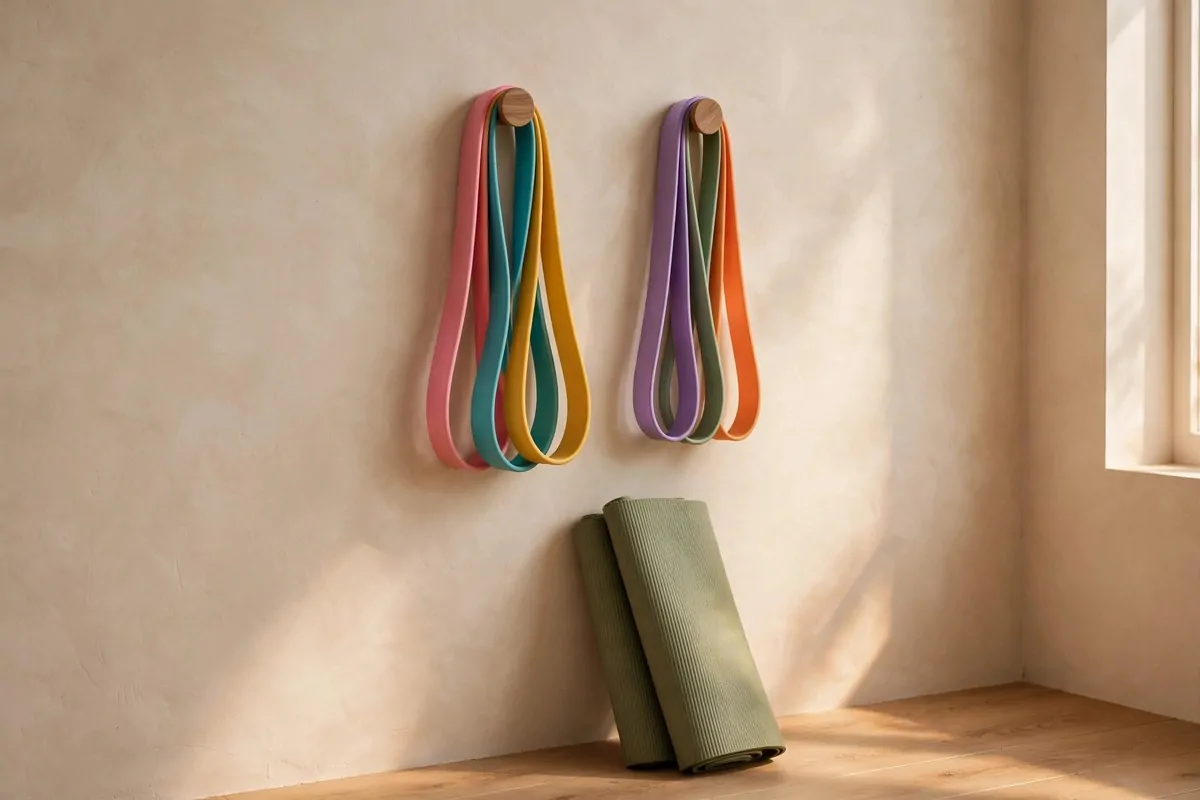
I hang mine on two wooden hooks on the wall of my hallway. They look almost like decor. Nobody guesses they are gym gear until I grab one.
Bands come in different strengths, usually marked by colour. Start light. You can always move up when the easy band starts to feel too easy.
With bands you can work your arms, your legs, your back, and your shoulders. I do rows by looping one around a door handle. I do leg moves by standing on the middle of a long band.
The wall hook setup means zero floor space is lost. That matters in a small flat. Your gym lives on the wall, flat and neat, until you need it.
One tip: check your bands now and then for tiny nicks. A band that snaps mid-pull is no fun. I check mine once a month, which takes about thirty seconds.
Storage is the whole beauty of this setup. Take the band off the hook, do your workout, hang it back up. The whole thing takes less room than a coat.
And here is something I did not expect. Because the bands hang where I walk past them every day, I use them more. A quick set of pulls while the kettle boils. Ten squats before I sit down to work. It adds up fast.
A Yoga Mat and Nothing Else
This one is for the days when you want the simplest thing possible. Just a mat. Nothing else.
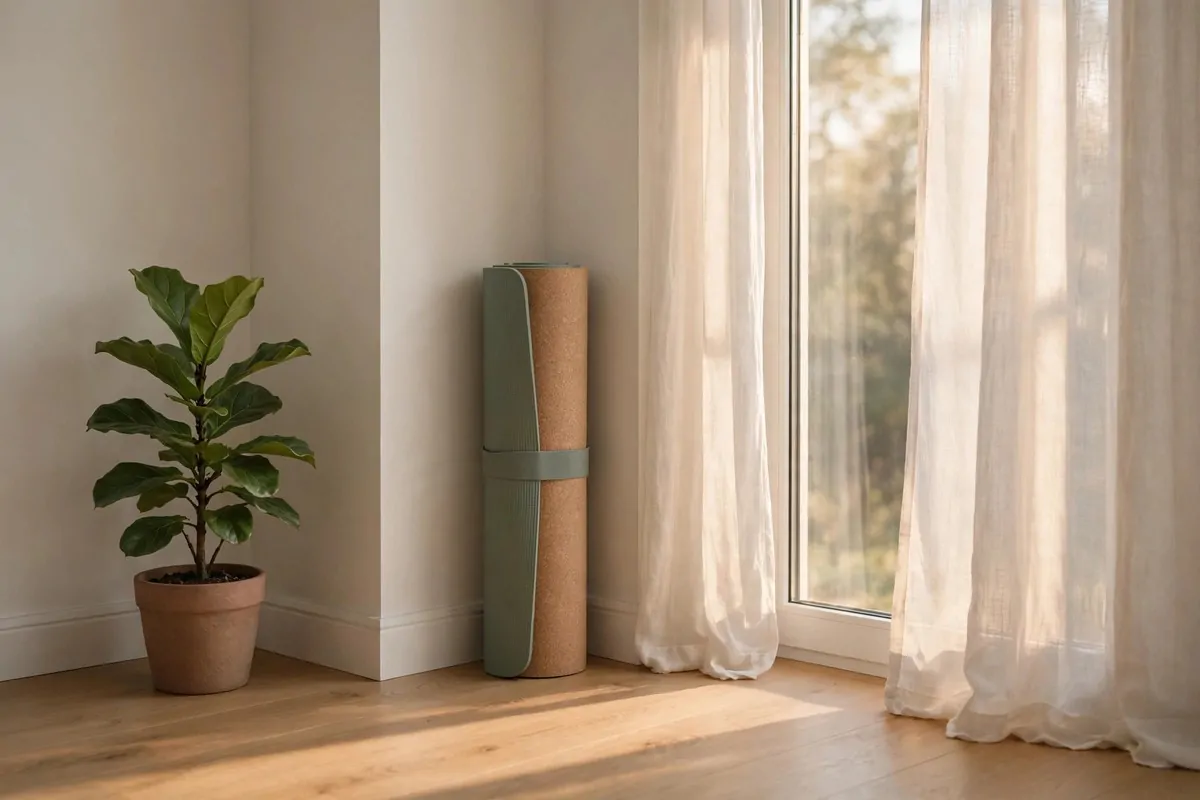
I roll mine out in the corner by the tall window in my living room. The light comes in and it feels calm. It does not look like a gym at all, and I love that.
Bodyweight moves are enough for a real workout. Push-ups, planks, squats, lunges, glute bridges. Your body is the weight here, and it is always with you.
The mat matters more than people think. Hard floors hurt your knees and your back. A decent mat makes floor work comfortable, and comfort keeps you going.
I keep my mat rolled in the corner when I am not using it. It takes up almost no room. Some mornings I unroll it while my tea cools.
Stretching is where this setup really shines. Ten minutes of stretching on a mat after a long day at a desk feels like a small gift to yourself. Your back will thank you.
You can also follow along with free workout videos on the mat. I did that for months when I started. Pick beginner ones first. There is no shame in starting slow.
The best part about a mat-only setup? There is nothing to break, nothing to maintain, and nothing to trip over. Just you, the floor, and a bit of space to move.
The Jump Rope Spot by the Door
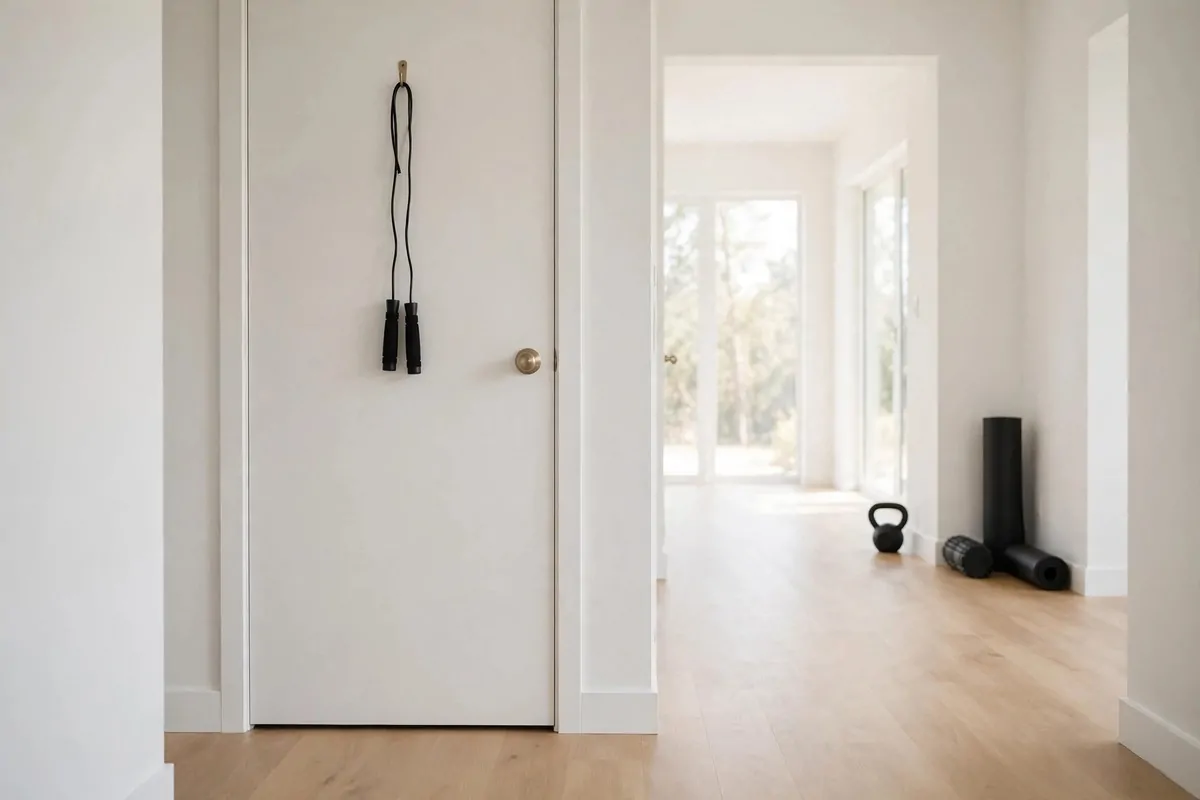
A jump rope is the cheapest cardio machine ever made. And it fits in a drawer.
Mine hangs on a hook on the back of my front door. It is the first thing I see when I come home. Some days that is all the reminder I need.
Skipping gives you a fast, strong workout in very little time. Five minutes of skipping gets your heart going. Ten minutes feels like a real session.
You need a bit of clear floor space. A hallway works. A patio works even better. I use the bit of floor in front of my door, about two metres square.
Start slow. Your calves will complain for the first week. That is normal. Short sessions are fine. Honestly, short is smart.
The rope itself takes up no room at all. Hang it on a hook, drop it in a bag, or coil it in a basket. It weighs almost nothing.
I like that skipping needs no setup and no charging and no app. You pick it up and you go. When life is busy, that simplicity is everything.
One small warning from experience: skip away from low lamps. I learned that one the loud way.
A Doorframe Pull-Up Bar Station
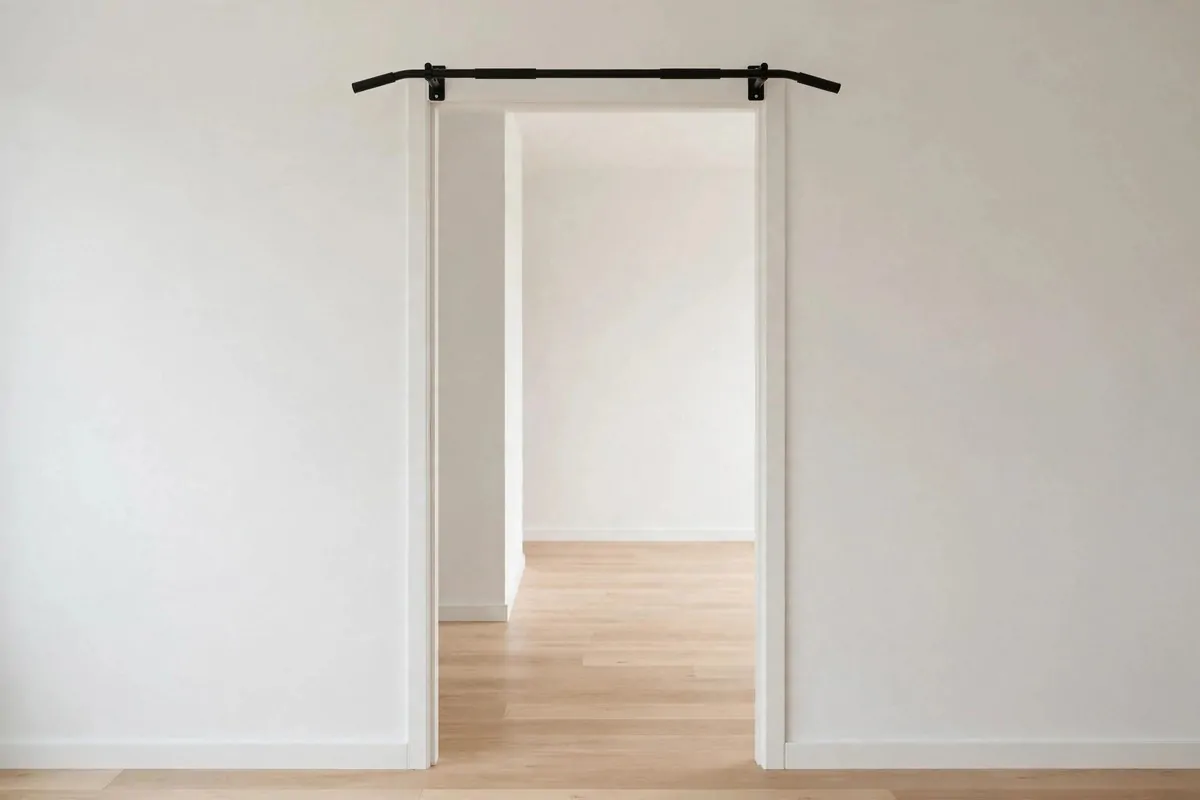
A pull-up bar in a doorframe turns any doorway into gym equipment. No screws in most models. It just grips the frame.
Mine sits in the doorway between my kitchen and hall. Every time I walk under it, I do a few pull-ups or just hang for a while. It has become a habit I barely think about.
Hanging is underrated. It stretches your back and shoulders in the nicest way. If you cannot do a full pull-up yet, hanging and slow lowering is a great start.
This setup costs you zero floor space. The bar lives in the doorway. Your rooms stay exactly as they were.
You will want a doorframe that is solid. Most are fine. Just check the fit before you hang your full weight on it the first time.
I put a small piece of felt where the bar touches the frame. It keeps the paint from getting marked. A tiny thing, but my landlord heart feels better.
Pull-ups build real upper body strength. Back, arms, shoulders, core. Few moves do as much with so little gear.
And there is something fun about it. Guests walk through the doorway and look up. Then they want to try. My sister managed one and celebrated like she won something.
One Kettlebell by the Window
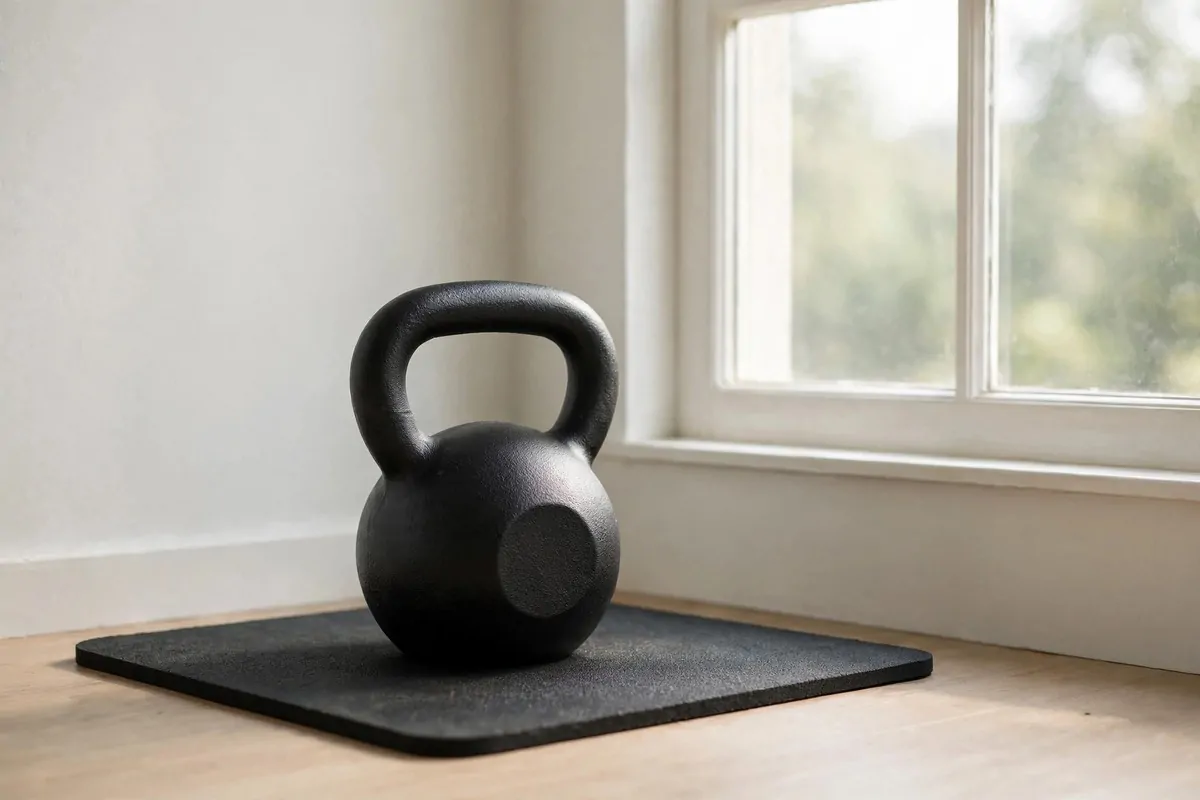
One kettlebell. That is the whole setup. It sits by my window on a small mat, and it might be my favourite thing I own.
Kettlebells are strange little things. They look simple, but they can train your whole body. Swings for your legs and back. Presses for your shoulders. Goblet squats for everything.
Start with a weight that feels almost too easy. Your form matters more than the number on the bell. I started lighter than my pride wanted, and I am glad I did.
The window spot is deliberate. I like the light there, and the view gives my eyes something to rest on between sets. A workout corner should feel nice, not grim.
A kettlebell takes up less space than a shoebox. You can tuck it under a table or in a cupboard. Mine just lives by the window because I like seeing it.
Swings are the move to learn first. They work your back, your legs, and your heart all at once. Watch a good tutorial video and go slow until the motion feels natural.
I do a simple routine most mornings. Ten swings, ten squats, rest, repeat a few times. It takes fifteen minutes and it wakes me up better than coffee.
One bell, one mat, one corner. Some days the simplest setups really are the best ones.
A Foldable Bench in the Spare Room
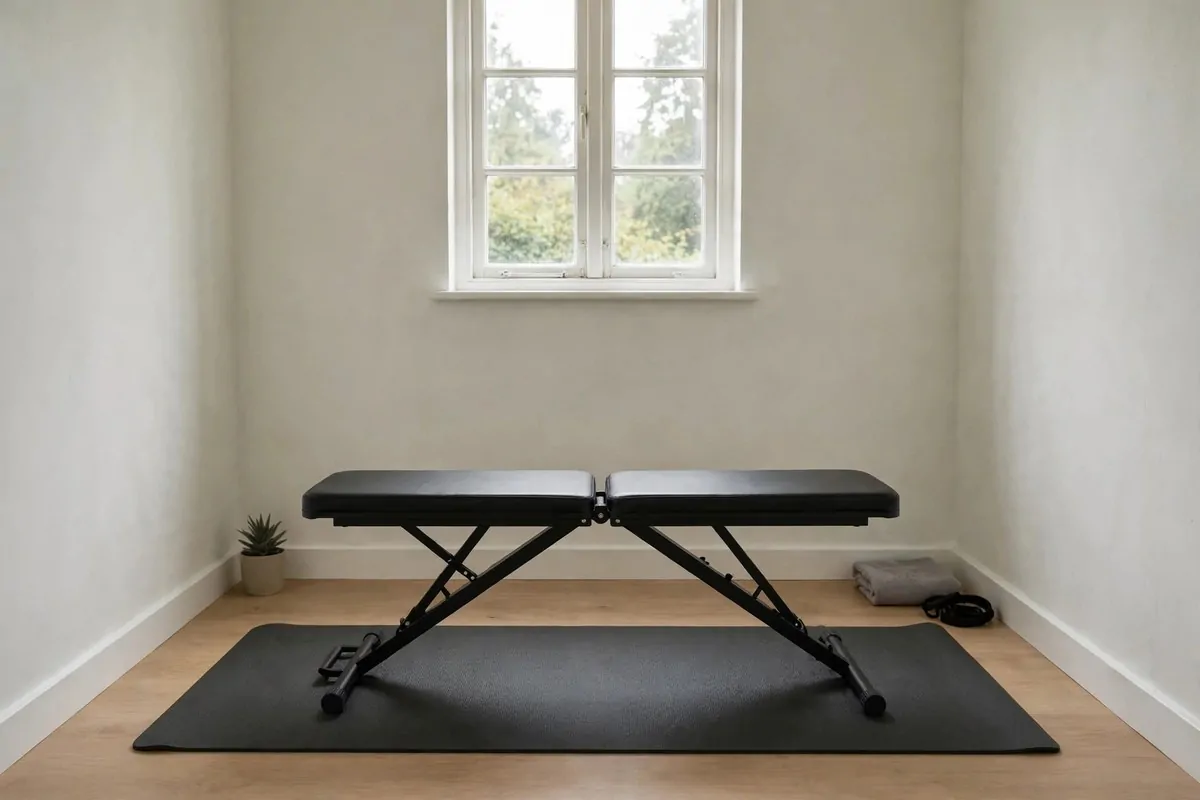
A bench sounds big until you see a foldable one. Folded, mine leans flat against the wall. Open, it gives me so many more exercise options.
I keep it in the spare room with my dumbbells. Together they make a proper little strength corner. Chest presses, step-ups, split squats, rows. The bench opens up all of them.
The folding part matters in a small home. When my mum visits, the bench folds away and the spare room is a bedroom again. Nobody would ever know it is a gym.
Put a mat under the bench. It protects the floor and stops the bench from sliding. A cheap exercise mat does the job fine.
An adjustable bench is even better if your budget allows. Flat for presses, tilted for incline moves. Two benches in one, more or less.
I wipe mine down after workouts. Sweat and fabric do not mix well over time. Thirty seconds with a damp cloth keeps it fresh.
This setup feels like a real gym in miniature. When I sit on that bench with my dumbbells, I am not messing about. It is workout time.
And when I am done, I fold it flat. The room goes back to being a room. That easy switch is the whole point of a home gym that respects your space.
Rubber Mats in the Garage Corner
If you have a garage, you already have a gym. You just need the floor sorted.
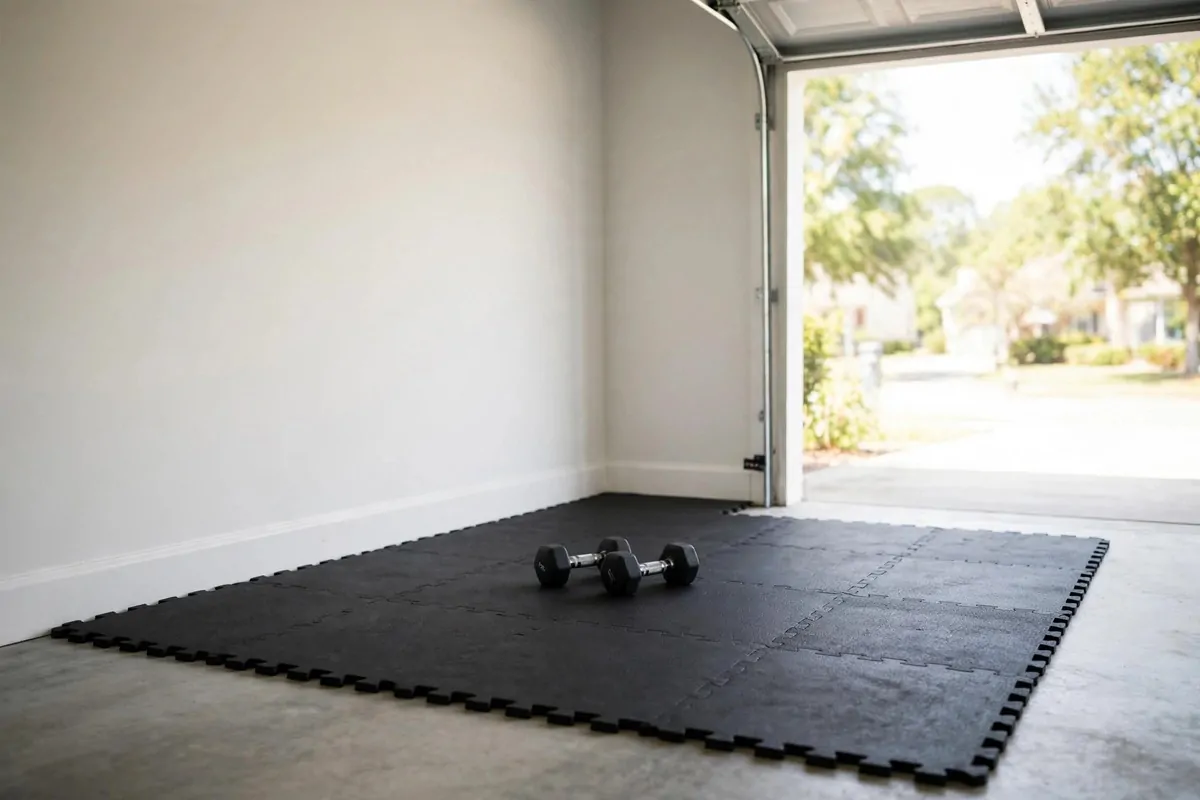
I laid interlocking rubber mats in one corner of my garage. Six mats, clicked together like a puzzle. It took ten minutes and it changed everything.
Rubber mats protect the concrete and they protect your gear. Dumbbells landing on rubber make a soft thud instead of a crack. Your joints like the softer surface too.
The garage corner keeps the mess out of the house. Shoes stay dirty, chalk stays put, and nobody complains about the smell of a hard workout.
I keep my dumbbells and kettlebell on the mats. Everything lives in that one square of rubber. When I step onto it, my brain knows what time it is.
Cold mornings are the only downside. A garage in winter is no joke. I keep a warm layer nearby and I warm up slowly. Honestly, once you start moving, the cold fades fast.
Sweep the mats now and then. Garages collect dust and leaves. A quick brush keeps the surface grippy and clean.
This setup is as simple as it gets. Mats on the floor, a few weights on top, and a corner of the garage that finally earns its keep.
The Balcony Stretch Corner
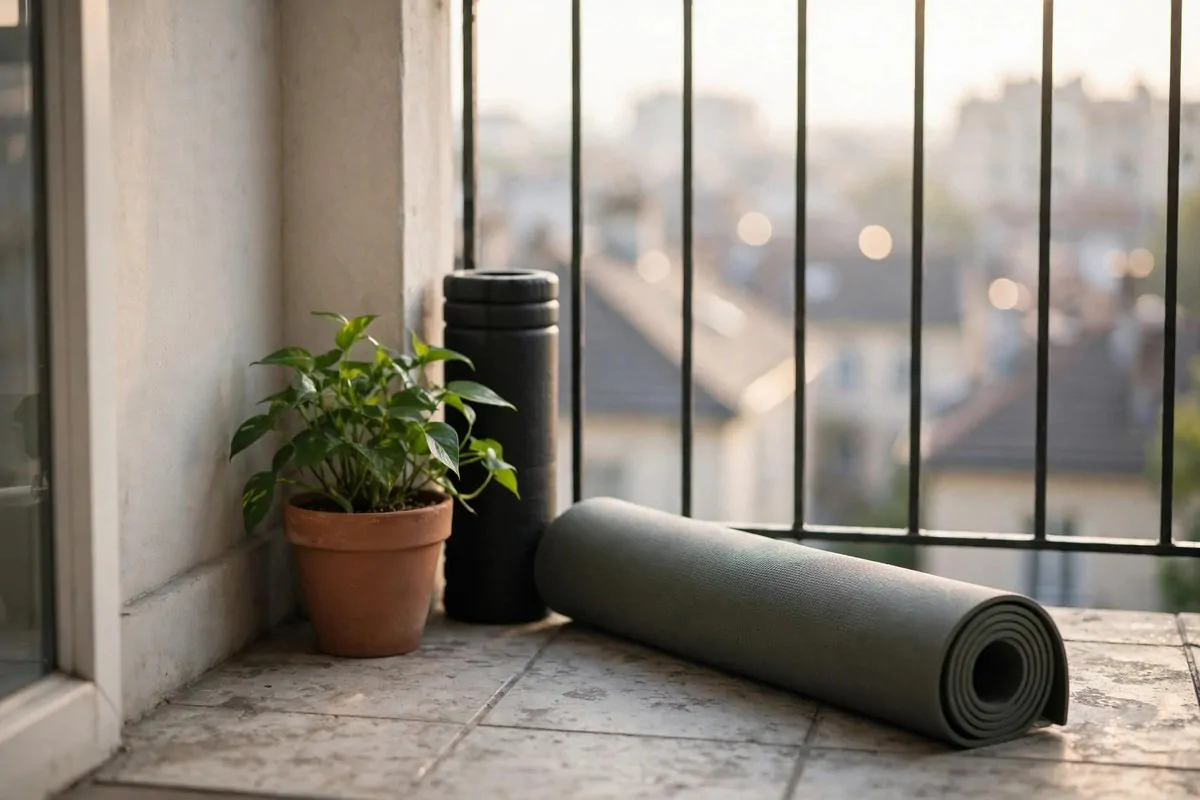
My balcony is tiny. Two steps wide, maybe three. But it holds my favourite workout spot in the whole house.
A mat, a foam roller, and fresh air. That is the setup. I stretch there every morning while the city wakes up.
Stretching outside feels different from stretching inside. The air, the sounds, the sky. It turns a simple routine into a little ritual.
The foam roller is the star here. Roll your back, your legs, your shoulders. It hurts in a good way at first, then it starts to feel amazing.
I keep the gear in a small outdoor box when it rains. The mat and roller tuck inside in seconds. No fuss.
Mornings are best for this corner. The light is soft and the air is cool. Ten minutes of gentle movement sets up the whole day.
You do not need to be bendy for this. Stretching meets you where you are. Reach a little further each week and you will feel the change.
My neighbour once asked what I was doing out there every morning. I told her I was having coffee with my muscles. She laughed, then she bought a mat too.
The Under-Stairs Workout Nook
The space under the stairs is the most wasted spot in most homes. Mine used to hold boxes I never opened. Now it holds my gym.
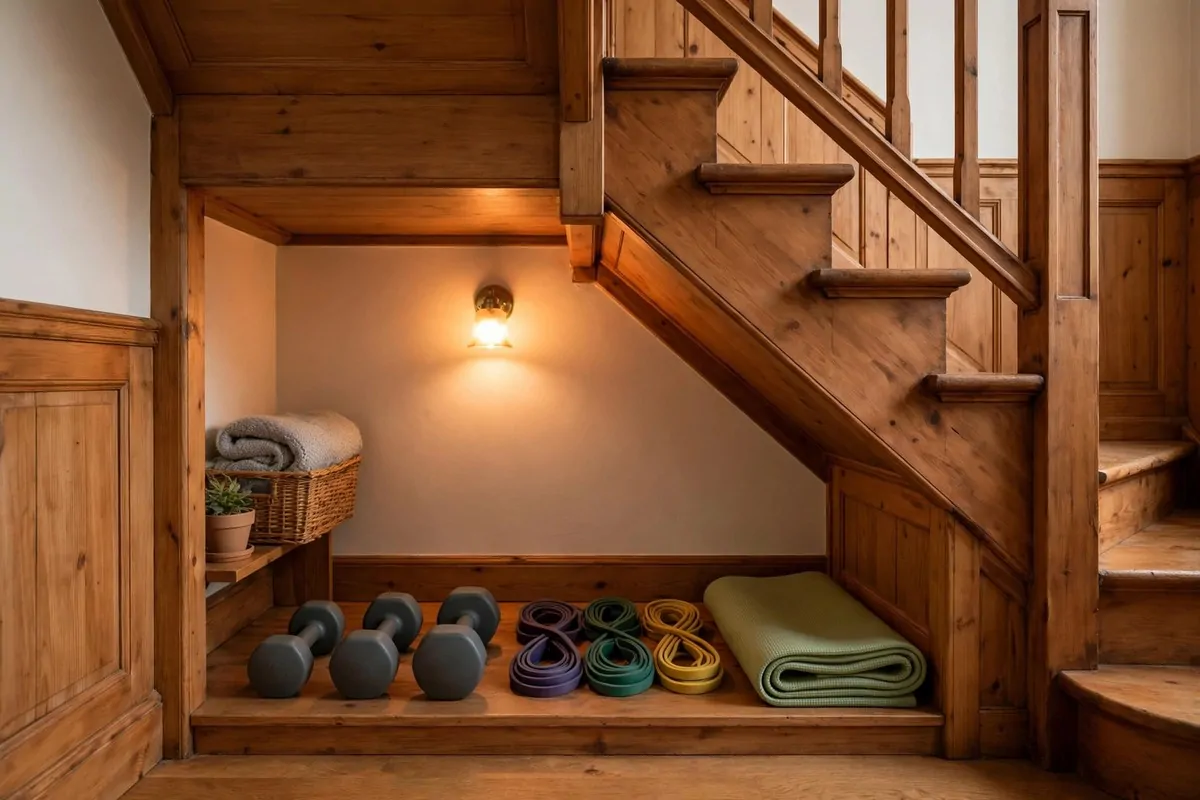
Dumbbells on the floor, bands on a hook, mat folded against the wall. Everything fits because the space is small and my gear is smaller.
Low ceilings are the only real limit here. Skip overhead moves. Focus on floor work, rows, squats, and presses. There is plenty you can do without standing tall.
I added a small stick-on light under the stairs. It was cheap and it made the nook feel like a real spot instead of a dark hole. Light matters more than you think.
The best thing about this nook is that it is hidden. Guests never see it. The house looks normal. But my workout corner is always ready.
Cleaning is easy because everything is in one place. I wipe the gear, sweep the floor, done. Small spaces are fast to tidy.
Under-stairs nooks work because they turn dead space into useful space. Your home gains a gym without losing a single room.
And there is something cosy about it. A little cave of your own. When I am in my nook, the rest of the house disappears and it is just me and the workout.
A Fold-Up Treadmill Against the Wall
Not everyone wants a treadmill. But if walking or running is your thing, a fold-up one can live in a small home.
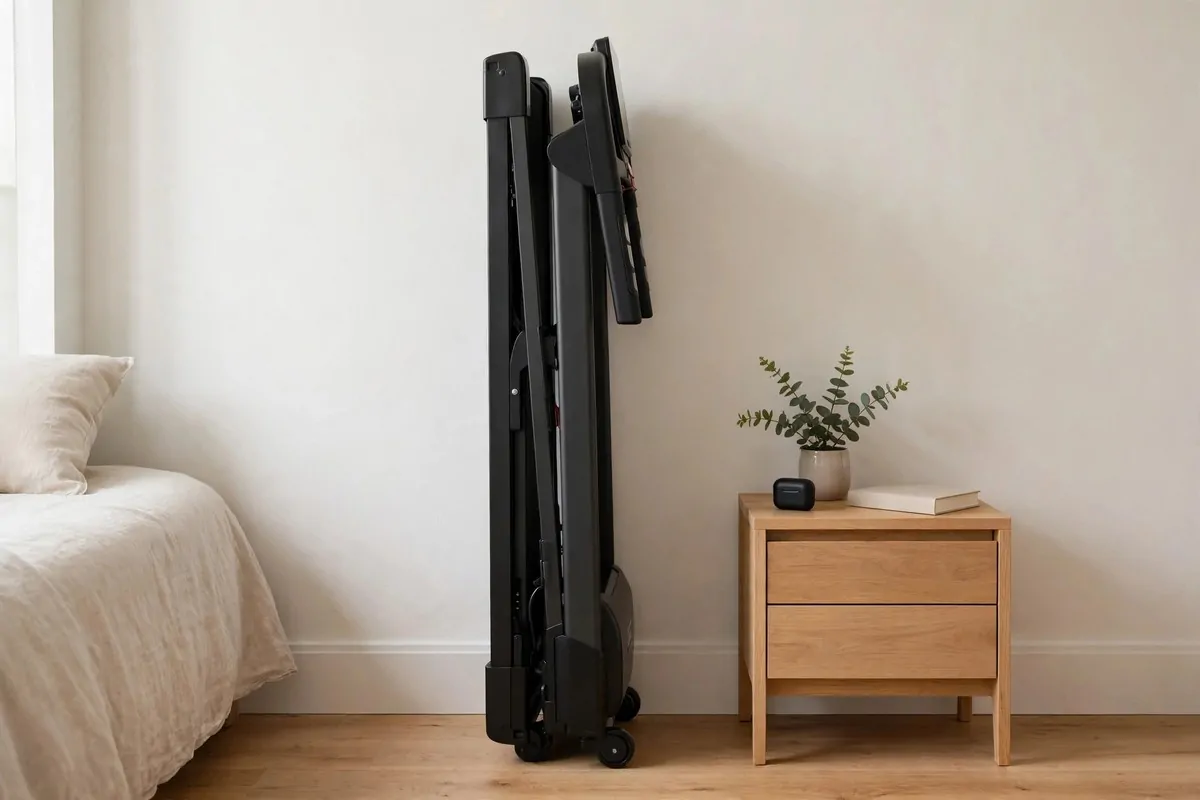
Mine folds flat and stands against my bedroom wall. It looks like a strange piece of furniture. When I want to walk, I unfold it in under a minute.
Walking while watching a show is my favourite habit. An episode passes, and I have walked for forty minutes without really noticing.
Start with walking. There is no rule that says a treadmill means running. Walking uphill on a slight incline is a proper workout.
Here is the gentle weekly plan I followed when I started:
| Day | What to do | How long |
|---|---|---|
| Monday | Easy flat walk | 20 minutes |
| Wednesday | Walk with a small incline | 25 minutes |
| Friday | Walk while watching a show | 40 minutes |
The fold-up design is the whole trick. Big treadmills eat a room. Foldable ones give the room back when you are done.
Put a mat under it if you are worried about the floor. And keep the area around it clear, because you will want space to step on and off safely.
I use mine on rainy days mostly. When the weather is nice I walk outside. But knowing it is there means I never skip a walk because of bad weather.
One machine, one wall, zero excuses. That is the deal I made with myself, and so far I am winning.
A Suspension Trainer Over the Door
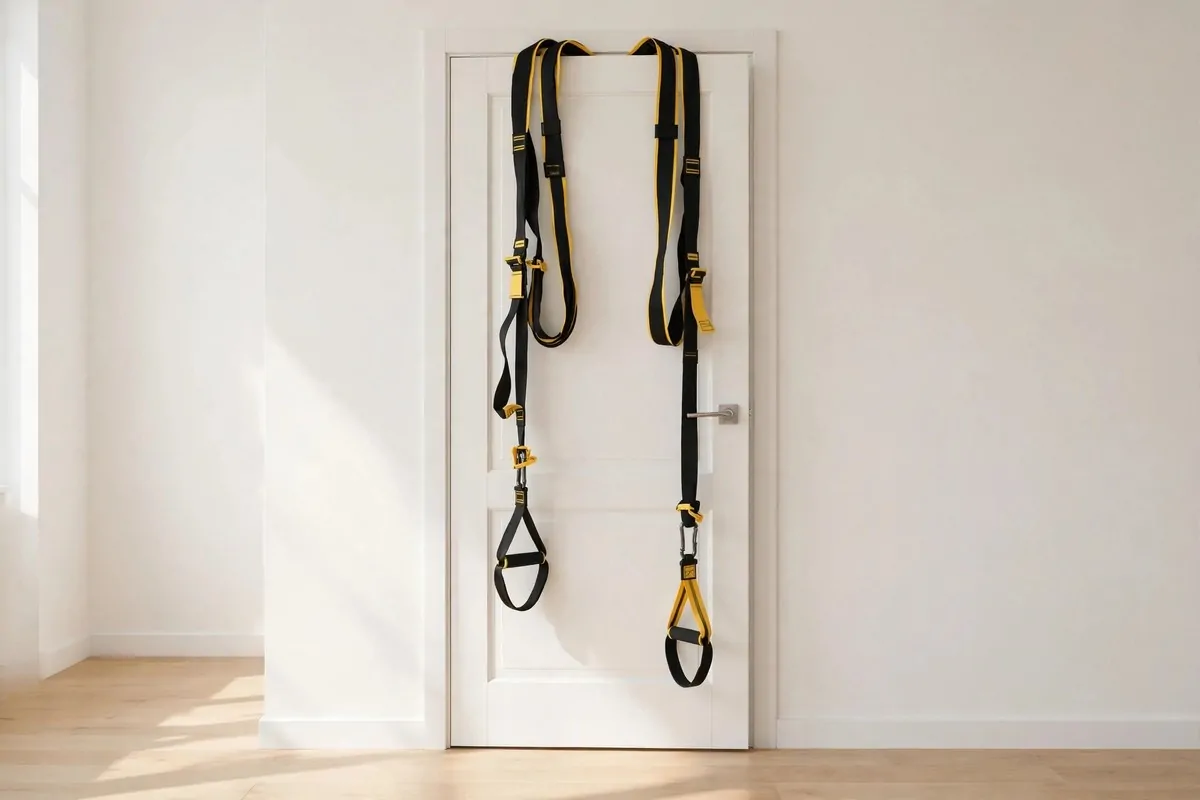
Suspension straps look like nothing much. Two handles, some webbing, an anchor. But they can train your entire body using just your weight.
Mine hooks over a sturdy door. No drilling, no screws. Close the door, hang the straps, and you are ready.
Rows, push-ups, squats, planks, lunges. The straps make every move harder or easier depending on your angle. Step closer to the door for easy, lean back for hard.
It is brilliant for small spaces because you train in the footprint of your own body. You need about two metres of clear floor. Most rooms have that.
The door needs to be solid and it must close firmly. Test it first with a good tug. Safety before everything.
I love how portable these are. They roll up into a tiny bag. I have taken mine on trips and trained in hotel rooms. My whole gym in a pouch.
Adjusting the difficulty is instant. No changing plates, no fiddling with dials. Just move your feet. That keeps workouts flowing and fun.
Two straps over a door. It sounds too simple to work. Try it for a week and tell me I am wrong.
A Foam Roller Recovery Spot
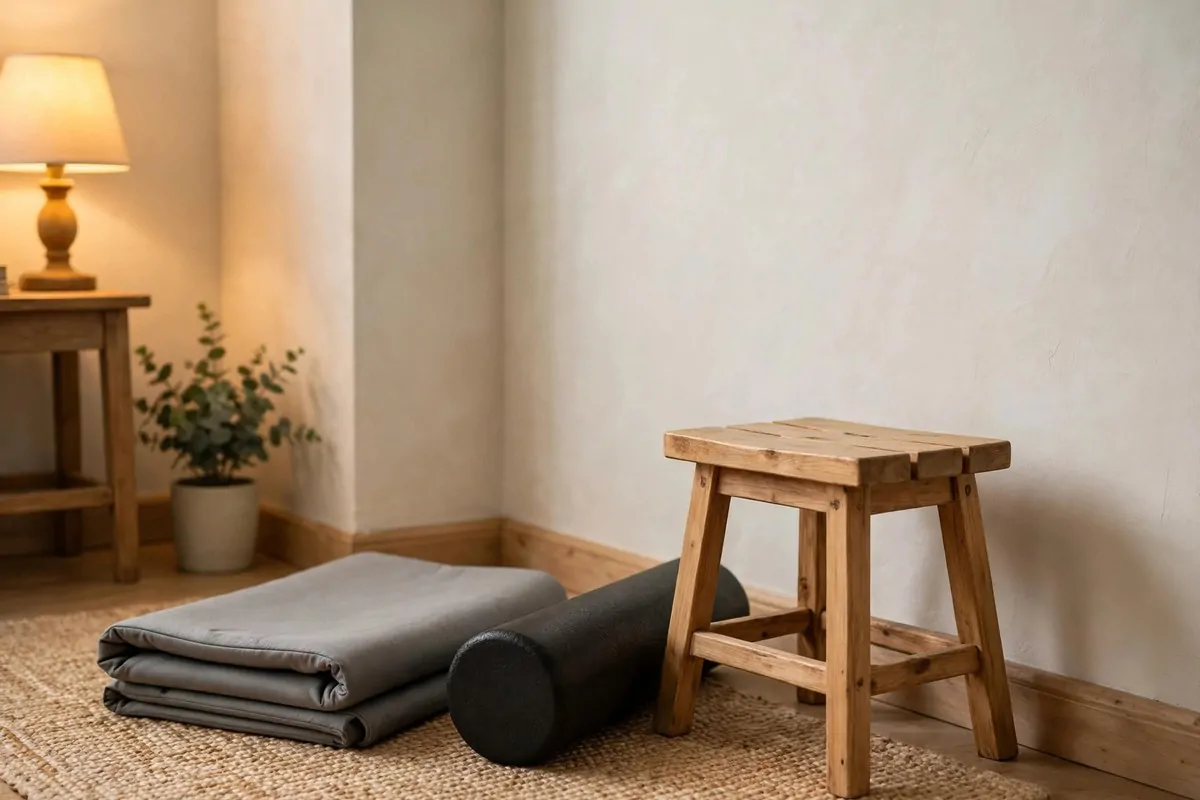
Recovery is part of training. I say that like it is obvious, but I ignored it for years.
My recovery spot is just a corner with a foam roller and a mat. I sit there after workouts and roll out my legs and back. It takes ten minutes and it makes the next day so much easier.
Foam rolling feels strange the first time. A bit uncomfortable. But your muscles relax as you go, and afterwards everything feels looser and lighter.
I keep this corner separate from my workout gear. Training happens in one spot, recovery in another. It is a small mental trick that helps me actually do both.
A massage ball is a nice extra if you want one. It gets into the small spots the roller cannot reach, like the bottom of your feet.
Sore muscles are normal when you start. The roller helps you through those first weeks. After that, it just becomes part of the routine.
I do my rolling while listening to music or a podcast. It turns recovery time into rest time. My body gets the care, my brain gets a break.
One roller, one mat, one quiet corner. Your future self will thank you for this one.
One Plyo Box in the Corner
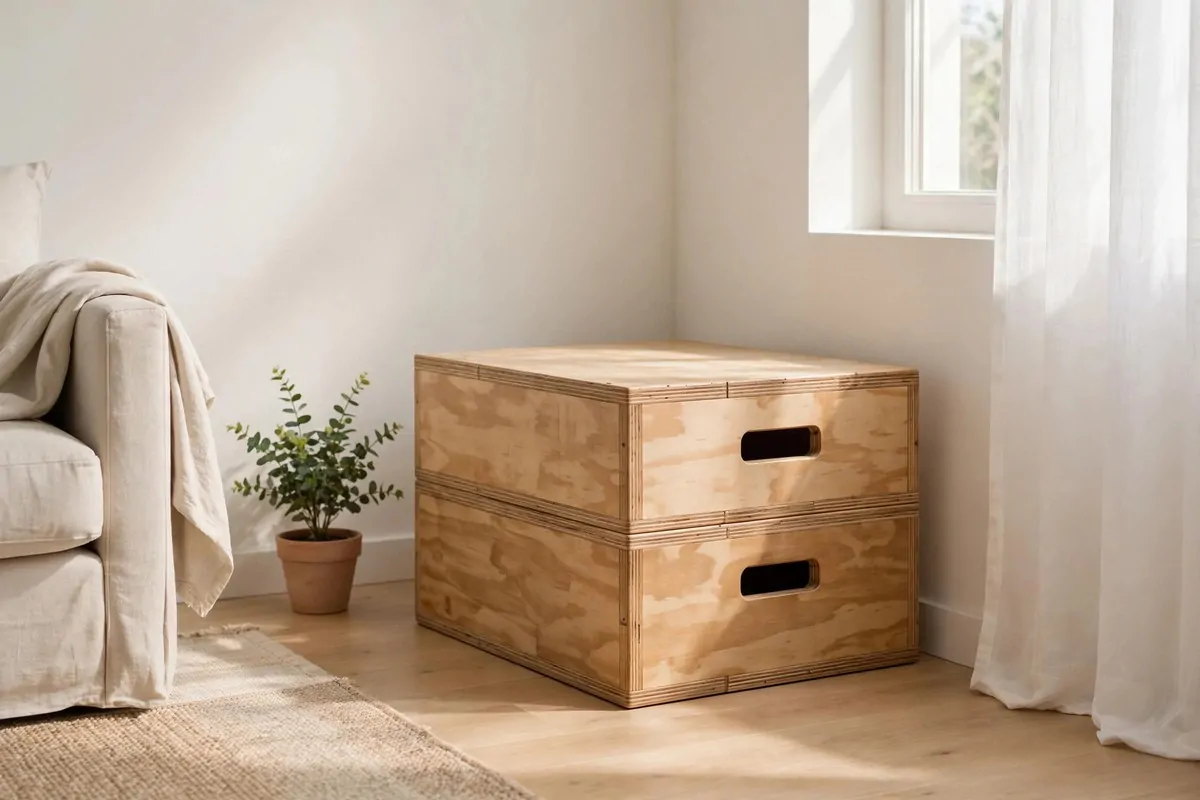
A plyo box is just a sturdy wooden box. It does not look like much. But step-ups, box jumps, and Bulgarian split squats all start with one.
Mine sits in the corner of my living room. Guests think it is a side table. I have used it as one, if I am honest.
Step-ups are the best beginner move. One foot on the box, push up, step down. It builds strong legs without any weights at all.
The box doubles as a bench for some moves. Sit on it for tricep dips. Lean on it for incline push-ups. One box, many jobs.
Make sure it is sturdy. A wobbly box is dangerous. Wooden boxes are heavy and solid, which is exactly what you want.
Start with the lowest height. There is no prize for jumping onto a tall box on day one. Build up slowly and your knees will stay happy.
I like that this setup looks like furniture. No gym vibes at all. Just a wooden box in the corner, quietly waiting for workout time.
And when family visits, the box holds the board games. Multi-use furniture is the best kind.
The Bedroom Floor Workout Zone
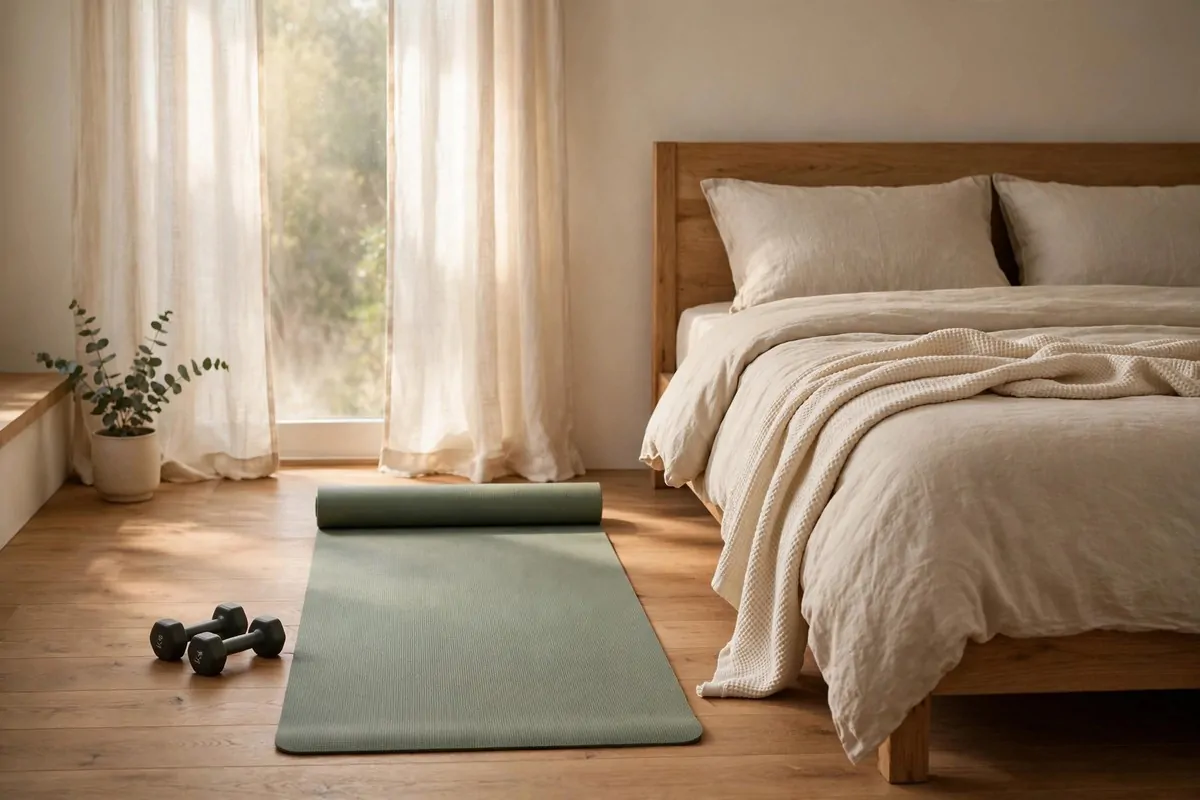
Some mornings I work out before I even leave my bedroom. The mat is already there, beside the bed.
This zone needs nothing fancy. A mat on the floor, maybe a pair of light dumbbells tucked under the bed. That is the whole list.
Morning workouts are easier when the gear is right there. No walking to another room, no setting up. You roll out of bed and onto the mat.
I do a short routine. Stretching, some core work, a few squats. Fifteen minutes. Then I shower and start the day.
The bedroom works because it is private. No one watches you wobble through your first planks. Just you and the floor.
Keep the dumbbells light for this zone. You are half asleep anyway. Heavy weights and morning grogginess do not mix well.
Evenings work too. A gentle stretch before bed helps me sleep better. The mat stays out as a reminder.
Your bedroom is already yours. Giving a corner of it to your body is a small change with a big payoff.
A Small Mirror Corner With Bands
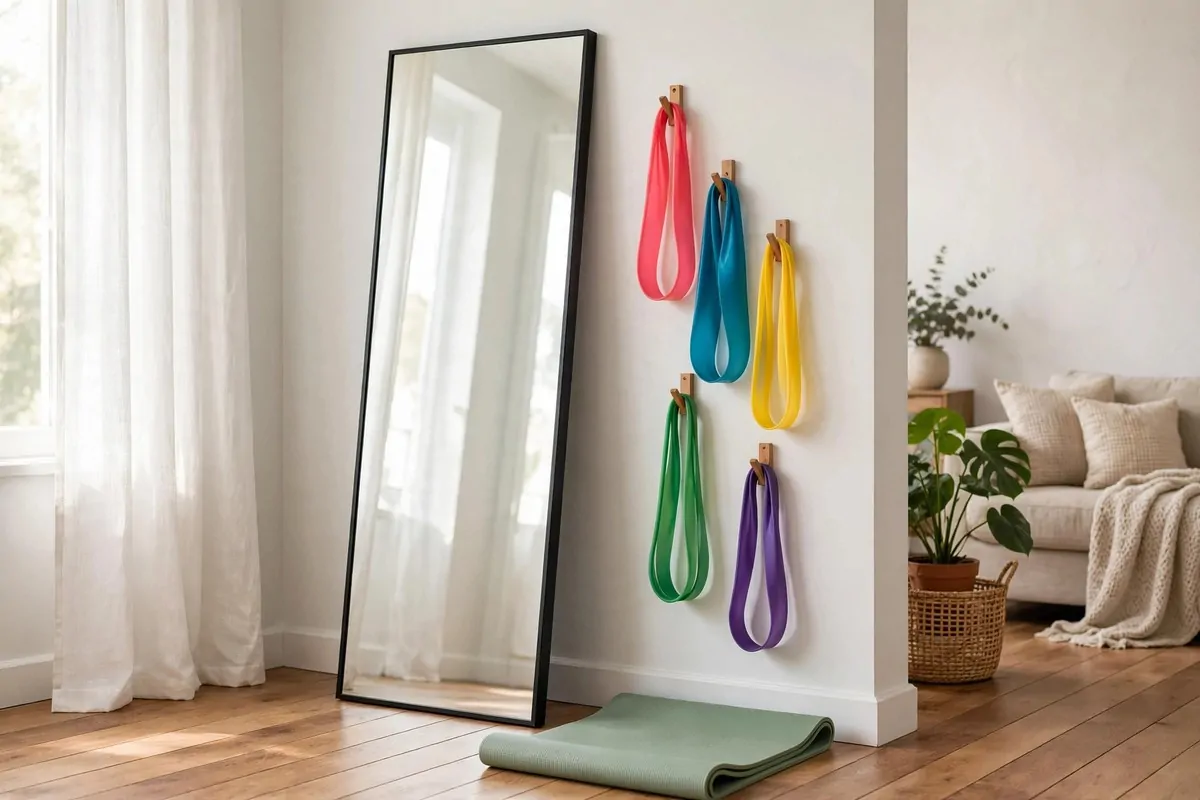
A mirror changes everything about a home workout. You can see your form, and good form keeps you safe.
I lean a full-length mirror against my living room wall. Beside it, my bands hang on hooks. Below, my mat waits on the floor.
Watching yourself sounds vain. It is not. It is practical. You catch your slouching, you fix your squat, you notice when one shoulder creeps up.
The mirror also makes a small room feel bigger. Two jobs for one object. My flat feels more open because of it.
Bands and a mirror are a perfect pair. You can check your pull form, your press form, your posture. Everything is visible.
Lean the mirror at a slight angle for safety. Flat against the wall is fine too. Just make sure it cannot slide or tip.
I do my band workouts here three times a week. Quick, quiet, effective. The mirror keeps me honest.
One corner, one mirror, some bands. It looks like a dressing area. It works like a gym.
The Closet Travel Kit
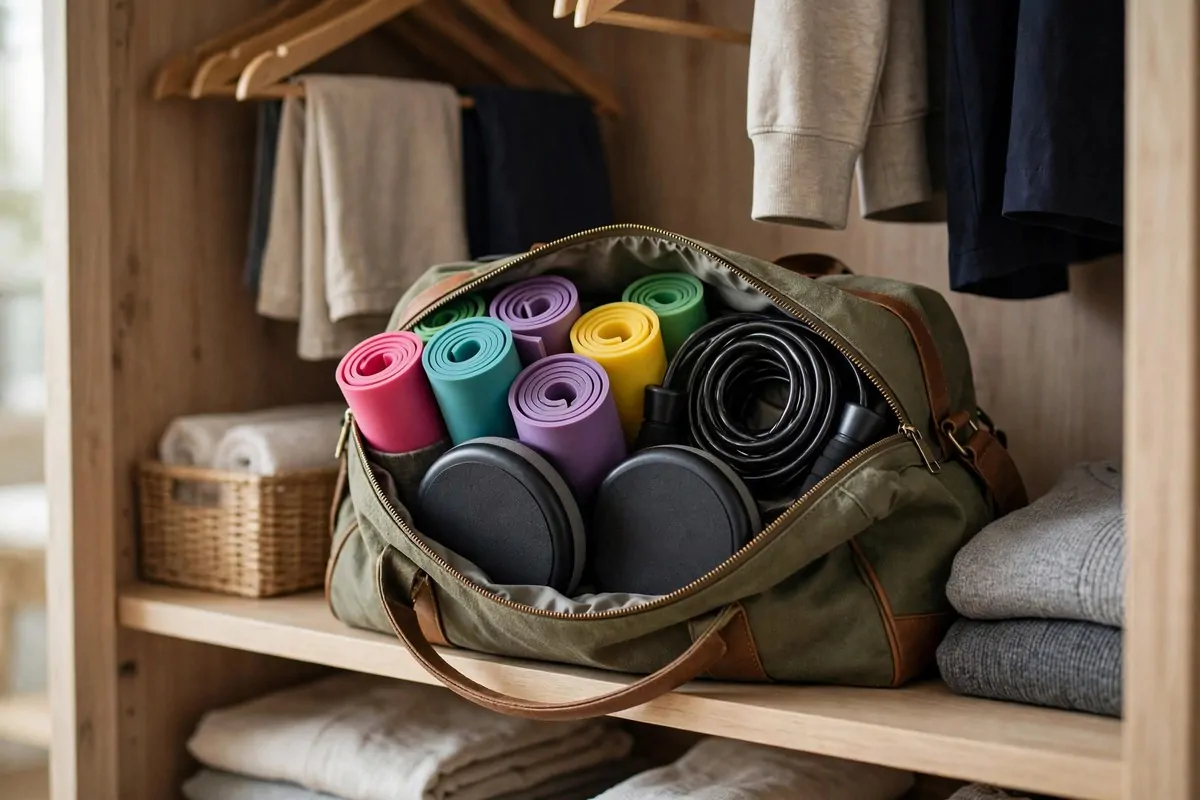
This last one is not a room. It is a bag. But it might be the most useful setup on this list.
My travel kit lives on my closet shelf. Inside: bands, a jump rope, and a pair of sliders. Everything I need to train anywhere.
Travel used to wreck my routine. A week away and I would come home starting from zero. Not anymore. The kit comes with me.
Hotel rooms are perfect for this. Clear a bit of floor, open the bag, and you have a full workout. Bands for strength, rope for cardio, sliders for core.
Sliders are the surprise star. On a smooth floor they turn simple moves into serious core work. They weigh nothing and cost very little.
The bag itself keeps everything tidy. No tangled bands, no lost rope. Open the bag, work out, pack it away.
This setup proves the whole point of this list. You do not need a room. You do not need machines. A bag of essentials goes anywhere you go.
Keep the kit packed and ready. The easier it is to grab, the more you will use it. That is true for every setup here, honestly.
Start with one of these seventeen. Just one. The simplest one that fits your home. You can always add more later, but you probably will not need to.