28 Latin American Spanish Would You Rather Questions for Language Fans

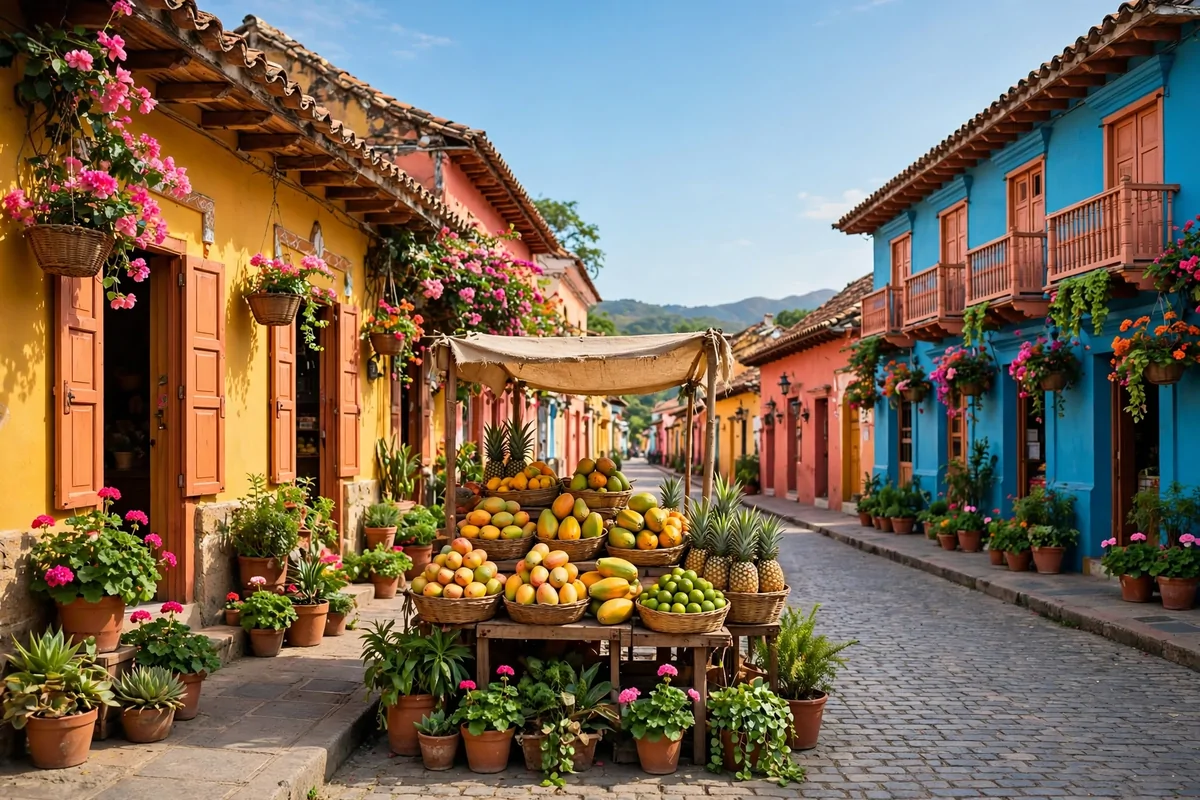
Spanish sounds different in every part of Latin America. In Mexico people use one word for a bus, in Argentina people use another word, and in Peru people use a third word. The same language changes its sound, its words, and its greetings from one country to the next, and that is what makes it so fun to learn.
Now it is your turn to pick your own path through Latin American Spanish. Would you rather learn the words of Mexico first, or start with the words of Argentina? These 28 questions will take you through markets, small towns, big cities, beaches, and mountains, and each choice will show you a new side of this rich language.
1. Would you rather learn the Spanish words used in Mexico first or learn the Spanish words used in Argentina first?
Would you rather...
Learning the Spanish words used in Mexico first opens a big door. Mexico has many people, many towns, and many kinds of food, and its words are used in books, on the street, and in everyday talk. When you learn Mexican words, you can talk about tacos, markets, and family life with ease.
Learning the Spanish words used in Argentina first opens a different door. Argentina has its own warm way of speaking, with words like vos and che that you will not hear in other places. Its Spanish sounds soft and friendly, and it feels like a secret code shared by good friends.
Things to think about:
- Mexican words are used by many people, so you will hear them often.
- Argentine words give you a special style that people love to hear.
- Both choices teach you real Spanish, just from two different places on the map.
2. Would you rather speak Spanish with the fast accent of Chile or speak Spanish with the slow clear accent of Colombia?
Would you rather...
Speaking Spanish with the fast accent of Chile is a brave challenge. Chilean Spanish moves quickly, with words that flow together like a river. If you can follow it, you can follow almost any Spanish speaker in the world.
Speaking Spanish with the slow clear accent of Colombia is a gentle path. Colombian Spanish is famous for its clear sounds and careful words. People say it is one of the easiest accents to understand, and that makes learning feel calm and fun.
| Option | What You Gain | What You Give Up |
|---|---|---|
| Speak Spanish with the fast accent of Chile | You train your ears to follow very fast real speech | You may miss many words at first and feel lost |
| Speak Spanish with the slow clear accent of Colombia | You understand almost every word and feel calm while you learn | Fast speech from other countries may still surprise you |
3. Would you rather use vos when you talk with friends in Argentina or use tú when you talk with friends in Mexico?
Would you rather...
Using vos when you talk with friends in Argentina makes you sound like a local. In Argentina, vos is the normal word for you, and it comes with its own verb forms, like vos tenés and vos podés. When you use it, people smile, because you speak the way they speak at home.
Using tú when you talk with friends in Mexico makes you sound warm and polite. Tú is the friendly word for you in most of Latin America, and it works in Mexico, Peru, Colombia, and many more countries. One small word opens doors in many places.
Pro Tip: Learn both words, but use the one that fits the place you are in. In Argentina, vos feels right. In Mexico, tú feels right. Good speakers change their words to fit the people around them.
4. Would you rather learn ten new Spanish food words every week or learn ten new Spanish travel words every week?
Would you rather...
Learning ten new Spanish food words every week is warm and tasty. Food is part of every day, and every meal is a chance to use a new word. You learn words for bread, rice, beans, fruit, and soup, and soon you can order a full meal in Spanish.
Learning ten new Spanish travel words every week is useful on the road. You learn words for bus, hotel, street, ticket, and map. These words help you find your way in a new city, ask for help, and enjoy a trip without fear.
| Option | What You Gain | What You Give Up |
|---|---|---|
| Learn ten new Spanish food words every week | You can use Spanish at every meal, every single day | You may not know the words to ask for directions on a trip |
| Learn ten new Spanish travel words every week | You can travel with confidence in any Spanish speaking country | You may not know the words to talk about food at a meal |
5. Would you rather order food in Spanish at a small market in Peru or order food in Spanish at a small cafe in Cuba?
Would you rather...
Ordering food in Spanish at a small market in Peru is full of colour and life. The stalls are full of potatoes, corn, and fruit you may never have seen before. You point, you ask the price, you say gracias, and the seller smiles at your Spanish.
Ordering food in Spanish at a small cafe in Cuba is warm and slow. You sit at a small table, you order coffee and a sandwich, and you listen to people talk around you. The cafe is a small world, and your Spanish is the key that opens it.
- A market gives you many new words and many new foods to try.
- A cafe gives you time to sit, listen, and talk with people nearby.
- Both choices put your Spanish to work in real life, with real food and real people.
6. Would you rather learn the Spanish names of twenty fruits or learn the Spanish names of twenty animals on a farm?
Would you rather...
Learning the Spanish names of twenty fruits is sweet and useful. At a market you can ask for mango, papaya, banana, and lime, and you can taste each one as you learn its name. Fruit words are easy to remember, because each word comes with a taste and a smell.
Learning the Spanish names of twenty animals on a farm is fun and lively. You learn words for cow, goat, chicken, horse, and sheep, and each word brings a picture to your mind. Farm words help you talk about country life in Latin America, where many people live close to animals.
| Option | What You Gain | What You Give Up |
|---|---|---|
| Learn the Spanish names of twenty fruits | You can buy and taste fruit at any market in Latin America | You may not know the words to talk about farm life |
| Learn the Spanish names of twenty animals on a farm | You can talk about country life and the animals around you | You may not know the words to buy fruit at a market |
7. Would you rather practise Spanish greetings with a shopkeeper every day or practise Spanish greetings with a neighbour every day?
Would you rather...
Practising Spanish greetings with a shopkeeper every day turns a small errand into a lesson. Each morning you say buenos días, you ask how the day is going, and you say gracias when you leave. The shopkeeper becomes a friendly teacher who never charges you a fee.
Practising Spanish greetings with a neighbour every day builds a real friendship. A neighbour asks about your family, your day, and your plans, and you answer in Spanish. Over time, the short greeting grows into a real talk, and the talk grows into trust.
Things to think about:
- A shopkeeper gives you a short, safe greeting you can repeat every day.
- A neighbour gives you a longer talk and a deeper friendship over time.
- Both choices make Spanish part of your morning, not just part of a book.
8. Would you rather ask for directions in Spanish in a big city or ask for directions in Spanish in a small village?
Would you rather...
Asking for directions in Spanish in a big city is a fast test. The streets are busy, the buses move quickly, and people give short, quick answers. You learn words like left, right, straight ahead, and next to the bank, and you learn them under real pressure.
Asking for directions in Spanish in a small village is slow and kind. People have time to talk, they point with their hands, and they may even walk with you part of the way. You learn the same words, but with a smile and a story attached to each one.
Important Note: In a big city, write down the name of the street before you ask. In a small village, learn the words for church, market, and river, because people often use these big places to guide you. Both tricks will save you time and worry.
9. Would you rather learn Spanish with a teacher from Mexico or learn Spanish with a teacher from Colombia?
Would you rather...
Learning Spanish with a teacher from Mexico gives you the most widely heard accent in the world. Mexican Spanish is used in films, in books, and in everyday talk across a huge country. Your teacher can show you words for food, family, and festivals that are full of colour.
Learning Spanish with a teacher from Colombia gives you clear and careful speech. Colombian teachers are known for slow, clean pronunciation that is easy for a learner to follow. Your teacher can show you polite phrases and gentle ways of speaking that people respect everywhere.
Both teachers will help you grow. One gives you the accent that most people hear every day, and the other gives you the accent that most learners find easiest to understand. Which gift would you pick first?
10. Would you rather speak Spanish only when you travel for one month or speak Spanish only at home for one month?
Would you rather...
Speaking Spanish only when you travel for one month turns a trip into a full lesson. Every meal, every bus ride, and every question at a hotel happens in Spanish. You have no choice but to use the language, and that pressure makes you learn fast.
Speaking Spanish only at home for one month turns your house into a small Spanish town. You label things in Spanish, you greet your family in Spanish, and you think in Spanish while you cook and clean. The language becomes part of your daily life, not just part of a holiday.
- Travel forces you to speak Spanish with strangers in real places.
- Home lets you practise Spanish in a safe place with people you trust.
- Both months will change your Spanish, one through adventure and one through habit.
11. Would you rather write one short Spanish diary page every night or record one short Spanish voice message every night?
Would you rather...
Writing one short Spanish diary page every night builds your writing hand. You think about your day, you pick the right words, and you see your Spanish grow on the page. After a year, you have a whole book about your life in Spanish.
Recording one short Spanish voice message every night builds your speaking voice. You hear your own Spanish, you catch your own mistakes, and your mouth learns the sounds. After a year, you can hear how much your speaking has grown.
| Option | What You Gain | What You Give Up |
|---|---|---|
| Write one short Spanish diary page every night | You build strong writing skills and a book of your life | You do not hear your own voice or practise speaking |
| Record one short Spanish voice message every night | You build a strong speaking voice and hear your progress | You do not practise writing or spelling |
12. Would you rather read a short Spanish story from Mexico every week or read a short Spanish story from Chile every week?
Would you rather...
Reading a short Spanish story from Mexico every week is like opening a window to a big, colourful country. The stories show you markets, deserts, family meals, and old towns. Each week you meet new words, and each story stays in your mind like a small film.
Reading a short Spanish story from Chile every week is like opening a window to a long, narrow country between the mountains and the sea. The stories show you fishing towns, cold rain, and warm family kitchens. Each week you learn how Chilean writers see the world, and your Spanish grows richer.
Things to think about:
- Mexican stories often use words for food, festivals, and family life.
- Chilean stories often use words for the sea, the weather, and the mountains.
- Both choices give you one story a week, and after a year you have read 52 stories.
13. Would you rather learn Spanish words for the beach first or learn Spanish words for the mountains first?
Would you rather...
Learning Spanish words for the beach first is sunny and fun. You learn words for sand, sea, wave, boat, and sun. These words help you on a holiday, at a fishing town, or on a walk by the water, and they make you smile just to say them.
Learning Spanish words for the mountains first is cool and strong. You learn words for peak, path, snow, valley, and stone. These words help you on a hike, in a mountain village, or on a trip through the Andes, where the air is fresh and the views are wide.
Pro Tip: Learn the words for the place you will visit first. If your next trip is to the coast, learn beach words. If your next trip is to the Andes, learn mountain words. Words you will use soon are words you will remember.
14. Would you rather use Spanish subtitles when you watch a Spanish lesson or use no subtitles when you watch a Spanish lesson?
Would you rather...
Using Spanish subtitles when you watch a Spanish lesson helps your eyes and your ears work together. You hear a word, you see the same word on the screen, and your brain links the sound to the letters. It is a gentle way to learn, and it builds your reading at the same time.
Using no subtitles when you watch a Spanish lesson is a brave step. Your ears must do all the work, and at first you will miss many words. But your brain learns to guess from the situation, and after a few weeks you will catch words you never caught before.
| Option | What You Gain | What You Give Up |
|---|---|---|
| Use Spanish subtitles when you watch a Spanish lesson | You link sounds to written words and build your reading too | Your ears may lean on the text instead of listening hard |
| Use no subtitles when you watch a Spanish lesson | Your ears grow strong and you learn to guess from context | You may miss many words at first and feel frustrated |
15. Would you rather learn the Spanish word for bus in five countries or learn the Spanish word for corn in five countries?
Would you rather...
Learning the Spanish word for bus in five countries is a fun puzzle. In one country people say colectivo, in another they say guagua, and in another they say camión. The same bus has five names, and each name tells you something about the place you are in.
Learning the Spanish word for corn in five countries is a tasty puzzle. In Mexico people say elote, in Peru and Argentina people say choclo, and in other places people say maíz. Corn is food for millions of people, and its many names show how rich Latin American Spanish really is.
Things to think about:
- Bus words help you travel, and you will use them in every city you visit.
- Corn words help you eat, and you will use them at every market and meal.
- Both choices teach you the same big lesson: one thing can have many Spanish names.
16. Would you rather greet a new friend with Cómo estás every time or greet a new friend with Qué tal every time?
Would you rather...
Greeting a new friend with Cómo estás every time is warm and caring. These words ask how the person truly is, and people answer with real news about their day. It is the classic greeting that every Spanish learner knows, and it never fails.
Greeting a new friend with Qué tal every time is short, friendly, and modern. Young people in Spain and Latin America use it all the time, and it sounds relaxed and natural. It is like a friendly wave in words, quick and full of life.
Important Note: Both greetings are correct, but they fit different moments. Cómo estás fits a kind, caring talk. Qué tal fits a quick hello with a friend you see often. Learn both, and pick the one that fits the moment.
17. Would you rather learn Spanish words for family members first or learn Spanish words for school things first?
Would you rather...
Learning Spanish words for family members first is warm and personal. You learn words for mother, father, sister, brother, grandmother, and cousin, and you can talk about the people you love most. Family words help you share your own story in Spanish.
Learning Spanish words for school things first is useful for every student. You learn words for book, pencil, teacher, lesson, and homework, and you can follow a class in Spanish without fear. School words open the door to learning even more.
| Option | What You Gain | What You Give Up |
|---|---|---|
| Learn Spanish words for family members first | You can talk about the people you love most in Spanish | You may not know the words to follow a lesson in Spanish |
| Learn Spanish words for school things first | You can follow a class and study in Spanish with ease | You may not know the words to talk about your family |
18. Would you rather travel to three Latin American countries for one week each or stay home and talk with Spanish speakers from three countries online?
Would you rather...
Travelling to three Latin American countries for one week each is a big adventure. You hear Spanish on the street, in shops, and at the breakfast table. You taste new food, you see new places, and Spanish becomes real life, not just a school subject.
Staying home and talking with Spanish speakers from three countries online is smart and simple. You meet people from faraway places without a plane ticket. You hear how Spanish sounds in each country, and you can do it from your own room.
- Travel gives you real life Spanish, with faces, food, and places.
- Online talks give you the same voices, but at a much lower cost.
- Both choices bring three countries into your life, one by plane and one by screen.
19. Would you rather learn Spanish numbers by counting money at a market or learn Spanish numbers by counting steps on a walk?
Would you rather...
Learning Spanish numbers by counting money at a market is fast and real. You hear uno, dos, tres, and cien as you buy fruit and bread, and each number comes with a real price. Numbers you use with real money stay in your mind for a long time.
Learning Spanish numbers by counting steps on a walk is calm and healthy. You count each step in Spanish as you walk through your town, and the numbers become a rhythm in your head. After one month of walks, you will know your numbers without thinking.
| Option | What You Gain | What You Give Up |
|---|---|---|
| Learn Spanish numbers by counting money at a market | You learn numbers with real prices and real shopping | You only practise numbers when you go to the market |
| Learn Spanish numbers by counting steps on a walk | You practise numbers every day while you stay healthy | You may not learn the big numbers used for prices |
20. Would you rather practise Spanish in front of a mirror every day or practise Spanish with a real person every day?
Would you rather...
Practising Spanish in front of a mirror every day is safe and private. No one hears your mistakes, and you can try the same sentence ten times. Your face, your mouth, and your voice learn to work together in Spanish.
Practising Spanish with a real person every day is real and alive. A real person smiles, asks questions, and answers back. You learn to listen, to wait your turn, and to keep a talk going in Spanish.
Both choices build your speaking, but in different ways. The mirror builds courage in private. A real person builds skill in a live talk. Which one would help you speak more this month?
21. Would you rather learn five new Spanish phrases for the market every day or learn five new Spanish phrases for the road every day?
Would you rather...
Learning five new Spanish phrases for the market every day is useful at home and on a trip. You learn how to ask the price, ask for fresh fruit, and say thank you to the seller. These phrases work in almost every market in Latin America.
Learning five new Spanish phrases for the road every day is useful on any journey. You learn how to ask for directions, find a bus stop, and ask where the nearest hotel is. These phrases turn a trip into a smooth adventure.
Warning: Do not try to learn too many phrases at once. Five a day is enough. If you learn twenty in one day, you may forget them all by the next morning. Small daily steps will take you much further than one big push.
22. Would you rather take a Spanish test to check your level every year or never take a test and just enjoy using Spanish?
Would you rather...
Taking a Spanish test to check your level every year gives you a clear mark. You see your score grow, and you know exactly what to improve next. The test is like a map that shows how far you have come.
Never taking a test and just enjoying using Spanish gives you freedom. You speak, read, and listen because you love it, not because a test waits for you. Learning stays light and fun, with no stress at all.
Things to think about:
- A test gives you a clear score and a clear goal for next year.
- No test gives you peace of mind and keeps learning fun.
- Both choices can work, as long as you keep using Spanish every day.
23. Would you rather speak Spanish slowly and clearly all the time or speak Spanish at natural speed even if you miss some words?
Would you rather...
Speaking Spanish slowly and clearly all the time helps people understand you. Every word is clean, every sentence is calm, and no one ever asks you to repeat yourself. Slow and clear speech is a sign of care for the listener.
Speaking Spanish at natural speed even if you miss some words helps you sound natural. Real talks move fast, and your brain learns to keep up. Even if you miss a word here and there, you learn to guess the meaning and carry on.
| Option | What You Gain | What You Give Up |
|---|---|---|
| Speak Spanish slowly and clearly all the time | People understand every word you say | Your speech may sound slow in a fast real talk |
| Speak Spanish at natural speed even if you miss some words | You keep up with real talks and sound natural | People may miss a word and ask you to repeat it |
24. Would you rather use Spanish to help a visitor in your city or use Spanish to write a letter to a friend in another country?
Would you rather...
Using Spanish to help a visitor in your city is kind and useful. A visitor asks for directions, and your Spanish helps them find their way. You see the smile on their face, and you feel proud of your words.
Using Spanish to write a letter to a friend in another country is warm and slow. You pick your words with care, you share your news, and your letter crosses the sea. Weeks later, a reply comes back, and the friendship grows stronger.
Things to think about:
- Helping a visitor uses quick spoken Spanish and gives joy in one moment.
- Writing a letter uses careful written Spanish and builds a friendship over time.
- Both choices use Spanish to help another person, and that is the best use of a language.
25. Would you rather learn the Spanish names of colours by looking at clothes in a market or learn the Spanish names of colours by looking at flowers in a garden?
Would you rather...
Learning the Spanish names of colours by looking at clothes in a market is bright and busy. You see red shirts, blue hats, yellow dresses, and green scarves, and each colour comes with a real thing you can touch. Market colours are easy to remember, because the whole market is a rainbow.
Learning the Spanish names of colours by looking at flowers in a garden is calm and sweet. You see red roses, yellow sunflowers, purple lavender, and white lilies, and each colour comes with a soft smell. Garden colours stay in your mind like a quiet picture.
Pro Tip: Say the colour out loud each time you see it. When you see a red shirt, say rojo. When you see a yellow flower, say amarillo. Speaking the word in the moment will lock it into your memory.
26. Would you rather learn Spanish words for breakfast food first or learn Spanish words for lunch food first?
Would you rather...
Learning Spanish words for breakfast food first starts your day in Spanish. You learn words for eggs, bread, coffee, juice, and fruit, and you use them every single morning. Breakfast words are small and simple, and they make the start of the day feel like a lesson.
Learning Spanish words for lunch food first helps you at the biggest meal of the day. You learn words for rice, beans, soup, salad, and meat, and you use them at home, at work, or at a small restaurant. Lunch words help you order a full meal and talk about food with friends.
| Option | What You Gain | What You Give Up |
|---|---|---|
| Learn Spanish words for breakfast food first | You start every day using Spanish at the breakfast table | You may not know the words to order a big lunch |
| Learn Spanish words for lunch food first | You can order a full meal and talk about food with friends | You may not know the words for your morning meal |
27. Would you rather learn Spanish with a friend at the same level or teach Spanish words to a younger student in your town?
Would you rather...
Learning Spanish with a friend at the same level is a shared journey. You face the same hard parts, you celebrate the same small wins, and you never feel alone. Two learners can lift each other higher than one learner alone.
Teaching Spanish words to a younger student in your town is a gift to both of you. When you teach a word, you learn it twice. The young student looks up to you, and your own Spanish grows stronger with every lesson.
So, which path would you choose? The path of the learning partner, or the path of the teacher? Both paths use Spanish to bring people closer, and both make the world a little smaller and a little kinder.
28. Would you rather learn Spanish words from the Andes mountains first or learn Spanish words from the Caribbean coast first?
Would you rather...
Learning Spanish words from the Andes mountains first takes you high into the clouds. You learn words for peaks, valleys, potatoes, and warm wool clothes. The mountain towns of Peru, Bolivia, and Ecuador have old words and strong traditions, and their Spanish carries the sound of high places.
Learning Spanish words from the Caribbean coast first takes you to warm beaches and busy ports. You learn words for sea, sand, fish, boats, and tropical fruit. The coastal towns of Cuba, Puerto Rico, and the Dominican Republic have a fast, warm Spanish that sounds like sunshine and the sea.
Things to think about:
- Mountain words teach you about high places, cold air, and old traditions.
- Coast words teach you about warm seas, fresh fish, and sunny days.
- Both choices open a new world inside the same language, one high and one by the sea.
More Would You Rather Questions
- 23 Spanish Language Would You Rather Questions for Spanish Learners
- 25 Irish English Would You Rather Questions With Fascinating Expressions
- 35 Canadian English Would You Rather Questions About Regional Language
- 14 Australian English Would You Rather Questions With Unusual Expressions
- 13 British English Would You Rather Questions for Language Fans
- 15 American English Would You Rather Questions About Everyday Speech
- 20 English Language Would You Rather Questions for Global Learners
- 10 Untranslatable Words Would You Rather Questions From Around the World
- 39 Difficult Words Would You Rather Questions for Word Nerds
- 33 Word Meaning Would You Rather Questions That Can Confuse Anyone