28 Driveway Ideas That Boost Curb Appeal

My driveway used to be a cracked strip of grey concrete with weeds in the joints, and I parked on it without ever really looking at it.
I drove in and out each day and thought of the drive as just a place to park. I never thought it could look good too.
Then one morning I stood at the road and looked back at my home. The front yard felt plain, and the drive was the first thing I saw.
A driveway takes up a lot of space at the front of a home. When it looks neat, the whole front yard looks better with it.
Small changes can make a big change here. A tidy edge, a clear path, and a few plain touches can lift the whole look.
You do not need a big budget or a big rebuild to start. You can pick one idea, try it, and see how it feels.
I put all 28 driveway ideas in this one post for you, so you can scroll through them at your own pace and pick the ones that fit your drive and your budget.
1. A Neat Concrete Driveway with a Smooth Finish
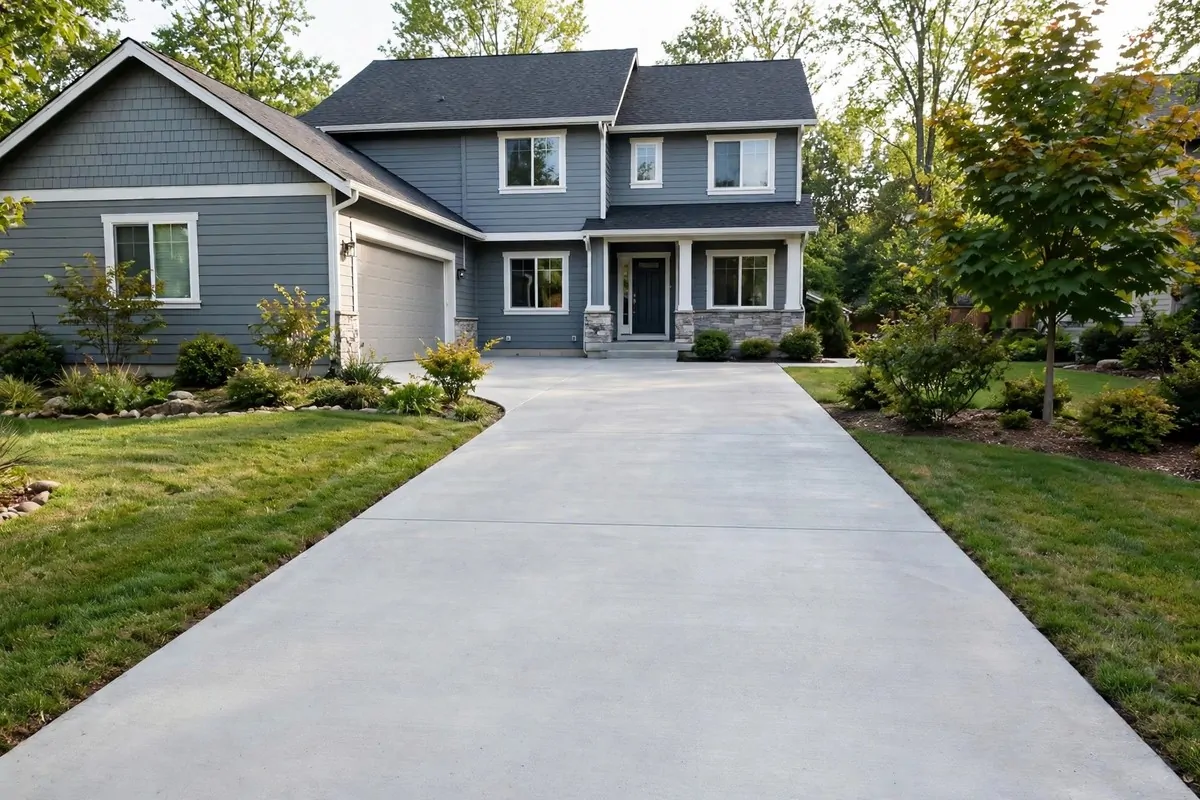
A smooth concrete drive makes the front of my home look tidy in one step. It feels clean under my feet, and it stays neat for years.
I like how plain it looks. You can wash it with a hose when dust builds up.
A smooth finish also makes it easy to park, walk, and roll a bin to the road.
You can pick a light grey tone that suits most house colours.
I keep the edges straight and the corners soft so the whole drive looks cared for.
A small slope helps rain run off to one side.
Typical cost $300 to $600.
I sweep it once a week, and that is all it really needs.
If you want a calm front yard, this is a simple place to start.
2. A Gravel Driveway with Soft Edges
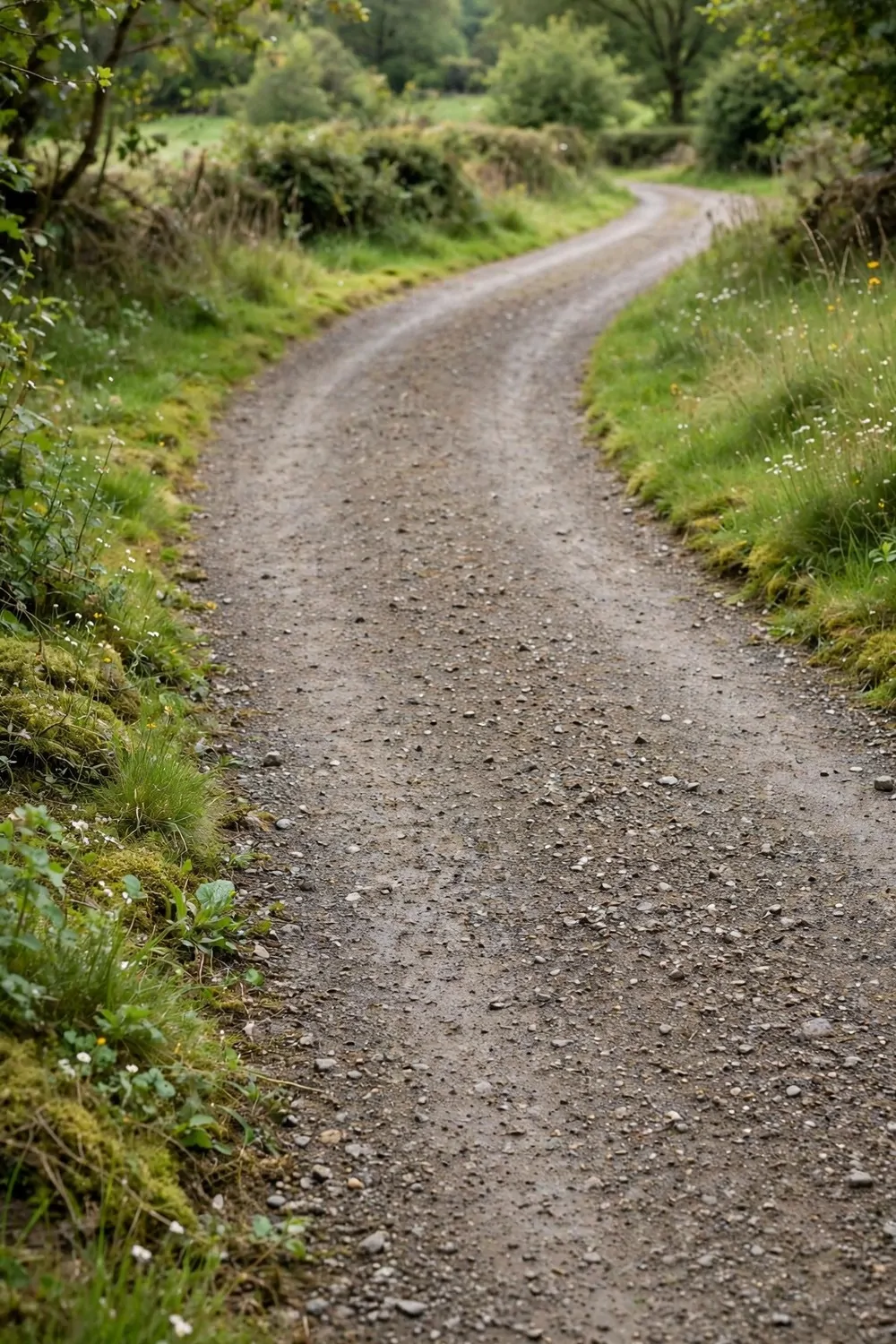
Gravel gives my drive a soft, natural feel without a big job.
You can spread it in a weekend with a wheelbarrow and a rake.
I like the soft crunch under my shoes. It tells me where the edge of the drive is.
Soft edges mean no hard lines against the lawn. The stones can sit close to the grass.
A thick layer keeps weeds down and stops puddles from sitting on top.
You can top it up each year with one fresh bag.
Typical cost $150 to $300.
I rake it smooth after heavy rain, and it looks fresh again.
Small stones suit a cottage style home and a quiet street.
3. Warm Brick Pavers in Soft Red Tones
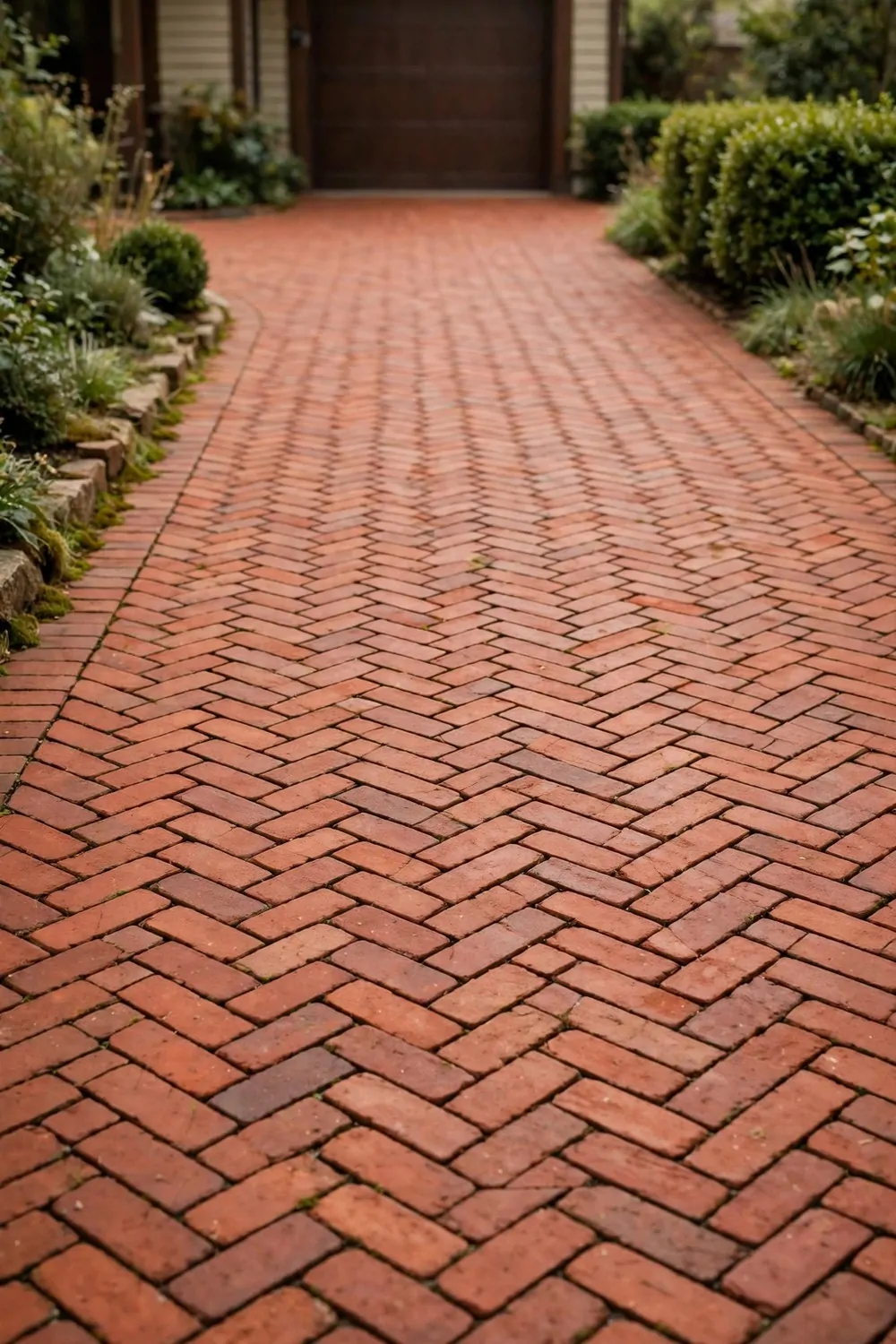
Warm brick pavers in soft red tones make my front path feel warm and friendly.
The red tone suits brick houses and pale walls alike.
I like how each brick sits firm and flat under my feet.
You can lay them in a simple pattern and let the colour do the work.
A soft red tone ages well, and it hides dust better than pale stone.
I keep the gaps tight so weeds have less room to grow.
Typical cost $250 to $450.
A quick sweep keeps the surface neat, and a hose wash brings the colour back.
If you want a drive with charm, this one is hard to beat.
4. A Wide Driveway for Two Cars Side by Side
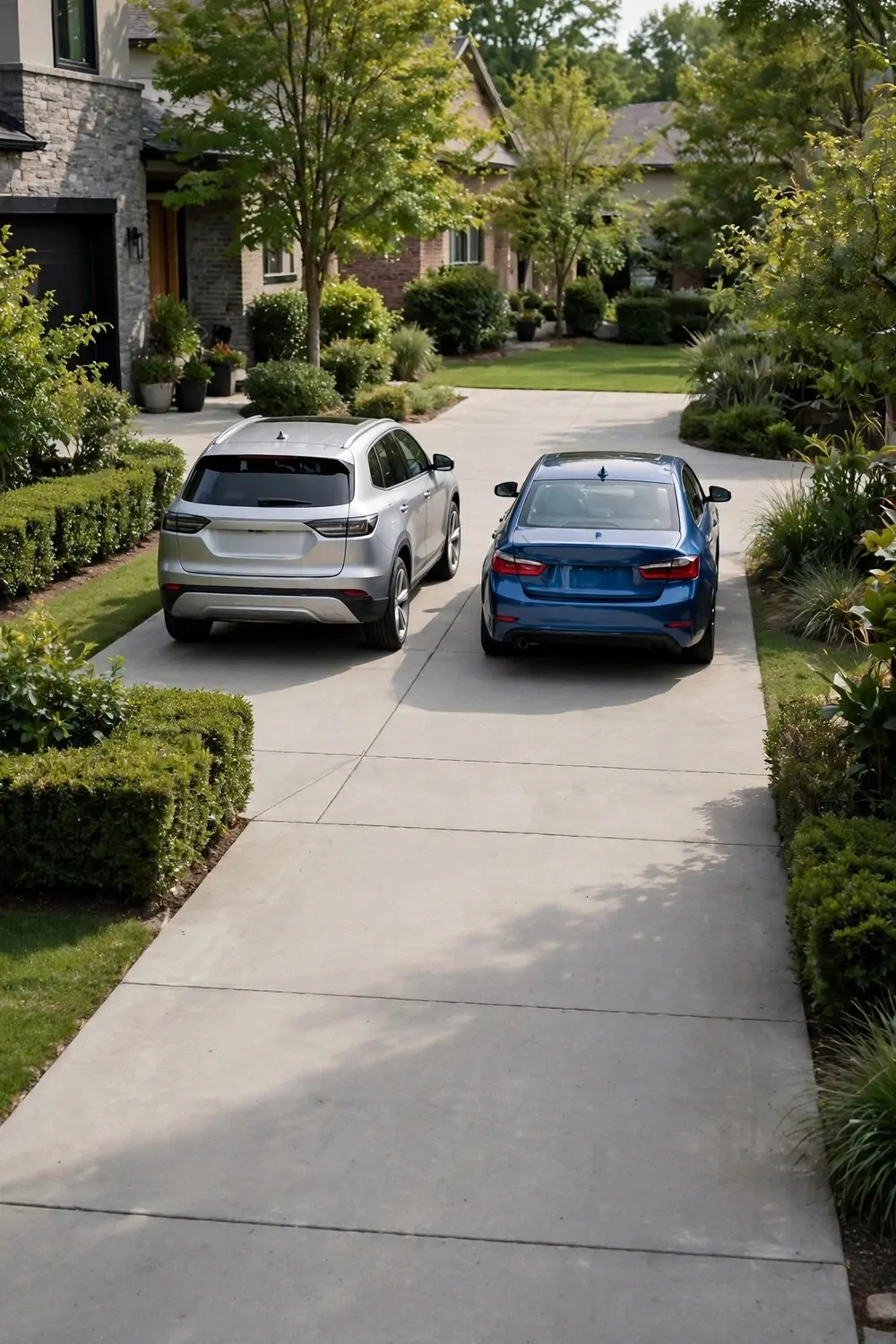
A wide drive lets two cars sit side by side without a squeeze.
I no longer have to move one car to let the other one out.
You can open both doors wide and still have room to walk past.
A wide drive also gives guests a clear place to park when they visit.
I keep the middle line plain so the drive looks calm, not busy.
Good drainage matters more here, so I let the surface slope gently to one side.
Typical cost $400 to $800.
I keep the edges neat with low plants so nobody drives onto the lawn.
If your home has two cars, this change makes each morning easier.
5. A Curved Driveway That Fits the Front Yard
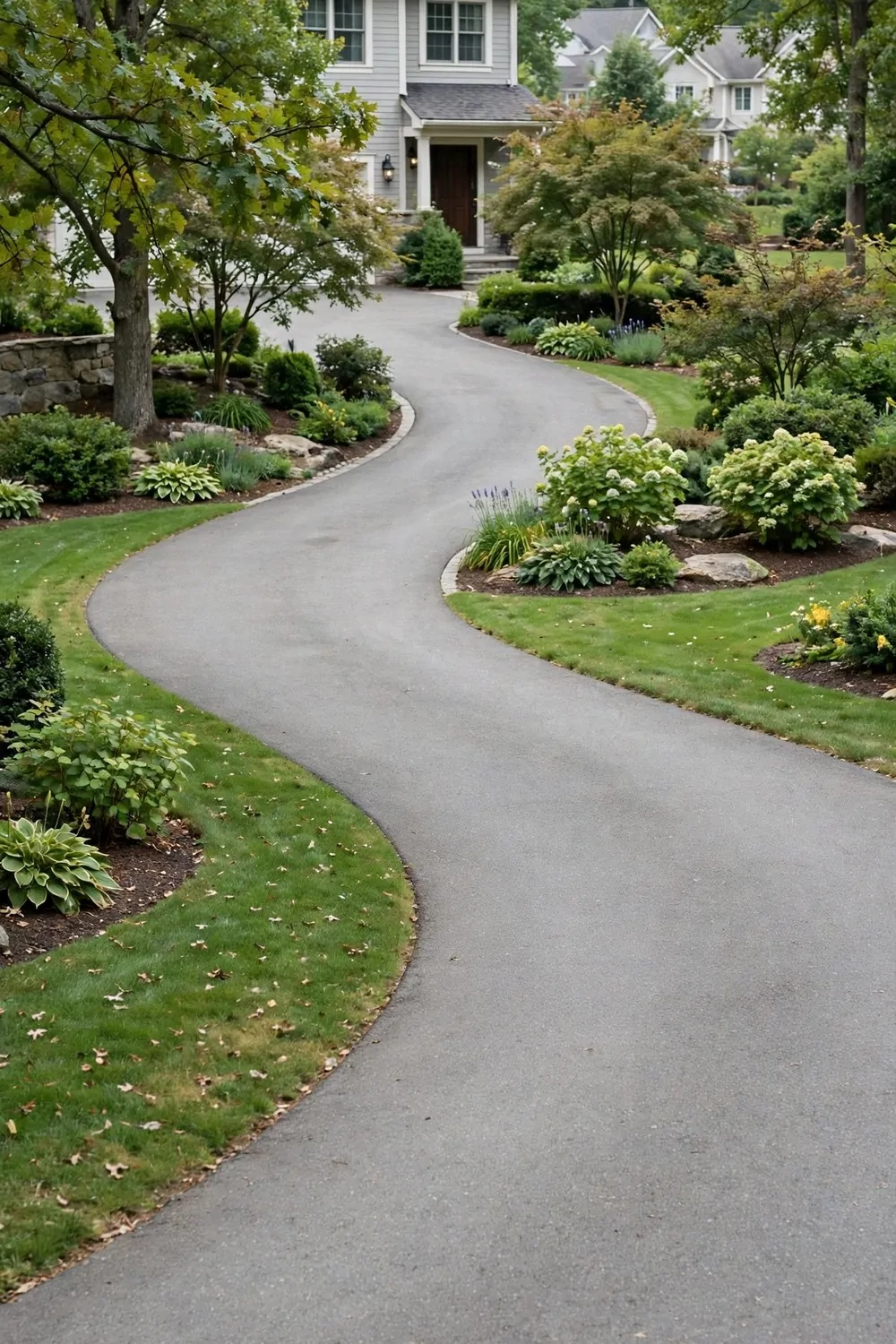
A curved drive follows the shape of my front yard instead of cutting straight through it.
It feels softer than a straight line, and it leaves room for a small lawn.
You can plant low shrubs along the bend to frame the curve.
I like how the curve slows the car down as I pull in.
A gentle bend suits a wide front yard and a house set back from the road.
The edge can follow the lawn, so the whole front looks like one neat plan.
Typical cost $350 to $650.
I keep the curve smooth and wide enough for a full turn.
If your yard has space to spare, a curve makes it feel calm and open.
6. A Permeable Paver Driveway That Drains Rain
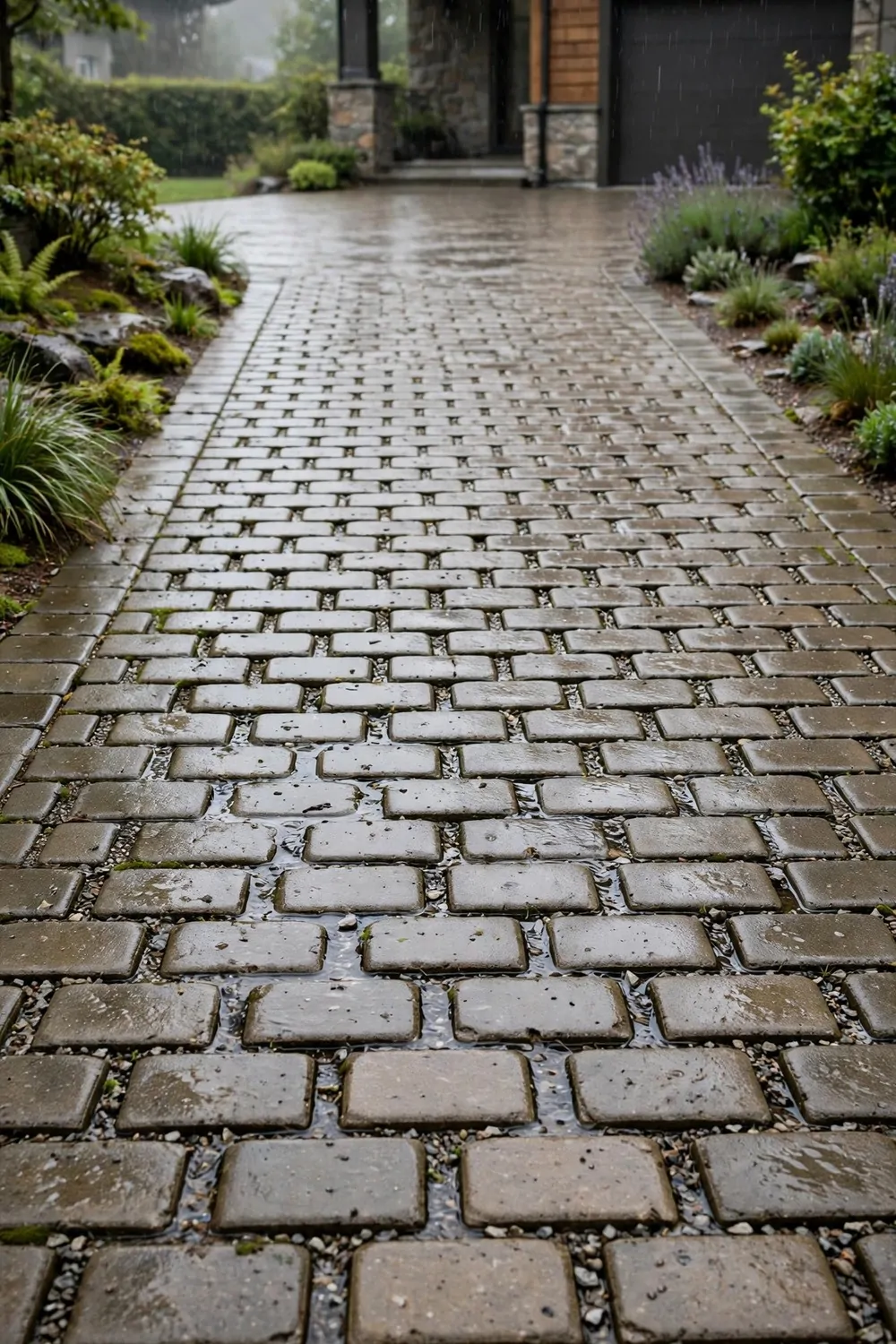
Permeable pavers let rain sink through the gaps instead of pooling on top.
I like how the drive stays dry soon after a shower.
You can pick pavers with wide joints that hold small stones.
Rain water drains down through the base and into the soil below.
This helps the front yard stay green, since the ground still gets water.
I sweep the joints once in a while to keep them open.
Typical cost $300 to $550.
A firm base stops the pavers from sinking or tilting.
If your street floods in heavy rain, this drive is worth a look.
7. A Plain Asphalt Driveway with a Tidy Edge
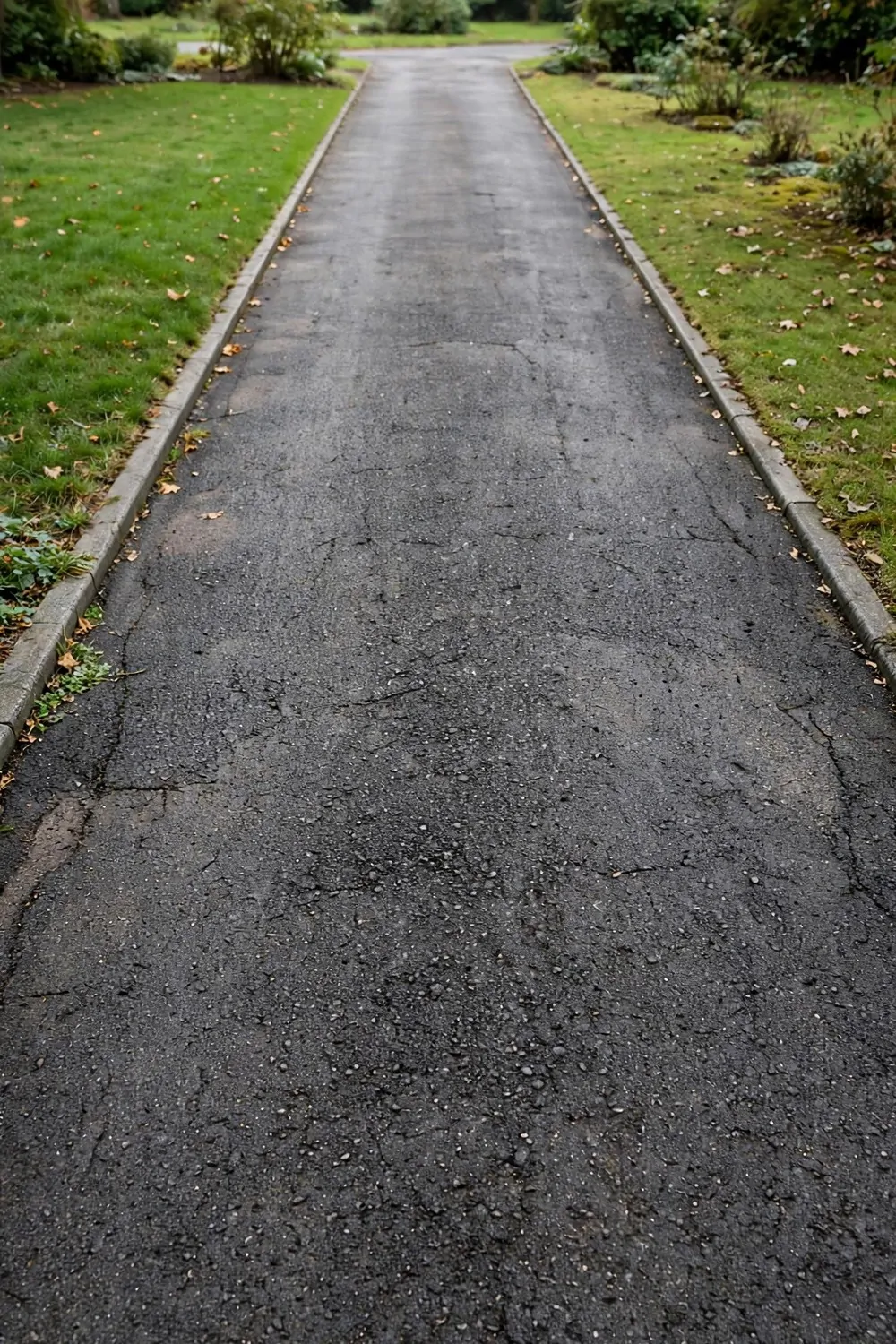
A plain asphalt drive is a simple, honest choice for most homes.
It looks dark and neat, and it suits a quiet street.
I like how smooth it feels under the car tyres.
You can add a tidy edge with stones or a low strip of concrete.
A clean edge stops the asphalt from crumbling at the sides.
I keep leaves off it in autumn so stains do not build up.
Typical cost $200 to $400.
A fresh seal coat every few years keeps it dark and strong.
If you want a low fuss drive, this one does the job well.
8. Grass Pavers That Keep the Drive Green
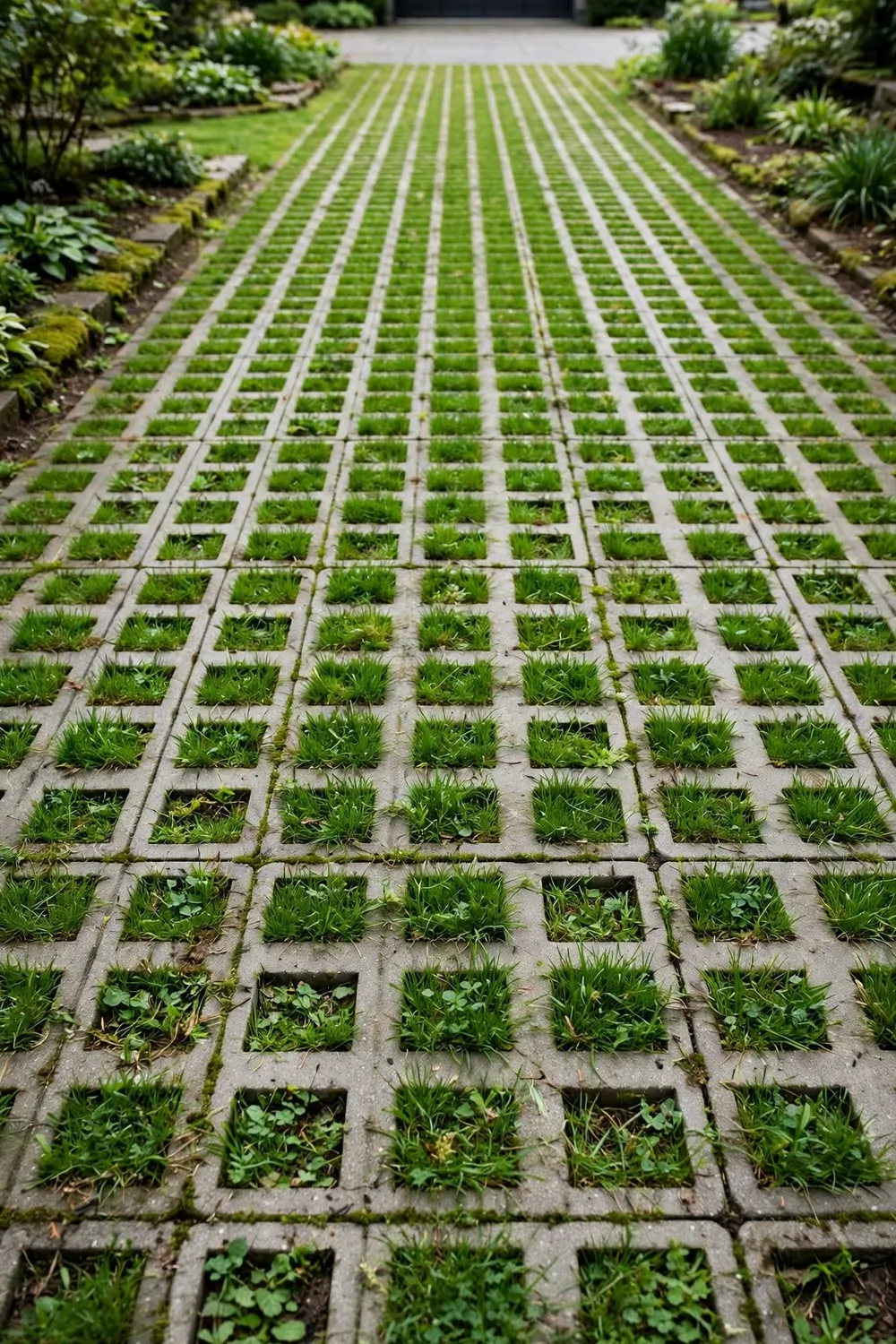
Grass pavers let my drive stay green while still holding the car.
The grid holds the soil firm, and the grass grows through the holes.
You can mow right over it, just like the rest of the lawn.
I like how the drive blends into the front yard instead of standing out.
A green drive suits a home with lots of plants around it.
The pavers spread the weight of the car so the grass does not wear thin.
Typical cost $180 to $350.
I water it in dry weeks so the grass stays fresh.
If you want parking without a hard surface, this is a kind choice.
9. A Stamped Concrete Driveway with a Stone Look
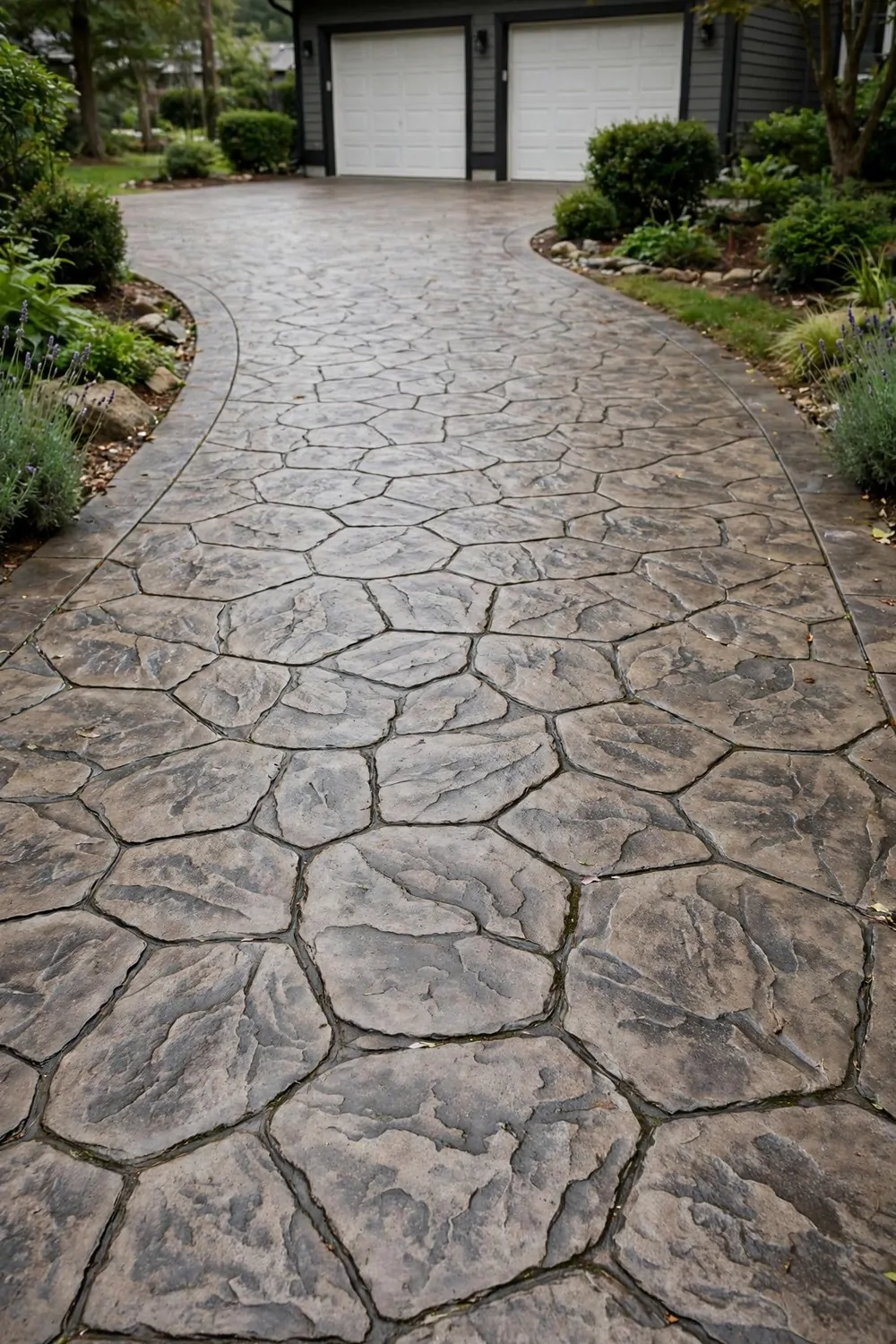
Stamped concrete gives my drive the look of stone without the cost of real stone.
The pattern is pressed into the concrete while it is still soft.
You can pick a stone pattern that suits your house and your street.
I like how it looks neat and solid, with no loose pieces to move.
A soft grey tone works well, and the pattern adds charm.
The surface stays firm under cars and easy to sweep.
Typical cost $350 to $600.
I wash it with a hose when dust settles in the pattern.
If you want a stone look on a plain budget, this is a smart pick.
10. Low Solar Lights Along Both Sides of the Drive
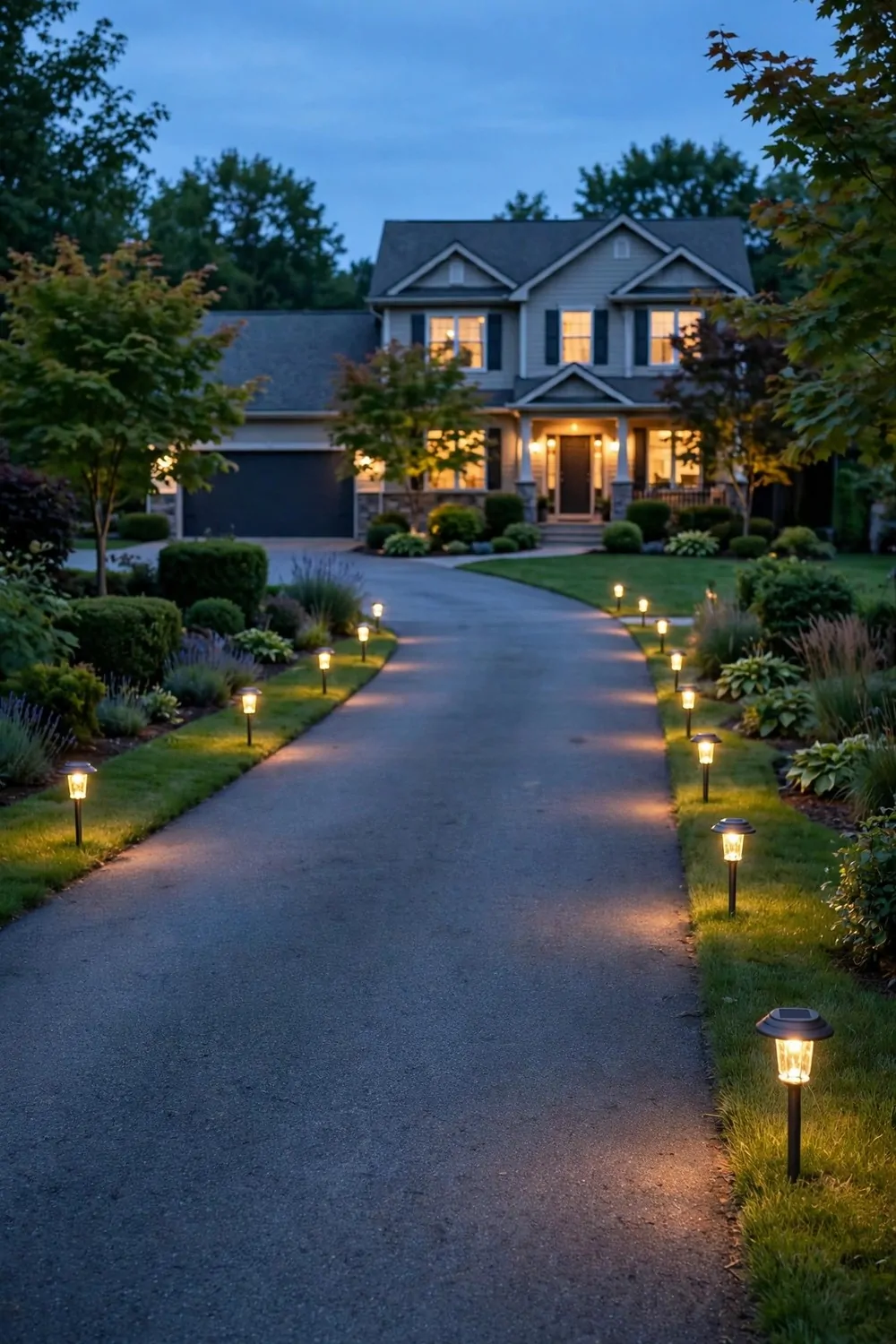
Low solar lights along both sides of the drive make the front of my home feel warm at night.
They charge in the sun all day and switch on by themselves at dusk.
You can push them into the soil in a few minutes, with no wires at all.
I like how they mark the edge of the drive when I pull in late.
A soft glow suits a quiet street, and it helps guests find the path.
You can space them out along the edge so the whole drive is easy to see.
Typical cost $40 to $80.
I wipe the small panels now and then so they charge well.
If you want a quick win for curb appeal, these lights are a lovely start.
| Idea | Main change | Typical cost |
|---|---|---|
| A Neat Concrete Driveway with a Smooth Finish | Pour one smooth concrete slab to the front door | $300 to $600 |
| A Gravel Driveway with Soft Edges | Spread loose gravel with soft edges by the lawn | $150 to $300 |
| Warm Brick Pavers in Soft Red Tones | Lay warm red brick pavers in a simple pattern | $250 to $450 |
| A Wide Driveway for Two Cars Side by Side | Widen the drive so two cars park side by side | $400 to $800 |
| A Curved Driveway That Fits the Front Yard | Shape a gentle curve through the front yard | $350 to $650 |
| A Permeable Paver Driveway That Drains Rain | Lay permeable pavers that let rain drain through | $300 to $550 |
| A Plain Asphalt Driveway with a Tidy Edge | Lay plain asphalt with a tidy stone edge | $200 to $400 |
| Grass Pavers That Keep the Drive Green | Fit grass pavers so the drive stays green | $180 to $350 |
| A Stamped Concrete Driveway with a Stone Look | Press a stone pattern into fresh concrete | $350 to $600 |
| Low Solar Lights Along Both Sides of the Drive | Push low solar lights into the soil along both sides | $40 to $80 |
| Total | $2520 to $4780 |
11. A Neat Stone Edging Strip Along the Driveway
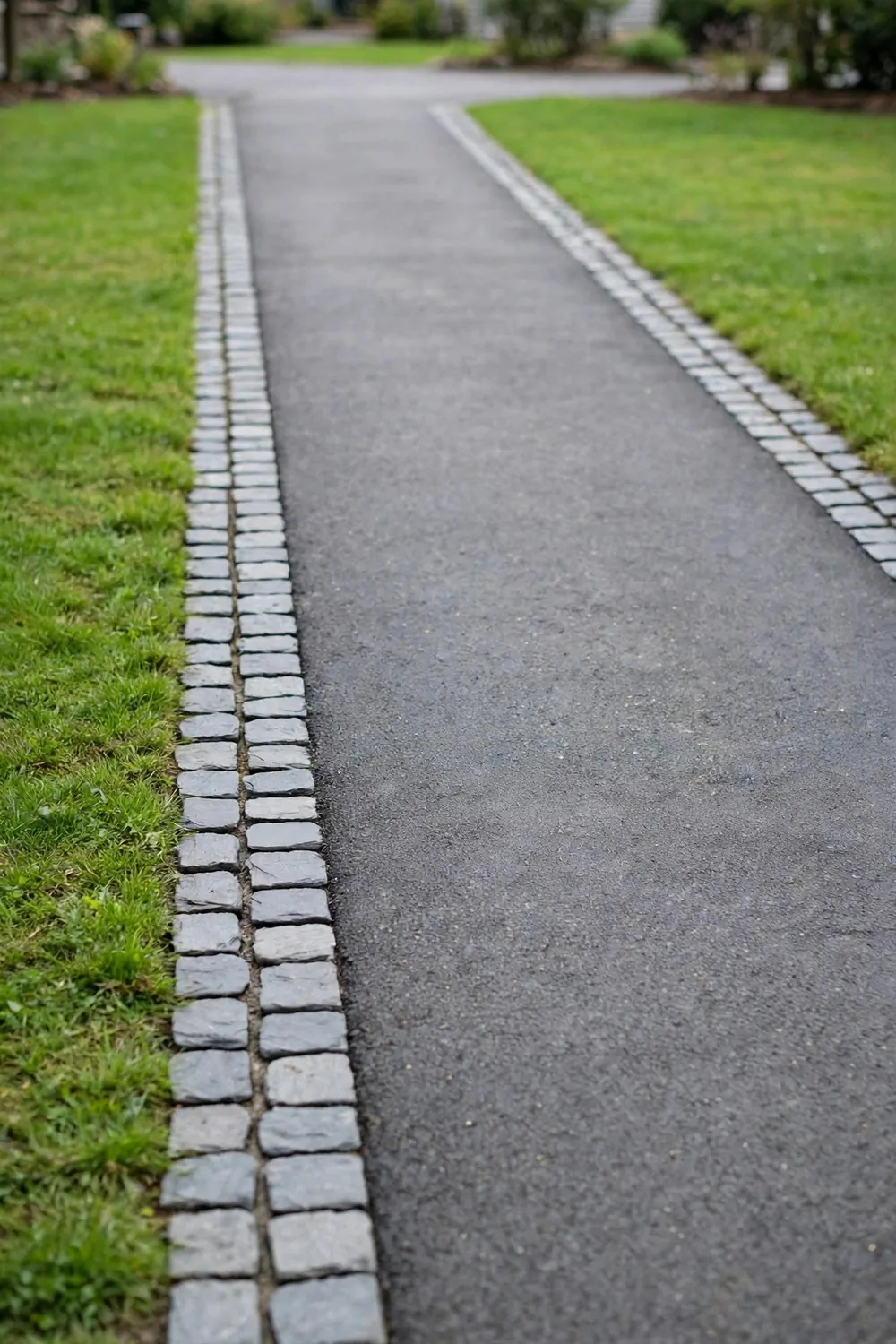
A plain stone edge makes the drive look neat right away.
I like how it keeps the grass from creeping over the side. It gives the drive a clean line that you can see from the road.
You can pick flat stones that sit low and flat.
Set them in a row along each side and press them into the soil so they stay put.
Typical cost $60 to $120.
A low edge also helps when you trim the grass. You do not have to fight with long bits that flop over the drive.
Pick stones that are close in size so the line looks even.
If one stone wobbles, lift it out and add a bit of sand under it.
A neat edge like this makes the whole front of the house look cared for.
12. Flower Borders That Line the Drive
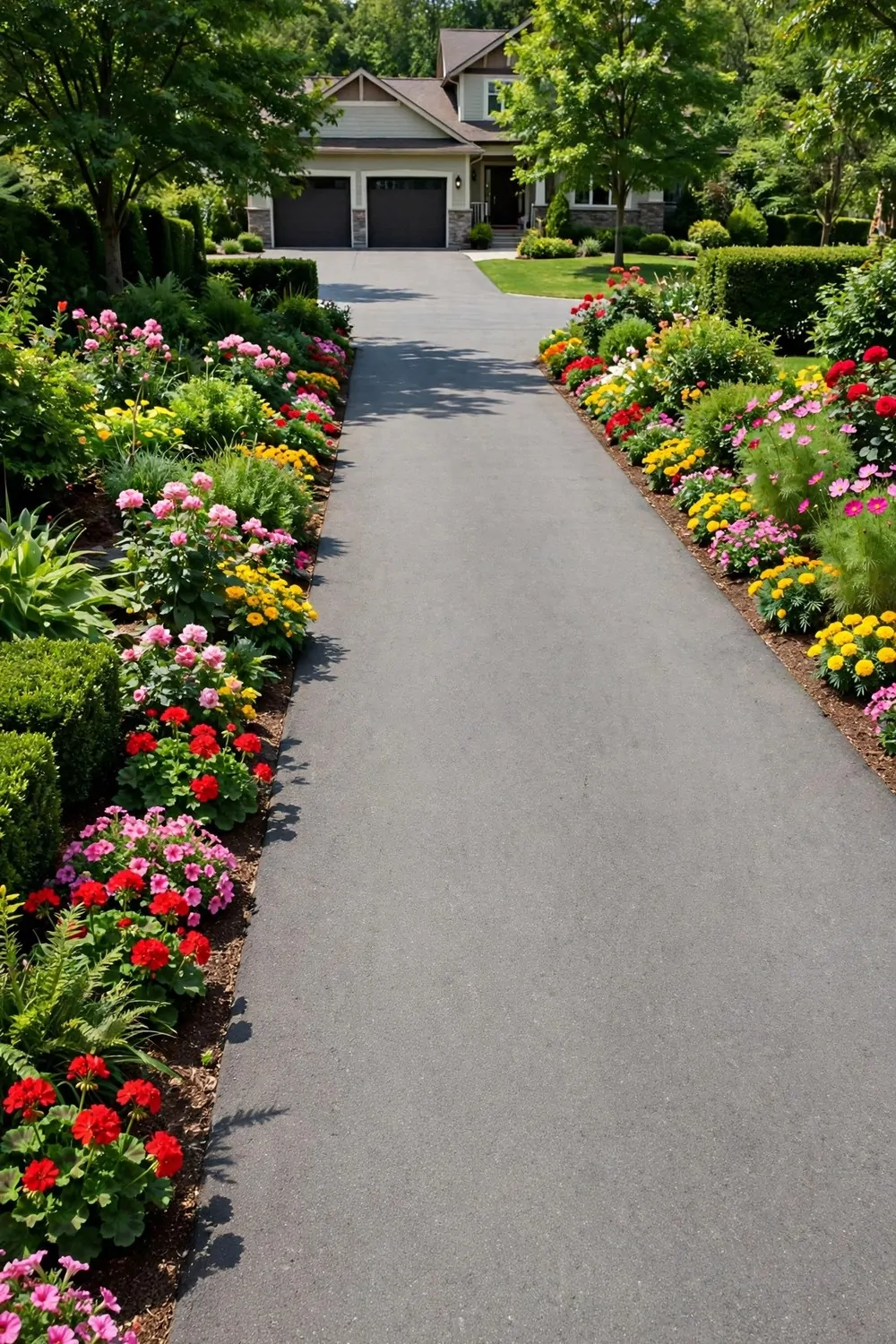
Flowers along the drive make the whole front feel warm and bright.
I plant low flowers so they do not block the view of the house. Short blooms are easy to care for too.
You can pick one colour group or mix a few that you like.
A narrow bed on each side works well.
Typical cost $30 to $60.
Water them in the morning so the soil stays damp through the day.
Pull out weeds each week so the flowers have room to grow.
If a plant looks tired, cut it back and it often comes back strong.
A line of flowers turns a plain drive into a path you enjoy walking up.
13. A Small Planting Bed at the Driveway Entrance
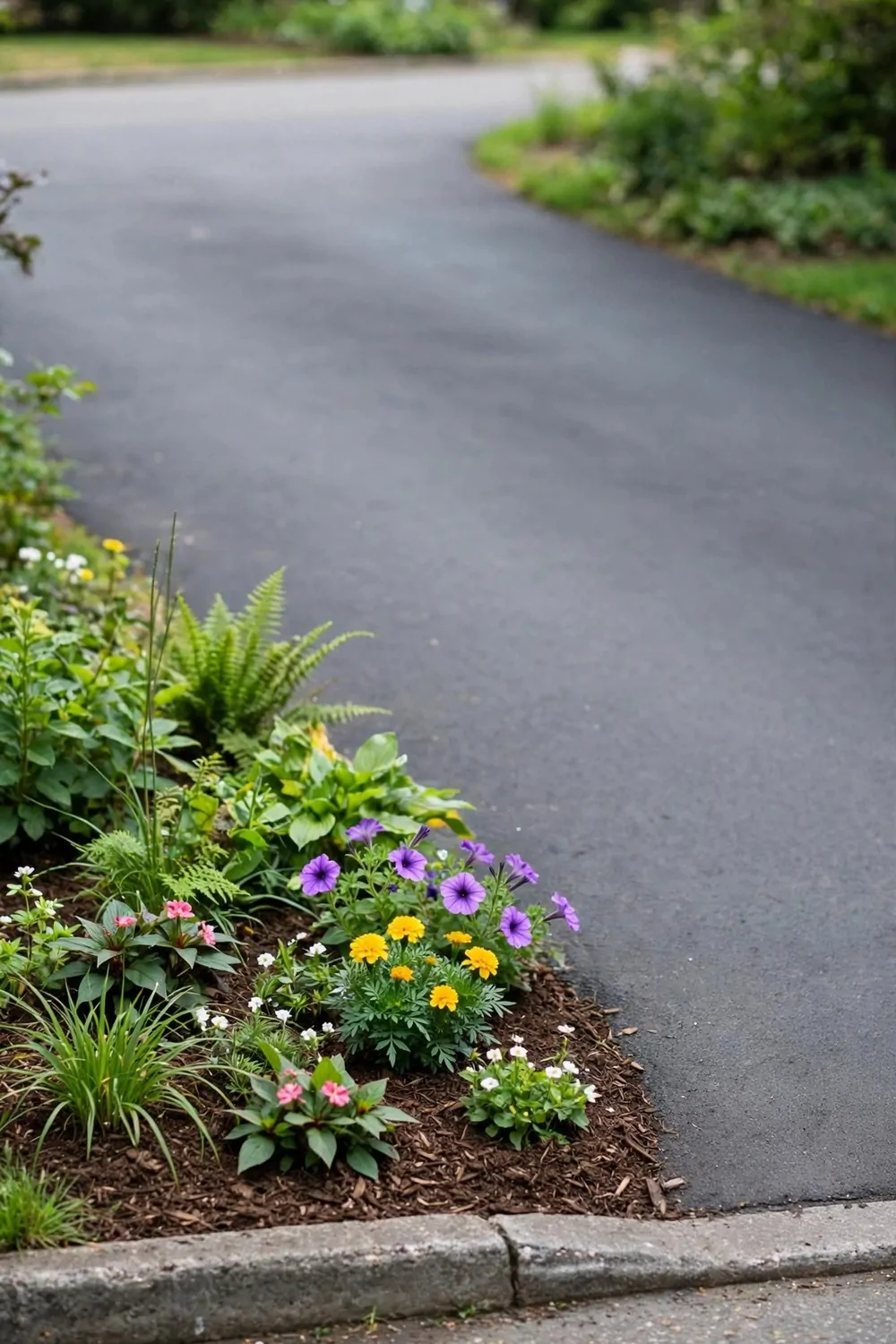
A small bed at the entrance makes the drive feel like a proper welcome.
I keep mine simple with green plants and some bright flowers.
You can shape the bed with a soft curve so it looks natural.
Add fresh soil first so the plants have a good start.
Typical cost $40 to $80.
A low edge of bricks or stones keeps the soil from washing out.
Pick plants that like the sun or shade you have at that spot.
Water the new plants well for the first few weeks.
When guests pull in, that little bed is the first thing they see, and it sets a nice tone.
14. A Clean Driveway Apron Where It Meets the Road
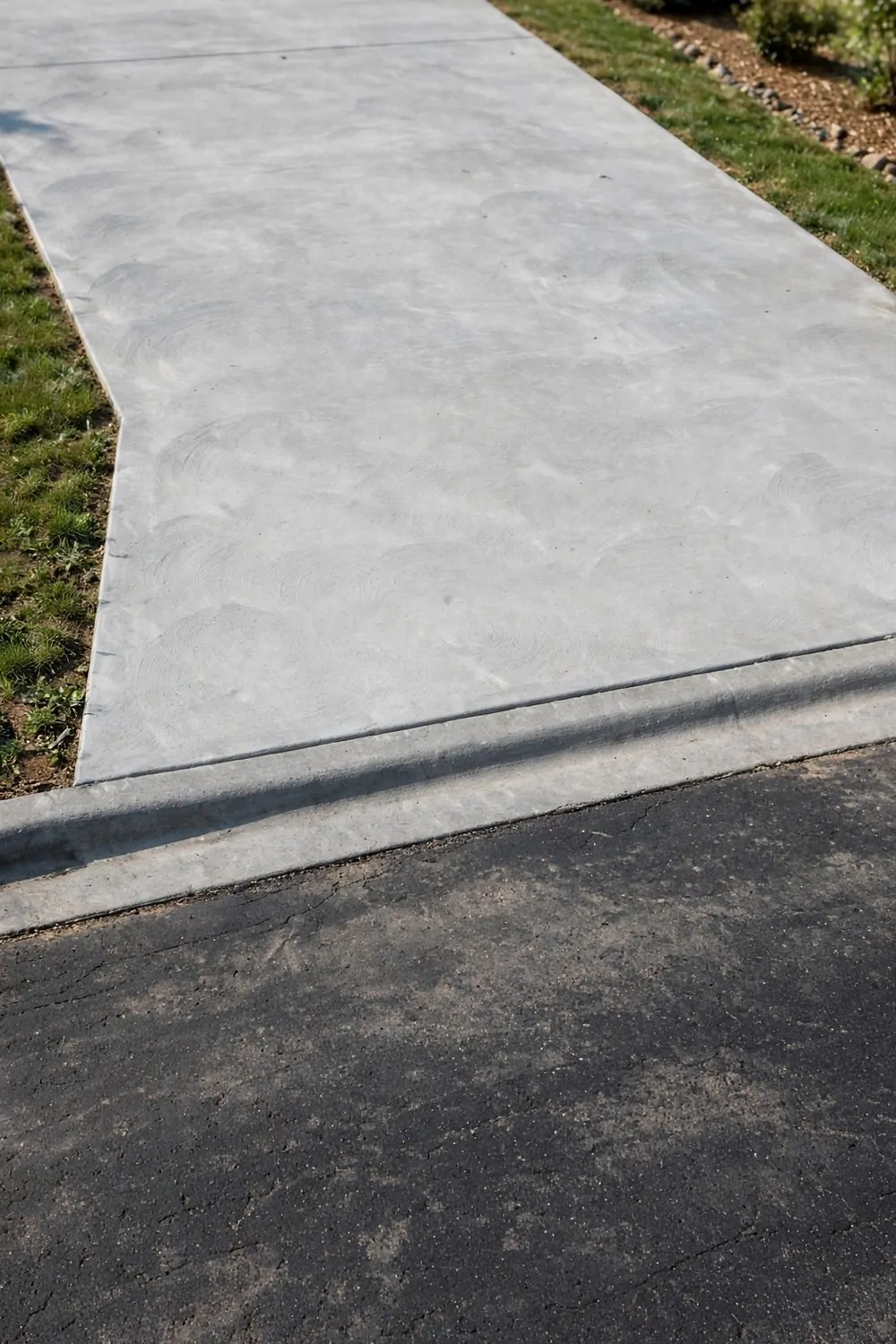
The apron is the short bit of drive where it meets the road.
When it is cracked and rough, the whole drive looks tired. A clean apron fixes that fast.
I had mine smoothed out and it made a big change to how the front looks.
You can ask a local worker to patch it or pour a fresh slab.
Typical cost $150 to $300.
A level apron also stops rain water from pooling at the edge of the road.
Make sure the new surface lines up with the road so cars roll over it with ease.
Keep the edges tidy so grass does not grow into the joint.
It is a small job, but it lifts the look of the whole drive.
15. A Simple Drainage Channel That Keeps Water Off the Drive
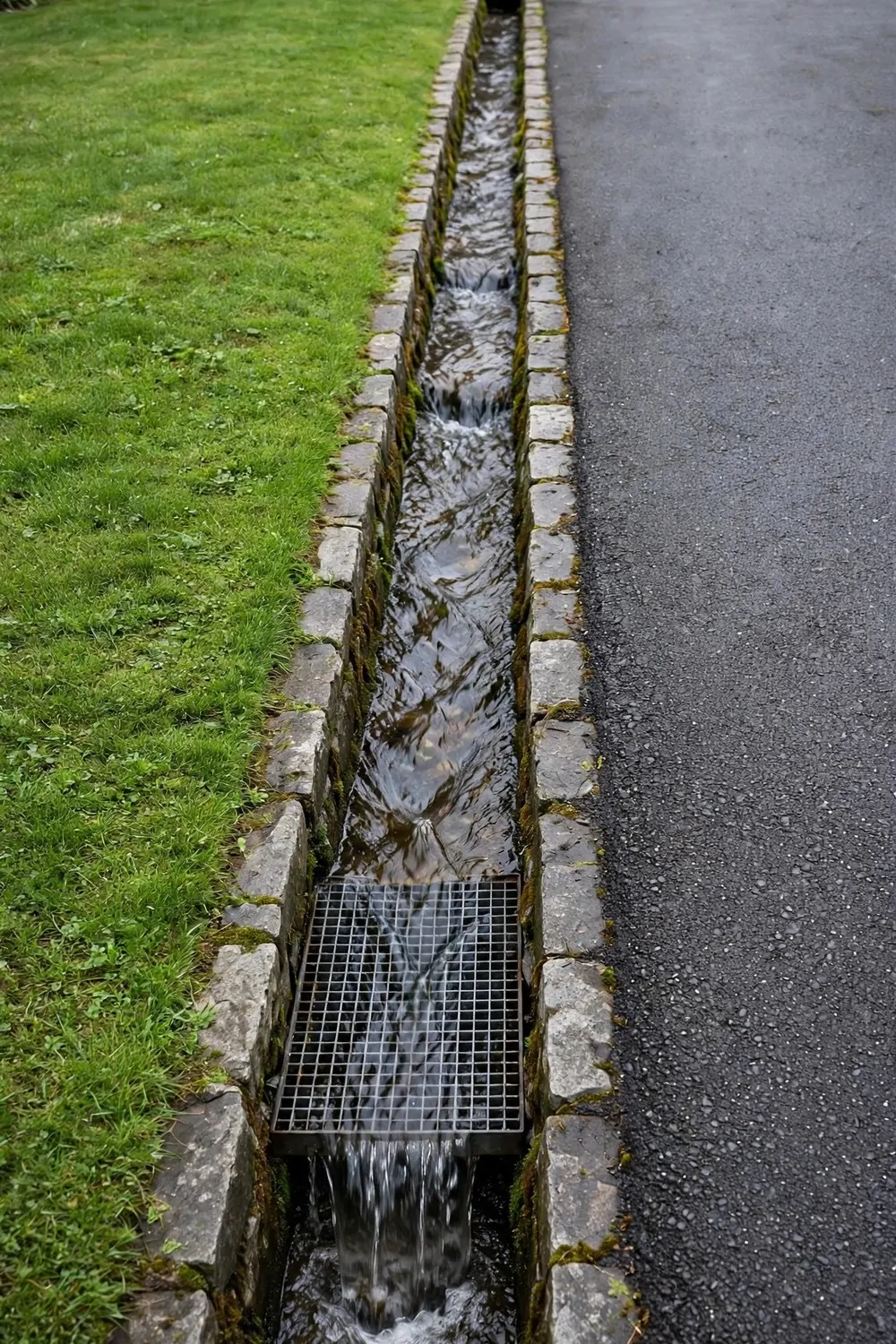
Water that sits on a drive can stain it and make it slippery.
A small channel gives the water a place to go. It runs off to the side instead of pooling in the middle.
I like a shallow channel set along the edge of the drive near the low end.
You can use a ready-made grate or a simple concrete dip.
Typical cost $120 to $250.
Clean the channel out now and then so leaves do not block it.
A clear channel also helps in heavy rain when a lot of water comes at once.
Check the slope so the water flows away from the house.
With the water kept off, the drive stays dry and safe to walk on.
16. A Fresh Seal Coat That Makes Old Asphalt Look New
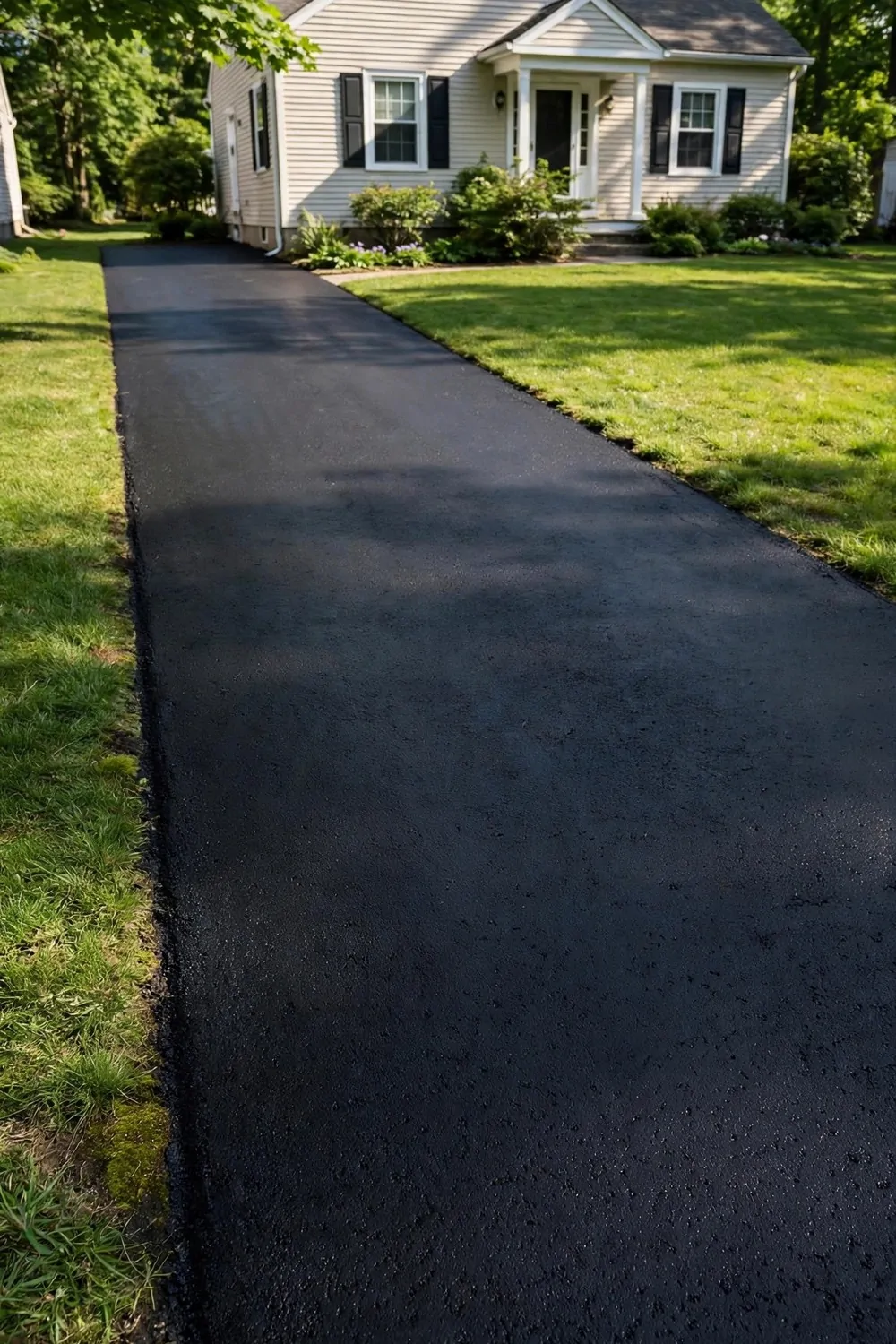
Old asphalt can look worn and tired after a few years.
A fresh seal coat gives the drive a smooth, even look again. It makes the whole front feel fresh.
I like doing this job on a dry, warm day.
Clean the drive first and sweep away all the loose dirt.
Typical cost $80 to $150.
Spread the coat in thin, even strokes with a long brush.
Let it dry fully before you drive on it.
A seal coat also helps keep small cracks from getting worse.
For a small job like this, you can do it yourself in one afternoon.
17. A Crack Repair That Stops Small Damage from Growing
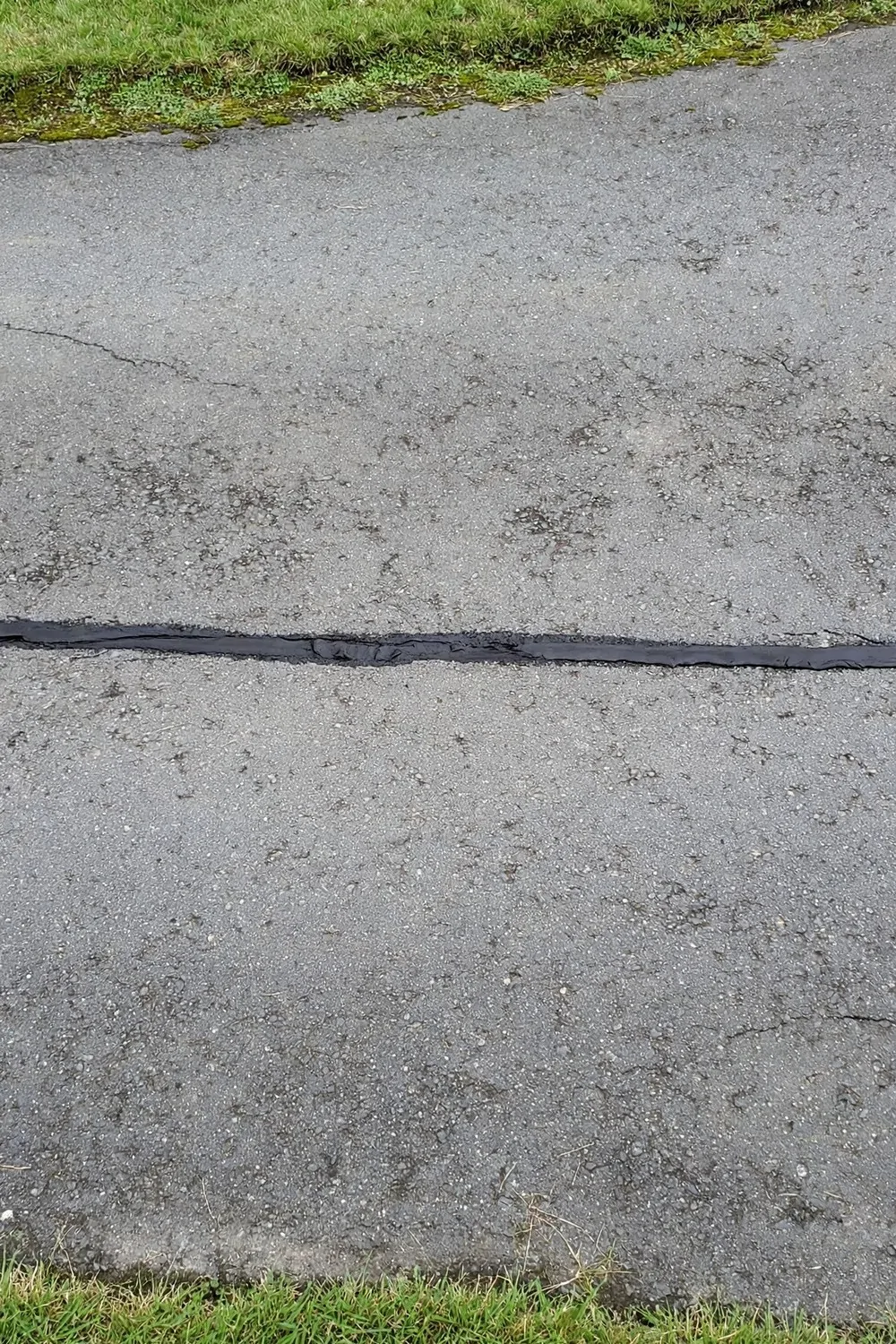
Small cracks in a drive can grow fast if you leave them.
Water gets in, then cold nights make the crack wider. A quick fix now saves a big fix later.
I clean out the crack with a stiff brush first.
Then I fill it with a crack filler from a tube or a tub.
Typical cost $20 to $45.
Smooth the filler flat so it sits level with the drive.
Let it set for a day before you drive over it.
Check the drive each spring and fill any new cracks you spot.
A small tube of filler is cheap, and it keeps your drive in good shape for years.
18. A Neat Parking Pad Beside the Drive
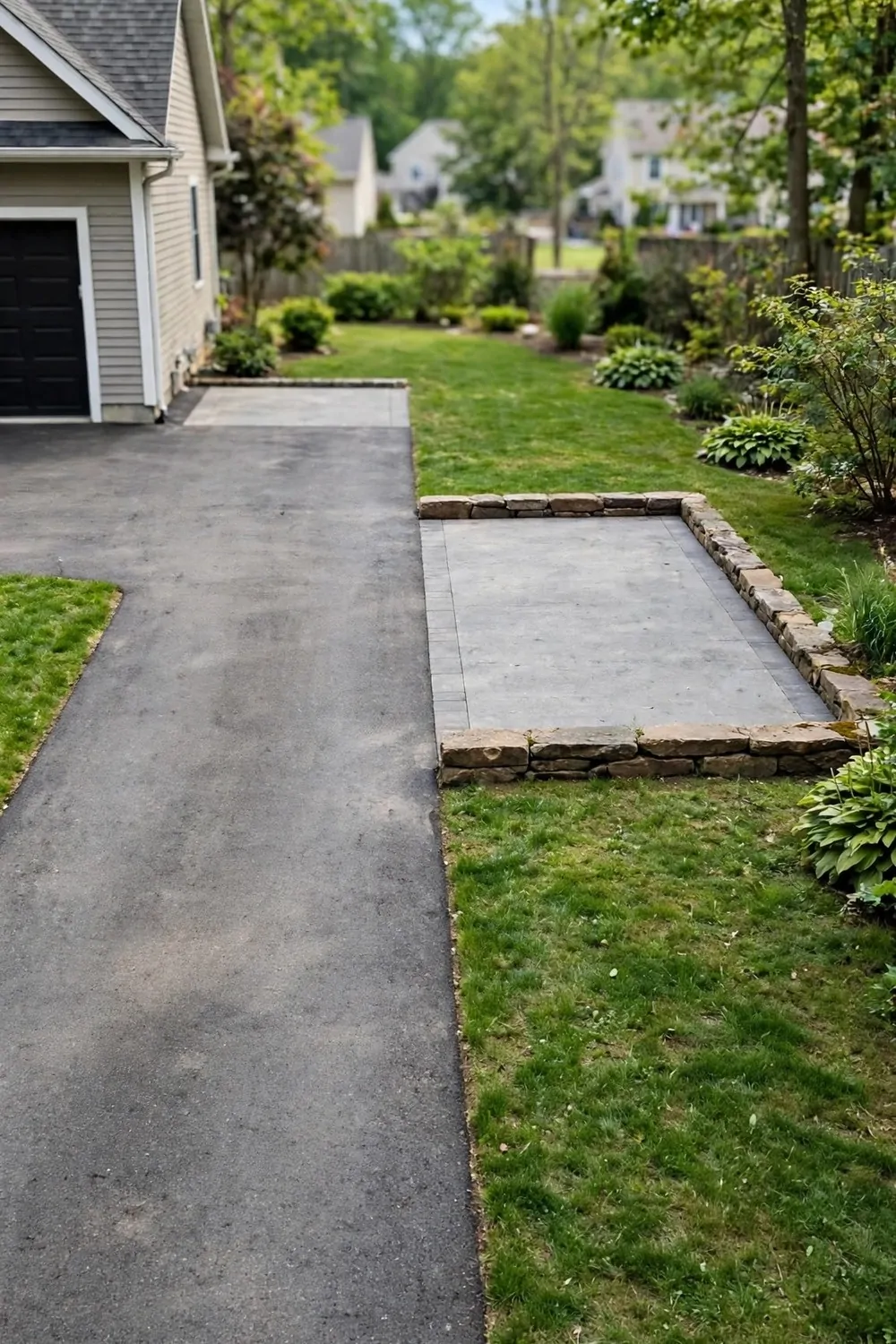
A parking pad gives a second car a proper place to sit.
It keeps cars off the grass and off the street. That makes the front look tidy and keeps the lawn safe.
I like a pad made of gravel or pavers that matches the drive.
Pick a flat spot beside the drive with room to open the car doors.
Typical cost $200 to $400.
Edge the pad with stones so the gravel stays in place.
A pad like this is handy when friends come over too.
Keep it level so rain water runs off and does not pool.
With one extra parking spot, the front of the house feels calm and sorted.
19. A Turning Spot That Makes Reversing Easy
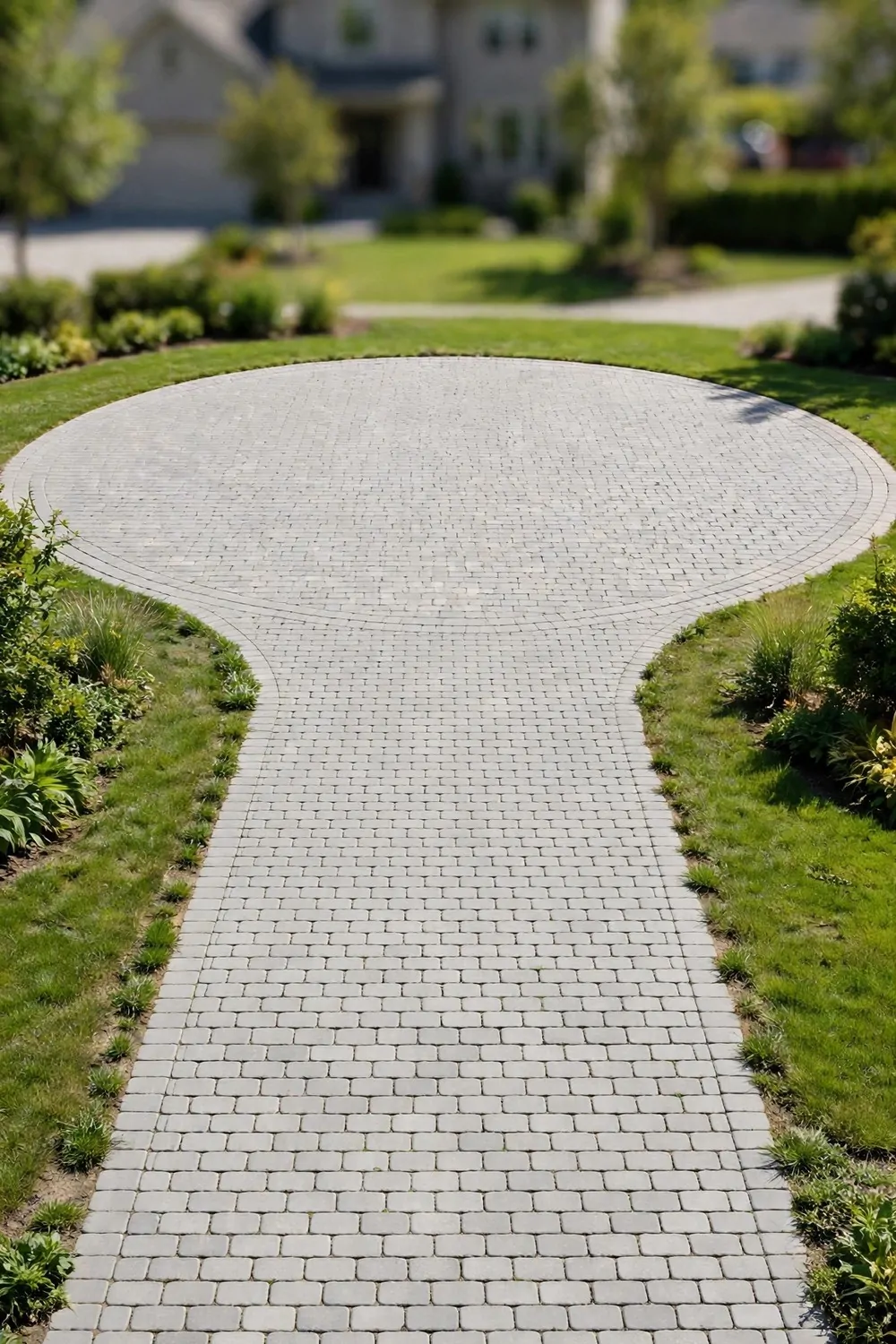
Reversing out onto a busy road is never fun.
A turning spot lets you turn the car around on your own drive. You can drive out facing forward, which feels much safer.
I like a wide, flat area at the end of the drive.
You can pave it or use firm gravel that holds the weight of a car.
Typical cost $250 to $500.
Keep the area clear of pots and bins so you have room to turn.
A turning spot also helps delivery vans and visitors.
Mark the edge with low stones so you know where the safe area ends.
It is a simple change that makes every trip out of the house easier.
20. A Low Hedge That Frames the Driveway
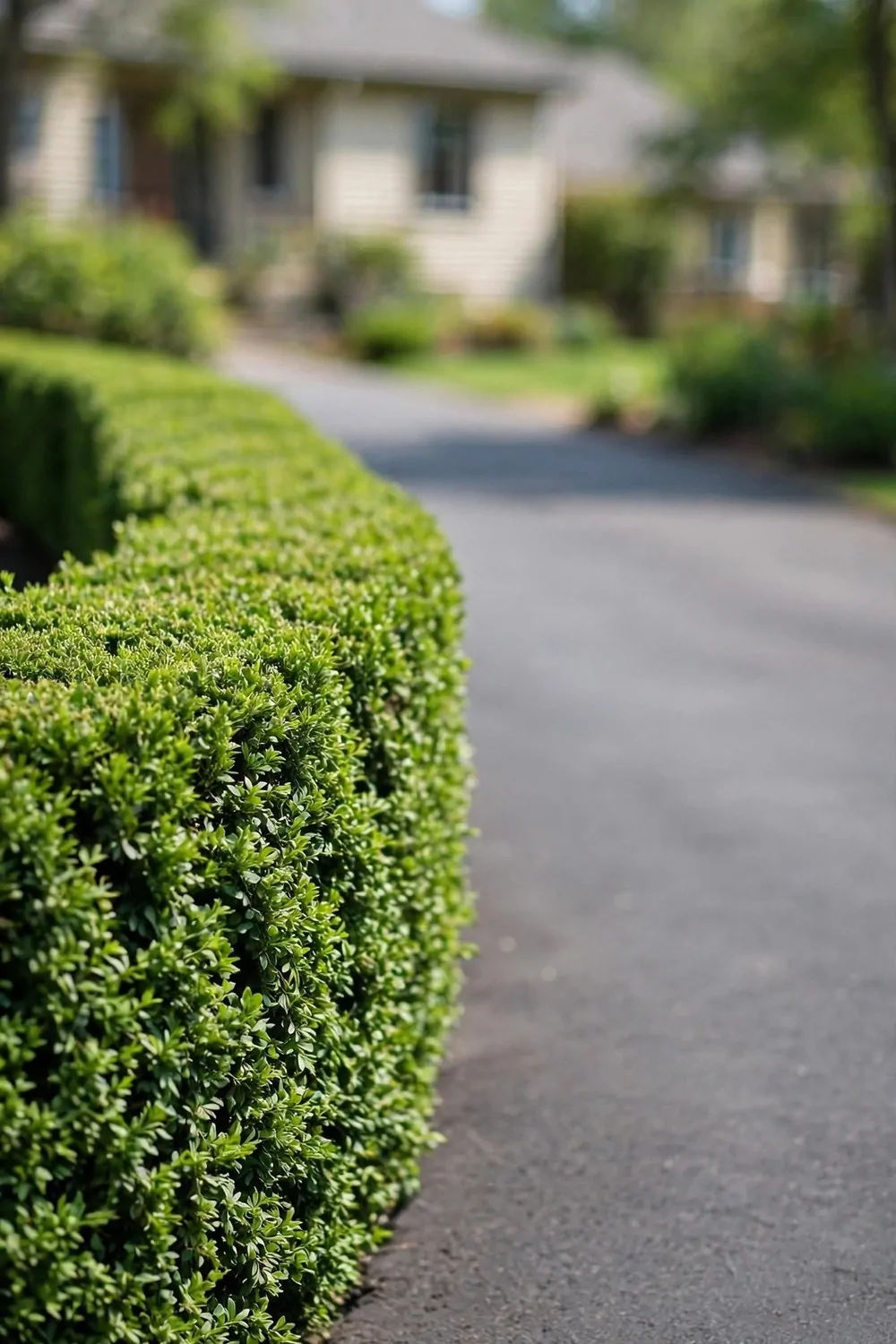
A low hedge along the drive gives the front a soft, finished frame.
I pick plants that stay low so they do not block the view. A hedge at knee height is just right.
You can plant it in a straight line or with a soft curve.
Space the plants out so each one has room to grow.
Typical cost $50 to $100.
Trim the hedge a few times a year to keep it neat.
Water the new plants well until their roots settle in.
A hedge also marks the edge of the drive in a gentle way.
Over time it fills out and makes the whole front look loved.
| Idea | Main change | Typical cost |
|---|---|---|
| A Neat Stone Edging Strip Along the Driveway | Set low flat stones along both drive edges | $60 to $120 |
| Flower Borders That Line the Drive | Plant low flowers in a narrow bed along the drive | $30 to $60 |
| A Small Planting Bed at the Driveway Entrance | Build a small bed with green plants and bright flowers | $40 to $80 |
| A Clean Driveway Apron Where It Meets the Road | Smooth and patch the apron where the drive meets the road | $150 to $300 |
| A Simple Drainage Channel That Keeps Water Off the Drive | Add a shallow channel so water runs off the drive | $120 to $250 |
| A Fresh Seal Coat That Makes Old Asphalt Look New | Clean the drive and spread a fresh seal coat | $80 to $150 |
| A Crack Repair That Stops Small Damage from Growing | Clean and fill small cracks before they grow | $20 to $45 |
| A Neat Parking Pad Beside the Drive | Build a flat gravel or paver pad beside the drive | $200 to $400 |
| A Turning Spot That Makes Reversing Easy | Add a wide flat area to turn the car around | $250 to $500 |
| A Low Hedge That Frames the Driveway | Plant a low hedge along the edge of the drive | $50 to $100 |
| Total | $1000 to $2005 |
21. A Shade Tree That Cools the Drive in Summer
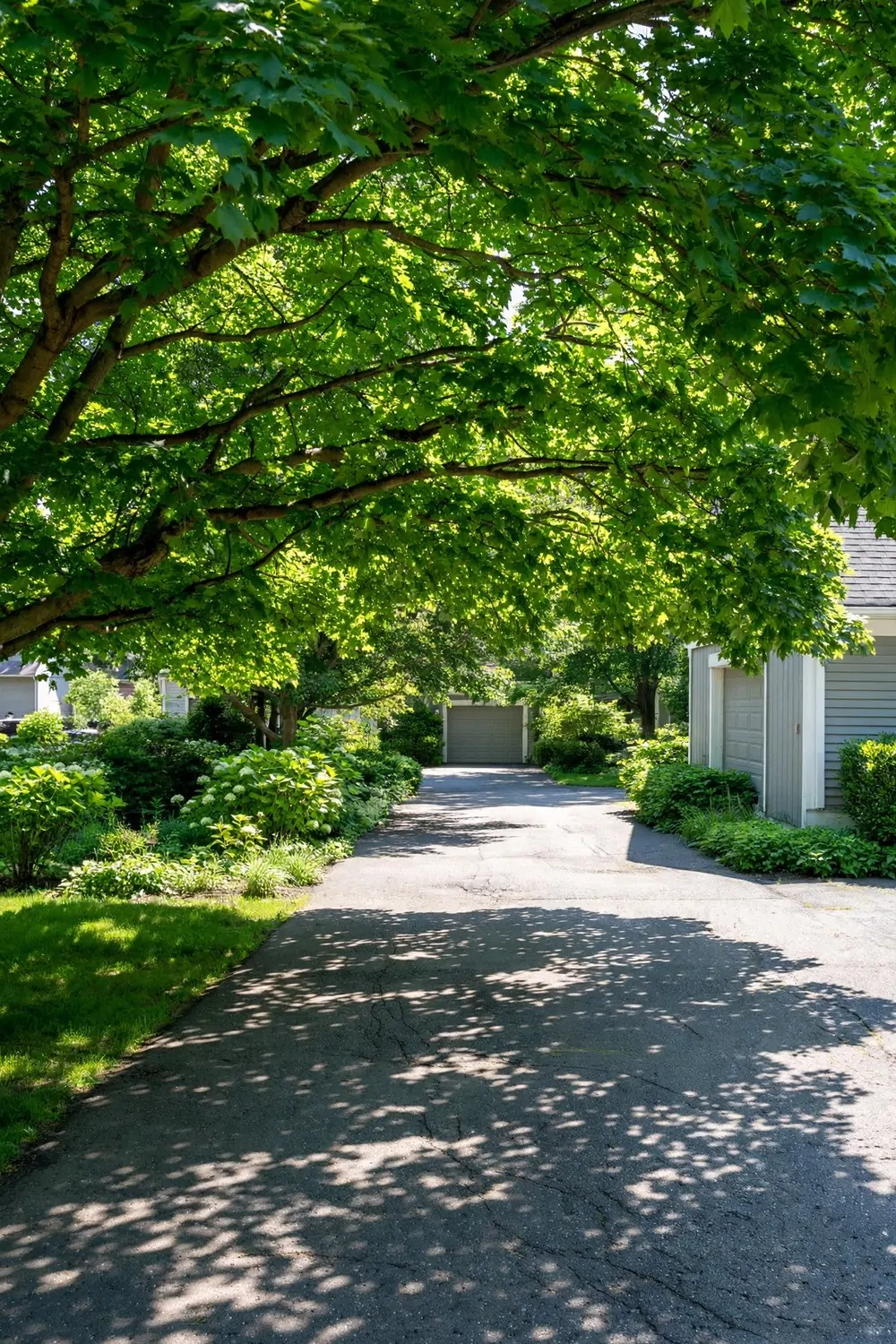
A shade tree can change how a hot drive feels in summer. You step out of the car and the air feels cooler under the leaves.
I like a tree that grows slow and steady near the edge of the drive. It gives shade without taking over the whole front yard.
You can pick a spot where the roots will not push up the paving. A little space from the edge keeps the drive smooth for years.
Water it well in the first year while it settles in. A young tree needs steady water to grow strong roots.
Typical cost $40 to $85.
In time the branches spread and shade the car as well as the paving. You may find you use the front yard more on warm days.
Prune it now and then so low branches do not brush the car. A quick trim keeps it tidy and the drive clear.
Fallen leaves are easy to sweep up with a stiff broom. I sweep mine once a week in autumn and the drive looks neat again.
A tree takes time, but it is worth the wait. It turns a plain drive into a cool spot you enjoy each summer.
22. A Plain Mailbox Post at the End of the Drive
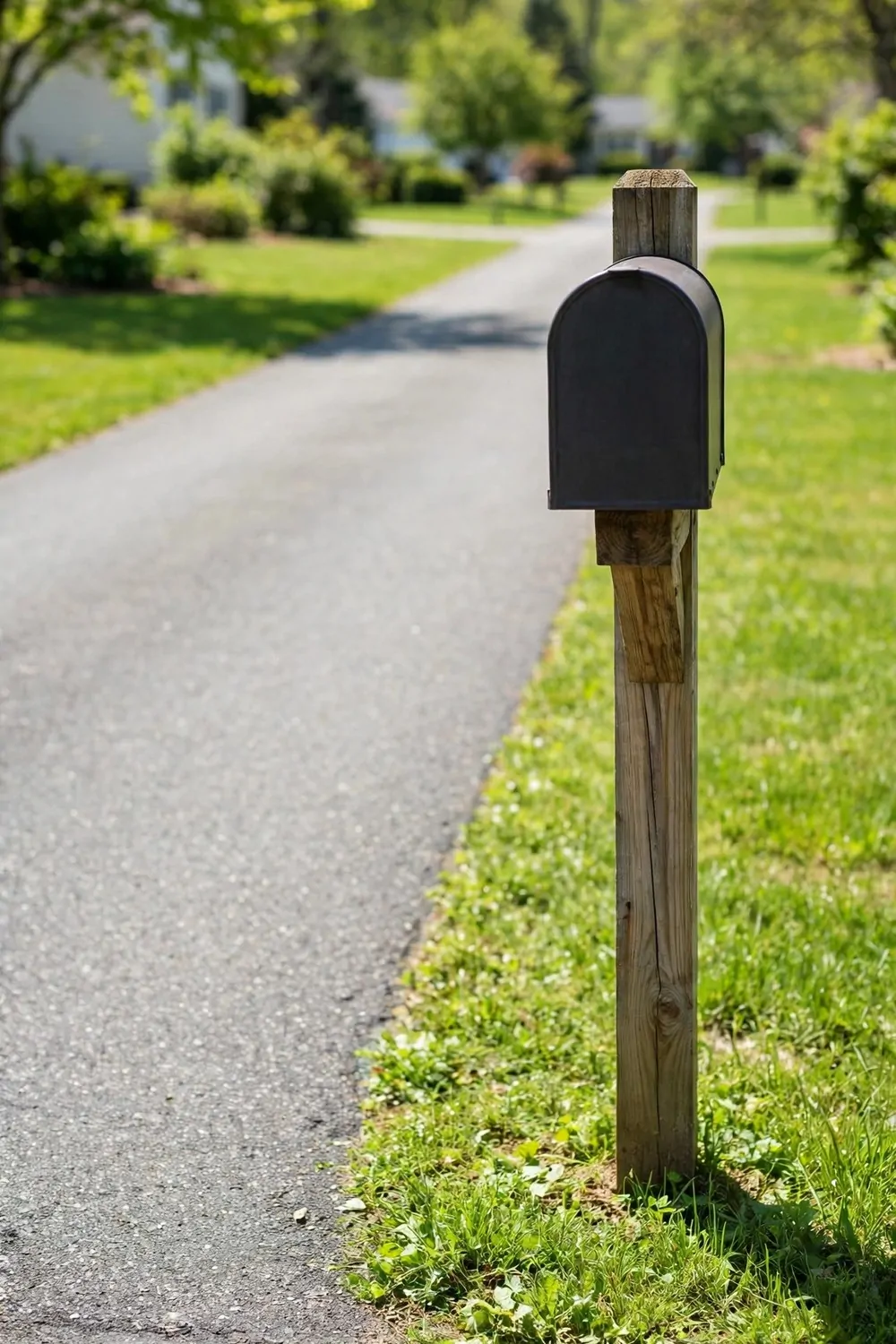
Put a plain mailbox post at the end of the drive, and guests will spot your house with no trouble. It shows where your drive meets the road.
I picked a simple post that stands straight and strong. It holds the box at a good height for me and for the postman.
You can fix it deep in the ground so it does not lean in wind or rain. A firm base keeps it straight through the year.
You can fit a box that opens and shuts with ease. A lid that stays shut keeps letters dry on wet days.
Typical cost $25 to $55.
A plain post suits most homes and most drives. You can leave it plain or add a small touch that fits your home.
Check it now and then to make sure it still stands straight. A quick check will tell you if it needs more soil packed round the base.
Keep weeds and long grass away from the base. A clear patch round the post makes it easy to reach and easy to see.
It is a small job with a clear result. Your drive gets a neat end point, and your mail has a safe home.
23. Clear House Numbers You Can Read from the Road
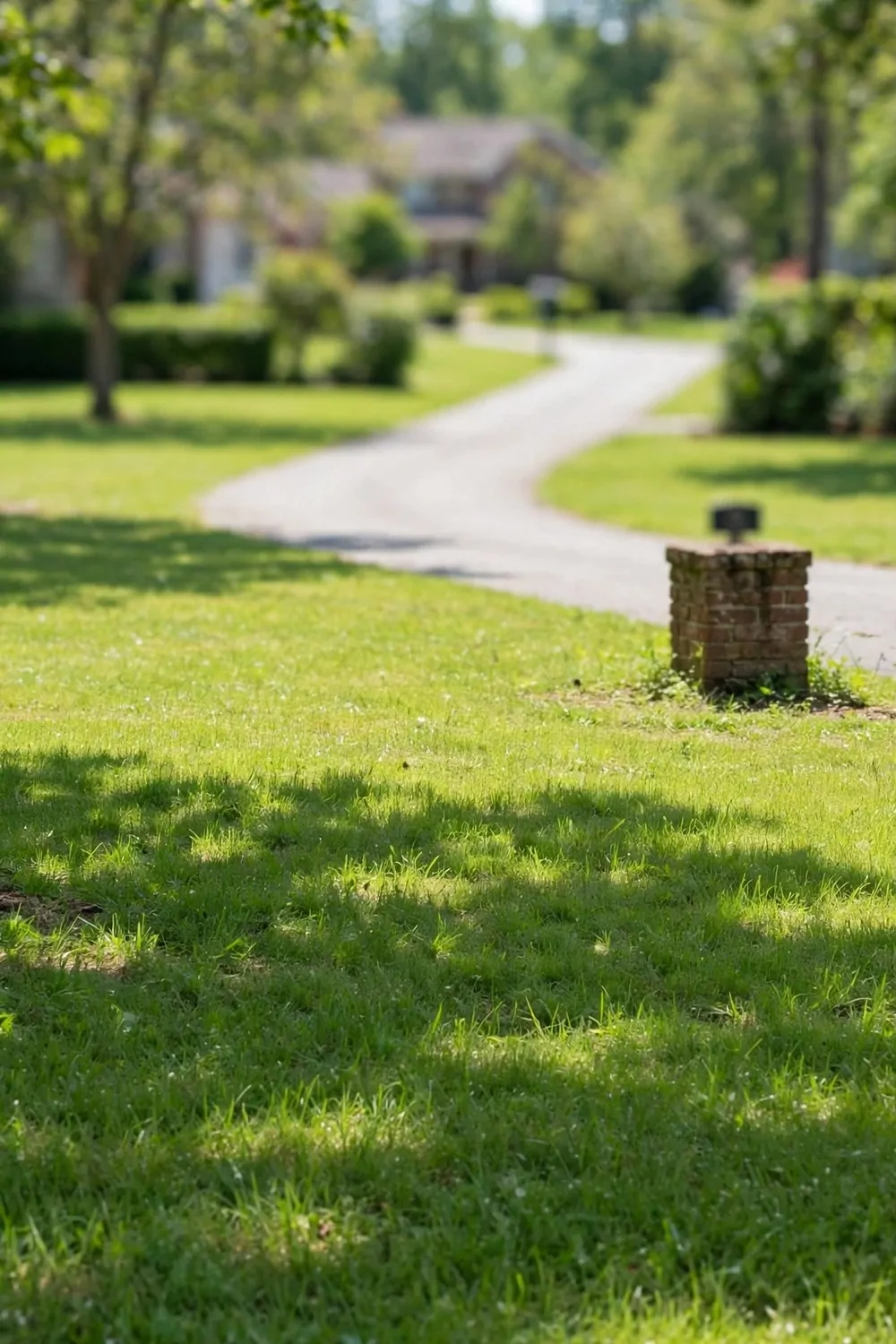
Clear house numbers help friends and delivery drivers find your home with ease. They can read them from the road and stop at the right drive.
I like numbers that are big and plain. They are easy to read in daylight and in the evening too.
You can fix them on a post, a wall, or a board near the drive. Pick a spot where trees and bushes do not hide them.
A plain style suits most homes. You do not need fancy styles to make them clear.
Typical cost $15 to $35.
Check the numbers from the road after you fit them. Walk back and look, and move them if they are hard to read.
Keep them clean through the year. Dust and dirt can make plain numbers hard to read over time.
You can add a small light near them if your drive is dark at night. It helps visitors find you after sunset.
It is a cheap fix with a real use. Clear numbers save time and stop people from passing your home by.
24. A Small Gate That Marks the Driveway Entrance
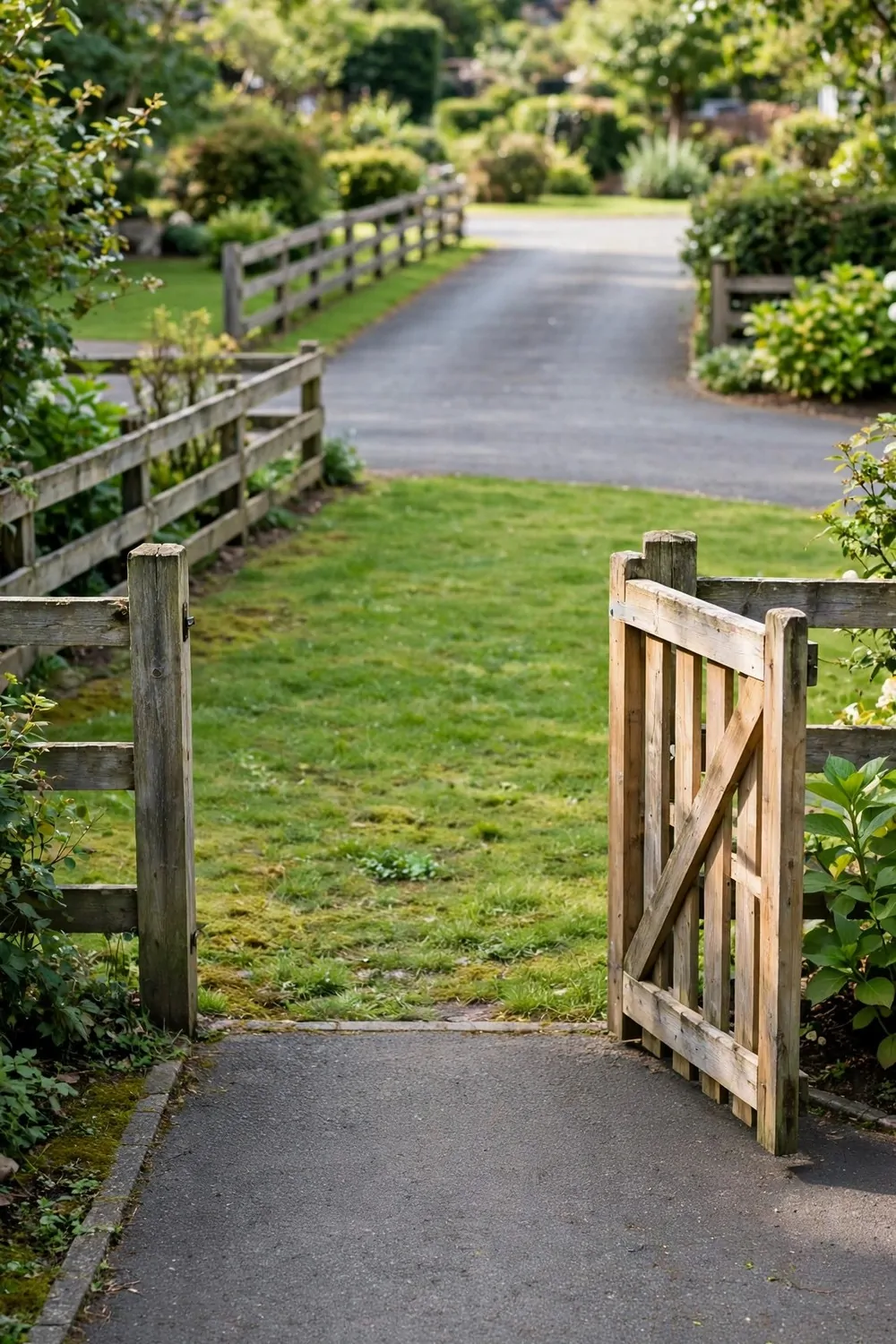
A small gate at the entrance makes your drive feel complete. It marks the start of your home in a plain, friendly way.
You can pick a gate that opens with ease and shuts with a soft click. A latch that works well keeps it shut on windy days.
I like a low gate that you can see over. It marks the edge without shutting out the street.
Fit the posts firm in the ground so the gate hangs straight. A gate that drags on the ground soon wears out.
Typical cost $90 to $180.
You can leave the gate plain or paint it to suit your home. A plain finish keeps it neat and easy to care for.
Oil the hinges now and then so the gate swings with ease. A little care keeps it quiet and smooth to use.
Keep the path through the gate clear of leaves and clutter. A clear way in makes the entrance feel open and calm.
A gate is a small build with a big feel. It gives your drive a clear start and your home a warm first look.
25. A Hose Reel and Wash Spot by the Drive
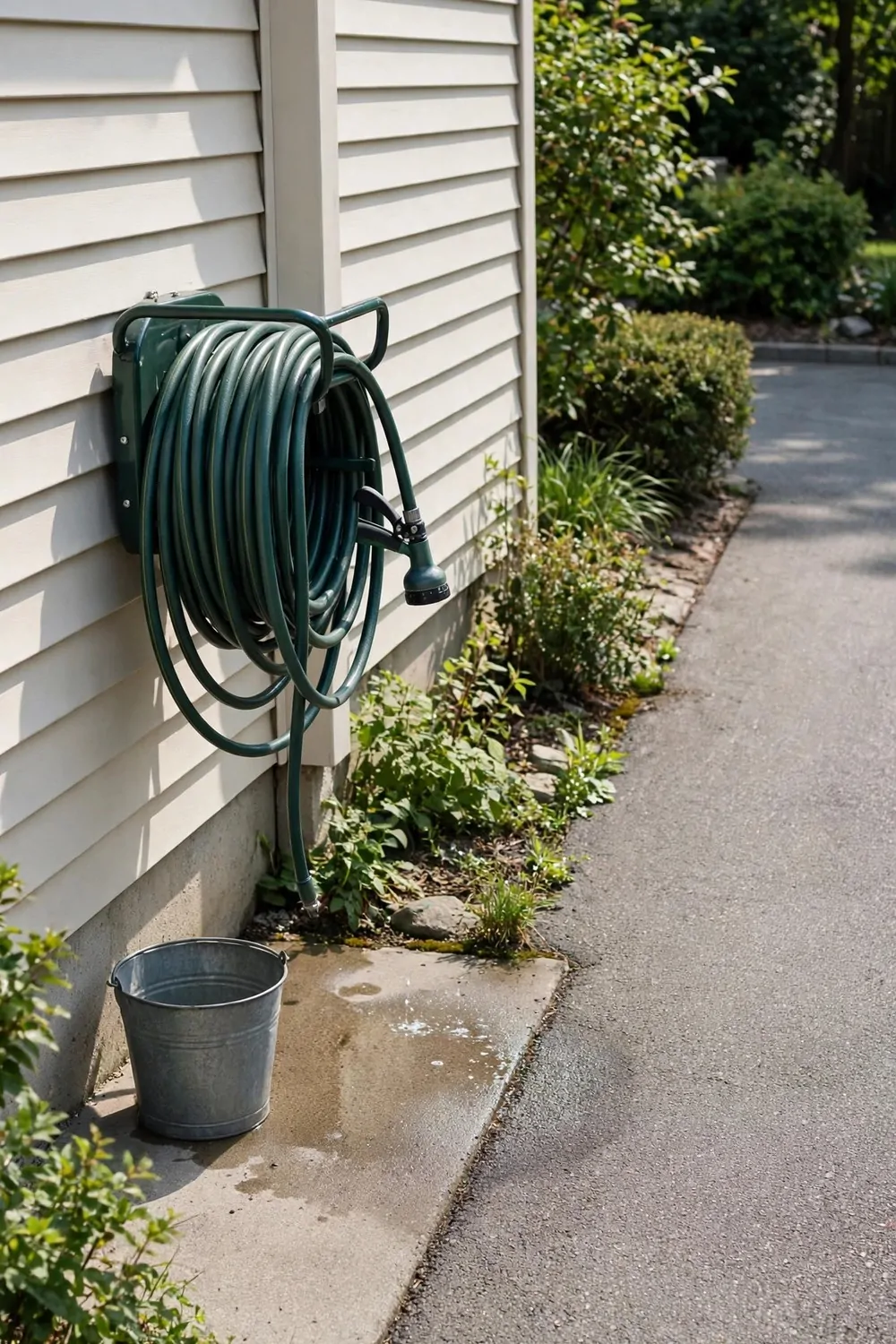
A hose reel and wash spot by the drive makes car washing much easier. You can reach the hose, wash, and put it away with no fuss.
I like a reel that winds the hose back in a neat coil. It keeps the hose off the ground and out of the way.
You can fix the reel on a wall or a post near the drive. Pick a spot close to a tap so the hose reaches with ease.
A wash spot with a firm flat base helps too. Water runs off, and you can stand firm while you wash.
Typical cost $30 to $65.
Keep a bucket and a sponge near the reel. You will have all you need in one place when wash day comes.
Rinse the drive after you wash the car. It clears soap and dirt and leaves the paving neat.
In cold months, drain the hose and store it away. It will last longer and be ready when you need it next.
It is a plain set up that saves time each week. Your car stays clean, and your drive stays tidy too.
26. A Storage Nook for Bins Beside the Drive
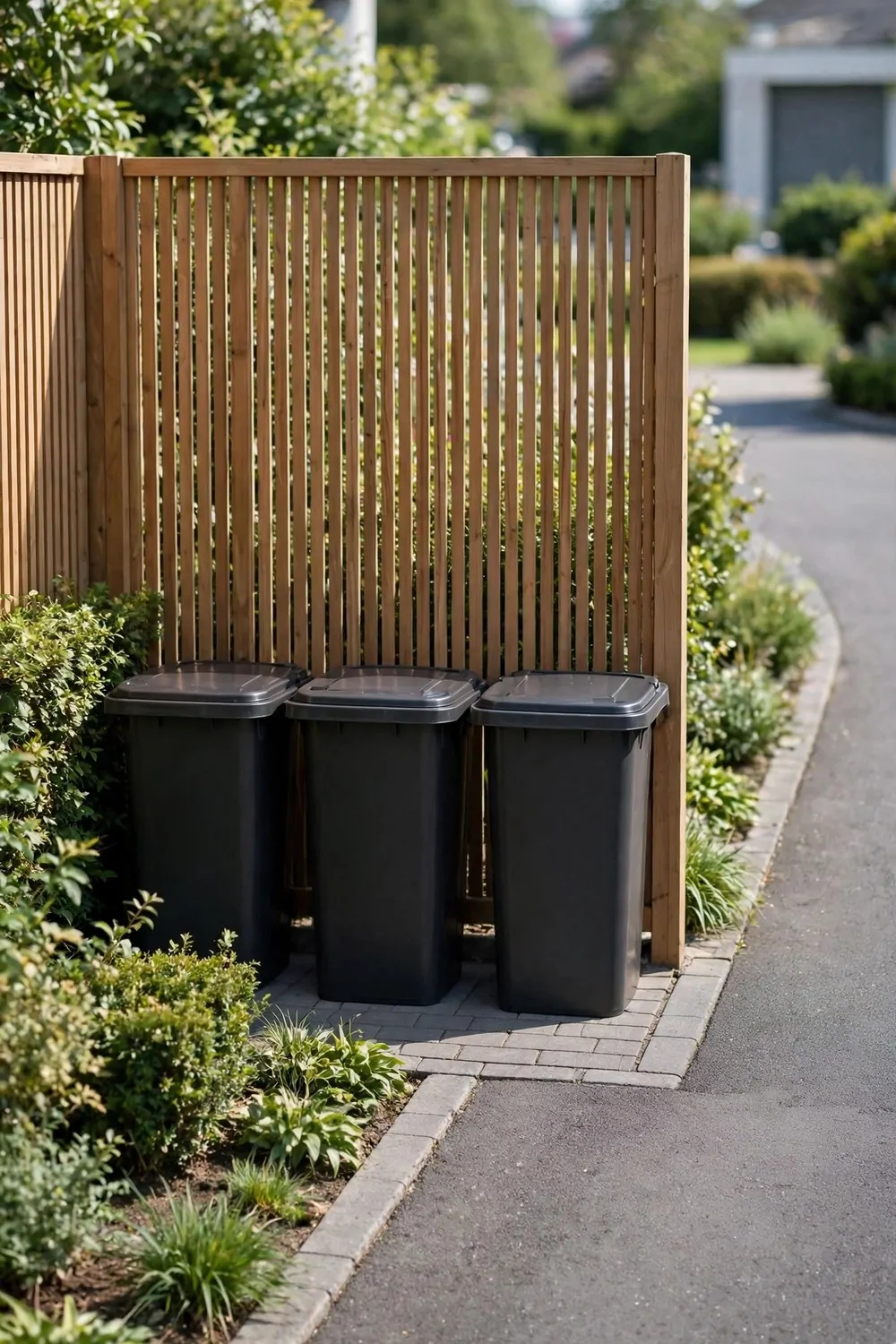
A storage nook for bins beside the drive keeps them out of sight. It gives them a plain home that fits the front yard.
You can build it with a low fence or a few plain panels. It hides the bins from the road while keeping them easy to reach.
I like a nook with a clear way in and out. You can roll a bin out on collection day with no lifting or fuss.
Leave a little space round each bin. Air can move, and you can open the lids with ease.
Typical cost $45 to $90.
A cover helps keep rain off the bins. It also keeps the nook looking neat from the street.
Sweep the nook out now and then. A quick sweep keeps it clean and stops smells from building up.
You can add hooks inside for bags and small tools. It turns a plain nook into a handy store for drive jobs.
Bins are part of home life, and they need a place too. A neat nook keeps your drive clear and your front yard tidy.
27. A Flat Play Spot at the Edge of the Drive
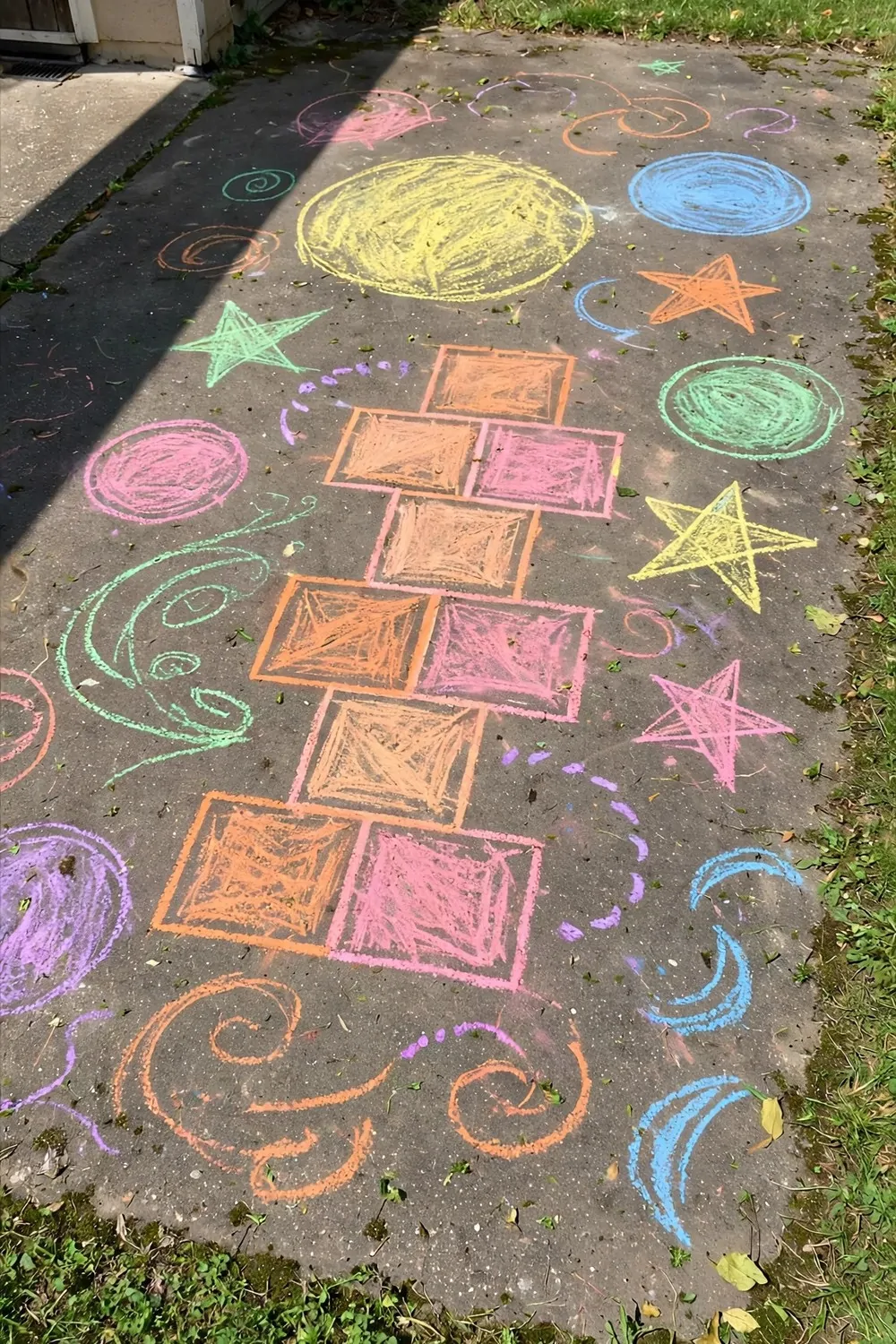
A flat play spot at the edge of the drive gives you a paved place for games. You can use it for chalk, hoops, and other paved games.
I like a spot that sits flat and smooth. It is easy to draw on, easy to sweep, and easy to use in all kinds of play.
You can mark the edge with a plain border or a change in paving. It shows where the play spot starts and where the drive ends.
Chalk games wash off with water when you are done. You can draw a fresh game each time you use the spot.
Typical cost $60 to $120.
A hoop can stand at one side for ball games. You can move it away when you need the space for parking.
Keep the paving clear of leaves and loose stones. A clean flat base is safer for play and easier to draw on.
You can store chalk and small game bits in a box near the drive. It keeps play things in one place and ready to use.
It is a simple paved spot with lots of uses. It adds fun to the edge of the drive without taking over the whole yard.
28. A Driveway Care Kit on a Budget
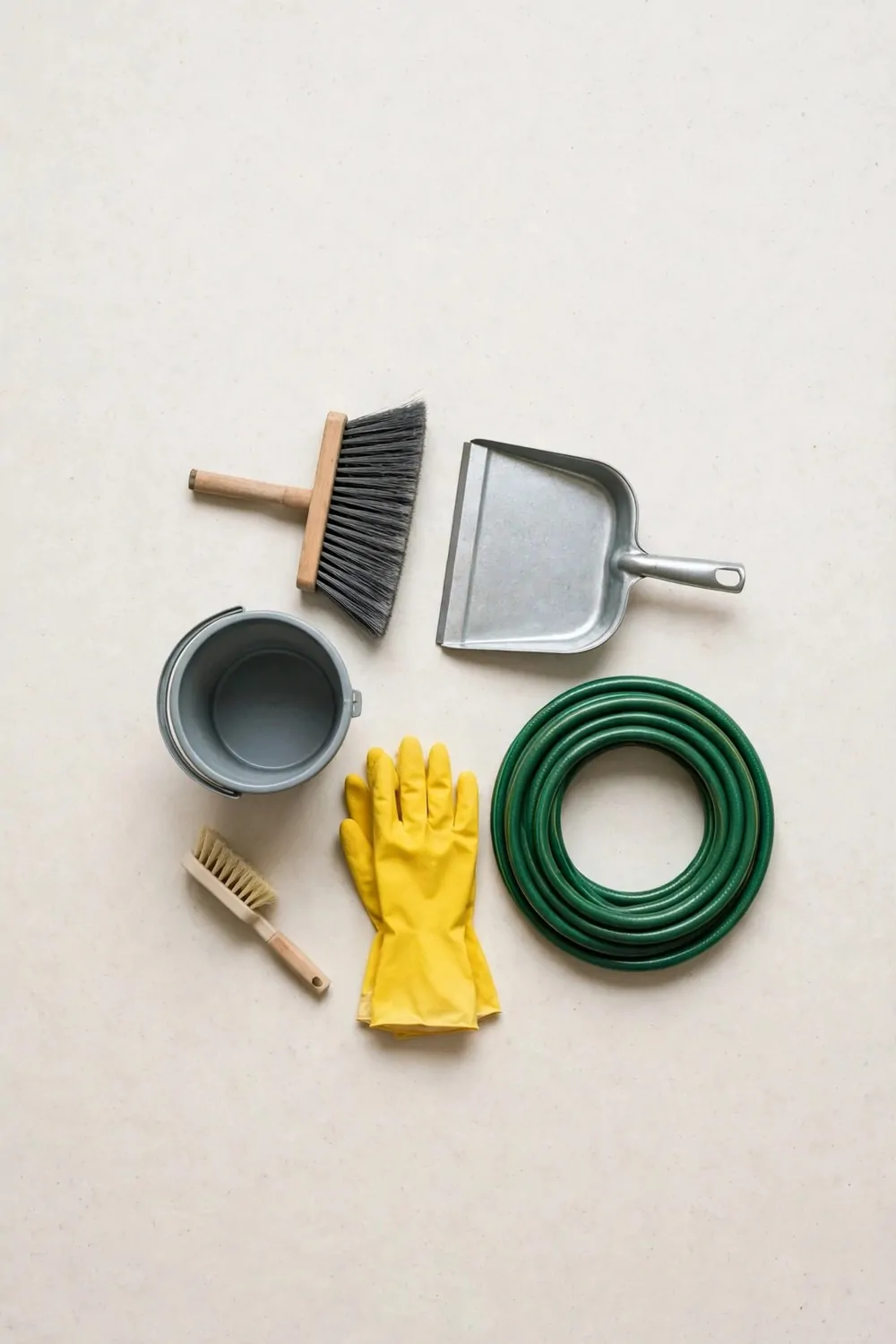
A small plain stiff driveway broom, a plain metal dustpan, a small plain plastic bucket, a pair of plain rubber work gloves, a plain garden hose, and a small plain scrub brush make a simple care kit for your driveway.
You can keep the kit in a box or a bag near the front door. It stays in one place, so you can grab it when you need it.
A quick sweep once a week keeps dust and leaves from building up. It takes just a few minutes and makes a clear change.
Use the dustpan to scoop up what you sweep. Tip it in a bin, and the drive looks neat straight away.
The bucket is handy for wash water and for carrying tools. You can fill it at a tap and carry it to the drive with ease.
Gloves keep your hands clean while you work. They help with dirt, dust, and rough jobs round the drive.
The hose rinses the paving after a sweep or a wash. The scrub brush helps with small marks that need a bit more work.
Typical cost $9 to $13 for the driveway broom, $4 to $7 for the dustpan, $5 to $8 for the bucket, $4 to $6 for the work gloves, $12 to $18 for the garden hose, and $3 to $5 for the scrub brush, for a total of $37 to $57.
Start with a short sweep this weekend, and let a tidy drive greet you each time you come home.
| Idea | Main change | Typical cost |
|---|---|---|
| a small plain stiff driveway broom | Sweep dust and leaves off the drive with a stiff broom | $9 to $13 |
| a plain metal dustpan | Scoop up swept dirt with a plain metal dustpan | $4 to $7 |
| a small plain plastic bucket | Carry wash water in a plain plastic bucket | $5 to $8 |
| a pair of plain rubber work gloves | Keep your hands clean with plain rubber gloves | $4 to $6 |
| a plain garden hose | Rinse the drive clean with a plain garden hose | $12 to $18 |
| a small plain scrub brush | Scrub small stains with a plain scrub brush | $3 to $5 |
| Total | $37 to $57 |
Keep Reading
If you liked these ideas, you will love these posts too
Each post has more simple ideas you can try at home this weekend.