24 Junk Drawer Organization Ideas That Actually Stay Tidy

I opened my junk drawer yesterday and a rubber band shot out and hit the floor.
I laughed at first. Then I looked inside the drawer and I did not laugh any more.
It was full of old pens and loose coins and bits of string. I could not find the tape I needed. I could not find a pen that worked.
I know you have a drawer like this too. Most homes have one. It starts as a handy spot. Then it turns into a mess.
I used to shut it fast and hope I would deal with it later. Later never came. The mess just grew a little more each week.
This time I took my time with it. I tried small, cheap fixes. I kept only what I use. I gave each thing its own spot.
In this post I share all 24 ideas in one place. Read through them all here and pick the ones that fit your drawer.
1. Empty the Drawer First and Start Fresh
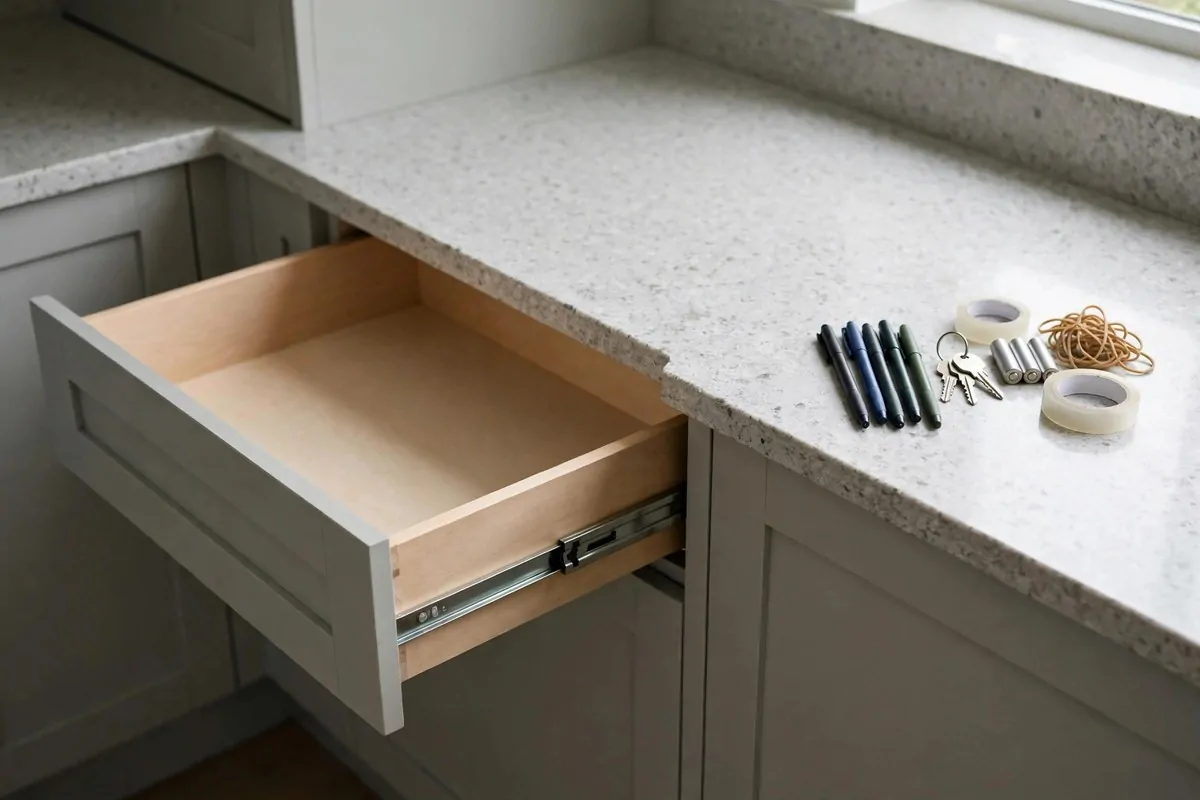
Take everything out of the drawer. Yes, all of it. Put it on the table so you can see it.
I was shocked when I did this. I found three pairs of scissors. I found pens that had no ink. I found keys I did not know.
Wipe the drawer clean with a damp cloth. Let it dry for a few minutes. A clean base makes the whole job feel new.
Sort your things into small piles. Keep, toss, and move to another room. Be honest with yourself here.
If you have not used it in a year, you likely do not need it in this drawer. Let it go and free up space.
I kept only the bits I reach for each week. Tape, pens, batteries, and a few small tools stayed. The rest went away.
Typical cost is $0 to $10 for this fresh start. You may need only a cloth and a small bin bag.
Put the keep pile back in a neat way. Do not just throw it all back in. Give each pile a little space of its own.
Now you have a clean drawer and a clear mind. The next ideas will help you keep it this way.
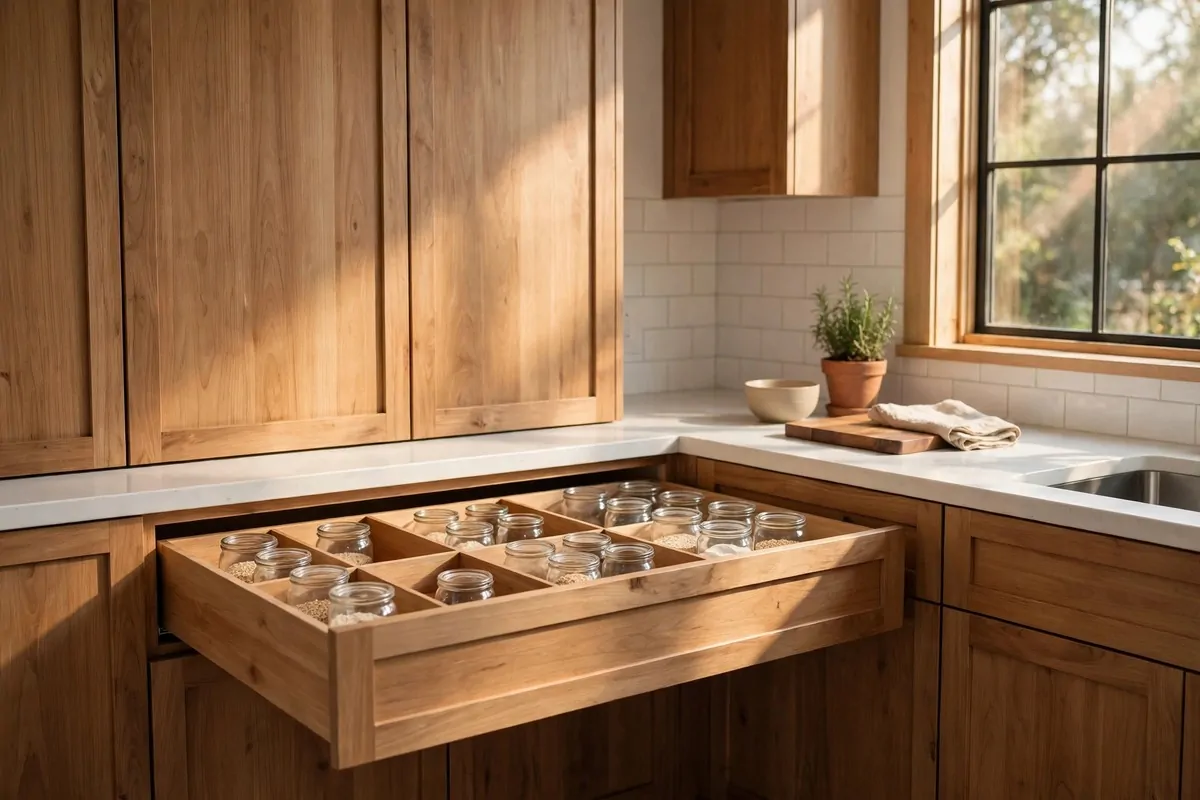
2. A Bamboo Tray That Fits the Drawer
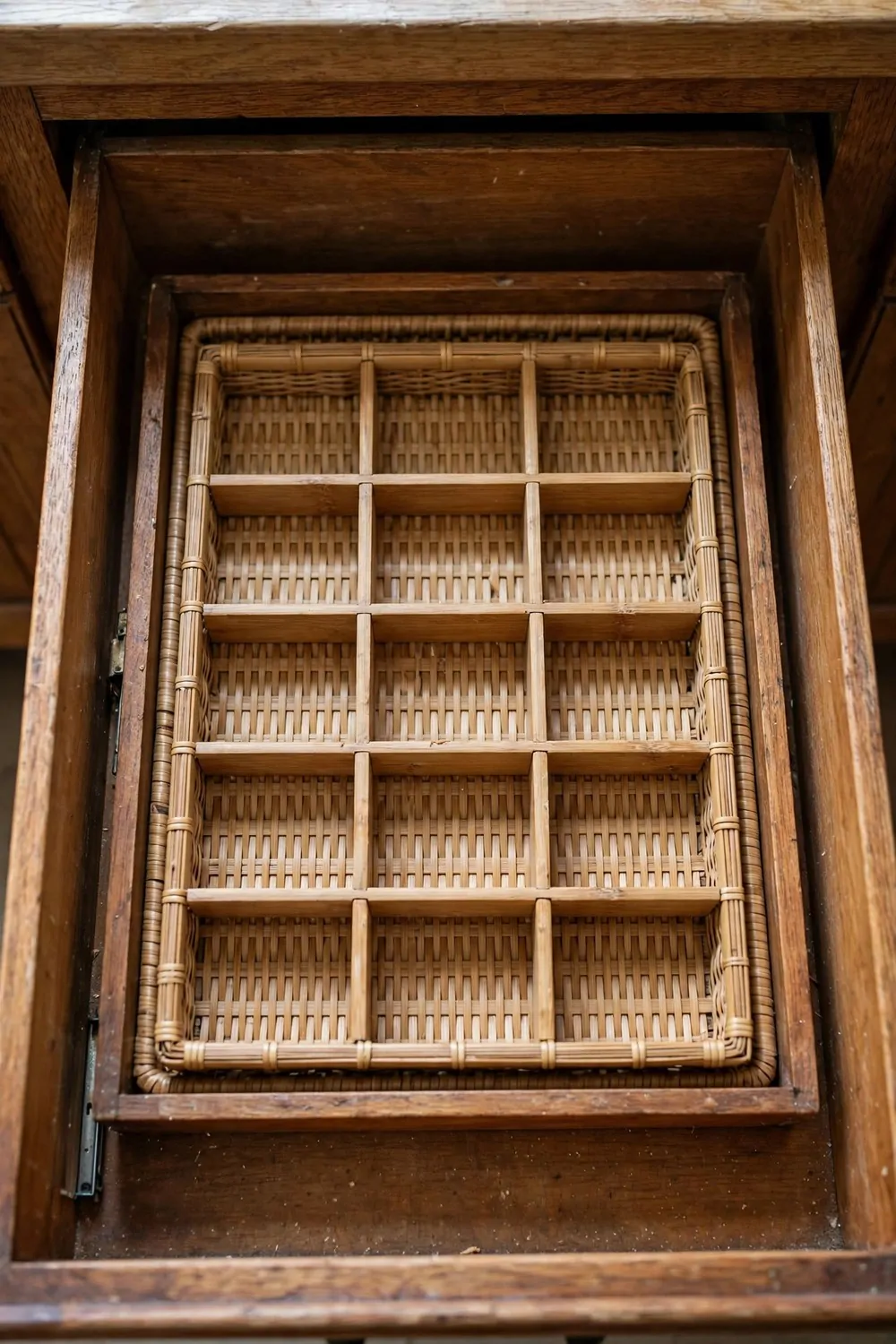
A bamboo tray changed my drawer in one day. It gave each thing a home. Nothing slides around now.
Measure your drawer first. Write down the length and width. Take the tape with you if you shop in a store.
Pick a tray with long slots and small squares. Long slots fit pens and scissors. Small squares fit coins and clips.
I like how bamboo looks. It feels warm and plain. It fits most homes and it does not look loud.
Put the tray in and test it. Open and close the drawer a few times. It should sit flat and not wobble.
If it is a bit too big, look for one that can change size. Some trays slide out wider to fill the space.
Typical cost is $10 to $20 for a small tray, $15 to $30 for a medium tray, and $25 to $45 for a large tray.
Fill each slot with care. Put the things you use most at the front. Put the rare bits at the back.
You will smile the next time you open the drawer. Everything will be right where you left it.
| Tray size | Typical cost | Best for |
|---|---|---|
| Small tray | $10 to $20 | A few pens and small bits |
| Medium tray | $15 to $30 | A full drawer of daily bits |
| Large tray | $25 to $45 | The whole drawer done in one go |
3. Small Boxes for Tiny Bits
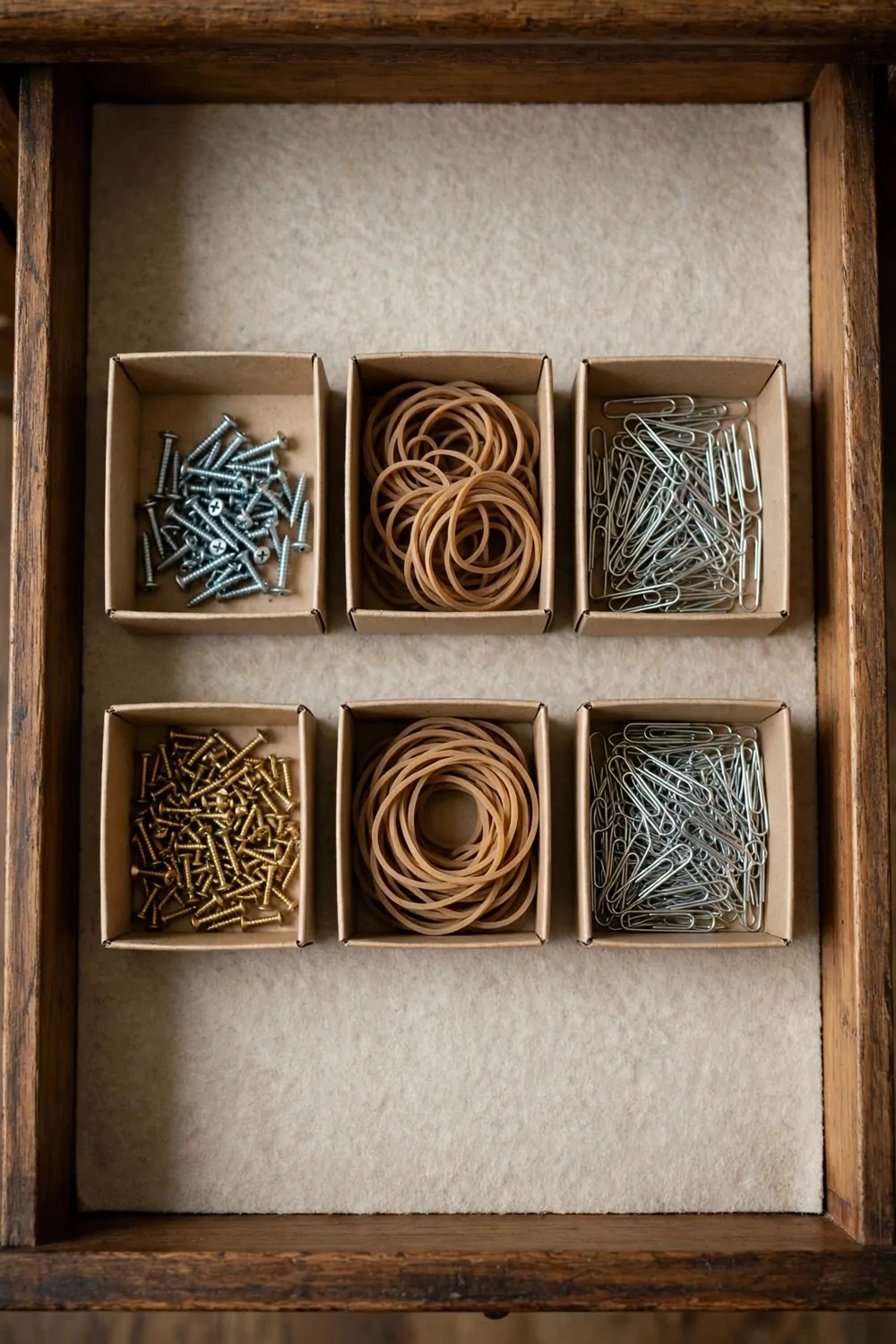
Tiny bits are the worst part of a junk drawer. Screws, pins, and clips hide in the corners. Small boxes fix that fast.
I use little boxes with lids or open tops. Each box holds one kind of thing. That is the whole trick.
Put paper clips in one box. Put push pins in another box. Put spare buttons in a third box if you have them.
Label each box with a small bit of tape and a pen. You will thank yourself later when you are in a rush.
Pick boxes that fit side by side. They should not slide when you pull the drawer open. A snug fit is best.
You can use boxes you already have at home. Small gift boxes work well. Just make sure they are clean and dry.
Typical cost is $5 to $12 for a small set, $10 to $20 for a medium set, and $15 to $30 for a large set.
Keep the boxes low so the drawer still closes with ease. Tall boxes can jam and make a mess again.
Now those tiny bits stay in place. You can find them in seconds, and you will not lose them any more.
4. One Spot for Batteries
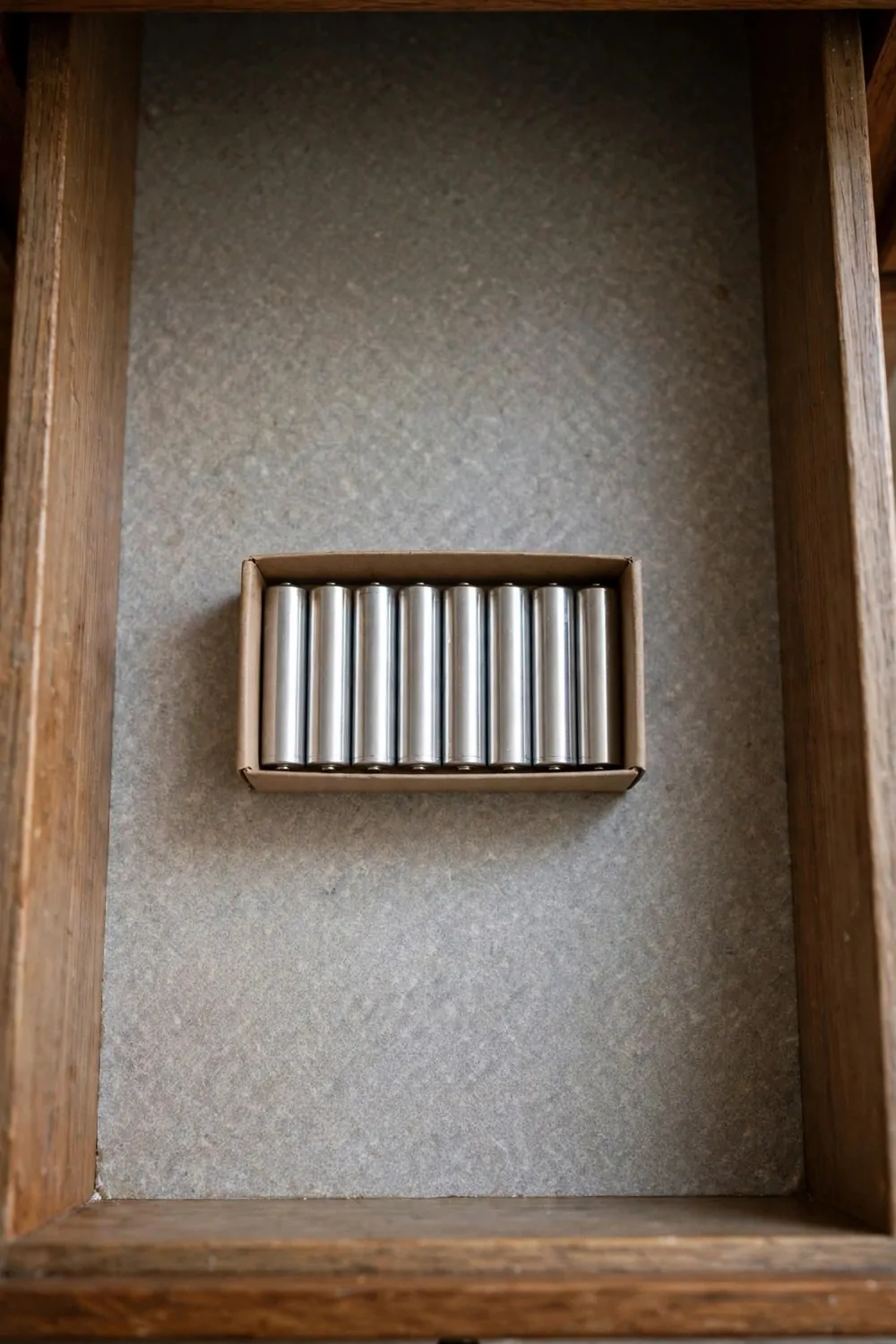
Batteries roll all over a messy drawer. They hide under pens and tape. Give them one spot and the hunt ends.
I keep all my batteries in one small box. I sort them by size. Big ones at the back, small ones at the front.
Check each battery before you keep it. If it is flat or old, take it out. Put dead ones in a bag to drop off later.
Keep a few of each size you use. You do not need twenty of one size. A few is enough for most homes.
Put the box near the front of the drawer. You will reach for batteries a lot, so keep them easy to grab.
I also keep a tiny tester in the same spot. It helps me know if a battery is still good. You can skip it if you like.
Typical cost is $5 to $15 for a small battery box and a few fresh batteries to fill it.
Tell your family where the batteries live now. That way no one throws them back in a loose pile.
Next time a remote stops, you will know just where to look. No more digging through the whole drawer.
5. A Pen Cup That Stays Put
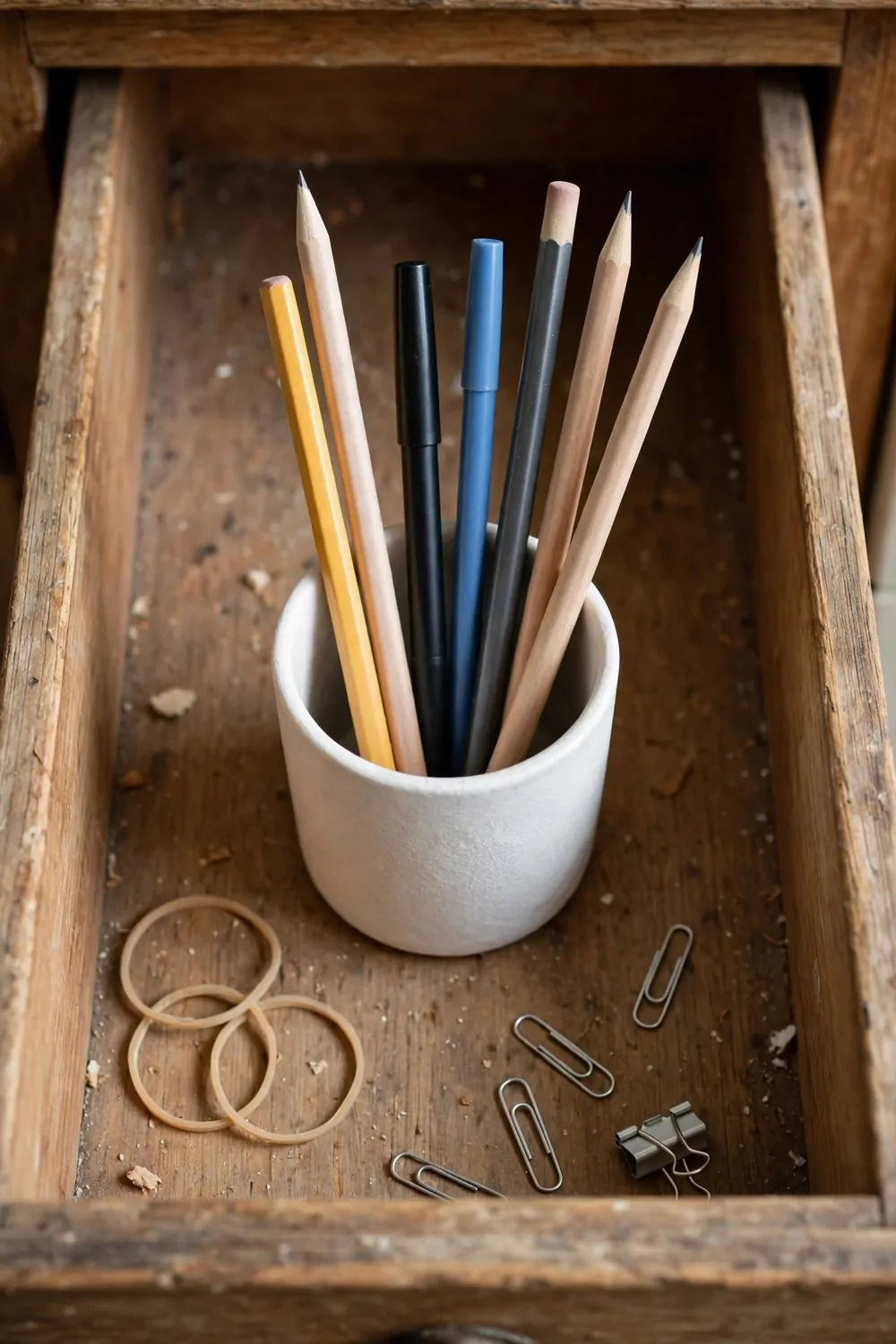
Pens roll and slide in a drawer. A small cup holds them still. It is a simple fix that works well.
Pick a short, wide cup. It should sit flat and not tip over when you open the drawer. A heavy base helps a lot.
Test each pen before it goes in the cup. Scribble on a scrap bit of paper. Toss the ones that do not write.
I keep only five pens in mine. Two black, one blue, and two pencils. That is plenty for my home.
Put pencils in with the pens if you like. Or give pencils their own tiny cup. Do what feels right for you.
Stand the pens up with the tips down or up. I put mine tip down so I can grab the top fast. Try both and see.
Typical cost is $5 to $15 for a small cup and a few good pens to fill it.
Keep the cup at the front of the drawer. You will grab a pen most days, so it should be the first thing you see.
Now your pens stay in one place. No more pens under the tape or lost at the back of the drawer.
6. Tape and Scissors in One Corner
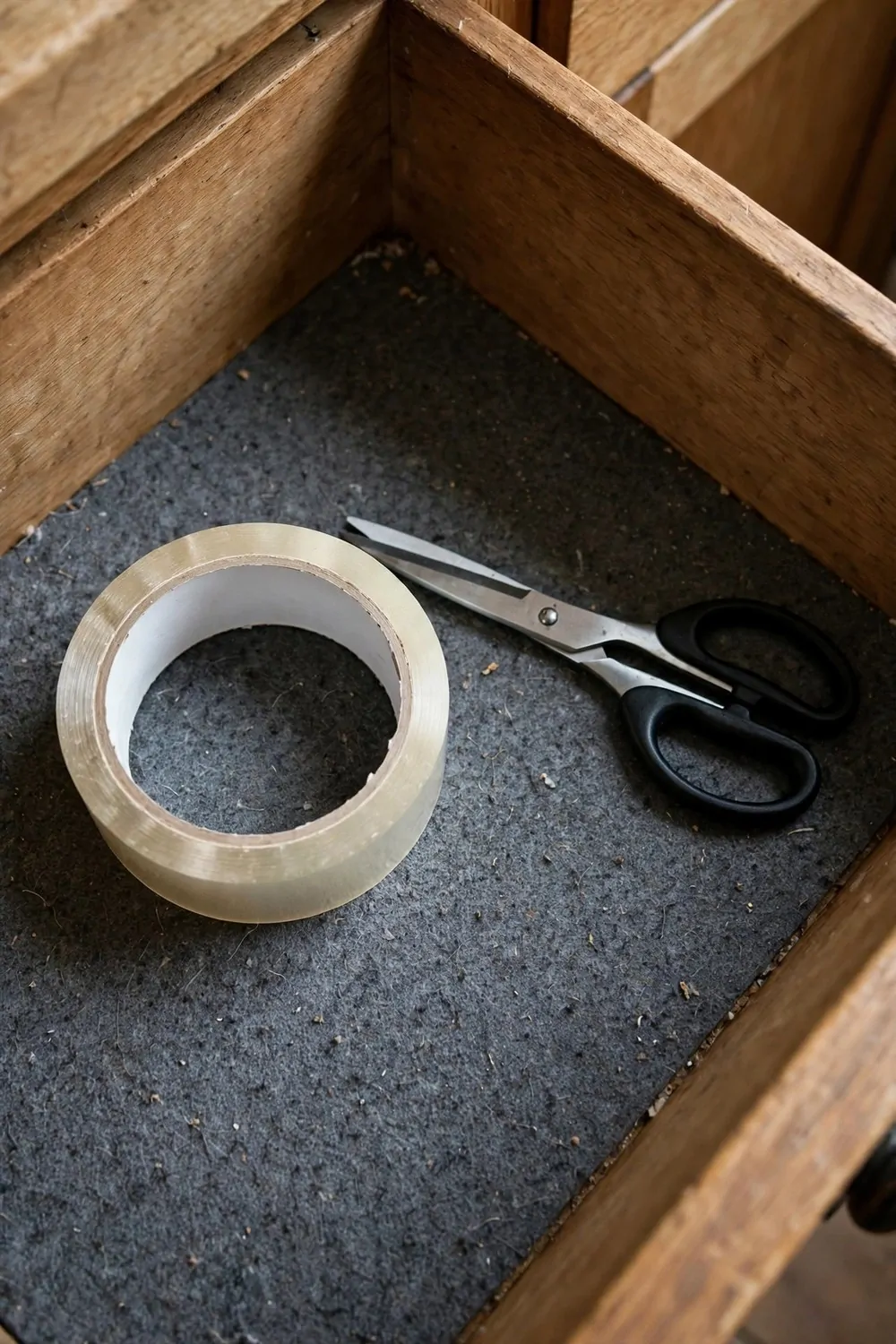
Tape and scissors belong together. You use them at the same time most days. Keep them in one corner and save time.
Pick a corner of the drawer for them. Put the tape roll there first. Lay the scissors next to it, flat and safe.
I keep two kinds of tape. Clear tape for paper and parcels. Masking tape for quick marks and labels.
Close the scissors when you put them away. It keeps the tips safe. It also keeps your fingers safe when you reach in.
If you have small scissors too, keep them with the big ones. One spot for all cutting tools is easy to recall.
Do not bury the tape under other stuff. It is too handy to hide. Keep it on top where your hand can find it.
Typical cost is $10 to $25 for a tape roll or two and a good pair of scissors.
Check your tape now and then. Old tape can lose its stick. Swap it out when it feels dry or torn.
With tape and scissors in one corner, small jobs feel quick. You grab, cut, stick, and you are done.
7. Keys on a Small Hook or Tray
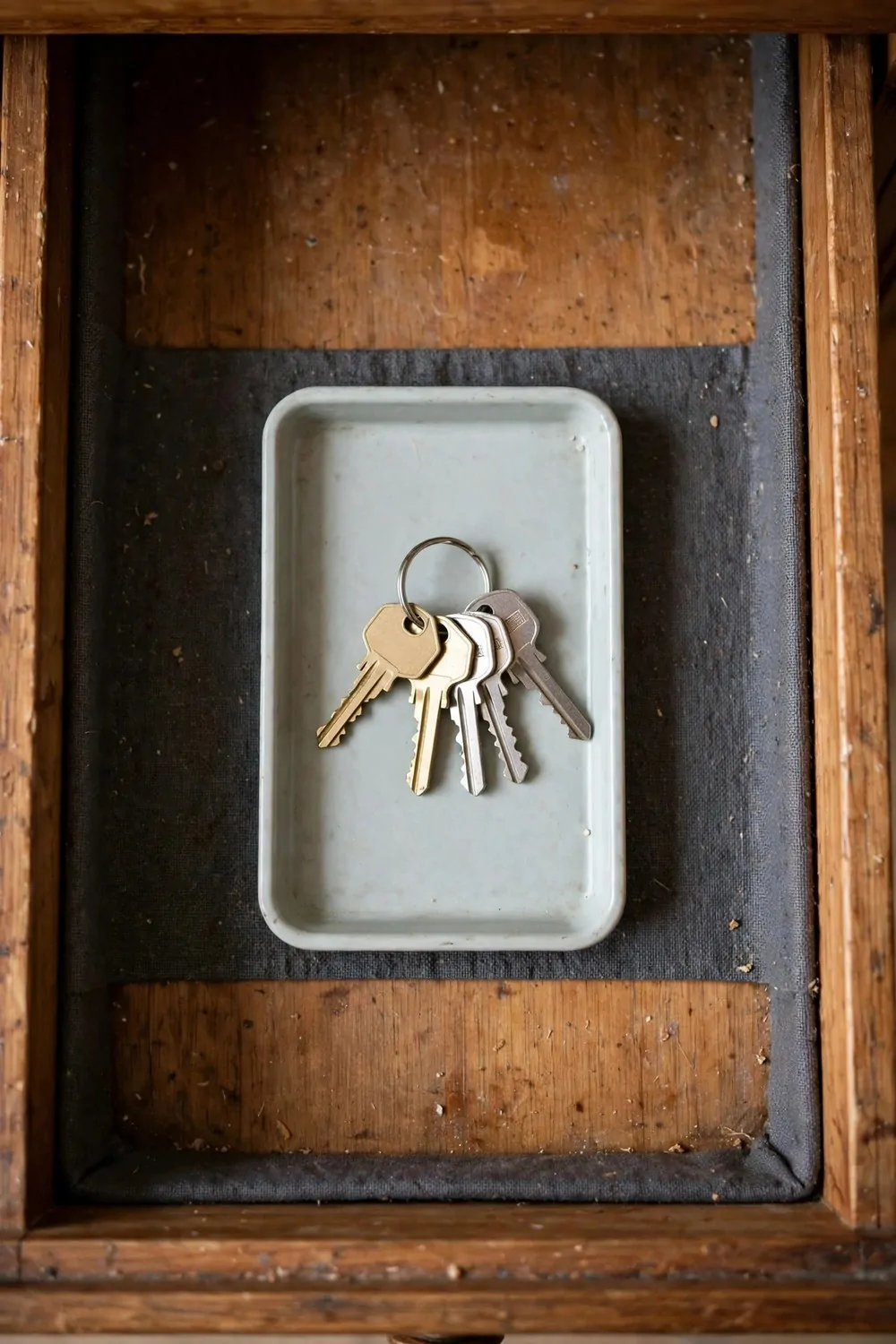
Loose keys scratch things and get lost fast. A small hook or tray keeps them safe. It is a tiny change with a big win.
I use a small tray just for keys. It sits at the side of the drawer. My spare keys stay there and nowhere else.
If you like hooks, stick a small hook inside the drawer wall. Hang one or two keys there. It keeps them off the base.
Label spare keys with a bit of tape. Write what each key opens. You will not have to guess later.
Keep only spare keys in this drawer. Your daily keys should live by the door. That keeps this drawer calm.
Do not mix keys with coins and clips. They tangle and scratch. A tray of their own stops all that.
Typical cost is $5 to $15 for a small tray or a pack of small hooks and labels.
Count your keys once a month. If a new spare shows up, give it a label right away. Do not let it join the loose pile.
Now your keys have a home. You will find them fast, and they will not scratch your other things.
8. Screws and Nails in Tiny Jars
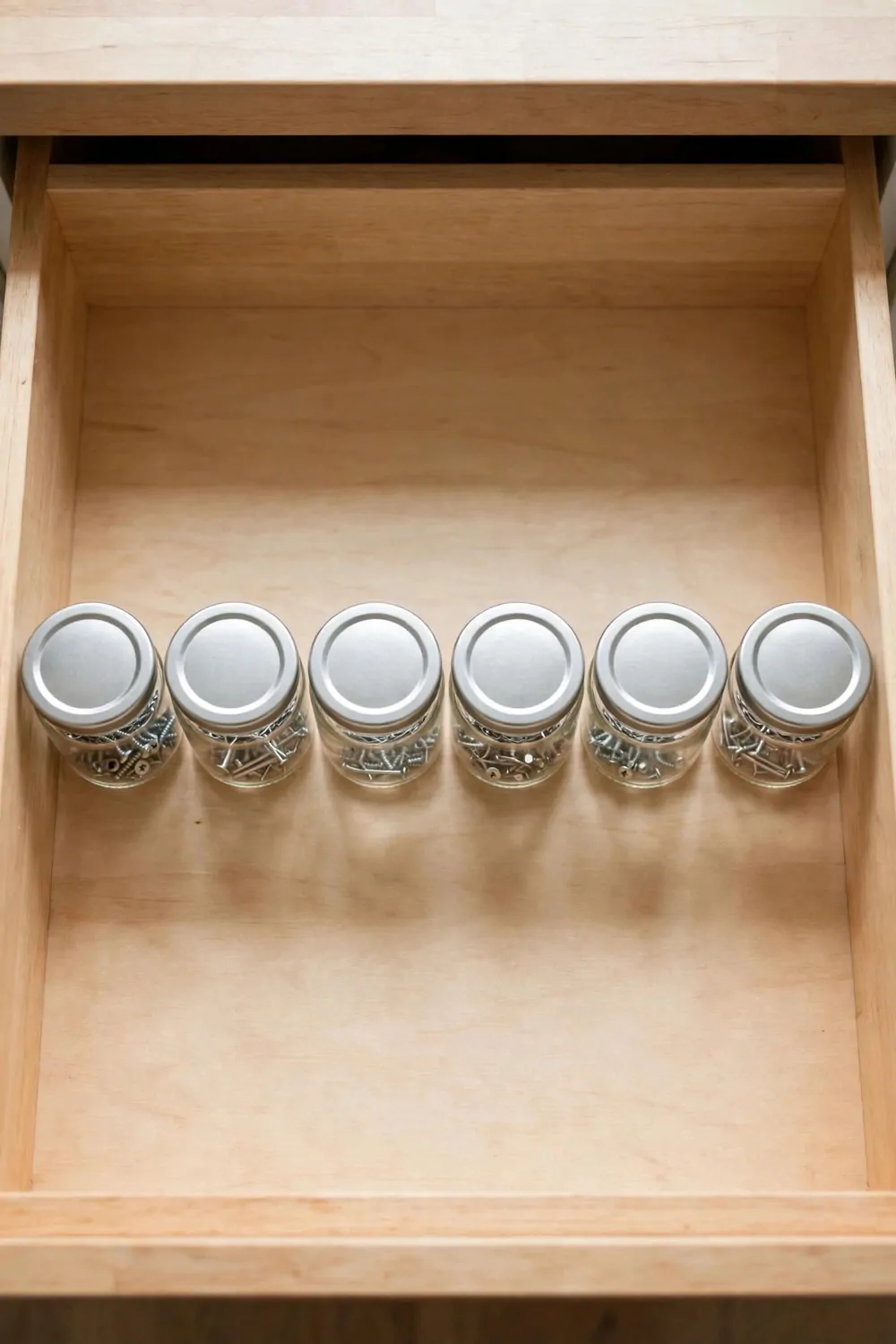
Screws and nails are sharp and small. They poke through bags and hide in corners. Tiny jars hold them safe.
I use small jars with lids. One jar for screws, one jar for nails, and one jar for wall plugs. That is all I need.
Pick jars you can see through. Clear jars let you spot what you need without opening each one.
Make sure the lids shut tight. A loose lid can spill screws all over the drawer. Twist it and give it a small shake to test it.
Put a label on each jar. Write the size if you know it. If not, just write screws or nails in plain words.
Keep the jars at the back of the drawer. You do not use them each day. The front is for pens and tape.
Typical cost is $5 to $15 for a few tiny jars with lids.
Do not overfill the jars. Fill them half way so you can tip one out with ease. Full jars spill more.
Now your screws and nails stay put. You can grab the right jar, fix the job, and put it back in seconds.
9. A Small Box for Chargers and Cables
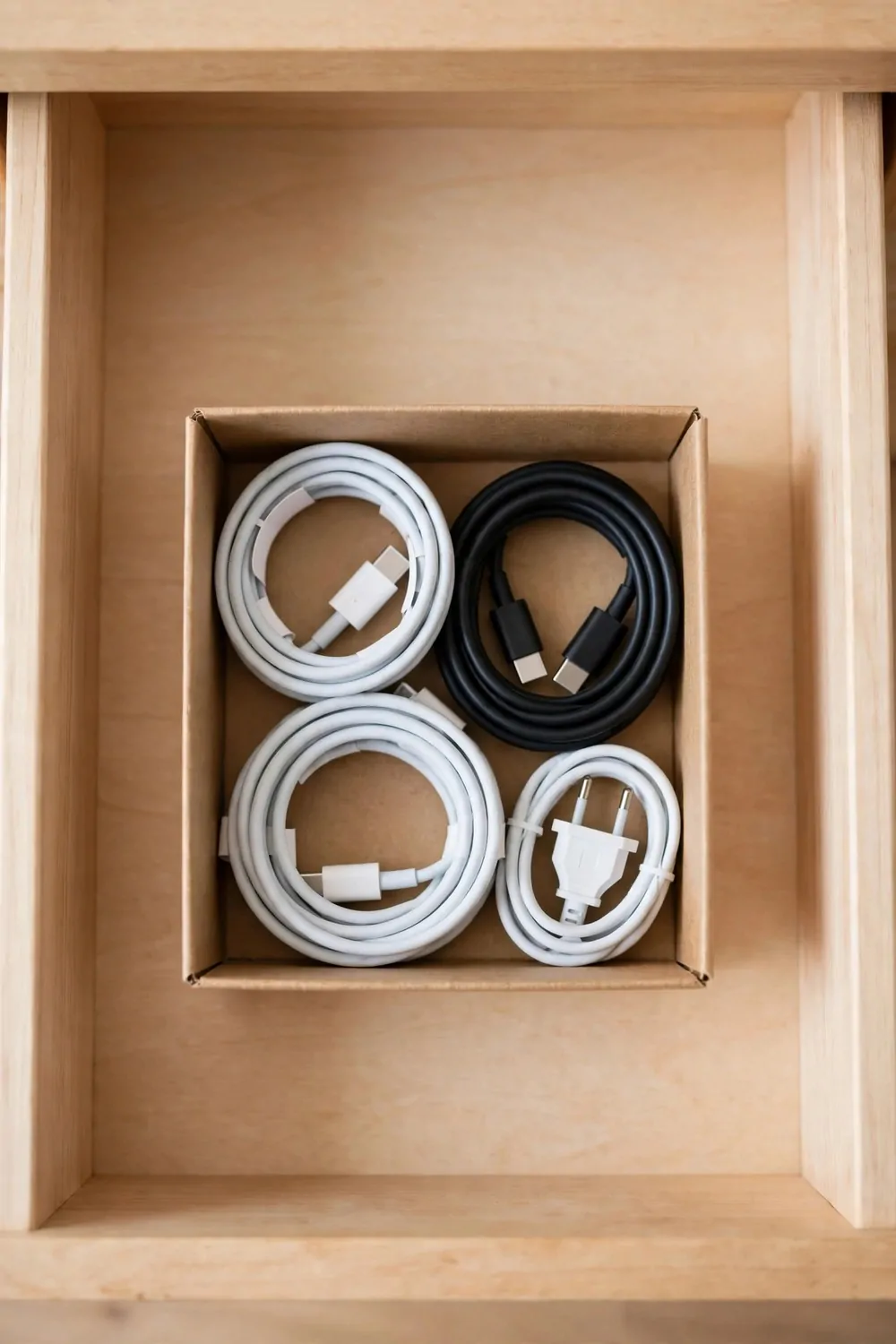
Chargers and cables tangle in a flash. They knot up and pull at each other. A small box keeps them neat.
I roll each cable in a loose loop. I do not wind it tight. A loose loop keeps the cable safe and easy to use.
Use a small tie or a rubber band to hold each loop. One tie per cable is enough. Do not tie them too hard.
Put each cable in its own slot in the box. Phone cables in one slot, other cables in the next slot.
Label the cables if they look the same. A small bit of tape with a word on it helps a lot.
Keep only the cables you use now. Old cables for old phones can go in a bag in a cupboard, not in this drawer.
Typical cost is $10 to $25 for a small box with slots and a few cable ties.
Put the charger you use most on top. You will grab it each day, so it should be easy to lift out.
Now your cables stay smooth and free. No more knots, no more pulling, and no more lost chargers.
10. Sticky Notes in a Neat Stack
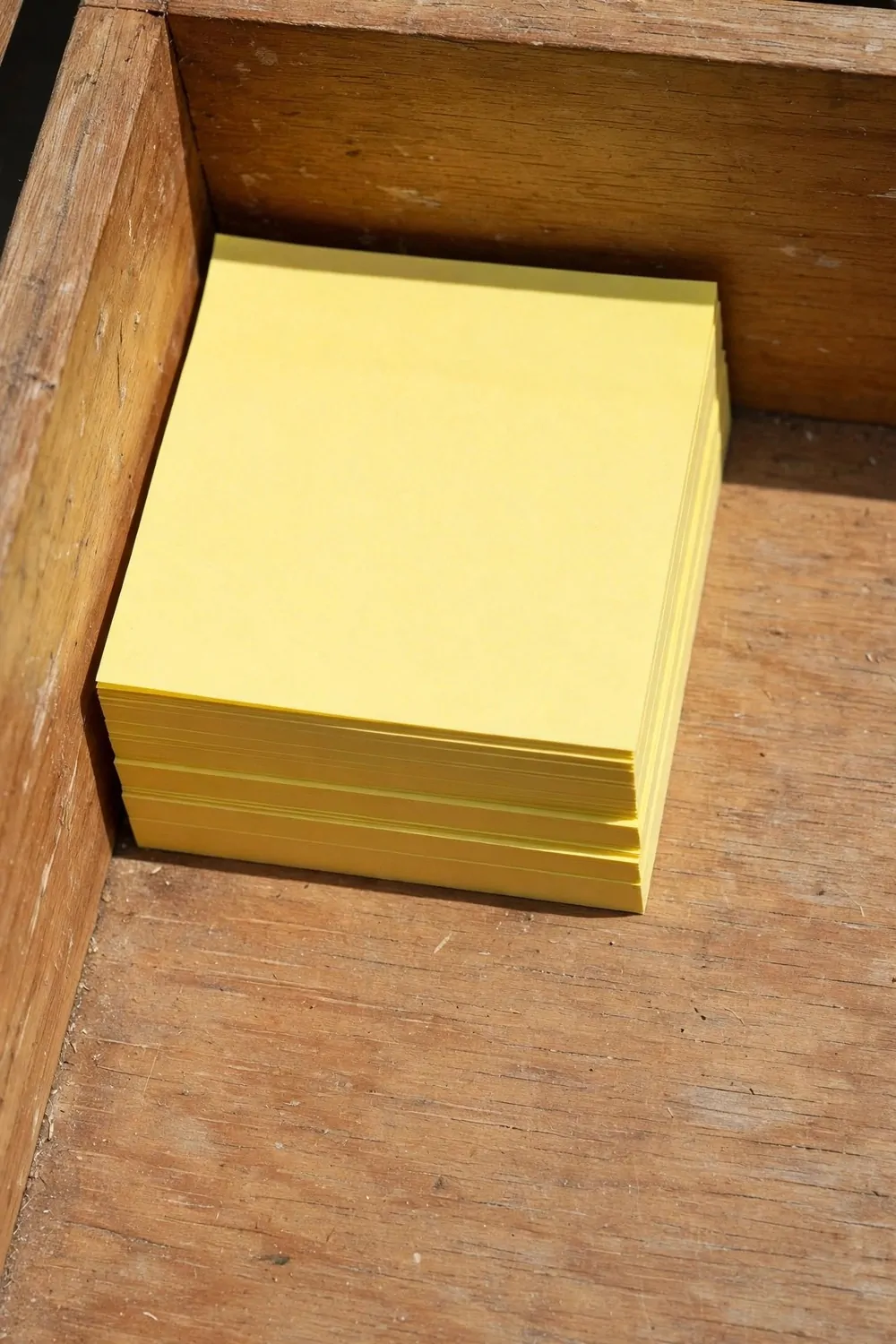
Sticky notes fly all over a messy drawer. They curl up and stick to the wrong things. A neat stack fixes that.
Keep all your sticky notes in one stack. Line up the edges so they sit flat. A flat stack lasts longer.
I keep two pads in my drawer. One plain pad for lists. One bright pad for notes I must not miss.
Put the stack in a small tray or a clip. It stops the pads from sliding when you open the drawer.
Keep a pen right next to the notes. You want to write the note down fast, before you forget it.
Do not keep old notes with new pads. Toss the used ones once the job is done. A fresh stack feels good.
Typical cost is $3 to $10 for a few pads of sticky notes and a small tray or clip to hold them.
Put the stack near the front. You will reach for a note a lot, for lists and quick reminders.
Now your notes stay clean and flat. You can grab one, write it, stick it up, and get on with your day.
11. A Little Tray for Coins
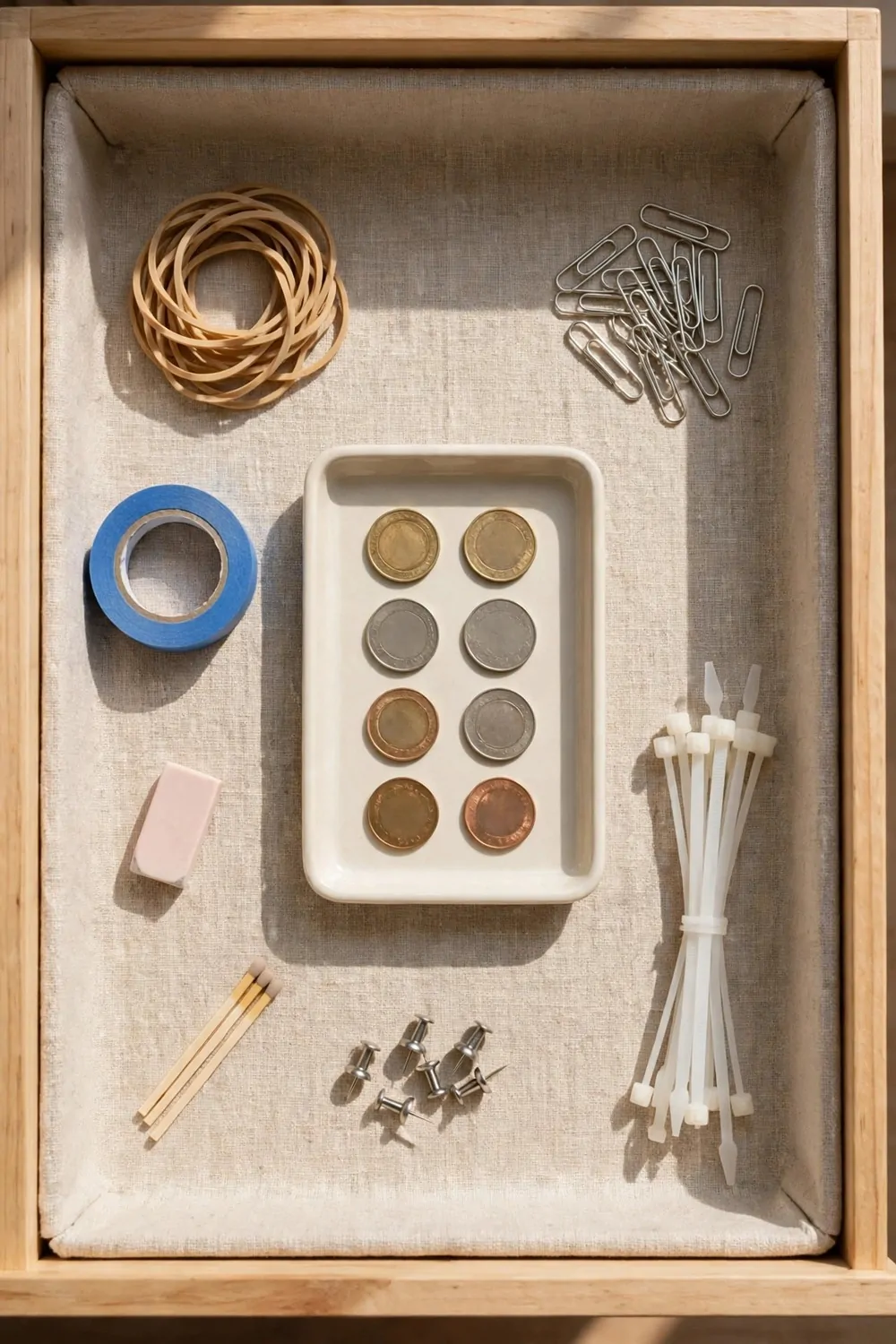
Coins end up all over a junk drawer. They hide under paper and roll to the back. A little tray keeps them in one place.
I use a small tray with low sides. Coins sit in it and do not roll away. I can see them at a glance.
Sort the coins if you like. Big coins on one side, small coins on the other side. It makes it fast to grab the right one.
Empty the tray now and then. Put the coins in a jar or a purse when the tray gets full. A full tray spills.
Keep only coins you may use soon. Old or odd coins can go in a jar on a shelf, not in this drawer.
Put the tray at the side of the drawer. It should not block the pens or the tape. Each thing needs its own lane.
Typical cost is $5 to $12 for a small tray for coins.
Wipe the tray once a month. Coins can leave dust and marks. A quick wipe keeps it fresh.
Now your coins stay together. You can grab a few for the shop or a parking meter without a long hunt.
12. Rubber Bands in a Small Cup
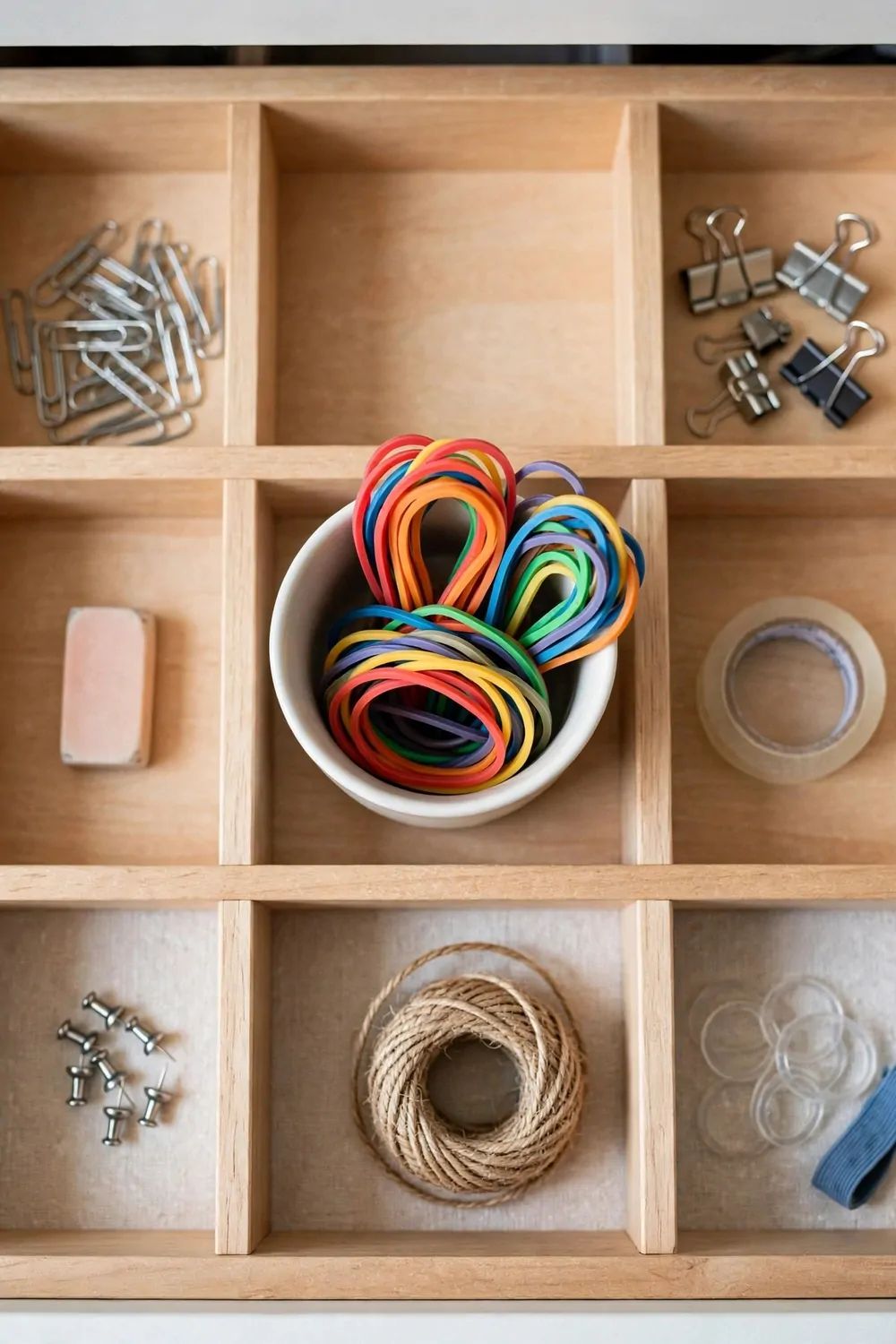
Rubber bands stretch and snap all over a drawer. They wrap round pens and tape. A small cup tames them fast.
I keep my rubber bands in a tiny cup. I drop them in loose. I do not stretch them round the cup.
Sort them by size if you have a lot. Big bands at the bottom, small bands on top. It helps you pick the right one.
Throw away bands that are old or snap with ease. Old bands break and leave bits in the drawer. Fresh ones last longer.
Keep the cup low and wide. A tall thin cup can tip over when you pull the drawer. A wide base stays put.
Put the cup near the tape and scissors. You use bands with parcels and papers, so keep them close by.
Typical cost is $3 to $8 for a small cup and a bag of rubber bands.
Do not overfill the cup. A half full cup is easy to dip into. A full cup spills bands each time you grab one.
Now your bands stay in one spot. You can grab one, wrap your papers, and get on with your day.
13. Scissors in Their Own Slot
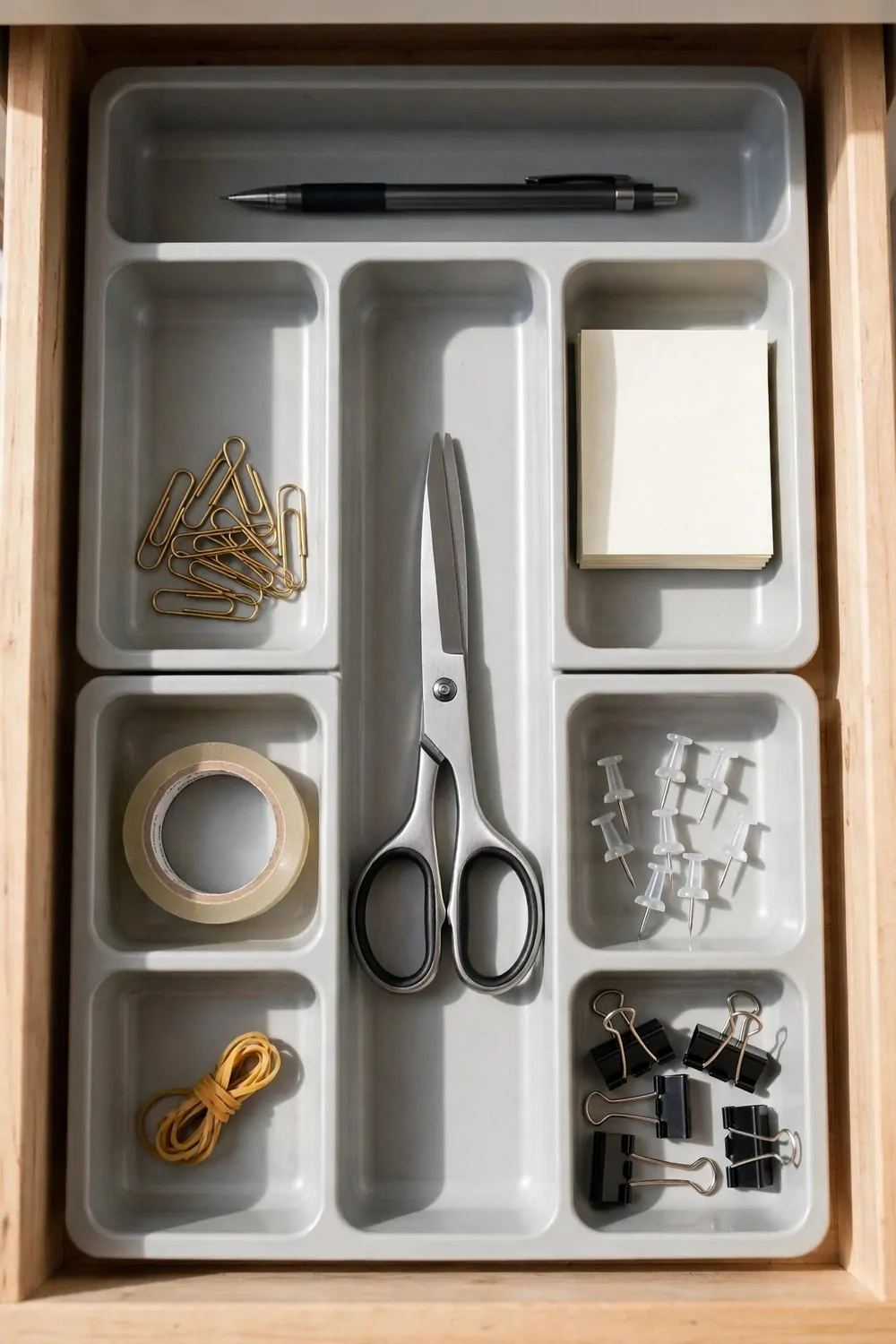
My scissors used to hide at the bottom of my junk drawer. I would dig past pens and old keys just to find them. It made a small job feel big.
Then I gave my scissors their own slot. Now I reach in and I know just where they are. It sounds small, but it changed my whole drawer.
A slot keeps the sharp edge safe too. It stops the blades from poking other things. It also stops me from cutting my finger when I reach in fast.
I like a slot that fits tight. My scissors should not slide around when I open and close the drawer. A snug fit keeps them calm and still.
You can make a slot with a small tray or a cut piece of thick card. I tried card first and it worked well for a while. A firm tray lasts longer though.
Put the slot near the front of the drawer. That way you grab the scissors without moving other stuff. I keep mine on the left side, right where my hand goes first.
A slot like this has a typical cost of $10 to $25. I paid in that range and I felt it was fair. You do not need a fancy one for it to work well.
Keep only one pair of scissors in the slot. If you have more, put the spare pair somewhere else. One pair is all a junk drawer needs.
Test it for a week and see how it feels. If you grab your scissors fast each time, your slot is in the right spot. If not, move it a little and try again.
14. A Drawer Divider You Can Move
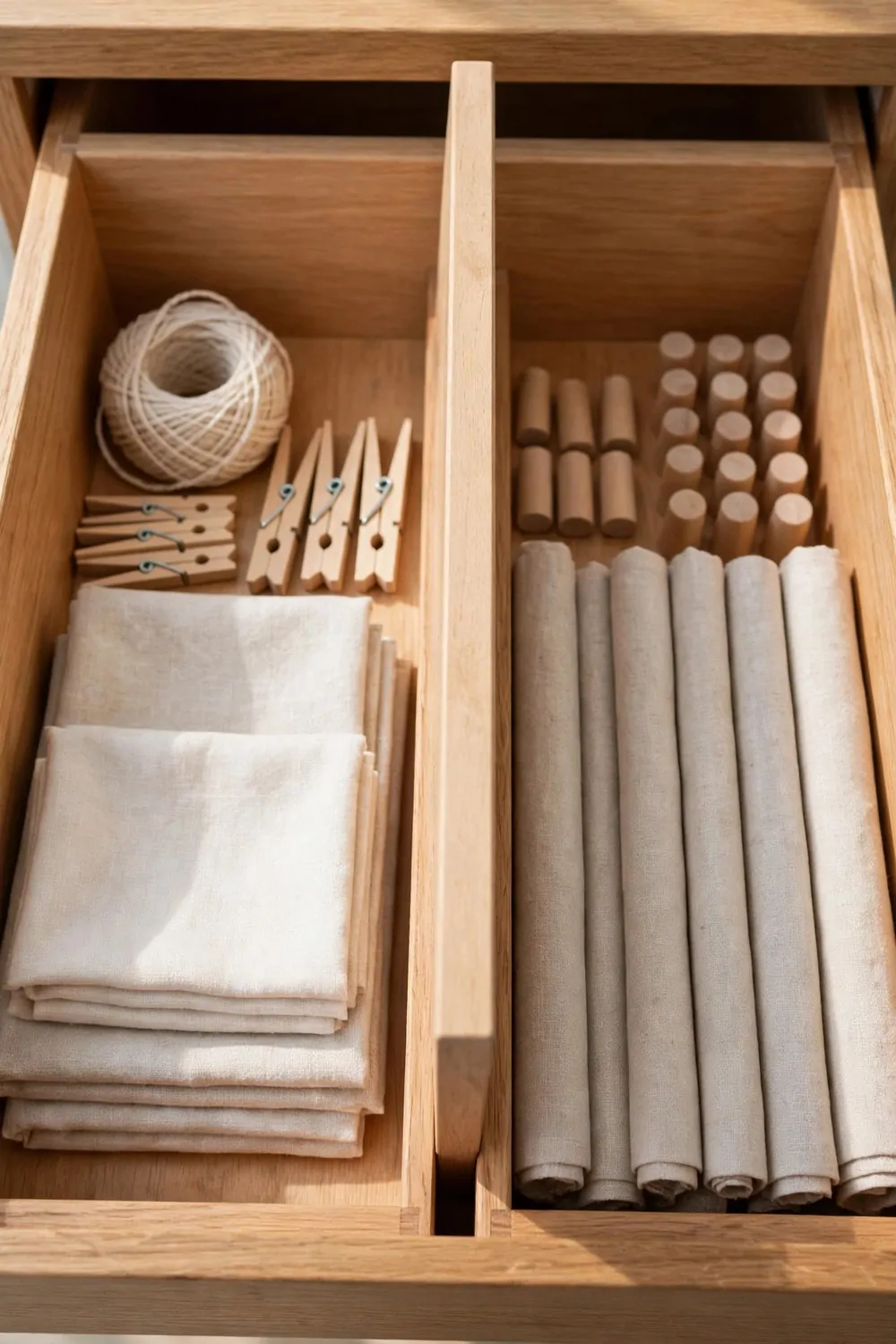
A divider you can move is one of my best drawer tricks. It lets me change the space when my stuff changes. I do not have to buy a new tray each time.
Some weeks I need a big space for tape and tools. Some weeks I need small spaces for pins and clips. A moving divider lets me fix that in seconds.
I slide mine left or right until it feels right. Then I put my things back in their new spots. It takes less than a minute to do.
Pick a divider that stays put when the drawer moves. It should not slide on its own each time you pull the drawer open. A firm base helps a lot here.
You can use one divider or two or three. I use two most days, and that gives me three neat spaces. You can add more when you need them.
Small dividers have a typical cost of $8 to $18. Medium ones have a typical cost of $15 to $30. Large ones have a typical cost of $25 to $45.
Start with a small one if you are not sure. You can always add a bigger one later. I wish I had started small instead of buying too big first.
Try your divider in a few spots before you settle. Put it near the front for things you use a lot. Put it near the back for things you use less.
When your drawer stuff changes, move the divider again. That is the whole point of it. A drawer that can change stays tidy for much longer.
| Divider size | Typical cost | Best for |
|---|---|---|
| Small divider | $8 to $18 | A soft start for one drawer |
| Medium divider | $15 to $30 | Two or three neat spaces |
| Large divider | $25 to $45 | A big drawer split in one go |
15. Labels You Can Read at a Glance
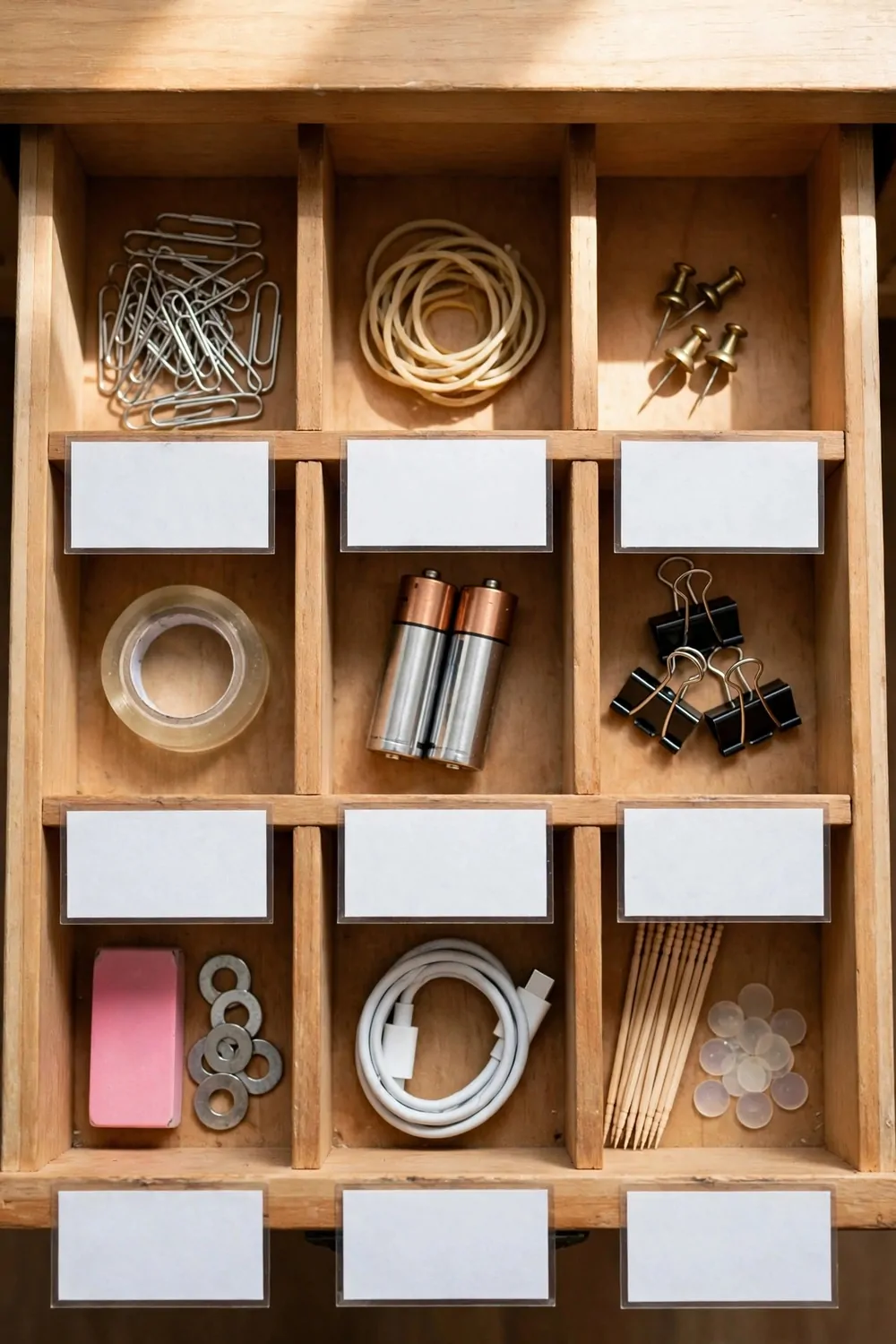
Labels help me a lot in a junk drawer. I do not have to guess where things go. I just read the label and put the thing back.
Make your labels big and clear. I use plain words like pens, tape, and tools. Short words are best because you read them in one look.
Put the label where you can see it when the drawer is open. I put mine on the front edge of each small tray. That way I see them right away.
Use dark ink on light paper if you can. It is much easier to read in a dim room. I learned that after I used pale ink once and could not read a thing.
You can write labels by hand or print them. I write mine by hand because it feels more like my drawer. Printed labels look neat too, so pick what you like.
A set of labels has a typical cost of $5 to $15. That is a small price for a drawer that stays clear. I think it is worth every bit.
Do not label everything in tiny detail. Just label the main groups in your drawer. Too many labels can feel busy and hard to read.
Check your labels once a month. If a label no longer fits what is inside, change it. A wrong label is worse than no label at all.
Ask someone else to read your labels too. If they can find things fast, your labels work. If they get lost, make the words bigger and simpler.
16. A Small Pouch for Bits and Bobs
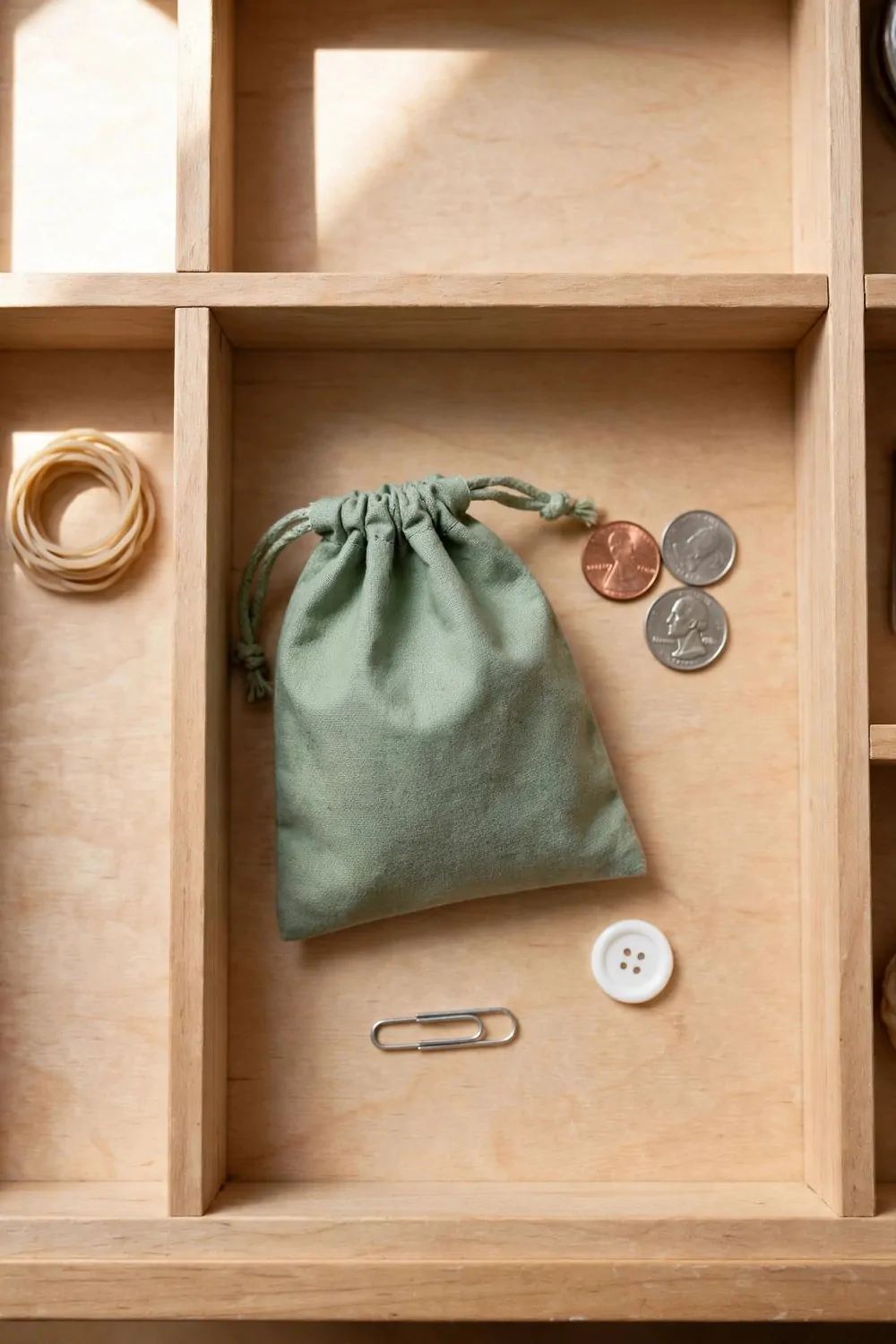
A small pouch is perfect for bits and bobs. It holds all the tiny things that roll around loose. I keep mine in one corner of the drawer.
My pouch holds screws, pins, clips, and small rubber bands. None of them get lost now. I just unzip the pouch and pick what I need.
Pick a pouch you can open with one hand. A zip top works well for me. A snap top works well too if you like that better.
Keep the pouch small, not big. A big pouch takes up too much room in the drawer. A small one fits in a corner and still holds a lot.
A pouch has a typical cost of $5 to $15. I found a good one in that price range. You do not need to spend a lot to get a strong one.
I empty my pouch once a month and sort what is inside. I throw away bent pins and broken clips. Then I put the good bits back in.
Put things in the pouch right away when you find them loose. Do not leave them on the drawer floor for later. Later often turns into never.
You can use a pouch with a clear front if you like. Then you can see what is inside without opening it. I like that on busy days.
If your pouch gets too full, it is time to sort it out. Take out what you do not use. A half full pouch works much better than a stuffed one.
17. One Drawer, One Job Only
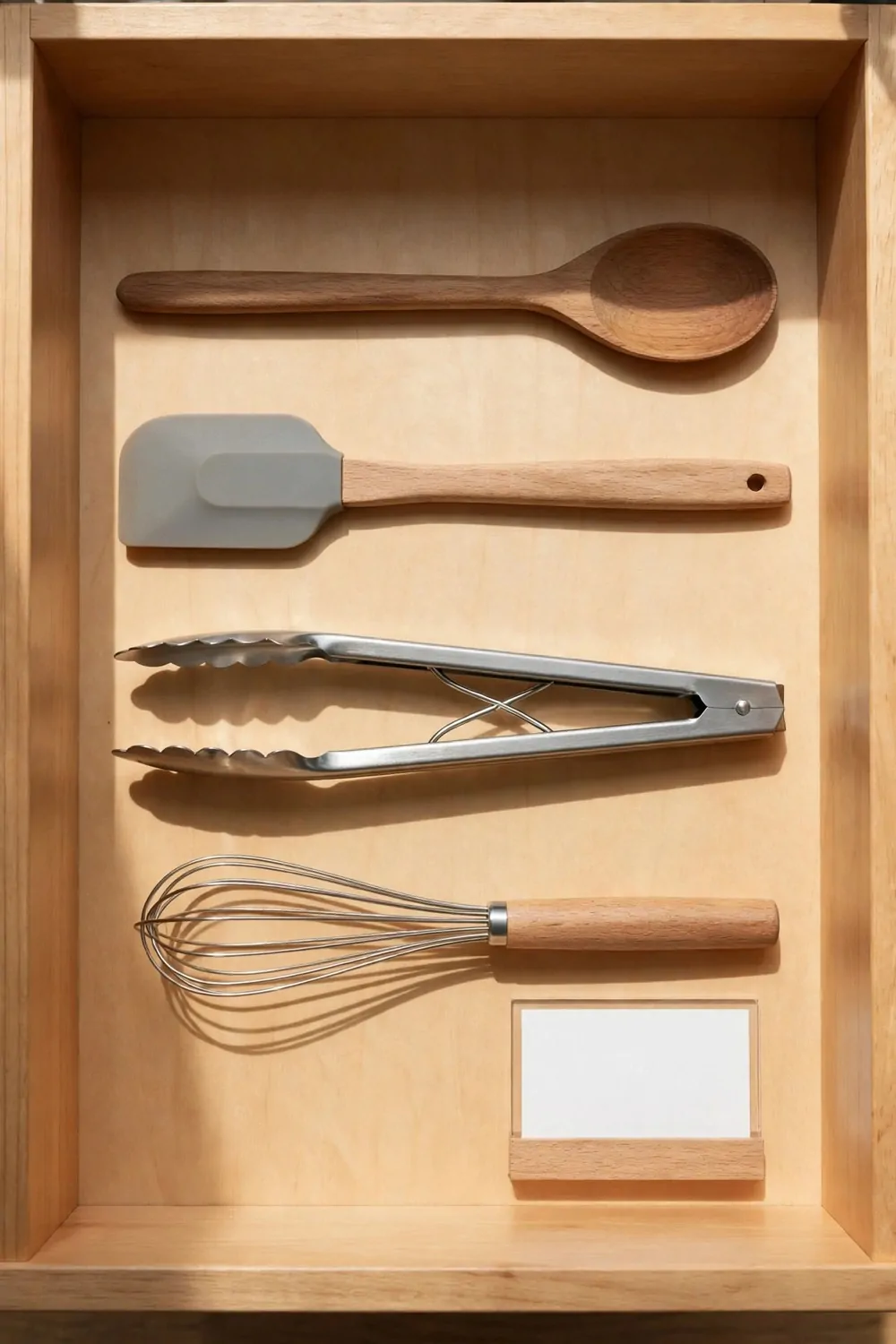
My junk drawer works best when it has one job only. I use it for small home tools and bits I grab each day. Nothing else goes in there.
When I let other things creep in, the drawer gets messy fast. Old papers and spare parts take over in a week. Then I cannot find what I need.
Pick one job for your drawer and say it out loud. Mine is for small tools I use around the house. Yours might be a bit different, and that is fine.
Put a small note inside the drawer if it helps you remember. I wrote “small tools only” on a card once. It helped me stop and think before I tossed things in.
When something does not fit the job, put it somewhere else. I keep a box in my closet for spare parts. That box is not in my drawer, and my drawer stays clear.
This change has a typical cost of $0 to $10. You can do it for free with a note and a quick sort. A small card or label is the only thing you might buy.
Tell your family about the one job rule too. If they know the rule, they will help you keep it. My drawer stayed tidy once we all agreed on it.
Check the drawer each week for things that do not belong. Move them out right away. A quick check takes less time than a big clean later.
One job sounds strict, but it makes life easy. You open the drawer and you know what is there. That is what a tidy drawer should feel like.
18. A Weekly Five-Minute Tidy
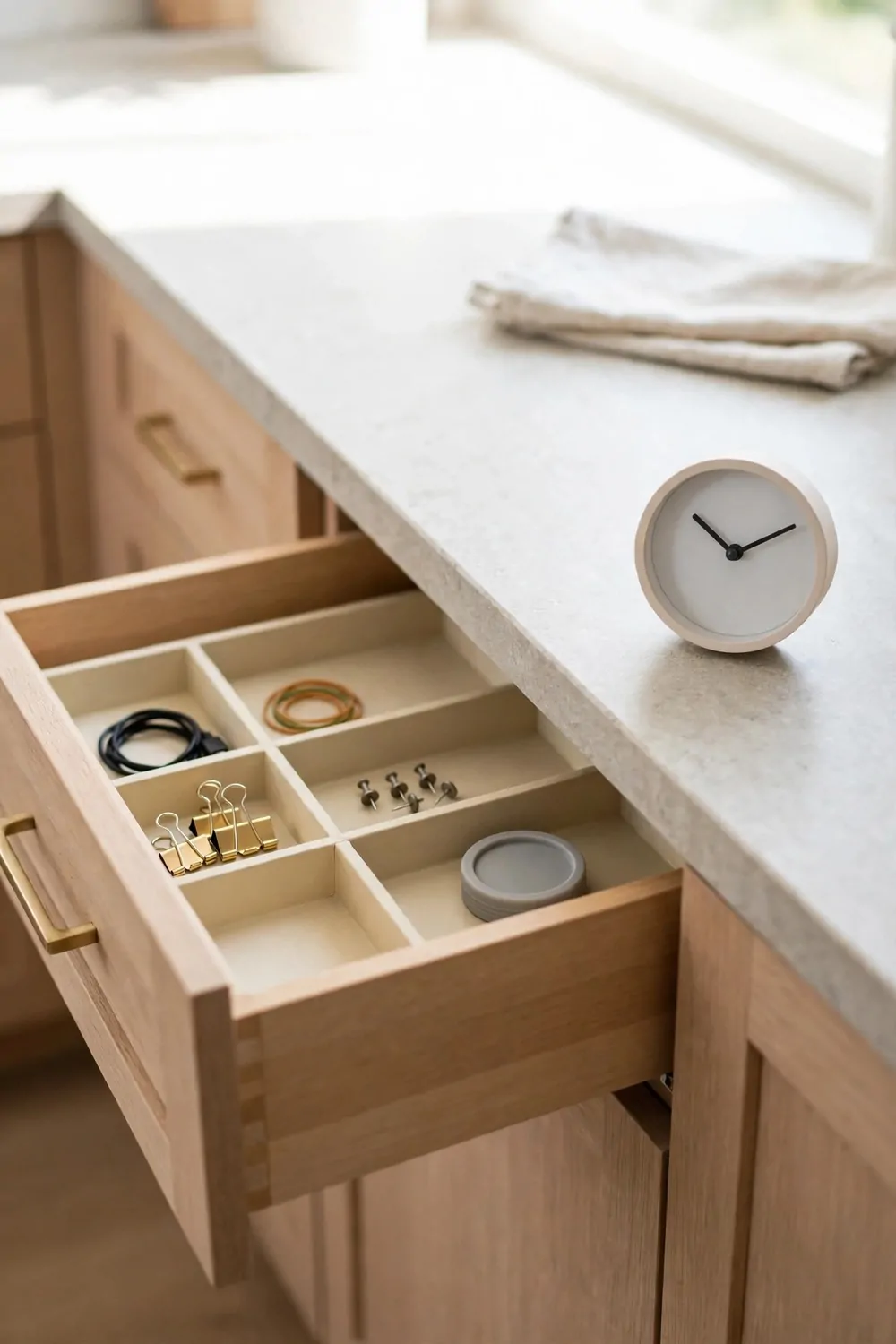
I tidy my junk drawer for five minutes each week. It sounds too short to help, but it works. Five minutes is enough to keep the mess from growing.
I pick the same day each week for my tidy. I do it on Sunday night before the new week starts. A set day helps me remember.
First I take out anything that does not belong. I put those things where they should live. Then the drawer feels lighter right away.
Next I put loose things back in their trays. Pens go with pens and tape goes with tape. It takes less than a minute once you know the spots.
Then I toss out broken bits and old scraps. I do not keep things just in case. If it is broken, it goes in the bin and I move on.
This tidy has a typical cost of $0. You need no new things to do it. Just five minutes and a bit of care each week.
I set a timer on my phone so I do not go over five minutes. When the timer rings, I stop and close the drawer. Short and done is the goal.
If five minutes feels too long, start with three. You can build up to five as you get used to it. The habit matters more than the exact time.
After a month of weekly tidies, my drawer stayed neat on its own. I no longer dread opening it. That small habit made a big change for me.
19. A Small Bin for Things to Throw Away
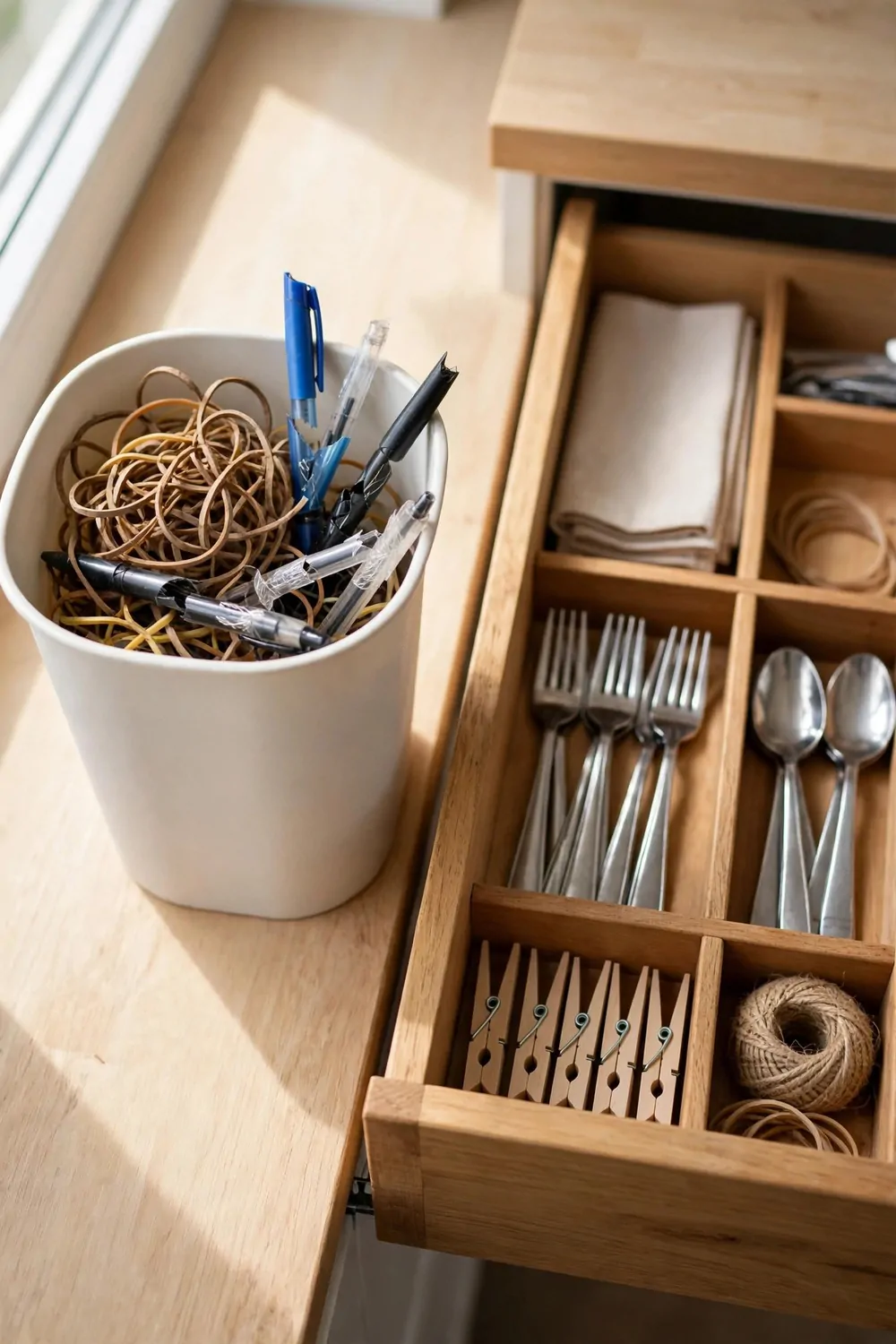
A small bin inside the drawer helps me a lot. It gives rubbish a clear home. I do not have to leave it loose in the drawer anymore.
My bin holds old bits of paper and broken clips. It also holds the little bits I pull out when I tidy. Then I can empty it in one quick move.
Pick a bin that fits in one corner. It should be small, not big. A big bin takes up room you need for useful things.
Empty the bin each week when you do your tidy. I empty mine on Sunday with the rest of my five minute check. A full bin does not help anyone.
A small bin has a typical cost of $3 to $10. That is a small price for a neat drawer. I found mine for a few dollars and it still works well.
Keep the bin easy to lift out. You should be able to take it out, empty it, and put it back fast. If it is hard to lift, you will not use it.
Do not use the bin for things you want to keep. It is only for things to throw away. If you are not sure, keep the thing out of the bin for now.
I put my bin near the front so I can reach it fast. When I find a scrap, I drop it straight in. That one small move keeps the drawer clear.
If the bin fills up too fast, you might be keeping too much stuff. Sort the drawer and see what you can let go. Less stuff means less mess.
20. A Magnet Strip for Metal Bits
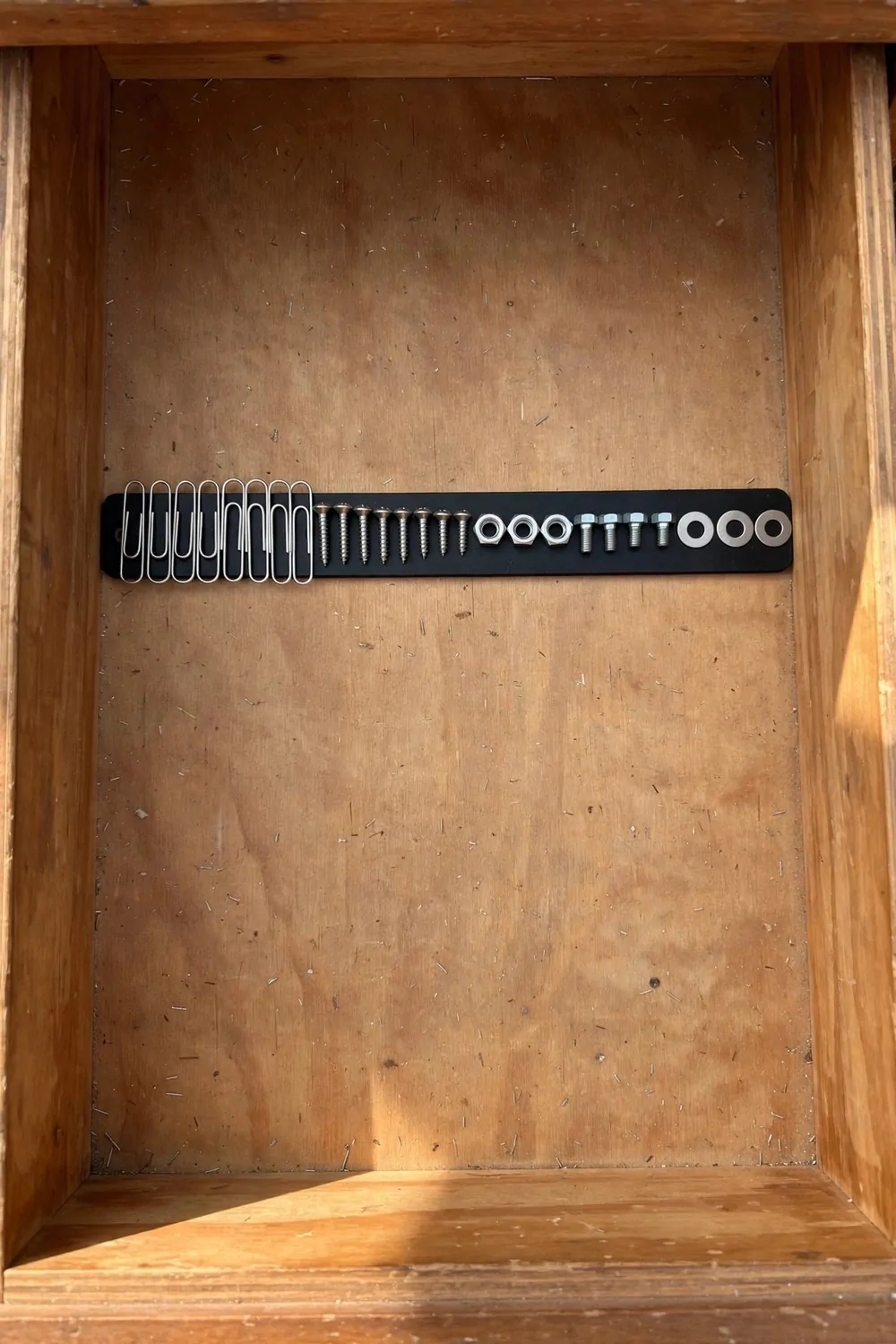
A magnet strip is a smart trick for metal bits. It holds screws, pins, and small tools in one line. I love how neat it looks.
I stick my strip on the side of a small tray. The metal bits stay put when I open the drawer. They do not roll around anymore.
Put the strip where you can reach it with ease. I put mine near the top of the drawer. That way I can grab a screw without digging deep.
Make sure the strip is strong enough to hold your bits. A weak strip will drop things when you move the drawer. Test it with a few screws first.
A magnet strip has a typical cost of $5 to $15. I think that is fair for how much time it saves me. You can find a good one in that range.
Keep only small metal bits on the strip. Do not put heavy tools on it. Heavy tools can fall off and make a mess in the drawer.
Clean the strip once in a while with a dry cloth. Dust can make it less strong over time. A quick wipe keeps it working well.
If you have kids at home, keep tiny metal bits high up on the strip. Or keep them in a pouch instead. Safety comes first in a shared drawer.
I check my strip each week to see if it still holds well. If bits start to slip, I clean it or move it to a flatter spot. A strip that holds firm makes the drawer feel safe and tidy.
21. A Clear Lid Box for Small Tools
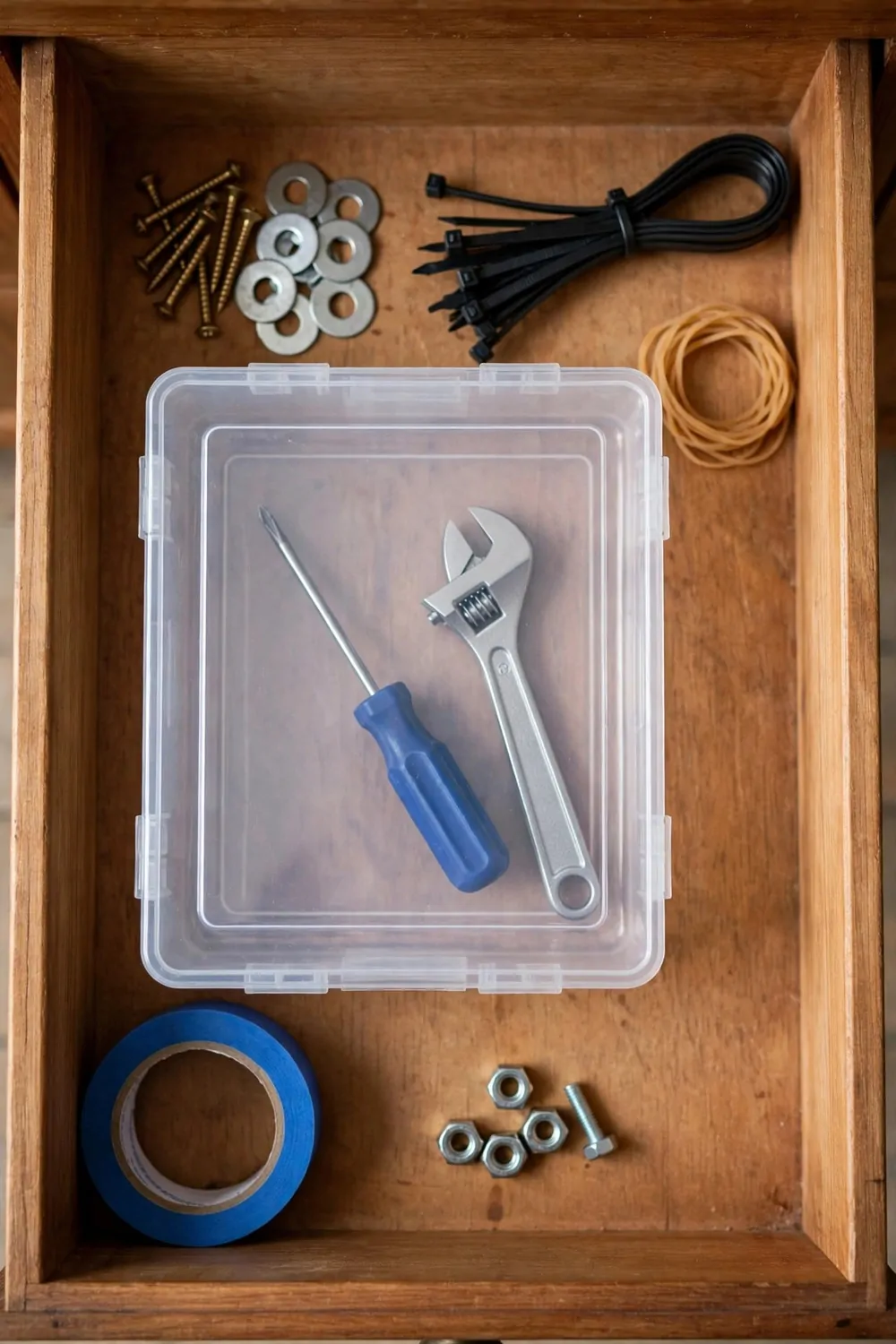
A clear lid box is great for small tools. I can see what is inside without opening it. That saves me time on busy days.
My box holds small screwdrivers and a tiny wrench. It also holds a few spare screws in one corner. Everything stays in its own spot.
Pick a box with a lid that snaps shut. A loose lid can pop open when you pull the drawer. A firm lid keeps your tools safe and still.
Put the box flat in the drawer so it does not tip. I keep mine near the back where it sits level. It stays put even when I open the drawer fast.
A clear lid box has a typical cost of $8 to $20. I paid in that range and I am glad I did. A clear box is worth it because you can see inside.
Label the box if you want to find it even faster. I wrote “small tools” on mine in big letters. It helps on days when I am in a rush.
Do not pack the box too full. If the lid will not shut, take a few things out. A box that shuts well keeps your tools neat.
Wipe the lid clean once a month so you can still see through it. Dust can make it look dull over time. A quick wipe brings back the clear view.
If a tool does not fit in the box, do not force it in. Put it in a tray instead. The box works best when each tool has room to sit.
22. A Notebook and Pen That Stay in the Drawer
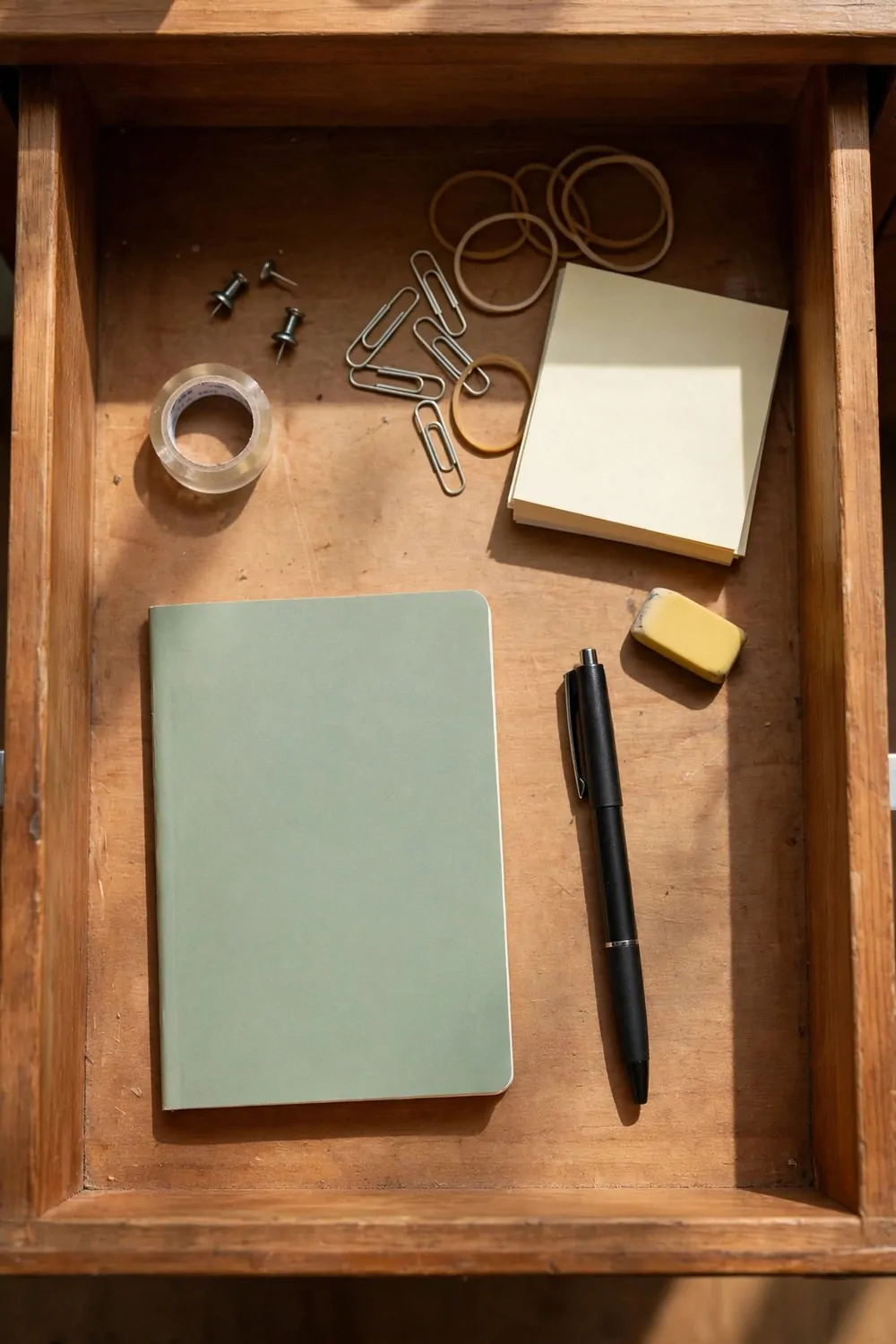
I keep a small notebook and pen in my junk drawer. They stay there all the time. I use them to jot down quick notes and lists.
When I run out of something, I write it in the notebook. Then I do not forget it at the shop. It is a small habit that helps a lot.
Pick a notebook that fits flat in the drawer. A small one works best. A big one takes up too much room and gets in the way.
Keep the pen tied to the notebook if you can. I loop a rubber band around mine to hold the pen in place. Then the pen does not roll away.
A notebook and pen have a typical cost of $5 to $15. You can get a plain set in that range. You do not need a fancy one for quick notes.
Write the date at the top when you start a new page. That helps you know which notes are new. I do this each time I turn to a fresh page.
Do not use the notebook for long writing. It is for short notes and quick lists only. Long notes belong in a bigger book somewhere else.
Check the notebook once a week and cross off done jobs. I love crossing off a done task. It makes the drawer feel useful, not just full.
If the notebook fills up, replace it with a new one. Keep the old one if it has notes you still need. A fresh notebook keeps the habit going strong.
23. Keep the Drawer Half Empty on Purpose
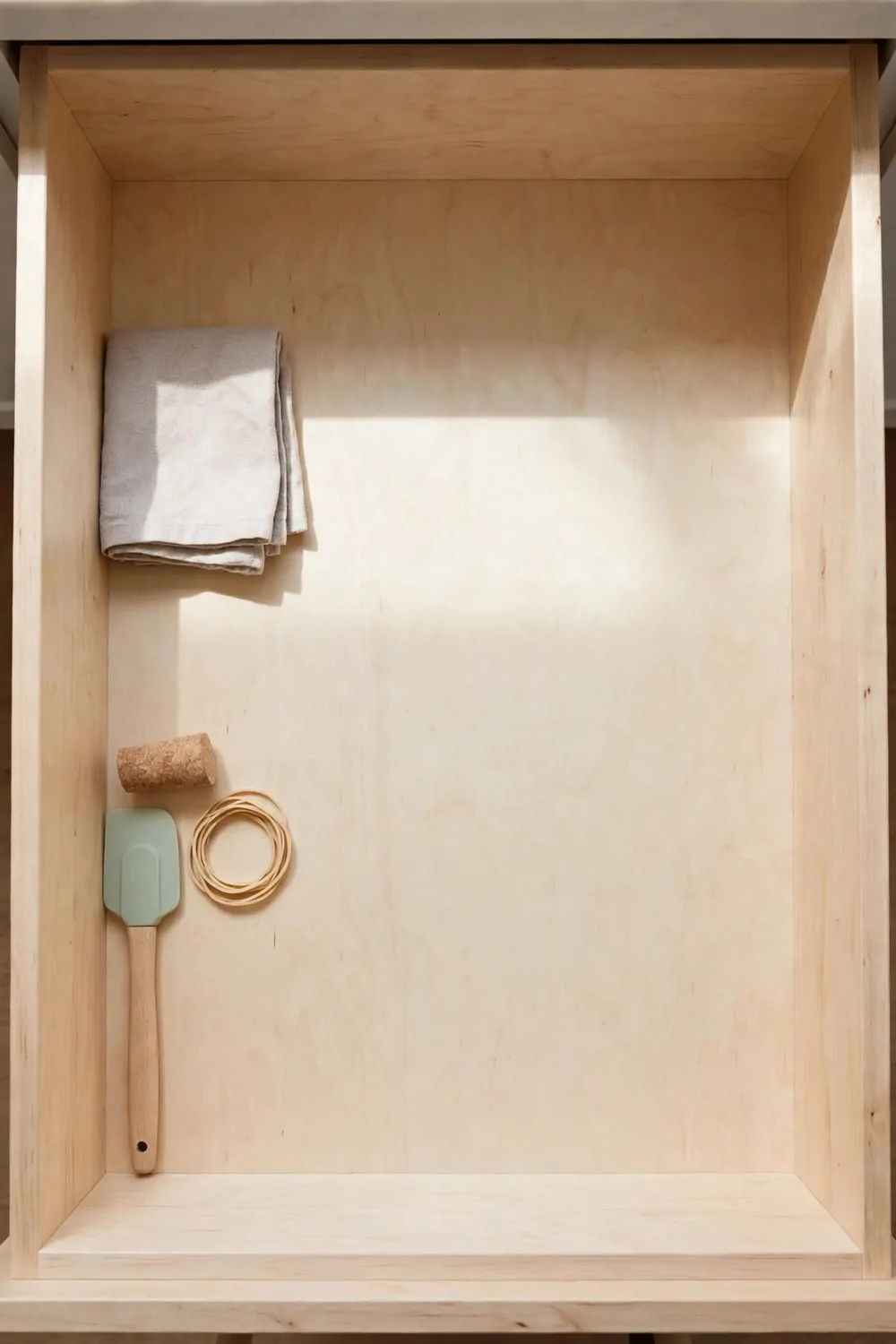
I keep my junk drawer half empty on purpose. It sounds odd, but it works so well. Empty space is what keeps a drawer tidy.
When a drawer is full, every new thing makes a mess. You shove it in and other things move out of place. A half empty drawer has room to breathe.
I leave one side of my drawer clear each day. That clear side is for things I find and need to sort later. It stops new bits from landing on top of old ones.
Try to keep at least half the drawer free. If it starts to fill up, sort it out that week. Do not wait until it is packed tight.
This trick has a typical cost of $0. You do not need to buy anything to leave space. You just need to stop and let the space stay empty.
It can feel hard to leave space empty at first. I wanted to fill it with spare things too. But I learned that empty space is useful space.
When friends see my half empty drawer, they ask why it is so neat. I tell them the secret is the empty half. They laugh, then they try it too.
A half empty drawer is also easier to clean. You can see the bottom and wipe it in seconds. A full drawer takes much longer to sort and clean.
Give it a try for two weeks and see how it feels. If your drawer stays neat, keep the habit. If not, take out a few more things and try again.
24. A One-Weekend Junk Drawer Reset Plan
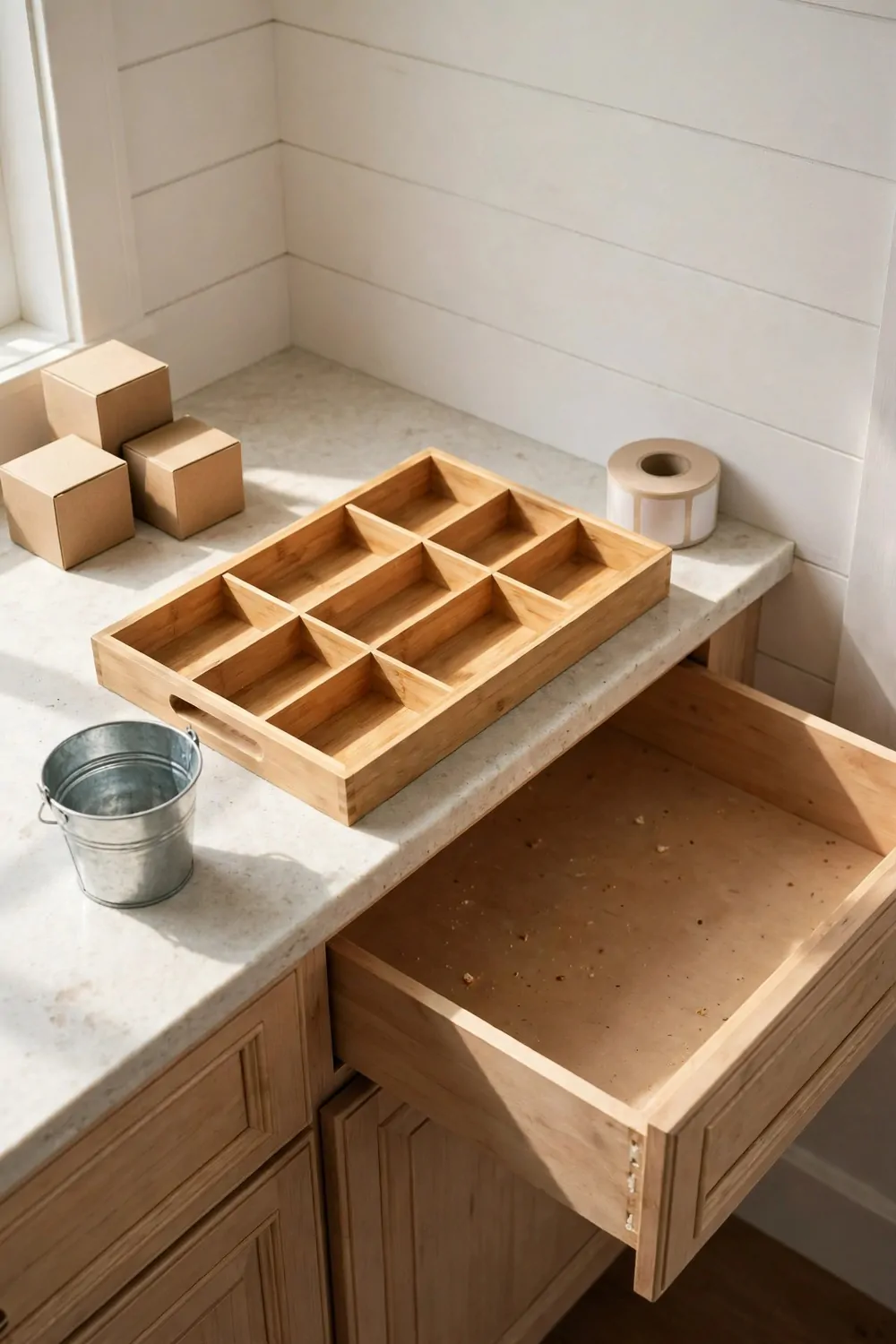
I like to reset my junk drawer in one weekend. It feels big at first, but a plan makes it easy. I split the work into small steps so I do not get tired.
Trays cost $15 to $25. I use trays to make clear zones in the drawer.
Dividers cost $10 to $20. I use them to split each tray into small neat spaces.
Small boxes cost $8 to $15. I use them for tiny bits that would roll around loose.
Labels cost $12 to $25. I use them so I can read each zone at a glance.
Pouch cost $10 to $15. I use it for bits and bobs that need a safe home.
For the full weekend, your spend should stay in the $55 to $100 range. That range covers all five parts and nothing else.
On Saturday I empty the drawer and clean it well. On Sunday I put the trays and boxes in and fill them in order.
When the weekend ends, I do a five minute check each week. That small check keeps my reset working for a long time.
| Area | Main change | Typical cost |
|---|---|---|
| Trays | Clear zones in the drawer | $15 to $25 |
| Dividers | Split each tray into spaces | $10 to $20 |
| Small boxes | Tiny bits kept in place | $8 to $15 |
| Labels | Every zone easy to read | $12 to $25 |
| Pouch | Bits and bobs in one safe spot | $10 to $15 |
| Total | Whole drawer reset in one weekend | $55 to $100 |
Keep Reading
If you liked these ideas, you will love these posts too.
- 26 Outdoor Furniture Storage Ideas That Protect Your Pieces
- 20 Outdoor Wall Decor Ideas for Patios and Porches
- 29 Backyard Decor Ideas on a Budget
- 22 Front Door Decor Ideas That Make a Great First Impression
- 31 Outdoor Storage Ideas for Small Yards and Patios
- 24 Deck Decor Ideas That Make Outdoor Evenings Better
Open your junk drawer tonight and take out just five things you do not need. One small clear-out can make the whole drawer feel fresh by the weekend.