24 Journaling Habits for a Calmer Mind

My mind feels noisy most mornings, and a blank page helps me hear myself think.
These 24 journaling habits are quiet ways to slow your mind down and end the day calm.
I started with a plain notebook and a pen I already had. I wrote for a short time each day, and I did not try to make it neat.
You do not need long hours for this to help. A quiet minute with your journal can change how the rest of your day feels.
Some days I write a lot, and some days I write very little. Both days count, and both days help me feel steady.
I keep my words plain and true, and I write like I talk to a close friend. You can do the same, and your journal will feel like a safe place.
Pick one habit from this list and try it today. See how your mind feels by night, and then try one more tomorrow.
1. Start Your Day with Three Morning Pages

I open my notebook soon after I wake, and I let my thoughts spill out on the page. I do not stop to fix my words, and I do not worry if they sound messy.
This early writing clears my head before the day fills up with noise.
I write about what I need to do, and I write about what I feel. Some lines are plain plans for the day, and some lines are just tired thoughts. I let them all out, and I feel lighter when the pages are done.
You can try this in bed or at your table, and you can take as long as you need.
My mornings feel calmer now, and I start the day with a clear head. I notice I rush less, and I listen to myself more.
If you miss a morning, just start again the next day.
A pen and a notebook are all you need for this habit. Keep them close by, so you can reach for them with ease.
I used to wake up with a busy mind, and my thoughts would run in loops all morning. Now I give those thoughts a place to go, and they stop crowding my head. You may find the same quiet start when you try it for a week.
Typical cost $0 to $0.
2. Write One Line Before Bed Each Night

Before I sleep, I write a short line about my day in my journal.
The line can be about a kind moment, or it can be about a hard moment. It can be about something I did well, or something I want to try again. I pick the first thought that comes, and I write it down plain.
This small habit helps me close the day with a calm mind.
You do not need to write a long page, and you do not need perfect words. One honest line is enough to end the day right.
I keep my journal close by, so the habit takes only a minute.
Some nights my line is happy, and some nights it is tired and plain. Both kinds of lines help me, and both kinds feel true. I read back over old lines sometimes, and I smile at how far I have come.
If your day felt heavy, write about one small good part of it. That small good part can soften the whole day in your mind.
Try it tonight, and see how your sleep feels after.
Typical cost $0 to $0.
3. List Three Things You Feel Glad About

Each day I write a short list of things I feel glad about in my journal. The list can hold a warm meal, a kind word, or a quiet hour at home. I write what comes first, and I do not search for big things.
Small glad moments count just as much as big ones.
You can write your list in the morning, or you can write it before bed. Pick the time that feels easy, and keep it the same each day.
This habit trains my eyes to look for good in an ordinary day.
Some days I feel glad about people, and some days I feel glad about rest. Some days I feel glad about a task I finished, and some days I feel glad about a walk outside. All of those glad feelings belong on the list, and all of them lift my mood.
I read my old lists when I feel low, and they always help a little.
Start with your list today, and let it grow with you.
My days feel warmer since I started this list, and I notice kind things faster. Give it a week, and see if your days feel warmer too.
Typical cost $0 to $0.
4. Write About the Best Part of Your Day

Each night I write about the best part of my day, and I let that moment stay with me.
It can be a laugh with a friend, or it can be a quiet hour on my own. It can be a job done well, or a meal that tasted just right.
I write the moment in plain words, and I do not dress it up.
This habit helps me end the day on a warm note, even when the day was hard. I look back and find one bright spot, and I hold it close. You can do the same, and you will find a bright spot too.
Some days the best part is big, and some days it is very small. Both sizes count, and both sizes feel good to write about.
I keep the entry short, so the habit stays easy.
When I read old entries, I see how many good moments my days hold. I smile at the small joys I had almost forgot. Those old pages remind me that my days are full of good, even on slow weeks.
Try it tonight, and pick the moment that made you smile most.
Typical cost $0 to $0.
5. Use a Prompt When You Feel Stuck

Some days I open my journal and my mind goes blank, and I do not know where to start. A simple prompt gives me a first line, and the rest of the words follow on their own.
I keep a short stack of prompts beside my journal, and I pick one when I feel stuck. A prompt can ask what made me smile today, or what I want to let go of. It can ask what I feel most thankful for, or what I hope tomorrow brings.
You can write your own prompts, or you can borrow plain ones from a book.
One prompt is enough to fill a page with honest words.
My writing feels freer with a prompt, and I worry less about the first line. I just answer the prompt, and my thoughts find their way out.
Some prompts make me think deep, and some prompts make me laugh a little. Some prompts help me sort out a hard day, and some prompts help me plan a calm one. All of them get me writing, and that is what matters most.
Keep your prompts short, so they feel easy to answer.
If a prompt does not fit your day, skip it and pick a new one. Your journal is yours, and no prompt has to be used.
Typical cost $0 to $4.
6. Track Your Mood with a Simple Scale
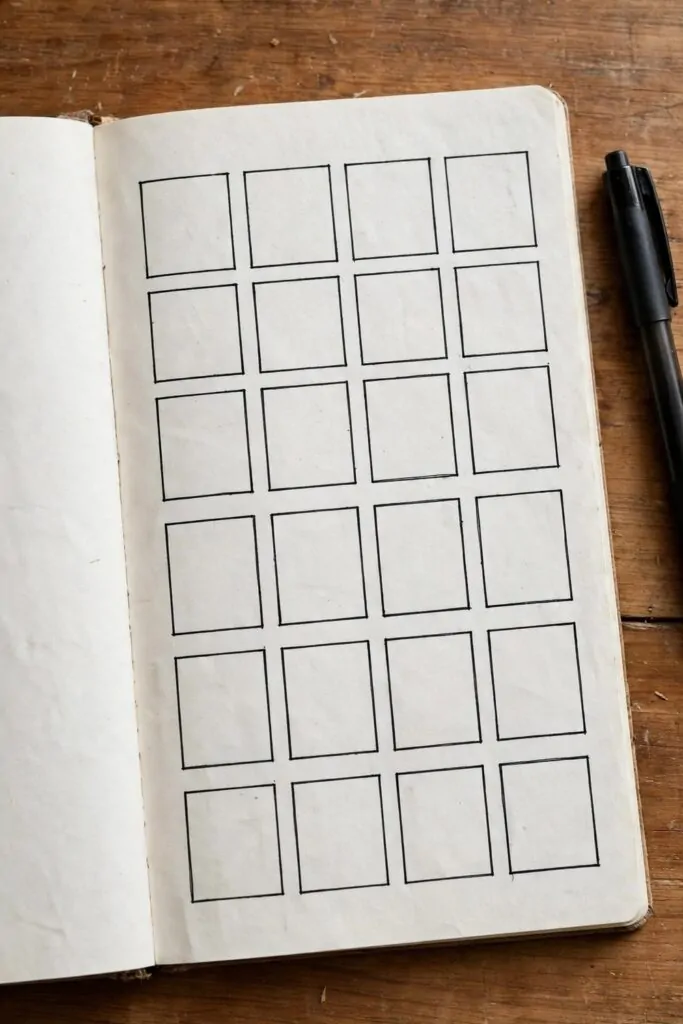
Each day I mark my mood on a simple scale in my journal.
I use plain numbers or plain words, and I pick the one that fits how I feel.
A low mark tells me I need rest, and a high mark tells me I feel strong. A middle mark tells me the day was steady, and that is fine too. I do not judge the mark, and I just write it down true.
You can track your mood in the morning, or you can track it before bed. Choose one time that suits you, and use it each day.
Over time I see clear links between my days and my mood.
I notice I feel better on days I write and rest well, and I feel tired on days I rush too much. Those small links help me plan softer days for myself.
My scale stays simple, and I never make it hard to fill in. I use the same marks each day, so I can read the pattern back fast. When I look back over a week, I can see how my mood moves, and I can see what helps me feel calm.
Try it for a week, and watch what your own pattern shows you.
Typical cost $0 to $2.
7. Write a Letter to Your Future Self
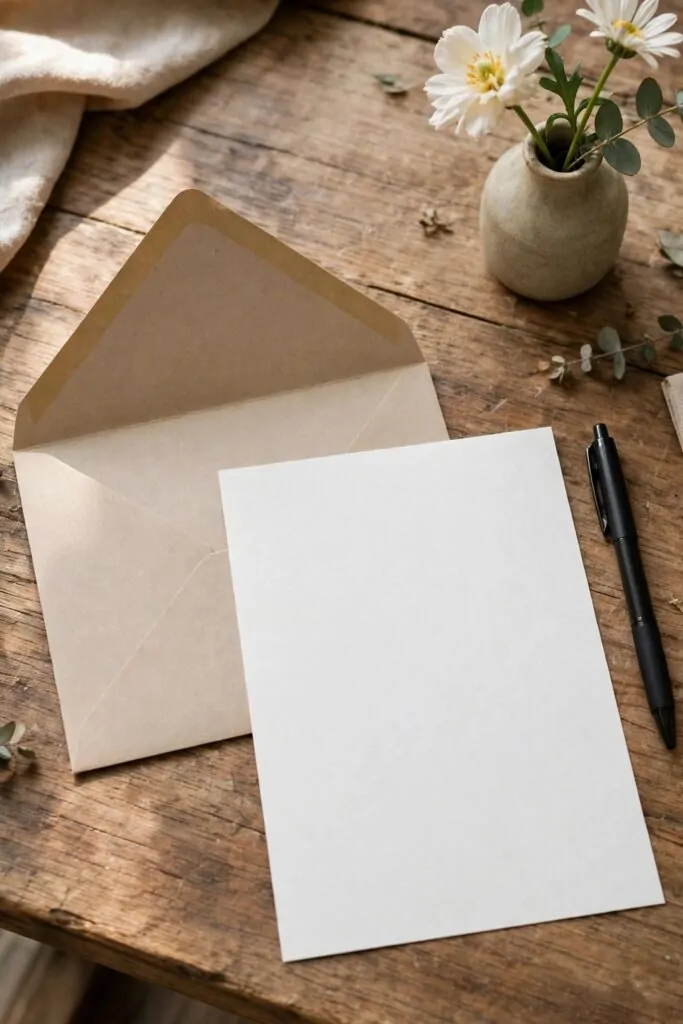
Once in a while I write a letter to my future self, and I seal it up for later. I write about my hopes, and I write about what I want to remember. I write about the hard parts too, and I write about how I got past them.
You can write your letter on plain paper, and you can keep it in your journal. You can open it in a month, or you can open it in a year.
A letter to your future self feels like a kind gift from today.
I start with a warm hello, and I tell myself what my days look like now. Then I write one hope for the months ahead, and I write one kind word for hard days. I end with a note that I am proud of how far I have come.
My letters are short, and I never try to make them perfect.
When I open an old letter, I smile at what has changed and what has stayed the same.
Some letters make me laugh, and some letters make me feel proud. All of them remind me that I keep growing, one day at a time.
If you feel stuck today, write about the life you hope to build. Write about the calm you want, and write about the habits that help you feel steady. Then seal the letter, and let your future self read it with a smile.
Typical cost $0 to $2.
8. Keep a List of Small Joys

I keep a running list of small joys in my journal, and I add to it when joy finds me. A good meal, a kind word, or a quiet hour can all go on the list.
Small joys are easy to miss, and this list helps me hold on to them.
You can add to your list at any time of day.
I add joys as they happen, and I do not wait for a perfect moment. I write them down fast, in plain words that feel true.
Some joys are about people, and some joys are about rest at home. Some joys are about a task done well, and some joys are about a walk outside. All of them count, and all of them make my list feel warm.
I read my list when my day feels flat, and it lifts my mood a little.
Start your own list today with one small joy from this morning.
My list grows a little each week, and it shows me how much good my days hold. I never thought small joys could add up so fast, and now I see them everywhere. Start yours today, and watch how fast your own joys add up.
Typical cost $0 to $3.
9. Try a Five-Minute Brain Dump

I open my notebook when my head feels too full.
I set a short timer and I write fast. I do not stop to fix spelling or make neat lines. I just let the messy thoughts land on the page.
You can try this after a long day or before bed. It helps me feel lighter when the day has been a lot.
I write about chores, worries, and small plans all mixed together.
Nothing in that page has to make sense to anyone else.
When the time is up I close my notebook and breathe out slow. I often feel calmer right away, like my mind has more room.
Some nights I read it back and I smile at how small the worries look now.
If a thought keeps coming back I circle it in my notebook. Then I write one small step I can take tomorrow. That step is often very simple, like send one note or tidy one shelf.
Typical cost $0 to $5.
10. Write About One Hard Feeling

I pick one hard feeling and I give it a page. I write what happened and how it sat in my chest. I do not try to sound wise or brave.
Some days that feeling is worry and some days it is just tiredness.
I let the words come slow when they need to.
You do not have to share this page with anyone. It is yours, and it can hold the honest parts.
I often end with what I wish for next.
That wish can be small, like a quiet morning or a kind word from a friend. I write it plain and I do not judge it. Then I close the page and let the day move on.
Writing it down does not fix everything at once. But it helps me feel less alone with the feeling.
I come back to these pages on hard days and I feel proud of how far I came.
Typical cost $0 to $0.
| Idea | Main change | Typical cost |
|---|---|---|
| Start Your Day with Three Morning Pages | start your day with three morning pages | $0 to $0 |
| Write One Line Before Bed Each Night | write one line before bed each night | $0 to $0 |
| List Three Things You Feel Glad About | list three things you feel glad about | $0 to $0 |
| Write About the Best Part of Your Day | write about the best part of your day | $0 to $0 |
| Use a Prompt When You Feel Stuck | use a prompt when you feel stuck | $0 to $4 |
| Track Your Mood with a Simple Scale | track your mood with a simple scale | $0 to $2 |
| Write a Letter to Your Future Self | write a letter to your future self | $0 to $2 |
| Keep a List of Small Joys | keep a list of small joys | $0 to $3 |
| Try a Five-Minute Brain Dump | try a five-minute brain dump | $0 to $5 |
| Write About One Hard Feeling | write about one hard feeling | $0 to $0 |
| Total | $0 to $16 |
11. Keep a Dream Note by Your Bed

I keep my notebook close to my bed at night. I reach for it first thing when I wake up.
I write what I still remember from my sleep. Sometimes it is only one small scene or one face.
I do not worry if the note is short or strange.
You can write in the morning light before you get up. The notes fade fast if you wait too long. So I try to write them down right away.
I like reading old dream notes on slow mornings.
They remind me how busy my mind is at night. They also give me fun ideas for my day.
I never force myself to remember more than what comes.
A short note is still a good note.
Typical cost $3 to $8.
12. Make a Weekly Review Page

I sit down once a week and look back at my days.
I write what went well and what felt hard. I keep it short so I will do it again next week.
I start with what made me feel calm this week. Then I note what took too much of my time. Last I pick one thing I want to try next week.
This page helps me see my week in one clear place.
You can do this on a Sunday night or a quiet morning. Pick a time that fits your week and keep it the same.
I use my notebook and a pen I already have at home.
I keep the page simple with short lines. I do not fill it with long plans I will not keep. I just want a clear look at my week before the next one starts.
Some weeks the page is full of good days. Other weeks it shows me I need more rest.
Typical cost $0 to $5.
13. Write Down Three Things You Learned

I end my day by writing what I learned. It can be a small skill or a new idea from a book. It can even be a lesson from a mistake I made.
I keep the list short so it stays easy. I write one line for each thing I learned. Then I read the list back and I feel good about my day.
You can learn from a chat with a friend too.
I like how this habit makes small days feel full.
Some days I learn how to fix a small thing at home. Other days I learn how to be more patient with myself.
I keep these lists in one part of my notebook.
When I flip back through them I see how much I grew. It is a quiet way to feel proud of my own steps.
Try it tonight and see what you find.
Typical cost $0 to $0.
14. Keep a Quote Page for Hard Days

I keep one page in my notebook for words that lift me up.
I add a line when I hear one that feels true for me.
You can use words from a book or from someone kind in your life. I write them down in my own hand so they feel close.
On a hard day I open that page first. I read one line slow and I let it sit with me. Then I write a short note about why it helps today.
I do not fill the page all at once.
I let it grow one line at a time.
Some lines are about hope and some are about rest. I pick the one that fits how I feel that day. It is a small comfort I can reach for any time.
You can start with just one line tonight. That one line is enough to begin.
Typical cost $0 to $4.
15. Sketch a Small Doodle Beside Your Words

I draw a small doodle beside my words when I feel like it. It does not have to look neat or clever.
I just let my pen move for a minute or two.
You can draw a leaf, a cup, or a simple shape from your day. I draw what is on my mind in that moment. The doodle makes the page feel more mine.
Some days I draw after I write. Other days I draw first and the words come after.
I use the same pen I write with.
A small doodle is enough to make me smile.
I never judge the doodle or try to fix it.
It gives my busy mind a quiet break. I feel more focused when I go back to my words. That short pause helps the whole page feel calm.
Typical cost $2 to $6.
16. Write a Thank You Note to Yourself
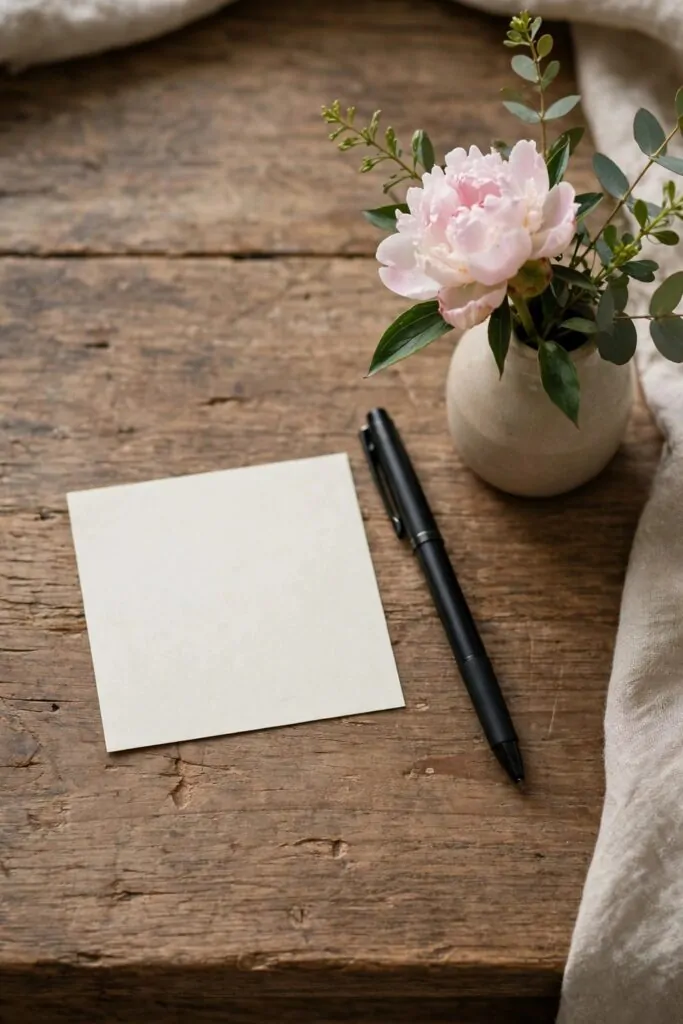
I write a short thank you note to myself at the end of a long week.
I thank myself for small things I often skip past. I thank myself for getting up and trying again. I thank myself for rest when I needed it most.
You can write yours in just short lines.
I read it back and I feel kinder toward myself.
Some weeks I thank myself for a hard talk I had. Some weeks I thank myself for a quiet day at home. Some weeks I thank myself for simply keeping going.
This note is not for anyone else to see. It is a small gift I give to myself.
I keep these notes on my desk, close at hand.
On a low day I open one and read it slow. It reminds me I have done hard things before.
Typical cost $0 to $0.
17. Keep a Habit Tracker in Your Journal

I keep a small tracker in my journal and it helps me stay calm. I draw a plain box for each habit I want to keep. I put a small mark in the box when I do the habit that day.
I start with only one or two habits so I do not feel rushed. You can start small too and add more later when you feel ready.
I check my tracker at night before I close my journal. I like to see the marks grow across the week.
A full row of marks makes me smile and helps me keep going.
I do not worry when a box stays empty for a day.
I just write the next day and try again with a fresh mind. My tracker is for me only and no one else needs to see it. You can make your tracker in any way that feels easy for you.
I look at my tracker each morning when I open my journal.
It takes only a minute and it helps my day feel calm.
Typical cost $0 to $0.
18. Write About Your Ideal Calm Day

I like to write about a calm day I hope to have. I write it in plain words and I keep it short and simple.
I start with the morning and what I do first. I write about a slow walk and a quiet cup of tea. I add a short rest in the afternoon and time with my family.
I read the page again when my day feels busy and loud.
It reminds me that calm can be simple and close by. You can write your own calm day in the same plain way.
I do not plan every hour because that feels too hard.
I just pick the parts that make me feel rested and glad.
I write about reading a book in a quiet spot at home. I write about a warm meal and a soft talk with someone I love. I write about going to bed early with a clear mind.
This page helps me choose one calm thing to do today.
Typical cost $0 to $0.
19. Let Go of Worries on Paper

I write my worries down when they sit heavy in my mind.
I put each worry on its own line so I can see it clear. You can do the same and write in short plain words.
I do not try to fix every worry on the same page.
I just let the words come out and my chest feels less heavy.
I read the list once and I ask what I can do today. I cross out the small worries I can let go of now. I keep the big ones for later and I do not rush them.
I close my journal and I take a slow breath.
I feel calmer when the worries are on paper and not in my head. You can try this at night when your mind feels full.
I write the date at the top so I can look back later. I often see that many worries fade on their own after some days. I keep this page private and I share it with no one.
Typical cost $0 to $0.
20. Keep a Page for Ideas That Pop Up

Ideas pop up at odd times and I used to lose them fast. Now I keep one page in my journal just for new ideas. I write each idea down the moment it comes to me.
I do not judge the idea when I write it down.
I write it in short words so I can read it later. You can do the same and keep your page close by.
I look at the page once a week and I pick one idea to try. I cross out the ideas that no longer feel right for me. I keep the good ones and I add a small note beside them.
This page helps me feel calm because nothing is lost.
I write ideas for meals and plans and gifts and home tasks. I write them fast so I can go back to my day.
I like to read this page when I need a fresh start.
It reminds me that my mind is full of kind and useful thoughts.
Typical cost $0 to $0.
| Idea | Main change | Typical cost |
|---|---|---|
| Keep a Dream Note by Your Bed | keep a dream note by your bed | $3 to $8 |
| Make a Weekly Review Page | make a weekly review page | $0 to $5 |
| Write Down Three Things You Learned | write down three things you learned | $0 to $0 |
| Keep a Quote Page for Hard Days | keep a quote page for hard days | $0 to $4 |
| Sketch a Small Doodle Beside Your Words | sketch a small doodle beside your words | $2 to $6 |
| Write a Thank You Note to Yourself | write a thank you note to yourself | $0 to $0 |
| Keep a Habit Tracker in Your Journal | keep a habit tracker in your journal | $0 to $0 |
| Write About Your Ideal Calm Day | write about your ideal calm day | $0 to $0 |
| Let Go of Worries on Paper | let go of worries on paper | $0 to $0 |
| Keep a Page for Ideas That Pop Up | keep a page for ideas that pop up | $0 to $0 |
| Total | $5 to $23 |
21. Write Down One Kind Thing You Did

I write down one kind thing I did each day. It can be small and plain and still count a lot.
I helped my neighbor carry a bag last week and I wrote it down.
I read that line again and it makes me feel warm inside.
You can write about a kind word you said to someone. You can write about a meal you shared or a door you held open. You can write about a note you left for someone you love.
I keep these lines short so I can write them in a minute. I do not need a long tale to feel glad about my day.
This habit helps me see the good in my own day.
I look back at these lines when I feel low and tired.
They remind me that I can be kind in small ways each day. I hope you try this and feel the same quiet joy.
Typical cost $0 to $0.
22. Use Your Journal to Plan Tomorrow

I plan tomorrow in my journal before I go to bed.
I write only three main tasks so the day feels easy.
I put the most vital task at the top of my list. I add the time I plan to start it in the morning. I leave room for rest and for things that come up.
I do not fill the whole day because that makes me tense.
I check my list in the morning and I start with the first task. You can cross out each task as you finish it.
I write a short note if a task moves to the next day. I do not blame myself when a plan changes. I just move the task and I keep my mind calm.
This small plan helps me sleep with a clear head.
I wake up knowing what to do first and I feel ready.
Typical cost $0 to $0.
23. Keep a Monthly Memory Page

I keep one page each month for the best moments I recall. I write them down at the end of the month in plain words. I add the date beside each moment so I can find it later.
I write about a visit and a meal and a laugh I still recall.
I write about a new skill I tried and what I learned from it. I write about a quiet day at home that felt just right. I write about a friend who made my week feel bright.
I do not write every day of the month on this page.
I pick only the moments that still make me smile.
You can make your own page and fill it at your own pace. I read my old pages when I want to feel glad again.
I keep the page short so it stays fun and easy to read. I write in my own words and I do not worry about style. I close the month with thanks for the good days I had.
This page turns my journal into a small book of good days.
Typical cost $0 to $0.
24. A Journaling Kit for a Calmer Week
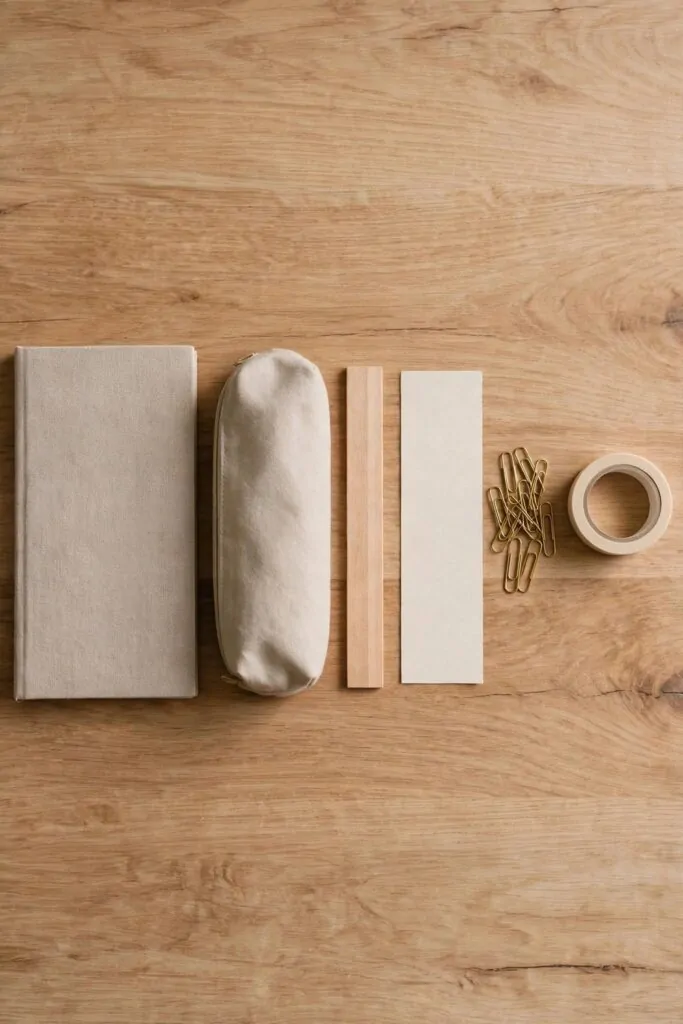
I keep a small kit ready so I can start writing without a fuss. I put the kit in one place and I reach for it each morning.
My kit has a plain linen journal and a soft pencil case.
I use a small wooden ruler when I want a straight line on my page. I use a plain paper bookmark to mark the page I am on. I use a set of brass paper clips to hold loose pages safe.
I keep a roll of plain washi tape in my kit for small notes. I tape a note to the page when I want to add a thought later.
I check my kit once a week and I put back what I used.
You can build your own kit with the same plain pieces.
I start with the journal and I add one piece at a time. I do not buy extra things I do not need for my writing. I keep the kit simple so writing stays calm and easy.
A plain linen journal costs $4 to $8, a soft pencil case costs $2 to $4, a small wooden ruler costs $1 to $2, a plain paper bookmark costs $1 to $2, a set of brass paper clips costs $1 to $3, and a roll of plain washi tape costs $2 to $4, for a total of $11 to $23. That is the whole kit, and it is ready when you are.
Pick one small journaling habit from this list tonight, write one plain line, and let your mind rest easy.
| Idea | Main change | Typical cost |
|---|---|---|
| a plain linen journal | write your morning pages in the linen journal | $4 to $8 |
| a soft pencil case | keep your pens and pencils in the pencil case | $2 to $4 |
| a small wooden ruler | draw straight lines with the wooden ruler | $1 to $2 |
| a plain paper bookmark | mark your page with the paper bookmark | $1 to $2 |
| a set of brass paper clips | clip loose pages with the brass paper clips | $1 to $3 |
| a roll of plain washi tape | tape a note to the page with the washi tape | $2 to $4 |
| Total | $11 to $23 |
Keep Reading
If you liked these ideas, you will love these posts too
Each post has more simple ideas you can try at home this weekend.