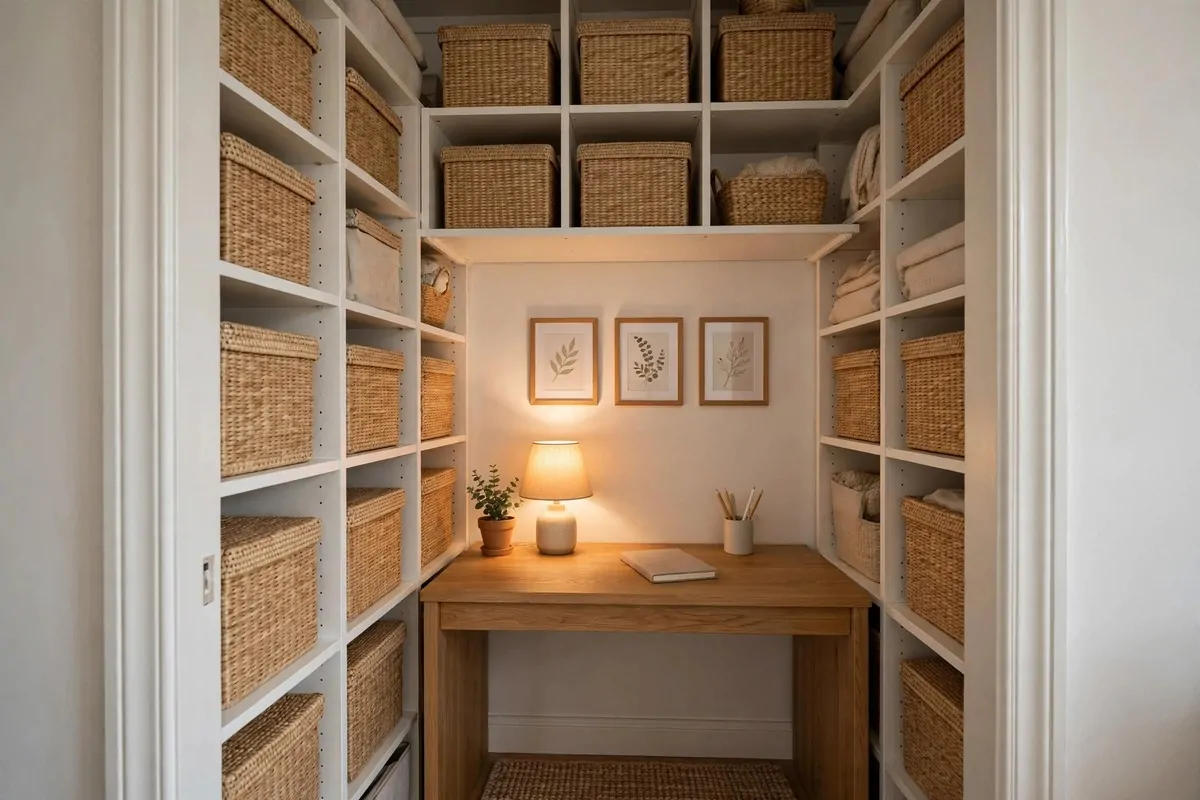
23 Built-In Desk Ideas for Small Home Offices

My first desk was a board laid across two boxes. It wobbled every time I typed. My coffee mug slid to one side and my notebook slid to the other.
I still got my work done on that wobbly board. But my back hurt by lunch and my papers ended up on the floor more times than I can count. I knew I needed something better, even in a small room.
A built in desk fixed that problem for me. It does not wobble. It does not eat up floor space. It just sits where the wall already is, and it waits for you to sit down and work.
In this list I will show you 23 built in desk ideas for small home offices. Pick the one that fits your wall, your room, and your budget. You do not need a big room to have a real desk.
A Fold-Down Desk That Disappears After Work
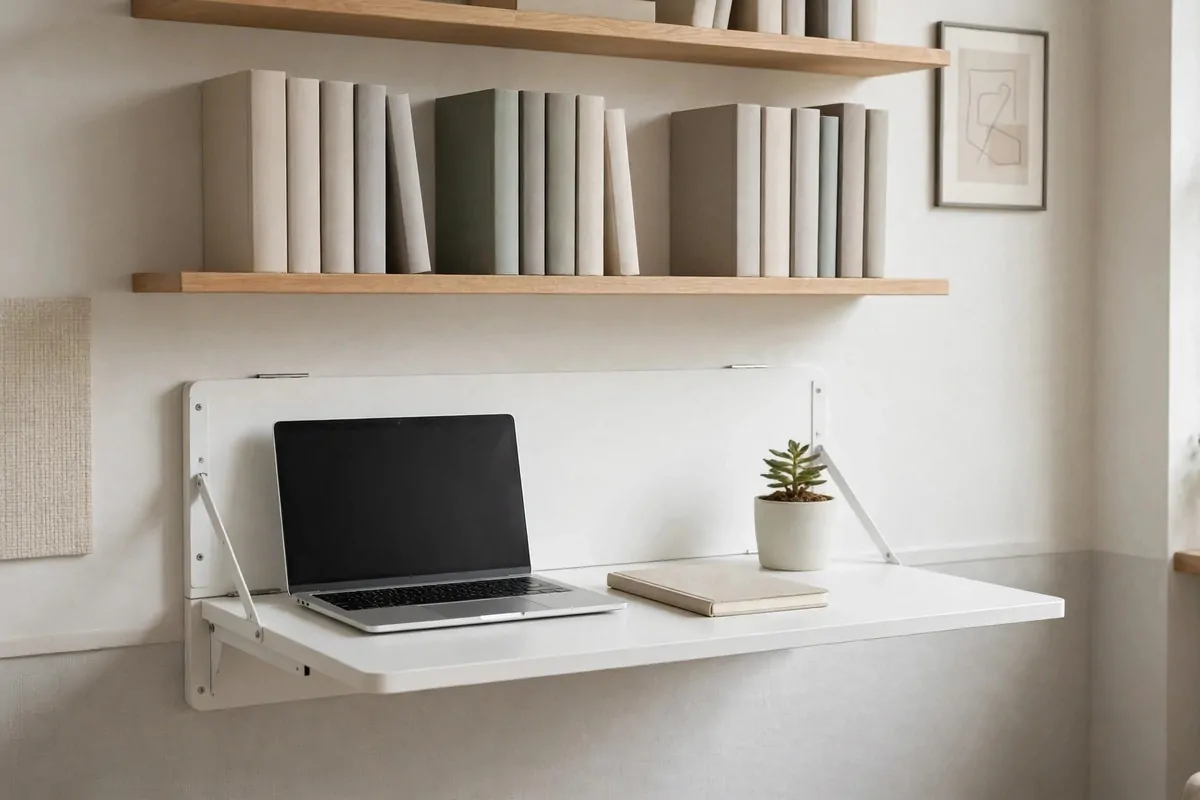
A fold-down desk is a flat board that hangs on the wall. You pull it down when you work and push it back up when you are done.
I love this one for a tiny room because the floor stays clear all evening. You can walk past the wall and forget the desk is even there. That feeling matters when your office is also your bedroom.
Pick a board that is wide enough for your laptop and a notebook. Two feet is enough for most people. Three feet is better if you like to spread out a little.
The hinge does most of the work here. Buy a strong one and screw it into a wall stud, not just into drywall. A weak hinge will sag and the desk will tilt.
Add a small shelf above the desk for a lamp and a pen cup. Keep it light. Heavy books on a high shelf will make the whole wall feel crowded.
When the desk is folded up, the underside becomes a flat panel on the wall. You can paint it the same color as the wall so it blends in. Or you can paint it a fun color and let it be a piece of art.
Put a hook on the wall beside it for your bag. That way your work bag has a home and it does not end up on the floor. Small habits like this keep a small office tidy.
Your chair matters too. A folding chair or a stool that tucks under the desk works best. A big office chair will fight for space in a room that has none to spare.
Try it for one week and see how it feels. If you miss having a desk out all the time, you can leave it down. If you love the clear floor, fold it up every night and enjoy your room again.
A Desk Built Into the Wall With Floating Shelves
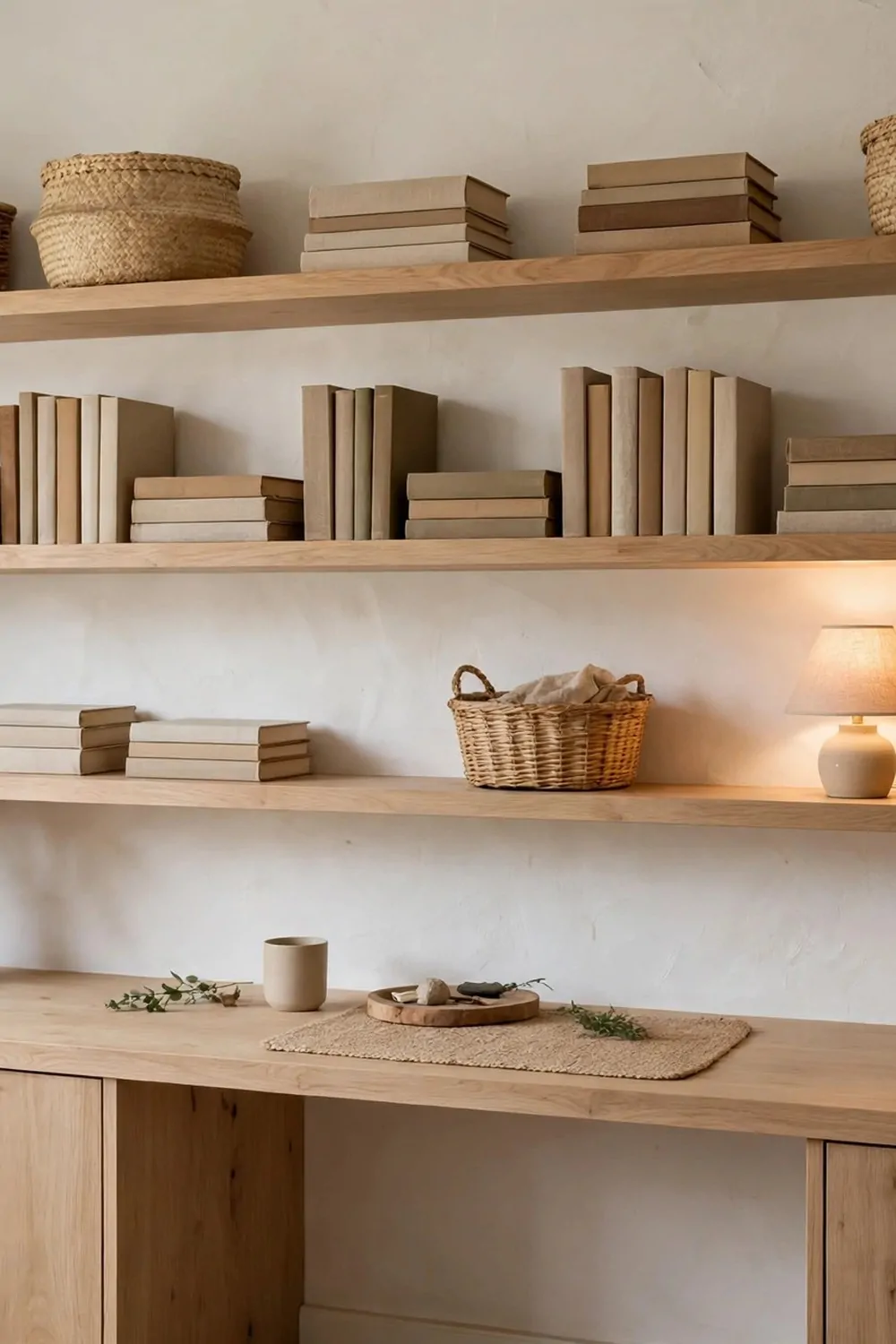
A desk built into the wall feels solid in a way a table never does. It runs from one side to the other and there are no legs in your way.
Floating shelves above it give you storage without a big bookcase. You can keep your books, your plant, and your files up high where they do not crowd your work.
Start with the desk height. Most desks sit about 30 inches high. Sit in your chair and rest your arms on the desk. Your shoulders should feel relaxed, not pushed up.
Leave about 18 inches between the desk and the first shelf. That gap gives you room for a lamp and a monitor. If the shelf is too low, you will bump your head on it every time you lean in.
Use the same wood or the same paint on the desk and the shelves. When they match, the whole wall looks like one piece. When they clash, the wall looks messy.
Keep the shelves shallow. Ten inches deep is plenty for books and small boxes. Deep shelves push things too far back and you will forget what is back there.
I like to put the things I use every day on the lowest shelf. Pens, a notebook, and my charger live there. The pretty stuff goes higher up where I can see it but I do not need to reach it.
Add a small light under the lowest shelf. It lights up your desk without taking up any desk space. A warm light works best for late work.
This setup grows with you too. You can add one more shelf later if you need it. You can move things around in five minutes. The desk itself stays put and does its job.
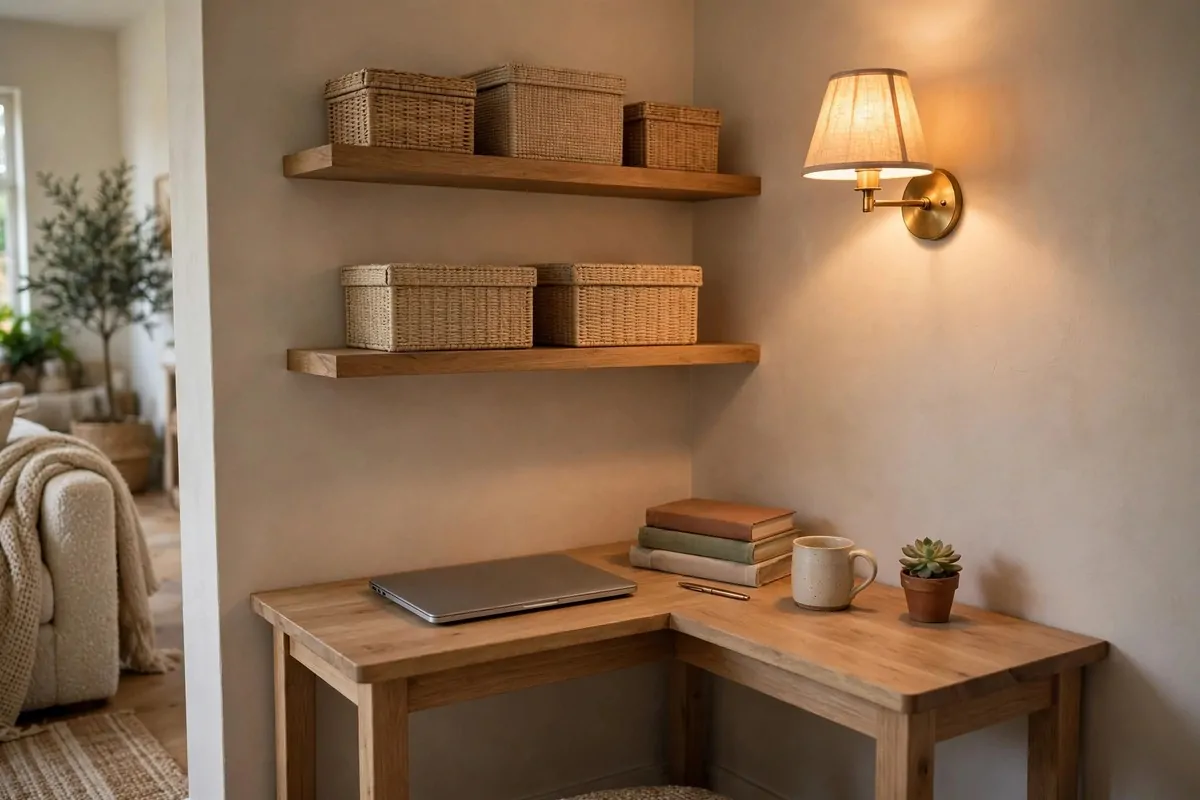
A Corner Desk That Uses the Dead Angle
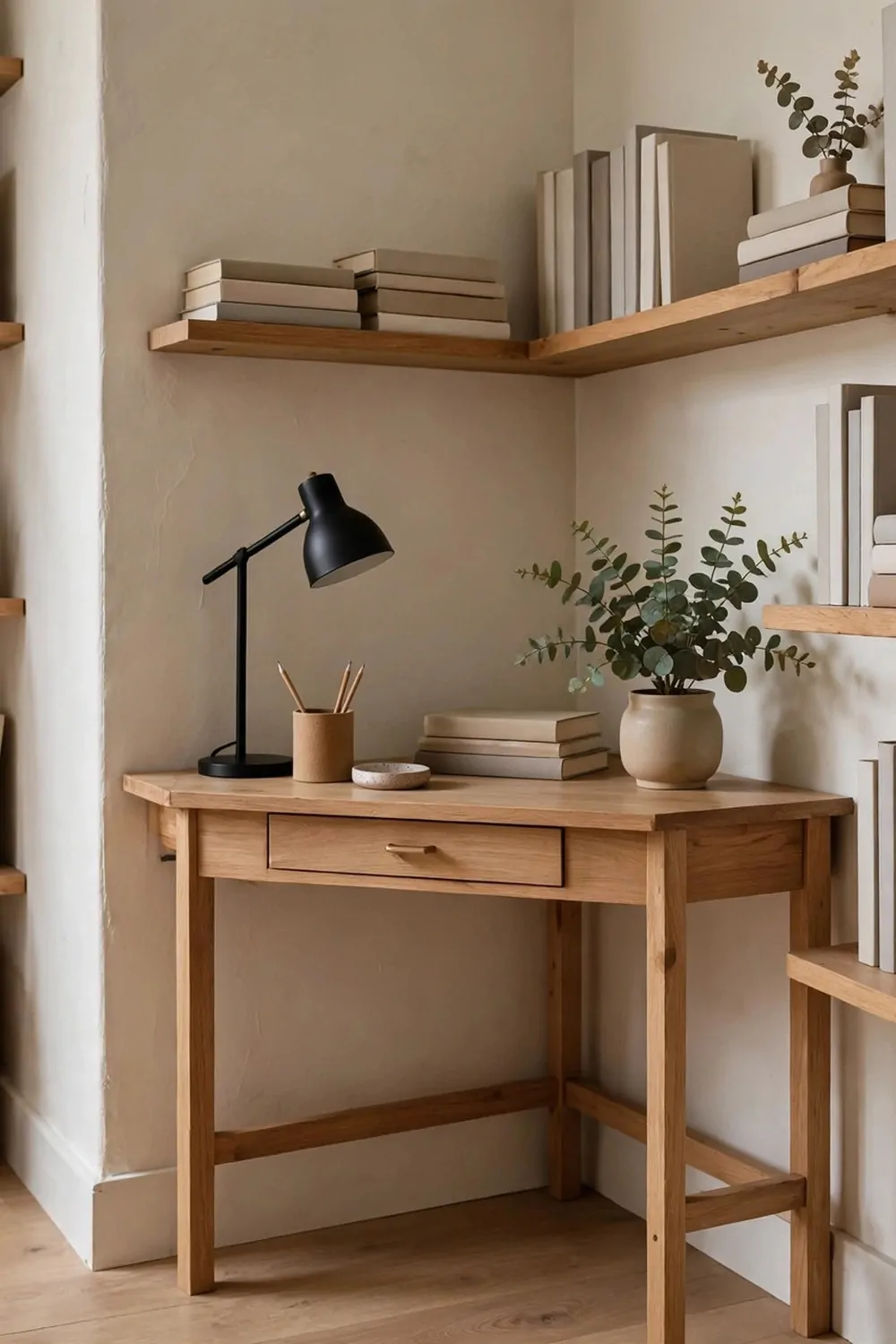
Every small room has a dead corner. Nothing fits there. The chair bumps into it and the plant dies in it.
A corner desk turns that dead spot into the best seat in the room. The desk wraps around the corner and gives you two work sides for the price of one.
One side can hold your laptop. The other side can hold your notebook and your coffee. You just swivel your chair a little and both sides are right there.
Measure the corner first. You need about four feet along each wall for this to feel good. Less than that and your elbows will hit the wall.
A triangle shaped desk fits best in a sharp corner. A long L shaped desk works better if one wall is longer than the other. Pick the shape that matches your walls.
Put a shelf in the corner above the desk. The corner is hard to reach, so use it for things you do not grab every day. Extra notebooks and reference books are perfect there.
Light is the tricky part in a corner. A small lamp on each side beats one big lamp in the middle. Or put a wall light above the desk so the light falls right where you work.
Keep the cables tidy with a small tray under the desk. Cables in a corner tangle fast because you cannot see behind the desk. A tray keeps them in one place.
This desk is great if you share the room with someone else. One person can work on one side while the other side stays free. The corner keeps you both out of each other’s way.
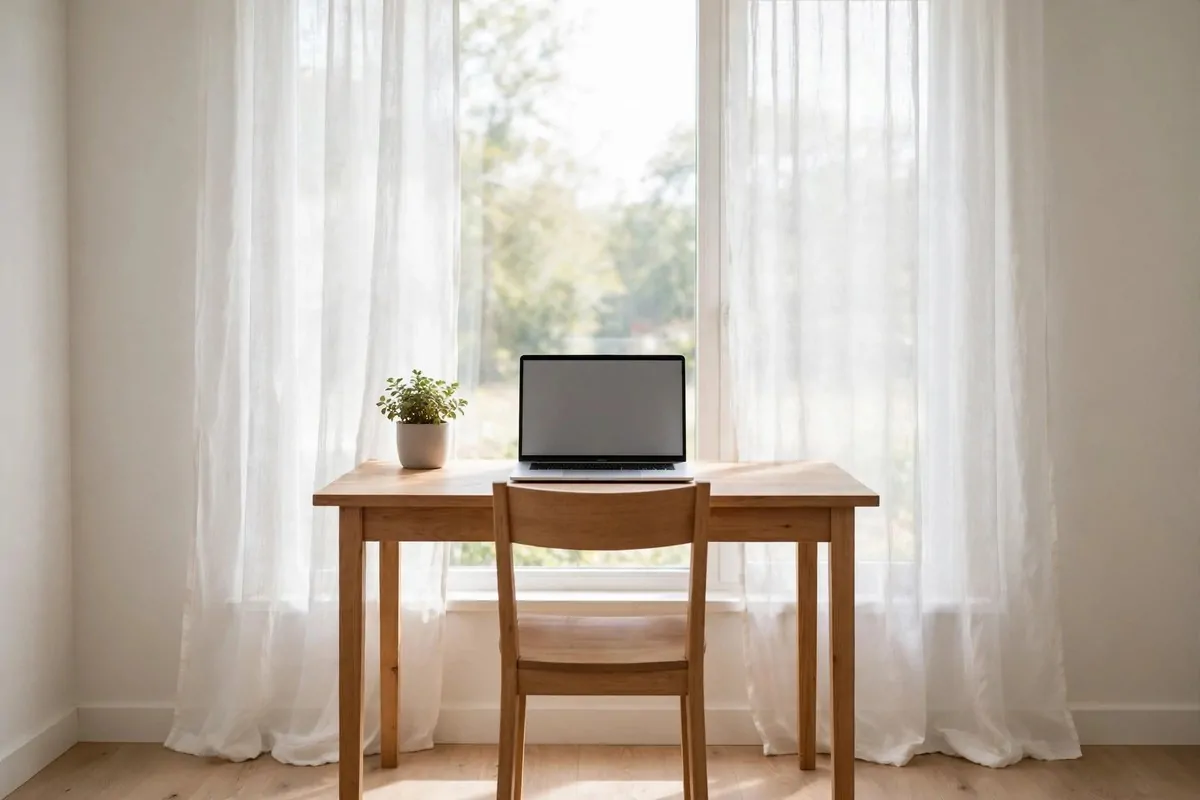
A Slim Desk Along the Window Wall
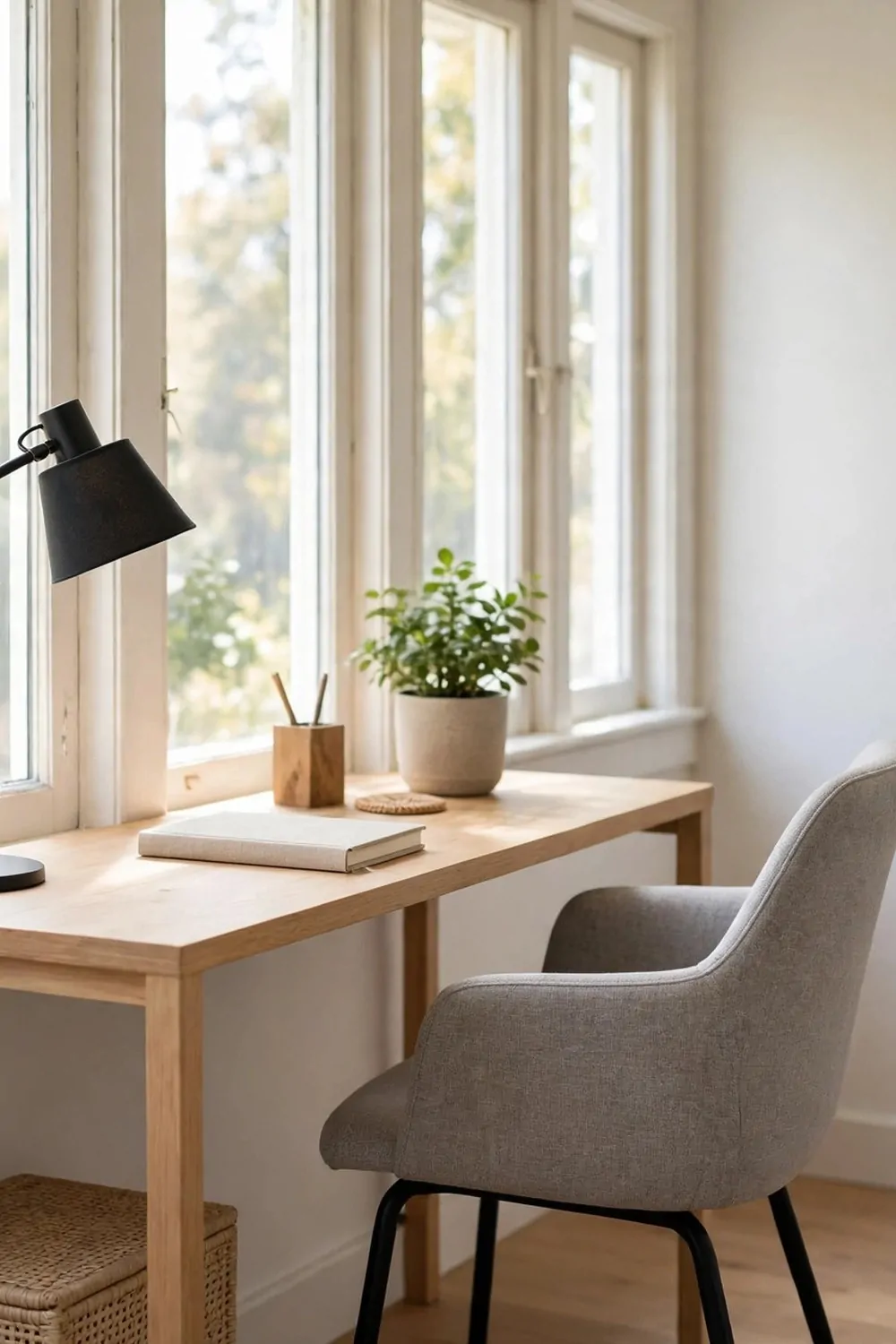
A slim desk along the window wall gives you the best light in the house for free. You sit facing the window and the daylight falls right on your work.
The desk only needs to be about 18 inches deep. That is enough for a laptop and a small notebook. Your knees will still fit under it without hitting the wall.
Keep the desk low enough that it does not block the window. You want to see out of it. A desk that covers the lower half of the window makes the room feel dark.
Put your monitor on a small riser if you use one. That lifts the screen to eye level and leaves space under it for a notebook. Your neck will thank you by the end of the day.
A window desk can get hot in the afternoon sun. A light curtain or a blind helps a lot. You can pull it down when the sun hits your screen and push it back up when the sun moves.
Use the wall on each side of the window for shelves. Short shelves work best here. They hold your books without blocking any light.
Plants love a window desk. A small pot on the far end of the desk adds life without getting in your way. Pick a plant that likes sun and does not need much water.
Keep paper away from the window if it rains in through a gap. A small tray or a box keeps your papers dry and tidy. I learned that one the wet way.
This is my favorite spot to work in the morning. The light wakes me up better than coffee does. Try it for a week and you might never go back to a dark corner.
A Desk Under the Stairs in a Small Office
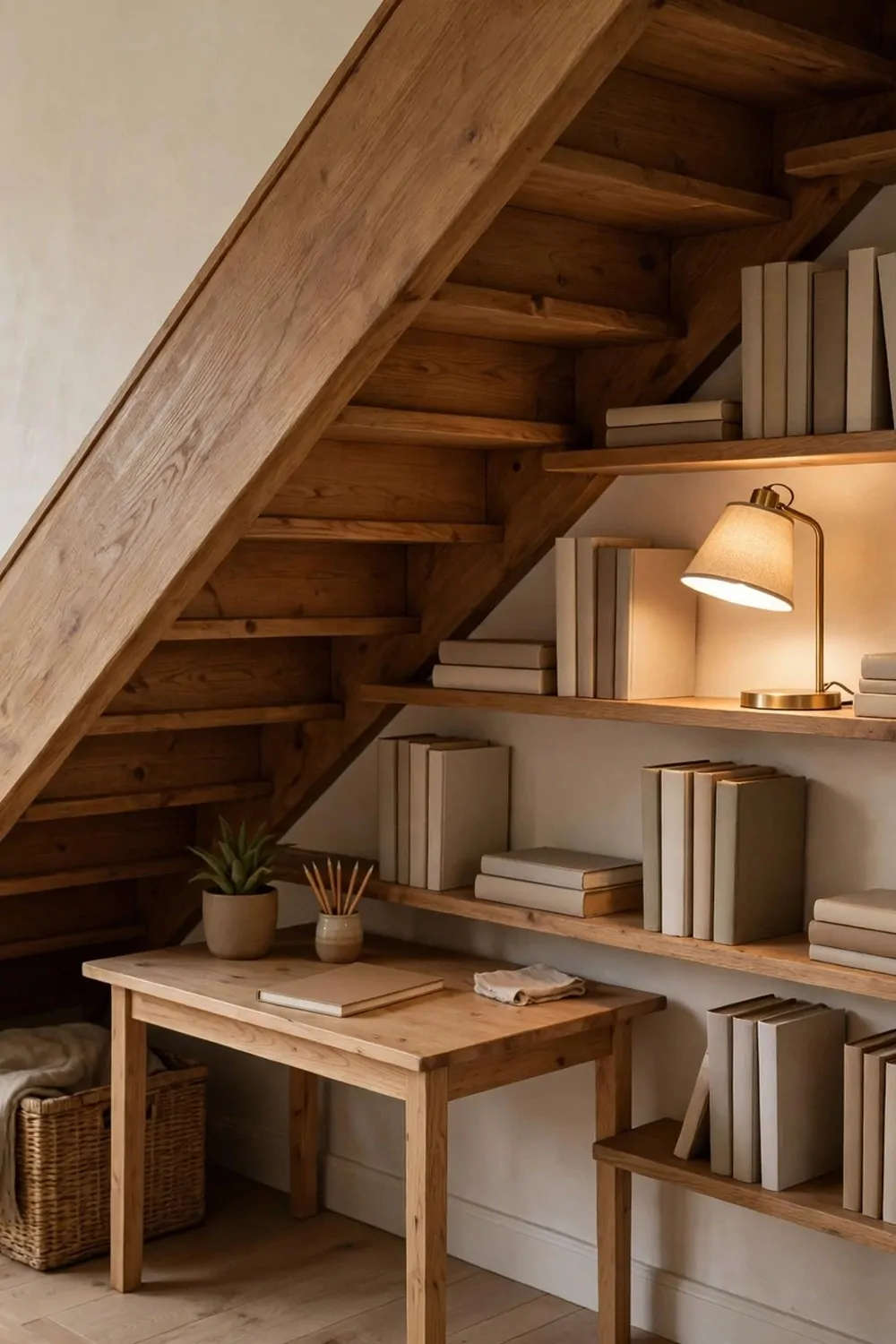
The space under the stairs is often wasted. It holds boxes and old shoes and nothing else. A desk fits there better than almost anything else.
First check the height. You need enough room to sit up straight without bumping your head. The tall end of the stairs is the best place for your chair.
Build the desk along the low wall under the stairs. It can be short on one end and tall on the other. That odd shape is fine because it follows the stairs.
Use the low end for storage. Drawers or boxes fit under the short part of the desk where your legs never go. That space is perfect for files and supplies.
Light matters a lot under the stairs because the sun does not reach there. Put a warm lamp on the desk and a small light on the wall. Two lights beat one bright one in a dark nook.
Paint the inside of the nook a light color. White or pale cream will bounce the light around and make the space feel bigger. Dark paint will make it feel like a cave.
Keep the desk clear when you finish work. In a small nook, one pile of papers makes the whole space feel full. A clear desk makes it feel like a real office.
Add a small shelf on the stair wall for books. The shelf can follow the slope of the stairs. It looks neat and it uses space that would be empty anyway.
This nook works best for one person and one laptop. It is not a spot for spreading out big projects. But for daily work, email, and writing, it is quiet, cozy, and all yours.
A Closet Turned Into a Tiny Desk Nook
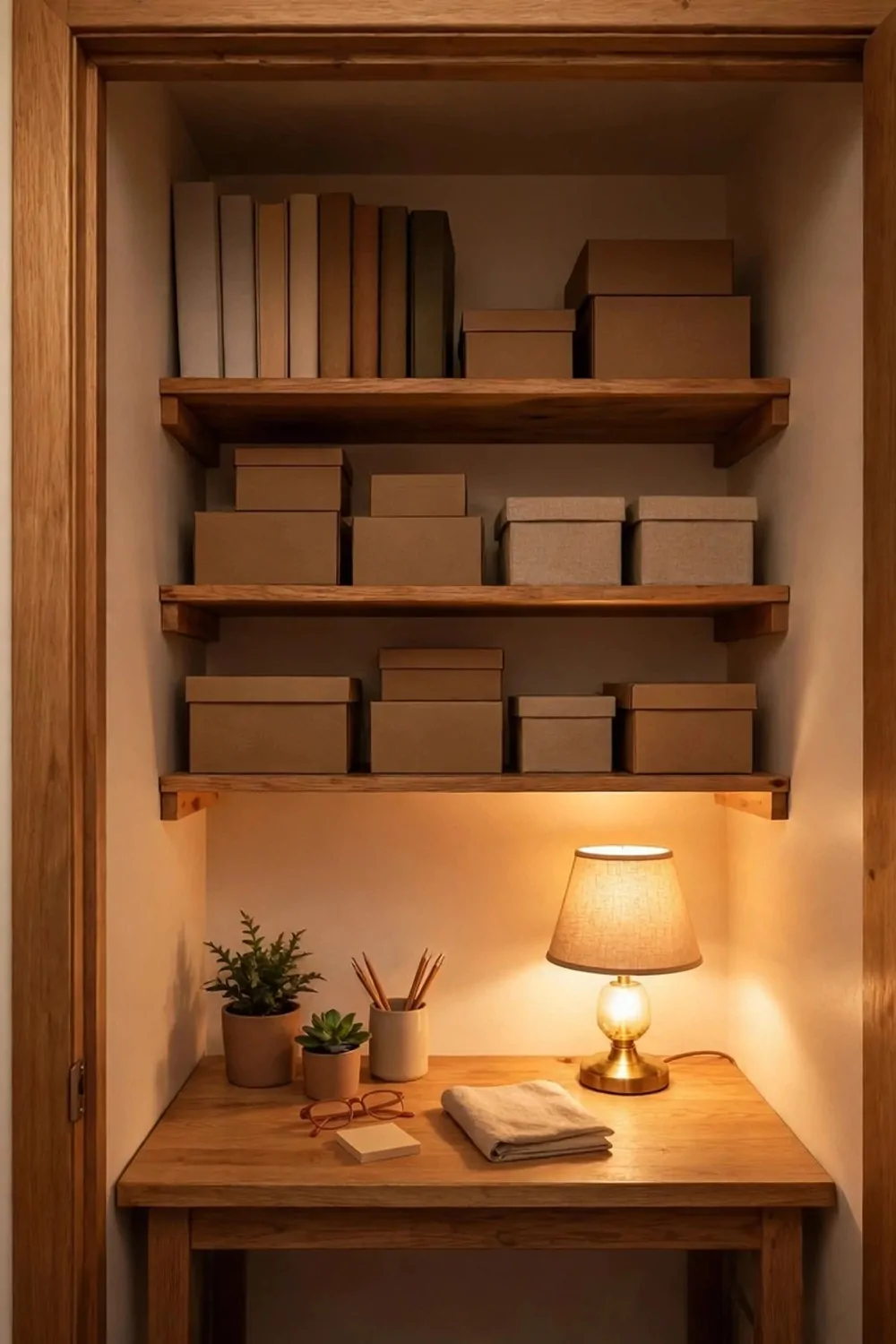
A spare closet can become the smallest office in your house. Take out the hanging rod and you already have walls on three sides.
A board across the closet makes the desk. It fits from wall to wall with no gaps. Your laptop sits in the middle and your elbows have room on each side.
Use the space above the desk for shelves. The closet is narrow, so shallow shelves work best. Books and boxes sit close to the wall and out of your way.
Light is the biggest job in a closet office. A closet has no window. Put a bright light above the desk and a small lamp on the desk itself.
Keep the closet doors if you can. Sliding doors or folding doors let you close the office at night. When the doors shut, the work is gone and the room is just a room again.
If you take the doors off, hang a curtain instead. A curtain is cheaper and softer. Pull it closed at the end of the day and your brain gets the same message. Work is done.
Paint the inside of the closet a light color. White walls make the small space feel open. A dark closet feels tight and makes it hard to focus.
Put a power strip inside the closet for your laptop and lamp. Run the cord out through a small hole in the wall or under the door. Keep the cord flat so nobody trips on it.
This nook is perfect if you have no spare room at all. You do not need to build a new room. You just need a closet you are not really using.
A Wall-Mounted Desk With Hidden Brackets
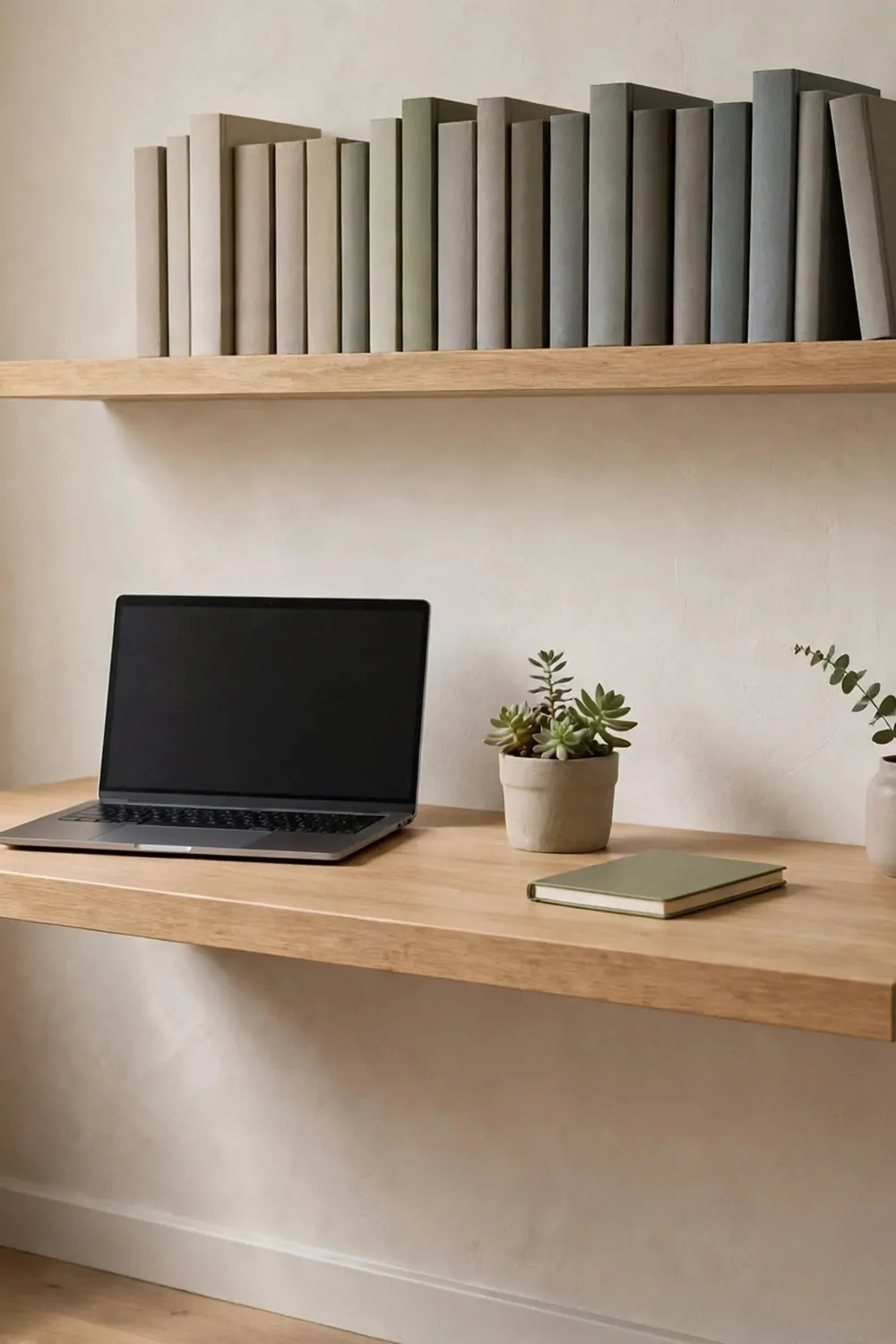
A wall-mounted desk with hidden brackets looks like it floats. There are no legs and no visible metal under it. It just hangs on the wall, clean and simple.
The brackets hide inside the desk or inside the wall. They hold the weight from behind so you see nothing from the front. That clean look makes a small room feel bigger.
This desk needs a strong wall. Screw the brackets into studs, not just drywall. A desk full of books will pull right out of weak drywall.
Keep the desk light. A thin wood board works well and it does not need much support. A thick stone top is too heavy for hidden brackets in most homes.
Do not overload it. A laptop, a notebook, and a lamp are fine. A big monitor and a stack of heavy books might be too much. Check what your brackets can hold before you load it up.
The space under the desk stays open. Your legs fit easily and your chair slides right under. You can also tuck a small stool or a storage box under it when you are not working.
Match the desk to your wall color or to your floor. A matching desk blends in and the room feels calm. A bold color makes the desk the star of the room.
Add a cable hole in the back of the desk. Your charger cord can drop through it and run down the wall. A small clip on the wall keeps the cord from hanging loose.
This desk is a good pick if you like a tidy look. There is nothing under it to dust around and nothing on the sides to bump into. It is simple, and simple works in a small office.
| Desk type | Best room | Width needed | Typical cost |
|---|---|---|---|
| Fold-down desk | Tiny spare room | 2 feet | 100 to 300 dollars |
| Wall-mounted desk | Bedroom corner | 3 feet | 150 to 400 dollars |
| Corner desk | Living room corner | 4 feet | 200 to 500 dollars |
| Closet desk nook | Spare closet | 2.5 feet | 100 to 250 dollars |
| Desk under stairs | Hallway nook | 3 feet | 150 to 350 dollars |
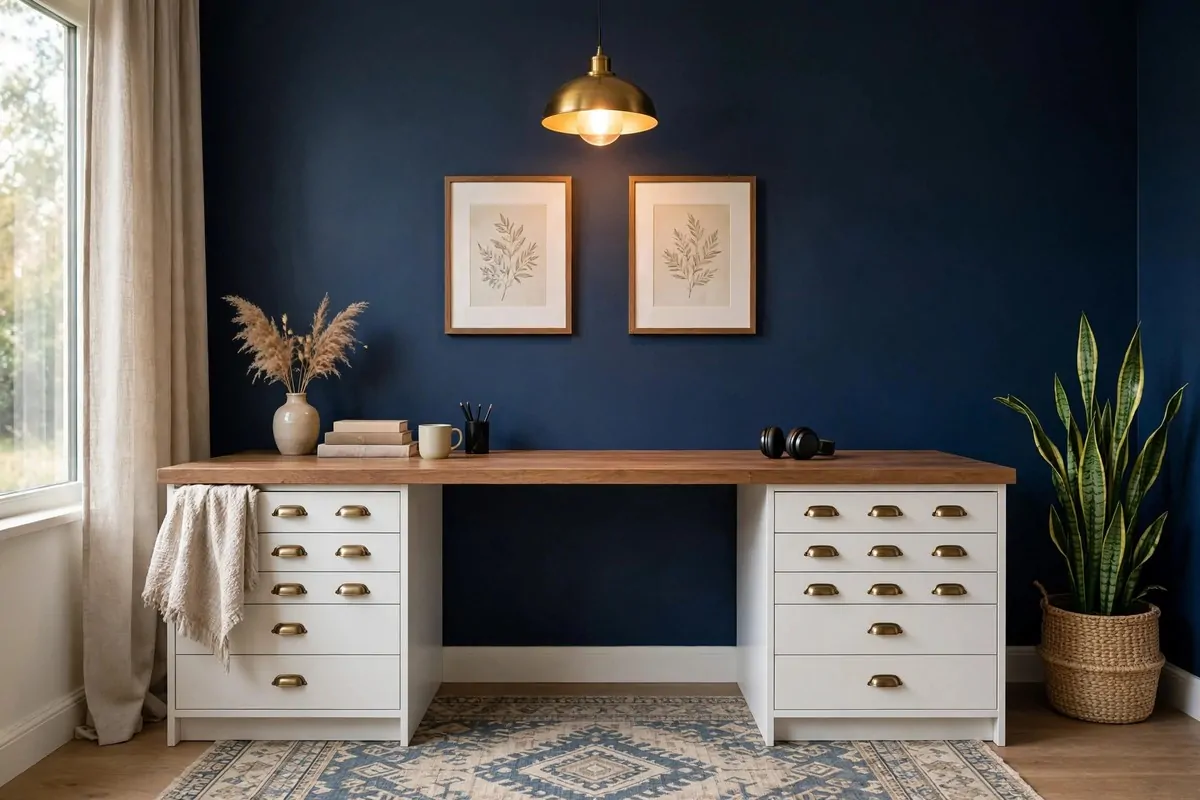
A Desk With Drawers Built Into the Wall
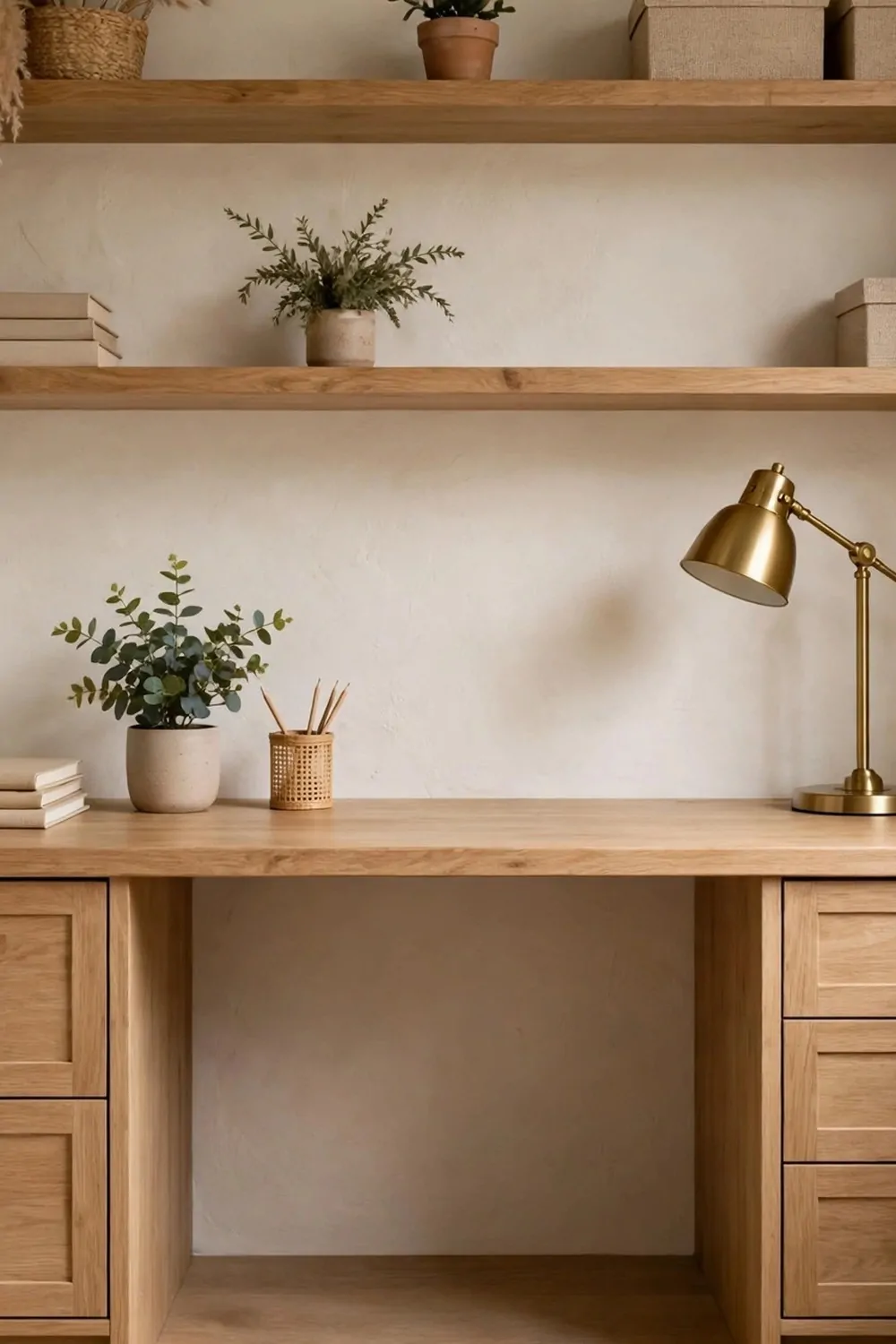
Drawers built into the wall give you storage without a big chest of drawers. The desk top sits on top of the drawers and the whole thing looks like one piece.
Put the drawers on one side of the desk. That leaves room for your legs on the other side. If you put drawers on both sides, your chair will not fit in the middle.
Use the top drawer for the things you grab all the time. Pens, sticky notes, and your charger belong there. The bottom drawer can hold files and things you rarely need.
Shallow drawers work better than deep ones in a small office. Deep drawers turn into a mess fast. Shallow drawers keep everything in one layer where you can see it.
Add small labels to the front of each drawer. A label saves you from opening three drawers to find one pen. You can use plain tape and a marker. It does not need to look fancy.
Pick drawer handles that do not stick out too far. Big handles catch on your clothes when you sit down. Small flat handles or a finger pull work best.
Paint the drawers the same color as the desk. When they match, the desk looks built in and calm. When they clash, the desk looks like two pieces pushed together.
Leave a little gap at the back of the desk for cables. Your laptop cord can drop down behind the drawers and plug in out of sight. That keeps the desk top clean.
This desk is great if you hate clutter. Everything has a drawer to live in. When the drawers shut, the desk looks clear and your mind feels clear too.
A Narrow Desk That Fits Behind the Sofa
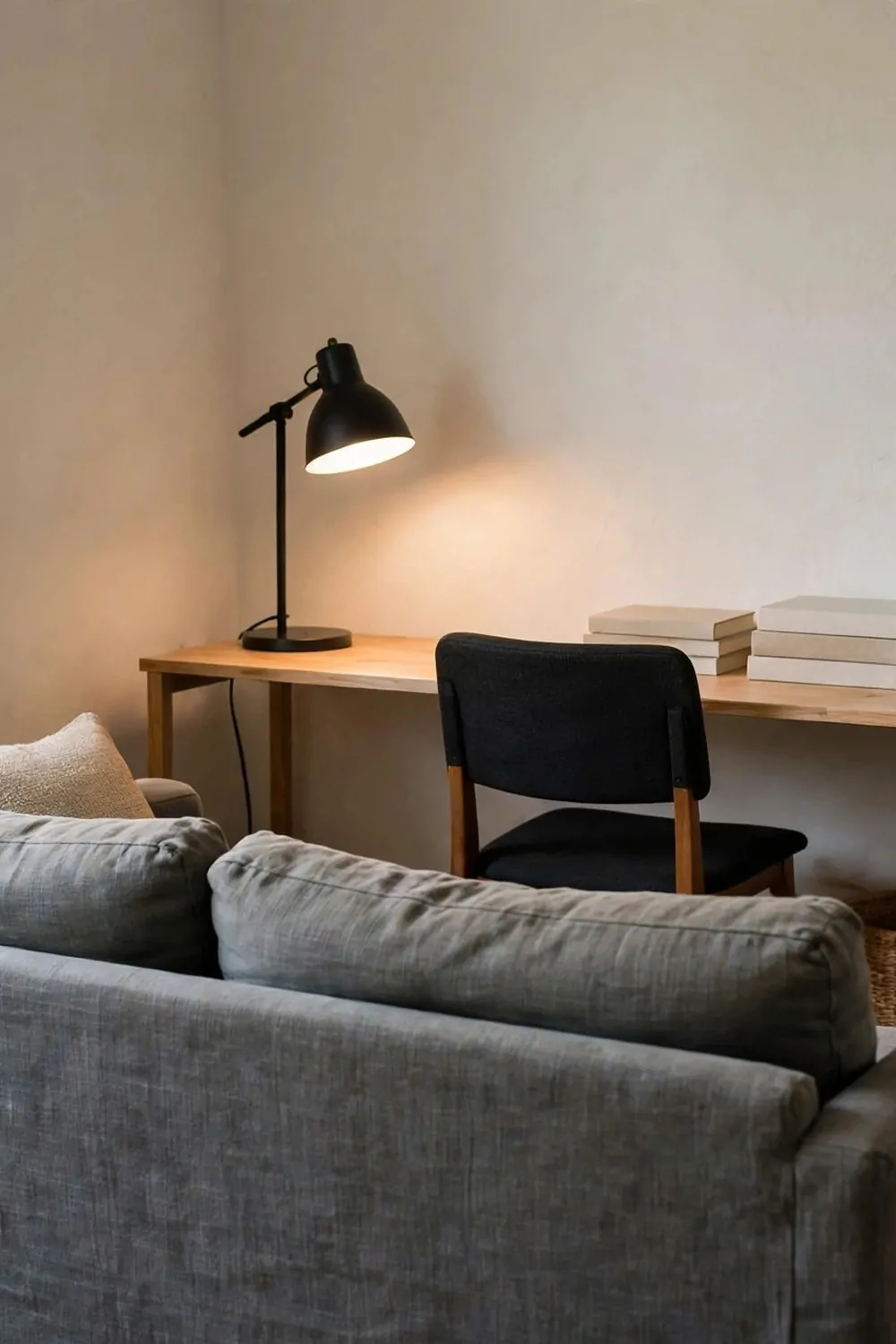
The space behind the sofa is often empty. It is too narrow for a chair and too wide to ignore. A narrow desk fits there just right.
The desk only needs to be about 12 to 16 inches deep. That is enough for a laptop and a notebook. Your sofa back hides the desk from the rest of the room.
This spot works best in a living room office. You can work while the room stays a living room. When you stand up, the desk just looks like a slim table behind the sofa.
Use a chair that slides fully under the desk or one that folds away. A big chair will block the walkway behind the sofa. A slim stool works well here.
Keep the desk top clear. One lamp and your laptop are enough. A pile of papers behind the sofa will fall off the back and end up on the floor.
Add a small shelf on the wall above the desk for books and supplies. The shelf keeps things off the narrow desk top. Keep the shelf shallow so it does not hang over your head.
Light can be tricky behind a sofa. A wall lamp or a small clip light on the shelf works better than a big desk lamp. A big lamp will eat up half the desk.
Run your power cord along the wall or under the sofa. Do not let it cross the walkway. A cord on the floor behind a sofa is easy to trip over.
This desk is a smart pick if you have no spare room and no spare corner. You already own the space behind the sofa. Now it can earn its keep.
A Desk and Bookshelf in One Built-In Unit
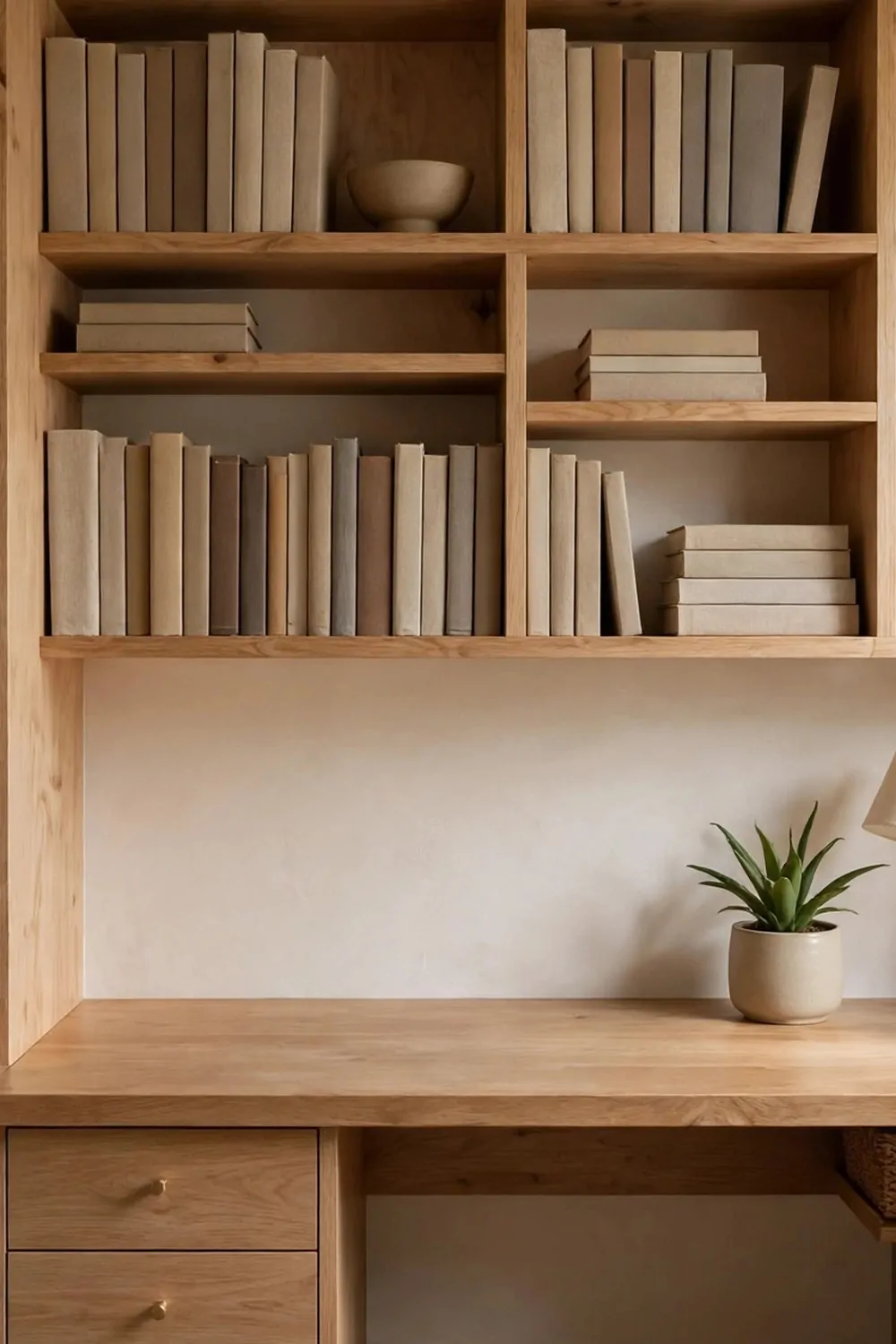
A desk and bookshelf in one unit saves you from buying two pieces of furniture. The shelves rise up from the desk and the whole thing shares one frame.
Put the desk at the bottom and the shelves above it. That way your books sit right over your work. You can reach up and grab a book without standing up.
Leave the middle shelf open for the books you use most. The top shelf can hold boxes and things you rarely touch. The bottom shelf is good for notebooks and files.
Keep the shelves the same depth as the desk or a little shallower. Shelves that stick out past the desk will bump your head. Shelves that sit back feel neat and safe.
Mix books with a few pretty things. A small plant or a framed photo breaks up a wall of books. Too many books in a row can make the unit feel heavy.
Use baskets on the lower shelves for loose stuff. Cables, chargers, and small supplies hide inside a basket. The shelf looks tidy even when the basket is full.
Paint the whole unit one color. One color makes it look built in and calm. Two colors can work too, but keep it simple so the unit does not fight with the rest of the room.
Build it to fit your wall from side to side. A unit that fills the wall looks like it was made for the room. A unit that stops short leaves an awkward gap on each side.
This is a good pick if you love books and you work in a small room. Your books and your work live in the same place. You sit down, and everything you need is right there.
A Standing Desk Hidden in a Slim Cabinet
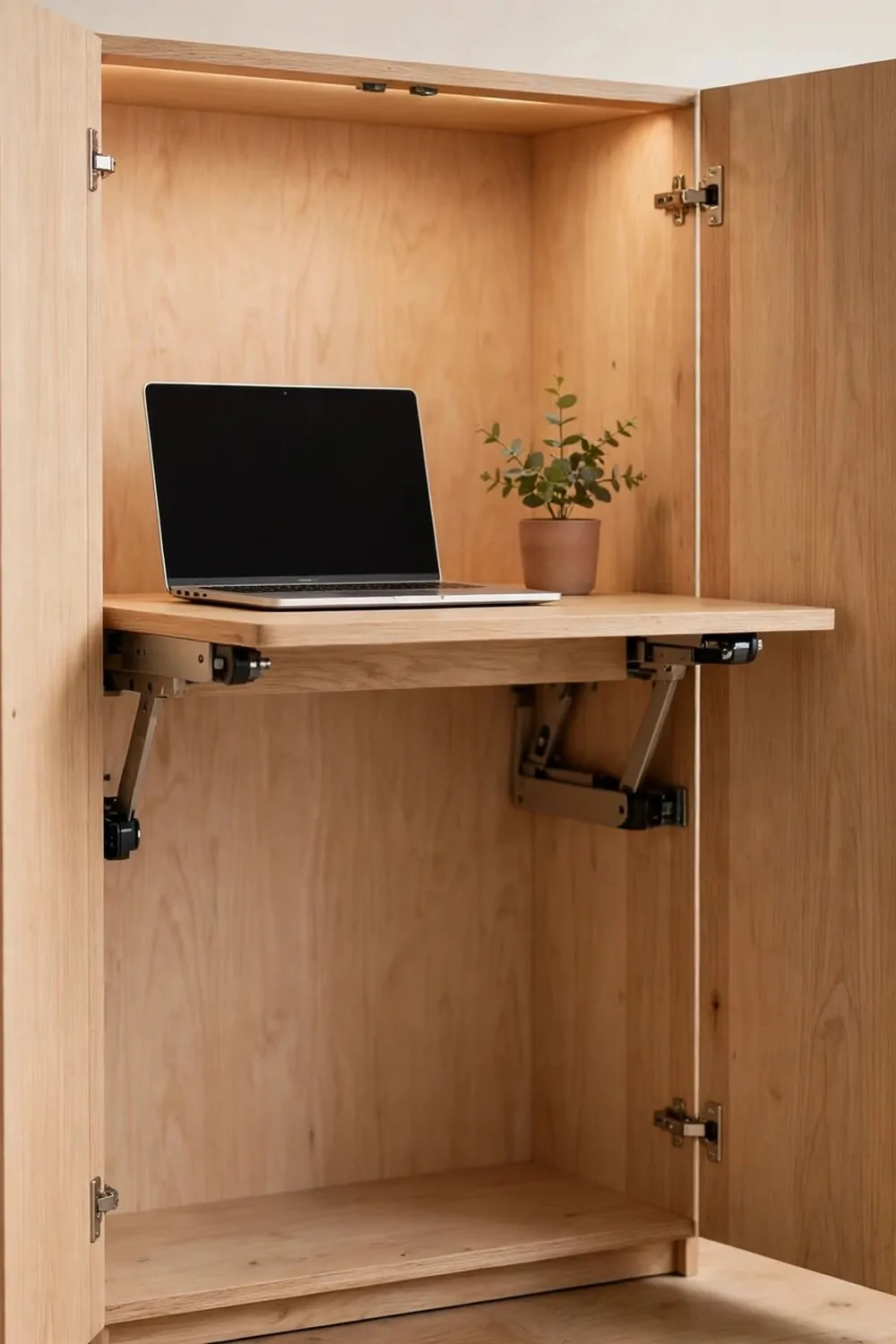
A standing desk hidden in a slim cabinet lets you stand up to work and then hide the desk away. The cabinet looks like a tall cupboard on the wall.
Open the cabinet door and the desk folds down or slides out. You stand in front of it and work. Close the door when you are done and the room looks like it has no office at all.
The cabinet only needs to be about 12 inches deep when it is closed. That is slim enough to fit on almost any wall. It does not stick out into the room.
Put your laptop on the desk and keep a small shelf inside the cabinet for your notebook and pen. Everything stays inside the cabinet when it closes.
Standing all day is hard on your feet. Use a small mat under your feet if you stand for a long time. A soft mat makes standing feel much easier.
Keep the height right. The desk should sit at elbow height when you stand. If it is too low, your back will hurt. If it is too high, your shoulders will ache.
Add a hook inside the cabinet door for your headphones. That keeps them off the desk and out of the way. Small hooks inside a cabinet are easy to forget but so useful.
This desk is great for a hallway or a bedroom wall. It does not need floor space for a chair. You just stand, work, and close it up.
Try standing for short blocks first. Twenty minutes of standing, then sit down for a while. Your body will tell you what feels right.
A Desk With a Built-In Charging Drawer
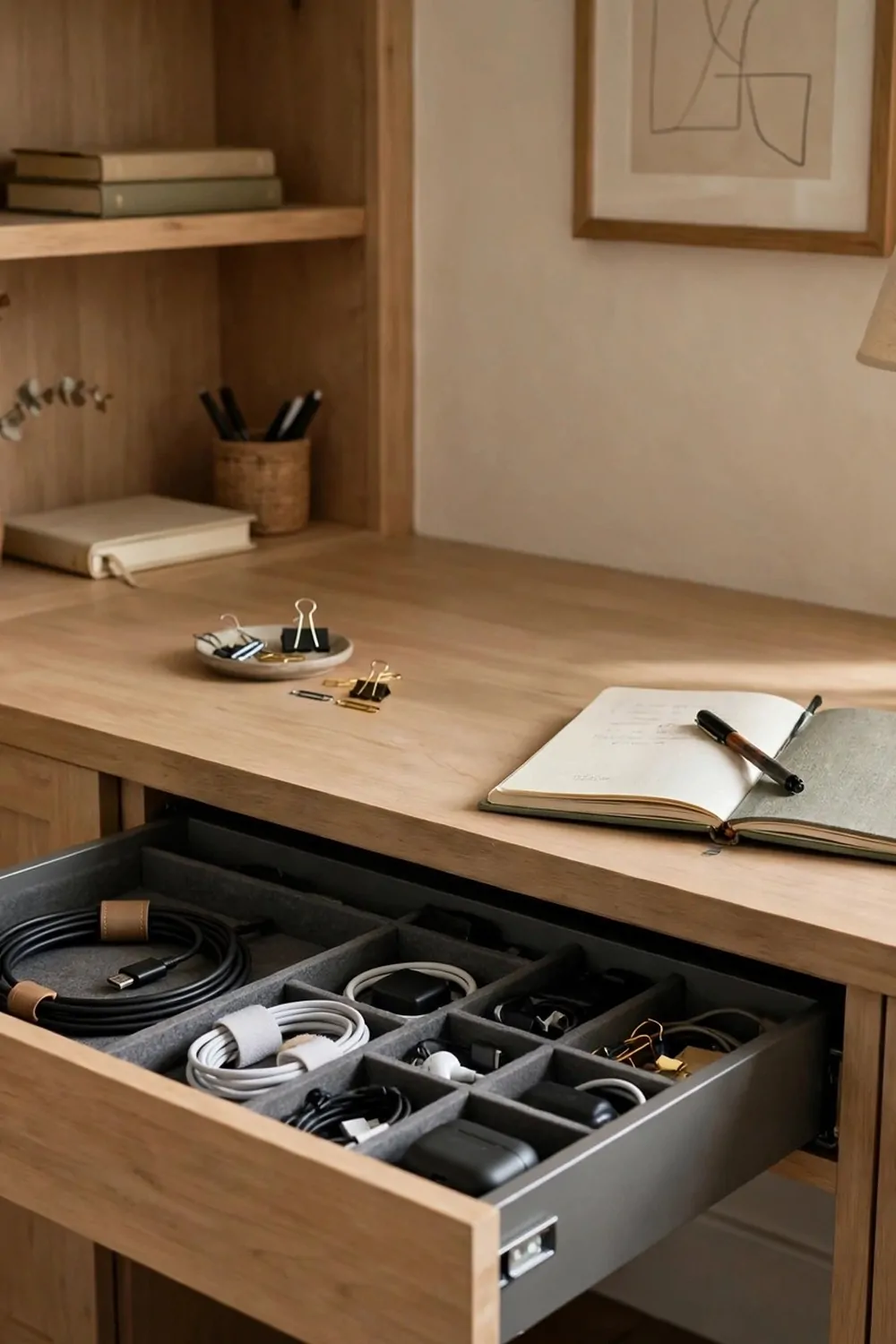
A charging drawer hides your cords and your devices in one place. Open the drawer and your phone, tablet, and laptop cables are all right there.
The drawer has a power strip built into the back. You plug your chargers into the strip once and leave them there. You just drop your device in and plug it in.
Keep the drawer shallow so the devices lie flat. A deep drawer turns into a tangle of cords. A shallow drawer keeps each cord in its own little space.
Add small dividers inside the drawer. One slot for your phone, one for your tablet, and one for your cables. Dividers stop the cords from sliding around.
Put a small hole in the back of the drawer for the power cord. The cord runs out the back and down to the wall outlet. That keeps the cord off the desk and off the floor.
Do not charge too many things at once in a closed drawer. Heat builds up fast in a small space. Leave the drawer open a crack while things charge, or charge only one or two devices at a time.
Keep the desk top clear because the drawer does the messy work. Your laptop sits on top, clean and ready. Your phone charges out of sight below.
This drawer is perfect if you hate cable mess. Cables are the fastest way to make a small desk look cluttered. One drawer fixes that whole problem.
When you finish work, close the drawer and the desk looks calm. Your devices are charged and your desk is clear. That is a good way to end the day.
A Desk That Doubles as a Vanity Table
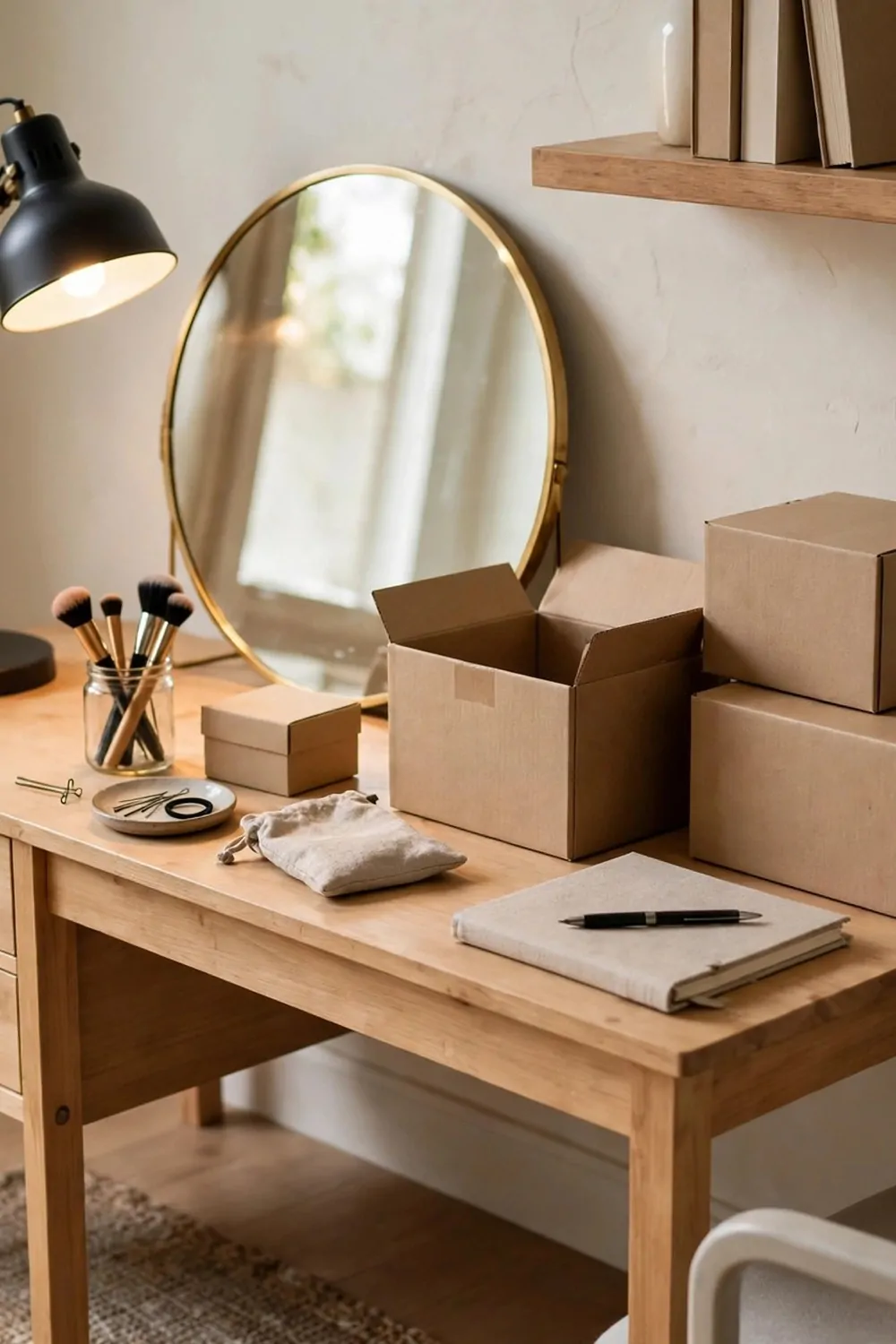
I love a piece of furniture that does two jobs at once. A built-in desk can be your work spot by day and your vanity by night. It is a smart trick for a small home office.
You build one flat top along the wall. Then you add a mirror right above it. In the morning you sit there with your laptop. In the evening you sit in the same chair and get ready.
Keep the top clear of clutter. A few small boxes hold your makeup on one side. Your work stuff lives on the other side.
A small drawer under the top is worth its weight in gold. You can keep brushes and creams in it. And when you work, the drawer hides them away so the desk looks clean.
Good light matters a lot here. A soft light on each side of the mirror works best. It keeps shadows off your face and it helps you see your screen too.
Pick a chair that fits both jobs. A small stool with a back works well. It slides under the desk when you are done.
I like to keep the mirror simple. A plain round mirror looks calm and soft. It does not shout at you when you are trying to work.
Use a calm color on the desk top. White or light wood keeps the space feeling open. A dark top can make a small room feel heavy.
If you share the room, talk about the plan first. One person works, one person gets ready, and one desk serves you both. That is a win in a small home.
A Two-Person Desk Wall for a Shared Office
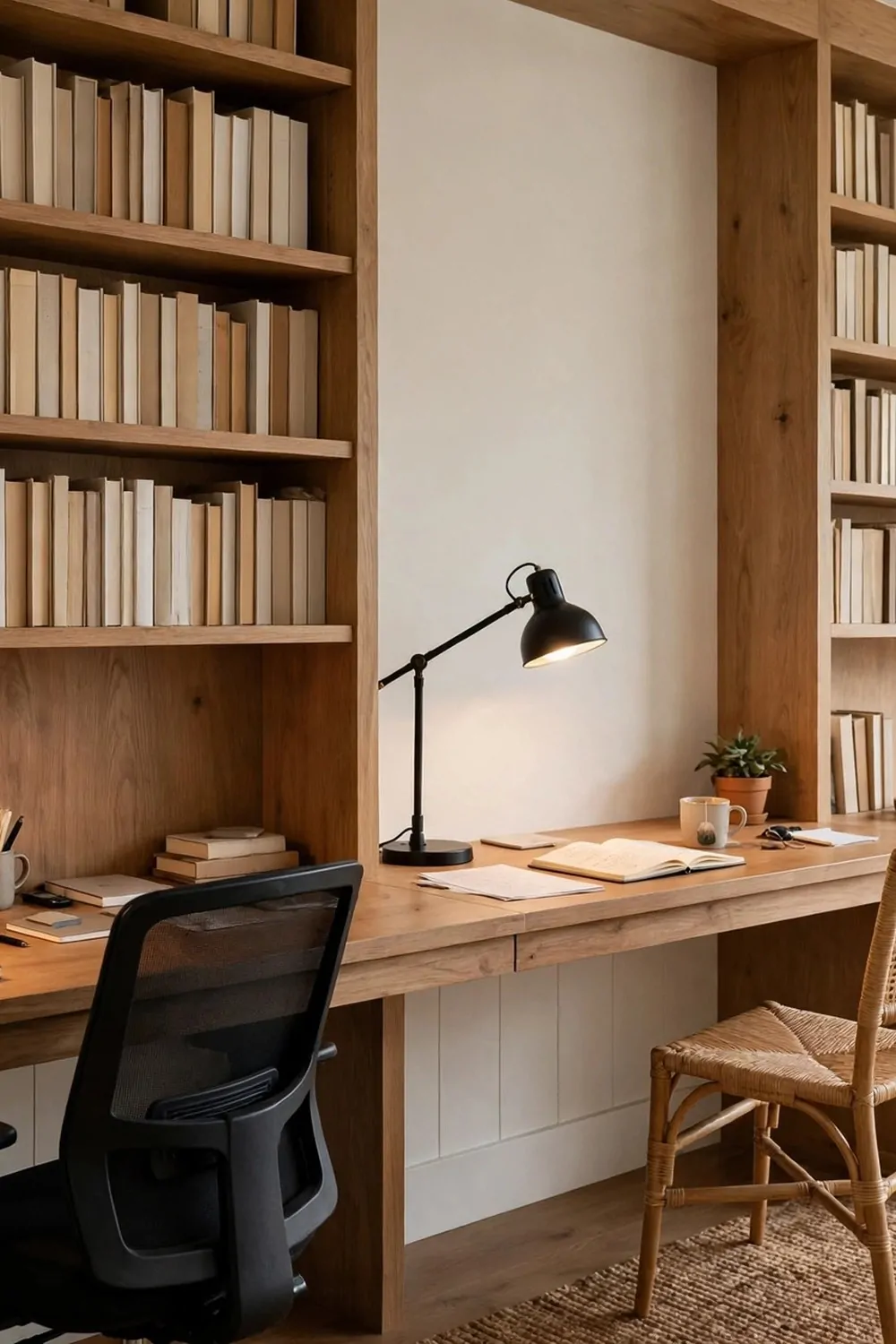
Two people can share one small office if the desk is built right. One long desk along the wall gives each person their own spot. No one has to fight for space.
Build the desk wide enough for two chairs. Each side needs room for a laptop and a cup of tea. A small divider in the middle can help you both focus.
I like a low shelf or a small board between the two spots. It marks the line without building a real wall. You still feel like you are in the same room.
Give each person their own drawer. Your things stay yours. Their things stay theirs. That small rule stops a lot of little arguments.
Plug points matter twice as much with two people. Add a socket on each side of the desk. No one has to stretch a cable across the other person’s work.
Keep the middle of the desk free for shared stuff. A printer can sit there. So can a small plant or a lamp you both use.
Sound can be a problem in a shared office. A pair of headphones solves most of it. A soft rug under the desk helps too, it soaks up the echo.
Set the chairs so you are not staring at each other all day. Side by side works best. You can talk when you need to and work in peace when you do not.
A two-person desk wall turns a spare corner into a real office for two. It costs less than two separate desks. And it makes the room feel like it was made for both of you.
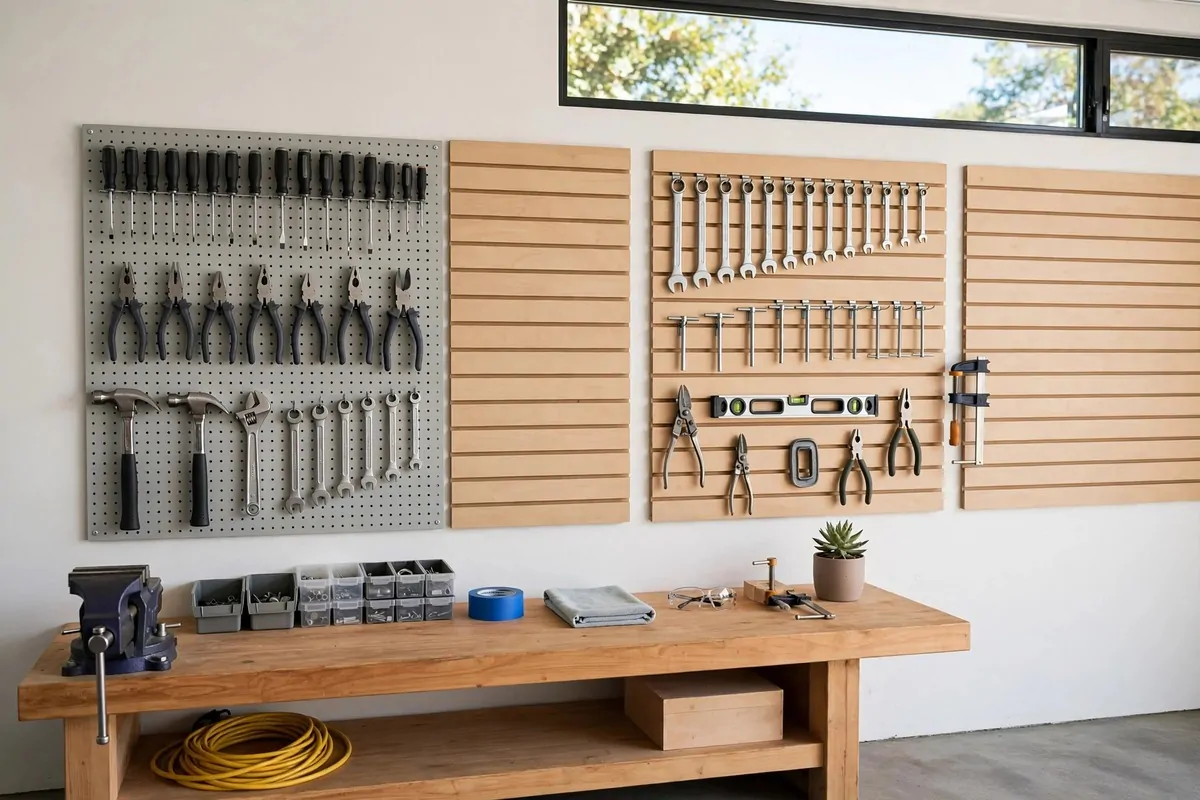
A Desk With a Pegboard Back Panel
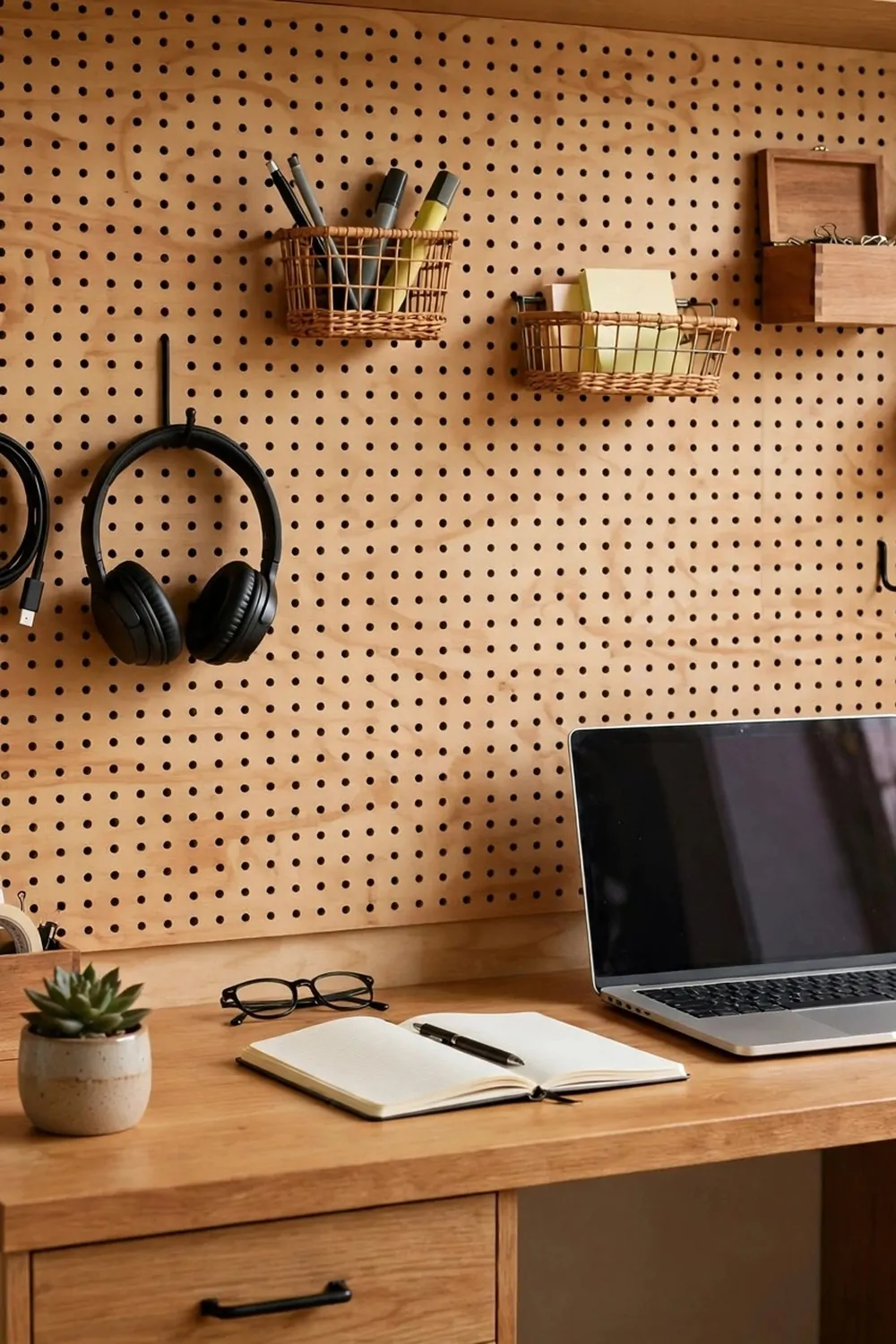
A pegboard on the wall above your desk is a small change with a big payoff. It gives you a place for everything. And it keeps your desk top clear.
You hang hooks, small shelves, and little baskets on the board. Your pens, scissors, and cables all have a home. You can see them at a glance.
I move things around on my pegboard a lot. That is the fun of it. When a project changes, I just lift a hook and move it somewhere else.
Keep the board at arm’s reach. You should be able to grab a pen without standing up. If it is too high, it just becomes wall art.
Paint the pegboard the same color as the wall. It looks calm and tidy that way. Or paint it a soft accent color if you want a little pop.
A pegboard is great for small offices because it uses wall space, not floor space. Your desk stays small and your room stays open. The wall does the storage work.
Add a small shelf to the board for your phone and a plant. A bit of green makes the work spot feel alive. It costs almost nothing.
Do not overload the board. If every hook is full, it starts to look messy. Leave a little empty space on purpose.
The best part is how cheap this idea is. One board, a few hooks, and you have a desk that works twice as hard. I wish I had done it sooner.
| Material | Look | Best for | Care |
|---|---|---|---|
| Painted wood | Clean and smooth | Bedroom office, small rooms | Wipe with a damp cloth |
| Light oak | Warm and calm | Bright small offices | Wipe with a damp cloth |
| Dark walnut | Rich and serious | Big statement desks | Oil once a year |
| White laminate | Fresh and simple | Rented homes, tight corners | Wipe with a damp cloth |
A Built-In Desk for the Bedroom Corner
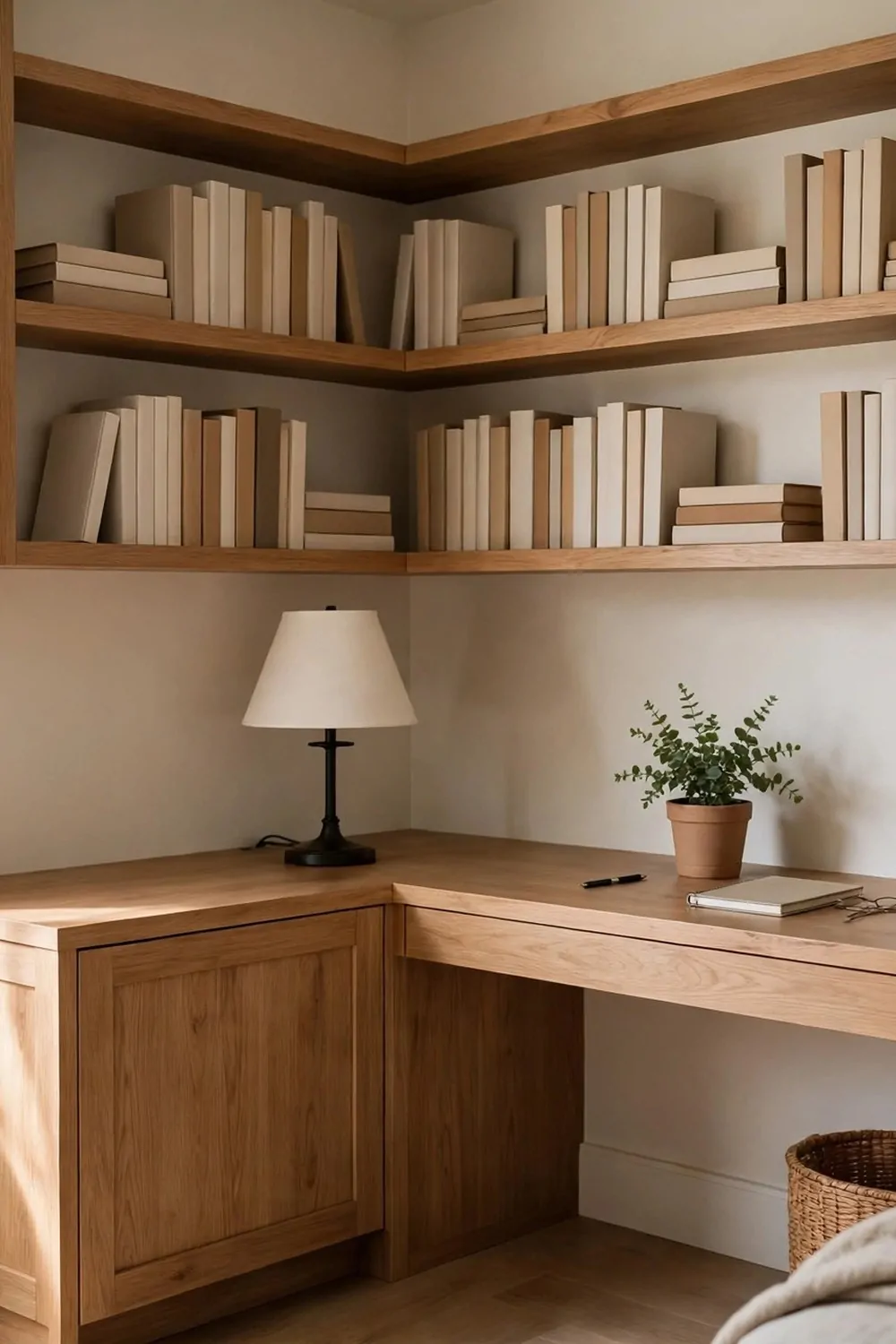
A bedroom corner is often wasted space. A small built-in desk can turn it into a work spot without stealing the room. You still have space to sleep and relax.
Build the desk into the corner so it fits like a glove. Two walls hold it up. You do not need legs in the way.
Keep the desk shallow. A deep desk eats the room. A shallow one gives you just enough space for a laptop and a notebook.
I like a desk that matches the bedroom furniture. Same color, same wood, same calm feel. Then it looks like it always belonged there.
Add one small shelf above the desk. It holds a lamp and a few books. That is all you need in a bedroom office.
Light is tricky in a bedroom corner. A small clip-on lamp on the shelf works well. It gives you light to work and it is easy to switch off at night.
Keep work stuff in one box when you are done. Slide it under the desk or onto the shelf. Your bedroom should feel like a bedroom again in the evening.
A chair that tucks right under the desk is a must here. A chair that sticks out all day makes the room feel crowded. Push it in and the corner disappears.
This idea is perfect if you do not have a spare room. Your bedroom corner becomes your office. And at night, it goes back to being just a bedroom.
A Desk With a Fold-Out Leaf for Extra Space
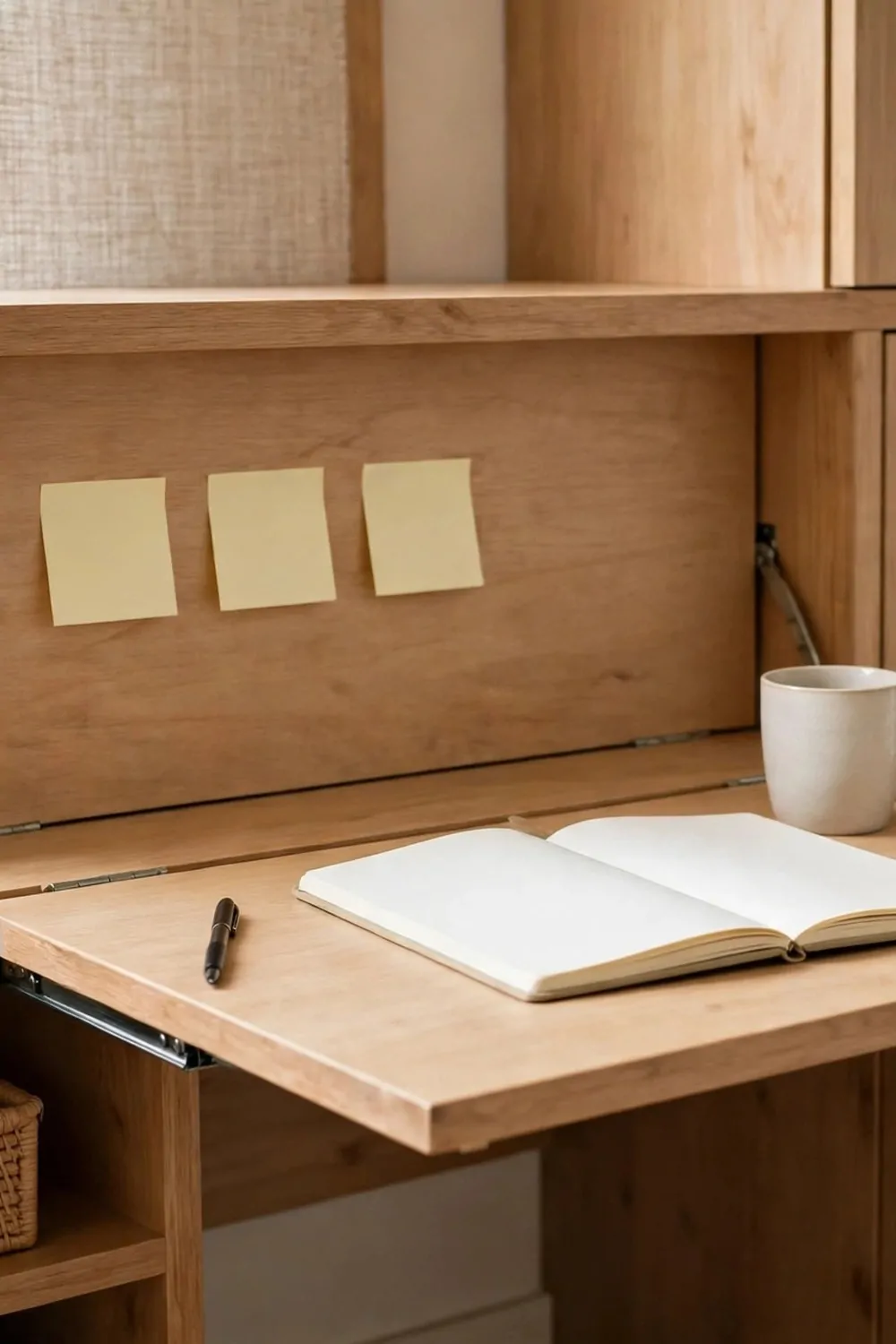
Some days you need a big desk. Most days you do not. A fold-out leaf gives you both. You open it when you need it and fold it away when you do not.
The leaf is a hinged board that folds flat against the wall. When it is down, your desk is small and neat. When it is up, you have room to spread out.
I use mine when I have papers everywhere. Tax time, big projects, craft days. The extra space saves my sanity.
Make sure the leaf has a solid support. A fold-down bracket under it keeps it steady. You do not want it to wobble when you lean on it.
Keep the leaf the same height as the main desk. A bump between the two is annoying. Your laptop should slide across without a jump.
This idea is great for tiny rooms. The desk stays small on normal days. The room feels bigger because the desk is not always big.
You can also use the leaf as a second work spot. A friend or a kid can sit there with you. It turns a one-person desk into a two-person desk in seconds.
Pick a hinge that is quiet and smooth. Cheap hinges squeak and stick. A good hinge makes the leaf feel like part of the desk, not an afterthought.
When you fold it away, the wall looks clean again. That is the whole point. A desk that grows when you need it and shrinks when you do not.
A Desk With Closed Cabinets Above It
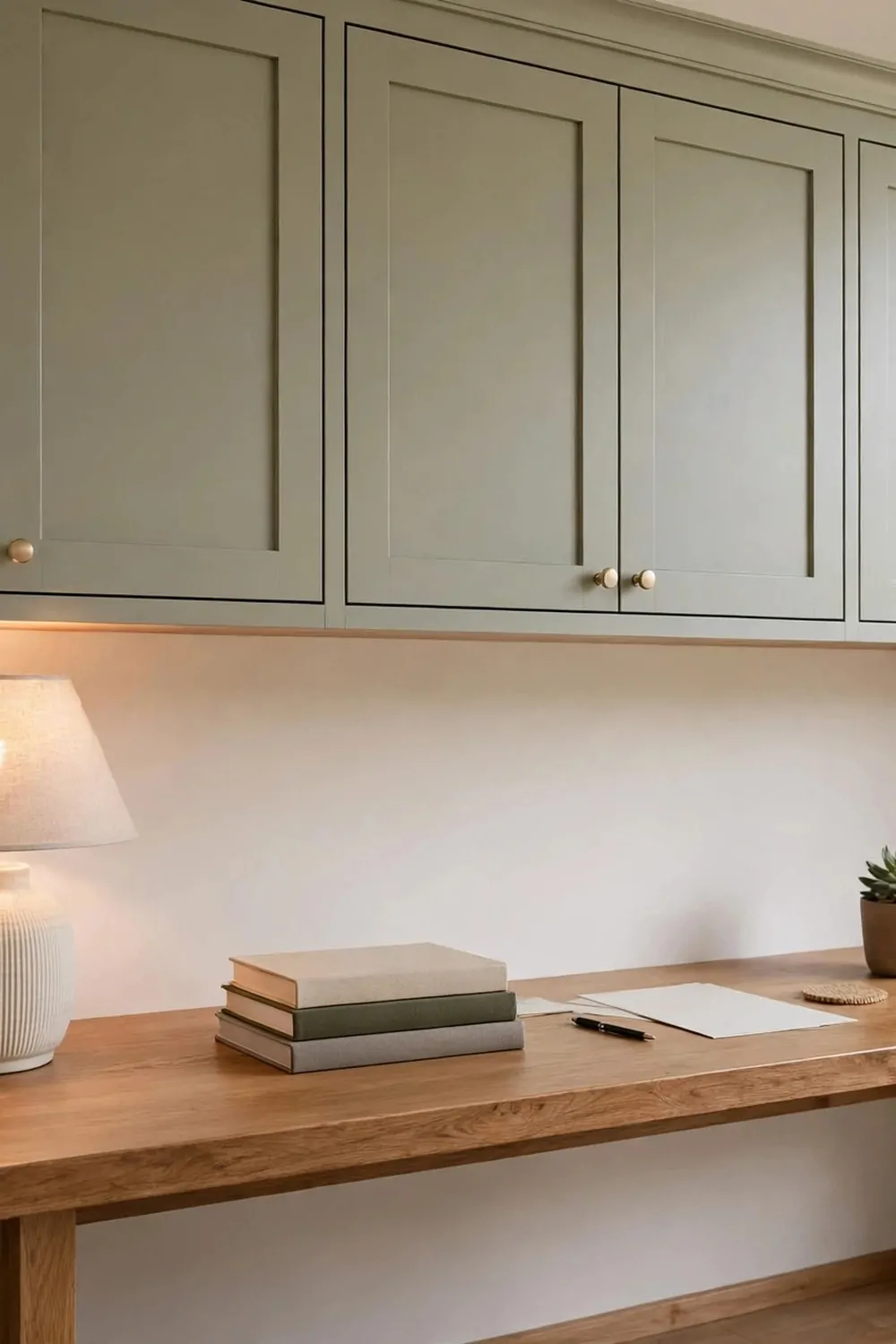
Open shelves look nice in photos. In real life they collect dust and clutter. Closed cabinets above your desk hide the mess. Your office always looks tidy.
Build the cabinets right up to the ceiling if you can. That top space is perfect for things you rarely use. Old files, spare cables, boxes of stuff.
Keep the things you use every day at eye level. The middle cabinet is your daily cabinet. The high one is for storage you touch once a month.
I like doors without handles. A small push latch opens them. It keeps the front flat and clean and it is easy to wipe.
Inside the cabinets, add a few small boxes. One for pens, one for paper, one for chargers. Boxes stop the inside from turning into a junk drawer.
Light under the cabinets is a game changer. A small strip light under the bottom cabinet lights up your whole desk. You can work late without a big lamp.
Pick a cabinet color that matches your desk. Same color top to bottom looks calm. A different color on top can work too if you keep it soft.
Closed cabinets are great in a small office because they hide visual noise. Your eyes rest. Your brain rests. You can focus on the work in front of you.
If you worry about forgetting what is inside, stick a tiny label on each door. It takes five minutes. And you will never open three doors looking for one thing again.
A Desk Built Around the Radiator Wall
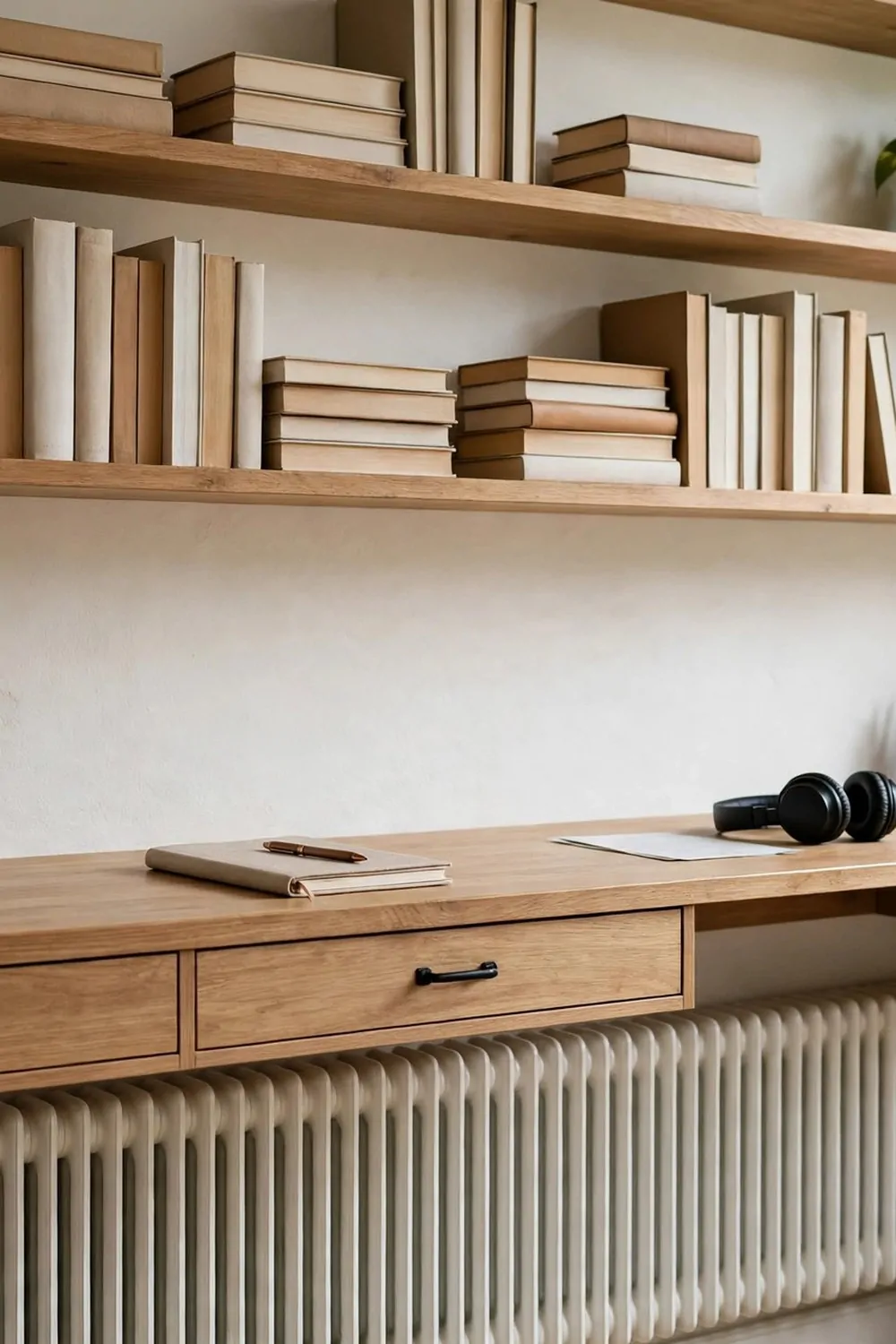
A radiator wall feels like dead space. You cannot put a normal desk against it. But a built-in desk can work around it, and the room stays warm too.
Build the desk top just above the radiator. Leave a gap so the heat can rise. The warm air flows up past the desk and into the room.
Never block the radiator completely. Heat needs to escape. A desk that seals it in will make the room cold and the radiator work too hard.
I like a desk with an open back near the radiator. Air moves freely behind it. The desk stays cool and the room stays warm.
Keep paper and fabric away from the hot surface. A small gap is enough. Your notebooks stay safe and your desk does not get too hot to touch.
A shelf above the radiator can hold a plant that loves warmth. It makes the awkward wall look like it was planned. A little green softens the whole corner.
This idea saves a whole wall in a small home. The wall you thought was useless becomes your office. No floor space is lost at all.
If the radiator is very old, paint it the same color as the wall first. It blends in. Then the desk becomes the star, not the radiator.
Talk to a plumber before you build if you are unsure about the heat. It is a quick question. And it saves you from a costly mistake later.
A Desk With a Cable Tray Built Into the Top
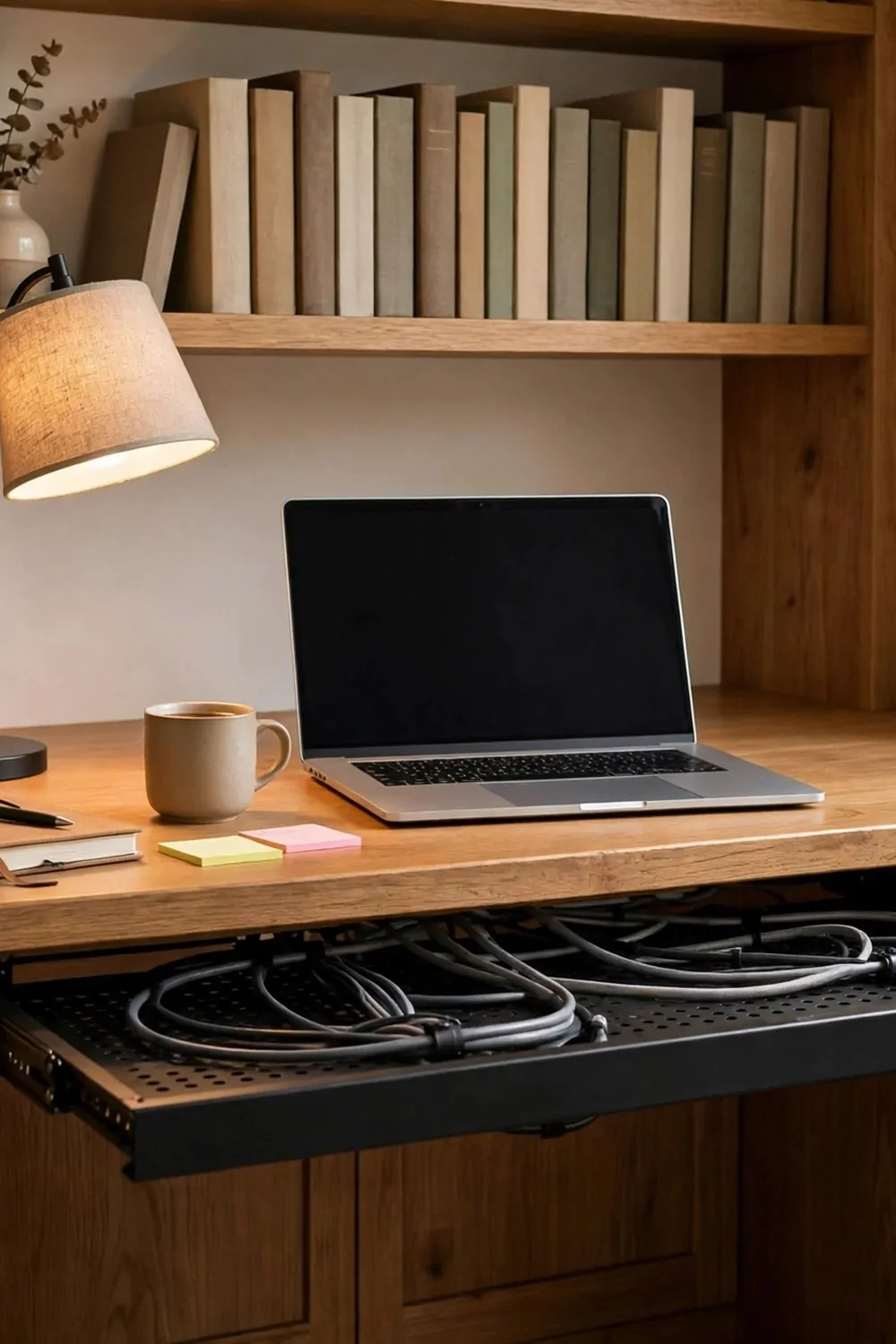
Cables are the messiest part of any desk. They tangle, they fall, they trip you up. A cable tray built into the desk top fixes all of that in one go.
The tray is a shallow channel cut into the desk or fixed under it. Your power strip sits inside it. The cables run through it, out of sight.
I plug everything in once and never touch it again. Laptop charger, lamp, phone charger, all in the tray. The desk top stays clean.
A small hole in the desk top lets the cables drop into the tray. It looks neat and it is easy to add a new cable later. Just push it through the hole.
Keep the tray easy to reach. You should be able to lift the lid or reach under the desk without moving furniture. If it is hard to reach, you will stop using it.
Label your plugs with a bit of tape. It sounds silly, but it saves you from unplugging the wrong thing. One small label, no more guessing.
A cable tray is even better in a small office. There is no spare floor for a tangle of cables. Everything has a place and the floor stays clear.
Wood desks can have the tray built right in. Laminate desks can have a metal tray screwed underneath. Both work the same way.
When guests come over, your desk still looks tidy. No cables hanging down, no power strip on the floor. Just a clean desk and a clear mind.
A Desk and Reading Nook in One Wall
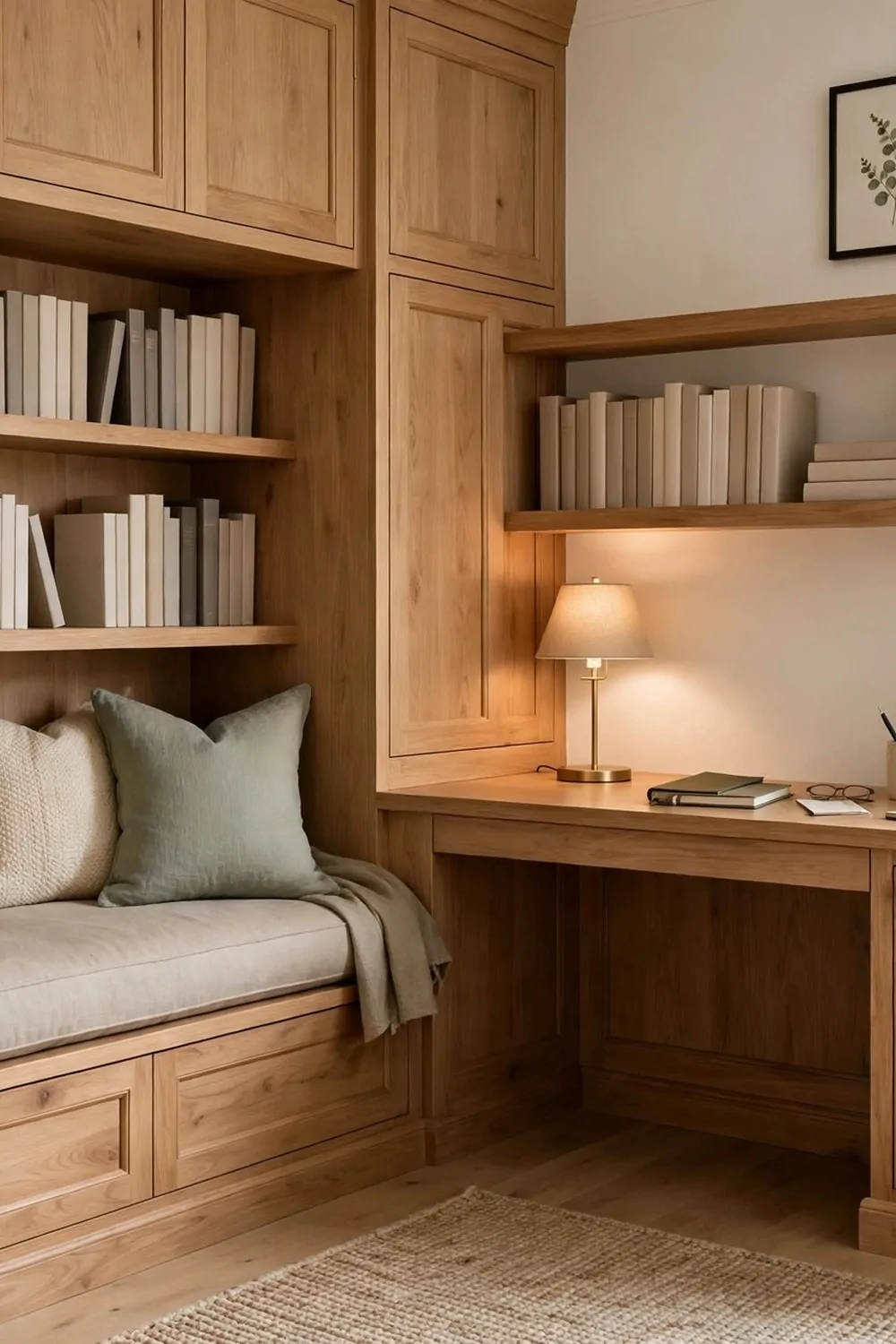
One wall can hold your desk and your reading spot. You work on one side and read on the other. It is like two rooms in one.
Build the desk on one half of the wall. Build a low bench with cushions on the other half. A few pillows make it the coziest spot in the house.
I keep my reading books on a shelf right above the bench. I finish work, I slide over, I grab a book. No getting up, no going to another room.
A small lamp over the bench is a must. Warm light makes reading feel soft and calm. It is the kind of light you want at the end of a long day.
Keep the desk side simple and the nook side soft. A hard work surface on one side, soft cushions on the other. Your brain knows which side is work and which side is rest.
Add a small drawer under the bench for blankets. A soft blanket turns the nook into a nap spot too. Small rooms need furniture that does more than one thing.
This idea works best on a long wall. A short wall will feel cramped. If your wall is long enough, you get two spaces for the price of one.
Pick colors that match across both sides. Same wood, same cushions, same calm feel. It looks like one piece of furniture, not two ideas fighting each other.
A desk and a reading nook on one wall makes a small office feel bigger. You have a place to work and a place to rest. And you never have to leave the room to switch between them.
A Desk With a Pull-Out Keyboard Shelf
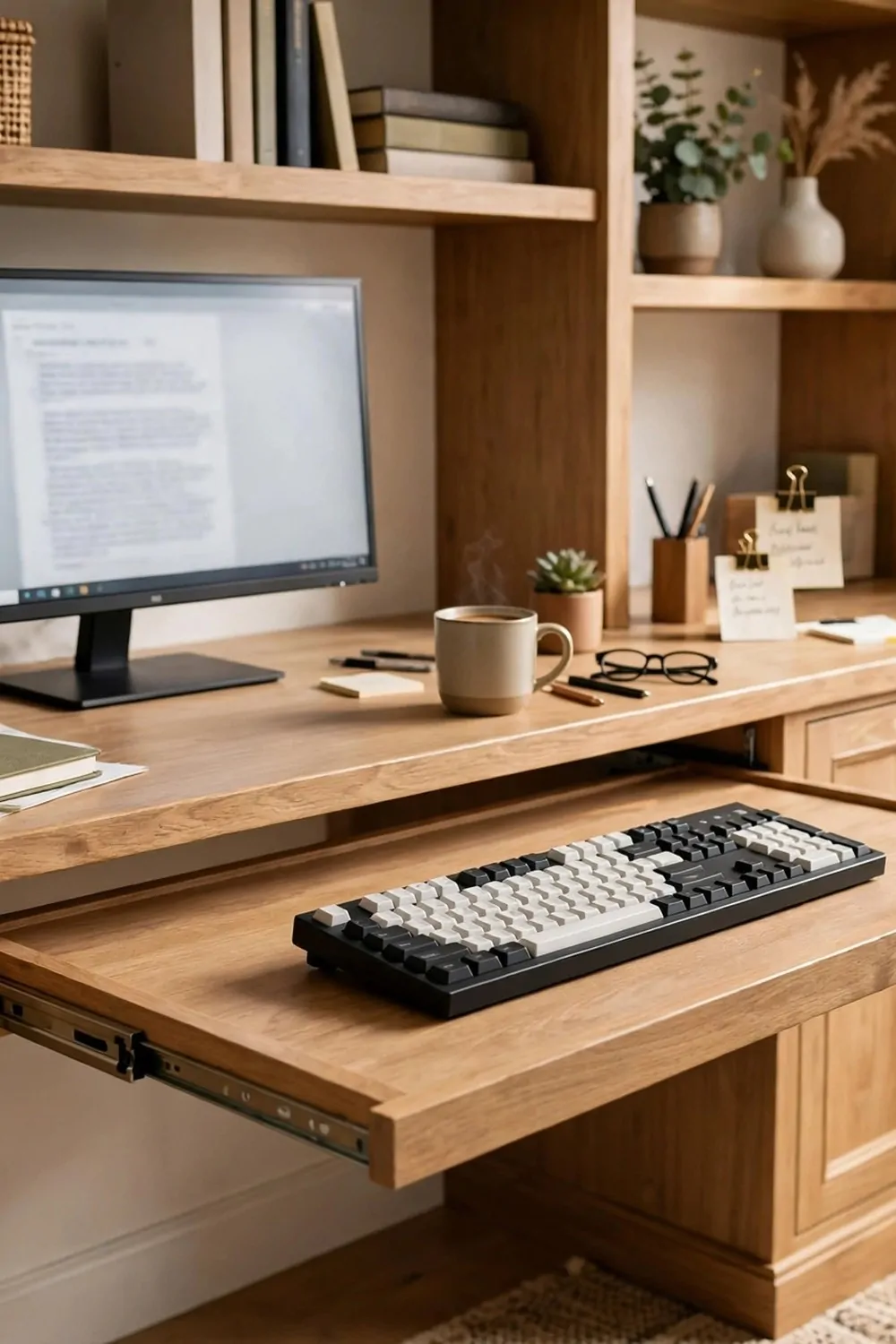
A pull-out keyboard shelf is a small tray that slides out from under your desk. Your keyboard lives on it. Your desk top stays free for everything else.
You slide it out when you work. You slide it back when you are done. It takes two seconds and it gives you back a whole strip of desk.
I love it because my desk finally has room for my notebook and my coffee. Before the shelf, the keyboard ate all the space. Now there is room to breathe.
Make the shelf wide enough for your keyboard and your mouse. A shelf that only fits the keyboard is not much help. Your mouse needs a home too.
Pick smooth runners for the shelf. Cheap runners stick and rattle. Good runners glide in and out without a sound.
Keep the shelf at a comfy height. Your arms should rest easy when you type. If it is too low, your shoulders hurt. If it is too high, your wrists hurt.
A pull-out shelf is great for a small desk. It adds space without adding size. The desk stays small and the work surface feels big.
You can also use the shelf for a tablet or a small drawing pad. It is a flat surface that appears when you need it. And it vanishes when you do not.
If you share the desk, the shelf helps there too. One person types on the shelf, the other uses the desk top. It is a tiny change that makes sharing much easier.
| Project | Size | Typical cost | Time |
|---|---|---|---|
| One small fold-down desk | One wall | 100 to 300 dollars | One weekend |
| One full desk wall with shelves | One full wall | 300 to 800 dollars | A few weekends |
| A whole small office built in | Whole room | 800 dollars and up for premium work | A few weeks |
A Whole-Wall Desk Plan That Ties It Together
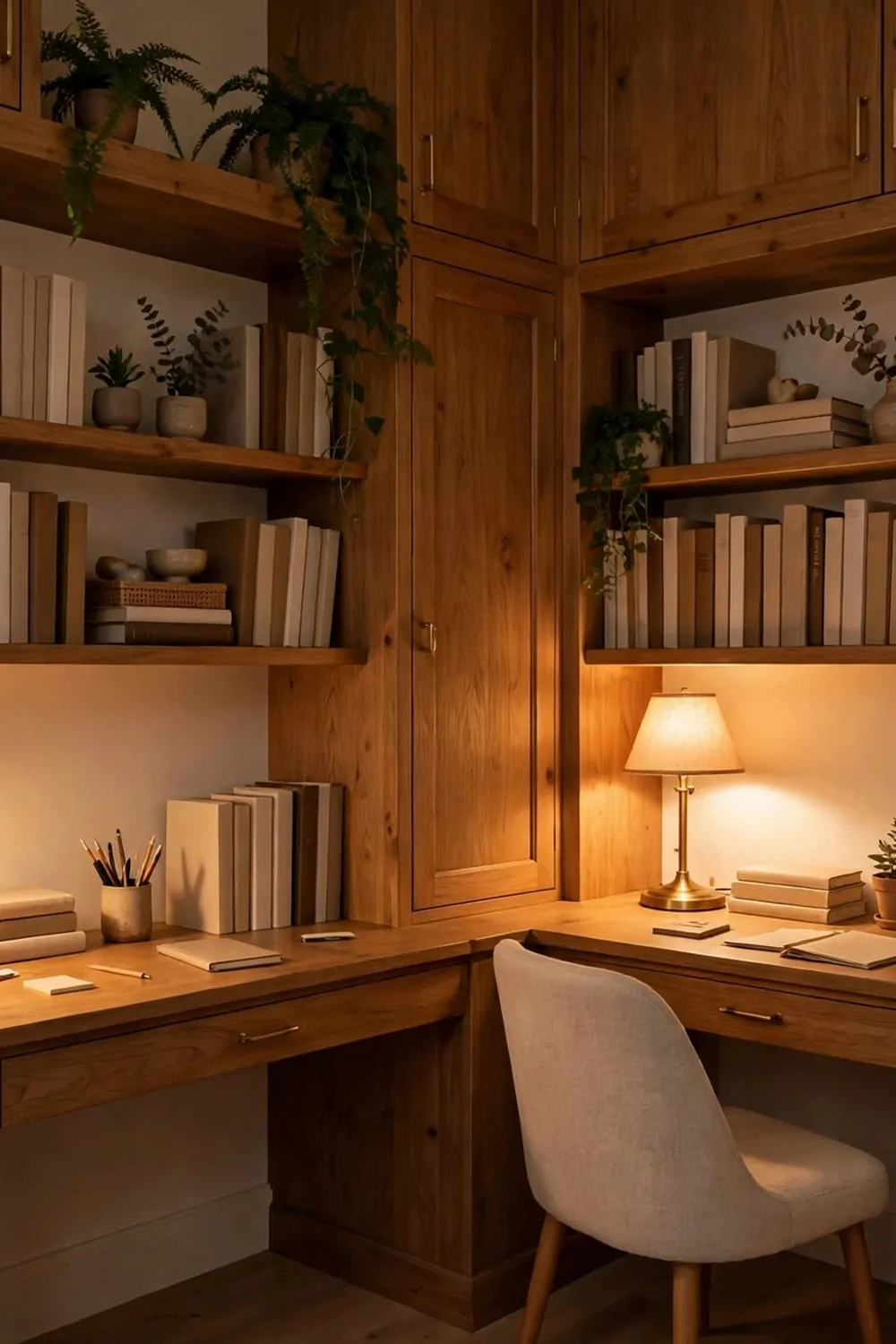
A whole-wall desk is the big idea that pulls everything together. One long top, shelves above, drawers below, all on one wall. It turns a small room into a real office.
Start by measuring the wall. Write the numbers down. A wall that is a little off can ruin the whole plan, so measure twice before you cut anything.
Plan the desk in zones. One zone for your computer, one zone for writing, one zone for storage. Each zone has its own job and its own space.
I put the computer zone in the middle. It is the heart of the desk. The shelves go above it and the drawers go below it.
Keep the middle of the wall open. Do not fill every inch with shelves. A little empty space makes the whole wall feel calm, not crowded.
Add light along the whole wall. One strip light under the shelves lights up the entire desk. It is cheap and it makes a huge difference at night.
Use the same wood and color across the whole wall. One material, one look, one calm feeling. Mixed materials can make a small room feel busy.
Build in small stages if the budget is tight. Desk first, then shelves, then drawers. Each stage makes the wall better, and you can stop any time.
A whole-wall desk is the best use of a small office. Every inch works hard. And when you sit down at it, the whole room feels like it was built just for you.
Keep Reading
If you liked these desk ideas, there is more to explore. Built-in storage and smart shelving can make a small home feel much bigger. I have written about a lot of these ideas, and they all work together.
Start with the shelving and storage posts below. They show you how to use every wall and every corner. Then look at the lighting ideas, because good light makes any desk better.
- 30 Custom Built-In Shelving Ideas for Every Room
- 44 Hidden Built-In Storage Ideas for Modern Homes
- 41 Custom Closet Lighting Ideas That Transform Your Wardrobe
- 35 Hidden Closet Storage Ideas That Maximize Every Inch
Pick one idea from this post and try it this week. A small change is enough to start. Your small office will thank you for it.