32 European Portuguese Would You Rather Questions About Language Differences

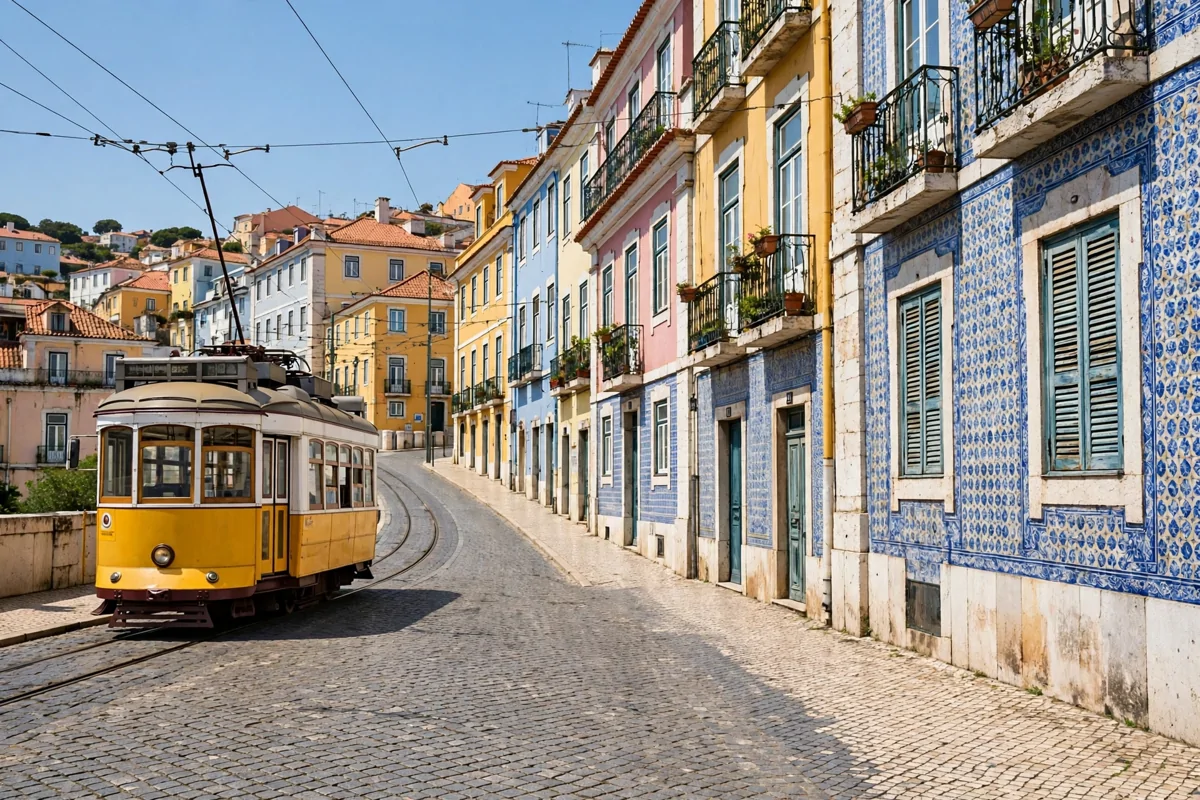
European Portuguese is the language of Portugal, and it has a sound all of its own. It is quick and crisp, and it lives in the old streets of Lisbon, in the busy markets of Porto, and in small towns by the sea. People speak it with warmth, and every town has its own way of saying things.
This article gives you 32 simple questions about European Portuguese and the life of Portugal. Think about each one, pick your answer, and talk about it with friends. There is no wrong answer, only fun ideas and new words to learn.
1. Would you rather speak European Portuguese with a Lisbon accent or speak European Portuguese with a Porto accent?
Would you rather...
A Lisbon accent sounds soft and smooth to many ears. Words flow in a gentle way, and the city sound feels calm and warm. Many learners love it because it feels like the voice of old streets and sunny hills.
A Porto accent sounds strong and clear. Words come out with a firm sound, and people in the north are proud of their way of speaking. It feels honest and full of life, like the city itself.
Both accents are correct, and both are loved in Portugal. The fun part is that you can learn to hear the difference with time and practice.
2. Would you rather live in Lisbon for one year to learn European Portuguese or live in Porto for one year to learn European Portuguese?
Would you rather...
Living in Lisbon for a year puts you inside the language every day. You hear European Portuguese in small cafes, on yellow trams, and in old streets full of tiles. Every day gives you new words without even trying.
Living in Porto for a year gives you a different daily life. You hear the strong northern sound in markets, near the river, and in friendly shops. You learn the words of daily life in a city full of charm.
| Option | What You Gain | What You Give Up |
|---|---|---|
| Live in Lisbon for one year | Daily life in European Portuguese in cafes, trams, and old tiled streets | The chance to live in Porto and learn the strong northern sound |
| Live in Porto for one year | Daily life with the northern accent in markets, shops, and by the river | The chance to live in Lisbon and hear the soft capital accent every day |
3. Would you rather learn the old words of Lisbon streets or learn the new words of modern Porto life?
Would you rather...
The old words of Lisbon streets carry history in them. Street names, old shops, and tiled walls each have a story. Learning these words feels like walking through the past with every step.
The new words of modern Porto life carry the fresh energy of the city. New cafes, new shops, and young people bring new words every day. Learning these words feels like living in the present.
Things to think about:
- Do you love old stories or new ideas more?
- Which words would you use in a real walk through the city?
- Do you want to sound classic or modern when you speak?
4. Would you rather practise European Portuguese in a small cafe in Lisbon or practise European Portuguese in a busy market in Porto?
Would you rather...
A small cafe in Lisbon is a calm place to practise. You can order coffee, sit by the window, and talk slowly with the waiter. The words come gently, and you have time to think.
A busy market in Porto is a lively place to practise. Sellers call out prices, buyers ask questions, and Portuguese fills the air. You learn fast because every minute brings a new word.
Pro Tip: Start with one simple sentence in a cafe or a market, like asking the price of bread. One small talk can open a long and happy chat.
5. Would you rather learn formal polite speech first or learn friendly casual speech first?
Would you rather...
Formal polite speech helps you in shops, offices, and with older people. You sound respectful and careful, and people trust you fast. It is the safe way to speak in a new place.
Friendly casual speech helps you make friends fast. You sound warm and easy, and people feel close to you. It is the fun way to speak when you are with people your own age.
| Option | What You Gain | What You Give Up |
|---|---|---|
| Learn formal polite speech first | Respectful words for shops and offices and talks with older people | The warm and easy words that help you make friends fast |
| Learn friendly casual speech first | Warm and easy talks that help you make friends fast | The careful polite forms you need in shops and offices |
6. Would you rather read old Portuguese poems from Portugal or read short news stories from Portugal every day?
Would you rather...
Old Portuguese poems are full of beauty and feeling. The words are rich, the lines are short, and each poem paints a picture of Portugal. Reading them slowly teaches you the heart of the language.
Short news stories from Portugal teach you the words of today. You learn about towns, weather, food, and daily life, and every story has a clear purpose. They build words you can use in a real talk the same day.
Both are good for learners. Poems build a love for the language, and news stories build useful words for daily life. You can even read one poem and one news story each day.
7. Would you rather listen to slow clear European Portuguese every morning or listen to fast natural European Portuguese every evening?
Would you rather...
Slow clear European Portuguese in the morning wakes up your brain gently. You hear each word, you understand more, and you start the day with confidence. It is a calm and steady way to learn.
Fast natural European Portuguese in the evening trains your ears for real life. People in Portugal speak fast, and evening listening helps you keep up. It is hard at first, but it grows your skill fast.
Things to think about:
- Do you learn better in the morning or in the evening?
- Do you need confidence first or real speed first?
- Which habit is easier to keep every single day?
8. Would you rather learn the Portuguese words for bread and cheese or learn the Portuguese words for fish and soup?
Would you rather...
Words for bread and cheese help you in every bakery and cafe in Portugal. You can ask for fresh bread, pick a cheese, and enjoy a simple meal with confidence. These words are part of daily life.
Words for fish and soup help you enjoy the classic food of Portugal. The sea gives Portugal its best dishes, and soups warm you on cool days. These words open the tasty world of Portuguese cooking.
Important Note: Food words are the fastest words to learn, because you use them with all five senses. Taste the food, say the word, and it stays in your mind.
9. Would you rather learn how to order coffee the Lisbon way or learn how to order coffee the Porto way?
Would you rather...
Ordering coffee the Lisbon way means you learn the words of the capital. You walk into a small cafe, ask in a soft and polite way, and enjoy your coffee while you watch the street. It feels calm and classic.
Ordering coffee the Porto way means you learn the words of the north. You ask in a warm and direct way, and the cafe feels friendly and full of life. It feels strong and honest, like the city itself.
| Option | What You Gain | What You Give Up |
|---|---|---|
| Learn how to order coffee the Lisbon way | The soft and polite cafe words of the capital city | The warm and direct cafe words of Porto |
| Learn how to order coffee the Porto way | The warm and direct cafe words of the northern city | The soft and polite cafe words of Lisbon |
10. Would you rather walk the steep hills of Lisbon and ask for directions or ride a yellow tram in Lisbon and read every stop name?
Would you rather...
Walking the steep hills of Lisbon and asking for directions is real practice. You stop kind people, you ask in Portuguese, and you learn the words for streets, turns, and places. Every hill is a small lesson.
Riding a yellow tram in Lisbon and reading every stop name is a fun reading game. You see old street names, you sound them out, and you learn how Portuguese words look and sound. The tram ride becomes a moving classroom.
Both ways turn the city into your teacher. One builds your speaking, and the other builds your reading, so you can try both on the same day.
11. Would you rather learn the words for Portuguese tiles and old buildings or learn the words for Portuguese gardens and parks?
Would you rather...
Words for Portuguese tiles and old buildings help you describe the beauty of Lisbon and Porto. Blue and white tiles cover walls, and old buildings tell stories of many years. These words make your talks rich and full of colour.
Words for Portuguese gardens and parks help you describe nature in the city. You can talk about trees, flowers, paths, and quiet places to sit. These words make your talks fresh and full of calm.
Pro Tip: When you see a tile wall or a garden, say three Portuguese words about it out loud. Describing what you see is one of the best ways to remember new words.
12. Would you rather speak European Portuguese only with older people in Portugal or speak European Portuguese only with young people in Portugal?
Would you rather...
Speaking only with older people teaches you polite and careful words. Older people speak slowly, tell long stories, and use classic words. You learn respect, patience, and the old way of speaking.
Speaking only with young people teaches you fresh and lively words. Young people speak fast, use new words, and talk about daily life in a fun way. You learn energy, speed, and the new way of speaking.
Things to think about:
- Do you want classic words or fresh words first?
- Do you learn better slowly or fast?
- Which group would you feel more at ease with?
13. Would you rather learn ten new European Portuguese words about the sea or learn ten new European Portuguese words about the countryside?
Would you rather...
Ten new words about the sea fit Portugal so well. The country has a long coast, fishing boats, and sunny beaches, and sea words help you enjoy holidays and nature talks. They bring the smell of salt air into your learning.
Ten new words about the countryside fit the quiet side of Portugal. Green hills, farms, and small villages each have their own words, and countryside words help you enjoy walks and calm talks. They bring the peace of nature into your learning.
Pick the words that match your life. If you live near the sea, learn sea words first. If you love hills and farms, learn countryside words first.
14. Would you rather write a short letter in European Portuguese every week or write a short shopping list in European Portuguese every day?
Would you rather...
A short letter every week builds careful writing. You think about each sentence, you choose good words, and you practise full thoughts in Portuguese. Over time your letters show how much you have grown.
A short shopping list every day builds a strong daily habit. You write bread, fruit, and other daily words again and again, and they stay in your mind. It is small, but it works every single day.
| Option | What You Gain | What You Give Up |
|---|---|---|
| Write a short letter every week | Careful writing and full sentences in European Portuguese | The daily habit of writing useful shopping words every day |
| Write a short shopping list every day | A strong daily habit with words you use in real life | The careful practice of writing full letters in Portuguese |
15. Would you rather learn to say thank you in ten different polite ways or learn to say sorry in ten different polite ways?
Would you rather...
Ten ways to say thank you make you sound kind in every place. You can thank a waiter, a shopkeeper, or a friend, each in the right way. People remember a kind thank you for a long time.
Ten ways to say sorry help you in hard moments. You can say sorry softly, warmly, or with care, and people forgive you fast. A good sorry can save any talk.
Warning: Polite words only work when they are true. Say thank you and sorry with a real smile, and people will feel your kindness in every word.
16. Would you rather visit a small village in the north of Portugal or visit a small town in the south of Portugal?
Would you rather...
A small village in the north of Portugal gives you quiet talks and close friends. People have time to speak slowly, and you hear pure local words. Village life teaches you patience and care.
A small town in the south of Portugal gives you sunny days and warm talks. The Algarve coast is near, the food is fresh, and people welcome you with a smile. Southern life teaches you joy and calm.
Things to think about:
- Do you like green hills or sunny coasts more?
- Do you want quiet talks or warm and sunny days?
- Which place fits your way of learning?
17. Would you rather learn the Portuguese names for Portuguese dishes or learn the Portuguese names for Portuguese desserts?
Would you rather...
The names of Portuguese dishes open the main table of Portugal. You can talk about fish, soups, rice, and stews, and each dish has a story from the sea or the land. Dish words help you order with confidence anywhere.
The names of Portuguese desserts open the sweet side of Portugal. Small tarts, sweet breads, and puddings fill the cafes, and each one has a name worth learning. Dessert words help you enjoy the sweet end of every meal.
Food is part of every day in Portugal, so both groups are useful. Learn the dishes first if you love big meals, and learn the desserts first if you love sweet treats.
18. Would you rather practise European Portuguese by talking about the weather or practise European Portuguese by talking about your daily plans?
Would you rather...
Talking about the weather is the easiest way to start any talk. Rain, sun, wind, and clouds give you simple words, and every person in Portugal loves a good weather talk. It is safe, easy, and always useful.
Talking about your daily plans makes your Portuguese real and personal. You can tell people what you will do today, what you did yesterday, and what you hope to do tomorrow. It builds the words of your own life.
| Option | What You Gain | What You Give Up |
|---|---|---|
| Practise by talking about the weather | Easy small talk that can start any talk in Portugal | Practice talking about your own life and plans |
| Practise by talking about your daily plans | Real and personal words about your own life each day | The easy small talk of weather that opens every chat |
19. Would you rather learn the words on a Portuguese train ticket or learn the words on a Portuguese bus timetable?
Would you rather...
The words on a Portuguese train ticket help you travel with ease. You learn the words for platform, time, seat, and destination, and you never feel lost at a station. Train words keep you free on the road.
The words on a Portuguese bus timetable help you plan your day in any town. You learn the words for stops, times, and routes, and you can reach small places that trains never visit. Bus words keep you free in every town.
Important Note: Travel words are worth learning before your trip, not during it. Learn ten travel words at home, and your first day in Portugal will feel easy and calm.
20. Would you rather learn European Portuguese verbs for daily routines or learn European Portuguese verbs for travel and holidays?
Would you rather...
Verbs for daily routines help you every single day. You learn how to say wake up, eat, work, and rest in Portuguese, and these words build the base of your talks. Daily verbs are the heart of the language.
Verbs for travel and holidays help you enjoy every trip. You learn how to say go, visit, stay, and explore in Portuguese, and these words open new places and new fun. Travel verbs are the joy of the language.
Things to think about:
- Do you use daily words or travel words more?
- Which verbs would help you first this week?
- Do you want a strong base or a fun trip skill first?
21. Would you rather speak European Portuguese at a quiet beach in the Algarve or speak European Portuguese at a lively market in Lisbon?
Would you rather...
A quiet beach in the Algarve gives you calm talks by the sea. You can speak slowly, listen to the waves, and learn the words of sand, sun, and water. It is a peaceful place to practise.
A lively market in Lisbon gives you fast talks full of life. Sellers, buyers, and fresh food fill the air with Portuguese words, and every minute teaches you something new. It is a busy place to practise.
Both places are full of Portuguese life, just in a different way. One gives you peace, and the other gives you energy, so pick the one that fits your mood.
22. Would you rather learn the difference between European Portuguese words and Brazilian Portuguese words or learn the difference between formal words and friendly words in European Portuguese?
Would you rather...
Learning the difference between European and Brazilian words helps you understand both kinds of Portuguese. Some words are the same, and some are different, and knowing the difference saves you from confusion. It opens two worlds at once.
Learning the difference between formal and friendly words helps you speak right in each place. You use one way in a shop and another way with a friend, and people respect you for it. It opens the social rules of Portugal.
| Option | What You Gain | What You Give Up |
|---|---|---|
| Learn the difference between European and Brazilian words | Understanding of both kinds of Portuguese and less confusion | Skill in formal and friendly speech for each setting |
| Learn the difference between formal and friendly words | The right words for each place, from shops to talks with friends | Understanding of how European and Brazilian words differ |
23. Would you rather study European Portuguese grammar with a workbook or study European Portuguese by talking with neighbours in Lisbon?
Would you rather...
A workbook builds your grammar step by step. You learn how verbs change, how sentences work, and why words fit together. It is like building the walls of a house, slow but strong.
Talking with neighbours in Lisbon builds real skill fast. You speak about real things, like the weather, the shops, and the day, and you learn words that books never teach. Every chat is a small lesson.
Most learners need both, but if you must pick one first, think about your way of learning. Workbooks build a base, and neighbours build courage, so the best plan may be to use both.
24. Would you rather learn to count money and prices in European Portuguese or learn to tell the time and the date in European Portuguese?
Would you rather...
Counting money and prices helps you shop with confidence. You can ask prices, count change, and pay in Portuguese without stress. Money words keep your daily life smooth in every shop and market.
Telling the time and the date helps you plan your life. You can talk about meetings, birthdays, and plans for next week in Portuguese. Time words keep your talks clear and your days on track.
Pro Tip: Practise numbers out loud every day, even for one minute. Say the price of your lunch or the time on your clock in Portuguese, and the numbers will stay with you.
25. Would you rather take a slow walk through old Porto streets and describe what you see or take a slow walk along the Douro river and describe what you see?
Would you rather...
A slow walk through old Porto streets fills your eyes with colour. Tiled walls, old doors, and steep lanes give you new words at every turn. Describing what you see turns a walk into a lesson.
A slow walk along the Douro river fills your eyes with calm water and wide views. Boats, bridges, and the far bank give you peaceful words to learn. Describing what you see turns a riverside walk into a lesson too.
Things to think about:
- Do you love old streets or river views more?
- Which walk gives you more words to describe?
- Would you walk alone in quiet or with a friend to talk with?
26. Would you rather learn Portuguese words for the home and the kitchen or learn Portuguese words for the garden and the street?
Would you rather...
Words for the home and the kitchen help you in daily life. You can talk about rooms, food, cooking, and the things you touch every day. Home words are the closest words to your life.
Words for the garden and the street help you outside the home. You can talk about trees, flowers, shops, and the road, and these words open the world beyond your door. Street words make you free in the town.
| Option | What You Gain | What You Give Up |
|---|---|---|
| Learn words for the home and the kitchen | Words for daily home life, cooking, and the rooms you live in | Words for gardens, streets, and life outside the home |
| Learn words for the garden and the street | Words for nature, shops, and the world outside your door | Words for the home, the kitchen, and daily indoor life |
27. Would you rather listen to European Portuguese radio talks every day or read European Portuguese short stories every night?
Would you rather...
European Portuguese radio talks every day train your ears for real speech. You hear news, chats, and stories in a natural voice, and your listening grows fast. It is like living in Portugal through your ears.
European Portuguese short stories every night build your reading in a calm way. You read at your own speed, you look up new words, and the stories stay in your mind while you sleep. It is a peaceful way to learn.
Both habits are strong, and you can even do both. Listen in the morning on your way to work, and read at night before you sleep, and your Portuguese will grow from both sides.
28. Would you rather learn how to ask for help politely in a shop or learn how to ask for help politely at a train station?
Would you rather...
Asking for help politely in a shop helps you every day. You can ask where things are, how much they cost, and which one is best, and shopkeepers in Portugal are glad to help a polite learner.
Asking for help politely at a train station helps you when you travel. You can ask about times, platforms, and tickets, and station staff will guide you with care. These words keep your trips smooth and calm.
Warning: Never feel shy about asking for help in Portuguese. People in Portugal are kind to learners, and one polite question can teach you more than one hour of study.
29. Would you rather practise European Portuguese with a pen pal from Lisbon or practise European Portuguese with a pen pal from Porto?
Would you rather...
A pen pal from Lisbon writes to you in the soft accent of the capital. You learn the words of city life, old streets, and cafes, and each letter brings a new piece of Lisbon to your home.
A pen pal from Porto writes to you in the strong accent of the north. You learn the words of markets, rivers, and northern life, and each letter brings a new piece of Porto to your home.
Things to think about:
- Do you want letters from the capital or from the north?
- Which city would you like to visit first?
- Would you write short letters or long letters to your pen pal?
30. Would you rather learn the words for Portuguese festivals and holidays or learn the words for Portuguese work and daily jobs?
Would you rather...
Words for Portuguese festivals and holidays open the joyful side of Portugal. You can talk about food, happy days, and joyful times that bring people together. Festival words are full of colour and joy.
Words for Portuguese work and daily jobs open the working side of Portugal. You can talk about shops, farms, offices, and the jobs people do each day. Work words help you understand real life in Portugal.
Important Note: Learn the words for the days you love first, because joy helps memory. If festivals make you smile, start there, and the work words will follow with time.
31. Would you rather speak European Portuguese slowly and use short simple sentences or speak European Portuguese with long sentences and rich words?
Would you rather...
Speaking slowly with short simple sentences helps people understand you. You have time to think, you make fewer mistakes, and every word comes out clear. Slow speech is not weak speech, it is smart speech.
Speaking with long sentences and rich words sounds beautiful and full. You can share big ideas, tell long stories, and show how much Portuguese you know. It feels exciting and free when the words flow.
| Option | What You Gain | What You Give Up |
|---|---|---|
| Speak slowly and use short simple sentences | Clear talks, fewer mistakes, and time to think before you speak | The beauty of long sentences and rich flowing words |
| Speak with long sentences and rich words | Beautiful full speech, long stories, and big ideas in Portuguese | Time to think, and people may miss your words if you rush |
32. Would you rather spend one month learning only Lisbon words and phrases or spend one month learning only Porto words and phrases?
Would you rather...
One month of only Lisbon words and phrases gives you the voice of the capital. You learn the soft sounds, the cafe words, and the phrases of old streets, and at the end of the month you can sound like a Lisbon local.
One month of only Porto words and phrases gives you the voice of the north. You learn the strong sounds, the market words, and the phrases of the river city, and at the end of the month you can sound like a Porto local.
Both months are a fun test, and there is no wrong pick. Choose the city you love more, live in its words for a month, and see how much your Portuguese grows.
More Would You Rather Questions
- 16 Brazilian Portuguese Would You Rather Questions for Language Learners
- 27 Portuguese Language Would You Rather Questions From Around the World
- 12 Italian Language Would You Rather Questions for Language Enthusiasts
- 30 German Language Would You Rather Questions for Curious Learners
- 22 European French Would You Rather Questions for Language Lovers
- 18 Canadian French Would You Rather Questions About Francophone Culture
- 40 French Language Would You Rather Questions for French Learners
- 34 European Spanish Would You Rather Questions About Regional Differences
- 28 Latin American Spanish Would You Rather Questions for Language Fans
- 23 Spanish Language Would You Rather Questions for Spanish Learners