8 Ways Your Thoughts Create Your Reality (Backed by Psychology)

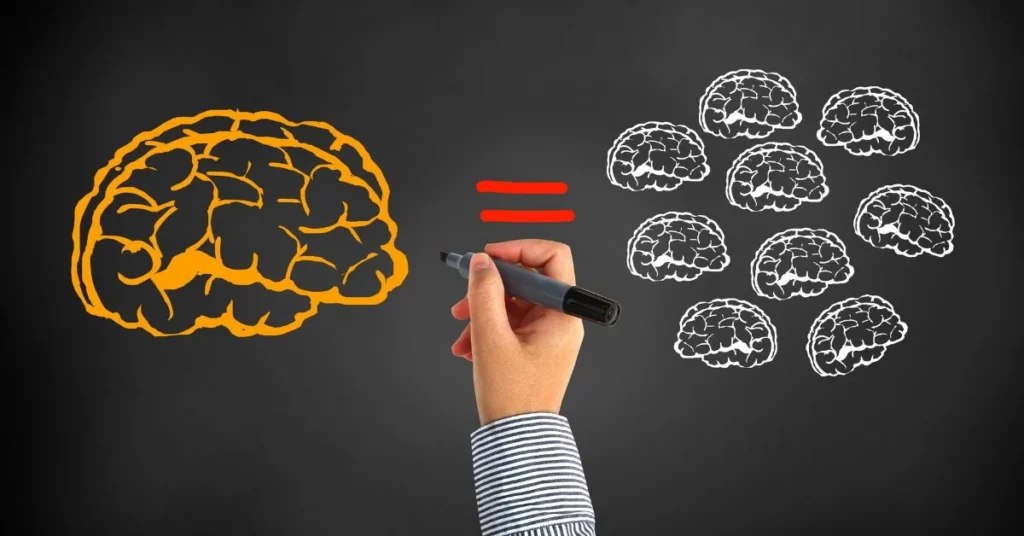
There’s a moment most people recognize, even if they don’t talk about it much. You look around at your life and feel a vague mismatch. Things are fine on paper, maybe even good, yet something feels oddly repetitive, narrow, or stalled. It’s not dramatic enough to complain about. Just persistent enough to notice.
I used to think that feeling meant I needed different circumstances. A new environment. Better habits. A sharper plan. Over time, and mostly through watching myself make the same mistakes in new settings, I began to notice something quieter and harder to argue with. The outer details kept changing, but the inner commentary stayed remarkably consistent.
That’s where this began for me. Not with the idea that thoughts magically manifest outcomes, but with the slower realization that the way we think seems to determine what we notice, what we attempt, and what we quietly rule out before life ever gets a chance to surprise us.
What follows isn’t an instruction. It’s observation. Eight patterns I’ve seen in myself and others over the years, each grounded in psychology, but understood best through lived experience.
1. The thoughts you repeat become the lens you look through
Most of us don’t realize how repetitive our thinking is. We assume we’re responding freshly to each situation, but in truth, we’re often recycling the same interpretations with different characters and settings.
I’ve noticed that when someone consistently thinks of themselves as behind, overlooked, or unlucky, their attention narrows around evidence that confirms it. This isn’t pessimism exactly. It’s selective focus. Psychology has a name for it, confirmation bias, but that term can feel abstract until you see it in real life. You walk into a room already convinced you don’t belong, and suddenly every neutral glance feels like proof.
The mind is efficient that way. It filters reality so you don’t have to process everything. But the filter comes from somewhere. Over time, repeated thoughts turn into assumptions, and assumptions quietly become the frame through which everything is interpreted.
People often confuse this with fate. They say, “This always happens to me,” without noticing how many alternative explanations never make it past the filter. It’s not that the world rearranges itself to match your thoughts. It’s that your thoughts decide which parts of the world feel relevant enough to register.
Once that lens is in place, it takes effort to even notice it. Not to change it, just to see it.
2. Expectations shape how people respond to you
There’s a subtle interpersonal loop most of us participate in without realizing it. We expect something from others, and that expectation leaks into our tone, posture, timing, and patience. People respond not to the thought itself, but to the behavior it produces.
I’ve watched this play out in workplaces, friendships, even families. Someone expects to be dismissed, so they speak defensively. Others pick up on that edge and respond cautiously. The original expectation feels confirmed.
Social psychologists have studied this for decades. The self-fulfilling prophecy isn’t mystical. It’s relational. Robert Merton wrote about it in the 1940s, but you can see it at a dinner table if you pay attention long enough.
What makes this uncomfortable is realizing how often we contribute to the outcomes we resent. Not deliberately. Not consciously. Just through the quiet signals that come from what we already believe is going to happen.
When I walk into a conversation assuming friction, I create it without trying. When I expect ease, I allow pauses, ask better questions, listen more generously. The response shifts. Not always, but often enough to matter.
Reality, in this sense, is partly negotiated. And our thoughts set the opening terms.
3. The stories you tell yourself determine what feels possible
Everyone carries a private narrative about who they are and how their life tends to unfold. It’s not something we write down. It forms gradually, stitched together from past experiences, interpretations, and conclusions that once felt protective.
In my experience, these stories don’t feel like stories. They feel like facts. “I’m not good at that.” “People like me don’t end up there.” “Every time I try, it falls apart.”
Cognitive psychology calls these core beliefs. They shape motivation, risk tolerance, and persistence. If you believe effort won’t matter, you don’t invest fully. If you believe failure defines you, you avoid situations where failure is possible.
What’s striking is how rarely these beliefs are tested. Not because they’re true, but because they quietly limit behavior. The reality you experience is then consistent with the story, which reinforces the belief.
I’ve found that clarity doesn’t come from positive reframing. It comes from noticing the story itself and how long you’ve been living inside it. Sometimes for decades. Sometimes since childhood.
Once seen, it loses some of its authority. Not all of it. Just enough to loosen the edges.
4. Attention decides which reality you inhabit
At any given moment, there are dozens of truths available. Some are uncomfortable. Some are reassuring. Some are neutral. Your attention decides which ones feel dominant.
Neuroscience has shown that attention isn’t passive. It amplifies neural pathways. What you repeatedly attend to becomes easier to notice again. Over time, it feels more real, more present, more urgent.
I’ve noticed this most clearly during periods of anxiety. The world didn’t objectively become more dangerous. My attention simply locked onto threat. Every headline, every comment, every sensation fed the same conclusion.
The opposite happens too, though we talk about it less. When attention rests on competence, progress, or quiet stability, the world feels more navigable. Not perfect. Just workable.
This isn’t about forcing optimism. It’s about recognizing that attention is finite. Where you place it determines the texture of your days. Two people can live in the same conditions and experience entirely different realities, shaped by what they habitually notice.
Once you see that, it becomes harder to argue that reality is entirely external.
5. Interpretation matters more than the event itself
Something happens. That part is often uncontrollable. What follows is interpretation, and that’s where reality diverges.
I’ve seen people treat the same setback as proof of inadequacy or as a logistical problem to solve. The emotional aftermath differs completely. So does the next action.
Psychology refers to this as cognitive appraisal. The meaning we assign to events shapes emotional response and behavior. It’s not denial. It’s interpretation.
In my own life, I’ve noticed that when I interpret difficulty as personal failure, I withdraw. When I interpret it as friction inherent to learning, I stay engaged. The event didn’t change. The outcome did.
Over time, these interpretations accumulate. They form a pattern. And patterns start to look like reality itself.
This is where people often feel trapped. Not because circumstances are immovable, but because interpretation has become automatic. Invisible. Taken for granted.
Seeing the gap between event and meaning can be quietly liberating. Not because it fixes everything, but because it reveals where flexibility still exists.
6. Thoughts influence behavior more than intention does
Most people believe they act based on conscious goals. In practice, behavior is more often guided by underlying thoughts that never quite reach awareness.
I’ve noticed this especially in moments of self-sabotage. Someone wants change, but their thoughts predict discomfort, rejection, or failure. Behavior follows the prediction, not the intention.
Behavioral psychology has long shown that expectation of outcome influences effort. If the mind anticipates low reward or high cost, it conserves energy. Procrastination, avoidance, and inconsistency aren’t moral failures. They’re logical responses to internal forecasts.
What’s uncomfortable is realizing how persuasive those forecasts feel. They sound reasonable. Protective. Even wise.
And yet, they quietly shape the reality that unfolds. Not through destiny, but through daily decisions that align with what feels mentally safe.
Once you notice this, blame loses its usefulness. Curiosity becomes more appropriate.
7. Emotional states reinforce the thoughts that created them
Thoughts create emotional states, and emotional states feed back into thought. It’s a loop, and once established, it’s remarkably stable.
I’ve seen people try to think their way out of sadness or fear, only to feel frustrated when it doesn’t work. That’s because emotions bias cognition. When you feel low, your thoughts skew negative. When you feel threatened, your thoughts narrow.
Psychologists call this mood-congruent cognition. It explains why reassurance rarely lands when someone is deeply anxious. Their internal state filters it out.
What I’ve found helpful isn’t forcing different thoughts, but recognizing the loop itself. Seeing that the heaviness has a structure. That it’s not a personal failure, but a system running as designed.
Reality, in these moments, feels absolute. But it’s being co-created by internal processes that can shift, slowly, often indirectly.
Understanding that can soften self-judgment, which is sometimes the first real change.
8. Over time, thoughts become identity
The final shift is subtle. Thoughts repeated long enough stop feeling like thoughts. They become “who I am.”
This is where reality feels most fixed. If something is identity-level, questioning it feels destabilizing. People protect it, even when it causes pain.
I’ve noticed this in myself when letting go of certain beliefs felt like losing ground. As if without them, I wouldn’t know how to move.
Psychology talks about self-schema, the mental structure that organizes information about the self. It shapes memory, interpretation, and expectation. It’s efficient. It’s also limiting.
When thoughts harden into identity, reality follows suit. Choices narrow. Possibilities feel unrealistic. Not because they are, but because they don’t fit the self-story.
Change at this level isn’t dramatic. It’s quiet. It begins with noticing that what feels like identity was once just a thought that kept returning.
Key observations worth sitting with
• Many realities are maintained through attention rather than fact
• Repetition gives thoughts authority, not truth
• Interpretation quietly outperforms circumstance
• Emotional states are not evidence, but influence
• Identity often begins as a conclusion drawn too early
Conclusion
In the end, I don’t think thoughts create reality in the way slogans suggest. They don’t summon outcomes on demand. What they do is shape perception, behavior, and response so consistently that the resulting life feels inevitable.
William James once wrote that the greatest discovery of his generation was that human beings can alter their lives by altering their attitudes of mind. I don’t think he meant it as encouragement. I think he meant it as an observation.
And like most observations, it becomes more convincing the longer you sit with it.