7 Powerful Lessons Lazy People Can Learn From Ants About Discipline and Success

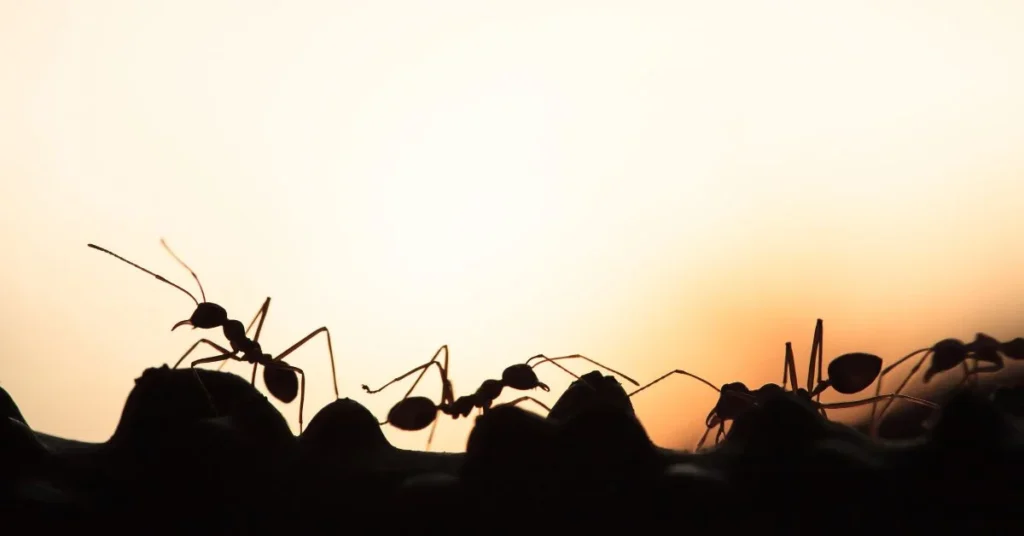
I’ve always been fascinated by ants. Not the ones we notice for a moment and forget, but the ones that quietly cross sidewalks, disappear into cracks, or swarm the remains of a forgotten picnic. There’s something about watching them that stirs a mix of admiration and discomfort. You see, ants are small, and yet they carry the weight of their world as if it is nothing. They move with a purpose that seems almost alien to the way most of us inhabit our days.
For someone who feels stuck, like I often have, observing ants can be strangely clarifying. They don’t rush; they don’t pause to deliberate endlessly. Yet, they accomplish, almost effortlessly, what many of us spend years chasing in half-measures. I’ve noticed that in their discipline, there’s a subtle poetry a quiet persistence that doesn’t look like heroism but is heroic in its results. It’s not about overworking; it’s about being small but exact, humble yet unyielding.
In watching them, I began to see reflections of myself the lazy, hesitant parts that wanted comfort more than progress. And slowly, without preaching to myself, I began to see lessons I could carry forward. These are not rules. They are observations. They are quiet nudges toward noticing what’s under the surface of our daily lives.
1. The Weight You Can Carry
It’s astonishing to watch an ant haul something many times its size. At first glance, it seems absurd how can such a tiny creature move something so large? But then, you notice how methodical it is, adjusting its angle, shifting its grip, pausing, reassessing. No one is watching, yet it persists.
I’ve found that we often underestimate ourselves because we measure effort in grand gestures. We imagine that discipline means moving mountains in a single sweep, and when we can’t, we do nothing at all. The ant, in contrast, moves consistently, bit by bit. The hidden truth is that weight literal or figurative is only unmanageable if we refuse to approach it gradually. There’s a quiet power in incremental persistence, in respecting the size of the task without inflating it with fear or expectation.
The lazy person, I think, often fears being crushed by the weight of responsibility. The ant, by simply starting and adjusting, teaches that weight becomes bearable when carried with attention and patience.
2. Purpose Without Drama
I’ve watched ants circle seemingly aimlessly, only to find they are part of a broader pattern I hadn’t noticed. Every movement contributes to a larger purpose. There is no showmanship, no flair just intention.
We, on the other hand, often layer our lives with drama, telling ourselves stories of significance before taking real action. Laziness can be a symptom of overcomplicating purpose. Observing ants reminds me that discipline is not about the narrative we tell; it is about the fidelity to an invisible line of necessity. The work is itself the story, not the embellishment around it.
This simplicity is uncomfortable at first. There’s no applause. But there is a quiet assurance that results accumulate even when no one notices. Success, I’ve realized, often grows in these overlooked, small, consistent movements.
3. The Safety of Small Habits
Ants do not plan grandly, yet they build anthills that survive seasons. Each tunnel, each grain of sand moved, is habitual, small, repeated, and yet it compounds into something extraordinary.
We lived long enough to see the danger of thinking habit must be monumental to be worthwhile. A lazy person may wait for the “perfect” start, never realizing that perfection is an illusion. Ants, by contrast, model the quiet power of routine. Small actions, done reliably, create momentum that eventually carries you to places unimaginable at the outset.
This taught me that discipline is not about intensity, but about constancy. A single consistent action repeated over time outweighs bursts of energy punctuated by long idleness.
4. Collaboration as an Invisible Force
A single ant may seem insignificant, yet within the colony, it is part of an intricate, selfless choreography. There is no ego, no expectation of recognition just cooperation toward survival and growth.
It’s tempting, in laziness, to isolate oneself, believing the world will overwhelm if we’re not perfectly prepared. Yet the ant shows that success often depends on invisible networks, on small contributions to a collective rhythm. Observing this, I’ve realized that even modest, unnoticed work accumulates value when placed in the right context. It is not about grand heroics, but about alignment.
The hidden truth is that discipline is both personal and social; your small actions are rarely as solitary as they feel.
5. Resilience Without Reflection
Ants encounter obstacles constantly. Rain washes away tunnels, predators roam, paths shift. Yet they do not pause to complain or reconsider their purpose. They adapt. They persist.
I’ve noticed that laziness often masquerades as reflection “I’ll think about it later,” we say but reflection can become a shield for inaction. The ant shows a different approach: observe, adapt, continue. The resilience lies not in contemplation, but in the repeated act of moving forward despite minor setbacks.
There is a lesson here for anyone who has paused too long at the threshold of effort: action itself fosters clarity, and clarity often fosters success.
6. Invisible Preparation
I once followed a line of ants to a forgotten crumb under a bush. It was astonishing how much unseen work must have gone into transporting that food back to the colony. Their labor is largely invisible, yet essential.
I’ve lived through projects and relationships where the work behind the scenes is ignored or undervalued. The lazy person often fears the invisible labor, assuming it must be glamorous to matter. Ants, however, model that preparation and diligence are inherently valuable, even when unnoticed. Success is rarely public. It is the accumulation of invisible effort.
Recognizing this quietly changed my own relationship with effort. Not every step needs validation. The effort itself counts.
7. Time Moves Differently for Small Steps
One of the most humbling realizations I’ve had is that ants live on a scale of time I rarely notice. A day for an ant is measured in constant, minute adjustments. Their work is rhythmic, measured, enduring.
For humans, especially those of us prone to laziness or hesitation, time often feels like a race. We want immediate results, immediate transformation. The ant shows that patience is not passive. It is deliberate, steady, unhurried. Discipline, in this sense, is less about urgency and more about fidelity to repeated action across time.
I’ve come to see that laziness is often impatience disguised as inaction. By slowing down and embracing small, persistent effort, one discovers that success is not a sprint but an accumulation. The ant, without intention to teach, quietly embodies this truth.
Key Takeaways
- Small, consistent actions carry more weight than sporadic bursts of energy.
- Purpose is often simpler than we imagine; effort itself reveals meaning.
- Habits compound invisibly, creating structures that outlast grand gestures.
- Collaboration and alignment magnify individual contributions.
- Resilience is found in action, not endless reflection.
- Invisible preparation is as essential as visible achievement.
- Patience with small steps often precedes noticeable progress.
Last Thoughts
In the last, watching ants is like looking into a mirror of quiet truths we often ignore. They do not strive to impress, they do not linger on failures, and yet they accomplish more than their size suggests. I’ve noticed that the lazy parts of myself respond not to scolding, but to gentle realization. There is power in smallness, in persistence, in humility.
As Maya Angelou once said, “Do the best you can until you know better. Then when you know better, do better.” Perhaps the ant has known better all along, and in watching it, we catch a glimpse of how we, too, might move forward quietly, steadily, and without drama.