27 Mashrabiya Screen Ideas That Divide Rooms Beautifully

My living room used to run straight into the hall, and I never liked how open it felt.
I could see the front door from the sofa, and the sofa from the front door, and nothing in between said where one room ended and the next began.
Then I stood a carved wooden screen in the gap, and the whole flat felt different in one afternoon.
I put together 27 mashrabiya screen ideas here, and each one splits a room in a pretty way without a single wall going up.
A mashrabiya screen is a wooden lattice with shapes like stars, diamonds, and hexagons cut right through it. Light passes through the shapes, so the room stays bright while each side feels like its own place.
You do not need a builder or a big budget for any of these. Most of them stand on their own feet, and you can move them any time you like.
Pick the room that bugs you most and start there. One screen is often all it takes.
1. A Tall Walnut Mashrabiya Screen Between the Living Room and the Hall
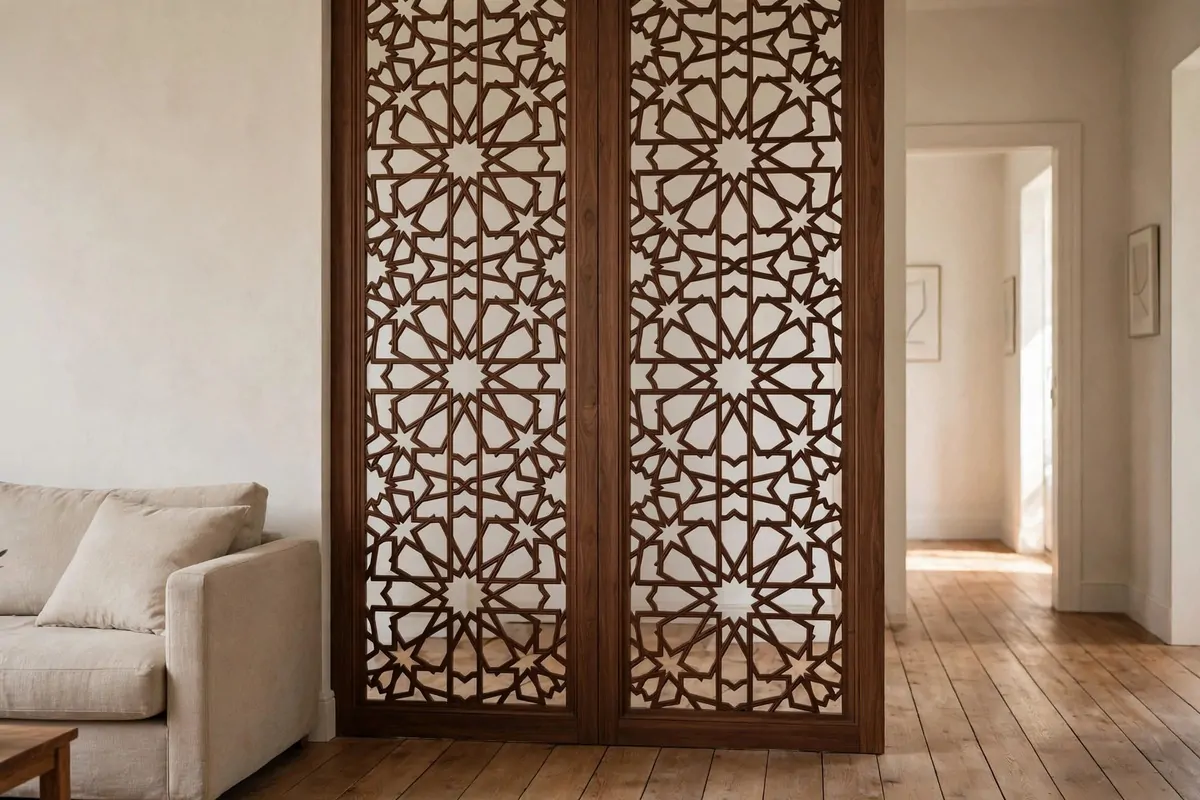
The walnut screen stands tall between my living room and the hall. Its deep brown wood makes the whole corner feel warm.
The pattern is a tight lattice of small eight-point stars. Light slips through the tiny gaps in soft shapes. I love how the stars throw little shadows on the floor in the afternoon.
Typical cost $24 to $38.
The hall feels like its own room now, even with no door.
I set the screen right beside the sofa so the walkway stays wide. You can still see the hall light through the lattice.
You can set a small clay vase on the low table beside it. A folded throw over the sofa arm picks up the brown tones. The screen does the hard work, and the rest of the room just follows along.
Once a week I run a dry cloth over the wood, and the dust comes off in seconds.
Guests always stop and look at the star pattern first. It gives them something pretty to notice before they even sit down.
If your living room runs into the hall with no break, this screen fixes that fast. It needs no nails and no builder. You just stand it up, step back, and the room feels finished.
2. A White Painted Mashrabiya Screen by the Front Door
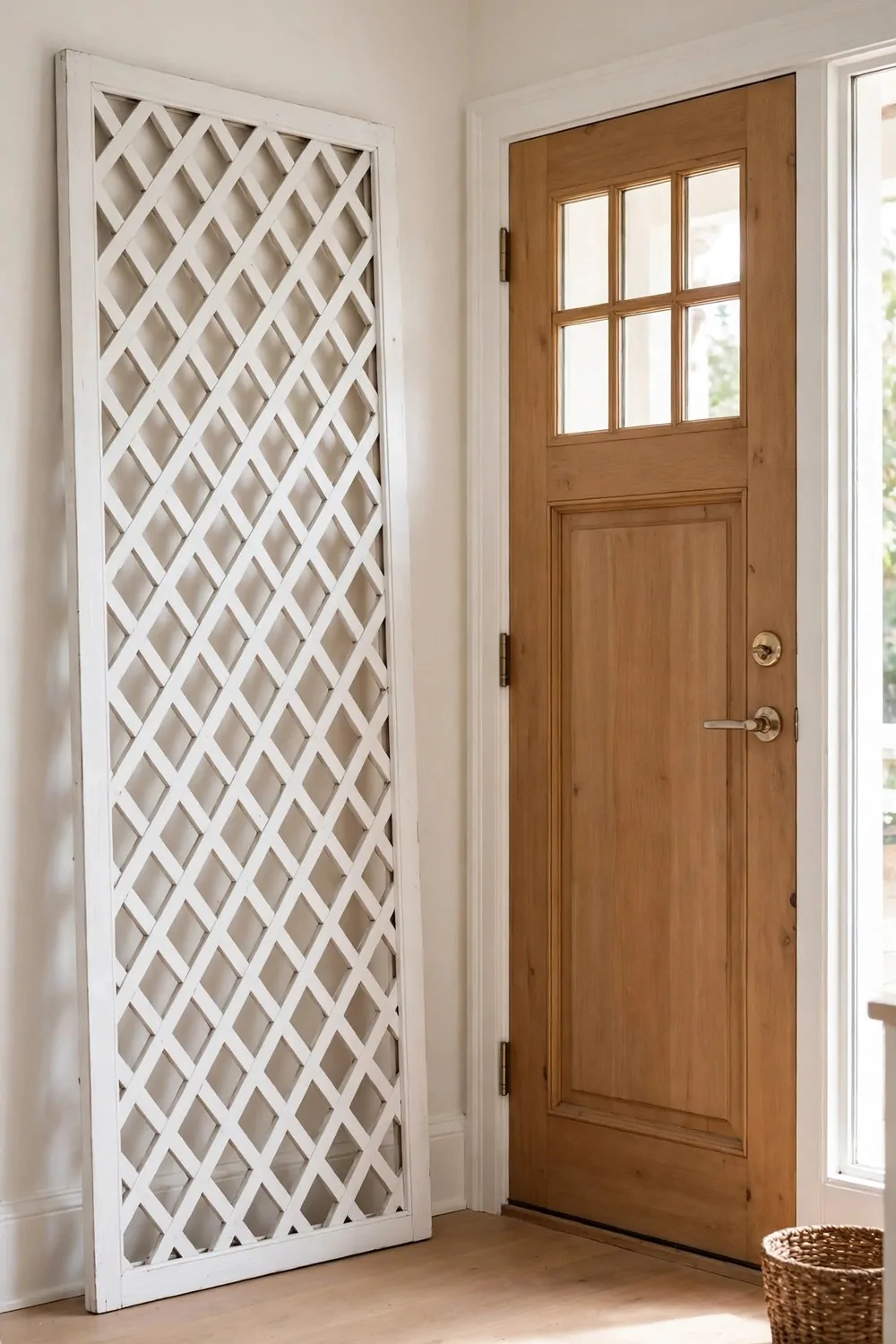
The white screen by my front door looks fresh against the pale wall. Its lattice is made of small diamonds, and each one is painted clean white. The door area used to feel bare, and now it feels like a real entry.
I picked white because the hall gets little sun, and white keeps it bright.
The diamond pattern lets air move through, so the entry never feels shut in. You can hear the door bell clearly through the gaps.
You can set a small tray for keys on the bench beside it. A woven mat under the door adds a soft touch. A screen like this can hide a small shoe rack behind it, which is my favourite part.
Typical cost $18 to $29.
I brush the diamond edges with a soft brush when dust settles in the corners. It takes less than five minutes.
The screen stands flat on the floor, so it never wobbles when the door opens.
When friends come in, they see the white lattice first and the mess behind it never. It makes the whole entry feel calm and tidy. I wish I had put it up years ago.
Measure the gap beside your door before you buy one. A screen that fits the space looks like it was made for it.
3. A Light Pine Mashrabiya Screen Behind the Sofa
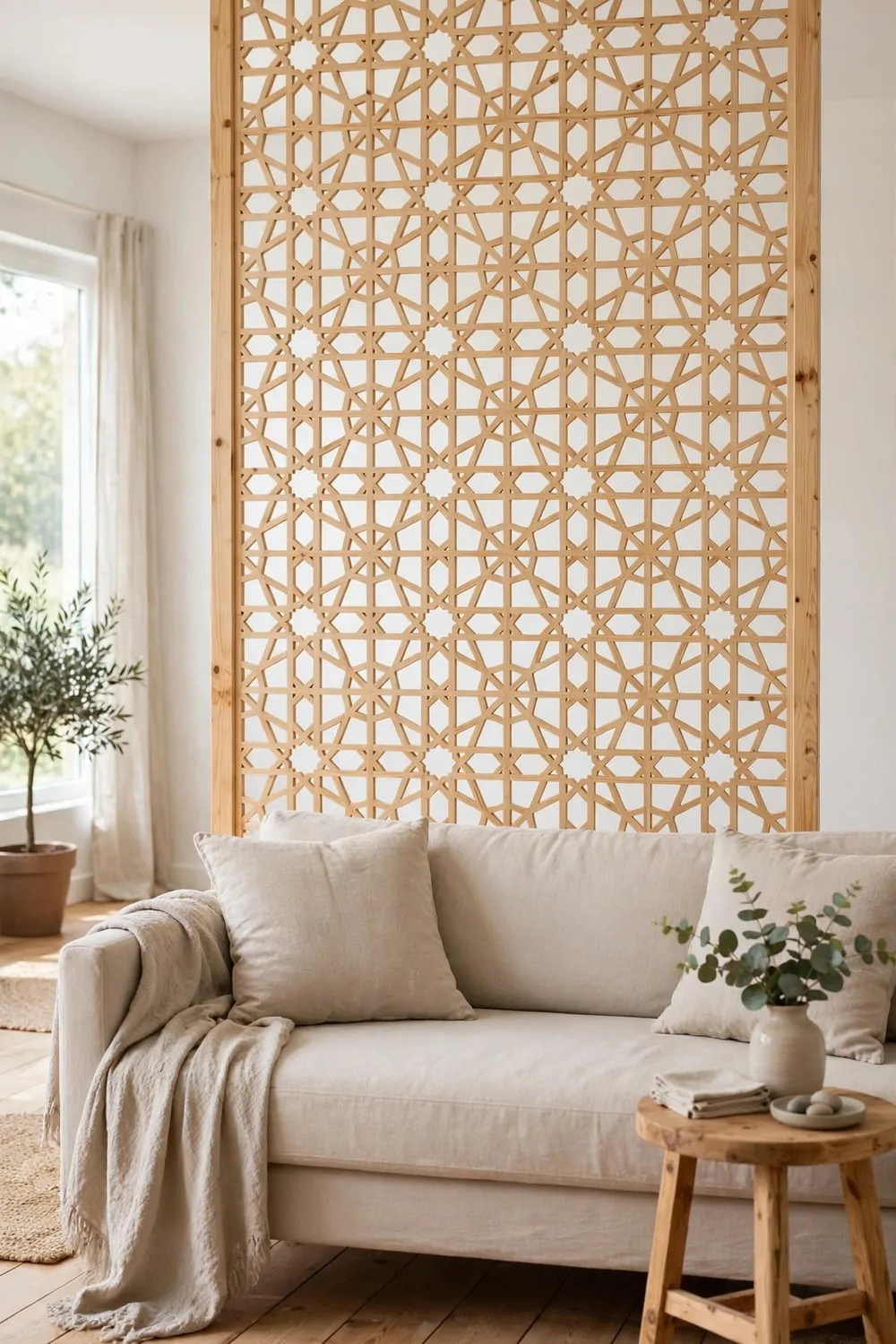
The light pine screen sits right behind my sofa, and it changed the whole back of the room. Its pale wood glows a little in the morning sun. The pattern is a fine lattice of small stars, open and airy.
Typical cost $15 to $26.
The sofa used to face a blank wall, and now the trellis gives my eyes something to rest on. It makes the sitting area feel like its own little zone.
Pine is light to lift, so I can shift it alone when I clean behind it.
You can set a small stack of books on the side table next to it. A plain linen cushion on the sofa picks up the pale wood. Nothing else is needed, because the screen is the star of the corner.
I run a feather duster over the trellis bars every few days. The dust has nowhere to hide on the smooth pine.
The screen is tall, and light still slips through the lattice into the rest of the room.
My family gathers on the sofa in the evenings, and the screen makes the spot feel cosy and closed in. It feels like a little room inside the big room. That is the best part of it.
If your sofa floats in the middle of a big room, try a pine screen behind it. It will anchor the whole setup.
4. A Dark Stained Mashrabiya Screen in the Bedroom Corner
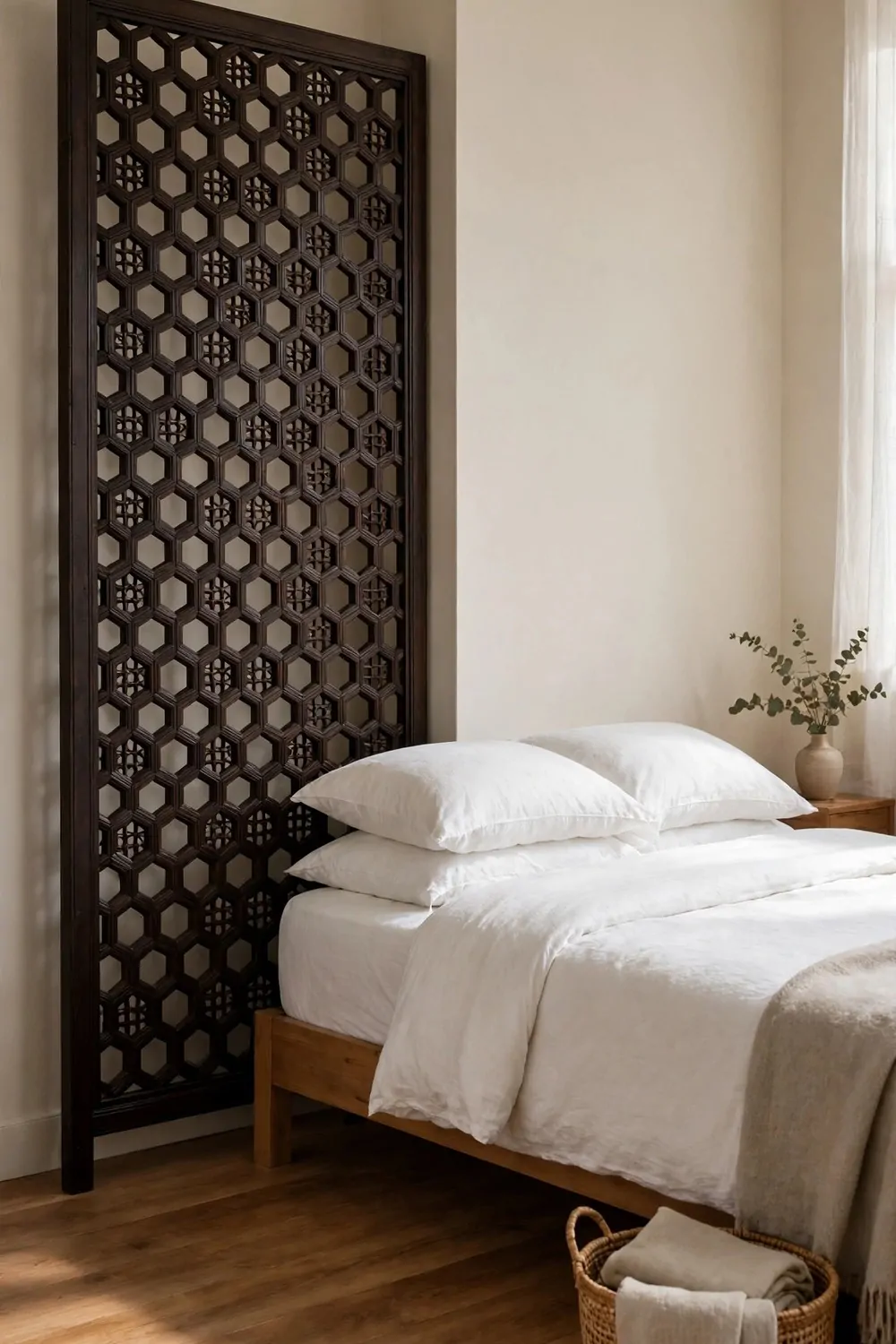
The dark stained screen stands in the corner of my bedroom, and it looks rich against the cream walls. Its pattern is rows of small hexagons, dark and even.
I use it to hide the small dressing area behind it.
The stain is a deep brown, almost black in low light. In the morning the hexagons let thin lines of sun through. It makes the corner feel calm and a bit grand.
The screen turns a plain corner into a private nook.
You can set a small stool behind it with a folded shawl on top. A tiny lamp on the dresser adds a warm glow through the hexagons.
I polish the dark wood with a soft cloth and a drop of plain oil once a month. The shine comes back right away, and the hexagons look sharp again. It is a small job that pays off fast.
Typical cost $27 to $38.
At night the screen blocks the view of the clothes rail, so the room feels tidy when I sleep. I wake up to a calm room instead of a pile of hangers.
A dark screen works best in a light room, where the contrast does the talking. Pick this pattern if you like a soft, classic look. Your bedroom corner will thank you.
5. A Small Mashrabiya Screen Beside the Dining Table
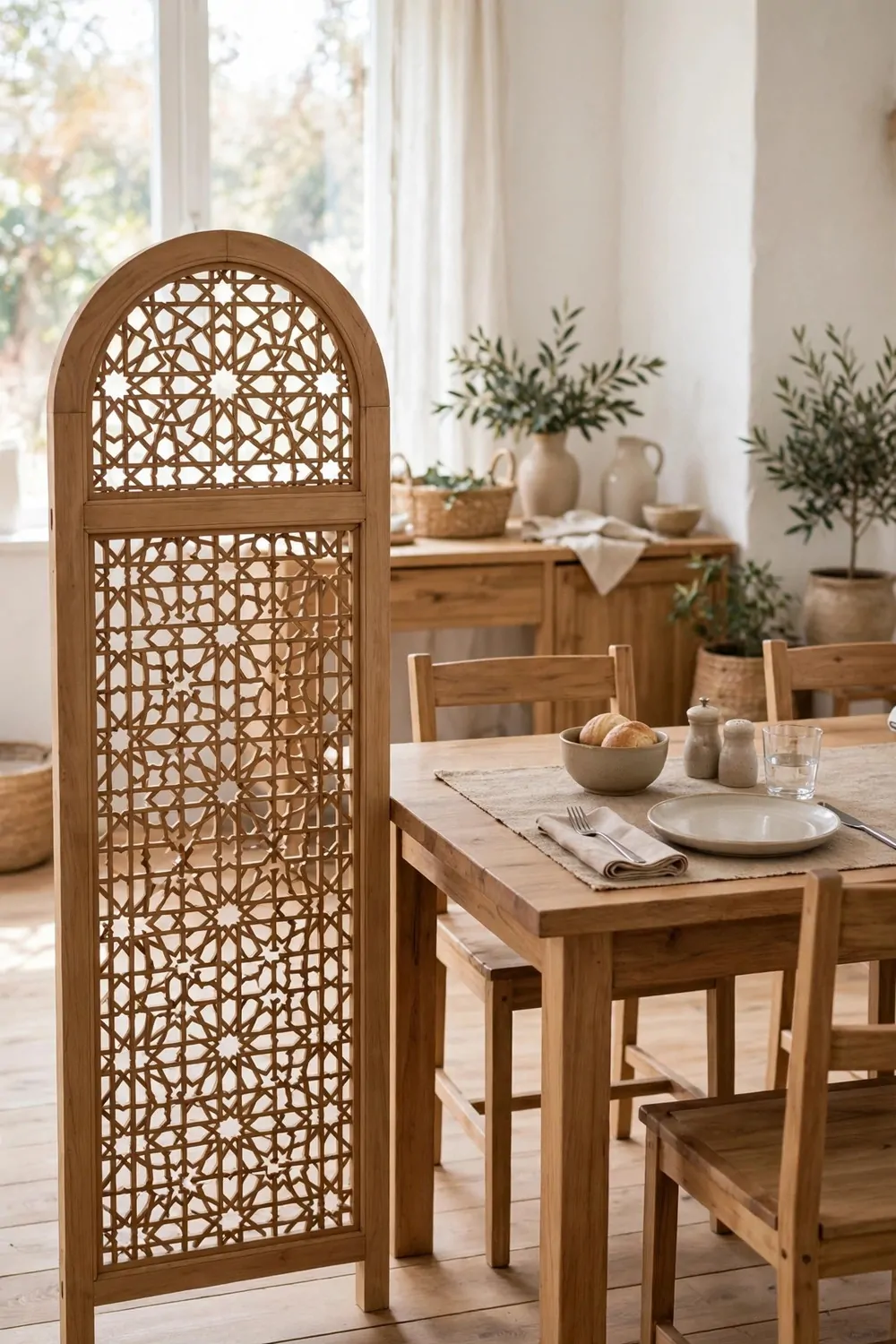
The small screen beside my dining table is the quiet hero of the room.
It is made of honey-toned wood with a star lattice that fills the panels. The small stars repeat all the way up, which makes the little screen feel taller than it is.
It stands between the table and the kitchen doorway, so meals feel a bit more private. The cook can slip through the gap at the side without moving it. Nobody bumps into it, because it stands out of the way at the end of the table.
Typical cost $9 to $17.
You can set a small clay bowl of lemons on the table near it. A plain runner down the table picks up the honey tones. The screen and the table look like they were bought as a pair.
I give the lattice edges a quick wipe with a damp cloth after dinner. The wood dries fast and never marks.
It is short enough to step around, but tall enough to split the space.
When we eat together, the screen cuts the kitchen noise a little. The dining spot feels like its own small room.
Small screens suit small homes best, because they split a room without eating floor space. This one cost less than a week of takeaway. Try one beside your own table and see the difference.
6. An Eight-Point Star Mashrabiya Screen in the Study
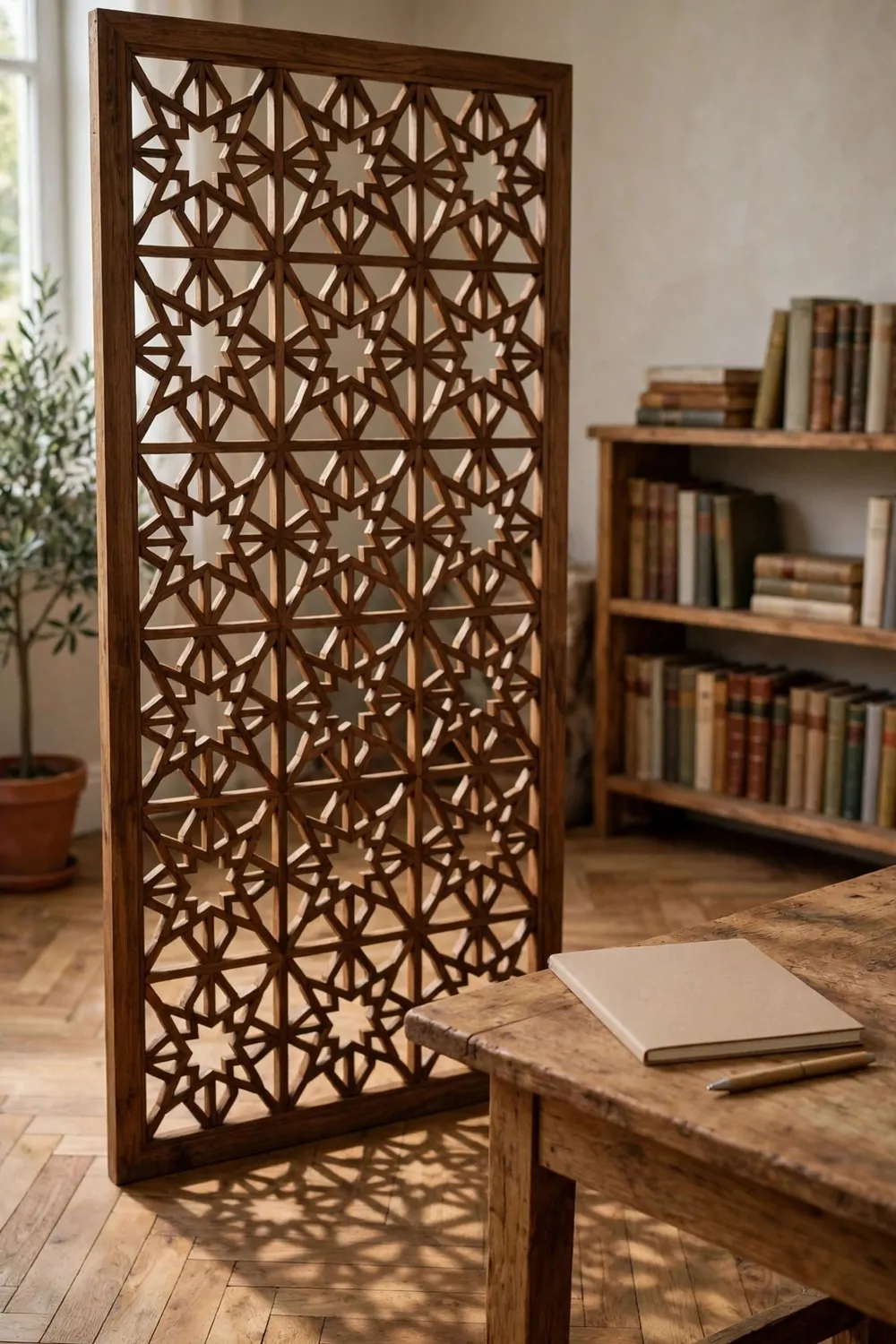
The eight-point star screen in my study is the prettiest thing in the room. Each star is carved clean and even, and the stars repeat across the whole panel. The wood is dark brown and looks warm in the soft light.
It stands between the desk and the door, so the work spot feels separate from the rest of the house. When I sit down, the stars are the first thing I see.
The star pattern lets just enough light through to keep the study bright.
You can set a small stack of notebooks on the desk beside it. A plain mug for pens sits on the shelf, and the warm brown tones tie it all together.
I check the star points with a soft brush when I dust the shelves. The brush reaches into the tiny corners without scratching the wood. It keeps the pattern looking crisp and new.
Typical cost $21 to $33.
The screen is light enough to move, so I can shift it against the wall. That helps when I need the full room back for a big project.
A study needs a clear edge, or work bleeds into the rest of the day. This screen draws that edge for me. I close the laptop, walk past the stars, and work stays behind me.
If you work from a corner of a shared room, a star screen is a kind first step.
7. A Diamond Lattice Mashrabiya Screen in the Prayer Corner
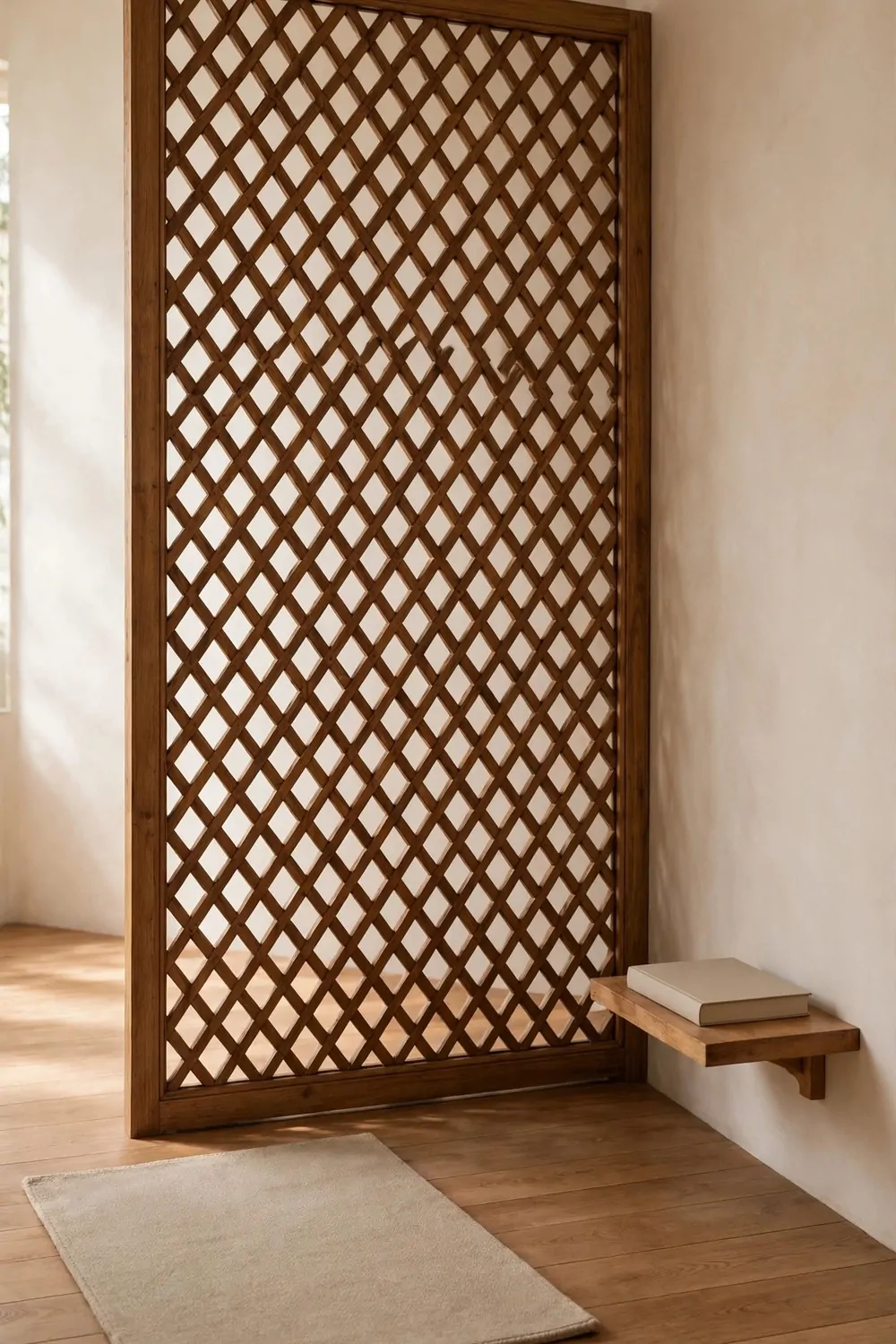
The diamond lattice screen marks my prayer corner, and it makes the spot feel special. Its wood is a soft walnut brown, and the diamonds are small and neat.
The screen stands in the corner of the living room, quiet and steady. It gives the corner a gentle boundary without a wall. When I step behind it, the rest of the room fades away.
The lattice lets air and light pass through, so the corner never feels closed off.
You can set a folded prayer mat on the low shelf beside it. A small wooden stand for a book fits neatly in the corner too. Everything has its place, and the corner stays tidy.
I dust the diamonds with a dry cloth twice a week. The cloth slides over the smooth wood, and the pattern stays clean.
The screen is light, so I can move it aside when the room needs a full clean.
The corner feels calm now, and that calm helps me slow down. A screen does not need to be big to change a room. This one is proof of that, every single day.
Typical cost $12 to $22.
If you want a quiet corner in a busy room, start with a diamond lattice screen. It draws the line softly, and the room feels better for it.
8. A Hexagon Mashrabiya Screen by the Window
Typical cost $16 to $28.
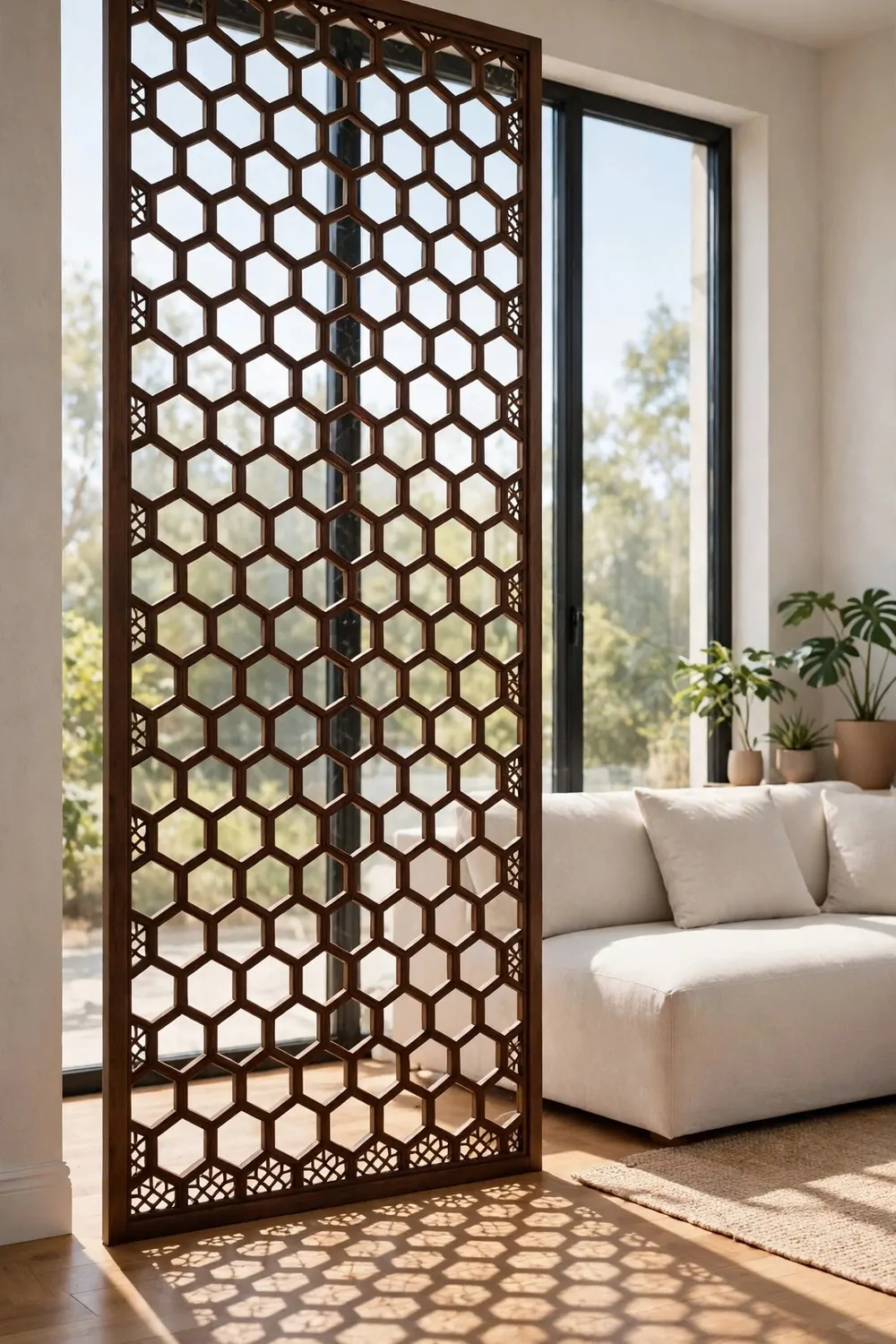
The hexagon screen by my window turns plain daylight into a pretty pattern. Its wood is a warm brown, and the hexagons are cut in neat, even rows.
In the morning the sun shines through the hexagons and throws honeycomb shapes on the floor. I watch them move across the rug as the day goes on. It is a small joy, and it costs nothing extra.
The screen splits the window side from the rest of the living room.
You can set a small potted plant on the sill beside it. A folded blanket on the sofa makes the spot ready for quiet reading.
I wipe the hexagon rims with a soft cloth once a week, and I do it in the morning while the light shows the dust. The brown wood shows every speck, so the job is quick and honest. Clean hexagons throw the prettiest shadows.
The screen is tall but narrow, so it fits a window wall without blocking the view. You still see the sky over the top.
My spot by the window finally feels like a place of its own.
Hexagons suit a bright room, because the sun does half the decorating for you. Put one by your sunniest window. Then sit back and watch the floor turn into a honeycomb.
9. A Folding Mashrabiya Screen for the Guest Room
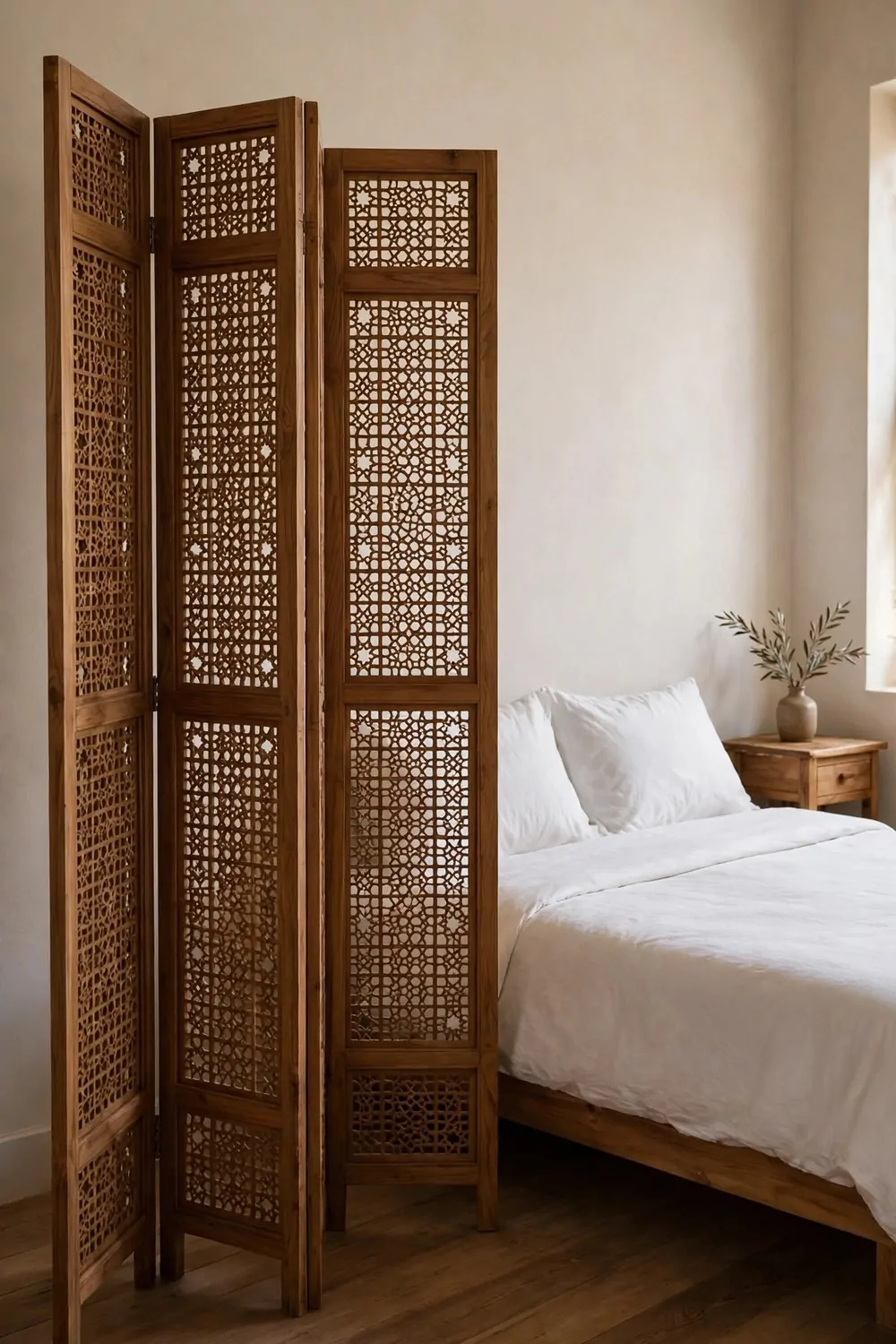
The folding screen in my guest room has three panels, and it folds away in seconds. Its wood is a warm teak brown with a fine lattice pattern that repeats across each panel.
I open it when guests stay, and I fold it flat when they leave.
The tiny lattice shapes repeat in neat rows across the panels, and they look calm and neat. The screen stands between the bed and the small desk, so the room feels like two spaces. Guests get a little privacy, and the desk stays out of sight at night.
You can set a small vase with fresh green leaves on the desk beside it. A folded towel on the bed adds a soft touch of care.
I check the hinges with a drop of plain oil when they start to squeak.
The panels fold in a zigzag, so the whole screen tucks behind the door. It takes up less space than a folded chair. When the next guest arrives, I pull it out and open it in under a minute.
The teak wood is strong, so the panels never wobble on the floor. It has survived three guest visits already, and it still looks new.
A guest room should feel like a small hotel, not a spare room with a bed. This screen is the one thing that makes mine feel that way. Every guest wants to know where I got it.
Typical cost $19 to $31.
10. A Wide Mashrabiya Screen Between the Kitchen and the Dining Room
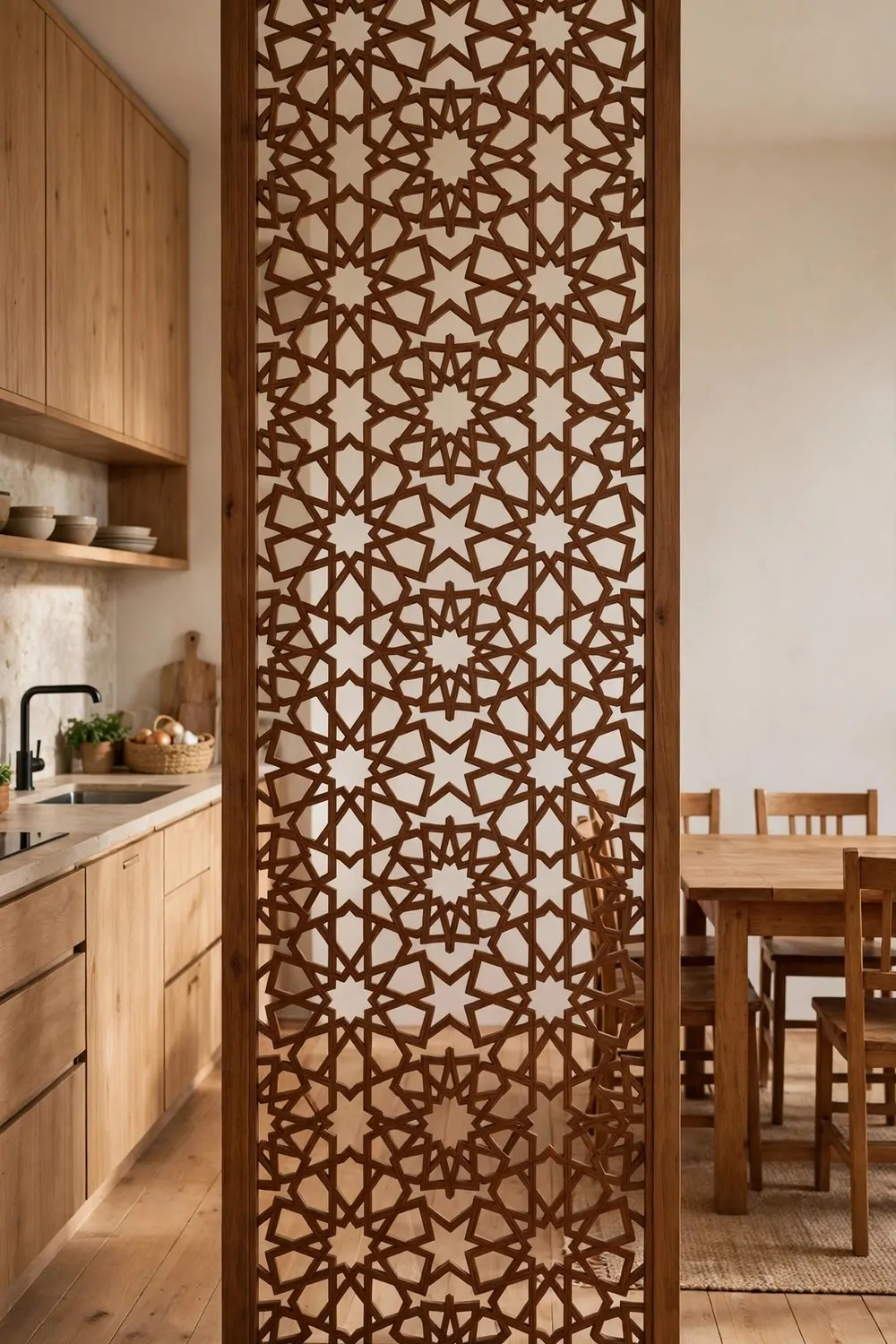
I put a wide mashrabiya screen between my kitchen and my dining room. It lets light pass through and still gives each side its own feel.
The pattern has big eight-point stars in neat rows. The wood is warm brown with soft lines. You can see the dining table through the small gaps.
I like how the room feels calm and open at the same time.
The screen stands straight and tall from floor to near the top of the wall. It makes the kitchen feel like its own small room.
You can set a small bowl of lemons on the dining side if you want. A plain tray can sit near the edge too. I keep the middle clear so the pattern stays easy to see.
Typical cost $12 to $28.
I give the wood a soft wipe with a dry cloth once each week.
My family eats at the table while I cook on the other side. We can still talk through the lattice with no trouble.
If you want a wide screen, measure the gap first with a tape. Pick a star pattern that feels light, not too thick. Then place it slow and check that it stands even.
| Idea | Main change | Typical cost |
|---|---|---|
| A Tall Walnut Mashrabiya Screen Between the Living Room and the Hall | tall walnut star screen splits living room and hall | $24 to $38 |
| A White Painted Mashrabiya Screen by the Front Door | white diamond screen brightens front door entry | $18 to $29 |
| A Light Pine Mashrabiya Screen Behind the Sofa | light pine trellis screen behind the sofa | $15 to $26 |
| A Dark Stained Mashrabiya Screen in the Bedroom Corner | dark hexagon screen hides bedroom dressing corner | $27 to $38 |
| A Small Mashrabiya Screen Beside the Dining Table | small star screen beside the dining table | $9 to $17 |
| An Eight-Point Star Mashrabiya Screen in the Study | eight-point star screen divides the study | $21 to $33 |
| A Diamond Lattice Mashrabiya Screen in the Prayer Corner | diamond lattice screen marks the prayer corner | $12 to $22 |
| A Hexagon Mashrabiya Screen by the Window | hexagon screen by the window | $16 to $28 |
| A Folding Mashrabiya Screen for the Guest Room | three-panel folding screen for the guest room | $19 to $31 |
| A Wide Mashrabiya Screen Between the Kitchen and the Dining Room | Wide star screen splits kitchen and dining | $12 to $28 |
| Total | $173 to $290 |
11. A Honey Coloured Mashrabiya Screen in the Hallway
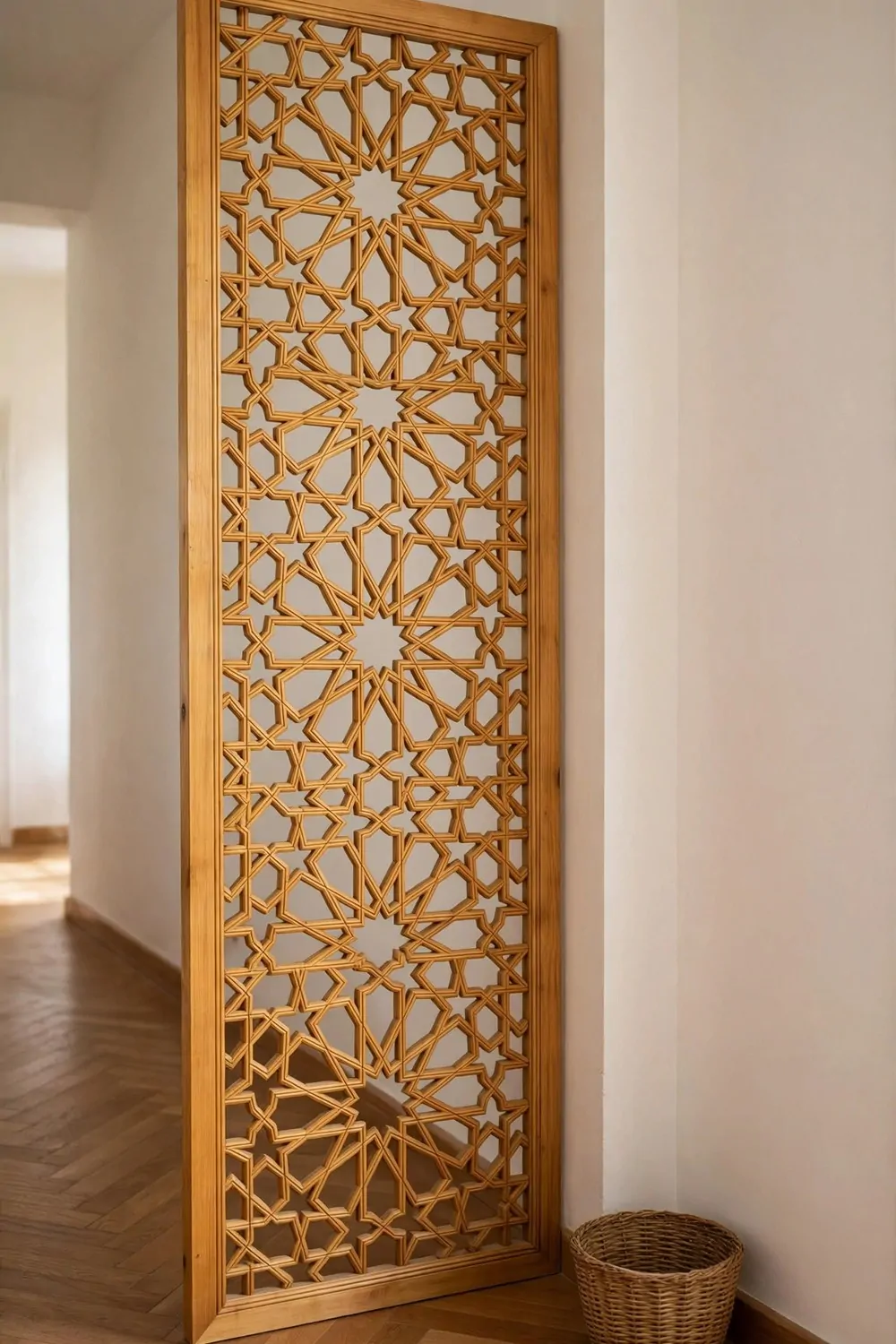
My hallway felt plain and a bit dark before. I set a honey coloured mashrabiya screen along one wall. Now the whole walk feels warm and bright.
The honey tone glows soft in the morning light.
The pattern has small stars and thin lattice lines. Each star lets a little light slip through.
Typical cost $15 to $31.
You can hang a small hook near it for a light scarf. I keep the floor clear so no one trips on the way past.
I dust the lattice with a soft brush on Sundays. The brush gets into the small corners fast. Then I give the wood a quick wipe with a dry cloth.
Guests always stop and look at the pattern.
The screen splits the hall from the sitting room in a soft way. You still hear voices from the next room. It feels open but not too open.
If your hall is narrow, pick a slim frame and a light pattern. It will add beauty and still leave room to walk.
12. A Grey Washed Mashrabiya Screen in the Kids Room
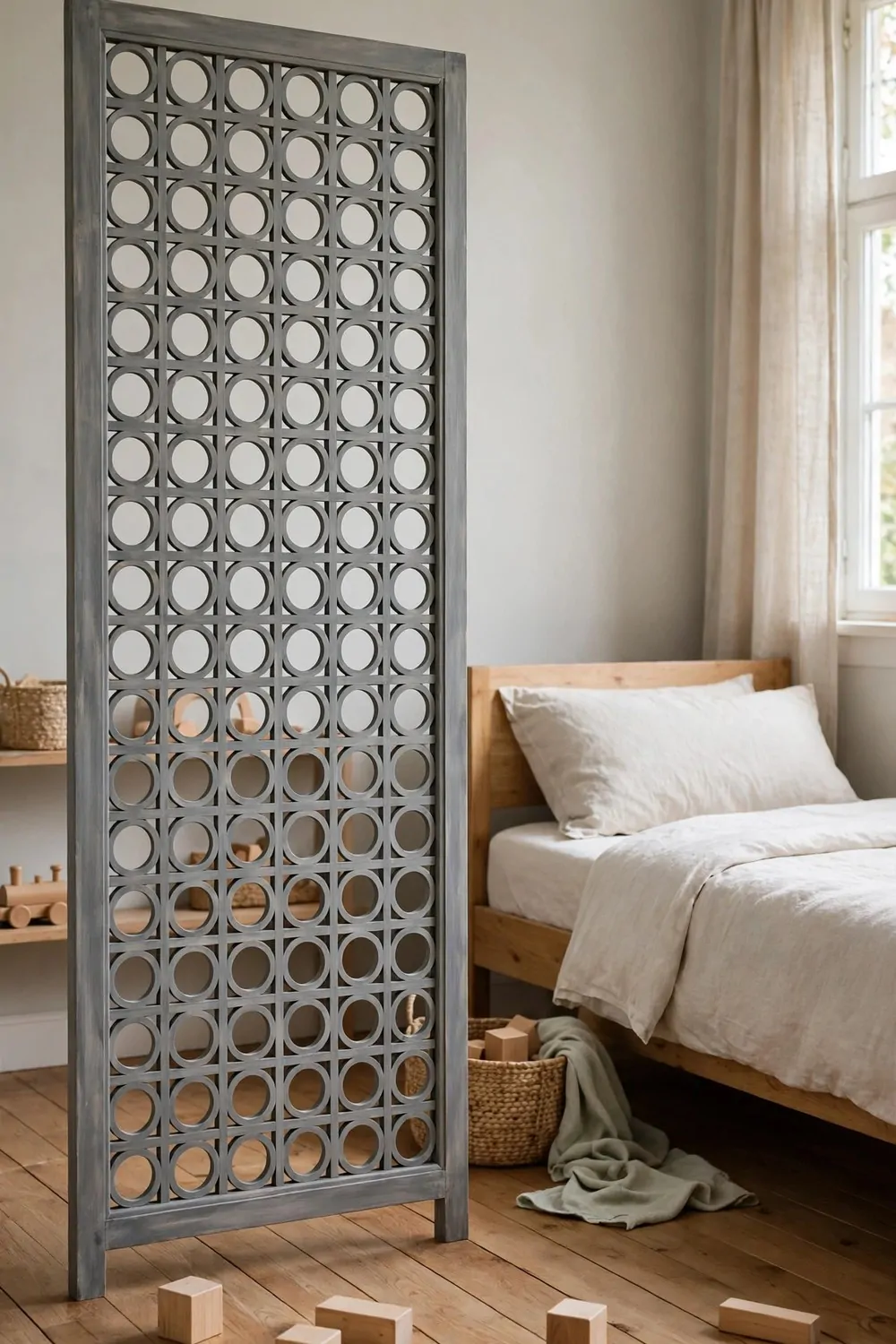
I put a grey washed mashrabiya screen in the kids room to make a small play corner.
The wood looks soft grey with pale lines. The pattern has round circles in neat rows.
It splits the sleep side from the play side in a gentle way. My kids know where toys stay and where beds stay. The room feels tidy even on busy days.
The screen stands tall, but the open circles let me see through it. I can watch the kids play while I fold clothes nearby.
You can set a small basket of soft toys beside it if you want.
I clean it with a damp cloth and then dry it right away. The grey wash stays fresh when I do it once a week. I check the base each time to make sure it stands firm.
The circles let soft light pass into the play corner. It feels bright but still calm for rest time.
Typical cost $9 to $24.
If you make one for a kids room, pick smooth wood with no sharp edge. Place it where it will not block the door.
13. A Teak Mashrabiya Screen Around the Reading Chair
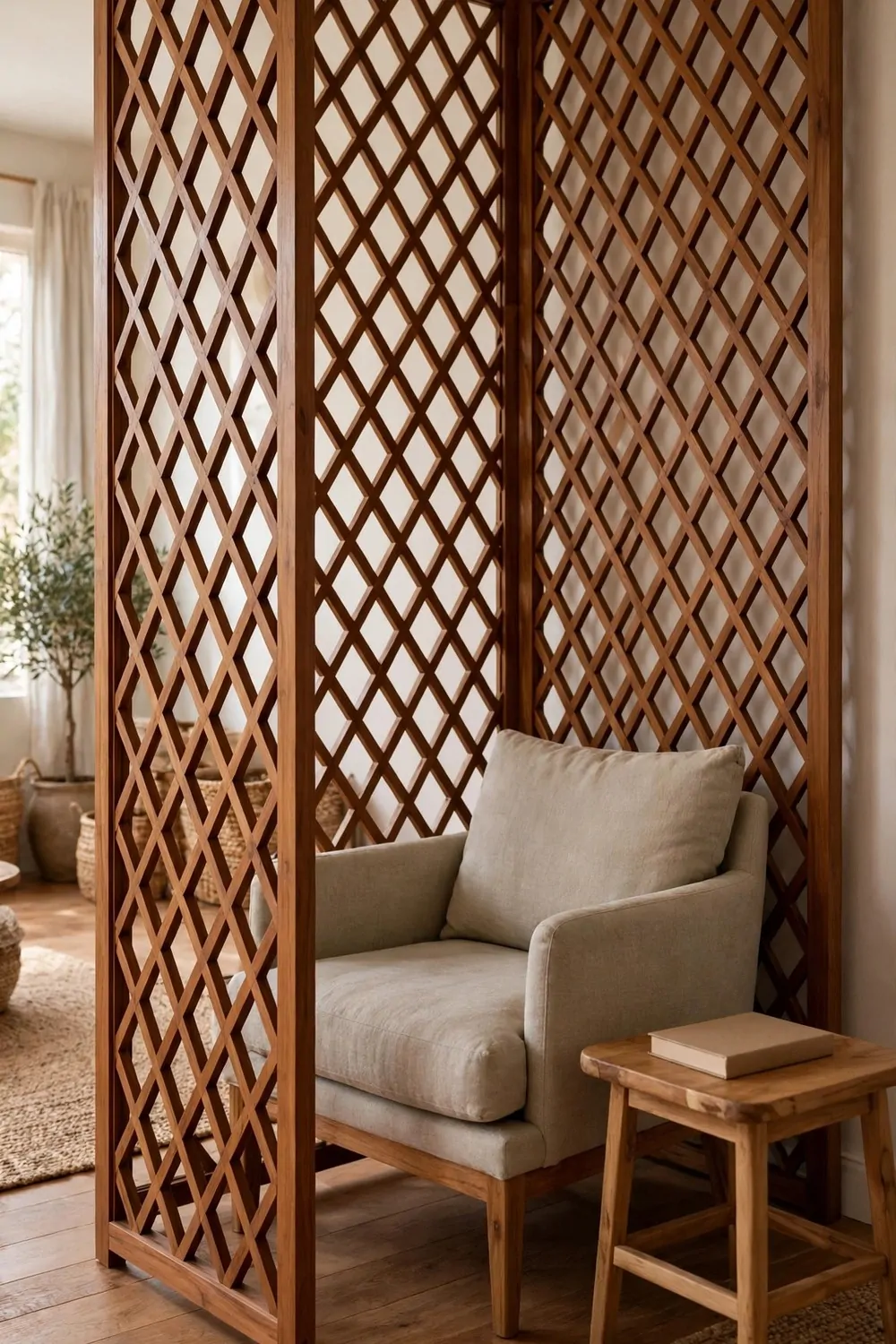
I set a teak mashrabiya screen around my reading chair. It makes a small quiet nook just for me.
The teak wood has a deep warm brown tone.
The pattern has small diamonds in neat rows. The diamonds frame the chair in a lovely way. Light falls through the gaps and lands soft on the floor.
You can set a small side table next to the chair if you want. A cup of tea can sit there while you read.
Typical cost $18 to $36.
I brush the dust from the diamonds with a soft dry brush. Then I rub the teak with a clean cloth to keep its shine. It takes just a few minutes each week.
I read there each night before bed.
The screen blocks the view of the busy room behind me. My mind feels calm when I sit in that small nook.
If you want a reading nook, measure the space round your chair first. Pick a teak screen that fits close but leaves room to move. Then settle your chair in and enjoy the quiet.
14. A Slim Mashrabiya Screen Beside the Stairs
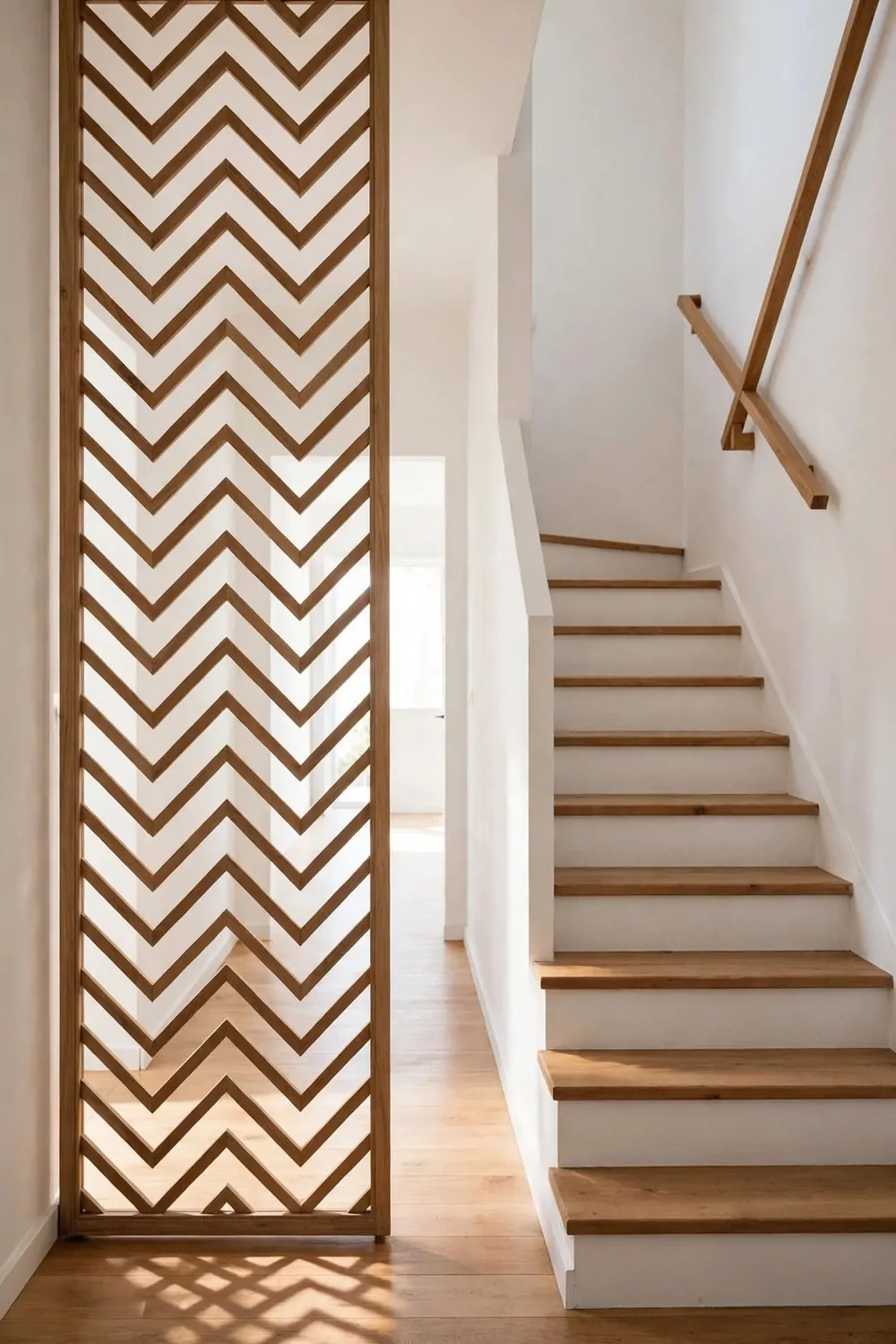
Our stairs felt bare and a bit open. I fixed a slim mashrabiya screen beside the stairs. It adds shape and keeps the stair side safe and neat.
The pattern has thin chevrons that point up. The wood is pale brown and looks light next to the wall.
It makes the stairs feel like part of the room.
A small plant pot on the floor by the base adds a green touch if you want one. Pick a plain pot so the pattern stays the star. I keep the steps clear so no one trips.
I check the screen each month to make sure it still stands firm. The slim frame fits tight in a narrow gap.
I wipe it down with a dry cloth when I clean the stairs.
Typical cost $11 to $27.
Light from the hall shines through the chevrons in the day. The shadows make soft lines on the wall. It looks lovely and costs little to keep.
If your stair side is narrow, measure it twice before you buy. A slim screen works best when it does not stick out.
15. A Cream Mashrabiya Screen in the Home Office
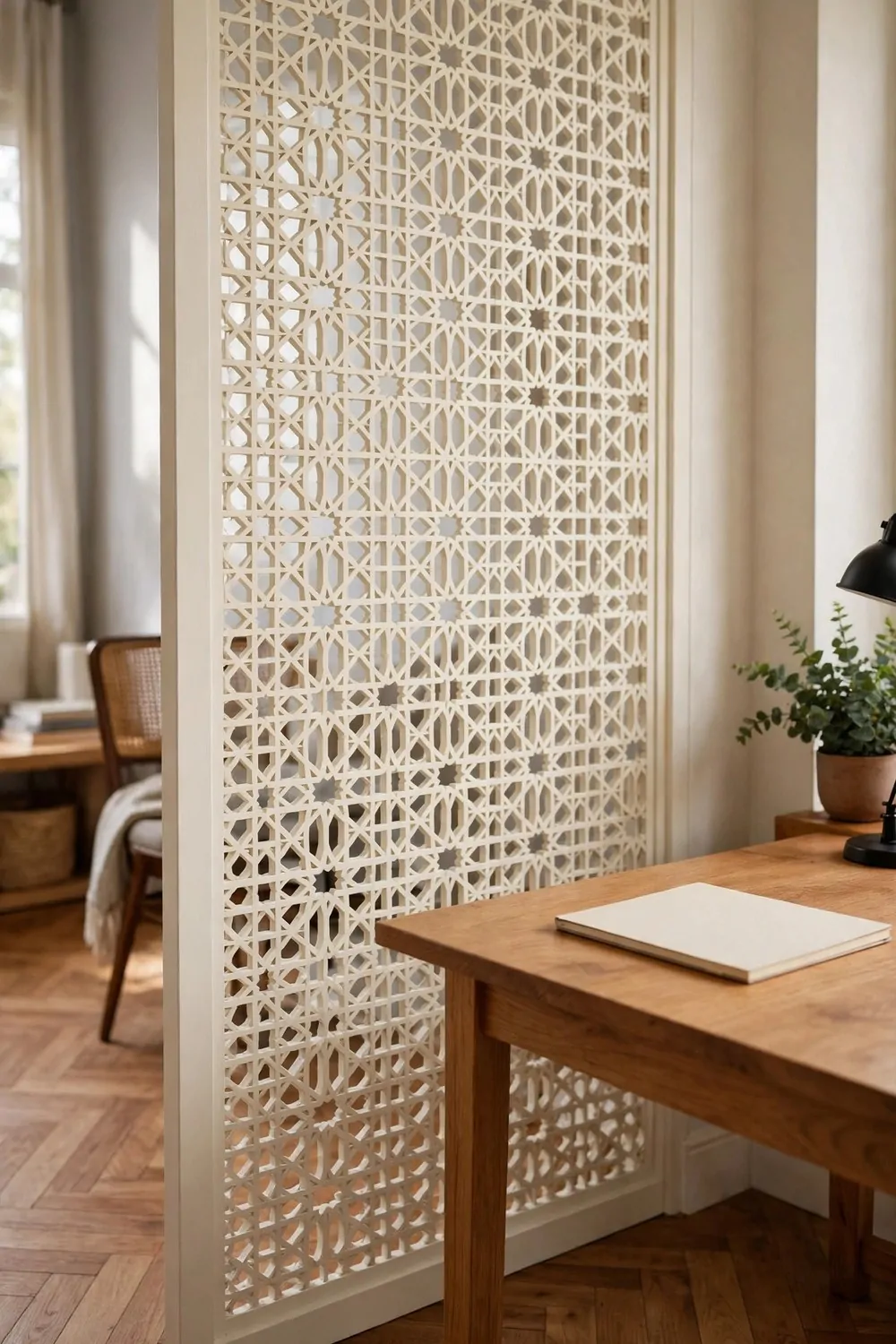
I put a cream mashrabiya screen in my home office to split work from rest.
The cream wood looks soft and clean. The pattern has small stars and diamonds in neat rows. It lets light in while it hides the mess behind it.
Typical cost $14 to $29.
My desk sits on one side and a small chair sits on the other. I can focus better when the screen is between them.
You can set a small notebook on the desk near the screen if you want. A plain pen pot can sit there too. I keep papers off the floor so the space stays tidy.
I dust the trellis with a feather duster each week. The cream tone stays bright when I keep dust off it.
It makes my small office feel calm and neat.
When I finish work, I walk round the screen and leave the desk behind. That small step helps me rest.
If you work from home, pick a cream screen that fits your wall gap. Measure the width first and leave space for your chair. Then place it straight and enjoy your quiet work spot.
16. A Cedar Mashrabiya Screen on the Balcony Door
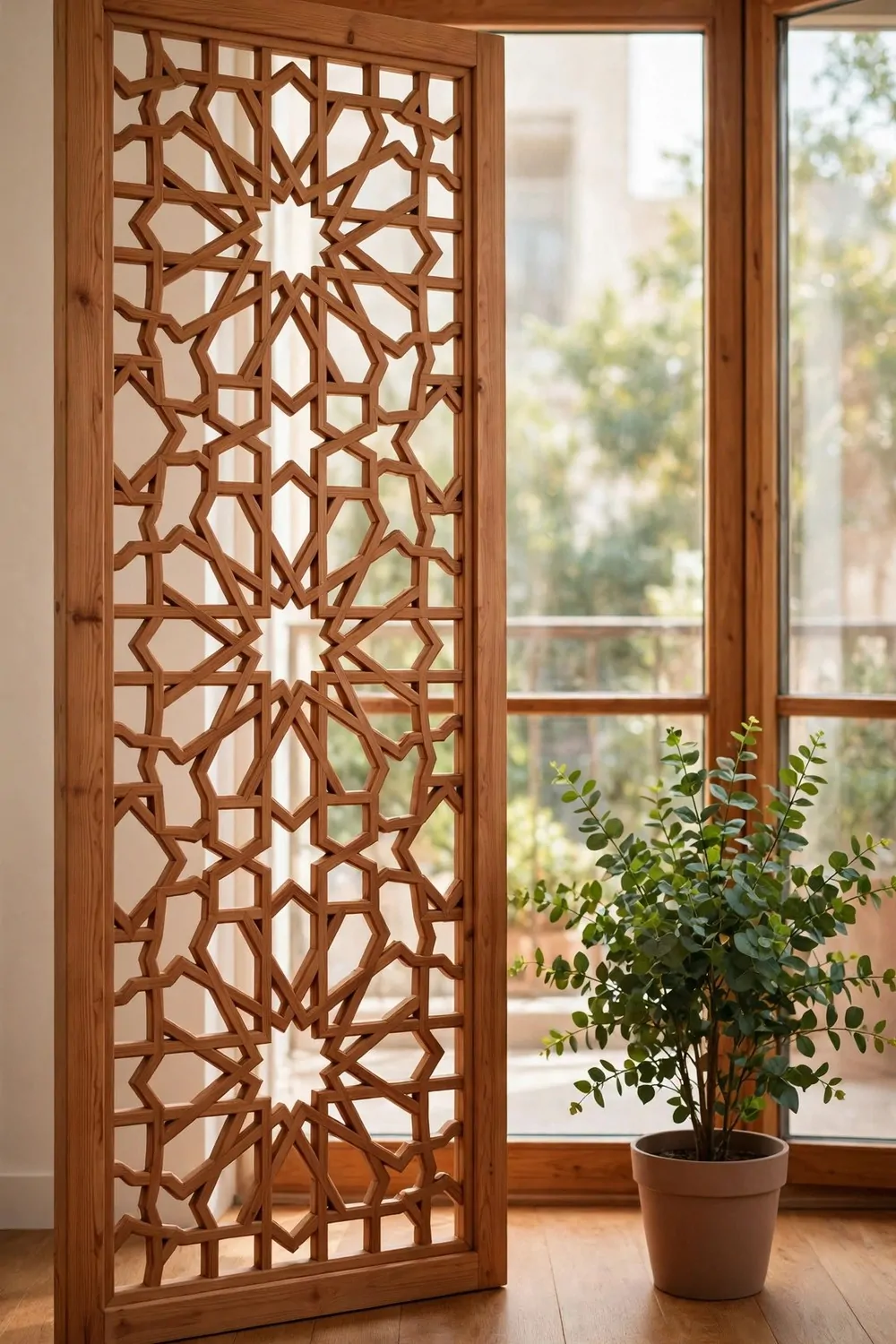
I set a cedar mashrabiya screen by the balcony door. It lets air in and still gives us some shade.
The cedar wood has a rich red brown tone.
The pattern has eight-point stars and small diamonds. The stars look bold from inside the room. Sunlight falls through them and makes soft shapes on the floor.
I love how the room smells fresh like wood and air.
You can set a small stool near the door if you want. I keep the path to the balcony clear each day.
I wipe the cedar with a dry cloth after rain. Then I let it dry in the sun for a while. The wood stays strong when I care for it like this.
The screen splits the inside room from the balcony in a soft way. You still see the sky through the small gaps.
It feels cool and calm near the door in the warm hours.
Typical cost $16 to $34.
17. A Low Mashrabiya Screen Around the Prayer Mat
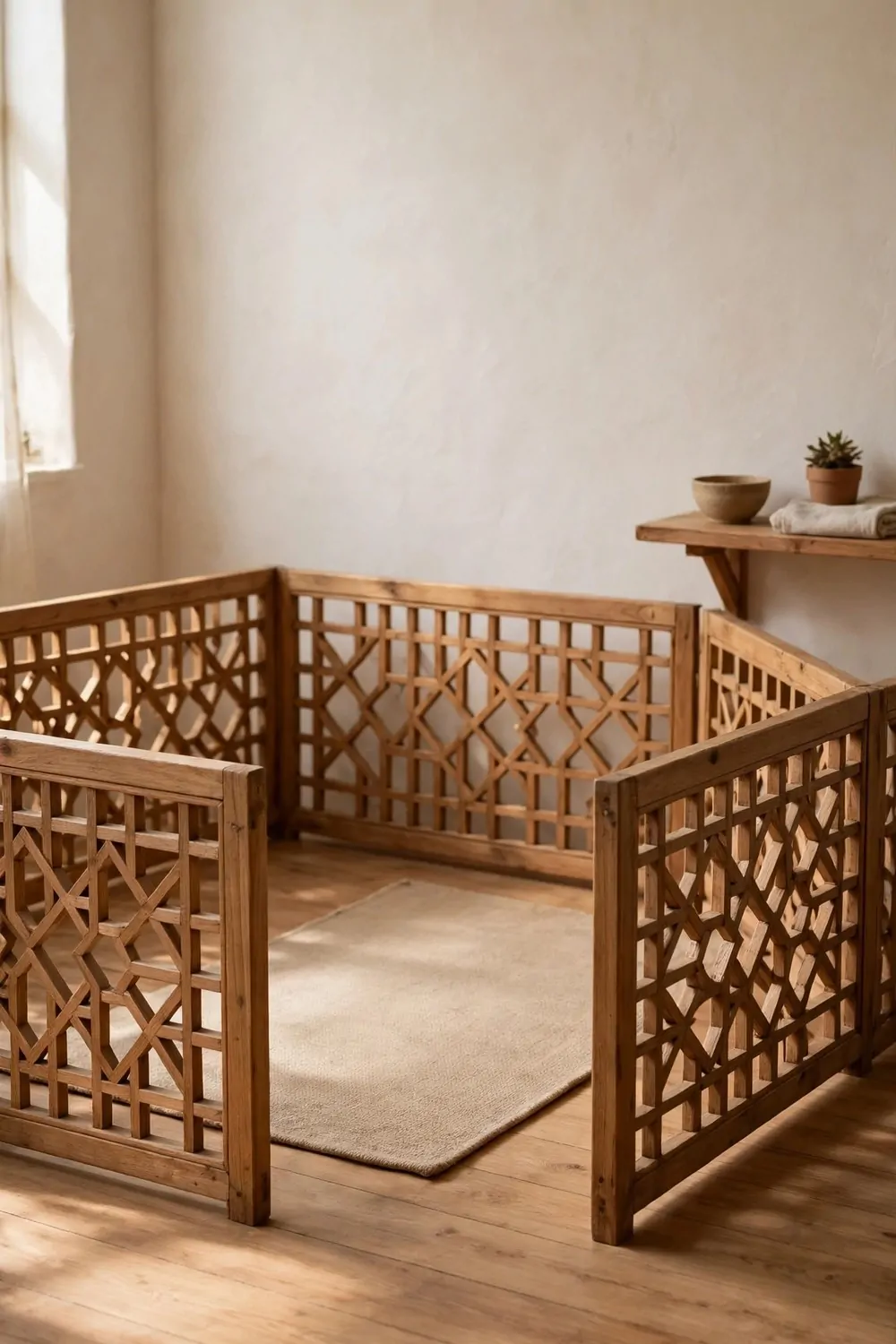
I set a low mashrabiya screen around the prayer mat. It makes a small quiet corner in the room. The low height keeps the space open and calm.
Typical cost $10 to $22.
The pattern has small diamonds and neat lattice lines. The wood is light brown and looks soft next to the mat.
I feel calm when I step into that small corner.
You can set a small plain shelf near it for a few books if you want. Keep the mat flat and clear. I fold the mat and keep it tidy after each use.
I dust the lattice with a soft cloth twice a week. The low screen is easy to reach and clean.
The screen splits the prayer corner from the rest of the room in a gentle way. No one walks through that small space now. It feels like a quiet spot just for prayer.
My family likes the calm feel it adds to the room.
If you want one, pick a low screen that fits your mat space. Place it with care so the mat stays flat and free.
18. A Bold Geometric Mashrabiya Screen in the Living Room
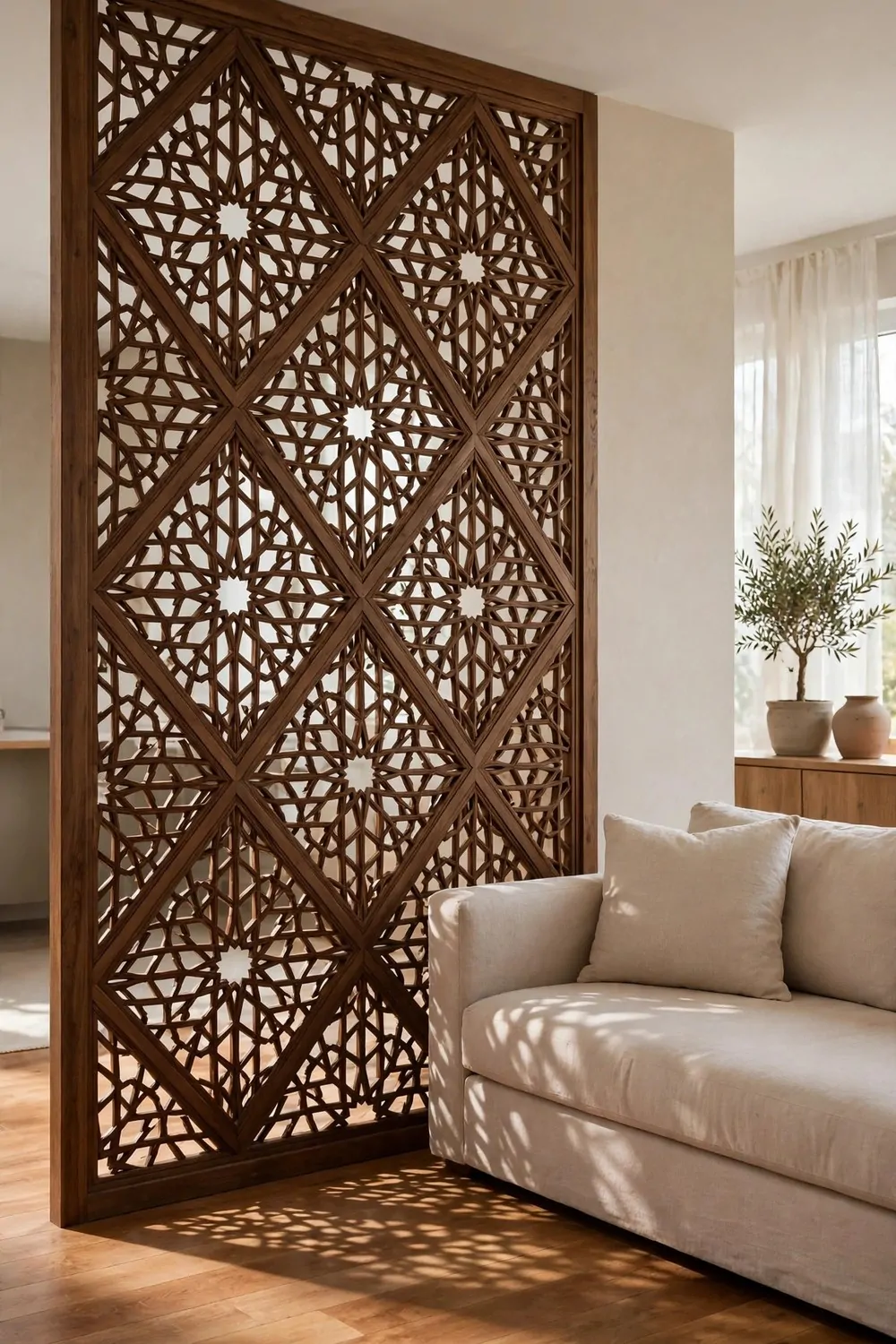
I put a bold geometric mashrabiya screen in the living room as the main star.
The pattern has big diamonds with bold stars inside and thick lattice lines. The wood is dark brown and looks strong next to the sofa.
It splits the sitting side from the dining side in a clear way.
You can set a small vase on a side table near it if you want. Pick a plain vase so the bold pattern stays first. I keep the floor in front clear so the screen stands out.
Light from the window shines through the big shapes in the day. The room feels bright and full of life.
Typical cost $19 to $38.
I clean it with a soft brush and then a dry cloth. The brush gets dust out of the thick lines fast. I do it once a week and the dark wood stays rich.
Guests always ask where I found such a bold screen.
If you want a bold screen, measure your living room gap first. Pick a strong pattern that fits your sofa and your style.
19. A Soft Green Mashrabiya Screen in the Bedroom
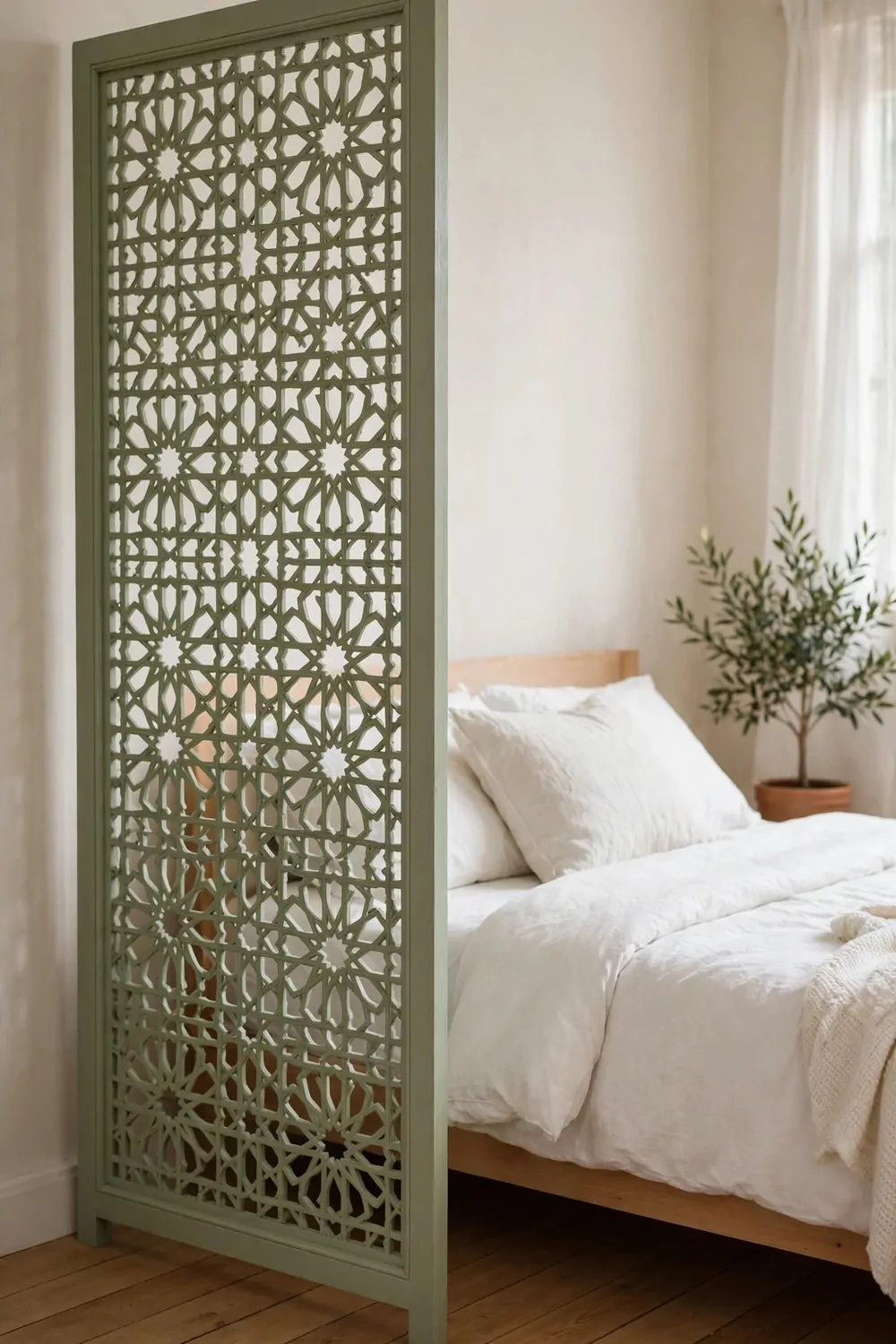
I set a soft green mashrabiya screen beside my bed and it splits the room in a calm way. The pale green wood has small eight-point stars cut all through it.
Light comes through the stars in the morning and makes soft shapes on the floor.
A small plant pot on the floor by the screen adds life if you like green. You can lay a plain cream rug under the bed so the green feels soft, not loud. The screen hides the laundry basket behind it and the room looks neat.
Each week I dust the lattice with a dry cloth and it comes clean fast.
The screen stands on two small feet and does not wobble when I walk past it. You can slide it a little to the left when you want more light by the bed.
I picked a soft green paint with no shine so the wood still shows through. The diamonds between the stars are small and neat, and they let air move through the room. At night the screen makes the bed corner feel quiet and private.
Typical cost $12 to $18.
You can hang a plain white curtain behind the screen for extra shade. You can lay a spare blanket on a chair near the screen too.
It is a small change that makes the whole bedroom feel calm.
20. A Two Panel Mashrabiya Screen in the Dressing Area
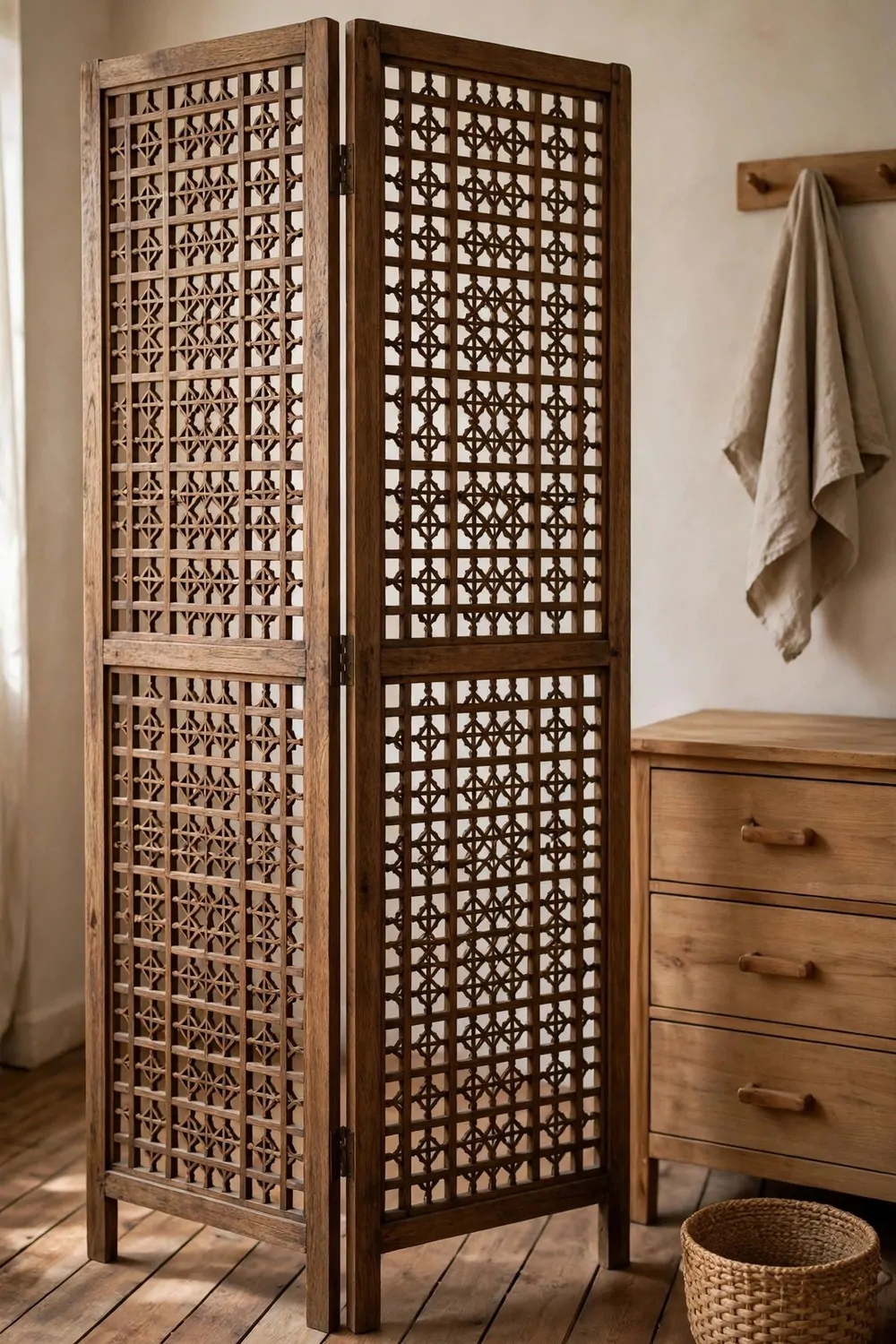
I put a two panel mashrabiya screen in the corner of my dressing area and it gives me a small private spot.
The two panels fold in the middle, so I can open them flat or angle them like a soft V. The wood is a warm honey tone and the pattern is rows of small squares. You can set a small stool behind the screen and it stays out of sight.
My plain wood dresser stands just past the screen. I keep folded clothes in the top drawer where I can reach them.
I measure the corner first so the two panels fit with room to walk around them.
The squares are cut clean, and light makes a soft net of shapes on the wall behind. I keep a woven basket near the screen for scarves and belts. When friends come over, I fold the screen flat and lean it by the wall.
Typical cost $15 to $22.
You can drape a light cotton cloth over the top rail to soften the look. I dust the edges with a small brush so the corners stay clean.
It turns a plain corner into a dressing nook in one afternoon.
I like how the screen hides the mess while I get ready. It is simple, and it works every day.
| Idea | Main change | Typical cost |
|---|---|---|
| A Honey Coloured Mashrabiya Screen in the Hallway | Honey star screen warms the hallway | $15 to $31 |
| A Grey Washed Mashrabiya Screen in the Kids Room | Grey circle screen makes a play corner | $9 to $24 |
| A Teak Mashrabiya Screen Around the Reading Chair | Teak diamond screen makes a reading nook | $18 to $36 |
| A Slim Mashrabiya Screen Beside the Stairs | Slim chevron screen beside the stairs | $11 to $27 |
| A Cream Mashrabiya Screen in the Home Office | Cream trellis screen splits work and rest | $14 to $29 |
| A Cedar Mashrabiya Screen on the Balcony Door | Cedar star screen shades the balcony door | $16 to $34 |
| A Low Mashrabiya Screen Around the Prayer Mat | Low diamond screen makes a prayer corner | $10 to $22 |
| A Bold Geometric Mashrabiya Screen in the Living Room | Bold star screen stars in the living room | $19 to $38 |
| A Soft Green Mashrabiya Screen in the Bedroom | soft green screen beside the bed | $12 to $18 |
| A Two Panel Mashrabiya Screen in the Dressing Area | two folding panels in the dressing corner | $15 to $22 |
| Total | $139 to $281 |
21. A Three Panel Mashrabiya Screen Across the Wide Hall
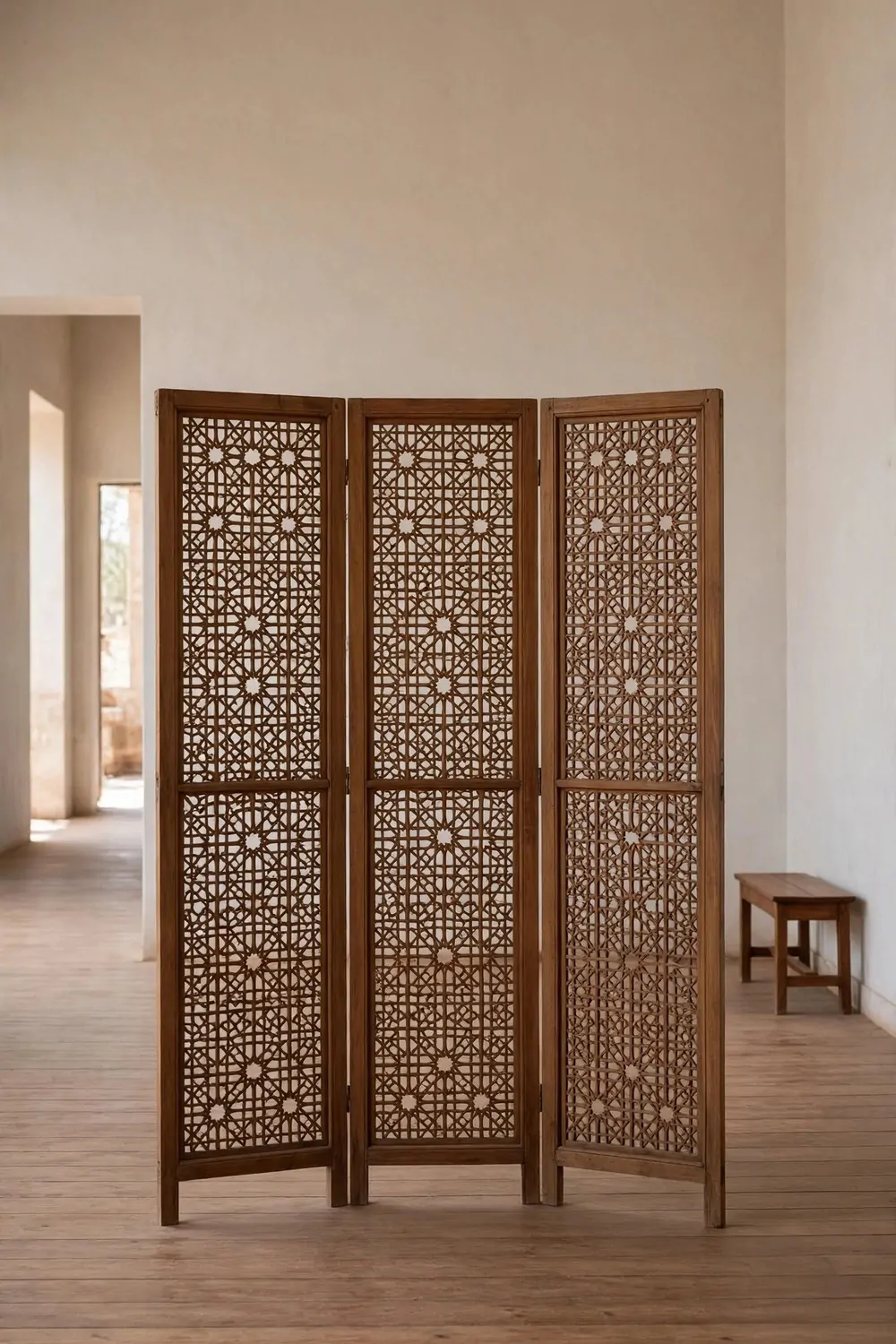
I stretch a three panel mashrabiya screen across my wide hall and it splits the long space into two calm parts. The panels are tall, and the wood is a deep walnut brown. Each panel has small eight-point stars in neat rows.
You can walk around either end, so the hall never feels blocked.
I set a low bench on one side so the hall feels lived in. The screen makes each side feel like its own little room.
Light from the hall window falls through the stars and paints soft shapes on the floor. I keep the middle panel straight and angle the two side panels a little. The wide hall feels calm with the screen in place.
Typical cost $24 to $33.
I check the floor with a small level so the screen stands straight. You can add small felt pads under the feet to stop marks on the floor.
I wipe the panels with a damp cloth. Then I dry them right away.
You can hang a small framed print on the wall behind one panel for a soft focal point. I keep a basket of spare cushions on the far side, out of view. The hall feels less empty now, and it still feels open.
It is the biggest screen in my home, and it earns its place. I would pick the same tall panels again.
22. A Round Top Mashrabiya Screen by the Bookcase
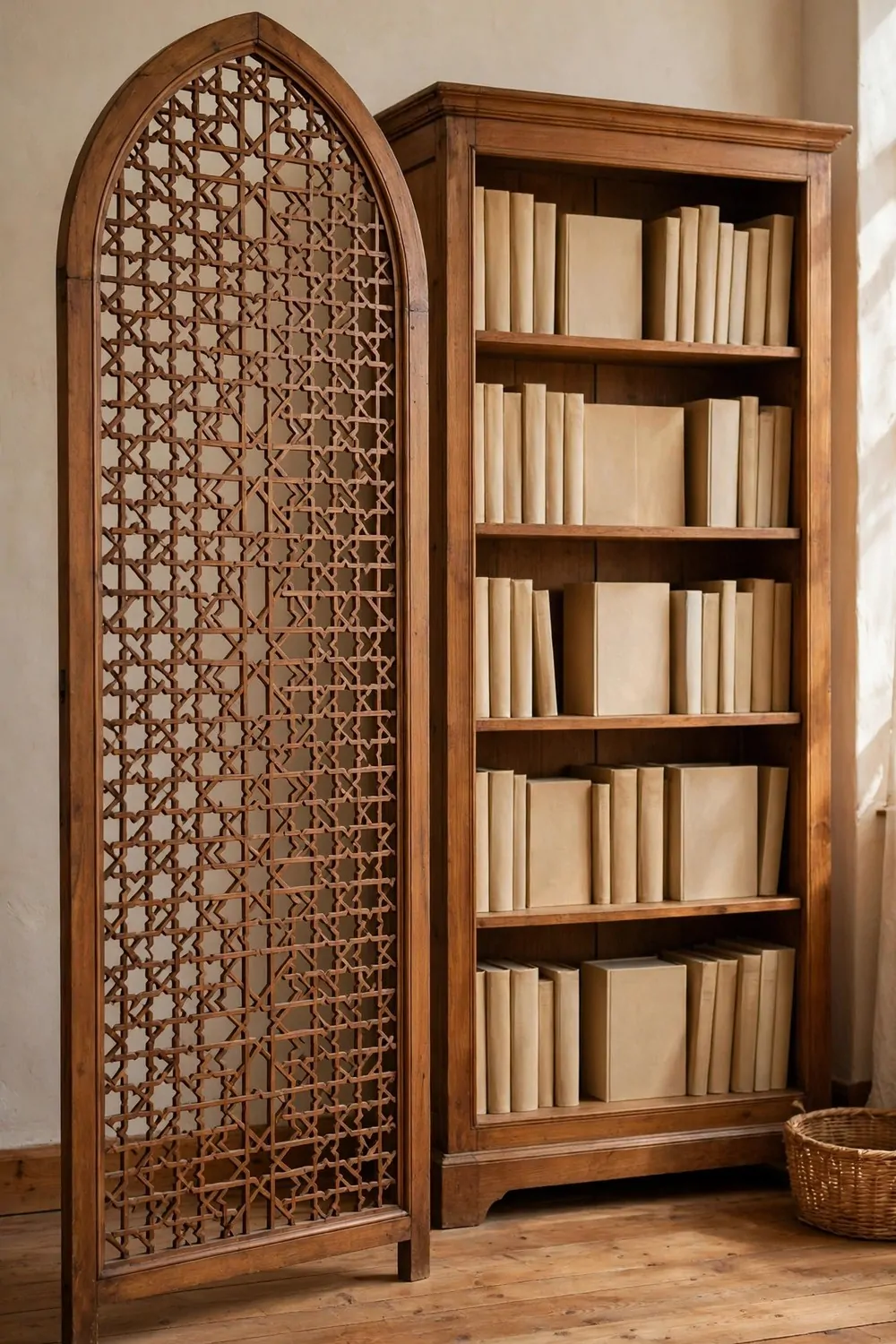
I lean a round top mashrabiya screen by my bookcase and the arch shape softens the whole corner.
The top of the screen curves like a soft arch, and the lattice inside is a mix of diamonds and small stars. The wood is a pale natural tone that matches the bookcase shelves.
You can set a small stack of books on the floor beside it if you like. You can keep a plain cushion near the screen for reading. The screen hides the shelf of old files behind it, and the corner looks tidy.
I dust the arch with a soft cloth so the curve stays clean. You can move the screen a few inches to meet the light from the window.
Typical cost $18 to $27.
The round top makes the screen feel less like a wall and more like a frame. I like how the arch softens the tall bookcase beside it. The pale wood glows a little in the light from the window.
I measure the space by the bookcase before I order, so the arch clears the shelf. You can turn the screen around if you want the flat side facing the room.
It is a quiet corner now, made for slow reading.
I sit there most evenings with a cup of tea. The light through the lattice falls on the pages, and it feels calm. A small screen can change a whole corner like that.
23. A Black Framed Mashrabiya Screen in the Entryway
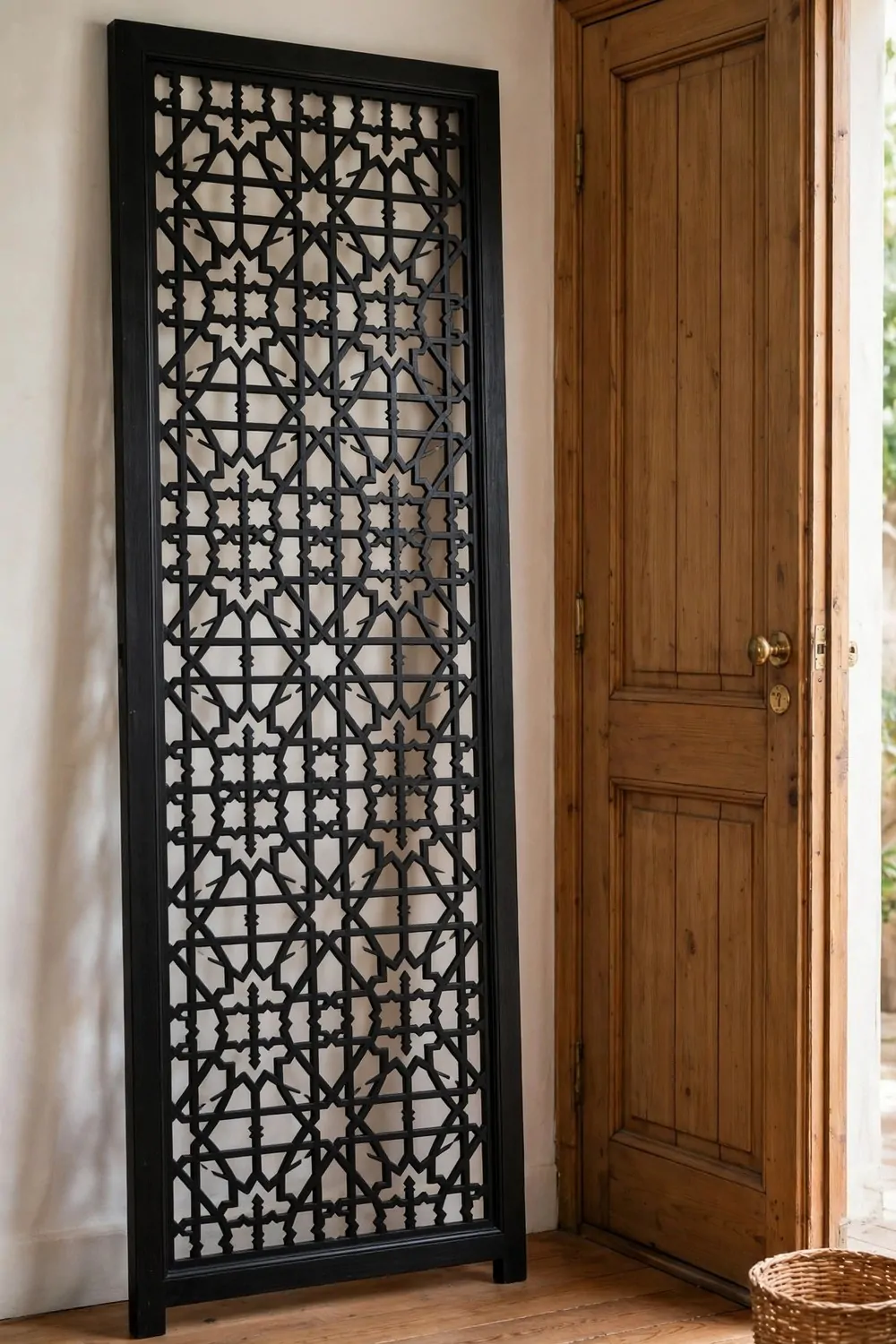
I place a black framed mashrabiya screen in my entryway and it gives the front door area a clean edge. The frame is matte black, and the lattice inside is dark wood with bold stars.
The bold stars draw the eye as you walk in. You can set a small shoe tray behind the screen to keep shoes out of sight. You can hang your keys on a small hook on the wall beside it.
The black frame stands out against my pale wall in a good way.
I wipe the frame with a soft cloth each week so it stays matte and clean. You can slide the screen aside when you carry big bags through the door.
Typical cost $21 to $30.
I picked a dark stain so the wood grain still shows through the black. The star pattern lets light through but hides the coats behind it. The tall screen makes the small entry feel grand.
I check that the feet sit flat on the wood so the screen never rocks.
You can add a small basket beside it for umbrellas. You can keep a plain bench on the far side for sitting to put shoes on.
The entryway feels finished now, not bare. Guests see the screen first, and it sets a calm tone. One plain screen can do a lot of work in a small hall.
24. A Natural Oak Mashrabiya Screen for the Nursery
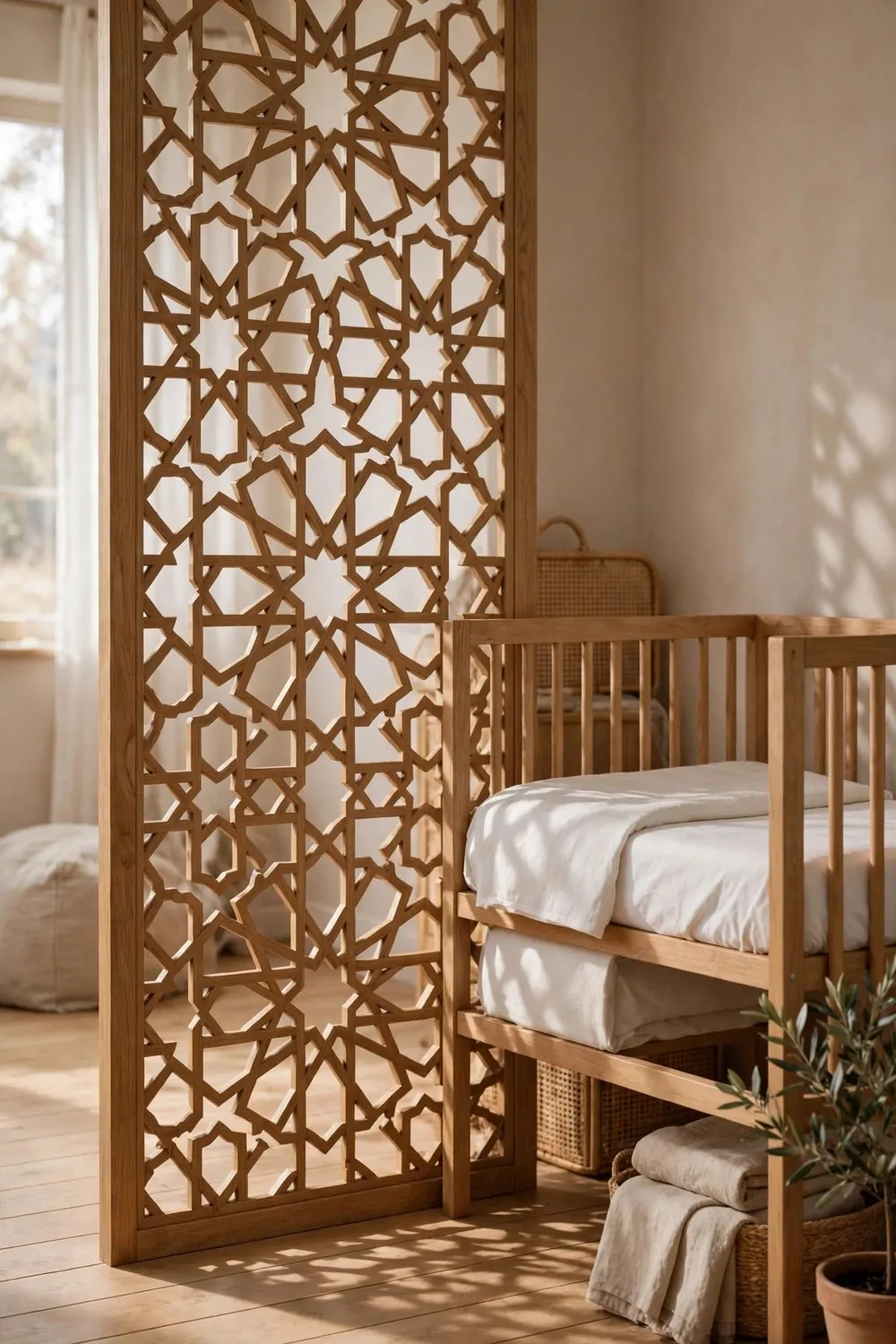
I set a natural oak mashrabiya screen in the nursery to split the sleep corner from the play corner. The oak is pale and smooth, and the pattern is gentle rows of small stars and diamonds. It feels soft and safe, with no sharp edges anywhere.
You can set a small toy basket behind the screen to keep the floor clear. You can lay a soft rug on the play side so little feet have a warm spot.
The screen lets me see through the lattice while the baby naps.
I wipe the oak with a damp cloth and dry it with a soft towel. The stars in the pattern are open, so air moves through with ease. A small night light on the sleep side can glow softly through the lattice.
You can move the screen to the wall when you need the whole room open. I keep a folded blanket in the basket under the crib for cool nights.
Typical cost $11 to $17.
I sanded one rough corner with fine paper until it felt smooth. The oak tone matches the crib wood, and the room feels like one calm space. I like that the screen can move with us as the baby grows.
It is a gentle divider, and it does its job without any fuss.
I check the feet each week to make sure the screen stands firm. It has become my favorite piece in the room.
25. A Carved Mashrabiya Screen as a Headboard Wall
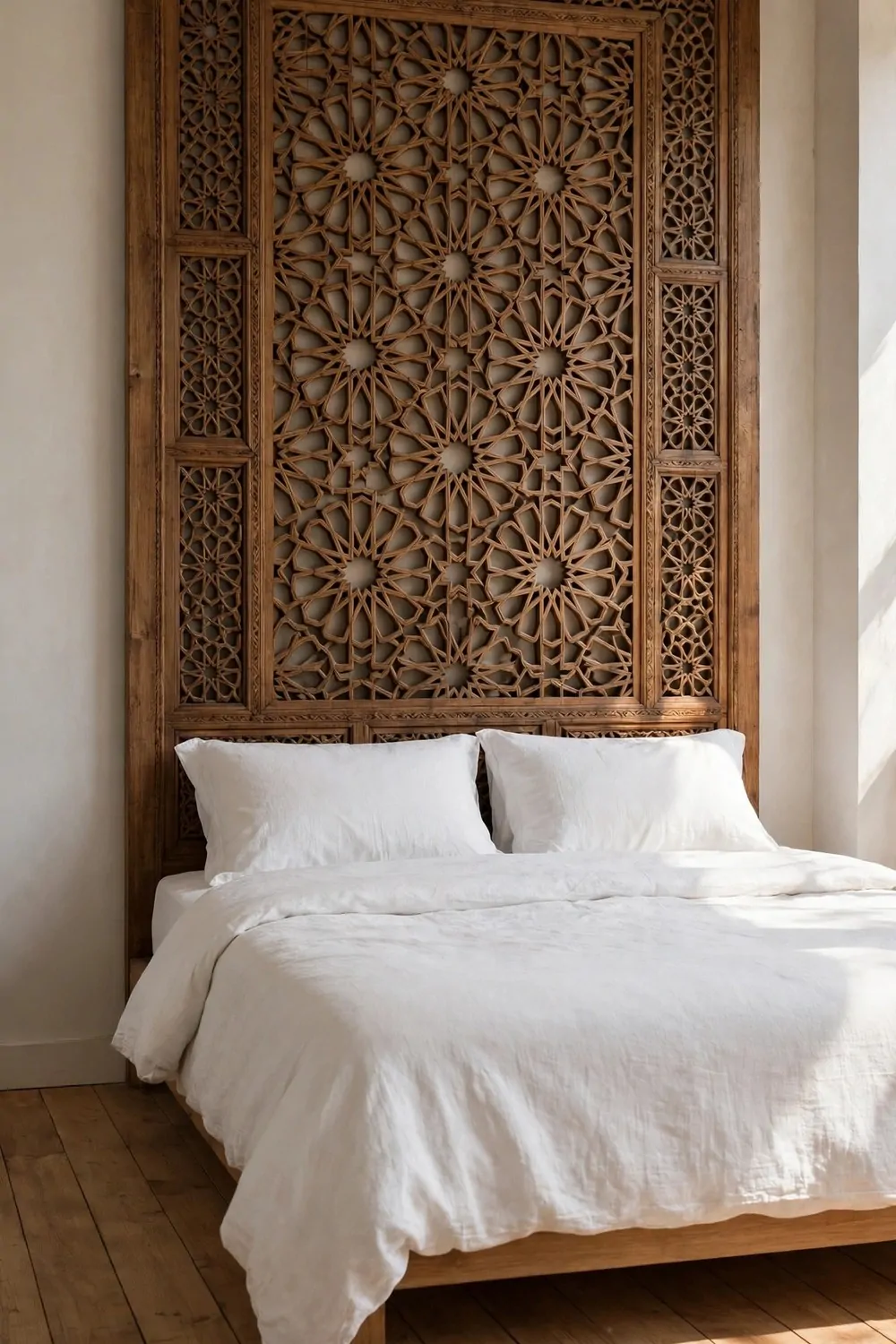
I fix a carved mashrabiya screen to the wall behind my bed and it works as a headboard wall.
The carving is deep, with layered stars and fine lattice work you can feel with your hand.
The wood is a rich medium brown, and the pattern repeats in neat rows from top to bottom. You can set two small lamps on the bedside tables in front of it.
I hang the screen on two strong brackets so it sits flat and safe. The carved stars throw soft shadows on the wall at night. I keep the bedding plain white so the dark wood stands out.
You can dust the carving with a small brush to reach the deep cuts. I measure the wall twice so the screen lines up with the bed.
Typical cost $27 to $36.
With this wall behind it, the bed feels like the heart of the room. I picked a screen a little wider than the bed so it frames the pillows. I keep the pillows plain white so the carved wood stays the star.
You can add a small shelf on one side for a book and a glass of water. I sleep better with the carved stars above my head.
It is the boldest screen in my home, and I love it.
26. A Freestanding Mashrabiya Screen in the Middle of the Room
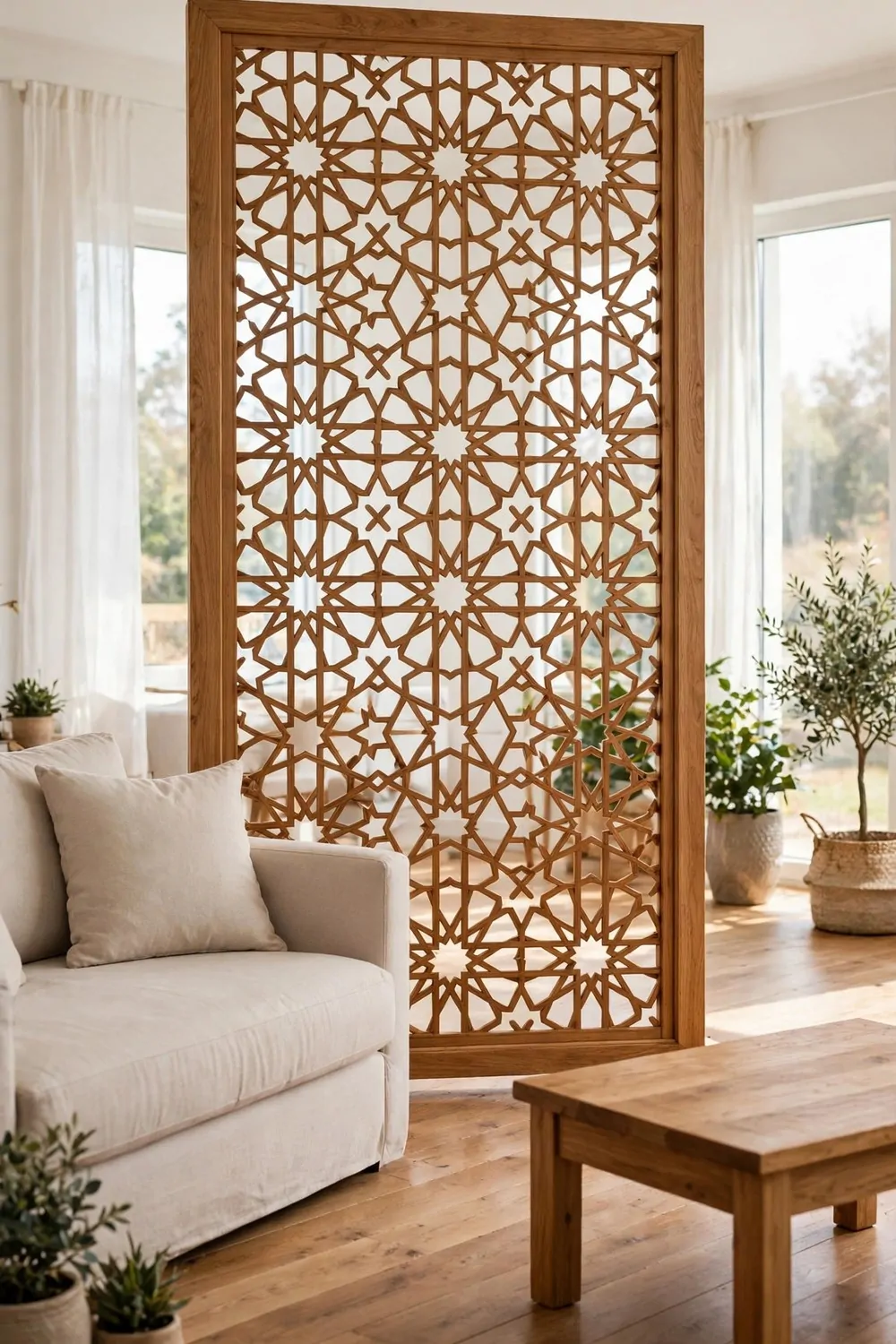
I stand a freestanding mashrabiya screen right in the middle of my room, and it splits one big space into two useful halves. The screen has a tall panel with a trellis of small diamonds.
One side is now my reading spot, and the other side is my work table.
You can walk around the screen on both ends, so neither side feels shut in.
The wood is a warm teak tone, and the diamonds are even and neat. You can set a small lamp on the work side and a soft chair on the reading side. Light passes through the trellis, so both sides stay bright.
I shift the screen a few inches when the sun moves, so the light stays soft. You can shift the screen to one side to make a wide gap when friends visit.
I wipe the panels with a dry cloth, then run a small brush along the lattice edges. The feet are wide and flat, so the screen stands firm on the wood floor. You can keep a plain basket near the screen for notebooks and pens.
Typical cost $19 to $28.
It feels like I gained a whole extra room for the price of one screen.
I like how the middle of the room now has a purpose. It is a simple fix that changed how I use the space.
27. Pack a Small Mashrabiya Screen Kit in One Box
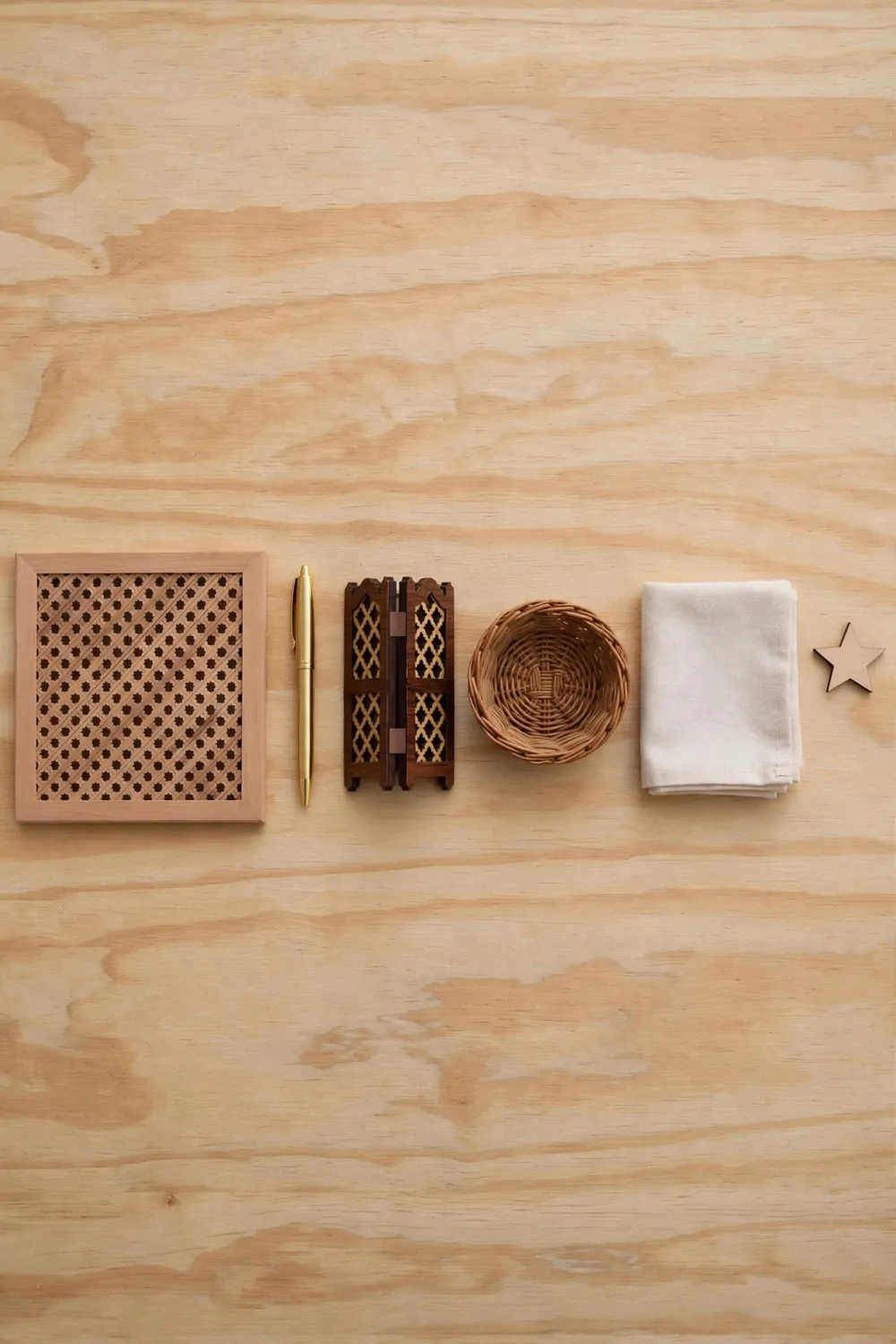
I pack a small mashrabiya screen kit in one box so I can try screen shapes at home. First I lay in a small plain mashrabiya screen panel, a panel to try screen shapes at home, $4 to $6. I wrap it in a soft cloth so the lattice stays safe in the box.
Next I add a plain gold mashrabiya screen pen, a pen to draw screen shapes on paper, $3 to $5.
Then I tuck in a small plain mashrabiya screen sample set, a set of screen samples to try at home, $2 to $4. I set the samples in a neat stack so they stay tidy in the box.
I drop in a plain woven mashrabiya screen basket, a basket to hold screen bits, $4 to $6.
After that I fold in a plain cotton mashrabiya screen cloth, a cloth to wipe a screen clean, $2 to $4. I lay the cloth flat next to the basket so it stays neat. The cloth keeps the panel free of dust when the box sits on a shelf.
Last I set a small plain mashrabiya screen star at the end, a star to lay on a screen, $3 to $5. I close the lid and the kit is ready to use.
Typical cost $18 to $30.
You can pull the box out on a quiet afternoon and try one idea at a time. I keep the box by my desk so the kit is always close at hand.
I stack the six pieces back in the box when I finish, and the lid clicks shut with a soft tap. Pick one small idea this week and see how a screen can shape your room. A little box like this makes the whole project feel easy and fun.
| Idea | Main change | Typical cost |
|---|---|---|
| A Three Panel Mashrabiya Screen Across the Wide Hall | three tall panels across the wide hall | $24 to $33 |
| A Round Top Mashrabiya Screen by the Bookcase | round top screen by the bookcase | $18 to $27 |
| A Black Framed Mashrabiya Screen in the Entryway | black framed screen in the entryway | $21 to $30 |
| A Natural Oak Mashrabiya Screen for the Nursery | natural oak screen in the nursery | $11 to $17 |
| A Carved Mashrabiya Screen as a Headboard Wall | carved screen as a headboard wall | $27 to $36 |
| A Freestanding Mashrabiya Screen in the Middle of the Room | freestanding screen in the middle of the room | $19 to $28 |
| Pack a Small Mashrabiya Screen Kit in One Box | small mashrabiya screen kit in one box | $18 to $30 |
| Total | $138 to $201 |
| Idea | Main change | Typical cost |
|---|---|---|
| a small plain mashrabiya screen panel | a panel to try screen shapes at home | $4 to $6 |
| a plain gold mashrabiya screen pen | a pen to draw screen shapes on paper | $3 to $5 |
| a small plain mashrabiya screen sample set | a set of screen samples to try at home | $2 to $4 |
| a plain woven mashrabiya screen basket | a basket to hold screen bits | $4 to $6 |
| a plain cotton mashrabiya screen cloth | a cloth to wipe a screen clean | $2 to $4 |
| a small plain mashrabiya screen star | a star to lay on a screen | $3 to $5 |
| Total | $18 to $30 |
Keep Reading
If you liked these ideas, you will love these posts too
Each post has more simple ideas you can try at home this weekend.
- 30 Geometric Pattern Ideas for Furniture and Trays
- 22 Geometric Pattern Rug Ideas for Living Rooms and Bedrooms
- 24 Geometric Pattern Cushion Ideas That Lift Any Room
- 28 Islamic Geometric Tile Ideas for Kitchens and Bathrooms
- 26 Geometric Pattern Accent Wall Ideas for a Bold Look
- 30 Reusable Eid Decor Ideas You Can Use Every Year