25 Halal Pantry Organization Ideas That Make Cooking Easy

I bought a second bag of lentils last week because I could not see the first bag hiding at the back of my pantry. That was the day I knew my pantry needed a real plan, not just more bags pushed in wherever they fit.
A messy pantry wastes your time every single day.
You open the door to grab rice and you move five jars first. You buy pasta you already own. You find a bag of flour that went stale months ago.
I felt that mess in my own kitchen for a long time. Small fixes changed it more than a big shop ever did.
These 25 halal pantry organization ideas keep every dry good where you can see it. You will spend less time hunting and more time cooking food your family loves.
You do not need new shelves or a big budget to start.
Pick one shelf this week and try one idea from this list. Move the jars, label the boxes, and put the thing you use most where your hand lands first. Your next dinner will feel calmer before you even light the stove.
1. Tall Jars for Rice, Flour and Pasta on One Shelf
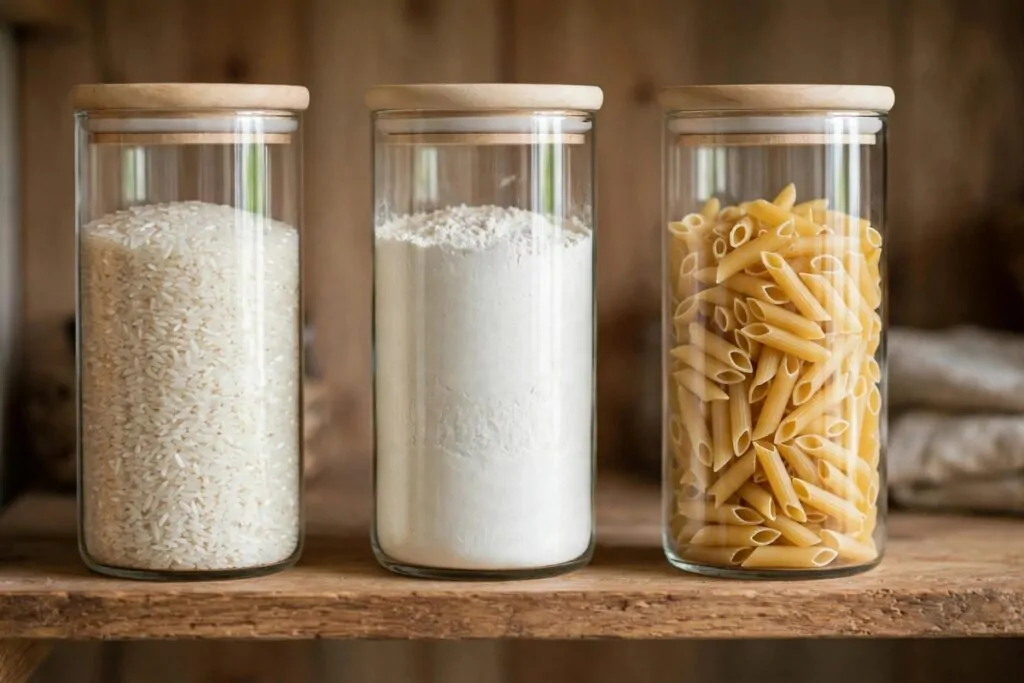
One shelf holds all my tall jars now, and dinner starts faster because of it. I can see the rice, the flour and the pasta without moving a single thing.
Three tall jars stand in a neat row, and I can see what is inside each one at a glance.
The rice jar sits on the left because I reach for it most days. The flour jar sits in the middle, and the pasta jar sits on the right. Clear glass helps me see when a jar runs low.
- Pick tall jars with wide mouths so your hand fits inside.
- Put a small label on each lid so you never mix up flour and sugar.
- Leave a little space at the top of each jar so the lid closes with ease.
I pour dry goods into the jars straight after the weekly shop. That one small habit keeps bags from piling up behind the jars.
The shelf stays tidy because each jar has its own spot.
Once a week I run a damp cloth over the shelf. The jars come off, the crumbs go, and the jars go back in the same order.
Tall jars stop the half open bags that used to fall over. No more flour dust on the shelf. No more pasta spilling out of a torn bag when I pull it free.
Typical cost $18 to $32.
2. Small Jars for Lentils and Beans on a Low Shelf
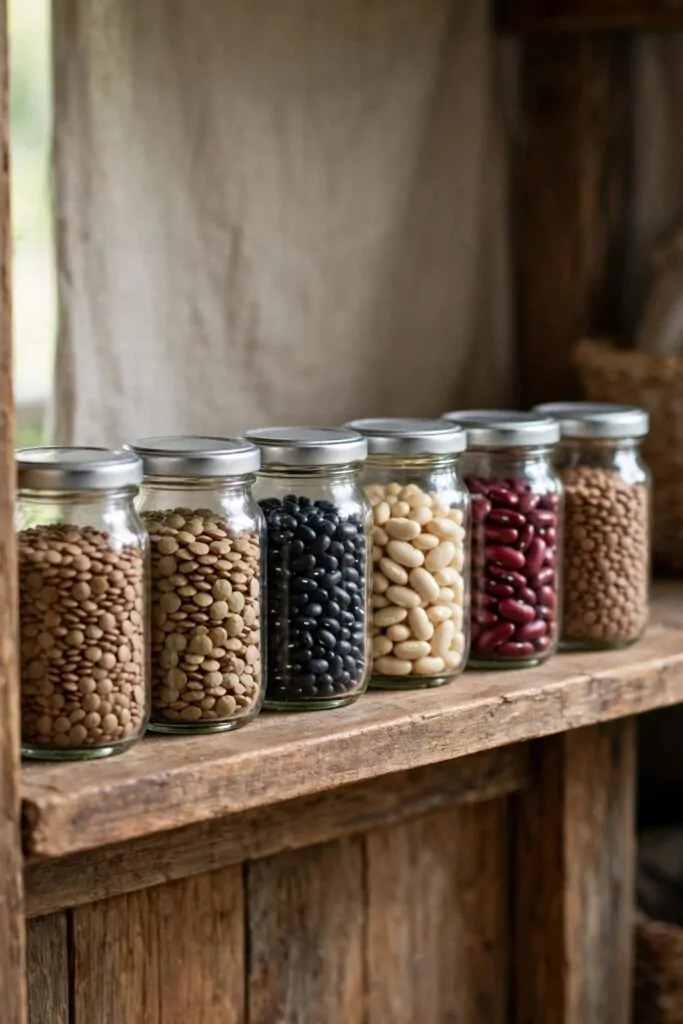
Six small jars live on the low shelf where my hand lands first.
Brown lentils fill the first jar, and green lentils fill the second. Black beans sit in the third jar, and white beans sit in the fourth. The last two jars hold kidney beans and small brown lentils.
Low shelves suit small jars because the jars are light and easy to lift. I never have to stretch up high with a full jar in my hand.
Each jar holds just enough for a few meals, so nothing sits there for months.
I rinse a jar and let it dry fully before I fill it again. A dry jar keeps lentils fresh for weeks. A wet jar would spoil the whole batch, so I never rush this step.
- Use short jars so the shelf above still has room to breathe.
- Write the date on the lid when you fill a jar.
- Keep a small scoop in the jar you use most.
The kids know the bean jars by colour now, which makes cooking together much simpler. They point, I pour, and dinner starts without a hunt through bags.
Small jars turn a jumble of bags into a calm little row.
Typical cost $12 to $24.
3. A Dark Basket for Onions and Garlic
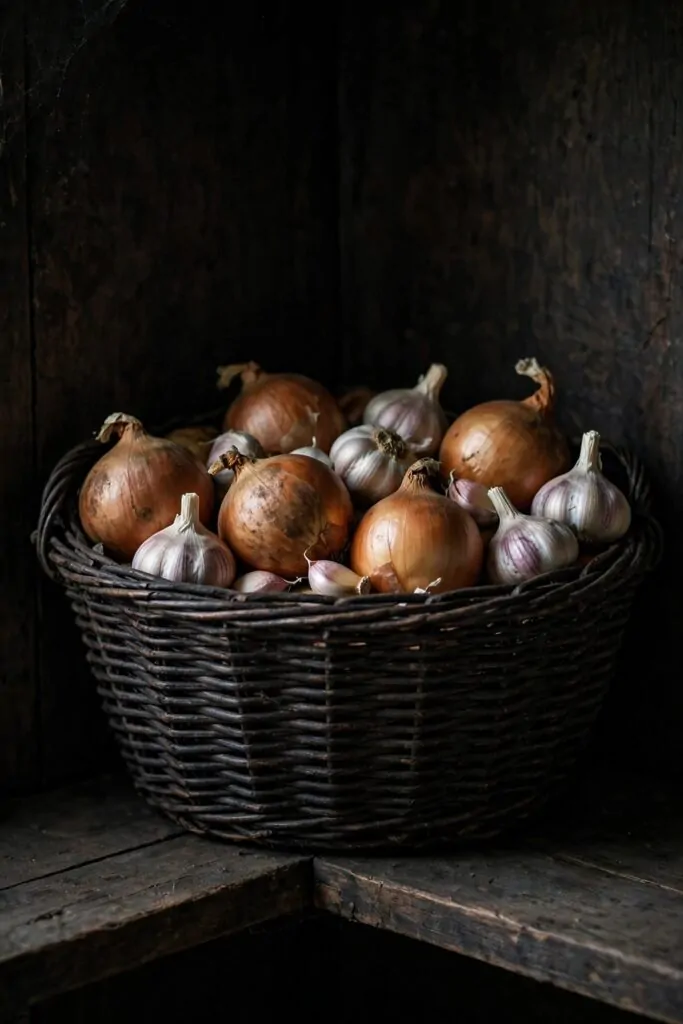
Onions and garlic last longer in the dark, so they got their own basket. The basket sits on a low shelf where air can move around it. I lined it with a plain cloth so the skins stay put.
One dark basket holds all my onions and garlic in one neat spot. I can grab what I need without digging through a bag.
- Pick a basket with gaps in the weave so air flows through.
- Keep the basket away from potatoes so both last longer.
- Toss any soft onion straight away so the rest stay firm.
The basket looks neat and plain, and that suits the pantry well.
I check the basket each time I cook and pull out any onion that feels soft. A quick look now saves a bad smell later.
Garlic heads sit on top of the onions where I can see them. I take one head at a time and leave the rest in place. The basket never gets too full because I buy only what the week needs.
A dark basket is a small fix that makes a real difference.
I shake the cloth out once a week and give the basket a quick wipe. The shelf under it stays clean and dry.
Typical cost $9 to $16.
4. A Rack for Spice Jars on the Pantry Door
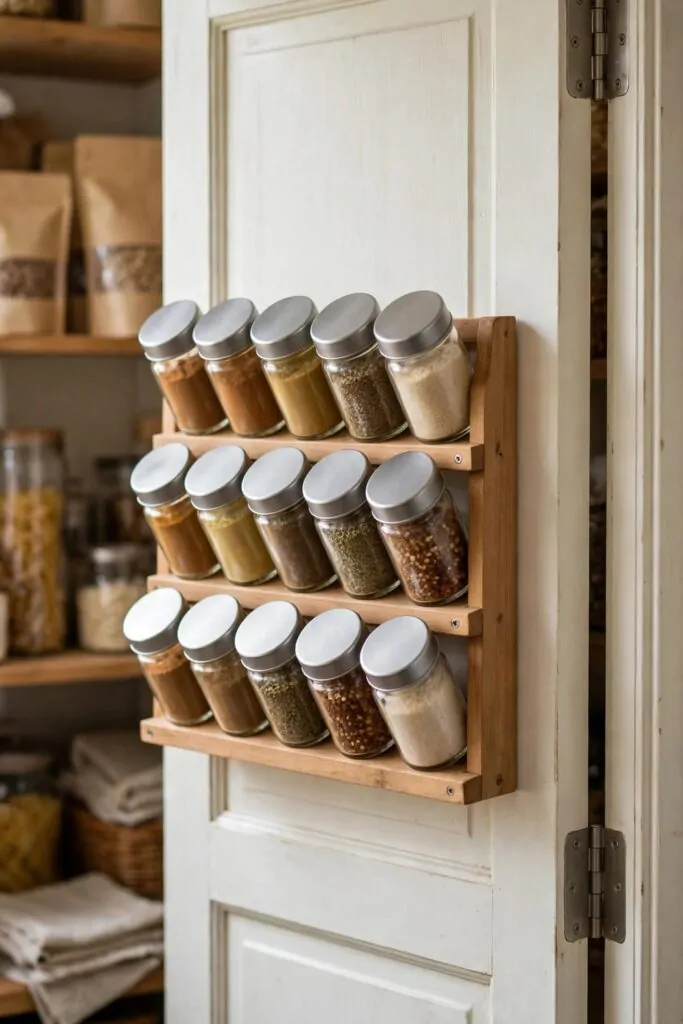
My spice jars used to hide behind tall boxes where I could never find them. A slim rack on the pantry door changed all of that in one afternoon.
Fifteen small jars sit in the rack in three neat rows. Cumin, coriander, turmeric, dried mint and salt sit in the top row, and paprika, cardamom, black pepper, mixed herbs and chilli flakes sit in the middle row. Ginger, cinnamon, dried oregano, paprika flakes and garlic powder sit in the bottom row.
The door rack uses space that was doing nothing at all.
I open the door and the spice I need is right there at eye level, with no more digging through tall boxes. I stopped buying a third jar of cumin because I thought I had run out. The rack holds each jar snug so nothing slides when the door swings.
The rack is fixed to the door with small screws. The screws hold it firm, and the door still closes just fine.
Spices stay fresh longer when their jars stay shut and out of steam.
- Put the spices you use most at eye level.
- Label the lids as well as the jars so you can spot them fast.
- Wipe the rack each week so spice dust never builds up.
My cooking feels calmer now that the spices live in plain sight.
Typical cost $14 to $26.
5. A Turntable for Sauces and Oils
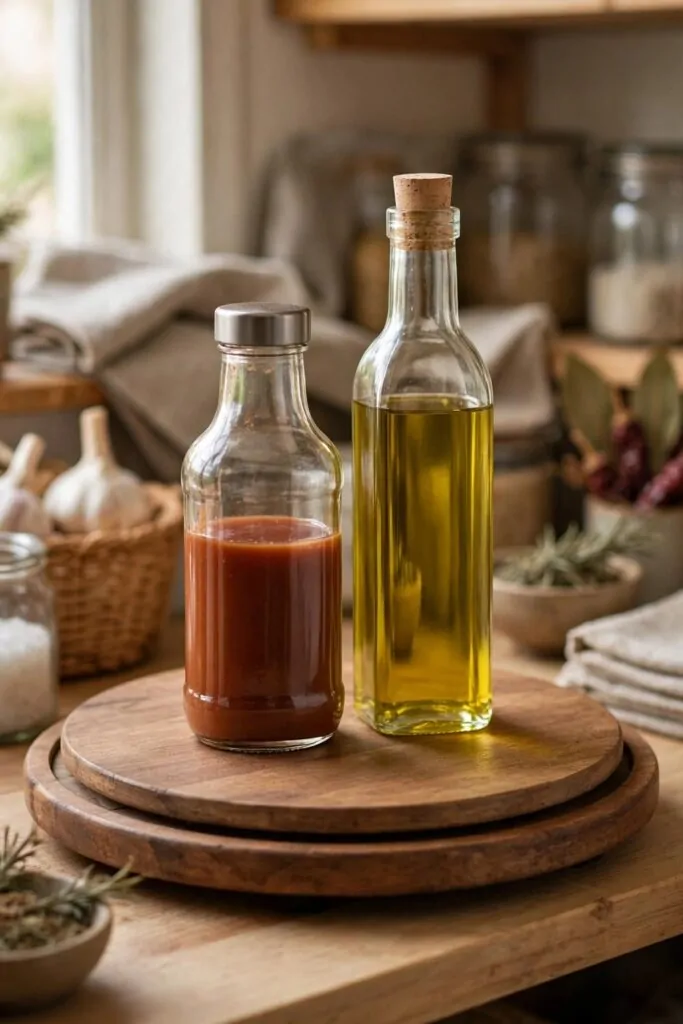
One turntable holds all my sauces and oils on a single shelf.
I spin it once and the bottle I need comes to the front. No more reaching past tall bottles and knocking one over.
A bottle of red sauce and a tall bottle of golden oil stand on the turntable. The tall oil bottle has a cork stopper, and the sauce bottle has a plain silver lid. Every bottle stays upright, and nothing hides at the back.
The turntable is wide and flat so the bottles sit steady.
- Group tall bottles at the back of the turntable and short ones at the front.
- Wipe up any drips right away so the turntable never gets sticky.
- Leave one gap in the circle for the bottle you reach for most.
I give the turntable a spin each time I put the shopping away. Bottles that belong on it go back in their spots, and the shelf stays clear.
Oils stay fresh when they sit upright in a cool spot. The turntable keeps them away from the stove heat. I check each lid once a week and tighten any that feel loose.
A turntable sounds fancy, but it is just a round tray that spins. It saves my shelf and my patience in equal measure.
Typical cost $11 to $22.
6. Plain Boxes for Baking Supplies
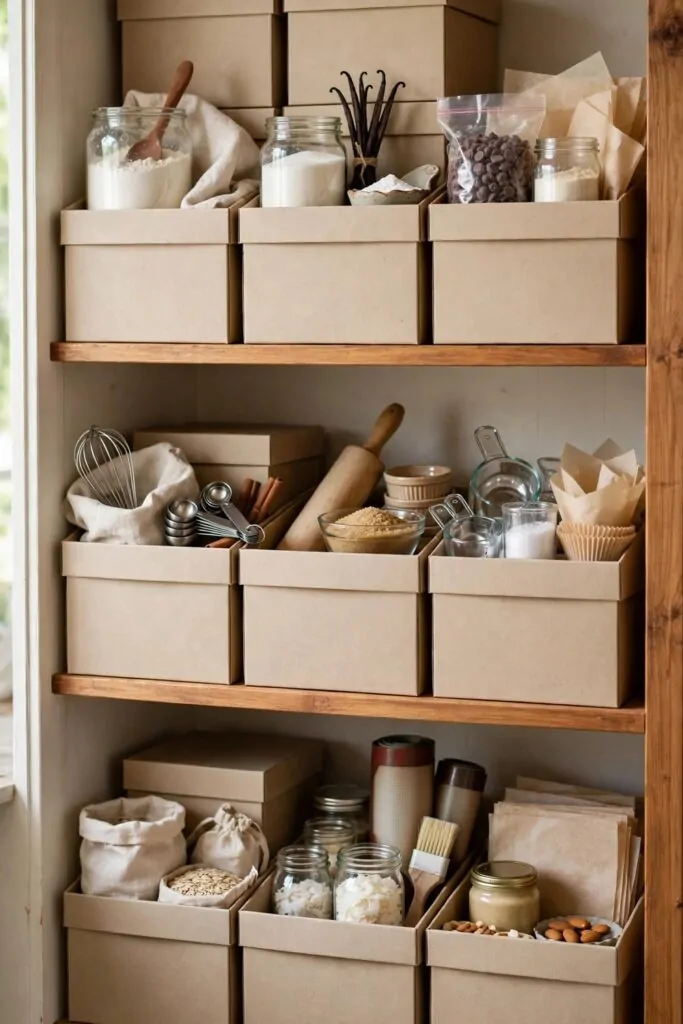
Baking supplies took over two shelves before I boxed them up. Plain boxes in neat rows now hold the whole baking shelf. Each box has a job, and nothing spills out of a torn bag any more.
The top row holds flour and sugar in neat jars, with vanilla pods tied in a bunch beside them.
The middle row holds cocoa, my whisk and my cupcake cases. The bottom row holds cloth bags and small jars of baking bits.
Boxes in rows save space because they use the width of the shelf. I lift a box down when I bake, and it goes back up when I finish. The boxes are light enough that I can manage them with one hand free.
The jars on top of the boxes show me what runs low at a glance.
I dust the lids once a week when I wipe the shelf. The boxes slide out easily, so the wipe takes less than a minute.
Baking day starts faster now that every supply sits in its own box.
- Label each box on the front so you never lift the wrong one.
- Keep heavy jars in the bottom row so the shelves stay steady.
- Leave the top row light so each box lifts down with ease.
Typical cost $15 to $28.
7. A Bin for Potatoes on the Pantry Floor
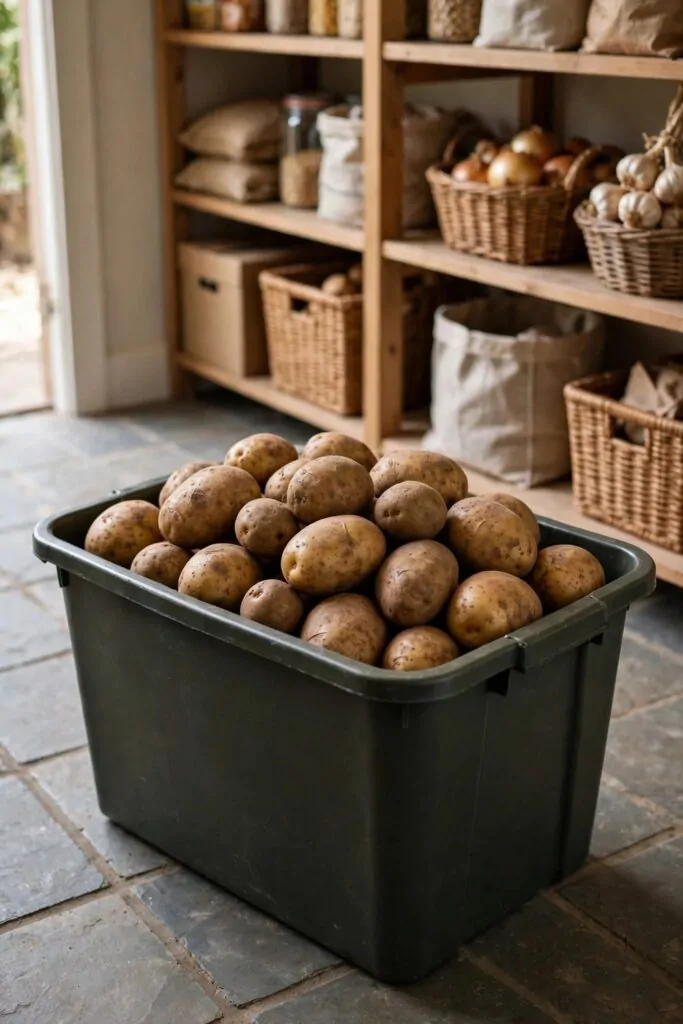
Potatoes got the floor spot because they are heavy and they like the dark. One wide bin sits on the pantry floor and holds the whole bag.
- Pick a bin with air holes so the potatoes stay dry.
- Keep the bin off the damp floor with a small mat under it.
- Store potatoes away from onions so both keep longer.
The bin is open at the top, so I can tip potatoes in with ease.
I sort through the potatoes once a week and take out any that feel soft. The good ones stay in the bin, and the soft ones go straight to the bin outside.
A floor bin keeps heavy bags off the shelves where they could tip. It also frees a whole shelf for lighter jars and boxes. My back thanks me every time I lift a potato out of the bin instead of down from a high shelf.
The bin holds enough potatoes for two weeks of family meals.
I line the bin with a plain cloth that I wash each week. The cloth soaks up any damp and keeps the bin clean. A dry bin means potatoes that last and last.
I sweep the floor around the bin when I clean the pantry. Crumbs and bits of skin gather there fast, so a quick sweep keeps the whole corner fresh.
Typical cost $8 to $15.
8. A Tray for Breakfast Jars and Spreads
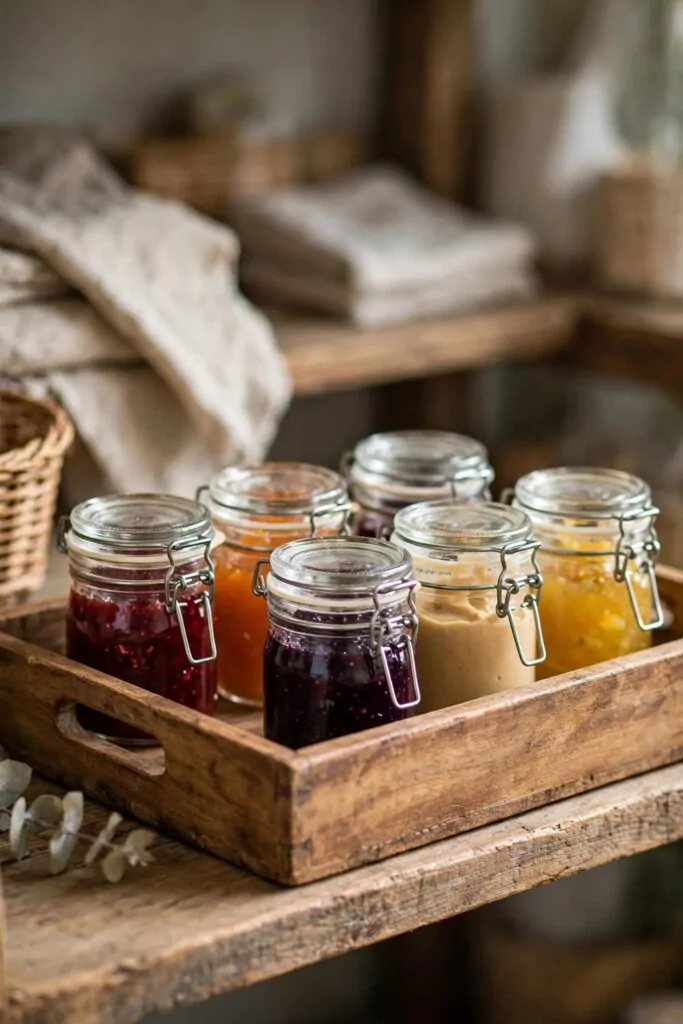
One tray holds every breakfast jar in a single neat group.
Honey, jam and peanut butter sit in a row on the tray. A small jar of date spread sits beside them. The tray keeps sticky jars off the shelf and in one place.
Mornings run smoother when breakfast lives on one tray.
I lift the whole tray out, set it on the table, and put it back when breakfast ends. The shelf never gets a sticky ring from a jam jar again.
- Pick a tray with a small lip so jars never slide off.
- Wipe the tray each morning so sticky drips never dry on it.
- Keep the tray near the front of the shelf for fast mornings.
The tray fits six jars in two neat rows.
I check the lids each week and wipe any jar that feels sticky. A clean jar opens with ease and closes tight. The tray makes this quick because every jar sits in plain sight.
I wash the tray once a week in warm soapy water. It dries fast, and the breakfast jars go straight back on it.
Typical cost $10 to $19.
9. Two Rows of Canned Goods on One Shelf
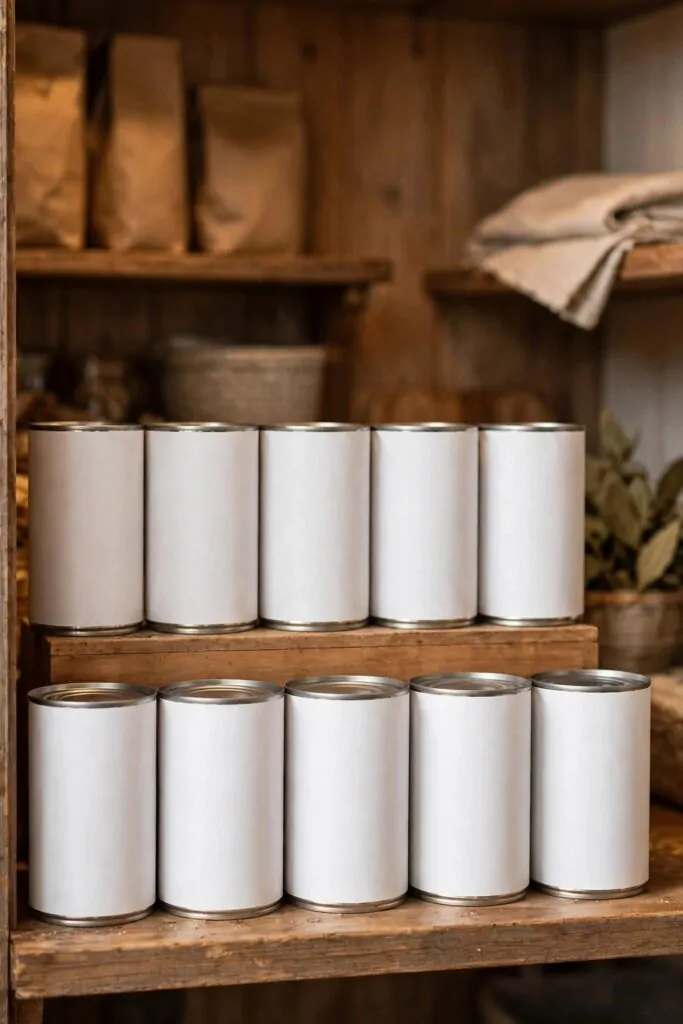
Canned goods used to hide behind each other until I lined them up in two rows. Ten cans now stand on one shelf in plain sight. Five cans fill the front row, and five cans fill the back row on a small riser.
Tomatoes, chickpeas, beans, tuna and coconut milk fill the front row where I reach first. The back row holds corn, peas, carrots and two more cans of tomatoes.
The small riser lifts the back row just enough to see every can. I made the riser from a plain wooden box I already owned. It cost nothing and it works a treat.
Two rows beat one deep pile every single time.
I put new cans at the back and pull older cans to the front. That way nothing sits on the shelf past its date.
- Face every can forward so you can see the shelf at a glance.
- Keep one row for meals you cook each week.
- Wipe the shelf when a can leaves a dusty ring.
The shelf looks like a small shop now, and I love it.
I dust the cans once a month when I wipe the shelf. A damp cloth takes the dust off in seconds. The wraps stay clean, and the shelf stays fresh.
Typical cost $6 to $12.
10. A Box for Snack Packs for School Lunches
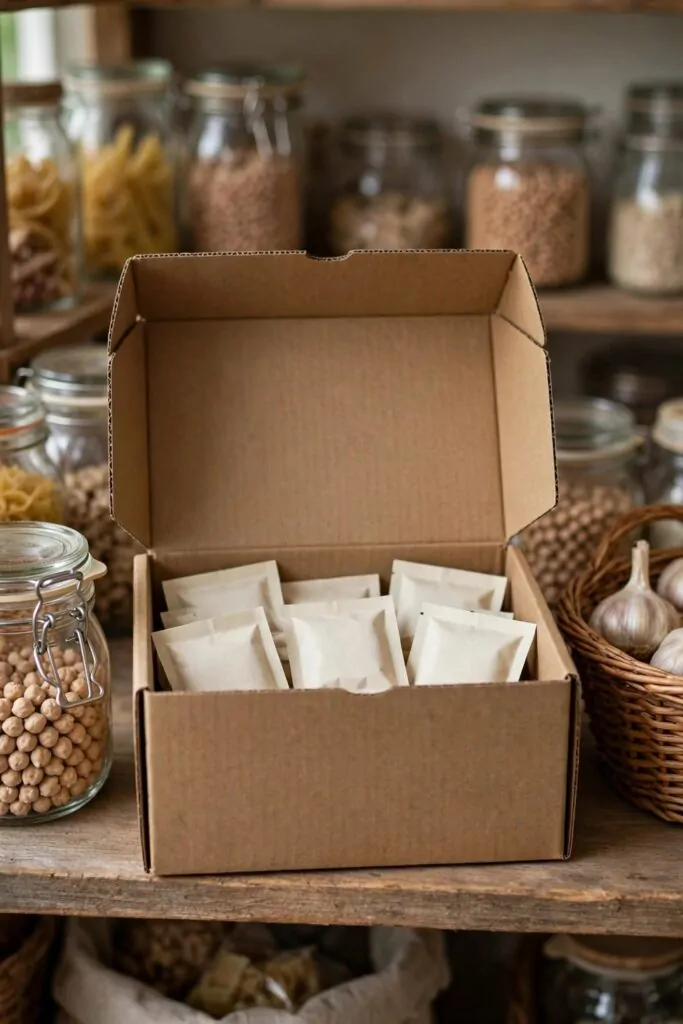
School mornings feel rushed in my house. I pack lunches while the kettle boils and the kids look for their shoes.
A small box for snack packs changed that rush for us.
I keep the box on the middle shelf where I can reach it fast. Inside it I put small packs of crackers, dried fruit and rice cakes. Each pack is one lunch, so I just grab and go.
- Pick a box that fits your shelf and holds a week of packs.
- Put the packs upright so you can see every flavour at a glance.
- Keep a small note on the box when a pack runs low.
My kids pick their own pack now. That small choice makes them happy and saves me time.
I check the box every Sunday night and fill it again.
I wipe the box out once a week with a damp cloth. Crumbs hide in the corners if I skip that job. A clean box keeps the packs fresh and tidy.
You can use any plain box you already own. A shoe box with a label works just as well.
Typical cost $6 to $14.
| Idea | Main change | Typical cost |
|---|---|---|
| Tall Jars for Rice, Flour and Pasta on One Shelf | Three tall jars in a row keep rice, flour and pasta where you can see them. | $18 to $32 |
| Small Jars for Lentils and Beans on a Low Shelf | Six small jars on a low shelf keep lentils and beans light, low and easy to reach. | $12 to $24 |
| A Dark Basket for Onions and Garlic | One dark basket keeps onions and garlic cool, dry and easy to grab. | $9 to $16 |
| A Rack for Spice Jars on the Pantry Door | Fifteen small spice jars on the door rack put every spice at eye level. | $14 to $26 |
| A Turntable for Sauces and Oils | One turntable spins every sauce and oil bottle to the front. | $11 to $22 |
| Plain Boxes for Baking Supplies | Plain boxes in rows on the shelves keep all my baking supplies tidy. | $15 to $28 |
| A Bin for Potatoes on the Pantry Floor | One wide bin on the pantry floor keeps heavy potatoes dark, dry and easy to reach. | $8 to $15 |
| A Tray for Breakfast Jars and Spreads | One tray groups six breakfast jars so mornings start without a hunt. | $10 to $19 |
| Two Rows of Canned Goods on One Shelf | Ten cans in two rows keep every can facing forward. | $6 to $12 |
| A Box for Snack Packs for School Lunches | A plain box on the middle shelf holds a week of lunch packs so mornings run fast. | $6 to $14 |
| Total | $109 to $208 |
11. A Jar for Dates and Nuts with a Scoop
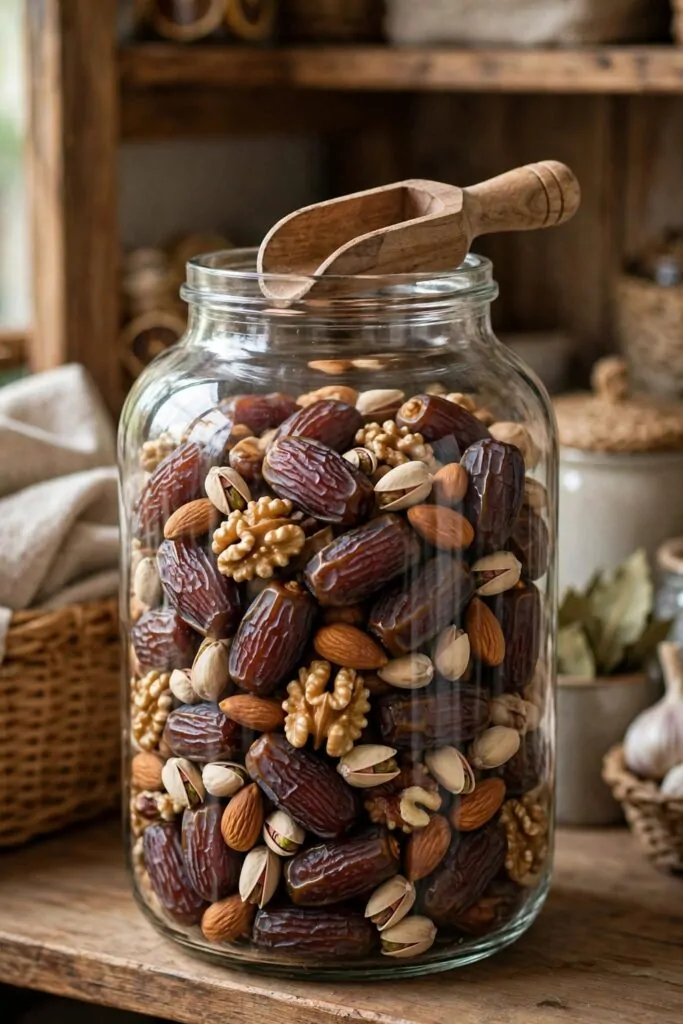
Dates and nuts sit in my pantry all year round.
I keep them in one wide jar with a small scoop on top. The scoop stops me from pouring too many into my hand.
- Choose a jar with a wide mouth so the scoop fits in easy.
- Keep the scoop inside the jar so it never gets lost.
- Put the jar at eye level so you see when it runs low.
I refill the jar on Friday after the weekly shop.
The jar looks neat on the shelf next to the tea. I can see the dates and the nuts mixed through the glass. My kids know this jar is for after lunch, not before.
A tight lid keeps the nuts crisp. I press it down hard each time I close it.
I wash the jar once a month with warm soapy water.
You can pick a glass jar or a clear plastic one. Both let you see what is left inside. I like glass best because it feels solid in my hand.
Typical cost $8 to $16.
12. A Basket for Bread Wraps and Foil
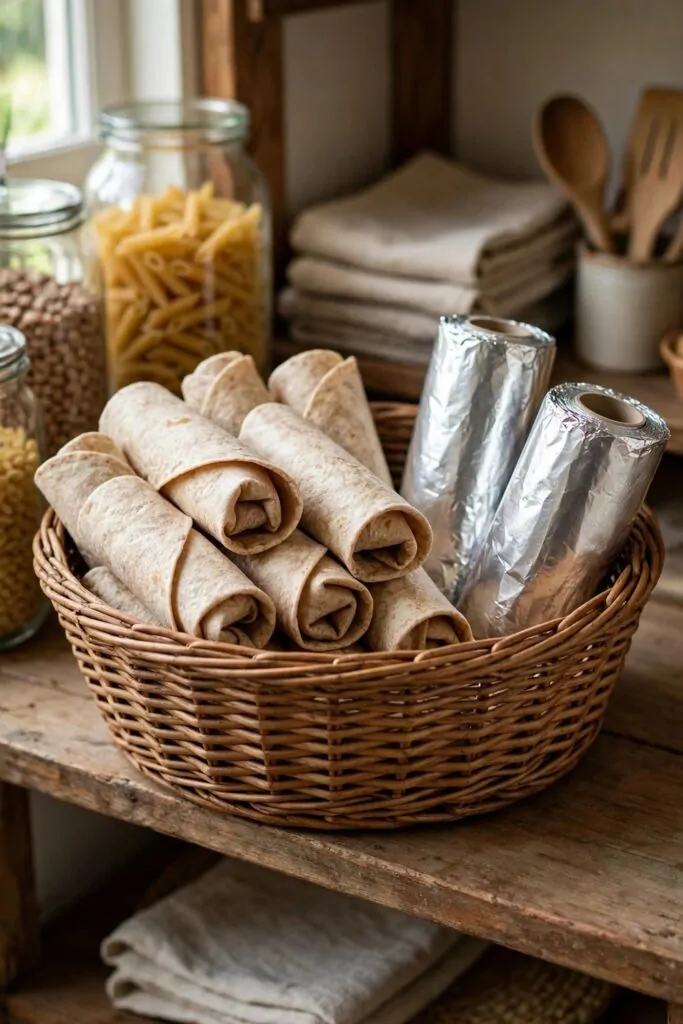
Bread wraps and foil used to slide all over my shelf. The rolls fell down and the boxes tore at the corners. I got tired of picking them up each week.
A low basket fixed the mess in one move.
I stand the rolls upright in the basket like books on a shelf. The foil rolls sit at the back where I can pull one out fast.
Now nothing rolls off the shelf when I open the door.
I keep the basket near the bread shelf so all the wrap stuff stays in one spot. The basket holds wraps for bread and foil for trays, and both stay in one spot. The spare rolls fit behind the wraps in the same basket.
- Pick a basket taller than the rolls so they stay upright.
- Leave a little space at the front to pull one roll out easy.
- Put the most used roll at the front of the basket.
I give the basket a quick shake-out each month. Bits of paper and crumbs fall out fast.
A simple basket does the job well, and a dear one adds nothing.
Typical cost $5 to $12.
13. A Drawer for Small Packets and Sachets
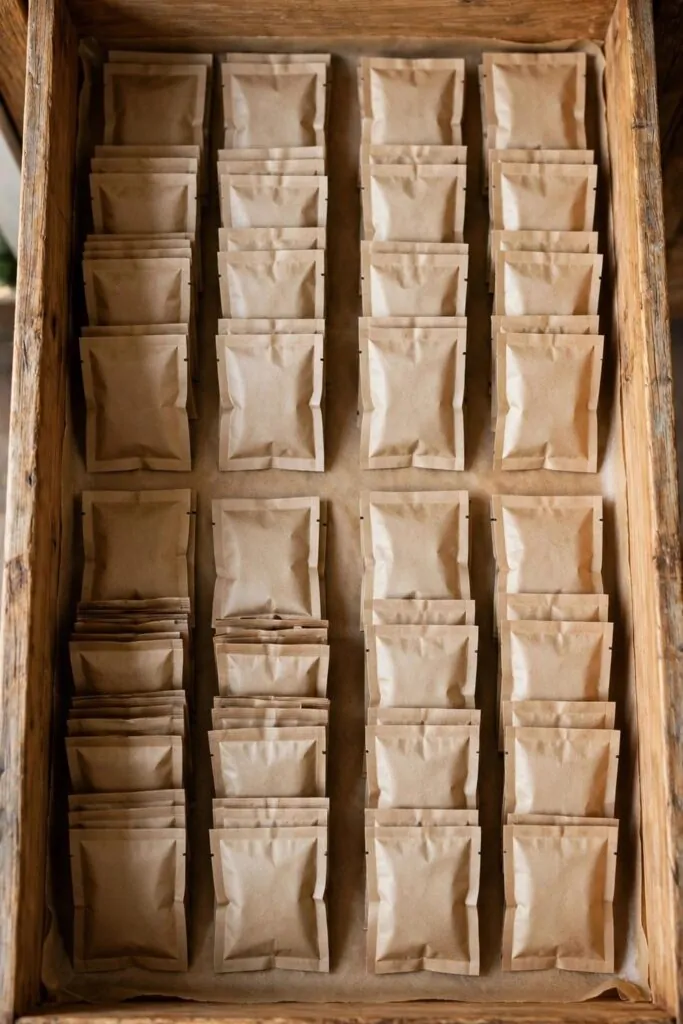
Small packets pile up fast in a pantry. Sauce sachets, soup packets and spice mixes all end up in one messy heap.
I gave them their own drawer near the stove. Now I open the drawer and see every packet at once. I sort them into small groups so I find the one I want in seconds.
The drawer stays shut, so dust stays out too.
I line the packets up in neat columns to keep the groups apart. One column holds soup packets and one holds sauce sachets.
- Sort packets by type so you find them in seconds.
- Use small cups or boxes inside the drawer as dividers.
- Put the packets you use most at the front.
My kids know not to dig through this drawer. I showed them which column holds the snack packets. The rest stays neat because each packet has its own spot.
I toss out any packet past its date on the first of the month.
A quick wipe of the drawer each month keeps it clean. I pull the packets out, wipe the base and put them back.
Typical cost $7 to $15.
14. A Shelf for Honey, Jam and Syrup Jars
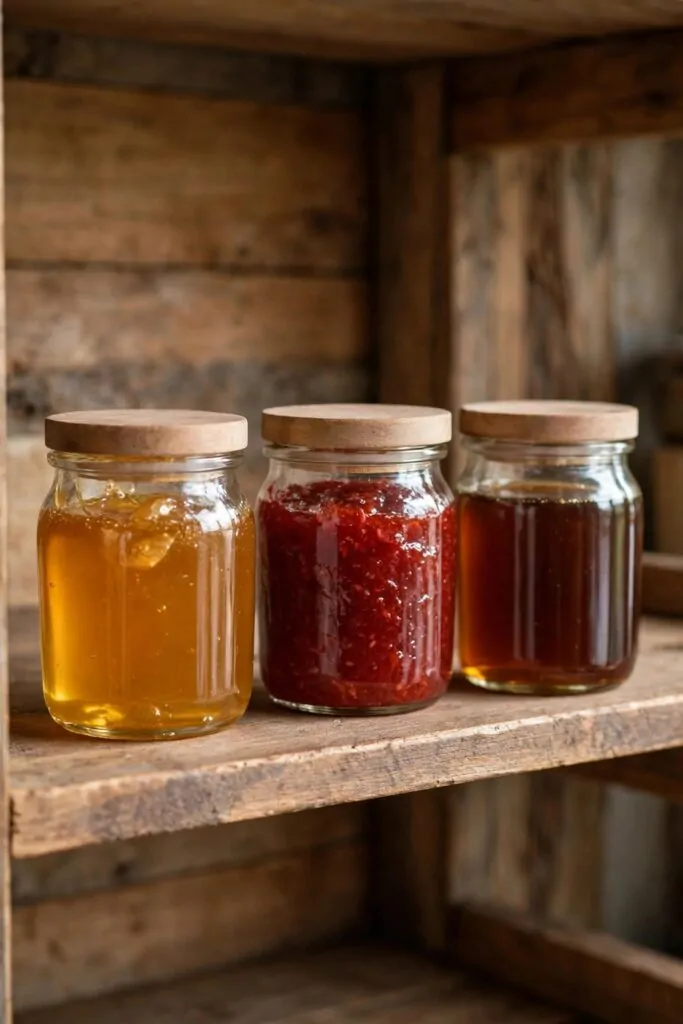
Honey, jam and syrup jars drip if they tip over.
I gave them their own shelf at waist height. The shelf sits near the breakfast things so mornings stay easy. Each jar stands upright where I can see it at once.
Sticky jars used to glue themselves to the shelf. Now I wipe the shelf once a week so drips never dry on the wood.
I wipe the shelf once a week and it stays clean.
My honey jar sits on the left because I use it most. The jam and syrup jars sit beside it in a neat row.
I check the lids each month to make sure they still close tight. A loose lid lets air in and the jam goes off fast. I wipe any sticky ring off the jar neck before I put it back.
- Keep sticky jars on a tray so drips never reach the shelf.
- Face every label out so you grab the right jar first time.
- Put the jar you use most at the front of the shelf.
A plain shelf is all this idea needs.
Typical cost $9 to $18.
15. A Tight-Lid Container for Sugar and Salt
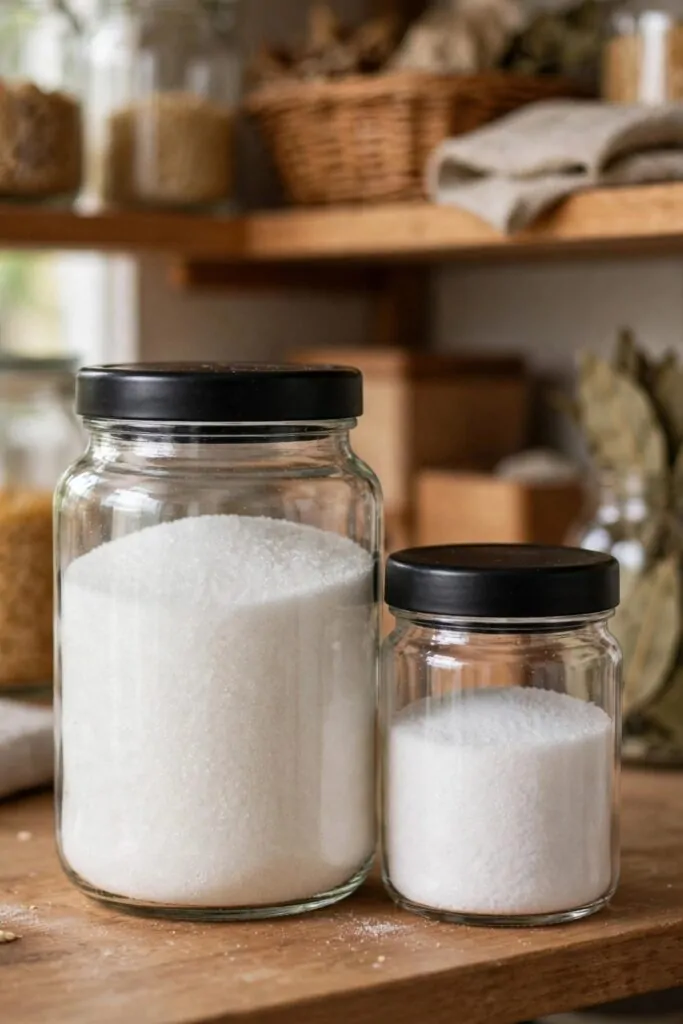
Sugar and salt look the same in a plain bag. I once put salt in my tea by mistake and I still laugh about it now. A tight-lid container fixed that mix-up for good.
- Pick containers with lids that snap shut tight.
- Label each one in big clear letters.
- Keep a small spoon in each container.
I keep the sugar container on the left and the salt on the right. The big one holds sugar and the small one holds salt, so I never grab the wrong one.
The tight lid keeps the sugar dry even on damp days.
I fill both containers after the weekly shop. I pour the sugar in slow so it does not spill on the counter. Then I wipe the rim and press the lid down hard.
My kids know the big jar from the small one and they never mix them up now.
I wash the containers when they run empty. A quick rinse and a full dry keeps them fresh.
You can pick glass or sturdy plastic for these. I like a clear one so I can see how much is left. A small scoop in each one makes serving easy.
Typical cost $6 to $13.
16. A Rack for Cans Sorted by Size
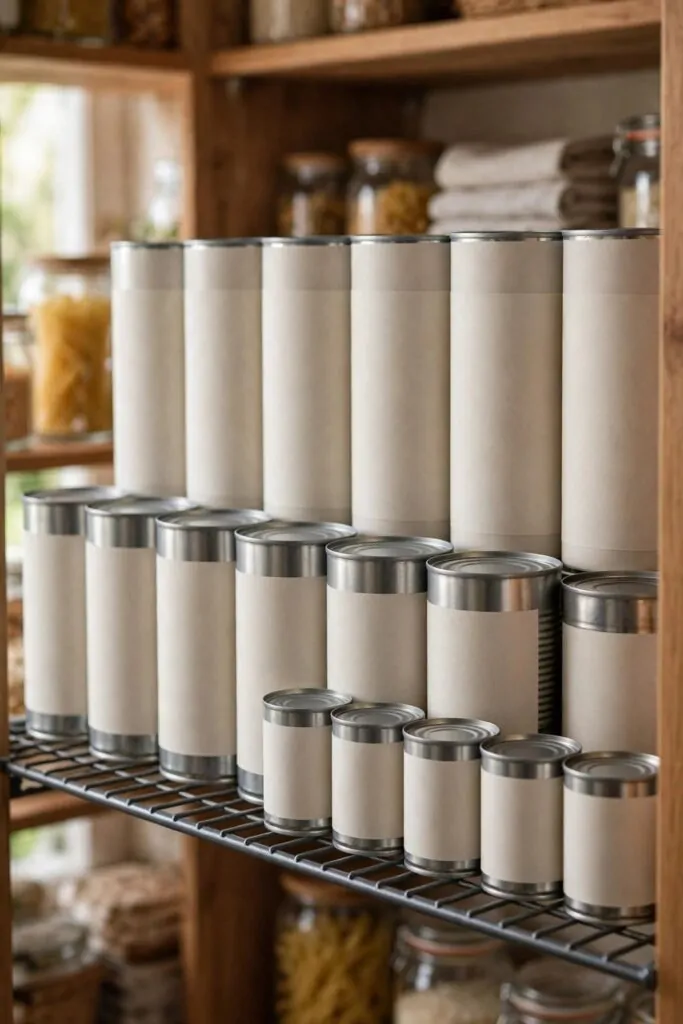
Cans pile up in my pantry in all shapes and sizes. The tall ones hide the short ones and I end up buying beans twice.
A rack that sorts cans by size fixed that waste.
I put the tall cans at the back of the rack and the short ones at the front. Now I see every can when I open the door.
The rack holds the cans in neat rows so none of them roll. I group the beans in one row and the tomatoes in the next. My soups sit in the third row where I can reach them fast.
I check the rack before I write my shopping list.
A quick wipe of the rack each month keeps it clean. I lift the cans out in groups and put them back in the same rows.
You can buy a rack or stack two small shelves for the same job.
- Sort cans by size so tall ones never hide short ones.
- Group one food in each row for fast shopping checks.
- Put the cans you use most at the front of the rack.
Typical cost $10 to $22.
17. A Basket for Sweet Potatoes and Carrots Under the Bottom Shelf
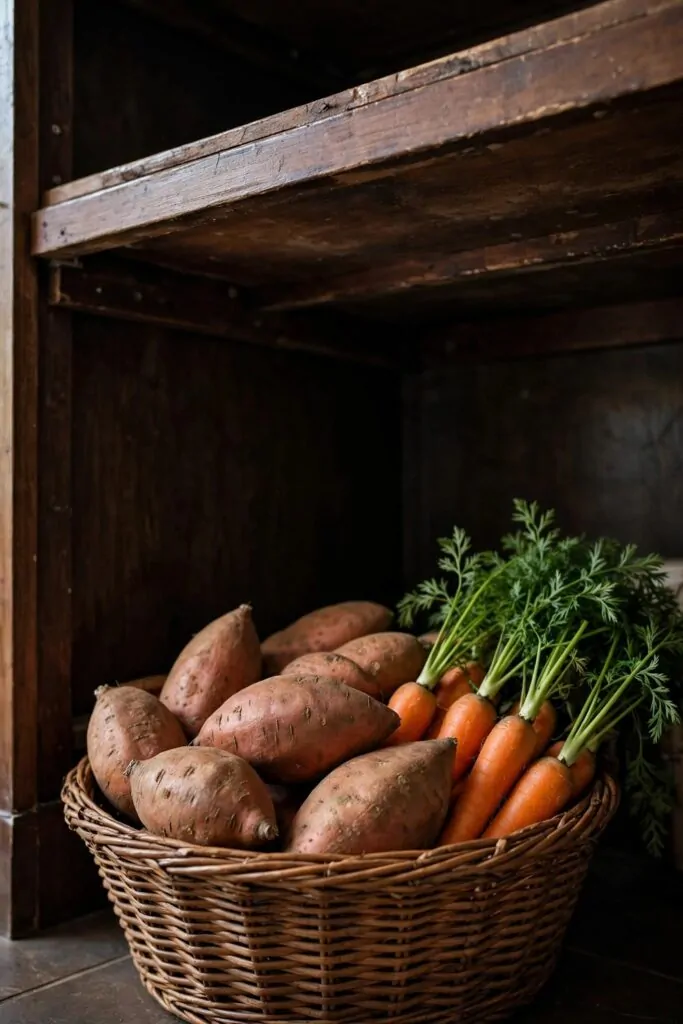
Sweet potatoes and carrots need air, not a sealed box.
I keep them in a wide basket under the bottom shelf. The basket sits on the floor where cool air moves round it.
I line the basket with a clean cloth to keep the dirt off the floor. The sweet potatoes sit on one side and the carrots on the other. I can see both at a glance when I bend down.
- Pick a basket with gaps so air moves round the veg.
- Line it with a cloth you can wash each week.
- Keep sweet potatoes and carrots on their own sides.
I check the basket twice a week and pull out any soft ones.
A soft potato can spoil the rest if I leave it there. I toss it in the bin straight away. Then I wipe the cloth and put the good ones back in their spots.
My kids fetch the carrots for me from this basket. They know which side holds the carrots and which side holds the sweet potatoes.
A plain basket on the floor does this job well.
Typical cost $7 to $14.
18. A Shelf for Ramadan Dates and Sweets
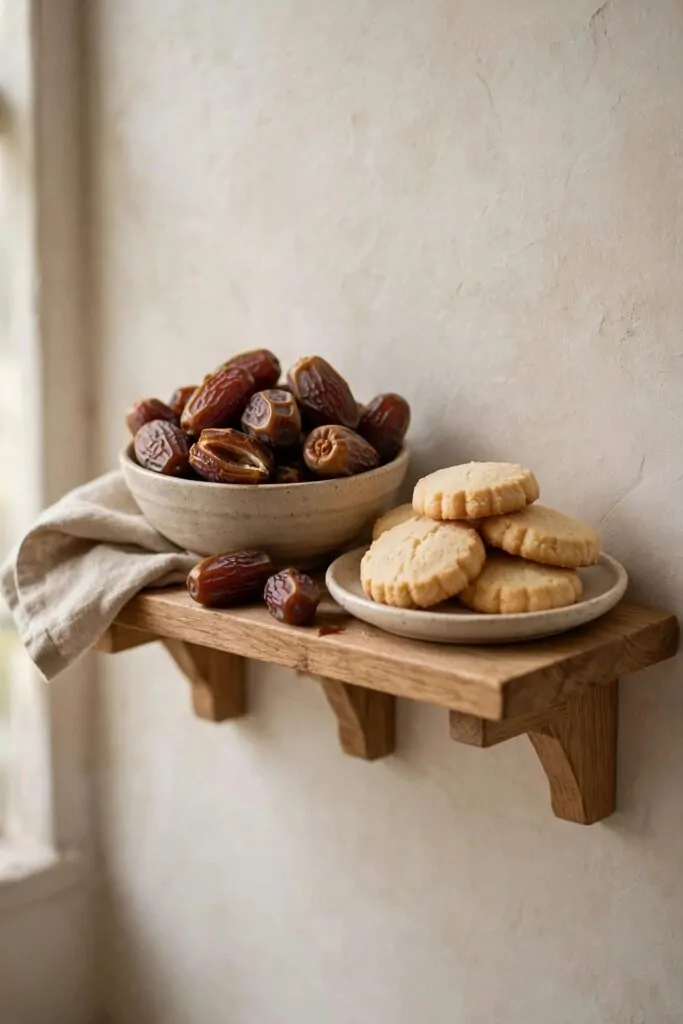
I keep my dates and sweets on one low shelf so I can reach them fast in Ramadan. You can see the bowl and the plate at once and pick what you need for the night meal.
I put the dates in a wide bowl on the shelf. I keep the sweets on a small plate next to it. I keep the dates and the sweets apart so no one mixes them up.
This one shelf saves me time when the house is busy and guests drop by.
- Keep dates in a wide bowl on the shelf
- Put sweets on a small plate beside the dates
- Keep the dates and the sweets apart so no one mixes them up
I check the shelf each week and I move the older dates to the front. I toss out any sweet that looks dry or stale.
My kids know this shelf is for treats after the main meal.
I wipe the shelf with a damp cloth when crumbs build up. The bowl and the plate go back to the same spot each time. I keep a small plate on the shelf for serving treats at once.
A small shelf like this also helps me shop with care. I buy only what fits the shelf and I skip extra packs.
Typical cost $8 to $15.
19. A Box for Baking Tins and Paper Cases
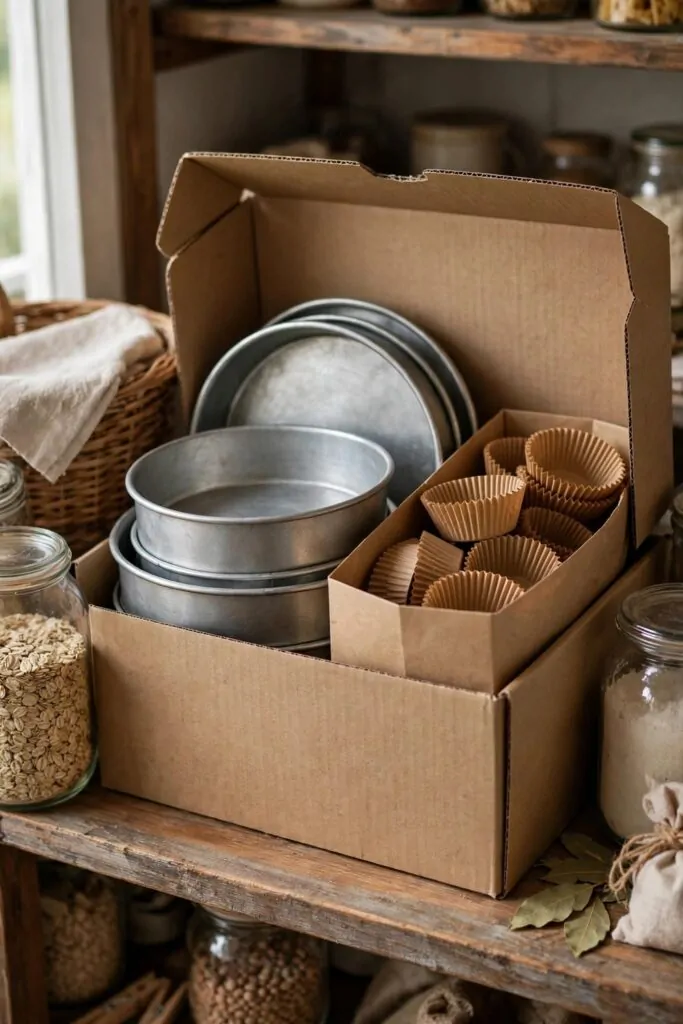
My baking tins used to slide all over the shelf and bang into jars. I found a deep box and gave them a home of their own. Now each tin stacks flat in the box and I can pull one out with no fuss.
You can do the same with a plain box from the market.
I sort the tins by size with the big ones at the bottom of the stack. I slip the paper cases into a small box beside them.
I keep muffin cases and cake cases in the same box. I tuck a few spare liners in the box for busy days. I check the box before a bake so nothing runs out mid recipe.
I give the box a quick dust each week so flour stays off the tins.
- Stack tins flat by size
- Keep paper cases in a small box
- Write the case size on the box
I put the tins back right after I wash and dry them. I never stack a wet tin on a dry one.
This box also keeps my baking shelf calm on a rush day. I can see all my tins in one look. I bake more now because the tools are easy to reach.
Typical cost $6 to $12.
20. A Rail for Measuring Cups and Spoons
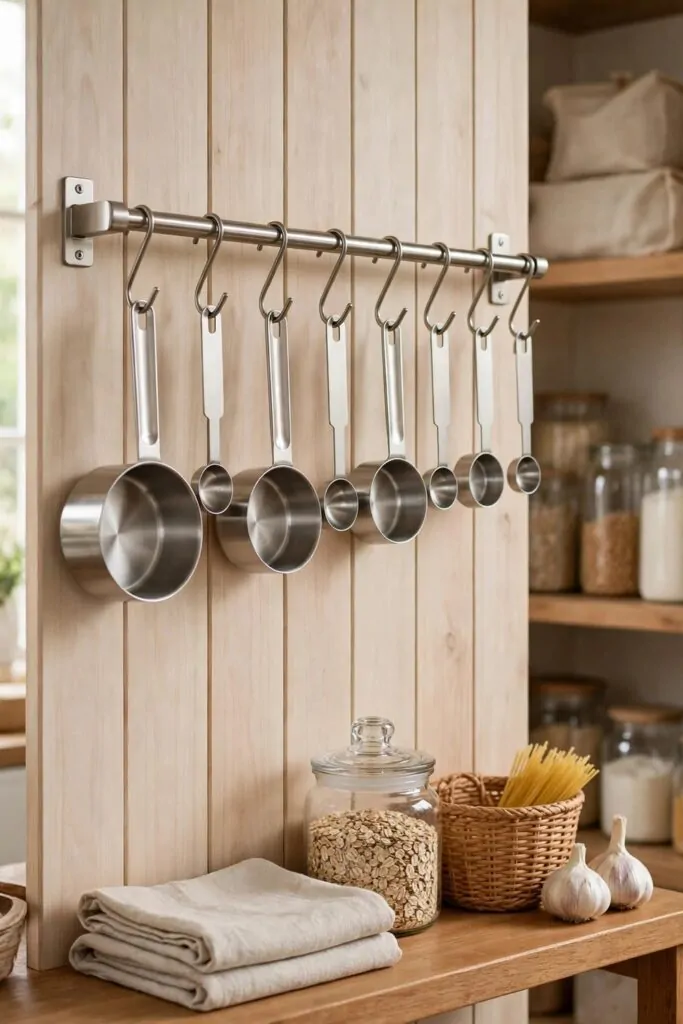
I hung a small rail on the wall above my shelf. It holds my cups and spoons where I can see them.
I hook the big cup at one end and the small cups next to it. I hang the spoons in a row so I can see each size. I keep the rail low so my hand reaches it with no stretch.
- Hook big cups at one end of the rail
- Hang spoons in a row by size
- Keep the rail low and easy to reach
I love how the rail frees space in my drawer. I now keep only big tools in the drawer.
I rinse the cups after use and hang them back at once.
Every few weeks I tug each hook to see that it still holds firm. I shift a hook if a cup keeps slipping off. I swap a bent hook for a fresh one from my spare box.
You can fit this rail in a small pantry with no fuss. It takes one short strip of wall and leaves the shelf free.
My baking days feel light now that each measure hangs in its place.
Typical cost $7 to $14.
| Idea | Main change | Typical cost |
|---|---|---|
| A Jar for Dates and Nuts with a Scoop | A wide jar with a scoop on top keeps dates and nuts neat and easy to serve. | $8 to $16 |
| A Basket for Bread Wraps and Foil | A low basket stands wrap rolls upright so nothing slides off the shelf. | $5 to $12 |
| A Drawer for Small Packets and Sachets | A drawer near the stove with packets in neat columns keeps sauce and soup packets sorted. | $7 to $15 |
| A Shelf for Honey, Jam and Syrup Jars | A waist-high shelf near the breakfast things keeps sticky jars in one spot. | $9 to $18 |
| A Tight-Lid Container for Sugar and Salt | Tight-lid containers stop sugar and salt getting mixed up. | $6 to $13 |
| A Rack for Cans Sorted by Size | A rack with cans grouped by size and food stops tall cans hiding short ones. | $10 to $22 |
| A Basket for Sweet Potatoes and Carrots Under the Bottom Shelf | A wide basket on the floor keeps sweet potatoes and carrots aired and easy to see. | $7 to $14 |
| A Shelf for Ramadan Dates and Sweets | One low shelf keeps dates in a bowl and sweets on a plate where I can reach them fast. | $8 to $15 |
| A Box for Baking Tins and Paper Cases | A deep box holds baking tins stacked flat with paper cases in a small box beside them. | $6 to $12 |
| A Rail for Measuring Cups and Spoons | A low rail on the wall above the shelf holds measuring cups and spoons where I can reach them. | $7 to $14 |
| Total | $73 to $151 |
21. A Tray for Oils and Vinegars by the Door
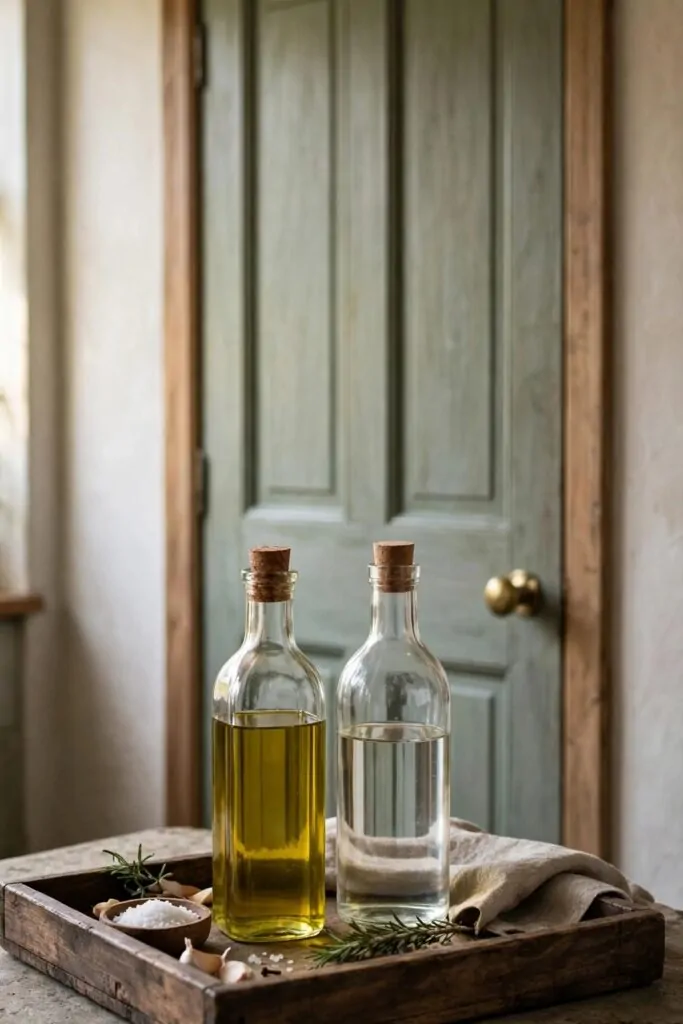
I keep my oils and vinegars on a small tray by the pantry door. I grab the tray with one hand when I start to cook.
You can lift the whole tray to the stove and bring it back in one trip.
I put the oil bottle on the left of the tray. I set the vinegar bottle beside it where I can see it.
I wipe the tray each night so the bottles stay clean. I set a folded cloth on the tray to soak up drips. I wash that cloth with the next load of laundry.
I keep the tray near the door so I never hunt for oil mid cook. I put each bottle back on the tray right after I pour.
I sniff each bottle now and then and I toss one that smells off.
- Put the oil bottle on the left
- Set the vinegar bottle beside it
- Keep a folded cloth on the tray
This tray also stops spills from reaching my shelf. I lift the tray out to clean the shelf with ease. I love how the door spot keeps my cooking flow smooth and calm.
Typical cost $5 to $11.
22. A Bin for Rice Bags on the Bottom Shelf
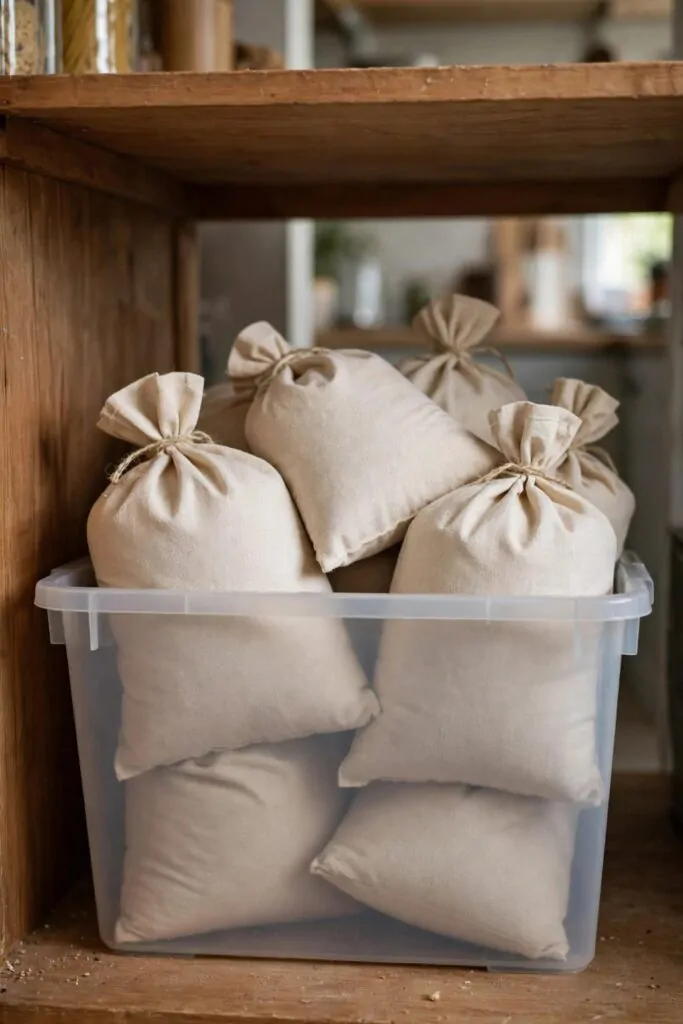
Rice bags are heavy and they used to tear on high shelves. I moved them to the bottom shelf in one strong bin. Now I pull the bin out like a drawer and scoop what I need.
I keep the full bags at the back of the bin. I keep one bag at the front for daily use.
You can slide the bin out with one hand and slide it back in one move.
I sweep the bottom shelf each week to clear loose grains. I check the bags for tiny holes as I lift them. I pour loose rice into a jar so none goes to waste.
- Keep rice bags in one strong bin
- Put the full bags at the back
- Pour loose rice into a jar
The clear sides let me see how much rice is left at a glance. I top up the front bag first so the older rice gets used.
My back feels glad now that I lift rice from down low.
A bottom bin also keeps the shelf above free for light jars. I store flour and sugar up high where they stay safe and dry.
Typical cost $9 to $16.
23. A Shelf for Dried Fruit in Small Jars
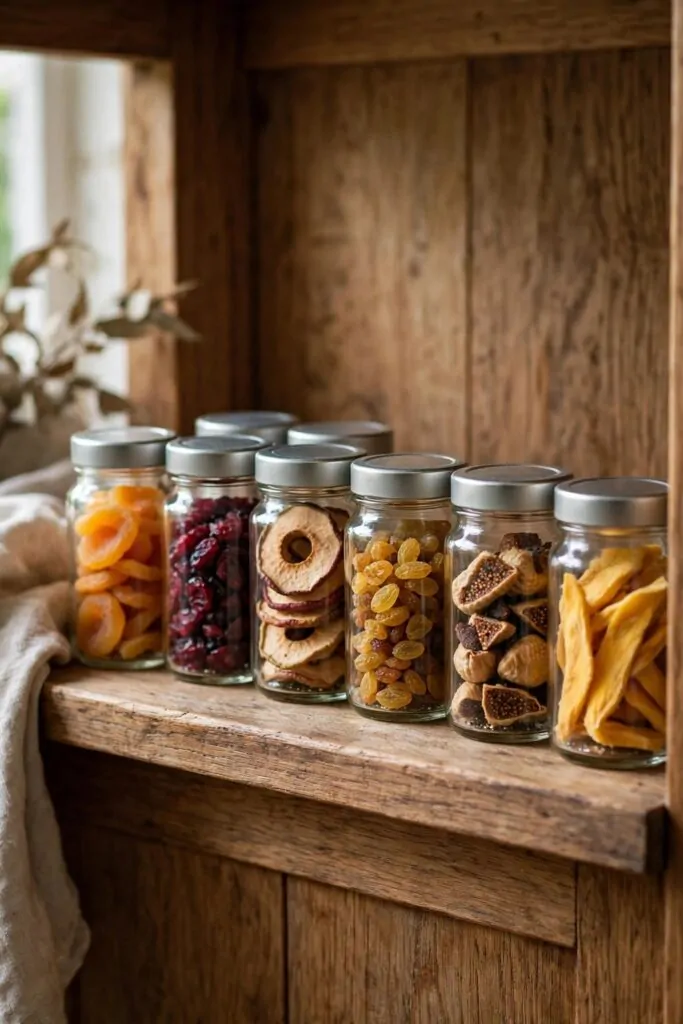
I keep my dried fruit in small glass jars on one shelf.
- Fill small jars with one fruit each
- Set light jars at the front
- Add a plain label to each jar
I fill the first jar with apricots and the next with cranberries. I keep apple rings in a third jar beside them.
You can see the color of each fruit through the glass at once.
I fill each jar most of the way so the fruit stays loose. I tap the jar once to settle the fruit down. I close the lid tight so the fruit stays soft and fresh.
I peek in each jar on shopping day and I note what runs low.
I run a dry cloth over the shelf each week to clear dust. Each jar goes back to its own spot after I use it.
Small jars make snack time easy for my kids too. They pick one jar and pour a little into a bowl. I love how this shelf adds sweet bites to our meals with no mess.
Typical cost $10 to $18.
24. A Drawer for Cloths and Pantry Tools
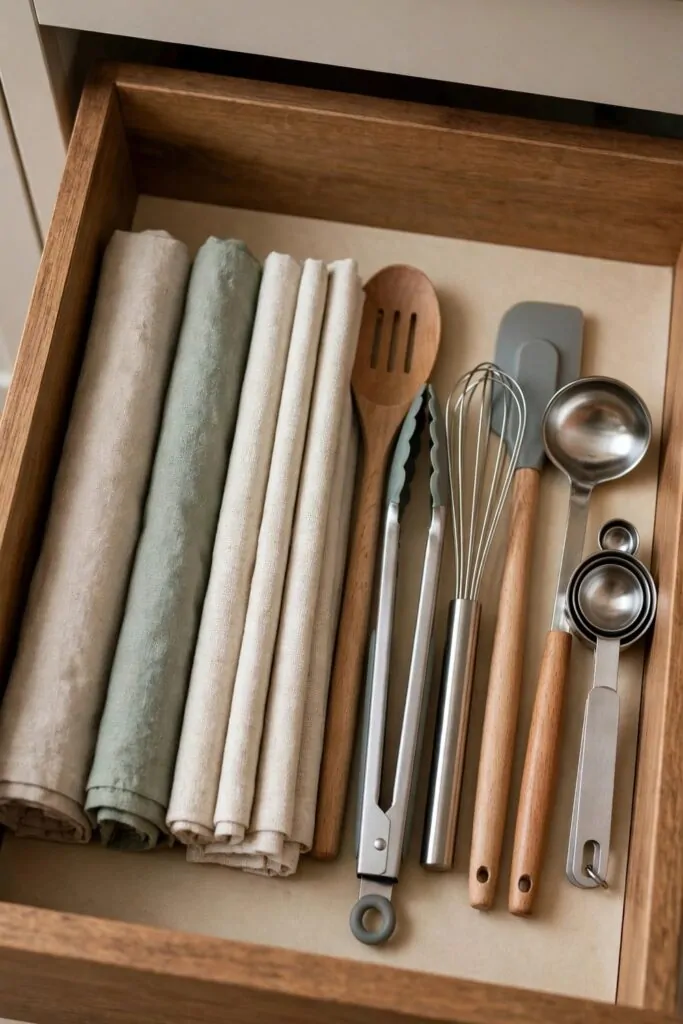
I gave one drawer to cloths and small pantry tools. I can open it and find what I need in one look.
I roll the cloths and stack them on the left. I keep tongs and spoons in a neat row on the right. I lay the tools in a neat row beside the cloths.
I sort the cloths by colour so I grab the right one fast. I wash the cloths when the row grows full.
You can find the tongs in seconds when a bag needs to stay shut.
I air the drawer out each week and I shake the cloths free of crumbs. I wipe the drawer base with a cloth that is just damp. I lay a fresh liner down when the old one looks worn.
Each tool goes home to its own spot the moment I finish with it.
This drawer keeps my shelves free of loose odds and ends. I love how one pull opens a tidy little tool shop.
- Roll cloths and stack them on the left
- Keep tongs and spoons in a neat row on the right
- Lay the tools in a neat row beside the cloths
Typical cost $8 to $14.
25. A Small Kit for Pantry Care
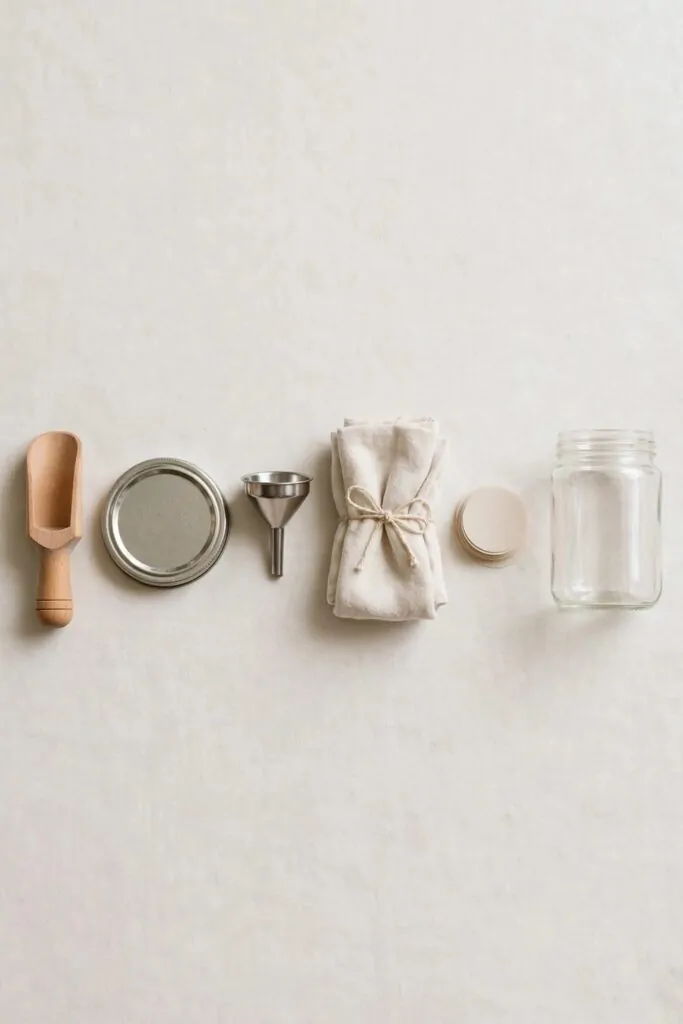
I keep a small kit in my pantry so care jobs stay easy. I scoop rice and flour with the small wooden scoop, and it costs $3 to $5. I cover a spare jar with the spare jar lid to keep food fresh, and it costs $3 to $5.
I pour rice and flour with the small funnel and spill nothing, and it costs $2 to $4.
I wipe the shelves clean with a soft cloth from the soft cloth pack, and it costs $3 to $5. I mark each jar with a blank label from the tiny label set, and it costs $2 to $4. I keep the kit in one small box on the middle shelf.
I keep spare rice in the spare storage jar, and it costs $5 to $7. I reach for this box each week when I tidy the shelves.
- Keep the kit in one small box
- Put each tool back after use
- Look in the kit each month and swap worn bits
I love how six small tools fix six small jobs with no fuss.
I rinse the tools after a messy pour and let them dry. I fold the cloths and stack the labels back in the box. I shut the box lid so dust stays out.
The small wooden scoop costs $3 to $5, the spare jar lid costs $3 to $5, the small funnel costs $2 to $4, the soft cloth pack costs $3 to $5, the tiny label set costs $2 to $4, and the spare storage jar costs $5 to $7 for a total of $18 to $30.
My pantry feels calm now that each small job has its own tool close by. I hope your shelves feel light too, and your next cook starts with a smile.
| Idea | Main change | Typical cost |
|---|---|---|
| A Tray for Oils and Vinegars by the Door | A small tray by the door holds oils and vinegars where I can grab them in one trip. | $5 to $11 |
| A Bin for Rice Bags on the Bottom Shelf | A strong bin on the bottom shelf holds rice bags where I can pull them out with ease. | $9 to $16 |
| A Shelf for Dried Fruit in Small Jars | Small glass jars on one shelf hold dried fruit where I can see each kind at once. | $10 to $18 |
| A Drawer for Cloths and Pantry Tools | One drawer holds rolled cloths and small pantry tools where I can find them fast. | $8 to $14 |
| A Small Kit for Pantry Care | A small box holds six plain tools that keep the pantry clean, marked, and ready to use. | $18 to $30 |
| Total | $50 to $89 |
| Idea | Main change | Typical cost |
|---|---|---|
| small wooden scoop | Scoop rice and flour with the small wooden scoop | $3 to $5 |
| spare jar lid | Cover a spare jar with the spare jar lid to keep food fresh | $3 to $5 |
| small funnel | Pour rice and flour with the small funnel and spill nothing | $2 to $4 |
| soft cloth pack | Wipe the shelves clean with a soft cloth from the soft cloth pack | $3 to $5 |
| tiny label set | Mark each jar with a blank label from the tiny label set | $2 to $4 |
| spare storage jar | Keep spare rice in the spare storage jar | $5 to $7 |
| Total | $18 to $30 |
Keep Reading
If you liked these ideas, you will love these posts too
Each post has more simple ideas you can try at home this weekend.
- 27 Halal Kitchen Organization Ideas for a Tidy Cook Space
- 30 Modest Dressing Area Ideas With a Full Length Mirror
- 22 Hijab Display Ideas That Make Mornings Easier
- 26 Modest Wardrobe Ideas for Abayas and Long Dresses
- 24 Hijab Organizer Ideas for a Small Wardrobe
- 28 Hijab Storage Ideas That Keep Every Scarf Neat