17 Off-Grid Tiny Home Ideas That Run Without the Bills

There is a little gray box on the side of most houses. You walk past it every day and never really look at it.
That box counts everything. Every light you leave on.
Every long shower.
Every hour the heater runs in winter.
I used to think freedom meant more money. Then I met people who just removed the meter instead.
No box counting.
No bills piling up on the counter. Their homes run on the sun, the rain, and a few clever systems that anyone can learn.
These Off-grid Tiny Home Ideas are not about suffering or going back in time. They are about choosing what your home needs and cutting the rest. Here are 17 ideas that really work in tiny homes, gathered from what actual off-grid folks do every day.
Start With Rooftop Solar Panels That Fit a Tiny Roof
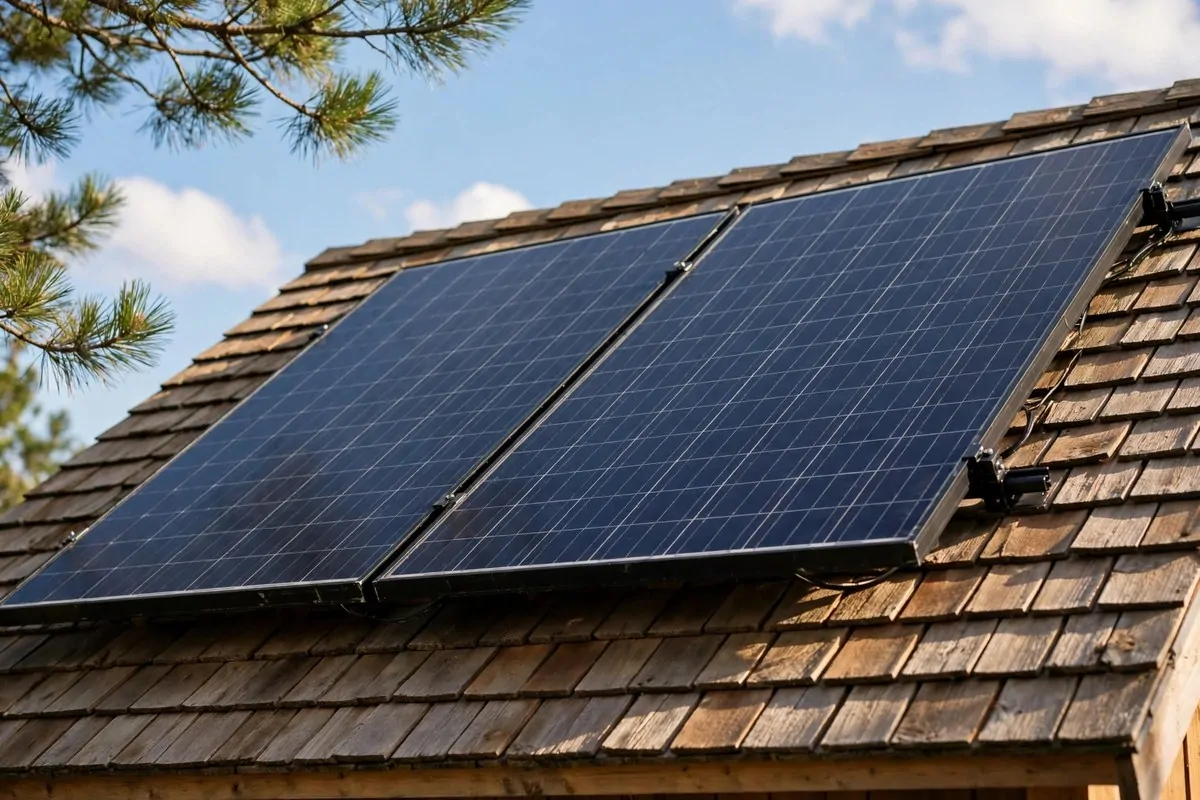
The sun is the easiest bill to replace. It shows up every morning and it asks for nothing.
Most Off-grid Tiny Home Ideas start on the roof. A small house only needs a handful of panels. Four to ten is common, and they fit fine on one slanted roof.
Monocrystalline panels are the ones most tiny owners pick. They squeeze the most power out of a small space. That matters when your roof is only a few steps long.
I love how quiet the whole thing is. No hum.
No engine noise.
Just light turning into power while you make your morning tea.
Cleaning them takes ten minutes. A soft cloth and a bucket of water is all. Rain does most of the work for you the rest of the year.
Angle matters more than people think. Pointing them toward the midday sun makes a real difference. In most places, that means facing south and tilting them slightly.
Snow slides right off if the tilt is right. In rainy spots, the same tilt keeps them clean. Your little roof becomes a small power station that never sends you a bill.
If you ever move the house, the panels move with it. Nothing is wired into a distant pole. Your power goes wherever you go.
Build a Little Power Wall With Batteries and an Inverter
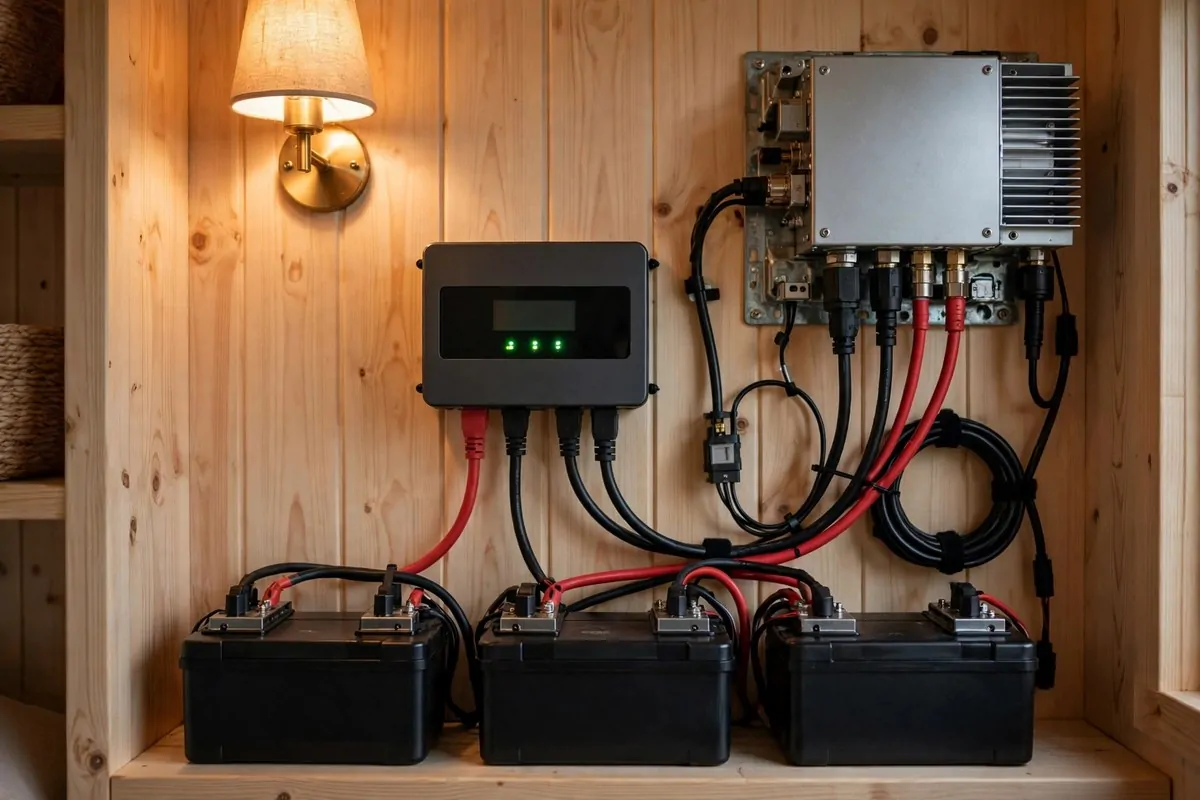
Panels are only half the story. The sun goes to bed at night, and your home does not.
That is why Off-grid Tiny Home Ideas always include a battery corner. A small bank of batteries stores the daytime sun for the evening. Your lights, your phone, your fridge, they all sip from it after dark.
Most builders now use lithium iron phosphate batteries, called LiFePO4 for short. They last far longer than the old lead-acid kind. They also handle deep drains without complaining, which means you can actually use the power you saved.
You will want an inverter next to them. It turns the battery power into the kind of power your plugs expect. Your laptop and blender never know the difference.
The charge controller sits between the panels and the batteries. It keeps the voltage steady and protects your batteries from overcharging. Think of it as a gentle doorman.
Here is a simple look at the main battery choices people pick for tiny homes:
| Battery type | Lifespan | Why tiny owners pick it |
|---|---|---|
| LiFePO4 (lithium) | 10 to 15 years | Small, light, deep discharge, low upkeep |
| Lead-acid | 3 to 5 years | Cheaper upfront, but heavy and short-lived |
A good setup holds two or three cloudy days of power. Most owners aim for that, so one gray spell does not ruin your week.
Keep a small portable generator as backup if you can. It only runs on the worst weeks of the year. The rest of the time, your wall just quietly does its job.
Watch the little green lights blink. There is something deeply satisfying about seeing stored sunshine waiting for you.
Catch Rainwater Right Off Your Roof
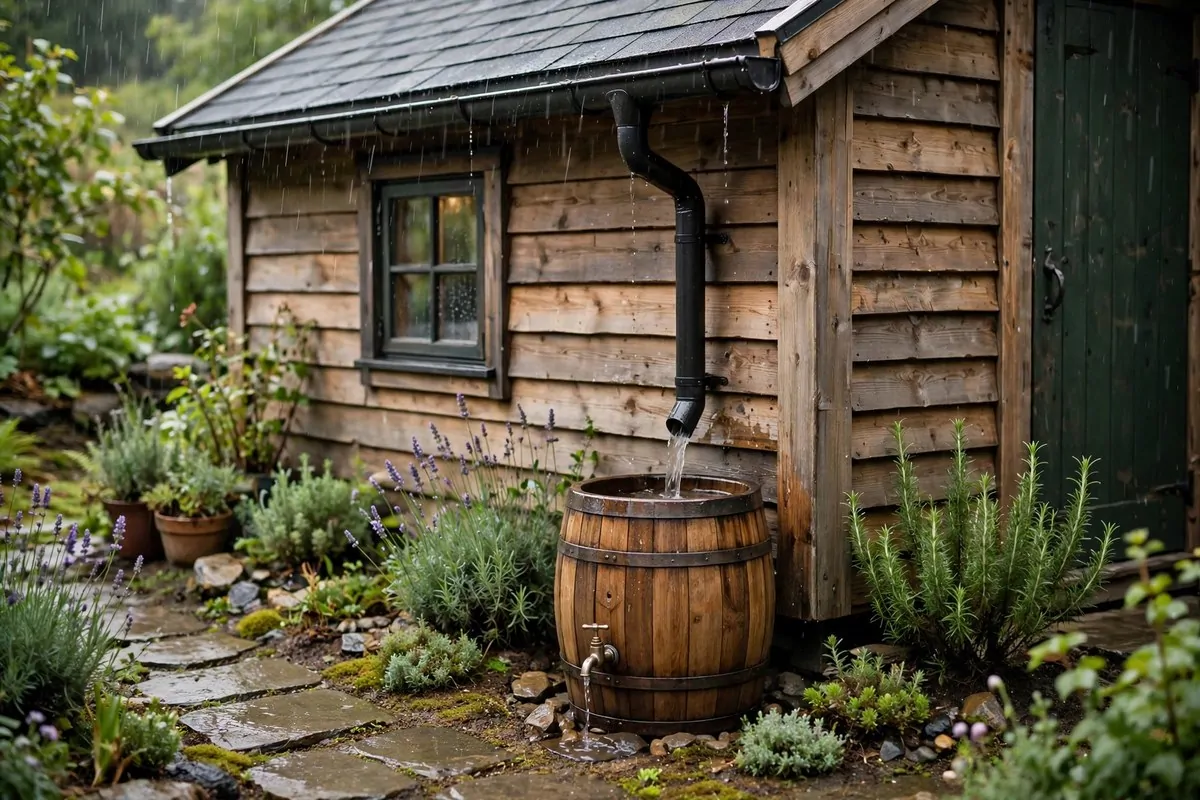
Your roof is already a funnel. Every rain shower pours free water over it, and most of that water just splashes onto the ground.
A rainwater setup simply catches it. A gutter along the edge, a downspout, and a storage tank at the end. That is the whole machine.
Add a first-flush diverter if you can. It throws away the first bit of rain, which washes the dust and bird mess off the roof. After that, the water runs clean into your tank.
Tanks come in all sizes. Some sit beside the house like wooden barrels.
Others hide under a deck or a platform.
Pick what fits your rainfall and your space.
Dark tanks are better than clear ones. Light grows algae, and nobody wants green water in their tap. A lid keeps mosquitoes and leaves out too.
In places with steady rain, one roof can cover a surprising share of daily water. Washing dishes, showers, watering plants, all of it can come from the sky.
Winter is the tricky season. In cold places, bury part of the line or drain it before the first hard freeze. A frozen pipe teaches you that lesson only once.
I still grin when it rains and I think about my tank filling up. Free water, falling from the sky, with zero monthly bill attached. Hard to beat that feeling.
Filter Your Water in Three Simple Steps
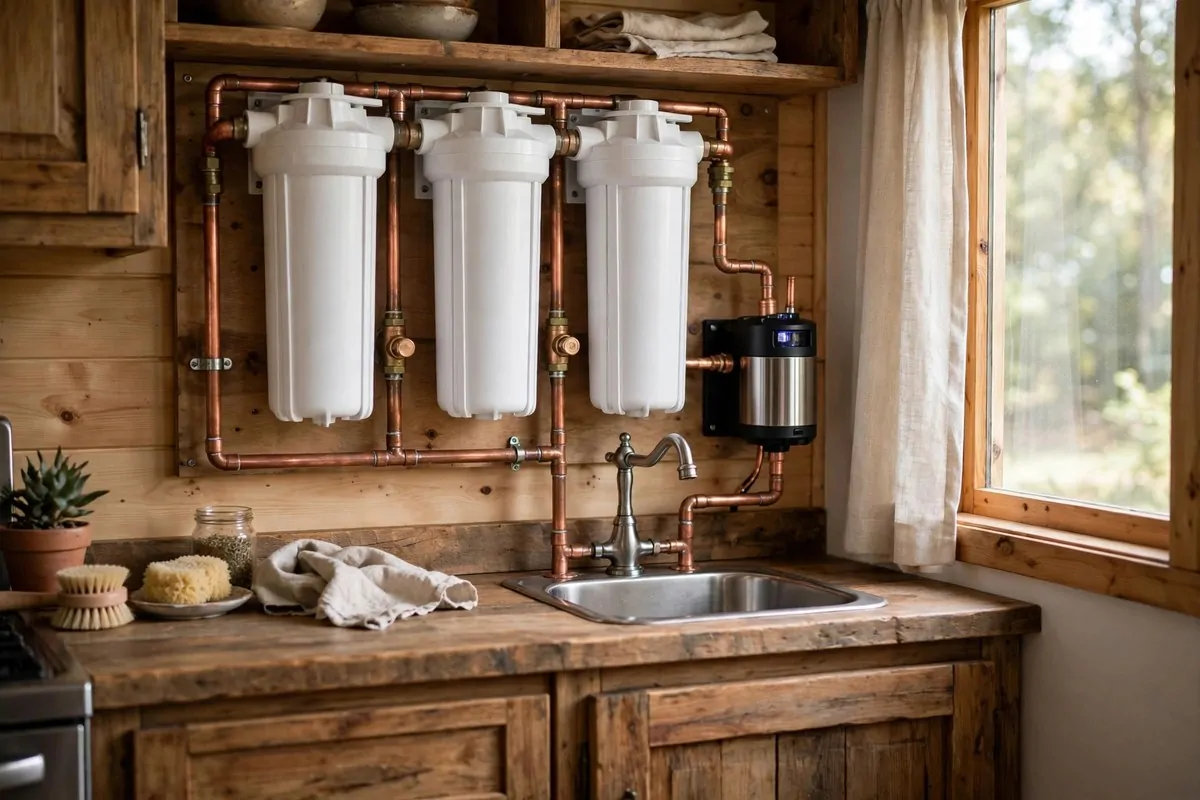
Catching the rain is step one. Making it safe to drink is step two. This part is simpler than it sounds.
A basic tiny-home filter chain has three stages. A sediment filter pulls out the grit and tiny bits.
A carbon filter takes the taste and smell away.
A UV light finishes the job by zapping anything tiny you cannot see.
You can mount the whole chain on a wall under the sink. It fits in a space the size of a shoebox. Off-grid Tiny Home Ideas love setups that stay out of the way.
Change the filters on schedule. A dirty filter works slowly and lets things slip past. Mark the dates on a little card taped nearby.
A small pump moves the water through. Some people use a quiet 12-volt pump that sips power from the battery bank. Others let gravity do it if the tank sits high enough.
Here is how the three stages work together:
| Stage | What it removes | How often to change |
|---|---|---|
| 1. Sediment filter | Sand, rust, leaf bits | Every few months |
| 2. Carbon filter | Taste, smell, chlorine | Twice a year or so |
| 3. UV sterilizer | Bacteria and tiny germs | Bulb about once a year |
The first glass always tastes a little sweeter. You know exactly where it came from. Your roof, your tank, your little filter wall.
Keep one jug of backup water for filter-change day. It takes five minutes, but you will be glad you planned ahead.
This setup means no water bills and no plastic bottles. Your tap becomes the cleanest water you own.
Install a Composting Toilet That Does Not Smell
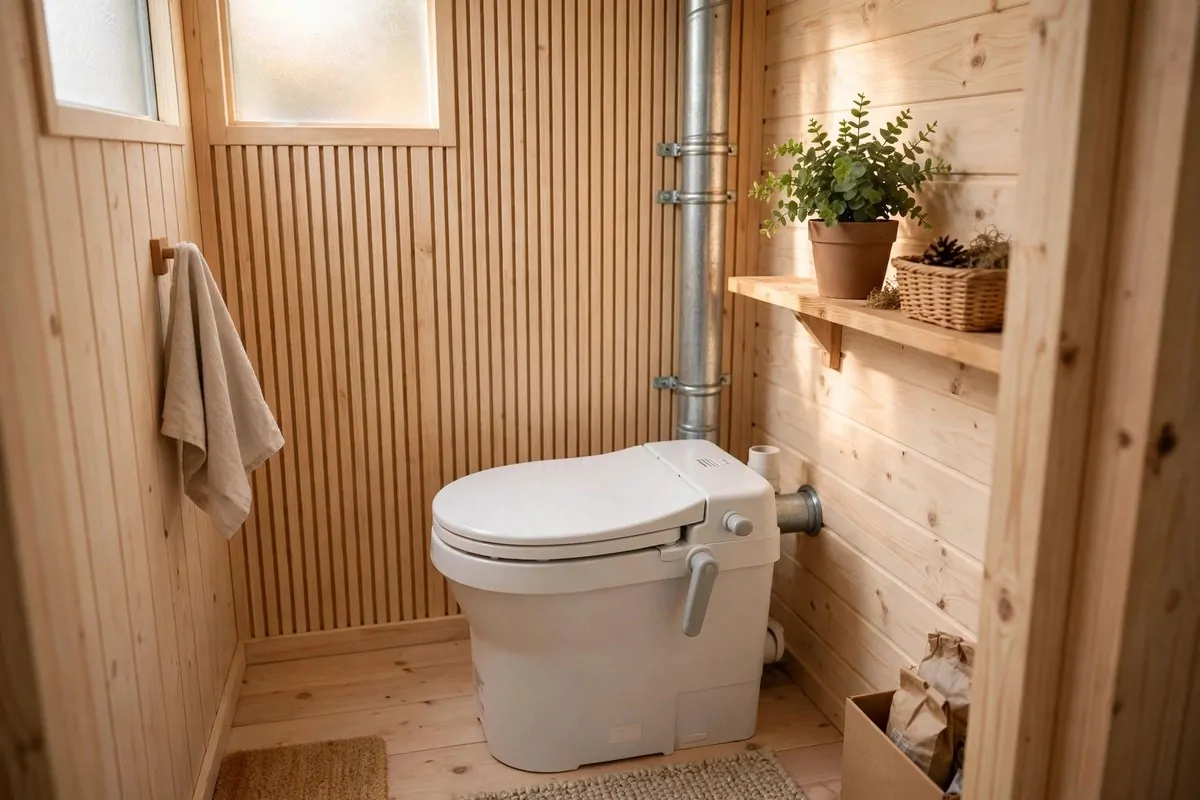
Okay, deep breath. We need to talk about the toilet. It is the part everyone worries about, and it is honestly the easiest win on this list.
A composting toilet uses no water at all. None.
That alone removes the biggest water drain in any home.
Your rainwater tank will thank you every day.
The good ones separate liquids from solids. The solids go into a chamber with coconut coir or peat moss, which keeps everything dry and smell-free. A tiny fan vents any odor straight outside.
Yes, there is a fan. It sips a whisper of power from your battery bank. You will never hear it, and you will definitely never smell it.
Emptying is not the horror show people imagine. The solids chamber lasts weeks before it needs emptying. The finished material goes into a compost bin to break down further, never straight onto food plants.
Here is what to check before you buy one:
- Make sure it is rated for full-time home use, not just a boat or RV.
- Look for a model with a proper vent fan included.
- Check your local rules. Some places love them. Some want a permit first.
Place a small basket of the bulking material next to it. A quick scoop after each use keeps the whole thing working right. It becomes a five-second habit, like wiping the counter.
Guests always ask about it. Then they use it and shrug. It looks like a normal toilet and acts like a normal toilet, minus the bill.
This one idea can cut your water use nearly in half. That is not a small thing in a home that catches its own rain.
Let Your Shower Water Feed the Garden
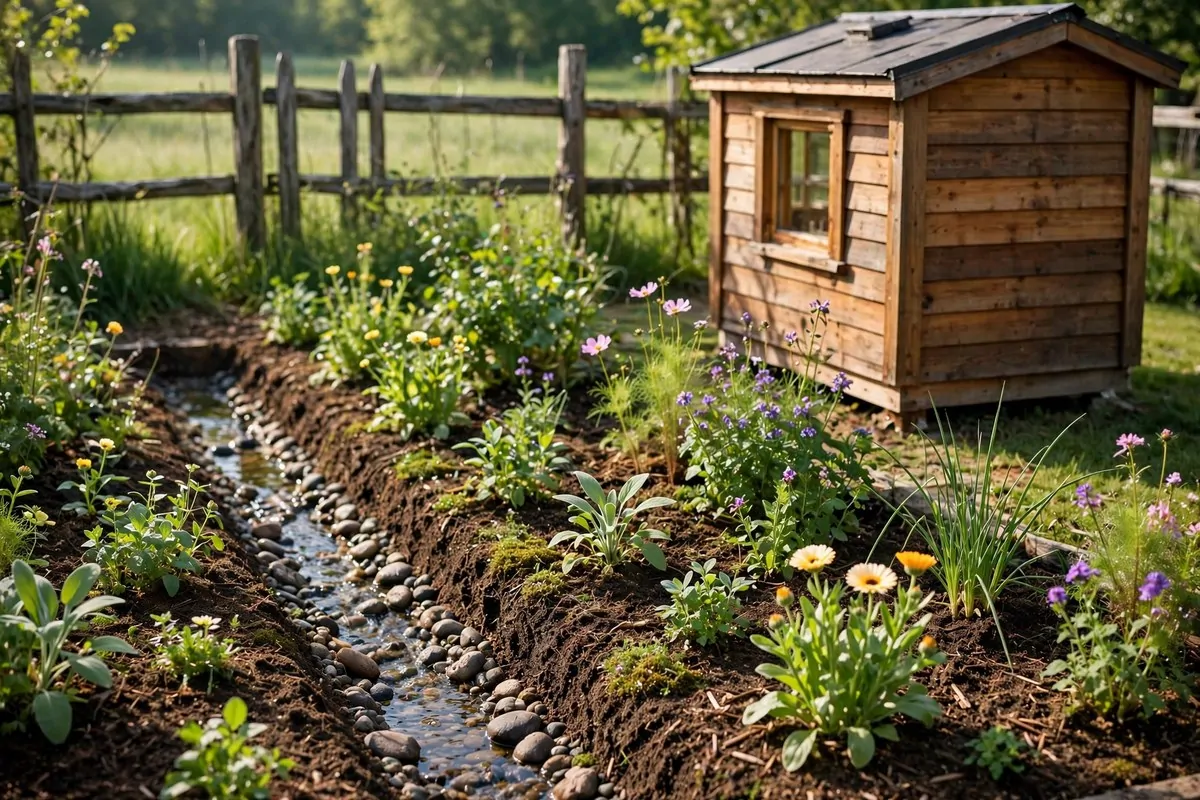
Your shower water is not dirty. It is just wet. Once it leaves the drain, it can go straight to work instead of into a sewer.
Greywater is the name for used water from sinks, showers, and laundry. Not the toilet.
Just the gentle stuff.
In an off-grid home, it flows out to a garden bed instead of away.
The setup is simple. Pipes run from your drains through a grease trap, which catches soap and bits. Then the water flows into a mulch basin or a shallow trench lined with gravel.
Plants love it. They do not care that you showered in it yesterday. The soil and roots finish cleaning it naturally.
Switch to gentle soaps. This is the one rule that matters.
Use biodegradable, phosphate-free soap and shampoo.
Regular detergents hurt the soil and the little creatures in it.
A soakage bed works in most climates. Dig a shallow pit, fill it with gravel and mulch, and plant around the edges. The water spreads out and sinks in slowly.
In dry places, this is pure gold. Every shower waters your tomatoes.
Every dish wash feeds the flowers.
Nothing is wasted.
Your water gets used twice, which is basically getting two bottles for the price of one. Except there is no price.
The rain already paid it.
Heat and Cook With One Wood Stove
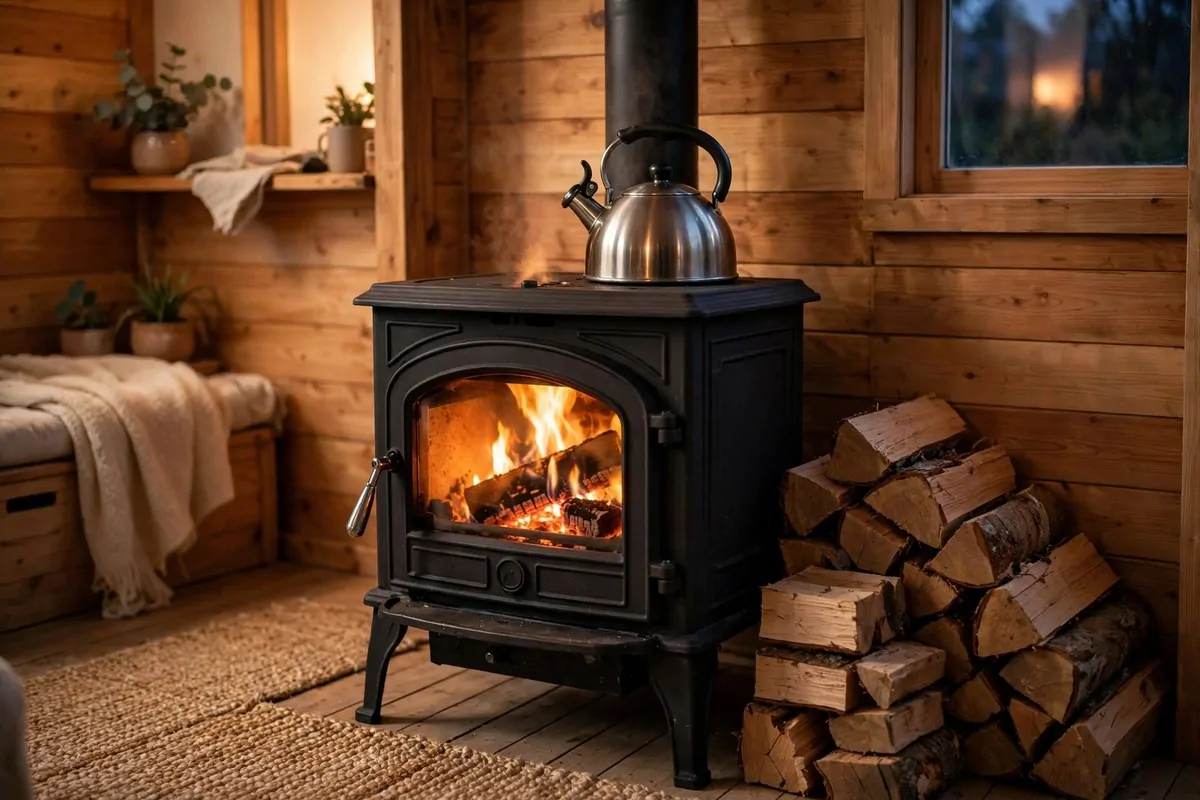
One small box. Two jobs. That is the magic of a wood stove in a tiny home.
A good tiny wood stove heats the whole place on a cold night. The same stove top holds a kettle or a pot.
Some models even have a little oven built in.
Breakfast and warmth from one fire.
Real off-grid tiny homes use these all the time. Builders put them in the corner of the living room, with a short pipe going straight up through the roof. The heat rises and fills the small space fast.
Wood is free or cheap in most rural spots. Fallen branches, storm cleanup, a friendly neighbor with too many trees. A woodshed full of logs is like a savings account that keeps you warm.
Safety matters here, so do it right. Keep clear space around the stove.
Use a heat shield on the wall behind it.
Clean the pipe each year so creosote never builds up.
Cooking on wood takes a little practice. The heat is not as even as a gas ring.
But soups, stews, and slow pots love it.
Your home smells like a cabin in the best way.
On winter mornings, the routine becomes a ritual. Wake up, light the fire, put the kettle on. By the time the tea is ready, the room is warm and the day has started right.
No gas bill. No electric heater bill. Just wood, fire, and a warm little house that costs nothing to keep cozy.
Run a Small Kitchen on Propane and a Tiny Fridge
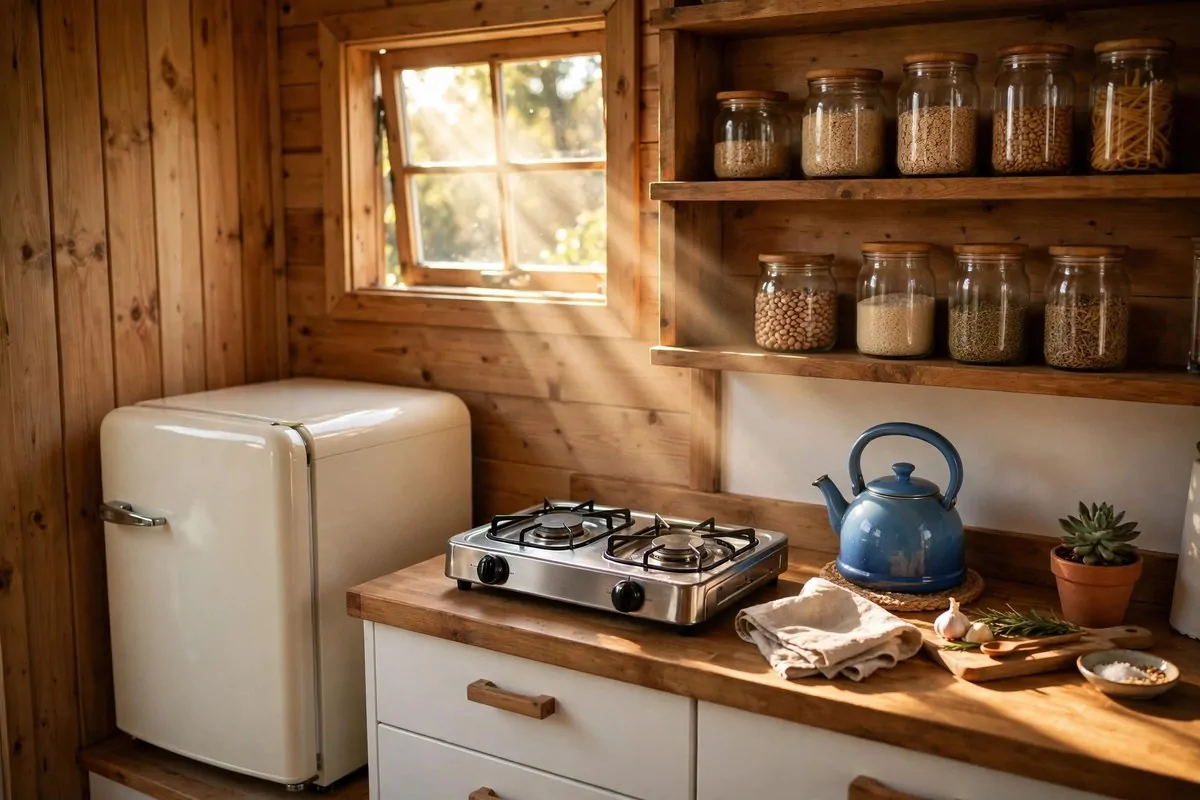
Not everyone wants to cook over a wood fire every single night. That is where a little propane comes in.
A two-burner propane cooktop covers almost everything. Pasta, eggs, stir fry, morning coffee. Two rings are plenty when your kitchen is only a few steps wide.
The gas bottle sits outside in a small storage box, just like the real off-grid builds do. A hose runs to the cooktop inside. One bottle lasts a surprisingly long time for a small household.
Your fridge can be small too. A little under-counter fridge or even a chest-style one sips power. Some off-grid folks run a propane fridge, which needs no electricity at all.
Keep the kitchen simple on purpose. One good pot, one pan, one kettle, a sharp knife. Fewer gadgets means fewer things to power and clean.
Open shelves beat deep cabinets in a tiny kitchen. You see everything you own. Nothing hides in the back for a year and grows old.
Cook with the seasons. Summer means salads and quick grills outside.
Winter means one-pot stews that sit on the stove for hours.
Your little kitchen handles all of it.
This is one of those Off-grid Tiny Home Ideas that feels completely normal after a week. You cook, you eat, you wash up. The only difference is that nobody bills you for it.
Light Every Corner With LEDs and Smart Window Light
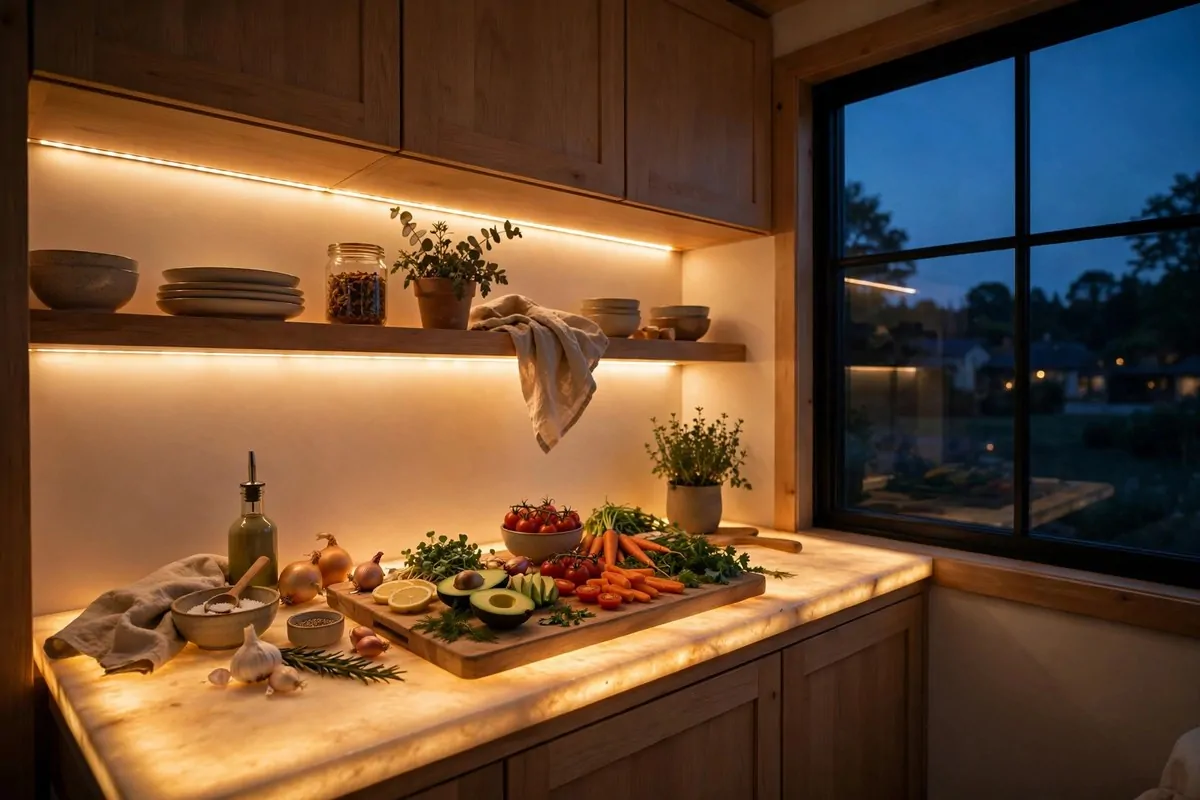
Light is one of the biggest power drains in a normal house. In a tiny off-grid home, it can be one of the smallest.
LED bulbs use a tiny fraction of the power old bulbs needed. A whole evening of light costs less energy than running a hair dryer for a minute. Swap every bulb and you are most of the way there.
Strip lights are the tiny-home secret. Run them under cabinets, along shelves, behind the bed. They give a warm glow exactly where you need it, and they sip power all night long.
Daylight is free, so let it in. Big windows on the sunny side mean you barely need lights until evening. Light walls bounce that daylight deep into the room.
Place a mirror across from a window. It throws light into dark corners for free. Old trick, works beautifully in small rooms.
Dimmers and switches matter more off-grid. Turn lights off room by room. It becomes second nature fast, and your batteries last longer for it.
Keep a couple of solar lanterns charged on the windowsill. They soak up sun all day and glow all evening. They double as your backup if you ever need it.
I love how a tiny home looks at dusk with just LEDs on. Warm pools of light in a small wooden room.
It feels like a lantern from the outside.
Nobody inside is thinking about a power bill.
Set Up an Outdoor Solar Shower
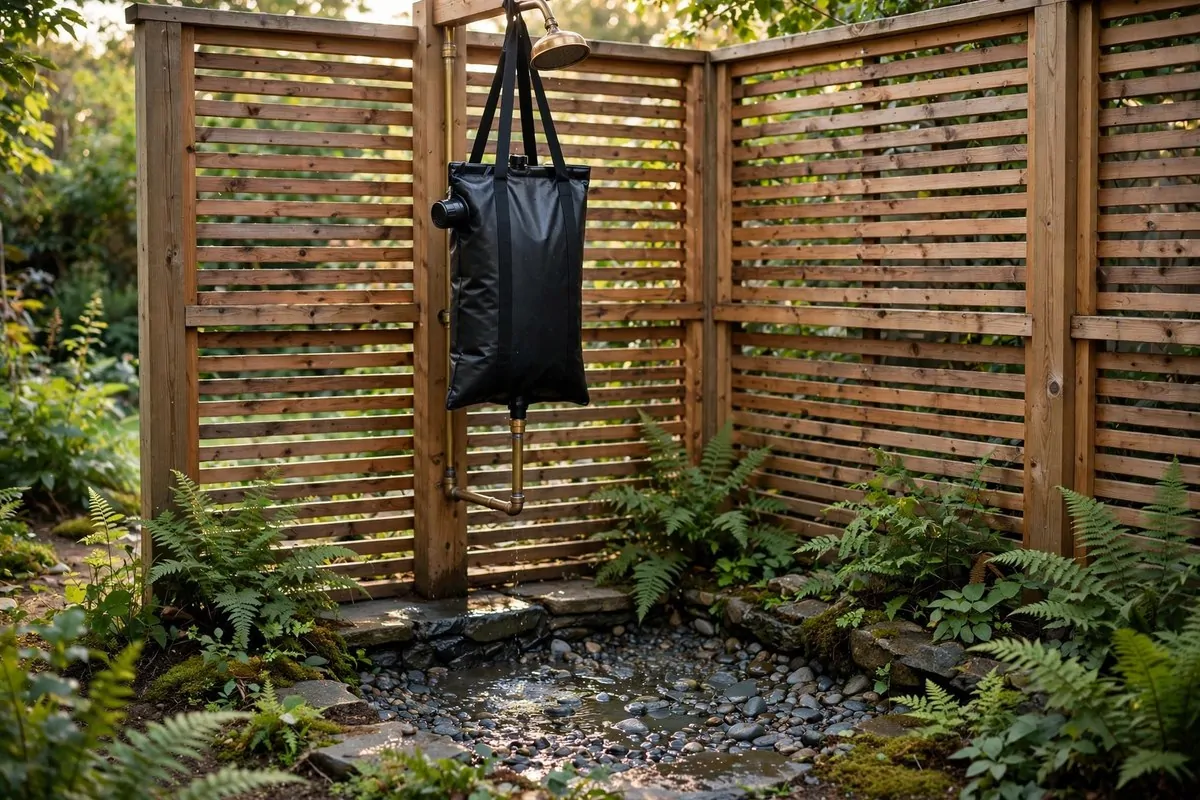
Indoor plumbing is wonderful. But an outdoor shower on a warm day is something else entirely.
A solar shower bag is the simplest version. It is a black bag that hangs in the sun and warms the water inside.
Hang it high, stand under it, pull the little tap.
Warm shower, zero plumbing, zero power.
Some folks build a nicer version. A small wooden screen for privacy, a real shower head on a pipe, a black tank above that the sun heats all day. It looks like a tiny spa corner in the garden.
Summer is when it shines. The sun does all the heating work for free. Your rainwater tank feeds it, and your greywater bed catches the runoff.
In spring and fall it still works on sunny afternoons. On cold days, you just use the indoor shower instead. The outdoor one becomes a seasonal treat.
Keep the floor simple. Flat stones or wooden slats let the water drain away into the garden. Nothing fancy needed.
Hang a hook for your towel and a little shelf for the soap. That is the whole bathroom. Birds might sing while you rinse off, and that is not something a city shower can offer.
This is the kind of Off-grid Tiny Home Idea that sounds like a luxury but costs almost nothing. The sun heats the water.
The rain fills the tank.
You just show up.
Store Food Cool With a Root Cellar
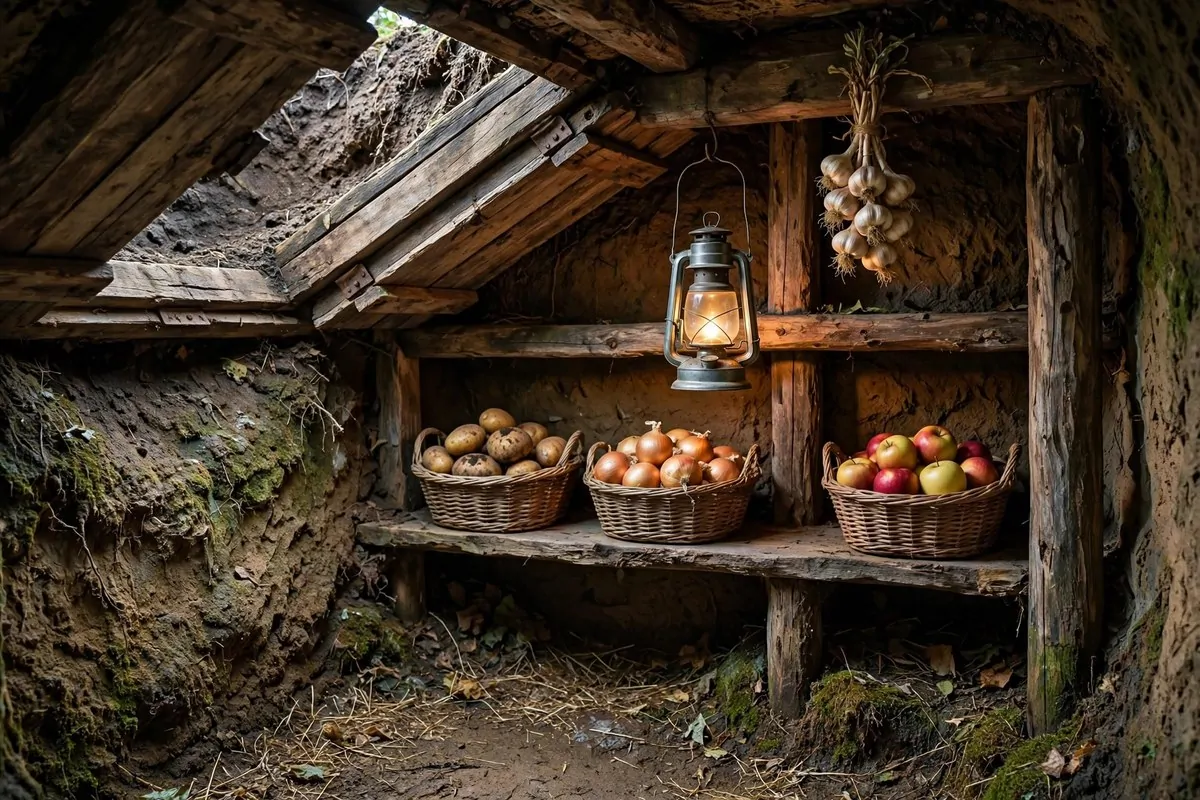
A fridge eats power every hour of every day. A root cellar eats nothing at all.
People stored food in the ground for centuries before fridges existed. A small cellar under or beside your tiny home stays cool and dark all year. Potatoes, onions, apples, and jars love it down there.
It does not need to be big. Even a buried barrel or a small insulated box dug into a hillside works. The earth does the cooling for free.
Dark and steady is the goal. Light makes potatoes sprout.
Big temperature swings make things spoil.
A simple wooden door and good drainage solve most problems.
Use baskets and wooden shelves inside. Air needs to move around the food. Stack things loosely and check them now and then, pulling out anything soft before it spreads.
Canning pairs perfectly with a cellar. Summer tomatoes become winter soup, sitting in jars on the shelf. No freezer humming in the corner, no power spent keeping them cold.
Keep the most-used items near the door. You will pop down there daily for an onion or an apple. It becomes part of the kitchen routine, just a few steps further.
Your fridge can shrink to a tiny one for milk and leftovers. The cellar handles the bulk. That is one less hungry appliance pulling from your batteries all day.
Warm Up With a Wood-Fired Hot Tub
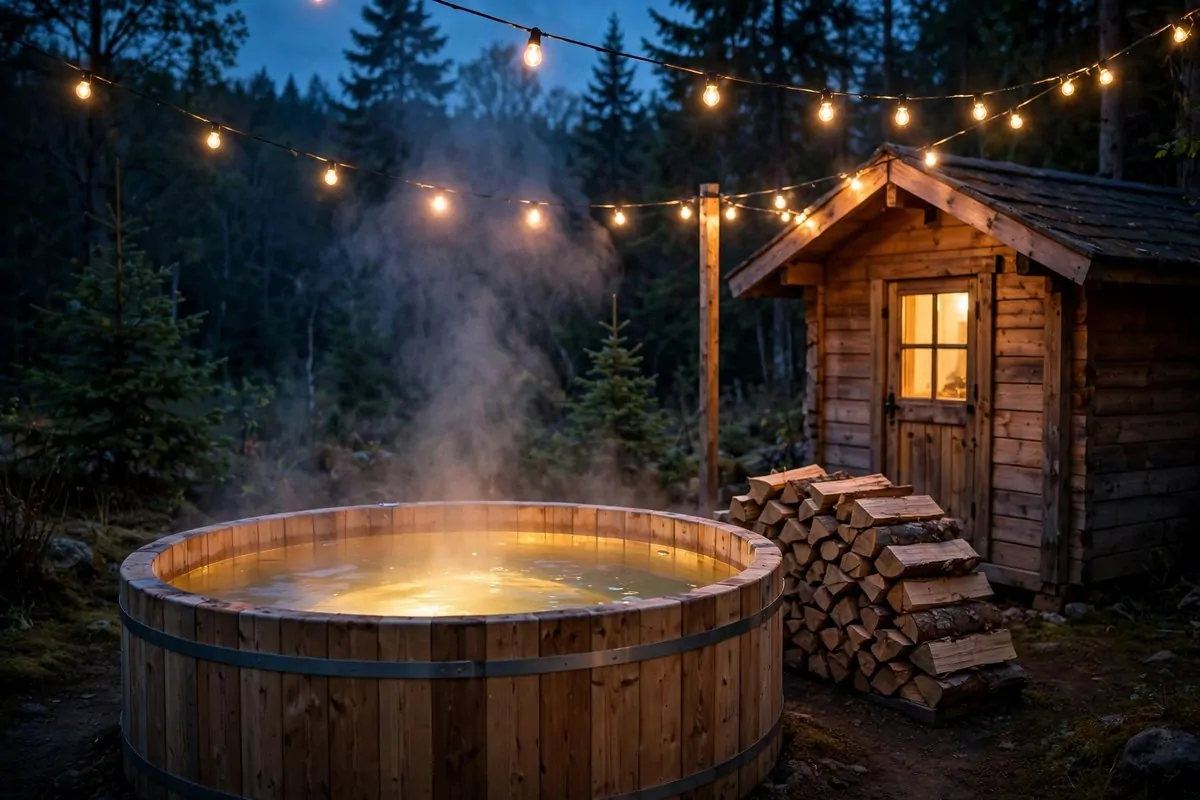
This one is pure joy. A wood-fired hot tub beside a tiny home turns an ordinary evening into something you will remember.
The tub is a big wooden barrel with a small stove built in or next to it. You fill it with water, light a fire under it, and wait. An hour later, you are sinking into steaming water under the stars.
No heater element. No electric bill.
Just wood and water and patience.
The fire does all the work while you make tea inside.
A lid keeps the heat in when you are not using it. That way you are not heating the night air for nothing. Good insulation around the tub helps too.
Rainwater can fill it. Or well water, if you have it. You only change the water every few weeks, not every day, so it is not the water hog people expect.
Use it year-round. Winter is actually the best time. Sitting in hot water while snow falls around you is the kind of thing that makes off-grid life feel like a win, not a sacrifice.
It is not just for soaking either. A tub of warm water is handy for washing big things, rinsing muddy boots, or warming up after a cold workday.
Build it once and it lasts for years. Every soak after that costs you nothing but a few logs. That is the off-grid way: a little work upfront, then free comfort forever.
Grow Food Right Beside Your Door
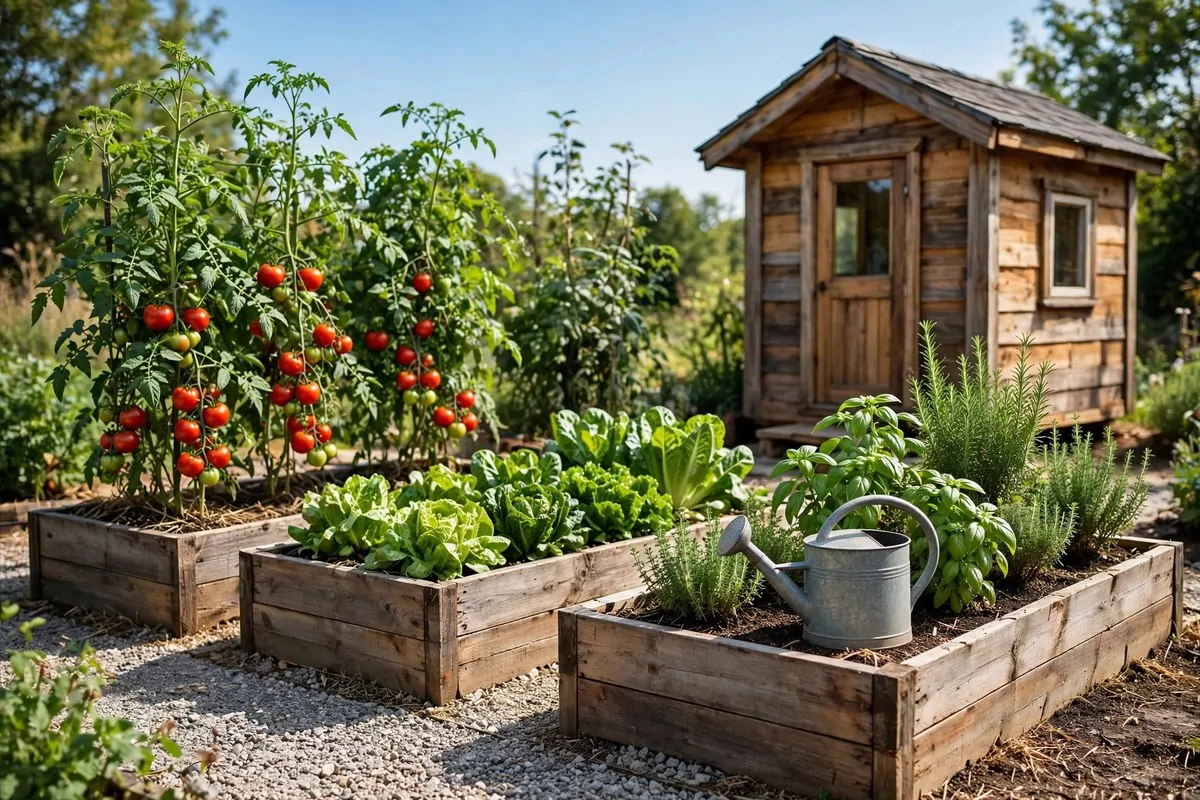
The shortest grocery trip is the one to your own door. Raised beds beside a tiny home put dinner ten steps away.
Start with three or four wooden boxes. Fill them with good soil and compost. That is enough to grow salads, herbs, and tomatoes for most of the year.
Compost from your kitchen scraps feeds the beds for free. Eggshells, coffee grounds, vegetable peels, it all goes in a bin and comes back as rich dark soil. Nothing bought, nothing wasted.
Water them with your rainwater. A watering can dipped in the barrel is all it takes. Your greywater bed can sit right next to them and keep the soil moist.
Grow what you actually eat. Basil if you love pasta.
Lettuce if you eat salads.
There is no point growing things that wilt in your fridge untouched.
Stagger your planting. Put in a little every two weeks instead of all at once. That way you harvest a little every week instead of drowning in zucchini one month and having nothing the next.
Chickens are a common next step. A tiny coop and three hens give you fresh eggs daily. Their bedding goes into the compost, and the cycle keeps turning.
A small garden will not feed you completely. But it cuts your grocery bill and it tastes better than anything from a store shelf. Your own tomato, still warm from the sun, is a small miracle.
Add a Tiny Greenhouse to the Sunny Side
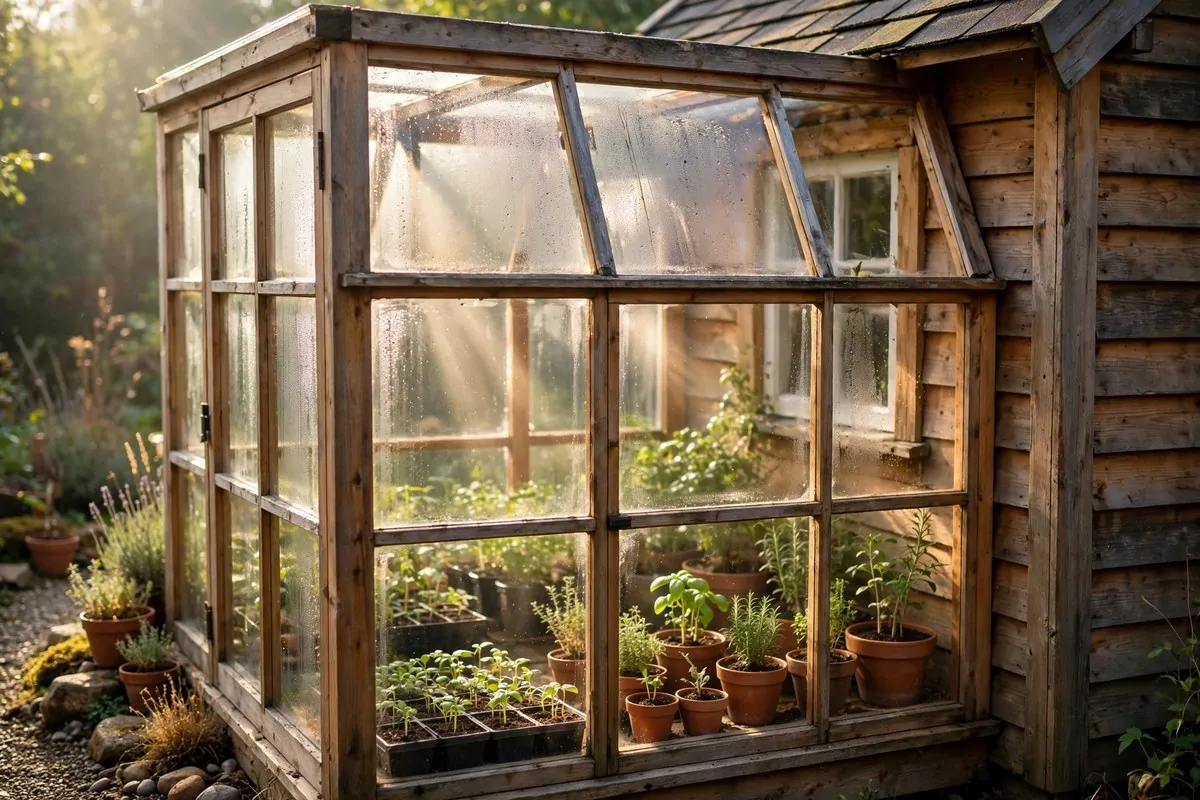
A greenhouse is like giving your garden a warm jacket. Plants grow earlier in spring and keep going later into fall.
It does not need to be big. A little lean-to against the sunny wall of your tiny home is enough. Glass or clear panels trap the sun’s heat, and seedlings pop up weeks early.
Start your seeds inside it. Tiny pots of tomatoes, peppers, and herbs get a head start while the outside world is still cold. By the time the frost is gone, they are strong little plants.
The wall behind it helps too. Your home soaks up sun all day and gives a little warmth back at night. The plants snuggle against it like it is a warm blanket.
Vent it on hot days. A greenhouse can roast your seedlings in July if you forget. One open panel or a little vent is all it takes.
Watering stays easy. A rain barrel next to the greenhouse with a short hose reaches every pot. Some people run a tiny drip line straight from the barrel.
In winter, it becomes a sunroom for hardy greens. Kale, spinach, and herbs can survive cold nights under glass. Fresh salad in January, from ten steps away.
This is one of my favorite Off-grid Tiny Home Ideas because it stretches your growing season without a single watt of power. The sun does everything.
You just plant and pick.
Stack Your Firewood Like You Mean It
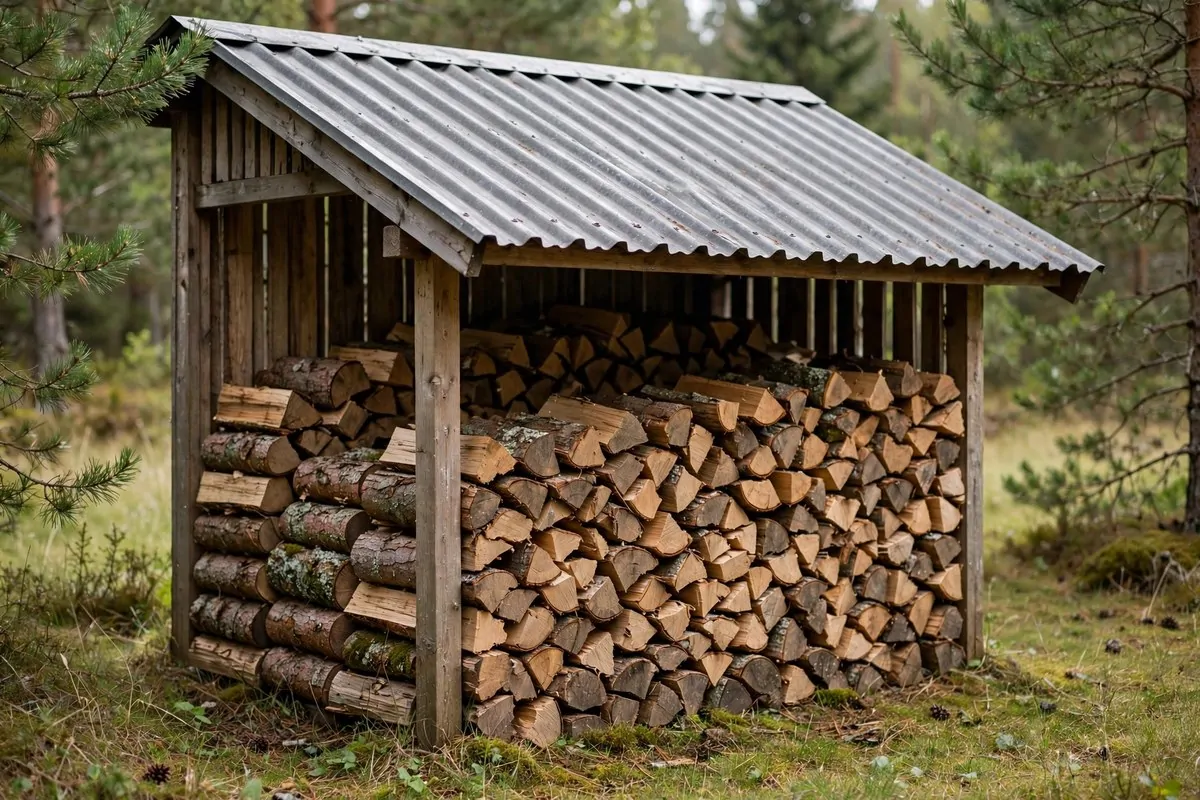
Firewood is your winter power bill, paid in advance. Stack it right and it burns hot and clean. Stack it wrong and you fight with damp logs all January.
Keep it off the ground. A simple pallet or two rails of old lumber lifts the bottom row. Ground moisture creeps up and ruins the wood closest to the earth.
Cover the top, not the sides. A slanted roof or a tarp over the top keeps rain off.
Open sides let the wind blow through and dry the logs.
This is the one rule that matters most.
Stack it close to the house but not against it. Ten steps away is perfect. Close enough for a snowy evening dash, far enough to keep bugs and damp away from your walls.
Sort by size as you stack. Big logs at the bottom, kindling on top or at one end. When you come out with cold hands, you grab what you need without digging.
Season it for a full year if you can. Fresh-cut wood is half water and burns poorly.
Last year’s stack is this year’s warmth.
Two piles, one aging, one burning, keeps the cycle going.
A lean-to shed is the nicest setup. Four posts, a slanted roof, open sides. It holds a whole winter of wood and looks charming next to a tiny home.
There is something honest about a woodpile. You can see your winter warmth sitting there in neat rows. No mystery, no meter, no bill coming in February.
Hang a Clothesline Instead of Running a Dryer
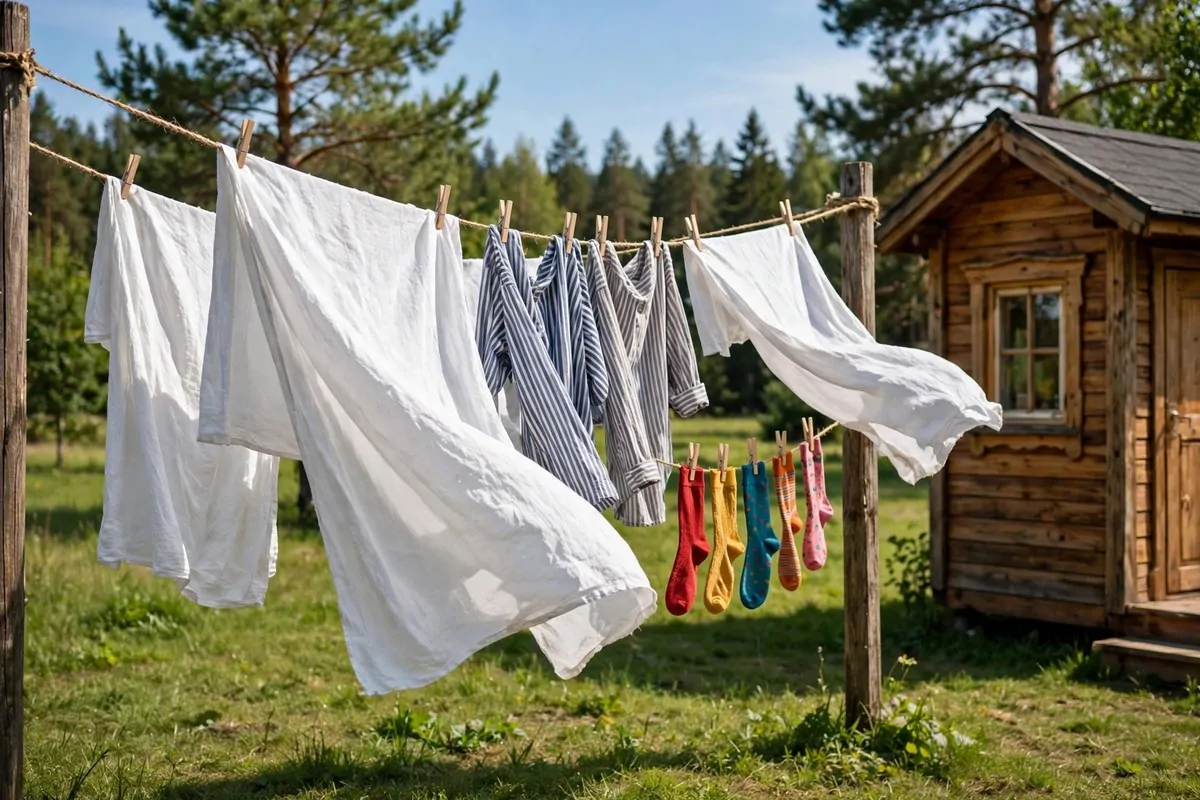
A dryer is one of the hungriest machines in any house. A clothesline uses exactly zero power and your clothes smell better for it.
Two posts and a length of line is all you need. Hang it where the breeze moves through and the sun lands most of the day. Your shirts will be dry by lunch.
Sunlight is a natural freshener. It brightens whites and leaves that clean outdoor smell no dryer sheet has ever matched. Your pillowcases will thank you.
Shake each piece before you hang it. It knocks out the wrinkles and helps things dry faster. Wooden pegs hold better than plastic ones and last for years.
For rainy days, add an indoor line. A fold-down rack near the wood stove dries a load overnight. The stove is already running, so the heat is free.
Here is a simple washday rhythm that works off-grid:
- Wash in the morning so clothes get the full day of sun.
- Hang heavy things like jeans on the ends where the breeze is strongest.
- Bring everything in before the evening dew settles.
- Fold straight off the line and skip the iron. The sun already smoothed most of it.
Hand washing is an option for small loads. A basin, some gentle soap, and a washboard handle delicates fine. It uses little water and no power at all.
This is the simplest idea on the whole list. A piece of rope that saves you from one of the biggest power bills in the house. Old, simple, and perfect.
Light the Evenings With Solar Lanterns
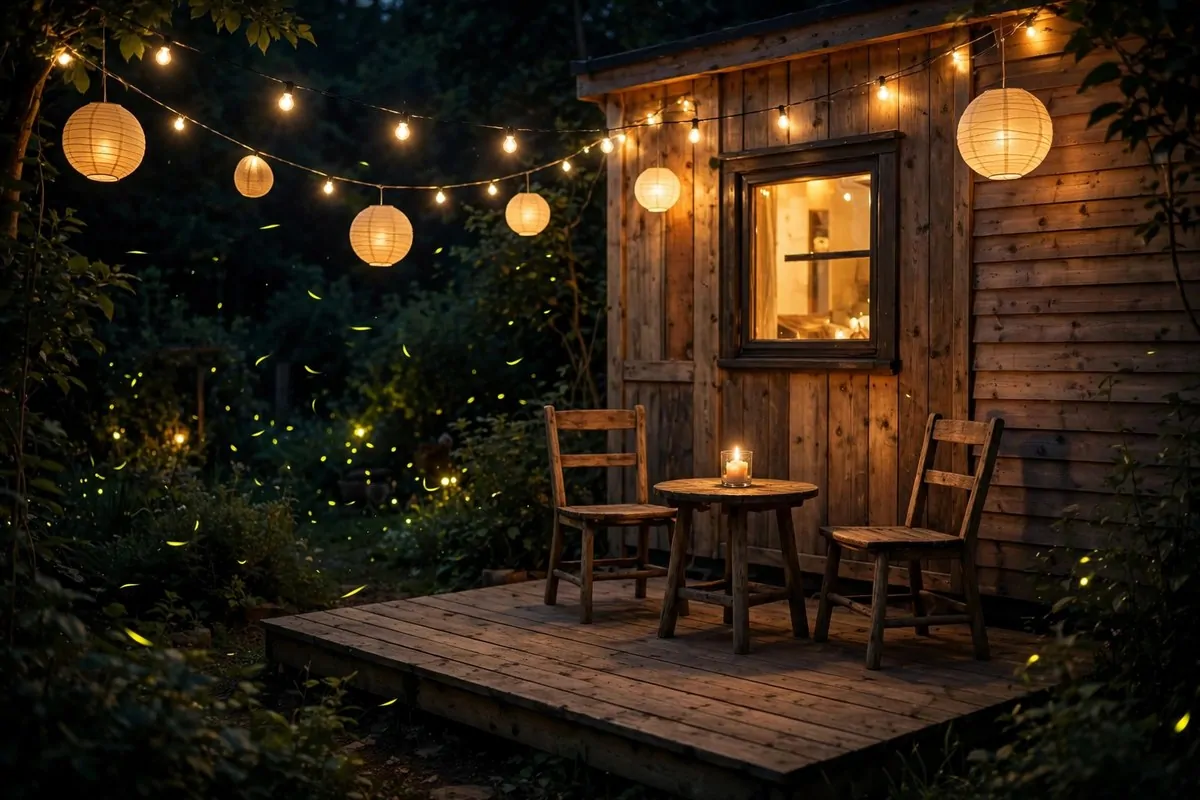
When the sun goes down, the magic starts. Solar lanterns and string lights turn a tiny home’s evening into something out of a storybook.
They charge all day on a windowsill or a fence post. Each one has a tiny panel on top that drinks sunlight. At dusk, they switch themselves on without you lifting a finger.
Hang string lights along the deck or the porch edge. They give a warm glow for reading, talking, or just sitting. They use no house power at all, so your batteries stay full for the fridge.
Paper lanterns add the soft look. Glass jar lanterns add the charm. Mix a few types and your little deck feels like a festival every night.
Path lights guide the way. Stick a few solar spikes along the walk to the garden or the woodpile. No wiring, no switches, they just glow when it gets dark.
Keep one lantern by the door and one in the bathroom. They are your backup lights if you ever need them, and they cost nothing to run.
Fireflies and lanterns together is my favorite summer sight. The little solar lights twinkle along the deck while the real ones blink out in the grass.
Evenings off-grid have a different rhythm. No bright overhead glare. Just warm pools of light, crickets, and the feeling that the whole show is free.
The bills do not have to follow you home. Living off the grid in a tiny home is not about giving things up. It is about choosing better versions of them.
The sun replaces the power company. The rain replaces the water bill.
A composting toilet and a greywater garden replace the sewer line.
Wood replaces the gas company. A clothesline replaces the dryer.
Start with one idea, not all seventeen. Maybe the solar panels.
Maybe the rain barrel.
Each system you add makes the next one easier, because you learn how your home actually works.
Your home gets smaller, but your life gets bigger. More sky.
More quiet.
More mornings where the only bill on the counter is the one you wrote yourself, for a life that costs almost nothing to run.