100 Positive Affirmations for Kids to Build Confidence, Kindness & Self-Esteem

Most kids wake up and the first thing they hear is “hurry up,” “put your shoes on,” or “you’re going to be late.” Not a bad word. Not a mean word. Just… busy words. Fast words. Words that get things done but don’t really say anything.
And then they walk into school, into a room full of other kids who are all secretly wondering the same thing: Am I okay? Am I good enough? Do people like me?
That question never quite goes away. But the answer a child builds in their own head during these early years sticks around for a long time. Maybe forever.
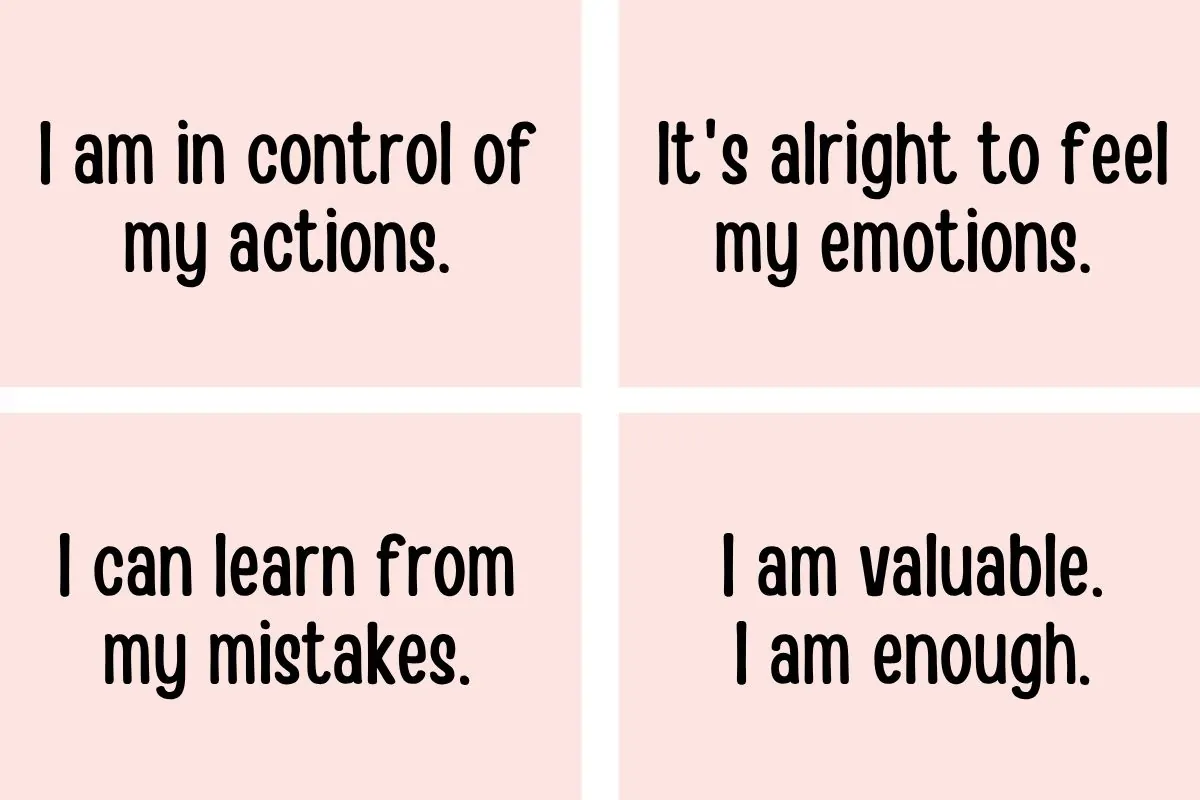
That’s where affirmations come in. Not as magic. Not as a trick. But as a gentle, consistent way of giving a child’s brain something true and good to hold onto before the world throws everything else at them.
What Kids Actually Need to Hear (And Why It Matters More Than You Think)
A lot of parents worry they’re not doing enough. They read about screen time and sleep schedules and nutrition, and somewhere at the bottom of the list they see “positive talk” and think, sure, that too.
But here’s something worth sitting with. Research from Dr. Carol Dweck at Stanford has been showing for years that the words children hear about themselves shape how they respond to difficulty, failure, and uncertainty. It’s not about praise exactly. It’s about the kind of messages a child internalizes.
A child who hears “you’re so smart” may fall apart when something gets hard. A child who hears “you kept trying and that’s what counts” builds a different kind of strength.
Affirmations work because they give kids language for how they want to feel. And when children say something about themselves out loud, over and over, the brain starts to take it seriously.
- Kids who use daily affirmations show lower anxiety in classroom studies
- Children between ages 5 and 10 are in a peak window for identity formation
- Positive self-talk can reduce negative self-comparison in social settings
- Repeated kind words from trusted adults become a child’s inner voice over time
That last one is worth reading again. The voice inside your child’s head in 20 years will sound a lot like the voices they heard most during these early years.
A Quick Word Before You Start
Affirmations work best when they feel real, not forced. If a child says “I am brilliant” while feeling ashamed about a test they failed, it can backfire and feel like a lie. Start with affirmations that feel true enough, not ones that feel like a stretch. Build from there.
This matters a lot. Some parents sit their kids down and say “okay, repeat after me” and the child does it with the same energy they use for taking medicine. That’s not the goal.
The goal is to weave these into real moments. After a hard day. Before a big test. At bedtime. During a car ride. In the mirror together.
How to Use These Affirmations With Kids (By Age Group)
| Age Group | Best Way to Use Affirmations | How Often |
|---|---|---|
| Ages 4 to 6 | Say them out loud together, keep it playful | Daily, at bed time or morning |
| Ages 7 to 9 | Let them pick their own top ones | 3 to 5 times a week |
| Ages 10 to 12 | Write them in a note book or on sticky notes | When they feel they need it |
None of these are rules. They are just starting points. Every child is different, and what works for one may feel weird for another. That’s okay.
The 100 Affirmations
Here they are. All 100. Every one is meant to feel different, cover a different need, touch a different part of who a child is becoming.
For Confidence and Believing in Themselves
- My voice is worth hearing.
- When a task feels hard, that’s just the start, not the end.
- My best today is good enough, even if it’s not the best ever.
- People are glad when they get to know me.
- Getting things wrong is how getting things right begins.
- There is no one else like me in the whole world, and that is a real gift.
- My body knows what to do, and my mind helps it get there.
- Even small wins are real wins.
- Brave doesn’t mean not scared. Brave means going anyway.
- The things that make me different are the things that make me strong.
For Kindness and Caring About Others
- When a care is shared, the load gets a little lighter for both people.
- Saying kind words costs nothing and means so much.
- Helping a friend is one of the best things a day can hold.
- Everyone around is fighting something we may not see, so gentle is always right.
- A kind act today can change how someone’s whole week goes.
- Listening to someone is a way of saying “you matter.”
- Sharing does not make less of what is mine. It adds to what we both have.
- A smile offered first takes courage, and that courage is worth it.
- Being a good friend is something that can be chosen fresh every single day.
- The world is a bit warmer because of the kindness that is given out.
Pro Tip: Try letting your child pick one affirmation each morning and tape it somewhere they’ll see it all day. The bathroom mirror. The lunch box. The front of their note book. Small and visible beats big and forgotten.
For Handling Big Feelings
- Feelings are allowed to visit, but they don’t have to stay all day.
- Crying is not weak. It means something mattered enough to feel.
- When mad, a breath first and then words. That order helps.
- Feeling scared is okay. It does not have to be in charge.
- Big emotions are just big energy looking for a direction.
- Sadness doesn’t last forever, even when it really feels that way.
- It’s okay not to be okay. Saying so takes real strength.
- Being calm is a skill that can be practiced, just like riding a bike.
- Feelings are real. What’s done with them is what matters most.
- It’s okay to need a minute before answering.
For a Growth Mind Set and Learning
- Mistakes are not the end. They are the data.
- Every teacher once didn’t know the thing they now teach.
- A hard problem is just a not-yet-solved problem.
- Effort is what the brain gets stronger from, not just getting it right.
- Reading one page more today than yesterday is real progress.
- Asking “how does this work?” is a sign of a curious and open mind.
- There is always something new to learn, and that never stops being a good thing.
- Confusion means the brain is being stretched into new shape.
- A wrong answer asked out loud is braver than a right one kept quiet.
- Every expert started at the exact same place: not knowing.
For Self-Love and Feeling Good Enough
- The body that is here, right now, is doing its best and that is worth love.
- Worth isn’t measured by grades, looks, or how many friends there are.
- Rest is not lazy. Rest is how the good stuff comes back.
- Being quiet and gentle is as strong as being loud and bold.
- There is no need to earn the right to take up space. It already belongs here.
- Even on a bad day, good is still in there somewhere.
- What others think does not decide what is true about this person.
- Loving the self makes more love possible for everyone else too.
- The inside parts, the kind ones and the funny ones, matter most.
- This is a person worth knowing. All the way through.
Important Note: Self-love affirmations can feel odd for children who have faced a lot of criticism or comparison. Go slow with these. Sit with them and say the words together. That shared moment builds as much as the words do on their own.
For Courage and Facing New Things
- New things feel strange at first. That feeling goes away faster than expected.
- Trying and not getting it is still further along than not trying at all.
- Asking for help takes courage, not weakness.
- Standing up for what’s right, even alone, is something to be proud of.
- Being first to say sorry is a brave and rare thing.
- Speaking up in class, even when the throat feels tight, is real courage.
- Walking into a room full of new people and still being kind is strong.
- Fear is just excitement that hasn’t found its shape yet.
- Every hard thing done builds the muscle for the next hard thing.
- The scariest step is almost always the first one. After that, it gets easier.
For Resilience and Getting Back Up
| Situation | Affirmation |
|---|---|
| After a bad grade | Setbacks don’t decide where things end up. |
| After a fight with a friend | Repair is always possible when both people care. |
| After losing a game | Losing teaches what winning can’t. |
| After a hard day | Tomorrow starts fresh with a full tank. |
| After a scary moment | Hard things survived leave behind real strength. |
| After feeling left out | Not every room is the right room. The right ones come. |
For Gratitude and Noticing the Good
- A full belly, a safe bed, and someone who cares. That’s actually a lot.
- One good thing found each day makes the next day easier to find one too.
- Saying “thank you” and really meaning it is a habit that changes everything.
- The small things: a funny cloud, a warm drink, a kind look. They count.
- Gratitude isn’t ignoring hard things. It’s also noticing the good ones.
- What’s here today may not always be. Noticing it while it is costs nothing.
- Nature, a good laugh, a warm story. These are gifts that come for free.
- Being thankful for a person while they are still here is far better than after.
- A grateful heart is one of the most at-peace kinds there is.
- Counting what is present matters more than counting what is missing.
For Friendship and Getting Along
- A good friend doesn’t have to agree on everything. That’s actually better.
- Leaving someone out on purpose is never the right move.
- Making a new friend starts with just saying one true and kind thing.
- Being the one who includes the left-out kid is a real gift to give.
- Friendships take care like plants take water. Small things, done often.
- It’s okay if not every person is a close friend. Some are just good to know.
- Real friends can disagree and still stay real friends.
- Being curious about someone else’s life is one of the kindest things to offer.
- Loyalty means staying kind even when other kids aren’t watching.
- A good laugh with a good friend is one of life’s best simple things.
For Calm, Rest, and Feeling Safe
- At the end of this day, there is a safe place to rest. That is enough.
- A slow breath in and out is the fastest way back to calm.
- The body tells the truth. When tired, it’s okay to stop.
- Not every thought that shows up has to be believed.
- Quiet time is not wasted time. It’s when the inside settles.
- Sleep is the brain’s way of filing away everything that happened today.
- It’s okay to do less sometimes. That is not falling behind. That is balance.
- A calm mind solves problems better than a rushed one.
- Home, routine, and the known are not boring. They are safe. That is good.
- There is always a tomorrow, and that tomorrow can be a fresh start.
A Short Check List for Parents and Teachers
Before wrapping up, here’s a quick look at what makes affirmations actually land with kids:
- The affirmation is said in a calm, warm moment, not during a fight or a rush
- The child helps choose which ones feel true to them
- Saying them happens in a natural way, not like a chore
- The adult says them alongside the child, not just at the child
- The words connect to real moments, not said in a blank vacuum
- The child is not forced to believe it right away. Just asked to try it out
- Doing it often matters more than doing it perfectly
What Actually Changes When This Becomes a Habit
Something quiet happens over weeks and months of this. The child who used to say “I can’t” starts saying “let me try.” The one who cried every morning before school starts walking in a little taller. Not because the world got easier. Because their inner voice got a little kinder.
That shift doesn’t happen all at once. And there will be bad days, days when the affirmation feels hollow, when nothing helps, when it all seems too much. That’s normal. The practice is not about being happy all the time. It’s about having a thread to pull when things get dark.
A few things worth keeping in mind:
- Doing it often but not perfectly beats doing it once the right way
- Children who feel heard take affirmations in much more easily
- One affirmation said each day beats ten said once and forgotten
- The adult’s own tone and calm matter as much as the words used
- Real-life moments make these stick far better than scripted routines
One Last Thought
There is a saying, often linked to the teacher and author Fred Rogers, that goes something like: what is say-able is manageable. When children can find words for how they feel and who they are, even in small ways, the world becomes a little less big and scary.
That is what these affirmations are really trying to do. Not fix everything. Not replace hard work or real struggle. Just give a child a small, steady voice inside that says: you’re okay. Keep going. You belong here.
That voice doesn’t come from a list. It comes from the people around a child who say these things, over time, and mean them.
The list just helps get started.
FAQ
At what age should affirmations start?
As early as age 3 or 4, through simple phrases and song-like repeat. The earlier the habit forms, the more natural it feels as they grow.
What if a child refuses to say them?
That’s more common than it seems. Don’t force it. Say them out loud to yourself and let the child hear. Curiosity often follows.
How long before any shift is noticed?
Most parents notice small changes within 3 to 4 weeks of daily use. Real shifts in self-talk usually take 2 to 3 months. Stay patient.
Should affirmations be said in front of a mirror?
It helps for some kids, especially ages 6 to 9. But it’s not required. What matters is the words get said often, in whatever way feels right.
Can affirmations replace therapy or real support?
No. Affirmations are a healthy daily tool, not a treatment. If a child shows signs of deep worry, low mood, or big behavior struggles, professional support is the right step.