100 Sayings of the Wise Everyone Should Read at Least Once

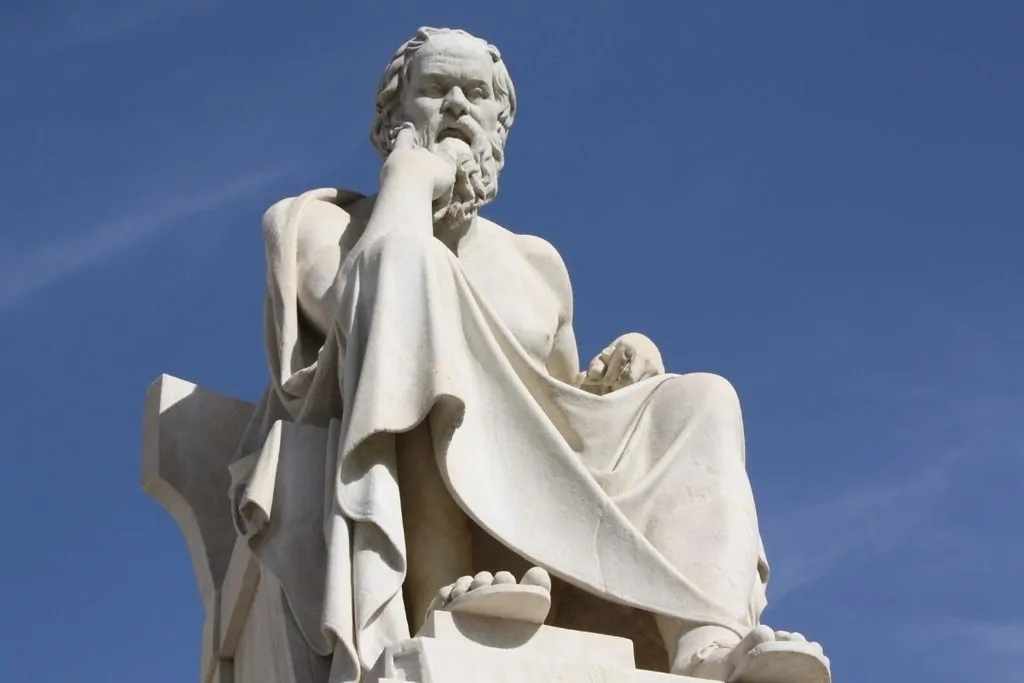
Some words do not just sit on the page. They reach in and pull something out of you that you had been quietly carrying for a long time but had no name for. One sentence from a person who lived centuries ago can land harder than a whole shelf of modern books. That is not an accident. That is the strange, quiet power of real wisdom.
The sayings in this collection come from many places. Old thinkers, patient observers, great leaders, poets, and people who simply paid close attention to what life was showing them. Some of these words are famous. Others are less known but carry just as much weight. Together, they cover the things most of us spend our lives trying to figure out: how to live well, how to love honestly, how to carry pain without being destroyed by it, how to grow, and how to find some peace in the middle of all of it.
Read through slowly. The ones that stop you are usually the ones worth sitting with a little longer.
Sayings of the Wise About Life
There is no single formula for a good life. But there are patterns. People who seem to move through life with more ease and meaning tend to share a few things: they pay attention, they adapt, and they know what they are not willing to waste their time on. The sayings below do not tell anyone how to live. They simply reflect what a thoughtful life tends to look like when you study it from the outside.
1. “Life is not measured by the number of breaths you take, but by the moments that take your breath away.”
Most days pass without much notice. The ones that stay are the ones where something genuine broke through the routine, where real awe or real connection showed up for a moment and changed the air in the room. What this saying points at is simple: the quality of a life is not in its length, but in its depth.
2. “The unexamined life is not worth living.” – Socrates
Socrates said this at his own trial, facing death, which gives it a weight that is easy to miss when you see it printed on a classroom wall. What he meant was that a life lived on autopilot, without ever questioning your choices or your values, is a kind of sleep that most people wake from far too late.
3. “Do not go where the path may lead; go instead where there is no path and leave a trail.” – Ralph Waldo Emerson
Following a ready-made path feels safe. But comfort and meaning rarely come from the same direction. The people who left something lasting behind tended to walk into uncertain ground first, often without knowing where they were headed.
4. “In the middle of every difficulty lies opportunity.” – Albert Einstein
This is not about forced positivity. Einstein was a pragmatic man. What he observed was that hard problems create the pressure under which real thinking happens and real solutions are born. Ease rarely produces that kind of depth.
5. “You only live once, but if you do it right, once is enough.” – Mae West
The fear of wasting your life is real. But the answer to that fear is not to do more things. It is to be more present to the ones already happening. One life, lived with full attention, tends to feel full rather than brief.
6. “Life is what happens when you are busy making other plans.” – John Lennon
Most people carry a version of life that exists only in their heads: the one they are building toward, waiting to begin, planning for next year. The actual life, with all its mess and beauty, is already happening, right now, in the gaps between the plans.
7. “To live is the rarest thing in the world. Most people exist, that is all.” – Oscar Wilde
There is a real difference between going through the motions and actually showing up to your own life. Wilde noticed that most people choose the former, not out of laziness, but out of fear of what full living would demand from them.
8. “It does not matter how slowly you go as long as you do not stop.” – Confucius
Speed is rarely the problem. Stopping is. A slow, steady effort over years produces results that a frantic, short burst almost never does. This holds true for personal growth, for craft, and for nearly every meaningful pursuit.
9. “The purpose of life is a life of purpose.” – Robert Byrne
Aimlessness is its own kind of suffering. People who feel most alive tend to have something they care about deeply, something that pulls them forward even on hard days. Purpose is not found lying somewhere. It is built, through choosing what to give your attention to.
10. “Life shrinks or expands in proportion to one’s courage.” – Anais Nin
Most limits are not real limits. They are the edges of what a person has been willing to try. Each time someone steps past that edge, the world gets a little bigger. And it is usually not as dangerous on the other side as it looked from here.
11. “What we think, we become.”
The link between thought and character is slow but reliable. A person who holds themselves in contempt long enough starts to act accordingly. The reverse is also true. What you carry in your mind consistently tends to shape the person you turn into, which makes the quality of your thinking more important than most people treat it.
12. “The best time to plant a tree was 20 years ago. The second-best time is now.” – Chinese Proverb
Regret about starting late is one of the most common reasons people never start at all. But late is not the same as never. The point is not to punish yourself for not beginning sooner. The point is simply to begin.
13. “Live as if you were to die tomorrow. Learn as if you were to live forever.” – Mahatma Gandhi
These two ideas seem to push in different directions, but they fit together perfectly. Urgency without curiosity burns out fast. Curiosity without urgency drifts forever. Together, they describe a life that is both rich and meaningful at the same time.
14. “He who has a why to live can bear almost any how.” – Friedrich Nietzsche
Viktor Frankl later made this idea famous through his writing about surviving the worst conditions imaginable. The point holds: a person with a genuine reason to endure can endure almost anything. The absence of that reason is often more dangerous than the difficulty itself.
15. “The two most important days in your life are the day you are born and the day you find out why.” – Often attributed to Mark Twain
Not everyone finds the second day. But the ones who do tend to describe everything after it as a different kind of life, one where the effort finally makes sense and the direction finally feels real.
Sayings of the Wise About Happiness
Happiness is one of those words that sounds simple until you try to define it. Most people spend years chasing a version of it that never quite arrives. The sayings in this section do not promise happiness. They describe what it actually looks like when people find it, and where they tend to find it: not far from where they already are.
16. “Happiness is not something ready-made. It comes from your own actions.” – Dalai Lama
Waiting to feel happy is one of the most common traps there is. Happiness is not a reward that arrives after you finish something or achieve something. It is built, moment by moment, through what you choose to do with your attention and your time each day.
17. “The secret of happiness is not in doing what one likes, but in liking what one does.” – James M. Barrie
Most people have this equation backwards. They think they need to find work or relationships that naturally feel good. But the deeper skill is learning to bring genuine interest to what is already in front of you. That shift alone, when it happens, changes everything.
18. “Happiness is when what you think, what you say, and what you do are in harmony.” – Mahatma Gandhi
When a person lives in contradiction, saying one thing and doing another, thinking one way and feeling another, there is a low-level friction that never quite goes away. Alignment is where ease begins. It is also where honesty begins.
19. “Very little is needed to make a happy life; it is all within yourself, in your way of thinking.” – Marcus Aurelius
Marcus Aurelius ran the Roman Empire and still found time to remind himself, in his private journal, that peace was never an external condition. He wrote these reminders over and over, as if he knew how easy it was to forget them in the noise of an emperor’s daily life.
20. “Happiness is a direction, not a place.” – Sydney J. Harris
People often treat happiness as a destination: once they have the right job, the right house, the right relationship, they will finally arrive. But it works more like a compass reading than a map pin. You point yourself toward it through your daily choices.
21. “The happiest people do not have the best of everything; they make the best of everything.”
This sounds like something on a coffee mug until you actually know someone who lives this way. Then it just looks like the plain truth. Contentment is a practice, not a circumstance, and it takes real effort to maintain.
22. “Count your blessings, not your troubles.”
The mind naturally notices what is wrong before it notices what is right. That is partly biology and partly habit. A deliberate, daily practice of noting what is working tends to shift the balance over time. Not by pretending problems do not exist, but by giving the good things equal attention.
23. “For every minute you are angry, you lose sixty seconds of happiness.” – Ralph Waldo Emerson
Anger is not always avoidable. But holding onto it is always a choice, and it is always a trade. The cost is not dramatic. It is quiet and steady: sixty seconds at a time, hour after hour, until something important has quietly drained away.
24. “It is not how much we have, but how much we enjoy, that makes happiness.” – Charles Spurgeon
The capacity to enjoy what you already have is a skill, and like most skills, it can be developed. Some people have very little and feel rich. Others have a great deal and feel empty. The difference is not in what they own. It is in how present they are to it.
25. “Joy is what happens to us when we allow ourselves to recognize how good things are.” – Marianne Williamson
The word allowing is doing a lot of work here. Joy is often already present, just unacknowledged. The habit of moving past good moments without registering them is one of the quieter forms of waste that most people never notice until much later.
Sayings of the Wise About Love and Relationships
Love is where most of the real lessons happen. Not because it is soft or easy, but because it asks more from a person than almost anything else does. Real love requires patience, honesty, courage, and sometimes the grace to let go of something you wanted to keep. The sayings here come from people who understood that clearly.
26. “The best thing to hold onto in life is each other.” – Audrey Hepburn
When everything else shifts, connection is what holds. Hepburn said this later in her life, after she had seen enough of the world to know what actually endured. Having seen a great deal, she arrived somewhere very simple.
27. “To love and be loved is to feel the sun from both sides.” – David Viscott
Most people know what it feels like to love without being fully loved back. This saying describes the difference when the warmth runs both ways. It is not just twice as good. It is a genuinely different feeling, a different quality of being alive.
28. “We accept the love we think we deserve.” – Stephen Chbosky
This line from a novel turned out to describe something very old and very real. The patterns people repeat in relationships often reflect what they believe, deep down, they are worth. Changing the pattern usually means examining that belief first.
29. “A true friend is someone who is there for you when they would rather be somewhere else.” – Len Wein
Convenience is easy. Showing up when it costs something is the real measure of care. Most people can name one or two friends who meet this standard. That is usually enough. Quality here means far more than quantity ever will.
30. “You do not love someone because they are perfect. You love them despite the fact that they are not.” – Jodi Picoult
Real love is not about finding a flawless person. It is about choosing an imperfect one and staying curious about them. Perfection is a closed door. Imperfection is where the actual knowing of another person begins.
31. “Kindness is the language which the deaf can hear and the blind can see.” – Mark Twain
Kindness does not require words or even eye contact. It travels through small acts, through being present, through noticing what another person needs. Twain observed that it has a universality that most other forms of communication do not. It lands where language cannot reach.
32. “The quality of your life is the quality of your relationships.” – Tony Robbins
Strip everything else away, and this tends to hold up. The people who feel most alive are usually in meaningful connection with others. Loneliness, even in the middle of a full and busy life, hollows things out quietly over time.
33. “Trust is built in drops and lost in buckets.”
This captures something that takes years to fully understand. Trust accumulates slowly through consistent, small acts of honesty and care. It disappears fast, often through a single moment of betrayal or carelessness. Protecting it requires far more attention than most people give it.
34. “Loyalty means nothing unless it has at its heart the absolute principle of self-sacrifice.” – Woodrow Wilson
Loyalty that costs nothing is not loyalty. It is comfort. Real loyalty shows up when staying true to someone requires giving something up. That version is rare, and when you find it, it is worth protecting.
35. “Sometimes letting go is an act of far greater power than defending or hanging on.” – Eckhart Tolle
Holding on is often mistaken for strength. But there are relationships and situations where holding on is simply the avoidance of a hard truth. Letting go, with clarity and without bitterness, is often the braver and more honest thing to do.
Sayings of the Wise About Strength and Difficult Times
Difficulty has a way of revealing what is already there. The sayings in this section do not romanticize pain or make it sound useful in a cheap way. They observe what tends to happen to people who move through hard times honestly. The pattern is consistent: the ones who come through tend to be the ones who stopped pretending things were fine and started working with what was real.
36. “Hard times never last, but hard people do.” – Robert H. Schuller
The worst seasons do end. What does not always end is what those seasons leave behind in the people who endure them honestly. The difficulty passes. The strength it builds tends to stay, quietly, long after the hard time is over.
37. “The oak fought the wind and was broken, the willow bent when it must and survived.” – Robert Jordan
Rigidity looks like strength until something strong enough comes along. The people who survive hard periods are often not the most forceful ones. They are the ones who knew how to bend without breaking, how to adapt without losing themselves in the process.
38. “A smooth sea never made a skilled sailor.” – Franklin D. Roosevelt
Calm conditions are comfortable but they do not teach much. The skills that matter, the ones that hold up under real pressure, only develop when real pressure is present. This is not an argument for suffering. It is simply an observation about what makes people capable.
39. “You were given this life because you are strong enough to live it.”
There is something honest in this, even if it sounds simple at first. The fact that someone is still here, still asking questions, still trying to move forward, is not nothing. That in itself is a form of evidence worth paying attention to.
40. “Strength does not come from what you can do. It comes from overcoming the things you once thought you could not.” – Rikki Rogers
There is a moment that many people describe after getting through something very hard: a quiet realization that they did not know they had it in them. That moment is the actual source of real confidence. Not praise. Not planning. That moment of unexpected discovery.
41. “The strong person is not the one who can overpower others, but the one who controls themselves when they are angry.”
This is a very old piece of wisdom that has appeared across many traditions and many centuries. True strength is not about force. It is about the capacity to hold yourself in check when everything in you wants to react. That kind of discipline is harder to build than physical strength and far more useful in daily life.
42. “Rock bottom became the solid foundation on which I rebuilt my life.” – J.K. Rowling
Rowling said this after having genuinely hit rock bottom: a single mother, struggling with depression, her manuscript rejected by publishers again and again. She meant it. Sometimes the floor, as terrible as it is to reach, is also the first stable thing a person has stood on in a long time.
43. “Adversity introduces a man to himself.” – Albert Einstein
Easy circumstances do not reveal much about a person. The hard ones show what is actually there: their patience, their honesty, their capacity to hold up under pressure. Most people are surprised by what they find when they finally meet themselves in a difficult moment.
44. “Even the darkest night will end, and the sun will rise.” – Victor Hugo
Hugo wrote this in Les Miserables, a book about people living through nearly every form of suffering imaginable. He did not write it lightly or as a comfort. It was the observation of someone who had paid very close attention to how things tend to go, over long enough stretches of time.
45. “Patience is not the ability to wait, but the ability to keep a good attitude while waiting.” – Joyce Meyer
Most people can wait if they have to. What is much harder is waiting without bitterness, without resentment, without letting the waiting corrode the thing you are waiting for. That version of patience is rare and genuinely difficult to maintain.
Sayings of the Wise About Success and Failure
Success is a word that carries a great deal of weight and causes a great deal of confusion. The sayings here try to clear some of that noise and get at what actually tends to produce a life that feels, at the end, worth having lived. A lot of them have to do with failure, which is usually where the real education happens for most people.
46. “Success is not final; failure is not fatal: it is the courage to continue that counts.” – Winston Churchill
Churchill said this during a period when the stakes were about as high as they can get. What he meant was that neither success nor failure is a fixed state. Both are passing conditions. The only permanent ingredient is what a person chooses to do next.
47. “The road to success and the road to failure are almost exactly the same.” – Colin R. Davis
This is a disquieting truth. The early stages of both roads look nearly identical: effort, uncertainty, setbacks, long periods where nothing much seems to be happening. What separates them is almost never talent or luck. It is staying on the road long enough.
48. “Success usually comes to those who are too busy to be looking for it.” – Henry David Thoreau
The people most focused on success as a destination tend to miss the work that actually produces it. The ones who do the work, consistently and with care, tend to find that results arrive eventually, often without much fanfare.
49. “I have not failed. I have just found 10,000 ways that will not work.” – Thomas Edison
Edison held thousands of patents and produced some of the most significant inventions of his era. He also failed constantly and kept careful records of every attempt. His relationship to failure was not denial. It was data. That reframe is not easy, but it is learnable.
50. “In order to succeed, we must first believe that we can.” – Nikos Kazantzakis
Belief is not magic. But its absence is very practical: if a person is certain they will fail, they tend to stop before they begin, or hold back just enough that failure becomes a self-fulfilling outcome. Belief does not guarantee success. Disbelief almost guarantees the opposite.
51. “It is not the mountain we conquer, but ourselves.” – Sir Edmund Hillary
Hillary climbed Everest. He knew mountains. What he meant was that the real obstacle is almost always internal: the doubt, the fatigue, the voice that says it is too much. The mountain is simply the occasion for that confrontation with yourself.
52. “The only way to do great work is to love what you do.” – Steve Jobs
This is sometimes misread as advice to follow your passion, which is too simple. What Jobs was pointing at was more practical: if you do not care about what you are doing, you will not think about it when you do not have to, and that extra, voluntary thinking is exactly where great work comes from.
53. “Failure is the condiment that gives success its flavor.” – Truman Capote
Without the struggle, success is flat. The people who arrive somewhere after a long, difficult journey tend to appreciate it in a way that those who never struggled do not. The failure is not wasted. It becomes part of why the thing finally matters.
54. “Do not be afraid to give up the good to go for the great.” – John D. Rockefeller
Good enough is a trap disguised as a gift. Staying in the comfortable, adequate option because it is already there is one of the most common ways people miss what they were actually capable of. Letting go of good things is genuinely hard, but sometimes it is the only honest next step.
55. “Compare yourself to who you were yesterday, not to who someone else is today.” – Jordan B. Peterson
Comparison to others is almost always distorted. You see their results and your own process, which makes you feel behind in ways that are not real. Comparing yourself to your own past is the only comparison that is honest, because it is the only one where you have the full picture.
Sayings of the Wise About Personal Growth
Growth is quiet. It does not announce itself. Most of the time, you only notice it in hindsight, when you see how you respond to something that would have undone you a year ago. The sayings here describe that process from the inside: the self-awareness it requires, the discomfort it involves, and the quiet satisfaction of becoming, slowly, someone you can actually respect.
56. “Know thyself.” – Ancient Greek maxim
Two words that have produced centuries of philosophy and still have not been fully resolved. The people who genuinely know their own patterns, their triggers, their defaults, their fears, tend to be far less at the mercy of them. Self-knowledge is not navel-gazing. It is one of the most practical tools available to anyone.
57. “Absorb what is useful, discard what is not, add what is uniquely your own.” – Bruce Lee
Lee applied this to martial arts but it describes good thinking in general. Taking in everything uncritically leads to confusion. Rejecting everything new leads to stagnation. The skill is in the filter: keeping what actually works and building on it with your own experience.
58. “Be yourself; everyone else is already taken.” – Oscar Wilde
Wilde made this sound like a joke, which is how he often delivered his most serious points. What he meant was that the effort to perform a version of yourself designed for others is exhausting and ultimately pointless. The world already has plenty of whoever you are trying to be.
59. “The only journey is the one within.” – Rainer Maria Rilke
External journeys change scenery. Internal ones change the person taking them. Rilke spent his career documenting the second kind, the slow, uncomfortable, necessary turning inward that is the real source of any lasting transformation.
60. “Growth is painful. Change is painful. But nothing is as painful as staying stuck somewhere you do not belong.” – Mandy Hale
Stagnation is its own kind of suffering, quiet and persistent. People sometimes choose the pain of standing still because it is familiar. But the pain of growing, unlike the pain of standing still, is going somewhere. One produces change. The other just produces more of the same.
61. “The more that you read, the more things you will know. The more that you learn, the more places you will go.” – Dr. Seuss
Simple words, but the observation underneath them is real. Curiosity is one of the few habits that seems to have no apparent ceiling. People who stay genuinely curious throughout their lives tend to stay genuinely alive, in the best sense of that phrase.
62. “One who conquers others is strong; one who conquers themselves is mighty.” – Lao Tzu
Lao Tzu understood that the hardest territory to master is always internal. Controlling what you say when angry, acting from your values when you are tempted to act from fear, staying patient when the situation is pressing, these are forms of conquest that most people never fully achieve.
63. “You cannot go back and change the beginning, but you can start where you are and change the ending.” – C.S. Lewis
The past is the most immovable thing in existence. No amount of guilt or regret alters a single second of it. But what a person does with the present moment is still entirely open. That shift in focus, from what cannot be changed to what still can, is where real growth actually begins.
64. “Take responsibility for your actions, and you will take responsibility for your life.”
Blame is comfortable in the short term. It explains the gap between what a person wanted and what they got. But it also removes agency. The person who accepts that their choices carry consequences, even when difficult circumstances played a role, is the person who can actually change direction.
65. “Small daily improvements are the key to staggering long-term results.” – Sir Ken Robinson
Dramatic transformation is appealing but rare. What actually moves people forward is the slow, quiet accumulation of small, consistent steps. A year of tiny improvements adds up to something remarkable. A year of waiting for the big moment adds up to very little.
Sayings of the Wise About Time and Change
Time has a way of clarifying things. What felt urgent tends to fade. What felt permanent tends to shift. The sayings in this section reflect the strange relationship people have with time: wishing it would pass faster, then grieving when it does, often forgetting that the present moment is, in fact, where the entire life is happening.
66. “Time is what we want most, but what we use worst.” – William Penn
Penn observed this in the 1600s and it has not changed. People routinely trade hours they cannot get back for things that do not end up mattering much. The awareness of this pattern is common. Changing the pattern is considerably harder.
67. “The present moment is the only moment available to us, and it is the door to all moments.” – Thich Nhat Hanh
Hanh spent his life writing about the strange fullness available in a single moment of real attention. The past is memory. The future is imagination. Right now is the only place anything is actually happening, which makes it the most important place there is.
68. “Lost time is never found again.” – Benjamin Franklin
Franklin was relentlessly practical. He meant this as a direct reminder that time, unlike money, cannot be earned back once spent. Whether that feels motivating or uncomfortable depends entirely on how honestly a person is currently using their hours.
69. “Everything changes and nothing remains still.” – Heraclitus
Heraclitus said you cannot step into the same river twice because both the river and the person stepping in have already changed. This sounds like philosophy until you apply it to your own life. Nothing you are holding onto right now is exactly what it was, including you.
70. “Yesterday is history, tomorrow is a mystery, today is a gift, which is why we call it the present.” – commonly attributed to Alice Morse Earle
The popularity of this saying points at something real: people need reminding of this particular truth more consistently than almost anything else. The present keeps slipping through the hands of people who are looking forward or backward.
71. “They always say time changes things, but you actually have to change them yourself.” – Andy Warhol
Warhol cut through a lot of passive thinking with observations like this one. Time passing does not produce change on its own. Action produces change. Waiting for circumstances to shift on their own is usually just waiting, dressed up as patience.
72. “The wisest are the most annoyed at the loss of time.” – Dante Alighieri
Dante was not describing anxiety here. He was describing appreciation. The people who understand what time is actually worth are the ones most disturbed when they see it go to waste. That disturbance is a sign of clarity, not neurosis.
73. “Life can only be understood backwards; but it must be lived forwards.” – Soren Kierkegaard
This is one of the most honest things ever said about the human experience. You cannot know what a moment means while you are inside it. Understanding comes later, in hindsight. But life must be lived forward, without that understanding, which is uncomfortable and unavoidable.
74. “Let go of the past but keep the lessons it taught you.”
The past is useful as a teacher. It becomes a problem when it becomes a permanent address. There is a real difference between learning from what has happened and being defined by it. The lessons are worth keeping. The suffering does not need to come along for the rest of the journey.
75. “Do not watch the clock. Do what it does. Keep going.” – Sam Levenson
Watching time pass without moving is one of the most uncomfortable experiences there is. Moving steadily, without obsessing over how long something is taking, is almost always the better option. The clock keeps going regardless of what you decide.
Sayings of the Wise About Peace and Inner Wisdom
Some of the most valuable things a person can learn have nothing to do with doing more. They have to do with deciding what not to react to, what not to carry, and what not to say. The sayings in this section describe the kind of peace that comes from within, the kind that does not depend on circumstances being quiet or easy.
76. “Peace is not the absence of conflict, but the ability to handle conflict by peaceful means.” – Ronald Reagan
Real peace is not what happens when everything goes right. It is what a person carries when things go wrong. That kind of peace is built through practice and deliberate choice, not through good fortune or quiet circumstances.
77. “The nearer a man comes to a calm mind, the closer he is to strength.” – Marcus Aurelius
Aurelius returned to this idea again and again in his private writing. He was under constant external pressure as emperor, which may be exactly why the idea of inner calm mattered so much to him. What he kept observing was this: the quieter the mind, the more capable the person becomes.
78. “Speak good or remain silent.”
Very old, very simple, recognized across many traditions of wisdom. The habit of saying less, saying it well, and knowing when silence serves better than any words is one of the most underrated forms of intelligence a person can develop over time.
79. “Do not let the behavior of others destroy your inner peace.” – Dalai Lama
Other people’s choices are largely outside your control. Your response to those choices is not. Giving up your own peace because someone else behaved badly is a trade that rarely makes sense once you look at it directly and honestly.
80. “You will not be punished for your anger; you will be punished by your anger.”
The punishment is not external. It is the corrosive effect of the emotion itself: the tension it creates, the decisions it distorts, the relationships it slowly erodes. Anger does not hurt the person it is aimed at nearly as much as it hurts the person who is carrying it.
81. “The quieter you become, the more you can hear.” – Ram Dass
There is a version of quiet that is passive and empty. Then there is the kind Dass meant: the kind that comes from deliberately turning down the external volume so that something subtler and more important can be heard. Most people are too busy generating noise to find out what is underneath it.
82. “Simplicity is the ultimate sophistication.” – Leonardo da Vinci
Da Vinci was one of the most complex minds in recorded history. Yet he kept returning to simplicity as the true marker of mastery. To make something simple requires understanding it deeply. Complexity is often a sign of incomplete thinking rather than genuine intelligence.
83. “Be in this world as if you were a stranger or a traveler passing through.”
This piece of wisdom teaches a particular kind of lightness. When you hold the things of this life with an open hand rather than clutching them tightly, you move through it with more freedom and less quiet anxiety. It does not ask you to care less. It asks you to hold things more gently.
84. “Before you speak, let your words pass through three gates: Is it true? Is it necessary? Is it kind?”
Three questions that, if applied seriously and consistently, would prevent most of the damage done by careless speech. The filter is not about becoming silent. It is about becoming deliberate. Words, once spoken, cannot be recalled and the effects of them last far longer than most people expect.
85. “Not everything that is faced can be changed. But nothing can be changed until it is faced.” – James Baldwin
Baldwin meant this about social realities, but it applies inwardly just as well. Avoidance keeps things exactly as they are. The difficult act of looking at something honestly, even when it is uncomfortable, is the first condition of any real change at all.
Short Sayings of the Wise to Remember
Some truths are too dense for long sentences. The sayings below are short enough to memorize and deep enough to think about for years. Keep the ones that land with you.
86. “Begin.”
The most common form of failure is simply not trying. One word. No other preparation required. The rest tends to work itself out after the first step is taken.
87. “This too shall pass.”
Ancient and attributed to many sources. What makes it useful is its neutrality: it applies equally to good times and bad. Nothing is permanent. The relief and the reminder are both sitting in the same small sentence.
88. “Less is more.” – Ludwig Mies van der Rohe
Originally about architecture. True about nearly everything else as well. The addition of more things, more words, more noise rarely improves what is already there. Most things benefit most from what is carefully removed.
89. “Act well your part; there all the honor lies.” – Alexander Pope
Whatever the role, however small it looks from the outside, the quality of how you do it is where the dignity lives. The role itself is almost beside the point.
90. “Fall seven times. Stand up eight.” – Japanese Proverb
Not eloquent. Not complicated. Just accurate. The arithmetic of resilience: one more time getting up than falling down. That simple equation is all most situations require.
91. “Kindness costs nothing.”
It is free to give and tends to return in forms you did not expect. The people who practice it consistently seem to move through the world with a kind of ease that others cannot quite account for or explain.
92. “Actions speak louder than words.”
Old enough to feel like furniture. True enough to still need repeating. What people do, consistently, when it costs them something, is the only reliable signal of what they actually believe and value.
93. “A good laugh and a long sleep are the two best cures for anything.” – Irish Proverb
The Irish proverb that doctors might not prescribe but rarely argue with either. The body knows what it needs. The problem is that people often refuse to give it what it asks for.
94. “Stay close to anything that makes you glad you are alive.”
Not a famous line. Just a quiet truth. The things, people, and places that produce genuine aliveness are worth protecting. Everything that consistently drains it is worth examining with real honesty.
95. “Be where you are.”
Possibly the hardest instruction in this entire list. Being fully present to the moment in front of you, without rehearsing the future or replaying the past, is a practice that most people spend their whole lives working on without ever fully completing.
The Most Powerful Sayings of the Wise
Some sayings do more than offer a useful perspective. They stay with you. They show up again and again, often at the exact moment they are needed, because they carry something true about the human experience that does not age or fade. These five were chosen for their weight, their clarity, and the breadth of what they hold inside them.
96. “What lies behind us and what lies before us are tiny matters compared to what lies within us.” – Ralph Waldo Emerson
Emerson understood that most of the drama about the past and anxiety about the future is noise compared to the real work, which is always internal. The person who knows what they are made of, and keeps building on it honestly, does not need perfect conditions. They carry their capacity with them into any situation.
97. “Two things are infinite: the universe and human stupidity; and I am not sure about the universe.” – Albert Einstein
Einstein said this with his characteristic dry humor, but underneath it is something serious. The capacity for people to repeat the same mistakes, individually and collectively, is genuinely astonishing. Recognizing that pattern in yourself, rather than only in others, is where wisdom quietly begins.
98. “The most courageous act is still to think for yourself. Aloud.” – Coco Chanel
In a world full of noise, formed opinions, and social pressure to agree with the people around you, genuine independent thought is rarer than most people admit. Chanel was not a philosopher, but she understood something about courage that many philosophers miss: the most radical act is often just saying clearly what you actually think.
99. “Darkness cannot drive out darkness; only light can do that. Hate cannot drive out hate; only love can do that.” – Martin Luther King Jr.
King wrote this in Strength to Love, a collection of sermons that have outlasted almost everything else written in his era. The idea is not sentimental. It is strategic. Fighting fire with fire is a real approach. It tends to produce more fire and nothing else.
100. “At the end of life, what really matters is not what we bought but what we built; not what we got but what we shared; not our competence but our character; not our success but our significance.”
This last one does not need a famous name behind it to carry its weight. It is the kind of thing that most people would agree with immediately, and then spend very little of their daily life acting on. The gap between what people believe matters and what they actually spend their time on is where most of the quiet regret tends to live.
Key Takeaways
- Wisdom tends to confirm what people already sense but have not yet found words for.
- The sayings that stay with you are usually the ones naming something your life is currently asking of you.
- Most of the things people worry about most are addressed least by the wisest words ever spoken.
- Repeating a saying without honest reflection on it produces nothing.
- The gap between knowing something and living it is where the actual work happens every day.
- The most enduring wisdom tends to be the simplest, not the most elaborate or complex.
Final Thoughts: Which Saying Will You Remember?
It is a real question, not a rhetorical one. Of all one hundred sayings here, one or two will land differently than the rest. That difference is worth paying attention to, because it usually points directly at something your life is currently working through.
Wisdom is strange that way. It does not offer new information so much as it offers recognition. The best sayings feel less like discovery and more like finally seeing something that was always there. A reader who finds themselves stopping at a certain line is not being taught. They are being reminded.
The question, as always, is what happens next. Carrying a saying around in your head is easy. Building your daily choices around it, in small and honest ways, is where it either becomes real or quietly fades back into decoration.
As the poet Rainer Maria Rilke once wrote to a young man asking him for direction: “Live the questions now. Perhaps then, someday far in the future, you will gradually, without even noticing it, live your way into the answer.”
That is the invitation every one of these sayings extends. Not to arrive somewhere. But to keep walking, with a little more clarity than before.