20 Strong Mother Quotes That Hit Deep


Words about mothers have been written for as long as words have existed. Poets, thinkers, leaders, and ordinary people who just loved their mothers deeply, they all tried to catch this feeling in language. Some of them came very close.
The 20 quotes in this article are not just nice lines to post on a picture. They are real observations from real people who looked at their mothers, or at the idea of a mother, and said something true. Something that lasts.
Why Mother Quotes Still Matter Today
Words carry weight when they come from a place of real feeling. That is why a quote about a mother, even one written a hundred years ago, can still stop a person mid-scroll and make them feel something they had forgotten was there.
Many people go through long stretches of life where they take their mother for granted. Not out of cruelty, but out of routine. She becomes part of the background, the way the walls of a house are part of the background. You stop seeing them. And then one day, maybe when she is older, or when she is gone, or when you become a parent yourself, the weight of what she was hits you all at once.
That is the moment a good quote finds its purpose. It does not teach you anything new. It just names something that was already sitting inside you, unnamed. And that act of naming, that quiet recognition, can change the way a person moves through their days.
The quotes collected here come from writers, thinkers, leaders, and quiet observers of life. Each one holds a different angle of the same enormous truth. Read them slowly. There is no need to rush through something this honest.
Quotes About a Mother’s Love That Go Beyond Words
# Quote 1
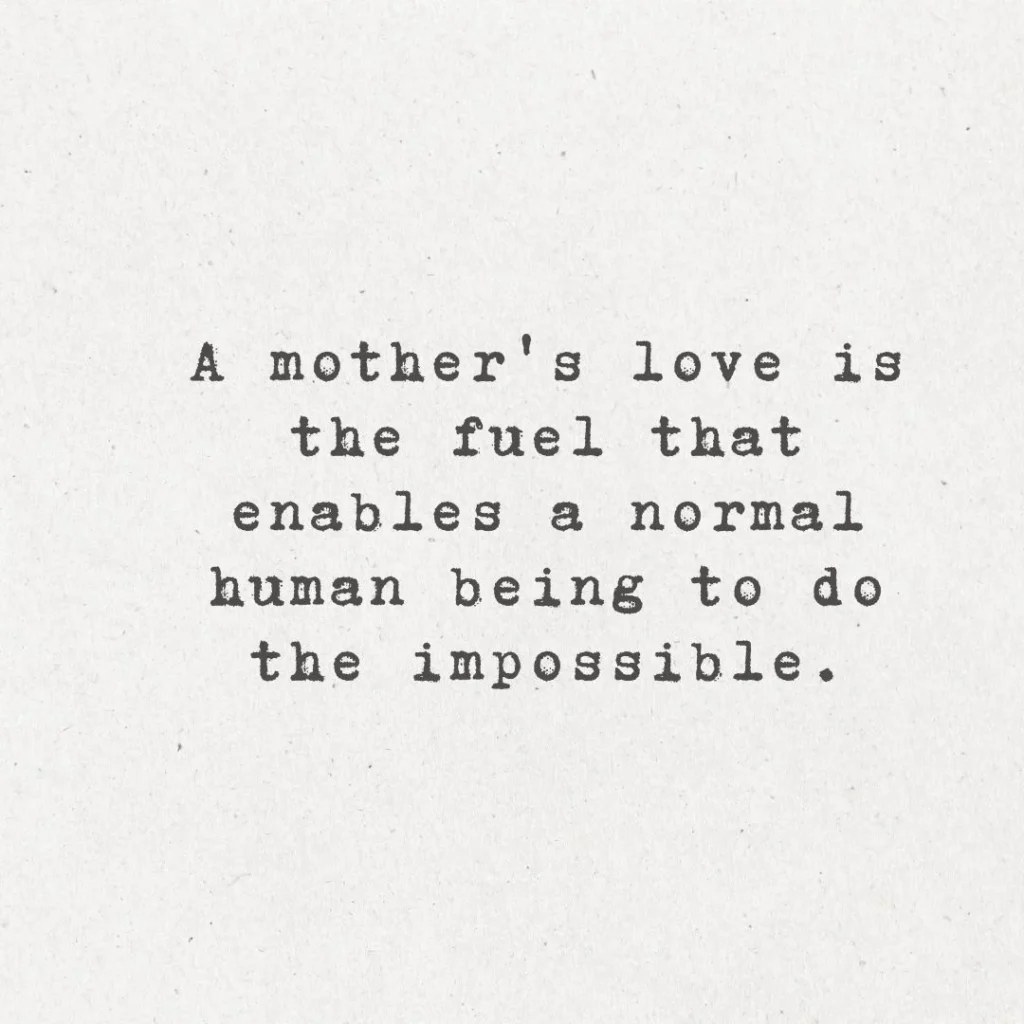
Marion C. Garretty wrote this, and most people who grew up with a mother who believed in them will feel the truth of it somewhere deep in the chest. There is a specific kind of courage that comes from knowing someone loves you without condition. It is not the loud, dramatic courage of movies. It is the quiet, stubborn kind. The kind that keeps a person going when every logical reason to stop has already arrived.
When a child grows up hearing, even without words, that they are worth something, that they matter, that someone is watching and caring, that child carries a kind of invisible fuel. It runs low sometimes. Life drains it. But the reserve, the part that never fully empties, was put there by a mother. That is what this quote is pointing at. Not a dramatic statement. A simple, steady truth.
# Quote 2
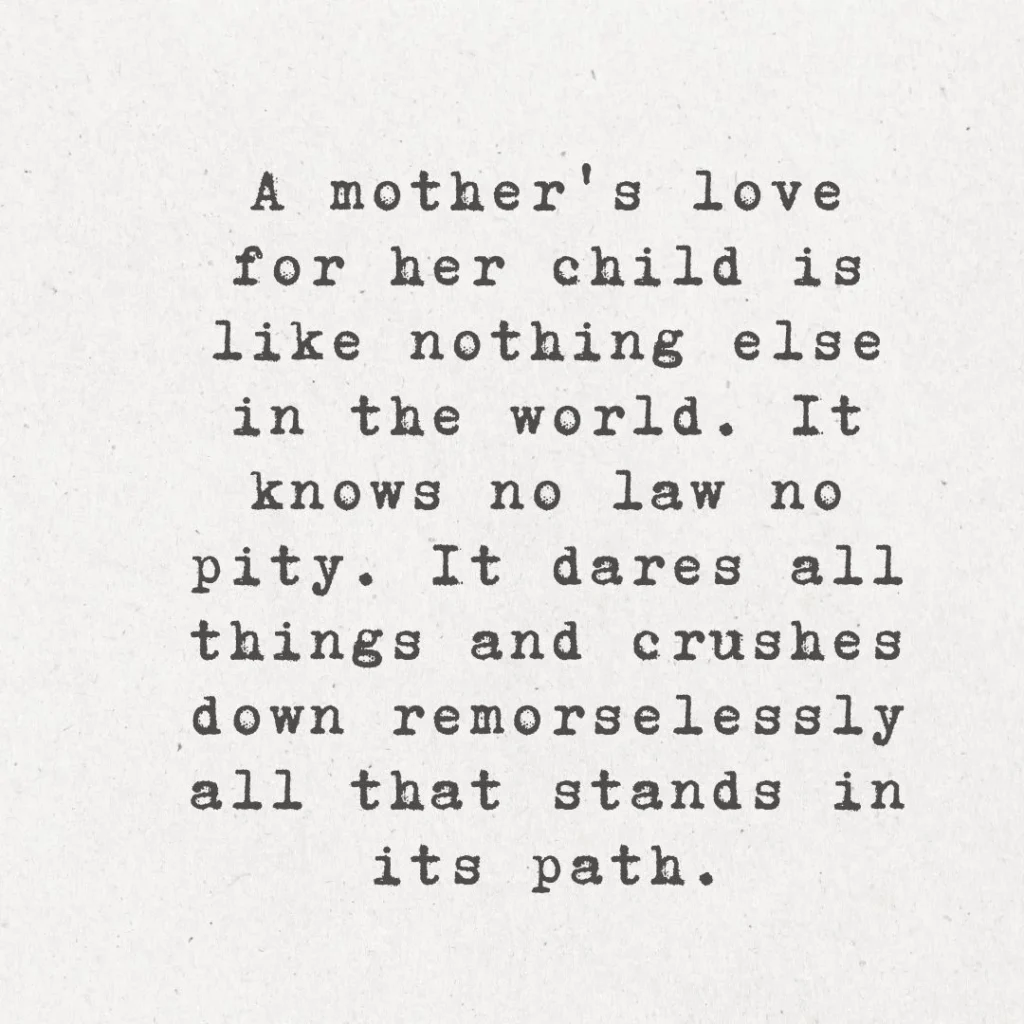
Agatha Christie wrote this, and while she is best known for her mysteries, this line shows that she understood something far more complex than crime. She understood the fierce, almost frightening nature of a mother’s love. It is not soft in the way people sometimes imagine. It is strong. It has edges. It will move around or through whatever is in the way.
Most children only see this clearly when they are older, when they look back and realize the things their mother did without complaining, without asking for credit, without even seeming to notice the weight of it. The love Christie describes is not gentle by nature. It is gentle in expression, but immovable at the root.
# Quote 3
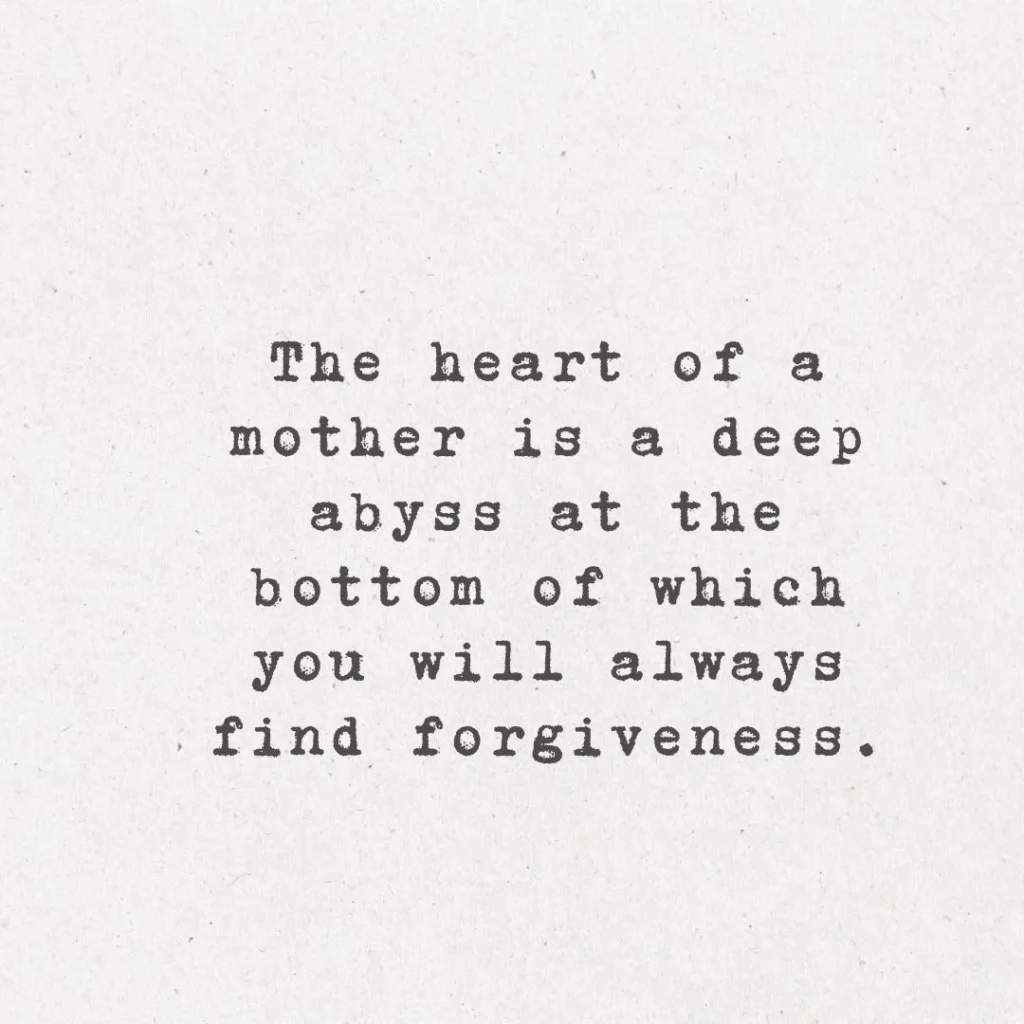
Honoré de Balzac wrote this, and it is one of the most quietly devastating observations about motherhood ever put into words. Other people in life, even good ones, have limits to their forgiveness. They remember. They hold things. That is human and understandable. But a mother’s capacity to forgive tends to reach further than seems reasonable. Than seems possible, even.
A person can disappoint their mother in very real ways. Come back years later, changed or unchanged, and still find the door open. Not because she has no memory. But because her love runs deeper than her hurt. That depth is what Balzac calls an abyss. He does not mean it in a dark way. He means it is without a bottom. Endless. No matter how far down you look, you find the same thing.
# Quote 4
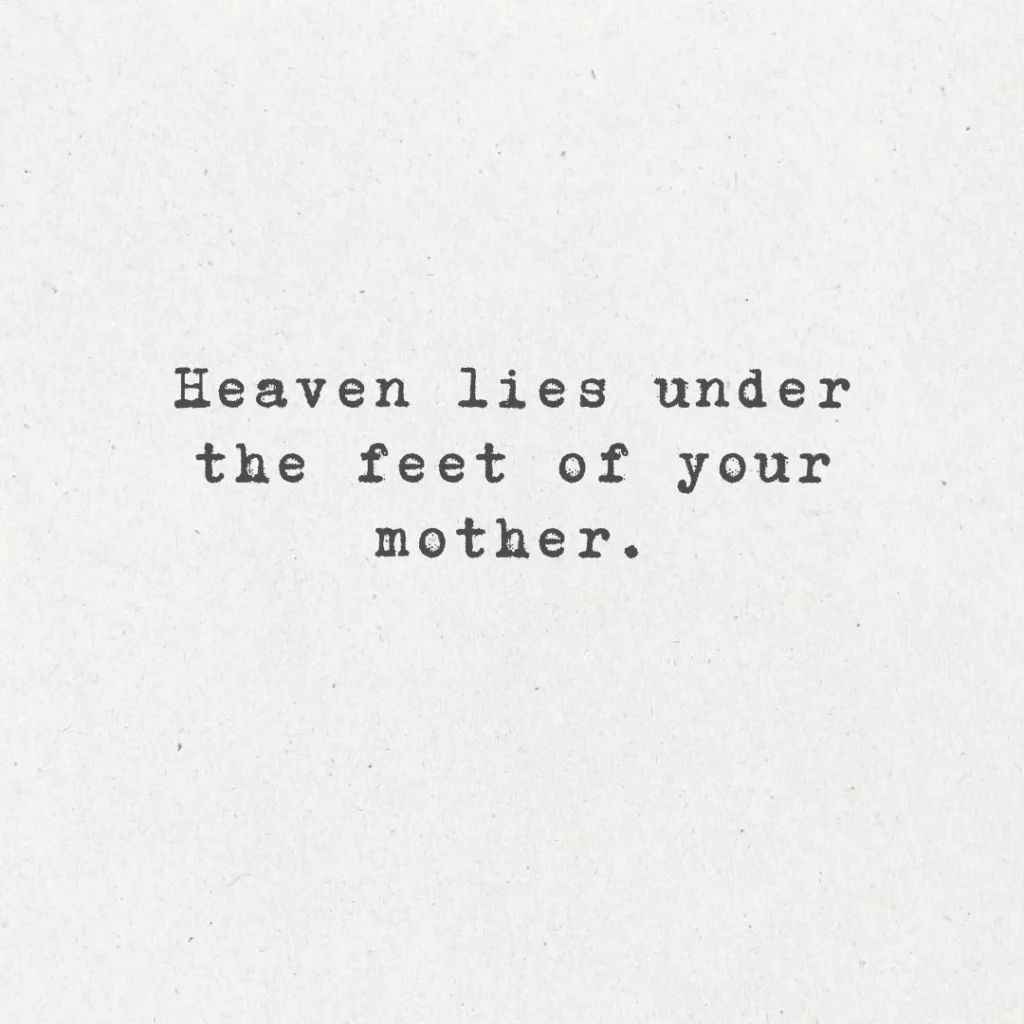
This piece of ancient wisdom has traveled across cultures and centuries because it carries a truth that does not belong to one time or place. The idea is simple but not small. The respect, the care, the attention you give your mother is not a small act of kindness. It is one of the most important things a person can do in their life. Not because it earns something in return. But because it reflects how much a person understands about what love actually costs.
A mother carries a child before that child even has a face. She gives before there is anything to give back to. To honor that is to understand something fundamental about gratitude and about life. This quote does not tell you what to feel. It tells you where to look when you are searching for what matters.
# Quote 5
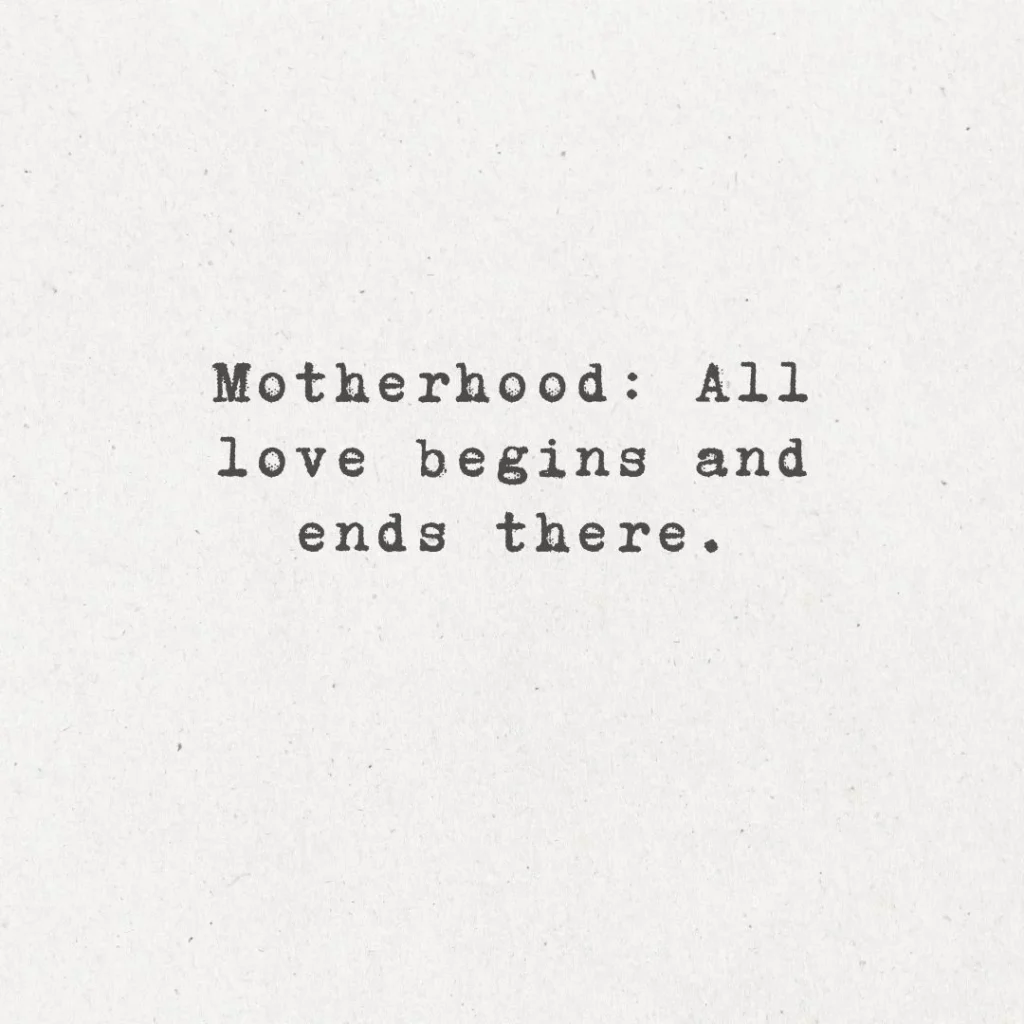
Robert Browning said this in four words, more or less, and yet somehow it holds more weight than entire books on the subject. The reason is that it is not a compliment. It is an observation about the structure of love itself. The suggestion is not that a mother’s love is the best love or the prettiest love. It is that it is the first love. The one from which all other loves take their shape.
Before a person knows how to love a partner, a friend, a child of their own, they have already been shaped by how they were loved by their mother, or by whoever filled that role. That original experience becomes the blueprint, for better or for worse. And for most people, the tenderness they are capable of showing the world began as something they once received from one person, very early, very quietly.
Quotes That Show Her Strength in a Different Light
# Quote 6
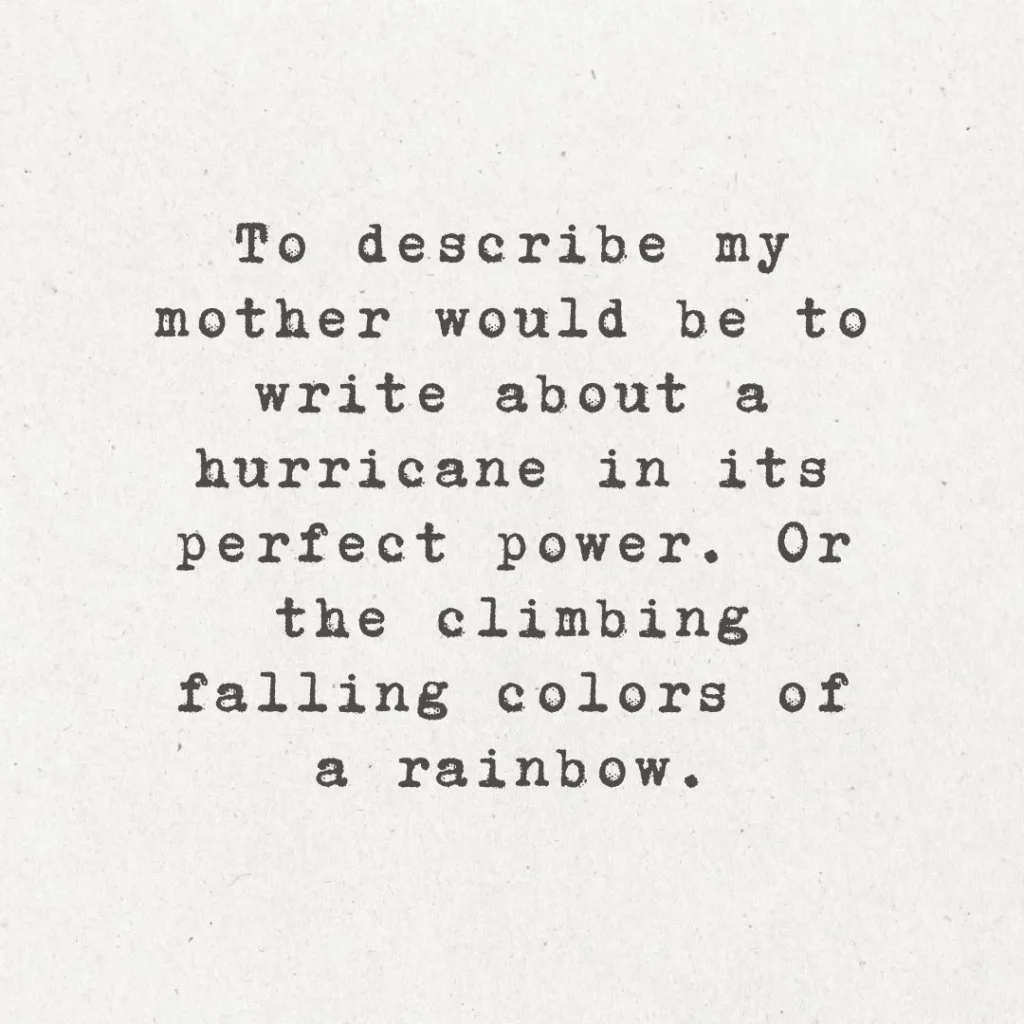
Maya Angelou wrote this, and it lands the way most of her words do: with a gentleness that somehow hits like a stone. The hurricane is not a threat in this image. It is a force of nature, something full and unstoppable and awe-inspiring. The rainbow is not a cliché here either. It is a full spectrum. All colors. Not one.
What Angelou is saying, between the lines, is that her mother was too large for simple description. She was contradiction and completion at once. Powerful and colorful and beyond the reach of ordinary language. Many people feel this when they try to explain their mother to someone who never met her. The words fall short. Because she was not a character. She was an entire world.
# Quote 7
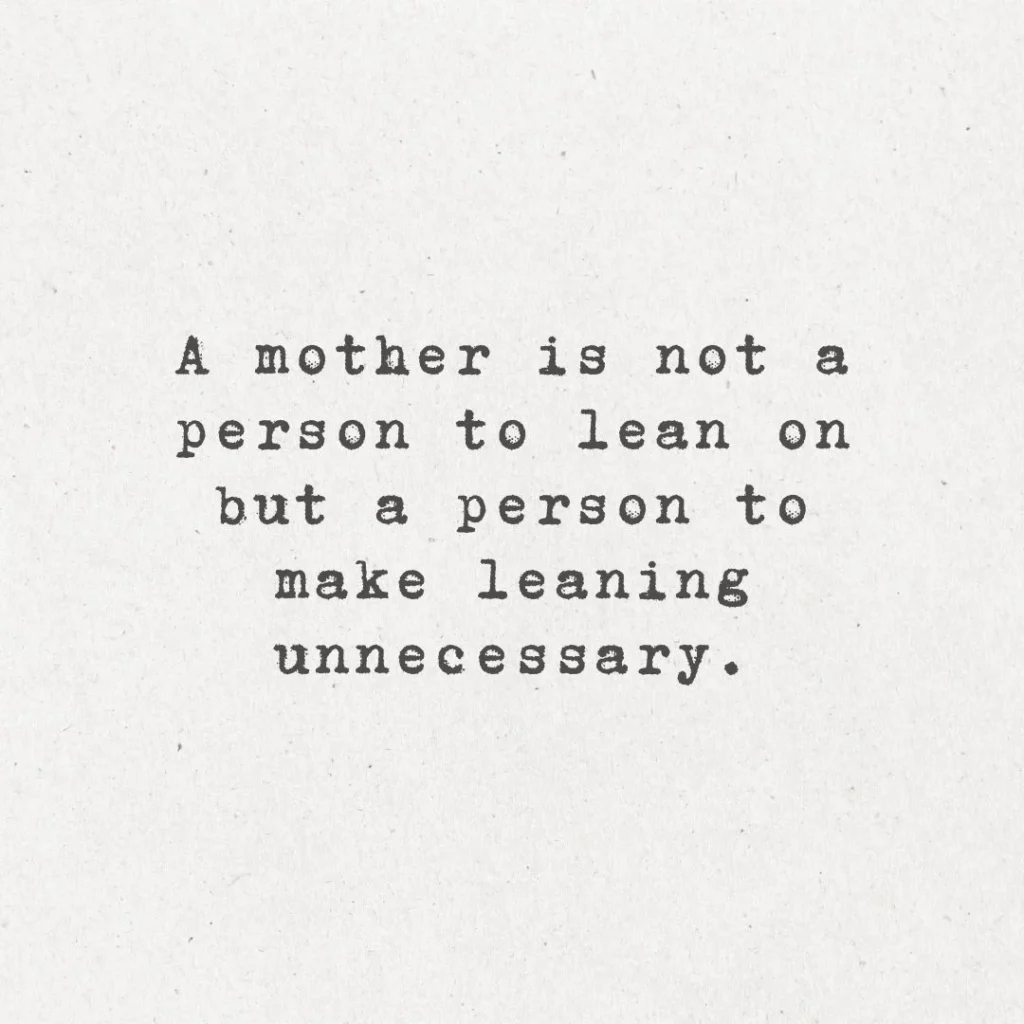
Dorothy Canfield Fisher wrote this, and it is one of the most quietly powerful observations about what good mothering actually does. The goal of a mother’s love, if it is done well, is not to create someone who always needs her. It is to create someone who can stand. Who can face a hard day and not fall apart. Who knows how to find their way back when they get lost.
This is a harder kind of love to give. It would be easy, in some ways, to always be needed. To always be the one who saves the day. But the mothers who shape people into strong, capable humans are often the ones who stepped back at the right moment. Who let the fall happen. Who were there after, not always during. Fisher understood that making leaning unnecessary is the highest form of what a mother can offer.
# Quote 8
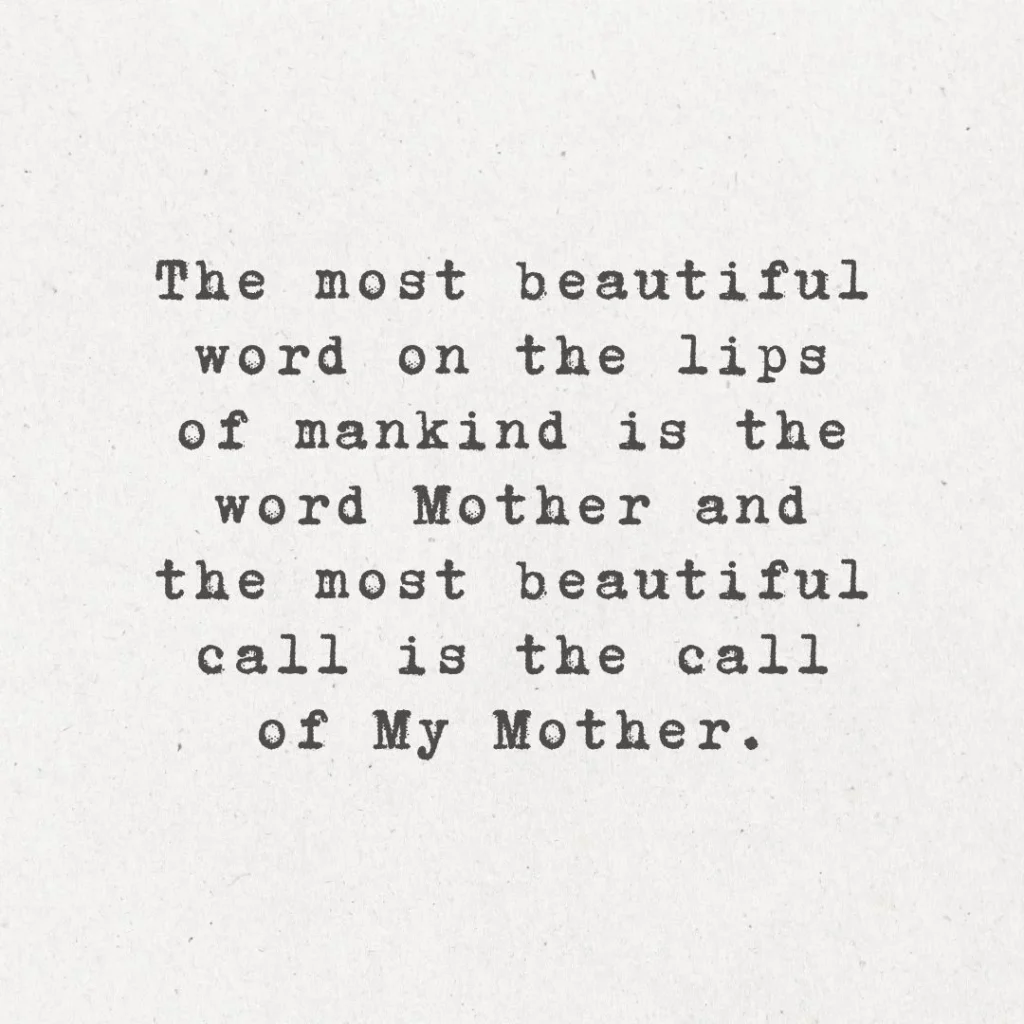
Kahlil Gibran wrote this in the early twentieth century, and it still holds the same quiet weight. He was not talking about any one mother. He was talking about the word itself, and what it carries. The word “mother” in almost every language has a softness to it. It is not an accident. It is the oldest association a human brain forms. Before logic, before language fully develops, there is already a recognition of her.
Gibran’s point is that this word is not just a label. It is a feeling compressed into sound. When a person says “my mother,” they are saying something that no other combination of words quite captures. It reaches back to the very beginning of who they are.
# Quote 9
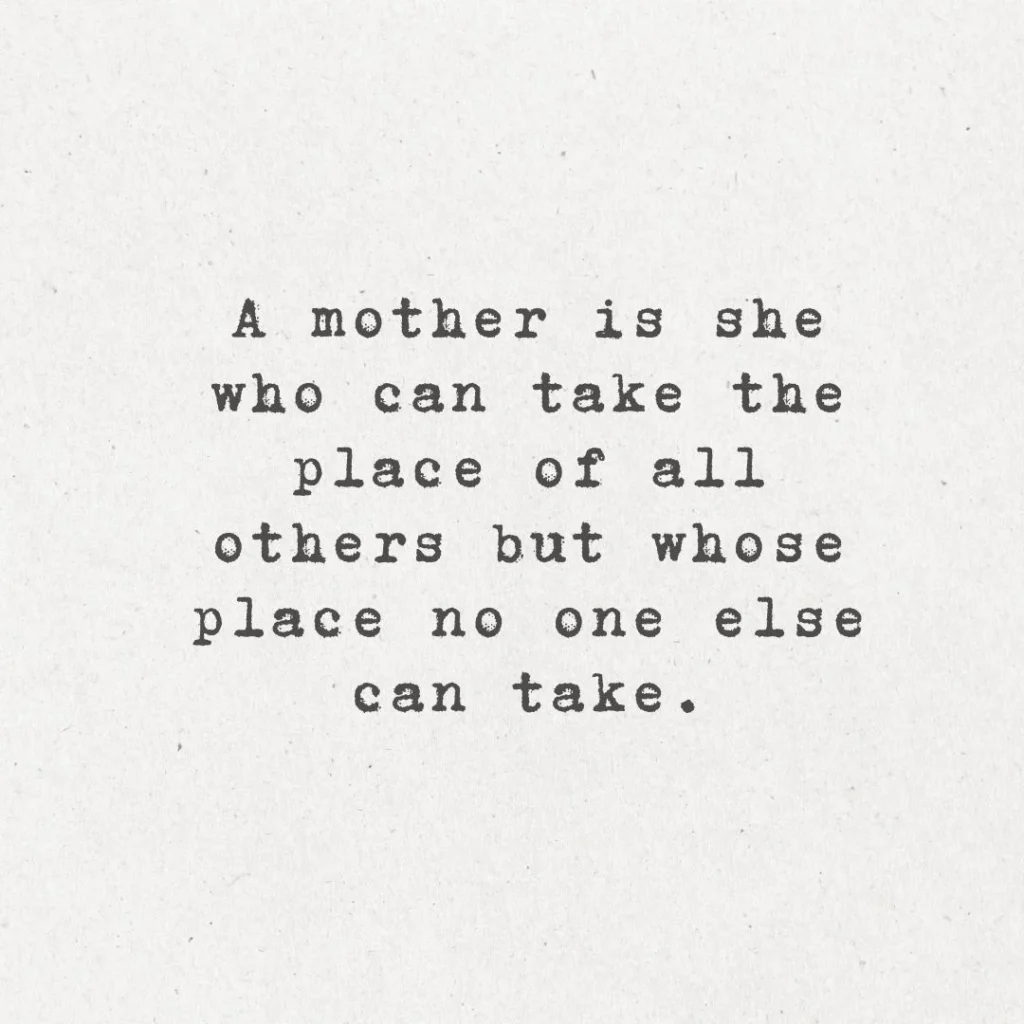
Cardinal Mermillod wrote this, and while it sounds almost too neat to be true, most people who have lost their mother know it in their bones. There are friends who step up. There are partners who hold you together. There are mentors who guide you through dark years. All of that is real and worth honoring. But it does not fill the specific shape that a mother leaves.
The loss of a mother is different from other losses. It is not louder or quieter. It is older. It reaches back further. And the reason is simple. No one else was there at the start. No one else knew you before you knew yourself. That specific position, first witness to your entire life, cannot be filled by anyone who arrived later.
# Quote 10
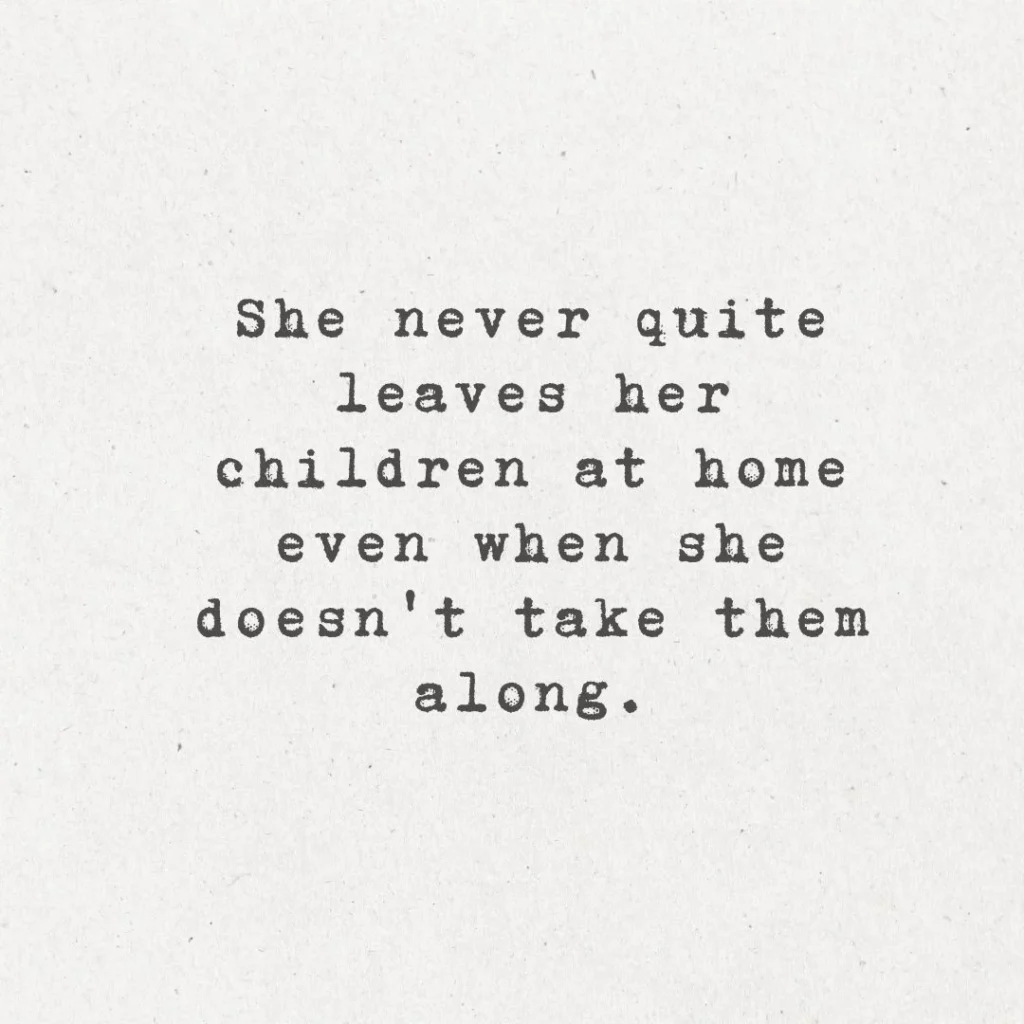
Margaret Culkin Banning wrote this, and it is one of those quotes that sounds small until you sit with it. Every person who grew up with a mother who truly loved them carries some version of her wherever they go. Not a ghost. Not a memory exactly. More like an orientation. A way of thinking about problems. A voice that shows up, in one’s own head, that sounds a little like hers.
This is the invisible part of what a mother gives. The visible part is the meals, the school runs, the worry, the support. But the invisible part is harder to measure and harder to lose. It is the way she shaped how a person talks to themselves when no one is watching. The way her values quietly became their values. She travels with her children everywhere, always. Even when they are old enough to stop needing her in the obvious ways.
Quotes That Reveal What She Gave Up for You
# Quote 11
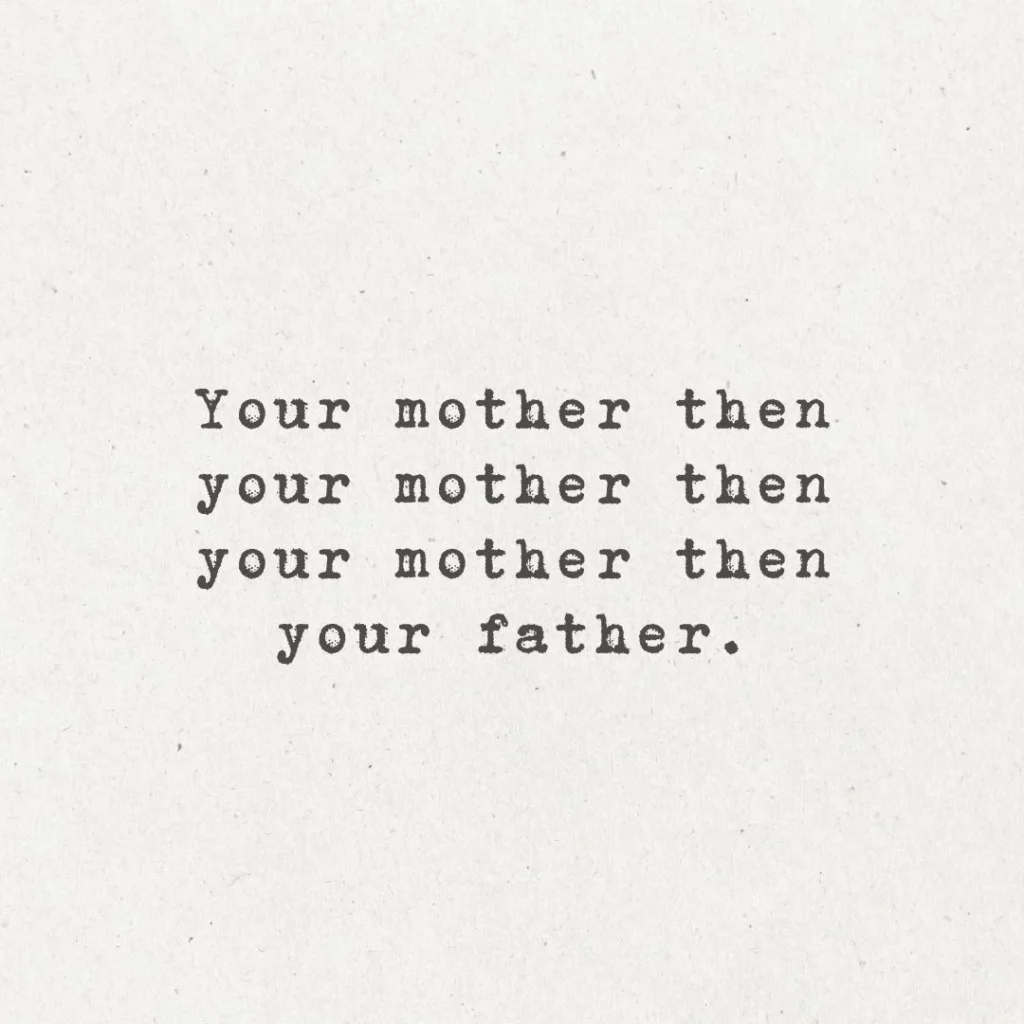
This ancient saying has been preserved across generations because it points at something most children only fully understand when they are adults. A man once asked who deserves the most respect and care in a person’s life. The answer was not a title, not an age, not a status. The answer was repeated three times before anything else was named. A mother. A mother. A mother.
The repetition is not a mistake. It is the point. The depth of what she poured into a person’s life is not captured by one mention. It needs to be said again and again before it even begins to reflect the reality. And even then, it is just the start.
# Quote 12
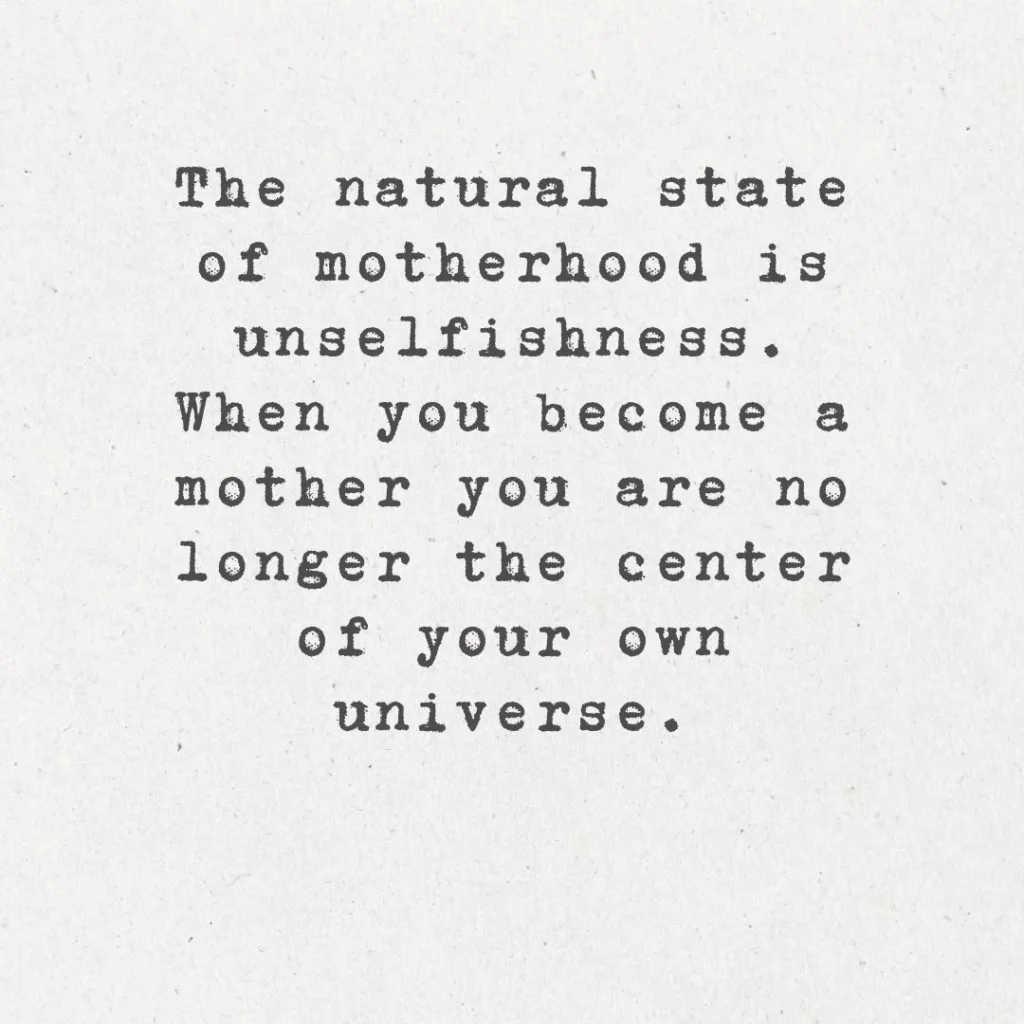
Jessica Lange said this, and it is one of the most honest descriptions of what actually shifts when a person becomes a mother. The word “relinquish” is important. It is not passive. It is a choice, repeated every single day. To put another person’s needs before your own, not because you have to, but because something in you has reorganized itself completely, is a transformation that few people outside of parenthood can fully understand.
What is often missed in conversations about sacrifice is that it does not always feel like sacrifice in the moment. Sometimes it just feels like love. But looking back, from the outside, from the position of a child who grew up, it becomes visible for what it was. A thousand small surrenders, made quietly, without applause, across years and years.
# Quote 13
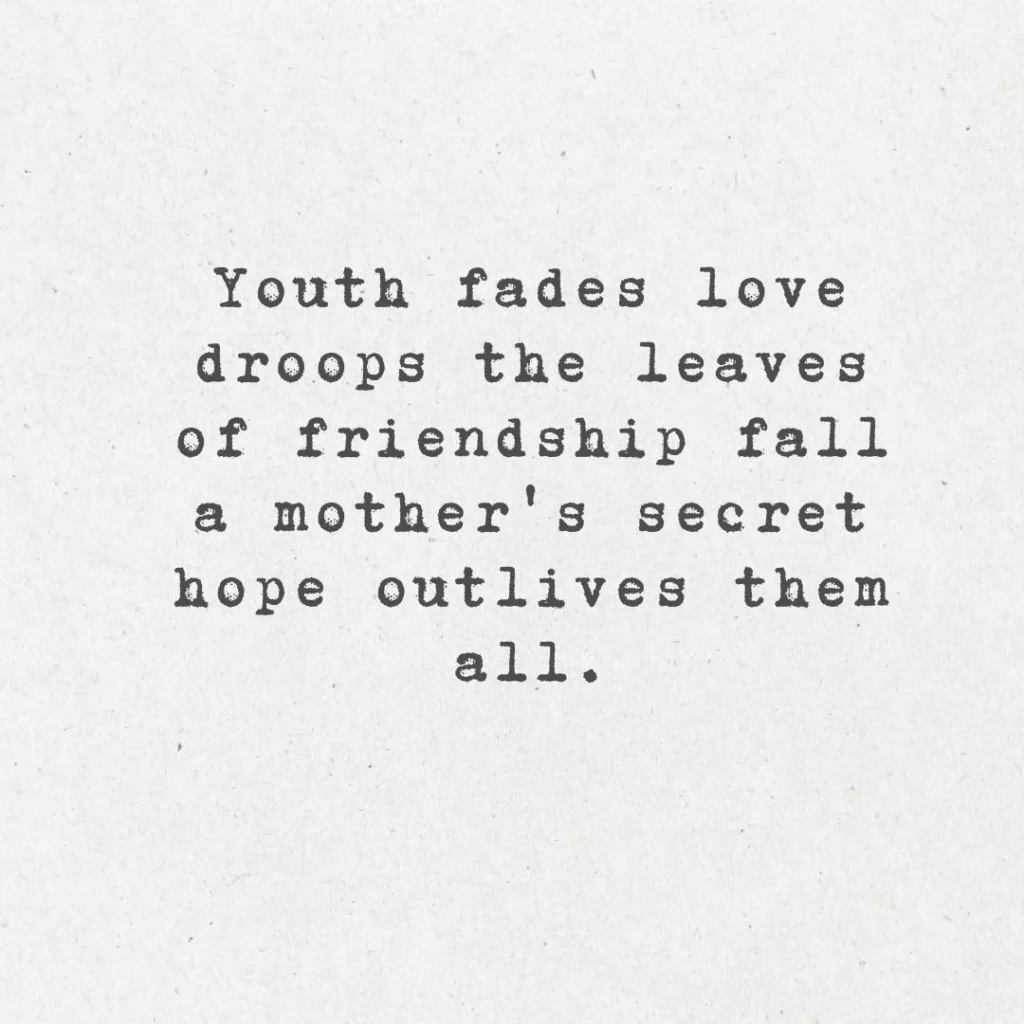
Oliver Wendell Holmes wrote this in the nineteenth century, and it still lands with full weight today. The “secret hope” is what makes this line remarkable. Not a loud hope, not a proud boast, but a quiet, stubborn hope that a mother carries for her child long after the child has stopped carrying it for themselves.
There are seasons in life when a person gives up on their own dreams. When they settle or shrink or accept less than they once wanted. And in those seasons, somewhere, their mother is still holding the hope they set down. Not saying much about it. Not pushing. Just carrying it. That kind of faith, the kind that outlives even the person’s own faith in themselves, is one of the strangest and most beautiful things about a mother’s love.
# Quote 14
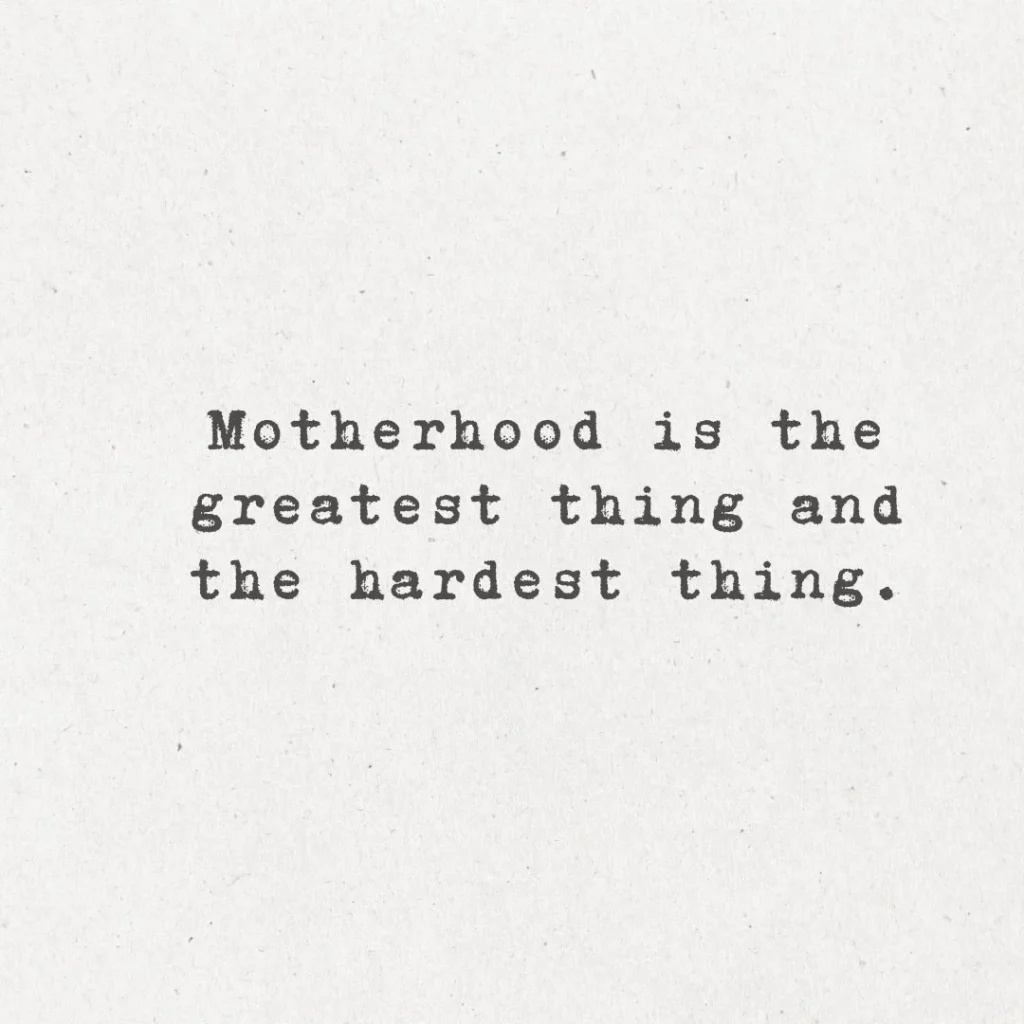
Ricki Lake said this simply, and simple is sometimes exactly right. There is no sentence that captures both sides of the experience more honestly. Motherhood is not just one thing. It is joy and exhaustion together. It is the deepest connection a human being can feel, alongside the deepest worry a human being can carry.
What makes this quote worth sitting with is that it holds both truths without choosing one over the other. A lot of language about motherhood goes too far in one direction. Either it is all soft and glowing, or it is all honest about the difficulty. The truth is always in the middle. It is the greatest thing. And it is the hardest. At the same time. On the same day. Sometimes in the same hour.
# Quote 15
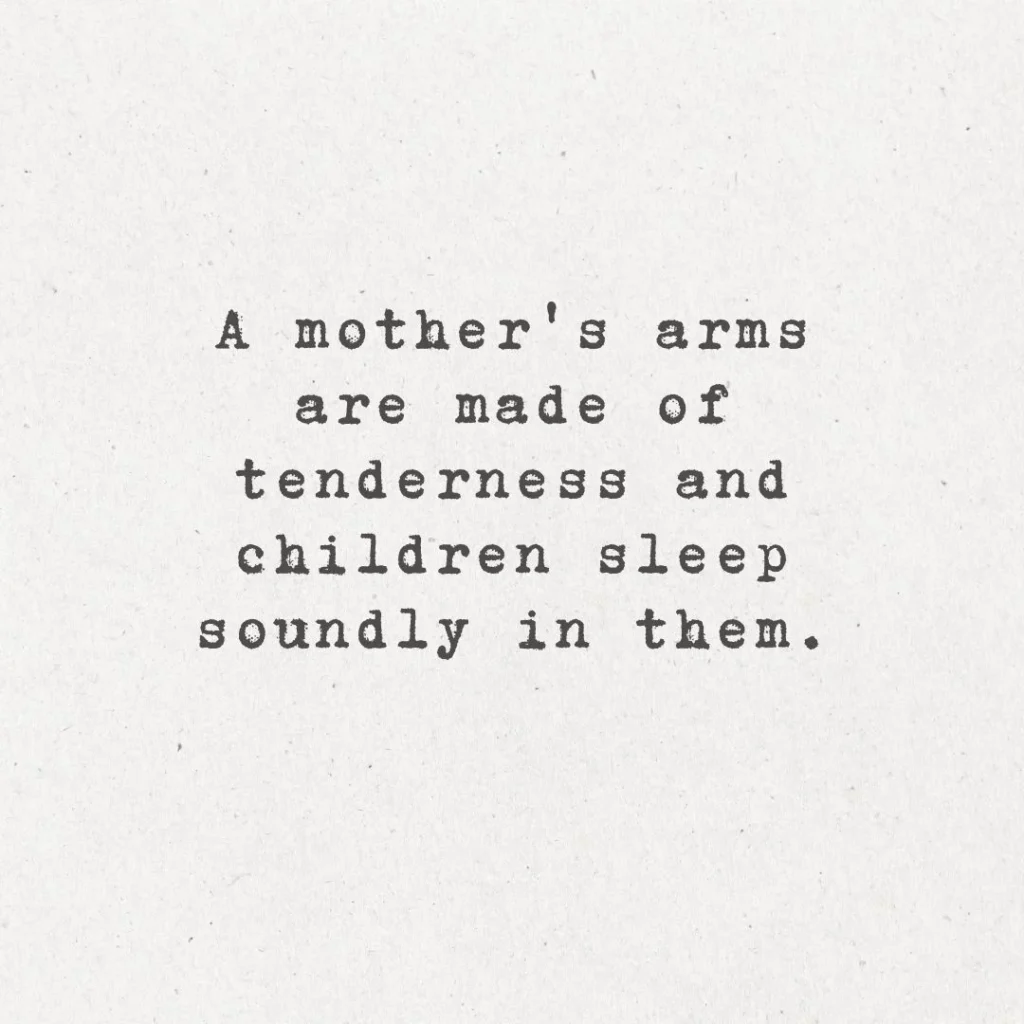
Victor Hugo wrote this, and it carries the warm weight of something that is both physically and emotionally true. There is a specific safety that a child feels in a mother’s arms that cannot be fully explained by logic. It is the original safe place. The first experience of the world not being threatening. And for many people, it is what safety itself is measured against for the rest of their lives.
The tenderness Hugo names is not weakness. A person can be tender and still be fierce. A mother usually is both. Her arms can hold you gently and also refuse to let go when the world is trying to pull you away from yourself. That combination of softness and strength is something a person searches for, often without knowing what they are looking for, in every relationship that follows.
Quotes That Change How You See Her
# Quote 16
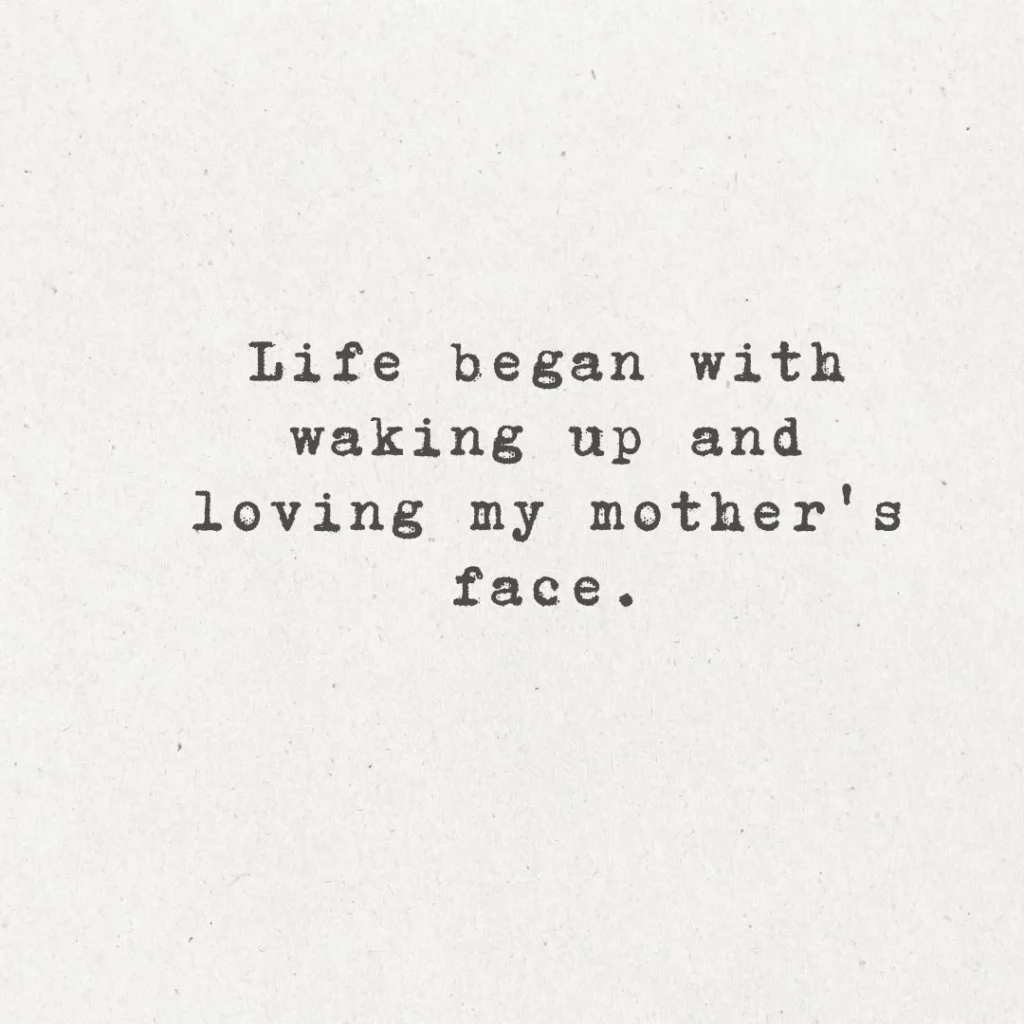
George Eliot wrote this, and it is perhaps the most quietly moving line in this entire collection. Before anything else in life, before language and memory and identity, there was a face. And that face was hers. The first thing a person ever loved was their mother’s face. That is not a small fact. That is the foundation of everything that came after.
Most people do not remember this. Memory does not reach back that far. But the body does, in its own way. The sense of calm that comes from being near someone who loves you, that is not a new feeling. It is the oldest feeling a person has. And it started with waking up and seeing her.
# Quote 17
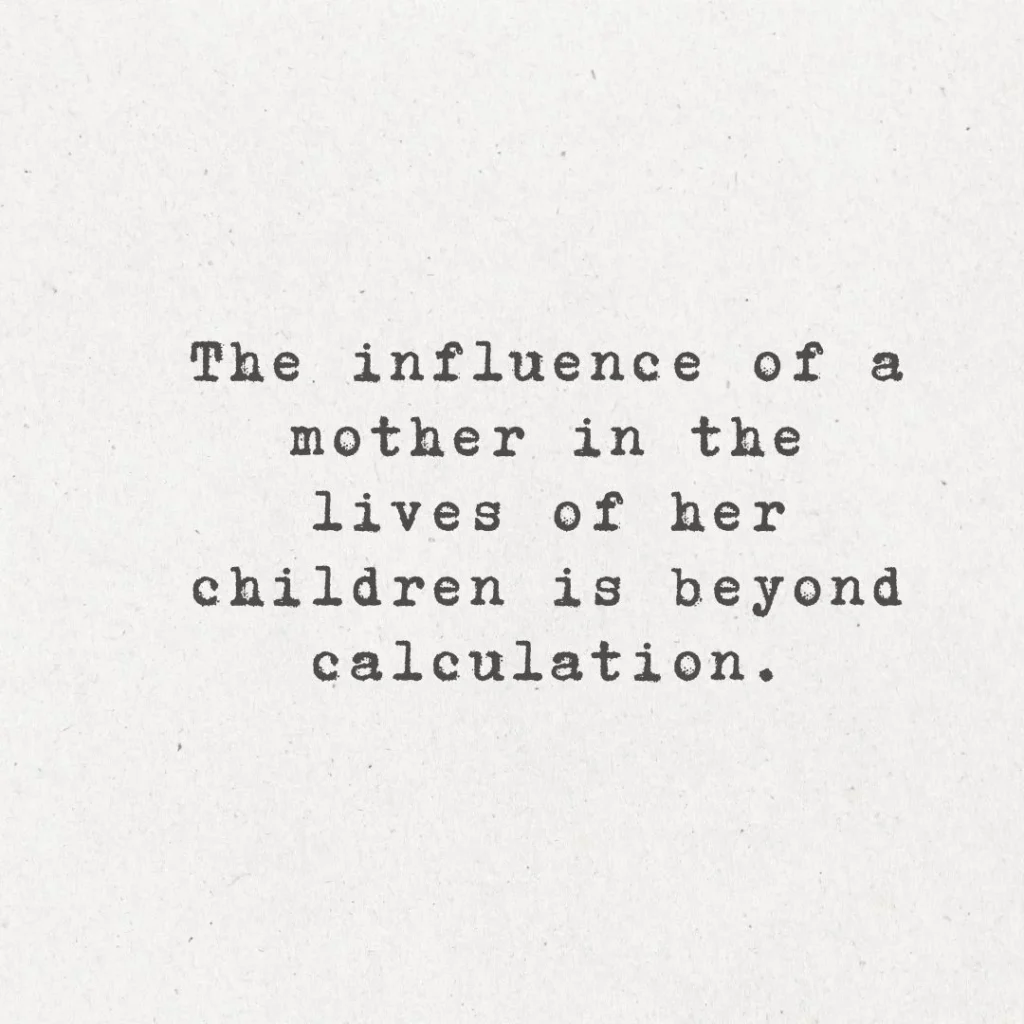
James E. Faust said this, and the key word is “beyond calculation.” He is not saying her influence is large. He is saying it is uncountable. The ways a mother shapes a person extend into every corner of their life, including the corners they never think to examine. The way they make decisions under pressure. The way they handle guilt. The way they love. The way they argue. The way they recover from failure.
All of it was shaped, at least in part, by her. Not by what she said in obvious moments, but by the thousand small things she did and did not do when no one was watching. When a person wonders why they respond to something the way they do, often if they trace it back far enough, they find her somewhere near the beginning of the thread.
# Quote 18
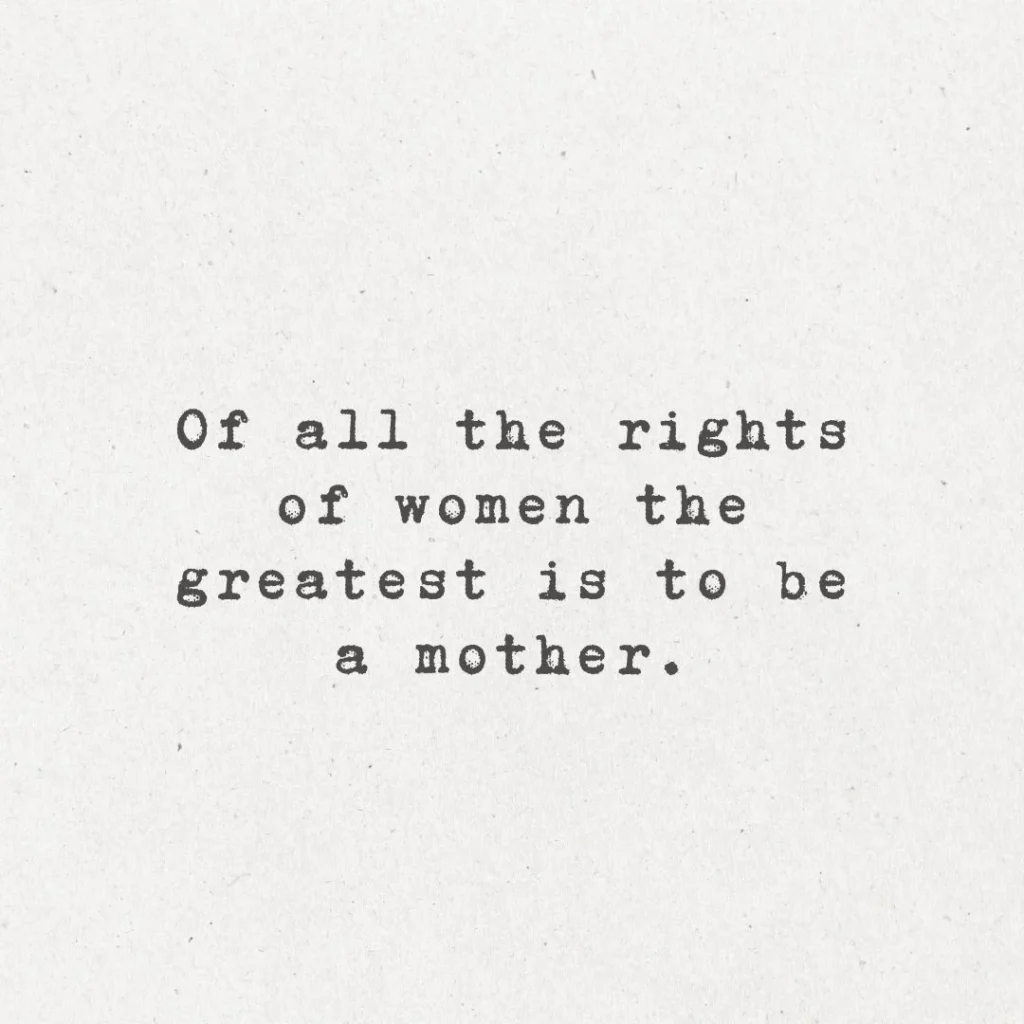
Lin Yutang said this, and it is worth thinking carefully about before agreeing or disagreeing. He is not saying that motherhood is the only thing a woman can be. He is saying that among all the things a woman can choose, can do, can build, the act of creating and raising a life carries a specific kind of greatness that is not matched by anything else. It is not a limitation. It is an elevation.
The modern world sometimes treats motherhood as ordinary, even as something to move past or to balance against more visible achievements. But the women who have been mothers, who have done the full work of it, tend to know something that is harder to learn any other way. They know what it costs to love something more than yourself. That knowledge changes a person completely.
# Quote 19
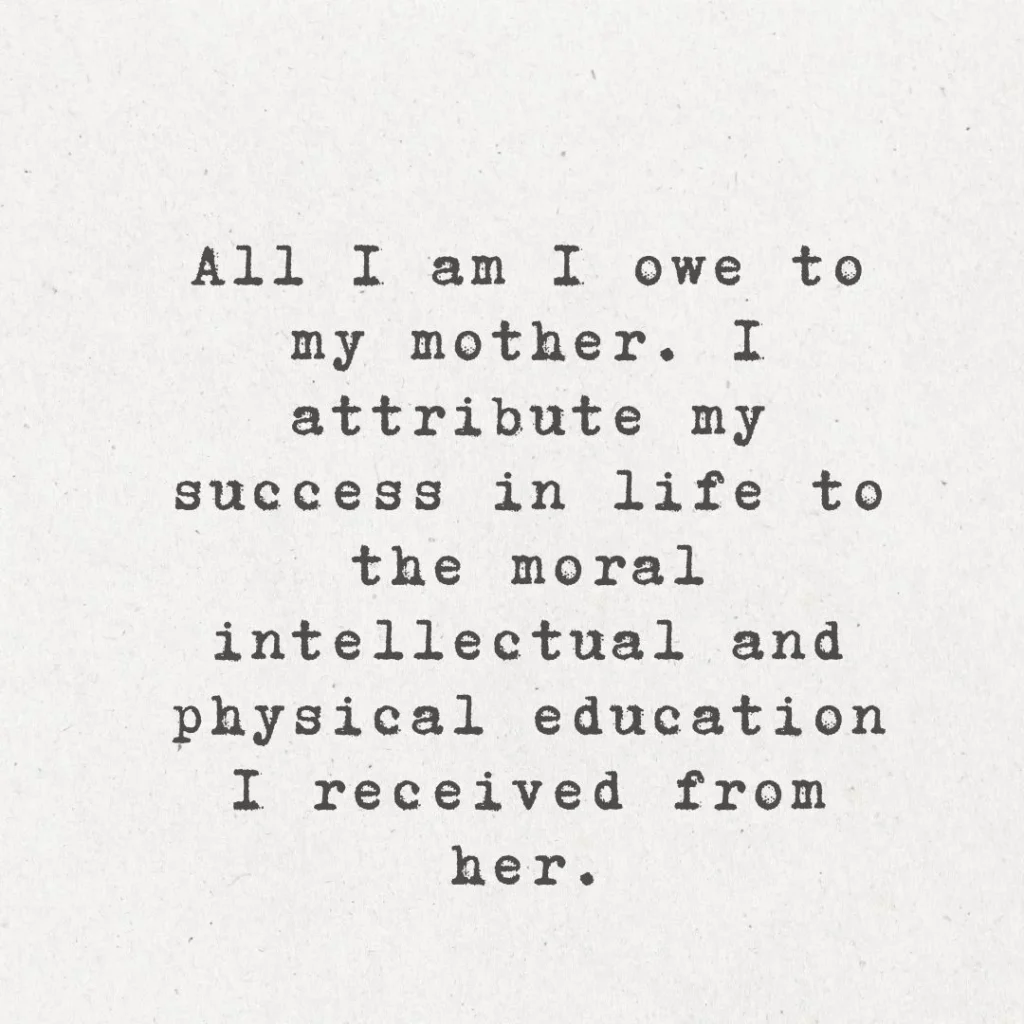
George Washington said this, and it is remarkable not because of who said it, but because of what it admits. One of the most powerful figures in history, a man who commanded armies and shaped nations, looked at his life and traced everything back to one woman. Not to his battles, not to his decisions, not to his position. To her.
The phrase “all I am” is the important one. Not “some of what I am” or “part of who I became.” All of it. It is a full surrender of credit to the person who shaped the shape of him before the world ever knew his name. That kind of honesty is rare. And the truth behind it is not rare at all.
# Quote 20
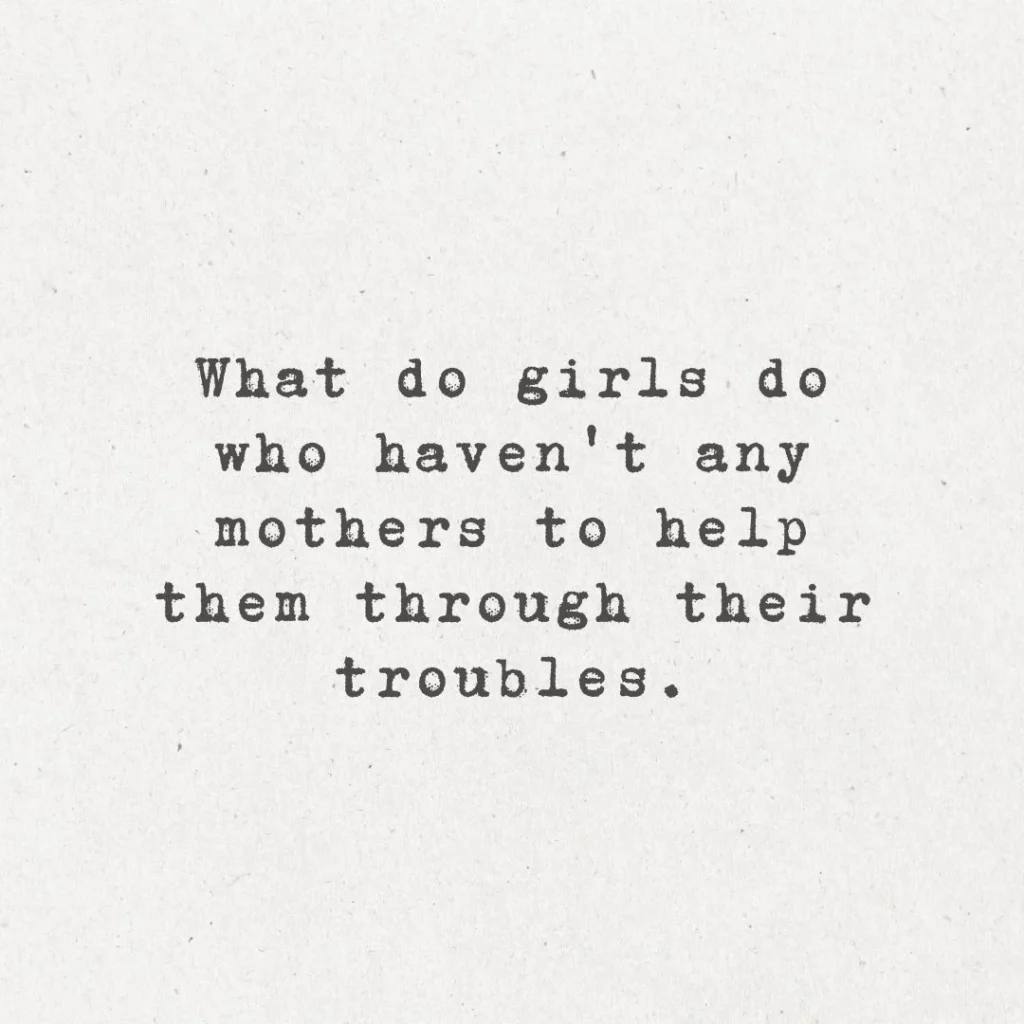
Louisa May Alcott wrote this in Little Women, and it is perhaps the most honest of all these quotes because it does not celebrate a mother. It mourns her absence. The question is asked by a character in a moment of need, and it carries a weight that anyone who has lost their mother, or who grew up without one, will feel immediately.
The question has no clean answer. People without mothers do find their way. They build strength from the gap itself. But Alcott is not asking for an answer. She is naming a truth that tends to go unspoken. That a mother’s presence is not just comfort. It is direction. It is the quiet voice that helps a person find their footing when everything else is unsteady. Her absence leaves a specific kind of quiet that does not fully fill.
What These Quotes Have in Common
Reading through all twenty of these lines, from across different centuries and different kinds of lives, certain things come up again and again. A mother’s love is described as fierce, not soft. As formative, not just supportive. As something a person carries long after it was first given. And as something whose full size is usually only understood in hindsight.
That last part is worth sitting with. Most people do not truly see their mother while they are growing up. They see her role, her tasks, her moods. But her full self, the woman who had fears and dreams and disappointments of her own, the person who existed before they arrived and who kept existing even when they needed her to be only a mother, that tends to come into focus slowly, over years.
The writers who gave us these quotes had done some of that work. They had stepped back far enough to see her whole. That is why their words land the way they do. They are not just compliments. They are recognitions.
How to Share These Quotes in a Way That Means Something
A quote placed on a phone screen can go one of two ways. It can be something a person scrolls past in two seconds. Or it can be the thing that makes them put the phone down and sit quietly for a moment. The difference is almost always in the timing.
If there is a mother in a person’s life who is still present, still reachable, these quotes are most useful not as something to send but as something to let in first. Let the words do their work on the inside before sending them anywhere. Let them remind a person what is actually in front of them before they look up.
If the mother is no longer here, these quotes do something different. They give shape to something that grief sometimes makes shapeless. They confirm that what a person felt was real, was large, was worth the size of the loss. That confirmation, quiet as it is, matters more than most people expect.
Key Takeaways
- A mother’s love is not always gentle in the way people expect. It is strong, sometimes fierce, and shaped around the child’s actual needs, not just their comfort.
- Most people do not fully understand what their mother gave until they are old enough to see what it cost her.
- The presence of a mother, even in memory, keeps shaping a person long after they stop needing her in obvious ways.
- Many of the greatest figures in history traced their character back to their mother, not to their achievements or status.
- Losing a mother, or not having one, leaves a specific shape of absence that nothing else quite fits into.
- Honoring a mother is not a seasonal act. The people who understood this best seemed to live it every ordinary day, not just the marked ones.
A Final Thought
The writer and thinker Maya Angelou once said, “I sustain myself with the love of family.” And while she said it broadly, most people who knew her work understood that the family love she spoke of began with one person. It almost always does.
These twenty quotes are not a complete picture of motherhood. Nothing could be. Motherhood is too varied, too personal, too large for any collection of words to fully hold. But each of these lines points at something true. Something that most people already know, somewhere below the noise of daily life.
The quietest hope in putting them together is this: that someone reads one of these quotes and thinks of a real person. Their person. And that the thought is not followed by scrolling, but by something slower. Something like gratitude that takes its time arriving, the way the best things usually do.