15 Life Advice Quotes That Will Change Your Mindset Today


Some days feel like they are moving fast and going nowhere at the same time. You do the tasks, you talk to the right people, you tick the right boxes, and still, by the end of the day, there is this faint sense that something is not quite landing. It is not crisis. It is not collapse. It is just this low hum of quiet confusion.
Most people who feel that way are not missing information. They are missing clarity. And that is exactly where a well-chosen quote can do something quite unexpected. Not by telling you what to do, but by reflecting back something you already knew, in words precise enough to cut through all the noise that usually keeps it buried.
These 15 life advice quotes were picked not for how famous they are, but for what they actually do when given real space to breathe. Each one comes with a deep look at what it means not on paper, but in the actual grain of a real day.
Why the Right Words at the Right Time Hit Differently
There is a reason some sentences stay with people for years while entire books disappear from memory within weeks. Short, meaningful phrases are neurologically easier to retrieve under stress. The brain, when overwhelmed, reaches for something compact and trustworthy. That is the function a great quote quietly fills.
Cognitive researchers have noted that aphorisms, as a format, engage both the emotional and rational parts of the brain at the same time. They are not just inspiring. They are structurally efficient. They deliver a full idea in a space small enough for the mind to carry around.
The quotes that have lasted centuries did not survive through luck. They survived because millions of people, across different eras, cultures, and circumstances, kept finding them true. That kind of staying power is its own form of proof.
Quotes About Starting and Taking Action
Quote # 1
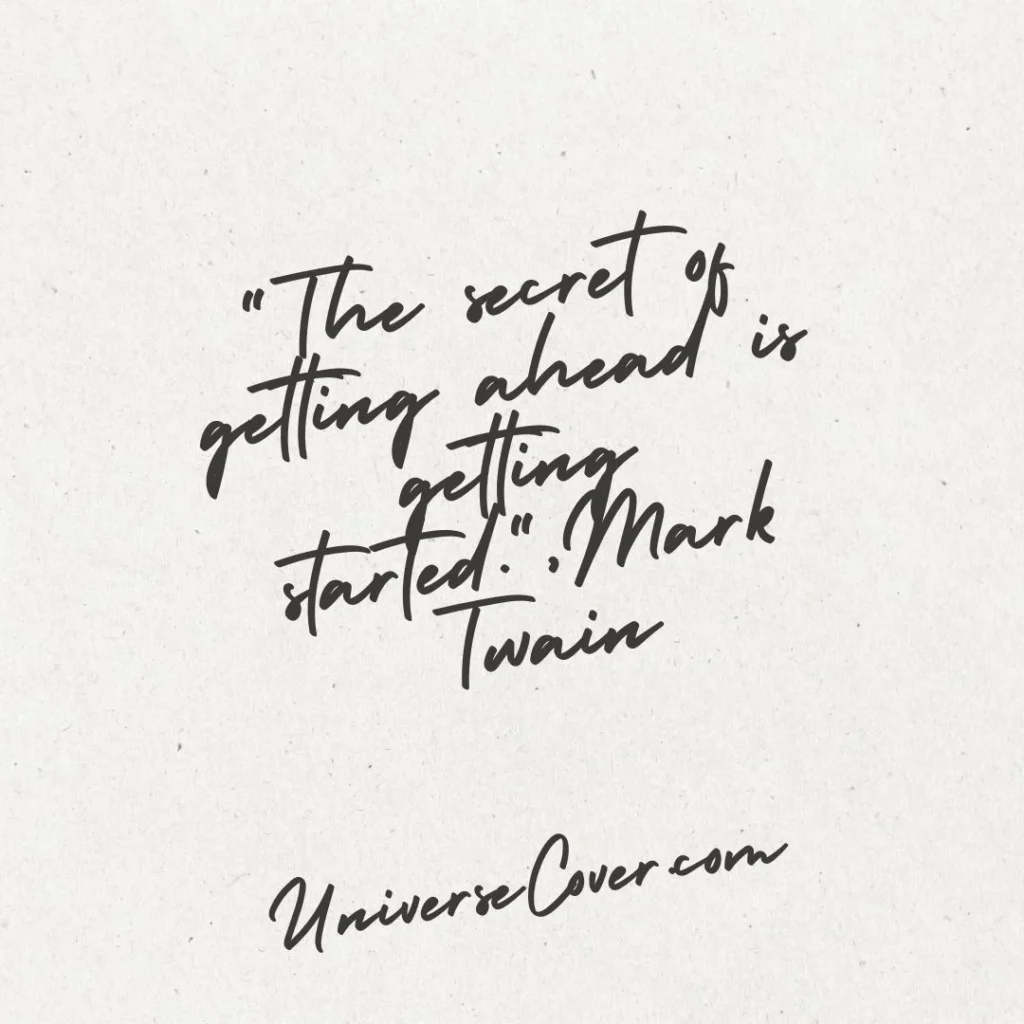
Mark Twain did not write this as business advice. He wrote it as an observation about human nature. And yet, it maps almost perfectly onto every corner of modern life where people sit with good plans and little forward motion.
Most people believe they are waiting to feel ready. But what they are actually waiting for is confidence. And confidence, as it turns out, does not come before action. It comes after. It is a product of having done the thing, not a condition for doing it. The mind does not warm up first and then begin. It warms up because it began.
Behavioral science has a name for what happens once a task is started. The Zeigarnik Effect describes how the brain holds unfinished tasks in active memory and keeps returning to them until completion. In practical terms, this means that starting, even badly, activates a mental process that makes continuing easier. The first step is not just the hardest. It is the one that changes the brain’s relationship to the whole goal.
For anyone who has a plan sitting untouched in a notebook or a voice memo that has not been revisited in three weeks, the question is not whether you are ready. The question is whether one small move, even a clumsy one, could get the process started. Because once it is started, the brain begins helping in ways it simply cannot before that.
Quote # 2
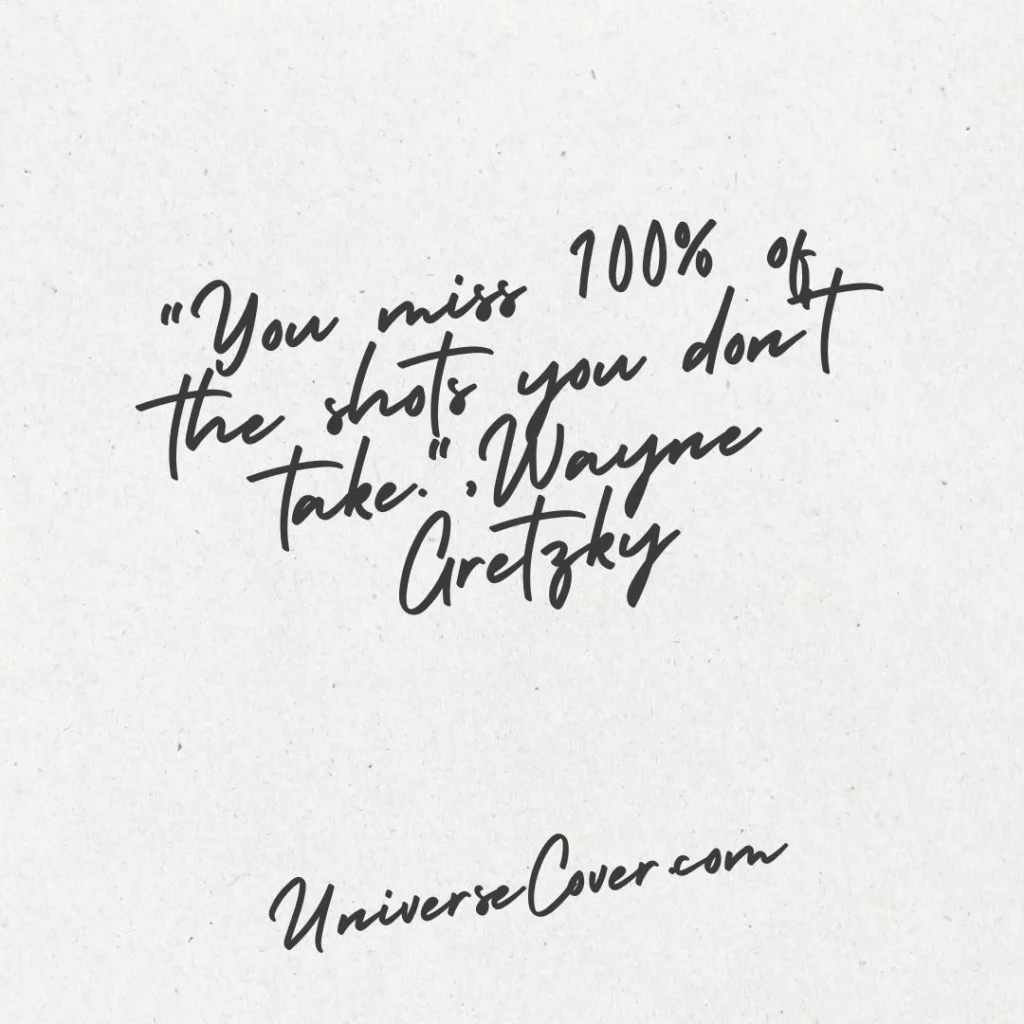
In the context of hockey, this is strategy. In the context of a human life, it is something quieter and harder. Most people know it. Most people also, quietly, do not take the shot.
The psychological cost of not trying is rarely discussed. When someone holds back out of fear, the immediate relief feels like a reasonable trade. Avoid the risk, avoid the embarrassment, stay safe. But over time, each avoided attempt adds a small weight to a growing pile. That pile starts to form a story. The story is that you are someone who does not try. And if that story gets told often enough, internally, it starts to feel like a fact.
Social psychologist Karl Pillemer spent years studying end-of-life reflections in his research at Cornell. The pattern that emerged consistently was striking. People rarely regret the attempts that failed. They regret the attempts that were never made. The failures they survived. The chances they never took, those stayed.
That is the real weight of this quote. Not that every shot will go in. Plenty will not. But that the math on not trying is worse than the math on failing, almost every time.
Quote # 3
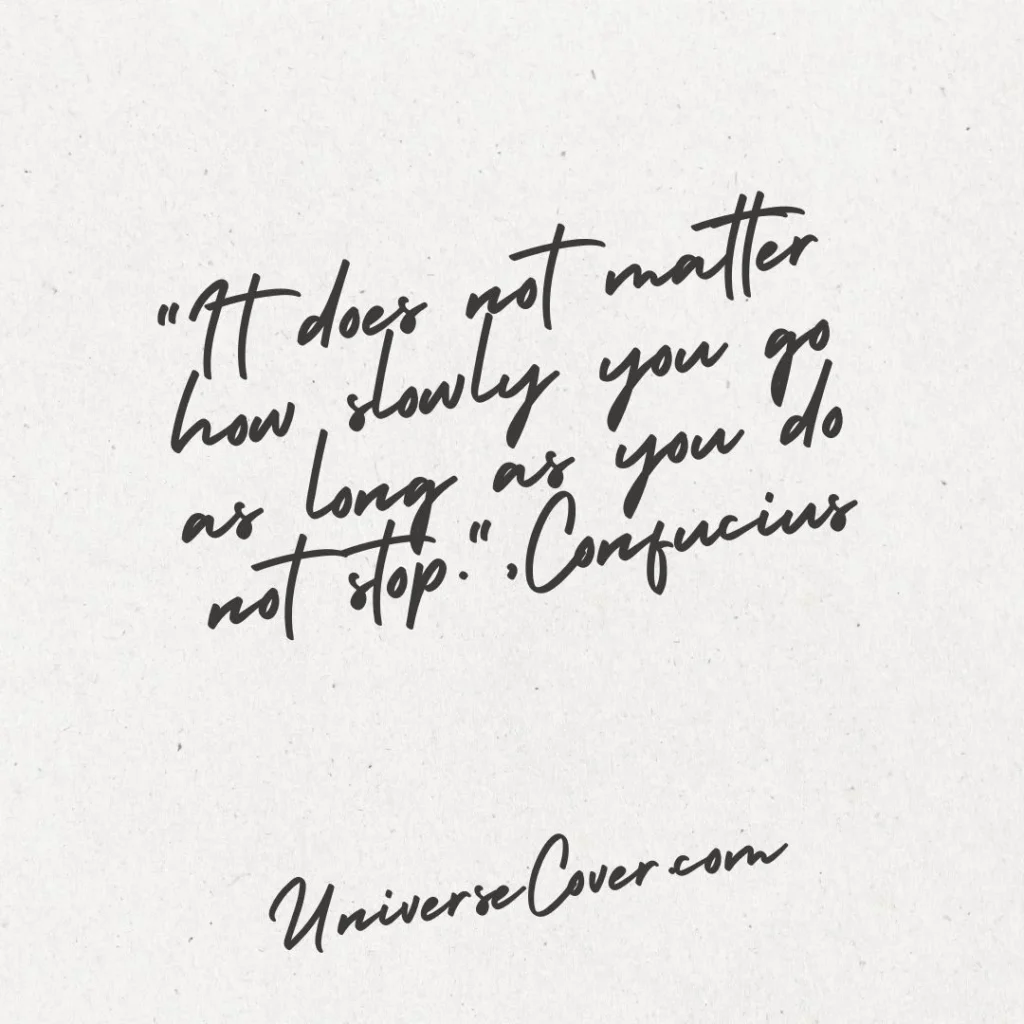
This one is particularly needed now. In a culture where speed has become a proxy for value, moving slowly feels almost shameful. Social media shows the finished versions of things. The polished launch, the big result, the visible achievement. The years of slow, invisible work that made those things possible tend not to appear in the feed.
But slow progress is not just progress. It is often better progress. When growth happens at a pace that allows for absorption, for genuine learning and course-correction, it tends to be deeper and more durable than the kind that sprints in and burns out. A tree that grows in poor soil develops a root system far more robust than one grown in easy conditions. It has to reach further to find what it needs.
The skills that last decades, the habits that quietly reshape a person over years, the understanding that only comes from long exposure to a subject, none of these arrive fast. They arrive because someone refused to equate slow with stopped. And that refusal, maintained across months and years, produces something that fast growth rarely does: something that holds.
Quotes About the Mind and How You Think
Quote # 4
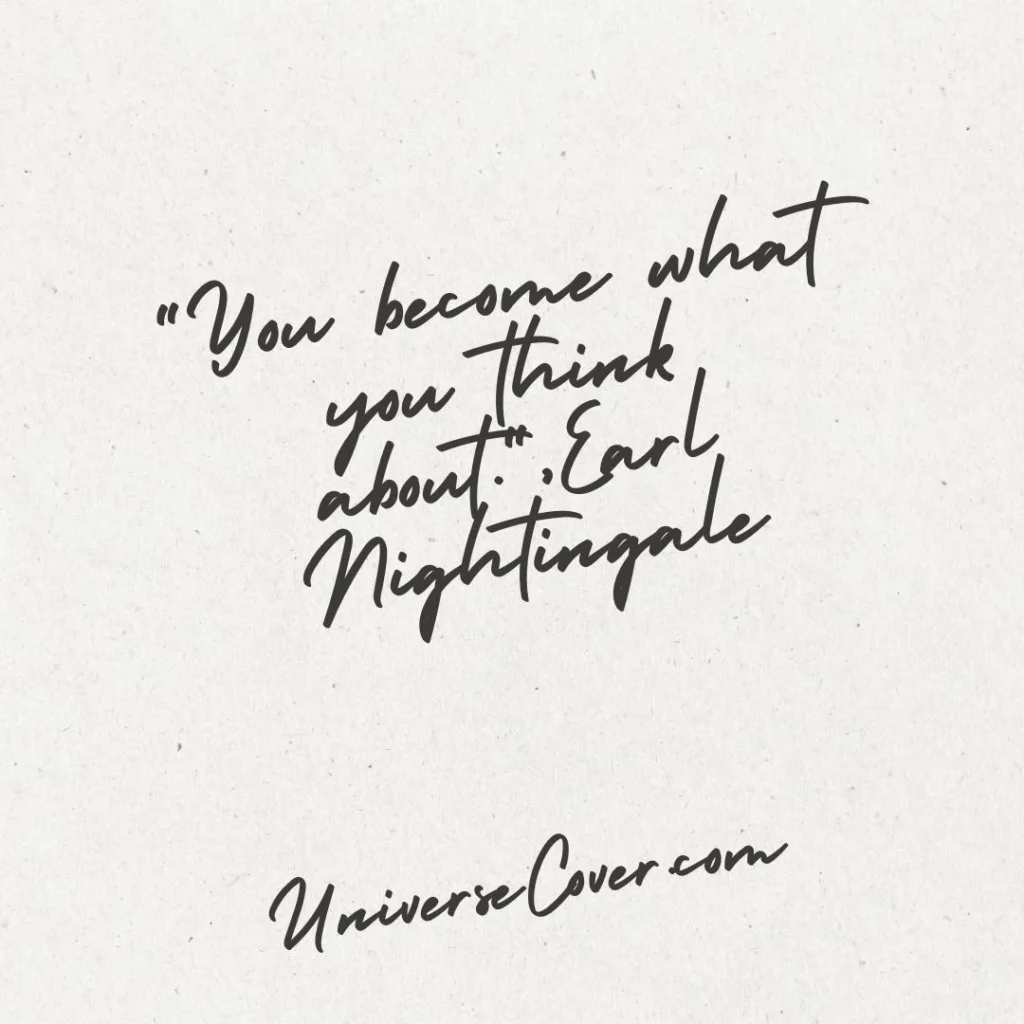
Earl Nightingale spent years studying the gap between people who thrive and people who stay stuck. After decades of reading, research, and careful observation, he kept landing on the same variable. The dominant thought. The thing the mind returns to when it is left unoccupied.
This is not mysticism. It is neuroscience. The brain is neuroplastic, meaning its structure changes based on repeated use. Thoughts that are practiced regularly form stronger neural pathways. Strong enough pathways begin to shape automatic responses. Automatic responses shape behavior. Behavior shapes outcomes. Outcomes, accumulated over time, shape a life.
The person who thinks mostly about what could go wrong is not naturally pessimistic. They practiced pessimism until it became automatic. And the reverse is exactly as true. A person who trains their mind to notice what is possible does not become naive. They become someone whose brain is looking for a different set of things, and therefore finding them.
Nightingale’s point was not that positive thoughts create positive outcomes by some invisible force. It was that the mind moves in the direction of its most repeated patterns. Choosing those patterns, even imperfectly, even slowly, is one of the most practical things a person can do.
Quote # 5
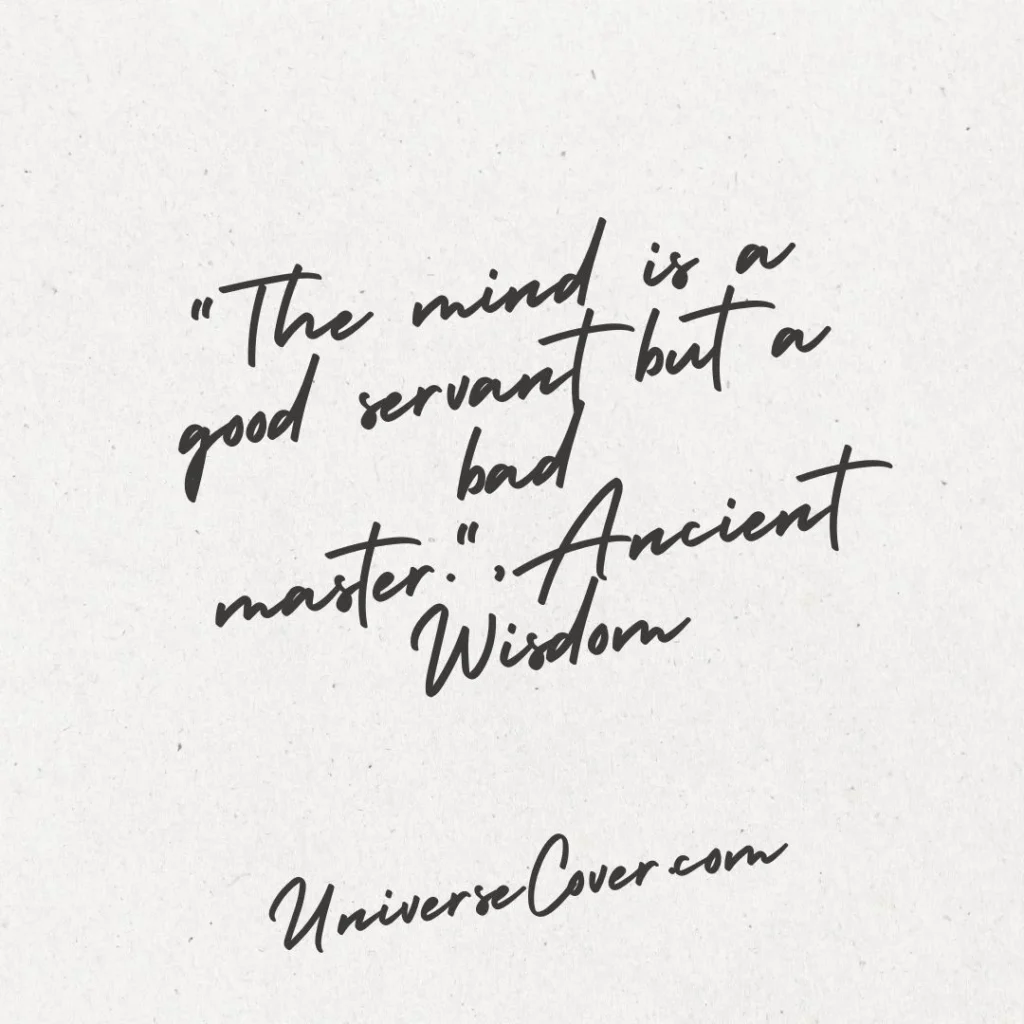
This line has appeared across many centuries and many cultures in different forms. Its persistence suggests it is pointing at something genuinely observable in human experience. And anyone who has gone through a period of anxiety or overthinking has felt exactly what it describes.
When the mind is directed, when it is given clear problems to solve, clear goals to move toward, and clear boundaries on what is worth revisiting, it is a remarkable tool. It synthesizes, it creates, it problem-solves, it remembers. It serves well. But when it is left alone with no direction, it tends to fill the space with noise. Old arguments, imagined threats, comparisons that help nothing.
The practice of learning to lead the mind rather than being led by it does not require any particular method. Focused work, a consistent creative habit, a physical practice, a regular reflection process, all of these are forms of directing the mind rather than following wherever it wanders. Not to silence it, but to guide it. The difference between those two experiences is significant.
Quote # 6
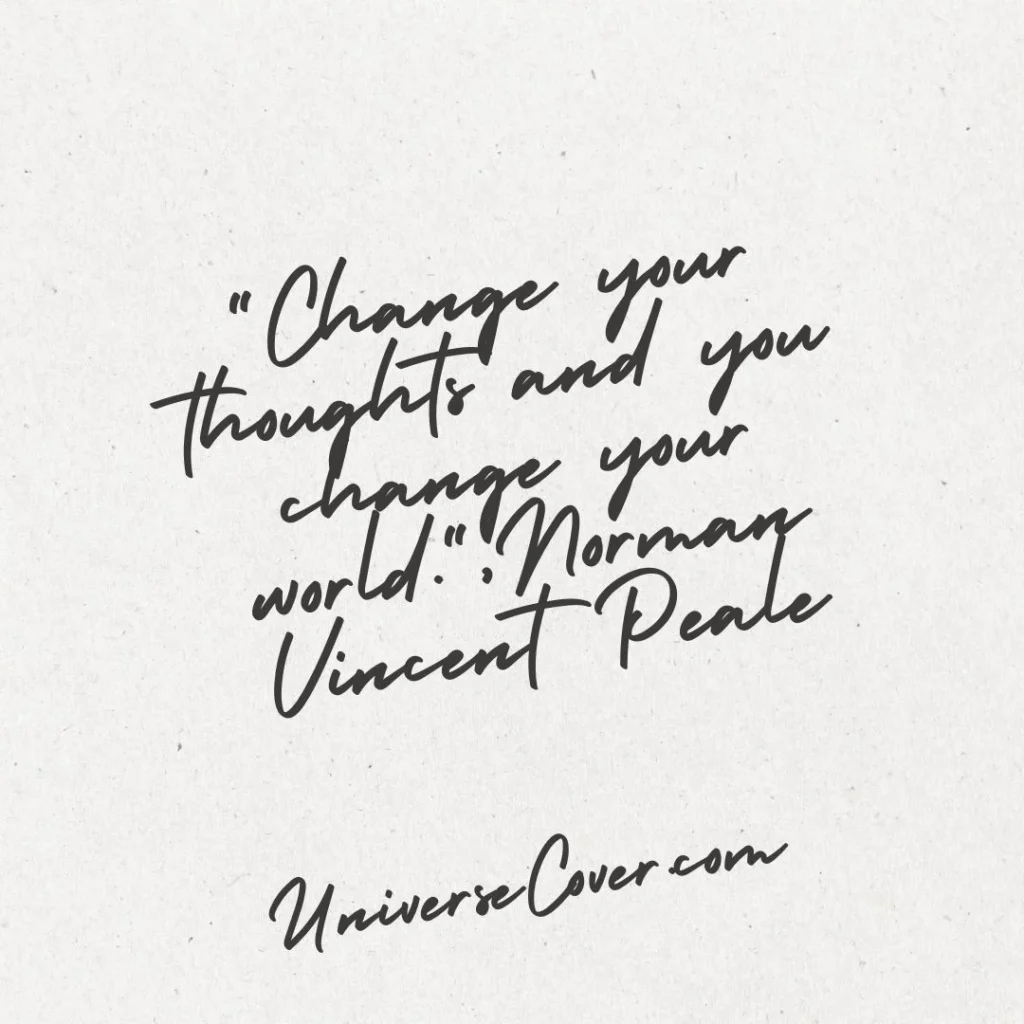
Peale’s most quoted line has been criticized over the years as too simple, too optimistic, as though it suggests that thought alone reshapes external reality. But that is a misreading of what he actually meant.
The world each person moves through is partly factual and partly constructed. The facts are the same for everyone. The construction is individual. Two people can lose the same job on the same day. One spirals into a fixed story about being unwanted. One pauses, adapts, and finds a new path within months. The external event was identical. The internal response was not. And the internal response determined what came next.
Changed thinking leads to changed responses. Changed responses lead to changed actions. Changed actions lead to changed results. The chain is long. But the starting point is always internal. Peale was not describing magic. He was describing a sequence that begins inside the mind and travels outward into life. And that sequence is real, observable, and available to anyone willing to engage with it honestly.
Quotes About Patience and Staying the Course
Quote # 7
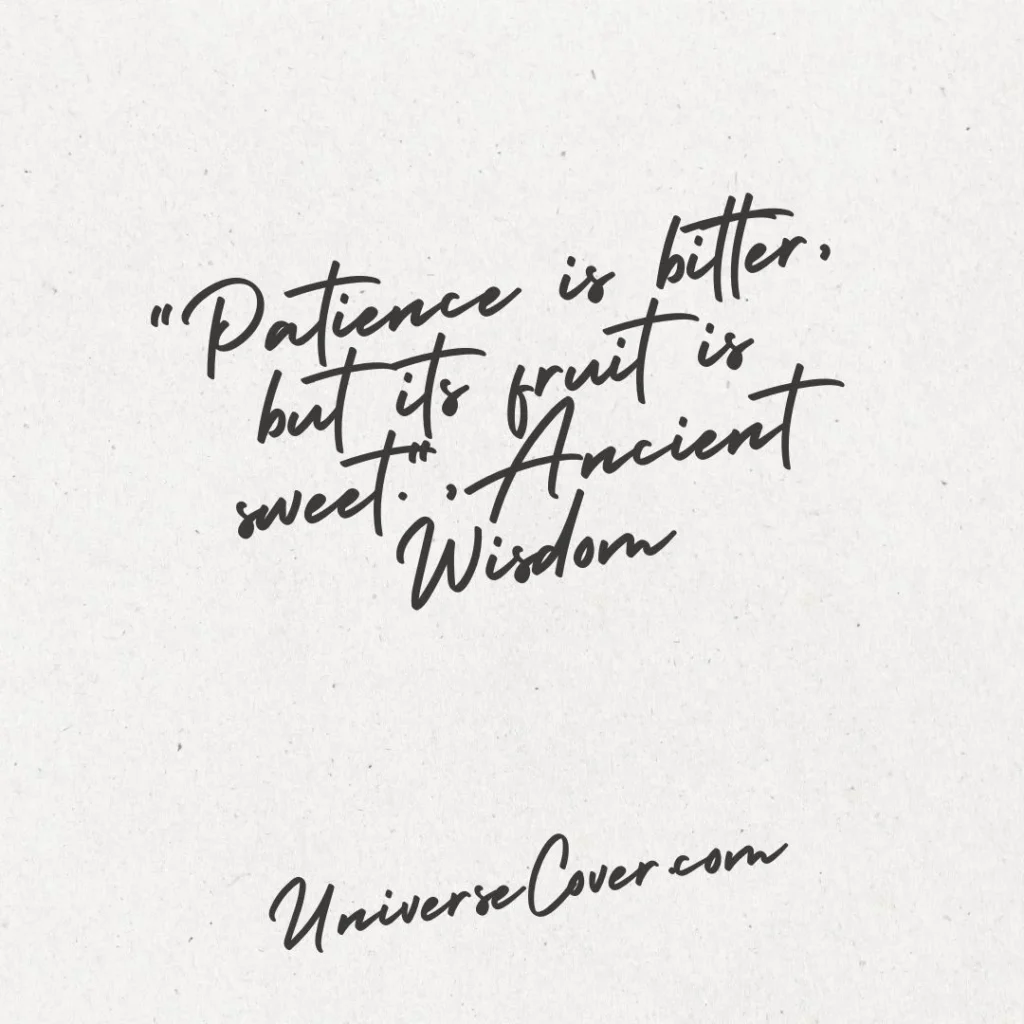
This line appears in different forms across cultures that have never shared a language or a border. That kind of universal persistence usually means the observation is too accurate to disappear. Something about it keeps finding its way back into human experience because human experience keeps verifying it.
Waiting, in the modern world, has become almost intolerable. Delivery windows have shrunk from weeks to hours. Information arrives before the question is fully formed. The speed of daily life has reset the brain’s baseline expectations for how long things should take. And that reset makes natural timelines, the ones that cannot be compressed, feel like failures.
But the things that matter most tend to have their own pace. A reputation takes years to build and a moment to lose. Deep trust between two people requires time that cannot be faked or skipped. A skill practiced to genuine mastery takes the hours it takes, regardless of how impatient the learner becomes. Patience in these contexts is not passive waiting. It is active trust in a process that has not yet shown its end.
The bitterness is real. Anyone who says waiting is easy has never wanted something deeply. But most people who have reached the other side of a long process and tasted what came from it, they rarely wish they had rushed. They usually wish they had worried less during the wait.
Quote # 8
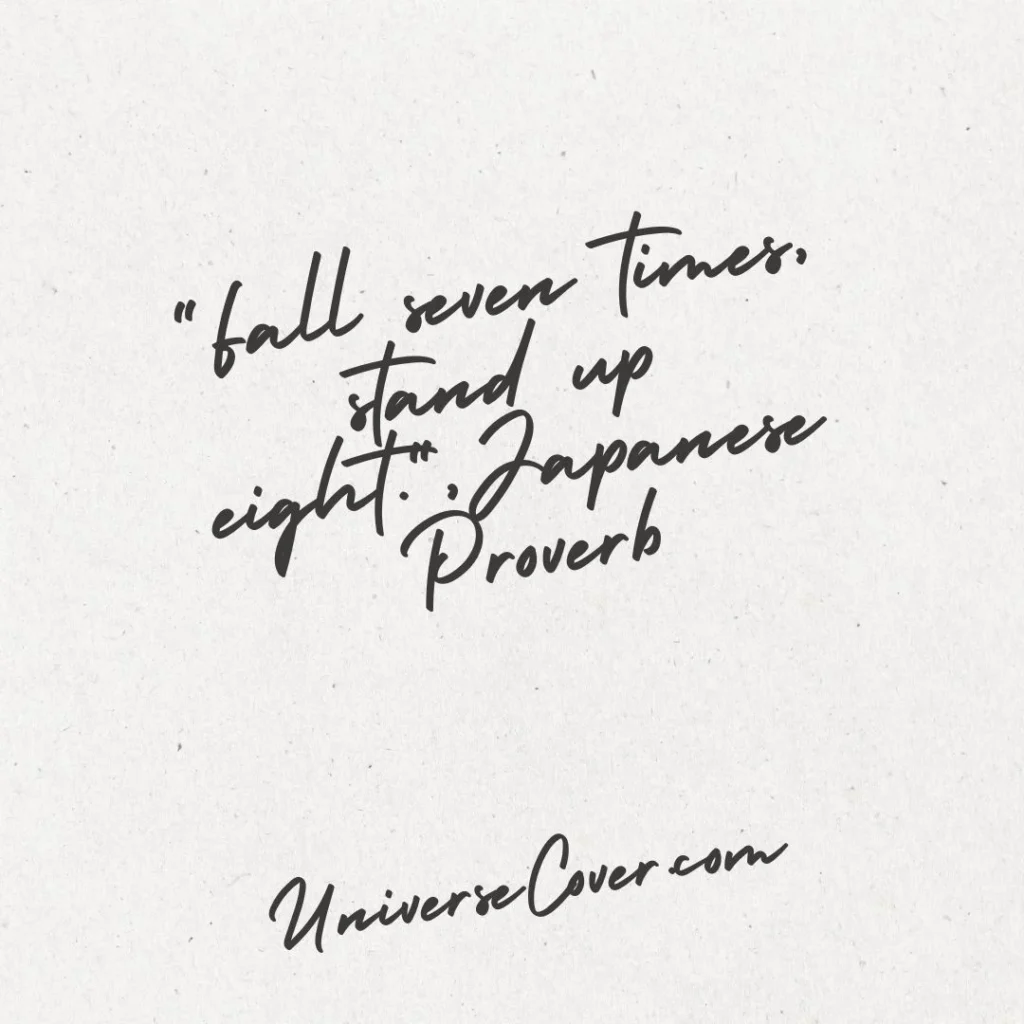
There is something almost disarming about this proverb. It does not say stay standing. It does not promise the falls will stop. It says fall, and then get up. And do that one more time than you fall. That is all.
What makes it useful is what it refuses to say. It does not romanticize the fall. It does not tell you the fall was necessary or meaningful or part of a plan. It simply acknowledges that the fall happened, and then asks for one thing: get back up.
Angela Duckworth’s research on grit, conducted across students, military candidates, and working professionals, found that the single strongest predictor of long-term success was not intelligence or talent. It was the willingness to return to effort after failure. Not enthusiasm for failure. Not some elevated relationship with struggle. Simply the practical act of continuing.
The math in this proverb is the whole point. If you fall seven times and stand eight, you end upright. That is the entire insight. The number of times you get back up simply needs to be one more than the number of times you go down.
Quote # 9
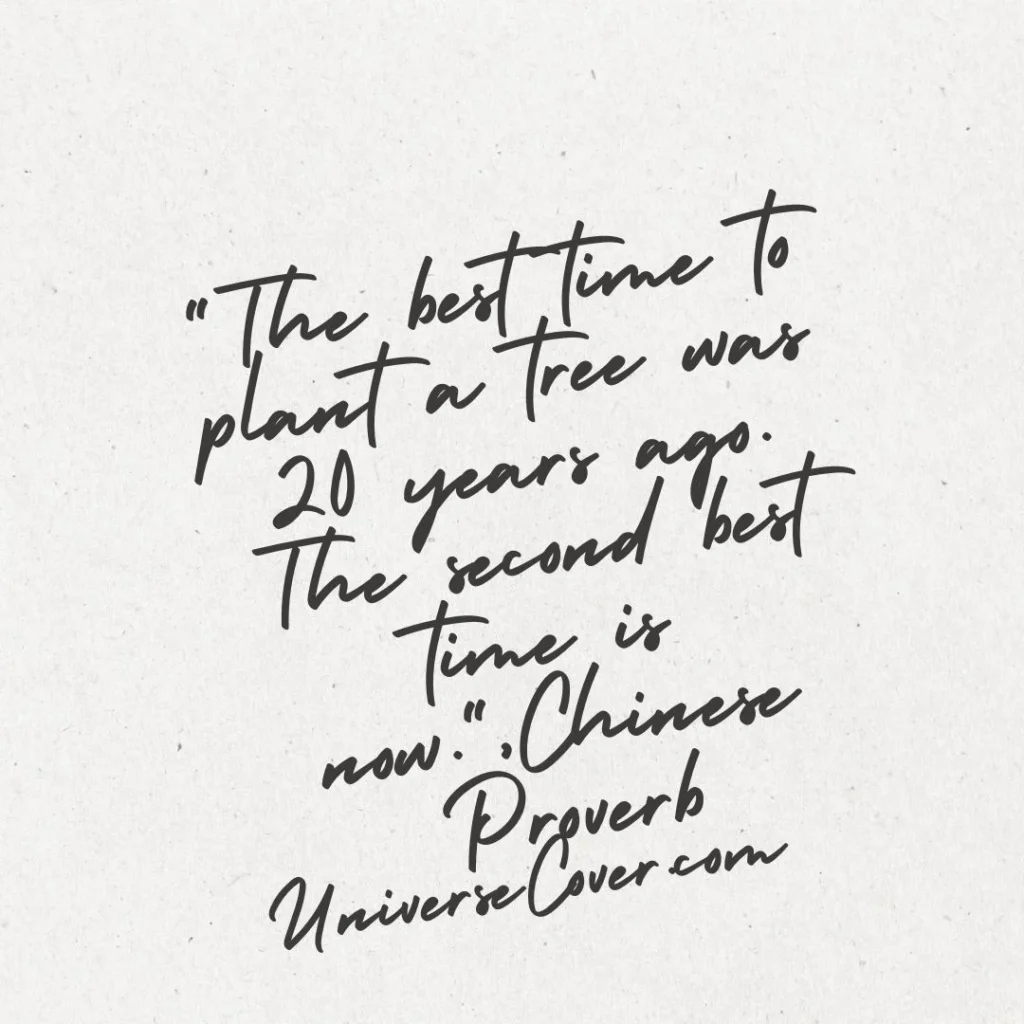
This proverb has circulated widely in recent years, and that popularity is understandable. It speaks directly to one of the most common quiet regrets people carry, which is the belief that because they did not start earlier, the effort now is somehow worth less.
But that thinking misunderstands how time actually works. Yes, a tree planted 20 years ago would be large and strong today. That is true. It is also irrelevant. Because that tree was not planted, and no amount of reflection changes it. What remains is the present moment and the next 20 years, which will arrive regardless of whether planting happens today or not.
People in their 30s often wish they had begun something in their 20s. People in their 40s wish the same about their 30s. And the thing all of them share is that the earliest remaining moment is still right now. Starting today does not erase the past. But it does something more useful: it gives the future self something to be grateful for. And that person, 5 or 10 years from now, will not be asking why you started so late. They will be glad you started at all.
Quotes About Words, Silence, and How We Treat People
Quote # 10
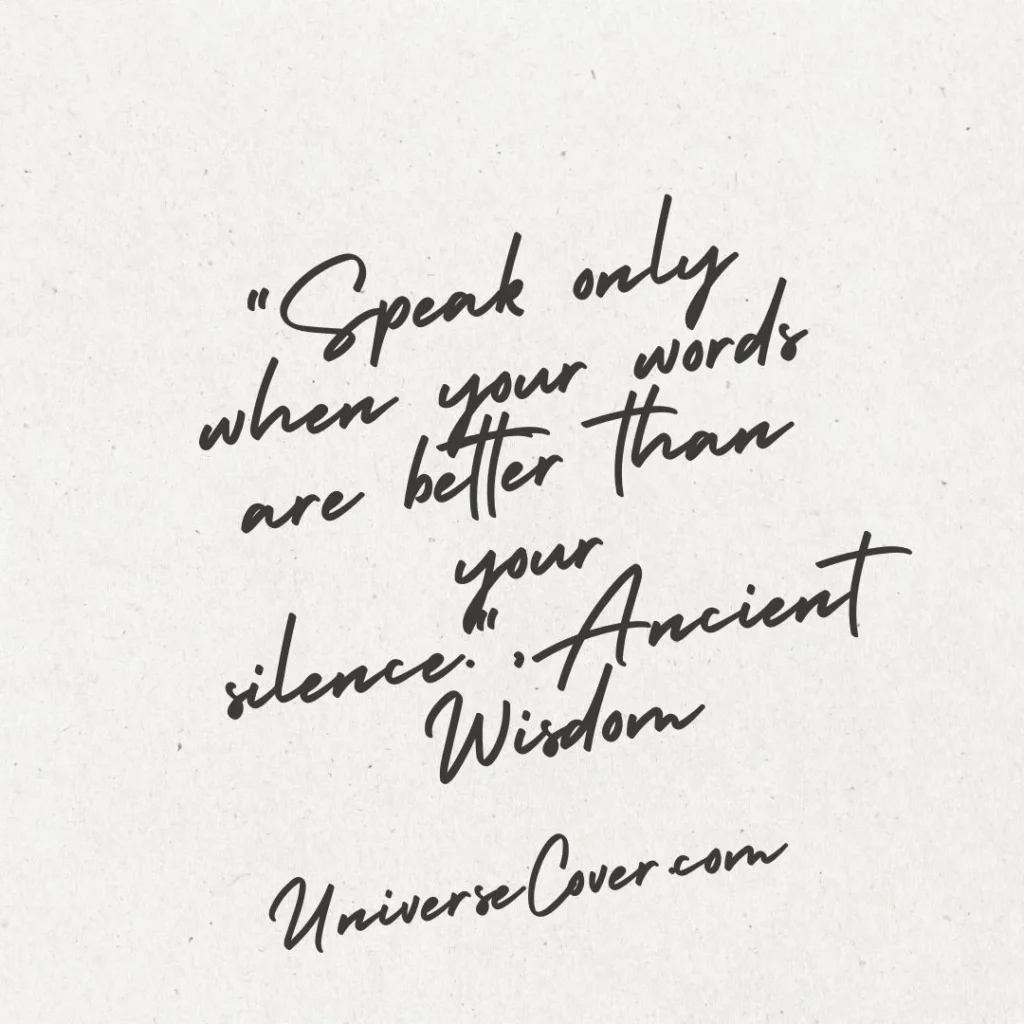
This line lands differently at different stages of life. Read early, it sounds like advice about restraint. Read later, it reveals itself as something deeper, a quiet observation about the actual cost of words and the undervalued worth of silence.
Words are not free. They carry weight for the person who speaks them and for the person who receives them. A conversation full of unnecessary noise exhausts both parties. The most memorable exchanges are often the ones where something significant was said, and then allowed to settle. The most memorable people are often those who say less and mean more when they speak.
Research on leadership consistently finds that the people who carry the most influence in group settings are often those who speak least. Not because silence is power, but because when they do speak, people listen. The words carry weight because they are not scattered freely. The expectation of quality changes the experience of receiving them.
In day-to-day life, most people would benefit from a simple pause before speaking: is what comes next actually better than saying nothing? Surprisingly often, the honest answer is no. And recognizing that, without shame or performance, is one of the quiet disciplines that shapes how a person is experienced by others over time.
Quote # 11
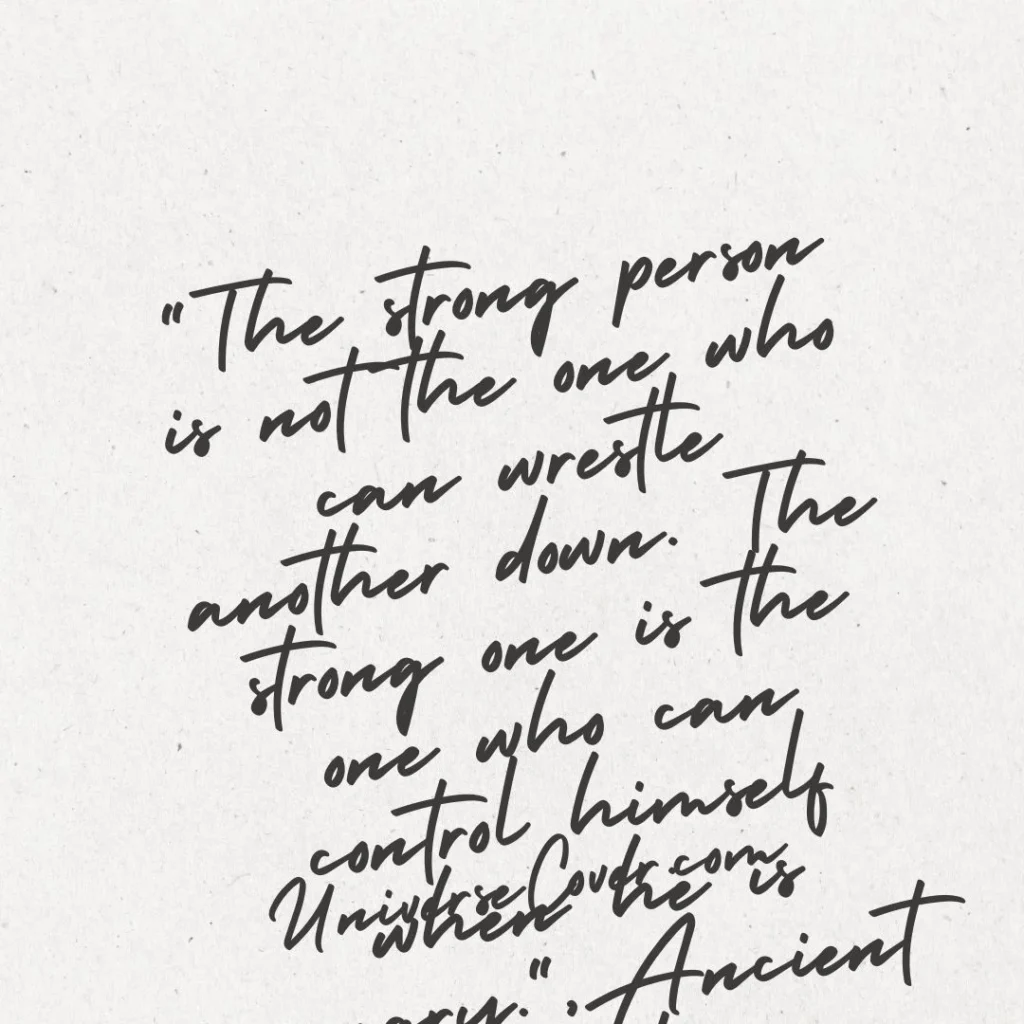
Anger is fast. It arrives before the thinking brain has had time to respond. Neuroscientists call this state the amygdala hijack, a condition where the brain’s emotional processing overrides rational thought within milliseconds. The feeling is real. The response to it is the only thing that remains under any kind of choice.
And yet most of the damage done in relationships, in careers, in families, happens not because of genuinely difficult problems. It happens because someone could not find the pause between the feeling and the reaction. The harsh word sent. The decision made in the wrong moment. The thing said in anger that took years to unsay, if it ever was.
True strength, the kind that builds something lasting and that people actually trust, has never been physical. It has always been about mastery of the self. Epictetus wrote about this in ancient Rome. Marcus Aurelius practiced it as an emperor. The idea is not new. But it remains one of the most consistently difficult things for any person to actually live.
The pause before a reaction, one breath, one moment of separation between feeling and response, is where character is genuinely formed. Not in the moments that go smoothly. In the moments that do not, and in who is chosen to be in those moments.
Quote # 12
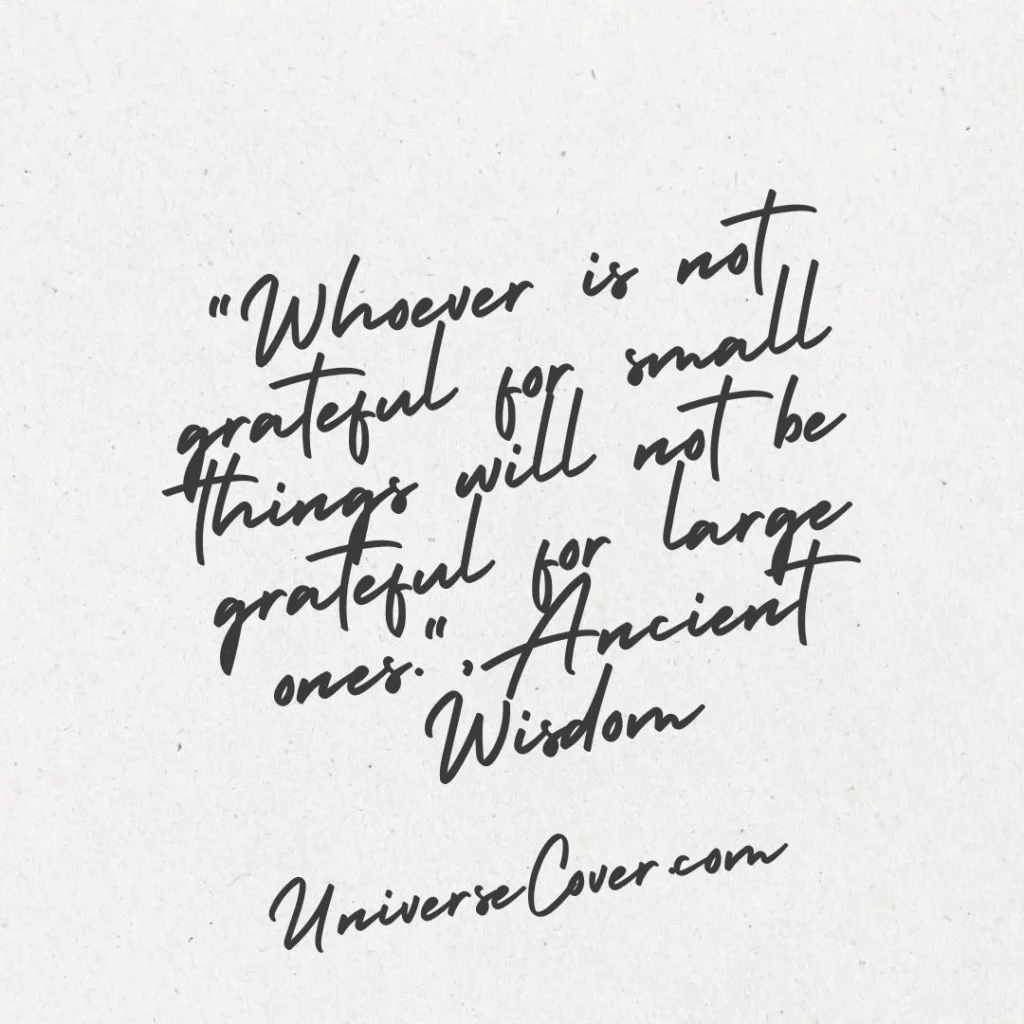
Gratitude has become something of a wellness trend in recent years, which has the unintended effect of making the concept feel shallow to thoughtful people. But this observation, which predates the trend by many centuries, is not about mood management. It is about perception.
The brain’s ability to register something as good does not simply activate at a certain threshold. It is a practice. People who train themselves to wait for something large enough to be grateful for are simultaneously training themselves to overlook everything smaller. And everything smaller is most of life. Big moments come rarely. Small ones come every day.
A warm space. A conversation that felt genuine. A body that carried you through another day without complaint. A meal that was good. These are not consolation prizes for people who did not get the big things. For a significant portion of the world’s population, these small things are the list of good things in a given day.
Noticing them is not settling. It is keeping the lens of perception clean. A person who genuinely notices the small good things tends to find more of them over time, not because more appear, but because the capacity to see them grows. And that shift, quiet as it is, changes the entire experience of being alive.
Quotes About Growth and Living Fully
Quote # 13
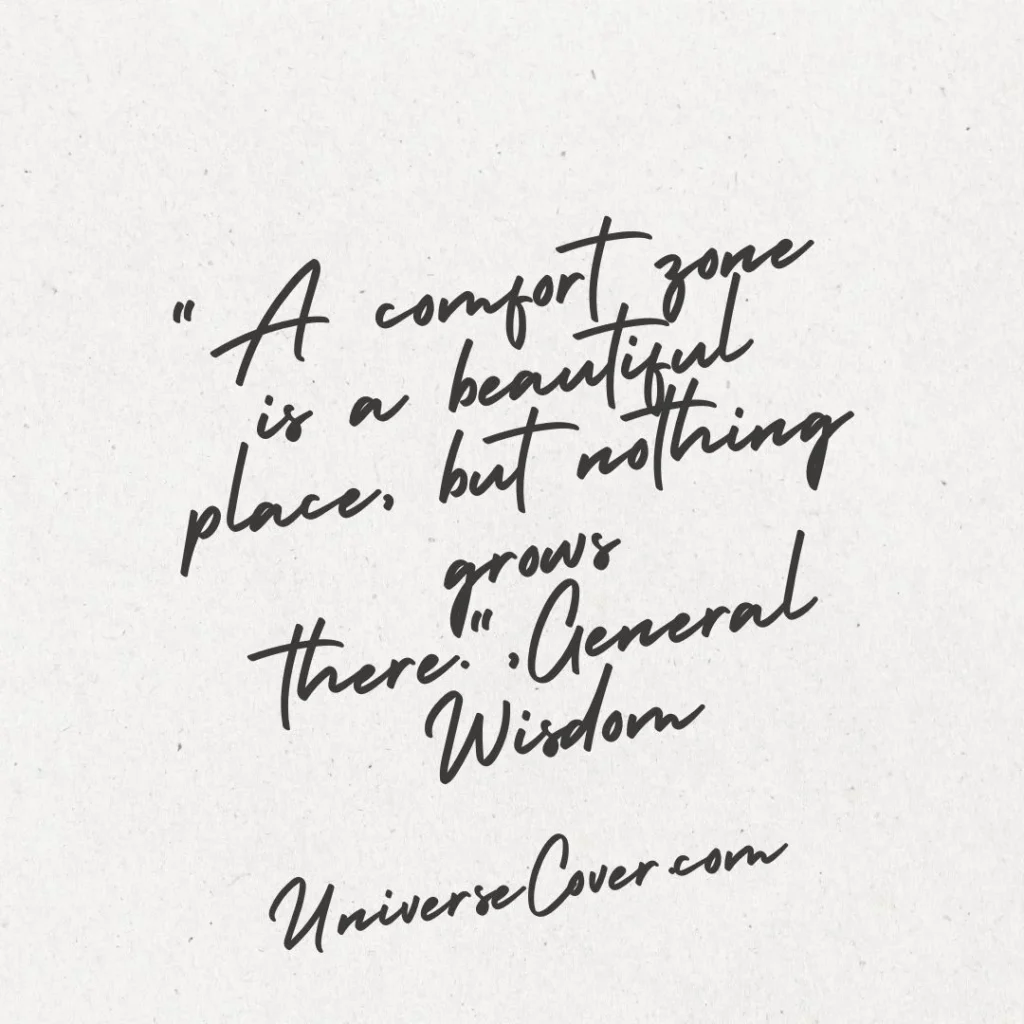
This line has been shared so often it has almost become wallpaper. But stripped back to its core, it remains genuinely uncomfortable in the most useful way. Growth requires friction. Not suffering, but friction. The kind that comes from doing something you are not yet good at.
The body understands this mechanically. Muscles grow only when they are worked past their current capacity. Bone density increases under load. The immune system strengthens through exposure and response. The human body was built, at a biological level, around the principle that stress within healthy limits produces growth. Rest is essential. But rest is not the same as permanent ease.
The mind and character follow the same pattern. A person who avoids every difficult conversation never becomes capable of difficult conversations. A person who never attempts something they might fail at never builds the tolerance for failure that makes larger attempts possible. Existing skills are maintained within the comfort zone. New ones are only built outside it.
There is nothing wrong with comfort. Rest and recovery are necessary parts of any growth process. But there is a meaningful difference between rest and stagnation. One is chosen and temporary. The other accumulates quietly until it becomes a kind of identity, and then a limitation.
Quote # 14
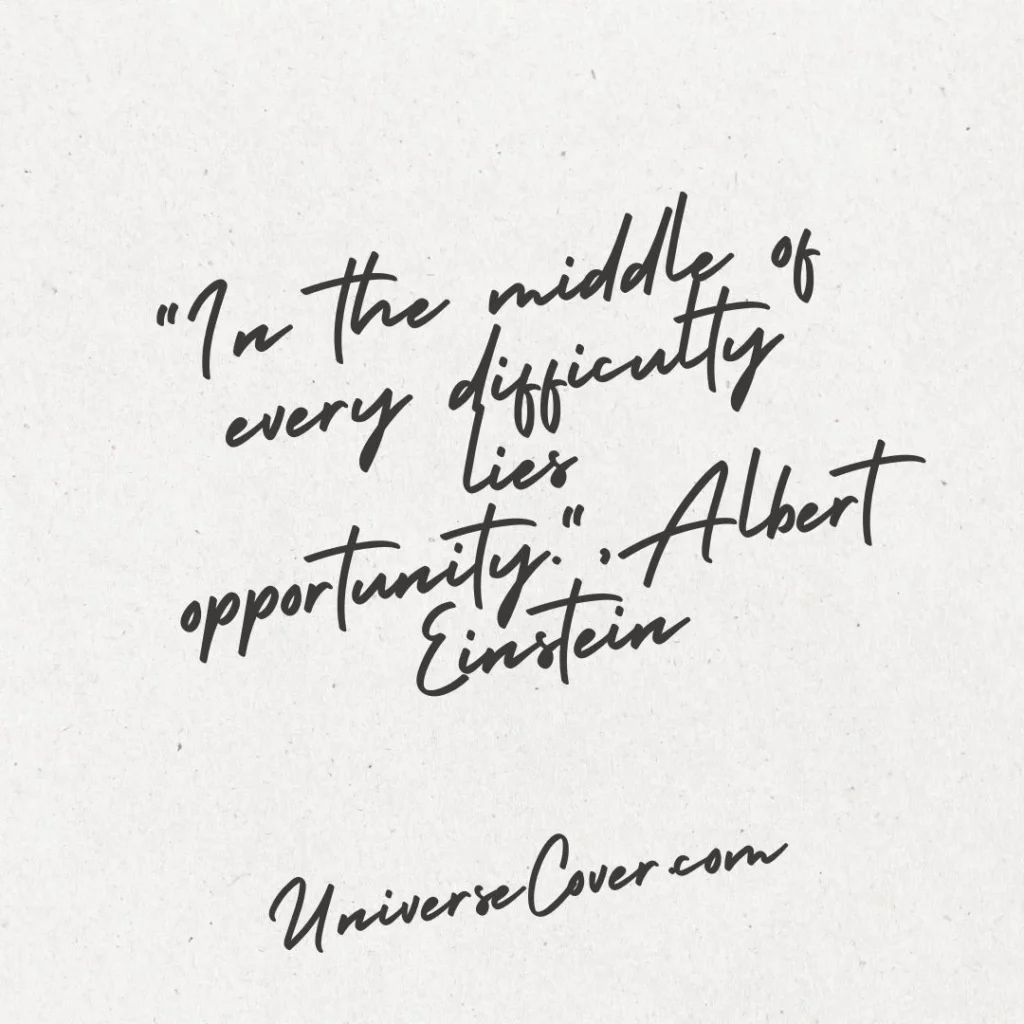
Einstein did not claim that difficulty is good. He said something more precise: that inside difficulty, if a person looks carefully enough, there is usually something worth finding. That is a subtle distinction but an important one.
Every hard period creates a forced adaptation. Something that would not have been tried if conditions were comfortable. Some of the most significant human advances came directly from necessity. The printing press came from a need to copy texts faster. The internet grew out of a military need to maintain communication under duress. Countless medical discoveries emerged from trying to solve problems that nothing else had solved.
On a personal scale, the same logic holds. Many people discover what they are actually capable of only when they are given no comfortable alternative. A loss that opened an unexpected direction. An ending that created space for something better. A health experience that reset every priority. None of these are good in themselves. But what they forced into existence sometimes is.
Einstein was not suggesting a person romanticize hardship or pretend difficulty is secretly pleasant. He was suggesting that looking for what is possible inside a hard situation is more useful than simply waiting for the hard situation to end.
Quote # 15
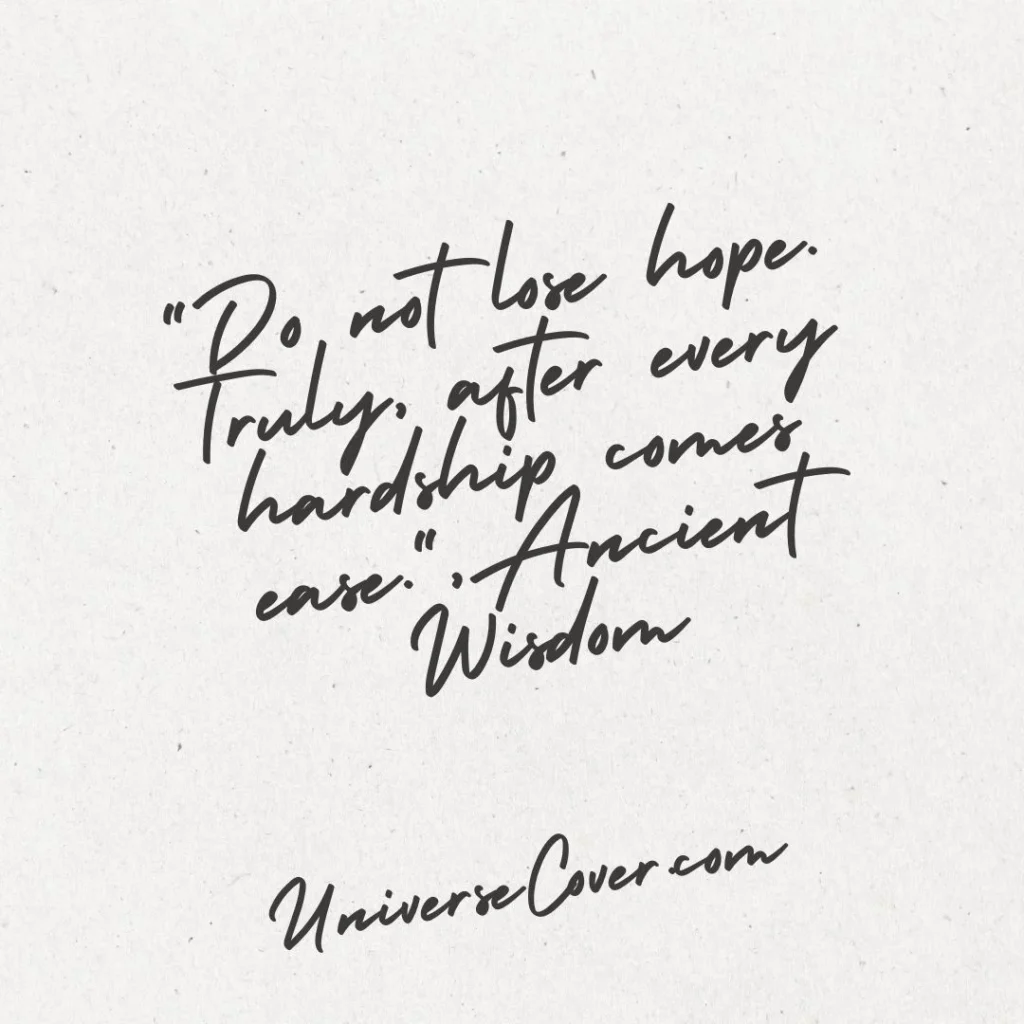
This may be the most quietly powerful line on this entire list. Not because of its complexity, but because of the specific moment when it is most needed, which is when everything feels stuck and the mind has begun to believe it will always feel this way.
Hope is not naive optimism. That is a common misreading. Charles Snyder’s research on hope, which spans decades of psychological study, found that hopeful people are not fantasists who ignore reality. They are people who believe a path through the difficulty exists, even when they cannot yet see it. That belief keeps them searching for the path rather than stopping. And the people who keep searching for a way through tend to find one more often than those who stop.
Pain has a particular way of colonizing the present and rewriting the future in its image. When something is hard, the mind has trouble believing it will not always be hard. But the record of any human life, including the most difficult ones, shows the same repeating pattern: hard seasons end. Not always quickly, not always without cost, but they end. Ease returns. Sometimes in the form expected, sometimes in a completely different form. But it returns.
This line is not a promise of comfort. It is a reminder that the cycle includes both parts, the hard and the easy, and that no matter where in the cycle a person finds themselves, the other part is already on its way.
Key Takeaways
- Starting badly still beats not starting. The brain engages with unfinished tasks in a way it simply cannot with tasks that never began.
- Slow progress is not a consolation prize. Many of the most durable outcomes in any area of life were built slowly, by design.
- The pause between feeling and reaction is where character is actually formed. Not in the smooth moments, but in the ones that are not.
- Gratitude for small things is not settling. It is training the perception to notice more of what is already present and good.
- Difficulty does not just block the path. Inside hard seasons, something useful is usually forming, even when it is not yet visible.
- Hope is a practical orientation, not a naive one. It keeps a person searching for the way through long enough to find it.
A Last Thought
These 15 quotes did not survive because they were clever. They survived because they kept being true. Across different eras, different continents, different kinds of lives, people kept finding them accurate. Not inspiring in a general way, but accurate in a personal way. Accurate to their own experience.
If one of these lines stayed with you longer than the others, that is worth paying attention to. The mind tends to notice what it needs, even when the rest of life has not caught up yet.
As the poet Rainer Maria Rilke once wrote to a young man who was searching for answers he was not yet ready to receive: “Live the questions now. Perhaps then, someday far in the future, you will gradually, without even noticing it, live your way into the answer.”
That is as good a place to land as any.