20 Luxury Shoe Storage Ideas for Designer-Level Closets

Open my closet door and the first thing you meet is a pile of shoes. Heels on top of trainers, one boot on its side, and a single sandal with no partner anywhere.
I counted them one evening out of pure shame. Forty one pairs, and I was wearing the same three every single week.
I spent one slow afternoon giving every pair a real home. No new closet. No big spend. Just shelves that fit the shoes I actually own.
These 20 ideas are the ones that worked. Pick one or two to start, and your shoes will stop living in a pile.
1. A Shoe Wall That Shows Every Pair
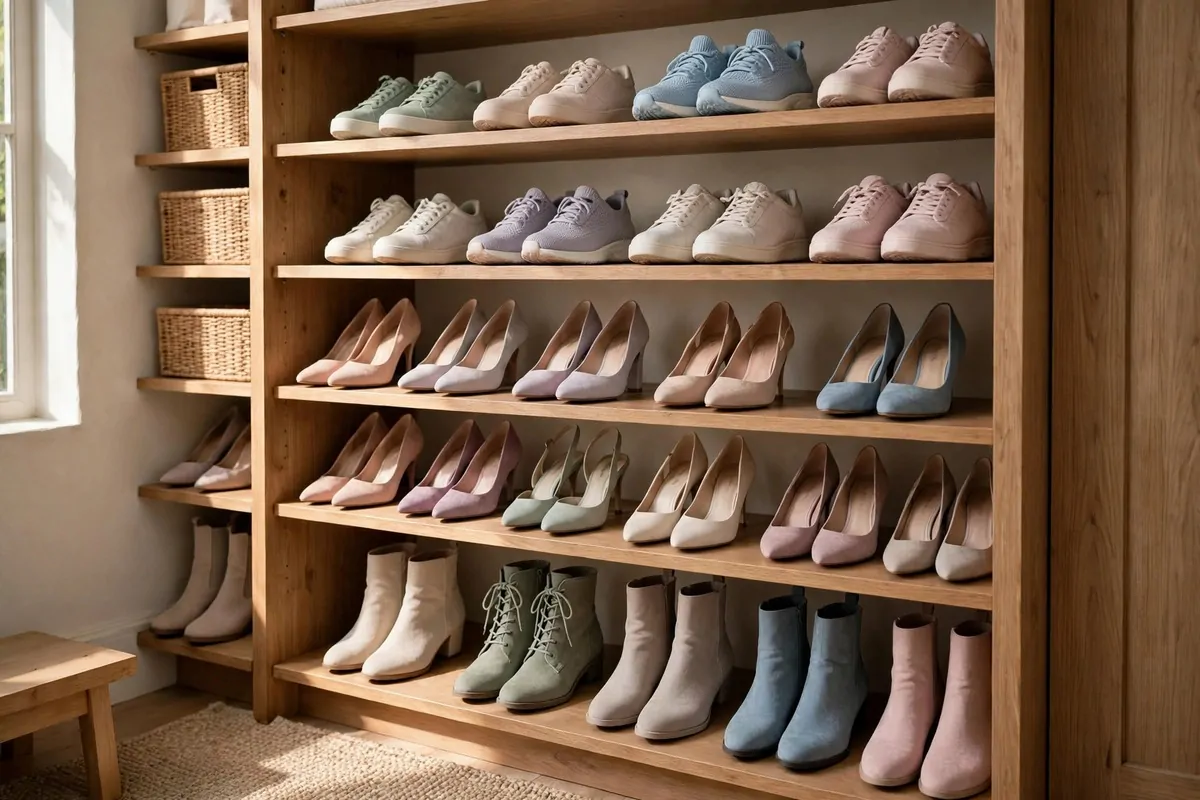
My shoes used to live in a dark heap, and every morning felt like a lucky dip. I would pull out one shoe and hunt for its partner while the clock kept ticking.
A wall of open shelves ended that hunt. Now every pair has a place I can see, and I pick my shoes before I even pick my top.
Start with the wall you see first when you open the closet door. That wall does the most work, so give it to your shoes.
Keep one row deep only. A second row behind the first just hides shoes, and the back pair never gets worn.
Leave a small gap between each pair. Crowded shelves look messy even when the shoes are clean.
Put your best pairs at eye level. They are the ones you reach for most, and they deserve the best spot.
The top shelves hold the pairs you wear once in a while. The bottom shelves hold boots and tall shoes that need more height.
A shoe wall makes the whole closet feel like a little shop. You walk in, you see your collection, and getting dressed feels fun.
2. Angled Shelves That Tilt Shoes Toward You
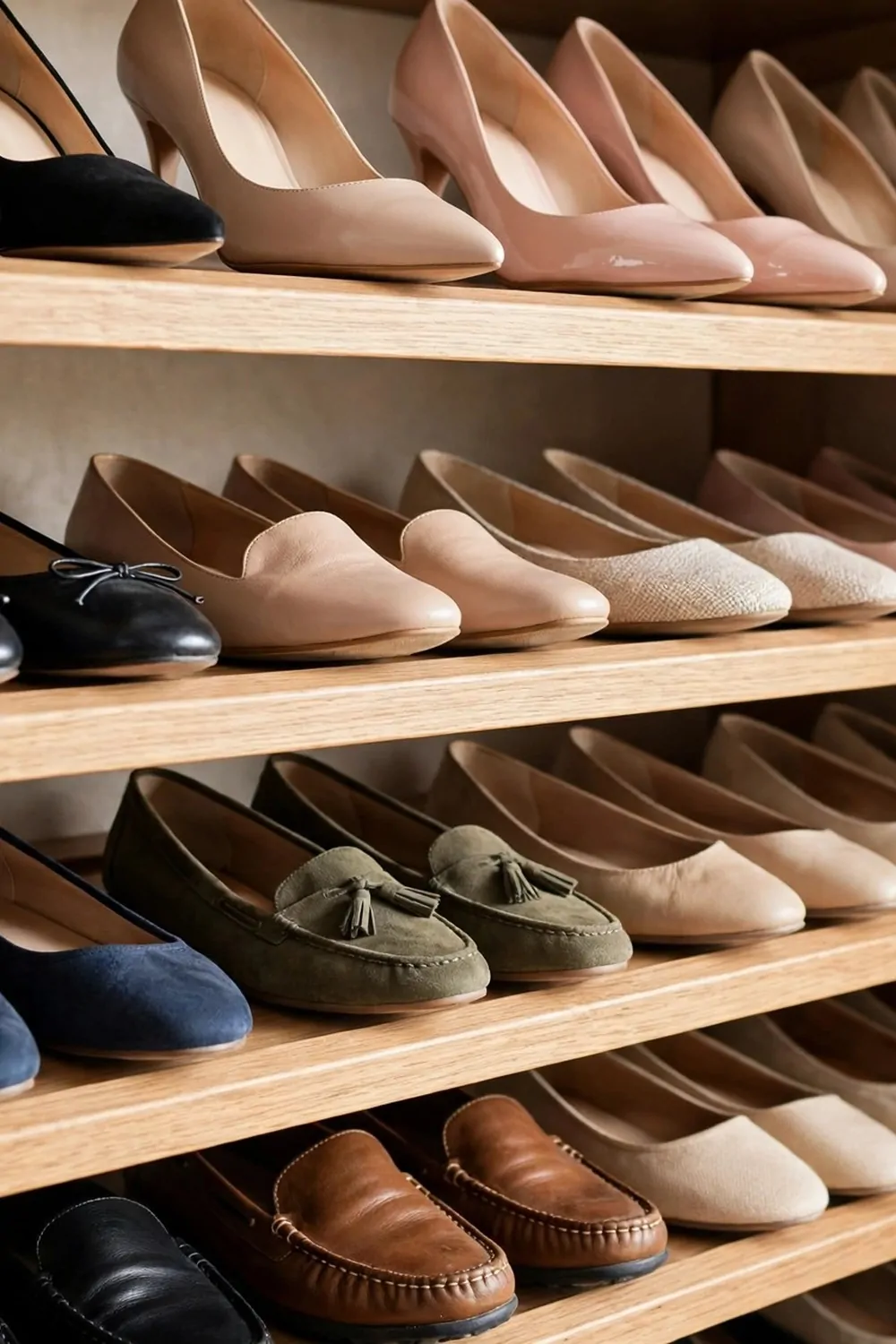
Flat shelves show you the front of the shoe and not much else. Angled shelves show you the whole shoe.
I tilt my shelves about fifteen degrees, with a small lip at the front edge. The toe points up toward me, and I can see the color and the shape at a glance.
The lip is the part that matters most. Without it, the shoes slide down and pile up at the front.
Measure the depth before you build. Most shoes need about twelve to fourteen inches of shelf. Big trainers and men’s shoes need a little more.
Heels sit best on an angled shelf. The heel hooks over the lip and the shoe stays put, even when you bump the shelf.
Keep the angle gentle. Too steep and the shoes slide. Too flat and you lose the view.
I use angled shelves for the pairs I wear most. Flat shelves hold the boxes and the spares up high.
Once you try one angled shelf, you will want the whole wall tilted. It is a small change with a big payoff.
3. Glass-Front Cabinets for Special Pairs
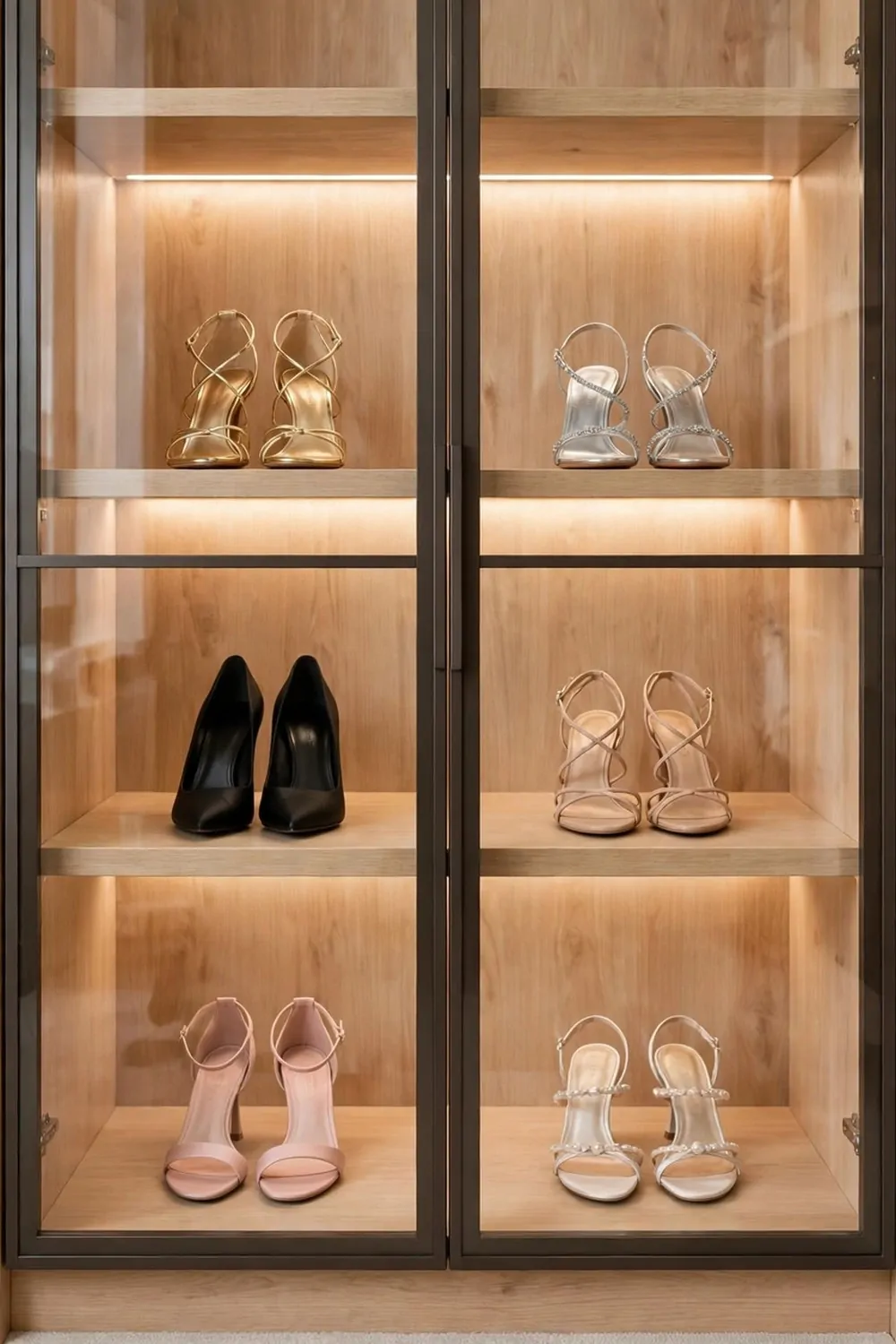
My best pairs used to sit in boxes I never opened. Out of sight meant out of mind, and they only came out twice a year.
A cabinet with a clear front fixed that. The shoes stay clean behind the glass, and I still get to look at them every morning.
One clear cabinet is plenty. It becomes the pretty corner of the closet, and the rest can be plain shelves.
Dust is the quiet enemy here. A shut door keeps it off suede and pale leather, and that alone is worth the glass.
A tiny light inside makes the cabinet glow after dark. It costs almost nothing and it makes the whole closet feel like a small shop.
Wipe the glass with a dry cloth once a week. Smudges show fast on a clear door, and a quick wipe keeps it bright.
Save the cabinet for the pairs that make you smile. The ones you wear to weddings, parties, and days that matter.
Everything else can live on open shelves. The cabinet is for the stars of the collection.
4. LED Strips Under Every Shelf
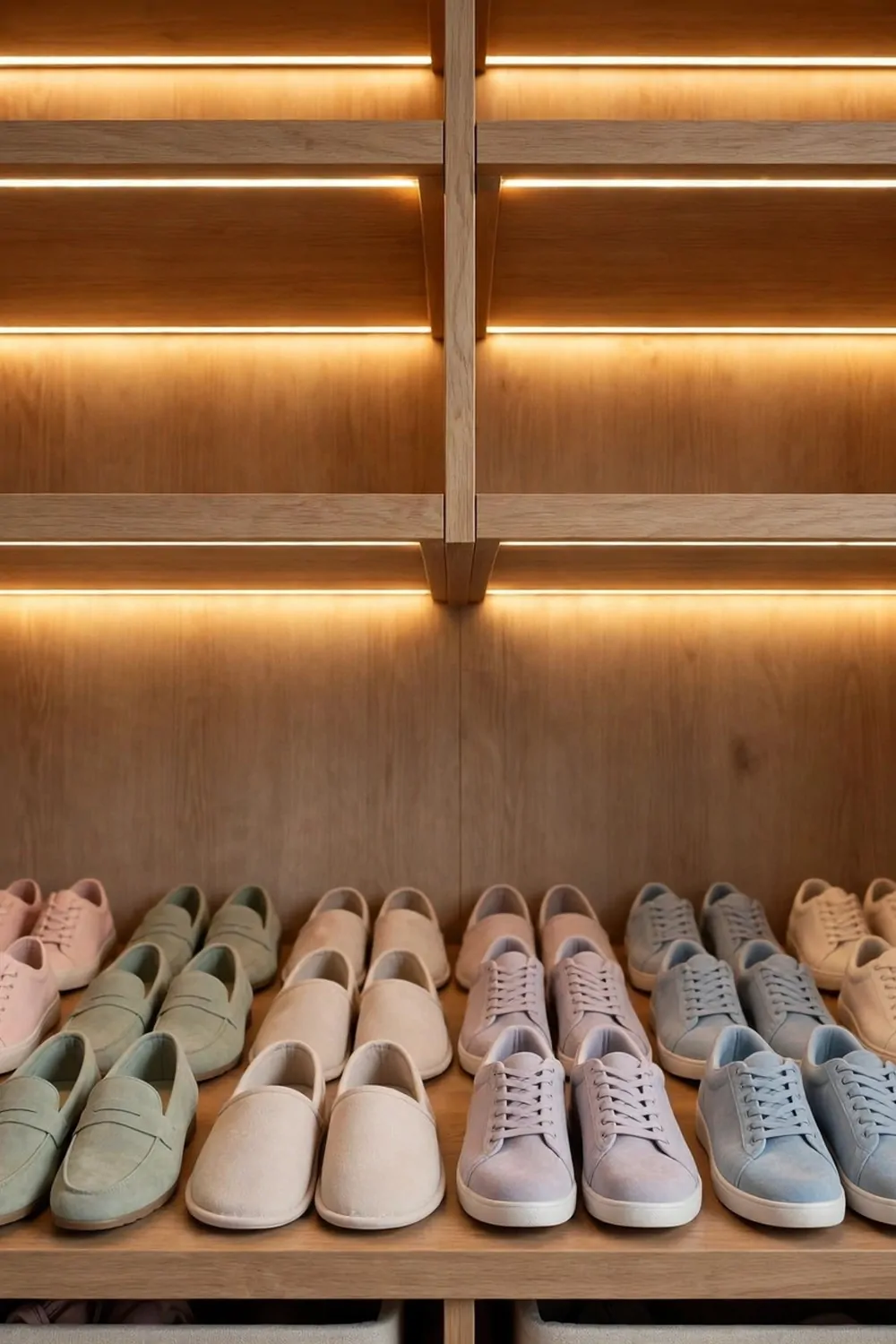
My closet used to be dark at the back, and dark shoes just vanished in the shadows. I would miss the pair I wanted and grab the wrong one.
A thin strip of warm light under each shelf changed that. The glow falls on the shoes below, and every pair shows its true color.
Warm light is the key. Cold white light makes leather look grey and tired, while a warm glow makes it look rich.
Stick the strip near the front edge of the shelf so the light lands on the shoes, not on the wall behind them.
A small switch by the door turns them all on at once. If the switch is hard to reach, you will never use the lights.
These strips sip power, so you can leave them on while you get dressed. Your bill will not notice them.
Light also makes a small closet feel bigger. Bright corners push the walls out, at least to your eyes.
Start with the shelf you use most. One lit shelf will convince you, and the rest will follow soon after.
5. A Tall Boot Section With Room to Stand
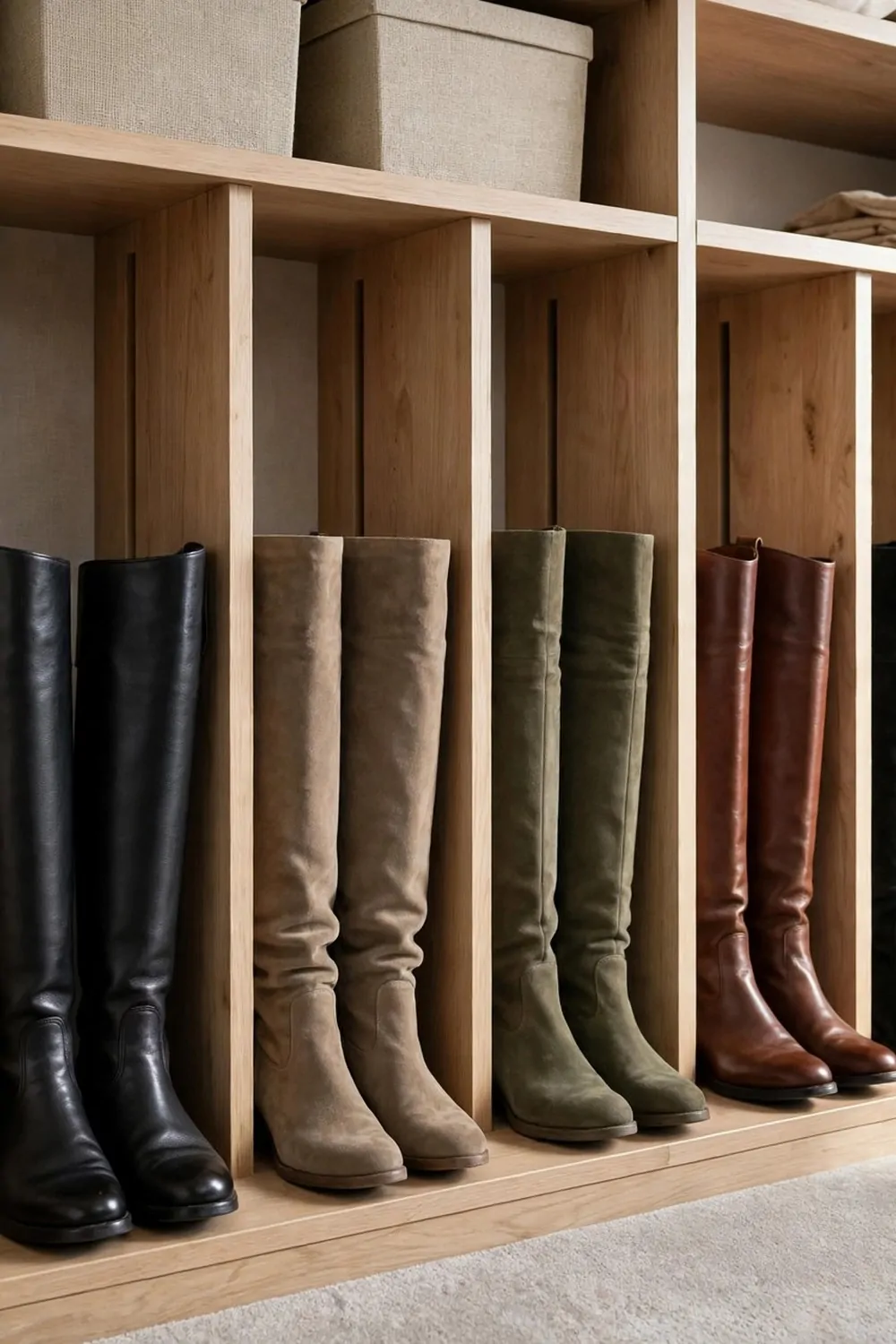
Boots are the hardest shoes to store. Lay them down and they crease. Stand them up with no support and they flop over like tired socks.
I gave my boots a tall shelf of their own, high enough for the tallest pair to stand straight. Each pair stands side by side where I can see it.
A rolled magazine or a boot shaper inside each boot keeps the shaft straight. It stops the leather from folding over and cracking at the ankle.
I group my boots by color now. Black pairs together, brown pairs together, and I never grab the wrong one in a rush.
Rain boots live in the same tall spot. They dry faster standing up, and the water runs down instead of pooling inside.
Give each pair a quick wipe before it goes back on the shelf. Mud on one boot spreads to the clean pair next to it.
Leave air between the pairs. Boots packed tight hold damp, and damp boots start to smell before the week is out.
My boots have lasted years longer since they got a tall home. That one shelf is the best money I never spent.
| Shoe type | Shelf depth | Space between shelves |
|---|---|---|
| Flats and sandals | 12 inches | 7 inches |
| Heels and trainers | 14 inches | 10 inches |
| Tall boots | 14 to 16 inches | 18 inches or more |
6. Everyday Shoes at Eye Level
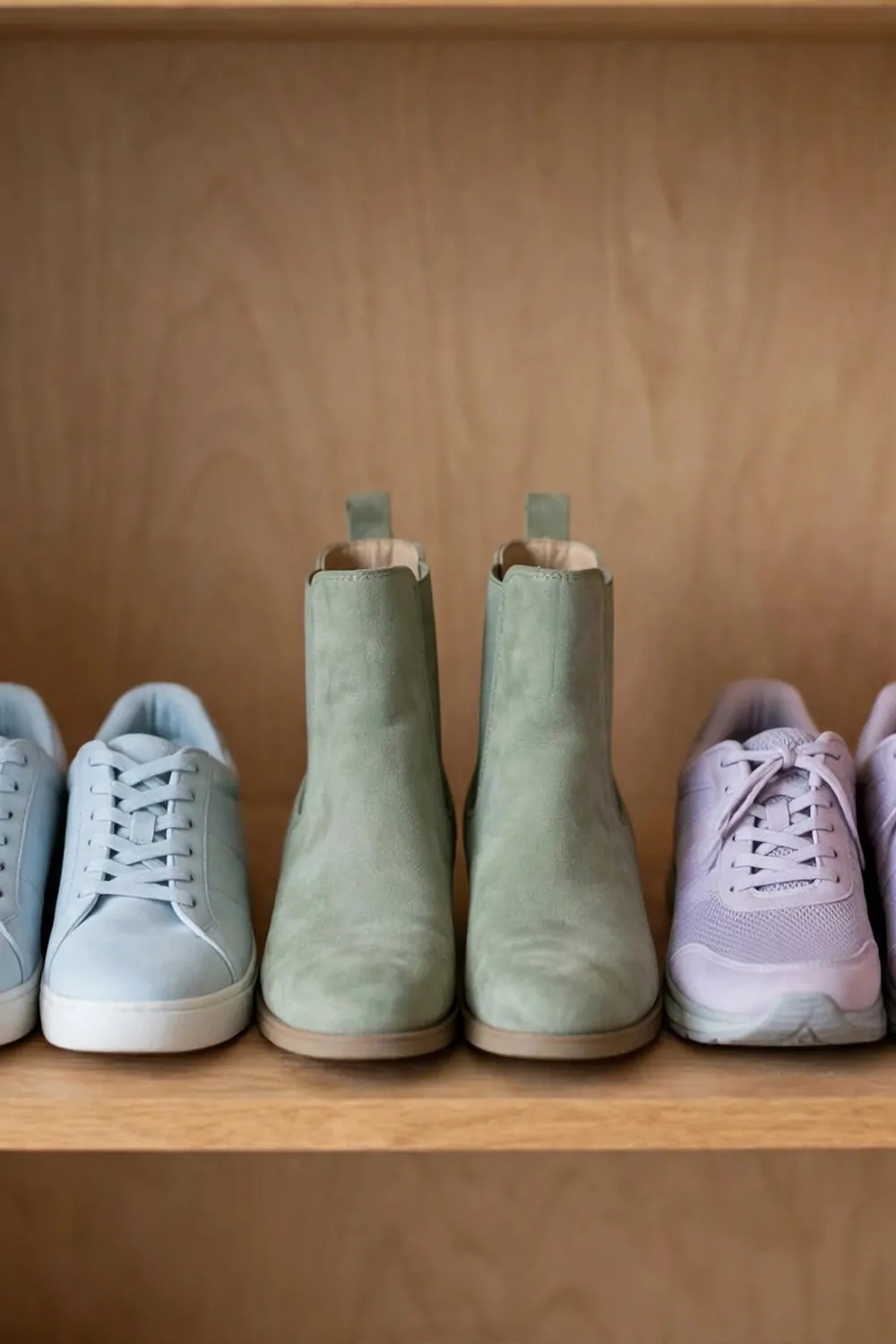
Mornings got easier the day I moved my daily shoes to the shelf right in front of my eyes. No bending, no digging, no hunting.
That shelf is now the busiest one in the closet. Five pairs live there, the ones I wear to work, to school runs, and to the shops.
Everything else lives higher or lower. Party shoes go up top, boots go down low, and the middle stays for the daily five.
Toes point out so I can see each pair in one look. A shelf that faces the door is a shelf that works for you.
When a pair wears out, I swap it for the next most worn pair from below. The shelf stays full, and nothing gathers dust.
I keep the row short on purpose. Five pairs look tidy. Ten pairs look like a shop that forgot to close.
This shelf is the first thing I see when I open the closet. It sets the tone, and a tidy row makes the whole room feel calm.
Give it seven days. Move your daily shoes to eye level and see how much faster your mornings feel.
7. Clear Boxes for the Pairs You Rarely Wear
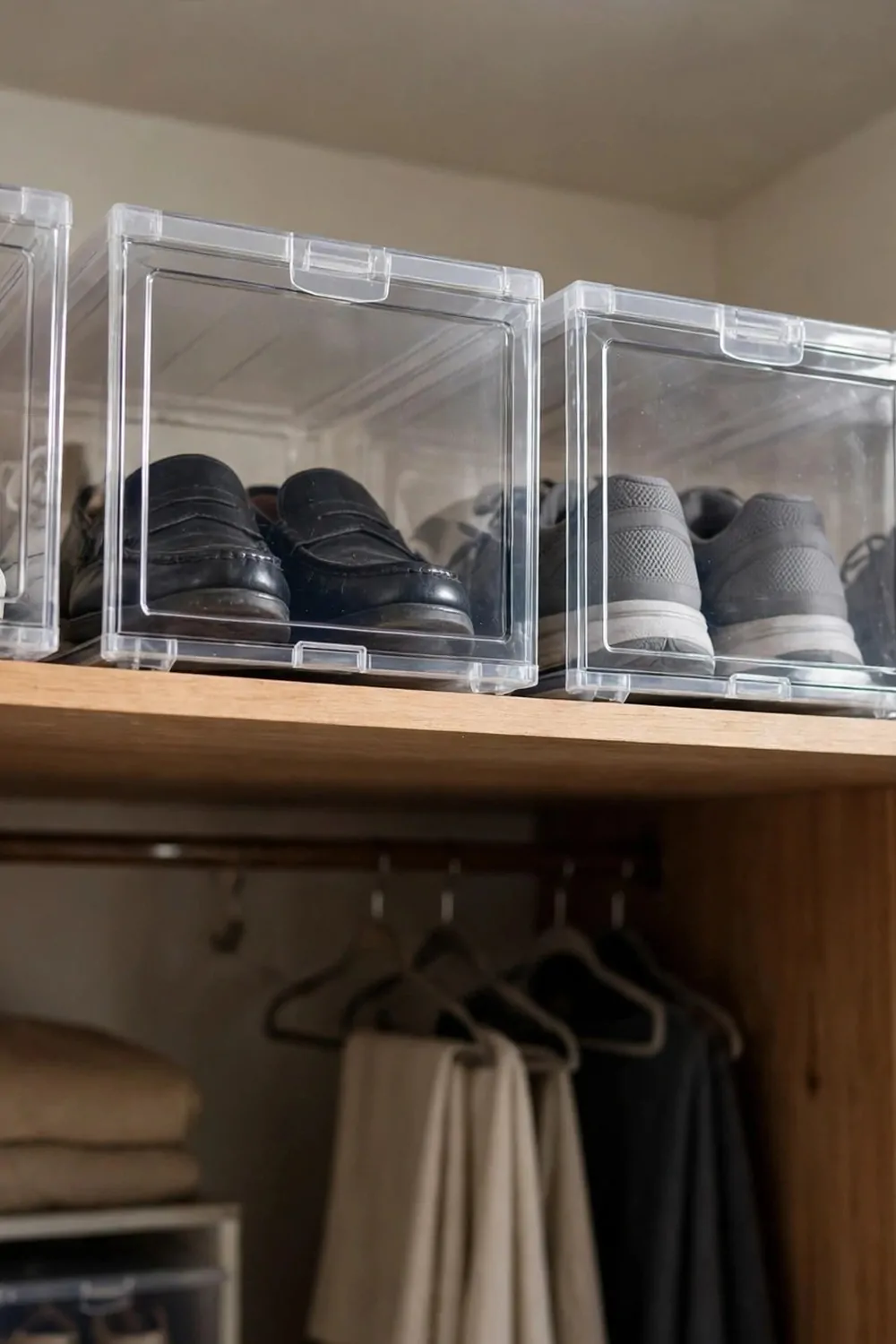
Shoes I wear twice a year used to vanish into dark boxes. I would buy a new pair for a party and find the old one a week later.
See-through boxes ended that waste. I can spot the silver heels through the side of the box without opening a single lid.
Everyday shoes never go in boxes. They live on open shelves, ready to grab. Boxes are only for the rare pairs.
I use boxes that are all the same size, stacked in a straight row up high. Matching boxes look neat, even when the shoes inside are wild.
A small tag on the front helps too. I write the color and the heel height on it, so I know what is inside from the floor.
One pair per box, always. Two pairs in one box rub together, and the shoes come out marked.
Twice a year I pull the boxes down and check what is inside. If a pair has not been worn in two years, it goes to the donation basket.
Clear boxes turned my top shelf from a mystery pile into real storage. I see what I own, and I wear more of it.
8. A Pull-Out Shelf for Trying Shoes On
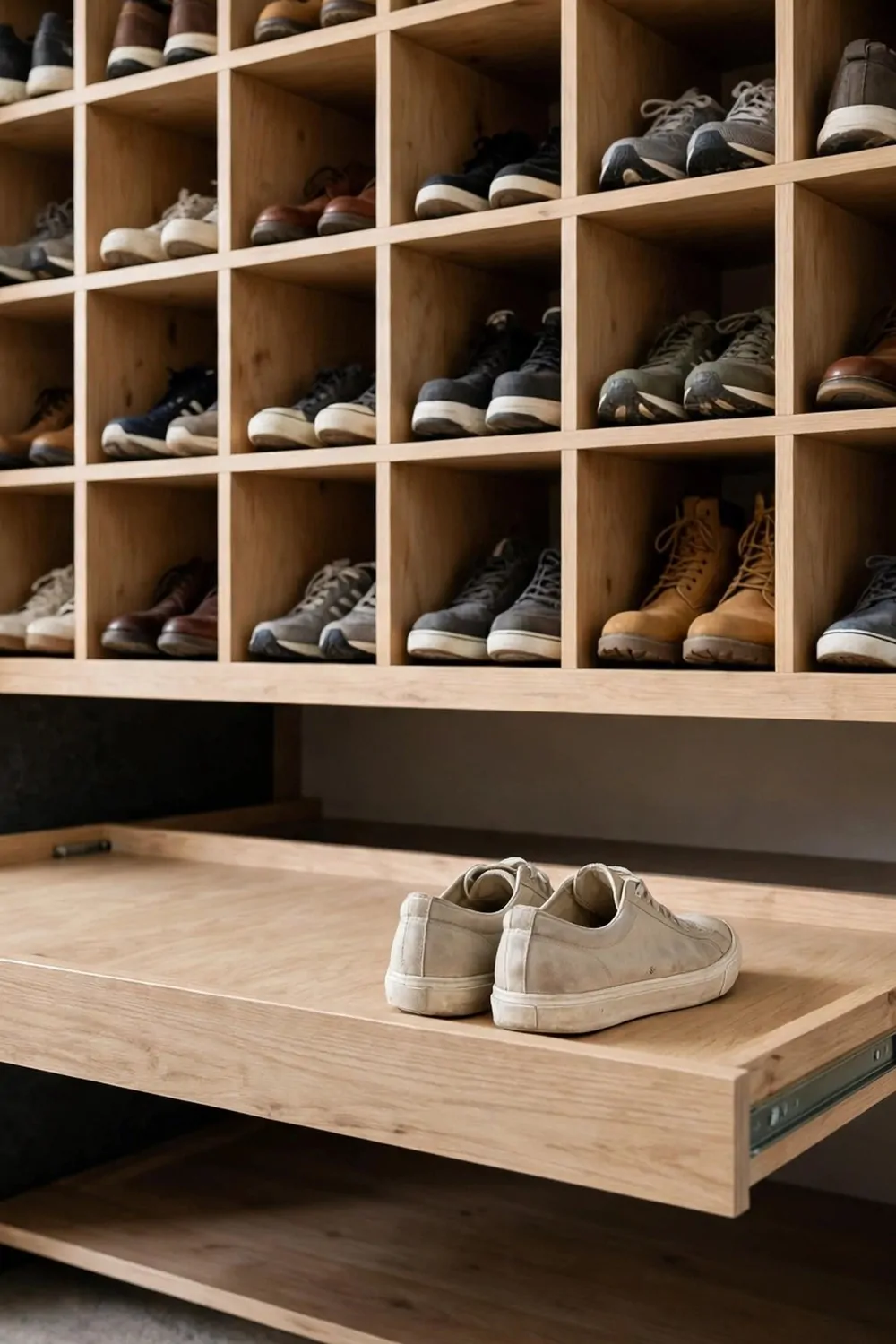
Trying shoes on while standing on one foot is a small daily struggle. A pull-out shelf gives you a spot to sit the shoe down and try it properly.
I built a shallow shelf that slides out from under my shoe wall. It holds one pair at a time, right at knee height.
Pull it out, set your shoes on it, and try them with the outfit you picked. It takes ten seconds and it saves a lot of second guessing.
The shelf slides back in when you are done. It hides away and takes up almost no space in the closet.
Keep the top of the pull-out shelf clear. It is a work spot, not a storage spot, and it works best when it is empty.
You can also use it to check the soles before you head out. A quick look catches a worn heel before it ruins your day.
If your closet is small, a pull-out shelf is better than a chair. It appears when you need it and vanishes when you do not.
This is one of those ideas that sounds small but saves you time every single morning. My closet feels unfinished without it now.
9. One Pair Per Slot, No Piling
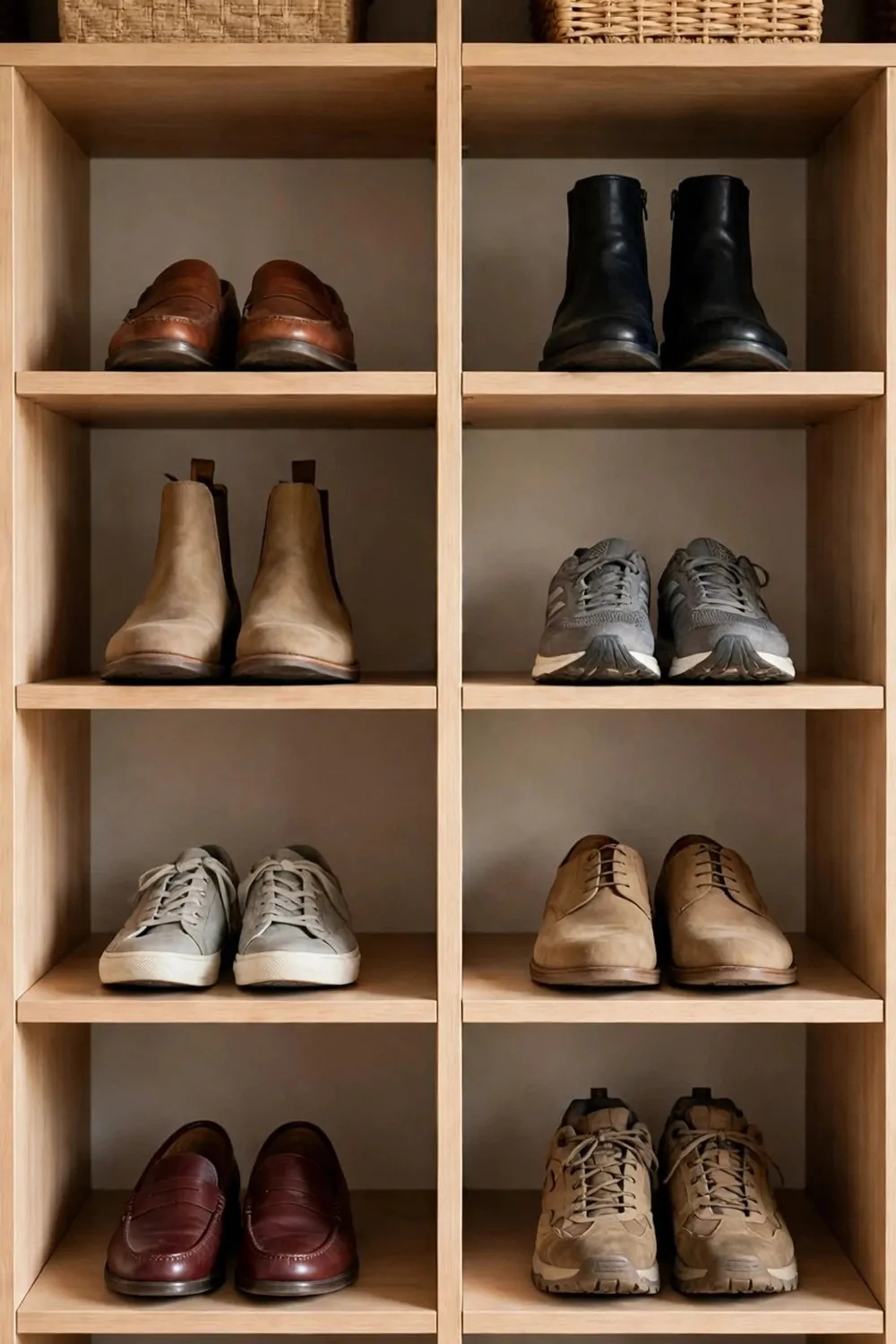
Piling shoes on top of each other is how good shoes get ruined. Heels scratch, suede marks, and pairs get split up.
I give every pair its own slot. One pair, one space, no exceptions. It sounds strict, but it keeps every pair in good shape.
Slots can be simple. A shelf divider, a small cubby, or just a marked space on a shelf all work the same way.
When a slot is empty, I know a pair is out being worn or needs a clean. The empty slot tells me the story at a glance.
Do not buy more shoes than you have slots for. That rule sounds hard, but it stops the pile from coming back.
If a new pair comes home, an old pair has to go. One in, one out keeps the closet calm and the slots full but never crowded.
Kids can use this rule too. One pair per slot is easy for a child to follow, and it teaches them to put things back.
A closet where every pair has a home looks like a shop and feels like one too. You open the door and everything is where it should be.
10. Color Rows That Look Like a Shop
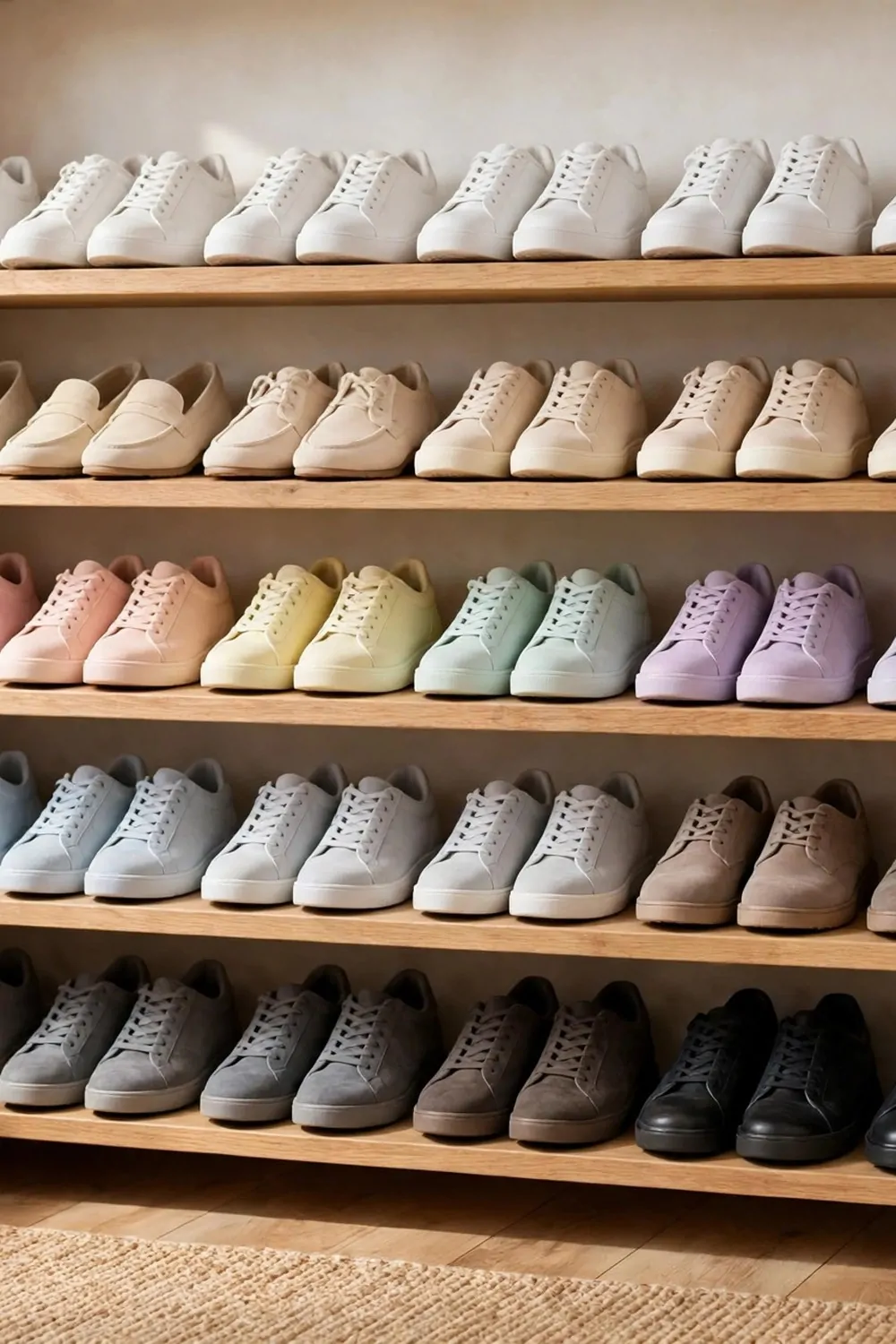
Sorting shoes by color makes a closet look calm in one move. It also makes getting dressed faster, because your eyes find the right color in seconds.
I line my shoes up from light to dark. White and cream first, then soft pastels, then bright colors, then dark browns and black at the end.
It looks like a little shop display. The rows fade from one color to the next, and the whole wall feels planned.
Color rows help you spot a missing pair fast too. A gap in the black row means your black flats are by the door, not lost.
Start with just two groups if the full rainbow feels like too much. Lights on one shelf, darks on another, and you can add more groups later.
Keep the brightest colors on the lower shelves and the whites on top. That way the light colors stay clean and the bright ones do the hard work below.
My sister peeked into the closet last week and asked where I had bought the new display. I told her it was the same old shelves, just sorted by color.
The best part is that it is easy to keep up. When shoes come back from a wear, I put them back in their color spot before I even take my coat off.
11. A Small Bench to Sit and Lace Up
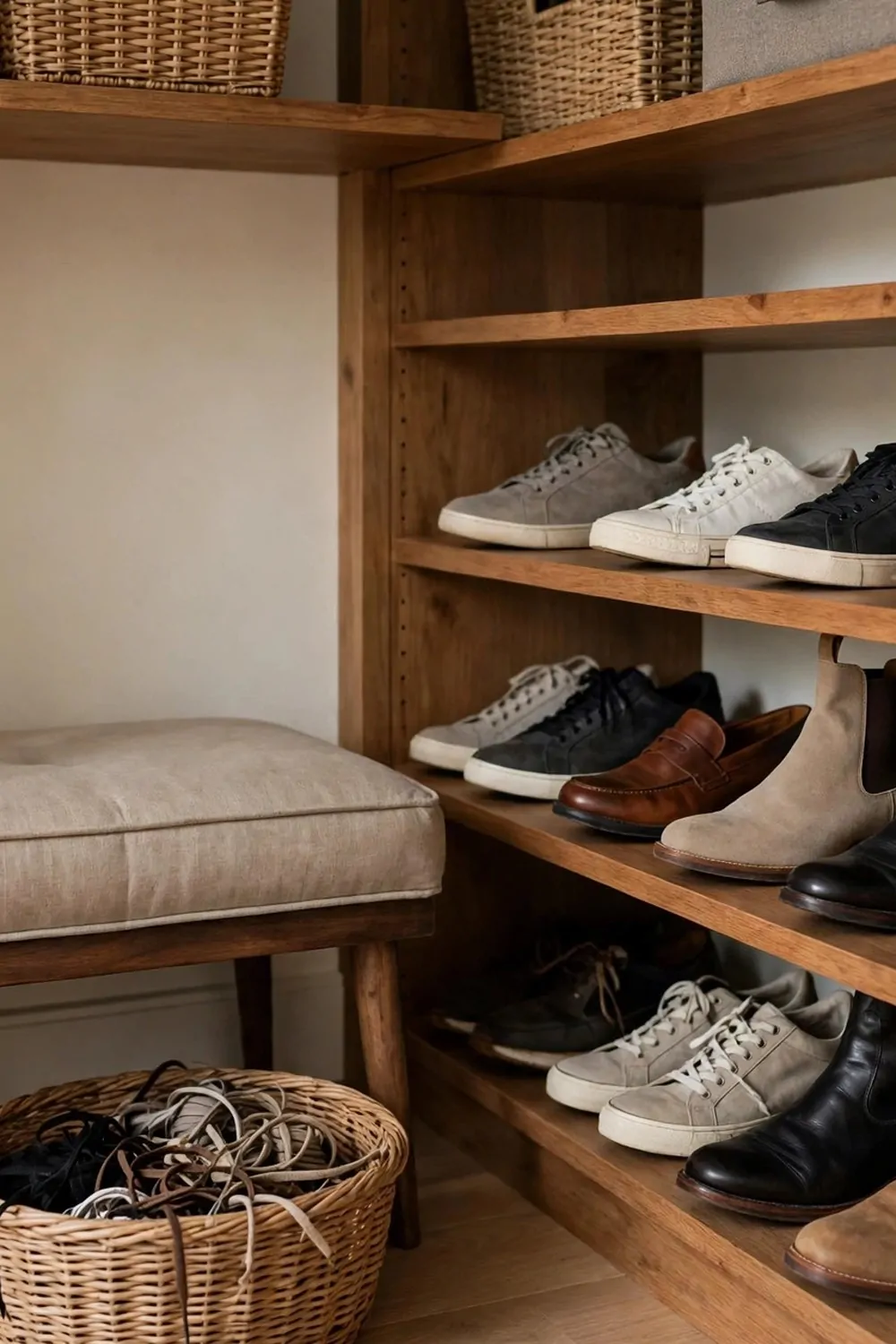
Sitting down to put shoes on sounds lazy until you try it. It is faster, calmer, and your laces come out neater too.
I keep a low seat right beside my daily shoes. I sit, I lace up, and I am out the door without hopping on one foot.
Pick a seat that fits the gap you have. A small stool works in a tight closet, and a longer bench works in a big one.
A soft pad on top makes it comfy. Pick a cover you can wipe clean, because shoe dust settles on everything in here.
The space under the seat is handy too. I keep spare laces and a shoe brush in a little basket under mine.
Put the seat close to the shoes you wear most. If you have to walk across the room to sit down, you will never use it.
Keep the top clear. A seat covered in shoes is not a seat, and the pile will just grow.
It is a tiny bit of comfort, but I use it every single day. Mornings feel slower in a good way when you sit down to start them.
| Spot in the closet | What lives there | Why it works |
|---|---|---|
| Eye level shelves | Everyday shoes, this week pairs | The most worn pairs are the easiest to grab |
| Top shelves | Occasion shoes in clear boxes | Rarely used pairs stay clean and out of the way |
| Bottom shelves | Boots, trainers and wet-day shoes | Heavy and tall shoes are easy to lift from down low |
12. Sneaker Shelves With Space to Breathe
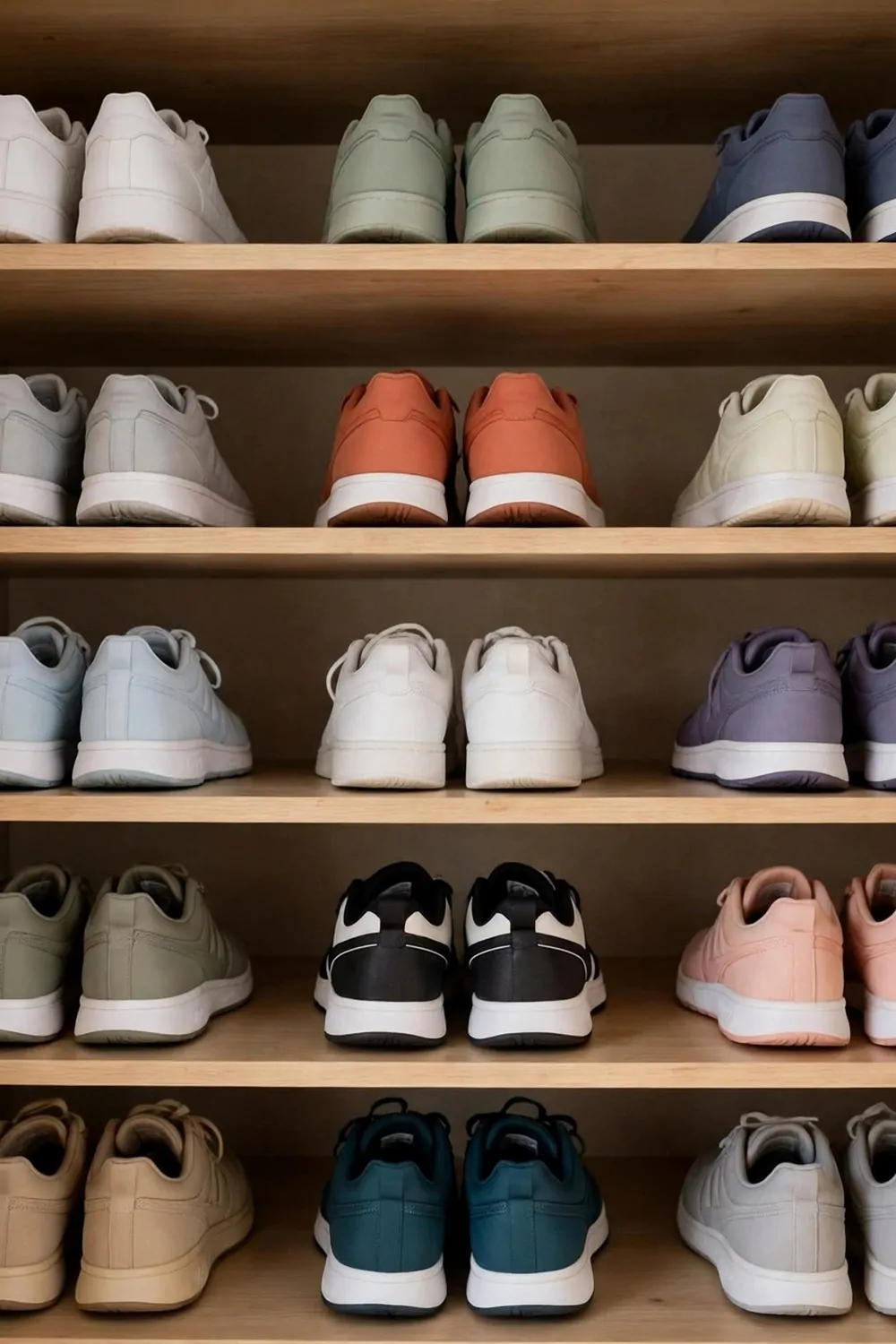
Trainers need more room than you think. Squash them together and the shape goes flat, the laces tangle, and the pair looks tired.
I give each pair of trainers its own wide slot. The shoes sit side by side with air between them, and they keep their shape for years.
Keep trainers on a low shelf if you can. They are the shoes you grab for school runs, walks, and quick errands, so they should be easy to reach.
Do not stack trainers on top of each other. The bottom pair gets squashed, and the top pair slides off when you pull one out.
A small gap between pairs also helps them dry out. Shoes that get sweaty need air, or they start to smell.
I keep my white trainers on a shelf of their own, away from dark shoes. Dark colors can rub off on white leather if the shoes touch.
Wipe the soles before you put trainers back. It keeps the shelf clean and stops dirt from spreading to the next pair.
Trainers are the hardest working shoes in my closet. They deserve a shelf that lets them breathe.
13. Heel Racks That Keep Shapes Safe
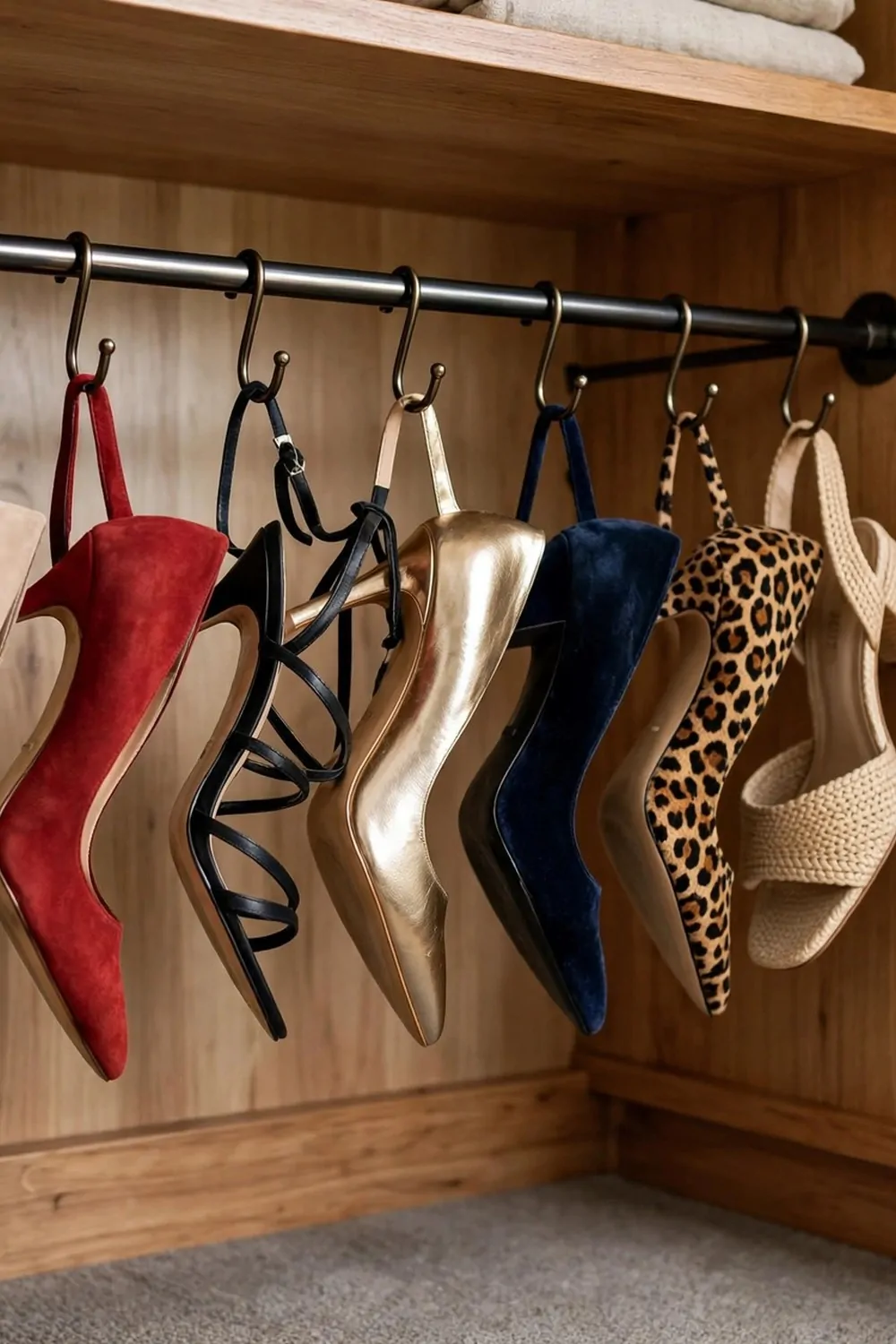
Heels are the easiest shoes to damage and the hardest to store well. A good heel rack keeps them safe and looking new.
I hang my heels by the heel on a slim rail. The shoe hangs toe down, the shape stays perfect, and I can see every pair at a glance.
You can also use a rack with small pegs that hold each heel in place. The peg stops the shoe from slipping and keeps pairs together.
Never toss heels in a pile. The heel of one shoe scratches the leather of the next, and the damage shows fast.
Keep delicate heels behind glass or in a box with soft lining. Suede and satin mark easily, and a little protection goes a long way.
Check the heel tips once in a while. A worn tip makes the shoe wobble, and a quick fix at a cobbler costs very little.
Sort heels by height if you have a lot. Low heels on one shelf, high heels on another, and you will grab the right pair without thinking.
A heel rack turns a messy pile into a neat row. Your best shoes stay beautiful, and you actually wear them more.
14. A Drying Spot for Wet Shoes
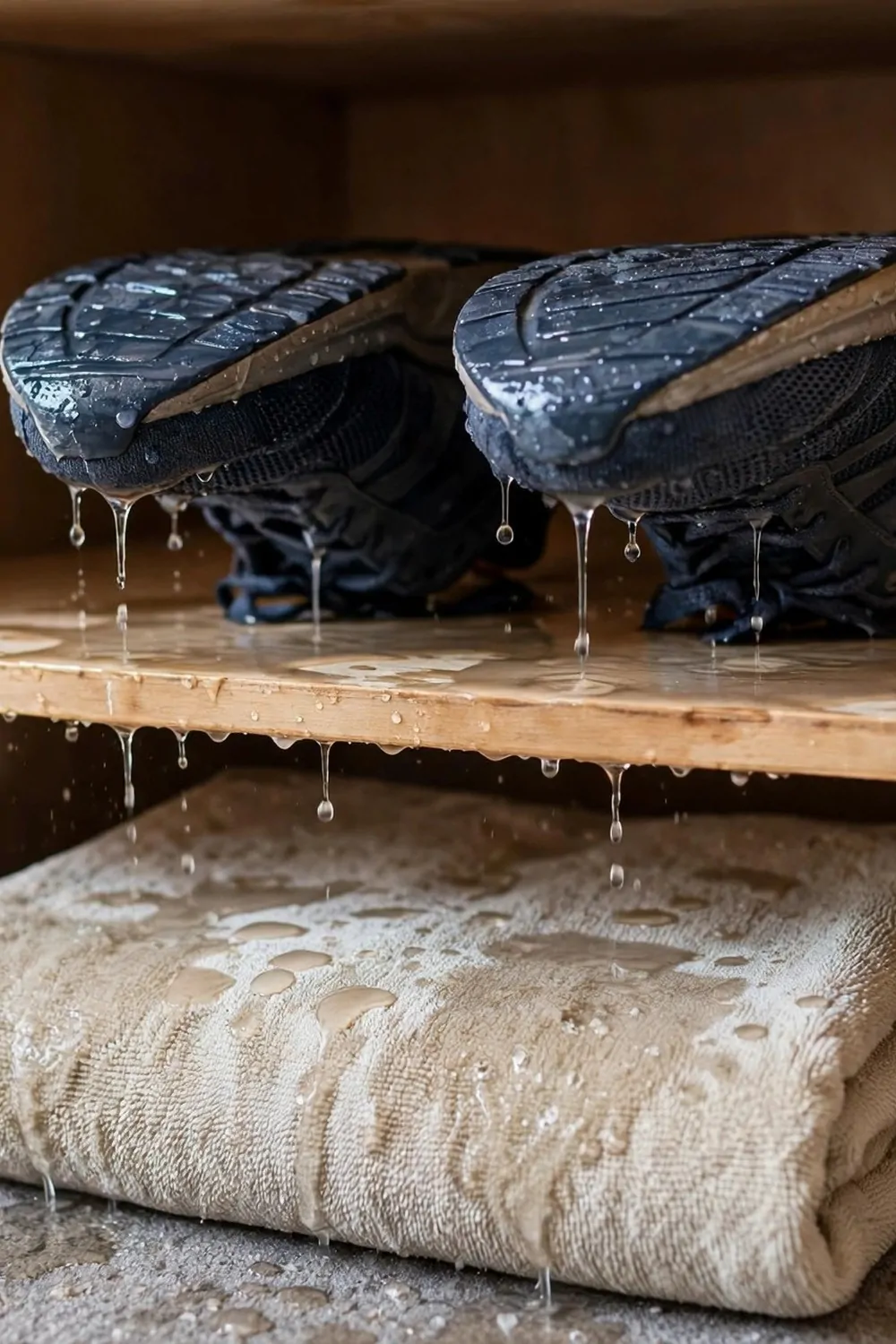
Rainy days used to ruin my shoes. I would come home, kick them off by the door, and forget them until they smelled.
Now wet shoes go straight to a low shelf near the closet door. I turn them upside down so the air can get inside.
A folded towel under the shelf catches the drips. I swap the towel out the next morning and the shelf stays dry.
Shut boxes are the worst place for a wet shoe. No air gets in, and the damp sits there until the smell starts.
Gym shoes get the same treatment. A sweaty pair needs a night of air before it goes back with the clean ones.
I keep this shelf near the door on purpose. Wet shoes should never walk mud across the bedroom to reach the closet.
Only when a pair is fully dry does it go back on its normal shelf. Patience here saves the leather and the smell.
This one habit added years to my shoes. Wet shoes that dry properly stay soft, and they never get that sour smell.
15. Labeled Shelves for Each Type
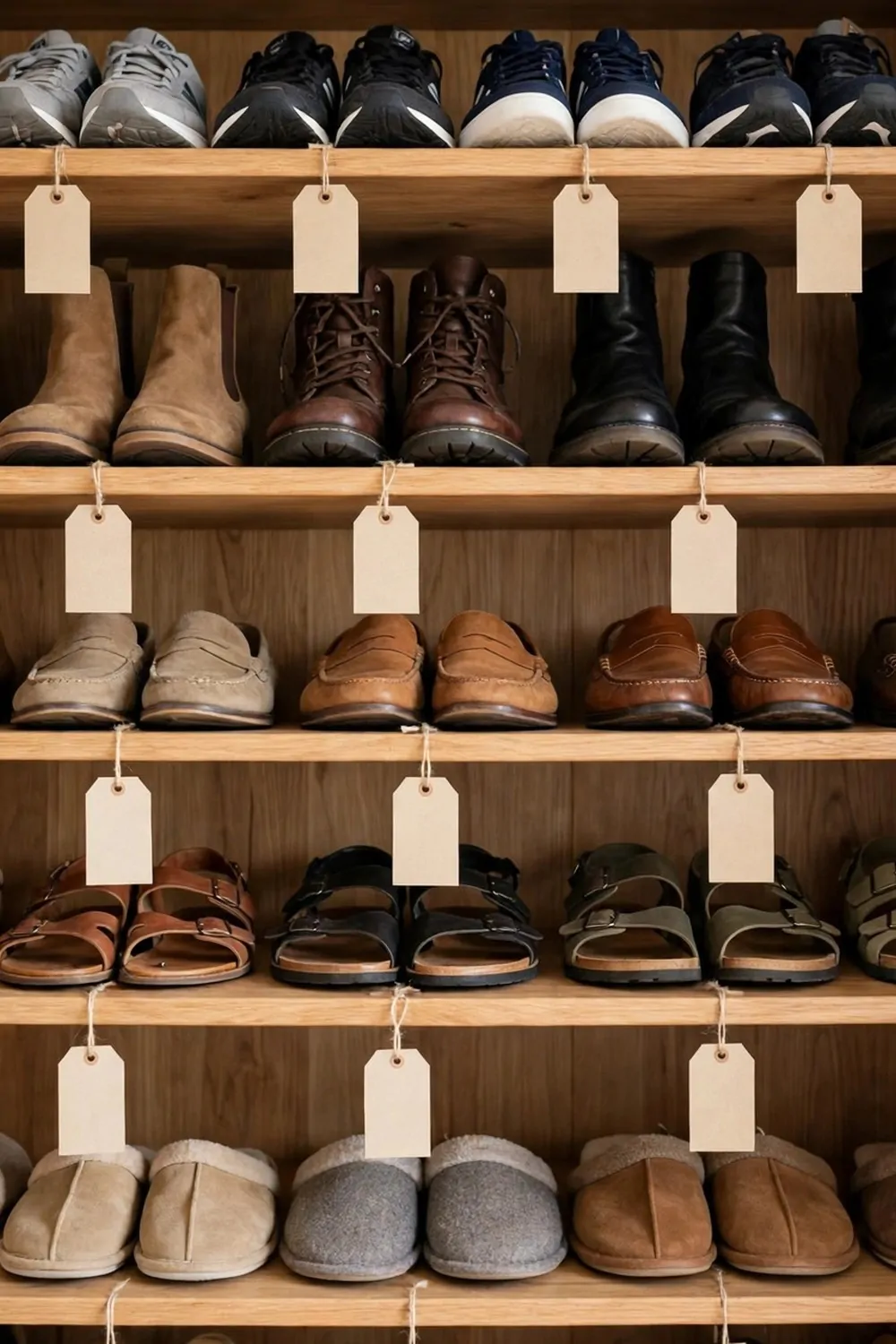
When shoes share a closet with the rest of the family, things get mixed up fast. Labels help everyone know where their shoes belong.
I use simple tags on each shelf, one for trainers and one for heels. One side is mine, the other side belongs to everyone else in the house.
It feels too plain to help, but it helps more than any fancy system I tried. A label is a small promise that the shelf will stay the way you left it.
Little kids can join in too. A small drawing of a shoe on the tag works when they cannot read words yet. A little drawing of a shoe shows where shoes go.
I stick each label on the front lip of the shelf, right where your eyes land when the door opens. A label hidden at the back helps nobody.
When shoes come back from a wear, I can put them away fast because I know just where each pair goes.
No more hunting for a missing shoe in the wrong pile. The label tells you where to look, and the shoe is there.
Labels take ten minutes to add and they save you time every single day. They are the easiest upgrade on this whole list.
16. A Mirror at the End of the Shoe Wall
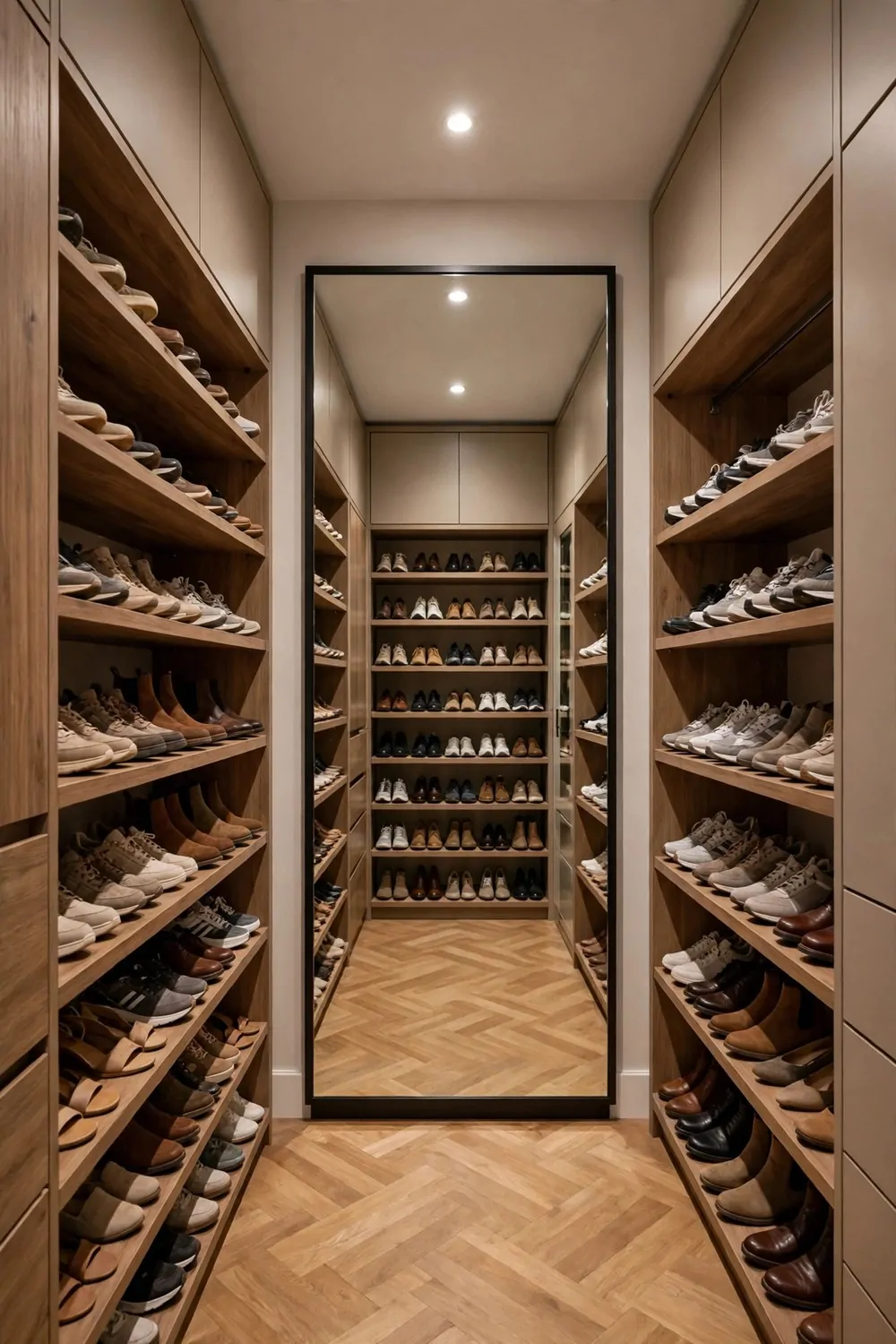
I check my shoes in the mirror every morning, right after I brush my hair.
A tall mirror at the end of the shoe wall shows me the shoes with the outfit. I can see if the pair works before I leave the house.
Lean it where the morning light falls. A mirror near the window doubles the light in the whole closet.
I lean mine against the wall instead of fixing it up. It stays steady on a small wedge, and I can move it when I change the shelves.
Leave the floor in front of it empty. You need room to step back and see shoes and outfit together.
A quick wipe every few days keeps it clear. Dusty glass hides the shoes, and that defeats the whole point.
A thin frame in white or pale wood suits most closets. It stays quiet and lets the shoes do the talking.
One last look before you head out, shoes and all, and you walk out feeling sure.
17. Deep Shelves for Men’s Shoes and Big Sizes
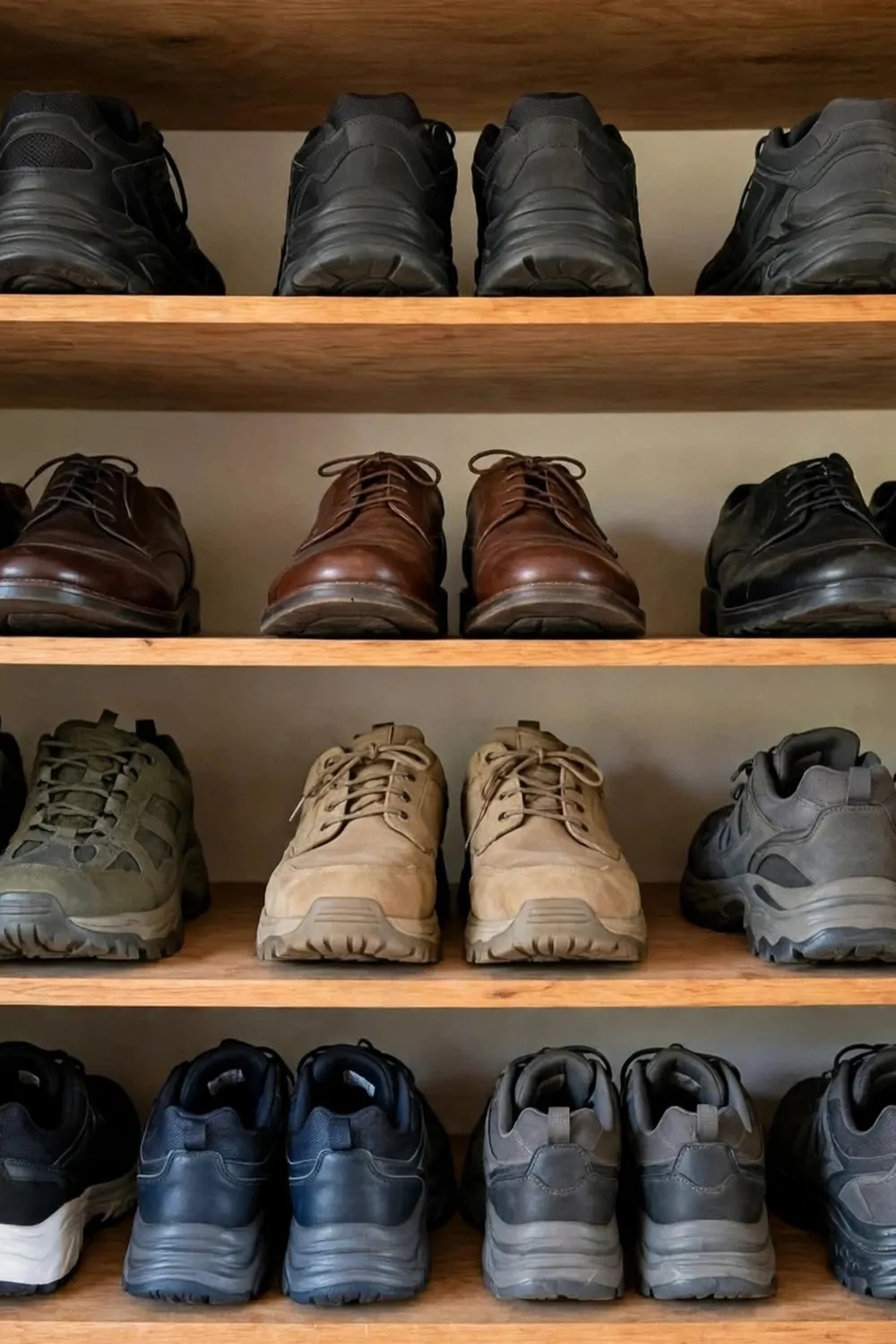
Big shoes need deeper shelves. A standard shelf leaves the heel hanging off the back, and the pair looks wrong.
I measure the longest shoe in the house first, then I set the shelf depth to fit it. Most men’s shoes and big trainers need fourteen to sixteen inches.
Deep shelves also hold wide shoes better. A wide trainer squashed on a narrow shelf loses its shape at the sides.
Keep the deep shelves low if you can. Big shoes are heavy, and lifting them down from up high is no fun.
One deep shelf at the bottom of the closet is enough for most homes. It holds the big pairs, and the lighter pairs live above it.
Leave a finger of space behind each pair. Shoes pushed hard against the wall scuff at the heel.
Sort the deep shelf by owner if you share the closet. One side for him, one side for her, and nobody digs through the wrong shoes.
A shelf that fits the shoe is a shelf that works. Measure first, build second, and your big shoes will thank you.
| Who wears them | Shelf depth | Best spot |
|---|---|---|
| Small feet, flats and sandals | 12 inches | Middle shelves at eye level |
| Most women shoes and trainers | 14 inches | Eye level and just below |
| Men shoes and big trainers | 16 inches | Bottom shelf, easy to lift |
18. A Rotation Shelf for This Week’s Pairs
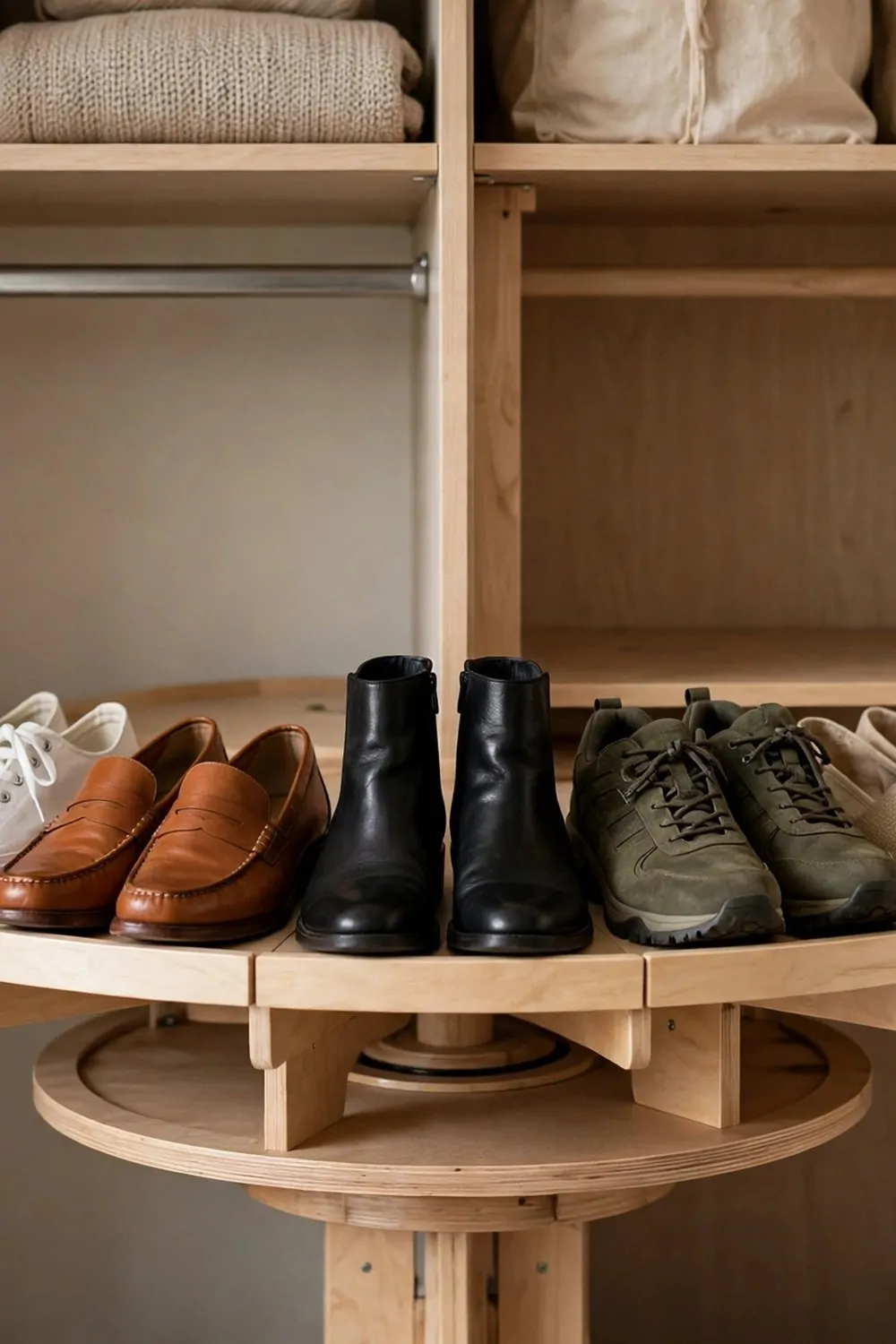
A rotation shelf holds the shoes for this week only. Everything else stays in its normal home, and the week feels simple.
I pick five pairs on Sunday night. Work shoes, walking shoes, one smart pair, one comfy pair, and one spare in case the weather turns.
The rotation shelf sits at eye level, right where I get dressed. I never have to think about which shoes to wear. The choice is already made.
On Sunday I swap the pairs out. The worn ones go back to their shelves, and five fresh ones take their place.
This stops the same three pairs from doing all the work. Every pair in the closet gets worn in turn, and they all last longer.
Kids love a rotation shelf too. They pick their five pairs for the school week, and mornings stop being a negotiation.
Keep the shelf small on purpose. Five pairs is plenty for one week, and a small shelf never turns into a pile.
A rotation shelf makes the closet feel fresh every Monday. New week, new five pairs, same calm mornings.
19. A Shoe Care Shelf With Polish, Brushes and Sprays
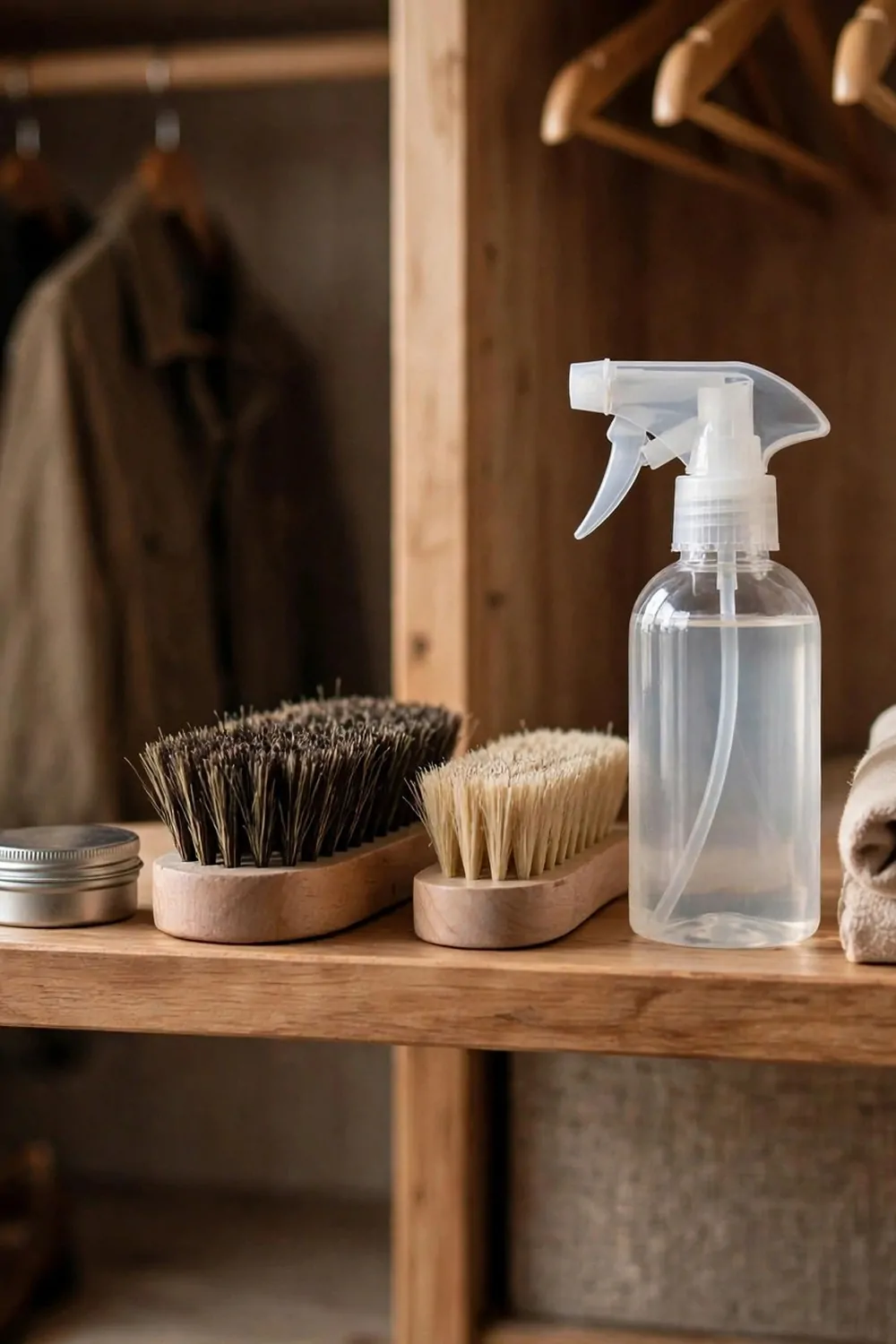
Shoes last longer when you look after them, and looking after them is easy when everything sits in one spot.
I keep a small shelf just for shoe care. Polish, a soft brush, a spray bottle, and a clean cloth all live there in a row.
A brush gets the dust off before you polish. Dust left on the leather scratches it when you rub, so brush first, always.
Polish goes on with a soft cloth in small circles. A little polish goes a long way, and shiny shoes make the whole outfit look better.
Spray protects suede from rain. One light coat before you wear new suede shoes outside, and water beads off instead of soaking in.
Keep a spare pair of laces on this shelf too. A broken lace in the morning is a small disaster, and a spare fixes it in a minute.
Wipe the shelf once a week. Polish drips dry hard, and a sticky shelf is no fun to use.
This shelf is small, but it saves your shoes. A little care each week keeps them looking new for years.
20. A Donation Basket for Pairs You No Longer Wear
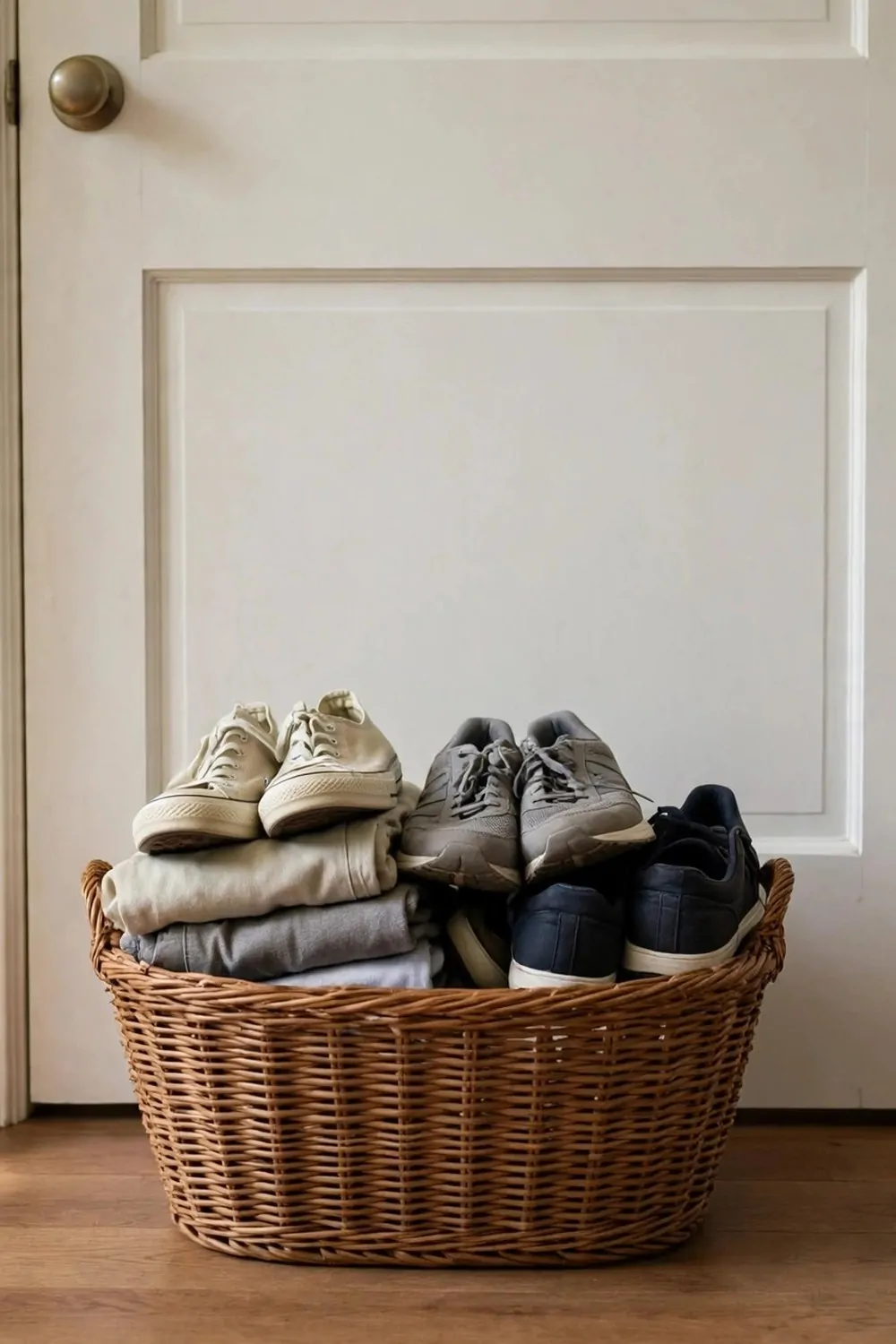
Old shoes pile up because letting go feels hard. A basket by the door makes it easy.
When a pair pinches, squeaks, or just never gets picked, it goes in the basket that same day.
A full basket means a trip to the donation spot. I tie the bag up on a Saturday and drop it off on the way to the shops.
New shoes follow a simple rule in my house. One pair in, one old pair out, and the closet never overflows.
My kids have their own small basket. Outgrown shoes go in the week they stop fitting, not a year later.
It feels good to know a pair I never wear might be the pair someone else has been looking for.
I check the basket on the first of each month. Anything still sitting there goes, no second thoughts.
One basket, one habit, and the closet stays calm. The shoes I keep are the shoes I love.
Keep Reading
If you loved these shoe storage ideas, you will enjoy the next set of ideas too.
Each one has fresh ideas you can steal for your own closet this week.
- 31 Luxury Walk-In Closet Ideas With Custom Built-In Storage
- 26 Walk-In Closet Island Ideas That Make Dressing Rooms Look Expensive
- 19 Girl Closet Ideas for a Neat Pretty Space
- 41 Custom Kitchen Cabinet Organization Ideas Worth Stealing
Pick one shoe idea from this list and start this week. Even a small change, like one angled shelf or a few labels, can make your closet feel brand new.