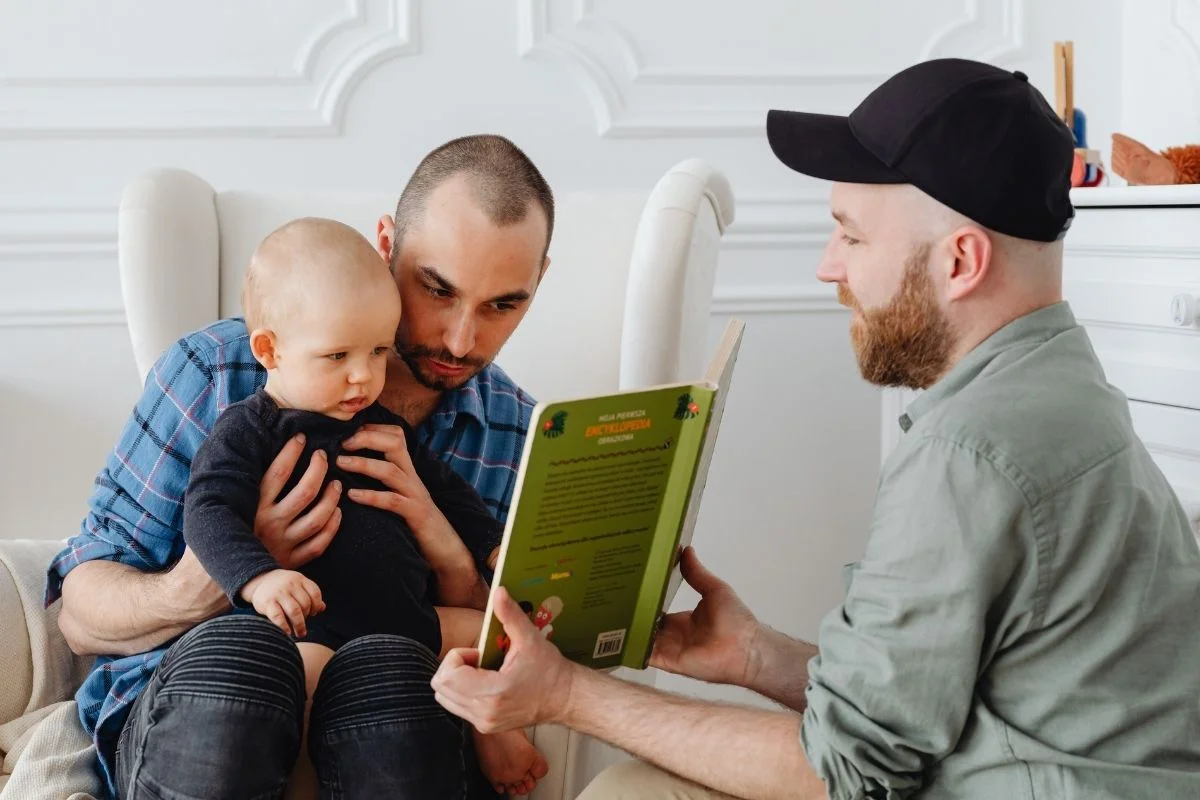
101 Being a Parent Tips Every Mom, Dad, and Caregiver Should Know


So last week, a mom at the park told another mom that her kid had a full meltdown over the wrong color cup. The other mom nodded so fast. No shock. No judgment. Just pure, tired recognition.
That moment is parenting in one scene. Not the big stuff. The small, daily, sometimes wild stuff that nobody fully teaches you before the baby comes home.
This is not a list that talks down to you. Every person reading this, whether you are raising your first child, your fourth, or stepping in as a grandparent or foster parent, already knows something true: parenting is not a skill you master. It is a practice you show up to, day after day, even when you are running on four hours of sleep and the last piece of bread.
What follows are 101 real tips, pulled from child development research, family therapy practice, and the kind of hard-won wisdom that only comes from actually doing this work. Some tips will feel obvious. Some will surprise you. A few might even make you stop and think, “Oh. That is what has been going on.”
This article covers general parenting guidance for healthy child development. If your child shows signs of developmental delay, emotional distress, or behavioral concerns that go beyond typical behavior, please consult a pediatrician or licensed child development specialist. No article replaces professional support when a child truly needs it.
The First Days and Weeks: What Nobody Tells You
The first days with a new baby, or a new child in your care, are not what the photos look like. They are tender, yes. But they are also confusing, physical, and oddly quiet in a loud sort of way.
New parents often expect to feel instant, overwhelming love. Some do. But many feel something more complicated, like awe mixed with fear, or warmth alongside total exhaustion. Both are normal. The bond grows. It does not always arrive fully formed on day one.
Caregivers who take in older children through fostering or kinship care face a different version of this. The child comes with a history. Connection takes longer, and that is not failure. It is just reality.
- Tip 1: Do not expect to feel confident right away. Confidence in parenting builds through repetition, not through reading the right book.
- Tip 2: Sleep in shifts when you can. Sleep deprivation affects judgment, patience, and emotional regulation, yours and your child’s.
- Tip 3: Accept help when it is offered. Not because you cannot do it alone, but because no parent was designed to do it completely alone.
- Tip 4: Write nothing in stone during the first month. What works on day three may not work on day fourteen. Stay flexible.
Understanding How Children Actually Develop
Here is something that changes how you see everything: children are not small adults. Their brains work differently. Their emotions are real but their ability to manage those emotions is still under construction, sometimes for years.
The prefrontal cortex, the part of the brain that handles planning, impulse control, and reasoning, does not fully develop until the mid-twenties. So when a five-year-old cannot stop touching things in the store after you have asked four times, that is not defiance. That is neurology.
Dr. Daniel Siegel, a clinical professor of psychiatry at UCLA, describes this as the difference between the “upstairs brain” and the “downstairs brain.” The downstairs brain handles survival and emotion. The upstairs brain handles logic. Kids live mostly downstairs. Parenting that works meets them there first, then slowly invites them upstairs.
Key Developmental Stages at a Glance
| Age | What Is Happening | What Helps Most |
|---|---|---|
| 0 to 2 years | Rapid brain growth, trust formation | Consistent care, warmth, touch |
| 3 to 5 years | Language, imagination, big emotions | Routines, play, simple language |
| 6 to 9 years | Logic starts, peer world opens | Clear rules, encouragement, reading together |
| 10 to 12 years | Identity questions begin | More say in decisions, open conversations |
| 13 to 17 years | Intense emotion, risk-taking, independence | Respect, presence, fewer lectures |
- Tip 5: Know your child’s developmental stage before setting expectations. A two-year-old cannot share well, not because they are selfish, but because their brain is not built for that yet.
- Tip 6: Read one solid book on child development. The Whole-Brain Child by Siegel and Tina Payne Bryson is a good start. It changed how a lot of parents see meltdowns.
Building a Secure Attachment (The Single Biggest Investment You Can Make)
Attachment theory sounds academic. In practice, it is simple: children who feel safe with their caregivers learn to feel safe in the world.
Secure attachment does not mean being a perfect parent. It means being a “good enough” parent, a term the pediatrician Donald Winnicott used decades ago. You do not have to respond perfectly every time. You just have to repair when things go wrong. Rupture and repair is actually how trust gets built.
Every time a child reaches out, with a cry, a question, a drawing, a weird noise at dinner, and gets a warm response, a small thread of trust is laid down. Over time, those threads become a foundation.
Pro Tip: The “serve and return” model, backed by decades of Harvard Child Development research, says that every time a child reaches out and an adult responds with attention, the child’s brain architecture literally strengthens. You do not need toys or classes. You need presence.
- Tip 7: Make eye contact when your child talks to you. Put the phone down. Full attention, even for two minutes, is worth more than distracted hours.
- Tip 8: Get on their physical level. Kneel down. Sit on the floor. Eye-to-eye communication sends a message that what they are saying matters.
- Tip 9: Name what you see in your child. “You seem frustrated.” “You look so proud right now.” This teaches them to name their own feelings, which is a skill they will use their whole life.
- Tip 10: Repair after conflict. When you lose your temper or handle something badly, come back and name it. “Earlier I yelled and that was not okay. Here is what I wish I had done instead.” Kids learn more from repair than from perfection.
Discipline That Actually Works
The word “discipline” comes from the Latin word for “teaching.” Not punishment. Teaching.
Most parents were raised with a model that mixed punishment with love in ways that confused the two. The research on this is pretty clear now: harsh punishment reduces the behavior in the short term but damages the relationship and increases anxiety and aggression over time. That does not mean no limits. It means limits need to be consistent, calm, and connected to natural consequences when possible.
Effective discipline has three parts. First, the child understands what the rule is before they break it. Second, the consequence is related to the behavior, not just a reaction to your frustration. Third, the relationship stays intact even when the child is in trouble.
The Difference Between Punishment and Discipline
| Punishment | Discipline |
|---|---|
| Focuses on past behavior | Teaches future behavior |
| Often driven by adult anger | Stays calm and consistent |
| Damages trust over time | Builds trust over time |
| Child feels shame | Child feels accountable |
| Stops the behavior short term | Changes the behavior long term |
- Tip 11: Give warnings before consequences. “In five minutes we are leaving the park.” This reduces shock and tantrums dramatically.
- Tip 12: Follow through. Every time you say something and do not do it, you teach your child that your words do not mean much.
- Tip 13: Natural consequences are your best tool. Did they forget their lunch? Let them feel hungry. Did they break a toy in anger? They do not get a new one right away. The world teaches well when we let it.
- Tip 14: Time-in works better than time-out for most kids. Instead of sending them away to their room, sit with them. Help them calm down. Then talk through what happened.
- Tip 15: Catch them being good. Tell them when they do something well. Positive attention for good behavior works better than negative attention for bad behavior.
Communication Tips That Build Real Connection
Most parent-child communication problems are not about what is being said. They are about when and how it is being said.
Trying to have a serious conversation with a child who is hungry, tired, or in the middle of something they love is almost never going to go well. This is not stubbornness. This is brain chemistry. Timing matters.
Also worth saying: children who grow up in homes where feelings are talked about openly tend to have better emotional health as adults. Not homes where everything is perfect. Homes where honesty and emotion are welcome.
- Tip 16: Ask “what” questions instead of “why” questions. “Why did you do that?” usually triggers defense. “What happened?” opens a door.
- Tip 17: Do not fix everything. Sometimes a child needs to vent, not be solved. Sit with them. Say “that sounds really hard.” Done.
- Tip 18: Let silence exist. Not every quiet moment needs to be filled. Car rides with no agenda are some of the best conversations parents ever have.
- Tip 19: Share age-appropriate things about your own day. “Work was kind of hard today.” This models that adults have hard days too and that is okay.
- Tip 20: Say “I love you” out loud, regularly. Not just in big moments. At breakfast. Before bed. After an argument. Those three words do a lot of quiet work.
The Reality of Toddler Years (Ages 1 to 4)
Toddlers get a rough reputation. “Terrible twos” is a phrase that has scared a lot of first-time parents before the birthday even arrives.
Here is what is actually going on: toddlers are experiencing a burst of independence at the exact moment they have almost no ability to regulate their emotions or communicate what they need. Add to that the fact that their world keeps saying “no” to things that seem completely reasonable to them, and you start to understand the meltdowns.
Important Note: Tantrums in toddlers are developmentally normal. They are not a sign of bad parenting or a “bad” child. The goal is not to eliminate tantrums but to help your child move through them safely and learn regulation over time.
- Tip 21: Stay calm during the meltdown. Your nervous system is the regulator. When you stay calm, you help their brain calm down too. It is called co-regulation.
- Tip 22: Do not reason during the storm. Wait until the wave passes, then talk. Logic and emotion do not mix well in a toddler mid-meltdown.
- Tip 23: Offer two choices, not open questions. “Do you want the red shirt or the blue shirt?” Not “what do you want to wear?” Choice within limits = toddler freedom without chaos.
- Tip 24: Make transitions predictable. “In two minutes we are leaving.” Then one minute. Then we go. Toddlers live in the present. Sudden changes feel like ambushes.
- Tip 25: Get outside every day. Fresh air, movement, and open space do more for toddler regulation than almost any other strategy.
School Age Tips (Ages 5 to 12): What Changes and What Does Not
Something shifts around age five or six. Children start to care what other people think. Peers matter. The world outside the family starts to shape identity.
This is exciting and also the beginning of new challenges. Kids at this age are building a sense of competence. They want to know: am I good at things? Do people like me? Do the rules make sense? Parents who stay involved, without hovering, help their children build real confidence through real experiences, not just praise.
Checklist: Signs Your School-Age Child Feels Secure at Home
- They talk to you about things that happened at school, even small stuff
- They can handle minor disappointments without falling apart
- They bounce back after a hard day
- They have at least one friend they feel comfortable with
- They can express what they need, even imperfectly
- They know the rules and understand why most of them exist
- Tip 26: Read together even after they can read alone. It is not about literacy. It is about time.
- Tip 27: Know their teacher’s name. Know their best friend’s name. Show interest in the details of their world.
- Tip 28: Homework help means helping, not doing. Sit next to them. Ask questions. Let them get things wrong and figure it out.
- Tip 29: Let them be bored sometimes. Boredom is where creativity lives. Not every minute needs to be scheduled.
- Tip 30: Limit screens before bedtime. This is not about being strict. Blue light genuinely disrupts melatonin and affects sleep quality in children. Sleep affects everything else.
Parenting Teenagers: The Art of Staying in the Room
Teenagers are often described as pushing parents away. That is true. But what most teenagers actually want is for the parent to keep knocking even when the door stays closed.
The developmental job of adolescence is identity formation. Who am I? What do I believe? What matters to me? That work requires some separation from the family. It does not require the parent to disappear.
Research from developmental psychologist Laurence Steinberg consistently shows that teens with authoritative parents, warm but firm, not permissive and not harsh, have better outcomes across almost every measure: academic success, mental health, lower risk behavior.
- Tip 31: Do not take the attitude personally. Or at least, try not to. Most of it is not really about you.
- Tip 32: Keep showing up for small things. Drive them places. Eat dinner together when you can. Be available without making it a big deal.
- Tip 33: Ask one genuine question a day. Not an interrogation. One question. Then listen.
- Tip 34: Know their friends. Not in a surveillance way. Just be home when friends come over. Be the house they want to be at.
- Tip 35: Let them fail while the stakes are still low. Missed assignments, small social conflicts, poor choices with real but minor consequences, these are the training ground. You cannot protect them out of learning.
- Tip 36: Talk about hard things before they come up. Drugs, sex, peer pressure, online safety. Not a lecture. A conversation. Start early and keep it going.
The Role of Routine in Raising Settled Kids
Routines get dismissed as rigid or controlling. They are actually the opposite. For children, predictability creates the safety that allows freedom.
Think of it this way. A child who knows what is coming, breakfast then school then aftercare then dinner then bath then bed, spends less mental energy on “what is happening next?” and more energy on actually living. Anxiety in children often decreases when routine increases.
This does not mean every day is identical. It means the broad shape of the day is known, and transitions between parts of the day are smooth.
| Routine Element | Why It Helps |
|---|---|
| Morning routine | Reduces resistance and rushing |
| Consistent bedtime | Protects sleep, which protects everything |
| After-school wind-down | Helps kids process the school day |
| Family meals | Builds connection and language |
| Weekend rhythm | Prevents the “Monday transition crash” |
- Tip 37: Build a visual schedule for young children. They cannot read a clock but they can look at pictures that show “wake up, eat, play, nap.”
- Tip 38: Protect bedtime like it is non-negotiable, because it mostly should be. Sleep-deprived children are harder to parent, harder to teach, and harder to connect with.
- Tip 39: Create a transition ritual between school and home. A snack, a walk, ten minutes of quiet. Let them land before you ask about their day.
- Tip 40: Allow for variation without losing the structure. The routine is the container. What fills it can flex.
Emotional Intelligence: Teaching Feelings Without Making It Weird
A lot of parents grew up in homes where feelings were either performed loudly or shut down quietly. Very few of us were taught to actually name, notice, and move through emotions in healthy ways.
The good news is that emotional intelligence can be taught. Not through classes or workbooks but through daily moments where feelings are named, normalized, and moved through together.
Psychologist John Gottman spent decades studying what he called “emotion coaching.” His research found that children with emotion-coaching parents had better friendships, performed better academically, and had lower levels of stress hormones. The practice is simple: name the emotion, validate it, then help problem-solve if needed.
- Tip 41: Use a feelings chart with young children. Not because feelings need to be categorized but because kids often do not have the words yet. Having the words helps.
- Tip 42: Do not rush to fix sadness. Sit in it with your child for a moment. “That is really sad. Makes sense you feel that way.” Let the feeling land before it leaves.
- Tip 43: Share your own emotions simply. “Feeling a bit tired today.” “That traffic was frustrating.” You model that adults feel things and that is fine.
- Tip 44: Do not punish negative emotions. Punish behavior if needed, not the feeling underneath it. “It is okay to be angry. It is not okay to hit.”
- Tip 45: Celebrate emotional courage. When a shy child speaks up, when an anxious child tries something new, when a kid says “that hurt my feelings,” name it as brave.
Single Parents: Doing More with Less and Still Doing Enough
Single parenting is its own category of hard. Not because it cannot be done well, it absolutely can, but because it is done with half the adult resources and the same full weight of the job.
The research on children of single parents is often misquoted. Children raised by single parents do not automatically struggle. What they need is what all children need: at least one stable, warm, consistent adult in their life. One is enough. One is more than enough, when that one is present.
Pro Tip: Single parents often burn out because they carry guilt on top of exhaustion. Letting go of the guilt long enough to rest is not selfishness. It is sustainability. A rested, present parent for three hours beats a drained, distracted parent for twelve.
- Tip 46: Build your village on purpose. It does not appear naturally. Identify two or three people who can share the load, even occasionally.
- Tip 47: Let your child know you are a team. Not in a way that makes them carry adult weight but in a way that lets them feel pride in how your family works.
- Tip 48: Do not speak badly about the other parent in front of your child, even when it is hard. Children carry those words inside themselves.
- Tip 49: Take care of your mental health with the same seriousness you take their health. Therapy, community, journaling, whatever helps you process, do it.
Grandparents and Kinship Caregivers: Raising Again
There is a quiet and often unrecognized group of caregivers raising children who are not their own biological children in the usual sense. Grandparents stepping in because a parent cannot be there. Aunts and uncles. Family friends. Foster parents. These people carry love alongside complexity every single day.
Children in these situations often carry trauma, confusion, and grief alongside them. The child might love you deeply and still mourn someone else. That grief is not ingratitude. It does not cancel out the love.
- Tip 50: Never compete with the missing parent, even if that parent hurt the child. The child’s grief is their own. Honor it.
- Tip 51: Stability is the most healing thing you can offer. Consistent meals, a consistent face, a consistent bedtime. Ordinary life becomes extraordinary medicine for traumatized children.
- Tip 52: Seek support through kinship care networks or foster care communities. You are not alone and the people in those rooms understand things that other people cannot.
Screen Time: A Real Conversation, Not a Lecture
Most parenting content on screens falls into two camps: panic or dismissal. Neither is helpful.
The reality is complicated. Passive screen time, scrolling through videos with no interaction, has different effects than video calling a grandparent or playing an educational game together. Background TV in a home affects language development in babies and toddlers. Social media in adolescence has real associations with anxiety, especially in girls.
Screen Time Guidelines Worth Knowing (Based on Current Research)
| Age Group | General Guidance |
|---|---|
| Under 18 months | Avoid screens except video calls |
| 18 to 24 months | High-quality content only, with a caregiver present |
| 2 to 5 years | One hour or less per day of quality content |
| 6 and older | Consistent limits on time and content type |
- Tip 53: Watch with your child instead of using screens as a babysitter when you can. Your presence during screen time changes the experience.
- Tip 54: Create screen-free zones and times. Dinner table. Bedrooms. The first hour after school.
- Tip 55: Talk about what they are watching. Not as an audit. As interest. “What is that show about?” opens more than you think.
- Tip 56: Model your own screen use. Children notice when adults are on their phones during family time. It teaches them the same behavior.
Sleep: The Parenting Lever Most People Underestimate
Almost every difficult behavior in children has at least some relationship to sleep. Tantrums, poor focus, emotional sensitivity, impulsivity, all of these increase significantly when a child is under-slept.
Most children get less sleep than they need. Most parents do too. And yet sleep is rarely the first thing parents address when something feels off.
- Tip 57: Know how much sleep your child actually needs. A three-year-old needs 10 to 13 hours. A ten-year-old needs 9 to 11. Most are not getting it.
- Tip 58: Build a wind-down routine that starts 30 to 45 minutes before bed. Bath, books, soft light, low noise. Signal the body that sleep is coming.
- Tip 59: Keep the bedroom cool and dark. Not dramatic measures, just enough that sleep is actually possible.
- Tip 60: Avoid screens in the hour before bed. This one alone can shift sleep quality noticeably.
Nutrition Tips That Fit Real Life
Feeding children well does not require cooking classes or expensive groceries. It requires understanding a few basics and then letting go of the pressure to be perfect.
Children are designed to self-regulate their intake when given the chance. The Division of Responsibility model, developed by family therapist Ellyn Satter, is the most practical framework out there: the parent decides what food is available and when. The child decides how much to eat, or whether to eat at all.
Important Note: Do not turn food into a battle. Forcing children to eat, rewarding with dessert, or labeling foods as “good” and “bad” all create complicated relationships with food that can last into adulthood.
- Tip 61: Offer vegetables without pressure. Put them on the plate. Say nothing. Do this repeatedly over months. Familiarity and low pressure work better than insisting.
- Tip 62: Eat together when possible. Family meals, even short ones, are associated with better nutrition, better mental health, and stronger family connection.
- Tip 63: Let children help in the kitchen. Children who help make food are more likely to eat it. Start simple. Stir this. Pour that.
- Tip 64: Do not short-order cook but do have a backup option. One family meal, one fallback like bread and butter. This reduces power struggles without giving total control to the child.
Play: Seriously, Do Not Skip This
Play is not a break from development. Play is how development happens.
Child psychiatrist Stuart Brown spent decades studying play. His conclusion: play is as essential as sleep and nutrition. It builds creativity, problem-solving, emotional regulation, and social skills. Children who do not have enough unstructured play show measurable deficits in all of these areas.
And yet free play is declining. Children today have more structured activities, more screen time, and less outdoor free time than any previous generation.
- Tip 65: Protect free play. At least one hour a day of unstructured, child-led activity. No agenda. No outcome.
- Tip 66: Get on the floor and play with them sometimes. Let them lead. Do not redirect or improve the game. Just follow their imagination.
- Tip 67: Play outdoors. Uneven ground, weather, bugs, space, all of these engage different brain systems than indoor play does.
- Tip 68: Resist overscheduling. Four activities a week is often too many. Children need white space.
- Tip 69: Do not rush through playful moments. When your toddler wants to jump in every puddle on the way to the car, sometimes the right answer is to let them.
How to Handle the Hard Conversations
Every parent eventually faces a conversation they do not feel ready for. Death. Divorce. Racism. Violence on the news. Where babies come from. Why that kid said that thing on the playground.
The instinct is to protect, which often means avoiding. But avoidance teaches children that these topics are too big or too scary to discuss, which is the opposite of what you want them to believe when they are teenagers with a real problem.
Hard conversations done early and age-appropriately build a habit of openness that pays off for decades.
- Tip 70: Do not wait for the perfect moment. The perfect moment rarely comes. Use the imperfect one.
- Tip 71: Answer what was asked, not more. Children ask questions at the level they can handle. Match that level. A six-year-old who asks where babies come from does not need a full biology lesson. “Babies grow inside the mama” is often enough for that age.
- Tip 72: It is okay to say “that is a great question and let’s look it up together.” Honesty about not knowing models intellectual humility.
- Tip 73: Return to hard topics. One conversation is never enough. Keep the door open with “we can keep talking about this whenever you want.”
Self-Care Is Not Selfish (Actually, It Is Parenting)
The oxygen mask instruction on airplanes is used as a metaphor so often that it has become cliché. But it became a cliché because it is true.
A parent who is running on empty does not have more to give. They have less. Exhausted parents are less patient, less creative, less able to respond rather than react. Looking after yourself is not separate from looking after your child. It is the same job.
Pro Tip: Self-care for parents does not have to mean spa days or vacations. It means enough sleep, at least some movement, one relationship where you can be honest about how you are doing, and occasional time where you are not “on.”
- Tip 74: Identify your version of restoration. For some people it is a walk alone. For others it is twenty minutes with a book. Know what fills you and guard it.
- Tip 75: Ask for help before you hit empty. It is much harder to recover from burnout than to prevent it.
- Tip 76: Do not martyr yourself. Children do not need a parent who sacrifices everything. They need a parent who models sustainable living.
- Tip 77: Get support for your own unresolved stuff. Parenting surfaces childhood wounds with remarkable efficiency. Therapy is not a luxury. For many parents, it is the most effective parenting tool available.
What Research Says About Praise (And Why “Good Job” Does Not Work)
This one surprises a lot of people. Decades of research by Carol Dweck at Stanford found that the way you praise a child shapes how they approach challenge.
General praise like “you are so smart” actually makes children less likely to take on difficult tasks, because they do not want to risk looking not-smart. Specific praise tied to effort and process, “you stuck with that even when it got hard,” builds what Dweck calls a growth mindset: the belief that ability is built, not fixed.
- Tip 78: Praise the process, not the trait. “You worked really hard on that” over “you are so talented.”
- Tip 79: Be specific. “The way you kept trying after it fell over, that is persistence.” Specific praise lands deeper than general approval.
- Tip 80: Praise honestly. Children can detect hollow praise. If the drawing is not that great, find something real to acknowledge. “You used a lot of colors” beats false enthusiasm about skill they know is not there yet.
Parenting Through Loss, Change, and Instability
Divorce. Job loss. Moving. A death in the family. Illness. Parenting does not pause for hard life events. In fact, hard life events are often when parenting matters most.
Children do not need you to be okay all the time. They need you to model that hard things happen and that people move through them. They need honesty at an age-appropriate level, routine when everything else feels unstable, and continued access to you, even when you are going through something difficult.
- Tip 81: Do not over-explain or under-explain during family transitions. “Our family is going to live in two homes now. Both homes are yours. Both homes love you.” Clear, simple, repeated.
- Tip 82: Maintain as much routine as possible during instability. Same bedtime. Same foods. Same face. The familiar things become anchors.
- Tip 83: Give children permission to feel sad, angry, or confused without reassuring them out of it too quickly. “This is a big change and it makes sense to have big feelings about it.”
- Tip 84: Let children grieve at their own pace. Grief does not follow a timeline, and children often return to it in waves over years.
Parenting and Your Own Mental Health
About one in five parents experience a significant mental health challenge at some point in their parenting years. Postpartum depression is the most discussed but far from the only one. Parenting anxiety, burnout, and depression show up across all ages and stages.
A parent struggling with mental health is not a bad parent. They are a person who needs support. The stigma around this is both real and damaging, because it stops parents from getting help they genuinely need and deserve.
Warning Box: If you experience persistent sadness, rage, disconnection from your child, or thoughts of harming yourself or your child, please reach out to a healthcare provider immediately. These experiences are more common than most people admit and they are treatable. You do not have to white-knuckle your way through this alone.
- Tip 85: Normalize talking about parenting struggles with other parents. Isolation makes everything harder. Connection makes a lot of things more bearable.
- Tip 86: Know the signs of parental burnout: emotional exhaustion, feeling detached from your child, doubting your ability as a parent, loss of joy in parenting. These are signals, not verdicts.
- Tip 87: Ask your pediatrician about your own wellbeing at your child’s appointments. Many pediatric offices now screen for parental depression. Use it.
Building Independence Without Letting Go Too Fast
The long game of parenting is raising a person who does not need you in the same way they once did. That is success. But many parents either hold on too long or let go too fast, and both create problems.
Psychologist Wendy Mogel, in her book The Blessing of a Skinned Knee, makes the case that protecting children from discomfort robs them of the very experiences that build resilience. The child who never fails does not learn how to recover from failure. The child who never makes decisions does not learn how to make decisions.
- Tip 88: Give age-appropriate responsibilities. A four-year-old can put their shoes away. A seven-year-old can pack their own bag. A twelve-year-old can make a simple meal.
- Tip 89: Resist solving problems they can solve themselves. Ask “what do you think you could try?” before offering your answer.
- Tip 90: Let them experience natural consequences. This is different from punishment. The consequence is built into the situation, not added by you.
- Tip 91: Celebrate independence. When your child does something for the first time alone, make it a small moment of genuine acknowledgment. “You did that yourself. Look at you.”
Tips for Foster Parents and Adoptive Parents
Parenting a child who has experienced early trauma, separation, or instability is one of the most complex and meaningful things a person can do. It requires a different toolkit alongside the universal parenting principles that apply to every child.
Trauma-informed parenting is not about walking on eggshells. It is about understanding that some behaviors that look like defiance are actually the nervous system responding to perceived threat. That some children who seem not to care actually care so much that they had to shut it down to survive.
- Tip 92: Learn the basics of trauma-informed care. Books like The Connected Child by Karyn Purvis are a strong starting point.
- Tip 93: Build safety through predictability. Children who have experienced chaos need consistent, calm, predictable environments more than almost anything else.
- Tip 94: Do not take rejection personally when it comes. It often does. It is rarely actually about you. Stay steady.
- Tip 95: Seek out a therapist who specializes in attachment or trauma. General parenting advice often does not land in the same way for these children.
The Last Ten: Small Things That Make a Big Difference
Sometimes the most impactful things are the ones that feel too small to mention. They are not.
- Tip 96: Say their name with warmth, often. Names carry meaning. Saying a child’s name in a warm voice, in a moment of quiet connection, is a small gift repeated over years.
- Tip 97: Apologize when you get it wrong. “I am sorry I raised my voice. You did not deserve that.” This models accountability in a way no lecture ever could.
- Tip 98: Laugh with your children, not at them. The difference is felt even when it cannot be named.
- Tip 99: Notice their small wins. Not just the A on the test. The day they made themselves try something scary. The moment they shared without being asked.
- Tip 100: Tell them what you love about them specifically. Not “you are great” but “the way you always notice when someone feels left out, that is something really rare.”
- Tip 101: Remember that the relationship is the point. Not the behavior management. Not the college application. Not the activities or the diet or the screen time rules. The relationship. That is what lasts. That is what carries them.
Key Takeaways
- Children need at least one warm, consistent adult more than they need perfect parenting.
- Discipline works when it teaches rather than punishes, and when the relationship stays intact.
- Sleep, play, and routine are three of the most underused parenting tools available.
- Praise tied to effort builds children who are willing to struggle. General praise often does the opposite.
- A parent’s mental health is not separate from a child’s wellbeing. It is directly connected.
- Repair matters more than perfection. Children learn trust through rupture and repair, not through flawless parenting.
A Thought to Leave You With
The writer James Baldwin once said something that applies to parenting as much as anything else: “Not everything that is faced can be changed, but nothing can be changed until it is faced.”
Most of the things on this list are not complicated in theory. They are complicated because of everything else happening in a real life, with real exhaustion, real history, and real children who do not come with instruction manuals.
You are going to get some of this wrong. You already have. So has every parent who ever lived.
The question is not whether you will make mistakes. It is whether you will stay in the room, keep trying, and come back to repair when you do. That is what being a parent actually is, over the long run.
Frequently Asked Questions
What are the most important parenting tips for new parents?
The most useful things for new parents are building a consistent routine, responding warmly to your baby’s cues, sleeping in shifts when possible, and accepting help. Confidence comes from repetition, not preparation.
How do you discipline a toddler without yelling?
Stay calm, get on their level, name the behavior and what you want instead, offer limited choices, and follow through consistently. If you do yell, repair afterward. One bad moment does not undo the relationship.
What is the difference between authoritative and authoritarian parenting?
Authoritative parenting is warm and firm, with clear rules and explanation. Authoritarian parenting is strict with little warmth and often relies on obedience without explanation. Research consistently links authoritative parenting with better outcomes across childhood and adolescence.
How can single parents manage parenting alone?
Build a support network intentionally, ask for help before burnout hits, prioritize connection over activity, protect your own sleep and mental health, and remember that one present and loving parent is genuinely enough.
At what age should children have more independence?
Age-appropriate independence starts earlier than most people think. A two-year-old can choose between two outfits. A six-year-old can make their own snack. A ten-year-old can walk to a nearby friend’s house. The key is matching independence to actual developmental readiness, not a fixed age.
How do you raise emotionally intelligent children?
Name emotions in daily life, validate feelings without rushing to fix them, share your own emotions simply, allow children to experience disappointment, and model repair after conflict. Emotional intelligence is caught more than taught.