7 Things That Make Success Your New Normal: A Simple Guide That Actually Works


7 Things That Make Success Your New Normal: A Simple Guide That Actually Works
Most people think success belongs to lucky people with rare gifts. They watch a calm business owner or a fit neighbor and feel that such a life is not for them. But when you look closely at real winners, you find something far less magic and far more useful.
I have read many books about how normal people build strong lives, and the pattern is almost always the same. Winners do not fight themselves every morning with iron willpower. They build small systems that make the good choice the easy choice. When the good choice is easy, you make it without drama, and slowly success stops feeling special and starts feeling normal.
The short answer: success becomes your new normal when you design your day around systems instead of wishes. This guide walks you through seven such systems, and each one is simple enough to start today.
James Clear, the writer of Atomic Habits, put it well when he wrote that you do not rise to the level of your goals, you fall to the level of your systems. His book has sold more than 15 million copies, which tells you the idea works for real people. And science backs it up. In a 2010 study at University College London, researcher Phillippa Lally found that a new habit took 66 days on average to feel automatic.
The seven ideas below are not about working until you drop. They are about making your home, your hours, your mind, and your habits do half the work for you. Read them in order, pick just one to begin, and give it two full weeks before you judge it.
Key Takeaways
Here is the whole idea in one breath. Success feels hard when it fights your life, and it feels normal when it fits your life.
That is why every idea below follows one rule. Do not fight your own nature. Work with it instead.
You will learn how to shape your rooms and your phone so good choices happen on their own. You will learn why tiny habits beat big plans. You will also learn why who you believe you are matters more than what you wish for.
The last ideas protect the whole machine. You will track small numbers, choose your people with care, and guard your sleep.
None of this needs money to start. It needs a little honesty and a little patience, and that is the full price.
Read the short list below to fix the big picture in your mind. Then take the seven ideas one by one. By the end, you will have a full plan, not just a pep talk.
Keep this list near you for the first month. On hard days, it will remind you what to do next.
- Shape your surroundings so the good choice is the easy choice.
- Shrink every habit until it feels too easy to skip.
- Decide the kind of person you are, then act like that person.
- Win the first hour of the day, and the rest gets easier.
- Keep score with small numbers you can see every week.
- Spend the most time with people who lift your standards.
- Guard your sleep and your body like they pay your bills.
1. Shape Your Surroundings So Good Choices Happen by Themselves
Two thinkers, Richard Thaler and Cass Sunstein, wrote a famous book called Nudge in 2008. Their big idea was simple. People mostly follow the path that is easiest in front of them. Thaler later won the Nobel Prize in 2017, which shows how seriously the world took this idea.
Think about your own kitchen. If fresh fruit sits on the table and sweets hide in a high cupboard, which one will you eat at 9 p.m.? You already know the answer. Your surroundings vote before your willpower wakes up.
Your phone works the same way. If fun apps fill your home screen, you will open them without thinking. Move them into a folder on the last page, and put a reading or learning app where your thumb naturally goes. You just made your good habit easier than your bad one.
Your desk and your bedroom follow the same rule. A clear desk with your work already open invites you to start. A bedroom with the TV remote on the pillow invites you to waste the evening.
Small changes beat big plans here. Do not try to rebuild your whole house in one weekend. Change one thing this week, and watch what happens. When that change feels normal, change the next thing, and in two months your whole home can quietly push you toward the life you want.
The same idea works with the people around you. If your friends always meet at places that waste your money and time, the easy choice is to join them. Suggest one better place, or join one group that meets to learn or build. You do not need a lecture, just a better default.
Look at the table below for simple before and after ideas. Pick the one that fits your life, and start there.
| Area | Before (harder) | After (easier) |
|---|---|---|
| Kitchen | Sweets on the counter, fruit hidden in the fridge | Fruit bowl on the table, sweets in a high closed cupboard |
| Phone | Time wasting apps on the home screen | Those apps moved to the last page, a reading app in their place |
| Desk | Cluttered desk, work buried under papers | Clear desk with only the next task open and ready |
| Bedroom | TV remote on the pillow, phone charging by the bed | A book on the pillow, phone charging in another room |
2. Make Every Habit So Small It Feels Silly
BJ Fogg is a scientist at Stanford who studies how behavior really starts. His rule is short. A habit needs three things at the same moment: a prompt, the ability to do it, and a little push of want. When the action is tiny, ability is never the problem.
So make your new habit laughably small. Read one page, not one chapter. Do two push ups, not twenty, and walk for five minutes, not an hour. You tell your self that anyone could do this, and because it is true, you actually do it.
Starting is the hard part of almost every habit. A tiny habit removes the fear of starting. Once you start, you often do more, but even when you do not, the habit still grows roots in your day.
Tie the tiny habit to something you already do. This is called anchoring, and it works like a charm. After you pour your morning tea, you open your book, and after you brush your teeth at night, you write one line in your journal. The old habit becomes the reminder for the new one.
There is also a famous two minute rule from Atomic Habits. Any habit can be started in two minutes or less. Read before bed becomes read one page, and study for exams becomes open the book. The goal is not to finish big, the goal is to start small every single day.
James Clear gives one more golden rule. Never miss twice. Missing once is life, missing twice is the start of a new bad habit. Get back on track the very next day.
Here are three tiny starters you can copy today. Each one takes less than two minutes. Pick one, anchor it to a habit you already have, and do it for two weeks.
- After morning tea, read one page of a useful book.
- After lunch, walk for five minutes outside.
- Before sleep, write one line about what went well today.
3. Decide Who You Are, Then Act Like That Person
Most people set goals like lose ten kilos or save a fixed sum of money. Goals are fine, but they have a weakness. They tell you what to get, not who to be, so the moment you reach them, the old you returns.
I like to explain it this way. Goals tell you where to go, but identity decides who is driving the car. James Clear wrote that every action you take is a vote for the type of person you wish to become. No single vote decides the election, but the votes add up.
So pick your identity first, in plain words. A person who moves her body every day, a person who saves a part of every income, a person who finishes what he starts. Then let small daily actions cast votes for that person.
This changes how you talk to yourself in weak moments. Instead of saying that you are trying to eat better, you say that you are a person who eats clean food. The second sentence is stronger, and your brain believes what you repeat.
Collect small proof every week, and write down the votes you cast. Three walks, two saved amounts, one finished project. When doubt comes, and it will come, you open your list and see the proof. You are not hoping to become that person, you are watching yourself become that person.
Slipping does not break your identity. One missed vote never lost an election. What matters is that you vote again the next day. People who see themselves as consistent bounce back faster than people who chase perfect streaks.
Start today with one sentence about who you are becoming. Say it each morning. Then cast one small vote for it before noon.
4. Win the First Hour and the Day Gets Easier
The first hour of your day is like the first brick of a wall. Lay it straight, and the whole wall stands a better chance. Lay it crooked, and you spend the day fixing the lean. Winners guard this hour more than any other.
Warren Buffett, one of the richest men in history, has said he spends about 80 percent of his working day reading and thinking. He protects quiet time for his mind before the noise of the day begins. You do not need his money to copy his respect for morning hours.
The reason is simple too. Your mind is freshest in the morning, before decisions pile up. Hard thinking done early feels lighter than the same thinking done at night.
Start by keeping your phone out of reach for the first hour. Charge it in another room if you can. The news and messages will wait, but your calm morning will not. Most people lose the day in the first ten minutes of scrolling.
Then follow the same small order each day. Drink water, move your body for ten minutes, wash up, and sit down to plan. Write your three most important tasks on paper. When the day tries to pull you in ten directions, this small list pulls you back to what matters.
Do not aim for a perfect five a.m. routine from day one. Wake up just thirty minutes earlier than now. Fill those minutes with quiet work, and let the habit grow on its own.
Copy the sample routine below or build your own version. The exact steps matter less than the order. Same steps, same order, every day, until your morning runs on rails.
- Wake, drink a full glass of water.
- Move for ten minutes: walk, stretch, or simple exercise.
- Wash up and get dressed fully, even on home days.
- Write the three tasks that matter most today.
- Work on task one for 25 quiet minutes, phone away.
Compare the two mornings in the table below. Then pick the new version for tomorrow.
| Part of the hour | Old morning | New morning |
|---|---|---|
| First 10 minutes | Scroll the phone in bed | Drink water, get up, stretch |
| Next 20 minutes | Rush around with no plan | Move the body, wash up, get dressed |
| Last 30 minutes | React to messages and news | Write three tasks, start task one in quiet |
| Feeling at 9 a.m. | Behind, rushed, and tired | Calm, clear, and in control |
5. Keep Score With Small Numbers You Can See
There is an old business saying that what gets measured gets managed. It is old because it is true. When you write down your numbers, you stop guessing and start seeing. Seeing clearly is half of winning.
Pick three numbers that match your goals. Think pages read this week, minutes walked each day, and amount saved this month. Keep them small and simple. If tracking feels like homework, you picked too many numbers.
Review your numbers once a week, for ten minutes. Sunday evening works well for most people. Look at what rose, what fell, and why.
Paper beats apps for most beginners. A small notebook on your desk is always visible and never sends you alerts. One line per day is enough. Date, then your three numbers, then one short note.
Numbers also protect you from your moods. On a bad day you feel like nothing is working. Then you open your notebook and see thirty days of small wins in a row. Feelings lie, but your own handwriting does not.
Pair this with the never miss twice rule from idea two. Your scorecard will show you the miss clearly. That clear mark is your signal to restart the very next day.
Start your scorecard tonight with the four lines below. Fill them every night before sleep. In one month you will own a true picture of your life, and true pictures lead to true changes.
- Body movement today: ___ minutes.
- Pages read today: ___.
- Amount saved today: ___ (even a small amount counts).
- One good thing that happened today: ___.
6. Pick Your Five People on Purpose
Your circle shapes you more than your plans do. Jim Rohn, a famous American teacher of success, said you are the average of the five people you spend the most time with. Think about that for a moment. Your income, your habits, and your mood all lean toward the people around you.
This is not magic, it is simple human nature. We copy what we see every day. If your closest friends read, save, and build, you will start doing the same without a lecture. If they waste time and money daily, you will feel strange for doing better, and strange feelings push people back to the group.
You do not need to fight anyone or cut people off with drama. Just add better voices to your week. One new group, one new friend, one new voice is enough to start.
Books and teachers count as people too. A wise writer in your ear for thirty minutes a day can lift your thinking. Warren Buffett still says his teacher Benjamin Graham shaped his mind. You can learn from great minds for the price of a book.
Find one person who wants the same change as you. Check in with each other every week, and share your three numbers from idea five. Knowing someone will ask about your week makes you keep your promises. This is called accountability, and it is one of the strongest tools in the world.
Also become the kind of person others want near them. Share what you learn, keep your word, and celebrate their wins. Good circles are built by givers, not takers, and the fastest way to join one is to give first.
Use the short checklist below when you think about your circle. You do not need perfect people, just people moving in a good direction.
- They talk about ideas and plans more than gossip.
- They keep their promises, even small ones.
- They are happy when you win, not jealous.
- They nudge you toward your goals, not away from them.
7. Guard Your Sleep Like It Pays Your Bills
Matthew Walker is a sleep scientist who wrote a famous book called Why We Sleep in 2017. His message is blunt. Sleep is not a luxury, it is the base of your health, your memory, and your mood. Cut your sleep and you cut the legs from under all six ideas above.
The National Sleep Foundation says most adults need seven to nine hours of sleep each night. Most busy people get far less. They steal energy from tomorrow to pay for today, and tomorrow always collects the price in bad decisions and low mood.
Poor sleep hits exactly what success needs. Your focus drops, your patience drops, and your hunger for junk food rises. Studies on tired drivers and tired workers show more mistakes and slower thinking. You cannot outwork a tired brain.
Fix your nights with boring rules. Sleep and wake at the same time every day, even on weekends, and make your room dark, cool, and quiet. Keep screens out of the last hour before bed, and keep your phone charging outside the room. Boring rules make deep sleep.
Your body needs movement too. The World Health Organization suggests at least 150 minutes of moderate activity per week for adults. That is about twenty minutes a day. A daily walk after dinner covers most of it.
Eat at regular times and drink enough water through the day. Heavy late meals steal your sleep. Simple home food, eaten calmly, beats any fancy plan you cannot follow.
Treat rest as part of the work, not as a reward for the work. A rested mind makes better plans, keeps better habits, and treats people better. When success feels normal, rest is one of the reasons why.
Conclusion
Look back at the seven ideas with fresh eyes. None of them asks you to become a different person overnight. They ask you to change your rooms, shrink your habits, choose your identity, guard your mornings, track small numbers, pick good people, and sleep well.
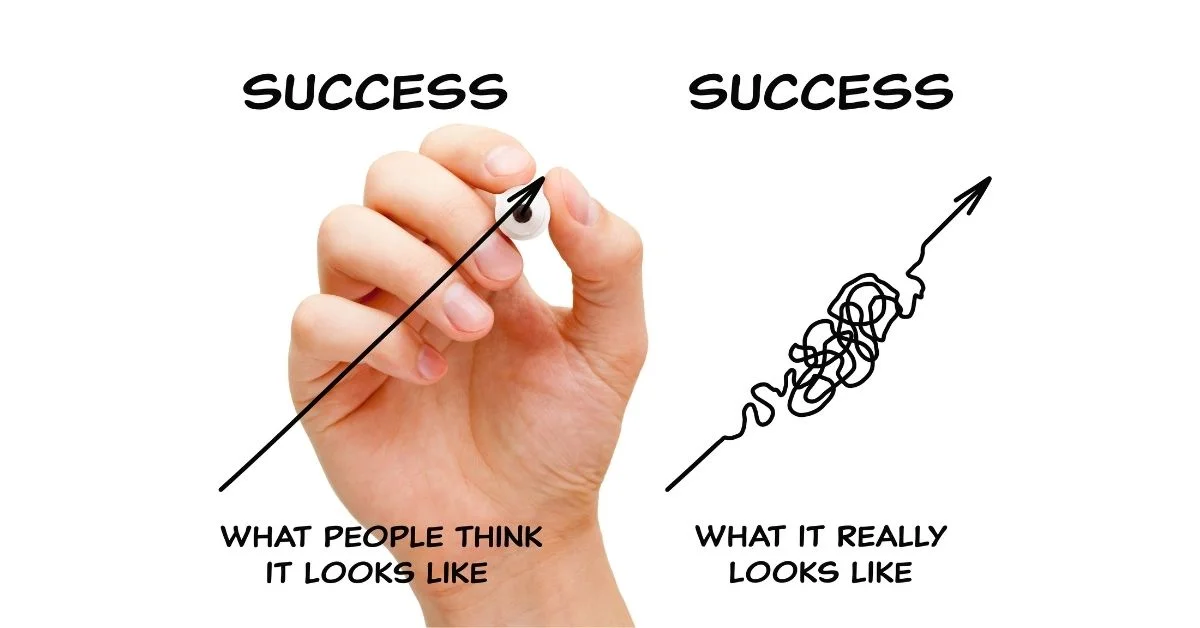
That is the real secret of this whole guide. Success is not a mountain you climb once with great pain. It is a flat road you walk every day with small steps. Flat roads feel normal, and normal is exactly what we want.
Do not start all seven ideas on Monday morning. That is the old way, and the old way fails by Friday. Start with one.
Pick the idea that felt easiest while you read. Maybe it is the fruit on the table, or the one page before sleep. Do that one thing for two weeks. When it feels boring and normal, add the next idea.
I truly believe that your most important day is not some big future day. It is a normal Tuesday, lived well. Remember the study we talked about at the start. Sixty six days of small votes can build a habit that runs on its own.
There will be bad weeks, and that is fine. Miss once, never twice, and vote again the next day. Your scorecard, your people, and your mornings will pull you back. Systems are kind that way, they wait for you.
Start tonight. Move one thing in your room, read one page, and sleep on time. Your new normal is closer than you think.