Would You Rather Work 4 Hours a Day or Earn Twice as Much? 25 Online Business Questions
Some days you catch yourself thinking: what if the work was less but the pay was more? That thought does not go away. It sits there. And honestly, it says a lot about where your head is right now.
These 25 would you rather questions are not just for fun. Each one puts two real choices in front of you. Both have trade-offs. Both say something true about what you want from an online business, a side hustle, or a work-from-home life. Try to answer fast. Your gut knows more than you think.
Alright, let’s get into it.
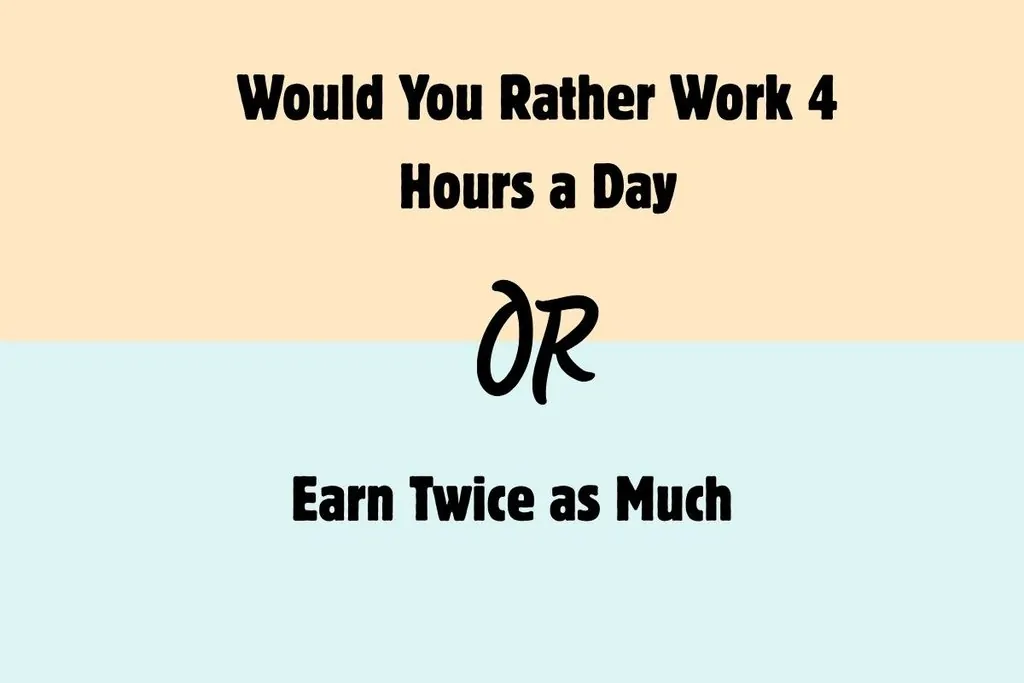
1. Work 4 Hours a Day or Earn Twice as Much?
Would you rather...
The 4-hour choice is about time. You want your days back. You want to pick up your kids from school, read more books, or just sit with a cup of tea and not feel guilty. That kind of freedom has a real price, and some people are totally fine paying it by earning less in raw numbers.
The double-pay side is about build. People who pick this one are usually in a season of growing. They want to pile up savings, pay off debt, invest more, or reach a number that gives them choices later. They trade time now to buy time later. Both are smart. Neither is wrong.
What’s worth noting is that most people who’ve built online businesses end up chasing the 4-hour version anyway. They earn more first, then cut the hours. The question is just about which order you’d prefer.
2. One Big Client or Ten Small Ones?
Would you rather...
One big client feels clean. One invoice, one call, one relationship. Less time spent on admin, less back and forth. But here’s the real risk: if that one client leaves, your income goes to zero overnight. That’s a scary place to be, especially if you have bills due.
Ten small clients spread the risk. Lose one and you’re still at 90 percent. But managing ten different people, ten sets of expectations, ten different payment schedules? That gets messy fast. It can feel like ten small jobs instead of one business.
Most freelancers who’ve been doing this a while will say: start with many, then aim for fewer but better. One anchor client plus a few side accounts is often the sweet spot. But that’s just one way to look at it.
| Choice | Best For | Main Risk |
|---|---|---|
| One Big Client | People who hate admin and love deep work | Full income loss if they leave |
| Ten Small Clients | People who value stability and spread | High admin load, time drain |
3. Passive Income That Pays Little or Active Work That Pays Well?
Would you rather...
Passive income sounds like the dream. Money while you sleep. And yes, it’s real. Digital products, affiliate sites, licensing deals these things do pay out without daily input. But $500 a month is coffee and groceries, not rent. It’s a nice bonus, not a foundation.
The $3,000 active route is honest. It says: work hard, get paid. Most stable online businesses start here. A solid service, a real skill, a paying client base. It’s not glamorous but it is reliable. And reliability matters more than it sounds when bills are due on the first.
Here’s the thing though: many people who start at $3,000 active slowly shift part of that into passive over time. It’s not either/or forever. It’s more like a starting point. Pick the one that fits where you are right now, not where you hope to be in five years.
- Passive income takes real work upfront before it becomes passive
- Active income is more predictable when starting out
- Most online earners combine both over time
- $500 passive still beats $0 it’s additive, not a replacement
4. Go Viral Once or Build Slow and Steady?
Would you rather...
Viral feels amazing in the moment. One post, one video, one article suddenly millions of people see your name. The traffic spike is real. But what happens next week? Most viral moments fade fast. People move on. The algorithm moves on. And you’re left trying to recreate lightning in a bottle.
1,000 true fans is a quieter win. These are the people who open every email, buy every product, and tell their friends about you. Kevin Kelly wrote about this concept years ago and it’s still just as true. A small, loyal group will sustain a real business far longer than a one-time crowd.
The honest answer is that most people want both. But if forced to pick one, the fans win. Every time. A viral moment gets you attention. True fans get you a livelihood.
5. Work From Home Always or Travel and Work From Anywhere?
Would you rather...
Working from home sounds easy until about month three. Then the walls start to feel close. The routine gets heavy. Some people love it the quiet, the control, the no-commute life. Others need a change of scene to stay sharp and motivated.
The travel-and-work life looks amazing on a feed. And it can be. But packing every 90 days, figuring out time zones for calls, finding reliable Wi-Fi in a new city that gets tiring too. It’s not a holiday. It’s still work, just with a different backdrop.
Your pick here says a lot about what “freedom” means to you. Is it the freedom of roots, or the freedom of motion? Both are valid. Your experience could be very different from what you imagine either way.
Pro Tip: If you’re not sure which suits you, try a “workcation” first one week working from a different city. You’ll know fast whether the travel life is real for you or just a fantasy.
6. Sell a Product You Love or One That Sells Well?
Would you rather...
Passion is great fuel. When you love what you sell, you talk about it naturally, you improve it with care, and you show up for it even on slow days. That energy is contagious and customers feel it. But passion alone does not pay bills. A product with no buyers is just a hobby with a price tag.
The boring-but-sells version is how a lot of serious online businesses work. The founder does not care deeply about, say, dog nail grinders or printable budget sheets. But they did their research, found a market, and built around demand. That’s a business. It’s less romantic but more profitable.
Over time, many sellers find a middle path: they get curious about the boring thing because the money makes it interesting. Or they use boring-product income to fund the passion project on the side. Neither option has to be permanent.
7. Be Your Own Boss With Uncertainty or Work Remote With Stability?
Would you rather...
This one cuts deep. Running your own thing means you call the shots. Good months feel great. But bad months feel awful, especially when you don’t know when the next payment is coming. That uncertainty wears on people over time. It’s not something you should underestimate.
A remote job with a fixed salary is often the smarter short-term move. You build skills, keep benefits, pay rent on time, and still have evenings and weekends to test a side hustle. Many of the most successful online business owners started this way remote employee by day, builder by night.
The real question here is about your risk tolerance right now. Not in theory. Not your ideal self. Your actual self, with your actual bills, your actual support system, and your actual savings buffer. That answer matters more than any goal-setting exercise.
- Own business: high upside, high stress, high personal growth
- Remote job: lower ceiling, lower stress, faster skill build
- Most people do both at the same time before fully switching
8. Start a Blog or a YouTube Channel?
Would you rather...
Blogging is slower but quieter. You write, publish, wait for Google to index your content, and gradually build search traffic. It’s a long game often 12 to 24 months before serious traffic arrives. But it compounds. Old posts keep bringing in readers. And you don’t need a camera, a studio, or the courage to appear on screen.
YouTube is faster for trust-building. People see your face, hear your voice, get a feel for who you are. That connection is hard to build through text alone. But the production effort is real. Filming, editing, thumbnails, titles it adds up in both time and cost, especially early on.
Both can lead to meaningful income through ads, affiliates, or digital products. The right pick depends on whether you’d rather type or talk. Honestly, that’s most of the decision right there.
| Platform | Time to First Income | Skills Needed | Ongoing Effort |
|---|---|---|---|
| Blog | 12–24 months | Writing, SEO basics | Medium |
| YouTube | 6–18 months | On-camera, editing | High |
9. Sell Services or Sell Digital Products?
Would you rather...
Services are the fastest path to cash online. You have a skill, someone needs it, you get paid. No waiting. No building. No inventory. Freelance writing, web design, bookkeeping, social media management these can all start earning in days or weeks. The downside is that your income is capped by your hours.
Digital products take longer to build but scale better. An ebook, a course, a template pack you make it once and sell it many times. The challenge is that most people dramatically underestimate how much marketing is needed to actually sell a digital product. It does not sell itself just because it exists.
A smart move for many people is to start with services to get cash flow and client insight, then use that knowledge to build products their clients actually need. The services teach you what the products should be. That sequence works well more often than not.
10. Fast Launch With a Half-Baked Product or Wait Until It’s Perfect?
Would you rather...
Waiting for perfect is how most ideas die quietly. Six months turns into a year. The market shifts. Your motivation fades. You find new things to fix. Perfectionism feels productive but often it’s just fear dressed up as high standards.
A fast launch is uncomfortable. Something will break. Someone will leave a negative comment. You’ll wish you had fixed that one thing. But you’ll also learn more in your first 30 days live than in six months of planning. Real customers tell you real things. Feedback from the market is priceless and you can only get it by showing up.
Ship the thing. Fix it in public. That’s not a shortcut it’s actually the most honest way to build something people want. Reid Hoffman, LinkedIn’s founder, once said that if you’re not embarrassed by the first version of your product, you launched too late. That stings a little. But it’s true.
Note: Launching fast does not mean launching sloppy. It means launching with what’s real and workable today, not waiting for what might be ideal someday.
11. Build an Email List or Grow on Social Media?
Would you rather...
Email wins almost every time in terms of revenue per person. A list of 5,000 engaged subscribers can outperform a social audience ten times its size. When you send an email, it lands in someone’s inbox. No algorithm decides who sees it. No platform can take it away from you tomorrow.
Social media reach is borrowed. The platform owns your audience, not you. One algorithm change, one account suspension, and years of work can vanish. That’s happened to real creators, more than once. It’s not a scare story it’s just how it works.
That said, social media is a great top-of-funnel. You attract people there, then move them to your email list. Both have a role. But if forced to choose where to invest your core energy, the email list is the more durable asset.
- Email subscribers convert at higher rates than social followers
- You own your email list no platform can remove it
- Social media is best used to feed your list, not replace it
- Even a small email list can fund a real online business
12. Dropship Products or Make Your Own?
Would you rather...
Dropshipping is low friction to start. No warehouse, no stock, no upfront cost for inventory. You set up a store, find a supplier, and take orders. The margins are thin and competition is fierce often you’re selling the same thing as a hundred other stores but the barrier to entry is almost zero.
Making your own products is slower and harder but builds something real. Your brand. Your quality control. Your customer relationship. People who buy handmade or genuinely branded goods come back. They tell friends. There’s a story to tell, and stories sell.
Dropshipping is often better as a learning experience than a long-term business model. Own products take more to start but they build equity. Something worth owning in the long run.
13. Teach What You Know or Learn Something New to Sell?
Would you rather...
Using what you already know gets you moving fast. You don’t need a course or a year of prep. You need a way to show your skill and a way to charge for it. That speed matters because action creates momentum and momentum matters more than most people admit when starting out.
But here’s the honest side: some skills have shrinking markets. If what you know isn’t what people are paying for right now, learning something new is not a bad bet. Data skills, AI prompt work, short-form video editing markets shift and smart people shift with them.
The best version is building a bridge. Use your current skill to earn, while slowly learning the new one on the side. Don’t stop earning to start learning. Do both. It’s slower but far less scary.
14. Charge More for Fewer Clients or Charge Less for More?
Would you rather...
Premium clients change how you work. They value your time, they don’t haggle at every invoice, and they often refer others at the same level. Five clients at $2,000 each is $10,000 a month. That’s real money with manageable relationships.
Twenty clients at $500 each is the same math but a very different reality. More calls, more emails, more varying expectations, more admin. The revenue looks the same on paper but the experience is completely different in practice.
Raising prices feels terrifying when you first try it. But most people who’ve done it say they lost a few cheap clients and gained better ones. The market for premium work exists. You just have to believe you’re worth being in it.
15. Hustle Hard for One Year and Take Six Months Off, or Work Moderately Forever?
Would you rather...
The big push sounds heroic. And for some people it works. They lock in, sacrifice weekends, skip events, build fast, and then take a real rest. The key is that the six months off has to be earned and planned not just hoped for. This only works if your income during that year is genuinely saved, not spent as it comes in.
The steady pace is underrated. Burnout is a real thing. Working hard for a year at “maximum intensity” sounds fine in theory but the human body and mind were not designed for sustained sprints. Steady, meaningful work over years builds more than one frantic push followed by a crash.
This question is really about your relationship with rest. Some people can’t fully rest unless they’ve “earned” it. Others rest best when it’s woven into the week, not saved for later. Know which one you are before you commit to a plan.
Key Things to Think About
- Your income style (active vs passive) shapes your entire business model
- Risk tolerance is not fixed it changes with life stage and savings
- Most online business choices are reversible you can adjust as you go
- What works for someone else may not suit your situation at all
- The best business model is the one you’ll actually stick with
16. Niche Down or Stay Broad?
Would you rather...
Niching down feels like shrinking. It feels like turning people away. But the truth is, the more specific your offer, the more clearly the right person recognizes themselves in it. “I help small bakeries grow their online orders” hits differently than “I help businesses with marketing.”
Broad audiences seem bigger but they’re harder to reach and harder to convert. You end up writing for everyone, which often means connecting with no one. Generalists compete with everyone. Specialists compete with almost no one in their exact lane.
That said, some people genuinely serve broad audiences well they have the skill, the content range, and the platform to pull it off. It’s harder but not impossible. Your pick here likely depends on how much you like variety versus depth in your work.
17. Work With Friends or Work Alone?
Would you rather...
Building with a friend sounds like a great idea until money and decisions enter the picture. Friendships and business partnerships have a complicated history. When things go well, it’s a blast. When the business hits a rough patch and it will the friendship gets tested in ways you did not expect.
That doesn’t mean don’t do it. Many great businesses were built by close friends. But it works best when roles are clear, equity is settled early, and both people are honest about what happens if it doesn’t work out. That tough conversation upfront saves enormous pain later.
Building alone is quieter. You move at your own pace. Every decision is yours. But it gets lonely, and loneliness is genuinely underestimated as a challenge in solo online business. Having someone in your corner even just a peer group changes things.
18. Automate Everything Possible or Stay Hands-On?
Would you rather...
Automation gives you time. Email sequences, booking systems, social schedulers, payment processors all of this can run without you. That frees up mental space to think, create, and grow. Many online businesses would not scale without some degree of automation in place.
But there’s a cost. Automated replies can feel cold. Customers who get a bot when they wanted a human will notice. Trust is built through real interaction, especially in the early stages. Rushing to automate before you’ve truly understood your customer is backwards.
The practical answer is: automate what doesn’t require your judgment or your care, and stay personal where it matters. Automate invoices. Stay personal with client onboarding. Automate reminders. Stay present in complaints or concerns. It’s not all-or-nothing.
- Automate tasks that are repetitive and rules-based
- Stay hands-on in any touchpoint that builds trust
- Review what you’ve automated every few months tools change
19. Free Content Strategy or Paid Ads From Day One?
Would you rather...
Free content is slow. Very slow. Most people give up before it works. But when it does work, it’s deeply compounding. A blog post written three years ago still brings traffic today. A video from two years back still finds new viewers. That longevity is hard to buy with an ad budget.
Paid ads are faster but riskier. If your offer isn’t proven yet, you’ll spend real money testing what works. It’s easy to burn through a budget before you understand your customer well enough to write a good ad. Many beginners start with ads and get frustrated when the results don’t match the cost.
A better mental model might be: use free content to figure out what resonates, then amplify the winning messages with paid ads. Let content do the research and ads do the scaling. That sequence wastes less money and makes better use of what you learn.
20. Be Publicly Visible in Your Business or Stay Completely Anonymous?
Would you rather...
Public Personal BrandFully Anonymous
A personal brand is powerful. People connect with people, not logos. Showing your face and name builds trust faster and opens more doors speaking gigs, partnerships, media features. But it’s also permanent. What you put out under your real name lives in search results for a long time.
Anonymous businesses work fine too. Many successful blogs, stores, and newsletters are run by people nobody can name. The product or content does the talking. There’s privacy, flexibility to pivot, and freedom to experiment without your reputation at stake.
If you’re private by nature, anonymity might let you work more boldly. If you’re a connector and relationship-builder, hiding your face might feel like working with one hand tied. Be honest about which one lets you show up more fully.
21. Earn Through Affiliate Marketing or Create Your Own Offer?
Would you rather...
Affiliate marketing is a lower-stakes entry into online income. You find products you genuinely like, share honest reviews or recommendations, and earn a cut when someone buys. No customer service, no refunds, no product maintenance. It’s clean and scalable when done well.
But affiliate income is built on someone else’s terms. Commission rates change. Programs close. Companies pivot. You can wake up one morning and find your main income stream cut in half by a policy change you had no say in. That dependency is a real structural weakness.
Your own offer is harder but it’s yours. You control the price, the positioning, the product evolution, the customer relationship. When it works, the rewards are higher and more durable. Many affiliate marketers eventually build their own offer once they understand what their audience truly needs.
Pro Tip: Affiliate marketing teaches you what sells. Your own offer is where you actually own what sells. Use the first to fund and inform the second.
22. Unlimited Creative Freedom or Guaranteed Stable Income?
Would you rather...
Creative freedom is wonderful until the rent is due. Many people chase this path and find that with nobody telling them what to do, they also have nobody paying them. Total freedom requires total self-direction, and not everyone has the discipline or structure for that without some external pressure.
A proven formula is not as boring as it sounds. Many people who follow a reliable business model say, freelance copywriting or e-commerce with tested product categories find that the stability actually frees them creatively in other areas of life. The business pays the bills. The personal project gets the evenings.
There’s also a middle ground: build the formula first, earn the freedom later. It’s the same logic as a jazz musician who masters scales before they improvise. Structure first creates better freedom, not less of it.
23. Scale Up or Stay Small Intentionally?
Would you rather...
Scaling sounds like the obvious goal. More people, more revenue, more impact. But running a team of 20 is a completely different job than running a solo business. You become a manager, a communicator, an HR person. Many entrepreneurs who scaled up say they miss the simplicity of doing the work themselves.
Staying small on purpose has a name: a lifestyle business. It’s not a dirty word. A sole operator earning $15,000 a month with no employees and no drama is living a very good life by most measures. No payroll to run, no culture to maintain, no team conflicts to navigate.
Scale only if growth is what genuinely excites you not just because it sounds impressive. Some of the most satisfied people in online business are running small, profitable, calm operations that no one outside their industry has ever heard of.
24. Charge a Monthly Subscription or One-Time Payments?
Would you rather...
Recurring revenue is the holy grail for online business owners. Waking up on the first of the month knowing that $8,000 in subscriptions is already coming in before you’ve done a single thing that’s a different kind of peace of mind. It also makes planning, investing, and hiring so much easier.
But subscriptions require ongoing value delivery. If your members don’t see consistent worth in what they’re paying for, they cancel. Churn is the silent killer of subscription businesses. You have to earn the renewal every single month, not just the first sale.
One-time payments are simpler. A sale is a sale. No ongoing obligation, no monthly deliverable. But you’re also always hunting for the next buyer. That treadmill never fully stops. Most mature online businesses find ways to add recurring elements even if they start with one-time offers.
| Model | Predictability | Ongoing Effort | Customer Risk |
|---|---|---|---|
| Subscription | High | Constant delivery needed | Churn if value drops |
| One-Time Payment | Low | Always acquiring new buyers | Lower ongoing risk |
25. Start Now With Nothing or Wait Until You Have a Plan?
Would you rather...
Starting without a plan sounds reckless. But there’s something to it. When you start moving, you gather real information not theoretical information. You find out what your first actual obstacle is. You discover what the market responds to. You meet people you wouldn’t have met inside a planning document.
Three months of planning can be genuinely useful if it leads to action. But for many people, planning becomes a way to feel productive without taking the risk. Every week there’s one more thing to research, one more template to fill in, one more possible problem to solve before launch.
A loose plan is probably the right answer. Know your offer, know who you’re serving, know how you’ll reach them. That’s enough to start. The rest you’ll figure out as you go. Imperfect action beats perfect inaction. That’s not just a motivational quote it’s what the data from first-time online business owners tends to show, again and again.
Final Thought
Business books give frameworks. Podcasts give energy. But a well-placed would you rather question can sometimes cut through all of that and show you what you actually believe not what you think you’re supposed to believe.
There are no wrong answers here. But there are honest ones and dishonest ones. The honest answer is the one that felt slightly uncomfortable but true. Start there. That discomfort is usually pointing at something worth looking at.
As the entrepreneur and author Derek Sivers once put it: if it’s not a clear yes, it’s a no. Simple words. Hard to live by. But worth thinking about the next time you’re choosing between two paths in your business.
Frequently Asked Questions
Are these would you rather questions good for team meetings?
Yes. These make great conversation starters at the start of a team call or planning session. They warm people up and often spark real discussions about business values and direction.
Can I use these would you rather game questions with friends who don’t run a business?
Absolutely. Most of the themes freedom vs income, risk vs stability, passion vs profit are universal. Anyone thinking about money or work will find them relatable.
What’s the point of hard would you rather questions like these?
Difficult choices force you to prioritize. When both options have value, you can’t rely on “it’s obviously better.” You have to actually decide what matters more. That practice is directly useful in real business decisions.
Is there a right answer to these would you rather questions for entrepreneurs?
No single answer is universally correct. Context, life stage, goals, and personality all shape what the best choice is for a specific person. The questions are meant to spark reflection, not provide a formula.
15 Gym Would You Rather Questions Fitness Fans Will Love
20 Morning Person Would You Rather Questions
16 Sleep Would You Rather Questions for Night Owls
28 Teacher Would You Rather Questions for the Classroom
14 College Would You Rather Questions Every Student Will Love
17 Startup Would You Rather Questions Every Founder Should Answer
15 CEO Would You Rather Questions About Business Success
21 Prison Would You Rather Questions That Feel Impossible
25 Detective Would You Rather Questions
Mystery Would You Rather Questions
55 Superpower Would You Rather Questions
34 Horror Would You Rather Questions Not for the Weak
39 Time Travel Would You Rather Questions
50 Space Would You Rather Questions Beyond Earth
100 Future Would You Rather Questions That Will Blow Your Mind
AI Would You Rather Questions About the Future
99 2000s Would You Rather Questions That Bring Back Memories
90s Would You Rather Questions Every Kid Will Remember
35 Millennial Would You Rather Questions
35 Gen Z Would You Rather Questions
100 Would You Rather Questions for Introverts and Extroverts
101 Parenting Would You Rather Questions Every Mom and Dad Should Try
25 Friendship Would You Rather Questions
53 Relationship Would You Rather Questions
65 Genius Would You Rather Questions Only Smart People Solve
32 Apocalypse Would You Rather Questions
45 Survival Would You Rather Questions That Test Your Instincts
100 Millionaire Would You Rather Questions
101 Rich or Poor Would You Rather Questions
All Would You Rather Questions
103 Impossible Would You Rather Questions
45 Wedding Would You Rather Questions
68 Office Would You Rather Questions
200 School Would You Rather Questions Every Teacher Needs This Year
120+ Funny Would You Rather Questions for Kids
Would You Rather Questions for Kids Can Your Child Handle These?
Would You Rather Questions: 245+ for Kids, Adults, Couples, and Everyone
84 Animal Would You Rather Questions Kids Will Love
50 Sports Would You Rather Questions for True Fans
100 Food Would You Rather Questions for Food Lovers
100 Travel Would You Rather Questions for Adventure Lovers
25 Best Would You Rather Questions for Work Meetings, Team Building & Employee Engagement