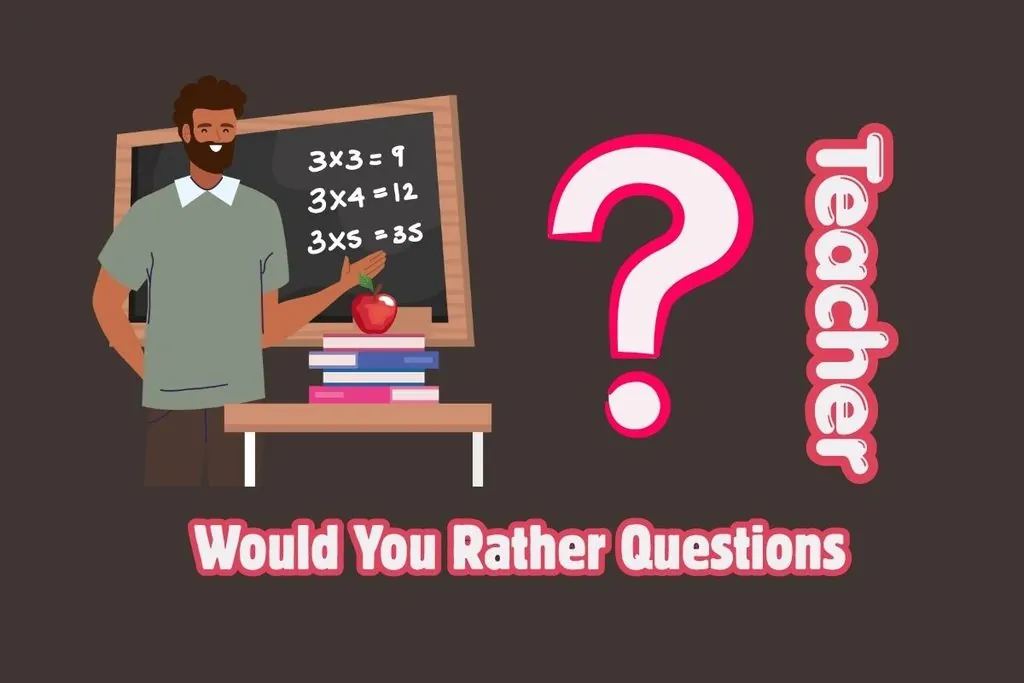
28 Teacher Would You Rather Questions for the Classroom

Some days, a class just won’t talk. You ask a question, you get silence. You try again. More silence. It happens to every teacher at some point, and it is one of those small frustrations that stays with you long after the bell rings.
That is where a good would you rather question can change the whole room. It is not a quiz. It is not a lesson. It is just a fun choice. And students, even the quiet ones, almost always have an opinion on a fun choice.
The questions here are meant for real classrooms. Not perfect ones. Not textbook ones. Real ones, with students who are tired, distracted, or just not in the mood yet. These would you rather game questions are easy to drop into any moment of the day, morning meeting, a quick break, the last five minutes of class, or even just to start a conversation.
Not every question works for every age group. Some of these would you rather questions are light and silly, and some need a tiny bit more thinking. Scan them before using them so you pick what fits your class best. A question that confuses a second grader might be perfect for a sixth grader.
Why Would You Rather Questions Work So Well in Class
These are not just silly time-fillers. There is real reason behind why they work. When you give a student two options, the pressure of “I don’t know the answer” goes away. There is no wrong answer. That is a big deal for students who are shy or afraid to look wrong in front of peers.
Teachers who use would you rather questions regularly notice something. The students who barely talk during lessons often share the most during these moments. The format gives everyone a way in. You just have to pick a side.
- Builds comfort with sharing opinions out loud
- Works for all learning styles
- Takes zero prep time and zero materials
- Can lead into real class talk about choices, values, and thinking
That last point matters more than people think. A would you rather question about food can turn into a short talk about nutrition. One about school rules can lead into a discussion about fairness. The questions are simple, but where they go is not always simple. That is the good part.
| Grade Range | Best Time to Use | Format That Works |
|---|---|---|
| K to Grade 2 | Morning circle or after lunch | Quick show of hands |
| Grade 3 to 5 | Brain breaks, transitions | Walk to one side of the room |
| Grade 6 to 8 | Start of class warm-up | Written choice then group talk |
| High School | Start or end of class | Debate style or written journal entry |
How to Use These Questions Without It Feeling Forced
The way you introduce a question matters as much as the question itself. If you say “Okay, we’re doing a would you rather now,” it can feel like an assignment. But if you just ask it casually, like you thought of it in the moment, the class reacts differently. It feels natural. That is what you want.
Some teachers write the question on the board as students come in. Others just ask it out loud. Some use it as a quick vote. Others turn it into a short debate. There is no one right way. You know your class better than any list does.
After a student picks a side, ask “why?” just once. That one follow-up question turns a fun game into a real thinking moment. You don’t need to do it every time, but even once a week builds the habit of explaining choices.
- Ask it casually, not as a planned activity
- Give students time to think before voting
- Let a student share their reason if they want to
- Don’t force anyone who doesn’t want to answer
- Keep it short. Two minutes is often enough
One thing to keep in mind: some students will pick whatever their best friend picks. That’s normal. You don’t need to call it out. Over time, as they feel safer, they start making their own choices. That shift is worth watching for.
WYR Question 1: Always Speak Your Mind or Never Speak Again
Would you rather...
This one gets students thinking fast. Most will say they want to speak their mind, but then you see their face change when they think about what that really means. Always. Every thought. Out loud. No filter. That is a very different picture.
The never speak again side sounds scary at first, but some students, especially quiet ones, actually pause here. They start thinking about all the ways people communicate without words. Writing, drawing, gestures. It opens up a real conversation about how we share what we feel.
This is a good one for older students who are ready to go deeper. You can let a few share why they picked their side, and you will hear surprisingly honest answers. Students often surprise themselves when they explain their choice out loud.
WYR Question 2: Know Every Answer on a Test or Never Have Homework Again
Would you rather...
You already know what most students will say. No homework. But when you ask them to think a little longer, some shift sides. Knowing every answer means you never feel that panic before a test. That is a real feeling students carry around a lot more than we often notice.
The homework side is funny because even students who pick “no homework” will stop and realize that tests would get much harder without practice. This question quietly teaches something about preparation without it feeling like a lesson at all.
- Great for a Monday morning when nobody wants to think hard
- Works well as a written warm-up question
- Leads naturally into a short talk about study habits
WYR Question 3: Eat the Same Food Every Day or Never Eat Your Favorite Food Again
Would you rather...
Food questions are safe, relatable, and genuinely fun. Every student has an opinion on food. The room usually splits fast on this one. Some kids are creatures of habit and would happily eat the same thing daily. Others would rather give up anything than repeat the same meal.
What makes this one interesting is that it touches on variety versus comfort. You don’t have to name those words out loud in class, but the conversation naturally goes there. Students start wondering what their single food would even be, and that back and forth is where the real fun happens.
This is a good one to use before lunch or as a lighthearted break in the middle of a long lesson. It resets the energy in a room without losing the whole period.
- Low stakes and easy to answer quickly
- Works across all grade levels
- Students will remember it and bring it up again on their own
- You can connect it to nutrition units or science about taste
WYR Question 4: Be the Smartest Person in the Room or the Kindest
Would you rather...
This is one of those would you rather questions that sounds simple but lands deep. Students who think fast pick smartest. But then they sit with it. And some of them quietly switch.
The kindest side gets underestimated until someone points out that a kind person has more real friends, more trust, and more doors open to them in life than a person who is only smart. That realization, when it comes from a student rather than the teacher, is worth more than a whole lesson on character.
This question is useful when your class is working on social skills or when there has been a rough week with conflict between students. It creates a soft opening to talk about what actually matters in how we treat each other.
This question can bring up real feelings for students who feel they are not smart enough or not kind enough. Keep the tone light and affirmative. The goal is self-reflection, not self-criticism.
WYR Question 5: Have Recess Every Hour or One Long Recess at the End of the Day
Would you rather...
Students will debate this one loudly. Some love the idea of small breaks spread out because it means they always have something to look forward to. Others would rather push through and get a big reward at the end. Both strategies, by the way, are real ways adults manage work and rest too.
You can let this become a quick class vote and then ask a few students to defend their answer. The ones who say every hour usually talk about needing to reset. The ones who pick the big recess talk about building momentum. Both answers reveal something real about how different students process and focus.
- Makes a good bridge into a talk about focus and rest
- Students feel heard because the topic is directly about their school day
- Teachers often find this one surprisingly honest and funny
WYR Question 6: Read Every Book in the Library or Travel to Every Country
Would you rather...
This question naturally divides the readers from the adventurers, and that is useful information as a teacher. The students who pick reading often have a quiet depth to them. The ones who pick travel light up when they talk about wanting to see the world. Both answers are valid and worth celebrating.
What is interesting is that some students will say “can’t I do both?” and that question alone is worth exploring. You don’t have to choose just one path in life. But in the context of the game, they have to pick. And picking forces a moment of honest self-reflection that is rare in a school day.
Use this one for a quiet class that needs warming up. It tends to get the readers talking, which can be rare. Reading students often hold back, and a question like this gives them something they genuinely care about to speak up for.
WYR Question 7: Teach the Class for a Day or Be Principal for a Day
Would you rather...
Students love this one because it puts them in a role of power they don’t usually have. The ones who pick teacher often say they would teach something fun, like art or free time. The ones who pick principal start listing rules they would change. Both answers tell you a lot about how they experience school.
This is also quietly flattering to teachers who ask it, because it shows students that they see the teacher role as something worth wanting. Not always, but often enough to notice.
- Works especially well near end of school year
- Can lead into a talk about responsibility and leadership
- Students love imagining rule changes, which can be funny and thoughtful
- Good one for student council discussions too
WYR Question 8: Have a Pet Lion or a Pet Elephant
Would you rather...
This is a pure fun question. No deep lesson required. But the answers are always entertaining and the reasons students give are genuinely creative. Lions are cool and powerful. Elephants are huge and surprisingly gentle. The debate almost writes itself.
Some students will think about practical things like where would you keep it and what would you feed it. Others go straight to the emotional appeal, they just want the one that sounds the coolest. Both kinds of thinkers show up in this question, and you get to watch them work through their reasoning out loud.
Use this for a class that needs a genuine laugh. The sillier the question, the more open students feel. And open students are easier to teach the rest of the day.
WYR Question 9: Only Study Subjects You Love or Learn a Bit of Every Subject
Would you rather...
This one secretly asks students to think about how they learn and what they value in education. Most will pick only favorites at first, because who wouldn’t want to skip the boring stuff. But then a few will say “what if I discover I love something I haven’t tried yet?” and the conversation shifts.
The students who pick learning everything are often the curious ones, the ones who get excited about random facts and can’t help asking extra questions. The ones who pick favorites are often students who have already found their passion and just want to go deep. Both types of learners are valuable, and this question helps them see that.
This is a great question to use at the start of a new term or unit. It primes students to think about why they’re learning what they’re learning, and that shift in framing can change their whole attitude toward the material.
WYR Question 10: Work Alone on Every Project or Always Work in a Group
Would you rather...
Every teacher knows this tension. Group projects are useful for real-world skills. Solo work lets individual strengths shine. Students feel this tension too, even if they can’t name it. This question gives them a way to express it.
The ones who pick alone often have had frustrating group experiences. The ones who pick groups usually love the social part of school, and maybe find solo work a bit lonely. Neither answer is wrong, and hearing both helps the class understand each other better.
- Excellent before assigning a group project
- Helps you understand introverted vs extroverted learners in your class
- Students who share their reason often teach each other something useful
WYR Question 11: Have a Perfect Memory or Be Really Fast at Learning New Things
Would you rather...
This is a fun twist on the classic brain power debate. A perfect memory sounds great until a student starts thinking about all the bad things they would also remember forever. Then the fast learner side starts looking a lot more appealing.
The fast learning side wins a lot with students who are growth-minded. They love the idea of picking up skills quickly. The memory side wins with students who struggle with forgetfulness and feel like a perfect memory would solve many of their school problems. Both perspectives are completely valid and grounded in real experience.
This is a good one for older classes who are starting to think about how they study and why some things stick and others don’t. The question makes those ideas personal and real without turning into a lecture.
WYR Question 12: Be Able to Fly or Be Able to Breathe Underwater
Would you rather...
A classic for a reason. This question never gets old because the two options pull at completely different imaginations. Flying is about freedom, speed, seeing the world from above. Breathing underwater is about mystery, calm, the deep unknown.
Students who pick flying tend to be big picture thinkers. They think about where they would go. Students who pick underwater tend to be curious and drawn to things most people haven’t seen. You can tell a lot about a student from this one, and they love discussing it.
- Use this when energy is low, it wakes a class up instantly
- Works for every single grade level
- Can connect to science units about air, water, or the human body
- Always generates real debate and strong opinions
WYR Question 13: Give Up Social Media for a Year or Give Up Your Favorite Snack for a Year
Would you rather...
This one lands differently by age. For younger students, it might need a small explanation of what social media includes. For older students, especially middle or high schoolers, this hits close to home and the room gets real quiet for a second before the debate starts.
The snack side wins more than you would think. Some students would genuinely rather scroll than eat a snack, which says something interesting about how woven into daily life those platforms have become. Other students react strongly and say no social media would actually be a relief. That honesty is worth exploring if the class is open to it.
For younger grades, swap “social media” for “video games” or “cartoons” and the question works just as well without needing explanation.
WYR Question 14: Live in the Arctic or in the Sahara Desert
Would you rather...
Geography and survival instincts collide in this one. Students who know a little about both regions will have strong opinions. Those who don’t know much will start asking questions, and that is the best outcome. Curiosity sparked by a would you rather question is one of the cleanest forms of learning.
The Arctic side tends to appeal to students who like cold weather and find extreme heat miserable. The desert side appeals to those who hate the cold and love sunshine. Both sides will start imagining what daily life would look like, and the mental pictures they paint are often vivid and funny.
This question works well as a bridge into a geography or science unit about climate and survival. It makes those topics feel personal before you even open a textbook.
WYR Question 15: Have Endless Free Time or Endless Energy to Do Things
Would you rather...
This one surprises students when they think it through. Free time sounds amazing, but without energy, you’d just sit there. Endless energy without free time means you’re busy forever. The trade-off becomes very real very fast.
Students who pick free time often talk about rest and doing what they love without pressure. Students who pick energy talk about getting more done, playing harder, and not feeling tired after school. This is actually a quiet conversation about work-life balance that students can relate to in their own way.
- Great for the last period of the day when everyone is already tired
- Generates honest conversation about rest versus activity
- Works for all ages with minor adjustments in framing
WYR Question 16: Be Really Good at Sports or Really Good at Art
Would you rather...
This one shows you which students see themselves as physical or creative, and sometimes which ones wish they were different from how they currently see themselves. A student who is already good at art might pick sports because they already have one. A student who loves sports might pick art for the same reason.
What is lovely about this question is that it validates both paths equally. There is no smarter or better answer. Sports take discipline, art takes discipline. Both build character, both create joy. Saying that out loud, or letting students arrive at it themselves, is worth a lot.
Watch for students who say “neither” or seem uncomfortable. This might be a student who doesn’t feel confident in either area. A gentle “what would you pick if you had to?” keeps them included without pressure.
WYR Question 17: Have Three Close Friends or Fifty People Who Sort of Know You
Would you rather...
Friendship is something every student thinks about, even if they never say it out loud. This question brings that quiet topic into the open in a way that does not feel too personal or heavy. It just asks them to choose, and in choosing, they reveal how they think about connection.
Most students will pick three close friends, but the ones who pick fifty have real reasons too. They might value variety, enjoy knowing lots of people, or feel energized by social connections. Neither answer is wrong. But the conversation that follows is almost always honest and sometimes moving.
This is an especially good question after a conflict in the class, or after any period where friendship dynamics have been tense. It reopens the topic gently without pointing at anyone.
- Opens quiet conversations about what friendship really means
- Good for social emotional learning moments
- Works across all ages with slight wording changes
- Students remember questions that touch on things they actually care about
WYR Question 18: Always Be Too Hot or Always Be Too Cold
Would you rather...
Simple. Quick. Always good for a laugh. Students have very strong feelings about temperature and this question unlocks them immediately. The room usually splits and then each side starts defending why their choice is obviously the right one.
The cold side argues you can always add more layers. The hot side argues you can find shade or a fan. Both sides are wrong in their own way, which makes the debate funny and endlessly circular. That is exactly the energy you want from a quick brain break question.
Use this one when you need to shift the mood fast. It works in under two minutes and leaves the class smiling.
WYR Question 19: Discover a New Animal or a New Planet
Would you rather...
Science lovers light up here. Even students who don’t love science get pulled in by the scale of both options. A new animal means something living, breathing, and real on Earth. A new planet means something vast, unknown, and possibly holding life of its own.
The animal side tends to draw students who care about nature, wildlife, and the living world. The planet side draws the ones who look up at the sky and wonder. Both are researchers at heart, and telling them that makes them stand a little taller.
- Perfect before a science unit on ecosystems or space
- Gives you a snapshot of where student curiosity is pointing
- Can lead into research projects that feel self-chosen
WYR Question 20: Know How a Story Ends Before You Read It or Be Surprised Every Time
Would you rather...
This one is for readers, but it pulls in everyone because everyone has experienced a story in some form. The students who want to know the ending early are usually the ones who like control and don’t love suspense. The ones who want surprise are the ones who read for the feeling, not just the information.
Interestingly, research on reading shows that knowing an ending does not always ruin enjoyment. Some readers actually enjoy a story more when they know where it goes. Bringing that in casually, if the moment feels right, adds a real-world layer that surprises students who assumed the answer was obvious.
This works beautifully before starting a new class read-aloud or novel. It sets up a mindset for how students approach the story, which shapes their engagement as you read together.
WYR Question 21: Have a Week Off School Every Month or an Extra Hour of Lunch Every Day
Would you rather...
The weekly break option sounds like an easy win. But when students think about how much they would miss and how hard it would be to catch up, some start second-guessing. The extra lunch hour sounds small by comparison, but it adds up and means more free time to actually talk, play, and just breathe during the school day.
This question gets real answers fast because it is directly about their daily life. Students have opinions about this. Strong opinions. Let them talk. You will learn a lot about how they experience the school day and what they wish was different.
- Works great on a Monday when enthusiasm is low
- Can lead into a talk about school schedules and student wellbeing
- Older students may bring up weekend learning and real-world time use
WYR Question 22: Be Able to Talk to Animals or Speak Every Human Language
Would you rather...
Two magical abilities with completely different implications. The animal side is fun and whimsical. What would your dog say? What would a bird think about? What do fish talk about all day? Students go wild with the possibilities and the laughter this brings is real and warm.
The language side is more practical but still magical. Speaking every human language means no barriers, no misunderstandings, no walls between you and another person anywhere in the world. That thought, when a student really sits with it, is quite powerful. Language is connection, and fluency in all of them would be one of the most human superpowers imaginable.
This is a great conversation starter and also works as a bridge into a lesson on cultural diversity, global citizenship, or even a language unit. The entry point is delight, which is the best entry point for any lesson.
WYR Question 23: Never Lose Anything Again or Never Forget Anything You’ve Learned
Would you rather...
Students who constantly lose things will laugh at this one. Teachers will too. The never lose anything side is immediately appealing to anyone who has spent ten minutes looking for their pencil. But the never forget what you learn side is a different kind of superpower.
Imagine never having to re-study for a test. Never forgetting a fact from last year’s class. Building on knowledge without it ever fading. The students who pick that side are often the ones who genuinely care about learning and are a bit frustrated that some things don’t stick. Acknowledging that frustration gently, through a fun question, is a form of care that students notice.
WYR Question 24: Be First to Raise Your Hand or Think Quietly Before Answering
Would you rather...
This one is honestly a bit of a mirror for how students see themselves as learners. The fast hand raisers and the deep thinkers both exist in every classroom. This question makes that visible in a way that does not shame either type.
The fast answer side wins socially. But the quiet thinking side often produces better answers. Pointing that out, gently and without comparing students to each other, is a useful teaching moment wrapped in a fun format. Both styles have value. That message is worth sending early and often.
This is a good question to ask when you’re trying to shift classroom culture toward more thoughtful participation. It names the two styles without naming individuals, which keeps it safe and inclusive.
WYR Question 25: Have a Classroom With No Walls or No Chairs
Would you rather...
This one is funny and students enjoy picturing both scenarios. No walls means learning outside, or being visible to the hallway, or the wind blowing your papers away. No chairs means standing desks, sitting on the floor, leaning against things. Both options are slightly uncomfortable and that is the point.
The question also quietly introduces students to the idea that learning environments matter. Where we learn affects how we learn. Some of the most creative and effective schools in the world have rethought walls, chairs, and traditional classroom setups entirely. That is worth a short mention if the class is curious enough to go there.
- Fun and visual, easy for young students to imagine
- Can lead into creative writing about an imaginary school
- Older students can connect it to real discussions about learning environments
WYR Question 26: Always Finish First or Always Do Your Best Work
Would you rather...
Most students, when asked directly, will say “do my best work.” But in practice, many feel pressure to be done first. This question makes that gap visible. It is one of the more honest questions on this list and the answers, especially the reasons behind them, often reveal a lot.
The student who quietly says “I always rush because I hate being last” is sharing something real. The one who says “I want to take my time but people look at me funny” is sharing something real too. These small moments of honesty, created by a simple game question, are some of the most valuable in a school year.
Use this one before returning graded work. It sets up a conversation about growth over speed that makes feedback easier to receive and take seriously.
WYR Question 27: Go on a Class Trip Every Week or Have a Special Guest Every Week
Would you rather...
Both options sound amazing and students usually groan with delight when they realize they have to pick just one. The class trip side appeals to those who love being out of the building, moving around, seeing new places. The special guest side appeals to those who love hearing new stories and meeting people with interesting lives.
What is worth pointing out is that both options are really about one thing: bringing the world into learning. Trips do it by moving you outward. Guests do it by bringing the outside in. Both are real learning experiences that most students remember long after the textbook material fades.
This question works well when students seem bored with routine. It reminds them that learning can take many shapes, and that even within the four walls of a classroom, remarkable things can happen.
WYR Question 28: Know Your Talent at Age 10 or Discover It Slowly Over Time
Would you rather...
This might be the most thoughtful question on this list. Knowing your talent early sounds great. You can focus, develop it, not waste time. But knowing too early also means never exploring, never being surprised by yourself, never finding out what else you might love.
The slow discovery side has something beautiful in it. Every new class, every new experience, every strange hobby tried on a boring afternoon could be the one that reveals something lasting. That uncertainty, which feels like a burden to some students, is actually a kind of freedom. Not many questions give a classroom a chance to talk about that.
End with this one when you want to close a session on a meaningful note. It leaves students thinking, and thinking students are the best kind to send home for the day.
Key Takeaways
- Would you rather questions work because they remove the fear of being wrong, every student has an equal starting point
- The best questions are not too easy and not too heavy, they live right in the middle where honest thought happens
- What students say when they explain their answer is usually more useful than the answer itself
- Quiet students often open up more in these moments than in any standard lesson
- A two-minute question can shape the energy and trust in a classroom for the rest of the day
- You do not need a reason or a lesson plan, sometimes a good question is enough on its own
Frequently Asked Questions About Would You Rather Questions in Class
| Question | Quick Answer |
|---|---|
| How often should I use these? | Two to three times a week is enough. Too often and it loses its freshness. Once in a while and it feels like a treat. |
| Do I need to explain every question? | Not always. Simpler ones need no setup. More complex ones might need one sentence of context. |
| What if students won’t participate? | Start with a vote by show of hands so no one has to speak. Once a few share, others usually follow. |
| Can I let students make their own questions? | Yes, and it’s one of the best extensions. Student-made questions for classmates build ownership and creativity. |
| Are these suitable for online class too? | Absolutely. Use a poll feature or have students type their answer in chat. It works just as well remotely. |
One Last Thought
The best thing about would you rather questions is not the question. It is what comes after. The moment a student gives an unexpected answer. The moment a shy kid finally speaks up. The moment a whole class bursts into laughter or falls into quiet thought together.
Those moments don’t happen because of a perfectly planned lesson. They happen because someone created a small, safe space for opinion, and waited to see what came out. That’s what these questions do. They open a little door and see who walks through.
As Mark Twain once said, “The secret of getting ahead is getting started.” A good question is always the best start.
14 College Would You Rather Questions Every Student Will Love
17 Startup Would You Rather Questions Every Founder Should Answer
15 CEO Would You Rather Questions About Business Success
21 Prison Would You Rather Questions That Feel Impossible
25 Detective Would You Rather Questions
Mystery Would You Rather Questions
55 Superpower Would You Rather Questions
34 Horror Would You Rather Questions Not for the Weak
39 Time Travel Would You Rather Questions
50 Space Would You Rather Questions Beyond Earth
100 Future Would You Rather Questions That Will Blow Your Mind
AI Would You Rather Questions About the Future
99 2000s Would You Rather Questions That Bring Back Memories
90s Would You Rather Questions Every Kid Will Remember
35 Millennial Would You Rather Questions
35 Gen Z Would You Rather Questions
100 Would You Rather Questions for Introverts and Extroverts
101 Parenting Would You Rather Questions Every Mom and Dad Should Try
25 Friendship Would You Rather Questions
53 Relationship Would You Rather Questions
65 Genius Would You Rather Questions Only Smart People Solve
32 Apocalypse Would You Rather Questions
45 Survival Would You Rather Questions That Test Your Instincts
100 Millionaire Would You Rather Questions
101 Rich or Poor Would You Rather Questions
All Would You Rather Questions
103 Impossible Would You Rather Questions
45 Wedding Would You Rather Questions
68 Office Would You Rather Questions
200 School Would You Rather Questions Every Teacher Needs This Year
120+ Funny Would You Rather Questions for Kids
Would You Rather Questions for Kids Can Your Child Handle These?
Would You Rather Questions: 245+ for Kids, Adults, Couples, and Everyone
84 Animal Would You Rather Questions Kids Will Love
50 Sports Would You Rather Questions for True Fans
100 Food Would You Rather Questions for Food Lovers
100 Travel Would You Rather Questions for Adventure Lovers
25 Best Would You Rather Questions for Work Meetings, Team Building & Employee Engagement