8 Ways to Organize Your Study Table for Better Focus

This article may contain affiliate links.

Very Frustrating when we see the study table not find the thing that we want because the desk is full and clutter. The mind goes blank. And not from the work ahead, but from the mess in front of you.
Most people deal with a messy study table the same way. They push things to one side, pull out their book or screen, and tell themselves they will sort it all later. But later never comes. And that pile on the side, the one you are not even looking at, keeps pulling your eyes back to it. Keeps pulling your brain away from the page.
A study table is not just a flat space to place things on. It is, in a quiet way, a map of your mind. What you keep close, what you ignore, what you pile up without thinking, it all says something. And when that map is chaotic, your focus follows. This is not about being neat. It is about setting up a space where thinking gets easy.
Here are 8 real, tested ways to organize your study table for better focus. Not tips from a list that was put together fast. But things that, when applied with care, change how long you can sit, how deep you can think, and how calm you feel when you open your books.
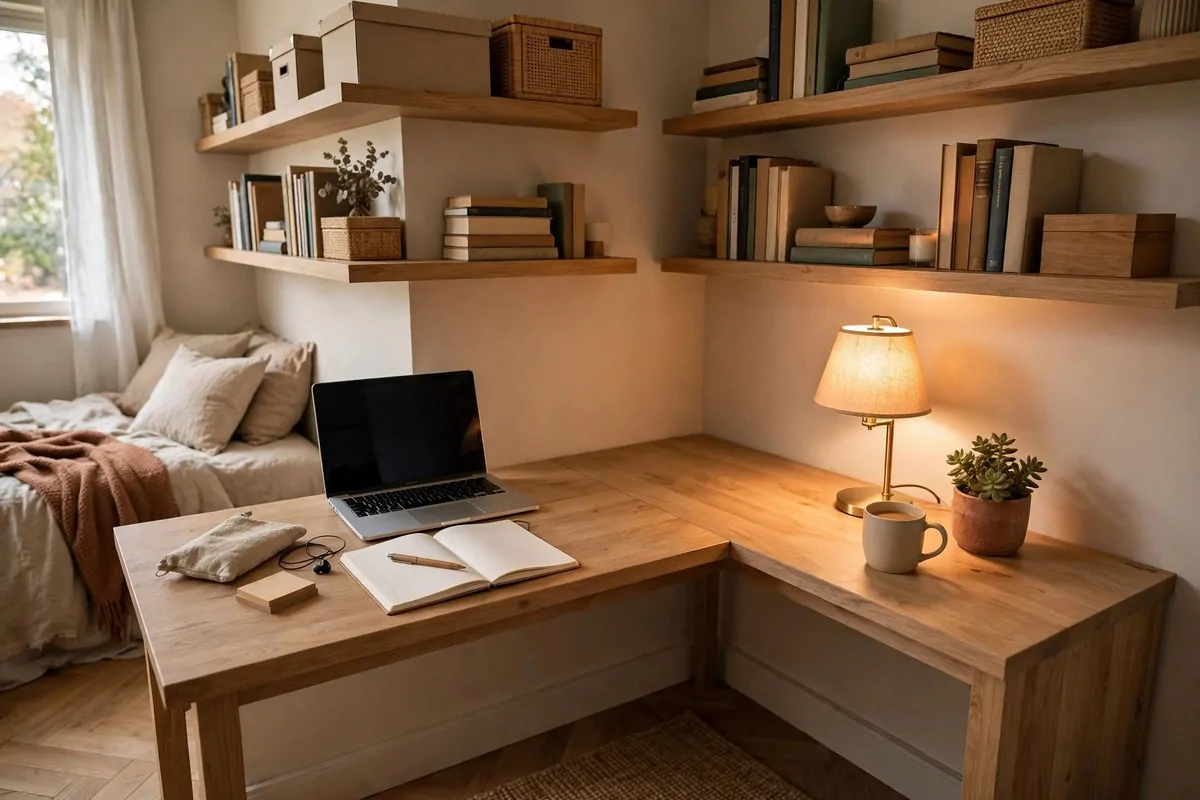
1. Start With a Full Clear-Out, Not a Tidy-Up
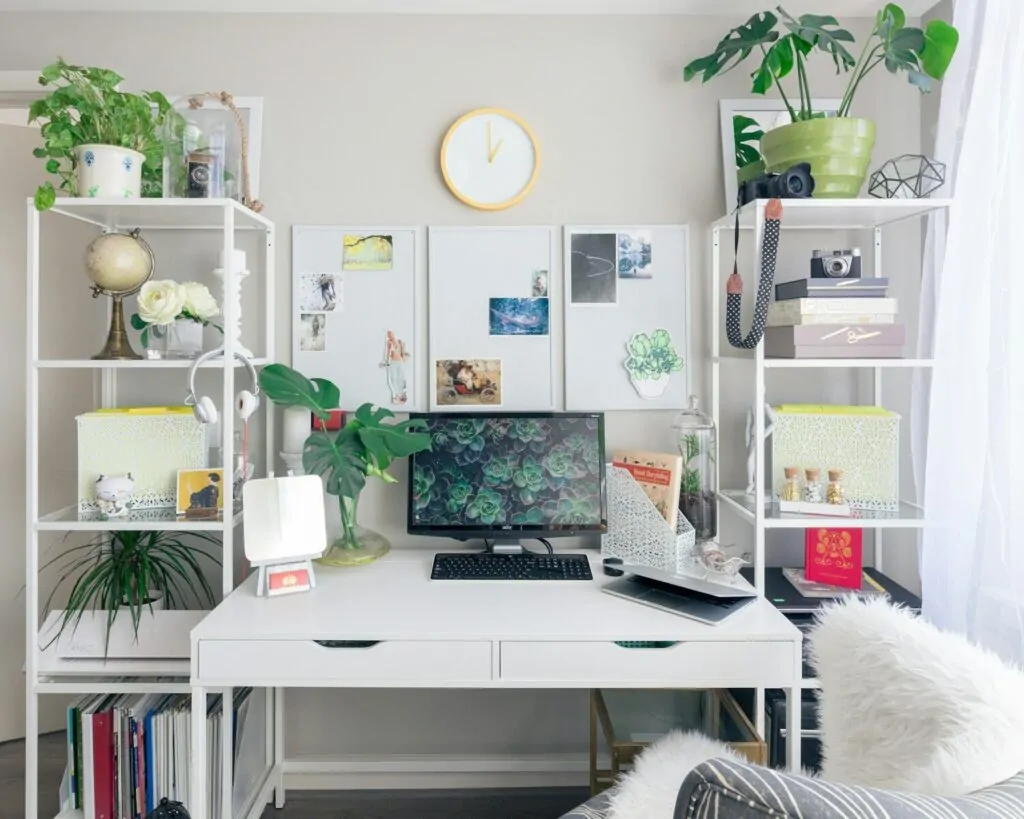
The first and most skipped step in organizing a study table is not adding more organizers or buying new trays. It is taking everything off. All of it. The pens you have not used in a year. The sticky notes from last term. The random cable that belongs to a device you sold. All of it off the desk, onto the floor or a nearby bed, and then you look at what you actually have.
Most people try to organize around the mess. They add a tray here, a cup for pens there, and call it done. But what that does is just give the clutter a more formal home. The desk still feels heavy. Still feels full. Because it is.
The full clear-out forces a kind of honest accounting. When things are on the floor in a pile, you see them for what they are. Useful or not. Here or gone. There is no hiding anything when it is all out in the open. And that moment, standing over that pile, is when you start making real choices instead of just pushing things around.
After the clear-out, wait. Do not rush to put things back. Walk away for a few minutes if you can. Come back and look at the empty table. Feel how open that space is. Feel how the mind responds to it. That response is not in your head. Research in environmental psychology has shown for years that visual clutter competes for attention in the brain. An empty surface, even briefly, gives the mind a small rest it was not aware it needed.
Then, only bring back what you will actually use in the next week or so. Not what you might use. Not what you used last year. What you need now. This is the foundation of everything else. If the clear-out does not happen first, the other steps just become decoration on top of disorder.
The habit of the full clear-out, done every few weeks or at the start of each study term, keeps the table from silently filling back up. Because it will fill back up. That is what surfaces do. The question is whether you let it happen by accident or manage it with intention.
Desk organizer set with drawers, buy it on amzon!
Small desktop storage bins set Buy it on amazon!
2. Light the Space Like It Matters
Poor light is one of the most common and least talked about reasons people cannot focus at a study table. It is quiet damage. The kind you do not notice until your eyes are tired, your head is heavy, and you have been re-reading the same paragraph for the third time.
Natural light is the best option and most people have access to some of it, but not always at the right time of day or from the right direction. The ideal setup is to have natural light come from the side, not from behind or directly in front of the screen or page. Light behind you creates glare on your material. Light from the front shines in your eyes. Side light is even, soft, and steady.
When natural light is not enough or not available, the quality of artificial light matters more than most realize. Warm yellow light, the kind many bedside lamps use, creates a sleepy, low-alert state in the brain. It is good for winding down, not for working. For study, cooler white light in the 4000K to 5000K range keeps the mind alert without the harshness of pure blue light. A desk lamp with adjustable color temperature is worth more than most desk accessories.
The position of the lamp also plays a role. For right-handed people, the light source should come from the left. For left-handed people, from the right. This prevents the writing hand from casting a shadow over the work. It sounds like a small thing. But small discomforts, repeated over an hour or two, wear attention down faster than most people expect.
Glare on screens is a separate issue. Overhead room lights often reflect on laptop or monitor screens in ways that force the eyes to work harder to read. Adjusting the angle of the screen or turning off harsh overhead lights and relying on a desk lamp instead can reduce that strain significantly.
There is also the matter of the room behind the screen. If you are in a video call or just studying with a screen, a bright window or light source directly behind the screen creates a contrast that exhausts the eyes quickly. Positioning so that you are facing the light source, or at least not directly away from it, protects focus over longer sessions.
Good light does not fix a messy desk or a hard subject. But bad light will quietly ruin both.
LED desk lamp, buy it on Amazon!
Anti glare screen protector laptop monitor, buy it on amazon!
3. Set Up Clear Zones on the Table
A desk without zones is just a flat surface where everything competes. The charger fights with the notebook. The water bottle threatens the open textbook. The phone sits right in the line of sight, pulling focus without even lighting up. Everything is everywhere, and the brain, which is always looking for the next point of input, gets pulled in six directions at once.
Zones solve this. Not with physical dividers, though those can help, but with intention. The practice of deciding in advance where each type of thing lives on the table.
A useful way to think about this is in three areas. First, the primary work zone. This is the center of the table, directly in front of you. This space is for the active task only. The open book, the current notes, the screen if you are using one. Nothing else belongs here while you are working. Not the phone. Not a second book. Not a snack. The primary zone is sacred to what you are doing right now.
Second, the secondary zone. This is the area within easy reach but not directly in front of you. Usually the sides of the table. This is where reference books, a notepad for quick thoughts, pens, and a drink can live. Things you might reach for while working, but that do not need to be in the middle of your view.
Third, the far zone or edge area. This is the far corners and back edge of the table. Things here should be things you rarely touch during a study session. A small plant, a lamp, a clock. Functional but not distracting. Decorative but not cluttering the work space.
The value of zones shows up after a few sessions. Once the habit is set, the hand reaches for a pen without the eye having to search. The mind stays on the work because the hands know where things are. This is what ergonomists and workspace designers mean when they talk about reducing friction. Every second the eye has to scan and the hand has to search is a second attention is not on the work.
The zone system also makes tidying up faster. When everything has a home, returning things to their place takes less thought. The table resets quickly. And a table that resets quickly is one you actually return to with a clear head.
large desk pad mat for students, Buy it on Amazon
360 rotating desk organizer pen holder, Buy it on Amazon
4. Cut the Cable Chaos Down to What Is Needed
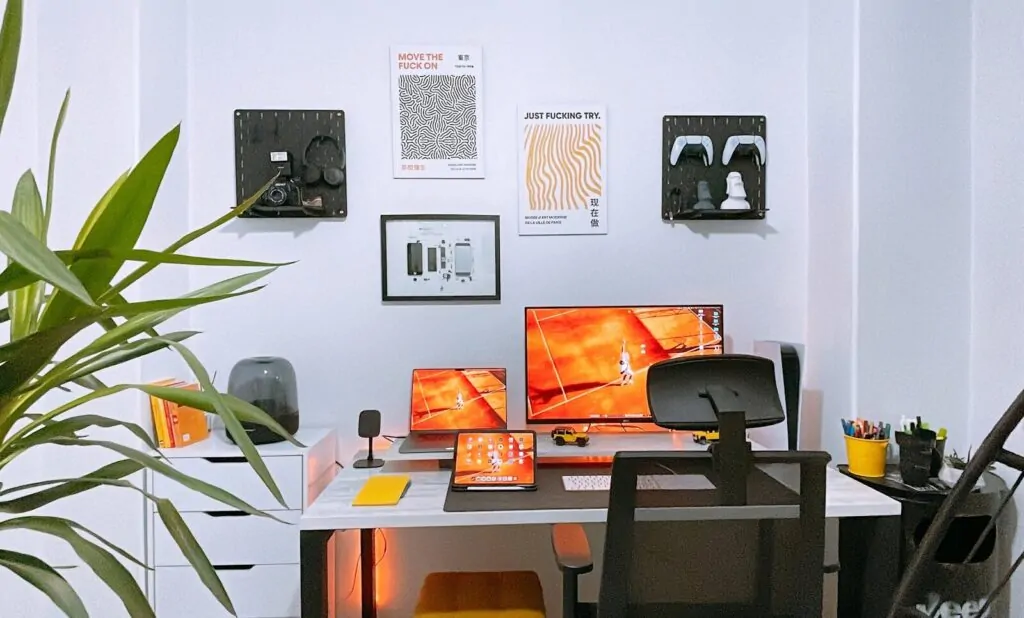
Cables are one of those things that seem too small to matter until they are all tangled on the desk at once. A charging cable for the phone, one for the laptop, maybe a pair of wired earphones, a USB hub, possibly a lamp cord. On a study table, these things knot together and spread across the surface like roots, taking up visual space and catching the eye again and again.
The first step is to count what is actually needed on the table at the same time. Many people have cables present for devices they are not even using during that session. The tablet charger is there even when the tablet is not. The extra USB cable is coiled up on the surface just in case. Removing what is not in active use is the first and easiest fix.
For cables that must be on the table, cable clips or small adhesive hooks along the edge of the desk keep them from spreading across the surface. Velcro ties or simple twist ties gather loose lengths together. The goal is not perfection. The goal is that cables stay out of the work zone and out of the eye line.
A cable box or a small power strip with a cover, placed under or behind the desk, can move most of the tangle off the surface entirely. Devices charge from there, and only the cable that is in active use comes up to desk level. This one change can make a cluttered desk feel remarkably cleaner without moving anything else.
Wireless options, where budget allows, reduce the problem from the source. A wireless keyboard, a wireless mouse, wireless earbuds, these all remove a category of cable from the equation. But the wired setup can work just as well with a little management. The mess is not in the cables themselves. It is in the lack of a system for them.
For students who study in multiple locations, a small cable pouch that travels with the bag keeps charging cables from multiplying on the desk. One cable per device, kept in the pouch when not in use, comes out only when needed, goes back when done. The desk stays clear because the cables have a home that is not the desk.
Tidy cables are one of those improvements that are felt more than seen. The desk does not look dramatically different. But the mind moves more freely across a surface without knots and loops pulling at the corner of the eye.
Cable management box desk cord organizer Buy it on Amazon
Adhesive cable clips desk wire holder Buy it on Amazon
Velcro cable ties reusable pack Buy it on Amazon
5. Keep Only Today’s Tools on the Surface
This one takes practice, because the instinct is to keep everything close. Every pen, every highlighter, every color of sticky note, all within arm’s reach. Just in case. The problem is that just in case thinking turns a study table into a storage unit.
The principle here is simple. Only what will be used today belongs on the table today. Everything else belongs in a drawer, a shelf, or a storage box nearby. Not out of reach, but not on the surface.
This applies to books as well. The stack of five books you are working through this term does not need to sit on the desk at all times. The one or two you are using today, those belong on the surface. The others can live on a shelf. When they are needed, they come out. When the session is done, they go back.
What this does to focus is interesting. When the surface has only what is needed for the current task, the mind stops scanning for options. It stops weighing. It stops deciding. The decision of what to work on was made before the session started. The desk confirms that decision. There is no pile of other books quietly suggesting you should be working on something else.
The idea connects to what psychologists call decision fatigue. Every choice the brain makes, including small unconscious ones like which pen to pick up, draws from a shared pool of decision-making energy. Reduce the number of things competing for that attention, and the energy stays where it is needed: on the work.
One practical way to run this is to prepare the desk the night before a study session. Set out exactly what is needed. Pack away what is done. Come back the next day to a ready surface. That small act of preparation the night before removes the warm-up time that most sessions waste in the first ten to fifteen minutes of shuffling and sorting.
The desk becomes a signal. When it is set up with today’s tools, the brain reads that as: we are working now. When it is clear, the brain reads: session is over. This kind of physical signal helps create boundaries around study time that the mind learns to respect.
Minimalist pen holder desk organizer Buy it on Amazon
Small desktop drawer organizer for study table Buy it on Amazon
6. Use Vertical Space, Not Just the Table Top
One of the most underused parts of a study setup is the space above the desk. Walls, shelves, monitor risers, small pegboards. Most people spread everything flat and then wonder why the table feels too small. The table is not too small. The thinking about space is just too flat.
A monitor riser or laptop stand raises the screen to eye level, which is better for the neck and posture, but it also creates usable space underneath. A small drawer unit under the raised laptop holds pens, cards, sticky notes. The screen is at the right height. The surface clears up. Two problems solved with one object.
A small shelf on the wall above the desk, even a single one, moves books and reference material off the surface without moving them out of reach. Shelves above eye level are for things used less often. Shelves at or just below eye level are for things used regularly. The arrangement is not complicated. The effect on the desk below is real.
Pegboards, which have been popular in home office setups for a while now, work well for study tables too. A pegboard on the wall holds notebooks, calendars, small organizer baskets, a pair of scissors, a roll of tape. All things that would otherwise migrate to the desk surface. The pegboard makes them visible but vertical. Off the table, but not lost.
Small stackable trays on the desk itself can also use vertical space well. Three layers of flat trays take up the footprint of one. Papers can be sorted by type or by subject. The top tray for active work. The middle tray for things to review. The bottom tray for things to file or put away. Vertical trays can be bought cheaply and make a real difference in how papers, which tend to spread quickly, are managed.
The key idea is that the table top is premium space. It should be treated like floor space in a small apartment. Every item placed there needs to earn its spot. Anything that can live vertically, on a wall, on a riser, on a stacked tray, frees up that premium space for the work itself.
Monitor riser with storage drawer laptop stand Buy it on Amazon
Wall mounted floating shelf for study room Buy it on Amazon
Desktop pegboard organizer for desk Buy it on Amazon
7. Add One Calming Element, Just One
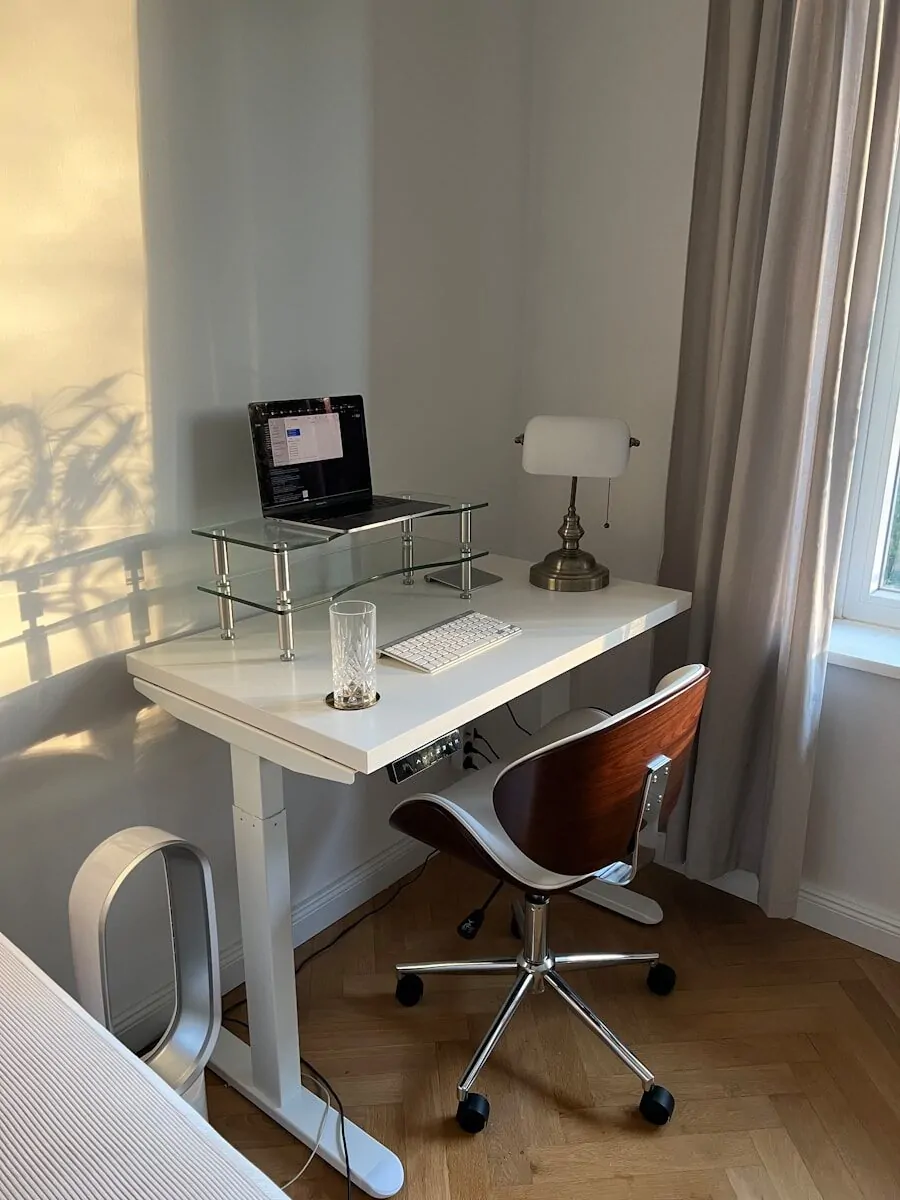
This point tends to get overdone. People read that a plant on the desk helps focus and come back with three plants, a diffuser, a crystal, a framed photo, and a small figurine. The desk, which was cluttered with notebooks, is now cluttered with calm things. The intention was right. The execution missed.
One calming element, chosen with care, can genuinely shift the quality of time spent at a desk. A small plant is the most studied option. Research from the University of Exeter and others has shown that the presence of plants in a workspace can lift focus and reduce perceived stress. Not dramatically. Not magically. But measurably. The green color, the organic shape, the quiet life of a plant sitting on the edge of a desk, it adds something that a screen or a textbook cannot.
If not a plant, a small stone, a smooth object with a pleasing texture, one meaningful photo in a small frame. The function is not decoration. The function is to give the eye a resting point that is not a task. When the mind needs a half-second break between thoughts, having something calm and non-demanding to look at briefly, without reaching for a phone, helps reset attention without breaking the session.
The one rule is: one. Not a collection. Not a corner of soothing objects. One carefully chosen thing that has meaning or quiet beauty. Everything else on the desk has a job. This one thing simply exists, and that is its job.
Some people prefer no calming elements at all. A completely clear surface, nothing but work tools, suits certain types of minds well. The study table of a surgeon-like thinker who wants no softness, no distraction, just work space. That is valid too. The point is intention. Whether the choice is one plant or pure emptiness, it should be a chosen thing, not an accidental one.
Small succulent plants for desk indoor Buy it on Amazon
Zen smooth stones for desk decor Buy it on Amazon
8. Build a Start and End Ritual for the Desk
The last way to organize a study table is not about the objects on it at all. It is about the behavior around it. Specifically, the small rituals that open and close a study session.
A start ritual is a short, repeated set of actions that happen before the studying begins. Wipe the desk with a cloth. Arrange the tools. Pour the drink. Set a timer or open the planner. Three to five minutes, the same sequence each time. This is not a stalling tactic, though it can become one if it stretches. It is a signal to the nervous system. A sequence of familiar physical actions that say: work is starting now.
The brain, which responds well to patterns, begins to associate these actions with the shift into focus mode. Over time, the ritual becomes a kind of switch. The act of wiping the desk and setting the timer starts to pull the mind toward concentration the way the smell of coffee can pull someone toward alertness. It is conditioning, and it works.
An end ritual is just as useful and far less common. Most people stop studying when they run out of energy or time, close the laptop or book, and leave the desk in whatever state it is in. This means the next session starts with a messy surface and a vague sense of continuation rather than a fresh start. The end ritual changes that.
At the close of a session, take five minutes to reset the desk. Put away what is done. Set out what is needed for the next session. Write one line in a planner or notebook: what was done today, what comes next. Then step away from the desk with intention. Not just drifting away. A clear close.
This practice also creates a psychological boundary. The desk is not always on. It is not always open for business. It has clear opening and closing moments. That boundary matters more for people who study at home, where the desk is always visible and always potentially demanding attention. The end ritual signals that the desk is closed for now. The mind can rest.
Over weeks, these small rituals do something larger. They create a relationship between the person and the space. The desk becomes a place the mind trusts. A place associated with work that gets done, not work that overwhelms. That trust is worth more than any organizer or cable tray.
Visual desk timer for studying focus Buy it on Amazon
Daily study planner notebook undated Buy it on Amazon
Microfiber cleaning cloth set for desk Buy it on Amazon
Key Takeaways
- A clear surface is not about neatness. It is about removing the small visual decisions that drain focus before the real work begins.
- Light quality affects mental state more than most people track. The wrong light creates low-grade strain that wears focus down silently.
- Zones on a desk reduce friction. When the hand knows where things are, the eye stays on the work.
- Keeping only today’s tools on the surface removes decision noise from the space where thinking needs to happen.
- One calming element, not several, gives the eye a resting point without turning the desk into a display shelf.
- Start and end rituals train the brain to enter and exit focus mode reliably. The desk becomes a cue, not just a surface.
A Closing Thought
The study table is one of those places where small choices repeat every single day. The way the desk is set up either works with the mind or against it. Quietly, without drama, the organization of that surface shapes how long a person can sit, how deep the thinking gets, and how the session ends.
None of this requires a perfect setup. It does not require new furniture or expensive tools. It requires a bit of honest observation. What is on the desk that does not need to be there? What is missing that would help? What small habit, done at the start and end of each session, would make the space feel more like a place where real work happens?
As the writer Annie Dillard once put it: “How we spend our days is, of course, how we spend our lives.” The desk is where many of those days begin. It is worth setting up with care.