Robert Kiyosaki: 5 Things You Should Buy to Build Real Wealth

Contains affiliate links. Prices stay the same for you. See Affiliate Disclosure.
Most people don’t feel broke because they earn too little. They feel broke every month because money leaves faster than it arrives. Rent, car payments, subscriptions, impulse purchases, etc., each one feels harmless on its own. Together, they create a quiet pressure that never fully lifts.
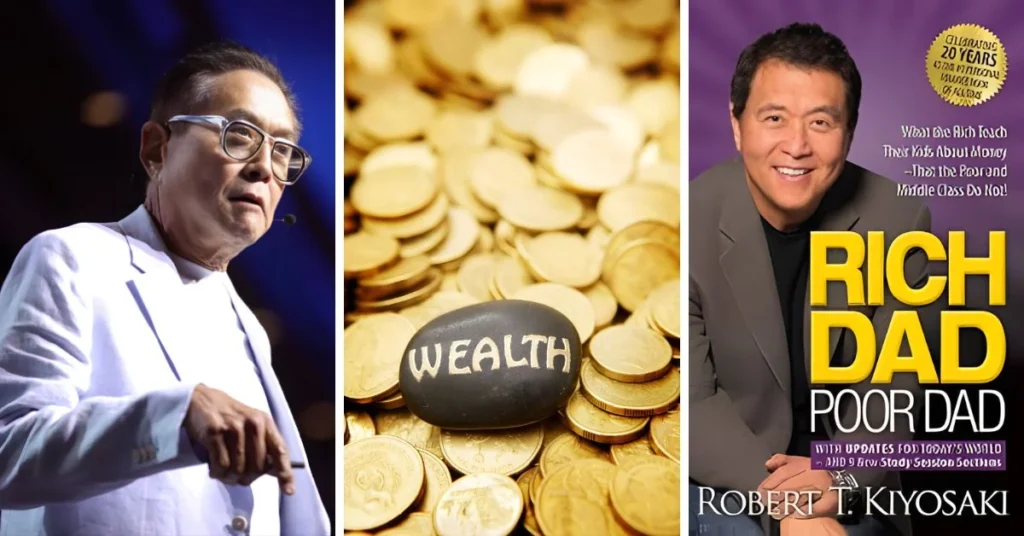
Robert Kiyosaki, author of Rich Dad Poor Dad, noticed this pattern decades ago. His core insight wasn’t about hustle or sacrifice. It was simpler, almost uncomfortable in its clarity: what you buy matters more than how much you earn. The wealthy buy differently, often invisibly, and that difference compounds over time.
This article isn’t about judgment or extreme frugality. It’s for people who feel stuck, curious, or quietly worried that they’re working hard but making no progress. Let’s slow down and explore the five things Kiyosaki consistently emphasizes buying that not to look rich, but to build something real.
Robert Kiyosaki’s Philosophy on Buying Assets vs. Liabilities
Before talking about what to buy, Kiyosaki insists on redefining why we buy.
In Rich Dad Poor Dad (first published in 1997), he introduced a deceptively simple definition:
- Assets put money into your pocket.
- Liabilities take money out.
This reframing changed how millions view homes, cars, and even education. According to the U.S. Federal Reserve’s 2022 Survey of Consumer Finances, nearly 80% of American households carry some form of consumer debt, while less than half own income-producing assets outside retirement accounts. The imbalance isn’t accidental but it’s cultural.
Kiyosaki argues that traditional education trains people to become excellent employees, not thoughtful buyers. Schools teach math, but not cash flow. They teach careers, but not balance sheets. As a result, many high-income earners still live paycheck to paycheck, a phenomenon CNBC has documented repeatedly among professionals earning over $100,000 per year.
The wealthy, Kiyosaki observed early in his career, don’t buy emotionally. They buy structurally. Every purchase is quietly evaluated through one question: Does this strengthen or weaken my financial position?
With that lens in mind, the five purchases below begin to make sense, and that is not as shortcuts, but as foundations.
1. Financial Education is The Asset That Changes Every Decision
Kiyosaki often says the most important asset never appears on a balance sheet: financial education.
This doesn’t mean degrees from elite universities.
Kiyosaki’s own journey began with curiosity rather than credentials. He learned by reading books, attending seminars, and—importantly—making small, sometimes painful mistakes early. He often credits authors like Benjamin Graham (The Intelligent Investor) and thinkers influenced by Adam Smith’s economic principles for shaping his mindset.
Buying financial education looks unglamorous:
- Books on investing, accounting, and behavioral finance
- Courses on real estate cash flow or small business fundamentals
- Time spent studying markets instead of scrolling
But something subtle happens. You start seeing opportunities others ignore. You recognize when debt is dangerous versus strategic. You stop fearing numbers and start questioning assumptions.
This kind of education compounds invisibly. One insight can change decades of decisions. And unlike money, no one can tax it, inflate it away, or take it from you.
2. Income-Producing Assets Where Wealth Quietly Grows
If there’s one idea most associated with Robert Kiyosaki, it’s this: buy assets that generate cash flow.
These can take many forms:
- Rental real estate
- Dividend-paying stocks
- Royalties from intellectual property
- Small businesses or equity stakes
Kiyosaki built much of his early wealth through real estate, particularly rental properties in Hawaii and Arizona during the 1970s and 1980s. According to data from the National Association of Realtors, rental income has historically provided both cash flow and appreciation, especially in growing urban markets.
What’s important isn’t scale, but its structure. A single modest asset that pays you monthly changes how work feels. Suddenly, your job isn’t your only oxygen source. That psychological shift alone reduces financial anxiety.
Kiyosaki warns against speculative buying that is chasing hot stocks or crypto trends without understanding fundamentals. Instead, he emphasizes assets that pay you regardless of market mood. Cash flow creates patience, and patience is often what separates successful investors from stressed ones.
This is where many people hesitate, waiting until they feel “ready.” But readiness often comes after the first step, not before.
3. A Business even a Small One, even a Slow One
Kiyosaki has long advocated for owning a business, not necessarily to quit your job, but to change your tax and income dynamics.
In the United States, small business owners often benefit from tax deductions unavailable to employees. Expenses related to travel, equipment, education, and even portions of housing can sometimes be structured differently, depending on jurisdiction and compliance. The IRS recognizes over 30 million small businesses nationwide, many of them single-owner operations.
This doesn’t mean launching a startup or chasing venture capital. Many quiet businesses—consulting, digital products, local services that generate steady income without headlines.
Kiyosaki’s insight is structural again: businesses teach systems thinking. You learn about leverage, delegation, and scalability. Even a modest side business forces you to confront cash flow in real time, something salaried work often hides.
More importantly, businesses create optionality. They can be sold, automated, or expanded. A paycheck cannot.
4. Strong Networks The Invisible Asset Behind Most Success
This point often gets overlooked because it doesn’t feel like a “purchase.” But Kiyosaki repeatedly emphasizes relationships as assets.
Behind every successful investor or entrepreneur is a network of mentors, accountants, attorneys, brokers, and peers.
Buying into rooms through conferences, masterminds, or industry groups can feel uncomfortable at first. But proximity changes thinking. You hear how others evaluate risk, structure deals, and recover from failure.
Kiyosaki often credits his “rich dad” not for money, but for access to conversations, perspectives, and expectations that quietly recalibrated what felt normal.
Networks don’t guarantee success. But isolation almost guarantees stagnation.
5. Time is the Asset Most People Spend Without Noticing
Perhaps the most reflective of Kiyosaki’s ideas is this: protect and buy back your time.
Time is the one asset that doesn’t compound if misused. Many people trade it away for convenience outsourcing, thinking, avoiding learning, and choosing short-term comfort over long-term leverage.
Buying time might mean:
- Automating finances
- Delegating low-value tasks
- Saying no to commitments that don’t align
Kiyosaki argues that wealth isn’t about luxury, but in reality, it’s about control. Control over mornings. Over decisions. Over direction.
And that begins with treating time as sacred, not disposable.
Conclusion: Real Wealth Feels Quiet, Almost Boring
Robert Kiyosaki’s ideas endure because they are less about money and more about awareness. What you buy shapes what you become. Assets create breathing room. Education creates clarity. Time creates choice.
If you feel stuck, the answer likely isn’t earning more, but it’s buying differently. Start small. Buy understanding. Buy leverage. Buy things that quietly work while you sleep.
Wealth rarely announces itself. But over time, it changes how life feels. Calm. Spacious. Intentional.