How to Become an Entrepreneur With No Money (Beginner Friendly)

Starting a business may seem like a dream reserved for those with deep pockets, high credit scores, or access to investors. But the truth is, some of the most successful entrepreneurs in history started with almost nothing. The key difference between them and those who never try is mindset, resourcefulness, and determination.

You don’t need a big budget to start a business, but you need clarity on what you can offer, who needs it, and how to deliver it in a way that creates real value. Every entrepreneur begins somewhere, and often, that somewhere is just an idea and a willingness to act. Even without money, you can turn your skills, experiences, and network into a foundation for a profitable business, as long as you are strategic, persistent, and ready to learn from mistakes.
So, let’s begin with how to be an entrepreneur with no money!
What is an Entrepreneur?
An entrepreneur is someone who sees opportunities where others see problems. They take ideas and turn them into value, whether through a product, service, or solution that people need.
Being an entrepreneur isn’t just about making money, it’s about such mindset that solves real problems, improves lives, and takes risks to create something meaningful. For beginners, it’s easy to confuse entrepreneurship with having a business. But having a business does not automatically make someone an entrepreneur; it’s the mindset of innovation, adaptability, and ownership of results that defines true entrepreneurs.
Many of today’s leaders started small, using skills they already had, networks they already built, and resources they could access for free. The key is action, moving from concept to reality while learning, adjusting, and growing every step of the way.
Can I Start Small and Grow?
Yes, absolutely. The most successful ventures rarely begin as giant enterprises. Instead, they start with a small, manageable idea that solves a specific problem or fulfills a niche demand. Starting small allows you to minimize risk and test your assumptions without spending significant money.
For example, someone who loves writing might start freelancing for small clients before ever creating a website or brand. Or a person passionate about fitness can offer local personal training sessions to friends and neighbors before renting a gym space. The point is to validate your skills and ideas on a small scale, gather feedback, and use that information to improve. Growth comes naturally when you focus on delivering value consistently.
What’s the First Step With No Money?
The first step is clarity. Know exactly what you are offering, who it’s for, and how it will create value. From there, you can begin testing your idea without spending money. Use free tools for research, reach out to your network for early feedback, and take advantage of online resources like free website builders or business planning templates.
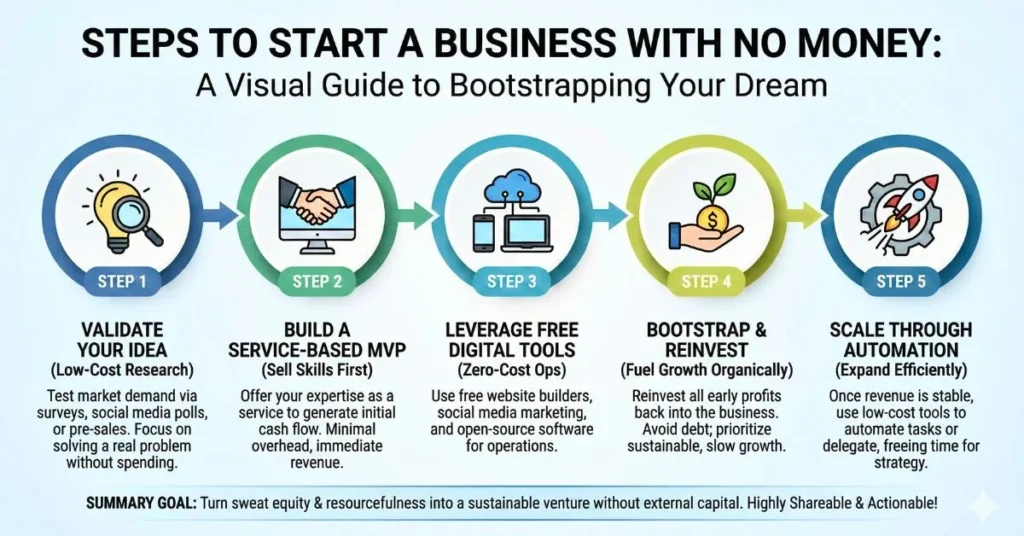
Many successful entrepreneurs began by offering their services to friends or small communities in exchange for testimonials, experience, or small fees. This approach helps validate the idea, build confidence, and lay the groundwork for larger growth. Remember, resourcefulness and action are more important than money at this stage.
Step 1: Choose a Business Idea That Requires Little or No Money
One of the biggest mistakes new entrepreneurs make is chasing an idea that requires a lot of upfront cash. If you don’t have money to invest, it’s crucial to select a business model that relies primarily on your skills, time, and creativity. Start by listing everything you can do well, what people ask you for advice about, and what problems you enjoy solving.

For instance, if you’re good at writing, start with freelance copywriting or content creation. If you have a knack for teaching, consider tutoring or creating online courses. Even local services like house cleaning, or personal organizing can be highly profitable with almost zero startup costs. The key is to focus on the value you can provide immediately without needing equipment, inventory, or office space.
Many people underestimate the power of digital skills. Social media management, virtual assistance, graphic design, and website support are all services in high demand, and none of these require a storefront. Platforms like Upwork, and LinkedIn allow you to find your first clients quickly. The early stage is about learning fast, testing your offering, and getting paid, even if it’s a small amount. Remember, small wins compound over time; starting small doesn’t mean staying small.
Step 2: Conduct Market Research
Once you have an idea, don’t jump in blindly. Market research is essential to understand your competition, audience, and industry trends. Even if you’re starting with zero budget, there are ways to gather critical insights. Social media groups, Reddit forums, and niche Facebook communities can tell you what problems people are facing and what solutions they are willing to pay for. Pay attention to the language they use—it helps you tailor your messaging later.

Check out your competitors’ websites, social media, and customer reviews. What are they doing well? Where do they fall short? These gaps are your opportunity to differentiate yourself. You don’t need fancy tools for this—just time and curiosity. Understanding your market will prevent wasted effort and give you confidence when pitching your services or products. In fact, research shows that entrepreneurs who spend time understanding their target audience before launching are 50% more likely to survive the first two years.
Step 3: Build a Simple Business Plan
Even if your business is small or starting as a side hustle, a business plan is crucial. It doesn’t have to be a 50-page document; a simple, clear plan will help you stay organized, track progress, and make smarter decisions. Your plan should cover:
- What you are selling: Be clear about your product or service.
- Who you’re selling to: Define your target audience, their needs, and why they’ll choose you.
- How you’ll reach them: Identify marketing channels like social media, networking, or word-of-mouth.
- Financial basics: Estimate revenue, expenses, and how much time it will take to break even.
A basic business plan is not just for investors—it’s for you. It acts as a roadmap and helps you measure your progress. SCORE and the U.S. Small Business Administration offer free templates and guidance that beginners can use without spending a dime.
Step 4: Establish Your Brand and Online Presence
Even if you don’t have money for a website or a professional logo initially, you can still start building your brand. A strong brand communicates trust, professionalism, and value to potential clients. Start by choosing a simple, memorable business name and securing a domain if possible. Free platforms like Wix, WordPress, or Squarespace allow you to create a professional-looking website in hours.

Social media is another powerful tool for building your presence. Consistent posting, engaging with your audience, and showing your expertise can attract your first clients without spending a dollar. Even small actions, like answering questions in forums, posting tips on LinkedIn, or sharing insights on Instagram, establish credibility and trust. Think of your online presence as a virtual storefront—clean, professional, and helpful.
Step 5: Validate Your Idea Without Spending Money
Before investing time and effort on a full launch, test your business idea. This step saves both money and stress. Offer your service or product to a small group friends, family, or a niche community—and gather honest feedback. Are people willing to pay? Do they find value?

You can even pre-sell your product or service to fund the initial costs. For example, if you’re launching a digital product like an e-book or template, offer it at a discounted rate to your first customers. Their feedback will help refine your product, and you’ll have cash in hand to reinvest. Validation is not just about testing demand—it’s about learning what works, what doesn’t, and adjusting quickly. Entrepreneurs who skip this step often face early failures that could have been avoided.
Step 6: Find Your First Clients
Landing your first paying customers is always the hardest part, especially with no budget. Start with people you know—network, reach out directly, or offer free trials in exchange for testimonials. These early clients are crucial because they provide social proof, referrals, and experience.

Hyperlocal strategies work well. For example, if you’re offering a home service like tutoring, fitness coaching, or lawn care, engage your neighborhood community online or through local bulletin boards. For digital services, leverage LinkedIn, specialized forums, or online groups where your target audience spends time. Personal outreach beats mass marketing at this stage.
Focus on solving a real problem for real people—results and relationships matter more than slick ads.
Step 7: Scale Your Business Strategically
Once your first clients are on board and you have some revenue flowing, the next step is to think about growth. Scaling doesn’t mean rushing to hire a team or rent an office; it means expanding your reach and improving your efficiency while keeping costs low.
One way to scale is to increase your target market and solve a big problem.
Another strategy is to improve your systems. Simple tools like free project management apps, invoicing platforms, and CRM systems can help you organize clients, schedule appointments, and manage payments without hiring staff. Automation reduces mistakes and frees your time for client-facing work or marketing.
Partnerships are another excellent way to grow without heavy investment. Collaborate with complementary businesses or influencers who can promote your service to their audience.

For example, if you’re a fitness coach, partnering with a nutritionist or local health store can give you access to new clients without spending money on advertising.
Remember, scaling is about doing more with what you already have. Move gradually, measure the impact of each step, and reinvest profits back into your business. Scaling too fast without proper planning can lead to cash flow problems, which is a common reason new businesses fail.
Step 8: Manage Your Costs Wisely
Even when starting with no money, you’ll eventually encounter expenses. The difference between a successful entrepreneur and one who struggles often comes down to financial discipline. Early on, keep a strict budget and track every expense. Know exactly where your money goes and ask yourself if it’s essential for growth.
Bartering is a smart strategy at this stage. You might trade your services with another entrepreneur—graphic design for accounting help, for instance. Every time you barter, you save cash while still getting valuable work done.

Shopping around is another overlooked strategy. Compare suppliers, negotiate for discounts, and look for free or low-cost alternatives. Libraries, online tutorials, and free trials for software tools are excellent ways to save money while gaining knowledge or operational support.
Additionally, consider cost-sharing opportunities. Partnering with another small business to share office space, marketing efforts, or software subscriptions can reduce overhead significantly. Every dollar saved in the early months is a dollar that can be reinvested into your business for growth.
Step 9: Use Free and Alternative Funding Options
While it’s possible to start entirely without money, having access to a small budget can accelerate growth. Fortunately, there are many ways to fund your venture without traditional bank loans.
- Crowdfunding: Platforms like Kickstarter, Indiegogo, or GoFundMe let you raise money directly from people who believe in your idea. You can offer pre-orders, early access, or exclusive perks to incentivize contributions.
- Grants: Certain organizations provide grants to support women, minorities, veterans, or local startups. Grants don’t require repayment, making them ideal for early-stage entrepreneurs.
- Friends and Family: Borrowing small amounts from people who trust you can help cover essential costs. Be clear about repayment terms to avoid conflicts.
- Angel Investors and Incubators: These are individuals or programs that provide mentorship and funds for startups. While they often seek a return on investment, they also offer guidance that can help you grow faster.
Even with these options, the key is to maintain resourcefulness. Money is helpful, but creativity, effort, and persistence are what really drive early success. Entrepreneurs who rely solely on funding without validating their idea often fail.
Step 10: Develop a Mindset for Success
Starting a business with little or no money is as much a mental challenge as a practical one. You’ll face doubts, slow periods, and setbacks. Developing the right mindset can make all the difference.
Focus on persistence and resilience. Many successful entrepreneurs didn’t start with money, they started with vision and hard work. Your time and skills are your initial capital, and investing them wisely will pay off in the long run.

Set realistic goals and celebrate small wins. Each satisfied client, completed project, or positive review is proof that your business is moving forward. Tracking progress keeps motivation high and helps you learn from mistakes.
Embrace continuous learning. Read books, listen to podcasts, or follow successful entrepreneurs who share their strategies. Learning from others can save time, avoid pitfalls, and inspire creative solutions to challenges.
Finally, surround yourself with supportive people. Mentors, friends, or online communities can provide guidance, encouragement, and accountability. Success is rarely a solo journey—having the right support system increases your chances of long-term growth.
Step 11: Real-Life Examples
Many entrepreneurs show that starting a business with no money is entirely possible. Take John Rampton, a tech entrepreneur and investor, who started small consulting projects while still working a day job and gradually built his network into a full-fledged business. He focused on leveraging his expertise and connections, proving that strategic action matters more than starting capital.
Another example is James Altucher, an author and investor, who began experimenting with small online ventures with minimal investment. Through trial, error, and persistence, he built multiple profitable businesses, showing that starting lean can lead to long-term success.
Step 12: Tips for Long-Term Sustainability
Once your business is running and generating revenue, the focus shifts from survival to sustainability. Building a long-term venture requires consistent effort, smart planning, and adaptability.

First, keep reinvesting profits. Even if you start with no money, once your business begins to earn, allocate a portion of profits to improve operations. This could mean better software, marketing campaigns, or small tools that increase efficiency. Reinvesting early profits is one of the fastest ways to grow without external funding.
Second, maintain a lean operation. Avoid unnecessary expenses and overhead. Many businesses fail because they spend too much too soon. Track your spending carefully, review subscriptions and services periodically, and always ask if a cost truly adds value. Lean operations also allow you to survive slower months without stress.
Third, diversify income streams. Even service-based businesses can explore multiple revenue channels. For example, a fitness coach could offer one-on-one training, group classes, online programs, and downloadable resources. Diversification minimizes risk and ensures a steady income even if one area slows down.
Fourth, invest in relationships. Your network is your most valuable asset, especially early on. Happy clients, mentors, and business partners can open doors to new opportunities, referrals, and guidance. Treat relationships as long-term investments rather than transactions—they pay back more than money ever could.
Finally, plan for challenges. Every business faces obstacles, from market shifts to competition. Have contingency plans in place. Keep a small emergency fund, be ready to pivot your offering if needed, and always stay informed about trends in your industry. Adaptability is the cornerstone of long-term success.
Step 13: Avoid Common Beginner Mistakes
Even with the best intentions, new entrepreneurs often make mistakes that slow growth or lead to failure. Knowing these pitfalls in advance helps you avoid them.
1. Rushing without research: Launching without understanding your market or audience is a common trap. Take the time to study competitors, trends, and potential clients. Small mistakes in research can save you from large financial or reputational losses later.
2. Overcomplicating the business model: Many beginners try to do too much at once—offer multiple services, target everyone, or over-engineer products. Start simple. Focus on one core offering, validate it, and expand gradually.
3. Ignoring feedback: Early customers are your best source of insight. Listen to what they like, what frustrates them, and what could be improved. Adjust your product or service accordingly. Ignoring feedback leads to missed opportunities and stagnant growth.
4. Spending too soon: Money is precious, especially in the early stages. Avoid buying expensive tools or services before proving that your business can generate revenue. Use free or low-cost alternatives until there is a clear need to upgrade.
5. Neglecting personal well-being: Entrepreneurship can be demanding. Burnout reduces productivity, creativity, and resilience. Prioritize health, rest, and balance. Successful entrepreneurs know that their energy is the foundation of their business.
By being aware of these mistakes, you increase your chances of sustainable growth and long-term success.
Step 14: Actionable Beginner Blueprint
Here’s a step-by-step guide for someone who wants to start a business with no money, laid out in a simple, actionable plan:
Step 1: Identify Your Skills and Passion
Write down your abilities, experiences, and interests. What do you do well that others need? Skills are your initial capital, leverage them first.
Step 2: Pick a Low-Cost Business Idea
Choose a business model that requires minimal upfront investment. Freelancing, consulting, digital products, or local services are ideal starting points.
Step 3: Conduct Market Research
Research your industry, target audience, and competitors. Identify gaps and understand what customers truly want. Free tools like Google Trends, forums, and social media groups can help.
Step 4: Create a Simple Business Plan
Outline your business idea, target audience, pricing, marketing, and growth strategy. Keep it short but clear, and review it regularly.
Step 5: Build Your Online Presence
Create a simple website and social media profiles. Platforms like Wix, WordPress, or Shopify make it easy to set up a professional-looking online presence at low cost.
Step 6: Test Your Idea
Offer your service or product to a small group, gather feedback, and adjust accordingly. This validation reduces risk and builds early credibility.
Step 7: Find Your First Clients
Reach out to your network, use free platforms like LinkedIn or Upwork, and offer pilot programs. Focus on delivering value and collecting testimonials.
Step 8: Manage Costs and Reinvest Profits
Track expenses, barter when possible, and reinvest earnings into tools, marketing, or small improvements. Avoid unnecessary spending.
Step 9: Scale Gradually
Once you have steady income, explore growth opportunities—new markets, partnerships, or small hires. Always scale in a controlled, sustainable way.
Step 10: Keep Learning and Adapting
Read books, attend free workshops, and stay informed about your industry. Adapt strategies based on results, and always prioritize improvement.
This blueprint shows that even without money, entrepreneurship is accessible if you plan carefully, act wisely, and stay persistent.
Step 15: The Entrepreneurial Mindset

At the core of every successful venture is a mindset. Money, tools, or connections help, but your beliefs, habits, and resilience define how far you’ll go.
Entrepreneurs need to embrace action over perfection. Waiting for ideal conditions or complete certainty often results in inaction. Start small, iterate quickly, and adjust based on real-world feedback.
Resilience is key. There will be setbacks, rejections, and failures. Treat each as a learning opportunity rather than a defeat.
Resourcefulness is another critical trait. Use what you already have—skills, time, network—to move forward. Entrepreneurs who succeed with limited funds are masters at making the most of available resources.
Finally, adopt a long-term vision. Immediate results may be small, but consistent effort compounds over time. Focus on building relationships, improving products, and establishing credibility—success rarely happens overnight.
Frequently Asked Questions
1. Can I really start a business with no money?
Yes. Many successful entrepreneurs began with nothing more than their skills and determination. With careful planning, creative use of resources, and focus on service-based or low-cost business models, you can launch a business without spending a dime upfront.
2. What are the easiest businesses to start with zero budget?
Service-based operations that rely on your skills are often the easiest. Examples include freelance writing, social media management, consulting, tutoring, virtual assistance, and handmade crafts. These require minimal investment and primarily use your time and expertise.
3. How can I validate a business idea without spending money?
Engage directly with potential customers. Post surveys in relevant social media groups, reach out to friends or acquaintances for feedback, or offer free trials or pilot services. Validation helps you confirm demand before committing significant time or resources.
4. What if I need extra funding to grow?
Even businesses that start with no money may eventually need additional funds. Explore alternative sources such as crowdfunding platforms (Kickstarter, Indiegogo), small business grants, angel investors, or family/friends support. Always keep personal and business finances separate to build credibility.
5. How do I avoid burnout while starting a business with no money?
Balancing your energy is critical. Set realistic goals, schedule breaks, and maintain healthy routines. Many entrepreneurs start part-time to preserve financial stability while gradually dedicating more time to their business. Mindset, self-care, and small incremental steps reduce stress and improve long-term results.
Actionable Tips to Accelerate Your Entrepreneurial Journey
- Start today, not tomorrow: Every day you delay is lost opportunity. Begin with small steps that require zero money, like reaching out to potential clients or drafting your business plan.
- Leverage free tools: Use Google Workspace, Canva, Wix, WordPress, and free marketing channels to minimize expenses. Free tools can deliver professional results if used creatively.
- Document your journey: Keep a journal or blog of lessons learned, mistakes, and milestones. Sharing your journey can attract clients, partners, and mentors.
- Join communities: Find free entrepreneur groups, online forums, or local meetups. Networking provides feedback, collaboration, and potential client leads.
- Iterate continuously: Treat your first offering as a minimum viable product (MVP). Adjust based on real-world feedback rather than waiting for perfection.
- Set small, achievable goals: Break your vision into weekly or monthly targets. Short-term wins build momentum, confidence, and clarity.
- Stay financially disciplined: Avoid unnecessary spending, barter when possible, and reinvest profits strategically. Financial prudence ensures sustainability in the early stages.
- Invest in learning: Read books, take free online courses, and follow experienced entrepreneurs. Knowledge compounds over time and often costs nothing.
Final Thoughts
Becoming an entrepreneur with no money is about turning limitations into advantages. When you have minimal financial resources, you are forced to be creative, resourceful, and disciplined. These qualities are often the very traits that differentiate successful entrepreneurs from those who rely solely on capital.
Your first clients, your first profits, and your first lessons will all come from effort, persistence, and smart use of what you already have. Focus on building skills, solving problems, and creating value. With time, patience, and strategic action, you can turn a small venture into a thriving business.
Remember, entrepreneurship is as much about self-improvement as it is about business. Starting with nothing not only builds your financial future but also strengthens resilience, problem-solving, and confidence. Your journey to success starts now, and your resourcefulness is the capital that will carry you forward.