6 Stoic Principles for Self Improvement that Build Mental Strength
Most people who feel weak in the mind, they look for fast tips. They want a list. They want steps. But the old Stoic men, they did not work that way. They sat with the pain. They let it teach them. And what they found, it was not what most of us hear in books or talks or short posts online.
The six things here, they are not new. But they are also not loud. They live in the quiet parts of the old Stoic texts. Most who read those texts, they skip past these parts. They go for the big lines, the ones that sound good on a wall. But the real work, it hides in the small, hard, odd parts that no one puts in a post.
This is not a list of life hacks. This is more like a slow walk through what it means to use your mind with care, with grit, and with truth.
1…The Pain You Pick is Not the Same as the Pain That Finds You
One of the most kept secret of old Stoic life was this: they made hard days on purpose. Not big hard. Not climb a hill or run till you drop. Small hard. A cold wash in the morning. A meal skipped. A walk in the rain with no coat.
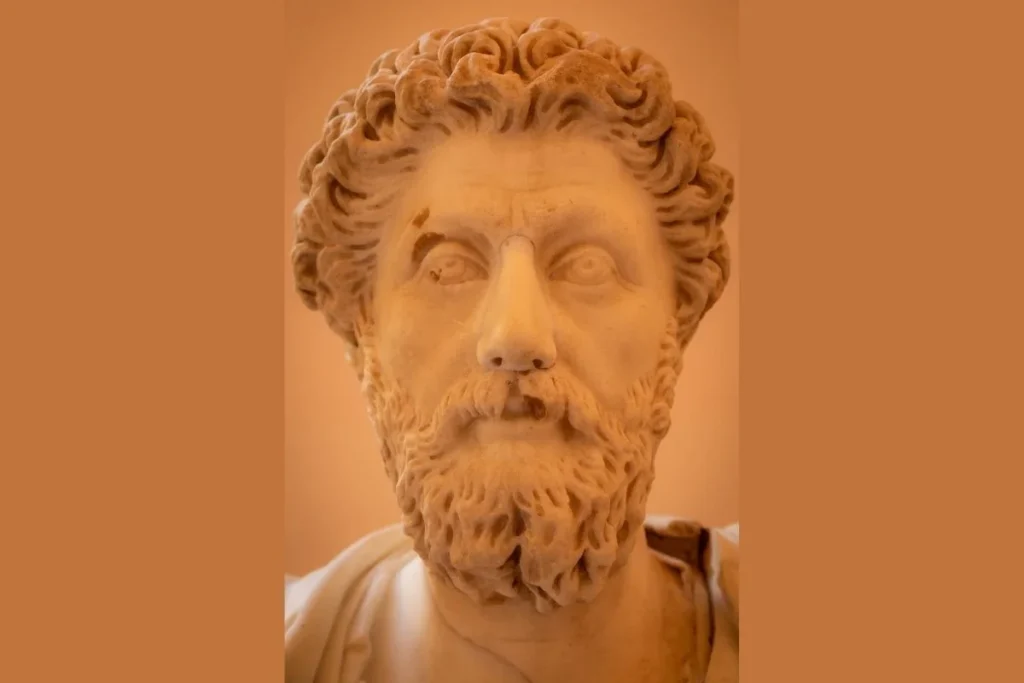
Marcus, the old king who wrote for no one but then gave us all his words, he did this kind of thing. He did not do it to be tough. He did it so that when hard times came, and they always come, his mind knew the feel of hard. It did not panic. It did not beg for ease.
Most of us, we try to cut all pain from our day. We pick the soft chair, the warm drink, the fast path. And then one day life brings a big cold, a real loss, a long wait, and the mind falls apart. Not because it is weak. But because it has had no use.
The Stoic way was to add small hard to your day on purpose. Not to hurt. But to teach. The mind that meets cold water at dawn does not fear the cold of loss as much. The body that skips one meal by choice does not shake as hard when life takes more than food.
What most do not say is that this kind of self-chosen pain does not need to be long or big. Five to ten minutes of real discomfort, done with full eyes open and full mind awake, it trains the inner part of you that says “this is fine, this is just hard, and hard is not the end.”
This is not a trick. It is a slow build. And it is one that few will talk about in a post or a talk, because it sounds too small, too odd, and too dull to sell.
2…Your Worst Day Already Happened, In Your Head
The second thing, it feels dark at first. But it is not. It is one of the most calm things a mind can do.
Stoic men, they would sit and think, with full focus, about the worst case. Not to worry. Not to cry. But to look at it clear, like you look at a stone on the path, and then say: “Yes. That is there. Now what?”
Seneca, who wrote in long letters to his friend, he said something close to this: think of your death, your loss, your fail, not to fear them but to drain them of their sting. When the worst case has been seen and sat with, it has less power to shock.
Most of us do the flip of this. We push the worst away. We say “do not think bad thoughts.” And so the fear grows big in the dark, unseen, untouched. Then one day it steps out and we fall.
The Stoic way was to look at it in the light. To say: what is the real worst here? What would that feel like? Could the self still be okay? Could life go on in some form? Most of the time, when you sit with the worst and look at it full in the face, it gets small. Not gone. But small.
The part no one tells, the real secret in this, is that the mind that does this kind of think on a daily base, it stops being scared of hard news. It stops flinching at the word “fail.” It has seen these things, in the safe space of thought, and it knows the shape of them. That is a kind of peace that no tip or hack can give.
3…The Gap Between What Hits You and What You Do Next
There is a moment, so fast most of us miss it, that the Stoics called the point of real freedom. It is the gap, the tiny beat of time, that lives between what hits you and what you do next.
A harsh word comes your way. A door slams. A plan falls. In that fast beat, most of us react. We snap, we close off, we sink. The Stoic path was to find that beat and make it last. To step in there and ask: what is true here? What part of this can you change? What part is just noise?
Epictetus, who was once a slave and later one of the most read men of his age, built his whole life thought on this one idea: some things are up to you, and some things are not. The work of a strong mind is to know which is which. And the gap, that small beat of pause, is where that work gets done.
Most of us think that self-control means not to feel. That is not it. The Stoics felt it all. They had grief and rage and fear. But they built the pause. They made the gap a bit wider each day, like a man who stretches a small spring until it can hold more.
The way to grow this, and here is the part that does not get said out loud: it does not come from books or talks. It comes from watching your own react in real time. When the next small thing hits you, the slow car, the rude look, the bad news, you try to catch the very first second of it. Not to stop the feel. But to see it. To name it. “This is the moment,” you say to yourself, “and now what do I choose?”
Over days, over weeks, the gap grows. And with it, a kind of quiet power that looks like calm but is something deeper.
4…What You Own Will Go, and That Is the Point
This one, most skip it fast. It feels sad. It feels like loss talk. But the Stoics knew that the one who holds tight to what they own, to the job, the face, the fame, the love, they suffer double. Once when life takes it, and long before that, in the fear of losing it.
The daily act the Stoics did, and this is the one that almost no one talks about in full, was this: they would hold what they loved, and at the same time see that it was on loan. Not gone. Just on loan. The job is good, and it will one day end. The body is yours, and it will one day not be. The person you love is here, and that is a gift, not a promise.
This is not sad. This is, in some strange way, one of the most warm things you can do for your own mind.
When you hold a thing and know it will go, you stop taking it for granted. You look at it more. You feel it more. And you stop spending your mind’s time and energy in the long cold fear of loss. The fear of loss is worse than most loss. The Stoics knew this, and they used this idea to cut that fear down.
The hard truth, and the one no coach or guide will say in a nice way, is this: you can not have deep peace while also holding tight to things that do not stay. The two can not live at the same time. The grip and the peace, they do not sit well.
To let the grip go, even a small bit, is not to love less. It is to love in a more clear way. A way that does not ache with the fear of what might leave.
5…The Role You Play is Not All of Who You Are
The fifth thing is the one that hits hard for most of us who have built our sense of self on what we do or what we have. The Stoics saw the self not as a fixed, set thing, but more like a role in a big play. The role may be king or slave, rich or poor, seen or not seen. But the one who plays the role, the deep self, the “you” behind the part, that does not change with the role.
This idea, when it lands, it does something to the way you see both your best days and your worst. On your best days, when things go well and you feel big, it asks you to hold it lightly. This is the role doing well. Not a sign of your full worth. On your worst days, when you fail or fall, it offers a kind of ground. The role had a bad run. The self is still there, still whole, still watching.
Most people, they attach all of what they are to what they do. And when the job goes, the fame fades, or the plan fails, they do not just lose a thing. They lose the sense of who they are. That is a very long fall.
The Stoic who lived this idea, they could lose the role and keep the self. They could be stripped of the job, the place, the name, and still know there was a “them” that stood apart from all of that. That is a kind of strength that no one can take by taking your things.
The way to grow this in real life is slow and odd. It starts with watching how much of what you feel about your day is tied to how the world sees you. When the post gets likes, do you feel worth more? When the plan fails in front of others, do you feel small? Those moments, small and fast as they are, they show how tight the grip is between your role and your self. The work is to see that, and then, over time, to gently pull them apart.
6….Say Yes to All of It, Not Just the Good Parts
The last of the six is the one that sounds the most strange and the most deep at the same time. It is the Stoic idea that the full man does not just put up with hard life. He turns to it and says: yes. This is mine. This is what was meant for me. And so, this is good.
Not good like easy. Not good like fair. But good like: this is the life that is here, and to fight it is to fight the thing that is real, and that is a war no one has ever won.
Marcus, again, wrote on this with a kind of quiet force. He said, more or less, that a man who loves his fate, all of it, the pain and the loss and the long hard days, he is more free than the man who only loves the good parts and bears the rest.
This is not the same as giving up. This is not the same as saying all is fine when it is not. It is more like a deep yes to the fact that life is what it is, and your role is not to make it other but to be full in it.
The part that does not get said is this: when you say yes to the hard, it does not keep you there. It frees you to move. The no, the resist, the “this should not be,” that is what holds you in place. That is the mud. The yes is what lets the foot come up and take the next step.
This is the last of the six, and in some ways the biggest. Because all the rest, the pause, the gap, the cold wash, the held loosely, they all lead here. To a mind that can look at its own life, the full thing, the mess and the grace, and say: yes. This is the one I have. And so, this is the one worth living.
What Stays With You
- The pain you pick for your self is a gift to your future self.
- The worst case, when you look at it full, is almost never as big as the fear of it.
- The gap between what hits you and what you do, that small beat, is the whole game.
- To hold a thing and know it will go is not sad, it is the only way to love it clear.
- You are not your role, and the day you feel that in your bones, things change.
- Saying yes to the full life, not just the easy parts, is not weak, it is the last act of a free mind.
The End of the Walk
The old Stoics did not have a clean life. Marcus ran a war. Seneca lost his head. Epictetus was a slave for much of his years. They were not calm because life was calm. They were calm because they built the kind of mind that did not ask life to be other than it was.
What the six things here have in common is that none of them are loud. None of them are fast. None of them sell well in a bright post or a short clip. But each one, done slow and done true, adds a kind of ground to the mind that stays even when all else moves.
The great James Baldwin once said that not every thing that is faced can be changed, but nothing can be changed until it is faced.
The Stoics faced it all. And the mind they built from that, it is still here, still worth the slow walk through.