5 Simple Ways to Get Ready Before the Storm, Inspired by Warren Buffett’s Noah Principle

Have you ever watched dark clouds gather while you still had time to get ready? Most people wait for the rain to start before they look for cover. Warren Buffett talks about a simple idea that turns this habit around, and people call it the Noah principle. Noah built his ark before the rain came, not during the flood.
I first heard this idea on a calm day, when nothing felt urgent at all. It did not tell me to fear the future or to expect bad news each day, but it told me to use calm days well, so a hard day does not catch me with nothing ready. Calm days are the best days to act. The short answer: build your protection now, while you still have time, money, and energy to do it well.
A storm in this article does not only mean bad weather. It can mean a job loss, a health problem, a broken car, or a sudden drop in work. These events are hard, but they are not strange, because most people face one of them at some point in life.
Preparation is not about being rich or clever. It is about small, steady steps that you take before you need them. A small cash cushion, a useful skill, and a simple backup plan can change how a hard month feels.
This article gives you five clear ways to prepare before trouble arrives. Each way is simple, low cost, and easy to start this week. You do not need to do all five at once, because even one strong step can give you more peace and more choice.
Key Takeaways. Build protection while life is calm. Small steps taken early can make a hard time much easier to handle.
- Save a small cash cushion before you need it, even if you start with a tiny amount each week.
- Learn one useful skill that people still need when times get hard.
- Write a simple backup plan for work, home, and daily needs.
- Keep your regular costs simple so a smaller income still covers the basics.
- Stay close to helpful people and keep simple routines that steady your days.
1. Build a Small Emergency Cash Cushion First
When trouble comes, cash in hand gives you time to think and to choose well. An emergency cushion is simply money that you keep apart for sudden needs, and you do not touch it for daily wants. It is not for a holiday or a new gadget, because its job is to protect you when life turns hard.
Start small, because a small start is much better than no start at all. If you can set aside a little money each week, that habit will grow into a real cushion over time. Put this money in a safe place that is easy to reach in a true emergency, but not so easy that you spend it without thinking.
Many people wait for a perfect time to save, and that perfect time never comes. A better rule is to save first, even before you spend on extras, and to treat that amount as a fixed part of your week. You can start with the price of one small treat, and then raise the amount slowly as your habit gets stronger. Over months, these small amounts add up, and they give you a feeling of safety that is hard to buy in any other way.
Think about what a hard month might cost in real life. Write down your basic needs, such as food, housing costs, transport, and phone service, so you know the size of the cushion you need. This list also stops panic, because you can see the real numbers instead of guessing in fear.
Keep your cushion apart from your daily spending money, so you always know what is safe and what is free to use. A separate account or a separate envelope can help, as long as the method is simple and honest for you. Do not use this money to cover small wants, because each small use makes the cushion weaker when a real need arrives. When you do need to use it, use only what the problem truly needs, and then start to refill it as soon as life gets steady again.
Some weeks will be tight, and that is normal for most families. On a tight week, save a smaller amount and keep the habit alive, because the habit matters more than the size of one week. A habit that survives hard weeks is the habit that will protect you in a truly hard season.
A cash cushion does not remove trouble, but it changes how trouble feels. Without it, a broken car or a lost job can turn into a crisis in one day. With it, you gain time to fix the problem, to look for work, or to ask for help without panic.
2. Learn Skills That Stay Useful in Hard Times
I learned a simple lesson from people who stay steady when work gets scarce, and that lesson was about skills. A skill is something useful that you can do well, such as fixing things, cooking, writing, driving, teaching, or helping people solve a problem. When you have a strong skill, you have more than one way to earn, to help, and to stay useful to others.
Hard times often change what people need, but they rarely remove the need for basic help. People still need food prepared, homes fixed, children taught, goods moved, and clear advice in plain words. A skill that meets a basic need will stay valuable, even when fancy wants lose their appeal.
Choose one skill that fits your life and your strengths, and give it steady time each week. You do not need ten skills at once, because one deep skill beats ten shallow tries. Practice in real life, help a neighbor for free at first if you must, and learn from each small job. Over time, people will know you for that skill, and that trust can open doors when formal work gets slow.
Learning does not need a costly course or a fancy school. Free videos, library books, local workshops, and patient practice can teach a lot when you use them with care. The key is to learn a little each day, to test what you learn, and to keep notes on what works.
A skill also gives you confidence, and confidence changes how you face a setback. Instead of feeling helpless, you can ask what you can fix, make, teach, or offer right now. That shift from worry to useful action is one of the strongest forms of preparation.
Teach what you learn to someone else, because teaching makes your own skill stronger and clearer. When you explain a skill in simple words, you find the gaps in your own knowledge and you fill them fast. Teaching also builds a good name in your community, and a good name brings referrals, help, and new chances. In hard times, people turn to names they trust, so trust built early is a form of protection too.
Start today with one small learning step, such as one lesson, one practice task, or one helpful job. Write down your progress each week, so you can see growth even when it feels slow. Skills grow quietly, like roots under a tree, and they hold you steady when strong winds arrive.
3. Keep a Simple Backup Plan for Work and Home
A backup plan is a simple second way to handle life if your first way stops working. It answers a plain question before trouble asks it for you, and that question is what will you do next. With a plan on paper, you do not need to think clearly in a moment of stress, because the thinking is already done.
Start with work, and ask what you would do if your main job paused for a month. List two or three honest options, such as short-term work, freelance help, or a skill you could offer nearby. Keep the contact details for those options in one safe place, so you are not searching in panic. Update this list twice a year, because old contacts and old plans lose value fast.
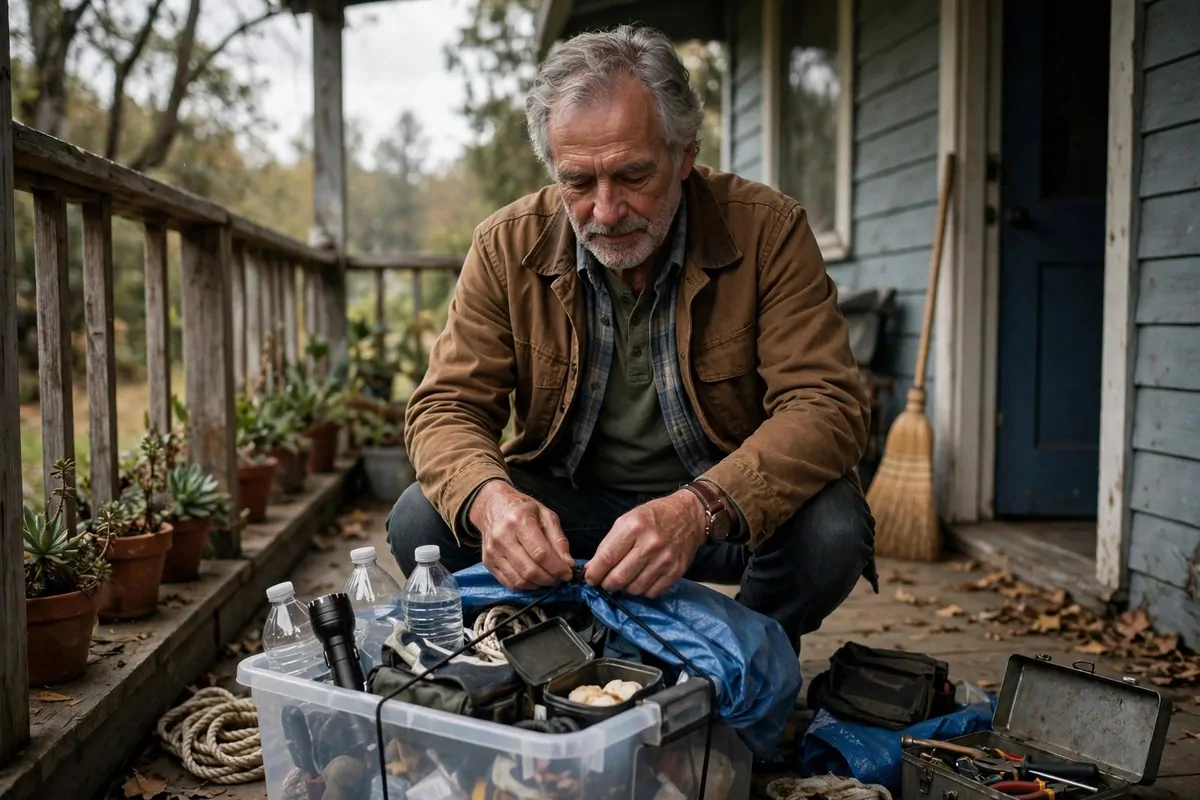
Do the same for your home, and think about water, food, light, heat, and safe shelter in bad weather. Keep a small store of basic food, clean water, torches, batteries, and first aid supplies in a place you can reach fast. Check these supplies each season, replace what is old, and teach every adult in the home where they are kept.
| Preparation step | What it protects |
|---|---|
| Small cash cushion | Time to think and pay for basic needs during a sudden job loss or repair |
| One strong skill | Your ability to earn and help others when regular work slows down |
| Written backup plan | Clear next steps for work and home when stress makes thinking hard |
| Simple routines and close contacts | Daily stability and quick help from people you trust |
A backup plan should be short enough to fit on one page, because a long plan is hard to use in a crisis. Write it in plain words, keep it where the whole family can find it, and walk through it once with the people who live with you. A plan that no one has read is only paper, but a plan that everyone knows can save time and fear.
Test your plan with a small practice, such as a power cut drill at home or a dry run of your work backup option. A test shows weak spots while the cost of fixing them is still low, and it builds calm in the people who take part. Fix one weak spot after each test, and do not try to fix everything in a single day. Small fixes done early are the heart of the Noah idea, because they turn a future crisis into a manageable task.
Keep copies of vital papers and numbers in a safe, dry place, and keep a second copy away from home if you can. Vital papers mean ID cards, work contacts, medical notes, and any paper you would need to prove who you are or where you live. When these papers are ready, you can focus on people and safety instead of searching for lost forms.
A backup plan is not a sign of fear, and it is not a prediction that bad things must happen. It is a sign of care for your family, your work, and your future self. The calm you feel from a ready plan is proof that preparation works, even before any storm arrives.
4. Simplify Regular Costs Before Trouble Arrives
Regular costs are the bills and habits that repeat each month, such as food, transport, phone service, and home needs. When these costs are high, even a small drop in income can feel like a crisis. When these costs are simple and low, the same drop feels hard but still manageable.
Look at your spending for one full month, and sort it into needs, useful wants, and pure extras. Needs keep you safe and healthy, useful wants make life easier, and pure extras only add comfort for a short time. You do not need to cut all extras at once, because a sudden harsh cut rarely lasts. Cut one extra at a time, and move the money you save toward your cushion or your learning.
Cooking at home more often, walking for short trips, and fixing small things yourself can lower costs without lowering your quality of life. These habits also build skills, so they serve two parts of your preparation at the same time. Simple living is not about hardship, because it is about choosing what truly adds value to your days.
Talk with your family about costs in an open and kind way, so everyone understands the goal. When children and adults know why you are simplifying, they are more likely to help and less likely to feel punished. A shared goal turns saving into teamwork, and teamwork makes the habit last much longer.
Review your regular costs every three months, and ask if each one still earns its place. A service you no longer use, a habit you no longer enjoy, or a plan that is too large for your needs can all be trimmed with care. Keep the review short and friendly, and celebrate each small cut as progress toward safety. Over a year, these small cuts can free a meaningful amount, and that amount becomes part of your protection.
Avoid adding new monthly commitments during calm times just because money feels easy right now. A new commitment may feel small on its own, but many small commitments together can trap you when income falls. Before you agree to a new regular cost, wait a week, check your cushion, and ask if it still feels wise.
Simplifying costs is not about fear of the future, and it is not about giving up joy. It is about giving your future self more room to breathe, more choice, and more time to recover. A lean and simple monthly life is a strong ark, because it floats even when the water rises.
5. Build Strong People and Simple Routines Around You
People are often the strongest protection you can build, because help from trusted friends and family can arrive faster than any plan on paper. Strong ties mean honest links with people who know you, respect you, and will stand by you in a hard season. You build these ties in calm times, through small kindness, steady contact, and help given without expecting a quick return.
Call or visit the people who matter to you on a regular basis, even when life is busy. Share a meal, offer a lift, help with a small repair, or simply listen with full attention. These small acts build trust over time, and trust is what makes people answer the phone when you truly need them. Do not wait for a crisis to meet your neighbors, because a crisis is the worst time to build a new link.
Routines are simple habits that repeat each day, such as waking at a set time, eating regular meals, and keeping your home tidy. In a crisis, routines give your mind a steady anchor, because they tell you what to do next when everything else feels uncertain. A child, an older parent, and a busy worker all feel safer when the basics of the day stay steady.
Build one morning routine and one evening routine that you can keep even on a hard day. A morning routine might include water, light, a short walk, and a clear plan for the day ahead. An evening routine might include a tidy home, a prepared bag, and a calm review of the next day.
Help your community in small ways, such as joining a local group, volunteering for a short task, or sharing useful skills. Community help creates a web of support, and each person in the web can both give and receive help. When a storm hits a whole area, this web matters even more, because neighbors can check on each other fast. One kind act in a calm month can return as vital help in a hard month, and that return is not luck but the fruit of care.
Keep your circle honest and kind, and avoid ties that drain your energy or push you toward wasteful habits. A small circle of steady people is far better than a large circle of shallow contacts. Choose people who respect your goals, who speak honestly with kindness, and who celebrate your progress.
Preparation is never only about money or plans, because it is also about who stands with you. When you have people to call, routines to follow, and a calm home to return to, a storm loses much of its power. Build this human ark now, while skies are clear, and it will carry you well when rain finally comes.
Conclusion
The Noah principle is simple, and it asks you to act before you feel urgent pressure. Build a cushion, learn a skill, write a backup plan, simplify your costs, and strengthen your people and routines. Each step is small on its own, but together they form a strong shield for hard times.
I believe calm days are a gift, because they give you time to prepare without panic. Use this week to take one step, even if it is only a small saving, a short lesson, or a written plan. That one step will make the next step easier, and steady steps will build real safety over time.
Do not wait for perfect news, perfect money, or a perfect plan before you start. Start where you are, use what you have, and improve your preparation a little each month. The best time to build an ark was before the rain, and the second best time is today, while skies are still clear.
Storms will come in many forms, but a prepared person does not face them empty-handed. You will have cash to cover basics, skills to offer, a plan to follow, costs you can manage, and people who care. That is the quiet power of preparing early, and it brings peace long before trouble arrives. Start now, stay steady, and let your calm-day work protect your hard-day life.