10 Ways AI Is Making People Less Sharp (And How to Avoid It)

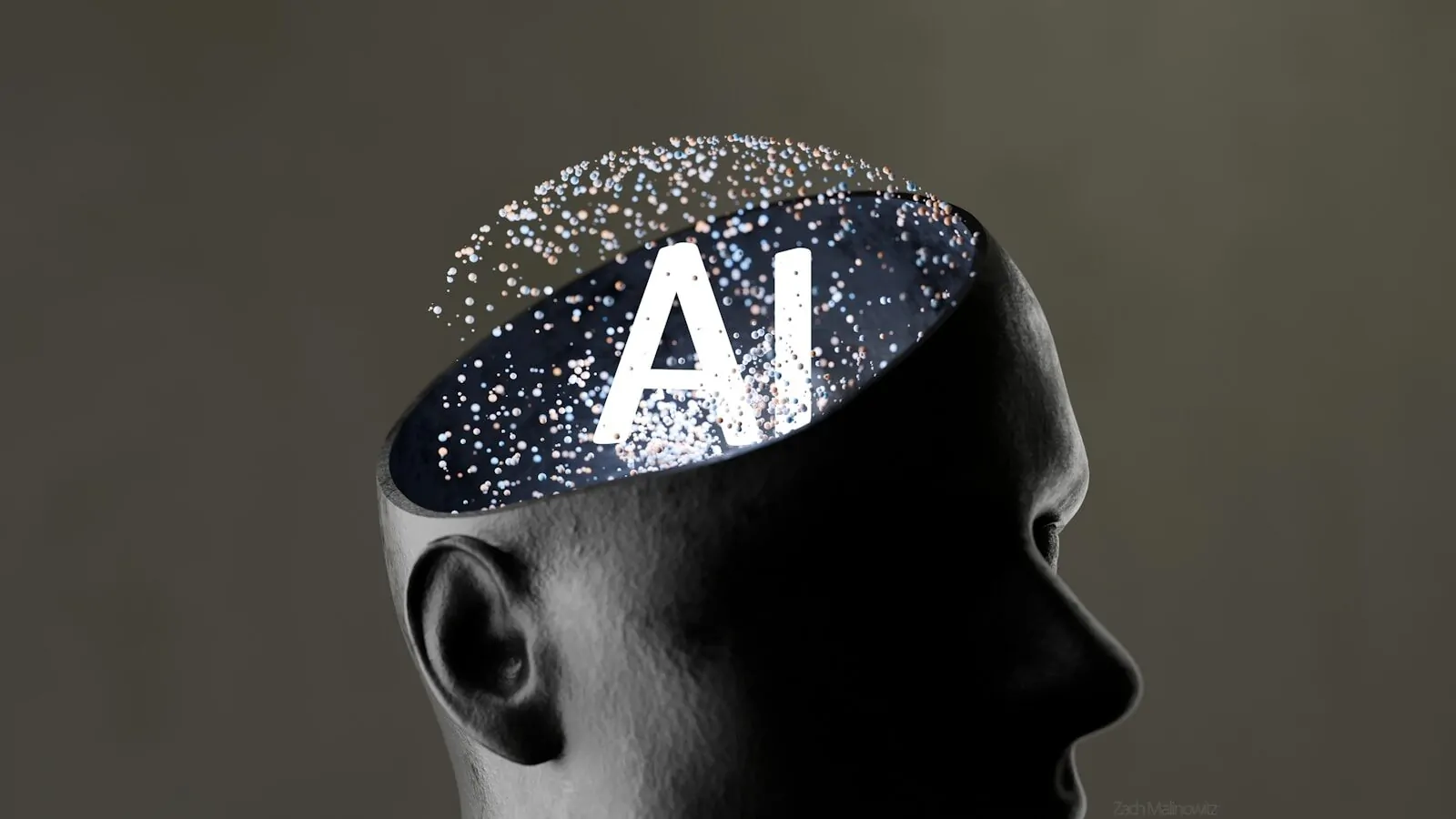
When you wake up one day and realize you are not quite as sharp as you once were, and you cannot point to a single reason why.
AI tools have become part of daily life faster than almost any other technology in history. People use them at work, at school, in their creative projects, and even in their personal decisions. The speed is breathtaking. The convenience is real. But so is the cost, and that cost rarely shows up on any dashboard.
This is not an argument against AI. Far from it. These tools are genuinely useful, often brilliant, and in some cases, life-changing. The concern here is different. It is about what happens to the human mind when it slowly hands off its most important jobs, thinking, remembering, deciding, creating, to a machine that never gets tired and never says no. The question is not whether to use AI. The question is whether using it the wrong way is quietly making us less capable of doing the very things that make us human.
1. Letting AI Think Instead of You
Most people open an AI tool the moment a hard question appears. It feels efficient. It feels smart, even. Why struggle for twenty minutes when the answer is three seconds away?
But here is what that habit is doing beneath the surface. The brain builds strength the same way muscles do, through resistance. When you work through a hard problem, you are not just finding an answer. You are building a mental model, a new way of seeing that problem, that stays with you. When AI gives you the answer before you have had the chance to wrestle with the question, that model never forms.
A study from Harvard Business School found that when people use AI to reduce cognitive effort early in a process, they produce work that scores lower on originality and insight. The work gets done faster. But the person behind it learns less and grows less. Over months, that gap compounds.
The brain has a concept called “desirable difficulty.” Learning is stronger when it involves some friction. When AI removes that friction every time, the result is faster output but slower development.
How to Avoid It:
- Spend at least ten minutes on a hard problem before opening any AI tool.
- Write down your own thinking, even if it is rough, before asking for help.
- Use AI to pressure-test your ideas, not to replace the act of having them.
- Ask yourself after every AI session: did this make me think more, or less?
2. Memory Is Getting Softer Without Anyone Noticing
There is an old Greek story about writing. Socrates warned that the written word would weaken memory because people would rely on marks outside themselves rather than what lived inside them. He was not entirely wrong. But the scale of what AI is doing to memory is something he could not have imagined.
When the brain knows it does not need to hold something, it lets it go. This is called “cognitive offloading,” and it has been studied carefully. A 2011 paper in Science by Betsy Sparrow at Columbia found that when people expect to have access to information later, they are less likely to store it in the first place. That research was about search engines. AI has made the same effect ten times stronger.
The real cost is not forgetting a phone number. The cost is in how memory shapes thought. When you carry more knowledge in your head, your brain makes connections faster. You spot patterns. You draw on what you already know to make sense of new things. The more you offload, the fewer connections the brain can make on its own.
There is also the question of confidence. People who rely on AI for information often feel a strange kind of mental emptiness when the tool is not available. That emptiness is telling. It means the knowledge was never really theirs to begin with.
How to Avoid It:
- Try to recall facts, figures, or ideas before looking them up.
- Keep a handwritten notebook for key concepts from your field.
- After using AI to explain something, close the screen and write it back from memory.
3. Attention Is Getting Shorter, and It Shows
There was a time when reading a long article felt satisfying. Now, for many people, it feels like work. Not because they are less intelligent. Because their attention has been trained by a steady diet of fast answers, quick outputs, and responses that appear before they have even finished asking.
AI is not the only cause of this. But it accelerates the pattern. When every question gets a full, clean answer in seconds, the brain starts to expect that from everything. Deep reading, long analysis, and slow thinking start to feel frustrating by comparison, not because they are harder, but because they are slower.
Neuroscientists call this “attentional adaptation.” The brain adjusts to the pace of its inputs. Feed it fast information long enough, and it begins to resist slow information, even when the slow information is richer.
Cal Newport, who has written carefully about focus and digital behavior, makes the point that depth of attention is a skill, and like any skill, it weakens when unused. The risk is not just that people get bored faster. The risk is that they lose the capacity to sit with complexity long enough to understand it.
How to Avoid It:
- Read at least one long piece of writing each day without skipping or skimming.
- Set a timer for twenty-five minutes of focused work with no AI or browser open.
- When a problem feels slow, resist the urge to speed it up. Sit with it.
- Practice finishing tasks before switching to something faster.
4. Writing Is Becoming a Borrowed Skill
There is a pattern appearing across workplaces, universities, and creative communities. People who once wrote their own emails, reports, and ideas now hand the task to AI so often that their own writing has started to feel foreign to them. Their vocabulary narrows. Their sentences become flat. The voice that once made their work recognizable starts to fade.
Writing is not just communication. It is thought made visible. When you write, you are not just recording what you already think. You are discovering what you think. The act of finding words forces clarity. It reveals gaps. It shows you where your reasoning breaks down before you say it out loud to someone else.
When AI writes for you consistently, you lose that process. You get the output without the development. The words appear, polished and correct, but the thinking behind them was never yours. Over time, this creates a strange kind of dependency: you need the machine to say what you mean because you have stopped practicing saying it yourself.
A professor at Stanford once described writing as “the most disciplined form of thinking.” That discipline does not transfer just by reading what an AI produces. It only develops through the act of writing itself, imperfectly, slowly, and with effort.
How to Avoid It:
- Write first drafts by hand or in a blank document with no AI assistance.
- Use AI for editing and refinement, not for the initial expression of ideas.
- Keep a daily writing habit, even if it is only a paragraph about something you noticed.
- When you use AI-generated text, rewrite it in your own voice before using it.
5. Easy Answers Are Training the Brain to Avoid Struggle
Struggle has a bad reputation. Most people spend a lot of energy avoiding it. But cognitive science has been consistent on this point for decades: the discomfort of working through something hard is precisely what makes the learning stick. Robert Bjork at UCLA has spent a career documenting this. The harder the retrieval, the stronger the retention.
AI removes struggle from the equation almost entirely. Not always, and not for everyone. But for people who reach for it at the first sign of difficulty, the pattern is clear. They get the answer, they move on, and they have learned almost nothing from the process.
There is also a motivational dimension to this. When people succeed at hard things, they build what psychologists call “self-efficacy,” the belief that they can handle difficulty. Every time AI takes over before that belief can form, a small piece of it disappears. Slowly, the person starts to feel that they cannot solve things without help. That feeling, once it takes hold, is hard to shake.
The brain is a prediction machine. It learns by being slightly wrong and correcting. When AI is always right and always fast, the brain has nothing to correct and nothing to predict. The learning loop never closes.
How to Avoid It:
- When stuck on a problem, give yourself a fixed amount of time to struggle before using AI.
- Track the problems you solve on your own. Notice how that list builds your confidence.
- Treat mild frustration as a signal that learning is happening, not that something is wrong.
- Use AI to reveal the next small step, not to skip the whole path.
6. Creativity Is Starting to Sound the Same
There is a new kind of sameness in the world. Blog posts that read like other blog posts. Pitch decks that feel like templates. Design concepts that could have come from anywhere. Part of this is because everyone is using the same AI tools to generate their first ideas, and those tools were trained on the same vast pool of existing work.
Creativity does not come from nothing. It comes from the collision of different ideas, memories, experiences, and emotions inside a specific person’s mind. When that process is handed to a machine trained on averages, the result is statistically likely to be average. Well-structured. Readable. But rarely surprising.
David Bowie used to talk about following paths that made him slightly uncomfortable, because that discomfort was a sign he was going somewhere new. When AI generates your starting point, you often begin in a comfortable place. Familiar structure. Safe ideas. Predictable phrasing. The creative risk disappears before you have even started.
The deeper issue is that creativity, like memory, depends on what the mind holds. The more original experiences, hard-won insights, and personal struggles a person carries, the richer their creative output. AI does not give you more of those things. It gives you a shortcut around the process of developing them.
How to Avoid It:
- Brainstorm alone for ten minutes before opening any AI tool.
- Write down five ideas you genuinely believe in before asking AI to add more.
- Use AI to stress-test your creative ideas, not to generate them.
- Read widely and in subjects outside your field. Let unexpected connections form naturally.
7. Decision-Making Is Losing Its Muscle
There is a quiet nervousness that has started showing up in people who use AI heavily. They get the tool’s recommendation. They follow it. Then, later, they feel a strange unease: was that the right call? Did the logic hold? Could they explain why they chose that if someone asked?
Decision-making is a skill that develops through practice and consequence. When people make choices, live with the outcomes, and reflect on what happened, they build judgment. That judgment becomes the foundation of future decisions. It is slow to develop and highly personal. It cannot be outsourced.
When AI makes the calls consistently, that development stalls. The person gets the outcome without the learning. Worse, they often lose confidence in their own judgment because they have not been using it. They start to feel that AI sees things they cannot, that their instincts are less reliable than the machine’s output. Sometimes that is true. But the solution is not to stop deciding. The solution is to decide more, and use AI to sharpen that process rather than replace it.
Daniel Kahneman spent decades studying how people make choices. One of his clearest findings: good judgment is not innate. It is built through repeated cycles of choosing, noticing, correcting, and choosing again. AI can support that cycle. But only if the human stays in the loop.
How to Avoid It:
- Make your decision first, in writing, before consulting AI.
- Use AI to identify risks or blind spots in your reasoning, not to pick the answer.
- After a major decision, write a short note on why you chose what you chose.
- Build a record of past decisions and outcomes. Review it periodically.
8. Learning Is Getting Skipped in Favor of Answers
There is a difference between knowing the answer and understanding the process. AI is very good at giving the first one. It is much harder to use well for the second. And for most people, the habit forms around getting answers, not building understanding.
A student who asks AI to explain a math concept once and then moves on has not learned math. They have received a correct statement about math. The difference is significant. Understanding comes from working through examples, making mistakes, seeing why the mistake happened, and trying again. That loop cannot be condensed into a single AI response, no matter how clear that response is.
This pattern appears beyond school. Professionals who ask AI how to do something and then do it without understanding why are building skills with a fragile foundation. When the context changes slightly, the skill breaks down. Because it was never really a skill. It was a borrowed procedure.
Seymour Papert, the MIT educator, believed that real learning happens when people build things with their own hands, whether physical or intellectual. The struggle of construction is where understanding forms. AI, used well, can be a scaffold for that process. Used poorly, it skips it entirely.
How to Avoid It:
- Ask AI to explain the reasoning behind an answer, not just the answer itself.
- After reading an AI explanation, close it and try to explain it in your own words.
- Work through examples by hand before checking with AI.
- When AI gives a solution, ask it to show where it might be wrong or incomplete.
9. Overconfidence Is Growing Quietly
AI sounds confident. Even when it is wrong, the phrasing is smooth, the structure is clean, and the tone carries the quiet authority of something that has read more than any human ever could. That combination is dangerous for one specific reason: it bypasses the mental filter that normally asks, “wait, is this actually right?”
Psychologists call this effect “automation bias.” When a system sounds authoritative and experienced, people tend to follow its output without applying their own scrutiny. Studies in aviation found that even trained pilots would follow incorrect autopilot readings because the system seemed so certain. The same effect has been documented in medical diagnosis tools, legal research software, and now AI assistants.
The problem is not just that AI makes mistakes. Every source makes mistakes. The problem is that AI’s mistakes are often dressed in language that sounds definitive. There is no hedge, no uncertainty, no “actually, someone might argue the opposite.” Just a clean, well-structured answer that feels complete.
People who trust that output without verifying it are not being foolish. They are responding to signals the brain evolved to read. But in this case, those signals are misleading.
How to Avoid It:
- Verify any AI output that will influence an important decision with at least one other source.
- Notice when AI sounds very certain and treat that as a reason to check, not to relax.
- Develop a habit of asking: “What would someone who disagrees with this say?”
- Keep a short list of topics where AI has been wrong before. Use it as a reminder.
10. Human Connection Is Getting Replaced Without Anyone Choosing It
This last point is the quietest, and in some ways the most significant. Conversations with AI are frictionless. They are always available, never distracted, and never push back in ways that feel awkward or uncomfortable. For many people, that ease is starting to feel preferable to the messiness of real conversation.
Real conversation is cognitively demanding. You have to read tone, manage ambiguity, hold your own position under challenge, and update your thinking in real time. Those demands are not flaws. They are the whole point. The friction of real dialogue is what builds social intelligence, empathy, and the ability to persuade and be persuaded.
When AI replaces those conversations, even partially, the skills built through them start to fade. A manager who processes ideas by chatting with an AI instead of their team gets clean feedback but loses the ability to read a room. A student who talks through their confusion with an AI instead of a professor gets a helpful explanation but loses the chance to learn how ideas develop through argument.
Robin Dunbar, the anthropologist whose work on social connection is widely respected, has found that humans maintain complex thinking partly through the act of navigating complex relationships. The cognitive load of connection, of being known and knowing others, keeps the mind sharp in ways that solo tool use simply cannot replicate.
How to Avoid It:
- Have at least one substantive conversation about a real topic with a real person each day.
- When processing a difficult problem, talk it through with a colleague before using AI.
- Notice when you are choosing AI over a human interaction and ask why.
- Use AI to prepare for conversations, not to avoid them.
Key Takeaways
- The brain weakens in the areas it stops using, and AI makes it easy to stop using almost everything.
- Speed and accuracy from AI are real gains, but they often come at the cost of depth and development.
- Memory, creativity, and judgment are not passive traits. They are skills built through friction, failure, and effort.
- AI is not neutral in its effects. The way it is used shapes the mind that uses it.
- The people who stay sharp while using AI are the ones who treat it as a tool to extend their thinking, not a replacement for it.
- Convenience is not the same as capability, and over time, one can quietly hollow out the other.
A Closing Thought
The sharpest people in any field have always known something about tools: the tool serves the craft, not the other way around. A great carpenter does not blame their hammer for bad joints. A skilled writer does not expect their editor to supply the ideas. The tool amplifies what the person already brings.
AI is one of the most powerful tools ever made available to ordinary people. That is worth celebrating. But its power is also its risk. Because the more powerful a tool is, the easier it becomes to hand it everything, to let it carry more than its share of the weight, until the human on the other end has forgotten what carrying felt like.
As the writer Wendell Berry once observed, “the mind that is not baffled is not employed.” Bafflement is not a problem to be solved. It is the beginning of real thinking. The goal is not to avoid AI. The goal is to stay in the game long enough for the thinking to remain yours.