10 Most Important Life Skills Charlie Munger Would Want You to Learn


Charlie Munger built a fortune and a sharp mind by treating life as a classroom that never closes. He often said that a person who keeps learning will keep rising, while a person who stops learning slowly falls behind. His partner Warren Buffett called him the smartest thinker he knew, yet Munger always pointed to simple skills, not secret tricks.
This article is not about clever mental habits or a list of books to buy. It is about ten practical skills you can practise every day to improve your life in a real way. Each skill is simple to explain, but each one takes steady effort. Together they build a mind that makes better choices and a life that grows stronger year after year.
You do not need money or a fancy school to build these skills. You need time, patience, and honest effort. Start with one skill, practise it for a month, and then add another. Small daily steps compound into a very different life over ten years.
Key Takeaways
- Reading daily is the cheapest way to borrow the wisdom of the smartest people in history.
- Learning from mistakes turns every failure into a lesson you only pay for once.
- Clear decisions come from slowing down, checking facts, and thinking about the downside first.
- Patience, clear speech, basic numbers, and saying no protect both your money and your time.
- Curiosity and simple explanation keep your mind young and your ideas useful to others.
Skill 1: Reading Every Single Day
Munger read for hours each day, and he treated books as cheap teachers. A single good book can hold forty years of someone’s hard-won lessons, and it costs less than one dinner out. Reading widely gives you ideas you would never meet in your own small circle.
Start with just twenty minutes a day, at the same time each day. Twenty minutes sounds small, yet it adds up to more than 120 hours a year, which is enough for twelve to fifteen books. That habit alone puts you ahead of most adults, who read only a few books a year.
Read across subjects, not only your own job. History teaches you how people repeat mistakes, science teaches you how the world works, and biography shows you how ordinary people made hard choices. A broad reader connects ideas that a narrow reader never sees.
Read with a pencil in hand and mark the lines that matter. When a sentence changes how you think, write it in your own words in a notebook. This small act moves the idea from the page into your memory, where you can use it later.
Reading also trains your attention, which is a rare skill today. Phones and short videos train the brain to jump every few seconds, while a book trains it to stay with one idea for an hour. That longer attention helps you at work, in study, and in hard conversations.
Choose books that challenge you a little, not only books that agree with you. A book you disagree with can still sharpen your thinking, because it forces you to explain why you hold your view. Comfortable reading feels good, but challenging reading builds growth.
If you read one useful idea each week and act on it, your life will look different in a year. Reading is the master skill behind all the others in this article, because every other skill starts with learning something new.
Skill 2: Learning From Your Own Mistakes
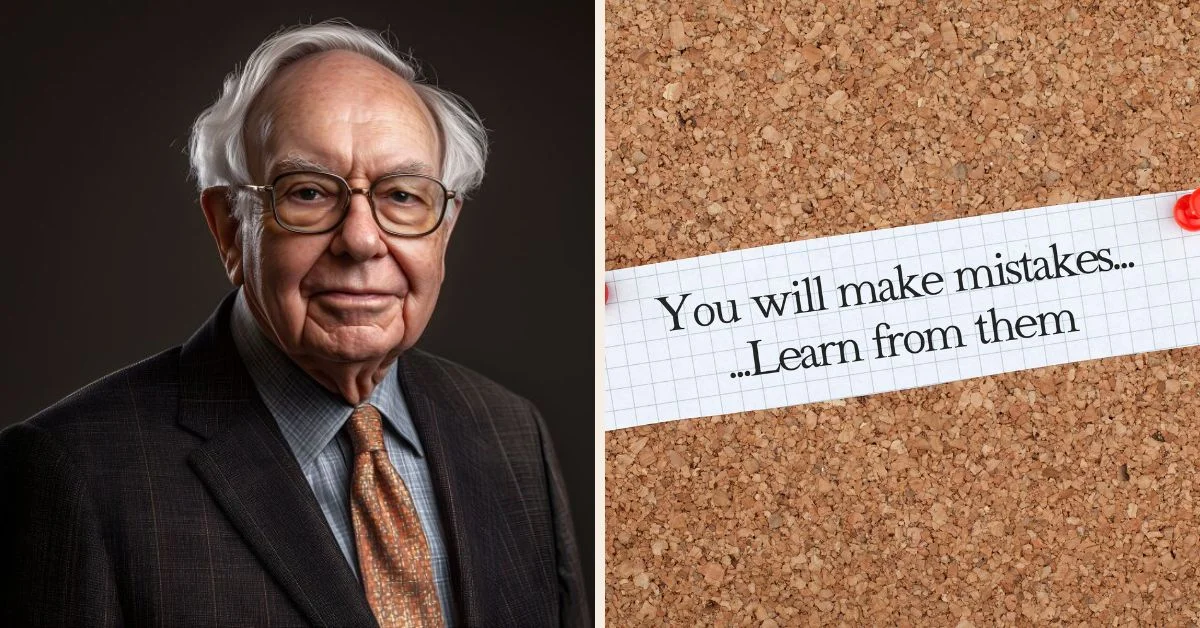
Everyone makes mistakes, but only some people turn mistakes into teachers. Munger often said that all he wanted to know was where he would die, so he would never go there. That joke holds a serious skill, which is studying your own errors with cold honesty.
After a mistake, write down exactly what happened in plain words. Note what you decided, what facts you had, and what you missed. Writing stops the mind from softening the story into something comfortable and false.
Ask what warning signs were visible before the mistake happened. In most failures, there were small clues that were ignored because of hurry, pride, or hope. Naming those clues trains you to spot them earlier next time.
Separate the mistake from your identity. A bad decision does not make you a bad person, and treating it that way only makes you hide from it. Strong people say the mistake out loud, learn the lesson, and move on without drama.
Study other people’s mistakes too, since they are cheaper lessons than your own. Business failures, broken partnerships, and public scandals all leave clear records of what went wrong. Reading those records can save you years of pain.
Build a simple rule from each big mistake and keep it where you can see it. A rule like “never decide when angry” or “always check the numbers twice” is easy to remember and hard to forget. Over time, your list of rules becomes your personal safety net.
A life without mistakes is a life without action, so do not fear errors. Fear only the mistake you refuse to examine, because that is the one you will pay for again and again.
Skill 3: Making Decisions With Clear Thinking
Most bad decisions come from speed, not from stupidity. We decide while tired, rushed, or excited, and then we defend the choice instead of checking it. Clear decision making starts with slowing down before the choice, not regretting it after.
For any big decision, write the options on paper with their likely results. Seeing choices in writing removes the fog that feelings create. A decision that looks strong in your head often looks weak on paper, and that is useful information.
Think about the downside first, before the upside excites you. Ask what happens if the plan fails, how much you would lose, and whether you could recover. A choice with a small upside and a large downside is a bad deal, no matter how exciting it sounds.
Wait before deciding when the stakes are high. A night of sleep changes many decisions, because the morning mind is calmer and less swayed by sales talk or peer pressure. Urgency is often a sales tool, not a real deadline.
Ask for one honest opinion from someone who disagrees with you. A friend who only agrees is pleasant but useless for hard choices. A thoughtful critic can spot a hole in your plan in five minutes that you missed in five weeks.
Keep your decisions small when you are unsure. A small test tells you more than a long debate. Try the idea on a small scale, watch the result, and then decide whether to go bigger with real evidence in hand.
Good decisions compound just like money does. Ten clear choices in a row can change a career, a marriage, or a fortune, while ten rushed choices can undo years of good work.
Skill 4: Patience as a Daily Practice
Patience is not a personality trait you are born with, and it is not a gift for a lucky few. It is a skill you build by waiting on purpose, again and again, until waiting becomes natural. Munger waited years for the right investment, and he waited calmly because he had trained himself to wait.
Daily life gives you many small chances to practise patience. Waiting in a queue, sitting in traffic, or listening to a slow speaker are all training grounds. Each time you stay calm instead of fuming, your patience muscle grows a little stronger.
Patience protects your money in a direct way. Quick trades, rushed purchases, and hasty career moves usually lose money, while calm waiting often saves it. The person who can wait for the right price or the right job usually gets the better deal.
Patience also protects your relationships. A sharp reply sent in anger can wound a friendship for years, while a reply delayed by one day is often kinder and wiser. Waiting before you speak is one of the cheapest ways to keep peace.
Long goals need patience most of all. Learning a language, building a business, or getting fit all take years, and progress is slow at the start. People who quit usually quit in the flat early months, just before results begin to show.
Measure progress in months, not days, for any serious goal. A daily check creates frustration, because real growth is too slow to see each morning. A monthly check shows the trend clearly and keeps you encouraged.
Treat patience as a daily exercise, like walking or stretching. Practise it in small moments, and it will be ready for the big moments when the stakes are high and everyone around you is panicking.
Skill 5: Speaking and Writing Clearly
Clear speech is a superpower that costs nothing and opens many doors. People who explain ideas simply are trusted faster, promoted sooner, and understood better. Munger was famous for plain talk, and he distrusted fancy words that hid weak thinking.
Use short sentences and common words whenever you can. A sentence with twenty simple words beats a sentence with ten impressive words that no one understands. Simple language is a sign of clear thought, not simple thought.
Before you speak in a meeting, know your one main point. If you cannot state it in one sentence, you are not ready to speak, and your listeners will feel the confusion. One clear point beats five half-formed points every time.
In writing, cut every word that adds nothing. Read your message aloud, and delete any sentence that sounds unclear or boring. Most emails can lose a third of their words and become twice as clear.
Listen fully before you answer, because clear speech starts with clear listening. Many people plan their reply while the other person is still talking, and they miss the real point. A short pause before answering shows respect and improves your answer.
Ask questions when you do not understand, instead of nodding along. Pretending to understand helps no one and creates mistakes later. A simple question like “Can you explain that part again” saves hours of confusion.
Clear communication compounds over a career. Each clear email, talk, and conversation builds your name as a person who can be trusted with important work, and that name follows you everywhere.
Skill 6: Understanding Basic Numbers
You do not need advanced math to make good life decisions, but you do need comfort with basic numbers. Percentages, averages, and simple growth rates appear in prices, pay rises, savings, and health choices every week. People who fear numbers get fooled by them.
Learn to work with percentages in your head for common cases. A 20 percent discount on 50 dollars saves 10 dollars, and a 30 percent rise on 100 dollars gives 130 dollars. This small skill stops many bad deals before they start.
Understand averages, because one average can hide a wide range. An average salary in a rich town tells you little about what most people earn there. Always ask what the typical case looks like, not only the average case.
Learn the power of steady growth over time. Money saved each month grows slowly at first and faster later, as growth builds on growth. Saving 100 dollars a month for thirty years can grow into tens of thousands, even with modest returns, because time does the heavy work.
Check numbers yourself instead of trusting headlines. A claim like “nine out of ten people agree” means little until you know who was asked and how many were asked. A small survey of friends is not proof about the whole world.
Use numbers to test your own plans. Before a big purchase, work out the total yearly cost, not only the monthly figure. Before a diet or fitness plan, record your starting point so you can see real change instead of guessing.
Numbers are a language, and like any language, a little fluency goes far. You do not need to love math, but you do need to read numbers well enough that no one can use them to mislead you.
Skill 7: Understanding How People Act
Human behaviour follows patterns, and learning those patterns is a skill that pays off everywhere. People copy the crowd, defend their pride, and follow rewards, even when they deny it. Seeing these patterns helps you deal with family, work, and sales pressure wisely.
Watch for crowd pressure in your own choices. When everyone rushes to buy something or join something, ask whether the thing is truly good or merely popular. Crowds are often wrong at the exact moment they feel most certain.
Notice how rewards shape behaviour, including your own. People repeat actions that bring praise, money, or comfort, and they avoid actions that bring pain. If you want a habit to stick, attach a small reward to it, and if you want a bad habit to fade, remove its reward.
Expect pride to cloud judgment, in yourself first. People defend old decisions because admitting error feels painful, and they argue harder the weaker their case becomes. When you catch yourself defending instead of thinking, pause and check the facts again.
Learn to spot pressure tactics in selling and persuasion. False urgency, flattery, and limited-time offers are designed to rush you past clear thinking. Naming the tactic out loud in your mind weakens its power over you.
Study envy, because it quietly drives many bad purchases and career moves. Comparing your life to a richer neighbour creates a hunger that no purchase can fill. Gratitude for what you already have is the practical cure, not a vague virtue.
Understanding people is not about manipulation or cynicism. It is about seeing clearly so you can respond with patience, kindness, and firmness instead of being pushed around by hidden forces.
Skill 8: Saying No to the Unimportant
Every yes to a small thing is a no to something bigger, because your time and energy are limited. Munger was famous for saying no to almost everything, so he could say a strong yes to the few things that truly mattered. Saying no is a skill, and it can be learned.
Start by listing what matters most to you this year, in three items or fewer. Health, family, and one work goal might be your list. When a request does not serve those items, the answer is usually no, even if the request sounds nice.
Decline politely but firmly, without long excuses. A short answer like “Thank you, but I cannot take that on right now” is kinder than a long story that invites argument. People respect a clear no far more than a weak yes that later fails.
Watch for requests that flatter you into agreement. Being told you are the only person who can help is often a tactic, not a fact. Ask whether the task truly needs you, or whether anyone capable could do it.
Saying no protects your calendar from filling with other people’s priorities. A week with ten small commitments leaves no deep time for the work that changes your life. Guarding your time is guarding your future.
Apply the same skill to money. Every small subscription, gadget, and impulse buy is a yes that takes from your savings goal. Review your spending each month and cancel the items that no longer serve a real purpose.
Each no you say with calm confidence makes the next no easier. Over a year, those guarded hours add up to weeks of time for learning, health, and family, which is where a good life is actually built.
Skill 9: Staying Curious All Your Life
Curiosity keeps the mind young in a way that no supplement or puzzle can match. A curious person asks why, tries new things, and meets new people, while a bored person repeats the same week for decades. Munger stayed curious into his late nineties, and it showed in every conversation.
Ask one genuine question every day about something you do not understand. It can be about your job, your town, or how something works. The habit of asking keeps your mind active and often leads to useful discoveries.
Try one new experience each month, even a small one. A new walking route, a new food, or a new hobby breaks routine and builds fresh brain connections. New experiences also give you stories and ideas that routine never provides.
Talk to people outside your usual circle. A farmer, a nurse, a builder, and a teacher all see the world differently, and each one can teach you something your own circle cannot. Curiosity about people is the fastest way to widen your view.
Follow your questions with short research instead of letting them fade. A ten-minute search or a chapter of a book can turn a passing wonder into real knowledge. Curious people collect answers, while others collect only questions.
Curiosity also protects you from rigid thinking. A person who keeps learning can change his mind when facts change, while a person who stopped learning defends old views forever. Flexibility is a strength, not a weakness.
Stay curious until the end, because the world keeps changing and so do you. The day you stop asking questions is the day growth stops, and growth is what makes a long life worth living.
Skill 10: Explaining Ideas in Simple Words
The final skill ties all the others together. If you cannot explain an idea simply, you probably do not understand it well enough yet. Munger judged his own understanding by whether he could explain a business to a child, and that test is worth copying.
After you learn something new, try explaining it aloud in two minutes. Use plain words and short sentences, as if talking to a neighbour with no background in the subject. Gaps in your explanation show gaps in your understanding.
Teaching also locks learning into memory far better than re-reading. Students who teach a topic remember it weeks later, while students who only re-read forget most of it. Explaining is not extra work after learning, since it is the deepest form of learning itself.
Simple explanation helps you at work too. A manager who can explain a plan clearly gets faster agreement and fewer mistakes from the team. A worker who explains a problem plainly gets help sooner, because people understand what is wrong.
Avoid hiding behind technical words when simple words will do. Technical language has its place among experts, but with most people it creates distance and confusion. The smartest person in the room is often the one everyone understands.
Practise explaining one idea each week to a friend or family member. Ask them to repeat it back to you, and notice where they get confused. Their confusion is a gift, because it shows exactly where your explanation needs work.
When you can explain all ten skills in this article in your own simple words, you will own them. They will no longer be ideas on a page, and they will be tools in your hands for the rest of your life.
Conclusion: A Small Set of Skills, Practised for Life
Ten skills may sound like a lot, but they share one simple core. Learn constantly, think clearly, wait patiently, speak plainly, and guard your time. A person who does those five things well will outperform a cleverer person who does none of them.
Do not try to master all ten skills this week. Pick the one that would help you most right now, and practise it daily for a month. Reading, patience, or saying no are strong first choices, because each one improves every other area quickly. I started with reading, and it changed my mornings within weeks.
Track your practice in a simple way. A tick on a calendar for each day you read, or a short note about one decision you slowed down, keeps the habit visible. Visible habits survive, while invisible good intentions fade within days.
Expect slow progress and uneven days. You will forget, rush, and fall back into old patterns, and that is normal for every learner. The skill is not perfection, and the skill is returning to the practice the next day without self-pity.
Surround yourself with people who value learning and clear thinking. Friends who read, ask questions, and speak honestly will pull you upward. Friends who mock effort and praise shortcuts will pull you down, no matter how strong your willpower is.
Review these skills once a year, like a doctor’s check-up for your mind. Ask which skill grew, which one faded, and which one you need most for the year ahead. A yearly review turns a good month into a good decade. I review mine every January, and the habit keeps me honest.
Munger lived to ninety-nine with his mind sharp and his humour intact, and he credited simple habits, not genius. Borrow his approach, practise these ten skills with patience, and your life will improve in ways that are quiet at first and remarkable over time.