10 Low Screen Time Activities Kids Actually Love

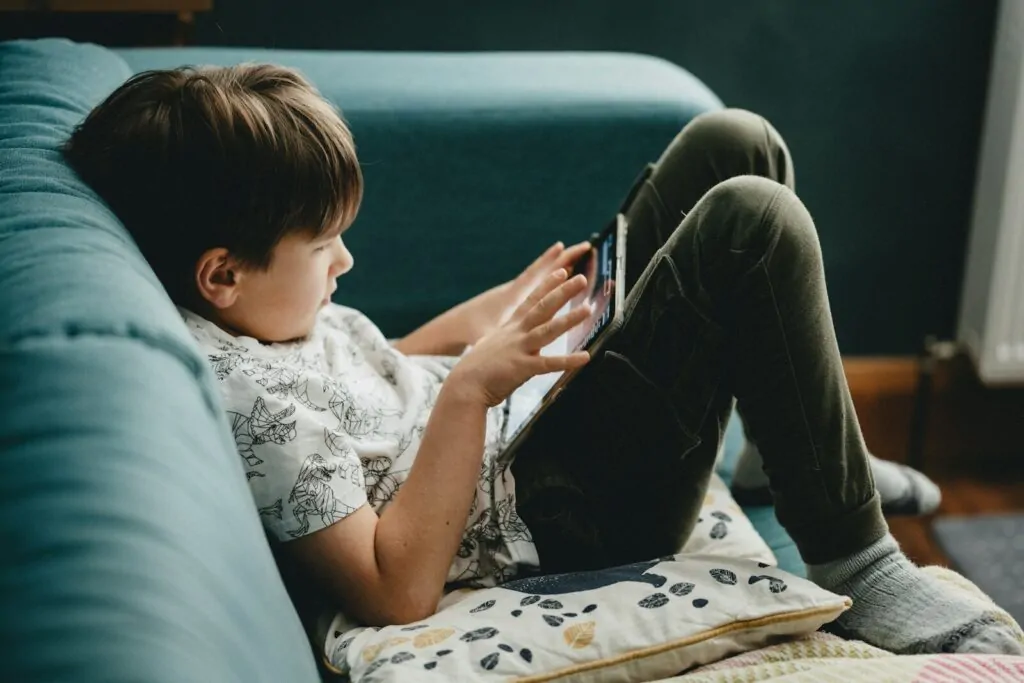
Most parents know all too well when the TV is off. The tablet is put away. And then comes that blank stare, the slow drift to the couch, and the words that follow like a clock: “There is nothing to do.”
It does not mean the child is lazy. It does not mean anything is wrong. It just means the brain has been trained to wait for a screen to do the fun work. That is not a flaw. It is a habit. And habits, with a little time and the right setup, can shift.
What works is not forcing joy. What works is making the non-screen world feel just as alive, just as worth showing up for. The list below is not a schedule or a lesson plan. It is a set of real things — tried in real homes, with real kids who threw real fits before they got hooked and never wanted to stop.
Why Screen Time Keeps Winning (And What That Tells Us)
Most parents do not set out to raise screen-heavy kids. It just happens. A long day, a task that needs focus, a trip where the device buys twenty minutes of quiet. Each choice makes sense in the moment. The sum of those choices adds up.
What makes screens so hard to beat is not that they are bad. It is that they are very, very good at one thing: giving the brain a constant, effortless drip of reward. Every tap, every clip, every level cleared sends a small hit of feel-good signal. The brain learns fast. It starts to prefer that kind of input over slower, quieter kinds.
- Screens win by being low-effort and high-reward at the same time
- Most real-world play needs 10 to 15 minutes of awkward before it gets good
- Kids are not weak they are just responding to what works fastest
The good news is that the brain is also very good at learning new patterns. Give an activity enough time to get good, and the brain starts to want that too. The first few tries are the hard part.
What Real Screen-Free Fun Actually Looks Like
Screen-free does not mean silent, still, or suffering. It does not mean a house with no tech and a pile of wooden toys in the corner. It means giving the unscreened world enough space to prove itself.
Real screen-free fun is messy sometimes. It is loud sometimes. It is a child fully in their own world, building something or breaking something or explaining a long, winding story to no one in particular. It looks different from the outside than it feels from the inside.
- It rarely looks productive — and that is fine
- It often starts slow and picks up fast once the brain gets warm
- It tends to go longer than expected once it really takes hold
1. Building With Blocks, Boxes, and Whatever Is Around
Most kids, when handed a box of wooden blocks or a pile of old cardboard, do not know what to do for the first few minutes. That pause is not boredom. That is the brain warming up, dusting off a part of itself that has been waiting.
Watch what comes after. A tower goes up. Then a road. Then a whole city with names and rules and stories that live only in that child’s head. That is world-building. And world-building is one of the oldest, most deeply human things there is.
The beauty of this is how low the cost of entry is. Cereal boxes, tape, and toilet rolls work just as well as any toy set. The child does not need more tools. They need fewer rules.
- Ages 3 to 5 take best to large soft blocks or chunky wooden sets
- Ages 6 to 9 tend to prefer LEGO, tiles, or mixed scrap building
- Ages 10 and up often enjoy builds with goals, like a bridge that must hold weight
2. Free Drawing With No Goal and No Grade
There is a wide gap between art class and free drawing. Art class has goals, marks, and someone watching. Free drawing has none of that. That gap is where real creative thinking quietly lives.
When kids draw with no prompt, no grade, and no one watching with high hopes, something opens up. They draw creatures with forty-seven legs. They draw maps of places that do not exist. They draw their own face and then give it wings. None of it makes sense and all of it matters deeply.
The common mistake is giving kids a blank page and walking away too fast. A few soft sparks help: “Draw your dream house,” or “What would a friendly dragon eat?” Not orders. Just a door left open a little.
- Leave paper and pencils on the table, not locked in a drawer
- Markers, crayons, and paint each bring their own kind of focus
- Kids who say they cannot draw often just need to see that stick figures are more than fine
3. Simple Cooking and Baking in a Real Kitchen
Food is a subject kids take very seriously when given real respect in the kitchen. Not a toy oven. Not fake mixing. Real flour, real eggs, real heat with a safe adult nearby, and real food to eat at the end.
A six-year-old who makes their own pancakes on a Saturday does not just feel proud. They feel capable. That is a very different thing. Pride fades. A feeling of being capable stays and grows.
Start small. Toast with toppings they pick. A basic banana bread. Scrambled eggs. The recipe matters less than the process of measuring, mixing, waiting, and tasting. There is science in it, math in it, patience in it, all at once.
- Ages 4 to 6: wash veg, pour pre-measured items, stir with help
- Ages 7 to 10: measure, crack eggs, follow steps with guidance nearby
- Ages 11 and up: full simple recipes with an adult close but not hovering
4. Reading Aloud Together, Even With Older Kids
There is a myth that once a child reads on their own, reading aloud together becomes a baby thing. That myth costs families something real and quiet.
Reading aloud is not about reading skill. It is about shared focus. It is about sitting in the same story at the same moment. It is about doing a ridiculous voice for a villain and a child losing themselves in real, deep laughter over something with no screen, no score, and no loading time involved.
Book series work best for this kind of slow, ongoing ritual. The goal is not to finish the book. The goal is to want to get back to it the next night.
- Even teens who roll their eyes often fall into a good read-aloud if the story is gripping
- Stop at a tense moment — that keeps the pull alive across nights
- Let the child hold the book and follow along even while someone else reads it aloud
5. Outdoor Play With No Planned Goal at All
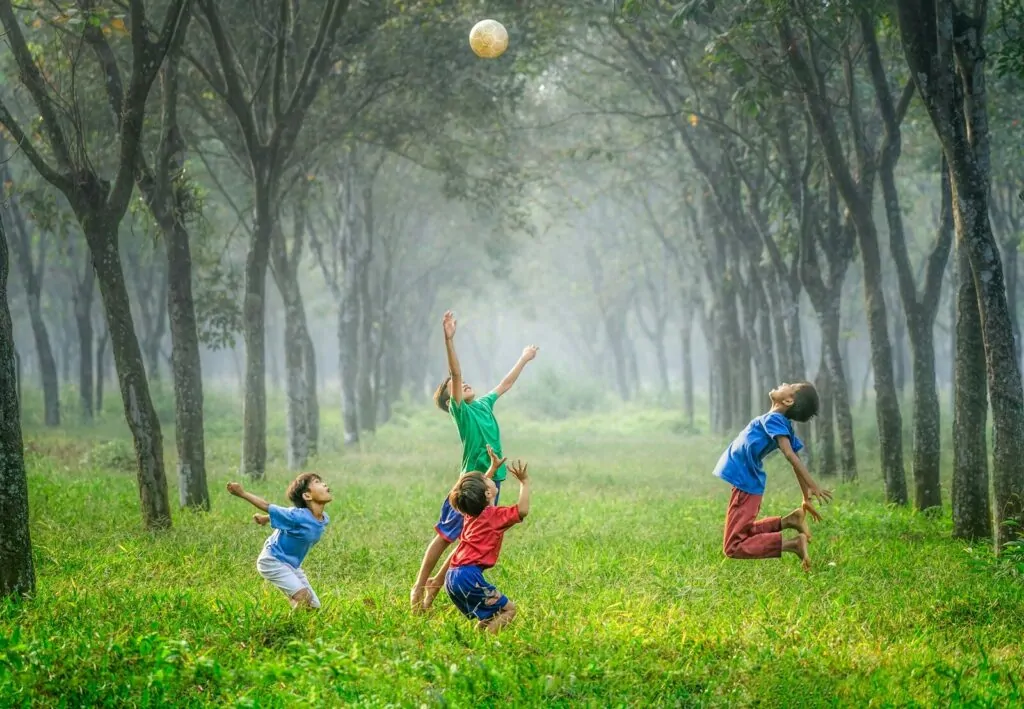
The best outdoor play is unscripted. Not a sport with rules, not a class, not a scheduled thing. Just outside, with time to fill however it gets filled on that particular day.
Kids who have free outdoor time build what researchers call risk calibration — the sense of what is safe and what is not, learned through direct experience rather than being told. Climbing a low tree teaches that better than any talk about it ever could.
The American Academy of Pediatrics has pointed to free outdoor play as one of the strongest supports for executive function in young children. That means focus, self-control, and thinking that can bend when plans change — all the things that too much screen time tends to flatten over time.
- Even a small yard or quiet street holds hours of made-up games when kids are left to find them
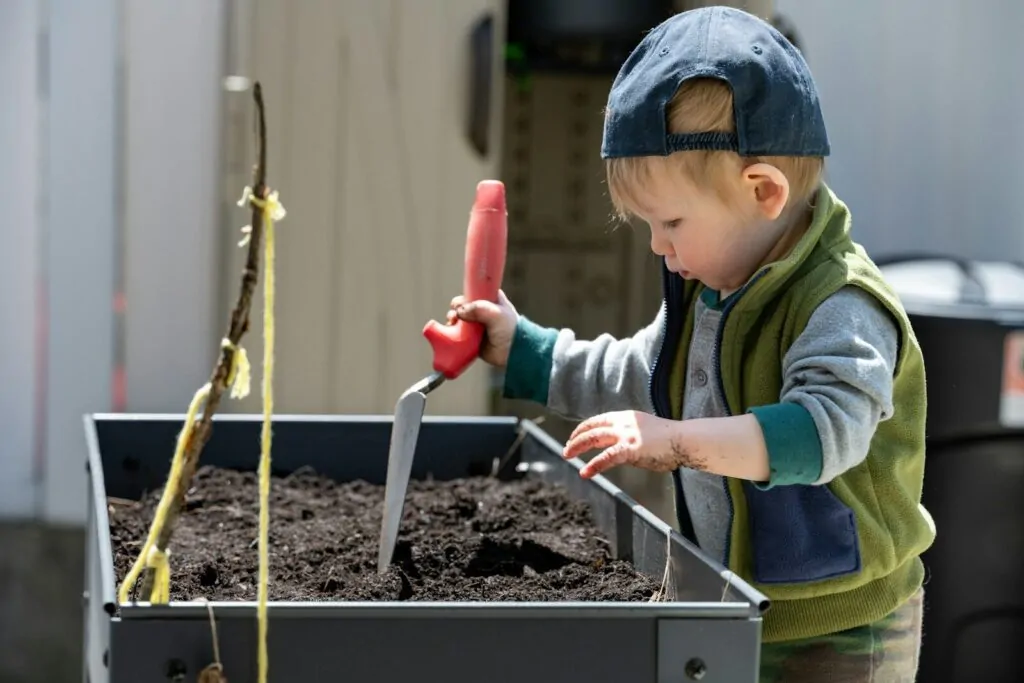
- Sticks, dirt, rocks, and water are often enough for children under 8
- The adult role here is calm presence from a distance, not active direction
6. Puzzles, From Easy Ones to Absurdly Hard
A puzzle is one of the rare things that feels both calm and urgent at once. No pressure, no clock, but a steady pull — the piece that almost fits, the edge of an image slowly coming clear across sessions.
For young kids, 24-piece floor puzzles with big bold images work well. For the 8 to 12 range, 300 to 500 pieces. For teens and older kids who get hooked, a 1000-piece puzzle left out on a low table becomes a slow, ongoing project — something to drift back to across many days and nights.
The focus that puzzle work builds is deep and real. It is not passive focus like watching something. It is active scanning, comparing, rotating, deciding. That is close to what math and careful reading ask of the brain every day.
- Keep the puzzle on a table where it stays set up between sessions without being cleared away
- Let kids leave and come back — pressure to finish kills the enjoyment fast
- For kids who resist, suggest starting with just the border and leaving the inside for later
7. Journaling and Simple Private Writing
Writing is not only for school. For kids who are given a private notebook and told it belongs only to them, writing shifts into something else — a place to put things that do not fit anywhere else in their day.
That includes big feelings, strange ideas, half-formed stories, lists of things they love, maps of made-up places, letters to no one. The page does not judge. The page does not cut them off mid-sentence. That kind of steady, quiet space is worth more than it looks.
For younger kids who are not writing fluently yet, journaling can mean drawing with one sentence below it. Or speaking out loud while a parent writes it down for them. The act of putting one’s own inner life somewhere real is what matters most.
- Ages 5 to 7: a blank book with space for both words and pictures works very well
- Ages 8 to 12: a proper lined journal, given with clear privacy, tends to actually get used
- Older kids sometimes open up with a writing prompt left on a small sticky note than a blank page
8. Board Games and Card Games, the Fun Kind
Not games with hidden lessons. Not games designed to teach something. Real games — games that are simply fun to play, games that would be worth playing whether a child learned a single thing from them or not.
Uno. Catan Junior. Dobble. Sequence. Skip-Bo. There is a wide world of board and card games made for different ages that are genuinely, honestly, no-agenda good fun. And inside that fun, something quiet and important happens without anyone planning it.
Taking turns. Handling a loss. Reading faces across a table. Managing the high of winning and the sting of losing. Thinking ahead. Shifting when a plan falls apart. These are not lessons being taught. They are things being lived, and the difference between those two things is enormous.
- A game night once a week creates a rhythm kids start to look forward to and protect
- Let the child pick the game sometimes — ownership drives how much they care
- Card games travel well too — one simple deck holds ten different games across many ages
9. Nature Walks and Simple Collecting
Collecting is one of the oldest childhood instincts there is. Rocks. Leaves. Feathers. Shells. Pressed flowers. A bug in a jar for ten minutes before it goes free. Children who collect things are quietly practicing something subtle: paying attention to the physical world, noticing difference, sorting, caring for something small and real.
A walk with no set end point is not boring to a child given full permission to stop, pick up, observe, and wonder. The walk becomes a hunt. The backyard becomes a field study. The park becomes a museum in slow, ongoing progress.
- A simple local field guide for birds or wildflowers adds a layer of real purpose
- A dedicated shelf or box at home gives the found things a place to matter and stay
- A magnifying glass costs almost nothing and changes entirely what a child sees on a walk
10. Imaginative Play and Made-Up Games With No Rules
Dress-up, pretend play, made-up worlds with made-up problems and made-up fixes. This is not a simple thing. This is, quietly, one of the most complex things the human brain ever does — at any age.
When a child runs a pretend shop, they are practicing language and back-and-forth exchange. When they play doctor, they are working through care and fear. When they build a fort and call it a kingdom, they are holding spatial thinking, story structure, and leadership all at once — without naming any of those things.
The research here is deep and long-standing. Play scholars like Lev Vygotsky and Stuart Brown, from very different times and angles, each pointed to this kind of free play as a core need — not a nice extra, not a reward for finishing the real work, but a core need, like sleep and food.
- Open-ended items work better than toy sets with fixed uses — a plain box often beats a plastic castle
- Mixed ages in free play often create the richest, most lasting outcomes
- Adults who join and follow the child’s rules, rather than setting their own, deepen the play without breaking it
How to Set Up a Home That Makes These Easy
The biggest barrier between kids and screen-free play is not willpower. It is friction. If the tablet is on the counter and the blocks are in a bin in the garage under three other bins, the tablet wins every time. That is not laziness. That is physics.
Lowering the friction for non-screen activities matters more than almost anything else in this whole conversation. A puzzle left out on a table. Paper and pencils visible on the counter. A basket of craft supplies at kid height. A bookshelf with the spines facing out, not crammed sideways.
- Put screen-free supplies at the same level of ease as the device
- Rotate what is available every few weeks — familiar things get overlooked, returned things feel fresh
- Create a small dedicated space that belongs to play, not to storage or adult things
How Much Screen Time Is Too Much and How to Know
There is no clean number that works for every child, every family, every age. The American Academy of Pediatrics has moved away from strict hour-based limits over time because context matters too much. A two-hour window of high-quality reading apps is not the same as two hours of auto-played short clips.
What the research does point to consistently is quality over quantity, and the importance of what happens around the screen use — are kids active before and after? Are they sleeping well? Are they engaged and curious in their offline hours?
- For children under 2: video calls with family are fine; other screen use is worth limiting
- For ages 2 to 5: about one hour of thoughtful, chosen content tends to work well
- For ages 6 and up: consistent limits that leave room for real-world activity and sleep
The clearest signal that screen time has tipped too far is not the number of hours. It is what happens when the device goes away. Persistent rage, a total loss of interest in anything else, and an inability to sit with quiet — those are worth paying attention to.
What to Do When Kids Resist Every Activity
Some children resist because they genuinely do not know how to start. Some resist because they are exhausted or overstimulated. Some resist because the non-screen world has, for a while, stopped feeling worth the effort. All of those are real and none of them require a battle.
The most useful thing an adult can do in that moment is not give a speech, not issue consequences, and not offer the device back just to restore the peace. The most useful thing is to sit nearby and start doing something quietly interesting without making a big point of it.
Children are, at their core, curious. They come toward things that look genuinely interesting. They drift toward the adult who is laughing at a puzzle piece, building something odd with cardboard, or flipping through a nature book with real pictures. Invitation through example tends to land better than instruction through words.
- Keep your own reaction calm — visible frustration raises the stakes and makes resistance stronger
- Offer two clear choices rather than one — “blocks or drawing?” feels less like a wall
- Accept that some days, simpler and shorter activities are the right ones to try
Tips for Parents Who Feel Guilty About Screen Time
Most parents who worry about screen time are the same parents who are paying close attention, who read things like this, who want to do right by their kids. The worry is a sign of care, not failure.
Guilt is not a useful long-term tool. It tends to lead to all-or-nothing thinking — total rules that get broken, then shame, then giving up entirely. A steadier path is small, realistic shifts made without drama.
- Swapping one screen hour for an outdoor walk three times a week is a real change
- Eating one meal per day without any device at the table is a real change
- Putting the charger in a room that is not the bedroom at night is a real change
None of those require a perfect system or a whole new approach to parenting. They just require a decision made once and held with reasonable calm.
Age-by-Age Guide to What Works When
Not every activity works at every age, and what a four-year-old loves and what a ten-year-old loves can look almost nothing alike. Matching the activity to where the child actually is — not where the packaging says they should be — matters a lot.
Younger children need things they can touch, move, and change with their hands. They are building their physical sense of the world before their mental one catches up. Older children need things with enough complexity to stay genuinely interesting — they are past the phase of wonder at simple things and need real challenge to stay engaged.
- Ages 3 to 5: blocks, sensory play, simple pretend, being read to, movement-based games
- Ages 6 to 8: puzzles, drawing, baking with help, nature collecting, beginner board games
- Ages 9 to 12: strategy games, writing projects, building kits, music, longer chapter books
How to Keep These Activities Going Long-Term
The hardest part is not starting. The hardest part is building the kind of slow, steady rhythm where screen-free time is just a normal part of how the week goes — not a special event, not a punishment day, not something that requires a plan and a pep talk every time.
What works long-term tends to be small, consistent, embedded things rather than big dramatic changes. A fixed game night. A standing Saturday morning baking session. A stack of library books that gets refreshed every two weeks. A nature shelf where found things accumulate over months.
- Routine beats intensity — a short daily window of screen-free time builds more than one long weekend
- Let kids help choose and plan some of the activities — buy-in is very real
- Accept uneven weeks without treating them as failure and starting over from the beginning
A Final Thought
The goal was never to fill every hour or win a battle against technology. The goal was always to help kids remember that the world without a screen is not empty. It is full. It has weight and texture and surprise. It pushes back. It does not do the work of being interesting on its own you have to meet it halfway.
That is the quiet gift hidden inside all of this. Not a lesson in patience or a system for better parenting. Just the slow, steady discovery that a person can make their own good time. With some blocks. With a book. With a puzzle left out on the table. With dirt, sticks, and an hour to burn.
That is not a small thing. In many ways, it is the whole thing.