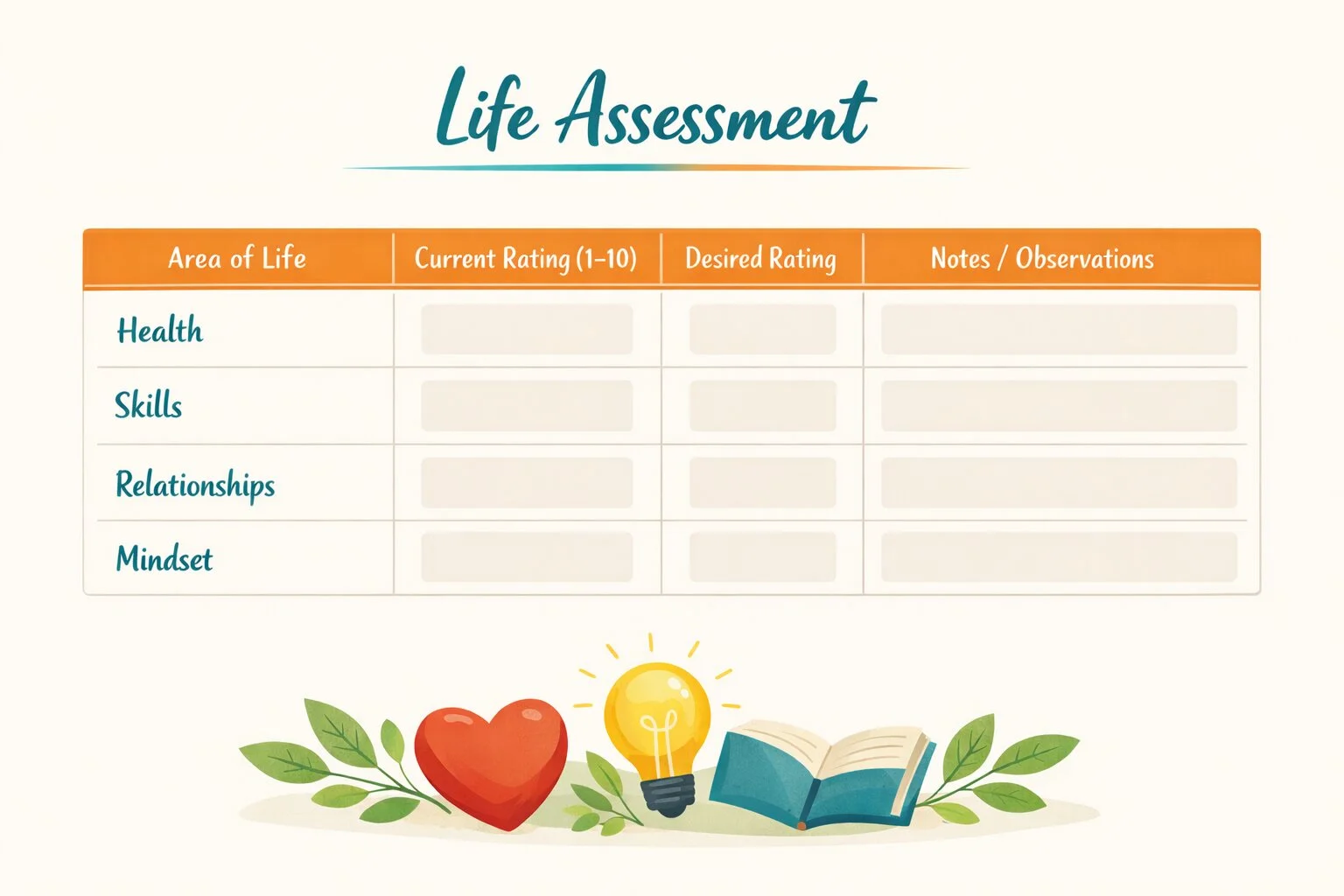
11 Things To Work On Yourself List for Growth


In life, there is a point, maybe it hits at 2 am, maybe it hits while you are stuck in traffic, when you feel like you are just going through the days. Not bad days. Not great days. Just days. And somewhere in that quiet space, a small voice asks: is this all there is?
That voice is not your enemy. It is, if you listen long, one of the most kind things your mind can do for you. It is the part of you that knows, even before you do, that something has to change. Not your job. Not your city. Not your partner. You.
Working on yourself is not a trend. It is not a vision board or a 5am wake-up plan or a list of goals you tape to your mirror and stop seeing after two weeks. It is a slow, real, sometimes hard process of getting to know who you are and who you want to be. The 11 things on this list are not hacks. They are the real work. The kind that no one sees you do but that changes everything over time.
What Does It Really Mean to Work on Yourself
A lot of people think self-work means fixing what is broken. That is not quite it. It is more like tending a garden you did not plant. Some things were put there by your past. Some by fear. Some by what other people told you about who you were when you were too young to argue back.
Self-work is the act of looking at all of it, the good roots and the weeds, and deciding what you want to grow from here. It is less about becoming a new person and more about meeting the one that was always there, under all the noise.
Growth does not happen in big leaps most of the time. It happens in the quiet moments when you catch yourself doing the same old thing and decide to try something different. That pause, that half-second of awareness, that is where the real change lives.
1. Know Your Own Mind First
Most people go through life reacting. Something happens, they feel a rush of emotion, they act. Then they look back and wonder why they did that. Sound familiar?
Self-awareness is the base of every other thing on this list. Without it, you are just running old code. You do the same things, get the same results, and feel stuck in a loop you cannot name.
Getting to know your own mind means asking hard questions. Not deep, scary questions but simple ones. Why did that bother me? What did I feel just then? What do I actually want from this situation? These are not big questions but most people never stop long enough to ask them.
Journaling helps some people. Sitting still for ten minutes each day helps others. A walk without headphones. A talk with someone you trust. The tool matters less than the practice. What you are building is the habit of checking in with yourself, the same way you check your phone, but with actual intent.
One thing worth knowing: self-awareness is not the same as self-criticism. A lot of people think they are doing inner work when they are really just being hard on themselves. The goal is to see clearly, not to judge harshly. There is a big gap between the two.
A Small Practice That Helps
At the end of each day, ask three questions. What did you feel the most today? What made you react in a way you did not like? What felt good and true? No need to write a long page. Three lines will do. Over weeks, patterns will show up that tell you more about yourself than any quiz ever could.
2. Fix How You Talk to Yourself
This one is uncomfortable for most people to look at directly. Because once you start to hear your own inner voice, really hear it, you realize how unkind it often is.
The way you talk to yourself shapes everything. Your choices, your risk, your relationships, your ceiling. Most of that voice was not built by you. It was built by years of feedback, criticism, comparison, and small moments of shame that left marks you forgot about but never quite erased.
Many people carry a voice in their head that sounds like a harsh coach. Every mistake gets noted. Every flaw gets pointed out. Rarely does that voice say, good try, you will get it next time. Most often it says something like, you always do this. You are not good enough. Who did you think you were.
The work here is not to silence that voice, you cannot, but to add another voice next to it. A calmer one. A fair one. One that sees the full picture, not just the flaws. Over time, with practice, the kinder voice gets louder. The harsh one does not go away fully but it loses its grip.
Cognitive behavioral therapy has a lot to say about this. The idea that thoughts are not facts is old but it is worth sitting with. A thought that says you are a failure is not a fact. It is a story. And stories can be edited.
Words Matter More Than You Think
Pay close attention to the words used in your own head. There is a big gap between telling yourself, that was a mistake, and telling yourself, you are a mistake. One is about an act. One is about an identity. That gap is where a lot of suffering lives.
3. Build Real Self-Discipline
Discipline has a bad reputation. It gets sold as waking up at 4am, cold showers, and color-coded schedules. That version of discipline is mostly performance. Real discipline is quieter. It is the choice you make when no one is watching and the easy option is right there.
At its core, discipline is about keeping the promise you make to yourself. And the sad truth is, most people break those promises so often that they stop trusting themselves. You say you will start on Monday. Monday comes. You say next week. After enough cycles, the self-trust erodes. You stop believing your own word.
Building discipline does not start with big changes. It starts with small promises you actually keep. Wake up at the same time three days in a row. Drink one glass of water each morning. Read five pages before bed. None of these will change your life alone. But each kept promise rebuilds the thing that matters most: your relationship with your own word.
James Clear, the writer who spent years studying habits, talks about this in terms of identity. Every action you take is a vote for the kind of person you are. Keep those small promises and you are voting for a person who follows through. Break them enough and you are voting for someone who does not.
Discipline also requires honesty about your weak points. If you know you check your phone 80 times a day, working on discipline means building structure around that, not just willpower. Willpower is a limited resource. Structure is not.
4. Learn to Sit with Hard Feelings
Nobody teaches you this. School does not cover it. Most parents did not learn it either and so could not pass it on. The result is a world full of adults who are very skilled at avoiding hard feelings but not so skilled at actually handling them.
Avoidance takes many forms. Scrolling. Eating. Working too much. Staying busy. Drinking. Some of these look like productivity. Some look like rest. But underneath, they are often the same thing: a way to not feel what is there to feel.
The irony is that feelings do not go away when you avoid them. They go underground. They show up later as anxiety, as short temper, as that vague sense of dread that has no clear cause. The feeling you refused to feel at 7pm finds another way out at 2am.
Sitting with hard feelings does not mean wallowing in them. It means staying present long enough to let them move through. Grief, anger, fear, shame, these are not signs that something is wrong with you. They are signs that something matters. They have a job to do. When you let them do their job, they pass more quickly than you expect.
Therapists often use the phrase: the only way out is through. Most people have heard it. Far fewer have tested it. But those who have know it is true.
What This Looks Like in Real Life
Next time a hard feeling shows up, instead of reaching for the phone or the snack or the distraction, try sitting still for just two minutes. Feel where the emotion lives in your body. Name it if you can. You do not have to do anything with it. Just let it be there, without fighting it. Two minutes. See what happens.
5. Set Limits That Feel Real and True
The word boundaries gets used a lot now. So much that it has lost some of its meaning. But the idea behind it is genuinely important and genuinely hard for most people.
Setting a limit is not about being cold or building walls. It is about knowing what you can give, what you can take, and being clear about both. Most people who struggle with this do so because somewhere along the way they learned that their needs were less important than others’ needs. Or that saying no meant losing love. Or that keeping peace was worth losing themselves.
The cost of living without real limits is high. It shows up as resentment, exhaustion, and a strange kind of anger that does not fully make sense because it is layered over so many old incidents. People pleasers often reach a point where they feel angry at the very people they spent years trying to please. That is not a character flaw. It is a predictable result of spending too long without a clear sense of where you end and others begin.
Real limits are not punishments for others. They are care for yourself. And they do not need to be delivered with anger or a big speech. The quieter and calmer you can state a limit, the more real it tends to feel.
This is hard work. It often means disappointing people. It means sitting with the discomfort of not being liked in a given moment. But over time, it builds something that no amount of people pleasing ever can: genuine self-respect.
6. Drop Old Habits That No Longer Serve You
There are things you do each day that once made sense and no longer do. Some were coping tools from harder times. Some were borrowed from people around you without much thought. Some you started before you knew better.
The problem with old habits is that they hide in plain sight. They become so familiar that you stop seeing them as choices. They just feel like you. That is how habits work. They automate behavior until the behavior feels like identity.
Identifying old habits requires some distance. It helps to ask: if you met someone new and they did this thing that you do, what would you think? Sometimes this angle gives a clarity that looking directly at yourself does not.
Dropping a habit is harder than most motivation content admits. The brain is not wired to enjoy giving up familiar patterns, even painful ones. Research from neuroscience tells us that well-worn habits create physical pathways in the brain, literal grooves worn by repetition. New behavior feels awkward and wrong for a long time before it begins to feel natural.
This is why willpower alone rarely works. What works better is replacement. Finding a new behavior that meets the same need the old habit was meeting. If you eat when you are anxious, finding another way to soothe anxiety works better than just telling yourself to stop eating. The need does not go away when you remove the habit. The need just looks for a new door.
7. Work on How You Talk to Others
Communication is the area where most self-work becomes visible to the outside world. Everything internal you have built, the self-awareness, the emotional handling, the clear limits, all of it gets tested the moment another human is in front of you.
Most people have a default communication style that was set early. Some go quiet when they feel threatened. Some get loud. Some use humor to avoid depth. Some people talk a lot but say very little. None of these are permanent. They are patterns, and patterns can change.
Good communication is not about being articulate or having the right words. It is about being present. Listening without planning your reply. Speaking from what is true rather than what is safe. Being clear rather than clever.
The hardest part of communication for most people is conflict. Not screaming matches, though those too, but the low-grade friction of daily disagreement. The small thing your partner does that irritates you. The colleague who takes credit. The friend who keeps canceling. Most people handle these by either stuffing it down or exploding when the pile gets too high. Neither works.
Learning to address things as they come up, calmly and directly, without blame or drama, is one of the most valuable skills a person can develop. It keeps relationships clean. It keeps the internal pile from growing.
One Shift That Changes Everything
Practice saying what you feel before saying what the other person did. Not, you never listen to me, but, when you look at your phone while we talk, it feels like what you are saying does not matter. Same message. Different impact. One blames, one reveals. The one that reveals tends to open doors.
8. Take Care of Your Body Like It Deserves
The body is where everything else lands. Stress lives in your shoulders. Grief sits in your chest. Anxiety hums in your stomach. The body keeps a record, as the therapist and writer Bessel van der Kolk put it in a way that many people found they had always known but never been told.
Working on yourself means working on the physical self too, not just the mental one. Not because you want to look a certain way, though that may come, but because the body and mind are not separate systems. They run together. A body that is depleted, under-slept, under-moved, and fed poorly does not give the mind much to work with.
Sleep is the most underrated factor in how you feel and think. Most people have lived long enough in a low-sleep state that they have forgotten what proper rest feels like. The science on this is deep and consistent. Sleep affects mood, decision making, memory, patience, and the ability to handle stress. Getting more of it, and protecting it, is not laziness. It is one of the most high-value things you can do for your growth.
Movement matters too, and not just for the body. Exercise changes brain chemistry in ways that no amount of thinking about feelings can. It reduces cortisol. It raises dopamine. It gives the nervous system a way to discharge what builds up during the day. Even a 20-minute walk shifts the internal weather in ways that are hard to explain until you have experienced them.
Food, too. Not in a rigid or punishing way. But noticing how what you eat affects how you feel. Some people discover that sugar crashes hit their mood harder than they realized. Others find that eating at odd hours disrupts their sleep. The body gives feedback constantly. The trick is learning to read it.
9. Keep on Learning and Stay Open
There is a version of growth that stops when school stops. Many people hit their mid-twenties and quietly close the door on learning. Not fully. But in a way that narrows the mind over time. The same opinions. The same sources. The same way of seeing.
Curiosity is not just a nice personality trait. It is a survival skill. The world moves fast. The people who stay open to new ideas, who can hold a belief lightly and update it when new information arrives, those people navigate change better than those who cannot.
Learning here does not have to mean formal study. It can mean reading outside your usual topics. Talking to people who live differently than you do. Watching a documentary about something you know nothing about. Taking a class in something that scares you a little. Asking questions you normally avoid because you feel like you should already know the answers.
There is something worth saying about expertise too. The people who know the most tend to be the most aware of how much they do not know. The Dunning-Kruger effect, the well-documented pattern where limited knowledge leads to high confidence, is worth keeping in mind when you find yourself very sure about something.
Staying a learner also means being willing to be wrong. This is harder for most adults than it sounds. Being wrong feels like a threat to the identity. But the people who grow the most are the ones who can say, wait, actually, and mean it. That ability is not weakness. It is one of the rarest forms of strength.
10. Find What You Value Most and Live by It
A lot of unhappiness comes from a gap that does not get named. It is the gap between what you say matters to you and how you actually spend your time. You say family is first. But the late nights at work say something different. You say you value your health. But the weekend choices say something else.
Values are not what you wish you cared about. They are what you actually organize your life around when you are tired and pressed and choosing in real time. Getting honest about the gap between stated values and lived values is one of the more sobering exercises in self-work.
This is not about guilt. It is about clarity. Once you see the gap clearly, you have a choice. You can realign your time to match what you say you value. Or you can update what you say you value to match how you actually live. Either is honest. The only dishonest option is pretending the gap is not there.
Viktor Frankl, the psychiatrist who survived the camps and spent his life writing about meaning, said that what a person can endure is almost limitless when they have a reason for it. His work, particularly Man’s Search for Meaning, comes back to one quiet idea: that a life guided by clear values is more steady, more resilient, and more fully felt than one that just reacts to whatever comes next.
Living by your values does not look dramatic from the outside. It looks like a series of small choices, made quietly, that add up over time to a life that feels like yours.
11. Make Peace with Your Past
This is the one most people want to skip. And that wanting to skip it is often the clearest sign of how much it needs attention.
The past is not as far away as it looks. It lives in the patterns you run today. In the fears that flare up without warning. In the relationships you keep choosing that feel familiar even when they hurt. In the voice that tells you who you are and what you deserve.
Making peace with the past is not the same as approving of it. It does not mean excusing what was done to you or pretending the hard things did not happen. It means refusing to let those things be the last word on who you are.
There is a concept in psychology called post-traumatic growth, the observed pattern where some people, after going through deep pain, do not just recover but come out with a clearer sense of who they are and what matters. It is not universal. It does not happen automatically. But it suggests that the wounds of the past do not have to define a ceiling. They can, if worked through with honesty and support, become sources of depth.
This kind of work often benefits from a professional. Therapy is not for broken people. It is for people who want to understand themselves more fully and have a skilled guide in that process. There is no shame in it. In fact, seeking help is often one of the clearest signs that someone has stopped waiting to be rescued and started actively building the life they want.
The past does not need to be resolved before you can move forward. But it helps to look at it clearly, name what happened, grieve what needs grieving, and then, slowly, loosen its grip on your present.
Key Takeaways
- Self-awareness is not the same as self-criticism. You can see yourself clearly without being cruel about what you see.
- The habits you think are just you are often just old choices that were never revisited.
- Most people do not have a discipline problem. They have a self-trust problem built from years of broken small promises.
- Avoiding hard feelings does not make them go away. It just makes them louder later.
- A life that feels off is usually a life where values and daily actions point in opposite directions.
- Making peace with the past is not about the past. It is about freeing the present.
The Quiet Truth About Growth
Nobody becomes a better version of themselves because they wanted to badly enough. The wanting matters, yes, but it is the daily, unglamorous, invisible work that does it. The journal entry at midnight. The pause before the old reaction. The choice to stay present with something uncomfortable instead of reaching for a distraction.
Growth is not a destination. It does not end with a feeling of arrival. It is more like a way of moving through life that makes the life worth moving through.
There is an old line from Rainer Maria Rilke, the poet, that holds up well over time: be patient toward all that is unsolved in your heart and try to love the questions themselves. That is a hard thing to do. It is also one of the truest pieces of guidance about what it means to work on yourself. Not to have all the answers. But to keep asking, honestly, with care, and to let the answers come in their own time.
The 11 things on this list are not a program. They are not a challenge. They are just a map of the terrain. You do not need to tackle them all at once. You do not need to be good at them quickly. You just need to begin. One small thing. One small honest moment. And then the next one.
That is how it works. Quietly, over time, in ways you will only see clearly when you look back.