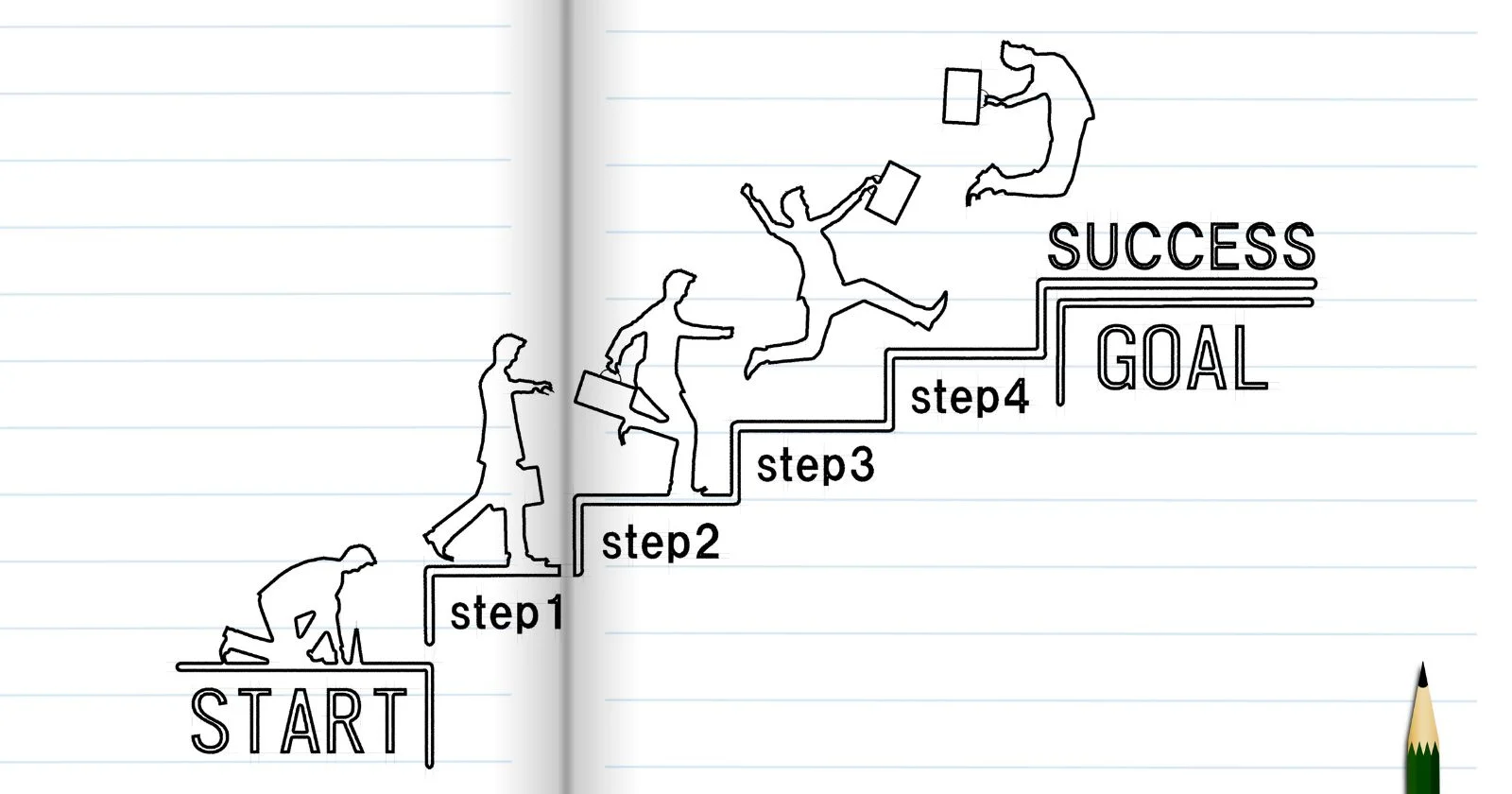
The Dream Life Formula: What Really Matters Most

Most peple spend the best years of their life chasing a life they saw in an ad.
Not a life they felt deep in their chest one quiet morning. Not the one they kept coming back to in their own head. The one on a screen, in a reel, on a post polished, fast, loud. And what is wild is that this is not a new trap. It just looks newer than ever right now.
There is a version of a good life that almost every person carries inside them. It is not always clear. Sometimes it feels more like pressure than a picture. A low hum that says something is off, or something is missing, or something could be more than this. That hum is not your enemy. It is probably the most honest part of you.
This piece is not a plan. It is not a step-by-step guide. It is more like a long conversation at a table where the coffee has gone cold and no one wants to leave yet. The kind where you start saying things out loud that you have been thinking about for years but never quite put into words.
Why the “Dream Life” Idea Keeps Failing So Many People
The phrase “dream life” has been used so many times that it has lost its edge. It sounds like a candle brand now. Or a vision board from 2015. But the reason it keeps failing most people has nothing to do with the idea itself. It has to do with where the dream comes from.
When the dream is borrowed, it never fits right.
A lot of people build their version of a dream life out of pieces they picked up from other people’s lives. The career that got applause at the dinner table. The city that sounded exciting to a 22-year-old who had never left their hometown. The relationship structure that looked stable from the outside. These pieces get stitched together and called a plan. And the plan gets followed. And somewhere around age 32 or 38 or 44, the person stops and thinks: this is what I said I wanted. So why does it feel so hollow?
The answer is not that the dream was wrong. The answer is that it was not really theirs.
Research from Self-Determination Theory, built by psychologists Edward Deci and Richard Ryan over decades, shows one thing clearly: humans do not thrive when they chase goals that come from external pressure. They thrive when their goals come from within. When they align with something they care about for its own sake. Not for the reward. Not for the post. For real.
This is not a soft idea. It shows up in the data over and over. People who pursue what they call “intrinsic goals” — things like growth, connection, meaning — report higher levels of well-being, better mental health, and more satisfaction than people who chase status, money, or fame as the primary aim.
That does not mean money and status are bad. They are not. But when they are the main engine, the ride gets bumpy.
Key patterns worth noticing here:
- Most people design their life around what they can explain to others, not what they can live with in private.
- A borrowed dream can produce real results and still leave a person deeply unsatisfied.
- The discomfort of a hollow success is often the first honest signal worth paying attention to.
- Urgency and comparison are the two fastest ways to pull someone away from their own path.
What “Freedom” Looks Like When You Strip Away the Noise
Freedom is probably the most overused word in the self-improvement world. Everyone wants it. But very few people can say what it looks like in their actual daily life.
In my early work reading through hundreds of journals and case studies from coaching contexts, the same thing kept coming up. When people were asked to describe freedom, they described control. Not a yacht. Not a private island. Control over their own time. The ability to decide when to work and when to rest. The space to say no to things that drain them. The room to say yes to things that light them up.
That is not a complicated picture. But it is easy to miss when the version of freedom being sold to you looks like a jet and a golden hour selfie.
Real freedom is quieter than that. A person who wakes up without an alarm and has work they find meaningful and time to cook a slow meal and space to sit with their own thoughts — that person has a kind of freedom that many millionaires do not.
This is not an anti-wealth argument. Wealth can absolutely buy freedom. But only if the person buying it knows what freedom feels like to them first. Otherwise they spend a lot of money getting further away from it.
There is a concept called “time affluence” — the subjective feeling of having enough time. Research from the University of British Columbia found that people who feel time-rich report much higher well-being scores than those who feel time-poor, regardless of income. What this means is that your relationship with time matters more than your bank balance in many cases.
The person who earns less but owns their schedule often lives with more ease than the person who earns a lot but can never truly stop.
What this tends to look like in practice:
- Freedom is less about what you have and more about what you are not obligated to do.
- Most people do not need more money. They need fewer obligations that drain them.
- Time pressure is not a side effect of a busy life. It is often the cost of chasing the wrong version of success.
The Quiet Role of Habits in Building Anything That Lasts
Big dreams need small days.
That sounds simple. Maybe too simple. But the gap between where most people are and where they want to be is almost never a gap in motivation. It is a gap in daily structure. What someone does at 7am and what they do at 10pm adds up to who they become. Not the goal setting session in January. The Tuesday when nothing feels exciting and they do the work anyway.
James Clear wrote about this in Atomic Habits, and while the book has become almost too familiar, the core idea holds. Systems beat goals. Not because goals are useless, but because a goal without a system is just a wish with a deadline.
There is something worth noticing here though. Most habit advice talks about adding new things. Wake up earlier. Work out. Read more. Journal. Meditate. And all of that is fine. But the bigger lever that rarely gets enough attention is subtraction.
What are the daily defaults that are pulling you away from the life you want?
The scroll that starts at 10 minutes and becomes 90. The conversations that leave you feeling smaller. The yes said out of guilt. The hours that disappear into tasks that do not matter. Removing these creates more space than almost any new habit you could add.
Behavioral scientists call this “choice architecture” — the idea that environment shapes behavior more than willpower does. A person who leaves their phone in another room at night does not need discipline to avoid scrolling at 2am. They just need distance.
What works is designing your environment to make the right behavior easier and the wrong behavior harder. Not relying on motivation, because motivation is just a feeling, and feelings are not known for showing up on schedule.
Patterns that tend to stick:
- Subtraction almost always works faster than addition when it comes to change.
- Motivation comes after action, not before it. Start small and let momentum build.
- The most powerful habit is the one done at the lowest point of the day, not the highest.
- Your daily environment is either working for you or against you. There is no neutral.
Relationships Are Not the Background of a Good Life. They Are the Whole Point.
The longest-running study on human happiness ever conducted is the Harvard Study of Adult Development. It started in 1938. It has followed hundreds of people across their entire lives. And after all of that data, all of those decades, the conclusion is almost embarrassingly simple.
Good relationships are what keep people happy and healthy.
Not wealth. Not fame. Not productivity. Not even health behaviors in isolation. The quality of a person’s close relationships predicts their happiness and their physical health more than almost any other variable studied.
Robert Waldinger, who directs the study now, put it plainly in his TED talk: “Loneliness kills.” And not just emotionally. People who are socially isolated experience faster cognitive decline and shorter lifespans. Connection is not a nice-to-have. It is a biological need.
And yet, relationships are often the first thing that gets sacrificed on the altar of ambition.
There is a pattern that shows up often in the stories of people who have “made it” by conventional measures. They built the thing. They hit the number. They got the title. And somewhere along the way, the marriage got neglected, the friendships thinned out, the kids grew up while they were in meetings. And now they stand at the top of something and wonder why it feels so empty.
This is not a warning against ambition. It is a reminder that ambition without connection tends to produce success that no one wants to share.
The good life, the one that feels worth having when you are old and looking back, almost always contains a few people who really knew you. Not an audience. Not a network. People who stayed, who argued with you, who showed up when things were bad.
Things worth sitting with:
- The size of your network is not the same as the quality of your relationships. They are almost opposites.
- People tend to neglect relationships most when they need them most.
- Repair matters more than perfection in close relationships. Most strong bonds have been broken and mended more than once.
- Time with people you love is not a reward for finishing work. It is part of the work of being human.
Purpose Is Not a Destination. It Is a Texture.
A lot of the language around purpose makes it sound like a place you arrive at. Like one day you will find your purpose and then life will make sense and you will finally feel settled.
That is not how it tends to work.
Purpose is less like a destination and more like a texture. It is something that runs through things. It shows up in the way a person works, how they treat people, what they choose to spend time on, what they refuse to compromise even when it would be easier. It is not one big thing. It is the accumulation of smaller choices made in a consistent direction.
Viktor Frankl wrote about this in Man’s Search for Meaning, drawn from some of the most extreme conditions a human can face. His central insight was that people can endure almost anything if they have a reason. Not a reward. A reason. A sense that what they are going through is connected to something larger than themselves.
Purpose, in this sense, is not about finding the perfect job or the perfect cause. It is about asking: what do my choices say I care about? And then asking whether the answer aligns with what you actually want to care about.
Most people, when asked what gives their life meaning, do not say “my career” first. They say family, close friends, work that helps others, creativity, learning. The career is a vehicle. The meaning is elsewhere.
This does not mean work is unimportant. Work that aligns with your values and lets you grow is one of the great gifts of an adult life. But it is the alignment that creates the meaning, not the work itself.
Quiet observations about purpose:
- Purpose tends to be found through action, not reflection alone. You discover what matters by showing up repeatedly, not by thinking harder.
- A sense of meaning can coexist with struggle. In fact, struggle often sharpens it.
- The people who feel most purposeful are usually in service of something beyond themselves.
- Purpose is not found once. It is chosen again and again, especially when things are hard.
Money, Enough, and the Moving Target Nobody Talks About
There is a concept called the “hedonic treadmill.” The idea is that humans adapt to changes in their circumstances faster than they expect. A raise produces joy for a few months. A new house feels thrilling for a year. Then the baseline shifts and the same level of wanting returns. So the person chases the next thing.
This is not a character flaw. It is a feature of how the human mind works. But understanding it changes the game.
Princeton economist Angus Deaton, who won a Nobel Prize partly for his work on well-being, found in a famous study that day-to-day emotional well-being does rise with income, but only up to a point. After a certain level — the number varies by location and cost of living — more money does not buy more daily happiness. What it buys is more life evaluation. The sense that you are doing well. Which is real, but it is different from actually feeling well.
The implication is not to stop wanting financial security. Security is genuinely important. Debt is stressful. Scarcity is hard on the body and the mind. The goal of financial health is worth pursuing seriously.
But there is a version of financial ambition that has no ceiling. Where the number keeps moving. Where “enough” is always slightly further away. And that version is a full-time job with no retirement date.
Enough is a decision, not an amount.
Some of the most grounded people in the world have chosen what “enough” looks like for them. Not because they are lazy or uninspired, but because they have decided that above a certain threshold, more money costs more than it gives. More hours, more stress, more distance from the things that actually matter.
Honest things about money and a good life:
- Financial stress is real and should be taken seriously. But above a baseline of security, the relationship between money and happiness is weaker than most people assume.
- “Lifestyle inflation” — spending more as you earn more — keeps people trapped at the same level of financial freedom no matter how much they earn.
- The people who feel wealthy are often not the richest. They are the ones who have the least gap between what they have and what they feel they need.
- Earning well and living simply is one of the quietest, most underrated forms of power.
The Myth of Balance and What to Aim for Instead
Balance is a word that shows up constantly in conversations about a good life. Work-life balance. Balance between ambition and rest. Balance between self and others. And while the intention behind the word is good, the image it creates is misleading.
Balance implies two equally weighted things on a scale, perfectly even, always.
Life is not like that. Life tilts. Some seasons are all work. Some are all healing. Some are all family. Some are all exploration. Trying to keep everything even all the time is exhausting and mostly impossible.
What actually works better is the idea of integration. Not balance, but a life where your values are visible in multiple parts of your day. Where work does not feel like an enemy of family because both serve the same deeper commitment to something you care about. Where rest is not guilt and work is not obligation but both are chosen on purpose.
This is what a lot of people mean when they say they want a “balanced” life. They do not actually want equal parts of everything. They want to feel like their whole life is going in the same direction.
There is also something worth noting about seasons. Long-term thinking changes everything. A person who is building something hard might need to work intensely for a few years. A person who just became a parent might need to tilt everything toward home. A person recovering from a hard chapter might need to do very little for a while.
What matters is not that every week is perfect. What matters is that over years, the life you lived was the life you meant to live.
Observations on balance:
- Chasing balance can become its own form of striving. Sometimes the pressure to be “balanced” creates more anxiety than relief.
- Seasons of intensity are not failures of balance. They are part of how a real life is built.
- The question is not “am I balanced right now?” but “does the overall direction feel right?”
- Integration is a better goal than balance. It asks not “is everything even?” but “does everything point the same way?”
How to Know If You Are Living Your Life or Someone Else’s
This is the harder question. And the reason it is harder is that the answer requires a kind of honesty that most people avoid.
Not because they are dishonest people. But because the truth is uncomfortable and because seeing it clearly means having to do something about it.
Here is a simple test that tends to cut through the noise. Sit somewhere quiet. Take a few minutes. Then ask yourself: if no one would ever know what I chose, and there was no one to impress and nothing to prove, what would my life look like?
Not what it would look like ideally in some fantasy version. What would the actual structure of your day be? Where would you live? What would you work on? Who would you spend time with? How much would be enough?
The gap between that answer and your current life is the information you need.
It does not mean you immediately blow up your current life. It means you have something honest to work with. Something true underneath the performance and the plan and the expectations you inherited from other people.
A lot of what passes for personal development is actually just people learning how to perform the version of themselves they think others want. They get better at the presentation. They optimize the surface. And they feel increasingly disconnected from whatever is real underneath.
The people who seem to move through life with a kind of quiet confidence are not the ones who have everything figured out. They are the ones who have stopped trying to be the version of themselves that everyone else needs them to be. They have picked a direction that is actually theirs and they move in it, imperfectly, day by day.
That is not a formula. But it is closer to one than most things you will read.
Things that tend to be true for people living their own life:
What This All Comes Down To
There is no formula in the strict sense. Not really. Anyone who hands you one is selling something.
But there are patterns. And the pattern that keeps showing up, across research and stories and the quiet moments where people are honest with themselves, is something like this: the best life is not the biggest one. It is not the most impressive one. It is the most aligned one.
Aligned with what you actually value. With the people you genuinely love. With work that feels like yours. With a sense of enough that you chose, rather than one that was handed to you.
That alignment does not happen all at once. It happens in small, sometimes boring, sometimes uncomfortable decisions made over years. It happens when you say no to something that looks good but feels wrong. It happens when you choose to stay present in a conversation instead of thinking about the next thing. It happens when you stop explaining your choices to people who never asked.
That is probably the closest thing to a formula that holds up.
Not solving everything. Not arriving somewhere. Just loving the questions enough to live inside them honestly, and letting that honesty slowly shape the kind of life worth having.